ResidentialBusiness
Administrators
-
Joined
-
Last visited
Everything posted by ResidentialBusiness
-
 We track the roaring trade of mobiles grabbed in London and New York, then sold on a single district in ShenzhenView the full article
 -
A prize aimed at cracking interspecies communication could make humans think differently about the welfare of other creaturesView the full article
-
Remains of 42 people found scattered on cartel ranch, highlighting crisis in which 120,000 people have disappearedView the full article
-
Top official Gita Gopinath warns over country’s ‘ever-increasing’ debt burdenView the full article
-
US broker that pioneered zero-commission share trading plans to disrupt the UK marketView the full article
-
A Norfolk campaign against the FTSE 250 company’s plans to raise more chickens and pigs may undermine food securityView the full article
-
Key Takeaways Convenience and Personalization: Amazon Registry allows users to create customized gift lists, simplifying the gifting process for special events or business launches. User-Friendly Features: The intuitive interface makes managing registries easy, enabling quick updates and effortless navigation without technical complications. Enhanced Customization: Users can showcase their brand identity through unique storefronts, utilizing A+ Content for improved product listings and higher conversion rates. Community Engagement: Features like group gifting encourage collaboration among supporters, fostering relationships and promoting brand loyalty. Strategic Marketing: Tailoring registries to match customer preferences empowers users to engage their target audience effectively and improve marketing outcomes. Growth Opportunities: Incorporating crowdfunding options in registries can enhance customer support and funding, driving business growth alongside traditional gifting. If you’re expecting a little one or planning a special event, creating an Amazon registry could be your best move. This convenient tool allows you to curate a personalized list of gifts, making it easy for friends and family to find exactly what you want. With a vast selection of products at your fingertips, you can tailor your registry to suit your unique style and needs. Navigating the world of gift registries can be overwhelming, but Amazon simplifies the process. You’ll discover user-friendly features that help you manage your selections effortlessly. Plus, with the added benefits of Amazon Prime, you can enjoy faster shipping and exclusive deals, making your registry experience even more rewarding. Let’s dive into how you can set up your Amazon registry and make the most of this fantastic service. Overview of Amazon Registry Amazon Registry offers a strategic tool for small business owners planning events or aiming to curate gift lists. The convenience of a personalized gift registry simplifies choices for guests while enhancing your brand visibility within your target audience. With Amazon’s user-friendly platform, you can list items that reflect your entrepreneurial vision, making it easy for friends and family to support your journey. Features like custom notes and universal registry options provide flexibility, allowing you to include products from other retailers alongside Amazon items. Leveraging Amazon Prime enhances the registry experience. You gain access to faster shipping and exclusive deals, which can boost customer acquisition and sales efficiency. This can be particularly advantageous for startups looking to create an impressive event or milestone launch. Consider how the simplicity of setting up an Amazon Registry aligns with your business goals. The process encourages engagement and offers both a gifting solution and promotional opportunity, allowing you to highlight your products or services directly to potential customers. Features of Amazon Registry Amazon Registry offers valuable features that enhance your experience as a small business owner. These functionalities not only simplify the management of your product listings but also promote brand visibility and engagement. User-Friendly Interface The user-friendly interface of Amazon Registry allows you to navigate its features with ease. You can quickly create and manage your registry and update product listings. The intuitive design facilitates task completion without technical complications, enabling you to focus more on your business model and essential operations. Customization Options Customization options in Amazon Registry provide you with significant control over your product presentation. You can create a unique storefront that aligns with your branding, showcasing your entrepreneurial vision. Utilizing A+ Content lets you add interactive elements like lifestyle images and charts, enhancing your product listings. This not only helps in customer acquisition but can also improve your conversion rates by 7-11%. These tailored options ensure that your registry reflects your brand’s identity while attracting your target audience. Benefits of Using Amazon Registry Using an Amazon registry streamlines your gift selection process, making it convenient for both you and your contributors. With a vast selection of products across multiple categories, finding items that align with your business goals becomes simple. Users can curate lists that reflect their entrepreneurial vision, aiding in targeted marketing efforts. You can easily manage and update your registry to showcase relevant items for various occasions, enhancing customer engagement. Gift Selection Process The gift selection process on Amazon Registry allows users to effortlessly browse items and add them to their lists. Once you’ve created your registry, explore available products and categorize them based on your needs. You can share your registry link with friends, family, or even customers, making it straightforward for them to choose gifts aligned with your objectives. The platform’s intuitive navigation ensures you save time, allowing you to focus on other aspects of your small business. Group Gifting Group gifting provides an excellent way to consolidate resources for larger presents, which can be beneficial for your small business. Encourage collaboration among supporters who can contribute towards items that contribute to your company’s growth strategy. This ensures you receive gifts that significantly impact your enterprise, like quality equipment, marketing materials, or essential services. Group gifting enhances community involvement, solidifying relationships with your target audience while promoting brand loyalty. How to Set Up an Amazon Registry Setting up an Amazon registry provides a solid platform for your startup or small business to enhance customer engagement. Follow these steps to create an effective registry tailored for your business’s occasion. Step-by-Step Guide Navigate to ‘List and Gifting’ Log into your Amazon account and select ‘List and Gifting’ from the drop-down menu under ‘Accounts & Lists’. Select Your Occasion Choose the occasion for your registry, like a launch event, holiday sale, or promotional giveaway. If your event type doesn’t fit the standard options, select ‘other occasions’. Follow On-Screen Instructions Fill in required details, including: Your business name The name of your gift list The date of your celebration or promotion Your business address for shipping Your preferences for gift visibility Who can access your gift list Tips for Effective Registries Engage Your Target Audience Focus on your marketing strategy by tailoring your registry to match the interests of your target audience. Use data from market research to select items that resonate with customer preferences. Promote via Social Media Leverage your social media platforms to share your registry link. Utilize email marketing campaigns to inform your subscribers about the registry, encouraging collaborations and group gifting options. Utilize Amazon Features Take advantage of Amazon’s user-friendly tools to customize your registry. Use unique branding elements to reflect your business model, enhancing your visibility amongst competitors. Encourage Group Gifting Promote group gifting to foster community involvement and support your business goals. This strategy enables customers to contribute toward larger, impactful items that elevate your startup initiatives. Explore Funding Options Once your registry is set, consider adding a section for customers to support your business through crowdfunding opportunities. Align this effort with your growth strategy, emphasizing how their contributions bolster your success. By following these steps and tips, you’ll maximize the benefits of your Amazon registry, fostering customer relationships and driving your business forward. Conclusion Creating an Amazon registry can transform the way you approach gift-giving and business promotion. Whether you’re an expecting parent or a small business owner the platform offers a range of features that streamline the process and enhance engagement. By curating a personalized list you not only simplify the selection for your friends and family but also elevate your brand visibility. Utilizing the tools Amazon provides can help you connect with your audience in a meaningful way. Embrace the convenience and flexibility of the Amazon registry to achieve your gifting and business goals. With the right approach you can turn this opportunity into a powerful asset for both personal and professional growth. Frequently Asked Questions What is an Amazon registry? An Amazon registry is a personalized gift list created by individuals for special occasions such as baby showers, weddings, or business events. It allows friends and family to easily select and purchase gifts from a wide variety of products available on Amazon. How do I create an Amazon registry? To create an Amazon registry, log in to your Amazon account, go to the ‘List and Gifting’ section, choose the occasion, and fill in the required details like your registry name and gift preferences. Follow the prompts to add items and customize your registry. What are the benefits of Amazon Prime for registries? Amazon Prime offers several benefits for registries, including faster shipping, exclusive deals, and access to a wide range of products. Prime members can ensure their gift selections arrive quickly, enhancing the overall experience for both the gift-giver and recipient. Can small businesses use Amazon registry? Yes, small businesses can use Amazon registry to enhance brand visibility and customer engagement. They can list products that reflect their entrepreneurial vision and utilize features like custom notes and universal registry options to connect with consumers. What is group gifting on Amazon registry? Group gifting allows multiple contributors to pool funds together to purchase a larger gift for the registry owner. This feature encourages community involvement and support, particularly beneficial for small businesses looking to invest in significant items. How can I promote my Amazon registry? To promote your Amazon registry, share the registry link on social media, engage with your audience through personalized messages, and encourage group gifting. Utilize the unique features of your registry to attract attention and create an engaging experience for potential contributors. What features can small business owners utilize? Small business owners can take advantage of Amazon registry’s user-friendly interface, customization options, and A+ Content to enhance their listings. These features help showcase their brand effectively, improve customer engagement, and drive sales. How does Amazon registry help streamline gift selection? Amazon registry simplifies the gift selection process by providing an intuitive platform where users can easily browse, categorize items, and share their registry with others. This convenience makes it easier for friends, family, and customers to find the perfect gift for the occasion. Image Via Envato This article, "Maximize Your Success with an Amazon Registry for Gifts and Small Business Growth" was first published on Small Business Trends View the full article
-
Key Takeaways Convenience and Personalization: Amazon Registry allows users to create customized gift lists, simplifying the gifting process for special events or business launches. User-Friendly Features: The intuitive interface makes managing registries easy, enabling quick updates and effortless navigation without technical complications. Enhanced Customization: Users can showcase their brand identity through unique storefronts, utilizing A+ Content for improved product listings and higher conversion rates. Community Engagement: Features like group gifting encourage collaboration among supporters, fostering relationships and promoting brand loyalty. Strategic Marketing: Tailoring registries to match customer preferences empowers users to engage their target audience effectively and improve marketing outcomes. Growth Opportunities: Incorporating crowdfunding options in registries can enhance customer support and funding, driving business growth alongside traditional gifting. If you’re expecting a little one or planning a special event, creating an Amazon registry could be your best move. This convenient tool allows you to curate a personalized list of gifts, making it easy for friends and family to find exactly what you want. With a vast selection of products at your fingertips, you can tailor your registry to suit your unique style and needs. Navigating the world of gift registries can be overwhelming, but Amazon simplifies the process. You’ll discover user-friendly features that help you manage your selections effortlessly. Plus, with the added benefits of Amazon Prime, you can enjoy faster shipping and exclusive deals, making your registry experience even more rewarding. Let’s dive into how you can set up your Amazon registry and make the most of this fantastic service. Overview of Amazon Registry Amazon Registry offers a strategic tool for small business owners planning events or aiming to curate gift lists. The convenience of a personalized gift registry simplifies choices for guests while enhancing your brand visibility within your target audience. With Amazon’s user-friendly platform, you can list items that reflect your entrepreneurial vision, making it easy for friends and family to support your journey. Features like custom notes and universal registry options provide flexibility, allowing you to include products from other retailers alongside Amazon items. Leveraging Amazon Prime enhances the registry experience. You gain access to faster shipping and exclusive deals, which can boost customer acquisition and sales efficiency. This can be particularly advantageous for startups looking to create an impressive event or milestone launch. Consider how the simplicity of setting up an Amazon Registry aligns with your business goals. The process encourages engagement and offers both a gifting solution and promotional opportunity, allowing you to highlight your products or services directly to potential customers. Features of Amazon Registry Amazon Registry offers valuable features that enhance your experience as a small business owner. These functionalities not only simplify the management of your product listings but also promote brand visibility and engagement. User-Friendly Interface The user-friendly interface of Amazon Registry allows you to navigate its features with ease. You can quickly create and manage your registry and update product listings. The intuitive design facilitates task completion without technical complications, enabling you to focus more on your business model and essential operations. Customization Options Customization options in Amazon Registry provide you with significant control over your product presentation. You can create a unique storefront that aligns with your branding, showcasing your entrepreneurial vision. Utilizing A+ Content lets you add interactive elements like lifestyle images and charts, enhancing your product listings. This not only helps in customer acquisition but can also improve your conversion rates by 7-11%. These tailored options ensure that your registry reflects your brand’s identity while attracting your target audience. Benefits of Using Amazon Registry Using an Amazon registry streamlines your gift selection process, making it convenient for both you and your contributors. With a vast selection of products across multiple categories, finding items that align with your business goals becomes simple. Users can curate lists that reflect their entrepreneurial vision, aiding in targeted marketing efforts. You can easily manage and update your registry to showcase relevant items for various occasions, enhancing customer engagement. Gift Selection Process The gift selection process on Amazon Registry allows users to effortlessly browse items and add them to their lists. Once you’ve created your registry, explore available products and categorize them based on your needs. You can share your registry link with friends, family, or even customers, making it straightforward for them to choose gifts aligned with your objectives. The platform’s intuitive navigation ensures you save time, allowing you to focus on other aspects of your small business. Group Gifting Group gifting provides an excellent way to consolidate resources for larger presents, which can be beneficial for your small business. Encourage collaboration among supporters who can contribute towards items that contribute to your company’s growth strategy. This ensures you receive gifts that significantly impact your enterprise, like quality equipment, marketing materials, or essential services. Group gifting enhances community involvement, solidifying relationships with your target audience while promoting brand loyalty. How to Set Up an Amazon Registry Setting up an Amazon registry provides a solid platform for your startup or small business to enhance customer engagement. Follow these steps to create an effective registry tailored for your business’s occasion. Step-by-Step Guide Navigate to ‘List and Gifting’ Log into your Amazon account and select ‘List and Gifting’ from the drop-down menu under ‘Accounts & Lists’. Select Your Occasion Choose the occasion for your registry, like a launch event, holiday sale, or promotional giveaway. If your event type doesn’t fit the standard options, select ‘other occasions’. Follow On-Screen Instructions Fill in required details, including: Your business name The name of your gift list The date of your celebration or promotion Your business address for shipping Your preferences for gift visibility Who can access your gift list Tips for Effective Registries Engage Your Target Audience Focus on your marketing strategy by tailoring your registry to match the interests of your target audience. Use data from market research to select items that resonate with customer preferences. Promote via Social Media Leverage your social media platforms to share your registry link. Utilize email marketing campaigns to inform your subscribers about the registry, encouraging collaborations and group gifting options. Utilize Amazon Features Take advantage of Amazon’s user-friendly tools to customize your registry. Use unique branding elements to reflect your business model, enhancing your visibility amongst competitors. Encourage Group Gifting Promote group gifting to foster community involvement and support your business goals. This strategy enables customers to contribute toward larger, impactful items that elevate your startup initiatives. Explore Funding Options Once your registry is set, consider adding a section for customers to support your business through crowdfunding opportunities. Align this effort with your growth strategy, emphasizing how their contributions bolster your success. By following these steps and tips, you’ll maximize the benefits of your Amazon registry, fostering customer relationships and driving your business forward. Conclusion Creating an Amazon registry can transform the way you approach gift-giving and business promotion. Whether you’re an expecting parent or a small business owner the platform offers a range of features that streamline the process and enhance engagement. By curating a personalized list you not only simplify the selection for your friends and family but also elevate your brand visibility. Utilizing the tools Amazon provides can help you connect with your audience in a meaningful way. Embrace the convenience and flexibility of the Amazon registry to achieve your gifting and business goals. With the right approach you can turn this opportunity into a powerful asset for both personal and professional growth. Frequently Asked Questions What is an Amazon registry? An Amazon registry is a personalized gift list created by individuals for special occasions such as baby showers, weddings, or business events. It allows friends and family to easily select and purchase gifts from a wide variety of products available on Amazon. How do I create an Amazon registry? To create an Amazon registry, log in to your Amazon account, go to the ‘List and Gifting’ section, choose the occasion, and fill in the required details like your registry name and gift preferences. Follow the prompts to add items and customize your registry. What are the benefits of Amazon Prime for registries? Amazon Prime offers several benefits for registries, including faster shipping, exclusive deals, and access to a wide range of products. Prime members can ensure their gift selections arrive quickly, enhancing the overall experience for both the gift-giver and recipient. Can small businesses use Amazon registry? Yes, small businesses can use Amazon registry to enhance brand visibility and customer engagement. They can list products that reflect their entrepreneurial vision and utilize features like custom notes and universal registry options to connect with consumers. What is group gifting on Amazon registry? Group gifting allows multiple contributors to pool funds together to purchase a larger gift for the registry owner. This feature encourages community involvement and support, particularly beneficial for small businesses looking to invest in significant items. How can I promote my Amazon registry? To promote your Amazon registry, share the registry link on social media, engage with your audience through personalized messages, and encourage group gifting. Utilize the unique features of your registry to attract attention and create an engaging experience for potential contributors. What features can small business owners utilize? Small business owners can take advantage of Amazon registry’s user-friendly interface, customization options, and A+ Content to enhance their listings. These features help showcase their brand effectively, improve customer engagement, and drive sales. How does Amazon registry help streamline gift selection? Amazon registry simplifies the gift selection process by providing an intuitive platform where users can easily browse, categorize items, and share their registry with others. This convenience makes it easier for friends, family, and customers to find the perfect gift for the occasion. Image Via Envato This article, "Maximize Your Success with an Amazon Registry for Gifts and Small Business Growth" was first published on Small Business Trends View the full article
-
A new report from small business lender OnDeck, in partnership with document AI platform Ocrolus, finds that while small business owners remain largely optimistic about their growth potential, economic uncertainty is prompting many to take precautionary steps. According to the Small Business Cash Flow Trend Report, released on May 20, 2025, 93% of small businesses surveyed said they anticipate either significant or moderate growth in 2025. This figure reflects only a slight dip from the 94% who shared the same outlook in the fourth quarter of 2024. However, that optimism comes with increased caution. More than half of small businesses (55%) say they’ve already taken preemptive action in response to potential tariff changes, bracing for possible financial or operational disruptions. These actions include front-loading inventory and securing additional capital to stabilize cash flow. “The small business community is resilient, and we see them working hard to prepare themselves to weather certain environmental factors such as tariffs,” said Jim Granat, Co-President of Small Business at Enova. “Whether it’s additional capital needed for front-loading inventory or help with general cashflow demands, OnDeck is committed to supporting small businesses with accessible, transparent and dependable financing.” The report also shows a significant uptick in AI adoption, especially in marketing functions. Sixty-nine percent of respondents reported frequent use of artificial intelligence tools to assist with marketing-related tasks, a signal that digital transformation continues to take root among smaller enterprises. Meanwhile, the report highlights a notable shift in lending preferences. Seventy-six percent of businesses say they’re now bypassing traditional banks in favor of non-bank lenders, marking an all-time high in the survey’s history. This trend suggests small business owners are seeking more flexible and faster financing solutions in today’s rapidly shifting economic environment. “AI-powered analytics infrastructure enables lenders to evaluate real-time cash flow data to identify more qualified businesses and expand access to the capital they need to navigate uncertainty,” said David Snitkof, SVP of Growth at Ocrolus. The findings are based on responses from 437 small businesses with existing working capital loans, along with data from over 2 million small business applications submitted for working capital financing over the past 15 months. The survey was conducted nationwide between February 17–27, 2025. The full report, including detailed survey results, is available at ondeck.com/small-business-trends. OnDeck, part of Enova International (NYSE: ENVA), partnered with Ocrolus to produce the quarterly report. Together, the companies say they aim to provide actionable insights to help small businesses better understand their financial positions and plan accordingly. This article, "Small Businesses Show Cautious Optimism in Q1 Despite Tariff and Economic Concerns, OnDeck Report Finds" was first published on Small Business Trends View the full article
-
A new report from small business lender OnDeck, in partnership with document AI platform Ocrolus, finds that while small business owners remain largely optimistic about their growth potential, economic uncertainty is prompting many to take precautionary steps. According to the Small Business Cash Flow Trend Report, released on May 20, 2025, 93% of small businesses surveyed said they anticipate either significant or moderate growth in 2025. This figure reflects only a slight dip from the 94% who shared the same outlook in the fourth quarter of 2024. However, that optimism comes with increased caution. More than half of small businesses (55%) say they’ve already taken preemptive action in response to potential tariff changes, bracing for possible financial or operational disruptions. These actions include front-loading inventory and securing additional capital to stabilize cash flow. “The small business community is resilient, and we see them working hard to prepare themselves to weather certain environmental factors such as tariffs,” said Jim Granat, Co-President of Small Business at Enova. “Whether it’s additional capital needed for front-loading inventory or help with general cashflow demands, OnDeck is committed to supporting small businesses with accessible, transparent and dependable financing.” The report also shows a significant uptick in AI adoption, especially in marketing functions. Sixty-nine percent of respondents reported frequent use of artificial intelligence tools to assist with marketing-related tasks, a signal that digital transformation continues to take root among smaller enterprises. Meanwhile, the report highlights a notable shift in lending preferences. Seventy-six percent of businesses say they’re now bypassing traditional banks in favor of non-bank lenders, marking an all-time high in the survey’s history. This trend suggests small business owners are seeking more flexible and faster financing solutions in today’s rapidly shifting economic environment. “AI-powered analytics infrastructure enables lenders to evaluate real-time cash flow data to identify more qualified businesses and expand access to the capital they need to navigate uncertainty,” said David Snitkof, SVP of Growth at Ocrolus. The findings are based on responses from 437 small businesses with existing working capital loans, along with data from over 2 million small business applications submitted for working capital financing over the past 15 months. The survey was conducted nationwide between February 17–27, 2025. The full report, including detailed survey results, is available at ondeck.com/small-business-trends. OnDeck, part of Enova International (NYSE: ENVA), partnered with Ocrolus to produce the quarterly report. Together, the companies say they aim to provide actionable insights to help small businesses better understand their financial positions and plan accordingly. This article, "Small Businesses Show Cautious Optimism in Q1 Despite Tariff and Economic Concerns, OnDeck Report Finds" was first published on Small Business Trends View the full article
-
When we talk about decarbonizing industries, footwear doesn’t often steal the spotlight. Yet behind every pair of sneakers or boots is a complex web of supply chains, raw materials, energy consumption, and logistics. While our shoes leave physical footprints, they also leave behind a much larger, often invisible carbon and waste footprint. The footwear industry is estimated to be responsible for hundreds of millions of metric tons of CO₂e emissions each year—that’s more than the emissions of some entire countries. And it’s a sector undergoing massive transformation, fueled by a perfect storm of shifting regulation, growing consumer demand for transparency, and the urgent need to build climate resilience into business models. What’s exciting is that we’re finally starting to see momentum from both sides of the decarbonization equation: radical innovation and operational rigor. The innovation track: Rethink how shoes are made Innovation in footwear manufacturing has typically been focused on performance and aesthetics alone, but that’s evolving. Today, some of the most forward-thinking brands are applying that same creative energy to impact, tackling not just how to build better shoes for us but also how to build them better for the planet. A powerful example of this is On. The brand’s new LightSpray technology uses a world-first process that eliminates the traditional cut-and-sew approach to constructing shoe uppers. It reduces waste, energy, and materials, and, crucially, carbon. Using prospective life cycle assessment (LCA)—a highly scientific process that calculates the future environmental impact of a product or technology (based on projected data and scenarios)—it was found that LightSpray has the potential to reduce production emissions by about 75% compared to traditional techniques. So, what can we learn? This breakthrough matters not just for the brand itself, but for the entire industry. Globally, around 23.9 billion pairs of shoes are produced each year, and the majority of them still rely on traditional methods that contribute both to emissions and waste throughout the supply chain. Beyond footwear, what’s most notable isn’t just the number—it’s the willingness to build sustainability into innovation at the R&D phase, not as a post-launch add-on. That’s a shift in mindset that every industry can learn from. The infrastructure track: Build out data and processes that make change possible While innovation grabs headlines, what often moves the needle at scale is what happens behind the scenes. Infrastructure supports measurement, monitoring, and decision making. In footwear, where the indirect Scope 3 emissions coming from a company’s entire supply chain typically account for up to 90% of total footprint, the need for accurate, granular data is critical. That’s where brands like Axel Arigato are leading: not by launching one breakthrough product, but by laying the groundwork to reduce emissions across their entire value chain. Axel Arigato recently calculated its full corporate carbon footprint in addition to LCAs for over 270 of its products. This gives the brand visibility to identify impact hotspots and tools to make science-backed reductions—product by product, shipment by shipment, and decision by decision. The work enabled the brand to dive deep into understanding the impact of its products and business to a level of detail they have never gone into before. “We have always strived to produce products that are less impactful on the environment, and we can now confidently measure this and communicate about it to our consumers,” says Albin Johansson, CEO of Axel Arigato. This kind of backbone work isn’t all that flashy, but it is essential. Having a baseline understanding of the status quo enables all kinds of companies to move from ambition to action, and to do so in a way that’s resilient to legal requirements like reporting, investor pressure, and consumers shifting their expectations. It can even help provide the confidence to communicate impact publicly, in a world where green claims are heavily scrutinized Taking a step beyond footwear The race to decarbonize isn’t exclusive to footwear or the wider fashion industry. But it does cast a revealing lens thanks to its material-intensive, design-driven, and deeply globalized nature. With footwear revenue projected to surpass $472 billion by 2028 and sustainable footwear alone expected to nearly double to $18.25 billion by 2034, the stakes—and opportunities—have never been higher. Crucially, the industry is showing us what it looks like when innovation and infrastructure finally work together. Because, with net zero targets and legal requirements looming, one without the other isn’t enough anymore. A revolutionary new process can’t scale responsibly without solid measurement and validation. Just like a robust data system doesn’t drive progress unless it’s tied to product and design decisions. The future depends on both, and the businesses that are most future-proof are the ones willing to run down this dual track. So, whether you’re in footwear or finance, the lesson here is clear: Lower impact is not about sticking to one strategy for reduction. It’s a system-wide transformation that calls for imagination, precision, and bold partnership. Now, progress increasingly means fewer promises and more proof. And the sooner this double-edged strategy is scaled across industries, the better for our planet. Namrata Sandhu is founder and CEO of Vaayu. View the full article

-
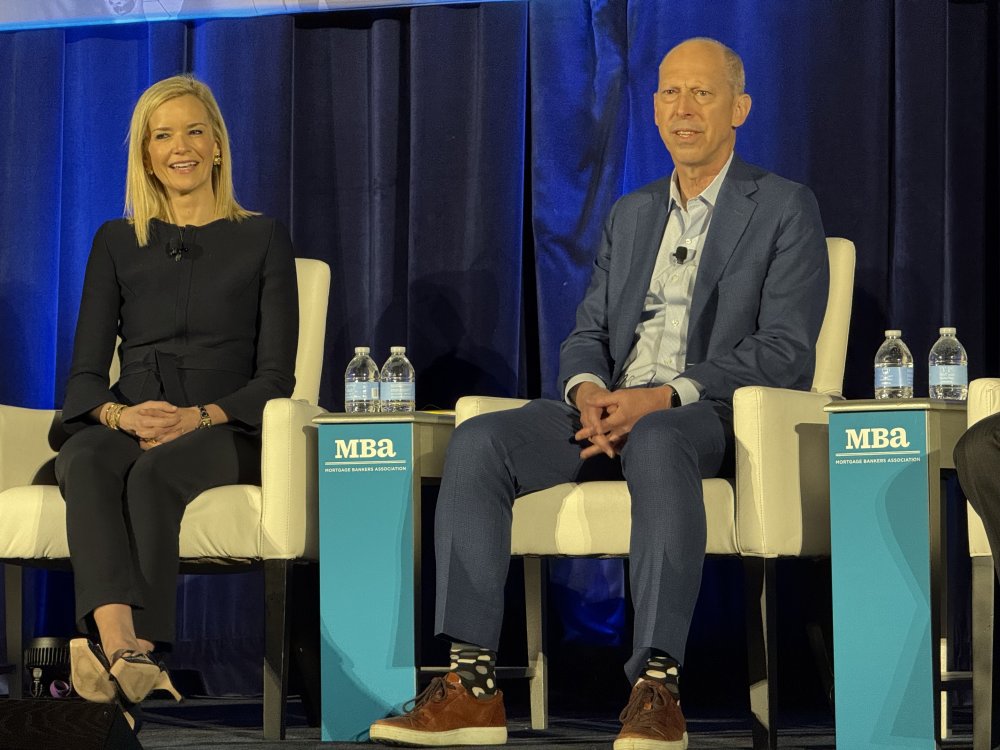
In remarks at a Mortgage Bankers Association conference, the trade group's CEO also acknowledged the need for some guardrails to remain in place. View the full article

-
The size of typical bulk MSR deals trading has shrunk, according to panelists at the Mortgage Bankers Association's Secondary and Capital Markets Conference. View the full article

-
Today’s U.S. farmers and agricultural businesses are navigating a complex landscape, with unique near-term and long-term challenges that include intensified global competition, record trade deficits, rising costs, and more frequent and extreme weather events. These challenges have created economic instability across the entire agriculture sector with U.S. row crop farmer net income remaining persistently low for the third straight year. Estimates from the University of Illinois show that corn and soybean farmers could face a net loss of between $50 and $70 per acre this growing season. On top of this, global acreage has leveled off at 2.3 billion acres and the average yield for corn and soybeans has also slowed. This uncertainty affects not only those who grow our food but also reverberates throughout the entire food system, threatening the stability we all depend on. It’s clear that our sector must get off unpredictable commodity rollercoaster and create a more predictable future for farm families, agricultural businesses, consumers, and communities. Drawing on Land O’Lakes, Inc.’s 104 years of experience as a cooperative, we have learned that collaboration is crucial for bringing stability and predictability to the food and agriculture sectors. The ag community represents only around 1% of the population but, by working together, we can capture efficiencies and reinvest in innovation, expand market opportunities, and support the communities and local businesses that are essential to our nation’s food supply. Become a student of the game At Land O’Lakes we have a saying that “Our success starts with our member-owners’ success.” What this means is that our decisions and investments must be made with our cooperative owners in mind. This mantra has never been more important than today when external factors are pressuring our bottom lines and muddying the decision-making process. In agriculture, we’re seeing pressure on the supply side as a result of global trade dynamics, a reduction in demand due to dips in commodity prices, and a rising cost to serve. All of which results in a tightening of margins up and down the food value chain. To be clear, these challenges are hardly unique to our sector, and I see the remedy as equally universal. Business leaders must double down on being students of the game, keeping a pulse on market dynamics and geo-political developments to stay on offense. And it’s not enough to simply insulate your own business, we must think more collaboratively to identify solutions that serve partners up and down our value chains. Inject predictability into our food system To address the pressures facing American farmers, we must move beyond traditional methods and invest in modern technologies and data-driven solutions that provide detailed plans down to the acre and animal, help minimize risk to inject predictability into farm operations. By creating standardized, reliable, and secure datasets, the industry can provide insights that help farmers respond to environmental and market challenges, manage supply chains, and track production volumes with unprecedented precision. As I look across this sector, I’m especially inspired by how Keystone Cooperative is working to drive predictability. This Indianapolis-based cooperative is using precise, field-level data to help growers respond to seasonal challenges and maximize their ROI by applying the right crop protection products at the right time and in a precise location. For Land O’Lakes, data is the cornerstone of our innovation strategy. Through the WinField United Innovation Center, a leading agricultural applied research facility, we collect and analyze roughly six million data points annually to help farmers increase production, improve efficiency and optimize resource use. Those insights are then being delivered in a manner that reduces the risk farmers face each day. This includes low-interest financing, prescription programs with a performance warranty, and an AI assistant that provides real-time solutions to problems farmers encounter throughout the growing season. The power of the cooperative mindset In an era where traditional business models often prioritize short-term profits over long-term resilience, the cooperative model offers a compelling alternative. We like to say our capital is patient, meaning we can take a longer-term point of view—considering future generations as much as quarterly performance. With a reach that touches 50% of the U.S. harvested acres, over 100 million animals daily, and 13 billion pounds of milk per year, the Land O’Lakes cooperative system also demonstrates the strength of collaboration and shared purpose. By working together with established business leaders that have earned local trust and demonstrated the ability to drive change, we can strengthen the economic prosperity of our shared businesses and communities. The cooperative structure also fosters unique partnerships between stakeholders within and outside the agriculture sector. There’s a deeper level of commitment to shared success that shows up in business initiatives and community building alike. For instance, Land O’Lakes is collaborating with CentraCare to help establish the University of Minnesota CentraCare Regional Campus where medical students receive education, training, and career development opportunities in rural communities where local medical services are desperately needed. Going forward As we look ahead, I want to challenge other organizations to adopt this collaborative approach. Think externally and selflessly. Think long term. Think evolution. Even if you’re operating outside of the cooperative framework, this mindset can help solve the challenges we all face, enhance economic performance and uplift the communities we serve. Brett Bruggeman is the executive vice president and chief operating officer of Land O’Lakes, Inc. View the full article

-
An explicit guarantee for Fannie Mae and Freddie Mac could cause the risk weighting of agency MBS to decline, in turn freeing up banks' balance sheets. View the full article
-
The last six months have been a strange, exhilarating time for crypto. First, there was the so-called “The President effect”—a surge in crypto prices and on-chain activity triggered by the then president-elect’s vocal support of crypto. Then came the viral “Hawk Tuah” meme, which somehow alchemized into a crypto memecoin that rocketed in value, pulled headlines, and emptied wallets in equal measure. For many first-time crypto users, these moments were their gateway into the blockchain. Wallets were downloaded. Tokens were swapped. Twitter (now X) feeds were flooded with strange new lingo: HODL, degen, DYOR. It was a wild ride. For most newcomers, the experience probably felt like trying to join a conversation in a foreign language while riding a rollercoaster. As the leader of a nonprofit dedicated to educating everyday Americans about crypto, I welcome this influx of interest. Crypto, at its best, can democratize financial access, create transparency, and offer new tools for digital empowerment. But hype cycles also bring risk: not just of financial loss, but of alienation and misunderstanding. It’s time we decouple the signal from the noise. Crypto isn’t just for bros—and it never was Let’s start by busting one of crypto’s most persistent stereotypes: that it’s just for young, wealthy finance bros chasing dreams of Lamborghini sports cars (aka “Lambos”) and going “to the moon.” Sure, that subculture exists—just like it does in day trading and sports betting. But crypto’s roots are far more diverse. Earlier this year, we conducted one of the largest-ever studies of crypto holders in America. We found that almost one third (31%) are women, and more are over the age of 55 (15%) than under 25 (11%). Nearly as many crypto users work in construction (12%) as do in technology (14%)—far more than those working in finance (7%)—and many do not belong to higher income brackets, with roughly a quarter (26%) of crypto-owning households earning less than $75,000/year. The stereotype is outdated and, frankly, dangerous. It discourages thoughtful newcomers from participating and lets bad actors hide behind a smokescreen of memes and cartoonish masculinity. The future of crypto will be shaped by everyday Americans, not caricatures. Decode the lingo, stay for the mission Don’t let the lingo intimidate you. You don’t need to speak “crypto” fluently to participate—just like you don’t need to know what “https” means to send an email. But to new users feeling overwhelmed by the language of crypto, here’s a quick translation guide to get started: HODL: Originally a typo for “hold,” it means holding on to your crypto for dear life and resisting the urge to sell in volatile markets. It’s become a philosophy for long-term belief in a project’s value. Degen: Short for “degenerate,” it describes high-risk traders chasing fast gains in often unvetted projects. It’s part joke, part warning. Memecoin: A token built around a joke or cultural moment like Dogecoin or the recent Hawk Tuah coin. Some are created in jest, others are tapping into legitimate community-driven goals. Think of these as digital collectibles, like Pokemon cards. Tips for crypto newbies Start small, stay curious: The best way to learn is by doing. Treat your first crypto transaction like your first gym session—you’re here to learn the ropes, not break a record. Use reputable platforms: Avoid buying coins just because they’re trending on TikTok. Stick to exchanges and wallets with strong reputations, transparent policies, and educational resources. Do your own research: Known as “DYOR” in the crypto world, do your own research and lean on trusted sources. Unfortunately like any industry, there is risk of scams or fraud with crypto. Rule of thumb: If something seems too good to be true, it probably is. Beyond the buzz Crypto’s potential isn’t defined by celebrity endorsements or trending memes. It lies in what happens beyond the hype: freedom to exchange value directly, without back-office delays or middlemen taking control. Transparent governance and extra layers of privacy. True ownership and accessibility of your digital identity and assets. Regardless of what piqued your interest in crypto or when, welcome. You’re right on time. The memes may fade, but crypto’s promise is here to stay. Stu Alderoty is president of the National Cryptocurrency Association. View the full article

-
In any language, silence sounds just about the same. It carries a thunderous kick, though, when it comes from Duolingo, the world’s most popular language-learning app, and its famously irreverent social media presence. Facing heavy backlash online after unveiling its new AI-first policy, Duolingo went dark over the weekend on the social media channels where it cultivated an enormous following with quirky posts. The company even took down all of its posts on TikTok and Instagram, where it has 6.7 and 4.1 million followers, respectively, after both accounts were flooded with negative feedback. After days of silence, the company on Tuesday posted a bizarre video message on TikTok and Instagram whose meaning is hard to decipher. Duolingo had been riding high before CEO Luis von Ahn announced on LinkedIn that the company is phasing out human contractors, looking for AI use in hiring and in performance reviews, and that “headcount will only be given if a team cannot automate more of their work.” The company ended 2024 with $748 million in revenue, up 41% year over year, and it had more than 116 million monthly active users and 9.5 million paying subscribers as of March. The previous month, the company had executed its most successful social media campaign ever, with the death (by Cybertruck) of the brand’s mascot, Duo the owl, and his eventual resurrection two weeks later. Duolingo has had such a tremendous year—with its stock near an all-time high, closing at $526 a share on Tuesday—that it recently raised its sales forecast for 2025. But that was before the backlash. Duolingo previously faced criticism for quietly laying off 10% of its contractor base and introducing some AI features in late 2023, but it barely went beyond a semiviral post on Reddit. Now that Duolingo is cutting out all its human contractors whose work can technically be done by AI, and relying on more AI-generated language lessons, the response is far more pronounced. Although earlier TikTok videos are not currently visible, a Fast Company article from May 12 captured a flavor of the reaction: “The top comments on virtually every recent post have nothing to do with the video or the company—and everything to do with the company’s embrace of AI. For example, a Duolingo TikTok video jumping on board the “Mama, may I have a cookie” trend saw replies like ‘Mama, may I have real people running the company 💔’ (with 69,000 likes) and ‘How about NO ai, keep your employees.’ Another video that tied into the How to Train Your Dragon character Hiccup brought comments like ‘Was firing all your employees and replacing them with AI also a hiccup?’” This weekend expunged all its videos and photos on TikTok and Instagram, and ceased putting out new content on all other channels. “Let’s just say we’re experimenting with silence,” a spokesperson for Duolingo told Fast Company over email. “Sometimes, the best way to make noise is to disappear first.” If that last line sounds like a cryptic Don Draperism, it recalls one of the more famous pieces of advice from Mad Men: “If you don’t like what is being said, change the conversation.” Over the past several days, the silence made it seem like Duolingo was gearing up for another of its signature viral stunts. Sure enough, on Tuesday, one arrived. Duolingo’s first video drop in days has the degraded, stuttering feel of a Max Headroom video made by the hackers at Anonymous. In it, a supposed member of the company’s social team appears in a three-eyed Duo mask and black hoodie to complain about the corporate overlords ruining the empire the heroic social media crew built. “Everything came crashing down after one single post about AI,” our interlocutor says, a winking nod to the cause of the backlash. The problem, however, wasn’t “one single post” about AI, but the company’s policies around AI. If the problem were just a cute post that went sideways, it could be solved with another cute post. But this is something Duolingo can’t cute-post its way out of. It’s the double-edged sword of a company becoming famous for its fun, massively popular social media presence: When social media turns on you, it’s a lot more noticeable. Creating a kooky, personality-driven brand identity online has zero downside until the moment a company must respond to an actual backlash in the exact same digital town square where it conducted all that brand-building business. Now, Duolingo has thrust itself into what looks like a can’t-win double-bind, whereby posting through it might seem callous and tone-deaf, but seriously addressing the controversy would be a jarring disruption that plays like it was filmed at gunpoint. Wendy’s, who kind of pioneered the unhinged corporate brand account in the early 2010s, faced a similar dilemma last year. When the company appeared to float the idea of implementing surge pricing on its burgers, fans revolted on social media. Some responded to typically cheeky Wendy’s posts by mocking the brand’s attempt to harness internet humor at a time when the internet was mad at that brand. In the case of Wendy’s, the company quickly denied plans to implement surge pricing, and disgruntled fans moved on nearly as quickly. Duolingo, on the other hand, has not yet meaningfully addressed the policies that inspired the backlash. Now, its social media team is trying to have it both ways. They’re taking an ironic, postmodern approach to address a serious issue, instead of breezing past it. Without the company confronting the controversy elsewhere, though, the subtext of every cute social post is that the customers unhappy with Duolingo’s AI direction are not worth taking seriously. “We can’t just move on and pretend everything’s fine,” the mask-wearing Duolingo employee says at one point in the new video. He’s flicking at the idea of taking accountability for the AI fallout, but in the video, it’s meant to be a rejoinder from the Duolingo social team to the faceless entities above who’ve made them look bad. It’s difficult to parse the exact message here. The video is somehow simultaneously defensive, satirical, avoidant, and flippant. Though it may be the opening salvo in a broader message, for now it seems like a half-baked rush response to a very real issue—the Duolingo brand version of just moving on and pretending everything’s fine. Judging by the eyeroll-y comments on the brand’s TikTok post, though, users can sense as much. It doesn’t take a language-learning app to know how to read between the lines. View the full article

-
At the Exceptional Women Alliance (EWA), we enable high level women to mentor each other to enable each leader to achieve personal and professional happiness through sisterhood. As the nonprofit organization’s founder, chair, and CEO, I am honored to interview and share insights from some of the thought leaders who are part of our peer-to-peer mentoring. Our insights today come from Susan Holliday, board director and adviser, who speaks about her global career in the insurance industry, spotting new risks and turning them into opportunities. Q: Your career has addressed various issues related to the insurance industry. What are some recent challenges? Susan Holliday: I entered the insurance industry by chance, as so many people do. It is a fascinating sector because you learn about global challenges from climate change to driverless cars, pandemics, geopolitical risks, and new technologies, to name just a few. New risks bring new opportunities in insuring the risks for people, companies, and governments. Q: Can you give me some examples? Holliday: Yes, a new risk that became insurable during my career, specifically after the 9/11 tragedy, was terrorism. More recently, cyberinsurance doubled in premiums between 2017 and 2020 and then again 2020 to 2022. The two new opportunities I’m most excited about are AI along with crypto and blockchain. There are many new risks for people and companies around these issues, and at the same time, the insurance sector can make use of these new technologies in different ways to be more efficient and to help their clients manage risk. This is also an opportunity to develop new insurance products to cover the risks. I see the market going the same way as cyber. In order to get insurance, companies will have to show they are meeting certain risk management standards, and the insurance is also going to focus on monitoring and prevention, not just paying claims after there is a problem. Q: You mention crypto and blockchain. That’s not talked about nearly as much as AI. Why now? Holliday: I’m doing a lot of work in this space now, because it is becoming more mainstream and soon all sorts of companies will be getting involved with it in some way. This is driven by several factors: real use cases getting implemented, a more friendly stance towards crypto from the current U.S. administration, and some new legislation being proposed or passed in various parts of the world, like Europe, Singapore, and Australia. This means a wider range of companies that have never thought about crypto, and are probably terrified by Bitcoin, are going to want to explore and fully understand the upside and downside risks. There are important opportunities for the insurance sector too. In some cases, using blockchain or crypto can actually reduce risks. There are new risks such as losing the keys to a wallet which means you can’t access your cryptocurrency, or someone who has the keys can steal it. New insurance products are going to be created, along with risk management standards to be able to actually buy the insurance, so it will improve security overall. Q: What kind of use cases are you expecting? Holliday: We have seen some companies invest in Bitcoin as part of their treasury management. Individual investors have more opportunities to invest in Bitcoin and other cryptocurrencies now because there are a number of exchange-traded funds (ETFs) available, which means the investor can get exposure without having to deal with a wallet, keeping control of the keys and custody. Stablecoins are cryptocurrencies based on a fiat currency such as the dollar or the euro. Stablecoins are increasingly being used for international payments, and legislation on stablecoins has been passed in the EU, UK, and some Asian countries and there are currently bills in the U.S. House and Senate. This is likely to increase the use of stablecoins. Blockchains are decentralized digital ledgers which use cryptography to process transactions in blocks. Blockchains are the underlying technology that allow crypto currencies to function. An early use case for blockchain was traceability and authentication of high value assets, such as diamonds. It can also be used to ensure data integrity or authenticate transactions such as a land registry and several governments in different parts of the world have launched initiatives in this area. Recent changes in the U.S. administration’s approach to the regulation of crypto tokens mean that companies are likely to consider issuing or selling tokens, which is already common in gaming companies. We have seen luxury goods and fashion companies use tokens to drive customer loyalty and engagement, although there is still uncertainty over investor acceptance and future regulatory developments. A relatively early use case for blockchain was for smart, self-executing index-based (parametric) insurance contracts. As GenAI picks up steam and we see the prospect of agentic AI, we are likely to see this technology being deployed more frequently as we see AI agents transacting with each other. Q: That is a lot of change especially for those uneducated in the topic. What is your advice? Holliday: The message is, even if you have no intention of ever investing in Bitcoin, business leaders need to keep an eye on that is going on in the crypto and blockchain space because it’s going to impact many sectors and industries. Larraine Segil is founder, chair, and CEO of The Exceptional Women Alliance. View the full article

-
China produces 75% of the world’s batteries. South Korea and Japan control much of the remaining supply chain. With tariffs looming over the industry, the U.S. is in a unique position, having both urgency and opportunity to strengthen domestic battery production for myriad uses. The reality is that American battery manufacturers lag their Asian counterparts. Companies here are attempting to catch up by rushing to follow Asia’s manufacturing formula, but that strategy won’t hold up in the long term. The only way to surpass these larger Asian competitors is to move on from outdated manufacturing methods and materials and focus on what defines American leadership: innovation. Playing catch-up won’t cut it It’s clear China and other Asian countries today have the advantage when it comes to battery manufacturing. Their factories are larger, their supply chains are better developed, and their experience and know-how mean batteries can be produced cheaper and quicker. It takes far less time to start up a battery factory there than in the U.S. The U.S. is in the midst of building up factories. Compared to Asia, however, the country still struggles with slower factory construction, longer time to start up, and more expensive batteries with lower yields, often producing lower-performing products. The U.S. won’t be able to reach the same production levels and will continue to fall behind if we just keep playing catch-up. The innovation game Sticking to old-school battery manufacturing methods won’t win the battery race. Instead, the U.S. can reclaim a leadership position only by playing an entirely different game and proving the solutions of existing product chokepoints: cost, safety, and performance. Battery architectures have remained fundamentally unchanged over the past 30 years. While the industry has made remarkable progress in energy density and cycle life, the same decades-old battery design principles still dictate what a battery is and can do. Process improvements and add-ons alone can’t address these design limitations—think updating an app without ever upgrading the operating system. By redefining how a battery is made from the beginning, the U.S. can leapfrog competition and create a new foundation others can build on. 3 innovation factors Easier said than done, of course. To see real improvements, we must focus on three innovation factors: cost, performance, and safety. Today’s solutions often compromise one to improve another, but we can’t afford to make that sacrifice. If we can advance all three in parallel, there’s no question we can pull ahead in the battery race. Closing this gap isn’t just critical for U.S. competitiveness. By leading in battery innovation, the U.S. can set the pace for the global industry, creating technologies and frameworks that will drive progress for partners around the world. 1. Reduce costs While battery costs have dropped dramatically over the past few years, the price of production—and adoption—still holds back widespread electrification. But swapping in cheaper materials or production shortcuts can impact safety and performance. Instead, innovation must be the driver of cost reduction through “simplifications.” For U.S. battery makers, this could look like novel manufacturing methods, better material utilization in cell design, or waste reduction through improved closed-loop recycling processes. 2. Boost performance Today’s consumers and commercial workloads demand more energy and power than ever. Drivers want longer EV range and faster charging, without the drop in performance during cold weather. Meanwhile, manufacturers face mounting pressure to find sustainable solutions that reduce dependency on certain materials and improve recyclability to combat volatile supply chains. Tech innovation can meet these demands. For example, emerging electrolyte chemistries can enable faster charge cycles and lower temperature operations (up to -30° Celsius) without degrading battery life, and next-gen cell designs can pack more energy into smaller, lighter formats. 3. Prioritize safety Today, the battery industry is treating safety as a top priority—and for good reason. As EV adoption grows, so does the risk of battery fires and thermal runaway. Recalls are costly, and public trust is fragile. In energy storage systems, fire concerns from local residents are delaying siting and deployment. Battery fire incidents onboard airplanes and fatal e-bike fires are yet more headaches for an already beleaguered industry. We need battery innovations that don’t just contain fires but prevent them from happening in the first place. Current solutions, like cell-to-cell thermal barriers or battery management systems that monitor a battery’s health, often fail to address the root cause. Instead, our innovation focus should be on smarter battery technologies at the electrode level that block dangerous dendrite growth, prevent short circuits, and enable safe shutdowns of individual cells. Stop imitating, start disrupting The future of batteries won’t be built in yesterday’s factories. If the U.S. wants to pioneer a reimagined industry, we can’t settle for chasing Asia’s playbook. We need to simplify where possible, innovate where it counts, and rethink the battery from the ground up. That’s how we turn a game of catch-up into a strategy of disruption. While this challenge might feel steep, the good news is we’re not starting from zero. Tech leaders across the U.S. are already developing breakthroughs in chemistry, materials, and manufacturing that are redefining batteries. Indeed, we have worked on providing solutions for the last 14 years, and we are ready. With the right support and speed, these advancements can shift the industry and propel the global energy future forward. The race for battery dominance isn’t over, it’s just changing shape. Naoki Ota is president and CEO of 24M. View the full article

-
Tax and budget bill being debated in Congress includes $25bn for the project View the full article
-
Deputy prime minister’s ideas suggest deep divisions at top of UK government over economic policyView the full article
-
It should have been obvious that Google I/O 2025 would be jammed-packed, considering the company felt the need to hold a separate event to cover all of its Android news. But color me shocked that Google pulled off a nearly two hour-long presentation, full of announcements and reveals, mostly about AI. Not all AI announcements are equal, of course. Some of the news was geared towards enterprise users, and some towards developers. But many of the features discussed are on their way to consumers' devices too, some as soon as today. These are the updates I'm going to focus on here—you can expect to try out these features today, in the coming weeks, or at some point in the near future. Gemini Live is coming to the iPhoneEarlier this year, Google rolled out Gemini Live for all Android users via the Gemini app. The feature lets you share your camera feed or screen with Gemini, so it can help answer questions about what you're seeing. As of today, Google is now bringing the feature out to iPhones with the Gemini app as well. As long as you have the app, you can share your camera and screen with the AI, no matter what platform you're on. AI Mode is the future of Google SearchGoogle has been testing AI Mode in Search since March. The feature essentially turns Google Search into more of a Gemini experience, allowing you to stack multiple questions into one complex request. According to Google, it's AI can handle breaking down your query and searching the web for the most relevant sources. The result, in theory, is a complete report answering all aspects of your search, including links to sources and images. AI Mode is rolling out for all users—not just testers—over the coming weeks. But it's not just the AI Mode experience that Google has been testing. The company also announced new AI Mode features at I/O. Cram multiple searches into oneFirst, there's Deep Search, which multiplies the number of searches AI Mode typically would make for your query and generates an "expert-level fully-cited report" for you. I would still fact check it thoroughly, seeing as AI has a habit of hallucinating. AI Mode is also getting Gemini Live access, so you can share your screen or camera in Search. Use "Agent Mode" as a real world personal assistantProject Mariner is also coming to AI Mode. Google says you'll have access to "agentic capabilities," which basically means you can rely on the AI to complete tasks for you. For example, you'll be able to ask AI Mode to find you "affordable tickets for this Saturday’s Reds game in the lower level," and not only will the bot do the searching for you, it'll fill out the necessary forms. Google says that functionality will apply to event tickets, restaurant reservations, and local appointments. You can see that in action with Agent Mode, which will theoretically be able to execute complex tasks on your behalf. We don't know a lot about how that will work yet, but we do have a clear example from the Google I/O stage. During the presentation, Alphabet CEO Sundar Pichai tasked Gemini's Agent Mode with finding an apartment with in-unit laundry, keeping to a certain budget. Gemini then got to work, opening the browser, pulling up Zillow, searching for apartments, and booking a tour. AI Mode will pull from your previous search history in order to deliver you more relevant results. That includes results that apply to your whereabouts—say, local recommendations for an upcoming trip—as well as preferences (if you tend to book outdoor dining spots, AI Mode may recommend outdoor dining when you ask to find dinner reservations). New Gemini features coming to WorkspaceGoogle announced a number of new Gemini features at I/O, some of which are coming to Workspace. One of the features Google focused on most was Personalized smart replies in Gmail. While Gmail has an AI-powered smart reply feature already, this one goes a step further, and bases its responses on all of your Google data. The goal is to generate a reply that sounds like you wrote it, and includes all the questions or comments you might reasonably have for the email in question. In practice, I'm not sure why I'd want to let AI do all of my communicating for me, but the feature will be available later this year, and for paid subscribers first. If you use Google Meet with a paid plan, expect to see live speech translation start to roll out today. The feature automatically dubs over speakers on a call in a target language, like an instant universal translator. Let's say you speak English and your meeting partner speaks Spanish: You hear them begin to speak in Spanish, before an AI voice takes over with the English translation. 'Try it on'Google doesn't want you returning the clothes you order online anymore. The company announced a new feature called "try it on" that uses AI to show you what you'd look like wearing whatever clothing item you're thinking about buying. This isn't a mere concept, either: Google is rolling out "try it on" today to Google Search lab users. If you want to learn more about the feature and how to use it, check out our full guide. Android XRAs the rumors suggested, Google talked a bit about Android XR, the company's software experience for glasses and headsets. Most of the news it shared was previously announced, but we did see some interesting features in action. For example when using one of the future glasses with Android XR built in, you'll be able to access a subtle HUD that can show you everything from photos to messages to Google Maps. (Personally, the main draw here for me would be AR Google Maps while walking around a new city.) On stage, we also saw a live demo of speech translation, which Android XR overlaying an English translation on screen as two presenters spoke in different languages. While there's no true timeline on when you can try Android XR, Google's big news is that it is working with both Warby Parker and Gentle Monster on making glasses with the service built in. Veo 3, Imagen 4, and FlowGoogle unveiled two new AI generation models at I/O this year: Imagen 4 (images) and Veo 3 (video). Imagen 4 now generates higher-quality images with more detail than Imagen 3, Google's previous image generation model. However, the company specifically noted Imagen 4's improvements with text generation. If you ask the model to generate a poster, for example, Google says that the text will be both accurate to the request, as well as stylistic. Google kicked off the show with videos generated by Veo 3, so it's safe to say the company is quite proud of its video generation model. While the results are crisp, colorful, and occasionally jam-packed with elements, it definitely still suffers from the usual quirks and issues with AI-generated video. But the bigger story here is "Flow," Google's new AI video editor. Flow uses Veo 3 to generate videos, which you can then assemble like any oother non-linear editor. You can use Imagen 4 to generate an element you want in a shot, then ask Flow to add it to the next clip. In addition to the ability to cut or expand a shot, you can control the camera movement of each shot independently. It's the most "impressive" this tech has seemed to me, but outside of a high-tech story board, I can't imagine the use for this. Maybe I'm in the minority, but I certainly don't want to watch AI-generated videos, even if they are created via tools similar to the ones human video creators use. Veo 3 is only available to Google AI Ultra subscribers, though Flow is available in limited capacity with Veo 2 to AI Pro subscribers. Two new Chrome featuresChrome users can look forward to two new features following Google I/O. First, Google is bringing Gemini directly to the browser—no need to open the Gemini site. Second, Chrome can now update your old passwords on your behalf. This feature is launching later this year, though you'll need to wait for the websites themselves to offer support. A new way to pay for AIFinally, Google is offering new subscriptions to access its AI features. Google AI Premium is now AI Pro, and remains largely the same, minus the new ability to access Flow and Gemini in Chrome. It still costs $20 per month. The new subscription is Google AI Ultra, which costs a whopping $250 a month. For that price, you get everything in Google AI Pro, but with the highest limits for all of the AI models, including Gemini, Flow, Whisk, and NotebookLM. You get access to Gemini 2.5 Pro Deep Think (the company's newest and most advanced reasoning model), Veo 3, Project Mariner, YouTube Premium, and 30TB of cloud storage. What a deal. View the full article
-
We may earn a commission from links on this page. Deal pricing and availability subject to change after time of publication. Amazon's Memorial Day sale is in full swing, and you can find more than just the usual appliances and tools on sale. There are discounts on many tech products for audiophiles as well, from Beats headphones, to the Sonos Arc Soundbar, and the beloved Sony WH-1000XM5 headphones, which have dropped in price after the release of the WH-1000XM6. If you're looking for bargains on budget headphones and earbuds, I've rounded up the best ones that you can find under $100, whether you're looking for earbuds, bone conduction headsets, or open-ear, in-ear, or over-the-ear headphones. Here are the best deals I found. Bluetooth 5.3 Open-Ear, Mic, MP3 Mode Built-in 32GB, 10Hrs Playtime, IP68 Waterproof. FEICO Bone Conduction Headphones $49.99 at Amazon /images/amazon-prime.svg $83.92 Save $33.93 Get Deal Get Deal $49.99 at Amazon /images/amazon-prime.svg $83.92 Save $33.93 40H Play Bluetooth 5.4 Headphones with Smart Digital Display Design Fit Sports Running, Workout TOZO OpenEarRing Open Ear Headphones $29.99 at Amazon $59.99 Save $30.00 Get Deal Get Deal $29.99 at Amazon $59.99 Save $30.00 45H Playtime, Wireless Charging Case, IPX8 Waterproof Stereo Headphones in Ear Built in Mic Headset TOZO T10 Earbuds $18.98 at Amazon /images/amazon-prime.svg $38.99 Save $20.01 Get Deal Get Deal $18.98 at Amazon /images/amazon-prime.svg $38.99 Save $20.01 48hrs Play Back Sport Earphones with LED Display Over-Ear Buds with Earhooks Built-in Mic Headset fo bmanl Wireless Earbuds $25.48 at Amazon $49.99 Save $24.51 Get Deal Get Deal $25.48 at Amazon $49.99 Save $24.51 253H Battery, ENC Mic, Bluetooth 5.4, USB-C Charging Case, IPX5 Waterproof, Noise Isolating TREBLAB X4 Earbuds $39.99 at Amazon $59.97 Save $19.98 Get Deal Get Deal $39.99 at Amazon $59.97 Save $19.98 Adjustable Active Noise Cancelling Wireless Earbuds, Reduce Noise by Up to 98%, 50H Playtime, Hi-Res Soundcore by Anker Space A40 $44.98 at Amazon /images/amazon-prime.svg $79.99 Save $35.01 Get Deal Get Deal $44.98 at Amazon /images/amazon-prime.svg $79.99 Save $35.01 JBL Pure Bass Sound, Up to 30 hours of battery life, IP67 Waterproof and Dustproof, Ambient Aware & JBL Endurance Race TWS $49.95 at Amazon /images/amazon-prime.svg $79.95 Save $30.00 Get Deal Get Deal $49.95 at Amazon /images/amazon-prime.svg $79.95 Save $30.00 145H Battery, Waterproof & Sweatproof Bluetooth Earbuds, Mics for Calls TREBLAB X3 Pro $59.97 at Amazon $99.97 Save $40.00 Get Deal Get Deal $59.97 at Amazon $99.97 Save $40.00 60H Playtime, Hi-Res Audio Custom EQ via App Deep Bass Comfort Fit Ear Cups TOZO HT2 Headphones $33.99 at Amazon $59.99 Save $26.00 Get Deal Get Deal $33.99 at Amazon $59.99 Save $26.00 Signature-HD Sound, Deep Bass, 35H Battery, Comfortable, Foldable Over Ear. TREBLAB Z2 Headphones $89.92 at Amazon $129.97 Save $40.05 Get Deal Get Deal $89.92 at Amazon $129.97 Save $40.05 SEE 7 MORE Try bone conduction and open ear headphones at up to 50% offNot everyone can afford Shokz OpenRun Pro 2 headphones. If you're curious to see how bone conduction headphones feel before committing to a premium model, try the Feico Bone Conduction Headphones, which are $49.99 right now, down from $83.92. A fun feature: You can save MP3 songs directly to the headphones so you can listen to music underwater (Bluetooth signals can't penetrate water). Open-ear headphones are great for hearing your surroundings while your out and about. The Tozo OpenEarRing are now just $29.99 (originally $59.99), offering a lightweight option with 40 hours of battery. A range of earbuds at up to 51% off, including a pair with unheard of battery lifeIf you're looking to spend the least possible on a decent set of earbuds, consider the Tozo T10s, which are $18.98 (originally $38.99). Impressively at this price point, they include an IPX8 waterproof rating, stereo sound, and EQ presets in their companion app. Earhook earbuds are good if you prioritize a secure fit. The Bmanl Wireless Earbuds are $25.49 (originally $49.99) are comfortable to wear and can go 8 hours on a single charge (and up to 48 hours with the charging case). Speaking of battery life, if that's important to you, you will love the Trelab X4 earbuds, currently going for $39.99 (originally $59.97). I've never heard of any earbuds getting even close to 253 hours of juice, but somehow these IPX5 waterproof earbuds with noise isolation for calls pull that off, going for 11 hours between charges, plus another 242 hours from the charging case. Dang! I can vouch for the Soundcore by Anker Space A40, which I've used for a year—they have the best ANC I've experienced among all of the budget earbuds I've tested. You can get them for $44.98 (originally $79.99). JBL is a well-known brand for earbuds. Its sporty earbuds, the JBL Endurance Race TWS, are $49.95 (originally $79.95) and offer an IP67 waterproof rating, 30 hours of battery life, and an ambient aware feature so you can better hear your surroundings. The Trelab X3 Pro offer a good balance of great battery life (totaling 145 hours, including the charging case), a sporty design with earhooks and a waterproof rating, and good microphones for calls. You can get them for $59.97 (originally $99.97). These over-ear headphones are up to 43% offIt's not every day you can get over-ear headphones with ANC, 60 hours of battery, high-resolution audio, and a companion app with EQ presets for $33.99 (originally $59.99). You can get exactly that with the Tozo HT2 Headphones. If you want headphones from a more established brand, get the Trelab Z2 for $89.95 (originally $129.97). They're ANC, have 35 hours of battery, are foldable and come with a case, and include a bass-boosting mode. View the full article
-
Google announced a lot of new stuff today at I/O, but few things were more eye-watering than the company's new Google AI Ultra subscription. At $250 per month, it's by far the most expensive subscription Google has yet launched. So it makes sense it comes with everything. And I mean everything. For starters, subscribers at this tier get to use Gemini Ultra, which includes the new Veo 3 video generation model that can also generate sounds alongside video, to...some effect. This tier will also be the first to get access to the upcoming 2.5 Pro Deep Think reasoning model that Google says can "consider multiple hypotheses before responding." It also brings access to tools like Flow and Whisk that provide editing tools on top of Veo and Imagen's video and image-generating capabilities. Technically, these plans are part of the Google One subscription family, so they're not solely focused on AI features. On top of the above mentioned features, you'll also get 30TB of storage across all the services attached to your Google account (like Gmail, Photos, and Drive). Google has also thrown in a YouTube Premium individual subscription at this new, highest tier. This makes it the only Google One plan that includes ad-free YouTube (as well as YouTube Music). Sorry, folks who are only paying $150 for the Google One Premium subscription with 30TB of storage and only Gemini Pro access. Google's previous plan, Google AI Premium, is now Google AI Pro. It still costs $20 per month, and comes with the same perks it did before. Now, however, users have access to a limited version of Flow with Veo 2, as well as Gemini in Chrome. View the full article
-
Starting with the client for life concept, executives from Rocket and CMG Financial described what is happening at their nonbanks to achieve future success. View the full article