ResidentialBusiness
Administrators
-
Joined
-
Last visited
Everything posted by ResidentialBusiness
-
 We may earn a commission from links on this page. Deal pricing and availability subject to change after time of publication. If you’ve ever owned a pair of Beats, you probably already know what to expect—flashy design, Apple-friendly features, and a sound signature that leans toward the bass-heavy side. The Beats Studio Pro continues that legacy, but right now, it’s doing it at a much better price. These headphones, which launched in 2023 at a steep $349.99, are currently going for $169.95—a 51% discount and the second-lowest price tracked so far. That makes a real difference, especially if you’re part of the Apple ecosystem. Beats Studio Pro $169.95 at Amazon /images/amazon-prime.svg $349.99 Save $180.04 Get Deal Get Deal $169.95 at Amazon /images/amazon-prime.svg $349.99 Save $180.04 With hands-free Siri, spatial audio with head tracking, and seamless one-touch pairing, Apple users will get the most out of these over-ears. Android compatibility exists, too, but not all features carry over as smoothly. At this lower price, it’s easier to overlook some of the limitations reviewers pointed out at launch. PCMag gave it a “good” rating, noting its sculpted sound, comfort, and sleek design, but also made it clear that more balanced-sounding options with better ANC and customizable EQ exist at similar or lower prices. That said, for under $170, you’re still getting premium build quality, long battery life (up to 40 hours with ANC off), and fast charging that gives you around four hours of playback from a 10-minute top-up. The ANC itself won’t blow anyone away—it’s slightly above average—but it's good enough for commutes and background office noise. And while you can’t fine-tune the sound with a manual EQ, the built-in EQ presets offer a solid workaround. For anyone who wants spatial audio, Apple-first integrations, and a good-looking pair of over-ears that feel comfortable over long sessions, this is a compelling deal. The dual-device connection, transparency mode, and Find My support round out the convenience side of things. If you’re after fine-tuned audio controls or industry-leading ANC, you’ll want to look elsewhere. But if you want a solid all-rounder at nearly half the price, the Beats Studio Pro finally feels like it’s priced where it should’ve started. View the full article
 -
The day has finally arrived for those hoping to get in on shares of crypto and stock trading firm eToro Group Ltd. The fintech company is holing its initial public offering, with its shares expected to begin trading on the Nasdaq Wednesday after a monthslong delay. Here’s what you need to know about eToro’s IPO. What is eToro? eToro is a brokerage company. The fintech firm’s official name is eToro Group Ltd., and it offers a trading platform for people to buy and sell stocks, cryptocurrencies, and other assets. In the financial services space, eToro’s more traditional competitors are the likes of Charles Schwab, Fidelity, and Vanguard. However, because eToro is a digital-first company, it more closely resembles other digital-first trading platforms like Robinhood. But eToro has some differentiating features that set it apart from other trading platforms. The platform is perhaps most well-known for its “CopyTrader” feature, which allows eToro users to follow other traders and mimic their trades. The idea behind this feature is that it could help novice traders invest more successfully by replicating the moves of more seasoned investors. Despite going public now, eToro has actually been around for a while. The company was originally founded in 2007. It is headquartered in Tel Aviv, Israel, and has offices around the globe. eToro has a long history of attempted public offerings Today is the first time that eToro has gone public, but it’s not the first time the company has tried to. As noted by CNBC, the company originally tried to go public via a merger with a special purpose acquisition company (SPAC) in 2022. SPACs were all the rage in the early pandemic years, but by 2022, they had started to wane as equity markets took a fall. Then in March of this year, eToro announced its intention to go public again—this time via a traditional initial public offering (IPO). While eToro at the time did not give a date for its IPO, it was assumed that it would happen relatively quickly. But eToro’s IPO announcement at the end of March couldn’t have been more badly timed. It was announced little more than a week before President Donald The President announced his disastrous Liberation Day tariffs, which sent stock markets around the world tumbling. In April, eToro chose to delay its IPO. However, in early May, as The President’s trade war stance had begun to soften, Bloomberg reported that eToro was once again on the cusp of launching its IPO. And now it’s doing just that. eToro by the numbers On May 5, eToro filed an updated Form F-1 with the U.S. Securities and Exchange Commission (SEC). This form is little changed from the earlier F-1 the company filed in March. In the F-1, eToro reported the following metrics as of December 31, 2024: A global footprint that spreads across 75 countries. Approximately 3.5 million Funded Accounts. Net Contribution of $787 million (up 41% from $557 million in 2023). Total Commission of $931 million (up 46% from $639 million in 2023). Net income of $192 million (up 1,161% from $15 million in 2023). Adjusted EBITDA of $304 million (up 159% from $187 million in 2023). As noted by CNBC, eToro makes its money by charging fees on associated trading transactions, including buy and sell orders, withdrawals, and currency conversions. When is eToro’s IPO? eToro’s priced its shares on Tuesday. It is expected to begin publicly trading today (Wednesday, May 14, 2025). What is eToro’s stock ticker? eToro’s stock ticker is “ETOR.” What exchange will eToro shares trade on? eToro shares will trade on the Nasdaq Global Select Market. What is the IPO share price of ETOR? The IPO price of ETOR shares is $52, according to a company press release. This exceeds the high end that eToro originally said it was going to sell its shares for. In its F-1 filing, the company said it had planned to sell its shares between $46 and $50 apiece. The higher IPO price suggests that eToro believes there is more substantial demand for its shares than originally thought. How many ETOR shares are available in its IPO? In total, eToro’s IPO offered 11,923,018 Class A common shares for sale. Nearly six million shares were sold directly by eToro, with most sold by existing eToro shareholders. How much did eToro raise in its IPO? Though roughly 11.9 million shares were available under eToro’s IPO, the company will not receive the proceeds for half of them, because existing private shareholders are selling those shares. That leaves 5,961,509 from which eToro profited. Selling those 5.9 million shares for $52 each netted eToro around $310 million. How much is eToro worth? At its $52 IPO price, CNBC says eToro now has a market cap of approximately $4.2 billion. View the full article
-
The hottest parties right now are happening in the metaverse. VRChat, a video-game-like social platform hosted in virtual reality, saw more than 130,000 people in attendance on New Year’s Day 2025, according to a VR culture blog. Before 2020, VRChat had hardly seen more than 20,000 concurrent users, according to Wired. While virtual clubbing began in the early 2000s on platforms like Second Life, VRChat, and AltspaceVR, the COVID-19 lockdowns brought a new wave of virtual ravers as traditional nightclubs closed and people looked for online alternatives. Today, VR clubbers line up each week for dozens of fully immersive virtual parties hosted across the U.S., Europe, and Asia. Thanks to major advances in motion tracking, haptic suits, and customizable avatars, people can now dance to popular DJ sets and socialize—all without leaving their homes. Aside from the up-front hardware cost, events are free. But, like popular in-person clubs, there are often long lines for the most in-demand virtual nights, which are usually limited to around 80 guests due to software constraints. VR clubbing carries its own risks. Psychiatrists and ER doctors have reported some attendees going on “digital benders,” partying to the point of total exhaustion, according to Psychology Today. One partier told Wired he’s had friends hospitalized after binge-drinking on VRChat. Another said he partied for nearly 12 nights straight last August—without once stepping outside his apartment. Still, virtual partying has its perks. If the music’s too loud, you can just turn it down. Ready to go home? No need to worry about Ubers or navigating public transport at 3 a.m. Personal safety and harassment are also less of a concern. Wired spoke to a trans woman from rural Ohio who described VRChat as offering “a safer environment than a real-life club setting,” adding, “the music is better than at the clubs in Ohio.” In the article’s comments, a middle-aged IT manager shared how she and her fiancé, who met in VRChat, now spend their weekends dancing in VR instead of going out, noting, “At the end of the night we just take off the headsets and go to bed.” View the full article

-
Create your own ChatGPT agent to streamline your SEO audits and analyze website elements like page structure. Here's how. The post Create Your Own ChatGPT Agent For On-Page SEO Audits appeared first on Search Engine Journal. View the full article
-
A strong Google review strategy is one of the most effective – and accessible – ways to boost your local SEO. Unlike other ranking signals that may feel out of reach, reviews are something business owners can actively influence. And their impact is only growing. Google reviews play a major role in map pack rankings, and yet many businesses still underestimate just how much they matter. By consistently earning new, high-quality reviews and keeping the momentum going, you can dramatically improve your local visibility and stay competitive in your market. Learn how to build and manage a Google review strategy that works in 2025 – helping your business grow, rank, and convert more customers. The kind of Google reviews you want Any review a business gets is beneficial, but some reviews can outweigh others for SEO purposes. You always want to make sure customers leave reviews with a lot of text where they are talking about the services they received and their experiences. They should mention specifics about their service, like: The problem they were having. The experience they had with your team in terms of communication. Results of the service. (Was their problem solved?) Name of the employee(s) they worked with. Photos of the job. The main benefit here is that review justifications are eligible to show up in search results and can provide a nice trust factor when someone searches for a specific service. Another benefit may be a ranking boost for the keywords in the review. We tested this two years ago, and at the time, we could not determine if it had a direct ranking impact for the keywords added to the reviews. Getting new reviews is a ranking signal itself, so it’s tough to know if the ranking boost is tied to the keywords in the review or just the increase in reviews in general. That said, I wouldn’t rule it out entirely. Reviews with photos tend to stick at the top longer Having your customers add photos or videos with their review can amplify the impact significantly. Visual content adds authenticity and credibility to the reviews. We have also noticed that these reviews tend to stay at the top much longer than reviews without photos. So, if you want to get some positive reviews to stick at the top, try getting more reviews with photos. What do we mean by “stay at the top”? When you navigate to a business’s Google Business Profile (GBP) and then click on their reviews, the default view a user will see is sorted by “Most relevant.” Sometimes, a negative review might appear at the top of your profile. These can harm your business’s reputation and possibly deter people from calling. Want to get rid of a negative review appearing at the top of your profile? The only way I’ve seen this done effectively is by consistently getting legitimate, detailed, positive reviews from customers that include photos. Or ask past customers to update their review to add a photo. Hopefully, one of those will push the negative one down. Encourage your customers to snap a photo of the HVAC system you just fixed, the roof you just installed, or the spring on the garage door you just replaced, and add that to their review. Negative reviews: A chance to embrace the imperfections of your business Even if you cannot push a negative review down, it’s a great opportunity to respond thoughtfully, acknowledge customer concerns, and offer solutions publicly. Responding to negative Google reviews is an art form. Negative reviews could be a good thing. Perfection is not always trustworthy in the eyes of consumers. While aiming for outstanding service is crucial, an occasional less-than-perfect review online can enhance your credibility. Authenticity matters, and customers often appreciate businesses that show a human side, and to be human is to err. When a user sees under 4.8 or 4.7 stars on Google, they tend to trust it more, according to some studies. Do not be afraid of negative reviews. Take them as a chance to show your human side. People will like it, especially if you can make it funny. Monitor GBP reviews for strategic insights Did you know that only businesses with a 4.0-star rating and above are eligible to show up for searches with “best” or “top” in them? Google will add a “Top-rated” filter automatically if either of those words is added to the search, which screens out all businesses with a star rating below 4.0. Is your business above a 4.0 rating right now? If the answer is, “I don’t know!” this part is for you. Monitoring reviews quarterly lets you gain insights into various aspects of your online presence. Track fluctuations in review volume to identify trends or problems such as: Losing reviews. Falling behind competitors in review count. Dropping below a 4.0-star rating. You must also ensure you are receiving a steady stream of new reviews because review recency is a local ranking signal. Keep a trend of consistent, new reviews to maintain three-pack rankings. You should also pay attention to how many reviews your competition is getting so you know how many you need to stay competitive. Places Scout has a helpful report that provides the weekly review count for all the competitors ranking for your top keywords. This will help you easily keep track of how many reviews you need to be getting weekly. Dig deeper: Top SEO tips for location-specific websites Get the newsletter search marketers rely on. Business email address Sign me up! Processing... See terms. How to keep a steady stream of Google reviews with little effort Getting new, consistent reviews is key to maintaining visibility on Google Maps and growing that visibility if there is room for improvement. Many business owners rely on their employees to provide top-notch service that naturally generates positive reviews. In reality, people need a little nudge to leave those positive reviews. Google absolutely does not allow businesses to incentivize customers for positive reviews. It is directly against their Google review guidelines, as this can be considered “deceptive content” if the customer was paid or incentivized in any way to leave the review. However, Google does allow business owners other ways to incentivize reviews. Incentivizing employees Business owners can and should motivate employees to ask for reviews from satisfied customers during their interactions. They should be asking for photos along with that review as well. If an employee gets mentioned in a review by name or gets a customer to post a review with a photo, reward your employee by giving them: A cash prize. A gift card to Amazon. Even a gift card to a local restaurant of their choice. If your business typically gets many reviews, consider holding a monthly “drawing” instead and rewarding a specific winner. Keep it fun and rewarding, as everyone wins here. Automated text messages and emails Giving customers a link to review your business on Google is super important to streamline the process for them. Getting the link is easy. It’s right on the GBP dashboard under “Ask for reviews.” The trick to getting the most reviews possible with the least effort is creating automated outreach flows that will send customers a text message and/or email with a direct link for them to leave a review. You can personalize the texts and emails, but don’t get carried away and lose the point: getting the review on Google. Make sure it’s crystal clear how they can easily review you on Google, why it’s important, and the link is easily accessible. Ask other businesses and vendors your business has worked with to leave a review You can ask non-customers to leave reviews on your Google profile, as long as that person has had some interaction with your business in a business capacity. This is a great idea for newer businesses lacking a large customer base or those that do not serve a ton of customers at a time, like a sole practitioner lawyer who only takes on a few clients a month. You can ask any business or vendor you have worked with to leave a review of your business. Your accountant, insurance agent, product vendors, and anyone you have interacted with in a business capacity. Help, my Google reviews are missing! When you put so much effort into getting Google reviews, it can be devastating to see them go missing suddenly, without a reason! There are a few reasons reviews go missing from profiles. Sometimes, it’s a bug, like in February 2025, when tons of reviews suddenly disappeared from thousands of Google listings. Google has since fixed it, but the algorithm they employed that supposedly filters suspicious or inauthentic reviews is still in play. While the intention behind this system is to ensure review integrity, it can sometimes result in legitimate reviews being filtered out. This problem is so widespread that Google released some support information explaining why reviews may suddenly disappear from a GBP listing. If you suspect this is happening to you because you are monitoring your reviews (called a callback), then you have some options. The best way to restore these is to contact support and follow these steps: Type “Reviews” Select “Review missing” and follow the prompts. They may ask for screenshots of the missing reviews, so having those handy is recommended. If that does not work: Head over to the GBP Community Forum. Post a thread about your missing reviews. Ask a Product Expert to look into it and potentially escalate it to Google. Fake reviews: The never-ending tale Fake spam reviews can be frustrating. Is your listing being bombarded with fake, negative reviews? Google is usually good about catching these and removing them with their filter. Recently, Google announced that it is using Gemini AI to better detect review spam, citing a 40% increase in review removal in 2024 vs. 2023. However, sometimes fake reviews get published. To get fake reviews removed, you need to report the reviews for removal using Google’s review management tool. Use this tool to report fake reviews, and then check back to see if they get removed. If they do not get removed, Google will give you an option to appeal that decision directly in the tool. If you appeal a decision in the tool and the fake review is still not removed, contact Google support, and they should be able to remove it from your listing if they are indeed fake. Or you can go to the GBP community forum if all else fails. Fake positive reviews Sometimes businesses get fake positive reviews to game Google’s ranking algorithm. The frustrating thing is that it works most of the time. When a listing gets many fake positive reviews, it typically sees improvement in rankings. Google is far away from having a handle on its fake positive review problems, though they are trying, according to recently filed lawsuits. It may be tempting to report competitors you suspect are buying reviews in hopes of getting them removed and hurting their rankings. But in most cases, all that effort just isn’t worth it. Even if some fake reviews get taken down (which isn’t guaranteed), their rankings likely won’t take much of a hit. You can, however, report them via Google’s Report business conduct form or Google’s business redressal complaint form. Google’s new fake review warning label Google is also rolling out “consumer alerts” on business profiles to try and promote transparency of possible fake review activity. The label will say something like, “Suspected fake reviews were recently removed from this profile.” This is a great new incentive to not invest in fake reviews to boost your Google search visibility. If you build your online credibility on a flimsy foundation of fake reviews, Google could knock it down way faster than you built it up. Conclusion Google reviews aren’t just a nice bonus – they’re a critical part of your local SEO strategy. The right kind of reviews – detailed, photo-rich, and consistent – can help your business appear more often, earn trust faster, and stay ahead of the competition. Focus on building a steady review pipeline in 2025, and you’ll give your local visibility the boost it needs to grow. Dig deeper: 11 local SEO tools you should be using View the full article
-
We may earn a commission from links on this page. A surprisingly endearing sitcom about an American football coach moving to the U.K. to coach the other kind of football, Ted Lasso was Apple TV+'s first breakout hit, but it's long over by this point. While few of their other shows have commanded even a fraction of the zeitgeist, over the past few years Apple's streaming service has built a small but solid library of other original series that are at least interesting or pretty good, and occasionally more. Apple's offerings still can’t quite compare to what you’ll find on Netflix or Hulu, at least in terms of volume, but there’s enough money in the tech company's bank account that they’ve shown a willingness to experiment, particularly when it comes to high-cost genres like science fiction, and that’s not a bad thing. Here are 40 of Apple’s best original shows so far. I'm highlighting the ones you may not have binged yet, so Ted Lasso isn’t on the list—but consider him mentioned here. Apple TV+ $9.99 Per Month at AppleTV+ Learn More Learn More $9.99 Per Month at AppleTV+ Dark Matter (2024 – , renewed for a second season) Joel Edgerton, Jennifer Connelly, and Alice Braga star in this high-concept sci-fi thriller from the novel by Blake Crouch (he's also the showrunner). Edgerton plays Jason Dessen, a former physicist living a fairly decent life with his wife, Daniela (Connelly) in Chicago when he's drugged and kidnapped before waking up in a Chicago where he'd never married Daniela. It seems that a version of himself invented a device allowing for travel between infinite alternate universes—and that version of Jason wants the life that our Jason has, and who's now on a quest to make his way home. You can stream Dark Matter here. Foundation (2021 —, renewed for a third season) Foundation frequently misses the point of its source material (a series of influential Isaac Asimov novels), but that doesn’t make it any less of an impressively realized science-fiction epic on its own terms. Lou Llobel and Lee Pace lead the centuries-spanning series that sees a group of scholars and rebels working to bring down a galactic empire in order to save it (in the very, very long run). The first season was pretty great, the second season was even better, and ads for the third season look promising. You can stream Foundation here. Dope Thief (2025, miniseries) Ray and Manny (Brian Tyree Henry and Wagner Moura) are a couple of childhood friends from Philly who've been supporting themselves by impersonating DEA agents and robbing low-level stash houses in the inner city. Manny's looking to move on while Ray's eccentric mother, Theresa (Kate Mulgrew, clearly having a great time) needs a lot of money fast. And so, as you've probably guessed, we're about to enter "one last big score" plot territory, which, in this case, involves robbing a meth lab that is, it turns out, part of a large-scale operation that the real DEA has in its sights. The setup is nothing new, but everyone here is at the top of their game. You can stream Dope Thief here. Slow Horses (2022 – , renewed for fifth and sixth seasons) With nods to the great spy dramas of John le Carré, Slow Horses updates the setting without losing either the thrills or the style of a time-honored genre. The “Slow Horses” of the title is a group of has-been MI5 agents—they’ve all made messes of significant jobs, but are still seen as having some use, if only in dull administrative tasks. Naturally, the group (lead by Gary Oldman and Jack Lowden, with their spymaster played by Kristin Scott Thomas) finds themselves in deeper waters than anyone had expected of them. The show has a sly sense of humor, and balances a cynical tone with a conviction that redemption is more than possible (it's also probably my personal favorite Apple TV+ show). You can stream Slow Horses here. Sugar (2024 – , renewed for a second season) Sugar doesn't try to obscure or downplay its reliance on old-school Hollywood noir tropes: Its characters are driven to emulate the style of antiheroes of old, and clips from old movies even play alongside the action as a means of driving the point home. The central mystery sees detective John Sugar (Colin Farrell) summoned to the mansion of a rich movie producer (James Cromwell), whose granddaughter has gone missing. The first few episodes are intriguing, and the premise is unique in that Sugar is kind of an anti-anti-hero—he's an actual nice guy in a world where he's expected to play the tough guy. The sixth episode, though, drops an absolutely wild, love-it-or-hate it plot twist that drives the remaining episode and, presumably, the forthcoming second season. The series comes from writer Mark Protosevich (The Cell, I Am Legend) and smartly directed by City of God's Fernando Meirelles, so it has style to spare. You can stream Sugar here. Pachinko (2022 – , third season renewal pending) Pachinko is technically an American production, but its largely South Korean cast and crew place it in very much in the wheelhouse of the K-dramas that have found success in the U.S. in recent years. The multigenerational saga follows one woman (Youn Yuh-jung and Kim Min-ha) and her family from the Japanese occupation of Korea through the decades of the Korean diaspora. It’s as personal as it is epic, with better location cinematography than most movies—and it’s got an all-time great opening credits sequence. You can stream Pachinko here. Palm Royale (2024 – , renewed for a second season) Kristen Wiig stars here as Maxine Dellacorte-Simmons, an endlessly inventive social climber in 1969 Palm Beach, Florida who sets out on a road to the top of the local hierarchy when she manages to nab herself a membership in the exclusive private club of the title. It's soapy and silly and occasionally over the top—which all just means that it's thoroughly entertaining and relatively stress-free. The cast here is among the best that streaming money can buy: Alongside Wiig, we get Laura Dern as a helpful hippie, Allison Janney as a demanding matriarch, Carol Burnett as mysterious (and initially comatose) local royalty, and Ricky Martin as the sexy bartender (with Bruce Dern, Julia Duffy, and Mindy Cohn among the recurring cast). You can stream Palm Royale here. Bad Sisters (2022 – , third season renewal pending) The comedy/murder mystery genre is having a moment, with Hulu’s Only Murders in the Building, Apple’s own The Afterparty (to which I’ll return later in this list), and the Knives Out movies all doing brisk business. Bad Sisters is in that same category, but set apart in interesting (and significant) ways. The Dublin setting and the dark comedy stand out, and the show is as much about solving the core murder as it is about rooting for the killer, whomever they may be. Among the title sisters, one has a particularly odious husband. When he turns up dead, each of the sisters (one played by Catastrophe's Sharon Horgan, who co-created) is revealed to have had good reason for doing the job. You can stream Bad Sisters here. Severance (2022 – , renewed for a third season) Late-stage capitalism encourages “work-life balance” while simultaneously making it impossible, and then makes us feel guilty about it. In Severance, biotechnology giant Lumon Industries has a solution: They split your consciousness between your life at work and your life outside of it. For our lead characters (played by Adam Scott, Patricia Arquette, Britt Lower, and more) the work- and home-based consciousnesses grow apart to the point that they become entirely different people. The show blends the conventions of office-based dark comedies with movies like Brazil and Eternal Sunshine of the Spotless Mind, and dives into the dangers of modern American-style totalitarian capitalism while providing a reminder that technology often promises to improve our lives while only making them worse. You can stream Severance here. The Buccaneers (2023 – , renewed for a second season) The sassy, revisionist period drama (think Bridgerton) is having a heyday and, with the success of HBO's The Gilded Age (itself an Edith Wharton pastiche), it's only natural that things have come back around to the source—in this case, an unfinished Wharton novel telling the story of five American nouveau riche daughters being shuffled off to Europe to unite (in marriage) their family's ready cash with old European titles and lands. It's a fun, women-led show that splits the difference between The Gilded Age's relative faithfulness to history and Bridgerton's joyful anachronisms. You can stream The Buccaneers here. Hijack (2023 – , renewed for a second season) This solid action thriller stars Idris Elba as a business negotiator who finds himself among the passengers on a flight from London to Dubai that's been, well, hijacked. He's the only one onboard with a shot at saving himself and the other passengers, but will have to use his experience, brains, and brawn to do it. The show takes place in real time, more or less, adding to the suspense, and also making the second-season pickup slightly confusing. I'm not sure how a followup series will work, but if 24 could run for nine seasons, I'm sure that Elba's Sam Nelson can sustain at least a couple more. You can stream Hijack here. For All Mankind (2019 — , renewed for fifth season) I love a high concept—but execution is what counts, and For All Mankind makes good on its premise, thanks in large part to the involvement of writer/co-creator Ronald D. Moore (Battlestar Galactica). The show runs with a tantalizing "what if?": What if Soviet space pioneer Sergei Korolev hadn’t died prematurely in 1966 and instead helped bring his country’s space program to full flower, extending the space race indefinitely? If we’d been forced to continue and expand upon the space program, our past (and present) would look quite different, and this show dramatically imagines how that might go, jumping across decades to reveal our alternate past (and future). A spin-off involving a Soviet space program, Star City, is in the works. You can stream For All Mankind here. Dickinson (2019 – 2021, two seasons) Dickinson is so scrupulously weird that it gets points just for being unexpected. The most surprising thing about it, though, is that it's not merely idiosyncratic—it’s good. The show imagines the life of 19th-century poet Emily Dickinson, with the conceit that she didn’t fit especially well in her own time, a fact the show reflects through the casual use of anachronisms and more modern sensibilities. Think Netflix’s Bridgerton or Sofia Coppola’s Marie Antoinette for similar vibes—but neither of those is about a person nearly as haunting or mysterious as Dickinson. Bonus: It’s also beautifully filmed and acted. You can stream Dickinson here. Visible: Out on Television (2020, miniseries) An effective update to The Celluloid Closet that takes us up to date for the Peak TV age, Visible brings that sweet Apple money to bear in gathering an impressive assortment of talking heads. Going back to the earliest days of television, when queer characters and themes were either ignored, heavily coded, or mocked, the docuseries traces the ups and downs of queer representation on TV right up until the present moment. It entertainingly documents how far we’ve come, and makes clear there’s still work to do. You can stream Visible here. Manhunt (2024, miniseries) Based on James L. Swanson’s book Manhunt: The 12-Day Chase for Lincoln’s Killer, Manhunt reenacts (in detail) not just the night of Abraham Lincoln's assassination by John Wilkes Booth (Anthony Boyle), but the hours, months, and years that followed, examining the political and cultural fallout at the dawn of Reconstruction. The surprising star here is Tobias Menzies' Edwin Stanton, the war secretary who fought to preserve Lincoln's legacy, with mixed results. The show also offers strong parallels, intentional or not, between Booth—violently racist, bombastic, and vainglorious while also somehow a perpetual victim—and modern-day political figures with whom you might be familiar. You can stream Manhunt here. The Last Thing He Told Me (2023 – , renewed for a second season) Critics and audiences are divided over The Last Thing He Told Me, the crime drama earning only mixed reviews while also ranking as the streamer's most watched limited series ever. Based on the bestseller by Laura Dave, the popularity of the book might have something to do with that, as might Jennifer Garner's sensitive performance. While it scored those impressive numbers as a limited series, the series has subsequently been renewed for a new season, to be based on a forthcoming sequel novel, currently scheduled for release in 2025. Co-starring Angourie Rice, Nikolaj Coster-Waldau, and David Morse, the series finds Garner's character trying to forge a bond with her stepdaughter in order to help solve the mystery of her missing husband. You can stream The Last Thing He Told Me here. Monarch: Legacy of Monsters (2023 – , renewed for a second season) Monarch does a surprisingly effective job of telling its own story within the universe of all those American Godzilla movies of the past decade or so, bringing those big stories back down to Earth while building out an entire monster-verse mythology in the process. Anna Sawai stars as a young teacher searching for her father, missing since Godzilla's attack on San Francisco (depicted in the 2014 film), and finds herself drawn into the past and present of a secret government agency. Wyatt and Kurt Russell play the past and present incarnations of the Army colonel who helped set the whole thing in motion. You can stream Monarch here. See (2019 — 2022, three seasons) The pitch meeting for this must’ve been a hoot. “We’ll do ‘The Country of the Blind’—but, you know, in the future!” Just as in that H.G. Wells story, we learn here that being one of the only sighted people among the blind doesn’t necessarily grant you any special privileges. A few centuries from now, humans have lost their senses of sight, and the few born sighted are hunted and despised. As high concepts go, it’s a little goofy (and the reviews have been a little rough), but the beautifully produced and entertaining show blends Game of Thrones vibes with dystopian sci-fi, and boasts Jason Momoa and the always brilliant Alfre Woodard. You can stream See here. Central Park (2020 — 2022, three seasons) Central Park, from creators Loren Bouchard, Josh Gad, and Nora Smith, retains much of the look and feel of Bouchard’s beloved (and long-running) Bob’s Burgers, which is probably enough of a recommendation to get many adult-leaning cartoon fans onboard. It differs, though, in its ambition: Unlike Bob’s, this show invests more heavily in serialization to tell the story of a park manager fighting to save the titular Central Park from greedy developers. It’s also a true musical, incorporating big numbers into each and every episode. (The more sporadic musical numbers in Bob’s Burgers are always the best part, so upping that quotient here is all to the good.) You can stream Central Park here. Silo (2023 —, renewed for third and fourth seasons) The casts of many of these shows are pretty extraordinary, but this one is at least a small step above: Rebecca Ferguson, Rashida Jones, David Oyelowo, Common, and Tim Robbins are all included in the main cast. The science fiction series, based on High Howey’s self-published sensation Wool, is set in a post-apocalyptic future; the show’s characters live in the 144-story silo of the title, a sealed environment sustaining (and imprisoning?) the last dregs of humanity. Societal politics blend with elements of mystery (nothing in the silo is quite what it seems) in an impressively conceived dystopia; the series is set to conclude, but not before two further seasons are produced. You can stream Silo here. Schmigadoon! (2021 — 2023) There’s a big theater-kid vibe to Schmigadoon, no question, with references and in-jokes not everyone is going to get. I’m not sure it matters. When Melissa (Cecily Strong) and Josh (Keegan-Michael Key) set out on a camping trip to strengthen their relationship, they instead stumble into the title town, where everyone sings their feelings, just like characters in a... you get it. The only way out? True love—which Melissa and Josh thought they already shared, but maybe not so much. It’s both a tribute to classic musicals and a satire of the common tropes and the more problematic aspects of those old productions. The second season switches location and eras to “Schmicago,” taking on the darker-tinged musicals of the 1970s. You can stream Schmigadoon here. The Completely Made-Up Adventures of Dick Turpin (2024, one season) The Great British Bake Off's Noel Fielding stars in this wildly ahistorical British import involving the real-life highwayman of the title, who lived in the mid-1700s. Truth and legend are impossible to sort out when it comes to Turpin, so the show defers to the legend, adding a bunch of inspired silliness to the mix. It's not quite Our Flag Means Death, but it takes a similarly loose and fun approach to history. The well-received show shut down for good during production of a second season, under slightly mysterious circumstances, but the existing season is still worth a run. You can stream Dick Turpin here. Masters of the Air (2024, miniseries) A spiritual successor and companion to earlier WWII minis Band of Brothers (2001) and The Pacific (2010), Masters of the Air focuses on the “Bloody Hundredth,” the 100th Bomb Group—pilots tasked with bombing targets inside German-occupied Europe. Austin Butler (Elvis), Barry Keoghan (Saltburn), and Ncuti Gatwa (Doctor Who) are part of the impressive ensemble. You can stream Masters of the Air here. Constellation (2024 – ) Severance, Foundation, For All Mankind, and Silo have established Apple TV+ as a home for high-concept, big-ish budget science fiction. Which is cool, given that even the SyFy channel is't filling that niche anymore. This one finds astronaut Noomi Rapace returning to Earth after an accident, and discovering that the reality she's returned to isn't quite the same as the one she left behind. You can stream Constellation here. Criminal Record ( 2024 – , renewed for a second season) The apparently IRL-delightful Peter Capaldi is one of our most effortlessly menacing actors, imbuing even The Doctor with an unpredictable inscrutability, so it's no surprise that he excels at playing a hardened police detective with a checkered past. He's joined here by Cush Jumbo's June Lenker, a by-the-book and far more idealistic detective who's as suspicious of Capaldi's DCI Hegarty as she is of the facts involving the cold case the pair are investigating. Think of them like a twisted version of Mulder and Scully (minus the aliens, of course). You can stream Criminal Record here. The Morning Show (2019 — , renewed for a fourth season) Less high-concept than some of Apple’s other originals, The Morning Show still serves as a solid drama led by an out-of-character performance from Jennifer Aniston. She plays Alex Levy, co-host of a major network morning show. “Co-host,” that is, until Mitch (Steve Carrell), with whom she’s worked for 15 years, is fired due to sexual misconduct shortly before the show goes on the air one morning (a la Matt Lauer), leaving Alex to explain the situation. The resulting shake-ups and power grabs (including by an up-and-comer played by Reese Witherspoon; the star power in this thing!) were inspired by Brian Stelter’s real-life book Top of the Morning, about the (perhaps) surprisingly dramatic and cutthroat world of morning television, so with the TV-ready drama comes an air of verisimilitude. You can stream The Morning Show here. The Me That You Can’t See (2021, miniseries) An Oprah Winfrey/Prince Harry co-production might inspire understandable cynicism, but the effort here is worthwhile: Approaching both stars and non-celebrities, the miniseries explores issues related to mental health, particularly the stigma and difficulties in finding care. The celebs are all impressively frank, and the less-famous individuals come from a wide array of backgrounds and face a diverse set of issues. Naturally, the presentation is highly polished, but the mere fact that the streamer is putting its money into expanding conversations about mental illness make it worth checking out. You can stream The Me That You Can't See here. Truth Be Told (2019 — 2023, three seasons) Honestly, they had me at Octavia Spencer. It’s not just her, though: The cast here is uniformly first-rate (Lizzy Caplan, Aaron Paul, Mekhi Phifer, and Kate Hudson also star). The premise is also solid, and timely: Spencer plays a true-crime podcaster who condemned a now-convicted killer with her reporting, but who now learns that she might have gotten some crucial details wrong. The execution stumbles a bit in the first season, but picks up in the second and into its concluding third. You can stream Truth Be Told here. The Afterparty (2022 — 2023, two seasons) At a high school reunion afterparty, a murder occurs that, naturally, sets the series in motion—a scenario rife with possibilities, given the dramas that swirl around any real-life reunion. The spin here on the comedy murder mystery is its Rashomon-like structure: Each episode explores the night from the POV of one of the participants, shifting genre styles to suit the character in question. Tiffany Haddish and Sam Richardson are great as the leads. You can stream The Afterparty here. Little America (2020 — 2022, two seasons) With a sense of humor, the anthology Little America dramatizes a series of Epic Magazine pieces telling the stories of immigrants in America. Each 30-minute episode plays like a movie in miniature, and each is packed with emotion—sometimes heartbreak, often joy. Seriously, they cram a lot of heart into these little episodes. Each one ends with a tag about the real people on which it is based, which serves to ground the emotion in reality. You can stream Little America here. Home Before Dark (2020 — 2021, two seasons) I love, love, love that this one’s based on a true story. Home Before Dark dramatizes the story of Hilde Lysiak, award-winning crime reporter and the youngest member of the Society of Professional Journalists, who began her career at age nine (she’s now a whopping 14). Here she’s fictionalized as Hilde Lisko (Brooklynn Prince), who moves with her mother to a Twin Peaks-esque coastal town where she slowly, doggedly, uncovers the truth behind a long-forgotten cold case. You can stream Home Before Dark here. Servant (2019 — 2023, four seasons) Creepy nanny meets creepy doll in this utterly strange psychological thriller, co-executive-produced by the occasionally brilliant but notoriously inconsistent M. Night Shyamalan (the show was created by Tony Basgallop). The horror here isn’t really overt, but the show plays some interesting and disturbing games centered on the relationship of the lead couple, played by Lauren Ambrose and Toby Kebbell. Following the death of their 13-week-old son, the pair acquires a lifelike doll as a therapeutic tool. Naturally, something’s not quite right with the doll (or Dorothy’s attachment to it), and something’s definitely not right about the young live-in nanny who they hire (rich people, amirite?) to take care of fake baby Jericho. You can stream Servant here. Ghostwriter (2019 — 2022, three seasons) This new, updated Ghostwriter goes in a different direction than the ‘90s-era original, focusing a little bit less on the mystery elements of the stories and more on reading fundamentals. Operating out of a bookstore belonging to the grandfather of two of the main characters, four kids are brought together by a ghost who brings characters from classic and modern literature to life, with CGI that’s sometimes great —and sometimes less so. Where the show really shines is in its depiction of kids who are believably smart and savvy, unlike an awful lot of shows that can’t seem to tell the difference between a 12-year-old and a fivr-year-old. It’s definitely for kids, but that’s to its credit. You can stream Ghostwriter here. Defending Jacob (2020, miniseries) Based on the book by William Landay, this one’s premise is clever, and harrowing: In an upper-class Massachusetts suburb, Andy (Chris Evans) and Laurie (Michelle Dockery) learn that a classmate of their 14-year-old son has been murdered in a local park. What happens next is even more shocking: their son is arrested for the murder. The show sometimes leans unnecessarily into melodrama, but the performances are solid and the central mystery is so compelling, it’s hard not to get drawn in. You can stream Defending Jacob here. Black Bird (2022, miniseries) Novelist Dennis Lehane (Gone Baby Gone, Mystic River) developed the based-on-a-true-story miniseries, and his touch is evident if you’re familiar with his books, or with the movies they’ve inspired. Taron Egerton plays Jimmy Keene, a former football star given a 10-year prison sentence for drug dealing. Before long, he’s given another shot: His sentence will be erased if he transfers to a much higher security prison for the criminally insane and gathers evidence against a suspected serial killer incarcerated there. That’s a killer premise, and Egerton is great here. You can stream Black Bird here. Trying (2020 — , renewed for fifth season) After having difficulty conceiving a child, Nikki and Jason begin the adoption process, and find themselves in a bind. Were they able to conceive, there’d be no other qualifications necessary to have a baby. Adoption, on the other hand, is long process full of screenings, classes, paperwork, home visits, and money. This is one of those rare comedies that’s both genuinely funny and gentle—the show even revisits all of its characters at the end of each episode so that we know how everyone has made out. You can stream Trying here. Mythic Quest (2020 — 2025, four seasons) It might sound a little (or a lot) niche, but we’ve seen enough headlines about the working conditions at many video game production houses to understand why a workplace comedy set against such a backdrop would make for effectively dark and juicy comedy. Charlotte Nicdao and Rob McElhenney are the leads here, as a brilliant and driven workaholic and an unsociable egomaniac respectively, and the chemistry between their two characters give the show more than enough spark. There's also a four episode spin-off: Side Quest. You can stream Mythic Quest here. Acapulco (2021 – , renewed for a fourth season) Inspired by the 2017 film How to Be a Latin Lover, the ambitious English/Spanish-language comedy spans generations in telling the story of Maximo Gallardo Ramos (Eugenio Derbez), a Malibu mogul who began life as a pool boy at a fancy resort hotel. The sweet, sun-drenched show has a gorgeously retro visual style. You can stream Acapulco here. Disclaimer (2024, miniseries) Created, written, and directed by four-time Oscar winner Alfonso Cuarón, Disclaimer has as impressive a pedigree as you could hope for on streaming TV: It stars Cate Blanchett and Kevin Kline (both, incidentally, Oscar winners), alongside Sacha Baron Cohen and Leila George. Blanchett plays Catherine Ravenscroft, an award-winning journalist who receives a mysterious manuscript—it's a novel in which she, herself, appears to be the main character, and which reveals secrets of her past that she thought were long buried. Cuarón moves deliberately through a story that takes its time, even as each episode shifts through points of view and timelines to offer up consistent and impressive surprises. You can stream Disclaimer here. The Studio (2025 – , renewed for a second season) Industry exec Matt Remick (Seth Rogen) loves movies, and when he signs on for a high-profile role at the fictional Continental Studios, he's feeling like his time has come, like he can make a real difference in fixing an increasingly IP-driven movie industry. That is, until about a minute into his new job when the CEO (Bryan Cranston) lets him know that his first job will be marketing Kool-Aid Man, a thin attempt to rip off the success of Barbie. Hollywood satires of yore have focused on the industry as one that eats people up and spits them out, but the spin here is that Remick yearns for those days. This very funny, often intentionally cringe, comedy finds Hollywood in a state of decline and focuses on a man who'd love nothing more than to rebuild the movie industry of old. Catherine O'Hara, Ike Barinholtz, Chase Sui Wonders (Bodies Bodies Bodies), and Kathryn Hahn also star, and the show boasts a seemingly endless list of celebrity cameos. You can stream The Studio here. View the full article
-
REI has long enjoyed a reputation as a progressive company that promises strong benefits and promotes a culture of inclusion and sustainability. As a consumer cooperative, the outdoor retailer has also eschewed a typical corporate structure. But in recent years, against the backdrop of a union drive, some workers have described a culture at odds with REI’s purported values. Despite successful union efforts at 11 of its 180 total stores, REI workers have not managed to successfully negotiate a contract with the company. The National Labor Relations Board is also currently looking into dozens of unfair labor practice charges brought by workers. Last week, REI members voted against the company’s slate of board candidates, following a union campaign urging them to protest that REI did not allow labor-backed candidates on the ballot. A new report from the National Employment Law Project finds that many REI workers say they have encountered discrimination on the job. In a survey of 219 workers across 10 unionized stores, nearly half—47%—said they had witnessed or experienced some kind of racial discrimination. Among workers of color, one in five said they had personally faced discrimination at the company. In a statement to Fast Company, REI said the following: “Discrimination has no place at REI. The safety, well-being, and inclusion of our 15,000 employees are non-negotiable priorities for our co-op. We take any concerns about our work environment seriously, including those expressed by the 219 survey respondents. REI has strong policies, procedures and resources in place to help prevent bias and foster a workplace where all individuals are treated with dignity and respect.” REI’s own accounting of its demographics indicates the company has struggled to attract and retain Black and Latino workers. In its 2023 Impact Report, the company said 3.3% of its retail workforce was Black, while 9.6% identified as Hispanic and 6% as multiracial. REI acknowledged that the company was “not as racially diverse as the communities we serve.” Many workers surveyed by NELP also claimed that the company’s DEI strategy had been noticeably pared back since 2021, and that REI’s commitment to conducting racial equity trainings and investing in other initiatives to promote inclusion had wavered. (The company had brought on a chief diversity and social impact officer in 2021 but reportedly eliminated her position when she departed in 2023.) “Diversity, equity and inclusion are foundational to who we are as a co-op, and we recognize that building a truly inclusive business is an ongoing journey,” REI added in its statement to Fast Company. “We remain committed to learning, improving, and driving meaningful progress. Our goal is to ensure that every employee feels valued, respected, and able to bring their whole self to work—every single day.” The workers surveyed by NELP suggested that one reason REI has struggled to maintain a more diverse workforce is because people of color were more likely to be disciplined or pushed out of their jobs. Over 30% of workers of color alleged they had witnessed or experienced racial discrimination in layoffs—and REI’s own data on termination rates in 2022 showed higher rates of termination among employees of color and especially Black workers. Many workers of color (29%) also claimed to have seen or personally faced discrimination in the company’s promotion practices. While employees have reported decreased staffing across the company following a reorganization in 2023, workers of color were much more likely to be scheduled for shorter shifts or fewer hours per week. According to the NELP report, 64% of REI’s workers of color logged fewer than 20 hours a week on average, as compared to 38% of their white counterparts. Over half of workers of color also said they want to work more hours, while only 41% of white workers said the same. Workers also expressed concerns over other types of workplace discrimination: They recounted instances of alleged gender bias, discrimination against transgender workers, and issues with accommodations for workers with disabilities. Fewer than one in 10 workers told NELP they believed REI took adequate action in response to discrimination, whether racial in nature or otherwise. Amid ongoing negotiations over a union contract, some employees also allege they have faced retaliation for speaking out about their working conditions and taking protected actions like walking out on the job—claims that are in line with reports that the company has taken a strong position against unionizing efforts. Perhaps most notably, however, a majority of workers surveyed believe that REI is no longer living up to its reputation as a progressive employer—with 64% of them saying it is becoming a worse place to work. View the full article
-
Google is testing adding the ability for you to add your own annotations to the Google Search Console performance reports. This is one of the requests SEOs have been asking for from Google for a long time and now Google is testing this in Search Console.View the full article
-
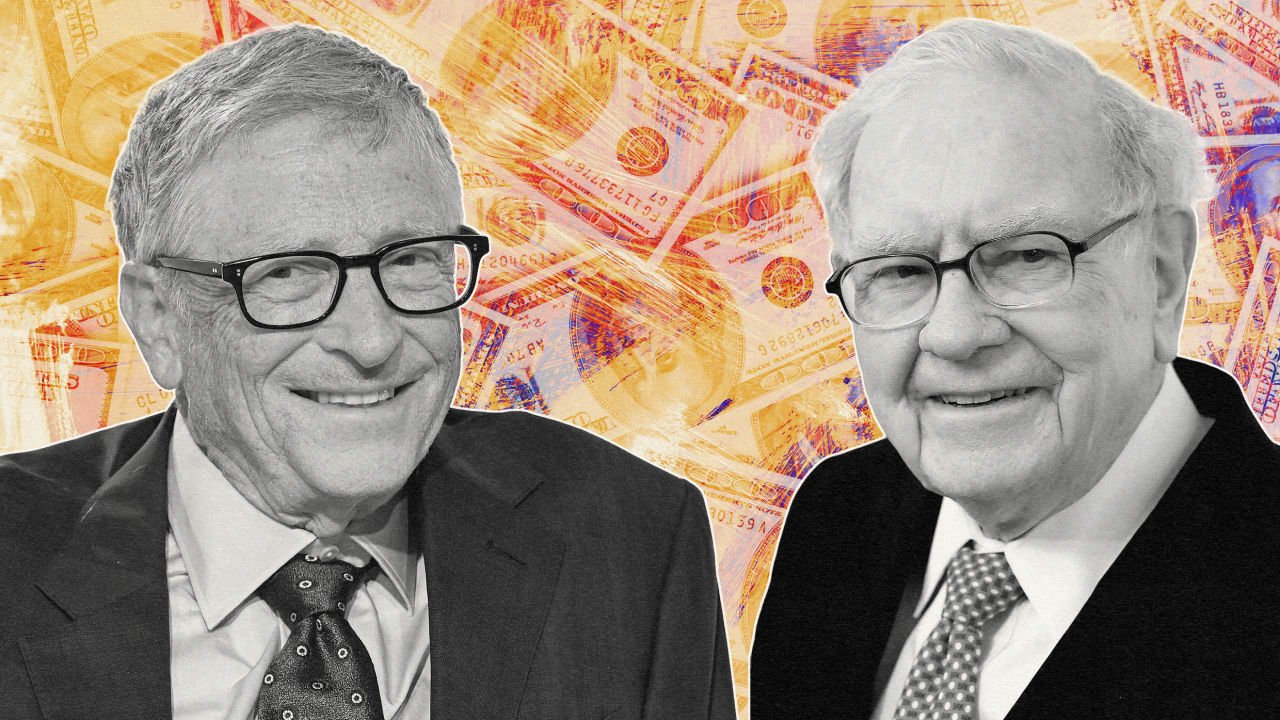
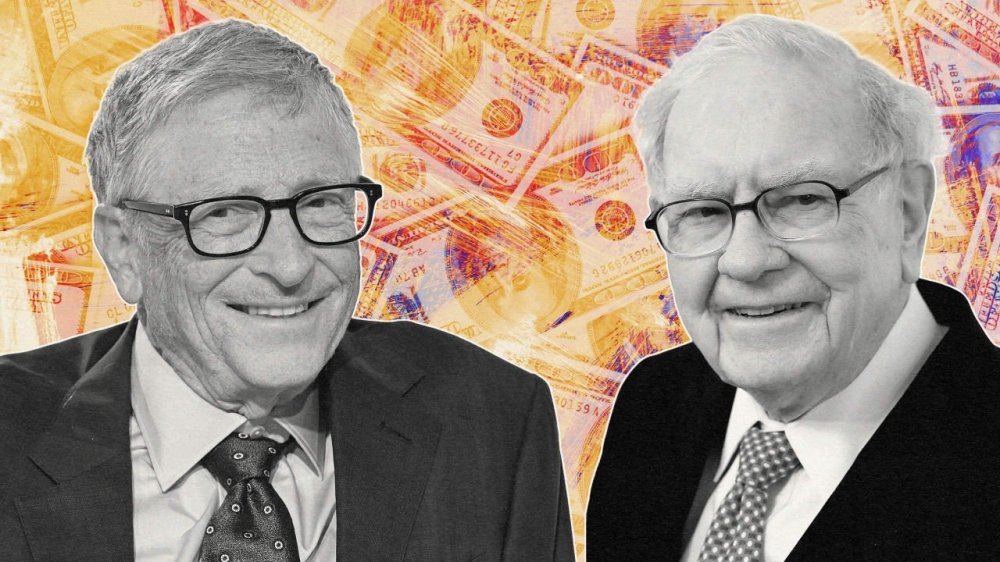
It’s feeling like the end of an era. On May 8, Bill Gates announced plans to sunset the Gates Foundation, the standard-bearing charitable organization he started with his now ex-wife Melinda French Gates 25 years ago. The foundation is set to give away more than $200 billion over the next 20 years, including virtually all of Gates’s $112 billion fortune, before winding down in 2045. Gates revealed the plans shortly after longtime Foundation ally Warren Buffett announced he’ll be retiring from Berkshire Hathaway this year, leaving his own $160 billion fortune to a charitable trust, which his children are to disburse within a decade of his death. Now everything’s about to change. The announcements from both Gates and Buffett mark a dramatic shift in the world of philanthropy. They point toward a near-future when the two most visible benevolent billionaires of the 21st century will have put their last-ever dollars toward humanitarian causes. Considering that 2025 is a volatile, transitional time for the billionaire class and humanitarian efforts in general, it’s unclear whether a new wave of ultrawealthy philanthropists will emerge to continue their work. The idea of billionaires giving back has been part of American lore since Andrew Carnegie and John D. Rockefeller started donating from their massive industrialist fortunes in the late 1800s. The Gates Foundation took it to a new level, however. With a cumulative $43 billion in assistance from Buffett since 2006, the foundation has spent $100 billion in 25 years to bring vaccination and other treatments to some of the world’s poorest areas, preventing the spread of infectious diseases like HIV and malaria. Beyond their own contributions, though, the foundation’s leaders hoped to spur a sense of moral obligation in their fellow billionaires. The Giving Pledge era In 2010, inspired by Carnegie’s essay, “The Gospel of Wealth,” Buffett, Gates, and French Gates introduced the Giving Pledge, whose signatories publicly promised to donate more than half their total wealth to charitable causes. It was more than just a way to shame some of the world’s richest people into stepping up their generosity; by getting 240 titans of tech and other industries to sign on, the founders helped promote and normalize the idea that giving away a huge fortune is more impressive than building one. By 2015, when signees Mark Zuckerberg and Priscilla Chan committed $45 billion to their own charity, philanthropy appeared to be in fashion. Not all of the world’s billionaires had signed on, though. Notable absences included Mark Cuban, Jeff Bezos, and Google’s Sergey Brin and Larry Page. Of those who did sign the pledge, some seemed to take advantage of its lack of accountability. Elon Musk stayed quiet about his philanthropic activity after signing, before donating $5.7 billion to his own foundation in 2021. Other signees signaled that they were waiting to leave huge donations in their wills eventually—a move that is easy to back out of and ignores all near-term humanitarian needs. Of course, many of those who signed the pledge ultimately ended up lumped together with those who didn’t. As wealth inequality became an increasingly hotter topic in the late-2010s, the concept of billionaire benevolence came under closer scrutiny. No trust in charitable trusts While some billionaires sincerely strive to help as many people as possible with their philanthropy, it’s no secret that others seem to merely use their philanthropy to help themselves. Some treat their foundations as tax shelters, either to avoid paying estate taxes on an inheritance or to claim deductions immediately and then slowly dole out funds over decades. Others use it as a mechanism to launder their reputations. The Sackler family, for instance, donates enormously from its vast pharmaceutical fortune, perhaps in the hope that more people will remember what they gave to museums, rather than their contributions to the opioid epidemic. As the decade ended with Donald The President, still in his first term as president, becoming legally barred from operating a charitable organization in New York over his misuse of funds, many Americans could be forgiven for entering the 2020s with a more cynical view of billionaire philanthropy. Whatever shred of Giving Pledge goodwill still clings to the collective reputation of billionaires in 2025 is now hanging on by a thread. The President has stocked his second administration with billionaires—and put Musk, the world’s richest man, in charge of rooting out government waste. One of Musk’s first moves after The President’s inauguration was to dismantle the U.S. Agency for International Development, which provides humanitarian aid for millions around the globe. If ever there were a moment for benevolent billionaires to demonstrate a commitment to doing tangible good with their philanthropy, it’s right now. A Harris poll from last August indicates Americans would love to see it, too, with 68% agreeing that “billionaires have an ethical responsibility to address humanitarian crises happening around the world.” The path forward So, what will the next era of billionaire benevolence look like? As much as the Gates Foundation has performed life-saving, landmark work over the past quarter century, the organization has not been without its issues. Gates and Buffett reportedly disagreed on how the foundation should be managed toward the end, with Buffett warning about the dangers of “arrogance, bureaucracy, and complacency” in any large organization, while French Gates exited the foundation to pursue philanthropy in her own way in 2024, three years after her divorce from Gates. Since then, French Gates has joined MacKenzie Scott in charting a new path forward for philanthropy. Scott, who dissolved her marriage to Jeff Bezos in 2019, has given over $19 billion to nonprofit organizations in recent years. The red-tape-shedding speed of her donation spree has dramatically outpaced traditional foundations, underscoring the urgency of philanthropic work. Going the decentralized route has freed up Scott from all the business of keeping a foundation running in perpetuity, and French Gates has followed her example, donating funds through her investment company, Pivotal Ventures, rather than launching a new foundation. Although critics argue that this approach fails to provide long-term stability to the organizations the donor assists, it avoids getting bogged down in the board-approved details that can forestall or derail a donation. (By charting an end date for the foundation that bears his name, Gates himself now seems to acknowledge that actually applying funds is more important than keeping the coffers filled forever.) The new way forward for benevolent billionaires might also involve a no-strings-attached approach. While some foundations tend to get bogged down in micromanaging how their funds are disbursed, Scott has given the organizations she donates to free rein. According to her website, Yield Giving, Scott’s donations have gone to more than 2,450 nonprofit teams “to use as they see fit for the benefit of others.” Critics contend this laissez-faire approach leaves nonprofits ill-equipped to handle Scott’s donations, but a three-year study from the Center for Effective Philanthropy suggests otherwise. French Gates seems similarly engaged in trust-based philanthropy, reportedly asking some donation recipients to make their own decisions on how best to allocate her funding. As for which kinds of organizations they donate to, Scott and French Gates are unapologetically driven by and focused on their own values. In a moment when all causes related to gender and equality have been demonized, they remain steadfast in their commitment to advancing women’s power at home and abroad. Similarly, Laurene Powell Jobs balances marquee philanthropy, like her recent $3.5 billion pledge toward climate action, with smaller values-based acts like giving grants to local leaders for community projects. Meanwhile, some organizations, including the Chan Zuckerberg Initiative, have scrubbed their charitable works of seemingly anything that could be categorized as DEI. The Giving Pledge movement wasn’t perfect, but it set a humanitarian benchmark and challenged the ultrawealthy to meet it. The culture of heavyweight charity it fostered created high expectations for billionaires, even if it failed to hold them to account upon not meeting them. A performative donation is still a donation, after all. There are now more billionaires than ever, with nearly four new ones minted per week in 2024. Perhaps some of them will go on to forge the next iteration of the Giving Pledge, kicking off a new era of high-profile philanthropy and inspiring more MacKenzie Scotts. Considering the state of things in 2025, it sure looks like we’re going to need it. View the full article
-
Google is rolling out a new feature for Google Business Profiles named What's Happening. This feature is for bars or restaurants to better promote events, deals, and specials prominently at the top of their Google Business Profile.View the full article
-
Having said it was paramount, the UK government now has half a dozen ‘number one’ prioritiesView the full article
-
Microsoft is going to do away with the Bing Search and Bing Custom Search APIs as of August 11, 2025. Microsoft posted a notice on its API documentation pages with this news.View the full article
-
Remember the Power Pair from Google Marketing Live 2024? Well, that and several other items of discussion were found in internal emails at Google about the GML 2024 event. It discussed how advertisers were not excited about PMax, there is frustration amongst advertisers, being pushed into fully automated ads and they are just willing to go along with it.View the full article
-
Google is also testing a new pagination bar with page numbers and previous and next icons, instead of the "more search results" button. Bing was recently just testing this too and now I see Google testing it.View the full article
-
Over the past few weeks, I’ve traveled across the U.S. and Europe, attending back-to-back leadership conferences. These weren’t your average networking events; they were filled with C-suite executives asking difficult questions in a particularly charged moment: What’s next for DEI? How do we adapt and innovate when it comes to AI? How do we steer employees in a politically divided country? On stage, speakers repeated polished points, but to me, the most important part of what these gatherings offered wasn’t the panel talks—it was the smaller, informal meetings taking place, the standing around high-tops, and the walks to the various meals. In these candid conversations, leaders spoke with a level of candor and vulnerability that there isn’t always room for at the office. Some asked questions, others gave answers. What unified us all was a strong desire for connection, a resolve to make sense of the world together. Today’s leaders are seeing the status quo rapidly dissolve and are looking for support and guidance. As often as not, they’re finding it in one another, not in town halls or board meetings. At one conference I attended, an impromptu group debate over what it means for a brand to have a literal voice in the age of AI prompted a CMO to leave that session committed to developing a sonic identity for their brand—not because of extensive market research, but because of a single peer-driven conversation. More and more frequently, I see firsthand the necessity for executives to have a trusted community to turn to for advice. No Longer Just a ‘Nice-To-Have’ Today’s leaders need more than strategy decks. As we face political uncertainty, technological advancements, and cultural shifts, in this landscape, no leader can afford to try to go it alone. Yet, unfortunately, many leaders are, in fact, just that—alone. I’m no stranger to navigating executive circles, but even after years, walking into rooms with industry leaders can still be intimidating. No matter how confident you are, it still takes genuine vulnerability to approach someone, introduce yourself, and initiate a meaningful conversation. This discomfort isn’t unusual: many executives I’ve spoken to, regardless of their tenure, have expressed feeling awkward or isolated. A recent survey found that over 70% of CEOs experience work-related loneliness, and according to former U.S. Surgeon General Vivek Murthy, feeling lonely at work “reduces task performance, limits creativity, and impairs other aspects of executive function such as reasoning and decision making.” In a time where clarity and creativity are crucial, building connections is now more necessary than ever. But the reality is, building connections takes work, and it can often be uncomfortable. The benefits are worth it, however, and for lonely or struggling executives, there’s cause to be hopeful. I’ve personally seen how many leaders openly embrace community and look out for one another, and I’ve also seen how quickly things can change for the positive when leaders get themselves into the right rooms. The ability to speak openly, share notes and experiences, and weigh pros and cons with peers before making decisions is a lifeline. The real value The true value of these communities is deeper than getting access to prestigious circles or hitting a flashy number of followers or connections on LinkedIn. Rather, they help leaders grow and thrive by providing: Space for vulnerability: Real conversations happen away from external pressures to perform. These communities invite leaders to be authentic, honest, and ask the hard questions. Shared experiences: A group that can relate to your experiences and open opportunities for growth. Whether you’re looking for new marketing strategies or ways to optimize your product pipeline, it helps to speak with those who get it. Fresh perspective: Cross-industry conversations can spark new ideas and remove tunnel vision. A first-time fintech founder might have something to learn from a seasoned executive at a legacy brand, and vice versa. Strength in numbers: Community provides the collective courage to act together, especially during difficult moments. You’ll also get the comfort of knowing others around you are also trying to figure things out, and are willing to help you on your journey. Even though the benefits of community are clear, it can be challenging to know how to find one for yourself. The types of trusting, deep relationships I’m talking about aren’t fostered overnight or over Slack. It takes intentionality to grow your village. If you’re wondering how to begin, I’d start with the below. Six Ways to Build Peer-to-Peer Connection Be curious. Make a concerted effort to learn about others. Ask better questions, listen more deeply, and follow up in a way that shows you paid attention. Prioritize depth over breadth. It’s not all about the numbers. Five deep contacts who truly care about you and your success are better than 100 surface-level connections who don’t. Attend curated events. Not every conference is worth your time. Carefully select rooms where the guest list and topics align with your interests and where you have the most to contribute. Give first, give often. Generosity builds trust, so focus on what you can do for others, not the other way around. From advice to introductions, share whatever’s in your tool kit. DIY. It’s not always about receiving an invite. Sometimes, it’s better to send one. Whether it’s a monthly dinner, biweekly Zoom call, or simply a private group chat, consistency is key. Remember: you can always build your own table. Lean into vulnerability. You can’t earn trust without taking a risk. Be open and honest, and others will follow. A Call to Lead Together Often, leaders only prioritize communities in times of crisis and have to scramble to find the support they need. But the most important relationships aren’t built overnight, and it’s even more difficult to forge them when the pressure is already mounting. That’s why the time to invest in community is now. Leaders should prioritize building connections just as intentionally as they do other aspects of their work. The future of business will be determined by those who connect and collaborate, and those who have built the trust required to make an emergency call at an odd hour. If you’re a leader, ask yourself today: Do you have a circle you can turn to when the stakes are high? If not, start creating one now. Start with just one conversation, and keep the momentum from there. Trust is built over time—don’t waste any more of it. View the full article

-
Join us in this session where we’ll explore real consumer behavior and how it shapes your local SEO strategy. The post Local SEO: How To Make More Customers Click, Choose & Walk Through Your Doors [Webinar] appeared first on Search Engine Journal. View the full article
-
Fund managers were positioning for a US economic downturn before America and China forged a trade pactView the full article
-
Welcome to Pressing Questions, Fast Company’s workplace advice column. Every week, deputy editor Kathleen Davis, host of The New Way We Work podcast, will answer the biggest and most pressing workplace questions. Q: How do I make a good first impression? A: Since this is a work-life advice column I’ll focus mostly on how you can make a good impression at work, but many of these tips work for other situations in life. Be interested: Ask questions It’s a simple truism of most conversations and human interactions: People like to feel like they’re interesting and important. If you know whom you’ll be meeting, you can go one step further and do a little research in advance. Job candidates who ask questions about the interviewer’s own time at the company show that they are interested in both the company and the person they hope to work with. The same goes for meeting potential clients, networking connections, etc. Regardless of if you have the chance to prep or not, you can listen to little conversational doors and jumping-off points to be curious and dig further. Most people casually give little details as they talk. Be a good listener and you can ask a follow-up question that shows you’re engaged. In a world where most people are distracted, overwhelmed, or self-absorbed, paying attention goes a long way. Be interesting: Say something memorable While you should be a good listener and ask questions, you won’t make a good impression if you don’t say anything of interest. Sharing an interesting “did you know” fact related to what you are talking about goes a long way. It’s a little harder to plan for this, and you certainly don’t want to throw in a random non sequitur. But if you’re generally well-read and well-informed, hopefully a natural opportunity to mention something relevant will present itself. Be helpful People like others who help them. Fast Company contributor and psychologist Art Markman says “starting your time with a new team by helping others reinforces a favorable first impression and also generates a sense of support from people you can rely on when you need help in the future.” He calls this a “service mindset” and says it’s particularly valuable for people taking on management roles. “A leader who finds ways to help their team achieve their goals can develop loyalty from the people who report to them, which pays significant dividends down the line,” he explains. If you’re not a manager, you can make a good impression at a new job by being proactive and developing your own plan for your first 90 days. It will help you to have goals laid out so you don’t feel as lost and will make a great impression on your new boss and colleagues. Being helpful works in other areas to make a good first impression, too. If someone you are talking to mentions a problem they are having, following up with a recommendation will make a lasting impression. Want more advice on how to make a good impression? Here you go: Four easy ways to make a memorable first impression How to make a good first impression when starting a new job 3 ways to create a good first impression at your new job 2 surprising science-backed ways to make a great first impression (even virtually) View the full article

-
Want more housing market stories from Lance Lambert’s ResiClub in your inbox? Subscribe to the ResiClub newsletter. As I’ve been closely tracking in ResiClub’s monthly metro- and county-level housing inventory analysis, over the past year the supply-demand equilibrium—measured by shifts and levels in active housing inventory and months of supply—has shifted directionally in favor of homebuyers. That doesn’t mean buyers have all the leverage, or that the picture is the same in every market. Directionally, however, homebuyers in most markets have gained leverage compared to the 2024 spring housing market. This shift is also showing up in the pricing data—specifically the rate of change. Indeed, 49 of the nation’s 50 largest metro-area housing markets have a weaker year-over-year home price shift this spring than a year ago. This widespread softening doesn’t mean home prices are falling in every market—they aren’t. Rather, in this context it means home price growth has decelerated across almost every market over the past 12 months, and more markets are seeing price declines compared to a year ago. In March 2024, 47 of the nation’s 50 largest housing markets were experiencing rising year-over-year home prices, and just three of them saw falling year-over-year home prices. In March 2025, 34 of the 50 largest housing markets saw rising year-over-year home prices and 16 were falling. ResiClub expects to see the number of major housing markets with falling year-over-year home prices rise further in the coming months. (Full-month April data publishes later this week.) As ResiClub has closely documented, the recent softening and weakening have been more pronounced in the Sun Belt, particularly in Gulf housing markets. The greatest weakness is evident in parts of Texas (especially Austin and San Antonio) and Florida (notably its condo market and Southwest Florida). Click here to view an interactive version of the chart below. Zooming out, the chart above shows what the ongoing price softening looks like in a recent historical context. The yellow line represents the national aggregate, which has decelerated in the Zillow Home Value Index. U.S. home prices went from rising 4.6% from March 2023 to March 2024 to rising just 1.2% from March 2024 to March 2025. The deceleration in home price growth is welcomed by many homebuyers who saw prices overheat during the pandemic. In more markets than last year, homebuyers will see their incomes rise faster than local home prices. View the full article

-
Disability is often framed as something to accommodate instead of celebrate. But Visible Voices, a new digital platform launching today on Global Accessibility Awareness Day 2025, is challenging that mindset. The platform is part magazine, part gallery, and part curated e-shop. As a whole, it’s repositioning disability as a source of culture, creativity, and style, fueled by the belief that accessibility and aesthetics should not be at odds. Cofounded by journalist Bérénice Magistretti and creative entrepreneur Reuben Selby, both of whom live with invisible disabilities, Visible Voices is the platform they wish existed when they were first navigating those identities, with a Vogue-meets-MoMA editorial approach that leaves traditional disability resources in the past. The result is a cultural rebrand and design manifesto, as visually compelling as it is radically inclusive. “Why is disability still something we tiptoe around?” Selby asks. “Why are we reluctant to claim it with pride? We realized there was a space missing. A space where people could feel proud of who they are, not despite their disabilities, but because of everything it taught them. A space that didn’t feel clinical or heavy, but vibrant, creative, and human.” Bérénice MagistrettiReuben Selby Built over the course of a year, the Visible Voices platform is as considered in form as it is in content. The site, which they designed in collaboration with design firm Droga5, integrates accessibility from the ground up, without sacrificing visual impact. Embedded accessibility features on the website include a toggle button to shift between light and dark mode and clickable Text-to-Speech audio versions of each article. Rather than default to conventional accessibility plug-ins or overlays, every design choice was made with both beauty and usability in mind. Foundry studio Modern Type also developed a bespoke, hyper-legible typeface to improve readability across the site. And sound designers at Lucky & Bamba created a sonic logo by translating the braille version of the brand’s name into a musical scale. The result is a sensory-rich digital experience that invites users to engage with content on multiple levels. “We’re all used to visual logos,” Magistretti says. “But what if you can’t see a logo? You should be able to hear it, feel it. That’s what we’ve created, and we hope it inspires other brands to think differently.” At the heart of Visible Voices are the three editorial pillars designed to reframe disability through a cultural lens: a magazine, digital gallery, and curated e-shop. The magazine features stories at the intersection of disability and aesthetics, including hairstylist Anna Cofone’s mission to make fashion more accessible, textile artist Caterina Frongia’s use of braille in her tapestries, and activist Nadya Okamoto’s reflections on living with Borderline Personality Disorder. Desert The “creative voices” gallery highlights artists who are either disabled themselves or are reshaping how disability is represented in contemporary art. Among them are Florence Burns, a Manchester-based illustrator whose clients include Nike and Channel 4; award-winning photographer Anna Neubauer; and American painter, writer, and disability rights advocate Riva Lehrer. The Ballad of Human Mutations Meanwhile, the e-shop takes a bold stance that says disabled consumers deserve products that are not only functional but beautiful. “We didn’t want to take the health-related route of selling medtech devices because we want to go beyond this patient-focused narrative and offer disabled people a beautiful, creative, and aspirational hub,” Magistretti explains. Megan While many charities, foundations, and grassroots organizations continue to do vital work supporting disabled communities and advocating for systemic change, Magistretti and Selby intentionally structured Visible Voices as a for-profit business. “Commerce plays a huge role in pushing culture forward. People buy what brands tell them to buy, so diverse representation is crucial,” Magistretti explains. “If you only see nondisabled people in campaigns and runway shows, the assumption will be that the market for disabled people is niche, because it’s invisible. By increasing representation across fashion and beauty, that visibility generates awareness, and awareness creates demand.” At launch, the store features six brands across three categories, including clothing, accessories, and beauty. Each brand offers a tightly curated selection of 5 to 10 items. Standouts include Neo-Walk’s vibrant, sculptural canes; Auzi’s luxury hearing-aid jewelry; beauty brand Human Beauty’s inclusive makeup; and Liberare’s adaptive intimates. A “visible voices” merch line is also in the works, and the team plans to continue growing the store through exclusive collaborations and new brand partnerships that align with their mission. The bottom line, Magistretti says, is that disabled people aren’t just patients who need to buy functional medical items. “They are consumers who want to buy what they desire, what makes them look good and feel great. The disabled demographic is a huge untapped market with massive spending power. We want to offer them what they want to buy, and show that disability is the next frontier in fashion and beauty.” View the full article

-
In recent months, the drama around Elon Musk’s Department of Government Efficiency (DOGE), President The President’s efforts to defund federal agencies, and the court cases challenging these moves have consumed the news. It’s understandable that an announcement last month about a small office lease on the Upper West Side of Manhattan being canceled didn’t get much attention. But that 43,000-square-foot space near Columbia University is home to the Goddard Institute for Space Studies, or GISS, a NASA research outfit, think tank, and pioneer in climate change research that will see its lease terminated by the end of the month, per a NASA spokesperson. Currently, the institute has no permanent home to move into. It’s likely you’ve seen the building, even if you’re not aware of the monumental achievements that have taken place there. The exterior shot of the diner in Seinfeld features that exact building; for decades, scientists working inside have dealt with an occasional fan taking selfies outside. You’re also probably more aware of the ideas hatched inside than you think. During the ’60s, when the institute was founded, the terms black hole and quasar were coined inside its walls. In the late ’80s, NASA scientist James Hansen became famous for his warnings about the dangers posed by climate change. He was then the head of GISS, and the climate modeling that he and his colleagues did there proved the case. “This is the place we came finally to understand the threat to the Earth that global warming represented—the biggest threat in the history of our species,” climate advocate and author Bill McKibben told Fast Company. “Nothing less than that. Their datasets were what allowed Hansen to go before Congress and speak with authority. He had the numbers and no one else did.” The end of GISS as we know it represents many things, including the damage the The President administration’s cost-cutting is doing to American scientific preeminence. Current head Gavin Schmidt said without funds for a new lease, he’s racing to find a new home. (Though staffers haven’t been told where they’re moving to, as of yet, none have been terminated; a NASA spokesperson said, “Over the next several months, employees will be placed on temporary remote work agreements while NASA seeks and evaluates options for a new space for the GISS team.”) The move comes as the federal government has decried climate science, cut jobs at NASA, and proposed curtailing its mission. But even the existence of GISS showcases the power of a small group of curious, driven people who, if given resources and freedom, can accomplish incredible things. “There is something that is quite distinct to working for NASA,” said Schmidt. “Because, literally the whole universe is your subject.” Digital Commonwealth A Small Office With Expansive Freedoms Located across a few floors in a former apartment building, GISS has never been a well-outfitted office. “Until recently, it was a shithole,” said Schmidt, who noted that even though a long-overdue renovation was just finished, the air-conditioning system is still pretty much nonfunctional. But the office decor was never the attraction. It was the people you could bump into. Named after rocketry pioneer Robert Goddard, the institute was established in 1961, and initially called the Institute for Space Studies. It was led by Robert Jastrow, a celebrated researcher and public figure who would help millions of Americans learn about space via prolific writings and TV appearances. Locating in New York City helped attract the leading lights of academia from surrounding universities. Jastrow said the institute’s goal was to “arouse the interest and enlist the participation of this rich scientific community.” It became a hotbed for debate and ideas, hosting seminars and talks that are credited with birthing the concepts behind black holes, quasars, and plate tectonics. A sidewalk bookseller who specialized in sci-fi books positioned himself nearby to pick up business from the high concentration of astrophysicists. Jastrow could be a competitive and energetic boss—he would push researchers to pull all-nighters and even get them to run laps with him around Central Park—but academic freedom remained paramount. “GISS, from the very beginning, was set up as a place with a light federal presence,” said Schmidt, who took the reins at the institute in 2014. “There would be civil servants, but most of the people there would be postdocs early in their career. The idea was to have this kind of fervent, enthusiastic, free from programmatic responsibilities [space]. It wasn’t an operational center. We had a lot of workshops.” In the ’70s, Hansen and others helped work on projects that sent probes to other planets, including Venus and Jupiter. By the early ’80s, NASA changed its focus to what was called mission Earth; the agency realized it knew more about the polar ice caps on Mars than it did the polar ice caps on Earth, and sought to rectify that. In analyzing Earth’s climate, the previous GISS work on other-planetary atmospheres came in handy. Those frameworks could be applied to Earth’s climate, and its change over time. In addition to that deep bench of multifaceted scientific talent, GISS also had the gear. At the time, it had one of the most powerful computers in operation. While it still used punch cards and spinning disks, it enabled researchers to create the most sophisticated models of climate change that had been done thus far. McKibben remembers spending time by this machine, as Hansen explained what was being computed. “I would have been there in the late ’80s, right before or after Hansen’s testimony [before Congress],” he said. “I went a bunch of times, and he showed me around the mainframes and interpreted for me what they were spitting out. It was classic big science of that era—spinning disks and all.” Why Its Climate Models Remain So Valuable Having that technology, steady support, and a revolving cast of experts made it a perfect place to perfect climate modeling. According to Schmidt, as the task of analyzing the climate became more and more complicated, there basically ceased to be university-based climate modeling to predict future temperature shifts a few decades ago. Everything globally is done at labs like GISS, and it offers a substantial benefit to research around the world. The institute’s famous temperature series, which it has maintained since the 1980s and provides monthly surface temperature data back to 1880, is provided free. It’s not even a line-item in the GISS budget; Schmidt says it comes out of general operating expenses. And GISS continues to be one of, if not the most, influential organizations in the field, Schmidt argues, because it’s cutting edge without being rigid. It’s a small, nimble group of roughly 130 researchers without a strict hierarchy, so new ideas and research can quickly be vetted, tested, and applied to the model to improve its accuracy. GISS continues to refine and improve its model. Earlier this year, NASA launched a long-delayed satellite project called PACE that will explore phytoplankton growth on the ocean surface, algal blooms and aerosols, and other factors impacting temperature shifts. The institute also remains at the forefront of using machine learning to create models that chart the possible course of climate change. What happens to this work when GISS leaves the only home it’s ever known remains to be seen. “Obviously, it is not our idea,” Schmidt said, adding that he doesn’t think it’ll save money or lead to increased efficiency. The lease termination notice does say the work will continue in a new home. “Is this going to impact our mission? Yes, of course,” he said. Schmidt has made some progress in his search for a new location, but he’s far from finished. He’s essentially begging for desks in the neighborhood, looking to find a home at Columbia University, New York University, or the Natural History Museum. He doesn’t have any budget, so he can’t pay rent and he fears there’s a limit to how generous people will be. “If you want to bring in people who are going to have interesting ideas and who are going to pursue those ideas, they have to have freedom to do so,” he said. “They can’t be so drowned with proposal writing or doing operational stuff or having to do some bullshit thing for somebody else. If you want to keep the smart people and creative people, you have to give them autonomy.” View the full article

-
The Consumer Financial Protection Bureau has dismissed or withdrawn from more than 20 lawsuits as the The President administration reverses the work done during the Biden era. View the full article
-
Donald The President said on the campaign trail ahead of his election that he intended to be the “crypto president.” But his vision and reality have collided in a way that could ultimately do more harm than good to crypto’s broader adoption in the years ahead. Last week, the U.S. Senate dealt the cryptocurrency industry a significant setback, voting to block further advancement of the GENIUS Act, a bill aimed at establishing regulatory guardrails for dollar-pegged stablecoins by classifying them as securities under the jurisdiction of the Securities and Exchange Commission. The surprise collapse of the act—which had passed through the Senate Banking Committee with Democratic support—stems from several factors, says Timothy Massad, a former chair of the Commodity Futures Trading Commission. One major issue, according to Massad, is the bill’s quality. “It didn’t address some key concerns,” he tells Fast Company. Bipartisan negotiations to refine the bill’s language were ongoing, he adds, but a larger obstacle loomed: the president of the United States. The President is a vocal supporter of crypto, so much so that some view him as too deeply involved in the industry and too likely to benefit financially from any policy decisions he makes to be a neutral actor in shaping crypto adoption. First, World Liberty Financial—a crypto firm run by The President’s sons—announced that its new USD1 stablecoin would serve as the conduit for a $2 billion investment from Abu Dhabi’s MGX fund into Binance, the world’s largest exchange. At the same time, the president’s $The President meme coin, launched in January and already responsible for $320 million in trading fees, stands to gain from favorable crypto regulation. In March, The President also named five tokens that the U.S. would begin stockpiling as part of a new crypto strategic reserve. Critics argue that these ventures blur the line between policymaker and market participant. “The President has been so brazenly self-dealing and corrupt that it has given some Democrats pause,” says Corey Frayer, a former Senate Banking Committee aide. Massad agrees. “Both the activities of the president that many people feel are corrupt and entirely inappropriate, coupled with the weaknesses in the bill, led Democrats to say, ‘We can’t support this,’” he says. White House press secretary Karoline Leavitt has stated that “the president is abiding by all conflict of interest laws.” But the perception of personal benefit has already derailed what many saw as crypto’s best chance at mainstream legitimacy. “It’s a source of incredible conflict and potential bribery,” Massad says. The President’s involvement—and the potential for him to profit from crypto-related policy decisions—has forced lawmakers to scrutinize their choices more carefully, including whether to legitimize stablecoins. “Stablecoins don’t do anything that we don’t already do more efficiently in the financial system,” Frayer says. That doesn’t necessarily mean the bill is dead, or that The President will get a pass for what critics see as self-serving actions. “There’s been this basic agreement that it is bad when politicians use their position to benefit themselves,” Frayer says, referencing support for legislation to ban lawmakers from trading stocks based on insider knowledge. “This is the exact same type of issue,” he continues. “It crosses party lines. At least up until now, there has been a bright line at corruption.” But the key phrase, as The President knows all too well, is “up until now.” View the full article

-
As automakers look to get more people in electric vehicles, they continue to make advancements in EV batteries—developments that add range, speed up charging times, or lower costs, all of which entice customer adoption. Now, General Motors says it has developed a new kind of EV battery that provides a higher range at a more affordable price, and that it aims to become the first carmaker to deploy the technology. Called lithium manganese-rich (LMR) prismatic battery cells, these batteries use a higher amount of less-expensive minerals, like magnesium, rather than more of the most expensive minerals like cobalt and nickel. Most EVs in the U.S. use lithium-ion batteries, which contain cobalt and nickel, minerals that have seen price increases as EV battery demand soars. GM and LG Energy Solution plan to start commercial production of these batteries in the U.S. by 2028. In addition to cutting costs, LMR batteries also offer more power. Engineers at GM and LG Energy Solution say their LMR prismatic battery cell has a 33% higher energy density than lithium iron phosphate based cells. This means GM could offer an electric truck with more than 400 miles of range at a more affordable price. In 2024, GM said lithium iron phosphate batteries could cut $6,000 from the cost of battery packs in its electric trucks and full-size SUVs. With this new LMR battery technology, the company expects to achieve even more savings. It’s not exactly clear yet what that will translate to for a vehicle’s sticker price. (GM’s Chevrolet Silverado electric truck, with a max range of 492 miles, currently starts around $73,000 but can go above $87,000.) GM’s work to develop LMR prismatic battery cells began in 2015, but researchers were studying LMR technology long before that. Though they promised high range for a lower price, historically LMR batteries have been marred by shorter life spans. GM says it has solved this issue, and that its new LMR battery cells match the life span of current high-nickel batteries. The LMR batteries contain “virtually no cobalt,” per GM, but do still contain nickel, just at a lower percentage than typical battery cells. GM prototyped these LMR batteries at its Wallace Battery Cell Innovation Center in Warren, Michigan. The batteries are called LMR “prismatic” cells because they’re rectangular, whereas most EV lithium-ion batteries are cylindrical or, increasingly, pouch-shaped. (GM has been using pouch cells for years in the U.S., while using cylindric cells in China.) With a rectangular design, GM says the cells can be more efficiently packaged into trucks and SUVs. These battery cells also use fewer components; with LMR batteries, GM says it can reduce the number of parts in its battery packs by 50%, which can cut weight from notoriously heavy EVs. GM expects to save hundreds of pounds in battery mass with LMR batteries. GM’s announcement comes weeks after Ford announced its own LMR battery breakthrough. Charles Poon, Ford’s director of electrified propulsion engineering, announced at the end of April that the automaker is currently producing LMR cells at its pilot production line, and is working to scale LMR battery cell development and include these batteries in future vehicles “within this decade.” View the full article

-
A new art exhibition in Chicago uses more than 300 works of art to trace the historical origins of the word “homosexual,” mapping how it’s shaped our modern perception of queer identity. According to its lead curator, museums around the world have refused to show the exhibition due to the current political climate—even when it’s offered to them for free. The exhibition, titled The First Homosexuals: The Birth of a New Identity, 1869-1939, is currently on view at the Wrightwood 659 museum in Chicago through July 26. It’s the first time that the exhibition—a passion project of over eight years for lead curator Jonathan D. Katz—has been shown in its entirety. The First Homosexuals: The Birth of a New Identity Through sculptures, paintings, prints, and other media from the late 19th and early 20th centuries, it explores early, oft-overlooked expressions of queer culture. Further, it examines how the coining of the term “homosexual” created a binary understanding of sexuality that we’re still grappling with today. The First Homosexuals sold more advance tickets than any other show since the Wrightwood 659 opened in 2018. But Katz says that after pitching the exhibition to many other museums, he’s been faced with one rejection after another. Le bal élégant or La danse à la campagne (The Elegant Ball, or The Country Dance) A career in queer studies Katz, who is a professor of queer art history at the University of Pennsylvania, began his career in queer studies during the Reagan administration. “When I started, my field was just being born,” Katz wrote in a biography for Northwestern University, where he received his PhD. “Reagan was in office, AIDS was being instrumentalized by the Right to justify the most odious forms of discrimination, and I had been kicked out of the University of Chicago (among other universities) for pursuing the relationship between art and sexuality.” In the decades since, Katz has gone on to teach queer studies at several different universities, including Yale, and co-curated a queer exhibition called Hide/Seek Difference and Desire in American Portraiture at Smithsonian’s National Portrait Gallery. Katz’s new exhibition is inspired by a question that’s followed him throughout his years of research. “The minute you go outside of Europe and its colonies, questions of sexual difference assume a completely different meaning—which is to say that, very often, there’s absolutely no issue associated with same-sex sexuality, and it’s often understood as part of a continuum of sexualities,” Katz says. “I was interested, therefore, in trying to decenter the assumptions that we have about sexuality by reference to other cultural norms. That’s what motivated this exhibition, as well as a careful investigation of what, literally, the earliest representations look like.” The first use of the word “homosexual” Katz’s curiosity led him back to what’s believed to be the first-ever use of the word “homosexual,” found in a letter exchange between two queer activists, Karl Heinrich Ulrichs and Karl-Maria Kertbeny, in 1868. In the letters, Kertbeny takes issue with Ulrichs’ relegation of queer individuals to its own class of people (or a “third sex.”). Instead, Kertbeny argued, everyone has the capacity for both “homosexual” and “heterosexual” desire. “What’s striking is that we use Kertbeny’s language [today], but we have unfortunately held fast to Ulrichs’ deeply minoritizing identity category,” Katz says. Interior with Hendrik Andersen and John Briggs Potter in Florence, Both before and after Kertbeny and Ulrichs’ debate, queer sexuality existed on a spectrum—and it was captured by countless artists. The First Homosexuals includes works by 125 of them, from well-known artists like Jean Cocteau and the Lumière Brothers to lesser-known creatives like Jacques-Émile Blanche. They were pulled from an extensive list of sources, including both private collectors and institutions like MOMA. Works include an 1820s depiction of men dressed as women on the streets of Lima, Peru; a series of scrolls from Japan in 1850 exploring the sexual education of a young man, who’s shown sleeping with both men and women in a variety of positions; and an 1891 photograph showing four women in a romantic embrace. The exhibition is divided into eight sections, each dedicated to peeling back a layer of a story that’s largely gone untold in the mainstream. The Darned Club The final portion of the exhibition is an archway wallpapered with photos of Nazis burning books at the Institute for Sexual Research, the world’s first queer rights organization. It’s a dark closing note that reminds viewers of the many archives of queer history that have been purposefully and violently hidden. “The idea that everything that flowers over the course of the exhibition can so quickly be destroyed, is, of course, a metaphor for where we are now,” Katz says. Since the exhibition opened on May 2, audience reactions have been striking. “It’s been profound,” Katz says. “Lots of emotion, tears, real delight, and a sense of a robbed history that’s being restored.” La danza A “terrible sign” for museums For now, though, that history might only be available to a select few. When Katz first began outreach for collecting the art to be included in The First Homosexuals six years ago, he says 80 to 90% of his requests to museums and collectors were rejected—the highest rate of rejection he’s ever encountered. “There were a number of pieces that didn’t come because when you mount an exhibition about the first homosexuals, you know right going in that there are going to be places that just will not want to play with you,” Katz says. “And that was indeed the case.” La Confidence (The Secret) Since then, rejections have continued to plague the exhibition. Katz has been pitching the finished show to museums around the world for nearly four years, in some cases even offering the exhibition for free despite its multi-million dollar valuation, he told the Chicago Sun-Times. So far, he’s received near-universal rejections, with the exception of the Kunstmuseum Basel in Switzerland, which is currently in talks with Katz to display part of the exhibition at Art Basel 2026. Time and time again, Katz has received the same standard rejection notices from over 100 museums, including the Tate Britain. (The Tate did not respond to a request for comment by publication) Nuestros dioses antiguos “I wish I knew more—I just get the rejection letters,” Katz says. “What I hear is, generally, ‘It doesn’t fit our programming,’ or ‘We’re fully scheduled,’ or some typical excuse.” But one director of a major museum, whose name Katz declined to share, did choose to elaborate further. “They said to me, ‘It’s exactly the kind of exhibition I want to show, and therefore it’s the exhibition I can’t show.” In several cases, Katz adds, the initial reception of the proposal was very promising, but it was ultimately turned down, leading him to wonder whether the museums’ boards were issuing the final “no.” In part, Katz attributes this reaction to a “hangover” from photographer Robert Mapplethorpe’s 1988 exhibition The Perfect Moment, which was cancelled by the Corcoran Gallery of Art in Washington D.C. after conservative leaders heavily criticized the exhibition for containing homoerotic content. In the midst of the Reagan presidency, federal funding for the arts had become a hot-button issue, especially as it pertained to work that right-wing pundits labeled indecent. It’s a period in history that feels like an uneasy echo of the arts scene today, as the The President administration has moved to dismantle funding for local museums and libraries, canceled National Endowment for the Humanities grants, and blocked federal arts funding from going to artists who promote so-called “gender ideology,” a vague term that the government appears to be using as a dog whistle for any kind of gender expression outside of the binary. While Katz sent out most of his art loan requests and exhibition pitches before The President’s election, he says this pattern of rejection is a familiar narrative that’s plagued the museum world for years. “It may not be The President’s horrific politics, but it is still horrific politics,” Katz says. “It’s the age old prejudicial politics that animates the museum world.” More generally, as a queer studies expert who faced repeated instances of institutional homophobia during the Reagan years, Katz feels that the current political attitude toward the queer community is “worse than a regression.” Nu assis de profil “Homophobia was actually bizarrely less naked under Reagan than it is under The President,” Katz says. “They still hated us, but they talked about the idea of an inclusive culture. There’s no discourse of an inclusive culture now. There are clearly drawn borders and boundary lines in every sense of the word, and a profound sense of us against them.” For museums that are brave enough to speak out, Katz believes there could be an opportunity to build trust with new audiences by choosing to platform queer stories instead of silencing them. “I think that museums actually have a remarkable opportunity to build their audience and relevance if they seize it,” Katz says. “There is a large population that is not a veteran museum-going population that can become a veteran museum-going population by speaking to the social and political issues that haunt this country. That many museums try to avoid that desperately is a terrible sign. What museums need to do is frankly engage with it.” View the full article