ResidentialBusiness
Administrators
-
Joined
-
Last visited
Everything posted by ResidentialBusiness
-
 Google is testing various link formats in AI Mode. Initially Google launched AI Mode with those tiny paperclip links, but Google, like they've done in AI Overviews, is testing in AI Mode, anchor text links and URL links within the text of the AI response.View the full article
 -
As much as it can seem like a status symbol to be verified, there are also really practical reasons to have a verified Instagram account. Verification helps with engagement, can help Instagram users find real sources of news, and can stop impersonation, among other things. Getting verified adds credibility to any account — so it's no wonder that so many of us are keen to have that blue check on Instagram. And, with the roll-out of the new Meta Verified subscription, getting that little icon is not only reserved for public figures (as long as you're happy to pay a monthly fee, of course). In this post, we'll cover what verification is, the two ways to get a blue check on the social media platform (with and without paying for Meta Verified), plus some FAQs about the blue tick. Jump to a section: What does it mean to be verified on Instagram? The difference between Meta Verified and verified badges What are the benefits of getting verified on Instagram? How to get verified on Instagram with Meta Verified How to get verified on Instagram as a notable figure 3 tips for getting verified as a notable figure Instagram verification FAQ What does it mean to be verified on Instagram?You've almost certainly seen the blue check next to an account's name on Instagram — that means that the account in question has been verified. Before the introduction of Meta Verified, that verified badge meant that Instagram had confirmed that the account was both authentic, and represents a notable brand or influencer, public figure, or celebrity. But now Meta Verified offers another route to the verified badge, and Meta, the company that owns Instagram and Facebook, is keen to differentiate between the two. The difference between Meta Verified and verified badgesWhile both of these are routes to getting the coveted blue check next to your Instagram handle, Meta seems to be keen to draw a line between the two. Here's how they explain it in Instagram's Help Center “Verified badges are different from Meta Verified. Verified badges confirm that a notable account is the authentic presence for that person or brand. Meta Verified is a paid subscription that confirms that the account is validated and authentic. This subscription comes with a bundle of features and benefits available for both eligible profiles and eligible businesses.” Reading between the lines of this help article, it looks a lot like Instagram might consider changes to the notable person verified badges in the future: “As we test and learn, there will be no immediate changes to accounts on Instagram or Facebook that are already verified based on prior requirements.” What are the benefits of getting verified on Instagram?A verified badge is effectively a signpost for Instagram users that certain accounts are authentic — no bots, fake accounts, meme accounts, or even fan accounts are eligible. “If an account has the verified badge, we've confirmed that it represents who it says it does.” There are a number of benefits to Instagram verification. If you are a brand or business, getting verified could be a powerful tool in your social media marketing strategy: It adds credibility — this can be key if you're sharing important research, news, or articles.It helps you stand out in search results — verified accounts appear at the top of Instagram search results.Verification assists with impersonation issues — Instagram won't verify more than one instance of a person or brand, so you can trust that the one that is verified is the real account.Take this one with a pinch of salt, but rumors abound that verified accounts get higher engagement rates. A 2020 study of 6.5 million Instagram accounts discovered that verified accounts got, on average, 30% more engagement than other accounts (though this study was conducted with the old, notable figure version of the Instagram verification badge).If you opt to go the Meta Verified subscription route, you can expect some extra benefits, per Instagram: Account protection. Get added protection from impersonation with proactive account monitoring.Customer support. Access support for subscription and account issues.Exclusive features. Get exclusive stickers on stories and reels.As previously mentioned, there are rumors of higher reach and engagement with Meta Verified, but I tested Meta Verified and found that it had little effect on my content performance.As previously mentioned, there are now two ways to get a blue tick on your Instagram account. The first we'll unpack here is the simplest, and you don't need to be a notable figure to do it — but the social media platform will charge you a monthly fee. How to get verified on Instagram with Meta VerifiedAs I touched on above, there are two ways to get your verified badge on Instagram. The easiest is through Meta Verified — here's how to go that route. Step 1. Make sure you meet the Meta Verified eligibility requirements To subscribe to Meta Verified, you'll need: To be at least 18 years old.A public or private profile that's associated with your full name and has a profile photo that includes your face.To meet minimum activity requirements, such as prior posting history.A valid photo ID that matches your profile name and profile picture.Two-factor authentication enabled on your profile.To follow our Terms of Use and Community Guidelines.Step 2. Sign up for Meta Verified via Instagram Head over to your Instagram profile by tapping your profile picture on the bottom right of the app.Tap the hamburger menu (the three lines on the top right).Choose ‘Meta Verified.' Read through the explainer, then tap ‘Next'.Choose which Meta accounts you'd like verified.Confirm and pay. From here on out, you'll be charged the Meta Verified monthly subscription fee unless you cancel. It could take up to 48 hours for your blue tick (and all the benefits) to appear.How to get verified on Instagram as a notable figureThis route to getting Instagram verification may be free, but there are a few more hoops to jump through. In a nutshell, you'll need to request your verified badge from Instagram. Here's a step-by-step guide to the verification process for notable figures. Step 1. Follow standard best practices on Instagram (easy) To be eligible for your verified badge, you need to do a few pretty standard things: You have to follow Instagram's Terms of Use and Community Guidelines. (That involves things like not spreading false or misleading information, hateful conduct, and violence, which Meta takes really seriously)You have to represent a real personYou need to represent the unique presence of that person or business (only one account per person/business can be verified)And you have to have a complete profile: that means a profile picture, a bio, and a public, active accountStep 2. Prove that you are a notable account (more difficult) To get your verified badge on Instagram for free, you'll need to prove that you are notable — which will be easier for some than others. Being notable means you represent “represent a well-known, highly searched-for person,” according to Instagram. What does that mean, exactly? Instagram shared a helpful tip: When looking at whether or not to give an account a verified badge, they look for accounts that have been featured in multiple news sources. Paid and promotional content do not count. They also shared that they recently made some tweaks to the verification process, expanding their list of news sources to "include more diverse outlets, including those from additional Black, LGBTQ+, Latinx media, and including more outlets from around the world for example.” Which is great news! If you haven't yet been featured in multiple outlets, head down to the next section on tips for getting your verified badge, and we will walk you through some advice. If you do have this proof, you can move on to submitting your application. Step 3. Submit an application to Instagram (easy) The actual application for getting your verified badge isn't too bad; you do it right from within your own Instagram account. Here's how to request to be verified on Instagram: From your Instagram account, tap on the hamburger menu in the top right corner.Tap on Settings and privacy.Tap Creator/Business tools and controls in the ‘For professionals' section. (The button name will depend on whether you have an Instagram Creator account or Business account.Tap Request verification at the bottom of the page.Fill out the form (you'll be asked for an identification document like a driver's license or passport, your creator category, and links to various articles and other sites you are featured in). When you've filled it all out, hit Submit.That's it! You will be notified on the Instagram app within 30 days if your application for a verified badge is successful. If you don't get verified, you can apply again in 30 days. Note that if you apply more than once before they review your original application, they will cancel the application entirely — so it's worth it to be patient here instead of spoiling your chances of getting that blue check. 3 tips for getting verified as a notable figureNow, of course, if getting your notable person verified badge was easy, almost everyone would do it. But it's not — so here are some things you can do to increase your chances of Instagram verification. 1: Grow your following on InstagramInstagram verifies accounts that are active on the platform, so stay active while working to grow your account. Part of beingnotable in Instagram's eyes is how many people are following you on the network, so it's never a bad thing to keep increasing that number. We can help with that: Check out our complete guide to Instagram growth or dive into Instagram for small businesses.Learn the ins and outs of the Instagram algorithm, figure out the best time to post on Instagram, and lean into tools like hashtags and Instagram's newest features.Stay consistent with your posting schedule and check your analytics to see what kinds of posts are performing best. You can try Buffer for free to set up a consistent posting schedule across Instagram posts, Reels, and Instagram Stories.2: Get media mentionsEasier said than done, but entirely possible. You want to start with at least three links for your application, and that's an achievable goal. You can start reaching out to publications that you believe would be interested in your story or what you're working on and pitch them your business. If you have the budget, you can also hire a publicist or PR agency to help as part of your marketing strategy. 3: Be strategic about when you applyIf you don't have a really strong case for being verified, be strategic about when you send off that request. Is a Reel of yours going viral right now? That's a great time to apply. Did you just get a ton of press mentions in a week? Go ahead and apply! Timing can be everything, so make sure you are careful and thoughtful about your application. Instagram verification FAQHow many followers do you need on Instagram to get verified as a public figure?There isn't a requirement to have a certain number of followers to get a blue check, however, you have to prove that you are notable as part of the verification process, and part of that notability is having people interested in following you. Instagram will likely take follower count into consideration when they are reviewing your application, which is why we recommend growing your Instagram following before you apply. How long does it take to get verified on Instagram?Requesting verification as a public figure takes about 30 days, however, you can be approved and verified much sooner than that. It depends on the team that is reviewing those applications, so it varies a lot. Getting Meta Verified happens much faster. Once you've made your first monthly payment, you can expect to see your blue check — and all the other benefits — on your Instagram profile within 48 hours. Do you have to pay to get verified on Instagram?If you're not a public figure who can apply for free verification via the steps we've outlined above, then yes — a Meta Verified subscription is the simplest way to get your verification badge. Be warned, though: There are plenty of scams and websites that promise to get you verified for a fee. Steer clear of these — the only way to get verified is via Instagram or Facebook. How much does a Meta Verified subscription cost?Getting verified on Instagram via Meta Verified will cost $14.99 per month (slightly more if you opt for bundling your Facebook page or profile into your subscription). Note that the cost of the paid subscription may vary depending on your region. If you're after your public figure verification badge on Instagram, the best approach is to work your way up gradually. Over time, you can grow your following and prove your notability, which will significantly help the success rate of your application. If you're off to apply for that verification right now — good luck to you! 🍀 View the full article
-
AI won’t replace CMOs, but those who use it effectively will lead the future. Learn the key strategies shaping marketing’s next era. The post To Navigate AI Turbulence, CMOs Can Apply The Flywheel Model appeared first on Search Engine Journal. View the full article
-
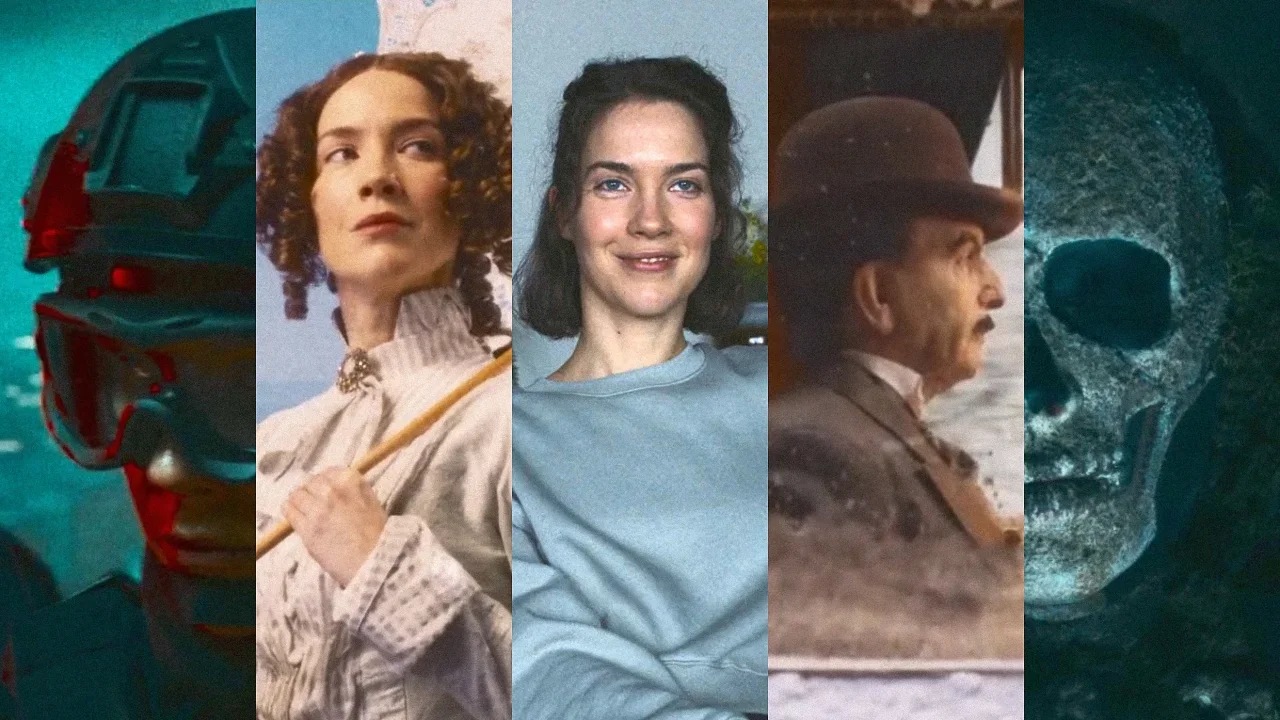
The commercial starts with an actor sitting in front of a TV, remote in hand. Suddenly the world around her changes, and she changes, too, as makeup artists transform her from a couch potato to a Victorian-era lady to a skeleton buried in dirt. The time-lapse filming looks like AI, but it’s exactly the opposite. In fact, the 90-second commercial—shot for BritBox’s first ever brand campaign—is the product of a single, continuous shot that took 14 hours, 45 minutes, and 31 seconds, and was filmed with 11 different sets, at one frame per second using a precision motion control unit. The British streaming service is aiming to woo potential subscribers with its attention to detail and craft. Its new spot also feels like a protest or counterpoint to the waves of AI experimentation hype in film production we see flooding our feeds each day. The Brits are comingDiana Pessin, chief marketing officer of BritBox, says that while the platform has done a great job of growing its core audience of British expats, Anglophiles, and people who generally enjoy British content, now it’s time to broaden the scope. The streamer has topped the 4 million subscriber mark across the U.S., Canada, Australia, and Nordic countries. It reported 25% year-over-year growth between 2023 and 2024, and so far is seeing double digit growth between this year and last. “We’re at a point now where we really want to attract people that may not self-identify as liking British content, but they just like great content,” says Pessin, who joined BritBox in 2023, after a long career at Warner and HBO. So much streaming marketing is clip-based, playing highlights from upcoming shows and movies, but Pessin says this campaign aims to avoid that. “If we want to grow even a little bit, we’re going to have to make more of an impact and create sort of that intrigue and excitement,” she says. “We need to take a step back and really create a reason for people to pay attention because there’s so much sameness out there. And so in some ways that clutter and sameness benefits us as a specialty streamer.” The pitchThe brand campaign launches in time for a slate of anticipated series coming soon to the service, including the season finale of Ludwig, a detective comedy starring David Mitchell that broke U.K. viewership records, and premiered in March on BritBox in the U.S. and Canada. There’s also Towards Zero, a new Agatha Christie adaptation starring Anjelica Huston and Matthew Rhys, premiering on April 16. Created with agency Uncommon, the campaign includes national TV, broadcast, and cinema, as well as several billboards in Times Square, a takeover in the Moynihan Train Hall in NYC and The Grove in LA. There’s also IMDB takeovers, sponsorship of The New York Times’s Wordle, and four custom cartoons with The New Yorker. Nils Leonard, Uncommon cofounder and chief creative officer, says that the goal was to do something purposely difficult in order to bring attention to what BritBox offers. “We were really keen to make sure it was something that people saw, and from that moment on know they’re in the business of film and creativity and story,” says Leonard. “We’re in an age where everyone’s talking about AI and how it’s gonna replace stuff, or about Apple and how amazing they are, and how much money they spend. So with this, we really wanted to try and do something different. Not out of vanity, but because it made it special, and we had one go at it.” The one-take scene concept is having a bit of a moment right now, between the Netflix hit Adolescence, and Seth Rogen’s The Studio. It’s filmmaking at its most intense. Here, Britbox is making it central to its pitch for new viewers who appreciate that intensity. “We really wanted to take the brand to a more emotional space and tap into something unexpected,” says Pessin. “Something people will see as worth trying because they actually may find a lot of hidden treasures.” View the full article

-
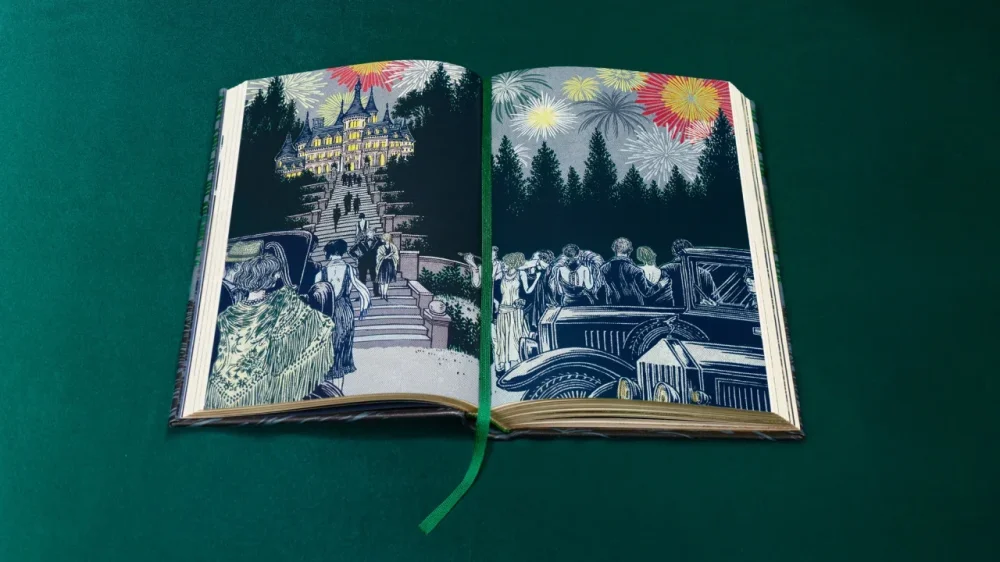
F. Scott Fitzgerald’s masterpiece The Great Gatsby conjures up images of gilded Art Deco opulence: cloche hats and shimmering flapper dresses; a freeflow of French 75s and festivities. And that’s thanks, in part, to kaleidoscopic films like Baz Lurhmann’s 2013 adaptation of the novel. But when you read Gatsby, you discover a less glamorous narrative that has perhaps been overshadowed by contemporary Jazz Age visual clichés—one that is essentially a dark portrait of its times with a bit of rot at its core, thanks to the titular swindling bootlegger Jay Gatsby. And that’s what luxe publisher The Folio Society sought to reflect in its brilliant limited-edition illustrated edition of the novel, which is out today on the centennial of the book’s initial publication. “[We] wanted to move away from the sort of prescribed images that have been cemented in our consciousness,” Folio Head of Editorial James Rose says. “100 years on, I think it’s Fitzgerald’s look at the American Dream—and the abandonment of the American Dream.” NEW ILLUSTRATIONS CAPTURE THE BOOK’S DUALITY Folio is known for its embrace of art, design, and high-end production, and for this edition they commissioned New York–based Japanese artist Yuko Shimizu to bring the book to visual life. Rose says the publisher has worked with Shimizu before, and she has an innate ability to interpret a text and make it her own, as well as suss out hidden meanings and take an unconventional approach. Given that unconventional is exactly what Folio was going for with its interpretation of one of the most famous and well-trodden novels of all time, Shimizu was an ideal fit. The Great Gatsby “Yuko got that instantly,” Rose says. She didn’t view the novel through the lens of the glamorous, glitzy jazz parties and flapper girls the period is known for, according to Rose. “Once you peel back those layers, underneath it’s really quite horrid. […] She wanted to bring that out and actually show that behind all of this surface veneer of money and success, there’s actually a very dark undercurrent.” As the gilded first impressions fade, readers discover that the mysterious millionaire Gatsby is in fact a charlatan. The antagonist Tom Buchanan breaks his mistress’ nose. Then there’s the fatal car crash and the climactic murder. Rose says Folio gives its artists a large degree of autonomy, and Shimizu came up with a list of scenes to illustrate—ultimately bringing all of those above and more to life across 13 pieces. “When they came in, I think we were all stunned by them,” Rose says. In her style they’re gorgeous yet tragic—which strikes at the heart of the book at large. The Great Gatsby GAZING UPON THE AMERICAN DREAM The Great Gatsby in the most literal sense of the cliché needs no introduction. So, Folio elected to commission an afterword instead of a foreword, especially since analysis of the novel could end up spoiling its biggest moments. Who could you bring in to deliver an unexpected take on an unexpected edition?Fight Club author Chuck Palahniuk. Though there’s more connective tissue there than you might think. “Chuck’s one of the foremost American novelists at the moment, and his books deal with that undercurrent of violence,” Rose says. “Particularly if you look at Fight Club, it is essentially about the male gaze on the American Dream. And this is just a continuation of exactly what F. Scott Fitzgerald was doing 100 years before.” The Great Gatsby Rose says he wasn’t sure what exactly Palahniuk would turn in—but he hoped it would offer a look at the book from a fresh angle, and that’s exactly what the author did, exploring it almost as a morality tale, and (humorously, naturally) drawing parallels to everything from One Flew Over the Cuckoo’s Nest to Rosemary’s Baby. “We should all be able to lament as beautifully as [Fitzgerald] did,” Palahniuk writes in the afterword. “Regardless of shaping the future, we should all be able to revisit our past with such skill and humility.” The Great Gatsby BOTH TIMELY AND TIMELESS True to Folio’s output and its fan-favorite limited editions, the production is appropriately opulent. Shimizu illustrated the exterior, as well, which features the green light at the end of Daisy’s dock, a signature thematic element of the novel. The book is bound in goatskin leather, with green foil and gilded edges. It’s printed on Dolce Vita Ivory paper, with Sirio Pearl Cocktail Blue Moon endpapers (“which is just the best name for any paper—and I don’t know why, it makes me think of Jazz Age cocktails,” Rose notes.) Each book is signed by Shimizu and Palahniuk, and housed in a custom cloth box that is screenprinted with a design by Shimizu in gold foil, featuring custom lettering by Atelier Olschnsky Grafik und Design OG in Vienna. The project was also printed and bound by Graphicom in Italy, which is renowned for its sheer craft and eye for detail. To keep things truly limited, Folio is only producing 500 of the books, which sell for $500 each. “We will never do a 100th anniversary, centenary edition of Great Gatsby ever again,” Rose says. “So for us, we need to be very forensic about the materials that we use and get them just right. We’ve got one chance to get it absolutely perfect.” It’s a remarkably gorgeous object—and yet indeed contains illustrated horror right there on the case itself (those headlights . . . ), bringing the concept full circle. A century on, why are we still so entranced by Gatsby? Rose says the class and social divides at the heart of the book persist to this day. “These are timeless themes . . . so I think Gatsby has an unlimited ability to find its way into a new generation,” he says. “It’s not just relevant—I think it’s slightly prescient for America today. Alarmingly so, perhaps.” View the full article
-
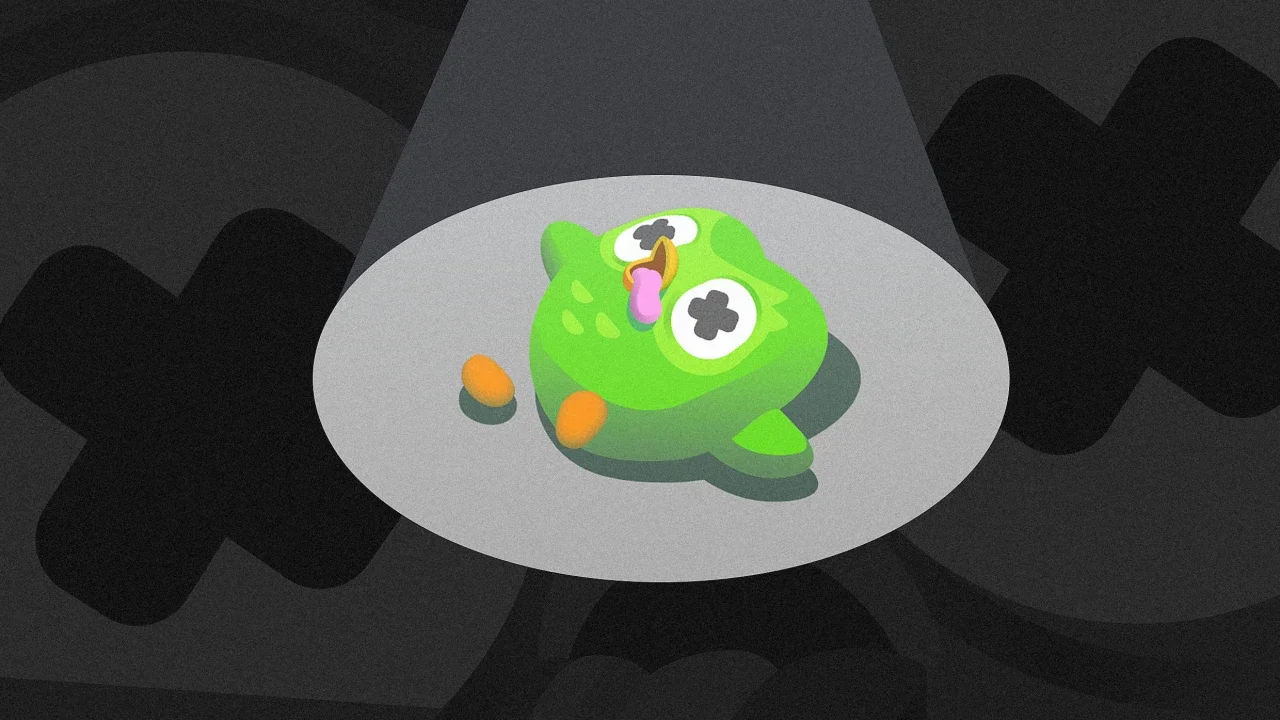
It took Duolingo more than a decade to grow its owl mascot, Duo, from a cute cartoon character into a social media star with tens of millions of followers. Then Duolingo’s marketing team did the unthinkable: It killed him off. The decision turned out to be the company’s most successful social media play ever—and likely one of the widest-reaching social campaigns of all time, by any brand. Duo was originally created as logo in 2011, the year that Duolingo was founded. In the years since, the friendly (if occasionally menacing) green owl has grown into a layered character with friends, enemies, motivations, even a potential lover, and legions of fans. But on February 11, Duolingo announced that Duo was dead—hit by a Cybertruck, fans later found out. This brand stunt was originally meant to roll out as an update to the app’s icon (the cartoon owl appeared dead with his eyes crossed out), accompanied by a series of three videos for Duolingo’s social channels. Duolingo, after all, has a track record of building daring social media campaigns around its owl. Last year, the company rolled out a production-heavy April Fool’s prank promoting Duolingo on Ice, a fake musical for which the company made several very real music videos. This December, Duo starred in a collab with the the Netflix show Squid Game that saw him transform into a K-pop idol. But Duo’s death struck a deeper chord with users than these previous stunts. As the death notice began taking off on TikTok, it garnered thousands of comments from concerned fans, video responses from other brands, and even callouts on national news stations. As the reaction grew, Duolingo’s social media team saw the opportunity to build Duo’s untimely passing into something much bigger. Within a matter of days, they’d met with marketing, product, and engineering teams to spin the concept into a campaign of global proportions—complete with localized ads, in-app integrations, merch, and brand partnership tie-ins. “Candidly, we had three posts, and we were gonna post them and be chilling—just another day at Duolingo,” says Zaria Parvez, Duolingo’s senior social media manager and the mastermind behind its TikTok strategy. “The first post we did was a fake press release about Duo being dead. When we posted that, we saw that the user engagement was popping off. It was a number of impressions that we’d never seen before. Then we were like, ‘Okay, like there’s a huge wind here. We need to build this narrative out even more.'” In the two weeks between Duo’s death and the reveal that he’d actually faked his demise, the Dead Duo campaign raked in a record 1.7 billion impressions across Duolingo’s socials in just two weeks. According to Duolingo’s market research, there was twice as much social media conversation around Duo’s demise as any of 2025’s top 10 Super Bowl ads, which had aired just days before on February 9. Though the campaign was unprecedented in many ways, it followed a social media marketing recipe that Duolingo has perfected over the years: Combine a healthy dose of risk-taking with speed, agility, and, most importantly, a deeper brand story. For many companies, a mascot faking his own death would feel out of character or desperate. But for Duo, it’s right on brand. From Sick Duo to Dead DuoIn the past few months alone, Duo the owl has been roasted on a grill, shredded in a blender, and plagued by a terrible disease—but this is the first time he’s actually died. Duo’s recent ailments are part of the “unhinged” persona that has become his calling card online. In Duolingo’s early days, the company started using the owl to send push notifications to users, begging them to continue doing their lessons, often in a guilt-tripping tone. The internet spun Duo’s passive-aggressive personality into a meme (including one much-circulated image of him holding a gun). The company quickly embraced fans’ interpretation of Duo, building him into a much larger figure on the brand’s social media with his own cast of side characters. Duo’s defining characteristic is that he will do anything to get users to complete their lessons—including kidnapping their families and holding the Duolingo office dogs hostage. Duolingo CEO Luis von Ahn told Fast Company in November that he reviews anything where the owl is going to be in the product, and his feedback usually is, “Can we make it weirder?” This strategy has unlocked a new level of visibility for Duolingo on socials: The brand’s TikTok account added more than 6 million followers over the past year, while total social media impressions grew 80% year over year. Duo’s internet stardom is so significant that, in an interview last year for the Acquired podcast, von Ahn assessed the owl’s value at hundreds of millions of dollars. Duolingo is now bringing more of Duo’s social media personality into brand partnerships and onto the app itself, building out his lore along the way. Part of this strategy has involved occasionally swapping out the app’s default icon (a picture of Duo’s friendly visage) for something unexpected that reflects Duo’s desperation for learners to come back to the app. For a brief period in late 2023, Duo’s face appeared to be melted, startling users. And for two weeks in September 2024, the Duolingo icon showed a sickly looking Duo—with snotty nose and red-rimmed eyes—inciting both disgust and concern from fans. In an email to Forbes at the time, a Duolingo spokesperson explained the bird’s illness: “Duo is quite literally sick of reminding everyone to do their lessons,” they wrote. “But don’t worry. His symptoms aren’t contagious, as long as learners keep their streaks going.” Sick Duo content ended up generating 30 million impressions across Instagram and TikTok. The success inspired the product team to push the envelope even further with their next icon update. Move fast and break Duo In early January, the Duolingo product team began exploring ideas for an app icon change, looking for something next-level that would grab users’ attention. After a few weeks of brainstorming options, Gregory Hartman, Duolingo’s head of art, had a radical idea: What if they just killed Duo? Hartman’s mock-up of a Duo with Xs over his eyes went into audience A/B testing alongside several other icon options, including an anxious, sweaty Duo and a chubby Duo. According to Osman Mansur, Duolingo’s senior product manager specializing in reengagement, the results of the test were relatively inconclusive: The icons performed similarly in getting inactive users to return to the app. So Mansur took the results to Parvez for her input. “We really liked Dead Duo because there was more lore, more narrative, more story we could tell about that,” Parvez says. “We particularly notice that when an app icon change has a strong emotion or a characteristic that people can relate to, it creates more buzz.” With Parvez’s blessing, Mansur brought the Dead Duo concept to Duolingo’s senior leadership team—including von Ahn—and explained that both the product and marketing teams had a “strong intuition” about the potential icon swap. Von Ahn approved the selection, instructing the team to “Dead the shit out of it.” Parvez’s team had just six days to craft the content that would announce Duo’s death. “We value speed at Duolingo,” Parvez says, “so our biggest goal as a marketing team is how do we get things the quickest from ideation to post?” A Cybertruck crimeThe news of Duo’s death came in the form of a somber black-and-white press release posted across socials, set to Sarah McLachlan’s “Angel.” It proclaimed: “Duo, formally known as The Duolingo Owl, is dead.” The following day, a post revealing Duo’s cause of death showed him getting hit by a speeding Cybertruck—a timely jab at Elon Musk’s Tesla, which has been on a downward financial spiral as Musk has become increasingly involved in the U.S. government. Three days after Duo “died,” the official X account tweeted, “All birds go to heaven,” with images of the former Twitter logo and Dead Duo. Duolingo responded, “both killed by a Cybertruck. RIP.” both killed by a Cybertruck RIP https://t.co/578dWAWsWo — Duolingo (@duolingo) February 14, 2025The choice of a Cybertruck as the instrument of Duo’s murder worked exactly as Duolingo’s marketing team intended. “We wanted to find social-first ways to get the internet excited and drive conversation about these different parts of Duo’s death,” Parvez says. “Cybertrucks look funky. And it was like, ‘This seems like something that would happen to Duo—just getting hit by a truck.’” In a third video announcing Duo’s untimely passing, two of Duolingo’s other characters mournfully deposited Duo’s coffin onto the bed of a pickup truck. The video’s caption read, “Btw im deaf so i hope this is a sad song,” while the sexually explicit lyrics of the song “Good Lookin’” by Dixon Dallas played in the background. Those three posts were supposed to be the extent of the Dead Duo campaign. But the internet had different ideas. As news of Duo’s death reverberated across TikTok—the Cybertruck video raked in 25.7 million views and the “Good Lookin’” video garnered another 66.3 million, making it the company’s second most-viewed TikTok—major brands like KitKat, Subway, BuzzFeed, Hilton, and T-Mobile jumped into the comments to offer their condolences. The world’s most popular YouTuber, Mr. Beast, made his own TikTok about Duo’s death (it now has 96 million views.) Traditional media, including The Late Show with Stephen Colbert, weighed in as well. Duo’s death also led to one of the company’s most sought-after achievements: an acknowledgment from the pop star Dua Lipa. For years, a cornerstone of Duo’s lore has been his one-sided love for the singer. But just before Valentine’s Day, Dua Lipa responded to Duo’s death with a tweet that read, “Til’ death duo part.” To commemorate the occasion, James Kuczynski, senior creative director, says Duolingo sent Dua Lipa a gift basket which included a box of “Duo’s ashes” (a packet of matcha powder). Inside Duolingo, the team was ecstatic. Parvez received a Slack message from von Ahn: “Dua fucking Lipa tweeting about us.” That same morning, von Ahn also sent a company-wide Slack that read, “It is with a heavy heart that I announce the retirement of the entire marketing team. As they said, ‘there’s nothing left to accomplish.’” Duo dies 100 deathsAs it turns out, the marketing team was just getting started. With the original Dead Duo videos taking off online, the Duolingo team decided to capitalize on the moment by building out a much wider campaign. The company began systematically killing off its other characters on TikTok. Within a couple of days, it had worked with its merch partners to launch limited-edition plushie versions of the dead characters, which came in coffin-shaped packages. Duo’s death also went international. The company leveraged its 13 localized social media accounts to create region-specific narratives around the owl’s passing, engaging global audiences. In Germany, Duo’s death had a creepy, cult-inspired twist: After his death, a group of smaller Duos resurrected him through occult practices and initiated him as their leader. And in Japan, where there’s a higher cultural sensitivity around death, Duo never died—instead, he became stronger than ever. Rebecca Paramo, Duolingo’s regional marketing director for Europe, the Middle East, Africa, and Latin America, says her team had all of two days to plan out their localized content and hop on the bandwagon. “We pivoted most of the campaigns that we were already working on and partnerships with other brands, and were basically able to create an entire global and international narrative around Duo’s death,” Paramo says. In Brazil, for example, Duolingo had previously lined up a major partnership with McDonald’s that was set to drop around the same time that Duo died. There, Duo’s death was announced in a series of telenovela-inspired TikToks. When McDonald’s saw the content, they were initially concerned for the future of the partnership. But Paramo’s team found a way to merge the two efforts: Duo appeared on a popular local TV gossip show to reveal both the McDonald’s partnership and his resurrection. Duo rises from the deadDuo was never actually going to stay dead, of course. But as the buzz around his death grew, it became clear that the story of his resurrection would have to justify the hype. The team decided that the campaign needed to connect more directly to the app’s language-learning mission—and get fans involved. The weekend after the first Dead Duo post, several engineers worked to create a web page that would track the XP (experience points) that users receive when they complete their lessons, each of which are worth 20 to 35 XP. The page promised that users around the world could “bring back Duo before it’s too late” by completing enough lessons to rack up 50 billion XP. The site tallied the statistics by country, and ranked each one—enticing users to boost their countries’ standings. “The engineers worked on it for hours over the weekend just to get us to the finish line,” Parvez says. “That speaks to Duolingo culture: When people started getting excited about it, everyone was like, ‘How can we help?’ It became a company-wide effort.” While Duolingo is unable to share exact statistics on how much Dead Duo boosted in-app engagement before its first quarter earnings report on May 1, a spokesperson confirmed that the campaign “drove a meaningful lift in new and resurrected users.” Exactly two weeks after Duo first perished, fans’ revival efforts proved successful. Duo rose from the dead with a new app icon showing his eyes blazing with light, alongside a hype TikTok set to VVV and Playboi Carti’s “YEAT.” In a subsequent TikTok, he addressed viewers himself: “I’ve always had two main goals: Get people to do their lesson and get Dua Lipa to notice me,” Duo said. “Neither was working. I had to do something drastic. So I thought, why not kill one green bird with two stones?” Extreme DGAF brandingThe impact of Dead Duo surprised even Duolingo. The company had set a goal of 70 million impressions for the campaign, according to a spokesperson. In the past, Duolingo’s largest campaigns generated around 100 million impressions. Not only did Dead Duo achieve nearly 2 billion impressions on the company’s own social media accounts, the campaign inspired around 160,000 pieces of user-generated content—about 25 times the size of fan reactions to past icon changes. Dead Duo is a prime example of something that Fast Company has termed “DGAF branding”: A form of branding that eschews expectation and tradition in favor of all things wild. Examples include Pop Tarts sacrificing one of its pastries at the Super Bowl and Nutter Butter’s brain rot-inspired, head-spinning TikTok page. Already, other brands are trying to take a page out of the Dead Duo playbook—Sour Patch Kids recently announced that it would no longer be sour and would instead adopt the moniker, “Patch Kids,” before ultimately restoring its sourness days later. Still, Duolingo stands out in that, through its push notifications, brand partnerships, and social media content, it’s built Duo to feel almost like a real person (or owl) to fans. That level of connection is difficult for other companies to replicate. Duolingo, meanwhile, is taking its own lessons from Dead Duo’s resounding success. Mansur says it’s clear that the company’s focus on creative speed is working, but the campaign demonstrated that marketing, product, and creative teams could benefit from collaborating more extensively. “We have a very strong marketing team at Duolingo, and we have a very strong product team. But for a while, a lot of our work streams were kind of parallel to each other,” Mansur says. “This a really unique case where something that was within the product also had a larger marketing component to it, and required close collaboration. We’re testing new things to strengthen this muscle of collaborating across different teams at Duolingo.” For now, the team is still basking in the afterglow of Dead Duo’s success—and taking a break from fielding countless questions from friends and family about Duo’s fate. From an outside perspective, it’s difficult to imagine where Duo could go from here. After all, there aren’t many moves more extreme than killing off a mascot worth millions of dollars. Parvez sees things differently. “Obviously, as a marketer, there’s always that fear of, like, ‘Will we ever be able to one-up ourselves again?’” she says. “But it’s also exciting. It’s proof that, even five years into creating unhinged social content, we’ve been able to elevate it to literally a global scale where everyone was invested. I think the best is yet to come.” View the full article
-
The regulator argues the company is attempting to thwart a pending enforcement action involving an alleged discriminatory appraisal in 2021. View the full article
-
Generative AI (GenAI) has undeniably transformed the marketing function, from automated customer interactions to content creation. But while everyone has been focused on chatbots and creating new blog posts, a quiet revolution has been brewing in Digital Asset Management (DAM). It began with addressing long-standing challenges related to asset findability and reuse but today we are seeing a number of exciting new, high-value use cases that will take us well beyond asset tagging and unlock the true creative potential of your DAM solution. Asset tagging and retrieval One of the core tenants of DAM is asset reuse. Why invest time, resource and cost in reproducing an asset that already exists? And yet, for decades, this has remained an elusive and near-impossible goal to achieve. The reason for this is simple: images, video, audio and other rich media assets aren’t self-describing. Unlike text-based objects which can be readily, if not always precisely, searched for, digital assets depend on metadata for retrieval. Up until now, most meaningful metadata had to be created by humans who would look at an asset and then manually enter the data into prescribed fields, ideally applying the organization’s standard taxonomy and ontology. Ignoring the fact that it is very difficult for one person, not to mention a team, to consistently, accurately and repetitively enter this type of information, most organizations are forced to make trade offs regarding the completeness of metadata entry. Either they require their creative resources to enter metadata as assets are ingested into a DAM solution — an activity that is almost uniformly resented and often poorly executed — or they employ a librarian or team of librarians to properly attribute assets after they have been ingested into the DAM solution. Due to either user reluctance or cost, most organizations find that it is still very difficult to create sufficient metadata to enable pin-point asset retrieval and to effectively reuse assets. GenAI solves this problem in two very meaningful ways. First, with GenAI organizations are no longer dependent on humans to properly “tag” or apply metadata to assets. Computer Vision is a particular aspect of artificial intelligence (AI) that enables computers to interpret images, video and other rich media assets. Utilizing Computer Vision, and particularly Vision-Language Models (VLMs), we can now automatically generate text to describe images and videos. We can also easily convert audio – either audio files or audio tracks for video – into text. As a result, we have a virtually limitless, inexhaustible and inexpensive resource to tag digital assets. These models can be augmented or fine-tuned to provide specific metadata that is unique to your organization or intellectual property – think, for example, about color codes, product IDs or character versions. And, they can be constrained by your organization’s unique taxonomy and ontology. Further, GenAI can also be tremendously effective for asset retrieval, enabling users to employ natural language to quickly narrow search result sets for highly accurate and efficient asset retrieval. The result: we can now solve the asset reuse issue ensuring that DAM users can quickly, easily and comprehensively find existing assets. Beyond tagging: Streamlining asset creation That’s a pretty extensive overview of how GenAI can address asset findability and reuse. And, as you’ll find, many DAM platforms have begun to incorporate GenAI-powered functionality to intelligently tag assets and enable natural-language searches. But what we’re beginning to see is a whole new set of use cases — beyond tagging and retrieval — that will streamline and accelerate new asset creation and the asset review process. Asset ideation One of the more powerful use cases we are now seeing is asset ideation. With asset ideation, creatives can upload a set of sample assets or intellectual property and then — using a simple, natural language paradigm — provide a set of parameters for new asset ideation. This information is then fed to a Computer Vision model that can rapidly generate a broad array of asset concepts. Then, again using a chat-like interface, users can further refine their results, quickly and easily ideating to identify concepts that work. By the way, we are emphasizing the word “concepts” here and that GenAI is ideal for ideation, not asset creation. What we have found is that, while Computer Vision models can quickly create any number of new visual assets, most consumers can readily identify assets that are AI-generated and they lack the authenticity of real photos and images. So the point is to use GenAI for what it is good for: quickly generating an array of concepts to help creative users to conceptualize news assets for a campaign, photo shoot, etc., and then leverage your creative team to produce your final assets. GenAI is not about eliminating the need for creative resources, it’s about providing them with tools to be more effective and efficient. Asset localization We tend to think about asset localization simply as translation. However, it is much more than this. For global companies, visual assets often need to be localized to align with regional preferences, cultural nuances and even the functional needs of certain segments or geographies. For text, yes, this may involve translation to the local language, but it may also involve localizing currencies and units of measurement, for example. For images and video, you may need to adjust color schemas or incorporate local attire and settings into assets. GenAI can assist with asset localization in two distinct ways. First and foremost, it can apply localization policies and guidelines to existing assets and flag issues, or it can even identify countries, regions or even specific demographics in which an asset should or should not be used – additional information that can be added to metadata to further enrich the asset. Second, similar to the use case above, GenAI can also be used to create localized concepts and help users to ideate new versions of assets that reflect your policies and guidelines for localization. Brand compliance Another valuable use case for GenAI that can also streamline the creative review and approval process is assessing assets for brand compliance. In this use case, as new assets are created and uploaded to the DAM solution, a GenAI model can be used to apply brand policies and guidelines and assess whether or not the asset is in full compliance. In the event that the asset is non-compliant, the model can identify the reasons for non-compliance and even make recommendations as to how to mitigate these issues. The key thing here is that, as assets are subsequently routed for review and approval, approvers can be assured that the asset is fully brand compliant saving valuable time in review and approval. Intellectual Property For organizations that utilize third-party intellectual property (IP) in their assets and designs, it is mission critical to understand what IP is being utilized in which assets. It is also crucial to understand when the organization does or does have the right to utilize that IP. This is another value function that GenAI can perform, identifying when an asset contains third-party IP and then validating that the organization has a contractual right to use that IP. Again, this is valuable metadata that can be generated and applied to an asset in a DAM solution. This is also an automated task that can be run iteratively on existing assets or can be invoked as new assets are added to the DAM solution to ensure that IP rights are never compromised. This isn’t plug and play As a final thought, and something I will explore further in future articles, GenAI models are only as good as what they have been trained on. In the early days of AI, we thought this meant that we had to train custom AI models to accurately tag assets or to assess brand compliance. More recently, with methods like Retrieval-Augmented Generation (RAG), we are able to leverage publicly available commercial models for all of the above use cases, though some may still require fine-tuning to optimize accuracy and model outputs. But the critical thing to understand is that to get accurate, meaningful results with GenAI – even for asset tagging – you have to think about your model inputs and fine-tuning, and this really isn’t out-of-the-box DAM functionality. So, while it’s not as simple as turning on a new feature, there is tremendous value for organizations that get this right and GenAI can truly unlock the potential of your DAM solution. Learn more about enhancing DAM solutions with generative AI in this complimentary white paper from CMSWire and Vertesia. View the full article
-
Nigel Farage spurns olive branch from Kemi Badenoch as local election campaigns gather paceView the full article
-
Google’s new patent enables users to search their personal history, like web pages or emails, using natural language queries. The post Google Files Patent On History-Based Search appeared first on Search Engine Journal. View the full article
-
Camb.ai is on a mission to disrupt the dominance of English in global media. Founded in 2022, the AI-powered platform specializes in real-time translation that retains a speaker’s emotional resonance—processing content up to 20 times faster than traditional dubbing services. Major League Soccer now uses Camb.ai’s technology for live broadcasts. But the company has also found unexpected demand in markets like video advertising and the localization of interactive smart toys. To power its growth, Camb.ai has raised $15.5 million to date. The platform now supports translations in more than 150 languages—including Maleku, spoken by just 500 people. CEO Avneesh Prakash, who previously helped build India’s Aadhaar biometric ID system used by more than a billion people, cofounded the company with his son, Akshat Prakash. The younger Prakash, Camb.ai’s CTO, is a computer scientist and former AI/ML engineer on Apple’s Siri team. Avneesh Prakash envisions a future where English is no longer the default language for media production—and where global audiences can access any content, in any language, on demand. Fast Company spoke with Prakash about AI’s potential to reshape global media, the complexities of preserving emotional nuance across languages, and why rare languages remain central to Camb.ai’s mission. This conversation has been edited for length and clarity. What misconceptions do people have about AI voice technology, and how do you address those concerns? People are concerned about inaccuracies when using AI, but they often overlook that even human translators have flaws. When evaluating AI, people try to find that moment of “Oh, it went wrong there.” Often these are subjective opinions, and such analyses do not use a comparative benchmark of how human translators would do on the same piece. The best approach is to enable human translators with AI like ours so they can be 50 times more productive and help cover a large body of work that today remains locked up in one to two languages, like English. What metrics do you use to measure success beyond traditional business growth indicators? One way we measure success is the number of languages we can translate into. Our mission is to redesign the internet for speakers of every language. That’s why we’ve also put a lot of effort into our capability to translate rare or endangered languages like Icelandic or Indigenous languages like Maleku. We already support more than 150 languages for speech-to-speech translation and our goal is to grow this number three to four times over the next two years. What advantages do you have in competing against large tech players and giant AI companies, and what are the biggest hurdles for you to overcome? Compared to the household names in AI, we can make models that are hyperfocused on being the best at translation and dubbing. We are also focused on the open-source community and can use its feedback to iterate and develop faster. The biggest challenge we face is one plaguing the entire AI industry: access to the computing power necessary to continue innovating. To remain competitive, we have prioritized building smaller models capable of being run on a user’s device, rather than the race to the biggest model in Big Tech. Your recent partnership with Legible focuses on books. What other content types present the most compelling opportunities? One unexpected opportunity we’re capitalizing on is translating advertisements (both picture and video). With traditional translation tools, it’s very difficult to translate ads in a way that makes sense culturally. A lot of advertising relies on metaphors, analogies, and cultural references. In the past, if you were to translate ads directly, a lot of the context would get lost in translation. Our models can overcome that hurdle. What do you envision happening to translators as AI dubbing technology advances? I envision a future where content creators and translators work alongside AI rather than work against it. AI will be able to provide a “first draft” translation, but there will always be scenarios (especially in literature and poetry) where a human touch is needed. What’s a common assumption about the future of global content that might be flawed? Most people assume content will continue to be English-first. While a majority of the global content is currently produced in the U.S., in English, with demographic and technology shifts, I see a future where a majority of the world’s media is originally produced in languages other than English. Which unexpected industries or sectors have shown the most interest in your technology? One interesting use case has been in the smart toy industry, where more and more toys are becoming interactive and AI-enabled. Localization in this context has the incredible potential of teaching children their own culture and language; this gets increasingly lost in the modern world. Looking ahead five years, what do you expect to be the most significant change in how we consume cross-language content? We will see all content available in all languages. If you go on Netflix or YouTube right now, you’ll see some content being translated or captioned into a limited number of languages. In less than five years, I expect we will be able to view that same content in tens or hundreds of languages on demand. How does AI-powered dubbing/live translation fundamentally change the economics of global content distribution compared to traditional methods? With AI translation, markets and audiences that were previously considered financially unviable now become accessible. AI translation rapidly increases the speed at which content can be spread around the world. We’ve seen our technology dub content up to 20 times faster than traditional dubbing agencies, so content can be released worldwide simultaneously. Beyond cost savings, what unexpected benefits do you see for AI live translations? Certain cultures have populations greater than that of the U.S. For example, the number of Bengali speakers is larger than the populations of many countries combined. In many such cultures, sports/content/media has the opportunity to reach everybody and unlock a new generation of accessibility and viewership for businesses. Critics argue AI-dubbed content lacks the “soul” of human performance. How do you address this perception, technically and philosophically? With our models, preserving emotion and “soul” has been the number-one priority. By training our models on both text and raw audio, the model learns how different words, punctuation, and context relate to various emotions and expressions. For us, translation is a way to share human expression across cultural boundaries, and ensuring that we maintain the emotional meaning of speech is the essence of what we do. Camb.ai’s mission is to let “every story be told in every language.” How might this reshape cultural power dynamics? Could a Gambian filmmaker compete more effectively against someone benefiting from Hollywood’s global influence? Exactly. That’s our vision. As technology like ours becomes more pervasive, I expect to see content that “breaks the internet” coming from all corners of the globe. Major League Soccer used Camb.ai to live-dub commentary into four languages simultaneously. Is sports broadcasting reaching a linguistic tipping point? Prior to MLS using our technology, there was very little appetite for using AI in a livestream context. This milestone has led to AI being considered a viable alternative for commentary and dubbing, and we’re now seeing more and more global sports organizations adopt the technology. What’s your mission in competing in this ultra-competitive AI arena? The internet was made for English speakers, and we decided to redesign it for the world. While language is a tool of diversity and hence evolution, it is also a tool of exclusion. I wouldn’t be here if I didn’t have the good fortune of going through an English-language education. I’m grateful for that, but I also see the unfairness of that. We created a company to disrupt that disparity. As noted in the film Ratatouille, “Not everyone can be a great artist. But a great artist can come from anywhere.” We are trying to create a world where a great artist born anywhere, creating anywhere, is able to take their content to any other part of the world. View the full article

-
Le Creuset turned 100, and to celebrate, it released a new cookware collection in a hue inspired by its original color, Flame. Named Flamme Dorée, French for “golden flame,” the set includes round and oval dutch ovens, a braiser, and a saucepan in a rich orange gradient with a shimmering gold finish. Prices for the Flamme Dorée pieces range from $310 to $860, which is more expensive than its standard lines—especially premium prices for what the company is positioning as a special occasion product. The French cookware brand was first known for its orange enameled cast iron cocottes, and it now sells products in a range of more than 200 colors. Last year it partnered with Pokémon and released its first ever out door cookware line. The original molten orange Flame color is its “signature color,” Le Creuset says, and Flamme Dorée is the modern remake. It recommends pairing the color with a deep rich green called Artichaut and White. “More than just a color, Flamme Dorée is a feeling,” Le Creuset says, like warmth or light. Le Creuset teased the collection’s release with a social media post of vintage print ads for the original orange Flame-colored sets. Few brands have been around long enough to have colors they’ve been associated with for 100 years, so by reimagining the color for a modern take, Le Creuset is tapping into its heritage to make something new. “Fiery, vibrant and globally recognizable, this celebratory hue pays tribute to the past while illuminating the path to the future,” it says. View the full article

-
When Anirudh Rao was 4 years old and living in Nashville, his friend’s house was destroyed by a tornado. A year later—yes, as a kindergartner—Rao started sketching a potential solution for better tornado warnings. Now 12 years old and living in Colorado, Rao is pursuing a more advanced version of his concept: a network of drones that could theoretically sense infrasound, a wave phenomenon emitted before and during tornadoes with frequencies below the threshold of human hearing. “On the outskirts of the city, there’ll be a base station and a network of autonomous drones that fly in all directions,” says Rao. He envisions sensors detecting infrasound along with temperature, pressure, and altitude, and sending data back to the base station; if a tornado is detected, that information could go to local authorities to trigger an official tornado warning and push notifications on phones. Currently tornadoes are detected as they have been for decades: through radar and by storm chasers visually spotting them on the ground. But radar doesn’t work perfectly. As storms have started to move east out of the traditional “Tornado Alley” in the center of the country (a trend that may be happening because of climate change), they’re also moving into hillier topography, where radar is even less reliable. As tornadoes are shifting eastward, they’re also reaching more populated areas, increasing the risk. Rao’s instinct to use infrasound is in line with the latest science. The idea isn’t new, though until tornado patterns changed, radar had been considered good enough. “As tornadoes move into hillier areas and it limits the effectiveness of radar [science is] refocusing on the potential use of infrasound,” says Brian Elbing, a mechanical and aerospace engineering professor at Oklahoma State University. Though it still isn’t fully understood how tornadoes produce infrasound, “you can pick up the signal before the tornado touches the ground, and it lasts the life of the tornado,” Elbing says. “And it carries information about the strength of the tornado.” Rao’s theory is that rather than building large stationary sensors for infrasound, drones could cover more ground. “My bigger idea was to use the fact that infrasound produced by tornadoes travels hundreds of miles,” he says. “Instead of waiting for it to come closer and then detect it using Doppler [radar], drones can fly outwards in all directions to offer an opportunity to reach out to a potential tornado, thus reducing the detection time and increasing the warning time.” (He calls his concept Revere, named after Paul Revere’s warning during the Revolutionary War.) There are challenges, including the fact that the noise from wind interferes with the sensors that detect infrasound. Rao argues that it’s possible to physically shield the sensor and then filter the signal. Altitude is another challenge, since the pressure would change as the drone flies, but Rao thinks that’s also surmountable. Ebling believes that a stationary network of sensors measuring infrasound is more likely. It would be cheaper to use than radar, and more accurate, so people could feel more confident that a warning wasn’t a false alarm. As the science advances, he says it could be feasible to build commercial networks of sensors as soon as a decade from now. Rao, meanwhile, is continuing to pursue his idea, while also working on an array of other inventions, from a sensor that could measure moisture in wounds to help avoid infection to a biomimetic surface for roads that could help ice melt faster. “I’m really interested in science, and I believe science can solve a lot of problems,” says Rao, who is a National STEM champion and was recently honored by a platform called Young Planet Leaders. View the full article

-
If you're a regular reader of our content, you know we spend a lot of time thinking about and researching the optimal posting times for every social platform. We've analyzed millions of posts to pinpoint the days and times that lead to the highest engagement rates on each platform. I'm excited to share that we've now incorporated our data and research directly into Buffer, so you can always post at the best time to post. 👏 Now in Buffer, you can set set a weekly posting goal for your social channels and Buffer will automatically add recommended posting times to your schedule. With this combination, you can stay consistent and be "in the feed" when it matters most. I’m an aspiring creator myself, and I’m currently juggling a full-time job, a young family, and everything in between. Setting a goal (for me, that's posting three times a week on LinkedIn, Threads, and Bluesky) has helped me stay motivated and maintain a consistent presence. The recommended posting times mean I don’t have to overthink the when. That’s especially helpful since I’m based in Australia, but many of my followers are in different time zones. To let the results speak for themselves, using these features have helped me achieve a 14-week posting streak! 🎉 Ready to set your own goals?Start by setting a goal for each of your connected channels in Buffer. You can quickly choose from: 1x per week3x per week5x per weekYou can also select a custom posting goal in your channel settings. How often should I post? If you’re just starting out, 1x per week is a great place to begin. As you get into a rhythm, you can always increase the pace. The most important element in your social media content strategy is consistency. We've found that the most consistent posters received a 5x more engagement — likes, comments, and shares — per post than users who posted inconsistently. Goals are custom per-channel You can also tailor your goals to each channel. Maybe you want to post to Instagram five times a week but only once a week on LinkedIn. That’s totally up to you. Your posting slots will be added automatically Once your goals are set, Buffer will automatically add posting slots to your schedule based on your selected frequency. These are optimized times based on our data, but you can easily adjust them in your channel settings or add more posting times if needed. What's next?We’re always working on ways to make posting to social media more smooth — especially if you're just getting started or trying to build momentum. Have an idea that could help? Drop it on our Suggestions board. We’d love to hear from you. View the full article
-
The Minecraft movie is crass, dumb, and barely coherent. It also just made almost $163 million at the domestic box office over its opening weekend. Video game adaptations have been on a hot streak in recent years. In 2023, The Super Mario Bros. Movie crossed the billion-dollar mark, nearly unseating Barbie as the year’s top-grossing film. Amazon’s Fallout shattered records with 2.5 billion viewing minutes in its debut week. And now, A Minecraft Movie stands as the highest-grossing film since Deadpool & Wolverine. Hollywood’s obsession with intellectual property—from comic book heroes to kids’ toys—is nothing new. But for decades, video games were the outliers: critically panned, commercial duds. That’s no longer the case. Today, they’re becoming studios’ most reliable path to profit. The long history of video game movie flops While a few video game films trickled out in the late 1990s, the first major wave of studio-backed adaptations hit in the early 2000s. Many of these were helmed by German director Uwe Boll, who became notorious for a steady stream of critical and commercial failures. BloodRayne barely scraped together $3 million at the box office; Alone in the Dark grossed just over $12 million on a $20 million budget. In the Name of the King, starring Jason Statham, bizarrely carried a $60 million price tag but pulled in only $12 million. (Boll himself admitted that Alone in the Dark—with Christian Slater and Tara Reid—was “not good.”) By the early 2010s, studios leaned into flashy visual effects to boost video game adaptations. These films made modest profits but often alienated audiences. Max Payne, starring Mark Wahlberg, scored just 16% on Rotten Tomatoes and earned Wahlberg a Golden Raspberry Award (better known as a Razzie). Disney’s Prince of Persia: The Sands of Time, fronted by Jake Gyllenhaal, was pitched as the next Pirates of the Caribbean-style franchise. That dream died quickly after the CGI-heavy film was trounced at the box office by Sex and the City 2 and Shrek Forever After. Around the same time, game developers began chasing global markets, especially in Asia—and most notably, China. That expansion opened new international audiences for video game films. The strategy peaked in 2016, when Universal released Warcraft. Though critics panned it and American audiences mostly shrugged, the film soared in China, earning more than $100 million there despite failing to reach $50 million in the U.S. Even as box office numbers climbed, video game movies still carried the stigma of cheap storytelling and poor production. The late 2010s and early 2020s saw a mix of live-action flops like Mortal Kombat and animated crowd-pleasers like Sonic the Hedgehog and Detective Pikachu. They all turned a profit—but they’re often better remembered for their internet backlash than cinematic impact. When gaming adaptations started soaring Then, almost unexpectedly, these cash-grab adaptations started getting . . . better. Or at least good enough to justify their existence beyond box office potential. The Super Mario Bros. Movie didn’t just rake in $1.3 billion—it also delivered a viral hit with Jack Black’s “Peaches.” Critics may have panned Five Nights at Freddy’s, but audiences embraced it, giving it an 86% audience score on Rotten Tomatoes and contributing to nearly $300 million in global revenue. Video games have also made major inroads into prestige television. HBO gave The Last of Us the coveted Sunday night slot, and the show went on to earn five Primetime Emmy nominations, including Outstanding Drama Series. Amazon’s Fallout became the platform’s biggest premiere ever—even surpassing YouTube juggernaut MrBeast’s game show in viewership—and it, too, snagged a nomination for Outstanding Drama Series. Now comes A Minecraft Movie. Is it good? Not really. But it’s a box office magnet—just ask the legions of middle schoolers screaming “Chicken jockey!” and causing public disruptions in theaters. It’s the clearest sign yet of the genre’s evolution. Video game adaptations are no longer synonymous with bad CGI and low returns. They’ve officially entered the IP big leagues. View the full article

-
The Mojave Micro Mill just broke ground in the Mojave Desert about 85 miles from downtown Los Angeles. It’ll be the first steel mill to open in California in more than half a century when it begins production in two years. More notable, it’ll do so using local sun and wind power, making it the first self-powered, net-zero steel mill in the country. Mojave Micro will make rebar—the thin rods of steel used to reinforce concrete walls and floors—out of recycled scrap steel using a net-zero manufacturing process. Eric Benson, CEO of Pacific Steel Group, which will operate the plant, said the company had started to strategize about a new facility a few years ago. Since power remains one of the most expensive inputs in the steelmaking process, he wondered whether a mill could be placed right next to one of these solar farms. Due to its remote location in the high desert, where there’s plenty of land, the 174-acre Mojave Micro site will include 63 acres of dedicated solar panels, batteries, and wind turbines that will be able to meet the power needs of the plant. The plant is hooked up to the grid in case it needs backup power, but will also install a carbon capture system for times when it runs on grid power, which Pacific Steel says will net out carbon emissions. Benson estimates the plant will be able to run all of its electric arc furnaces on its own power 85% of the time. The company predicts that when it’s fully operational in early 2027, the mill will have the ability to produce 450,000 tons of rebar per year. Mojave Micro saves emissions in other ways, too. Most of California’s 4.3 million tons of scrap metal is shipped out of state to other mills in the Southwest, and then trucked back to big markets like Los Angeles. The transit costs of moving such heavy material can run $100 per ton. Being able to offer scrap dealers a place to recycle steel that’s just a short drive from L.A.—accessible by truck instead of train—will dramatically cut down on transportation emissions. The steel industry, which has traditionally run on fossil fuels like coal, generates about 7% of global emissions. In recent years, environmental groups and startups have pushed to develop more green methods of making steel, powered by hydropower and renewables. Startup Boston Metals recently figured out a process to make virgin steel using electricity. The Center for American Progress argues that investment in domestic green steel production can help the U.S. industry adapt to the future and grow out the nation’s industrial base, especially as it looks to build more microchip plants and manufacturing sites. Mojave Micro also makes a case for more self-contained industrial facilities. With the robust renewable power available in the Mojave (another massive solar farm is located just across the street from the mill’s future home) companies could set up their own power systems and supply everything their factories need, without worrying about grid connections or local power capacity. The current rush for data centers, for instance, has been hampered by the need to increase local power generation and transmission capacity. A plant like Mojave Micro will have all the power infrastructure it needs. The effort also shows the value of industrial recycling. With tariffs upending supply chains, a similar kind of factory and process could be used to, say, recycle lithium-ion batteries from electric vehicles. Pacific Steel, which currently supplies a quarter of California’s rebar, believes this new plant will not only enable it to sell greener steel at the same price as competitors but also to steal market share. California state law mandates that state-funded building projects use the greenest possible materials; Pacific Steel’s net-zero rebar will give it a big advantage, and could drive competitors to match its sustainable process. William Sonneborn, president of Generate, a green investment fund that provided $200 million to help build the plant, believes Mojave Micro is a model that will be copied. He says that some corporations concerned about their environmental footprints, like Walmart, have been looking for greener building materials, seeking to reduce what are known as Scope 3 emissions. Pacific Steel’s new mill aims to help them do just that, at a competitive price. “We love the idea,” Sonneborn said, “because it sets a standard and it creates a market for the United States because of the design of the technology.” View the full article

-
Is doomscrolling on your phone unhealthy for your brain? Oxford University Press’s word of the year, “brain rot,” seems to suggest so. It defines the condition as the “supposed deterioration of a person’s mental or intellectual state, especially viewed as a result of overconsumption of material (now particularly online content) considered to be trivial or unchallenging.” The key word, though, is “supposed,” as there is there is no such thing as mindless scrolling, says Dr. Aditi Nerurkar, the author of The 5 Resets: Rewire Your Brain and Body for Less Stress and More Resilience and a Harvard physician who specializes in stress. “’Brain rot’ is not a word or phrase that I would use as a physician, because it connotes that our brains are passively withering away,” she says. “Scientifically what is happening to your brain when you sit and scroll and scroll is not passive. [Scrolling] has a very active effect on your brain, and it signals all sorts of hormones and chemical cascades and neural circuits.” While that’s a relief, we do love our digital devices—maybe too much. According to a recent survey by Reviews.org, Americans pick up their phones an average of 205 times a day. Eighty percent check their phones within the first 10 minutes of waking up, and 43% consider themselves to be addicted. Having a true addiction to your phone is rare, says Nerurkar. What’s common, though, is “popcorn brain,” a term coined by University of Wisconsin researcher David Levy. “Popcorn brain is the sensation of your brain popping when you spend too much time online,” explains Nerurkar. “It’s when you’re chronically online, overconsuming. It has an effect on your sleep, your mood, your emotional reactivity, irritability, fatigue, and in some cases, anxiety, depression, and insomnia.” Finding balance If you feel popcorn-y, finding a sene of balance can help. But where do you start? Howard Lewis, author of Leave Your Phone at the Door: The Joy of OFFLINE, says it’s not the technology that’s the problem, it’s a growing fear of missing out. “I think there’s a fear of being irrelevant,” he says. “The advent of social media has made the problem much worse. People used to get their news from newspapers, and the process could take three or four days. Now, if you wait more than three or four hours, there is a sense that you’re not very relevant, and I think that’s a big error of judgment.” There’s a fine line between consuming and overconsuming, and the first thing to do is to cut yourself some slack about your phone habit. Doomscrolling is a primal urge, says Nerurkar. “Your brain is governed by the amygdala, and the main purpose of your amygdala is survival and self-preservation,” she explains. “Back when we were all cave people, there would be a night watchman who would scan for danger while the others slept. In modern times, we are all our own night watchman. The modern equivalent of scanning for danger is scrolling.” To find balance, you need to get your prefrontal cortex online. This is the part of the brain that governs strategic thinking, complex problem-solving, and “adulting,” says Nerurkar. “Building healthy phone habits intentionally dials it down,” she says. “The goal is to become more intentional with your media use. The truth is that the environment and big tech and the news is going to continue. Your brain and body is doing exactly what it was intended to do when you’re feeling stressed. It’s not about abstinence from our devices. It’s about creating some digital boundaries to preserve your mental health while remaining informed to what’s happening in the world.” How to build healthier habits with your phone Nerurkar teamed up with the mental health app Calm to create a five-part series called “Building Healthier Phone Habits.” The first step toward becoming more intentional about your media consumption is an awareness of your current state. Start by monitoring a three- to four-hour block of time. Put a pen and paper nearby and every time you have the urge to pick up your phone, create a tally mark. At the end of the time block, identify how many times you felt like reaching for your phone. Next, address the urge with a three-second brain reset exercise called “Stop, Breathe, Be,” which helps you strengthen your mind-body connection. “Instead of giving into the impulse to reach for your phone, stop, take a deep breath in and out, and be in the moment,” says Nerurkar. “What it does over time is it decreases the volume of your amygdala and gets that prefrontal cortex back online.” Another strategy is leveraging the grayscale of your phone. Nerurkar recommends switching your phone off color mode and into black-and-white mode. Go to your Settings page. Tap on “Accessibility” and then “Display and Text Size.” Switch your color filters to grayscale. You can easily toggle the grayscale on and off. “What it does is it makes scrolling less addictive, less enticing,” says Nerurkar. “Good times to use grayscale are when you’re trying to focus on a task at work, but you notice that you keep reaching for your phone and you’re not able to finish that task. It’s a visual boundary that you’re creating.” Building healthier phone habits is a process, so give yourself lots of grace, says Nerurkar. “Compassion, and particularly self-compassion, helps rewire the brain and decrease your reliance on your devices,” she says. “It also decreases the volume of your amygdala.” Why detachment is important Phones and applications may be enticing, but they offer less value than we think, says Lewis. “They do provide a sense of comfort and belonging, which is fine, but the difficult thing is that they become a replacement for adjunct and real-life conversations,” he says. Lewis regularly hosts dinner parties where guests must leave their phones at the door. He recommends breaking the cycle of dependence by putting your phone away wherever you’re engaging with someone in person. “People have certain preconceptions about the way they should look and behave around others,” he says. “What matters most is that you give people your time and your attention in a meaningful way. By leaving your phone at the door, you are enabled to embrace life.” Give yourself permission to be different by untethering yourself from your device, urges Lewis. “Being offline opens the door to randomness and serendipity,” he says. “Life behind a screen, in my opinion, is not real life.” View the full article

-
URL parameters are bits of information added to URLs after a “? “ symbol to filter or organize content. View the full article
-
The Great Gatsby, Maintaining relevance after 100 years in the public consciousness is no small feat, but that’s exactly what the American novel The Great Gatsby by F. Scott Fitzgerald has managed to do. First published by Charles Scribner’s Sons on April 10, 1925, it initially received mixed reviews and was a commercial failure. As this now-beloved novel celebrates its centennial, how did it finally find an audience and what are its most-enduring themes? Also, here’s to maybe catch a bit of the bash. From failure to required reading Fitzgerald died in 1940 from a heart attack thinking he had failed as a writer. What he didn’t know was that Gatsby had been chosen by the Council on Books in Wartime as one of the titles to be distributed to WW II soldiers waiting in army barracks to eventually be shipped overseas—and it clearly had a massive trickle-down effect. The soldiers identified with the character of Jay Gatsby and the themes of disillusionment and loss. This newfound popularity made literary critics take a second look. The book would find its way onto college syllabuses and later become required reading for high schools. It also inspired adaptations in various cultural mediums, such as musicals, movies, ballets, and more. Enduring themes The story is told through the eyes of Nick Carraway, a World War I veteran and Yale graduate, who moves from the Midwest to Long Island where he meets the enigmatic, flashy, “self-made” millionaire Jay Gatsby. Gatsby is famous for throwing extravagant parties at his Long Island mansion, embodying the Jazz Age and raucous Roaring Twenties, in hopes that his ex, Daisy Buchanan, will attend. The fact that she is already married to Tom Buchanan, a violent Yale graduate who comes from old money, doesn’t stop Gatsby’s obsessive pursuit. But with all that extravagance, illicit alcohol (this was the Prohibition, after all) and unrequited love, tensions are sure to boil over with deadly consequences. This short novel explores themes of class, the dark truth of the American Dream, corruption, and obsession. A hundred years later, the ’20s of a new century don’t feel all that different from its predecessor, the 1920s. Here’s how book lovers can celebrate In Gatsby celebrations (and real estate!), location is the thing. If you find yourself in or near Fitzgerald’s birthplace of St. Paul, Minnesota, head over to the Minnesota History Center. On April 10, from 1 p.m. to 7 p.m. local time (CT), a live reading of the novel is scheduled, featuring a variety of readers. Also at the Center is an exhibit, That’s My Middle West: F. Scott Fitzgerald’s St. Paul, which showcases artifacts from Fitzgerald’s early life along with Gatsby memorabilia, and runs through May 31. Princeton University, Fitzgerald’s alma mater, is also celebrating Gatsby’s centennial and its favorite son throughout the month. A special exhibit at the Firestone Library called Living Forever: The Archive of The Great Gatsby opens April 10. A roundtable discussion titled “What’s So Great About The Great Gatsby?” will be held April 28. New York City, the setting of much of Gatsby, couldn’t let this 100th birthday go without a toast or two. The Empire State Building is turning green in commemoration, a nod to the glowing green light on Daisy’s dock that Gatsby gazes at from his lawn across the bay. Broadway is home to the 2023 Tony Award-winning musical adaptation of the novel. On April 10, the cast will have a special toast with audience members being gifted a special anniversary collector’s item souvenir. Also, the Midtown bar Oscar Wilde is throwing an all-day Gatsby-themed soirée, replicating the Roaring Twenties, with lots of music (DJ, 6 p.m. to 11 p.m.) and extravagant cocktails. If you can’t make it to any of these locations. never fear, old sport. Throw your own Gatsby movie night. Jack Clayton’s 1974 offering starring Robert Redford in the title role is available to rent on Amazon with the MGM add-on. No add-ons needed to rent the 2013 Baz Luhrmann flick starring Leonardo DiCaprio. Pop some bottles and step into the Jazz Age. Maybe Fitzgerald will feel the long-sought admiration from his grave in Rockville, Maryland. View the full article
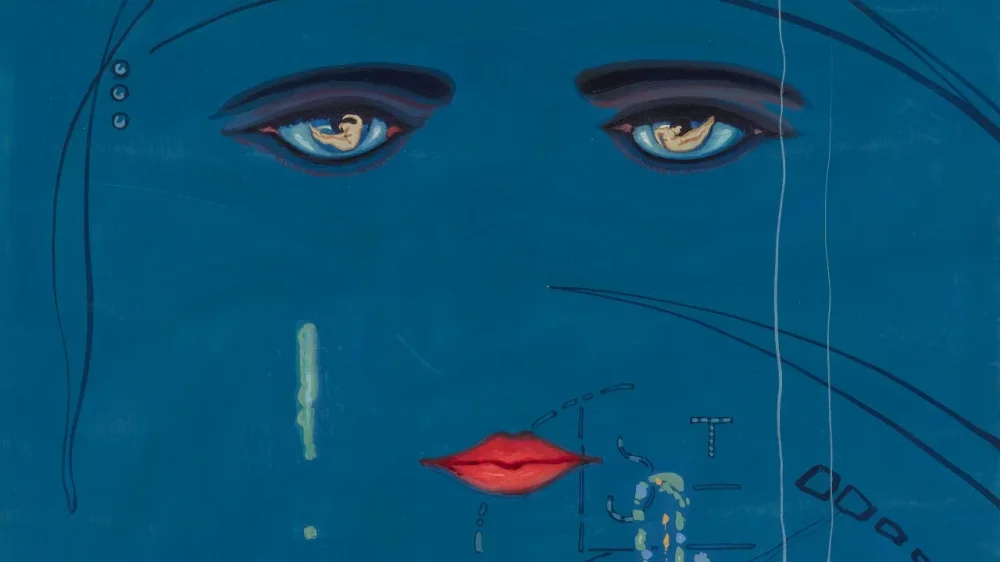
-
Mother’s Day is a wonderful opportunity to show our gratitude and appreciation for the women who have influenced our lives. As a small business owner, you can enhance your Mother’s Day gifts by including the perfect printable gift tag, adding a personal touch to each present. Check out some of the best Mother’s Day gift tags that will make your gifts stand out and show appreciation to the amazing moms out there. How do you say Happy Mother’s Day in business? In a business setting, it’s important to maintain a professional tone while still conveying warmth and appreciation. When it comes to saying “Happy Mother’s Day” to employees, colleagues, or customers, the key is striking the right balance between formality and sincerity. A simple and classic greeting like “Wishing you a Happy Mother’s Day” can work well, or you can customize the message to fit your brand’s tone and style. Adding a personal touch like the recipient’s name or a heartfelt message can also go a long way in showing your appreciation for the amazing moms in your business community. Why should you use printable Mother’s Day gift tags? Printing the perfect Mother’s Day gift tags not only can help increase your sales but also can boost customer satisfaction. There are multiple reasons why you should use printable gift tags for Mother’s Day in your small business, including: Professional appearance: Using high-quality, printable gift tags can give your products a more polished and professional look, making them more attractive to customers. Brand exposure – Including your business logo and contact information on gift tags can enhance brand visibility. This strategy not only helps attract new customers but also promotes repeat business. Easy customization – Printable gift tags can be easily customized with personalized messages and designs, allowing you to offer a more personal touch to your customers. Convenience – Gift tags are a convenient option for customers who want to add a special touch to their gifts without having to spend time creating their own. Cost-effective – Printable gift tags are a cost-effective way to add value to your products and increase customer satisfaction without having to invest in expensive packaging or marketing materials. You even might find some free printable Mother’s Day gift cards available to download. Attach These Meaningful Tags to Your Mother’s Day Gifts Mother’s Day is around the corner, and adding a special touch to your gifts can make all the difference. Here are 12 of the best printable gift tags for small businesses to make this Mother’s Day extra special. Floral Mother’s Day Gift Tag These Mother’s Day gift tags from Etsy feature a lovely floral design and can be customized with a personal message, making them the perfect finishing touch to any gift. They are sure to make any mom feel loved and appreciated on her special day. From Your Favorite Child Gift Tags These Mother’s Day gift tags are sold as a digital download, which is perfect for small business owners who want to save time and money on shipping costs. The tag features a detailed floral design and the option to personalize the message, making it easy for businesses to create a unique and eye-catching look for their Mother’s Day gifts. Mother’s Day Gift Tags Variety Pack These printable Mother’s Day gift tags are available in four distinct styles, each showcasing a unique and playful design that brings a whimsical flair to any gift. Offered as a digital download, these tags provide a convenient and budget-friendly solution for small business owners who want to enhance their Mother’s Day gifts with a special touch. Round Mother’s Day Cookie Tags These printable Mother’s Day gift tags are perfect for businesses that specialize in baked goods or sweet treat options. The tag features a “Happy Mother’s Day,” message, and it is designed to fit on a 2-inch round cookie, making it an original and creative way to show appreciation for any mother on her special day. Colorful Happy Mother’s Day Gift Tags These Mother’s Day gift tags feature a colorful floral design and a peppy greeting. The tags can be downloaded and then printed on high-quality cardstock as the perfect finishing touch for any Mother’s Day gift. Editable Gift Tag Printables These Mother’s Day gift tags are sold as an editable digital download, which allows businesses to personalize each tag with their own custom message or branding. The printable gift tag template features an elegant and minimalist design, making it a versatile and stylish option for any Mother’s Day gift. Customizable Mother’s Day Gift Tags These Mother’s Day gift tags feature a cheerful, “Happy Mother’s Day,” message, and they can be customized with a personal message. Print the tags on high-quality cardstock if your business is looking for a simple and cost-effective way to add a special touch to its Mother’s Day gifts. Scripted Mother’s Day Gift Tag Multi-pack These vivid Mother’s Day gift tags are sold as printable digital downloads, and they feature a variety of scripted designs with, “Happy Mother’s Day,” messages. The tags are easy to print at home or at a local print shop, making them a convenient and budget-friendly option for small businesses. Black and White Printable Mother’s Day Tags These Mother’s Day gift tags from Etsy feature a minimalist, black-and-white design with a simple and elegant, “Happy Mother’s Day,” message. When the tags are printed on high-quality cardstock, they serve as a stylish and versatile option for businesses looking to add a special touch to their Mother’s Day gifts. Cute and Funny Mother’s Day Tags From Kids These Mother’s Day gift tags from Etsy feature cute and colorful designs that are perfect for gifts from a child to their best mom. The fun set includes a variety of tags with sweet messages perfect for a “fruity” family, including, “Mom, you’re pear-fect,” and, “Have a berry great Mother’s Day.” The printable tags make a heartwarming addition to any Mother’s Day gift. Printable Gift Tags for Mom It’s clear who the recipient of these gifts will be with this tag. These printable Mother’s Day gift tags showcase a timeless floral design, prominently displaying “MOM” in large letters. The downloadable gift tags can be printed at home or at a nearby print shop, offering a convenient and cost-effective solution for small businesses. Personalized Gift Tags for Mother’s Day These personalized Mother’s Day gift tags from Etsy allow small businesses to add a special touch to their Mother’s Day gifts. The set includes gift tag templates that can be customized with a name, message or brand, making them a unique and thoughtful addition to any present. How can you use Happy Mother’s Day gift tags? Printable gift tags for Mother’s Day can be a great way for small business owners to add a personal touch to customers’ purchases. These tags can be customized with a business’s logo or a heartfelt message, providing a unique branding opportunity. Utilizing Mother’s Day gift tags can help create a festive and celebratory ambiance both in stores and on company websites. Small businesses have various options for incorporating printable Mother’s Day gift tags, such as: Attach the tags to products as a thoughtful finishing touch. Adding a beautiful gift tag to each purchase can create a memorable unboxing experience for customers. Offer the tags as a free gift with purchase. Providing a free gift tag can incentivize customers to make a purchase and also can help spread the word about a business. Use the tags as part of a social media campaign, and encourage customers to share photos of their purchases with the gift tags on social media using a branded hashtag. Such posts can increase a brand’s visibility and encourage online engagement like making a comment. How to Create a Mother’s Day Gift Tag Printable By following a few basic steps, small business owners can create unique and personalized printable Mother’s Day gift tags to offer customers and promote their companies. Start adding a personal touch to your products this Mother’s Day by printing your own custom gift tags. Just follow this simple process: Choose a template – Purchase a downloadable template from a site like Etsy, or select a template offered by a design platform such as Canva or Adobe Spark. The template might be ready to use, or it might allow customization. Customize the template – If your template can be edited, add your business’s logo or a special message for Mother’s Day. Use your brand’s colors and fonts to make the tag cohesive with your other marketing materials. Include a barcode or QR code – Think about incorporating a barcode or QR code into the tag to facilitate easy tracking and inventory management. Print and cut – After finalizing the design, print the tags on high-quality cardstock. Then, use a paper cutter or scissors to trim them to the desired size. Hole punch and attach – Create a hole at the top of the tag using a hole punch, then secure it to your products with ribbon, twine, or a tag fastener. Attach These Mother’s Day Gift Tags to Beautiful Handmade Gifts Mother’s Day is a special occasion for small businesses to show their appreciation to customers and increase sales. A great way to add a personal touch to your products is by using printable gift tags. By using printable Mother’s Day gift tags, small businesses can make their customers feel special and increase customer loyalty. Don’t feel like you have to stop with adorning purchases with Mother’s Day gift tags. Be sure and download the perfect gift tags for holidays, printable birthday gift tags and even printable Christmas gift tags so you can impress customers all year long. You even can find certain free printable gift tags for any occasion. Image: Depositphotos This article, "Mother’s Day Gift Tags: Add a Special Touch with Our Charming Selections" was first published on Small Business Trends View the full article
-
Mother’s Day is a wonderful opportunity to show our gratitude and appreciation for the women who have influenced our lives. As a small business owner, you can enhance your Mother’s Day gifts by including the perfect printable gift tag, adding a personal touch to each present. Check out some of the best Mother’s Day gift tags that will make your gifts stand out and show appreciation to the amazing moms out there. How do you say Happy Mother’s Day in business? In a business setting, it’s important to maintain a professional tone while still conveying warmth and appreciation. When it comes to saying “Happy Mother’s Day” to employees, colleagues, or customers, the key is striking the right balance between formality and sincerity. A simple and classic greeting like “Wishing you a Happy Mother’s Day” can work well, or you can customize the message to fit your brand’s tone and style. Adding a personal touch like the recipient’s name or a heartfelt message can also go a long way in showing your appreciation for the amazing moms in your business community. Why should you use printable Mother’s Day gift tags? Printing the perfect Mother’s Day gift tags not only can help increase your sales but also can boost customer satisfaction. There are multiple reasons why you should use printable gift tags for Mother’s Day in your small business, including: Professional appearance: Using high-quality, printable gift tags can give your products a more polished and professional look, making them more attractive to customers. Brand exposure – Including your business logo and contact information on gift tags can enhance brand visibility. This strategy not only helps attract new customers but also promotes repeat business. Easy customization – Printable gift tags can be easily customized with personalized messages and designs, allowing you to offer a more personal touch to your customers. Convenience – Gift tags are a convenient option for customers who want to add a special touch to their gifts without having to spend time creating their own. Cost-effective – Printable gift tags are a cost-effective way to add value to your products and increase customer satisfaction without having to invest in expensive packaging or marketing materials. You even might find some free printable Mother’s Day gift cards available to download. Attach These Meaningful Tags to Your Mother’s Day Gifts Mother’s Day is around the corner, and adding a special touch to your gifts can make all the difference. Here are 12 of the best printable gift tags for small businesses to make this Mother’s Day extra special. Floral Mother’s Day Gift Tag These Mother’s Day gift tags from Etsy feature a lovely floral design and can be customized with a personal message, making them the perfect finishing touch to any gift. They are sure to make any mom feel loved and appreciated on her special day. From Your Favorite Child Gift Tags These Mother’s Day gift tags are sold as a digital download, which is perfect for small business owners who want to save time and money on shipping costs. The tag features a detailed floral design and the option to personalize the message, making it easy for businesses to create a unique and eye-catching look for their Mother’s Day gifts. Mother’s Day Gift Tags Variety Pack These printable Mother’s Day gift tags are available in four distinct styles, each showcasing a unique and playful design that brings a whimsical flair to any gift. Offered as a digital download, these tags provide a convenient and budget-friendly solution for small business owners who want to enhance their Mother’s Day gifts with a special touch. Round Mother’s Day Cookie Tags These printable Mother’s Day gift tags are perfect for businesses that specialize in baked goods or sweet treat options. The tag features a “Happy Mother’s Day,” message, and it is designed to fit on a 2-inch round cookie, making it an original and creative way to show appreciation for any mother on her special day. Colorful Happy Mother’s Day Gift Tags These Mother’s Day gift tags feature a colorful floral design and a peppy greeting. The tags can be downloaded and then printed on high-quality cardstock as the perfect finishing touch for any Mother’s Day gift. Editable Gift Tag Printables These Mother’s Day gift tags are sold as an editable digital download, which allows businesses to personalize each tag with their own custom message or branding. The printable gift tag template features an elegant and minimalist design, making it a versatile and stylish option for any Mother’s Day gift. Customizable Mother’s Day Gift Tags These Mother’s Day gift tags feature a cheerful, “Happy Mother’s Day,” message, and they can be customized with a personal message. Print the tags on high-quality cardstock if your business is looking for a simple and cost-effective way to add a special touch to its Mother’s Day gifts. Scripted Mother’s Day Gift Tag Multi-pack These vivid Mother’s Day gift tags are sold as printable digital downloads, and they feature a variety of scripted designs with, “Happy Mother’s Day,” messages. The tags are easy to print at home or at a local print shop, making them a convenient and budget-friendly option for small businesses. Black and White Printable Mother’s Day Tags These Mother’s Day gift tags from Etsy feature a minimalist, black-and-white design with a simple and elegant, “Happy Mother’s Day,” message. When the tags are printed on high-quality cardstock, they serve as a stylish and versatile option for businesses looking to add a special touch to their Mother’s Day gifts. Cute and Funny Mother’s Day Tags From Kids These Mother’s Day gift tags from Etsy feature cute and colorful designs that are perfect for gifts from a child to their best mom. The fun set includes a variety of tags with sweet messages perfect for a “fruity” family, including, “Mom, you’re pear-fect,” and, “Have a berry great Mother’s Day.” The printable tags make a heartwarming addition to any Mother’s Day gift. Printable Gift Tags for Mom It’s clear who the recipient of these gifts will be with this tag. These printable Mother’s Day gift tags showcase a timeless floral design, prominently displaying “MOM” in large letters. The downloadable gift tags can be printed at home or at a nearby print shop, offering a convenient and cost-effective solution for small businesses. Personalized Gift Tags for Mother’s Day These personalized Mother’s Day gift tags from Etsy allow small businesses to add a special touch to their Mother’s Day gifts. The set includes gift tag templates that can be customized with a name, message or brand, making them a unique and thoughtful addition to any present. How can you use Happy Mother’s Day gift tags? Printable gift tags for Mother’s Day can be a great way for small business owners to add a personal touch to customers’ purchases. These tags can be customized with a business’s logo or a heartfelt message, providing a unique branding opportunity. Utilizing Mother’s Day gift tags can help create a festive and celebratory ambiance both in stores and on company websites. Small businesses have various options for incorporating printable Mother’s Day gift tags, such as: Attach the tags to products as a thoughtful finishing touch. Adding a beautiful gift tag to each purchase can create a memorable unboxing experience for customers. Offer the tags as a free gift with purchase. Providing a free gift tag can incentivize customers to make a purchase and also can help spread the word about a business. Use the tags as part of a social media campaign, and encourage customers to share photos of their purchases with the gift tags on social media using a branded hashtag. Such posts can increase a brand’s visibility and encourage online engagement like making a comment. How to Create a Mother’s Day Gift Tag Printable By following a few basic steps, small business owners can create unique and personalized printable Mother’s Day gift tags to offer customers and promote their companies. Start adding a personal touch to your products this Mother’s Day by printing your own custom gift tags. Just follow this simple process: Choose a template – Purchase a downloadable template from a site like Etsy, or select a template offered by a design platform such as Canva or Adobe Spark. The template might be ready to use, or it might allow customization. Customize the template – If your template can be edited, add your business’s logo or a special message for Mother’s Day. Use your brand’s colors and fonts to make the tag cohesive with your other marketing materials. Include a barcode or QR code – Think about incorporating a barcode or QR code into the tag to facilitate easy tracking and inventory management. Print and cut – After finalizing the design, print the tags on high-quality cardstock. Then, use a paper cutter or scissors to trim them to the desired size. Hole punch and attach – Create a hole at the top of the tag using a hole punch, then secure it to your products with ribbon, twine, or a tag fastener. Attach These Mother’s Day Gift Tags to Beautiful Handmade Gifts Mother’s Day is a special occasion for small businesses to show their appreciation to customers and increase sales. A great way to add a personal touch to your products is by using printable gift tags. By using printable Mother’s Day gift tags, small businesses can make their customers feel special and increase customer loyalty. Don’t feel like you have to stop with adorning purchases with Mother’s Day gift tags. Be sure and download the perfect gift tags for holidays, printable birthday gift tags and even printable Christmas gift tags so you can impress customers all year long. You even can find certain free printable gift tags for any occasion. Image: Depositphotos This article, "Mother’s Day Gift Tags: Add a Special Touch with Our Charming Selections" was first published on Small Business Trends View the full article
-
One of the laws of physics I learned in high school was the Second Law of Thermodynamics. Officially, it says, “The level of disorder in the universe is steadily increasing. Systems tend to move from ordered behavior to more random behavior.“ In simpler terms, it says this: Left on their own, systems tend toward disorder. That’s why a cup of coffee left on the counter cools over time, not the other way around. It’s why sandcastles crumble, buildings decay, and 52 playing cards thrown on the floor don’t become a stacked deck on their own. Everything, in the absence of outside energy, moves from order to chaos. This law is always at work—in nature, in science—and in our homes and lives. I was thinking about this fact recently as I finished writing the manuscript of my next book. The words were typed on my computer, of course. But over the months of researching and writing, I collected a large number of notes and pieces of paper—loose sheets of handwritten outlines, printed pages to edit, notecards, lists, folders of relevant projects, even a stack of books I referenced often. Over time, I placed more and more of them on a shelf near my desk. As the writing continued, the pile slowly grew. One stack turned into two, and two stacks turned into three. Piles of notecards got higher and higher. Papers intermingled. Things got buried. The mess expanded, more and more, until eventually the entire shelf was overtaken with notes for the book. The mess didn’t improve with time—it only worsened. The system tended toward disorder, not order. And it stayed that way, until just last week, when the book was completed and I finally took the time and effort to clean it up fully. Because here’s the thing about messes: They don’t clean themselves. They require attention. When my kids were younger, Kim and I had a mantra that we would use often. Especially after meals or light snacks in the evening, if someone left their plate on the counter near the sink, I’d say, “You know that plate’s not going to clean itself. Somebody in this family is going to have to do it. It might as well be you since you’re the one who dirtied it.” I wish I could say the mantra was 100% effective—but we all know better than that. Regardless, there is an important truth hidden in that reality that we would be wise to remind ourselves of—even beyond our teenage years. Messes don’t clean themselves. The universe moves naturally toward disorder, not order. This is important to see and apply accordingly in our homes. Messes only grow as clutter attracts more and more clutter. The mail you left on the counter will only pile up higher—until you make the effort to sort it. The dishes in your sink will remain dirty—until you make the effort to clean them. The clothes in your closet will take up more and more space—until you make the effort to discard some. The boxes of stuff in your basement will remain there—until you take the time to sort them. The garage will remain too full to park in—until you get out there and declutter the stuff. And maybe, some of us need to stop reading right here, and go make the change to bring about the order in our home that we’ve been wanting. But this principle doesn’t stop at our possessions. Messes don’t clean themselves. The universe only moves toward order when energy is applied: If we’re living paycheck to paycheck, avoiding the numbers won’t change the math. Our attention and energy is required to fix it. If our lifestyle is unhealthy, doing the same thing over and over won’t bring change. Our attention and energy is required to change it. If we don’t like the direction of our life, attention and energy will be required to start moving in a different direction. If there is a strained relationship in our life, ignoring the hard work won’t solve it. Attention, energy—and probably humility—will be required. We can spend a lot of time waiting for the right moment, the perfect motivation, or the ideal set of circumstances. But messes rarely resolve themselves as we wait. They grow. And the longer we delay, the more energy it takes to clean them up. So maybe today is a good day to ask: What mess in my life is waiting for my attention? And what small step can I take before the sun sets to begin cleaning it up? The post Messes Must Be Cleaned Up appeared first on Becoming Minimalist. View the full article
-
This post was written by Alison Green and published on Ask a Manager. It’s five answers to five questions. Here we go… 1. My very supportive boss is leaving, and I blame his partner I currently have an incredibly supportive boss but he plans to leave his role soon because his long-term partner lives in a different region of the country and refuses to move nearer to where he lives even though they work remotely. I’m legally disabled and worried that whoever takes over once he lives will be far less accommodating in regards to my disability, especially considering that I’ve had to pivot to a lower caliber field after a devastating job loss that I’ve still not gotten over. As a result, I can’t help but feel that my boss’ partner is selfish and I secretly hope that they break up, even though I know that it will break his heart. I have no attraction towards him and do not desire a romantic relationship with him if that was what you were thinking, I just don’t want a supportive boss to be replaced by a less than adequate one. That’s an understandable way to feel! But it might help to keep in mind that managers leave jobs for all sorts of reasons — he could break up with his partner tomorrow, then get a fantastic job offer the next day and quit to take it. Or he could have a health emergency, or decide to move to live near aging parents, or get a sudden yen to live in Alaska, or want to start his own freelance rice sculpting business. Any of these would be disappointing, but I but they wouldn’t strike you the same way, since you’d see him as having more agency in the decision … whereas now it feels like someone else is “doing this” to him. But managers leaving is a thing that happens. It’s okay and normal to be disappointed and worried, but ultimately your boss has decided this is what’s best for him. He gets to make that decision for himself, just as much as you get to wish he didn’t! However, could you ask for his advice on preserving your current accommodations with the new manager? That might nudge him to think about whether there’s a role he can play in how the accommodations are framed to his replacement that might set you up as well as possible. (In theory, accommodations should come from your company, which is not changing, but in reality different managers can be different degrees of supportive and are positioned to make your life harder or easier. But you could talk to your HR about your concerns too.) 2. What does it mean to have no HR? I interviewed recently with an organization that seems like a very good fit for me. They have a clear mission and solid history, funding, and infrastructure to support it and what seems to be a good culture fit (as far as anyone can tell in an initial interview.) No alarm bells whatsoever with the hiring panel; I’d be excited to advance in the search. Towards the end of the call, as part of the conversation surrounding being a small-staff (about 14 employees), cross-functional operation, they mentioned that they “have no HR.” I have seen this mentioned throughout the years of reading your site, but this is the first time I’ve encountered it. What does this mean, in a practical way? They have the usual full suite of benefits, so presumably someone administrates that, but I’m not sure what sort of questions I should be asking to ensure that the absence of a dedicated person won’t be a present concern. They are small enough that they would be exempt from a lot of employment regulation (USA) already, and I am exceedingly fortunate to have never been involved with HR for any reason other than benefit questions in my career to this point. What should I be considering here if I’m invited to move ahead? It’s very, very normal not to have a dedicated HR function until an organization reaches 50-75 or even 100 people; there’s simply not the work to support it until then. Instead, what you typically see is someone whose job includes things like benefits administration and onboarding paperwork, but whose main duties are something else. Meanwhile, the more complex parts of HR — like policy, investigations, management coaching, legal compliance, etc. — are often handled by someone like a chief of staff or second-in-command, with some of it (like legal compliance) often being outsourced. In other words, it’s not that those things aren’t happening at all; it’s that it’s operationalized differently. That can mean that there’s more room for them to be done poorly, but that tends to be tightly correlated with how effective and well-run the organization is overall (something that is especially important when the org is small). 3. Pitching a company where an ex from an acrimonious relationship is on the board When I was in grad school, I had a serious relationship with a classmate for over three years. It was a stressful time for both of us, and the relationship was always dramatic and often toxic. It ended in an acrimonious but rather unspectacular fashion, with both of us going our separate ways and never speaking again. It’s been 20 years since we’ve had any contact. We have both been married to others for most of that time, kids, successful careers (thanks, social media). I’ve spent a lot of time in therapy, and I work hard to avoid unnecessary drama in my life. This week, a close colleague and I were at a networking event where we reconnected with a contact and learned that he has recently joined my ex’s family company. The contact invited us to pitch for the company’s business. Afterwards, when my friend excitedly started talking about this opportunity, I told her about my connection (pretty sure my ex is on the board of said company). She was delighted and has started assembling a team for a pitch meeting. Here’s the thing: I don’t just have a personal connection to a director; I know a lot about this company. I know all the people involved and because the relationship ended without fireworks, I’d like to think that the family remembers me as a smart and hard working person and that my connections are likely a net positive. I am also a local leader in my specialty and my skills are particularly well-suited to the company. While the ex is on the board and probably a decision-maker, it is unlikely we’d have much day-to-day interaction. I don’t want to show up and ambush my ex, and it would be disingenuous for me to pretend I don’t have a connection to this company. The respectful and professional thing to do is to reach out to the ex directly and … reconnect somehow, right? The problem is the thought of even getting coffee with this person fills me with dread and anxiety. I am quite content to never see them again. At the same time, the idea that we could be on speaking terms if we run into each other again would ultimately be a relief (no more running out the back door of bars!), and the alternative is to pass on the opportunity to be on the client team. I think my friend would be disappointed but understanding, but I would miss out on the financial and professional benefits that would come along from landing a new client. I am consulting my therapist about this as well, but I appreciate feedback from the professional side. I’ve struggled with that goal of avoiding drama and can’t always see where I’m inviting it instead. This doesn’t require coffee! Email is perfectly suited for this, so that your ex can read it and have whatever initial responses they might have privately, and then can think about how to respond. You do not need to get together in person and go through the social ritual of coffee; you can just lay out the situation and ask how they’d like you to handle it. The email could be as simple as, “Hi Artexerxes! I know it’s been many years since we’ve talked and I hope you’re doing well. I’m writing because an employee at CompanyName has invited my team to pitch for (project type). Normally I’d attend the pitch meeting and be part of any proposal for working together, but I thought I should touch base with you first. If you’d prefer I pass this one up and leave it to others here, I’d of course respect that, so I wanted to check in with you before my team moves forward.” The biggest risk here is probably of Artexerxes thinking you’re overreacting — that it’s been 20 years and of course they don’t care if you pitch their family’s company. But it’s better to err on the side of being careful and respectful, which this would be. 4. Customers with ridiculously long payment times I’m a freelancer, and I work with businesses of all sizes, from small businesses to multi-billion dollar corporations. I just ventured out on my own about a year or so ago, and I’ve run into an issue that I’m not sure how to solve. Several of my customers have (what feels to me) absurdly long remit periods: 90 days. I’m a one-woman shop, and these 90-day remit periods leave me without access to a substantial amount of my income for an entire quarter of the year. Moreover, one of them doesn’t do lump-sum payments every quarter. They pay invoices one-off that are 90 days old. So, instead of paying all the invoices I submitted during those 90 days in a lump sum, they’ll pay the invoice I submit for April at the end of July, the one for May at the end of August, etc When I submit an invoice, my “payment due date” is a month after I’ve submitted the invoice, which feels very reasonable. I mean, as a consumer, no one gives me an entire quarter to pay my bills without adding a lovely little chunk of interest, and I suspect that these slow-to-pay companies don’t allow their customers 90 days to pay them either. While I’m not (currently) worried about making rent, I’m not made of gold. These long remit periods leave me incredibly stressed from a financial perspective. Moreover, they actively cost me money because the money I’ve earned from them is not sitting in my savings account accruing interest. How do I tell these customers that they have to pay me within 30 days? Can I ask them to change their policy for me? Can I say that my policy is an X% charge for every month it’s not paid after my payment period has ended? And a lovely little tidbit that I’m sure your readers will “enjoy” is that the businesses with the long remit periods are the not the small businesses. They’re the ones pulling in hundreds of millions, if not billions, every year (eye roll). You can try to insist on 30-day payment terms, but a lot of big companies will refuse to alter their payment systems for you and you’ll have to decide if you’re willing to accept 90 days or not get the business. If you do try to get their agreement on 30 days, you’ll have a better shot if you raise it from the start and try to get their explicit agreement; otherwise they’re just going to shuffle you into whatever their default payment systems are. Even then, though, you might not be able to do anything about it; big companies have enough monetary power to basically force their vendors to accept their terms (or be willing to walk away, which most won’t be). That’s true even if you build late fees into your contracts; a lot of big companies will simply decline to work that way. You can try it! Just go in knowing that very often, the bigger they are the more likely they are to just use their established systems and you’ll have to decide whether you want the business under those terms or not. That’s not how it’s supposed to work, but that’s often how it does work. That said, could you look at moving to a retainer model, where you get at least some portion of the payment up-front, or collect initial deposits? That won’t be realistic for every product/service (and if you’re in the only one in your field who charges that way, big companies may flatly refuse unless they really want you in particular), but it’s worth considering it. 5. Loud coworkers in shared space After five years of being remote since Covid, we have been called back to the office. It’s been an adjustment, but overall going well. We have suites filled with cubicles, so it’s a shared space, and the cube walls provide minimal noise protection. I am wondering how to handle loud coworkers who haven’t fully adjusted back to “shared space” volume, and are practically shouting in their meetings for who knows what reason. (Thinking they are being quiet through their headphones? shouting back at someone who is yelling into their phone in a noisy environment? I can’t decide.) It’s become such a problem that in my own meetings, I am not heard because the coworker’s voice is overtaking mine in the microphone! I have to either just use the chat box, or try to quickly get up and move to a quieter area. On busier days when more people are in, this isn’t always an easy option. I’d prefer to be able to stay at my desk. This is not someone I am close with by any means, and I’m not sure how to politely tell them to lower their voice or be more aware of it. Any thoughts? Is it one or two people or more widespread than that? If it’s one or two people, you can say, “I’m sorry to ask but I’m having trouble hearing my calls — could I ask you to lower your voice a little when you’re in meetings?” Feel free to add “the acoustics in here are tough” if you want. But if it’s more widespread, mention the problem to your manager and ask for help, whether that’s by her reminding people to adjust their volume now that they’re around a bunch of coworkers again, or adding more noise protection (there are ways to do this if a company cares to, like installing soundproofing panels between cubicles), or rearranging things to be more acoustically friendly, or so forth. View the full article
-
Executives say trade war and Opec output surge create toughest challenge since the Covid-19 pandemic View the full article
-
The broadcaster is in advanced negotiations to produce a version of the long-running comedy series for the first time View the full article