ResidentialBusiness
Administrators
-
Joined
-
Last visited
Everything posted by ResidentialBusiness
-
 It’s an ordinary morning. You’ve woken up from what you thought was a blissfully restful night’s sleep. To ensure your body and mind aren’t playing tricks on you, you check the activity tracker that you’ve recently strapped on your left wrist. You hope it’ll turn you into a fitter and healthier version of yourself. But your sleep score says otherwise. It indicates that you’ve woefully underperformed across all stages of the sleep cycle. It’s also the end of a long month on the job. You’ve completed all your deliverables on time, impressed your bosses, and, by all accounts, been a pleasant and reliable colleague. You decide to check your bank account. The balance staring back at you offers a sobering reality check and bleak forecast for the month(s) ahead. Once again, you’re compelled to adopt the mantra ‘keep your head down and keep plugging away’ as your professional credo. Surely, things will eventually get better, right? Why we’re drawn to numbers Numbers can have that effect on people. They turn feelings of restfulness and satisfaction into dust in the blink of an eye. They can also trick you into believing the complete opposite. Your wearable technology might measure a bad night’s sleep more favorably than you’d expect. At work, a shockingly mediocre work performance might result in a pay raise or bonus simply because you touted the corporate line. What is undeniable is that humans are magnetically drawn to abstractions of reality—both their own and those of others. Numbers is the true universal language that transcends cultures and geographies. And that’s not necessarily a bad thing. After all, quantification helps us measure and organize the world around us. It’s how we tell time, keep records, conduct financial transactions and scientific experiments, administer medications, and write computer code. Numbers have even changed the way we communicate. People find percentages and simple frequencies astonishingly persuasive—the more abstract they are, the more they capture attention. Here are two ways I could promote this Fast Company article to a broader audience: I could say, “Many people have read and enjoyed this article.” This version relies purely on qualitative evidence. I could also say, “The click-through rate for this article is 55%, with two-thirds of readers finishing the entire piece.” To our 21st-century sensibilities, the latter strangely sounds far more credible and captivating. Fred Hargadon, a former dean of admissions at both Princeton and Stanford, once said: “Because we cannot measure the things that have the most meaning, we give the most meaning to the things we can measure.” We see this reflected in the cost-cutting efforts of Elon Musk’s Department of Government Efficiency (DOGE), or our obsessive monitoring of global stock market indexes. When numbers don’t tell the whole story The real issues arise when we try to apply the same logic used to track a golf handicap to the complexities of the human experience. We assign a numerical representation to someone’s creditworthiness. In Canada, scores range between 300-900. The higher the score, the more “worthy” an individual appears in the eyes of a lender. But quantification doesn’t stop at the individual level. The Gini coefficient reduces the wicked problem of economic inequality across countries to a single score ranging from 0 to 1. The World Happiness Report uses a 0 to 10 scale to evaluate the quality of life and well-being of entire populations, then assigns them to a global ranking. In 2025, Finland was ranked the happiest country for the eighth year in a row. Does this ranking mean there aren’t any unhappy Fins? Far from it. When numbers ignore humanity Matters become even more complicated when we pressure organizations that prioritize people and the planet over profits to justify their existence and demonstrate their impact through data—even though we can’t (and frankly, shouldn’t measure their contributions, at least not in the short term. Global climate action is a prime example. If we judge the efforts of an entire industry devoted to combatting the climate crisis solely by meeting ambitious targets—like achieving net-zero greenhouse gas emissions by 2050—we risk overlooking the true stories of progress, resilience, and adaptation that occur along the way. Relying on numbers can also be downright sinister in instances where it has a dehumanizing effect. Assigning prison inmates numbers instead of using their names, or publishing casualty statistics during a war, reduces individuals to mere figures, which strips away their humanity. People are not numbers, and life isn’t always a data set that we need to optimize or manipulate. Sometimes, we need to hear the full story. Otherwise, we risk reducing human existence to mere abstractions and approximations of reality. The added benefit? Several studies have shown that people can retain qualitative information much longer than quantitative information. While numbers and statistics can have an immediate effect, like ruining a perfectly good night’s sleep, a well-crafted story or anecdote leaves a lasting impression. View the full article
-
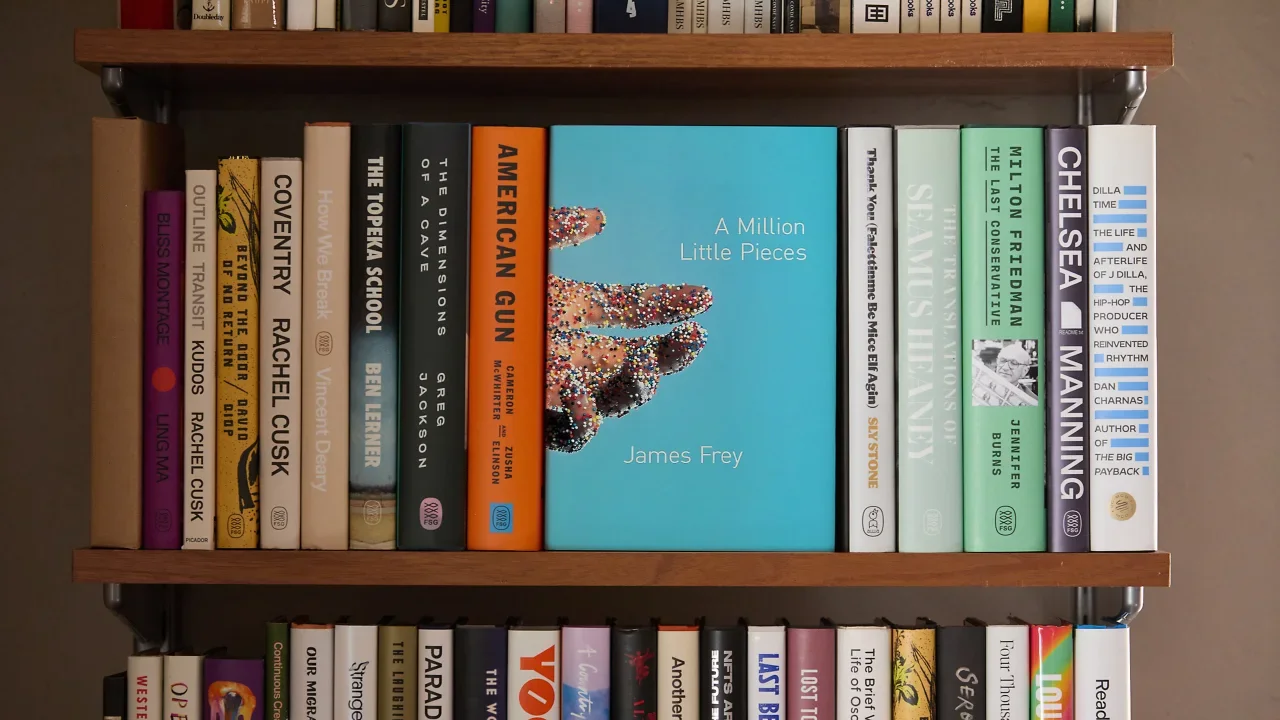
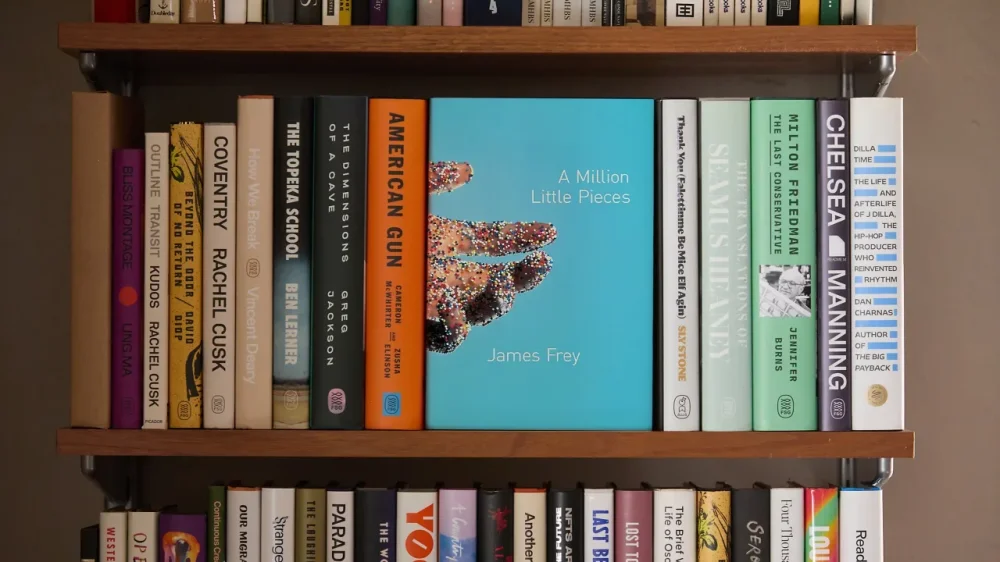
There’s one big thing about Rodrigo Corral that does not initially make sense: The book cover maestro does not have a signature style. Consider his chameleonic cover hits. The Fault in Our Stars. The Brief Wondrous Life of Oscar Wao. Survivor, Lullaby and the rest of Chuck Palahniuk’s catalog. Rachel Cusk’s books. James Frey’s controversial A Million Little Pieces, the cover that helped launch Corral into ubiquity. Recent collaborative output like Intermezzo and Mojave Ghost. The books don’t have obvious visual connective tissue between them—but somehow, as creative director of Farrar, Straus and Giroux and his eponymous studio, Corral has spent the past three decades quietly redefining the look of the modern book again and again. “A thing that we repeat often in the studio is, ‘Let’s be careful of what we’re good at, because it is the kind of work that you will attract,’” he says. Corral has heeded that caution throughout his career, avoiding pigeonholes and a life of designing the same jacket over and over—which is notable in a design subset often particularly driven by trends. Consider the Big Book Look of the ’60s, or the ubiquitous Book Cover Blob that seemingly seeped onto every jacket a few years ago. If a style has a proven track record, risk-averse publishers or marketing departments are quick to embrace it. Corral’s output, which often feels consistently contemporary, is novel for its sheer novelty. “Book covers usually follow trends,” Frey, one of Corral’s earliest clients, told me in an email exchange. “Someone makes a great one and everyone else copies it. If you care about such things, and I do, and try to find who made the original great one, it’s always Rodrigo.” GETTING WHAT YOU CAME FOR Corral was born and raised on Long Island, New York, the child of immigrants from Colombia. His parents ran a travel business together, not entirely unlike how he and his partner Anna Corral operate his personal studio today. Books didn’t play a huge role in his youth, but when he was around nine or 10, Corral’s parents bought him a set of Encyclopedia Britannica—and he savored their object quality. “I’d start cracking them open and appreciating the materials, the foil stamping, the faux leather,” he says, recalling how the anatomy section featured acetate layering for the nervous system and the muscular system. “Those are my closest earliest memories of a book experience.” After realizing design and art was a path he wanted to pursue, he applied to the School of Visual Arts, where he found himself studying under industry icons like Chip Kidd and Barbara deWilde. “They just always had a smile on their face,” he recalls. “And their work alone, it just had wit, it had charm, it had layers. And that really for me was like, ‘OK—I think I’d like to join the space, or at least try my hand at it.’” After leaving SVA, Corral got a job at Farrar, Straus and Giroux in 1996, where his first assignment was a paperback edition of Getting What You Came For: The Smart Student’s Guide to Earning a Master’s or a Ph.D. The book already had cover art, and he was disappointed that he didn’t get to infuse his own creativity into the project. Then he decided to make the best of it. The all-yellow cover featured a black-ink New Yorker-style illustration of a person hoisting a degree into the air. He made the diploma white to highlight its importance of, well, getting what you came for. It was a tiny victory, but perhaps an important early lesson in how one can infuse their perspective into an at-times rigid paradigm. On the whole, Corral loved his early days at FSG, especially because it was an environment where young designers got to sit in on meetings and where the publisher would walk the halls and greet everyone personally. Designers and their work were valued, which helps explain why it’s a house with a long history of fantastic cover output—from Joan Didion’s Slouching Towards Bethlehem (Lawrence Ratzkin) and Tom Wolfe’s The Right Stuff (Kiyoshi Kanai) to contemporary jackets like Jonathan Franzen’s Freedom (Charlotte Strick) and Tove Ditlevsen’s Copenhagen Trilogy (Na Kim). “Farrar, Straus and Giroux has always been a powerhouse literary publishing house that is editorially driven. And what that means from a design standpoint is we’re not reacting to what the markets are asking us,” Corral says. “It’s strong points of view with brilliant editors and a publisher at the helm [who] are reacting through fiction and nonfiction to what the world is telling us, in many ways. And so that all leads to supporting great design.” After five years at the company, Corral says there wasn’t much room for upward movement, so he left and did a stint at Grove Atlantic, followed by Doubleday. He was laid off in the post-9/11 publishing downsizing, but was given nine months severance—and that’s when he started Rodrigo Corral Design Studio. He opened it in the back of a friend’s production house, A2A Graphics, in Chelsea. And soon after he took on his first project: the cover for A Million Little Pieces. REDEFINING THE BESTSELLER But two decades on, you can probably instantly envision it—that outstretched hand, the kaleidoscopic candy dots, that hospital-hued background. Frey had no clue what Corral was going to turn in, but he did have high expectations for the cover to his addiction saga. With a background in art and art history, Frey had been sending Corral paintings of hell by old masters and related imagery. “Thankfully, he ignored them all and made his own cover,” Frey recalls. “When I saw it, I was initially taken aback. Visually, it’s very arresting, jarring. … It felt sharp, dangerous. It also felt lonely, and somehow broken. All of which were a reflection/representation of the text.” Frey, who also worked with Corral on his upcoming book Next to Heaven, says he didn’t respond for a day. He let his feelings settle. “And when they did, I was in love.” Corral came up with the idea on the way home from his studio. He would often walk past a particular confectionary shop. A package of candy dots in the window always jumped out at him, and as he was pondering Frey’s book, it clicked. He took his entire fee for the project and hired a photographer, and the two brought the cover to life. Ultimately, Corral says the publisher didn’t quite know what to make of it, and found it to be off-putting—but they said they couldn’t stop looking at it. It yielded a visceral reaction. “It cemented the tone for the kind of work we wanted to attract,” he says. “We wanted to do work that was not fitting nicely and neatly into a category and that did not necessarily fit the mold of what a bestseller must look like.” Catherine Casalino remembers the early days at Corral’s studio. She joined as an intern in 2003, and soon became full time. “Rodrigo has made a habit of swinging for the fences, and he encourages anyone who works at his studio to do the same. A big part of that is constantly seeking out fresh inspiration and collaborators,” she says. “In an age where you can easily marry up a stock image and a font to create an instant cover, or make a living by producing the same style of cover over and over, Rodrigo pushes back against that kind of process. You hire his studio not because you know what you’re going to get, but because you know they can deliver something special that you would never have imagined.” SOLVING THE BOOK While Corral may intentionally lack a signature style, he has a signature approach—and it yields work that can feel urgently relevant. When he’s designing, Corral starts with what he dubs “bad poetry”—he reads the manuscript and jots down quick notes in his phone. The ones that still resonate days or a week later are what he’ll start to focus on pushing forward. From there he concepts and designs. Sometimes he’ll start a cover and finish it completely. Other times in the studio he’ll have multiple people working on something. He likens the book design process to cinematography. To explain, he offers the concept of a book that has oranges as a theme. A cinematographer ponders, say, the temperature of the film, the color, whether it’s set primarily during day or night. “I find that parallel with book covers, where it’s typography, it’s scale, it’s composition, it’s lighting—and all those things can play into how that same orange can be very different on two different covers,” he says. Current Random House vice president, executive art director Greg Mollica joined Corral’s studio as a junior designer circa 2002/2003. “He’s a deep and close reader; he’d read manuscripts all day, bring them home and read them again at night, and come into the studio the next morning with ideas and brilliant singular ways to execute them,” Mollica recalls. “What struck me first about his studio and process was that the fine art, photography, fashion and culture books outweighed the traditional graphic design books in his personal collection. He was always devouring images and collecting art. Art was everywhere. Rodrigo thought like an artist—that’s what separated him in the cover design world.” In 2011, Corral rejoined FSG as creative director, and today that is officially his full-time job. “The decision to return felt strangely predetermined,” he says.“When I looked at the publishing landscape [publishers and imprints], I kept coming back to FSG as the place where I could contribute and feel valued as a visual artist.” He splits his time between New York City and California, and operates his independent studio—which works across all publishing houses for projects or as a creative director at large—after-hours. At FSG, he says he works with a team of experienced designers in a bit of an autonomous environment. On the studio side, he sees it as more of an agency model that utilizes Anna Corral’s background in branding and marketing in chorus with his creative direction. On the whole, “How we try to look at projects is we’re not solving to a style—we’re solving the book itself,” he says. Casalino would seemingly agree. “I think Rodrigo’s impact on modern book cover design is that he responds to the unique voices of modern literature in a way that truly reflects where modern literature is going,” she says. “I remember him saying that he got assigned Chuck Palahniuk initially because the writing was so unique that no one knew quite how to approach it. Instead of making those covers look like prior fiction, he reflected that unique language with a unique visual language.” BY A SHOW OF HANDS Those who have passed through Corral’s studio make up a remarkable roster. There’s Mollica. Casalino. June Park, Elena Giavaldi, Ben Wiseman, Liana Finck, Tyler Comrie, Jason Ramirez, Christopher Brand, Devin Washburn, and on and on. Today, he works with Adriana Tonello, Giacomo Girardi and a couple others. Corral won’t take credit for any of their careers or talent. But he does have an impressive track record of hiring wildly talented individuals wherever he oversees design—and that, perhaps, is his greatest contribution to publishing at large, beyond any single image. “If you hosted a book design event in NYC and you asked the audience by a show of hands who has mentored/worked with Rodrigo—over half the audience would raise their hands,” Mollica notes. “He’s mentored countless designers who are now exceptional art directors. The book cover industry would be completely different without Rodrigo’s influence. That is not an exaggeration. He’s our Paul Rand.” For his part, Corral says he’s always looking to surprise himself in his design work—and whether at FSG or his own studio, he is always seeking to help his teams surprise themselves, too. “I think Rodrigo’s work has encouraged more designers and publishers to push back against stereotypical cover design and rise to meet the incredible creativity that modern authors are producing,” says Casalino. Or, as Corral puts it—and likely put it years ago with that cover for A Million Little Pieces: “Hopefully we’ve delivered projects that can be genre-busting or genre-breaking, and that can become little victories for the future—for designers to say, Look, this book was successful with that jacket. Why can’t we as a house take that same leap?” What is Rodrigo Corral’s style? I don’t know. But if you spot a cover in a store that feels like it was designed and printed just moments before, there’s a good chance I could guess who art directed or made it. View the full article
-
‘The end of an era’View the full article
-
During his family’s annual summer vacations on North Carolina’s Outer Banks, high schooler Ajith Varikuti began to notice something concerning. Homes on the narrow line of barrier islands that Varikuti had grown up visiting from his hometown Charlotte were no longer there. “I started seeing more and more news articles about entire houses being completely destroyed. And it started clicking, because some of those houses that were being destroyed I’d seen in my previous years there,” he says. Varikuti, who was then a 9th grade student, knew there had to be a solution. So, as part of a student design competition organized by the design software company Autodesk, Varikuti put his mind to coming up with a design for a home that could better withstand the extreme conditions of the Outer Banks. (This year’s student design competition, Make it Home, is open until June 30 for students 13–21.) Ajith Varikuti His design is a modular, 3D printed home that sits on flood-resistant stilts and can be disassembled and moved if its site becomes untenable. The design was the grand prize winner in Autodesk’s 2024 Make it Resilient design competition, with a $10,000 prize. To create the design, Varikuti taught himself how to use computer-aided design, or CAD, software, starting with an entry-level educational version called Tinkercad before moving on to Revit, the industry-standard 3D design program used by architects and engineers around the world. Using online tutorials, he learned how to use the software to develop a structurally sound design that could be segmented into individual parts or modules. “I broke down each of the individual drawings into its own box, so that way you could build various combinations of houses with of the same set of modules,” he says. “I thought that was the most intuitive and allowed for the most freedom to design whatever house you wanted to.” The resilient home design was influenced by his own interest in engineering, and specifically 3D printing, which he’d begun exploring during the pandemic. Before even starting high school, he had designed and printed his own toy, a knight on a horse. That experience made him think that 3D printing parts of the house could be a viable way to make its individual modules, and allow them to be both assembled and disassembled. Varikuti’s resilient home design also accounts for the extreme conditions of the Outer Banks, using simulations within the software tools to test its capability to withstand hurricane-force winds. He even reached out to a structural engineer at the firm AECOM to fine-tune his design. “He pointed out various inefficiencies and inadequacies in my design,” Varikuti says. “I had too many pillars that were way too big originally.” This input also led him to redesign the footings for the house’s foundations so that they wouldn’t be affected by potential frost heaving. For a design created by a teenager, Varikuti’s is a surprisingly buildable concept, and one that could be a solution for the extreme conditions faced by the Outer Banks. There are currently no plans to get the house built, but Varikuti, who’s now in 10th grade, says the process of designing it has got him excited about creating projects that could get built one day. “This entire experience has made me realize how big of a world the engineering world is, and how there’s so many opportunities,” he says. “It’s led me to want to pursue a career in engineering, hopefully using CAD tools one day to make projects that will be implemented in real life.” View the full article

-
Progress Planner extends Yoast SEO with actionable guidance to further improve website performance The post WordPress Plugin Extends Yoast SEO appeared first on Search Engine Journal. View the full article
-
The Flying Sun 1000 is exactly what its name implies: a very powerful light source that flies. It is not as strong as the sun, but fitted with a powerful 3,333-watt light source—the equivalent of a typical flood lamp in a stadium—it is enough to turn night into day instantaneously. This drone is aimed at commercial and government users for the rapid deployment of industrial-level lighting solutions, such as construction and engineering jobs, area security, and disaster relief efforts that require 24-hour operation. A single operator can deploy the Flying Sun in minutes, instantly illuminating as much as 130,000 square feet. According to its manufacturer, Freefly Systems, the drone solves the problem of having to use traditional light towers for illumination. The Woodinville, Washington-based company designs and builds camera movement systems and stabilizers for cinematography. It says these are bulky, slow, and costly to set up, often leaving gaps in area coverage. But since the drone-mounted spotlight can move around, the Flying Sun can provide continuous aerial lighting that moves with work crews and rescue teams as they progress through an area. Furthermore, by eliminating the need for extensive installations of towers and cabling on the ground, the Flying Sun avoids risks in disaster areas, where there’s often flooding and other potential electrical and trip hazards. The company also points at a less critical but potentially game-changing use: lighting for film and television productions, which can benefit from the drone’s ability to “turn night into day” in a split second. Not like a helicopterPerhaps a spotlight doesn’t sound like a game changer for these industries. After all, you can light up the ground using a helicopter and a spotlight. But helicopters have huge associated costs and generate thundering noise and wind (not to mention that their operation time is limited). The Flying Sun can fly tethered to a power source in the ground—a 5kW generator, batteries, or electric vehicle will work—which allows it to fly virtually forever. This is a lot of power, so the drone’s lamps get hot. Freefly says it designed a system in which the LED light panels are kept cool by the drone operation itself. It utilizes the downwash from the Alta X drone’s propellers to actively cool the LED lights. This efficient cooling system is crucial for enabling the LEDs to operate at high power levels without overheating, which could damage the components or reduce their life span. This effective thermal management contributes to the manufacturer’s claim of “thousands of hours between light service.” How bright is it?The system consists of four panels of 72 LED lamps mounted on an Alta X heavy-lift quadcopter, an industrial drone platform manufactured by Freefly Systems. That’s a total of 288 high-power LED lamps that can generate an astonishing 300,000 lumens, which is a typical amount for modern LED lights used in football stadiums, baseball fields, or large concert venues. The Flying Sun’s lamp array offers a 60-degree spotlight, which translates into a wide coverage area even at low altitudes. At about 100 feet, the system covers approximately 14,000 square feet at 10 foot-candles, which is the typical lighting of a hallway or a mall parking lot (for comparison, urban street lighting goes from 2 to 5 foot-candles). That’s enough intensity to work seamlessly as if in daylight. As the drone gets higher, the coverage area gets wider. But that comes at the expense of light intensity: At 316 feet, the drone will light a 137,000-square-foot area but only at 1 foot-candle (more than moonlight, less than a streetlight). So while it is dim, it’s usable. And there’s the option of combining several Flying Suns to cover more area with more intensity. Granted, at $60,000 a pop—including the tethered power cables and control system—that won’t be cheap. But it beats the cost of the installation of posts and flood lamps. While the Flying Sun 1000 drone may have higher up-front costs (10 lamps and poles cost about $20,000), it offers significant long-term savings due to lower operational expenses, reduced labor (there’s no setup crew required), and minimal maintenance. The drone also provides superior coverage, instant repositioning, and enhanced safety by eliminating ground hazards. While traditional systems are cheaper for small, fixed installations, this drone—or similar solutions—will be the best choice in dynamic environments like emergency response, construction, or large-scale events, where mobility, rapid deployment, and energy efficiency outweigh initial investment. Also, the drone will have a lower environmental impact, since no installation and removal are required. The more I look at the video, the more it feels to me like this is the typical “how the hell didn’t anyone think about this until now” idea that is both brilliant and truly game-changing for a lot of industries. View the full article

-
In the world of interior design gaming, where perfection is often the goal, Redecor, a 3D design-simulation game, has taken an unexpected turn—celebrating flaws. The limited-time Real World Beauty collection, available free until April 15, highlights the authentic, lived-in charm of real homes. Instead of perfection, this update introduces design elements that reflect everyday life, such as coffee stains on wooden tables, sofas worn by pets, and walls decorated with kids’ doodles. The “flawed” collection features elements that players never explicitly asked for but quickly embraced. Natalie Gal, senior director of content for Redecor, explains the inspiration behind it. Redecor “As I was cleaning my house and I saw a little coffee stain on the countertop, I thought how amazing it would be if it was like my game, and I could click here and replace this entire surface—but you can’t. And that’s when I thought, maybe we should be a little more ultrarealistic, and have things that have stains, that the pets have destroyed, that the kids have destroyed,” Gal says. Introducing imperfection was a gamble, yet the concept immediately resonated with players. The relatability of the collection sparked excitement and, according to Gal, it became the most-used collection Redecor has released this year. Beyond gaming, the collection taps into a broader cultural shift in how home design is viewed. It reflects a growing appreciation for the beauty found in life’s imperfections, and the embrace of more authentic, lived-in spaces. Redecor “There are actual design philosophies like wabi-sabi, the Japanese design philosophy that says that the imperfect is perfect . . . that this is the way to live life and embrace your inner self and your design,” Gal says. For now, Redecor players can experiment with imperfection in a way that still allows for control and creativity. While they may not be ready to make every design flawed, the popularity of this collection proves that sometimes, a little messiness is exactly what people need. The collection’s success has also translated into increased engagement within the game, according to Gal. To determine which imperfections to include, the Redecor team researched the most common real-life household challenges. Redecor It turns out that 95% of Redecor players have pets and frequently discuss related topics. Issues like cat hair, allowing pets on the bed, and dealing with torn fabrics, sofas, and pillows are common concerns—though many embrace these signs of wear as symbols of love. Gal emphasizes that they didn’t want the setting to resemble a neglected or ruined home but rather one with minor imperfections that people learn to live with. “We want everyone to feel good at home when they’re designing their own spaces. Even though there are these small imperfections, it’s a part of life,” she says. “It’s a combined message to embrace the imperfections, and that’s what really makes your home yours.” View the full article

-
If you’re searching for a job, you’ve probably heard about how important it is to tailor your résumé and cover letter, showcasing your measurable achievements, and incorporating relevant keywords from the job description. These elements can make a big difference in catching a hiring manager’s attention. But beyond these essentials, there’s one powerful sentence that can truly set you apart from the rest: the one-liner. According to Sam DeMase, career expert for Zip Recruiter, this line in your cover letter is important because it highlights exactly what employers want to see. “Employers are looking for relevant work experience and aligned skills. So if you’re missing that, you’re not getting called in,” DeMase says. She points out that many candidates make the mistake of overemphasizing their enthusiasm for the role and company while failing to clearly communicate the value they bring. To stand out, DeMase suggests crafting a compelling one-liner that immediately grabs the hiring manager’s attention and highlights your unique value. What should you add to your cover letter? DeMase recommends using a direct and impactful statement in your cover letter: “I will add immediate value to this role in the following ways.” Then, list one concrete example from your work history for each area of expertise. To do this effectively, identify three key skills that align with both the job description and your own strengths. “So if your core strengths are A, B, and C, tell the employer, here’s how I’ve executed on that in previous roles,” DeMase explains. Since job postings outline the required skill sets, ensuring your experience aligns with those expectations is crucial for standing out as a candidate. “When you’re looking at a job description, they will always tell you what those required skill sets are. This is where alignment comes in,” DeMase says. If the job posting calls for leadership development, content creation, or live facilitation—and you have those skills—be sure to showcase them. Be warned, though, “You don’t want to make statements without backing it up with evidence,” DeMase explains. “Never say, ‘I’m really good at X, Y, and Z,’ and leave it there. You need to articulate specific examples from your work experience.” For example, if you want to highlight your ability to craft impactful marketing campaigns that increase follower accounts, don’t just state it—demonstrate it. You might write, “at my last role, I was able to increase the follower count by 30% over the course of x, y, z, amount of time.” DeMase advises job seekers to ask themselves: “‘Have I executed on that in previous roles, and what was my approach? How can I highlight those things?’” she says. “You want to be very clear on what your skill sets are, but also the results that you have achieved.” Where else to use this framing Beyond your cover letter, DeMase emphasizes that this one line should also appear in your résumé. “It goes in your ‘About Me’ section, and you can also have elements of it in your résumé headline, as well, which are the keywords that go right underneath your name,” she explains. “That is the part that I find entices recruiters to continue reading.” By strategically placing your one-liner throughout your résumé and cover letter, you maximize its impact, increasing the chances of catching a hiring manager’s attention. Focus on what you have It’s important to remember that you don’t need to meet every single qualification to apply for a job. “It’s good to apply for roles that are a little bit of a stretch,” DeMase says. Instead of fixating on what you lack, she advises focusing on your strengths. “Highlight the things that you do have,” she says.“If you have three out of the five things, focus on the three that you do have because you can learn the rest.” That said, a more targeted job search makes crafting a strong one-liner easier. “A narrow job search is going to yield you better results than a massive one,” DeMase says. By focusing on your key strengths, tailoring your approach, and strategically positioning your one-liner across your résumé and cover letter, you can confidently stand out to hiring managers and increase your chances of landing the job. View the full article

-
Ecommerce platforms were already facing the closure of duty-free loophole for parcels from ChinaView the full article
-
At Buffer, we recently embarked on an ambitious project: uncovering the best time to post on social media in 2025 — across all major platforms. We pored over millions of posts, reels, TikToks, shorts, videos, and more to pinpoint when the best-performing content was published. We analyzed the data here in one of two ways: To predict the best time to post on Facebook, LinkedIn, and X, we looked at the timeslots with the highest median social media engagement on each platform. To predict the best times to post on Instagram, TikTok, and YouTube, we looked at median reach and video views. In both cases, we found some clear patterns — and can make some clear recommendations on the best time to post on social media. Specific timeslots see more engagement or views than others, which is an important consideration in your social media marketing strategy. Use these times as a starting point to give your content the best possible chance of success. Before we get into this, an important caveat: sharing your social media posts at the ‘right’ time is not the secret sauce for content success. (If there were a secret sauce, it would be consistency. But more on that in a sec.) There are thousands of signals that determine content performance all each of the social media platform’s multiple algorithms — engagement, watch time, user preferences, location… Post recency is likely just one small part of a pretty complex puzzle. Still, if you feel like you're hitting all the right notes with your content and want to give your social media strategy a helpful little boost, it’s worth testing the best time to post on social media for your platform of choice. ⚡This is where a social media management tool like Buffer really shines. Experiment by scheduling posts at the recommended times and tracking post performance to see what works best for your target audience. Jump to a section: Is there an overall best time to post on social media? Best time to post on social media: quick guide The best time to post on Facebook The best time to post on Instagram The best time to post on LinkedIn The best time to post on TikTok The best time to post on YouTube The best time to post on X (formerly Twitter) How to find your best times to post in Buffer Timing matters — but it isn't everything Is there an overall best time to post on social media?There is no single best time to post on social media that applies to all social media platforms. Why? They’re all used for different reasons, by very different users. For example, unlike other social media platforms, LinkedIn is used for professional networking and thrives during working hours. TikTok is more focused on entertainment — so videos and carousels there are more likely to get views after hours. Posts on X tend to get more engagement on Tuesdays, while Fridays are the best days for Instagram. As you’ll see from all our graphs, there’s not much overlap, especially across all major social media platforms. So, while we can't be as specific as we can on a per-platform basis, we can make broad recommendations that are largely common sense. For example, social media posts shared on weekends tend to get less reach and engagement, as does content posted in the middle of the night. With all that in mind, you’re far better off with a digital marketing plan and social media calendar with a unique posting schedule for each platform. Let’s get into our recommendations for all of them. 🌎What time zone? To make this data easier to understand, our data scientist Bufferoo has done some mathematical magic to make the recommended time zones universally applicable. In other words, no need to convert — consider all the recommendations local time. Whether you're in EST (Eastern Standard Time), PST (Pacific Standard Time), or IST (Indian Standard Time), the times apply to you.Best time to post on social media: quick guideHere’s a cheat sheet for the best time to post on social media (it’s worth scrolling down for more options, too!) Best time to post on Facebook: 5 a.m. – 7 a.m. on weekdaysBest time to post on Instagram: 3 p.m. – 6 p.m. on weekdaysBest time to post on LinkedIn: 7 a.m. – 4 p.m. on weekdaysBest time to post on TikTok: 4 p.m. – 7 p.m. on weekdaysBest time to post on YouTube: 3 p.m. – 5 p.m. on weekdaysBest time to post on X/Twitter: 8 a.m. – 10 a.m. on weekdaysThe best time to post on FacebookThe best time to post on Facebook is 5 a.m. on Monday.Facebook users are the earliest birds of the bunch. Early morning posts — especially at the start of the week — tend to perform best. That pre-sunrise slot on Monday tends to get the most engagement, but Tuesday at 5 a.m. and Thursday at 7 a.m. aren’t far behind. In general, the morning hours are where the magic happens on Facebook. Engagement levels tend to rise through mid-morning, peak around midday, and gradually taper off later in the day. When it comes to the best day to post on Facebook, Wednesday leads the pack in terms of overall engagement. Tuesday and Thursday follow closely — and you’ll notice from the graph below that all weekdays tend to boast similar performance on Facebook. The weekends are another story. Engagement takes a noticeable dip on posts on social media on weekends, with Sunday coming in as the quietest day on the platform. Posts shared on Sundays see around 15% less engagement than those shared midweek, and Saturday about 10%. 📚 Read our full guide to the best time to post on Facebook to see the optimal times for every day of the week, plus the best type of content to post. 📌One thing to keep in mind: Posting times are not the same as audience active times. So for Facebook, it doesn't necessarily mean 5 a.m. is when people are seeing your Facebook posts. It's likely the content needs time to percolate on the news feed, and your fans and followers will find it there when they log on to the platform at a more reasonable hour. The same goes for all the times recommended in this guide.The best time to post on InstagramThe best time to post on Instagram is 3 p.m. on Friday. After analyzing over 2 million posts, we found this time slot consistently got the highest reach. That said, there was not much difference in the reach of posts shared between 3 p.m. and 6 p.m. on most weekdays. If you look at the heatmap above, you’ll notice a fairly predictable pattern: reach starts to build from around 6 a.m. on weekdays, picks up steam around 11 a.m. (hello, lunch time scroll), and hits its stride at 3 p.m. on most days. Weekends, however, tell a different story. Reach tends to dip on Saturdays, dropping even further on Sundays. While there are a few small spikes in the early evening, they don’t quite match the performance of weekday posts. In general, weekdays are a safe bet for solid reach on Instagram — but Monday and Friday come out on top, with slightly higher engagement than the rest of the week. At the other end of the scale? Sunday is the worst day to post on Instagram, where we see a notable dip in post performance. 📚 Read our full guide to the best time to post on Instagram to see the optimal times for every day of the week, plus the best type of content to post. The best time to post on LinkedInThe best time to post on LinkedIn is 10 a.m. on Tuesday. In the more than 1 million LinkedIn posts we analyzed, this time slot tended to see the most engagement — however (again!), only by a smidge. Posts shared between 7 a.m. and 4 p.m. on weekdays tended to get solid engagement — and there are no prizes for guessing why. Despite LinkedIn becoming a little more casual and creator-friendly in recent years, it’s still a work-first platform. Most people scroll their feeds during working hours. Evenings, on the other hand, tend to be quieter. Unlike platforms like Instagram or TikTok, engagement on LinkedIn typically trails off as people wrap up their workdays and log off. When it comes to the best day to post on LinkedIn, Thursday comes out tops, closely followed by Wednesday and Tuesday. But again engagement is fairly strong across all weekdays — so you’ve got a lot of flexibility. The weekend tells a different story. Posts shared on Saturday and Sunday get noticeably less engagement, with Sunday coming in as the slowest day of the week. Again, that checks out — most people aren’t firing up LinkedIn on their days off. 📚 Read our full guide to the best time to post on LinkedIn to see the optimal times for every day of the week, plus the best type of content to post. The best time to post on TikTokThe best time to post on TikTok is Sunday at 8 p.m., with Tuesday at 4 p.m. and Wednesday at 5 p.m. coming in just behind. Videos, carousels, and even text-based posts shared during those slots tended to pull in the most views across the week. Generally, we found that TikTok engagement starts to pick up in the early afternoon, with most peak viewing times happening from 1 p.m. onwards. TikTok is a bit of an outlier compared to other social platforms — making it all the more fascinating to analyze. While platforms like Instagram and LinkedIn have relatively consistent engagement patterns tied to the workday, TikTok audience behavior is different — possibly because people scroll in their downtime, not just between meetings. Wednesday is the best day to post on TikTok, with Thursday and Friday tied for second place, so mid-to-late week is a great window to add to your schedule. The worst day to post on TikTok is Saturday — the data shows a noticeable dip in views for content shared then, with Sunday not too far behind. 📚 Read our full guide to the best time to post on TikTok to see the optimal times for every day of the week, plus the best type of content to post. The best time to post on YouTubeThe best time to post on YouTube is Wednesday at 4 p.m. Videos published at that time saw the highest average views of the week — with Thursday and Monday at 4 p.m. close behind. More broadly, posting between 3 p.m. and 5 p.m. on weekdays is an excellent window for your posting schedule. Videos shared late afternoon consistently outperformed other time slots, likely because viewers are winding down after work or study and have time to settle in with longer-form content. Wednesday, Thursday, and Friday are the best days to post on YouTube. These three were tied for top performance in our data, especially when paired with that late-afternoon posting window between 3 and 5 p.m. Sunday was the lowest-performing day, followed closely by Saturday. So if you’re planning your content calendar, weekdays might be your best bet — and worth experimenting with if you’re currently posting on weekends. 📚 Read our full guide to the best time to post on YouTube to see the optimal times for every day of the week, plus the best type of content to post. The best time to post on X (formerly Twitter)The best time to post on Twitter/X is 9 a.m. on Wednesday. That’s when content sees the highest engagement, according to our analysis of over 1 million posts. The next-best times are Tuesday at 8 a.m., followed closely by Monday at 8 a.m. In general, though, weekday mornings are your best bet. Engagement starts picking up early — typically around 6 or 7 a.m. — and hits its peak between 8 and 9 a.m. From there, activity tends to taper off into the afternoon as people shift gears into the rest of their workday. Most of the top-performing time slots land in this morning window, so if you’re looking to get more eyes on your tweets, try scheduling them before lunchtime. Tuesday is the best day to post on Twitter/X. Posts shared on Wednesday and Thursday also perform well — making the middle of the week a great time to show up on the platform. Again Engagement tends to drop off on posts shared on the weekend. Sunday is the quietest day on Twitter, with Saturday not far behind. While a few time slots still hold up, you’re generally better off keeping your strongest content for the workweek. 📚 Read our full guide to the best time to post on X to see the optimal times for every day of the week. How to find your best times to post in BufferI can’t promise that posting your content at precisely these times will guarantee social media success — if only it were that easy! It’s important to remember that audience behavior can vary. For example, optimal posting times for Buffer’s social media audience probably won’t work for my personal target audience, and vice versa. Using your social media metrics to guide you can be really helpful here. Some social media platforms, like Instagram and YouTube, will include high-engagement times in their native analytics. For the ones that don’t, you can do a bit of manual work by analyzing your best-performing posts to make some educated guesses on your personal best time to post on social media. Click on the platform-specific guides I’ve linked above to find step-by-step instructions to help you access them all. Of course, there is an easier way. Any social media management tool worth using will do the hard work for you. Buffer’s analytics will crunch the numbers of all your historical data and recommend the following: The best time/day of the week for you to postThe best content format to post (image, video, text, or link)How often to post per day or week💡Buffer Analytics is available in our paid plans for Facebook, Instagram, Twitter/X, and LinkedIn Pages. Our Answers feature can recommend the best days and times for Instagram posts and the best days to post for Facebook, Twitter/X, and LinkedIn Pages.To find them: Ensure the social network you want to analyze is connected to Buffer (here’s a guide to connecting all our available channels). Note that if this channel has just been connected to Buffer, it may take about a week for us to gather all the required data.Click on the Head to the Analytics tab at the top left.Here, you’ll find your Analytics Overview. You’ll see how your content has performed over the period you set with the date dropdown on the top right.Click on the Answers tab. You’ll find all of the recommendations I mentioned above in this window.Choose the platform you want answers for in the column on the left. Timing matters — but it isn't everythingAs touched on above, finding the best time to post on social media might help boost content performance, but it's not the magic bullet that will have your content going viral. Using optimal posting times on your chosen social media platforms is an easy box to tick, but your time and energy are best spent on making sure your content resonates with your target audience and will nudge you toward your social media marketing goals. Not sure where to begin? Here's our guide to building a solid social media strategy from scratch — along with a template to get you started! What have you found most helpful when determining your best time to post on social media? Let us know @buffer on all our social media accounts! View the full article
-
Investors say misfiring ‘basis trades’ piling pressure on US government bond marketView the full article
-
This post was written by Alison Green and published on Ask a Manager. It’s five answers to five questions. Here we go… 1. My employer is making us leave fake positive reviews on Glassdoor My employer has instructed several of us to write fake positive reviews of the company on Glassdoor in an effort to revive their rating and improve recruitment. We have all marched in lockstep with this, and I have begrudgingly (on the inside) agreed. I’m sure I am not the only one who is hesitant to do this but so far nobody has spoken up against it. Management provided us with a unique template to copy and paste, including a body paragraph and specific ratings, to post on Glassdoor. They stress that this is something that we must complete at home (off-site) and cannot be done in the office on any work computer to prevent tracing. I’ve told my friends and family about this and I completely understand why they’re disappointed in me. My company shouldn’t be forcing people to lie and while my honest and truthful review would be A LOT different compared to what I’m being forced to write, I want to keep my job for the time being. I can always delete this fake review when I leave the company. Is something like this a common request these days? Would my employer get in any trouble if Glassdoor somehow found this out? It’s not super common, but it’s a thing some unethical employers do. It’s remarkably short-sighted — they should want to screen out candidates who object to the aspects of their culture described in honest reviews, not trick them into accepting jobs there under false pretenses. Or, better yet, they could take a look at what those honest reviews say and fix their culture and management, but apparently it’s easier to tackle it this way. Glassdoor claims that they don’t allow employers to incentivize or coerce employees to write positive reviews. They say they’ll remove reviews if they have evidence that users were coerced into leaving them, and that if the issue persists they may place an alert on the employer’s profile page. So one option is to contact them and ask what kind of evidence they need for that. 2. My boss chewed me out for my husband’s behavior My husband, Mark, and I work at the same very small company (35-ish total staff) in the same office building. Our company is structured where I work on projects not for a single manager, but my yearly performance evaluation is conducted by the CFO. My husband is a project manager (who I don’t work with unless it’s a dire need) who is also managed by our CFO. Since spring 2020, Mark, the other project managers, and the CFO all have had a morning status call twice a week. Because it’s an hour before Mark’s normal start time, he has been taking the call at his home computer. Unfortunately, his home computer is currently set up in the living room. While it’s not ideal for me to have to be super quiet getting ready while he gives his status update, it’s for a short amount of time and we’ve not had any issues for the past five years. (He always mutes for the rest of the call unless asked a question.) The first issue arose this Monday. I had an emergency and made some noises in the background. (Our cat was peeing on some dirty laundry, and I yelped and told him off while I picked him up and took him to his litter box. Genuinely nothing inappropriate for work, but I was able to be heard over the phone.) Mark chose to not drop from the call or mute himself because he was in the middle of his status report. (That’s a separate issue he and I talked out. We found a good solution: he is taking calls downstairs from now on.) When I got to my desk later that morning, I had an email from the CFO chastising me for the background noise, asking me to refrain from “all background noise” while Mark is on those calls and saying it’s distracting. Mark and I both find this to be inappropriate. I was not on the call nor on the clock, and this is the first time in five years something like this has happened. Mark equated this to our CFO calling the spouse of a staff member to chastise the spouse. I was so baffled by the email that I replied explaining Mark chose to not mute and I had had an emergency. I walked on eggshells for the next call (we’re moving Mark’s home computer downstairs this weekend) and I asked him to say something to our CFO. I wasn’t part of their casual conversation, but Mark tells me it didn’t have the desired outcome. My understanding is our CFO sees nothing wrong for chastising me since I am on staff. Mark is arranging to have a meeting with our CFO. Should we try to loop the single HR staff member in? If nothing comes of this meeting is there anything else we can do? Eh. The CEO was wrong to take this up with you rather than with Mark, and you were both right to point that out to him, but unless it becomes an ongoing problem, at this point I don’t think there’s a ton to be gained by continuing to pursue it. It happened once in five years, you have a plan in place for avoiding it being an issue again, and you can probably just let it end there. It’s not that the CEO’s message to you wasn’t misplaced. It was. He appears to have some weird ideas in this regard. But it’s over, and I’d just let it be over unless anything similar happens again. 3. Can I ask, “How necessary is this feedback?” I sit a rung or two down from the CEO at a national corporation. I’m here for my very technical knowledge and long-term experience with a part of our business that is different from any other of our peer companies, so I’m pretty specialized and my department is very small. Recently I rolled out an initiative that touches multiple departments and all of our locations across the country. I’m getting a lot of attention from high level folks, so I’m in a pretty great position. All of a sudden, everyone wants a piece of my initiative. I am always collaborative and do what I can to accommodate the needs of different departments, but the process has become unwieldy and I’m trying to find a balance between getting all the input I need and becoming overwhelmed with data. Specifically, I’d like to limit people’s input to their areas of expertise. I have one colleague (same level as me, different department) who is notorious for providing his opinion about things that aren’t within his purview. Let’s say he’s HR. He asked me to meet with him to discuss my initiative and I’m wondering if there is any professional way for me to ask, “Is this an HR requirement or just your opinion about my area of expertise?” What do you think? “I’ve been inundated with feedback, much of it conflicting, so I’m asking people to limit feedback to things that are requirements for their area.” That said, whether or not it’s smart to say this to any given person depends on the internal politics in your workplace — who the person is, how senior they are, and how much influence they have. In some cases it will be smarter to listen to the feedback and say you’ll add it to the list of things you’re considering (whether or not you ultimately do anything with it). In other cases it will be smart to engage in real discussion about their suggestions (“the issue with doing X is Y”). So judge case by case. 4. Every team email turns into a reply-all fiasco I have a low-stakes question — my team’s supportiveness is clogging my inbox! Several times a week in the course of doing business, we’ll get updates about something happening in our division: a project gets a nice review in an industry trade publication, or someone lands a new client, or an event we planned goes well. Updates about this sort of day-to-day work are sent out to the full 25-person team … but then the reply-all-apocalypse begins. My issue: A single update can yield up to a dozen reply-alls of encouragement or congratulations: “Great work!” “Wow, go team!” “This group is really knocking it out of the park!” This is all, objectively, lovely! But multiply that by several updates per day, every week, and you can see the problem. I just came back from a few days away from work, and fully half of my emails were long cheerleading threads of people just chiming in to say “hurrah” and adding nothing else. Alison, one email about a team member’s promotion elicited no fewer than 17 reply-all “congratulations” to the full distro list! What?! I’m a more seasoned employee here and I’m also a veteran of the original early 2000s reply-all wars, when people were just learning email norms and reply-all explosions were often the hilarious butt of jokes. So I’m admittedly perhaps over-sensitive about this. But I think a word of encouragement or congratulations for just, well, doing your job should typically go directly to the individual not the full group, right? Thank you for your ruling on this matter, which I will consider final and binding. I can and have issued the ruling you want, but sadly I cannot make anyone follow it. And if this is the culture of your office, you probably can’t either, unless you’re in a position of a lot of influence and willing to spend a lot of effort and capital trying to change it, and even then you might not. Your best bet is to look for technical tools to manage it — if your email program gives you the option, sort messages by conversation or mute whole conversations. It won’t solve it entirely, but it’ll push fewer “go team” messages at you throughout the day. 5. I struggle with talking about conflict in interviews I am an experienced communicator and former journalist, currently working as a spokesperson for a large company. I have experience talking live on the air and coach others on how to do so. And yet over and over, as I search for my next job, I find myself lost on how to answer questions, especially “Tell us about a difficult situation you faced and how you handle conflict when working with others.” I always feel like they are looking for a story about a big fight, but I am a professional person and do what all professional people do. Have a bunch of meetings, send lots of emails, until everyone is happy or at least not mad. I have no idea what else to say even though I know I should have some real examples to share. You’re reading too much into it. They aren’t looking for a story about a big fight! Or at least, they’re not assuming you’ll have one. (If you do, they’ll likely be very interested in hearing about it, but not necessarily in a way that reflects well on you.) They are literally just looking for an example of a time that you needed to navigate a conflict. It doesn’t need to be dramatic, just anything where your perspective or goals differed from someone you needed to work with, and how you handled it. Obviously you want to try to pick an example that has some substance to it, but you don’t need to land on something full of blood and thunder. It could be as simple as, “I wasn’t getting work I needed from a colleague to move forward with my own piece of the project and so I did XYZ” or “I needed to work closely with a colleague on X and I thought the outcomes should be Y and she felt strongly they should be Z, and so I did ABC and EDF was the result.” The same applies to other “tell me about a time when…” questions, too. They’re not looking for big, dramatic answers, just a sense of how you’ve navigated a thing that is likely to come up in this job too; they’re asking you to paint them a picture of how you work. Related: how to answer behavioral interview questions when you don’t have good examples View the full article
-
Conservative podcasters who were key to US president’s election win are divided by tariff falloutView the full article
-
Beijing’s domination of global trade has led to a schism between the world’s two largest economies — and left many others worried about their industriesView the full article
-
High levies will apply to Asian nations that Americans rely on for household goodsView the full article
-
Market chaos unleashed by tariffs has not dimmed America’s appeal, says superannuation fund CIO View the full article
-
Rival telecoms group Bell is lobbying for the Musk-owned group to be excluded for financial support for Far North regionView the full article
-
Economists factor in falling confidence and investment leading to job losses and a probable cut in borrowing costsView the full article
-
Executive warns situation could become ‘quite ugly’ in a few weeks as carmakers park vehicles amid levy uncertaintyView the full article
-
If Republicans are serious, they should join with Democrats to pass a resolution to fix this crisisView the full article
-
Countries grapple with Washington’s attempt to change ‘non-tariff barriers’ from VAT to food rules and even currency valuationsView the full article
-
New plants will take years to build and executives are wary of committing while trade policy is unclearView the full article
-
Adobe has officially launched a suite of new AI-powered tools across its flagship video editing products, including Premiere Pro, After Effects, and Frame.io. Headlining the announcement is Generative Extend, now generally available and powered by Adobe’s Firefly Video Model, which enables editors to instantly generate and extend the length of video and audio clips in 4K and vertical formats. The launch also includes Media Intelligence in Premiere Pro, an AI feature that allows editors to search through terabytes of footage in seconds, and Caption Translation, which instantly localizes captions in 27 languages. These advancements are now available to video professionals aiming to streamline editing workflows, localize content efficiently, and create seamless transitions without compromising quality. “We’re so excited to see how the Premiere Pro community uses Generative Extend in 4K and AI-powered Media Intelligence to create stories that capture our imaginations,” said Ashley Still, Senior Vice President and General Manager of Digital Media at Adobe. “By harnessing the power of Firefly and our advanced AI capabilities, we’re transforming the video editing experience and enabling our customers to focus on what matters most to them — telling vivid, compelling stories.” Generative Extend, first introduced in beta in October 2024, addresses one of the most common challenges in editing: filling video or audio gaps. With just a click and drag, editors can use the tool to stretch clips, smooth transitions, or hold shots longer. The technology supports both landscape and vertical video formats, catering to growing demands for social-first content creation. Outputs from Generative Extend include Content Credentials for transparency, providing a “nutrition label” for AI-generated media. “Adobe’s new Firefly-powered video tools like Generative Extend have been transformative for our creative and post-production workflows,” said Justin Barnes, Executive Creative Director & Partner at Versus Creative Studio. “They seamlessly integrate into our existing pipeline, allowing us to rapidly experiment, iterate, and develop creative ideas faster than ever. The ability to automate time-consuming tasks has unlocked all new efficiencies and given back time to the creative process, allowing us to further push the limits of storytelling.” Media Intelligence enhances clip discovery by recognizing objects, camera angles, metadata, and more—eliminating the need for manual searches. “I’m really excited by the AI products that Adobe is developing for filmmakers — especially new features like Media Intelligence, which helps me get to the edit that much faster,” said Ernie Gilbert, filmmaker and editor of A24’s “Opus.” Other Premiere Pro upgrades include: AI-powered Caption Translation: Automatically generates captions in 27 languages, reducing manual translation time. Color Management: A new system that transforms raw and log footage into HDR and SDR on import for more vibrant and consistent color. In After Effects, Adobe has introduced: High-Performance Preview Playback: Faster composition playback on any computer. Expanded 3D Tools: Includes Animated Environment Lights for realistic compositing. HDR Monitoring: Enhanced accuracy for high-dynamic-range content. Frame.io, Adobe’s collaboration platform, now includes expanded cloud storage, enhanced document review tools, transcription generation (beta), watermarking, and new enterprise-grade security and access control tools like Access Groups (beta). Adobe confirmed that many of this season’s award-winning films used Adobe’s suite of creative tools. The Oscar-winning “Anora,” which claimed five Academy Awards including Best Picture, and titles like “Dune: Part Two” and “The Substance” were produced using Premiere Pro, After Effects, Frame.io, and other Creative Cloud products. “Adobe Premiere Pro has been a go-to tool for me because of its versatility and ability to handle everything from quick edits to detailed, complex sequences,” said Sean Baker, writer, director, and editor of “Anora.” All new features in Premiere Pro and After Effects are available starting today. Generative Extend includes complimentary generations for a limited time. Frame.io’s new transcription and Access Groups features are in beta, while all other upgrades are generally available. Image: Adobe This article, "Adobe Debuts Powerful New AI Features in Premiere Pro to Revolutionize Video Editing" was first published on Small Business Trends View the full article
-
Adobe has officially launched a suite of new AI-powered tools across its flagship video editing products, including Premiere Pro, After Effects, and Frame.io. Headlining the announcement is Generative Extend, now generally available and powered by Adobe’s Firefly Video Model, which enables editors to instantly generate and extend the length of video and audio clips in 4K and vertical formats. The launch also includes Media Intelligence in Premiere Pro, an AI feature that allows editors to search through terabytes of footage in seconds, and Caption Translation, which instantly localizes captions in 27 languages. These advancements are now available to video professionals aiming to streamline editing workflows, localize content efficiently, and create seamless transitions without compromising quality. “We’re so excited to see how the Premiere Pro community uses Generative Extend in 4K and AI-powered Media Intelligence to create stories that capture our imaginations,” said Ashley Still, Senior Vice President and General Manager of Digital Media at Adobe. “By harnessing the power of Firefly and our advanced AI capabilities, we’re transforming the video editing experience and enabling our customers to focus on what matters most to them — telling vivid, compelling stories.” Generative Extend, first introduced in beta in October 2024, addresses one of the most common challenges in editing: filling video or audio gaps. With just a click and drag, editors can use the tool to stretch clips, smooth transitions, or hold shots longer. The technology supports both landscape and vertical video formats, catering to growing demands for social-first content creation. Outputs from Generative Extend include Content Credentials for transparency, providing a “nutrition label” for AI-generated media. “Adobe’s new Firefly-powered video tools like Generative Extend have been transformative for our creative and post-production workflows,” said Justin Barnes, Executive Creative Director & Partner at Versus Creative Studio. “They seamlessly integrate into our existing pipeline, allowing us to rapidly experiment, iterate, and develop creative ideas faster than ever. The ability to automate time-consuming tasks has unlocked all new efficiencies and given back time to the creative process, allowing us to further push the limits of storytelling.” Media Intelligence enhances clip discovery by recognizing objects, camera angles, metadata, and more—eliminating the need for manual searches. “I’m really excited by the AI products that Adobe is developing for filmmakers — especially new features like Media Intelligence, which helps me get to the edit that much faster,” said Ernie Gilbert, filmmaker and editor of A24’s “Opus.” Other Premiere Pro upgrades include: AI-powered Caption Translation: Automatically generates captions in 27 languages, reducing manual translation time. Color Management: A new system that transforms raw and log footage into HDR and SDR on import for more vibrant and consistent color. In After Effects, Adobe has introduced: High-Performance Preview Playback: Faster composition playback on any computer. Expanded 3D Tools: Includes Animated Environment Lights for realistic compositing. HDR Monitoring: Enhanced accuracy for high-dynamic-range content. Frame.io, Adobe’s collaboration platform, now includes expanded cloud storage, enhanced document review tools, transcription generation (beta), watermarking, and new enterprise-grade security and access control tools like Access Groups (beta). Adobe confirmed that many of this season’s award-winning films used Adobe’s suite of creative tools. The Oscar-winning “Anora,” which claimed five Academy Awards including Best Picture, and titles like “Dune: Part Two” and “The Substance” were produced using Premiere Pro, After Effects, Frame.io, and other Creative Cloud products. “Adobe Premiere Pro has been a go-to tool for me because of its versatility and ability to handle everything from quick edits to detailed, complex sequences,” said Sean Baker, writer, director, and editor of “Anora.” All new features in Premiere Pro and After Effects are available starting today. Generative Extend includes complimentary generations for a limited time. Frame.io’s new transcription and Access Groups features are in beta, while all other upgrades are generally available. Image: Adobe This article, "Adobe Debuts Powerful New AI Features in Premiere Pro to Revolutionize Video Editing" was first published on Small Business Trends View the full article
-
Meta has introduced a set of new tools designed to give users more control over their business-related messages on WhatsApp while helping businesses create more valuable and thoughtful customer experiences. The announcement, made April 3, 2025, outlines a dual focus on user empowerment and business accountability in an increasingly chat-driven digital world. According to Meta, over two billion people use WhatsApp every day, with millions turning to the app to communicate with businesses for convenience and efficiency. “From talking to friends and family, to booking bus tickets, getting an update on a delivery or paying your utility bills – we’re making it even easier to use WhatsApp for daily tasks,” the company stated. Putting Users in Control of Business Messages Meta emphasized that people are always in control of their inboxes on WhatsApp. Users can decide how and when they receive messages from businesses through features like message opt-ins. These opt-ins can occur on a business’ website, in-store, or directly on WhatsApp. “We always make it clear to people when they are chatting with a business,” Meta said. Users can block or report businesses at any time, and they are also encouraged to share reasons for blocking a business, such as receiving irrelevant messages or never having signed up for communication. WhatsApp has also introduced a feedback system where users can indicate whether they are interested in messages using “interested” or “not interested” buttons. This functionality applies to content like coupons, product announcements, back-in-stock alerts, or event reminders. Additionally, users can toggle their preferences for these types of messages on or off at any time. Improving Business Messaging Tools Meta has also unveiled new features for businesses, including a paid feature called “business broadcasts” available on the WhatsApp Business app. This new message type is intended to encourage businesses to be more selective and strategic in their communications. To combat message overload, Meta has introduced limits on the number of marketing messages users can receive. The company says the goal is to ensure that messages remain “helpful and expected.” Businesses using the WhatsApp Business Platform are required to use pre-approved message templates that go through a strict review process. These measures are meant to ensure high-quality, relevant, and engaging content. Meta also provides businesses with read-rate metrics to help them refine their messaging frequency. The platform enforces penalties for businesses that violate its policies. “Repeated violations can result in messaging restrictions that gradually increase in duration and severity,” Meta noted. The company refers businesses to its Commerce and Business Policies and product guide for more information. Image: Meta This article, "Meta Details New Tools for Managing Business Chats on WhatsApp" was first published on Small Business Trends View the full article