ResidentialBusiness
Administrators
-
Joined
-
Last visited
Everything posted by ResidentialBusiness
-
 Here is a recap of what happened in the search forums today, through the eyes of the Search Engine Roundtable and other search forums on the web. Google seems to be ranking Reddit's AI-translated pages all too well...View the full article
 -
JavaScript-loaded images can be indexed, Google's Martin Splitt confirms. Learn common indexing issues and best practices to ensure your JS images appear in search. The post Google’s Martin Splitt: JavaScript-Loaded Images Can Be Indexed appeared first on Search Engine Journal. View the full article
-
Agreement has security implications for joint military base with US on Indian Ocean archipelagoView the full article
-
Sector once known for wanton capital allocation is now generating cash and embarking on share buybacksView the full article
-
We may earn a commission from links on this page. Deal pricing and availability subject to change after time of publication. If you’re someone who reads every night before bed and doesn’t mind a few scuffs, this refurbished 2019 Kindle Oasis deal might be worth a look. It’s going for $129.99 on Woot (for the next 30 days or until it sells out), which is a steal for the 32GB model—especially considering a refurbished 8GB model is going for $119.99 on Amazon (and brand-new ones usually push past $250). Just a heads-up, since this is a scratch and dent unit, it's not going to look fresh out of the box (expect light scuffs and small dings). That said, it's been tested and certified to work fine, and Woot throws in a 90-day Amazon warranty just in case. Additionally, this version is ad-supported, meaning you’ll see sponsored content on the lockscreen, but it won’t get in the way while you’re reading. Shipping’s free if you’ve got Prime, otherwise it’s $6, and it only ships within the lower 48 states. Kindle Oasis Waterproof eReader – 10th Generation, 2019 Model $129.99 at Woot $250.00 Save $120.01 Get Deal Get Deal $129.99 at Woot $250.00 Save $120.01 What you’re getting, functionally, is still solid. The 7-inch, 300ppi display is crisp, sharp, and front-lit with 25 LEDs. It has an adjustable warm light setting, which makes late-night reading easier on the eyes. Unlike the cheaper Kindles, the Oasis still has those physical page-turn buttons on the side, which makes it easy to flip pages when you're holding it one-handed. This model is also IPX8 waterproof rated, so you can dunk it in the tub or spill coffee on it without panicking. For what it’s worth, the screen is sharp and evenly lit—PCMag called it “the most luxurious Kindle,” and they weren’t wrong—but this model doesn’t support USB-C, so you’re stuck with micro-USB. That might be a dealbreaker if you’ve fully phased out the old cables in your house. And it doesn’t have wireless charging either, if that’s a priority. View the full article
-
When your pages compete, your rankings suffer. Learn to identify, resolve, and automate content cannibalization detection for lasting SEO success. The post An AI-Powered Workflow To Solve Content Cannibalization appeared first on Search Engine Journal. View the full article
-
Chinese carmaker sold just under 1mn vehicles in first quarterView the full article
-
A bitcoin investor who bought a SpaceX flight for himself and three polar explorers blasted off Monday night on the first rocket ride to carry people over the North and South poles. Chun Wang, a Chinese-born entrepreneur, hurtled into orbit from NASA’s Kennedy Space Center. SpaceX’s Falcon rocket steered southward over the Atlantic, putting the space tourists on a path never flown before in 64 years of human spaceflight. Wang won’t say how much he paid Elon Musk’s SpaceX for the 3 ½-day ultimate polar adventure. The first leg of their flight—from Florida to the South Pole—took barely a half-hour. From the targeted altitude of some 270 miles (440 kilometers), their fully automated capsule will circle the globe in roughly 1 ½ hours including 46 minutes to fly from pole to pole. “Enjoy the views of the poles. Send us some pictures,” SpaceX Launch Control radioed once the capsule reached orbit. Wang has already visited the polar regions in person and wants to view them from space. The trip is also about “pushing boundaries, sharing knowledge,” he said ahead of the flight. Now a citizen of Malta, he took along three guests: Norwegian filmmaker Jannicke Mikkelsen, German robotics researcher Rabea Rogge, and Australian polar guide Eric Philips. Mikkelsen, the first Norwegian bound for space, has flown over the poles before, but at a much lower altitude. She was part of the 2019 record-breaking mission that circumnavigated the world via the poles in a Gulfstream jet to celebrate the 50th anniversary of Neil Armstrong and Buzz Aldrin’s moon landing. The crew plans two dozen experiments—including taking the first human X-rays in space—and brought along more cameras than usual to document their journey called Fram2 after the Norwegian polar research ship from more than a century ago. Until now, no space traveler had ventured beyond 65 degrees north and south latitude, just shy of the Arctic and Antarctic circles. The first woman in space, the Soviet Union’s Valentina Tereshkova, set that mark in 1963. Yuri Gagarin, the first man in space, and other pioneering cosmonauts came almost as close, as did NASA shuttle astronauts in 1990. A polar orbit is ideal for climate and Earth-mapping satellites as well as spy satellites. That’s because a spacecraft can observe the entire world each day, circling Earth from pole to pole as it rotates below. Geir Klover, director of the Fram Museum in Oslo, Norway, where the original polar ship is on display, hopes the trip will draw more attention to climate change and the melting polar caps. He lent the crew a tiny piece of the ship’s wooden deck that bears the signature of Oscar Wisting, who with Roald Amundsen in the early 1900s became the first to reach both poles. Wang pitched the idea of a polar flight to SpaceX in 2023, two years after U.S. tech entrepreneur Jared Isaacman made the first of two chartered flights with Musk’s company. Isaacman is now in the running for NASA’s top job. SpaceX’s Kiko Dontchev said late last week that the company is continually refining its training so “normal people” without traditional aerospace backgrounds can “hop in a capsule . . . and be calm about it.” Wang and his crew view the polar flight like camping in the wild and embrace the challenge. “Spaceflight is becoming increasingly routine and, honestly, I’m happy to see that,” Wang said via X last week. Wang said he’s been counting up his flights since his first one in 2002, flying on planes, helicopters, and hot air balloons in his quest to visit every country. So far, he’s visited more than half. He arranged it so that liftoff would mark his 1,000th flight. The Associated Press Health and Science Department receives support from the Howard Hughes Medical Institute’s Science and Educational Media Group and the Robert Wood Johnson Foundation. The AP is solely responsible for all content. —Marcia Dunn, AP Aerospace Writer View the full article

-
New findings reveal free ‘private browsing’ apps popular with US users have ties to blacklisted Qihoo 360View the full article
-
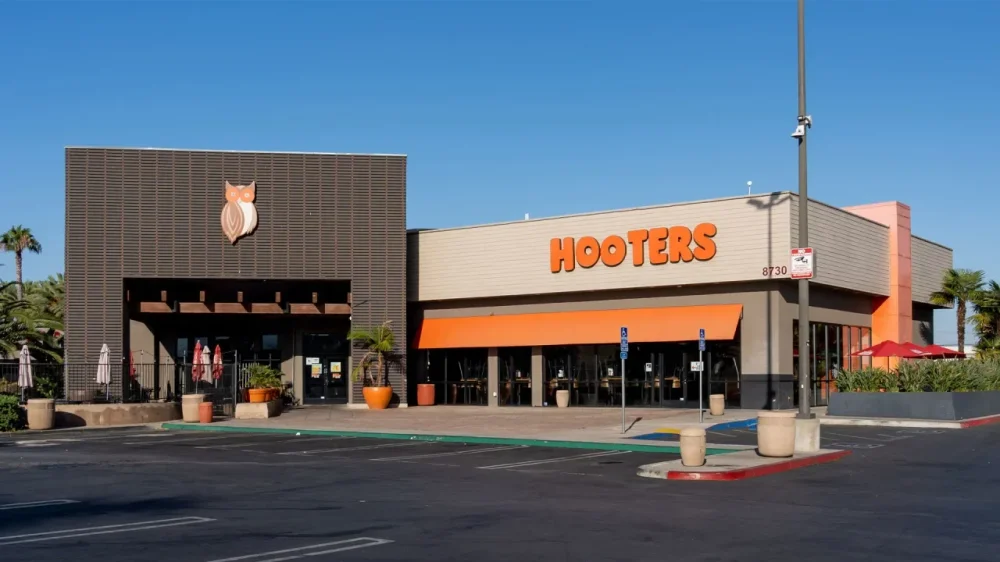
Hooters of America, LLC, owner of the Hooters restaurant chain, has announced that it has filed for Chapter 11 bankruptcy protection. The bankruptcy filing is aimed at helping the company restructure itself so it can transition from a company-owned restaurant chain to a franchisee-owned chain. Here’s what you need to know about Hooter’s bankruptcy and whether any locations will close. Hooters to transition to franchisee-owned model Most people think of Hooters as just one company, but the restaurant chain currently operates under a hybrid model. Hooters of America, LLC, owns the restaurant’s brand intellectual property and currently operates numerous Hooters locations in the United States and across the world. The company says it franchises and operates 410 Hooters restaurants in 38 states and 24 countries. However, Hooters of America, LLC, also licenses out its restaurants to franchisees, allowing individuals and companies to operate Hooters stores. One of the largest Hooters franchisees is Hooters Inc., the company owned by the original Hooters cofounders. Hooters Inc. owns and operates over 20 restaurants in America. Like many restaurant chains, Hooters has been struggling financially in recent years, and now the company’s owner, Hooters of America, LLC, has decided that the best way forward for the brand is to restructure its business model. That restructuring will see Hooters move from a primarily company-owned model to an entirely franchisee-owned model. Hooters of America, LLC, says that the restructuring will see a group of current franchisees acquire and operate the current company-owned locations. Among those franchisees is Hooters Inc. It should be noted that the bankruptcy filing and the restructuring of the company only affect Hooters locations in America. Its worldwide locations are unaffected by the changes. Are any Hooters locations closing? If you’re a fan of Hooters, then there is some good news. The company says that it currently has no definite plans to close any Hooters locations. In a press release announcing the bankruptcy filing, Hooters of America CEO Sal Melilli said, “Our renowned Hooters restaurants are here to stay.” However, the announcement went on to leave open the possibility that some locations could close. “As part of the Company’s broader business transformation and planning, Hooters is evaluating the Company’s operational footprint as part of its financial restructuring process to position itself to invest its resources in its strongest assets moving forward,” the statement read. What this means is that it’s possible Hooters could decide to close some locations as the bankruptcy process continues. So, is Hooters going out of business? The company has no plans to. Indeed, it filed for Chapter 11 bankruptcy protection, so it can keep its business going and locations open, albeit under a new franchisee-owned model. In a dedicated website for customers who have questions about Hooter’s bankruptcy, the company says, “Hooters is here to stay, and with a stronger financial foundation and streamlined operations on the other side of this process, we will be well-positioned to continue delivering the guest-obsessed hospitality experience and delicious food our valued customers and communities have come to expect well into the future.” How long will Hooters’ restructuring take? Hooters of America, LLC, says it expects to move through the bankruptcy process “swiftly.” The company defines this as having the goal of emerging from Chapter 11 in about 90 to 120 days. Restaurant chains have had a rough year Hooters of America, LLC isn’t the only restaurant company that has filed for Chapter 11 bankruptcy lately. In the past year, numerous other popular restaurant chains have as well, including Red Lobster, Tijuana Flats, Buca di Beppo, and Roti. While the specifics of each bankruptcy will vary, many restaurants have faced the same problems in recent years. This includes diminishing foot traffic, higher costs, and diners who are cutting back on discretionary spending due to price rises fueled by inflation. View the full article
-
You know the feeling—your calendar is packed, your inbox is overflowing, and every decision, big or small, lands on your desk. Leadership today isn’t just about managing teams and making strategic calls; it’s about navigating an endless stream of meetings, emails, and expectations. While burnout is widely recognized, most solutions focus on time management rather than cognitive bandwidth management. The real issue isn’t just being overworked—it’s being oversaturated. Leaders are drowning in information, decisions, and interruptions, leaving little room for the deep thinking required for creativity, strategic foresight, and high-quality decision-making. A study from the University of California found that it takes an average of 23 minutes to refocus after an interruption. Multiply that by dozens of daily distractions, and it’s clear why many leaders struggle to see the bigger picture. The ability to make sound, high-impact decisions isn’t about working harder; it’s about creating space for deep thought. The Hidden Costs of Constant Busyness Many leaders equate productivity with busyness, believing that the more they do, the more they accomplish. However, excessive cognitive load leads to decision fatigue, diminishing the quality of choices over time. The constant need to process information can also limit strategic foresight, causing leaders to operate reactively rather than proactively. Without time to reflect, innovation suffers, and leaders struggle to connect disparate ideas or generate fresh insights. Perhaps most importantly, the mental strain of constant cognitive overload erodes the ability to inspire, connect, and energize teams, leading to emotional exhaustion. Through my work advising leaders, I have seen the biggest shift happen when they gain clarity on what is most important for them to focus on. When they create space to think, they move from reactive firefighting to intentional, high-impact leadership. To support this shift, I developed a structured approach that helps leaders pause, reflect, and see things differently before diving into the next wave of demands. By making reflection a habit, they regain control over their time and amplify their ability to lead with purpose. White space isn’t a luxury—it’s a strategic imperative. But how can leaders reclaim time for deep thinking when everyone wants a piece of them? Scheduling Uninterrupted Blocks for Reflection If you don’t protect your time, no one else will. Blocking thinking time on your calendar isn’t just about setting aside hours—it’s about creating the right conditions for meaningful reflection. Some CEOs, like Bill Gates, take “Think Weeks” to immerse themselves in strategic visioning. While a whole week might not be feasible, micro-retreats—such as two-hour deep-thinking sessions once a week—can significantly improve clarity and decision-making. To implement this, designate a specific time each week when you are completely unreachable. Use this time to tackle complex problems, review long-term strategies, or explore innovative ideas. Changing your environment can also enhance deep thinking; a walk, a quiet room, or a retreat space can be instrumental in shifting your mindset from reactionary to strategic. Reducing Decision Fatigue by Delegating and Automating Not every decision requires your input. Barack Obama and Steve Jobs famously simplified their daily choices—wearing the same outfit daily—to preserve mental energy for high-stakes decisions. Leaders should similarly identify which decisions they must own and which ones can be delegated or automated. Start by categorizing your decisions: strategic ones require deep thinking, operational ones can often be delegated, and administrative ones are best automated. Empowering your team to take ownership of decisions within their expertise frees up cognitive space for you to focus on higher-impact areas. Batching smaller decisions into designated review sessions can also prevent constant context switching. Automation tools can also help eliminate repetitive tasks, allowing leaders to focus their energy on what truly matters. Creating “No-Meeting Zones” for Deep Work While necessary, meetings often disrupt the ability to engage in strategic work. Some companies, like Shopify, have introduced “Meeting-Free Wednesdays” to give employees uninterrupted time for deep work. Leaders can implement a similar approach by establishing specific time blocks where meetings are off-limits, enabling more focused thinking. Redesigning meeting culture is another way to protect deep work. Encouraging asynchronous collaboration—through well-documented memos, video updates, and shared decision logs—can reduce the need for real-time discussions. Adopting a “50-minute meeting rule” also helps ensure that meetings don’t consume an entire hour and allows for short breaks to reflect before diving into the next task. Another interesting approach I have implemented with my clients to enhance strategic discussions is to hold a silent meeting to allow leaders to read and reflect on strategic plans before engaging in a dialogue. Being Selective About Information Intake In an era of constant connectivity, leaders must be intentional about the information they consume. Too much input can be just as damaging as too little. Instead of passively absorbing every report, email, or industry update, curate your information sources carefully. Limiting the number of newsletters, reports, and updates you follow can help reduce cognitive clutter. Setting specific times during the day to check emails and news—rather than reacting to every notification—prevents constant distractions. Another helpful practice is maintaining a “Reverse To-Do List.” Instead of listing tasks to complete on the list, you instead identify habits, commitments, or information sources you can eliminate to free up mental space. Structured reflection rituals, such as weekly reviews of key learnings rather than endless content consumption, can further sharpen decision-making. Great leadership isn’t about being the busiest person in the room—it’s about making the best decisions. The leaders who thrive in complexity aren’t those who power through every request but those who create the mental space necessary for clarity and innovation. If you’re constantly overwhelmed, it may not be a workload problem but a thinking-time problem. Designing intentional white space isn’t about stepping back; it’s about stepping into your most strategic, creative, and high-impact leadership self. View the full article

-
Sick of seeing the error “Discovered – currently not indexed” in Google Search Console (GSC)? So am I. Too much SEO effort is focused on ranking. But many sites would benefit from looking one level up – to indexing. Why? Because your content can’t compete until it’s indexed. Whether the selection system is ranking or retrieval-augmented generation (RAG), your content won’t matter unless it’s indexed. The same goes for where it appears – traditional SERPs, AI-generated SERPs, Discover, Shopping, News, Gemini, ChatGPT, or whatever AI agents come next. Without indexing, there’s no visibility, no clicks, and no impact. And indexing issues are, unfortunately, very common. Based on my experience working with hundreds of enterprise-level sites, an average of 9% of valuable deep content pages (products, articles, listings, etc.) fail to get indexed by Google and Bing. So, how do you ensure your deep content gets indexed? Follow these nine proven steps to accelerate the process and maximize your site’s visibility. Step 1: Audit your content for indexing issues In Google Search Console and Bing Webmaster Tools, submit a separate sitemap for each page type: One for products. One for articles. One for videos. And so on. After submitting a sitemap, it may take a few days to appear in the Pages interface. Use this interface to filter and analyze how much of your content has been excluded from indexing and, more importantly, the specific reasons why. All indexing issues fall into three main categories: Poor SEO directives These issues stem from technical missteps, such as: Pages blocked by robots.txt. Incorrect canonical tags. Noindex directives. 404 errors. Or 301 redirects. The solution is straightforward: remove these pages from your sitemap. Low content quality If submitted pages are showing soft 404 or content quality issues, first ensure all SEO-relevant content is rendered server-side. Once confirmed, focus on improving the content’s value – enhance the depth, relevance, and uniqueness of the page. Processing issues These are more complex and typically result in exclusions like “Discovered – currently not indexed” or “Crawled – currently not indexed.” While the first two categories can often be resolved relatively quickly, processing issues demand more time and attention. By using sitemap indexing data as benchmarks, you can track your progress in improving your site’s indexing performance. Dig deeper: The 4 stages of search all SEOs need to know Step 2: Submit a news sitemap for faster article indexing For article indexing in Google, be sure to submit a News sitemap. This specialized sitemap includes specific tags designed to speed up the indexing of articles published within the last 48 hours. Importantly, your content doesn’t need to be traditionally “newsy” to benefit from this submission method. Step 3: Use Google Merchant Center feeds to improve product indexing While this applies only to Google and specific categories, submitting your products to Google Merchant Center can significantly improve indexing. Ensure your entire active product catalog is added and kept up to date. Dig deeper: How to optimize your ecommerce site for better indexing Step 4: Submit an RSS feed to speed up crawling Create an RSS feed that includes content published in the last 48 hours. Submit this feed in the Sitemaps section of both Google Search Console and Bing Webmaster Tools. This works effectively because RSS feeds, by their nature, are crawled more frequently than traditional XML sitemaps. Plus, indexers still respond to WebSub pings for RSS feeds – a protocol no longer supported for XML sitemaps. To maximize benefits, ensure your development team integrates WebSub. Step 5: Leverage indexing APIs for faster discovery Integrate both IndexNow (unlimited) and the Google Indexing API (limited to 200 API calls per day unless you can secure a quota increase). Officially, the Google Indexing API is only for pages with job posting or broadcast event markup. (Note: The keyword “officially.” I’ll leave it to you to decide if you wish to test it.) Get the newsletter search marketers rely on. Business email address Sign me up! Processing... See terms. Step 6: Strengthen internal linking to boost indexing signals The primary way most indexers discover content is through links. URLs with stronger link signals are prioritized higher in the crawl queue and carry more indexing power. While external links are valuable, internal linking is the real game-changer for indexing large sites with thousands of deep content pages. Your related content blocks, pagination, breadcrumbs, and especially the links displayed on your homepage are prime optimization points for Googlebot and Bingbot. When it comes to the homepage, you can’t link every deep content page – but you don’t need to. Focus on those that are not yet indexed. Here’s how: When a new URL is published, check it against the log files. As soon as you see Googlebot crawl the URL for the first time, ping the Google Search Console Inspection API. If the response is “URL is unknown to Google,” “Crawled, not indexed,” or “Discovered, not indexed,” add the URL to a dedicated feed that populates a section on your homepage. Re-check the URL periodically. Once indexed, remove it from the homepage feed to maintain relevance and focus on other non-indexed content. This effectively creates a real-time RSS feed of non-indexed content linked from the homepage, leveraging its authority to accelerate indexing. Step 7: Block non-SEO relevant URLs from crawlers Audit your log files regularly and block high-crawl, no-value URL paths using a robots.txt disallow. Pages such as faceted navigation, search result pages, tracking parameters, and other irrelevant content can: Distract crawlers. Create duplicate content. Split ranking signals. Ultimately downgrade the indexer’s view of your site quality. However, a robots.txt disallow alone is not enough. If these pages have internal links, traffic, or other ranking signals, indexers may still index them. To prevent this: In addition to disallowing the route in robots.txt, apply rel=”follow” to all possible links pointing to these pages. Ensure this is done not only on-site but also in transactional emails and other communication channels to prevent indexers from ever discovering the URL. Dig deeper: Crawl budget: What you need to know in 2025 Step 8: Use 304 responses to help crawlers prioritize new content For most sites, the bulk of crawling is invested in refreshing already indexed content. When a site returns a 200 response code, indexers redownload the content and compare it against their existing cache. While this is valuable when content has changed, it’s not necessary for most pages. For content that hasn’t been updated, return a 304 HTTP response code (“Not Modified”). This tells crawlers the page hasn’t changed, allowing indexers to allocate resources to content discovery instead. Step 9: Manually request indexing for hard-to-index pages For stubborn URLs that remain non-indexed, manually submit them in Google Search Console. However, keep in mind that there is a limit of 10 submissions per day, so use them wisely. From my testing, manual submissions in Bing Webmaster Tools offer no significant advantage over submissions via the IndexNow API. Therefore, it’s more efficient to use the API. Maximize your site’s visibility in Google and Bing If your content isn’t indexed, it’s invisible. Don’t let valuable pages sit in limbo. Prioritize the steps relevant to your content type, take a proactive approach to indexing, and unlock the full potential of your content. Dig deeper: Why 100% indexing isn’t possible, and why that’s OK View the full article
-
The Google March 2025 core update finished rolling out over a 14-day period, starting on March 13, 2025, and completed about 14 days later on March 27, 2025. This March core update took about a week longer than Google’s December 2024 core update, which started December 12, 2024 and completed about 6 days later on December 18, 2024. Please understand that if a core update impacts a site, it can result in a huge change for that site’s search visibility. So, I do not want to diminish any core updates, including the March core update; those could have been really big for you or the sites you manage. Data providers on the Google March 2025 core update Semrush. Semrush (our parent company) was the first to send us data that seemed to show that the Google March 2025 core update had similar volatility than the previous core update, the December 2024 core update. Keep in mind that the December 2024 core update was more volatile than the November 2024 core update, based on the data. If you glance at the Semrush Senor, you can see the overall volatility the tool reported over that time period: Mordy Oberstein, who sent me the data from Semrush, told me the two were of “similar in size” when comparing the volatility. He sent me this chart showing the volatility of the past two core updates, broken down by vertical. It shows the peak volatility numbers were pretty similar between the two updates: If you look at overall ranking volatility change comparison, you can see that the Health sector saw a much bigger change, for some reason: But when you compare this to the baseline rank volatility, both the December and March core updates were within very similar ranges, Mordy Obertstein told us. “There’s a mere .1 difference between the two,” Obertstein added. Obertstein said he has a theory, which he will share at his session at SMX Advanced, on why he thinks that this update hit different verticals differently. When you dive into the top ten results, you can see a notable change in what ranking changes there were between these two past core updates: Similarweb. Similarweb’s SERP Seismometer showed the spikes in volatility cooled down with the March update. You can see it get a bit more volatile on March 13th, 14th and 15th but then start to cool again as the core update rolled out. Darrel Mordechai from SimilarWeb told us the March 2025 core update was not the most volatile core update they’ve seen and compared to the December core update, it showed “similar levels of volatility.” Here is a chart showing the core update volatility by average position change for the past core updates, as documented by Similarweb: Here is when you zoom in comparing the March 2025 and December 2024 core updates, they are super close: The current update showed slightly lower fluctuations in the top three positions but increased volatility across the top five. Here is where you can see that in this chart: When you compare it by vertical or niche, you can see the volatility the March 2025 core update caused across the health, finance, retail, travel and finance industries. You can see the finance industry showed the highest levels of fluctuation, particularly in the top five results. In contrast, the travel industry experienced notably low volatility in the top three positions. Other tools. There are a lot of Google search ranking volatility tools. Here is what they looked like after the core update finished rolling out and over the course of the update: Mozcast: Algoroo: Advanced Web Rankings: Accuranker: Cognitive SEO: Wincher: Mangools (looks broken?): Sistrix: Data For SEO: SERPstat: Industry. The initial rollout seemed to kick in within a few days after the update was announced. Some sites saw big swings both up and down, in terms, of ranking improvements or decline. But this update did not seem as widespread as some previous core updates, where it had a wider impact on a more diverse site of sites. That is not to say this update was not big for those who were impacted by it – it 100% was very big for those sites. During the update, some of the tracking tools were tripped up by some Google Search result page changes. That may make it hard for some to track the impact of this update. But you can use Google Search Console to see your impact for your site and see position changes for your most popular keywords. Then, we saw some additional volatility spike at the tail end of this update. What to do if you are hit. Google has given advice on what to consider if you are negatively impacted by a core update in the past. Google has not really given much new advice here. There aren’t specific actions to take to recover. A negative rankings impact may not signal anything is wrong with your pages. Google has offered a list of questions to consider if your site is hit by a core update. Google said you can see a bit of a recovery between core updates but the biggest change would be after another core update. In short, write helpful content for people and not to rank in search engines. “There’s nothing new or special that creators need to do for this update as long as they’ve been making satisfying content meant for people. For those that might not be ranking as well, we strongly encourage reading our creating helpful, reliable, people-first content help page,” Google said previously. More on Google updates You can read more of our coverage in Search Engine Land’s Google Algorithm Updates history. Why we care. While the data above shows how sites in general are doing with the last core update, it does not represent how your individual site did with the update. If your site was hit by this past update, it can be devastating. If you were hit by previous updates and so no improvement with this update, then again, devastating once again. But some sites saw big improvements. Feel free to compare this to our December core update report. We hope you saw improvements with this March 2025 coe update. View the full article
-
Today is April 1, April Fools’ Day, the annual holiday that celebrates pranking, hoaxes, and all manner of horseplay and tomfoolery. But why? Where did this faux holiday come from? Why do we do this to each other, and when will we finally just stop? These are surprisingly tricky questions, and April Fools' Day has been around for a surprisingly long time. As far back as 1708, the British newspaper Apollo asked, “Whence proceeds the custom of making April Fools?” and provided unconvincing answers. So we know the April Fools' tradition goes back centuries, but the exact origins of the holiday are still a mystery. There are theories, but they all reek faintly of bullshit. April Fools’ Day origin story #1: The great French calendar switch of 1582The most popular (but still probably bullshit) April Fools' origin story blames France. It goes like this: Back in 1563, The Council of Trent declared that Christ is entirely present in both the consecrated bread and wine in the Eucharist. But more importantly, it decreed Catholic nations should use the Gregorian calendar instead of the Julian calendar. France’s King Charles IX ordered his nation to get on board with the switch by 1582, but when the actual day rolled around, some citizens were non-compliant. (French people can be stubborn.) April 1 is beginning of the new year according to the Julian calendar, and some people either didn’t know about the new calendar or didn’t like it, because they went on celebrating the new year on April 1. To get everyone back in line, people started mocking calendar-truthers by playing tricks on them. Because the first day of April used to coincide with the end of Lent, and fish was a popular Lenten gift, giving a fool a fake fish was seen as a hilarious joke (or so the story goes). This evolved into the French April 1 prank of affixing a paper fish to someone’s back, which is still practiced to this day, mainly by school kids; it’s why French people call April 1 poisson d’avril, or "April fish." I like the alternative “April fish” origin story better, though: The real prank was secretly sliding a fish in someone’s pocket and hoping they didn’t notice until it started to stink. That’s timeless comedy and requires no explanation. So case closed, right? “April Fools’ Day began in France when the calendar changed.” Nah. Probably not (April Fools!), because the first written reference to the day dates back some two decades earlier, to 1561. Flemish writer Eduard De Dene’s Refereyn vp verzendekens dach / Twelck den eersten April te zyne plach is a comical poem about a nobleman sending his gullible servant on a series of ridiculous fake errands on April 1. Along with a message that remains timely today (“You’re a fool to believe what someone says on April 1”), the poem makes it clear that the seasonal pranks were already a widespread, well-known phenomenon decades before the calendar changed in France. Unlike many holidays with changing customs and rites, April Fools’ seems to be celebrated in much the same way now as it was in the 1500s. April Fools’ Day origin #2: The ancient Romans did itSome historians have dug all the way back to Ancient Rome to uncover evidence of the first April fool. Back then, they called days of rejoicing “hilaria.” People had private hilaria, like their wedding days, or public ones, like the Hilaria Matris Deûm, celebrated on March 25 as part of a 10-day festival to honor Cybele, the mother of the gods. After several festival days devoted to fasting, castration, mourning, and scourging, the hilaria gave everyone the chance to enjoy some much-needed fun, playing games and having orgies (I assume). The biggest highlight of Hilaria Matris Deûm was masquerading. You could get away with imitating anyone you wanted on this day, including government officials. So maybe this was the original April Fools’ Day? The evidence seems a little shaky to me. The time of year is roughly correct, but the connection to pranks and hoaxes seems tenuous—dressing up as someone to mock them is not the same as tricking them into eating a donut filled with mayonnaise. Since no one knows where or when April Fools’ Day originated, so I’m going to say it came from—oh, Denmark. From there, it spread to the rest of Europe, probably. No matter the origin, by the late 1600s, April Fools' Day was so firmly established that newsletters saw no reason to explain it to readers. For example, the April 2, 1698 edition of Dawks’s News-Letter contains an item that reads: “Yesterday being the first of April, several persons were sent to the Tower Ditch to see the Lions washed.” (Sending fools to see lions washed is hilarious.) April Fools’ Day goes from personal to publicWhether it’s sticking a paper fish on someone’s back or sending tourists to the lion washings, the first few 100 years of April Fools’ Day pranks were personal. It wasn’t an official holiday; it was just a bunch of folks joshing their friends or strangers on the street. But as society shifted from individual experiences to more mediated ones, the nature of April pranks shifted too. Beginning in the early 1900s, newspapers started publishing fake stories on April 1. Then radio started doing it, telling listeners that wasps were about to attack them, or the world was going to end. In the 1950s, television got in the act; even the staid BBC pranked viewers with a fake story about the Swiss spaghetti harvest. The April Fools’ prank’s current most popular form—fake announcements on the internet—is fitting for the state of our culture. Traditionally pranks were at least enjoyable for the one doing the pranking, but modern April Fools’ isn’t fun for anyone. The audience knows it’s going to happen, so no one is really tricked, and the technology and media companies that are “pranking” people are doing it because they want clicks and engagement to further solidify their brand image. That's the opposite of fun. The only thing that was ever good about April Fools' Day is that it was a home-grown, unofficial folk holiday of the people. The jerky people, but still. Now April Fools' Day is entirely corporation-approved. Why April Fools' Day needs to dieThere aren’t really any studies on this, but strictly from a personal “I’ve been on the Internet for a long time” perspective, the popularity of online April Fools’ jokes have been declining for several years and hopefully it drops off to nothing soon. No one needs a holiday that has victims. In the disinformation age, every day is April 1 anyway; we’re constantly being taken for fools. We’re bombarded by people using technology to try to trick us, whether it’s criminal robots sending texts to steal the money in our bank accounts, influencers monetizing our envy through filters and careful camera angles, AI-generated deep-fakes of the pope in a puffer jacket, or the more subtle but all-encompassing hoaxes of modern politics and commerce as a whole. Hearing some jerkass saying "Ha ha, tricked you," just isn't funny anymore—if it ever was. View the full article
-
Countless hours, days—perhaps even weeks—of my life have been spent creating Sims characters, building them houses, marrying them off, and making babies. Now, there’s a new life-simulation game on the block hoping to expand beyond the American market. inZOI debuted on March 28 at $40 and quickly climbed to the top of Steam’s most wishlisted and bestseller charts. The game’s appeal lies in its hyper-detailed character customization, free expansions, and immersive, realism-focused world. Unlike The Sims, which embraces cartoonish characters and lightheartedness, inZOI opts for lifelike graphics and a slower-paced gameplay experience centered on everyday interactions. Designed with a broader audience in mind, inZOI stands out through subtle cultural details. For example, players’ digital humans are prompted to remove their shoes upon entering a home, and the game’s cities draw inspiration from Seoul and Santa Monica. The fridge is stocked with tteokbokki, a beloved Korean rice cake snack, and characters often wear trendy Korean streetwear. “I felt a lot of cultural barriers” playing The Sims, Hyungjun “Kjun” Kim, chief executive officer of game publisher Krafton’s inZOI Studio, told Bloomberg in a recent interview. Kim spent years developing online role-playing games, only to come home and play The Sims with his son. One day, his son asked why there aren’t other games like The Sims. That question stuck with Kim and eventually led to the creation of inZOI. Once the prototype was ready, Krafton sought input from The Sims’ large and dedicated fanbase. They sent PCs to Sims YouTubers, encouraging them to livestream the game, while fans joined a Discord channel to request features they felt The Sims was lacking—such as more inclusive hairstyles. The Sims franchise has been a cash cow for Electronic Arts, generating over $5 billion in revenue and attracting more than 15 million new players in 2024, despite being more than a decade old. But with no Sims 5 in sight, EA has relied on expansion packs to keep players engaged, opening up a gap in the market that inZOI is eager to fill. Still, if inZOI was banking on its competitor fading into obscurity, it may be disappointed. The Sims 4 recently hit its highest-ever average player count on Steam in February 2025, according to The Gamer. The anticipation surrounding inZOI perhaps sparked a wave of players to revisit their old favorite. Either way, The Sims franchise has shown it still has plenty of life in it. View the full article

-
Should you open an agency as a beginner in SEO? Find out how it affects your competitiveness and client attraction. The post Ask An SEO: If I Am Not An SEO Expert, Is It Better For Me To Start An Agency? appeared first on Search Engine Journal. View the full article
-
Over the last year, Gap has been popping up in an unexpected place for a heritage casual wear brand: the red carpet. Last July, Anne Hathaway wore a white shirt dress with matching bralette and Bulgari jewelry. In December, Demi Moore appeared in a black knit jersey dress and moto jacket. And just this past February, Timothée Chalamet showed up in a black satin workwear set. Zac Posen, Gap Inc.’s executive vice president and creative director, had designed all of them under the new label, GapStudio. And now, Gap is bringing GapStudio to the masses as it officially launches the new, higher-end Gap sub-brand, designed to elevate Gap’s perception, extend its reach to younger consumers, and help regain its cultural caché. GapStudio will launch four seasonal collections a year, along with select standalone drops starting with this Spring capsule, called GapStudioCollection 01. The collection includes a range of elevated basics that play into classic styles Gap is known for, but with contemporary and trend-driven silhouettes, and elevated fabrications and construction. Prices range from $78-$248, and will be available online and in select stores starting this Thursday. Posen’s role is far-reaching across Gap Inc, but GapStudio seems to be the most direct expression of his crossover from the red carpet gowns of his former high-end designer label to Gap Inc’s accessible everyday denim. Posen led the collection’s design processes, creative directed its launch campaign with zeitgeisty photographers, models, and stylists from his network, and onboarded a team he’s worked with for decades to bring it to life. The move to revive a brand’s Americana cool factor GapStudio is launching close to a year after Posen joined Gap Inc, where he oversees the creative direction of its brands, including Gap, Banana Republic, Athleta, and Old Navy, for which he is also chief creative officer. He and his team work out of the GapStudio atelier (that’s fashion for workshop), a new space in Gap Inc’s New York City headquarters that’s the epicenter of a new design vision for Gap. After shuttering his namesake brand in 2019 and spending seven years at Brooks Brothers, Gap Inc hired Posen to revive the defunct heritage brand known more for its deep sales than for its fit. According to the company’s fourth quarter earnings report, net sales were down 3% in its last quarter compared to the previous year. But the full 2024 fiscal year shows that online sales were up 4% and net sales were up 1%. In-store sales remained flat. Posen’s first collection for GapStudio offers up a tangible sense of where he wants to take the brand. The collection includes a mix of polished but contemporary everyday pieces, including denim sailor pants, cropped white button downs, and dresses (the Anne Hathaway will be available in a new color), ribbed tanks and dresses, slinky slip dresses, a denim moto and a trench coat with a pleated back. “You have to have that range within a very tight collection to be able to do that,” says Posen of the mix between casual and elevated styles. He notes that the slip dress could be worn with shoes or heels. “Daystomper, night stalker.” Brand elevation through construction, silhouette, and association Posen applied a studied eye to the construction of the pieces. He showed me the collection in the Gap Inc showroom in NYC’s Tribeca neighborhood. I noted the curved seaming of the knit dress worn by Demi Moore, which gave the dress a slight bell shape. Those were Posen’s “construction lines,” he said, so the piece didn’t have side seams. The seams themselves were made to have more dimension than a typical needle stitch, he pointed out. As he made his way through the collection racks, he pointed out more details: the $148 knit day dress, which is a fully fashioned knit, the dry hand of the rib tank, the sit of the shoulder and pick stitch of the khaki blazer. Posen pulls out a white denim corset cincher. “Like, why not?” he asks. He paired it with a white tank dress, but it appears in a few different looks throughout the campaign, making the case for its versatility. The collection also has sweatshirts for when you’re not in the mood to be so cinched. He thumbs to the slip dress, which has seaming he originally designed for a slip dress featured in a ballet his husband choreographed. “Pajama glamour,” he declared. “Everyday street glamour. Red carpet to the street.” That sentiment covers the range of the collection pretty well. “That’s so cute as a look, and really young,” Posen says referring to the sweatshirt look. There’s an explicit play for Gen Z with GapStudio. “It’s been really fun to be building a collection with that in mind, in terms of expanding our customer base.” One way he did that, in addition to leaning into nascent Gen Z trends like bloomers, is through the GapStudio campaign itself. He tapped fashion photographer Mario Sorrenti, stylist Alastair McKimm, and supermodels Alex Consani, Imaan Hammam, and Anok Yai. He described the process of building the images as “elevating the iconic.” He hopes to tap into contemporary equivalents of the brand’s past partnerships with renowned photographers like Annie Leibowitz and Steven Miesel. GapStudio’s “elevated essentials” Ultimately, Posen wants GapStudio to communicate a sense of “elevated essentials,” he says. “Great items that become staples in a wardrobe. Beloved pieces you always look for. Things that have style and trends without being disposable.” To do that, he aims to balance Gap’s metrics-driven approach with his own taste. “Experimentation at any level is essential,” he says. And it does appear that he is deeply involved with the GapStudio design team, including concepting, fitting, and fabrication. As we walked to the atelier down the hall from the showroom, he introduced me to team members he’d worked with for 10, 15, and 20 years, who now work in the GapStudio label. As we talked and made our way through the atelier, he was distracted by the work of a designer who was draping and pinning a work-in-progress garment on a figure. “I keep thinking about lowering the back on it,” Posen said to the designer. “You have to do a body suit—that’s what I said at like midnight last night—but then we can go lower in the back and lower on the side.” He’s comfortably in his element. I asked him what the piece was for. “That’s a special project,” he told me as we moved to the next station, without disclosing particulars. Posen plans to invite other guest designers, a strategy that has worked well for bridge and mass market brands like Uniqlo and H&M. He sees the coalescence of longstanding relationships and skillsets into GapStudio as “a starting point for innovation”; a new chapter with old collaborators. The play is “desirability, absolutely elevation,” Posen says of GapStudio. The first collection, he says, is “just the beginning.” View the full article

-
Are you controlling your paid search campaigns, or are they controlling you? If you can’t confidently articulate your smart bidding strategies, you lose conversions and credibility. True mastery isn’t just about setting up a campaign and picking a bid strategy; it’s about owning and communicating the process effectively. This guide is your roadmap to clarity and control, breaking down 2025’s Smart Bidding into actionable insights. We’ll cover key concepts, common mistakes, and actionable tips for picking the right strategy. Smart Bidding in Google Ads: AI-powered bid optimization Smart Bidding is Google Ads’ advanced form of automated bidding. It leverages machine learning and real-time auction signals to optimize bids for conversions or conversion value. It dynamically adjusts bids to achieve specific goals, such as maximizing conversions at a target cost or achieving a desired return on ad spend. Key Smart Bidding strategies include: Target CPA (cost per action) Optimizes bids to achieve conversions at a target cost per action. Ideal for campaigns where you have a specific cost you’re willing to pay for each conversion (e.g., lead, sale). Example: “We aim to acquire leads at a CPA of $50.” Dig deeper: Everything you need to know about Target CPA bidding Target ROAS (return on ad spend) Focuses on achieving your desired revenue for every dollar spent. Best for ecommerce or campaigns with clear revenue goals. Example: “We want to achieve a ROAS of 400%, meaning $4 in revenue for every $1 spent.” Maximize Conversions Automatically sets bids to achieve the most conversions within your budget. Useful when you want to drive as many conversions as possible, regardless of cost. Example: “Our goal is to maximize the number of sign-ups within our daily budget.” Dig deeper: Mastering Maximize conversions bidding in Google Ads Maximize Conversion Value Prioritizes higher-value conversions for greater overall return. Effective when different conversions have varying values to your business. Tends to favor selling more expensive products or services, as they contribute more to the total conversion value. Example: “We value a ‘request for quote’ more than a ‘newsletter sign-up,’ so we want to maximize the total value of conversions.” Dig deeper: Maximize Conversion Value: Google Ads bidding explained Maximize Clicks Automatically sets your bids to get as many clicks as possible within your budget. Useful for top-of-funnel campaigns where the goal is to drive traffic to a site. Example: “This campaign is designed to drive as much traffic to our new blog post as possible.” Enhanced CPC (ECPC) A semi-automated bidding strategy that adjusts your manual bids to try and get more conversions. Google Ads adjusts your manual bid up or down based on the likelihood of a conversion. Example: “We are using manual bidding but want to use Google’s signals to increase conversions where possible.” Viewable CPM (YouTube) Focuses on maximizing viewable impressions of your display or skippable in-stream video ads. Ideal for brand awareness campaigns where the goal is to get your message seen by as many people as possible. Example: “We want to ensure our brand message is visibly displayed to our target audience on YouTube.” Cost Per View (YouTube) Optimizes bids to get the most video views or interactions within your budget. Best for campaigns focused on driving engagement with your video content. Example: “We are running a video campaign on YouTube and want to maximize the number of views we receive.” It’s crucial to understand that while setting a Target CPA or ROAS provides strategic direction, achieving those exact targets isn’t guaranteed. I’ve had situations where a media planner pushed for an immediate switch to a specific CPA goal. They wanted the target set at four times and wouldn’t budge or try to understand why the campaign was set at two times. A common misconception is that simply setting a desired metric will automatically yield the desired results. In practice, achieving optimal performance often requires a nuanced approach. This may involve: Gradual bid adjustments. A willingness to accept temporary fluctuations in ROAS for broader account health. A comprehensive evaluation of multiple factors, including budget, historical campaign performance, and keyword strategy. It’s essential to understand that Smart Bidding strategies, while powerful, require strategic oversight and a holistic understanding of account dynamics. Success should be measured within the context of overarching account objectives, not solely focusing on individual campaign metrics. Understanding manual, automated and smart bidding in Google Ads Manual bidding allows you to control bid adjustments completely, making it ideal for certain industries, such as legal or home services, where fluctuating competition requires ongoing oversight. However, it requires more time and effort. It’s like driving a car where you control every gear shift and pedal movement. Automated bidding simplifies bid management by using algorithms to adjust bids. While automated bidding can save time, its generic approach doesn’t account for nuanced conversion goals. Think of this as engaging cruise control. You tell the car (Google Ads) your general desired speed (goal), and it adjusts the engine (bids) to maintain that pace. Smart Bidding, however, takes automated bidding further by using real-time signals and advanced machine learning to predict the likelihood of conversions and their value, tailoring bids to individual auctions. It’s especially effective for campaigns with clear conversion goals and sufficient historical data. This is like having a self-driving car with an incredibly sophisticated navigation system. It’s important to know that while all Smart Bidding is automated, not all automated bidding qualifies as Smart Bidding. Automated bidding covers a wider range of strategies, some of which are more basic and don’t rely on real-time signals or advanced machine learning. In essence: Manual: You control every bid. Automated: Google’s algorithms handle bid adjustments based on your chosen strategy. Smart: Google’s machine learning optimizes bids in real-time for conversions and conversion value. Get the newsletter search marketers rely on. Business email address Sign me up! Processing... See terms. Smart Bidding: Advantages and risks There are significant advantages to using Smart Bidding. Improved efficiency: Saves time by automating bid adjustments. Auction-time optimization: Factors in user intent, device, location, and other data points to optimize bids for each auction. Goal alignment: Customizes bids to match your campaign objectives, whether it’s maximizing volume or focusing on high-value actions. While Smart Bidding offers significant advantages, missteps in implementation can lead to underwhelming results. Here’s how to avoid common pitfalls and optimize your campaign performance. Data dependency Smart Bidding algorithms rely on robust historical data to make accurate predictions. Campaigns with fewer than 30 conversions in the last 30 days may struggle to optimize effectively. Start with manual bidding or Maximize Clicks to build a data foundation before switching to Smart Bidding. Boris Beceric, a Google Ads consultant and coach, said: “I guess most try Smart Bidding too early – without enough conversion volume. What usually helps: consolidate campaigns so you get more data flowing through a single campaign. Portfolio bidding – kinda the same, but consolidation takes place at the bid strategy level. “Micro conversions – try to add in the micro conversion that had the most volume and is closest to the ‘real’ conversion. Bonus: Reverse engineer CVR and conv value from micro to macro conversion and adjust tCPA accordingly.” Goal misalignment Using the wrong bidding strategy can hinder performance. For example, applying Target ROAS to a new campaign with limited data can set unrealistic expectations and reduce reach. Align bidding strategies with your goals. When prioritizing profitability, use Maximize Conversions for volume and Target ROAS or Target CPA. Harrison Hepp, owner of Industrious Marketing, said: “I had a client who was hybrid ecommerce and lead gen (they sold products, but high-priced deals were lead gen), and they insisted on tracking purchases and leads in every campaign. We constantly battled major fluctuations in the campaigns as they’d swing back and forth between getting purchases or leads and trying to optimize to both. “It also made bid strategy selection really hard, as conversion value bidding would deprioritize leads (no value was tracked), but CPA bidding wasn’t efficient for purchases because of differences in product prices. It really showed how aligning your goals and bid strategy is critical for steady performance. It also underlined how the right bidding strategy can prioritize success in campaigns.” Monitoring is non-negotiable Despite its automation, Smart Bidding is not a “set it and forget it” tool. Failing to monitor campaigns can lead to wasted ad spend and missed optimization opportunities. Regularly review performance metrics, adjust campaign parameters, and stay proactive in managing Smart Bidding strategies. “Custom columns/Segment views: We want to measure efficiency, so things like conv value/conv, search impression share, etc.” said Ameet Khabra, owner of Hop Skip Media. Even with the most advanced AI behind Smart Bidding, performance optimization requires vigilance. Regularly review the following metrics to ensure your strategy is working as intended: CPA: Is your Target CPA being met? ROAS: Are the conversions driving sufficient revenue? Conversion rates: Are conversions coming from the right audience segments? Or are you paying for competitors to download your white papers and marking that down as a lead? Search term reports: Are irrelevant keywords consuming a significant portion of your budget? Unprofitable keywords can be why a campaign is not meeting goals. Conversion tracking accuracy: If conversion tracking is improperly implemented, Smart Bidding will optimize based on inaccurate data, reducing effectiveness. Double-check your conversion tracking setup. Assign accurate values to conversions to reflect their true business impact. Khabra said: “My favorite saying lately is ‘garbage in, garbage out,’ and that is definitely a large component of conversion tracking. Ensuring that we’ve identified the correct conversions that move the needle is half the battle. Implementing the tracking and double-checking that it is correct – collecting conversions – is the second half.” Budgetary awareness Strategies like Maximize Conversions and Maximize Clicks will attempt to spend your entire daily budget. If your budget is set too high, this can lead to overspending. Start with smaller daily budgets and gradually increase them while monitoring performance. Realistic targets Setting overly aggressive Target CPA or Target ROAS goals can limit your campaign’s reach, as the algorithm will avoid auctions it deems unprofitable. Begin with realistic targets slightly higher or lower than your current average. Allow time for the algorithm to learn before refining the target. Best practices for Smart Bidding in Google Ads To ensure optimal performance, follow these best practices for implementing Smart Bidding in your Google Ads campaigns. 1. Feed accurate data Ensure your conversion tracking is set up correctly. Assign meaningful values to conversions – whether it’s a purchase, lead form submission, or newsletter signup. 2. Leverage seasonality adjustments Use seasonality adjustments in Google Ads to guide Smart Bidding algorithms for short-term changes (e.g., holiday sales or promotions). This prevents excessive or insufficient bids during periods of fluctuating demand. 3. Start with conservative budgets Begin with smaller budgets and avoid aggressive bid caps that may limit auction participation. Allow the algorithm to learn and adapt gradually. 4. Prioritize business value over conversion volume Align your bidding tactics with broader business goals. Instead of focusing solely on conversion volume, consider how each conversion contributes to revenue or lifetime customer value. 5. Test and adapt Use Google Ads experiments to test different strategies. For example, compare Target CPA with Target ROAS to identify which delivers better results for your campaigns. Google Ads Experiments let you directly compare bid strategies in real-world scenarios. Duplicate your campaign, allocate a split percentage to a new strategy (like comparing Target CPA vs. Target ROAS), and see concrete results with statistical significance. Final thoughts Smart Bidding isn’t just about knowing which technical settings to adjust. It’s about understanding how to make Google’s automated tools align with your business goals. The digital landscape evolves quickly, so it’s essential to stay adaptable, continuously monitor performance, and make adjustments as needed. Nail the strategy, stay proactive, and you’ll set yourself up for long-term success. View the full article
-
It appears that Google is letting Reddit's AI translated pages rank too well within its search results. This is in addition to Google letting Reddit get a lot of other search visibility, but AI translation, well, that should really not perform so well.View the full article
-
Google is testing adding a disclaimer or piece of text on the AI Overviews within the desktop and mobile search results that says "Check important info." I guess this is Google being a bit more cautious about some AI Overviews?View the full article
-
On many fronts, and with deliberate haste, America is vaporising its soft powerView the full article
-
Biggest inflow since onset of pandemic pushes bullion to fresh highs as traders hunt for haven assetsView the full article
-
Microsoft is testing a new design and user experience for the Bing sitelinks and related searches. The sitelinks have this hover over shadow effect, while the related searches go from a rounded pill design to line separator design.View the full article
-
Marketing success starts with listening. Learn how to turn customer interactions into powerful insights that improve lead quality and increase conversions in this ebook. The post Stop Guessing. Start Converting: The Key To Smarter Lead Generation In 2025 appeared first on Search Engine Journal. View the full article
-
Microsoft is now placing quick buttons or tabs to quickly jump from the Bing Copilot Answer to Bing image or video search results. I am not sure why or when Bing decides to show this but they are, for some (not all) queries that respond with a Copilot Answer. View the full article