ResidentialBusiness
Administrators
-
Joined
-
Last visited
Everything posted by ResidentialBusiness
-
 Econometric study models global fallout from tariff retaliation, including dramatic rise in US prices View the full article
 -
Far-right leader has limited legal options as ruling fires starting gun on race to succeed Emmanuel MacronView the full article
-
The City of Long Beach is now accepting applications for its Visual Improvement Program (VIP) Grant, a financial assistance initiative offering up to $1,500 to small businesses and nonprofits impacted by crime or vandalism occurring on or after October 1, 2022. The grant aims to help cover the cost of storefront repairs, boarding, insurance deductibles, and operating expenses. Applications are open on a rolling basis and will remain available until all funding is exhausted. Awards will be issued as funds become accessible, and applicants will be notified if additional information is required during the review process. The City states that a minimum of 50% of grant awards will be reserved for businesses owned by a person of color or located in low- to moderate-income areas. Outreach efforts are focused in these areas to ensure equitable distribution of funding in alignment with the Long Beach Recovery Act. Eligible businesses may submit one application per unique incident of vandalism and may receive up to $1,500 for each occurrence. However, only one award may be issued per business in a six-month period. To qualify, businesses must be operating within the Long Beach city limits and have a valid City of Long Beach business license. The business must be a private for-profit or a 501(c)(3) nonprofit, currently open or temporarily closed due to property damage. Applicants must provide proof of vandalism and other required documentation, including a photo ID, W-9, and business license. Additional eligibility requirements include: Independently owned and not publicly traded Fewer than 200 employees Less than $2 million in annual gross revenue Active status with the California Secretary of State (except for sole proprietors) A physical storefront in Long Beach Valid EIN, FEIN, or SSN Home-based businesses, permanently closed businesses, and those that have already received similar grant funding for the same incident are not eligible. Other ineligible applicants include government entities, landlords, financial institutions, and businesses engaged in illegal or predatory activities. The grant is part of Long Beach’s broader effort to support recovery and revitalization efforts for small businesses negatively affected by property crime. For assistance with the application, business owners can contact the BizCare Hotline at 562-570-4249 or email 4Biz@longbeach.gov. Technical help is available by calling 1-855-582-3973 or emailing support@forwardplatform.zendesk.com. The application is also accessible via the FORWARD platform. Applicants will receive an email confirmation upon successful submission of their application. While submissions cannot be edited after they are submitted, applicants needing to make corrections can contact visualimprovementprogram-support@livestories.zendesk.com. Additional support is available in multiple languages, although the application itself must be completed in English. Tutorial videos and further information about required documents and eligibility are available through the application portal. This article, "Long Beach Launches Visual Improvement Program Grant for Businesses Affected by Vandalism" was first published on Small Business Trends View the full article
-
The City of Long Beach is now accepting applications for its Visual Improvement Program (VIP) Grant, a financial assistance initiative offering up to $1,500 to small businesses and nonprofits impacted by crime or vandalism occurring on or after October 1, 2022. The grant aims to help cover the cost of storefront repairs, boarding, insurance deductibles, and operating expenses. Applications are open on a rolling basis and will remain available until all funding is exhausted. Awards will be issued as funds become accessible, and applicants will be notified if additional information is required during the review process. The City states that a minimum of 50% of grant awards will be reserved for businesses owned by a person of color or located in low- to moderate-income areas. Outreach efforts are focused in these areas to ensure equitable distribution of funding in alignment with the Long Beach Recovery Act. Eligible businesses may submit one application per unique incident of vandalism and may receive up to $1,500 for each occurrence. However, only one award may be issued per business in a six-month period. To qualify, businesses must be operating within the Long Beach city limits and have a valid City of Long Beach business license. The business must be a private for-profit or a 501(c)(3) nonprofit, currently open or temporarily closed due to property damage. Applicants must provide proof of vandalism and other required documentation, including a photo ID, W-9, and business license. Additional eligibility requirements include: Independently owned and not publicly traded Fewer than 200 employees Less than $2 million in annual gross revenue Active status with the California Secretary of State (except for sole proprietors) A physical storefront in Long Beach Valid EIN, FEIN, or SSN Home-based businesses, permanently closed businesses, and those that have already received similar grant funding for the same incident are not eligible. Other ineligible applicants include government entities, landlords, financial institutions, and businesses engaged in illegal or predatory activities. The grant is part of Long Beach’s broader effort to support recovery and revitalization efforts for small businesses negatively affected by property crime. For assistance with the application, business owners can contact the BizCare Hotline at 562-570-4249 or email 4Biz@longbeach.gov. Technical help is available by calling 1-855-582-3973 or emailing support@forwardplatform.zendesk.com. The application is also accessible via the FORWARD platform. Applicants will receive an email confirmation upon successful submission of their application. While submissions cannot be edited after they are submitted, applicants needing to make corrections can contact visualimprovementprogram-support@livestories.zendesk.com. Additional support is available in multiple languages, although the application itself must be completed in English. Tutorial videos and further information about required documents and eligibility are available through the application portal. This article, "Long Beach Launches Visual Improvement Program Grant for Businesses Affected by Vandalism" was first published on Small Business Trends View the full article
-
JavaScript SEO problems can hurt search rankings, warns Google's Martin Splitt. Learn how error pages, geolocation requests, and rendered HTML issues impact indexing. The post Google’s Martin Splitt Reveals 3 JavaScript SEO Mistakes & Fixes appeared first on Search Engine Journal. View the full article
-
Newest financing comes as ChatGPT maker seeks to become conventional for-profit companyView the full article
-
The Fast Company Impact Council is an invitation-only membership community of leaders, experts, executives, and entrepreneurs who share their insights with our audience. Members pay annual dues for access to peer learning, thought leadership opportunities, events and more. Since ChatGPT’s launch in 2022, it feels like artificial intelligence is finally going mainstream. From Fortune 500 board rooms to dinner tables, everyone is talking about AI, its applications, and its promise. With more than $500 billion flowing into AI infrastructure investments, many investors predict the AI wave is just gaining momentum. Those investors are right, AI still has a long way to go before it is truly ubiquitous. But more importantly, we have to tread carefully when we talk about AI going mainstream. The reality is that while many reading this article are already using AI in our daily lives, there are billions of people around the world who are a long way away from feeling AI’s impacts and opportunities. So how do we truly change the world with AI? The opportunity isn’t just about reach, but about the underlying data and infrastructure that will be needed to make AI a truly global technology revolution. Lessons from mobile phone adoption We can learn a lot about the promises and pitfalls of technology revolutions by looking to the past. Today, 70.5% of the world’s population uses a cellphone. Yet, it’s taken nearly 50 years for cellphones to gain worldwide adoption since the first mobile phone call was made in 1973 by Martin Cooper, a Motorola executive, using a prototype mobile phone. While mobile phone technology has improved significantly, with phones getting smaller and smarter over the years, the real power of mobile phones took hold with the cellular network’s evolution. The 2G cellular network introduction in 2000 catapulted mobile phone usage forward and made it possible for companies like Apple to imagine the first iPhone, launched in 2007. Without significant investment and expansion in global cellular networks—the foundational infrastructure required to bring cell phone technology to every corner of the world—it’s possible that cell phones would never have gained popularity or market share. Biases and blind spots So, what hurdle does AI need to overcome to truly become a global technology? While many investors are looking towards power and chips—the critical GPUs that allow AI to perform—they are missing a much more important foundation: data. Large language models (LLMs)—the backbone of today’s AI—are only as good as the data they are trained on. Unfortunately, data often comes with built-in biases and blind spots. Consider for a moment that many of the most popular LLMs have been built by U.S. companies and are trained on large, publicly available datasets using online sources like literature, news, social media, and Wikipedia. While expansive, this data is inherently influenced by Western cultural norms, political ideologies, and historical viewpoints. This is a problem if the AI product is meant to be used globally. It’s a simple truth: Online data tends to reflect wealthier, tech-savvy populations that represent a very small percentage of the world population. As a result, the LLMs powering the most exciting AI are only relevant and working for English-speaking users with regular internet access, but are failing to account for the experiences and realities of the global majority. The path forward One solution is stronger AI governance—implementing policies and procedures that actively mitigate biases in AI models and the underlying data they depend on. This has become a growing focus for policymakers and industry leaders alike, aiming to make training data more inclusive and models more reflective of diverse perspectives. Auditing systems for algorithmic fairness is one way to address this. However, relying on a handful of AI companies to self-regulate has its limitations. Arriving at an industry standard consensus can be difficult, policy adoption can be slow, and enforcement is often inconsistent. We need a broader approach. Another way forward is for companies to take matters into their own hands by pairing the depth of their own proprietary datasets and domain expertise with the breadth and processing power of existing AI models. By making a commitment to their own data management, companies across industries and regions present a huge opportunity to help improve and expand available data sets. Leveraging new, alternative sources of customer data is core to my company Tala’s thesis on reaching true global scale—and has enabled Tala to efficiently implement AI in its financial infrastructure. A truly global revolution One thing is clear: AI is here to stay, and its pace of development will only accelerate. But if we do not address its biases and blind spots now, we risk leaving billions of people out of the equation. There is hope that the AI industry—from incumbents to disruptors—will recognize the global opportunity to implement AI. Companies must take proactive steps by adopting forward-thinking AI governance, while also leveraging proprietary data to fill in the gaps of the first generation of LLMs. The opportunity starts with global data and infrastructure. We are early enough in the lifecycle of AI to make sure we are building products to revolutionize the entire world, not just parts of it. Shivani Siroya is founder and CEO of Tala. View the full article

-
Companies including Accenture and Deloitte identify at least $15bn worth of potential cuts View the full article
-
Here’s everything you need to know about setting up an integration to sync ServiceNow records with Wrike tasks using an automated 2-way sync from Unito. Since Unito is a no-code, completely customizable platform, you don’t need any IT resources to deploy your first integration. No troubleshooting scripts or hiring third-party consultants, either. More of a visual learner? Learn how to integrate ServiceNow and Wrike with this video tutorial. By the end of this guide, your ServiceNow-Wrike integration will: Create new Wrike tasks automatically based on ServiceNow records. Create new ServiceNow records synced with Wrike tasks. Update fields in real-time with a two-way sync whenever you update anything in both tools. In this article: Connecting ServiceNow to Unito for the first time Step 1: Connect ServiceNow and Wrike to Unito Step 2: Choose flow direction Step 3. Build rules to sync specific work items Step 4: Set field mappings between ServiceNow and Wrike Step 5: Launch your ServiceNow-Wrike integration Before you sync You need to connect a ServiceNow account with CRUD rights (create, read, update, and delete) for the records and tables you plan on syncing to Unito. If you’re not sure how to do this, contact your ServiceNow admin for guidance. Connecting ServiceNow to Unito for the first time A ServiceNow admin will need to set up the initial connection between Unito and your ServiceNow account. From there, you can either connect using OAuth 2.0 or sign in with a username and password. Make sure you have the following information on hand to connect your account: ServiceNow Domain URL: https://INSTANCENAME.service-now.com OAuth 2.0: An OAuth Client ID and Secret Username: Your ServiceNow username and password Step 1. Connect ServiceNow and Wrike to Unito Sign up for Unito. Click +Create Flow in the Unito App. Click Start Here to connect ServiceNow and Wrike. Click +Choose account for each tool and complete the authorization process. Choose the type of ServiceNow record you want to include in your flow. Unito supports all record types, including requests and incidents. Click Confirm. Once you’ve connected your tools, click Confirm. First time connecting tools to Unito? Check out our in-depth guide. Step 2. Choose flow direction With flow direction, you determine where Unito automatically creates work items to match the records you create manually in ServiceNow or the tasks you open in Wrike. You have three flow direction options: 2-way: Both ServiceNow records and Wrike tasks are automatically created by your Unito flow to match the items you create manually in each tool. 1-way from ServiceNow to Wrike: Wrike tasks will be automatically created by Unito to match ServiceNow records you create manually. Unito won’t create new ServiceNow records. 1-way from Wrike to ServiceNow: ServiceNow records will be automatically created by Unito to match Wrike tasks you create manually. Unito won’t create new Wrike tasks. Here’s a more detailed guide to how flow direction works in Unito. Step 3. Build rules to sync specific work items With Unito rules, you can customize your flows so that only some work items are synced between ServiceNow and Wrike. For example, you could decide to filter out ServiceNow records from certain categories or Wrike tasks with a specific assignee. Rules also allow you to automatically push work items to specific sections, assign the right people to them, and more. Start building your rule by clicking Add a new rule, then choose a trigger and an action for it. You can learn more about setting rules here. Step 4. Map fields between ServiceNow and Wrike By mapping fields, you tell Unito exactly where data from ServiceNow should land in Wrike, and vice versa. Unito can typically map most fields automatically, whether they have the same name (Assignee→Assignee) or not (Assignee→Owner). But if you want a bit more control over your flow, you can map your fields manually. When you map your fields automatically, you’ll see this screen. From here, you can add any other fields you want to sync by clicking +Add mapping then Select a field. Unito will automatically recommend compatible fields in a drop-down menu. Some fields also have a cog icon, meaning you can customize them even further. For example, a Status field can be customized so its options match the specific options in another field. Step 5. Launch your ServiceNow-Wrike integration That’s it! You’re ready to launch your flow. Unito will automatically keep ServiceNow records and Wrike tasks in sync. From there, your teams can collaborate more closely without any extra manual work or switching back and forth between tools. What’s next? Need to integrate ServiceNow or Wrike with other tools in your stack? Check out our other guides: Integrating Jira and Wrike Syncing ServiceNow with Asana Connecting ServiceNow and Google Sheets Integrating ServiceNow and Azure DevOps Syncing Wrike and Microsoft Excel Connecting Wrike and Salesforce Haven’t deployed Unito in your organization yet? Meet with our sales team to see what a Unito integration can do for you. Book a demo View the full article
-
Cash App has announced it is beginning the rollout of Afterpay’s pay over time offerings to eligible customers across the U.S., bringing the popular Pay-in-4 product to hundreds of thousands of merchant partners starting this week. The integration marks a major step in unifying the two leading fintech brands under a new identity: Cash App Afterpay. According to the announcement, customers shopping online at participating merchants can now select $Afterpay at checkout to split purchases into installments. Eligible Cash App customers new to Afterpay will be able to begin using the pay over time service immediately through merchant websites, while existing Afterpay users will continue to access their accounts with the same seamless experience and updated branding. “The scale of Cash App’s 57 million monthly actives means our merchant partners benefit from a larger network of customers, and eligible customers gain greater access to simple, fair, and accessible payment options outside of traditional systems,” said Nick Molnar, Global Head of Sales at Block and Co-founder of Afterpay. “We believe that Cash App Afterpay will not only be an accelerant to Cash App growth, but also an accelerant in the growing preference towards BNPL options in the United States.” Cash App customers will also be able to manage their Pay Over Time purchases through the Cash App applet, integrating transactions made with Afterpay directly into the app’s interface. The company expects to introduce the Pay Monthly offering in the coming months. The new Cash App Afterpay brand includes an updated checkout logo and reflects the growing synergy between the two platforms. According to the release, Cash App was recently ranked among the top five most authentic brands to Gen Z, a key demographic, while Afterpay was rated the most trusted buy now, pay later (BNPL) provider in comparison to competitors. As Afterpay’s Pay Over Time products become increasingly accessible within the Cash App ecosystem, merchants offering these services can now connect with Cash App’s 57 million monthly active users. This strategic move aims to expand BNPL access to a broader audience by leveraging the combined reach and reputation of the two brands, now united under the Cash App Afterpay name. This article, "Cash App Begins Rollout of Afterpay’s Pay Over Time Services to Millions of Users" was first published on Small Business Trends View the full article
-
Cash App has announced it is beginning the rollout of Afterpay’s pay over time offerings to eligible customers across the U.S., bringing the popular Pay-in-4 product to hundreds of thousands of merchant partners starting this week. The integration marks a major step in unifying the two leading fintech brands under a new identity: Cash App Afterpay. According to the announcement, customers shopping online at participating merchants can now select $Afterpay at checkout to split purchases into installments. Eligible Cash App customers new to Afterpay will be able to begin using the pay over time service immediately through merchant websites, while existing Afterpay users will continue to access their accounts with the same seamless experience and updated branding. “The scale of Cash App’s 57 million monthly actives means our merchant partners benefit from a larger network of customers, and eligible customers gain greater access to simple, fair, and accessible payment options outside of traditional systems,” said Nick Molnar, Global Head of Sales at Block and Co-founder of Afterpay. “We believe that Cash App Afterpay will not only be an accelerant to Cash App growth, but also an accelerant in the growing preference towards BNPL options in the United States.” Cash App customers will also be able to manage their Pay Over Time purchases through the Cash App applet, integrating transactions made with Afterpay directly into the app’s interface. The company expects to introduce the Pay Monthly offering in the coming months. The new Cash App Afterpay brand includes an updated checkout logo and reflects the growing synergy between the two platforms. According to the release, Cash App was recently ranked among the top five most authentic brands to Gen Z, a key demographic, while Afterpay was rated the most trusted buy now, pay later (BNPL) provider in comparison to competitors. As Afterpay’s Pay Over Time products become increasingly accessible within the Cash App ecosystem, merchants offering these services can now connect with Cash App’s 57 million monthly active users. This strategic move aims to expand BNPL access to a broader audience by leveraging the combined reach and reputation of the two brands, now united under the Cash App Afterpay name. This article, "Cash App Begins Rollout of Afterpay’s Pay Over Time Services to Millions of Users" was first published on Small Business Trends View the full article
-
We may earn a commission from links on this page. Deal pricing and availability subject to change after time of publication. If you’re a Mac user who just wants the classic Microsoft Office experience without the whole subscription situation, this $42.99 deal on Microsoft Office Home & Business 2019 for Mac might be worth your attention. Normally priced at $229, it’s a one-time purchase that gives you lifetime access to Word, Excel, PowerPoint, Outlook, OneNote, and Teams Classic on just one Mac. That’s it—no monthly fees, renewals, or ongoing charges. You’ll get an instant email with your redemption code and download link, so you can be up and running within minutes. This is Office 2019—not 365 or 2021. Microsoft has already ended support for Office 2019 on Mac, which means you won’t receive any more security updates or bug fixes. If you like staying fully up-to-date, this isn’t for you, but if your needs are simple—writing reports, sending email, managing budgets, making presentations—it still holds up just fine. It’s designed to work with macOS 13 through 15 and takes advantage of Mac features like Retina display support and full-screen mode. You’ll need at least 4GB of RAM and 10GB of hard disk space, so make sure your setup can handle it. Just one key step: once you install it, turn off auto-update. Otherwise, it might upgrade you to 2021, making this lifetime license pointless. There are no frills here—just full access to the essential Office suite for a one-time price. This is a solid deal if you’re a student, freelancer, or small business owner who doesn't need cloud syncing or the newest version every year. You won’t get ongoing support and can't use it on multiple devices simultaneously, though you can switch devices (the license is tied to your Microsoft account, not your Mac). But for everyday productivity on a single Mac, it’s a straightforward, affordable solution—especially if you’re tired of renting your software. View the full article
-
The Fast Company Impact Council is an invitation-only membership community of leaders, experts, executives, and entrepreneurs who share their insights with our audience. Members pay annual dues for access to peer learning, thought leadership opportunities, events and more. The economy is something of a rollercoaster and consumer behavior is shifting just as fast. From fluctuating costs to changing shopping habits, today’s market represents a real opportunity to support transformation for brands. As trusted marketing partners, our role isn’t to predict what’s next but to help clients confidently navigate the complexity, adapt with agility, and stay closely attuned to what their customers need right now. The evolving climate requires media and marketing professionals to develop a deeper understanding of how macroeconomic forces directly impact their clients’ decision-making processes. For example, when tariffs increase for say, a tequila producer targeting the U.S. market, the ripple effects are immediate. Those costs must be accounted for, either through increased pricing, which affects consumer purchasing patterns, or adjusting allocations elsewhere, including ad and marketing budgets. It is imperative to maintain client-centricity. So how can we, as agency leaders, support clients during unpredictable economic times and show up as more strategic business partners? Stay informed Every business is dealing with unprecedented shifts in how people shop, plus inconsistency in the market and supply chain. Everything is moving faster, and agencies need to move with agility, forecasting marketing plans for clients in real time. There’s HUGE opportunity out there, but also high risks. Clients consistently tell us they value partners who adapt quickly to changing circumstances and who not only keep pace with the changing tides, but anticipate the shifts. Earlier this year, one of our retail clients faced potential sales losses when a major publication was ending print circulation in a key market. We responded with a proposal to shift advertising based on data insights that could potentially exceed the lost sales. The ability to respond to shifts in real time can provide a competitive edge in client service. Instead of resisting this uncertainty, embrace it. Stay informed and stay current in the news—ready to adapt, innovate, and lead the conversation. While we can’t control market fluctuations, we can control our response. Focus on human, not just machine While businesses race towards AI adoption and automation, it’s easy to get swept up in the speed and scale of technology. It’s important to remember that while these tools offer insights and efficiency, they don’t provide the creativity, intuition, and strategic thinking that only human connection and emotional intelligence can provide. At Havas, we show up with a mindful understanding of what our clients are going through on a day-to-day basis. The heart of our approach is a commitment to people-centricity. Professionals are seeking environments where they feel genuinely valued, where personal and professional growth are nurtured, and contributions recognized in meaningful ways. Creating a culture where employees feel heard, supported, and empowered is essential in this market. This same value extends to client partnerships; our strategy emphasizes human expertise and technological capabilities working in harmony. Technology and automation are a means to an end (not the end itself!). Clients want more diagnostic data tools and increased media data optimization so their reporting can be more accessible and actionable. However, these tools enhance but don’t replace the creativity, intuition, and strategic thinking that forge meaningful connections. Our clients are real humans, looking at data points of real customers. This requires their agency partner to go beyond the numbers, partnering with real people at the helm to interpret customers’ needs with empathy and humility. As businesses face constant recalibration with every news alert, they need their partners to care about the things they care about. By gaining a deeper understanding of their unique challenges and daily nuances, we can offer better visualizations, data granularity, collaborative insights, and recommendations, ultimately turning numbers into stories, patterns into strategy, and clicks into brand affinity. Act in real time Speed is currency in today’s market. By staying informed and monitoring the market, you’ll be able to quickly recognize and respond to organic waves of market conversation. Success lies in agility. For one fashion client, this meant accelerating planning cycles from weeks to days to capitalize on a product’s viral moment, leading to increased budgets and stronger future campaigns. Because we spent the time building a trusted and collaborative partnership with this client, we understood their audiences, objectives, and goals. We established media and culture monitoring processes to better react in real time which allowed us to swiftly activate because of our shared understanding. Spot the trend and seize the momentum because in a world that moves fast, the brands that act in real time to consumers’ wants and needs gain consumer share. When wildfires hit Los Angeles earlier this year, the combination of global media attention, celebrity-driven social coverage, and AI-generated images of Hollywood in flames exacerbated the problem and led tourists to believe the city—and maybe even the state—was closed for business, sparking a wave of misinformation. For Visit California, a nonprofit 501(c) corporation with a mission to market the state as a premier travel destination, speed was essential to deliver a powerful message of hope, resilience, and community during the Oscars. We were able to produce a meaningful moment for our client in several weeks. Leveraging agency connections, the campaign coordinated a strategic integration with award season, providing an empowering message that California is open for business, rolling out the red carpet for visitors from around the world. Activating celebrity ambassadors, strategic media buys, and perfectly timed messaging helped negate misinformation and bolster the state’s tourism and the livelihoods of countless workers who depend on visitors. By staying informed about market conditions, not shying away from client pressures, demonstrating adaptability, and maintaining empathy, you can deliver better, stronger results for your clients. Tomorrow’s successful media agencies will embrace this and build meaningful partnerships that last longer than any economic turbulence. We only exist because our clients trust us. Understanding their business is our business and agile actions in times that are changing faster than ever before, is how we win together. Greg James is North America CEO of Havas Media Network. View the full article

-
When a couple decided to take their relationship further on the most recent season of “Love Is Blind,” the moment was soundtracked with a familiar song: Billie Eilish’s “Birds of a Feather.” It wasn’t a flash-in-the-pan musical surprise. The season was stacked with familiar needle drops — Miley Cyrus’ “Wrecking Ball,” Justin Bieber’s “Holy,” Ariana Grande’s “Into You,” Selena Gomez’s “Lose You to Love Me” — a gesture away from the little-known, sometimes generic pop songs that used to meet the show’s most emotional moments. Show creator and Kinetic Content CEO Chris Coelen attributed the pivot to the show’s anniversary. “We decided, in this Season 8, to coincide with our fifth anniversary, to really embrace popular music in a big way,” he said. “And so, we ended up using — throughout the entire season and in every episode — we used popular music cues.” “Love Is Blind” isn’t the only reality show that walks the line between what viewers have labeled “real songs” and unfamiliar music. Where does the unfamiliar music come from? It’s not artificial intelligence, where “nobody controls the copyright,” says “The Bachelor” music supervisor Jody Friedman. “There’s too much risk involved with using AI music in these projects.” Excluding big-time pop records, the music used on television comes from a number of sources. It can be custom, original music by the show’s composers. It can be licensed directly from artists, or from sync agents, production music libraries or a “one stop,” what supervisors call a company that has the rights to license both the master recording and the composition rights. Music supervisors might also turn to covers of well-known songs. On the most recent season of “The Bachelor,” Friedman used a cover of Phil Phillips’ “Sea of Love,” a classic ’50s tune. It’s more affordable to pay to license a cover than the original recording — “and creatively, it’s a modern take on an old song,” he says. “Love Island USA” music supervisor Sara Torres also uses covers. “That can bring in other listeners that may not necessarily be into pop, but if they hear the song in a different genre, it might pull them in, to go back and listen to the original version,” she says. Music libraries — companies that represent music catalogs for licensing purposes — are key, too, because if a song is too expensive to license, a supervisor can instead find a song that evokes the feeling of BTS’ “Butter” without having to pay for it. “The indie libraries, let’s say, for TV, could be anywhere from $1,000-1,500 per needle drop use,” says Friedman. Generally speaking, bigger commercial songs can range from $20,000 to upward of $100,000 depending on the use, he says. A history of using ‘real songs’ on dating competition shows The use of instantly recognizable pop music differs from program to program. “Love Is Blind” has used popular music in the past, but sparingly. Coelen points out the use of Lee Ann Womack’s “I Hope You Dance” in Bliss Poureetezadi and Zack Goytowski’s story in Season 4. But the frequency of Top 40 hits in the most recent season is new. He says the benefit of using these songs, creatively, is that it “elevates the experience,” for the viewer: “Emotions are so connected to certain pieces of music, and they can conjure up feelings that we relate to.” Kinetic Content declined The Associated Press’ request to speak with the show’s music supervisor, Jon Ernst. “Love Island USA” featured songs like Chappell Roan’s “Kaleidoscope” and Sabrina Carpenter’s “Please Please Please” in its most recent season. Executive producer James Barker points out that the original U.K. show has always used commercial music, and therefore the U.S. version has endeavored to do the same. “The show is meant to feel like you’re on vacation with your best friends. Of course, when you’re on vacation, you’re sharing music,” he says. “I think that translates into how we create the show.” Torres agrees. She adds that the show typically uses more commercial music in the beginning of the season, and then again in the finale — “you want that big impact.” Because the show has a quick turnaround time, with six episodes a week — “whatever happens in Fiji on Monday airs Tuesday in America,” as Barker describes it — the show team “pre-clears” over a thousand songs, just in case they work for a particular narrative moment. That means requests are sent out to publishers and labels ahead of time, but they’re not paid for until the tracks are selected. A show with more lead time, “The Bachelor” has long used commercial songs in its programming. This year’s season, the show’s 29th, had several memorable musical moments, including a Cardi B, Bad Bunny and J Balvin needle drop when “I Like It” played as the cast made their way to Madrid. “This is my first season with ‘The Bachelor,’ but historically they’ve used Colbie Caillat, Boyz II Men, Backstreet Boys,” lists Friedman. “They used Billie Eilish last season. This season we used a David Guetta track, Dropkick Murphys for the episode in Boston. There’s a Karol G track.” He adds “The Bachelor” does use a lot of recognizable pop songs, typically one or two per episode. “Each episode does have a budget. So, while they may splurge on a pop song, the rest of the budget” is spent on other music that comes at a lower cost, he says. So, will there be more ‘real song’ drops in the future? For “Love Is Blind,” Coelen says simply: “The answer is yes.” Barker from “Love Island USA” agrees. “Not only are you engaged with the characters, but the songs and artists that you care about listening to at home are being represented on television,” he adds. “It’s just a bridge between us all.” —Maria Sherman, AP music writer View the full article

-
OpenAI has launched its most advanced image generation technology to date, integrating the capability directly into GPT-4o, its natively multimodal model. The new feature is now rolling out to Plus, Pro, Team, and Free users in ChatGPT, with Enterprise and Edu access coming soon. Developers will also gain access via the API in the coming weeks. OpenAI stated, “At OpenAI, we have long believed image generation should be a primary capability of our language models. That’s why we’ve built our most advanced image generator yet into GPT-4o. The result—image generation that is not only beautiful, but useful.” Multimodal, Context-Aware Image Creation The image generation tool in GPT-4o is designed to produce photorealistic and highly detailed outputs with strong adherence to user prompts. Built on a training dataset comprising both images and text, the model can generate visuals that communicate information clearly, such as diagrams, infographics, or posters, while also supporting more creative and artistic outputs. GPT-4o is capable of generating complex imagery with up to 10–20 distinct objects, accurately binding objects to their traits and relationships. It supports in-context learning, allowing it to refine images across multiple turns in a conversation. For example, a user designing a video game character can iterate on their design while maintaining visual coherence throughout the process. Precision and Practicality in Visual Communication GPT-4o image generation excels at rendering text in images, enabling users to generate visual outputs that combine language and design with high precision. According to OpenAI, “From the first cave paintings to modern infographics, humans have used visual imagery to communicate, persuade, and analyze—not just to decorate.” In addition to its ability to render symbols and structured data, GPT-4o can incorporate uploaded images into its generation process, using them for visual inspiration or transformation. This allows users to build upon existing content or maintain stylistic consistency across projects. Limitations and Safety Protocols OpenAI acknowledges that GPT-4o image generation is not without limitations. These include occasional cropping issues, hallucinated content in low-context prompts, challenges with precise edits, and difficulty rendering dense information or multilingual text. The company is actively working to improve these areas. Safety remains a critical focus. OpenAI embeds C2PA metadata into generated images for provenance and uses internal tools to verify content origin. Requests that violate content policies, including those involving real people, nudity, or violence, are blocked by default. A reasoning LLM trained on safety specifications assists in moderating both input and output against policies. “As with any launch, safety is never finished and is rather an ongoing area of investment,” the company noted. User Access and Developer Integration GPT-4o’s image generation will be the default for ChatGPT users starting today, replacing previous options. For those who prefer DALL·E, it remains accessible via a dedicated GPT. Users can describe image specifications using natural language, including aspect ratios, hex color codes, and background transparency. Because the model produces more detailed outputs, images may take up to one minute to render. Image: OpenAI This article, "OpenAI Unveils Image Generation Capabilities in GPT-4o" was first published on Small Business Trends View the full article
-
OpenAI has launched its most advanced image generation technology to date, integrating the capability directly into GPT-4o, its natively multimodal model. The new feature is now rolling out to Plus, Pro, Team, and Free users in ChatGPT, with Enterprise and Edu access coming soon. Developers will also gain access via the API in the coming weeks. OpenAI stated, “At OpenAI, we have long believed image generation should be a primary capability of our language models. That’s why we’ve built our most advanced image generator yet into GPT-4o. The result—image generation that is not only beautiful, but useful.” Multimodal, Context-Aware Image Creation The image generation tool in GPT-4o is designed to produce photorealistic and highly detailed outputs with strong adherence to user prompts. Built on a training dataset comprising both images and text, the model can generate visuals that communicate information clearly, such as diagrams, infographics, or posters, while also supporting more creative and artistic outputs. GPT-4o is capable of generating complex imagery with up to 10–20 distinct objects, accurately binding objects to their traits and relationships. It supports in-context learning, allowing it to refine images across multiple turns in a conversation. For example, a user designing a video game character can iterate on their design while maintaining visual coherence throughout the process. Precision and Practicality in Visual Communication GPT-4o image generation excels at rendering text in images, enabling users to generate visual outputs that combine language and design with high precision. According to OpenAI, “From the first cave paintings to modern infographics, humans have used visual imagery to communicate, persuade, and analyze—not just to decorate.” In addition to its ability to render symbols and structured data, GPT-4o can incorporate uploaded images into its generation process, using them for visual inspiration or transformation. This allows users to build upon existing content or maintain stylistic consistency across projects. Limitations and Safety Protocols OpenAI acknowledges that GPT-4o image generation is not without limitations. These include occasional cropping issues, hallucinated content in low-context prompts, challenges with precise edits, and difficulty rendering dense information or multilingual text. The company is actively working to improve these areas. Safety remains a critical focus. OpenAI embeds C2PA metadata into generated images for provenance and uses internal tools to verify content origin. Requests that violate content policies, including those involving real people, nudity, or violence, are blocked by default. A reasoning LLM trained on safety specifications assists in moderating both input and output against policies. “As with any launch, safety is never finished and is rather an ongoing area of investment,” the company noted. User Access and Developer Integration GPT-4o’s image generation will be the default for ChatGPT users starting today, replacing previous options. For those who prefer DALL·E, it remains accessible via a dedicated GPT. Users can describe image specifications using natural language, including aspect ratios, hex color codes, and background transparency. Because the model produces more detailed outputs, images may take up to one minute to render. Image: OpenAI This article, "OpenAI Unveils Image Generation Capabilities in GPT-4o" was first published on Small Business Trends View the full article
-
Staying ahead isn’t just about scrolling through industry news, it’s about being in the same room as the people shaping where marketing is headed next. Here are the top marketing conferences to attend in 2025 View the full article
-
We may earn a commission from links on this page. Deal pricing and availability subject to change after time of publication. If your current Windows setup is feeling a bit outdated or you’re setting up a brand-new PC, you might want to check out this Microsoft Windows 11 Pro deal on StackSocial—you can get this single-device lifetime license for just $15, which would usually cost you $200 at the Microsoft Store. Once you buy, the redemption code and setup instructions hit your inbox instantly. That said, make sure your system is eligible before you hit purchase. This isn’t an upgrade path for unsupported PCs—it’s a fresh install for machines that meet the full list of Windows 11 Pro requirements. Now, about the OS itself—it feels like Windows finally got a glow-up without messing with your workflow. The layout is cleaner, Snap Layouts and virtual desktops make multitasking smoother, and redocking windows actually works like you'd expect. If you’re into voice typing or just want better search across apps and docs, it delivers. Windows 11 Pro also throws in some solid pro tools like BitLocker for encryption, Hyper-V for virtualization, and even a sandbox mode for testing apps safely. You’re also getting DirectX 12 Ultimate, so your hardware can shine during gaming or graphic-heavy tasks, assuming your machine is beefy enough. Security is another win here. Windows 11 Pro doubles down with biometric login, Smart App Control, and TPM 2.0 requirements, which makes it a tougher nut to crack. It also includes the new AI-powered Copilot and baked-in Microsoft Teams support, which might appeal to remote workers. Just a heads up, you won’t get an Office upgrade bundled in with this deal—this is strictly a Windows license. It will work alongside Office if you have a separate license, though (if you’re on a Mac using Parallels Pro). If your PC meets the specs (like a 1GHz processor, 4GB RAM, TPM 2.0, and UEFI firmware, among others), and you’ve been holding off on a full Windows upgrade, this $14.97 deal is about as straightforward and affordable as it gets. Just be sure to double-check your specs before clicking “buy.” View the full article
-
This transaction, following Rocket's purchase of Redfin, could be the start of the creation of large players to compete with the likes of Zillow. View the full article

-
This guide covers everything you need to know about decision logs. From what they are, why they matter, and what to include, to real-world examples and templates. Learn how to track key decisions, improve accountability, and streamline your project workflows with a clear, reliable source of truth. The post What Is A Decision Log And How To Master It In 2025 appeared first on The Digital Project Manager. View the full article
-
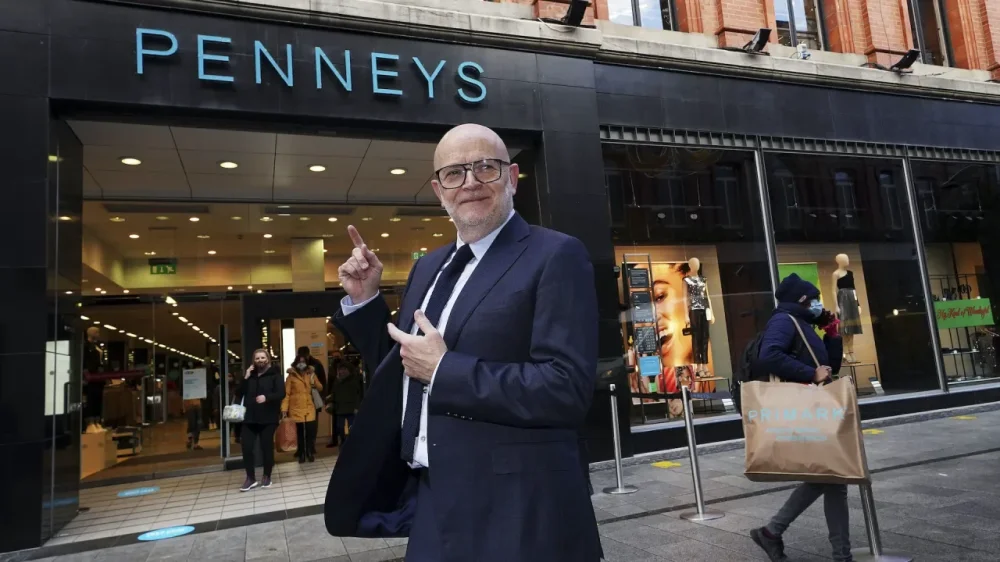
The chief executive of Primark, one of Europe’s biggest fast fashion retailers, has resigned after an investigation into his behavior toward a woman in a social environment. Paul Marchant, Primark’s CEO since 2009, has apologized to the individual involved and resigned with immediate effect, the company said Monday. Shares in Primark’s parent, Associated British Foods, fell 4.9% in early trading, compared with a 0.8% drop in Britain’s benchmark stock index. Marchant “acknowledged his error of judgement and accepts that his actions fell below the standards expected by the company,” Primark said in a statement. The retailer has 451 stores in 17 countries across Europe and the U.S. Eoin Tonge, finance director of Associated British Foods, has been name Primark’s interim CEO, ABF said in a statement. The investigation was carried out by external lawyers and Marchant cooperated with the probe, Associated British Foods said. The company said it was committed to providing a “safe, respectful and inclusive” work environment. “I am immensely disappointed,” ABF Chief Executive George Weston said in a statement. “We believe that high standards of integrity are essential. Acting responsibly is the only way to build and manage a business over the long term.” View the full article
-
New research finds AI systems still struggle with facts despite improvements; researchers doubt quick fixes for accuracy problems. The post AI Researchers Warn: Hallucinations Persist In Leading AI Models appeared first on Search Engine Journal. View the full article
-
It’s safe to say that worker happiness and well-being is shaky at best. In 2024, just about half of all American employees reported feeling very satisfied with their jobs, and only about a third were happy with their pay or opportunities for promotion. Younger employees seem particularly frustrated by their working conditions: The latest edition of Gallup’s State of the Global Workplace report found that just 34% of workers said they were thriving, with a marked drop from 35% to 31% among those under the age of 35. While this sentiment persists across the American workforce, a new report from the Pew Research Center indicates that blue-collar workers are perhaps the most likely to feel dissatisfied and detached from their work. In a survey of more than 5,200 employees, only about 43% of those who identified as blue-collar workers said they were very satisfied with their jobs—while 53% of other workers expressed the same. (Pew defines blue-collar workers as those in such industries as manufacturing, agriculture, retail, hospitality, and transportation.) A key issue for many blue-collar workers who are frustrated by their jobs is pay. Overall, a third of them said they were dissatisfied with their compensation, though that figure was higher (40%) for women who held those jobs when compared to men (30%). The study found that workers had a variety of grievances, with many claiming that their wages did not keep pace with the rising cost of living; others said they were frustrated by pay inequities and that they earned less than colleagues who did comparable work. Beyond pay, blue-collar workers were also more dissatisfied with their health insurance coverage and lack of flexibility in working hours. But the greatest difference in how blue-collar workers feel about their jobs relative to other workers is whether they view it as a real career. More than half of blue-collar workers described what they do as “just a job to get you by,” rather than a career. (Women were even more likely to say that, with 61% characterizing their work as just a job.) Only a third said they considered their work to be a career—while 56% of other workers identified their jobs as careers. There is also a clear generational divide when it comes to happiness among blue-collar workers: Older workers were more likely to be satisfied with their job on all counts. In fact, nearly half of them said they viewed their work as a career. It’s possible that blue-collar workers feel less attached to their jobs in part because of how they are perceived. Less than a third of blue-collar workers said they believed other Americans respected their jobs, when compared to nearly half of all other workers feeling like their jobs demanded a certain level of respect. Many of them did, however, report feeling more respected by their colleagues or even by customers. Given their frustrations about compensation and often-limited opportunities for career advancement, it is hardly surprising that so many blue-collar workers feel that their work gets little recognition by the broader American public. But some things could be looking up: While too many blue-collar workers remain underpaid, they have also benefitted from historic wage growth in the aftermath of the pandemic. View the full article

-
If you're expecting money from T-Mobile, there's good news: Your check should be just about on its way. As spotted by PCMag, T-Mobile's data breach settlement page now reports the following: "All court proceedings are now complete. The distribution of settlement payments is expected to begin April 2025." So long as payments roll out on time, claimants can expect their checks to start shipping out sometime this month. Why was T-Mobile sued?These payments are tied to a class-action lawsuit from an August 2021 data breach. Hackers stole information from tens of million of current and former T-Mobile customers, including first and last names, birth dates, Social Security numbers, and driver's license information. T-Mobile originally claimed the hackers only compromised the data of 7.8 million current customers and 40 million former customers, but customers filed the lawsuit alleging the true number was around 76 million. While T-Mobile did not admit fault, the company did settle the suit, agreeing to a $350 million settlement payout. In addition, the company had to pay $150 million to beef up its security around customer data. The entire debacle cost T-Mobile half a billion dollars. How much are the payments?How much claimants actually receive from this settlement could be dependent on the amount of time and money they spent trying to fix their security issues. Claimants had to show documentation of their efforts, and could be reimbursed for both the money spent as well as an additional $25 per hour to compensate for their time—for a maximum possible payout of $25,000. Alternatively, victims could simply accept a $25 payment to put the entire case to rest. (If you lived in California at the time, that payout jumped to $100.) Unfortunately, it's far too late to claim a payment in this case—that deadline ended on January 23, 2023. If you made a claim, you should have been contacted in October of last year. I'm sorry if this news is arriving too late for you to claim money from the suit. However, if you did make a claim before that 2023 deadline, your Monday probably just got a little better. View the full article
-
We may earn a commission from links on this page. Deal pricing and availability subject to change after time of publication. I've been testing portable projectors for a bunch of different use cases, but few, if any, have come close to the complete package offered by the XGIMI MoGo 3 Pro. It's my favorite of the lot, and right now, you can get the XGIMI MoGo 3 Pro portable projector for $379 )down from $449.99) and get your choice of the Creative Optical Filter (normally $49.99) or the XGIMI Carrying Case (normally $69.99). Alternately, you can spend a bit more and get the PowerBase Stand and projector combo for $424.99 (originally $499.99). Whichever you choose, you'll be scoring an all-time low price, according to price tracking tools. Google TV and Netflix Favorites, 1080P resolution, 130° built-in stand, Ambient Light Mode, ISA 2.0. XGIMI MoGo 3 Pro with Free Creative Optical Filter $379.99 at Amazon /images/amazon-prime.svg $499.98 Save $119.99 Get Deal Get Deal $379.99 at Amazon /images/amazon-prime.svg $499.98 Save $119.99 Google TV and Netflix Favorites, 1080P resolution, 130° built-in stand, Ambient Light Mode, ISA 2.0. XGIMI MoGo 3 Pro with Free XGIMI Carrying Case $379.99 at Amazon /images/amazon-prime.svg $519.98 Save $139.99 Get Deal Get Deal $379.99 at Amazon /images/amazon-prime.svg $519.98 Save $139.99 Google TV and Netflix Favorites, 1080P resolution, 130° built-in stand, Ambient Light Mode, ISA 2.0. XGIMI MoGo 3 Pro with PowerBase Stand $424.99 at Amazon /images/amazon-prime.svg $499.99 Save $75.00 Get Deal Get Deal $424.99 at Amazon /images/amazon-prime.svg $499.99 Save $75.00 SEE 0 MORE The projector has two ports—a USB and a micro HDMI—so you can project from a laptop or phone, or you can simply screen mirror from your devices, since it uses the Google TV OS. Also, since the projector is "smart," it already comes with the typical apps like Netflix, YouTube, Amazon, and you can download more from the Google Play Store. With 450 lumens and 1080p, it's best used in dark rooms, but you can get away with some ambient light (that's how I use it in my backyard). Where this projector truly shines is with the auto keystone focus feature. If you move it anywhere, it'll autocorrect to make the image look its best regardless of where you set it up. It also comes with a powerful 5W Harman Kardon speaker, which performs about on par with an Echo Dot. One caveat: This projector has no internal battery, which is a huge bummer. You'd need to use a portable charger, plug it into an outlet, or, perhaps more practically, spend the extra $45 to get the PowerBase Stand, which delivers 2.5 hours of battery life. If you plan to use it mostly indoors, you can rely on plugging it into a wall and go for one of the free items to save some money. View the full article