ResidentialBusiness
Administrators
-
Joined
-
Last visited
Everything posted by ResidentialBusiness
-
 We may earn a commission from links on this page. Deal pricing and availability subject to change after time of publication. If you like to buy in bulk or just want one less thing to worry about during weekly errands, this sale might be worth the look: You can get a one-year membership to Sam's Club for $25 right now on StackSocial. It's half the usual price, but the catch is that it’s only for new members in the U.S. If you're eligible, though, the sale opens up access to warehouse prices on groceries, household staples, electronics, furniture, and even tires. It’s not just bulk cereal and 40-roll packs of paper towels anymore—there’s a surprising amount of variety on the shelves. You’ll need to activate your membership within 30 days of buying the code (and definitely before May 28, 2025, or the promo becomes invalid). Also, the code is non-transferable, so make sure you’re signing up for yourself. Sam’s Club uses a limited-item business model, meaning fewer brands per category but carefully selected products across the board. From what regular members say, the quality holds up well, especially in categories like meat, produce, and household cleaning. The membership also includes perks like discounts on travel, rental cars, concert tickets, and even movie nights—so there’s some value beyond groceries. You can shop in-store at one of their 597 U.S. locations or browse online through mobile and desktop platforms. Just be prepared for the occasional treasure hunt feel—inventory can vary. That said, this deal includes auto-renewal, which means your card will be charged yearly (currently $50 for Club members, plus taxes) unless you cancel. If you like buying snacks for months in one go, finding discounts on random big-ticket items, or just having one place to cover most of your shopping list, this might be a practical pick. If you're more of a once-a-week, two-bags-max kind of shopper, it may not be worth the warehouse dive. View the full article
 -
Upgrade today to CPA Trendlines PRO Membership – your all-access pass to premium insights, strategies and tools designed just for you. Go to https://GoProCPA.com Go PRO for members-only access to more CPA Trendlines Research. View the full article
-
Upgrade today to CPA Trendlines PRO Membership – your all-access pass to premium insights, strategies and tools designed just for you. Go to https://GoProCPA.com Go PRO for members-only access to more CPA Trendlines Research. View the full article
-
The huge valuations ascribed to X and xAI have raised eyebrowsView the full article
-
Even if you don't use a PC, you probably know about the Blue Screen of Death (or BSOD). This iconic error screen has been a core component of Windows since the OS' first version (though it looked a bit more like something out of The Matrix back then). The BSOD isn't something you necessarily want to see—especially if you're Bill Gates showing off a new version of Windows—as it means some factor has crashed your system, and now your PC needs to restart. However, soon enough, when you do see it, you might not actually recognize it. As it happens, Microsoft is changing the look of the BSOD. The company announced the redesign in a Friday post on the Windows Insider blog. (The Windows Insider program allows software testers to try out new Windows features early before Microsoft launches them to the public.) In addition to a number of other new features and changes testers can try, there's the new BSOD, which Microsoft says is "more streamlined" and "better aligns with Windows 11 design principles," while maintaining the same technical information you'd expect from the traditional blue screen. The thing is, this new Blue Screen of Death isn't even blue. During testing, it appears green, but the screen will eventually be black when it rolls out to the public. (At least the BSOD acronym still holds up.) Further, the text you'll see is different. Gone is the emoticon of a frowny-face, which has defined the BSOD look since Windows 8. Now, the screen presents a simple message: "Your device ran into a problem, and needs to restart," followed by the current progress of the restart represented by a percentage. At the very bottom of the screen, you can see the stop code, as well as what failed. Credit: Microsoft This is far from the first time Microsoft has changed the BSOD for Windows. Martin Nobel has a great timeline of the changes, starting with that very first "Matrix-esque" screen back in Windows 1.0, to the warning Windows users of the 90s and 2000s are likely acutely acquainted with, all the way to the present design scheme kicked off with 2012's Windows 8. The color, too, has flip-flopped over the years. Microsoft experimented with a black BSOD for Windows NT, Windows 8, Windows 10, and even an earlier version of Windows 11. If you hate change, there's a chance Microsoft could flip back to blue down the line. How to try out Windows' new Blue Screen of Death I hope you don't run into a BSOD often. However, if you'd like your next encounter with a system crash to be with the new error screen, you'll need to enroll your PC in the Windows Insider program. Since the Insider program lets you test out new versions of Windows before the general public, there is a risk for bugs and other issues following the install. Make sure any important data is backed up before enrolling. If you're OK with those risks, you can follow our guide here to enroll your PC. This particular change is rolling out to the Canary, Dev, and Beta Channels, not the Release Preview Channel, so you'll need to enroll in one of these three channels in order to see the new BSOD. If you're looking to minimize your risk, I'd recommend the Beta channel here. This channel features builds that Microsoft has already tested, which means some of the issues have likely already been discovered and patched. It's not risk-free, but it offers a better balance than Dev, which throws the newest Windows features your way that haven't necessarily been tested yet. View the full article
-
AP Photo/Joshua A. Bickel As gerontologists—social scientists who study aging populations—we envision a future in which older people leave a doctor’s visit with a prescription to go volunteer for something. Does that sound far-fetched? There’s scientific research backing it up. Good for your health While spending more than a dozen years researching what happens when older adults volunteer with nonprofits, including churches, we’ve found that volunteers consider themselves to be in better health than their peers who don’t. In addition, their blood pressure is lower, and they appear to be aging more slowly than other people of the same age. Other researchers have found that volunteering is associated with a lower risk of having a heart attack. The mental health benefits are just as striking. Volunteering is tied to having fewer symptoms of depression and being more satisfied with your life. It often brings an instant boost in mood—along with a deeper sense of meaning and purpose. Even engaging in what’s known as “informal helping”—lending a hand to friends, neighbors, or community members in need, without getting paid or participating in an organized program—can help you in similar ways. There are also health benefits for those who start volunteering much earlier in life. Children and teens who volunteer tend to have better health and lower levels of anxiety and fewer behavioral problems than those who don’t volunteer. Changing demographics The number of U.S. adults at least 62 years old—the earliest age at which you can claim Social Security retirement benefits—has grown by nearly 35 million since 2000, while the number of children and teens under 18 has fallen by nearly 1.5 million. There are now about 76 million Americans over 62 and 71 million under 18. This change has been gradual. Following a long-term demographic shift, record numbers of Americans are reaching retirement age. https://datawrapper.dwcdn.net/FWpvb/1 Benefits for society and the economy The benefits of volunteering aren’t just for the volunteers themselves. The total value of the hours of unpaid work volunteers put in totals an estimated U.S.$170 billion each year, according to AmeriCorps, the federal agency focused on national and community service. And participating in community service programs can lead to better job prospects for volunteers, that same agency has found. AmeriCorps Seniors, which focuses on engaging volunteers ages 55 and older, runs programs that offer major benefits to their communities. These include the Foster Grandparent program, which connects older adult mentors to children, and the Senior Companion program, which connects volunteers to older adults seeking some help to continue living independently in their own homes. A current AmeriCorps Seniors pilot program is helping adults 55 and up, who can have more trouble landing new jobs than younger people, gain new job skills through their community service. People of all ages can get together through volunteering. Some organizations intentionally encourage this kind of intergenerational cooperation, including CoGenerate and Generations United. https://datawrapper.dwcdn.net/MYh8W/1 Rebuilding communities Researchers have also found that volunteering may increase trust within a community, especially when it brings together people from different backgrounds. It can strengthen “social cohesion,” a term researchers use to describe how much people bond and help each other, and reduce prejudice. Volunteers’ views on social issues may change through their work, too: More than 4 in 5 adults over 55 who tutored public school students to strengthen their reading skills in the national Experience Corps program, for example, stated that their views on public education evolved as a result. Those volunteers expressed more support for public education and said they’d be more likely to vote in favor of spending on schools. An American pastime Our findings are backed by science, but they also have roots in American history. Alexis de Tocqueville—a French philosopher and diplomat who arrived in the United States in 1831 to study the new nation’s penal system—was so impressed by the scale of volunteering in the U.S. that he wrote about it in his 1835 book Democracy in America. Tocqueville observed that “Americans of all ages, all conditions, all minds” were likely to unite in many kinds of groups or associations. More recently, former U.S. Surgeon General Vivek Murthy has said that volunteering can strengthen communities, and that “community is a powerful source of life satisfaction and life expectancy.” If you aren’t volunteering today, here are a few ideas to help you begin. Start small. Try joining an organization or association in your community, taking part in neighborhood cleanups, or volunteering at your local senior center, animal shelter, or museum. Love gardening? You can take care of local parks, conservation areas, community gardens, and more. Once you’re ready for a bigger commitment, consider becoming a mentor through programs such as OASIS Intergenerational Tutoring or Big Brothers Big Sisters. And consider a more extensive level of commitment to organizations or causes you care deeply about. This might include joining a nonprofit board of directors, volunteering more hours, or taking on a volunteer leadership role. At a time when trust is eroding and divisions seem insurmountable, volunteering offers something rare: an evidence-backed way to reconnect with communities, institutions, and each other. Reach out to your favorite nonprofit, visit Volunteer.gov or VolunteerMatch.org, or connect with a nonprofit resource center, a regional United Way or a community foundation to find volunteer opportunities near you. Cal J. Halvorsen is an associate professor of social work at Washington University in St. Louis. Seoyoun Kim is an associate adjunct of sociology at the University of Michigan. This article is republished from The Conversation under a Creative Commons license. Read the original article. View the full article

-
Company had £736mn of debt at end of 2023, much of it from entities controlled by its Chinese parent JingyeView the full article
-
If you're a gamer, beware a new malware that's pretending to be an ASUS utility. CoffeeLoader impersonates Armoury Crate, which manages ASUS and ROG software and peripherals, and infects your Windows machine with an infostealer that's nearly impossible to detect. How CoffeeLoader malware works According to an analysis by ZScaler, once on your system, the CoffeeLoader malware delivers the Rhadamanthys infostealer, which can extract credentials from applications like web browsers, email clients, crypto wallets, and even the password manager KeePass. CoffeeLoader then manages to evade most security tools on your device, including antivirus software and malware detectors, making it especially dangerous and difficult to catch. It does this in part by running on the graphics card (GPU), which security tools aren't as likely to scan, rather than your computer's CPU. It also uses techniques like Call Stack Spoofing, which changes its trail of function calls to appear harmless, and Sleep Obfuscation, through which it encrypts and locks itself in your computer's memory so it's unreadable to security scanners. CoffeeLoader will also use pathways like Windows Fibers that are less likely to be monitored by security software. How to protect your machine from CoffeeLoader malwareMalware like CoffeeLoader spreads successfully in part because it often looks like something trustworthy. Hackers may impersonate a brand like ASUS, leading you to believe you're downloading real software, whether from an ad, an online forum, a fake website found in search results, or a phishing attack via email or messenger app. To prevent a malware infection, use caution when downloading utilities or any type of software to your machine. Always go directly to the official site—rather than clicking through search results or a forum link—to ensure you're getting the real thing. You should also follow basic cybersecurity best practices, like avoiding clicking links or opening attachments in messages that could be malicious. If you believe your device is infected, there are a few steps you can take to remove malware from your machine. Start by disconnecting your PC from the internet and rebooting in safe mode. Search for and delete temporary files (Settings > System > Storage > Local Disk > Temporary files) and check Task Manager for suspicious activity or processes running on your device. In general, you can use a malware scanner to identify and remove infections. View the full article
-
Melody Wilding is a professor of human behavior at Hunter College and was recently named one of Insider’s “most innovative career coaches.” Her background as a therapist and emotions researcher informs her unique approach, weaving evidence-based neuroscience and psychology with professional development. She is the author of Trust Yourself. What’s the big idea? Do you feel stuck navigating office politics, micromanagement, or being overlooked at work? In Managing Up, human behavior professor and executive coach Melody Wilding reveals how to subtly teach those above you to respect your ideas—without needing a title change. Through real-life stories and research-backed strategies, she breaks down 10 key conversations that help you build influence, set boundaries, and operate from a position of power. Packed with actionable scripts and expert insights, this book is a must-read for anyone ready to take control of their career. Below, Melody shares five key insights from her new book, Managing Up: How to Get What You Need from the People in Charge. Listen to the audio version—read by Melody herself—in the Next Big Idea App. 1. Managing up is not about making your boss’s life easier. It’s about taking control of your own work experience. We often equate managing up with sucking up—knowing your boss’s coffee order, agreeing with everything they say, jumping at their urgent requests. Turning yourself into a professional yes-person may have been enough to get ahead 10 or 20 years ago, but things have changed. We’re working in a world of hybrid teams, instant messaging, and four generations collaborating side by side. Your leader might be younger than you, expertise matters more than hierarchy, and “face time” happens through Zoom. In this new reality, you need to get buy-in for your ideas even when budgets are tight, and to have strong boundaries when yet another task is dumped on your plate. Let’s face it: there will always be managers who are scattered, conflict-avoidant, or terrible at giving feedback. But when you master managing up, you’re no longer at the mercy of their limitations. This is why managing up is NOT about your boss at all. It’s about you doing your best work and securing the resources, opportunities, and recognition you deserve. Your career growth and peace of mind at work depend not only on how you perform your responsibilities but also on how effectively you advocate for yourself, influence decision-makers, and design the conditions for your success. The moment you shift from “How can I please my boss, how can I stay in their good graces?” to “How can I partner with my boss to achieve my goals and theirs?” new possibilities open. By stepping out of the “order taker” role and into a “respected advisor” mindset, you’re leveling the playing field. 2. There’s a method to managing up. If you’ve been told that you need to get better at influencing upward, then you’ve probably received some of this advice: Come with solutions, not problems! Build trust with leadership! Anticipate their needs! Make them look good! Be proactive! These pithy one-liners sound good but tend to be oversimplified and fall apart the minute things get complicated or don’t go as planned. Which, if we’re honest, might be often. You don’t have time to duct tape and shoestring scattered strategies together… and it’s not going to work for long. “When you master managing up, you’re no longer at the mercy of their limitations.” That’s precisely why I developed the 10 conversations framework—to give you a comprehensive, systematic roadmap to master the skill of managing up, where each step conversations build on the next. When I say conversations, this includes the overlooked opportunities and interactions we have every day to shape our leaders’ perception of us, like those two minutes before everyone else joins the meeting when it’s just you and the VP making small talk. The book begins with the most foundational conversations: Alignment: How do I know which tasks are most crucial to focus on? Styles: How can I work with different personalities? Ownership: What can I do to present—and go after— my ideas without overstepping? Boundaries: What do I say when my manager dumps yet another task on my plate? Feedback: How do I voice my opinion and deliver criticism up the chain of command? These conversations give way to more advanced ones later in the book—networking, visibility, advancement, money, and eventually even the quitting conversation. 3. Psychology is your secret advantage. You know those moments that make you want to pull your hair out? Your boss needs three meetings to make a decision that feels obvious. Your brilliant idea gets shot down because you “didn’t build enough consensus.” Your promotion gets delayed despite your team’s record-breaking quarter. It’s tempting to throw your hands up. To label your boss as “difficult.” To take it personally. But here’s what my career as a researcher and coach has taught me: When we say someone is “difficult,” what we often mean is they’re different: They process information differently than we do. They make decisions in a way that feels foreign to us. They have pressures and priorities we can’t see. Until you understand what actually drives decisions at the top—the hidden incentives, the competing agendas, the unspoken fears—you’re just throwing tactics at the wall and hoping something sticks. Every strategy in this book is grounded in the science of persuasion, trust-building, and more. As you rise in your career, how you handle the people dynamics around you gives you an edge: Instead of getting frustrated that your big-picture boss cares about the details, you lead with the vision. Instead of feeling dismissed when your risk-averse leader seems resistant, you address their concerns before they voice them. Instead of getting frustrated when an action-oriented executive shoots down ideas mid-sentence, you lead with the bottom line and save the context for follow-up. 4. Go beyond your boss. Think about your last major project. You probably had to coordinate with stakeholders across three different departments. Your resources might be controlled by someone you’ve never met. That promotion you want? It’s likely being decided by a committee. The truth is, your boss might be your biggest advocate, but they’re just one voice in a chorus of decision-makers shaping your career. I see this reality check hit hard when people come to me frustrated: “I don’t get it. My boss loves me. So why do I keep getting passed over?” Nine times out of ten, it’s because they’ve invested everything in that one relationship while ignoring the broader network of senior leaders who influence their success. Today’s workplaces are a complex web of dotted lines, matrix reporting, and cross-functional teams. When it comes to internal networking, focus on connecting with three groups: decision-makers who control resources and opportunities, power peers who are rising stars across the organization, and behind-the-scenes operators who make everything actually happen (assistants, HR, IT). “Before you can ask for career sponsorship or resources, ask for information.” Use what I call the “info-ask” strategy. Before you can ask for career sponsorship or resources, ask for information. Maybe it’s best practices from that VP whose project you want to join, insights into how approvals really happen from that senior director, or vendor recommendations from that influential peer. This approach does three powerful things: it signals respect for others’ expertise, demonstrates a genuine desire to learn (not just take), and creates natural follow-up opportunities to share how their advice helped. 5. You teach people how to treat you in the workplace. It’s easy to feel powerless at work. The latest reorg shifted your role. Your team’s headcount got frozen. Your skip-level keeps scheduling over your focus time. During the last few years, the number of professionals who believe they have little to no control over their careers, futures, and work relationships has doubled. A staggering forty percent of workers grapple with a sense of helplessness. But here’s what most people miss: Every interaction is a chance to subtly shape how others treat you. When your boss dumps a last-minute project on your team, you have a choice. You could just say yes (and reinforce that your time doesn’t matter), or you could say, “I can take this on, but it means pushing back the Q2 planning work we discussed. Which would you prefer I prioritize?” This simple trade-off shows you’re strategic, not just accommodating. When an executive criticizes your work in front of the team, you could stay quiet (teaching them this behavior is acceptable), or you could say, “Could we discuss these concerns one-on-one? It would help me better understand your expectations.” This shows you’re professional while setting a clear boundary about how you expect feedback to be delivered. You have more power than you realize to shape the dynamics around you. This article originally appeared in Next Big Idea Club magazine and is reprinted with permission. View the full article

-
This post was written by Alison Green and published on Ask a Manager. At a time when many Americans are struggling with rising costs of living, too many corporate executives are making it clear that they have no idea what life is like for their employees. We regularly hear accounts at AAM of out-of-touch executives who have alienated large portions of their workforce – often via clueless displays of wealth at the exact same time that they’re laying off employees, increasing health insurance costs, or otherwise squeezing their workers. At Slate today, I share some shocking examples of this, and talk about how it hurts both employers and employees. You can read it here. View the full article
-
Shares of the president’s company fell on the state’s market amid a broad sell-off fuelled by his trade agendaView the full article
-
Bonus: Turn your clients into loyal fans. By Alan Anderson, CPA Transforming Audit for the Future Go PRO for members-only access to more Alan Anderson. View the full article
-
Bonus: Turn your clients into loyal fans. By Alan Anderson, CPA Transforming Audit for the Future Go PRO for members-only access to more Alan Anderson. View the full article
-
Go PRO for members-only access to more CPA Trendlines Research. View the full article
-
Go PRO for members-only access to more CPA Trendlines Research. View the full article
-
Reddit launches new campaign import, GTM integration, and QA tools to make Reddit Ads setup and optimization faster and simpler for small businesses. The post Reddit Introduces Faster Ad Setup and Pixel Integration appeared first on Search Engine Journal. View the full article
-
Even the most powerful nation in the world needs foreign investment View the full article
-
We may earn a commission from links on this page. Deal pricing and availability subject to change after time of publication. The Sonos brand is well known in the smart speaker and surround sound space. And very much like Apple, people will pay a premium price for their minimalistic, premium quality, and discounts are often hard to come by. But today, the Sonos Arc, which was Sonos' flagship soundbar prior to the launch of the Sonos Arc Ultra, is $599, $300 off its usual $899 price. It's also a record low price for this model, according to price-tracking tools. Maximum Output Power: 110 Watts, Connectivity Technology: Wi-Fi, Audio Output Mode: Surround Mount. Sonos Arc Soundbar $599.00 at Amazon /images/amazon-prime.svg $899.00 Save $300.00 Get Deal Get Deal $599.00 at Amazon /images/amazon-prime.svg $899.00 Save $300.00 SEE -2 MORE Sonos speakers are not for everyone, if only because you'll have to justify paying around two grand for a complete surround sound system when you can get a setup like the Samsung Q990C for about half the price. But audiophiles swear they can hear the difference, so the cost might be worth it to you. If you pick up this soundbar, you'll want to consider the Sonos 300 rear speakers and the Gen 4 subwoofer to go with it—they're the latest Sonos has to offer, though you can choose Eras 100 or an older or smaller subwoofer to lower the price tag. As for the Arc, it offers Dolby Atmos, providing immersive three-dimensional sound with height channels that simulate audio coming from above you (you can read the details in PCMag's "excellent" review). It offers enough of a low-end kick that you don't really need a subwoofer if you have a small space. If you already own other Sonos speakers, you can seamlessly connect them through the Sonos app to create a surround sound setup or a multi-room system. View the full article
-
Here’s everything you need to know about setting up an integration to sync Azure DevOps and Salesforce work items with an automated 2-way sync using Unito. Since Unito is a no-code, completely customizable platform, you don’t need any IT resources to set up your first secure integration. You don’t need to troubleshoot scripts or bring in third-party consultants, either. More of a visual learner? Learn how to set up a Unito flow in this video tutorial. In this article: Why sync Azure DevOps and Salesforce? Step 1. Connect Azure DevOps and Salesforce to Unito Step 2. Choose a flow direction for new tasks and work items Step 3. Set rules to exclude tasks or items from syncing Step 4. Configure Azure DevOps and Salesforce fields Step 5. Launch your Azure DevOps-Salesforce integration Why sync Azure DevOps and Salesforce? Azure DevOps (or ADO) is a key tool for many software development teams, housing everything they need to get their most important work done. But ADO can quickly turn into a silo, keeping developers from collaborating effectively with the rest of the organization. Salesforce, on the other hand, is often the nexus of every revenue-generating workflow in your organization. Sales deals move through a pipeline in Salesforce, marketers pull customer data from it to build better campaigns, and your customer success team might work entirely out of Salesforce. This is an environment completely alien to your software developers. The problem? There are quite a few essential workflows that depend on collaboration between teams that never leave these two tools. Streamlining support ticket escalation With technical products, your customer success team can only handle so many requests. They’ll often need to escalate tickets to developers to get their expertise on a potential problem, flag a bug, or get an answer to a particular question. With Unito’s Azure DevOps-Salesforce integration, support agents can create tickets in Salesforce that are automatically synced to Azure DevOps, giving developers all the information they need without any extra manual work. Monitoring development on dealmaking features Some deals come with strings attached. A prospect might not close until specific product features are built from scratch, upgraded, or customized to their needs. Sales teams need to send specific product information to software developers so they know what they should be working on. Unito’s integration makes that happen automatically, with Salesforce deals flagged for development automatically pushed to Azure DevOps. Additionally, any questions from developers are automatically sent back to Salesforce. Integrating product launches in marketing campaigns A single product update can make or break a marketing campaign, giving marketers ammunition to raise awareness about their brand, generate leads, and create deals for the sales team to take on. But the back-and-forth between software developers and marketers can be clunky, leaving marketers unaware of important updates, critical to their campaigns. This integration brings together marketers in Salesforce with developers in Azure DevOps, keeping everyone up to date without any extra manual work. Step 1. Connect Azure DevOps and Salesforce to Unito Sign up for Unito if you haven’t already! Navigate to the Unito App and click +Create Flow. Click Start Here to connect Azure DevOps and Salesforce. Then click +Choose account for each tool and complete the authorization process. Click Confirm. When you’re ready, click Confirm. First time connecting tools to Unito and need extra help? Check out this guide. Authorizing ADO to sync with Unito Before you sync anything out of Azure DevOps, make sure Third-party application access via OAuth is on. To adjust this setting, go to Organization Settings in Azure DevOps and click on Policies. Then, make sure the toggle for Third-party application access via OAuth is turned on. Without this, you won’t be able to connect Azure DevOps to Unito. Step 2. Choose flow direction for new work items When you create new Azure DevOps or Salesforce work items, Unito creates synced versions in the other tool automatically. With flow direction, you can determine where that happens: 2-way, meaning new AzureDevops items and Salesforce items will be created to match items in either tool. 1-way from Azure DevOps to Salesforce, which creates new Salesforce work items to match items you create manually in Azure DevOps. Creating items in Salesforce manually won’t create new Azure DevOps items. 1-way from Salesforce to Azure DevOps, creating new Azure DevOps work items to match items you create manually in Salesforce. Creating items in Azure DevOps manually won’t automatically create new Salesforce items. Step 3. Set rules to sync specific Salesforce and ADO work items Rules are part filter, part automation. They allow you to customize your flows so only some work items get synced between Salesforce and Azure DevOps. For example, you could decide to filter out any Salesforce tickets from before a specific date or Azure DevOps items with a specific assignee. You can also use rules to automatically send work items to specific sections, assign people to them automatically, and more. To start creating a rule, click Add a new rule. From there, you can choose what will trigger that rule and what happens when it’s triggered. You can learn more about setting rules here. Step 4. Map fields between Azure DevOps and Salesforce Field mappings pair fields in Azure DevOps with fields in Salesforce so your data goes exactly where it needs to, whether these fields have the same name (e.g., Assignee to Assignee) or not (e.g., Priority to Picklist). When it’s time to map your fields, you can either let Unito do it for you by clicking Map automatically or click Map manually to customize them yourself. Even if you let Unito map your fields automatically, you can customize them afterward. If you map your fields automatically, you’ll see something like this. From here, click +Add mapping, then Select a field to sync additional fields. Unito automatically recommends compatible fields for any field you add here through a drop-down menu. Some fields have a cog icon, meaning they can be customized further. For example, a Priority field can be customized to match specific options to those in another field. Step 5. Launch your AzureDevOps-Salesforce integration That’s it! You’re ready to launch your first flow. Once you do, Unito will automatically sync Azure DevOps and Salesforce items, keeping all fields up to date automatically. Have any questions? Don’t hesitate to reach out to us by clicking on the chat bubble! What’s next? Need to integrate Azure DevOps or Salesforce with other tools in your stack? Check out our other guides below: Connecting Airtable to Azure DevOps Integrating Asana and Azure DevOps Syncing Azure DevOps and Jira Integrating Salesforce and Google Sheets Syncing Salesforce and Wrike Connecting Salesforce and ServiceNow Haven't deployed Unito in your organization yet? Meet with our sales team to see what a Unito integration can do for you. Book a demo View the full article
-
We may earn a commission from links on this page. Deal pricing and availability subject to change after time of publication. The Acer Chromebook Plus 514 is $299.99 on Amazon right now, reduced from its usual $399.99. Acer Chromebook Plus 514 $299.99 at Amazon /images/amazon-prime.svg $399.99 Save $100.00 Get Deal Get Deal $299.99 at Amazon /images/amazon-prime.svg $399.99 Save $100.00 According to price trackers, this is the lowest it’s been, and if you’re looking for a backup laptop or something for really light tasks, it might be worth a look. But let’s set expectations upfront—this isn’t a high-performance machine. It’s running on an AMD Ryzen 3 7320C processor with 8GB RAM and 128GB of eMMC storage, which puts it squarely in the “basic use only” category. You’ll get by fine with web browsing, emails, video calls, or streaming, but anything heavier than that—editing video, gaming, or multitasking with lots of tabs—is probably going to be a stretch. What it does have going for it is a 14-inch WUXGA display that has a 1920 x 1200 resolution and supports touch, so navigation feels a little smoother, especially when you’re scrolling through articles or zooming in on images. Additionally, it’s got Wi-Fi 6E and Bluetooth 5.1, which makes it more future-proof on the connectivity front. And even though it’s plastic, it’s rated MIL-STD-810H for durability (according to this PCMag review) and has a spill-resistant keyboard—handy if you’re clumsy with coffee. It also runs on ChromeOS, which means faster boot times and built-in security, plus support for Android apps through the Google Play Store. The battery life isn’t record-breaking, but it’ll give you a decent chunk of the workday—around 10 hours, depending on what you’re doing. It’s also got two USB-C ports, one USB-A, and a headphone jack, which covers most needs. That said, this is still a budget machine. The Ryzen 3 chip is entry-level, and the eMMC storage is slower than SSDs. You can’t upgrade the storage later either, so you’re stuck with what you get—unless you lean heavily on cloud storage. View the full article
-
This post was written by Alison Green and published on Ask a Manager. A reader writes: This is a community organizing issue, but it is ultimately about working closely with someone where there’s conflict, and one where I think a professional approach might be most useful. I (they/them) am a leader in a social justice-oriented community organization along with someone I’ll call Paul (he/they). We have the same type of leadership position, and we’re both quite active so we communicate daily and are in meetings at least once a week. We’ve been in conflict for four months, since I told Paul that the way Paul interrupts, criticizes, corrects, scolds, and dismisses me and other folks who were assigned female at birth feels sexist. Paul’s response? They didn’t really understand how that could be, because they aren’t “that attached to masculinity,” but they would take my word for it. However, Paul’s behavior hasn’t changed, and I have subsequently found out that two people have stepped away from the organization because of what they also perceived as sexism from Paul. Regularly — sometimes multiple times in a week — I have to be really direct saying “don’t interrupt me” or “I just answered that question,” etc. At times, this disrespectful behavior impacts the group’s work, such as when Paul speaks for me on an issue where they don’t have correct information or when Paul goes behind my back and gives instructions to someone I’m assigned to work with that are in tension with what I’m telling that person. In these situations, I have been telling Paul that this is frustrating/unacceptable/etc., admittedly sometimes with annoyance. Paul often responds that they are confused and don’t understand what they did. Sometimes, I also get long rants with expletives, personal remarks, and accusations. It’s inappropriate behavior, even if I am communicating very unclearly, which is what Paul believes is the problem. Paul has recently been pursuing a diagnosis of autism, and it feels to me that they are weaponizing this new diagnosis, which is not fair to other autistic people in our organization, who don’t behave this way. There’s no “boss” or HR in this situation, but there are a few people we both trust and who have the cultural capital to potentially help us try to move toward a better way of working together. One of them has heard us each out and feels that we need to make a written agreement about how we will interact so that Paul has clear rules to follow. My concern is that I have repeatedly communicated what isn’t acceptable to me, and Paul hasn’t changed their behavior. I’m struggling to figure out how I would write up a list of rules that Paul would respect. Moreover, this really isn’t an issue just between Paul and me; it’s more about Paul’s behavior in general. Other options include me leaving the group, which is possible though not ideal, and another option is that I continue to just hold boundaries with Paul (trying to always communicate extremely clearly!), which is also not ideal but is something I could do. Paul is certainly not the first person I’ve worked with who has treated me in a way I experience as sexist! I know Paul doesn’t want either of these options; they want a list of rules. I’m wondering what guidance you would offer on how to proceed. Is it worth trying the written agreement to see if it helps? What would I even put in such a list? What options haven’t I considered? I wrote back and asked, “Does anyone have the authority to fire Paul or otherwise remove him from the group?” The answer: As far as I know, there is no process in our org for removing someone for this level of problematic behavior. The biggest problem here is that there’s no mechanism for removing someone who’s driven off multiple people. You’ve already lost two people because of Paul. Is the organization willing to continue losing people just to avoid getting rid of him? I think that’s the bigger issue, even though it’s not the one you’re writing to me about. As a leader in the organization, you have the standing to bring that to the rest of the leadership and argue that the org needs to be willing to remove volunteers who won’t follow a basic code of conduct or are otherwise disruptive or harmful to the organization. As for the idea of a written list of rules for Paul … eh. You’ve already told him what needs to change — he needs to stop interrupting, criticizing, scolding, and dismissing other members of the group — and he claims not to understand. I’m skeptical that putting it in writing is going to suddenly open his eyes. But sure, if this idea of a written list is being pushed by others in your leadership, you might as well write up the list so that you can say you’ve done it and there’s no question that Paul has been clearly told what needs to change. (And if autism is in play, the list could genuinely be helpful.) In addition to covering the interrupting, criticizing, scolding, and dismissing other members of the group, you should also include that Paul can’t send ranting emails with expletives and personal insults. But I think you also need to be thinking about what’s going to happen if/when he continues to be an ass despite receiving the list. Right now your org can’t figure out how to resolve this because it’s denying itself an essential tool in running a healthy organization (the willingness to part ways with someone) and this is unlikely to be solved until that changes. To be clear, that doesn’t even mean you’ll definitely need to cut Paul loose (although I suspect you will). Sometimes just making it clear that’s an option on the table will get the person to change their behavior. Either way, though, being willing to do that is an absolutely crucial part of running a effective organization that people won’t keep fleeing from. View the full article
-
When big-name sponsors put their logo on your event materials, they’re essentially saying: “This event matters.” We know this firsthand because event sponsorships have been a big part of our marketing strategy. We’ve spent an estimated $500,000 on them, sponsoring…Read more ›View the full article
-
AI unit is boosted by first external funding round led by OpenAI-backer Thrive CapitalView the full article
-
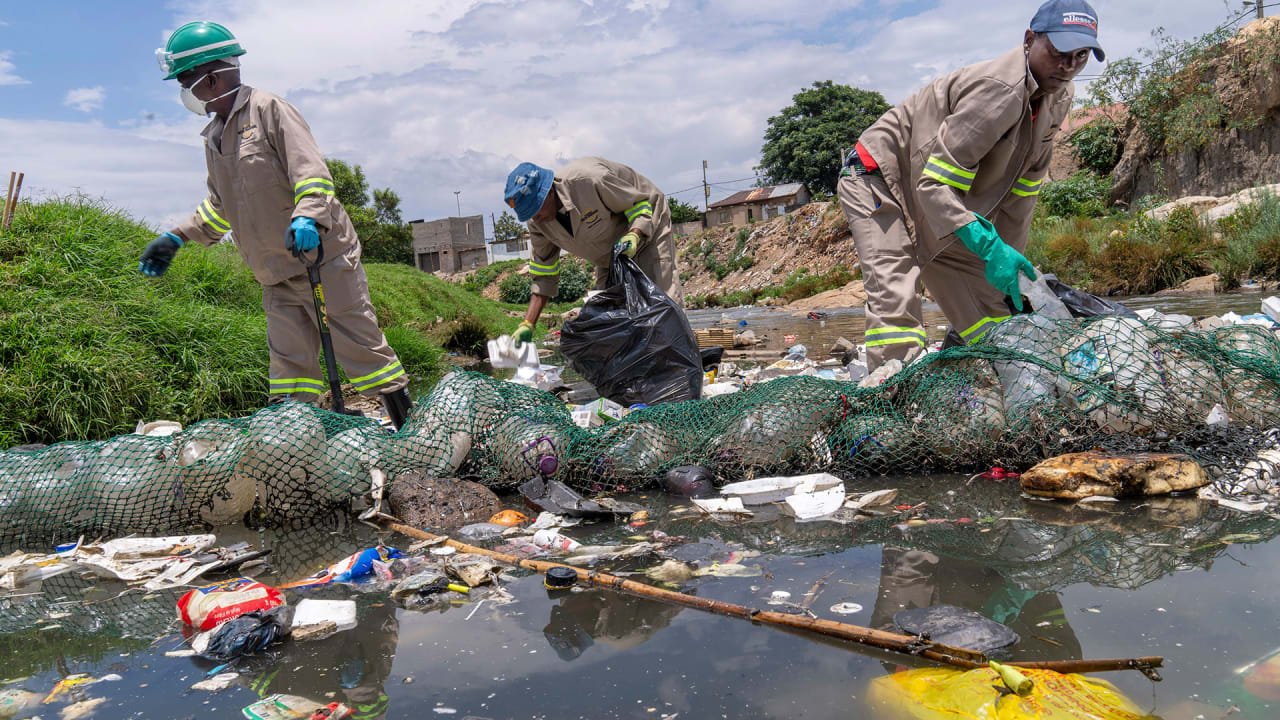
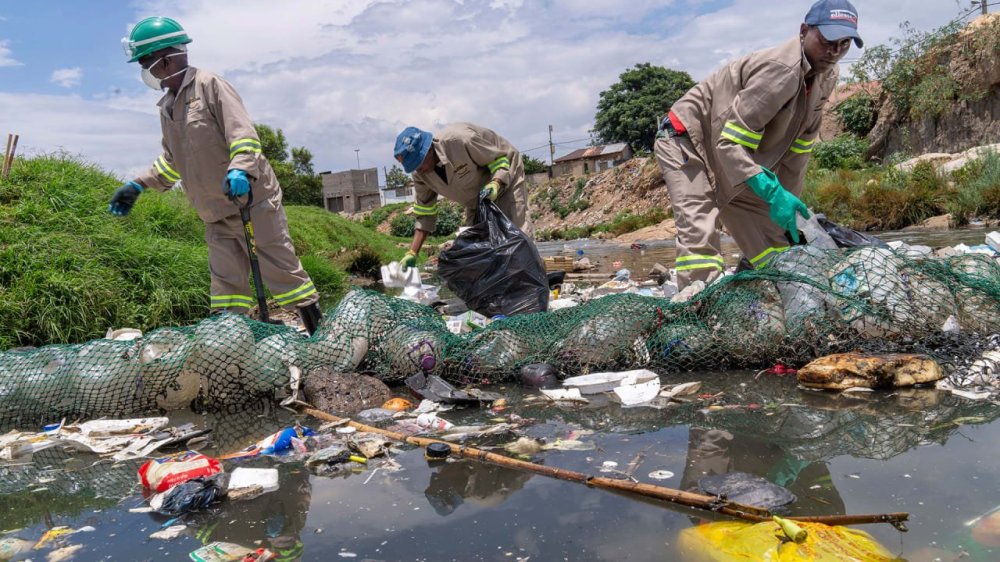
In Uganda’s Mbale district, famous for its production of arabica coffee, a plague of plastic bags locally known as buveera is creeping beyond the city. It’s a problem that has long littered the landscape in Kampala, the capital, where buveera are woven into the fabric of daily life. They show up in layers of excavated dirt roads and clog waterways. But now, they can be found in remote areas of farmland, too. Some of the debris includes the thick plastic bags used for planting coffee seeds in nurseries. Some farmers are complaining, said Wilson Watira, head of a cultural board for the coffee-growing Bamasaba people. “They are concerned—those farmers who know the effects of buveera on the land,” he said. Around the world, plastics find their way into farm fields. Climate change makes agricultural plastic, already a necessity for many crops, even more unavoidable for some farmers. Meanwhile, research continues to show that itty-bitty microplastics alter ecosystems and end up in human bodies. Scientists, farmers, and consumers all worry about how that’s affecting human health, and many seek solutions. But industry experts say it’s difficult to know where plastic ends up or get rid of it completely, even with the best intentions of reuse and recycling programs. According to a 2021 report on plastics in agriculture by the United Nations Food and Agriculture Organization, soils are one of the main receptors of agricultural plastics. Some studies have estimated that soils are more polluted by microplastics than the oceans. “These things are being released at such a huge, huge scale that it’s going to require major engineering solutions,” said Sarah Zack, an Illinois-Indiana Sea Grant Great Lakes Contaminant Specialist who communicates about microplastics to the public. Why researchers want to study plastics in farm fields Microparticles of plastic that come from items like clothes, medications, and beauty products sometimes appear in fertilizer made from the solid byproducts of wastewater treatment—called biosolids—which can also be smelly and toxic to nearby residents depending on the treatment process used. Some seeds are coated in plastic polymers designed to strategically disintegrate at the right time of the season, used in containers to hold pesticides or stretched over fields to lock in moisture. But the agriculture industry itself only accounts for a little over 3% of all plastics used globally. About 40% of all plastics are used in packaging, including single-use plastic food and beverage containers. Microplastics, which the National Oceanic and Atmospheric Administration defines as being smaller than five millimeters long, are their largest at about the size of a pencil eraser. Some are much smaller. Studies have already shown that microplastics can be taken up by plants on land or plankton in the ocean and subsequently eaten by animals or humans. Scientists are still studying the long-term effects of the plastic that’s been found in human organs. Early findings suggest possible links to a host of health conditions including heart disease and some cancers. Despite “significant research gaps,” the evidence related to the land-based food chain “is certainly raising alarm,” said Lev Neretin, environment lead at the FAO, which is currently working on another technical report looking deeper into the problem of microplastic pollution in soils and crops. A study out this month in the Proceedings of the National Academy of Sciences found that microplastics pollution can even impact plants’ ability to photosynthesize, the process of turning light from the sun into energy. That doesn’t “justify excessive concern” but does “underscore food security risks that necessitate scientific attention,” wrote Fei Dang, one of the study’s authors. Climate change making matters worse The use of plastics has quadrupled over the past 30 years. Plastic is ubiquitous. And most of the world’s plastic goes to landfills, pollutes the environment, or is burned. Less than 10% of plastics are recycled. At the same time, some farmers are becoming more reliant on plastics to shelter crops from the effects of extreme weather. They’re using tarps, hoop houses, and other technology to try to control conditions for their crops. And they’re depending more on chemicals like pesticides and fertilizers to buffer against unreliable weather and more pervasive pest issues. “Through global warming, we have less and less arable land to make crops on. But we need more crops. So therefore the demand on agricultural chemicals is increasing,” said Ole Rosgaard, president and CEO of Greif, a company that makes packaging used for industrial agriculture products like pesticides and other chemicals. Extreme weather, fueled by climate change, also contributes to the breakdown and transport of agricultural plastics. Beating sun can wear on materials over time. And more frequent and intense rainfall events in some areas could drive more plastic particles running into fields and eventually waterways, said Maryam Salehi, an associate professor of civil and environmental engineering at the University of Missouri. Can agriculture escape the plastic problem? This past winter, leaders from around the world gathered in South Korea to produce the first legally binding global treaty on plastics pollution. They didn’t reach an agreement, but the negotiations are scheduled to resume in August. Neretin said the FAO produced a provisional, voluntary code of conduct on sustainable management of plastics in agriculture. But without a formal treaty in place, most countries don’t have a strong incentive to follow it. “The mood is certainly not cheery, that’s for sure,” he said, adding global cooperation “takes time, but the problem does not disappear.” Without political will, much of the onus falls on companies. Rosgaard, of Greif, said that his company has worked to make their products recyclable, and that farmers have incentives to return them because they can get paid in exchange. But he added it’s sometimes hard to prevent people from just burning the plastic or letting it end up in fields or waterways. “We just don’t know where they end up all the time,” he said. Some want to stop the flow of plastic and microplastic waste into ecosystems. Boluwatife Olubusoye, a Ph.D. candidate at the University of Mississippi, is trying to see whether biochar, remains of organic matter and plant waste burned under controlled conditions, can filter out microplastics that run from farm fields into waterways. His early experiments have shown promise. He said he was motivated by the feeling that there was “never any timely solution in terms of plastic waste” ending up in fields in the first place, especially in developing countries. Even for farmers who care about plastics in soils, it can be challenging for them to do anything about it. In Uganda, owners of nursery beds cannot afford proper seedling trays, so they resort to cheaply made plastic bags used to germinate seeds, said Jacob Ogola, an independent agronomist there. Farmers hardest hit by climate change are least able to reduce the presence of cheap plastic waste in soils. That frustrates Innocent Piloya, an agroecology entrepreneur who grows coffee in rural Uganda with her company Ribbo Coffee. “It’s like little farmers fighting plastic manufacturers,” she said. Walling reported from Chicago. The Associated Press’ climate and environmental coverage receives financial support from multiple private foundations. AP is solely responsible for all content. Find AP’s standards for working with philanthropies, a list of supporters and funded coverage areas at AP.org. —Melina Walling and Rodney Muhumuza, Associated Press View the full article
-
The real 80/20 rule, also known as the Pareto Principle, is a saying that asserts 80% of outcomes come from 20% of all causes. You can use it to organize your to-do list, among other things. But to many young men, 80/20 means something very different. Young men are not alright. Masculinity is growing more toxic by the day. Online incel communities are growing, and the most receptive audience to poisonous ideas about gender seems to be children. This week's column isn't going to be fun: I'm explaining one of the guiding principles of the incel movement, and discussing a TikToker devoted to changing her red pill son's mind. And I can't talk about toxic masculinity without mentioning Elon Musk! Spray some deodorizer and let's jump into the dank, upsetting world of incel beliefs. What is the 80/20 rule?The Netflix series Adolescence, is currently the buzziest show on streaming, a harrowing exploration of the inner world of an angry young boy accused of murdering one of his classmates, a girl who spurned him. One of the teenage characters mentions the “80/20 rule” as a way of explaining the incel/red pill culture that's central to the murder plot. Put simply, the 80/20 rule is an axiom that states 80% of women are attracted to only 20% of men, and understanding the pervasiveness of this belief is essential to understanding online misogyny. Different communities of toxic dudes believe different weird things—many "looksmaxxers" think breaking your own facial bones can make you more attractive; red pill dudes believe men have to psychologically manipulate women into liking them—but the 80/20 rule is nearly universally accepted. The idea seems to have originated in a post on Medium that was written 10 years ago. Taken on its own terms, the article is a fairly interesting, though methodologically flawed, look at the distribution of “likes” on dating site Tinder. Incel types ignored the problems with the research, ignored the context (it’s only about Tinder likes), and accepted the 80/20 Rule as a hard-to-swallow truth that explains how women relate to men. Even though the Medium post concludes that most men who want to meet women would be “better off just going to a bar or joining some coed recreational sports team” than using Tinder, incels decided the 80/20 rule meant something like "all women are shallow," and/or "it's not my fault that no woman wants to spend time with me." For 10 years, incels and the incel-adjacent have expanded on the theory and repeated it to each other so many times that it’s rarely questioned in those spaces. If anyone you're talking to mentions the 80/20 rule in an affirmative context, you know you’re talking to someone who has a specific set of (wrong) beliefs, and who doesn’t have a large enough social circle to compare what they read on the internet to the way people act in real life. But is there anything you can do about it? Maybe. Viral video of the week: De-pilling a red pill son The creator of in this week's viral video, IAmRchlPrkr, is a mother trying to deprogram her teenage son. He has accepted some beliefs of the "red pill" community, a branch of incels, and she is not into it. She first saw the problem when her child told her "all women are gold-diggers." There's a lot going on with that phrase. Despite bristling and yelling "not all men!" when anyone generalizes their own gender, the toxic male community is dominated by the idea that women are all the same: a Borg-like collective looking for the most attractive 20% of men, or the men with the most gold to dig. This isn't new. In her 1998 book Intercourse, Andrea Dworkin could have been describing the incels of 2025 when she wrote, "the first tenet of male supremacist ideology is that men have a self and that women must, by definition, lack it." The difference is how sexist ideas that were once relegated to obscure corners of society have infiltrated the mainstream to the extent that literal children are repeating them to their mothers. (As with most of societal ills, we can thank the internet for that.) Maybe this TikToker mom has the right approach to returning some sanity: When her son tells her, "all women are gold-diggers," she responds with "Which women?" and "name one woman who is a gold-digger." Of course he can't. Because the incel philosophy falls apart in the face of actual relationships with real humans. What is "serious hat Soyjack?"A fitting response to me quoting Andrew Dworkin in an earnest post about online masculinity is serious hat Soyjak: Credit: SoyGemVault - Deviant Art Created by DevianArt user SoyGemArt, Serious Hat is a Wojak posted to comment on people who are, well, too serious online. (If you're asking "what's a wojak?" I have previously covered the subject.) Elon musk gamer drama continuesSpeaking of toxic men: Elon Musk! If you’re an adult, you probably know Musk best as the CEO of an electric car company or as a dedicated public servant with creative ideas about how forks work. But kids know a different Elon Musk: Gamer Elon. Gamer Elon is seen as the ultimate sweat, and Gamer Elon recently mixed it up on X with the official account of video game Assassin’s Creed and got roasted like a Costco chicken. The online dust-up started when ex-game developer @grummz made a post about streamer Hasan Piker, who he labeled a terrorist (because that’s what you do on X when you disagree with someone about public policy): This Tweet is currently unavailable. It might be loading or has been removed. This led Musk, who is a grown adult, to post: This Tweet is currently unavailable. It might be loading or has been removed. And then: This Tweet is currently unavailable. It might be loading or has been removed. At this point, the official account of the video game at the center of the fight Assassin’s Creed: Shadows brought gasoline to the flame war. This Tweet is currently unavailable. It might be loading or has been removed. The Assassin’s Creed post was viewed over 52 million times. It references the all-but-confirmed rumor that Elon Musk, a grown adult with a major position of power within the United States government, pays someone so gamers will think he’s really good at Path of Exile 2, a video game where you pretend to be an elf. What does "come eat lobster with a monster" mean?I don't want to leave you with all these toxic men, so let's end with a funny meme. Back in 2020, then-Twitter user @blanketm9 changed the world forever when they tweeted: This Tweet is currently unavailable. It might be loading or has been removed. Their post lay dormant until 2023, when a user (whose original post and name has been lost to history) added the context of a text conversation, complete with a "straight man." Credit: iFunny Things were quiet for a couple years, then, for reasons unknown, the meme started truly taking off this month. I guess the time is right for posts like these: This Tweet is currently unavailable. It might be loading or has been removed. This Tweet is currently unavailable. It might be loading or has been removed. This Tweet is currently unavailable. It might be loading or has been removed. This Tweet is currently unavailable. It might be loading or has been removed. View the full article