ResidentialBusiness
Administrators
-
Joined
-
Last visited
Everything posted by ResidentialBusiness
-
 I'll download any app I get an ad for—this fact has been established over and over again. Because the algorithm knows me well, that usually means I am served up advertisements for apps and services that revolve around fashion and beauty. Yet I also have a hidden introspective side, though, again, apparently not hidden from the algorithm: Over the weekend, I was encouraged to download something called Death Clock AI. This app claimed it could guess when I'll die based on my data, correlated to some scientific studies. How could I say no to that? Now, I do not believe I actually will die on Friday, June 30, 2079, as the app predicted, nor do I really think an app is the best answer to charting my healthiest path forward in life. While the app did give me suggestions for improving my overall health, that's no substitute for discussing things with my doctor. Still, the app did make me think a little bit deeper about how I'm living, which I think makes it potentially valuable. And it's also just kinda neat. What is Death Clock AI?When you first open the app (available on iOS or Google Play), you're greeted by a screen that says you can "live longer, better," then asked to tap a button that says, "See my death date." Before you get that, you'll need to more than 30 questions about your habits and health. It will then crunch those numbers and deliver the news. The app claims to be "backed by science, powered by AI," and pulls its information from 1,217 studies that involved a combined population of 53 million participants. While the app does ask you about your age and some background questions, though, your stats may not match up with those of the participants. And the app does nothing to account for your own family and health history, or other important factors like risks you face at work or social factors that may affect your health. Credit: Lindsey Ellefson Still, with each question it asks—like "How often do you include fruits and veggies in your meals?"—you are given the opportunity to explore the research it is based on. Tapping on the research button for that particular question opens a pop-up that notes, "Research from 16 studies involving over 833,000 participants show that each additional daily serving of fruits and vegetables reduces the risk of death from all causes by 5%, with benefits peaking at five servings per day." Some questions may be harder to answer. While you can pretty reliably indicate how often you do cardio in a week or the number of hours you spend sitting each day, other things—like how often you "experience significant stress in your daily life"—are more subjective. On the other end of the spectrum, there are specific questions you may not know the answer to offhand, like about your typical blood pressure reading or your LDL cholesterol level. I certainly don't know my fasting glucose level off the top of my head, so I had to answer "I don't know" a few times; this will affect your overall results. Once Death Clock AI calculates your "death date" based on your answers, it also provides a "better" (that is, farther in the future) date that you can aim for. You'll also be informed you'll get to use the service for free for three days, at which point you'll be charged the $40 annual fee. If you choose to pay for a year of service, you'll get the opportunity to upload health documents and information like recent bloodwork. You can also sync your phone's health data to the app and it will keep track of how much you sleep at night, as well as how many steps you take in a day. Your "death date" can fluctuate based on these inputs and, with a subscription, you'll maintain access to the longevity plan Death Clock generates for you. I can't vouch for how worthwhile that is, because I didn't use Death Clock AI over an extended period. But even a short-term trial gave me plenty to think about. How Death Clock AI made me rethink my healthAgain, even though the developers were smart to base their app on reputable studies, I don't think you should take Death Clock AI's predictions too seriously. Instead, I thought of it as an excuse to reconsider my own health—the same way I treat the data from my fitness trackers and smart scale. It should be considered a given that this data is never truly accurate, but even stopping to think about how often I eat fresh vegetables or how often I stand up on an average day was a minor wake-up call. The drama of getting my "death date" is more of an amusing bonus. Credit: Lindsey Ellefson Death Clock AI delivered me a "longevity plan" that includes recommended bloodwork and labs, supplements, screenings, and things to talk about with my doctor. If you're someone who wants to dig in deeper on your health but isn't sure where to start, this information could be helpful. For each item on the list, the app provides the steps you need to take to follow up on it, and it even notes whether it's typically covered by insurance. The final screen you see is a reminder that Death Clock AI "does not provide medical advice" and you should talk to a real doctor about any concerns you have about your health. That's definitely true. Privacy considerationsMaybe you’re worried about entering all your personal health information into a random app. Death Clock AI’s website notes that the developers, "seek to protect your personal data from unauthorized access," but may also "create aggregated, de-identified or anonymized data from the Personal Data" they collect, to be used for analysis or enhancing the service. That's actually the case for most apps, sure, but most apps aren't asking you to reveal your private health data. This isn't a big deal for me, because I always assume there’s a risk with sharing any data, and I gave up being worried about it a long time ago. If you are more sensible, you should only input what you feel comfortable with putting out into the world. Using the paid tier, for instance, you can input recent bloodwork, but it isn’t required. Stick with the free version, which doesn't require you to create an account, and feel free to skip any questions you find too sensitive. Because again, this app provides useful jumping-off points for thinking deeper about your health, but you also don't really need it at all. If typing your cholesterol level or smoking habits into a gimmicky app makes you feel weird, it's best to just skip it and interrogate your habits some other way. But if you can get past any privacy concerns, and you are looking for a way to think more deeply about your health or need a framework for doing so, it's a solid—if slightly silly—starting point. View the full article
 -
Billionaire’s close ties to re-elected US president have piqued investors’ interestView the full article
-
A House Financial Services Committee spokesperson said the committee will hold its required semiannual hearing with the Consumer Financial Protection Bureau director after nominee Jonathan McKernan is confirmed rather than with interim director Russell Vought. View the full article

-
Sir Keir Starmer claims some will be under construction by end of the current parliament View the full article
-
Microsoft just dropped its Patch Tuesday security update for February 2025. This is a monthly update for Windows that includes all of the security patches and stability fixes Microsoft has been working on since the last release. But just because these updates arrive without any new user-facing features, that doesn't mean they're not equally as important—if not more so. As reported by Bleeping Computer, this latest Patch Tuesday update fixes 55 security flaws throughout Windows. That includes 22 remote code execution flaws, 19 elevation of privilege flaws, nine denial of service flaws, three spoofing flaws, two security feature bypass flaws, and one information disclosure flaw. Here's what Microsoft fixed with its latest Patch Tuesday updateWhile all 55 flaws were worth addressing, four of them were particularly essential to fix—and patching two of those was even more vital. That's because four of these flaws were zero-day vulnerabilities, security flaws that are publicly known without an available patch. That's a recipe for disaster: Bad actors will inevitably discover ways to exploit security flaws, but the key is for software developers to discover and fix those flaws before bad actors even have a chance to know what those flaws are. When flaws are discovered before a fix is available, it sharply increases the chances of an exploit being developed before a patch can be created. In this case, there were four such vulnerabilities fixed in this latest Patch Tuesday update. Two of these have not been actively exploited—at least, Microsoft says they haven't. One is CVE-2025-21194, a Microsoft Surface security feature bypass vulnerability that could make it possible to bypass the Unified Extensible Firmware Interface (UEFI) and compromise both the hypervisor and secure kernel of specific machines. Plainly speaking, the flaw could allow bad actors to compromise the program powering virtual machines on Windows, as well as the core of your OS. The other publicly disclosed flaw was CVE-2025-21377, an NTLM hash disclosure spoofing vulnerability, which allows bad actors to access your computer's NTLM hash to obtain your plain-text password. With this particular flaw, a user might only need to select, right-click, or interact with a malicious file in order to trigger the exploit, which could then let a hacker log into the machine as the user. Microsoft is staying pretty silent about this one. However, the other two zero-day flaws patches in this update were, in fact, actively exploited. That includes CVE-2025-21391, a Windows storage elevation of privilege vulnerability that allowed bad actors to delete targeted files on your computer. Microsoft clarified the flaw does not allow bad actors to see your confidential information, but being able to delete files means attackers could break parts of your system. The second actively-exploited zero day flaw was CVE-2025-21418, an elevation of privilege vulnerability that allowed bad actors to gain system privileges in Windows. Microsoft did not share how either of these flaws were exploited by bad actors, and is keeping the identities of those who discovered them anonymous. While we don't know the full scope of these last two zero-days, it's important to update and patch them ASAP. As they are actively being exploited, it's possible someone could use them against your computer unless you install the patch. How to install the latest security updates on WindowsTo protect your PC, install this latest Patch Tuesday update as soon as possible. To do so, head to Start > Settings > Windows Update, then choose Check for Windows updates. View the full article
-
We may earn a commission from links on this page. I've been working hard on upgrading my kitchen and dining area lately. Recently, I bought these gorgeous, light pink, upholstered dining chairs, for instance. The whole goal of this endeavor has been to make the area as cozy and calm as possible, so last night, I decided to enjoy the fruits of all those labors and light a few candles. Guess what happened? Yes, I dripped wax on one of the new chairs. For a moment, my emotions were the opposite of cozy and calm. But then I remembered it's entirely possible—and even easy—to remove candle wax from soft surfaces. Here's what to do if this horror ever befalls you. Remove candle wax stains with alcoholI started furiously Googling to determine the absolute best hack for my circumstances, assuming it would involve baking soda or isopropyl alcohol to counteract the oiliness of the wax, but I needed to be sure. I was right about the alcohol, which made me feel smug. If your wax is still wet when you discover it, wait for it to harden so you can easily scrape off the top layer and deal only with the oily stain beneath. If the splotch is especially big, this could take a while, but you can speed up the process by grabbing something frozen from your freezer, putting it in a plastic bag, and setting it on top of the wax to cool it down. I tried using a dull butter knife to scrape the wax off my chair cushion, but it wasn't very effective; the blade was too thick. I hate to say it, but I just used my fingernail to scrape off all the hard wax from the surface and it worked just fine. Credit: Lindsey Ellefson After that, I was left with the stain itself and began to blot with a mixture of half water, half isopropyl alcohol. The vast majority of the stain came up right away. I let it air dry and did it again, which removed even more. I didn't want to keep dabbing over and over without giving it some time to dry in between because I didn't want the cushion under the fabric to get soaked. I left it alone overnight and found this morning that there was a light, white layer left over, so I mixed two drops of laundry soap into about 1/4 cup of water, then blotted that over the film. The chair looked like nothing had ever happened to it. Remove wax from carpet with a hair dryerIn frantically Googling what to do about my upholstery, I came across a tip that said I could use a hair dryer to get wax off surfaces. I do use my hair dryer a lot around the house, removing adhesive stickers or gel-based messes from surfaces, but I wasn't sold on using it to melt the wax deeper into the cushion of a chair. What I could see it being useful for, though, was removing wax from carpeting, especially the shaggier kind. Feeling confident from vanquishing the wax on my chair, I deliberately dribbled some on my rug this morning, in the name of research. I placed some frozen goods in a plastic bag and set them on top to test the hack about speedily hardening wax and can confirm it works just fine. Then, I used the hair dryer to re-melt the wax and tried to pull it out of the carpet. With my hands, that was 1. unpleasant and 2. not particularly effective. I repeated the experiment with a wide-toothed comb and, amazingly, the wax came right out, balled up on the bristles. From there, I dabbled a little with my isopropyl alcohol/water mixture and then used the hair dryer again, just to dry it all up. The carpet showed no signs that it had been drizzled in candle wax. Your final step should be to clean your carpet as normal, just to get the remaining alcohol out. Because it's a non-polar solvent, alcohol dissolves oil, making it the perfect thing to reach for whenever a mess is slick. If nothing else, it's the MVP of this entire experiment and will make quick work of any candle-related messes you incur in the pursuit of coziness. View the full article
-
If your social media suitor seems too good to be true, it might be a scam. Facebook and Instagram parent company Meta Platforms is urging users to stay vigilant about “romance scams” ahead of Valentine’s Day, warning of unsolicited messages through its apps and other social media platforms, as well as general text messages. Scammers tend to pose as “attractive, single and successful individuals,” Meta says. They often claim to have military, medical or business backgrounds, with photos either stolen from real people’s accounts or generated through artificial intelligence. Initially, messages are sent to a large pool of people in the hopes of getting a response. A scammer than builds trust over a period of time before they ask their target for money — either by claiming hardship or offering investment opportunities, usually in cryptocurrency. Meta said it recently worked with research firm Graphika to take down romance scams in three common categories: those impersonating military officers, celebrity mimics and scammers posing as fake match-making agencies that target people in Africa — “claiming to offer opportunities to meet rich men from Western countries or build relationships with ‘African women.'” In addition to taking down scam networks, Meta says it is testing other tools to combat bad actors, including facial recognition technology that compares suspicious users’ profile photos against a public figure’s image. But, for now, that only works for celebrity impersonations. To stay vigilant, Meta recommends people be suspicious of messages from strangers. If you do engage, try to verify the person’s identity by looking them up on the platform — check when their accounts were created or use a reverse image search on their photos. Requests for money, whether in the form of gift cards or payment apps, should also be treated with skepticism. View the full article
-
Google explains how it uses the Speculation Rules API to prefetch search results, improving loading speeds on Chrome browsers. The post Google Reveals How It Prefetches Search Results For Faster Loading appeared first on Search Engine Journal. View the full article
-
Members of the media recently received invites for an Amazon devices event in New York City on Feb. 26, which means one thing: Don’t buy any Amazon devices until after the event. While Amazon hasn’t explicitly said what will be shown on the big day, it’s always good practice to wait until after these sort of announcements to buy—assuming the products are not too far away. Even if you don’t see anything that interests you in the reveals, older, now outdated products are likely to get a discount in the weeks following news of their successors. You'll either get something brand new, or save on something you would have paid full price for. As for what we can expect Amazon to trot out, despite the company keeping mum, there are still a few clues to follow. Alexa goes AI This Tweet is currently unavailable. It might be loading or has been removed. Alexa is likely to be the star of the new event, with Amazon hiding an Alexa-centric easter egg in its invites. It turns out that different attendees got different versions of the invite, and if you put all of them together, they spell out “alexa.” Alexa is probably going to be the next virtual assistant to jump on the AI trend, with Amazon finally releasing the AI-powered version of the bot it teased in 2023. Since then, the company’s been fairly quiet on AI Alexa, although Reuters reports that it’s now ready for launch, so the timing would line up. In its initial tease, Amazon said AI Alexa would be able to handle conversational prompts, read body language, and give more personalized responses to questions, although Reuters’ sources seem to indicate that while conversational prompts are here, other features may take some more time. The team behind Alexa has previously had difficulty getting the AI version of the chatbot to do simple tasks like set timers or shut blinds, according to reporting from Bloomberg, so there are some concerns. Hopefully, it doesn’t lose any capabilities in the transition. If it does face post-launch problems, though, that might be another reason to hold off on an Amazon device for a bit. New Alexa-enabled devicesAfter leaving Microsoft in 2023, Amazon hardware chief Panos Panay is also set to be at the event, alongside his devices and services team, which seems to confirm that this won’t just be a software overhaul, but that we’ll see new hardware as well. Specifically, I would place a bet on new Echo smart speakers designed to take advantage of an AI-powered Alexa. Perhaps these would include a dedicated neural chip, or new cameras for use with the LLM’s supposed ability to read body language. It’s difficult to tell, but given that Amazon’s most recent Echo releases were more focused on the premium Echo Show, its more affordable cousins are probably due for a refresh. Similarly, Amazon’s Fire TVs or other smart displays could get their own upgrades that allow for better compatibility with Alexa. Don’t expect new KindlesPersonally, I don’t tend to use Amazon devices in my home, mostly because I don’t have a smart home. The biggest exception to this is probably the Kindle, but anyone expecting a new series of Kindles can probably slow down. That’s because Amazon released a new line of Kindles just a few months ago, including its first ever color Kindle in the Kindle Colorsoft. It was a pretty robust lineup, with four options strewn across multiple price categories. With user issues multiple complaints about faulty hardware at launch, as well as what seemed to be a brief pause in shipping, Amazon is unlikely to want to take the wind out of its sails any further. View the full article
-
Chevron will lay off 15% to 20% of its global workforce by the end of 2026, the U.S. oil company said on Wednesday as it seeks to cut costs, simplify its business, and complete a major acquisition. The No. 2 U.S. oil producer has faced production challenges including cost overruns and delays in a large Kazakhstan oilfield project. Its $53-billion deal to acquire oil producer Hess and gain a foothold in Guyana’s lucrative oilfield is in limbo due to a court battle with larger rival Exxon Mobil, which has more aggressively expanded its own production. Chevron also faces industry-wide weakness in the refining business and the expectation that oil prices could be under pressure over the next two years as global production growth outpaces demand. Chevron has said it is targeting up to $3 billion in cost cuts through 2026 from leveraging technology, asset sales and changing how and where work is performed. At the end of 2023, Chevron employed 40,212 people across its operations. A layoff of 20% of total employees would be about 8,000 people. Those figures exclude another roughly 5,400 employees of Chevron service stations. Shares of Chevron declined 1.3% in afternoon trading. The company told employees during an internal town hall that they can begin opting for buyouts now through April or May, according to a source familiar with the matter. The oil industry has been consolidating in recent years, focusing on mergers and operational efficiency more than drilling new wells. Chevron will reorganize its business and announce a new leadership structure in the next two weeks, the source said. “Chevron is taking action to simplify our organizational structure, execute faster and more effectively, and position the company for stronger long-term competitiveness,” said Mark Nelson, vice chairman of Chevron, in a statement. “We do not take these actions lightly and will support our employees through the transition.” The company’s oil and gas reserves have declined to their lowest point in at least a decade, raising concerns about its long-term prospects and highlighting the importance of closing the Hess acquisition. Chevron moved its headquarters from San Ramon, California to Houston last year and replaced several long-standing managers to renew its leadership. Last year, it also announced a new hub in India that will be its largest tech center outside the United States. —Scheyder and Sheila Dang in Houston, Reuters View the full article

-
Shares of Super Micro Computer, Inc. (Nasdaq: SMCI) surged 12% Wednesday in early morning premarket trading after it forecast strong revenue gains for 2026 and updated investors on plans to remain on the Nasdaq exchange. SMCI was up over 3% in afternoon trading. On Tuesday, the AI server maker said it now “believes it will make” the U.S. Securities and Exchange Commission (SEC) February 25 deadline to submit its delayed 10-K filings, thereby avoiding delisting from the Nasdaq. It also expects to file its 10-Q quarterly report ending in September by that date. Super Micro president and CEO Charles Liang projected revenue of $40 billion for fiscal 2026, lowering estimates to $23.5 to $25 billion in fiscal 2025, from prior guidance between $26 billion to $30 billion. Although Super Micro’s second-quarter results fell short of analyst estimates, investors are encouraged by the stock’s stronger-than-expected performance forecast for 2026. “With our leading direct-liquid cooling (DLC) technology and over 30% of new data centers expected to adopt it in the next 12 months, Super Micro is well positioned to grow AI infrastructure designs wins based on Nvidia Blackwell and more,” Liang said in an earnings release. “We anticipate this technology transition sets a strong foundation for us now.” SMCI is at risk of being delisted from the Nasdaq exchange due to its delinquent filings with the SEC. The stock has swung wildly up and down since accounting giant Ernst & Young resigned as its auditor last fall, disclosing it was “unwilling to be associated with the financial statements prepared by [SMCI’s] management” after a report from Hindenburg Research alleged it had found “glaring accounting red flags,” sanctions and export control failures, and evidence of undisclosed related party transactions. The AI server maker conducted its own independent review and found no evidence of misconduct. View the full article

-
Zelle processed over $1 trillion in transactions in 2024, marking the highest amount ever sent through a person-to-person payment service in a single year. The platform also saw significant growth in transaction volume and user enrollment, reinforcing its role as a major financial tool for consumers and small businesses. Zelle reported 151 million enrolled user accounts, an increase of 16 million from the previous year. Transaction volume rose 25% to 3.6 billion, while the total dollar amount sent on the platform increased 27% year-over-year. The fourth quarter of 2024 was the strongest in Zelle’s history, driven by holiday gifting and rent payments. “Zelle is not just a popular way to send money, it’s a vital tool that’s transforming how money moves across America,” said Denise Leonhard, general manager of Zelle. “It is the go-to peer-to-peer payment method for millions of hardworking Americans, and this milestone is a testament to the trust they place in us every day. We remain intently focused on expanding access to Zelle because it unlocks opportunity for individuals, small businesses, community banks, and credit unions.” Zelle continues to be an essential payment solution for small businesses, offering fast and secure transactions. In 2024: 23 million Zelle users made payments to small businesses in Q4. Small businesses sent or received over 500 million transactions, a 32% increase from 2023. These transactions totaled $283 billion, a 32% year-over-year growth. Small business owners rely on Zelle to quickly receive payments, settle vendor balances, and compensate employees, providing immediate access to funds that fuel business operations. Zelle expanded its reach to more than 2,200 financial institutions, with 95% of them being community banks and credit unions. Many of these institutions serve rural and minority-owned banking communities, where financial service options are limited. According to a survey of Zelle users: 74% of respondents said Zelle positively influenced their perception of their bank. One in three users stated they would switch to a financial institution offering Zelle if their current bank discontinued the service. This article, "Zelle Surpasses $1 Trillion in Payments, Sets New Record in 2024" was first published on Small Business Trends View the full article
-
Zelle processed over $1 trillion in transactions in 2024, marking the highest amount ever sent through a person-to-person payment service in a single year. The platform also saw significant growth in transaction volume and user enrollment, reinforcing its role as a major financial tool for consumers and small businesses. Zelle reported 151 million enrolled user accounts, an increase of 16 million from the previous year. Transaction volume rose 25% to 3.6 billion, while the total dollar amount sent on the platform increased 27% year-over-year. The fourth quarter of 2024 was the strongest in Zelle’s history, driven by holiday gifting and rent payments. “Zelle is not just a popular way to send money, it’s a vital tool that’s transforming how money moves across America,” said Denise Leonhard, general manager of Zelle. “It is the go-to peer-to-peer payment method for millions of hardworking Americans, and this milestone is a testament to the trust they place in us every day. We remain intently focused on expanding access to Zelle because it unlocks opportunity for individuals, small businesses, community banks, and credit unions.” Zelle continues to be an essential payment solution for small businesses, offering fast and secure transactions. In 2024: 23 million Zelle users made payments to small businesses in Q4. Small businesses sent or received over 500 million transactions, a 32% increase from 2023. These transactions totaled $283 billion, a 32% year-over-year growth. Small business owners rely on Zelle to quickly receive payments, settle vendor balances, and compensate employees, providing immediate access to funds that fuel business operations. Zelle expanded its reach to more than 2,200 financial institutions, with 95% of them being community banks and credit unions. Many of these institutions serve rural and minority-owned banking communities, where financial service options are limited. According to a survey of Zelle users: 74% of respondents said Zelle positively influenced their perception of their bank. One in three users stated they would switch to a financial institution offering Zelle if their current bank discontinued the service. This article, "Zelle Surpasses $1 Trillion in Payments, Sets New Record in 2024" was first published on Small Business Trends View the full article
-
Google Ad Manager and other ad services, including Campaign Manager 360 and Display & Video 360, are experiencing technical issues, causing disruptions for advertisers and publishers. What’s happening. Google Ad Manager. Users have reported error messages, high latency, and other unexpected behavior since 10:00 UTC on Feb. 12. Some hosted video creatives are stuck in “Transcoding in progress.” Campaign Manager 360 & Display & Video 360. Issues began earlier, at 06:00 UTC on Feb. 11, affecting advertisers using these platforms. Why we care. Google’s ad platforms are critical for digital advertising, and any downtime can impact campaign performance, ad delivery, and revenue generation for your brands relying on these tools. What’s next. Google says it is investigating both incidents and will provide updates as more information becomes available. View the full article
-
There's nothing worse than opening a PDF and realizing you can't use the search function or even highlight text. This typically happens when a PDF was created by scanning a paper document—it's just a series of images. Most modern scanning software uses Optical Character Recognition (OCR) so that words are both searchable and selectable but sometimes you'll run into documents where this didn't happen. In those cases, the free and open source OCRmyPDF is perfect to have around. This is a command line application that quickly converts any PDF file into a PDF/A file complete with optical character recognition, meaning you'll be able to search the text. Even better, it's completely free. Installing the application is best done using your package manager on Linux devices and using Homebrew on Mac. Windows users can technically install the application by installing Python and a few other dependencies—look into that if you're willing to do some digging. Once the application is set up, you can use it by typing ocrmypdf followed by the name of the document you want to add OCR to, and then the name of the document you'd like to create. So, for example, ocrmypdf before.pdf after.pdf would take "before.pdf", add character recognition, then create a new document called "after.pdf". The process will take awhile, depending on the size of the document, and it might not be entirely accurate if the image quality is low. Even saying all that, though, I found this did a pretty good job even with the most ancient and poorly compressed PDFs I could dig up. Credit: Justin Pot And there's more you can do here: In fact, the Cookbook on the OCRmyPDF documentation outlines a bunch of things you could do. You can compress the images in the PDF, for example, by adding --pdfa-image-compression jpeg to your commend. You can automatically re-orient any pages with sideways text by adding --rotate-pages to the command. Or maybe the PDF you're processing already has OCR that you think is poor quality—you can add --redo-ocr to the command; this will strip out existing OCR information and start over. You get the idea: There's a lot here. Check out the documentation for more information because there's more this thing can do. View the full article
-
The New York Stock Exchange announced on Wednesday it will launch an exchange in Texas, increasing competition among listing venues in the state. Several high-profile firms, including Elon Musk’s Tesla and SpaceX, have relocated their headquarters to Texas, attracted by the state’s perceived favorable legal and regulatory environment. The Texas Stock Exchange, a new venture backed by financial giants including BlackRock, Citadel Securities and Charles Schwab, is targeting a 2026 launch after submitting paperwork late last month to operate as a national securities exchange. The New York Stock Exchange and the Nasdaq have dominated the lucrative U.S. listings market in a virtual duopoly since the 2000s. The TXSE would represent the first challenge to that dominance if it wins regulatory approval to begin trading and seeking new listings. NYSE Chicago will reincorporate in Texas and rebrand as NYSE Texas, providing companies with a new venue to list their securities, said the NYSE, which is part of the Intercontinental Exchange. “As the state with the largest number of NYSE listings, representing over $3.7 trillion in market value for our community, Texas is a market leader in fostering a pro-business atmosphere,” NYSE Group President Lynn Martin said. A TXSE spokesperson did not comment directly on the NYSE plan. “We have known all along that Texas is the best place to do business,” the spokesperson said in a statement following the news. “The Texas Stock Exchange is harnessing this momentum to build a national securities exchange in our home state.” Nasdaq recently stepped up its presence in Texas, announcing a new regional focus for its listings business and naming Rachel Racz to head the segment focusing on Texas, Latin America and the southern United States. The NYSE’s initiative shows that a regional focus may not be enough of a competitive distinction that will allow the Texas Stock Exchange to challenge the two incumbents, said Owen Lau, a senior analyst at Oppenheimer & Co. “There may be something in Texas Exchange that is yet to be revealed, so it is still too early to gauge how it plays out. But so far, it doesn’t appear to dramatically change the listing/exchange landscape.” Both TXSE and NYSE Texas will be fully electronic equities exchanges headquartered in Dallas. —Niket Nishant, Manya Saini, and Suzanne McGee, Reuters Laura Matthews contributed to this report. View the full article

-
What if the Playboy Mansion was filled with OnlyFans content creators? That’s the pitch for the Bop House, a TikTok page that has gained nearly three million followers since its launch in December. Founded by Sophie Rain, 20, and Aishah Sofey, 22, the house is home to eight creators aged 19 to 24, who collectively boast over 33 million followers. Their TikTok presence leans into viral, algorithm-friendly content like flying private to the Super Bowl and reviewing popular cookie brand Crumbl. But their real revenue stream comes from OnlyFans. The Bop House claims to have generated $10 million in revenue in its first month. “It’s just like a little girl group that we’re all doing and we just want to uplift each other and help each other grow on TikTok,” Rain told the Daily Mail. The house has its own website, with a profile of each girl directing to their various social media platforms. The name itself is a reference to Gen Z slang which stands for “baddie on point,” a term used to describe a person who uses their body to make money. The group has sparked controversy over the blurred line between their PG-rated TikTok presence and their adult content careers. Many members, including Rain, are 21 and under (one even wears braces). Although Rain is an OnlyFans creator, she says she’s also a devout Christian and wears a promise ring. “The issue is the content looks very very very young,” TikTok user Amber Horsburgh posted in a video. “The deliberate marketing of youthful personas for adult content is creating a demand for barely-legal performers.” With their mostly PG Instagram and TikTok videos, the Bop House has built a following on social media to funnel viewers toward their OnlyFans content. Given the platform’s young user base, about 25% of TikTok’s global users are between the ages of 10 and 19, this raises clear concerns. Whether that responsibility falls on the Bop House is less clear. Either way the Bop House has no plans to slow down. In a recent interview, Rain added, “We can afford a new mansion every single month with the money the Bop House is making us.” View the full article

-
Wholesale prices have doubled over the past year as culls to stop spread of virus prompt shortages and rationingView the full article
-
The stage is set. Primavera P6 vs. Microsoft Project. Two heavyweights in the project management software division. Known as project scheduling software, project portfolio management, project planner and more, but which is the champion or is there a dark horse in the wings to steal the title? To make the Primavera vs. Microsoft Project fair, we’ll define both, explain what they’re used for and where one surpasses the other. These are both widely used project management tools, but that doesn’t mean they’re without issues. One of the main complaints is the cost and complexity. We’ll get into the stats and let readers decide which is better, Primavera P6 or MS Project, but know that there is a galaxy of project management software for all industries, including construction scheduling. In the battle between Microsoft Project and Oracle Primavera, the best choice might be neither. That’s because ProjectManager is award-winning project and portfolio management software that is less expensive and easier to use than either of these products. Our software has multiple project views which means project managers can schedule projects on robust Gantt charts or multiple projects on roadmaps, while teams execute their tasks on the visual workflow of kanban boards or task lists. Stakeholders can stay up to date with calendar views. But a lot of tools have multiple project views. Ours differs in the power they give users. For example, our Gantt charts do everything a normal Gantt chart can do, but also link all four types of task dependencies to avoid delays and cost overruns. They can also filter for the critical path instantly, which means no complex calculations. Then set the baseline to track progress in real time. Get started with ProjectManager today for free. /wp-content/uploads/2024/04/critical-path-light-mode-gantt-construction-CTA.pngIt’s no contest, ProjectManager is best when it comes to Privamera P6 vs. Microsoft Project. Learn more Primavera P6 vs. Microsoft Project: Why Should You Choose Primavera P6? Excuse our enthusiasm, but we can’t contain our endorsement for ProjectManager, which does what Primavera and Microsoft Project do and does it better. But fair is fair. Let’s give Primavera vs. MS Project its due and examine where they excel and where they fall short. What Is Primavera P6? /wp-content/uploads/2023/12/Primavera-P6logo.png Primavera P6 is a comprehensive project management software suite developed by Oracle. It’s designed to plan, manage and execute large-scale and complex projects. It is widely recognized for its ability to handle large numbers of tasks, resources and project dependencies. This tool is known for its advanced features in scheduling, resource management, cost management and project portfolio management. What Is Primavera P6 Used For? As noted above, this project management software is used to manage complex and large-scale projects. It handles significant resources, multi-layered dependencies and multiple teams. This involves project scheduling, resource management, cost management, portfolio management, risk management, collaboration and reporting. Related: What Is Oracle Primavera P6? Uses, Features & Pricing /wp-content/uploads/2025/02/Primavera-P6-e1739373919657.webp Who Uses Primavera P6? Organizations across various industries use the tool. Some of these are construction companies, engineering firms, oil and gas industry, aerospace and defense, utilities and energy, project management offices (PMOs) and government agencies. Primavera P6 Key Features Primavera P6 has many tools that allow it to be used across many industries. The project management software is designed to handle complicated, large projects and, therefore, has these key features. Tracks critical path method, dependencies and project baselines with Gantt charts Has resource usage profiles, as well as resource allocation, leveling and histograms Project portfolio management with optimization and cross-project resource management Primavera P6 vs. Microsoft Project: How Is Primavera P6 Better Than Microsoft Project? Unlike Microsoft Project, which is more suited for smaller to medium-sized projects with fewer tasks, Primavera P6 can handle thousands of tasks, dependencies and resources. MS Project has basic resource management, but Primavera P6 allows for detailed resource management across multiple projects, including labor, equipment and materials, and is better at managing larger teams. Again, MS Project has similar features, such as portfolio management, but it’s not as comprehensive as Primavera P6. The same is true with cost and budget management, where Primavera P6 includes features like earned value management (EVM), which helps to track project performance against the baseline. Primavera P6 has enterprise-level project management features that can handle complex workloads, while Microsoft Project is simply not that robust. Primavera P6 vs. Microsoft Project: How Is Primavera P6 Worse Than Microsoft Project? However, there are limitations compared to Microsoft Project, particularly in terms of usability, cost and flexibility. Both are not known for their ease of use, but Primavera P6 has a steeper learner curve and requires significant time and training. Primavera P6 is also prohibitively expensive, which makes it out of reach for small-to-medium-sized businesses. Then there is the resource management complexity. Primavera P6 has advanced resource management capabilities, but they might be too detailed for smaller teams and organizations. Also, integrating Primavera P6 with other software, such as ERP systems, can require custom solutions and technical expertise, whereas MS Project seamlessly integrates with the Microsoft ecosystem and other third-party applications without such difficulties. Primavera P6 vs. Microsoft Project: Why Should You Choose Microsoft Project? That’s one side of the Primavera vs. MS Project debate. Now, it’s time to give the other side its due. Don’t make a decision quite yet. While Primavera P6 might look like a superior alternative to Microsoft Project, it’s still not a loser. It has its merits which we’ll explore now. What Is Microsoft Project? /wp-content/uploads/2023/04/int-logo-msproject.jpg Microsoft Project is project management software that provides tools for project planning, scheduling, resource management and collaboration. The project management software is designed to help project managers create detailed project schedules, assign tasks and resources, track project progress and generate reports. What Is Microsoft Project Used For? Microsoft Project is used to create project plans and schedule projects. It can allocate resources, track progress and manage budgets and costs. The tool can also generate reports on progress, timelines, costs and resource usage. There are also some collaborative features, though the product is not known as a great collaboration tool. Related: What Is Microsoft Project? Uses, Features and Pricing /wp-content/uploads/2022/03/MS-Project-screenshot.jpg Who Uses Microsoft Project? A wide range of industries and organizations of various sizes use Microsoft Project. Typical users include project managers, small-to-medium-sized businesses and freelancers and professional services consultants. It can also be found in departments within larger organizations as well as government and nonprofit organizations. Microsoft Project Key Features We’ve listed some key features that make Microsoft Project one of the best-known project management software products. Gantt charts with task dependencies and milestones Cost tracking against the project budget and assigning costs to resources, tasks and projects Pre-built and customizable reports and visual dashboards Primavera P6 vs. Microsoft Project: How Is Microsoft Project Better Than Primavera P6? Microsoft Project might be a better choice than Primavera P6 in the following scenarios. For example, when managing smaller or similar projects, where it’s more straightforward and has sufficient tools to schedule tasks, allocate resources and track budgets. No one would say MS Project is easy to use, but it is in comparison to Primavera. It’s also not more cost-effective than most project management tools, except when comparing it to the expensive Primavera P6. One of the main advantages is that it works easily with other Microsoft tools that organizations are probably already using, such as Outlook, Excel, Teams, etc. While MS Project is not a collaborative tool, it can be used with other Microsoft products, such as Project for the Web and Project Online. Of course, this will add to the cost of using the software, which might make some shy away from the extra purchases. Primavera P6 vs. Microsoft Project: How Is Microsoft Project Worse Than Primavera P6? If users are looking for project management software that’s designed for large-scale, complex projects, then Primavera P6 will be a better solution than Microsoft Project. It’s going to struggle to manage bigger projects effectively. Therefore, Primavera P6 is the choice for enterprise-level project management as it provides detailed control over multiple, complex projects. This includes Primaveria’s dominance in resource and portfolio management when working with large, distributed resources across multiple projects. Primavera P6 also has built-in features for detailed risk management and analysis. MS Project lacks the depth required for managing high-risk, large-scale projects. It also doesn’t have the advanced scheduling capability that allows for fine-grained control over complex timelines, task dependencies and constraints that Primavera P6 has. How to Make a Microsoft Project Gantt Chart With ProjectManager We haven’t talked about ProjectManager for a while, but at this point, it’s important to bring up the fact that our software can make a superior Gantt chart. Both Primavera P6 and Microsoft Project have Gantt charts, but they’re difficult to learn and expensive to use. Our software will also allow Mac users to view and edit MPP files, unlike MS Project. A quick way to clear those hurdles is to take a free 30-day trial with ProjectManager. See how easy it is to take a Microsoft Project (MPP) file and import it into our software. There, it can be shared easily among the project team, edited without difficulty and then exported back to Microsoft Project. While it’s better to just use ProjectManager to manage projects, this workaround is helpful for those working in organizations that are wedded to MS Project. Just follow these steps./wp-content/uploads/2024/05/ms-project-pm-integration.png 1. Export Your Microsoft Project File as an Excel, MPP or CSV File Users can import MPP files, excel documents or any CSV file into ProjectManager. Open the Gantt chart view. On the top ribbon, click the import button, which looks like a box with an arrow piercing its top. 2. Choose the Excel, CSV or MPP File You Want to Import Now, follow the prompt and select the file you want to import. Once the file has been imported, users can view and edit it on their PC or Mac. 3. Select Options At this point, users will be given the option to choose which option they want, such as importing the MPP file to a new project or adding it to an existing one. 4. Import Into ProjectManager Select whether to import all the data from the Microsoft Project file or just the tasks. 5. Customize Your Microsoft Project Gantt Chart With ProjectManager When a window that says success pops up, you’re ready to customize your Microsoft Project Gantt chart within ProjectManager, which means using our all unique and easy-to-use features. /wp-content/uploads/2024/02/Asana-Gantt-chart-success-pop-up.png Primavera P6 vs. Microsoft Project: Pricing Comparison We’ve talked a lot about pricing, but having provided details. If you can take the sticker shock, below is a pricing comparison between Primavera P6 vs. Microsoft Project. (Note: there are two versions of Primavera P6, but Oracle Primavera Cloud.) Primavera P6 Pricing Oracle Primavera P6 Professional: The P6 Professional version of Primavera is a desktop-based software that can be purchased directly from Oracle, or through an authorized Oracle software reseller. It must be installed into workstations. Oracle Primavera P6 Professional costs $2,570 for an annual subscription. That price includes $2,020 plus an annual maintenance fee of $550 for upgrades, fixes, patches, etc. The renewal of the maintenance cost isn’t required, but it’s suggested. Oracle Primavera P6 EPPM: There’s also the enterprise option, Primavera P6 Enterprise Professional Project Management (EPPM). This version of Primavera P6 is accessed via the web rather than being a desktop software application which makes it easier to implement in large organizations. This option will run you $2,750 for a perpetual license, which includes an annual maintenance fee of $605. Oracle Primavera Cloud (OPC): Like Primavera P6 Professional and Primavera P6 EPPM, Oracle Primavera Cloud focuses on project, program and portfolio management, but has a different feature set. OPC has the added benefits of faster delivery and fosters collaboration to improve efficiency and quality. Microsoft Project Pricing Planner Plan 1: $10/user/month Planner and Project Plan 3: $30/user/month Planner and Project Plan 5: $55/user/month ProjectManager Is Better Than Primavera P6 and Microsoft Project For those still reeling from the prices of Primavera P6 vs. Microsoft Project, don’t worry. There is an alternative. ProjectManager is award-winning project and portfolio management software with features like Primavera P6 and MS Project to deliver projects on time and within budget but without the expenses or steep learning curve. Our software is designed to deliver projects whether they are big and complex or small and simple, for one project or a program or portfolio of projects and across industries like construction, IT, manufacturing, professional services and more. Our software has powerful risk management features to identify and track issues, automated workflow with task approval settings to ensure quality control, version control, global search and unlimited document storage. Monitor Project Progress, Timelines and Costs in Real Time Of course, being about to plan and assign tasks is only the start. Project and portfolio managers need to monitor their team’s performance and progress to ensure it aligns with the schedule. To get a high-level overview of the project, toggle over to the real-time project or portfolio dashboards. They’re collecting live data and displaying it on easy-to-read graphs and charts that show time, cost, workload and more. For more detail, use customizable reports on status, portfolio, workload, timesheets, variance and more. They go deep for teams or provide a summary to keep stakeholders updated. Secure timesheets streamline payroll and provide a window into labor costs to help deliver projects within budget. /wp-content/uploads/2022/07/Dashboard-light-mode.jpg Schedule and Balance Project Resources Managing resources is also essential to delivering successful projects. Gantt charts can schedule human and nonhuman resources, including costs. Project managers can then view their team’s resource allocation on color-coded workload charts and see who’s overallocated or underutilized. Then, balance their workload to keep everyone working at capacity without risking burnout. There’s also a team page that shows a daily or weekly overview of the team’s activities. This page can be filtered to show priority, progress and more. /wp-content/uploads/2023/01/Team-Light-2554x1372-1.png Related Primavera and Microsoft Content This isn’t the only time we’ve reviewed Primavera and Microsoft products. Those who want to read more about the pros and cons of these project management tools, check out the links below to recently published articles on the subject. What Is Oracle Primavera P6? Uses, Features & Pricing What Is Oracle Primavera Cloud? Uses, Features & Pricing 10 Top Microsoft Project Management Software Microsoft Project Online: Pros, Cons and Best Alternatives Best Microsoft Project Alternatives: Free & Paid Options Microsoft Project for Mac: How to Run MS Project Files on Mac ProjectManager is online project and portfolio management software that connects teams whether they’re in the office or out in the field. They can share files, comment at the task level and stay updated with email and in-app notifications. Join teams at Avis, Nestle and Siemens who use our software to deliver successful projects. Get started with ProjectManager today for free. The post Primavera P6 vs. Microsoft Project: In-Depth Software Comparison appeared first on ProjectManager. View the full article
-
If you’ve been living your life severed from Apple TV because you’re on an Android phone, then Apple has some good news for you, refiner. Starting today, the Apple TV app is available on Pixels, Samsung Galaxies, and all other Android phones and tablets, complete with the ability to subscribe to Apple TV+ and the MLS (Major League Soccer) Season Pass. That’s great news for anyone who, like me, can’t stop thinking about Severance, and Apple’s doing its best to make the sign-up process as easy as possible. According to a press release sent to journalists, Android users are able to sign up for Apple TV’s various subscriptions using their Google Play account, rather than needing to enter a separate email. Apple TV’s non-subscription offerings will also be available to Android users, so you’ll be able to watch pay-per-view titles as well. Android devices aren’t the first non-Apple hardware to get access to Apple TV—I personally watch via my PlayStation 5—but the new cross-platform support should make mobile viewing much easier. Android TV did technically already have a version of Apple TV up for download, but now all Android devices will share the same privilege. Aside from Severance, which is currently in its second season, Apple TV+ also hosts popular shows including comedy Ted Lasso and sci-fi drama Silo, as well as original films like Killers of the Flower Moon and Coda. There are also more niche favorites like game-development sitcom Mythic Quest, which carries over much of the same creative team from It’s Always Sunny in Philadelphia. Regarding sports, Apple TV+ fans get access to Friday Night Baseball and Sunday Night Soccer for free. The Major League Soccer Season Pass, meanwhile, is a separate purchase from Apple TV+ and allows viewers to watch all available MLS matches without blackouts, rather than only those featured on Sunday Night Soccer. To sweeten the pot, there’s also an array of bonus content such as post-match analysis, highlights, and interviews with players. The league is set to kick off its 30th season on Feb. 22, which I’m guessing might have influenced today’s sudden announcement. As on Apple devices, Android users can get a seven-day free trial to Apple TV+ as soon as they download the app, although there’s a number of more tempting deals out there that tend to rotate in and out of availability. If you decide to take the plunge, a subscription will run you $10 a month, or $19.95 a month if you decide to get it as part of an Apple One plan. The MLS Season Pass, then, costs $15 a month standalone, or $13 a month if you already have an Apple TV+ subscription. View the full article
-
Federal Reserve Chair Jerome Powell said insurance companies and banks are already pulling out of disaster-prone areas, which could pose problems. View the full article

-
We may earn a commission from links on this page. Being both a lightweight and a lover of sparkling wine means I often end up with a leftover half-bottle of the stuff, or I choose not to open one at all. Neither of these options feels right to me. While I don’t mind pouring the occasional $11 flat prosecco down the drain, my partner and I just got engaged, and we've been gifted a few bottles of fancy champagne—stuff way to good to waste. The inevitable leftovers must be protected. After testing a few hacks to preserve sparkling wine’s fizz, I found one that works. The testing optionsA friend gave me a Le Creuset champagne stopper along with a bottle of bubbly around Christmas. Weeks later I saw an Instagram post by America’s Test Kitchen on this very topic. In that video, ATK focuses on a hack for using plastic wrap if you don’t think your champagne stopper is up to the task: Simply cover the opening with plastic wrap and tie a rubber band securely around the neck to keep the plastic in place. This option prompted me to conduct a side-by-side test—but not with my fancy champagne, no sir. Instead, I bought four cheap bottles of prosecco. (Champagne and prosecco are both sparkling white wines; they’re just produced in different regions. this test will apply to all sparkling wine, including reds.) I poured a serving of bev out of each bottle and set them up with different preservation options: One bottle was fitted with an intentionally designed champagne stopper. Another was fixed with the plastic wrap and rubber band rig. The third got plugged with an old wine cork and draped with a tea towel for safety (just in case a pressure buildup caused to to go shooting off). The fourth bottle was left open as a control. The sparkling resultsTwenty-four hours later, I poured out another glass from each bottle. Before even tasting the wine, I noticed two things: The specifically constructed champagne stopper was the only one that released from the bottle with a powerful POP! of air, almost like it was being unbottled for the first time. I also noted that each glass looked nearly identical, producing visible bubbles and a bit of foam when poured. This told me that tasting would be the best indicator of how well each of these methods preserves fizz. Despite appearances, only the one on the far right was bubbly on the palate. Credit: Allie Chanthorn Reinmann While each sip did reveal some fizzy sensations, the only one that felt like a freshly opened bottle was the sample that used a specifically designed champagne stopper—i.e. the one that popped. That sip of that wine offered both an initial visual presence of bubbles and the quintessential delayed foaming that you expect from champagne. (That foaming sensation is what sets a fresh bottle apart from a flat bottle.) I actually tested this one again after another 24 hours and it popped again, and still aced the taste test. Another surprising result: The other three samples were about the same, meaning the the completely unstoppered control bottle had the same mouth-feel as the other two (the old-cork stoppered one, and the one sealed with plastic wrap). This suggests to me that the bottle’s thin neck shape alone does the most work in preserving bubbles, and it's not worth bothering with jamming the old cork in there, let alone fussing with plastic wrap. A champagne stopper is worth it If you’re a fan of prosecco, lambrusco, pét-nat, or a classic champagne toast, my experiment proves it’s worth it to have a proper champagne stopper in your kitchen. This type of stopper has a silicone rubber seal and a strong hinging mechanism to ensure it forms an air-tight that stays that way. Using one of these should help you extend the life of any sparkling wine for weeks, which should be enough time to polish it off. Le Creuset Champagne Crown Sealer, 2.25", Black Nickel $49.95 at Amazon /images/amazon-prime.svg Shop Now Shop Now $49.95 at Amazon /images/amazon-prime.svg There are cheaper options, but even if you opt for a higher-priced brand like the Le Creuset one I tested, after only a few uses you’ll end up saving well more than that in un-wasted bubbles. Whether it's Valentine’s Day, an engagement, or a fresh start, the reasons to celebrate with a bottle of sparkling wine are myriad. It pays to be prepared. Bring on the bubbles. View the full article
-
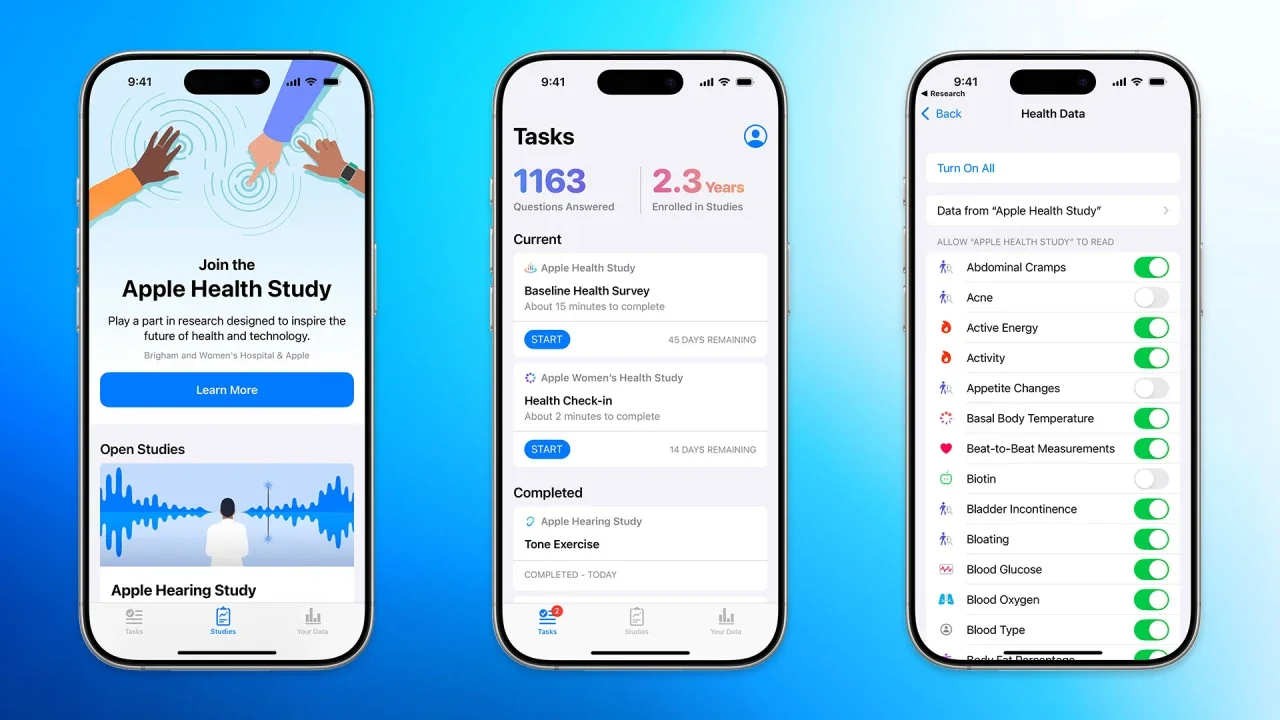
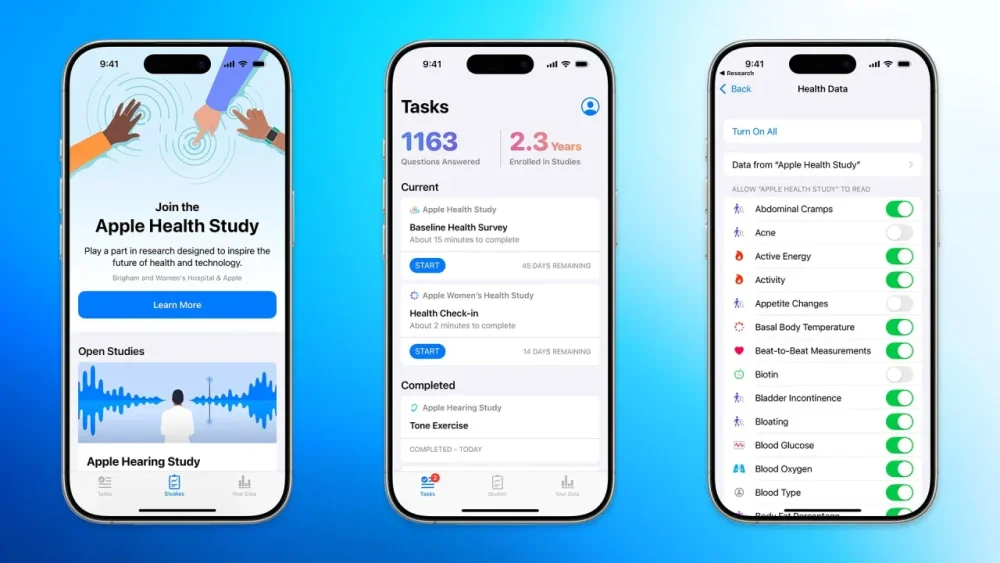
Apple is launching its first major holistic health study in five years to determine how Apple products, including iPhones, Apple Watches, and AirPods, can “play a role in advancing and improving physical health, mental health, and overall well-being.” It may be Apple’s most ambitious study yet. Starting Tuesday, Apple customers in the United States can opt in to participate in the Apple Health Study by downloading Apple’s Research app, version 6.0 (more on that below). The sweeping study, a collaboration with Brigham and Women’s Hospital—a preeminent research hospital in Boston, affiliated with Harvard Medical School—takes a complete approach to understanding how data can predict, detect, and manage health and well-being. “We’ve only just begun to scratch the surface of how technology can improve our understanding of human health,” cardiologist Calum MacRae, the principal investigator of the Apple Health Study at Brigham and Women’s Hospital, said in a statement. What makes this study groundbreaking? Unlike other medical studies, which rely on data from a limited number of participants over a finite period of time, the Apple Health Study’s continuing access to more than 350,000 U.S. participants’ data over time expands that possibility. That combined data comes from the Apple Women’s Health Study, the Apple Hearing Study, and the Apple Heart and Movement Study. The Apple Health Study also aims to harness technology in a new way to see how data from Apple and third-party devices can not only predict and detect, but also “monitor and manage changes in participants’ health” to identify insights about our overall well-being. For example, when a person’s health changes, their body emits a physical or emotional signal, flagging a secondary, related health issue. Apple devices can identify these changes earlier, helping users create a more proactive approach to health, so something like early detection of hearing loss could reduce the risk of cognitive decline later on. The study focuses on a number of health markers, including: activity, aging, cardiovascular health, circulatory health, cognition, hearing, menstrual health, mental health, metabolic health, mobility, neurologic health, respiratory health, and sleep. How can I opt in to the Apple Health Study? Apple’s Research app, which launched in 2019, enables study participants to opt into sharing data (which they can choose to stop sharing, and leave the study, at any time). To enroll, download the latest version (6.0) of the Apple Research app. The study is open to participants who live in the U.S., meet the minimum-age requirements, and complete the informed-consent process. This app is currently available only in the App Store for iPhone and Apple Watch. View the full article
-
From the moment Chuck Yeager broke the sound barrier for the first time in 1947, zipping from New York to Paris in less than three hours became every traveler’s dream. It’s a dream that shattered as soon as everyone realized supersonic flight was really annoying for people on the ground. That’s why NASA and Lockheed Martin created the X-59 Quesst, which was designed with an aerodynamic profile that would reduce the eardrum-breaking boom to a dull thump. NASA’s upcoming test flight was supposed to be the first silent supersonic flight in history—then January 28 happened. That’s when the startup company Boom Supersonic flew a supersonic flight over the Mojave Desert, in California, using a radically different approach that was theorized decades ago but only now has been possible thanks to new engines and computers. [Photo: Boom Supersonic] The company announced the milestone February 10. The testing of its Boomless Cruise technology—recorded with a sophisticated microphone array by NASA—showed that its XB-1 demonstrator aircraft broke the sound barrier three times without generating a sonic boom that reached the ground. This is the first time a plane has achieved this. “On our first flight, we expected to break the sound barrier without a sonic boom—that was our prediction,” Blake Scholl, founder and CEO of Boom Supersonic, tells me. “We broke the sound barrier three times: on the first flight, no boom; and on the second flight, three more times. Our forecast was no sonic boom, and that’s exactly what we had.” Rather than redesigning the physical airframe of the airplane to redirect air and reduce the supersonic shock volume—like the X-59—the company bet on taking advantage of using a physical phenomenon called Mach cutoff, using powerful computers and software to carefully change the airplane’s speed and altitude depending on the weather around it. [Photo: Boom Supersonic] Mach cutoff is a phenomenon where a sonic boom, instead of traveling directly to the ground, bends upwards and dissipates into the atmosphere. “There is a boom that comes off the airplane, but it makes a kind of U-turn in the sky,” Scholl explains. “And as long as the boom is coming off the airplane at the right angle and it’s high enough, you can think of it as the bottom of the U never touches the ground. And as long as the bottom of the U never touches the ground, there’s no audible boom.” This phenomenon occurs because the sonic boom refracts upward due to temperature and wind gradients affecting the local speed of sound, just as how a pen appears to bend when passing through a glass of water because the difference in the density of water and air affects how light propagates. The NASA X-59 [Image: Lockheed Martin] Unlike the X-59’s low-boom approach, Boomless Cruise aims to entirely eliminate the boom at ground level. The X-59 is designed to manage the shockwaves through its airframe design, aiming for a “gentle thump.” The way the engine is placed, and the fact that there’s no cockpit breaking the flow of air, its Pinocchio nose reduces the sonic boom. Scholl says the approach works, but there’s still a boom. “With Boomless Cruise, there literally is none.” During its first supersonic flight, XB-1 reached a top speed of Mach 1.12, demonstrating that the theory works. The data collected during XB-1’s supersonic runs allowed Boom to validate their sonic boom models and refine the algorithms that predict the operation within Mach cutoff. The successful flight test validated that this works. [Photo: Boom Supersonic] “What we’re doing is well-known physics that’s been around for a long time,” Scholl says. The key to making it a reality now lies in advanced engine technology and sophisticated computing capabilities, which were unavailable in the past. The Concorde could have done it, but its engines weren’t powerful enough and they required afterburning to reach supersonic speed. The kind of computing power that’s needed to do what the XB-1 did during its two flight tests also didn’t exist. “So, fast-forward 50 years, computers, we’ve got great weather data, and we’ve got engines that are powerful enough to fly supersonic without afterburners.” [Photo: Boom Supersonic] The future of supersonic flight After validating Boomless Cruise technology, the company is planning to build its supersonic airliner. It will utilize the Symphony engine, which is specifically designed for enhanced transonic performance, to enable Boomless Cruise for commercial flights. Symphony’s enhanced transonic thrust will allow its commercial airliner, called Overture, to surpass the sound barrier at altitudes exceeding 30,000 feet. This altitude is sufficient for Mach cutoff physics to function. According to Boom Supersonic, Overture will use the company’s secret sauce: an advanced autopilot system that continuously optimizes speed for the Boomless Cruise based on real-time atmospheric conditions. This is what allows it to avoid the sonic boom. This dynamic adjustment is essential because weather conditions, particularly temperature and wind, significantly affect the speed of sound and the behavior of the sonic boom. [Photo: Boom Supersonic] If all goes as well with the demonstrator, the only major hurdle will not be technical but legal. Just as NASA is trying to do with its Quesst program, the company will need to convince lawmakers to allow for supersonic flight from coast to coast, over the continental United States. He’s convinced it will happen. “It’s a very simple regulatory change. We should have a noise limit, not a speed limit,” he tells me. Boom Supersonic also notes on its site that Overture “is not designed as a low-boom aircraft, and [they] do not expect to certify it for unrestricted supersonic flight over land.” This means that, over sea, the airplane’s speed will be unrestricted, reaching Mach 1.7. There will be no speed limit because the sonic boom doesn’t matter over the ocean, and flying from Paris to New York will be twice as fast, taking only about 3.5 hours versus the current 7 hours. Over land, however, the future aircraft’s speed will be restricted to Mach 1.3 to avoid the booms, Scholl says: “Sometimes, as low as 1.05 and sometimes as high as 1.3. Usually, it’ll be between 1.1 [and] 1.2.” That’s 50% faster than current commercial planes, which will get you from New York to Los Angeles in around three hours rather than six. Whatever happens with regulations, with this successful display, Boom Supersonic has demonstrated that it can be done. We will need to wait and see if it reaches the point in which we will enjoy quiet, affordable, and sustainable supersonic travel. And perhaps restart the era in commercial aviation that the Concorde brought to the world. View the full article

-
The ceasefire agreed between Israel and Hamas makes provisions for the passage of food and humanitarian aid into Gaza. This support is much needed given that Gaza’s agricultural system has been severely damaged over the course of the war. Over the past 17 months we have analysed satellite images across the Gaza Strip to quantify the scale of agricultural destruction across the region. Our newly published research reveals not only the widespread extent of this destruction but also the potentially unprecedented pace at which it occurred. Our work covers the period until September 2024 but further data through to January 2025 is also available. Before the war, tomatoes, peppers, cucumbers and strawberries were grown in open fields and greenhouses, and olive and citrus trees lined rows across the Gazan landscape. The trees in particular are an important cultural heritage in the region, and agriculture was a vital part of Gaza’s economy. About half of the food eaten there was produced in the territory itself, and food made up a similar portion of its exports. By December 2023, only two months into the war, there were official warnings that the entire population of Gaza, more than 2 million people, was facing high levels of acute food insecurity. While that assessment was based on interviews and survey data, the level of agricultural damage across the whole landscape remained out of view. Tree crop damage by month from October 2023 to September 2024. The months in which damage first occurred are in blue and purple, while undamaged tree crops are shown in green. [Image: Yin et al (2025)] Most olive and citrus trees are gone To address this problem, we mapped the damage to tree crops – mostly olive and citrus trees – in Gaza each month over the course of the war up until September 2024. Together with our colleagues Dimah Habash and Mazin Qumsiyeh, we did this using very high-resolution satellite imagery, detailed enough to focus on individual trees. We first visually identified tree crops with and without damage to “train” our computer program, or model, so it knew what to look for. We then ran the model on all the satellite data. We also looked over a sample of results ourselves to confirm it was accurate. Our results showed that between 64% and 70% of all tree crop fields in Gaza had been damaged. That can either mean a few trees being destroyed, the whole field of trees completely removed, or anything in between. Most damage took place during the first few months of the war in autumn 2023. Exactly who destroyed these trees and why is beyond the scope of our research or expertise. Greenhouses and the date of initial damage between October 2023 and September 2024. [Image: Yin et al (2025)] In some areas, every greenhouse is gone As greenhouses look very different in satellite images, we used a separate method to map damage to them. We found over 4,000 had been damaged by September 2024, which is more than half of the total we had identified before the start of the war. In the south of the territory, where most greenhouses were found, the destruction was fairly steady from December 2023 onwards. But in north Gaza and Gaza City, the two most northerly of the territory’s five governorates, most of the damage had already taken place by November and December 2023. By the end of our study period, all 578 greenhouses there had been destroyed. North Gaza and Gaza City have also seen the most damage to tree crop fields. By September 2024, over 90% of all tree crops in Gaza City had been destroyed, and 73% had been lost in north Gaza. In the three southern governorates, Khan Younis, Deir al-Balah and Rafah, around 50% of all tree crops had been destroyed. Agricultural damage is common in armed conflict, and has been documented with satellite analysis in Ukraine since the 2022 Russian invasion, in Syria and Iraq during the ISIS occupation in 2015, and in the Caucasus during the Chechen wars in the 1990s and 2000s. Satellite images show destruction of trees (top) and greenhouses (bottom) in north Gaza. [Image: Yin et al (2025)] The exact impact can differ from conflict to conflict. War may directly damage lands, as we have seen in Gaza, or it may lead to more fallow areas as infrastructure is damaged and farmers are forced to flee. A conflict also increases the need for local agricultural production, especially when food imports are restricted. Our assessment shows a very high rate of direct and extensive damage to Gaza’s agricultural system, both compared to previous conflict escalations there in 2014 and 2021, and in other conflict settings. For example, during the July-August war in 2014, around 1,200 greenhouses were damaged in Gaza. This time round at least three times as many have been damaged. Agricultural attacks are unlawful Attacks on agricultural lands are prohibited under international law. The Rome Statute of the International Criminal Court from 1998 defines the intentional use of starvation of civilians through “depriving them of objects indispensable to their survival” as a war crime. The Geneva conventions further define such indispensable objects as “foodstuffs, agricultural areas for the production offoodstuffs, crops, livestock, drinking water installations and supplies and irrigation works”. Our study provides transparent statistics on the extent and timing of damage to Gaza’s agricultural system. As well as documenting the impacts of the war, we hope it can help the massive rebuilding efforts that will be required. Restoring Gaza’s agricultural system goes beyond clearing debris and rubble, and rebuilding greenhouses. The soils need to be cleaned from possible contamination. Sewage and irrigation infrastructure need to be rebuilt. Such efforts may take a generation or more to complete. After all, olive and citrus trees can take five or more years to become productive, and 15 years to reach full maturity. After previous attacks on Gaza the trees were mostly replanted, and perhaps the same will happen again this time. But it’s for good reason they say that only people with hope for the future plant trees. Lina Eklund is an associate senior lecturer at Lund University. He Yin is an assistant professor of geography at Kent State University. Jamon Van Den Hoek is an associate professor of geography at Oregon State University. This article is republished from The Conversation under a Creative Commons license. Read the original article. View the full article