ResidentialBusiness
Administrators
-
Joined
-
Last visited
Everything posted by ResidentialBusiness
-
 Small businesses need to look at Facebook WiFi. You’ll get more activity on your Facebook business page. It’s good for social engagement and digital marketing. All you need to get started is a router and your smartphone. What is Facebook WiFi? It transforms your business into a WiFi hotspot when you are offering free WiFi to customers. Potential customers can check-in, and businesses can share announcements and promotions. Small businesses also receive analytics regarding gender and age demographics. Additionally, it’s software that provides people with free internet access. How to Setup Facebook WiFi Setting up Facebook WiFi is easy. Following are the steps to set up this kind of guest portal. What you’ll need. A Facebook account and a page. You’ll need to be the admin. Check the settings under Page Info. You need to have an address or location. You’ll need a router for Facebook WiFi supporting both Instagram and Facebook. Scroll down to check access. Here’s how to connect access points. Set up your routers. Video guides are available by following this link. Next, go to Page Settings to connect your WiFi and business page. Adjust your user settings. You can click on the skip check-in link, which prevents users from checking into your business before they gain access to WiFi. Alternatively, you can use a different authentication method by entering the WiFi code to obtain access. Try testing your Facebook WiFi out. A login screen should pop up when you connect your device. About Cookies Facebook tracks users, and you can remove cookies from your Facebook page. Go here to review your cookie controls. These are used to verify your account, and cookies also personalize content. Look for the browser we use for the cookies alert. They provide an experience you can review. They also provide relevant ads and provide marketing to people who have visited your website. Facebook uses cookies to help personalize and improve content. Reasons Why You Should Use Facebook WiFi for Your Business Facebook Page There are many benefits of offering WiFi and big advantages to providing Facebook WiFi. It connects with your guest network. Here are other reasons this WiFi makes a difference. Provide Free WiFi and Internet Access for Your Customers Facebook WiFi provides a free opportunity to showcase your brand to customers. It offers convenience to users and helps boost foot traffic to your business. Get More Engagement and Check-Ins on Your Facebook Business Page Customers check in when they tag your business. You get access to more followers through their network and friends. These check-ins get your goods in front of potential customers. Check-ins are also shown on customers’ news feeds. They can be seen on your Facebook Page and by the customer’s friends, providing an amplified form of free marketing. Get Discovered by More Customers Using the Find WiFi Feature Find WiFi is available for Android and iOS. Look for the option under the More tab or the hamburger icon. Small businesses get exposure for their ads and products. Find WiFi shows nearby free WiFi hotspots with addresses. This is an excellent method for a company to attract visitors to their Facebook page or to their physical location. Descriptions of your services can generate relevant ads, while the content and services contribute to increased sales. It’s Safer and More Convenient. There’s No Need To Share Passwords. Businesses want a safer experience with the connection and ISP they use. This tool adds security. Visitors don’t need to ask for a WiFi password. They only need to log in to Facebook where they can then check in with your business. Here’s another helpful tip. To connect to the WiFi, you’ll need to accept cookies. You may see a notification stating, “Accept cookies from Facebook on this browser.” Cookies are used to store data securely. Get More Instagram Engagement Get more business traffic by connecting your business Instagram profile. This allows access to your Facebook WiFi. Visitors can opt in, follow your business, and get updates. This can help personalize and improve the way clients can connect. Boost Local Visibility Facebook WiFi can increase your business’s visibility in local searches and on local Facebook pages. When customers check in to use the WiFi, their network sees their location, potentially attracting more local visitors. Enhanced Customer Retention Offering free WiFi through Facebook WiFi can increase customer dwell time in your business, leading to higher retention rates. Longer visits often translate to increased sales and repeat business. Competitive Advantage Providing Facebook WiFi can give your business a competitive edge over others that do not offer free WiFi. It’s a value-added service that can differentiate your business in a crowded market. Improved Social Media Presence Using Facebook WiFi can enhance your business’s social media presence. As more customers check in and engage with your Facebook page, your online visibility and brand recognition improve. Easy-to-Manage Network Facebook WiFi simplifies network management. It allows you to control access and monitor usage without needing complex IT infrastructure, making it ideal for small businesses with limited resources. Simplified Marketing Efforts Facebook WiFi can streamline your marketing efforts. By integrating with Facebook’s platform, you can easily promote events, special offers, and announcements directly to customers who check in at your location. Data-Driven Marketing Decisions The analytics provided by Facebook WiFi can inform your marketing strategies. By understanding customer demographics and behaviors, you can tailor your marketing efforts to target the right audience effectively. Increased Social Proof Customer check-ins on Facebook act as social proof, endorsing your business to their friends and network. This word-of-mouth marketing can be more effective and credible than traditional advertising methods. Strengthened Customer Relationships Facebook WiFi allows you to engage with customers on a personal level. By offering a valued service like free WiFi, you can build stronger relationships and foster a sense of community around your brand. Greater Control Over Internet Usage With Facebook WiFi, you have more control over how customers use your network. You can set time limits or restrict access to certain sites, ensuring that your WiFi is used appropriately and efficiently Benefits of Using Facebook WiFi Analytics for Small Businesses Small businesses can significantly enhance their customer engagement and digital marketing strategies by leveraging Facebook WiFi. By transforming their locations into WiFi hotspots and harnessing the power of social media, these businesses can boost social interaction and expand brand visibility. Here are several reasons why small businesses should think about utilizing Facebook WiFi analytics: Gain Valuable Insights with Analytics: Facebook WiFi provides businesses with detailed analytics, including information about the gender and age of the people who check in to use the WiFi. This data can be incredibly useful for understanding your customer demographics and tailoring your marketing strategies accordingly. Enhance Personalized Marketing: With the data obtained from Facebook WiFi check-ins, small businesses can create more personalized marketing campaigns. By understanding the preferences and demographics of their customers, businesses can deliver targeted advertisements and offers that are more likely to resonate with their audience. Measure Foot Traffic and Customer Behavior: Facebook WiFi allows businesses to track foot traffic and customer behavior patterns. By analyzing when and how often customers visit, how long they stay, and what they engage with during their visit, businesses can make informed decisions to optimize their operations and marketing strategies. Refine Business Strategies: The analytics from Facebook WiFi offer valuable insights that allow small businesses to enhance their strategies. For example, if they observe that specific age groups visit more often, they can adjust their offerings to meet the needs of that particular demographic. This approach, grounded in data, can result in improved customer satisfaction and loyalty. Improve Customer Experience: By offering free WiFi through Facebook WiFi, small businesses enhance the overall customer experience. Customers are more likely to spend time in your establishment when they can access the internet, leading to increased sales and potentially repeat visits. BenefitDescription Valuable Insights with AnalyticsFacebook WiFi provides detailed analytics, including gender and age data of WiFi users. Helps understand customer demographics for tailored marketing strategies. Enhance Personalized MarketingUtilize data from check-ins to create targeted ads and offers, resonating with customer preferences. Measure Foot Traffic and Customer BehaviorTrack visit frequency, duration, and engagement patterns to optimize operations and marketing tactics. Refine Business StrategiesAnalyze data to adjust strategies based on customer trends. Tailor offerings to specific demographics for increased satisfaction and loyalty. Improve Customer ExperienceOffering free WiFi enhances customer experience, leading to increased time spent in the establishment, potentially boosting sales and return visits. Incorporating Facebook WiFi analytics into your small business strategy can open up new avenues for growth, engagement, and customer satisfaction. By leveraging the power of data, businesses can make smarter decisions and build stronger relationships with their customers. Which devices support Facebook WiFi? A user needs to choose compatible routers. Here’s a list users can refer to. And you’ll need a mobile phone. Is Express WiFi by Facebook free? No. This isn’t free. But it allows users to connect in different WiFi zones. It is designed to help Internet service providers and mobile network operators grow their WiFi businesses. You can get the app on Google Play. Sign up through a hot spot where you live. You can buy daily, weekly, or monthly data packs. Get more information here. You’ll need to agree to the cookie policy. Facebook uses cookies to help personalize the advertisements you see. They use these to personalize and improve content as well. It’s important to remember that while cookies improve content and services, they can also track individual browsing histories. Always consider cookie uses and control options. Is Express WiFi by Facebook safe? Express WiFi, a Facebook-provided connectivity solution, focuses on ensuring user data safety and privacy. By utilizing cookies, the platform enhances personalization and security, tailoring services to individual preferences and detecting potential security threats. It also monitors and analyzes users’ online interactions in real-time to detect malware and phishing attempts. Express WiFi acknowledges privacy concerns and uses anonymized data for security analysis. Users can manage their cookie settings, fostering trust and collaboration. Which countries have Facebook WiFi available? Facebook WiFi has made a significant impact in North America. Cities throughout the United States and Canada have embraced this technology as an avenue to enhance customer engagement and connectivity. From bustling metropolitan areas to suburban communities, businesses across the continent have recognized the value of offering free WiFi to their customers. Conclusion In today’s digital age, small businesses need to explore innovative ways to engage customers and enhance their digital marketing strategies. Facebook WiFi offers an excellent solution that not only provides free WiFi access to customers but also opens up a realm of benefits for businesses seeking to boost their online presence. By leveraging the power of social media, businesses can achieve higher engagement levels and increased brand exposure. The integration of Facebook WiFi analytics further amplifies these advantages, allowing businesses to gain valuable insights into their customer demographics, behavior, and preferences. Through Facebook WiFi, small businesses can offer a seamless and convenient customer experience, leading to longer stays, increased sales, and potential repeat visits. The platform’s features, including check-ins, free internet access, and customized marketing opportunities, establish a strong ecosystem that enables businesses to engage with their audience in meaningful ways. Additionally, the Find WiFi feature expands reach by showcasing nearby hotspots, attracting potential customers to businesses’ brick-and-mortar locations. The simplicity of setting up Facebook WiFi, coupled with its security enhancements and compatibility with popular devices, makes it an accessible and valuable tool for small businesses. By integrating their Instagram profiles and utilizing the analytics insights, businesses can tailor their strategies to better serve their audience and refine their operations. Incorporating Facebook WiFi analytics into your small business strategy can lead to growth, improved customer satisfaction, and stronger customer relationships. By embracing this technology and leveraging the power of data-driven decisions, businesses can thrive in the competitive landscape of today’s market. Image: Depositphotos This article, "Using Facebook WiFi to Increase Social Engagement with Customers" was first published on Small Business Trends View the full article
 -
Google is capping Customer Match list durations at 540 days, a significant shift that could impact advertisers’ targeting strategies and campaign performance. By the numbers: New maximum duration: 540 days Implementation date: April 7, 2025 Affects: All Google Ads and Display & Video 360 platforms The big picture. The change aligns with growing privacy concerns and Customer Match best practices, forcing advertisers to maintain more current customer data. What’s happening. Google will automatically update existing Customer Match lists that have no expiration date or durations longer than 540 days to comply with the new maximum timeframe. Why we care. Google’s new 540-day maximum membership duration for Customer Match lists represents a significant shift in how advertisers can use customer data, potentially affecting campaign performance and targeting capabilities. The catch. Campaign performance could be impacted as list sizes decrease over time due to expiring memberships, potentially leading to automatic campaign pauses if targeting segments become too small. What’s next. Advertisers will need to implement regular data refresh protocols to maintain effective campaign targeting and performance. Bottom line. This update signals Google’s continued push toward more privacy-focused advertising practices while putting more responsibility on advertisers to maintain fresh customer data. View the full article
-
This post was written by Alison Green and published on Ask a Manager. It’s the Thursday “ask the readers” question. A reader writes: A year ago, my boss was promoted into a new role at my company. I took on my boss’ job, in addition to my regular job, with my grandboss implying that I would soon be promoted into my boss’s old job. Well, you can guess how this ends — I ended up doing both jobs for a year without any extra pay or recognition, my attempts to get updates on the job status were ignored, and this week, my grandboss hired one of his old fraternity brothers — with no experience in our industry — for the job. Obviously, I’m looking for a new job and hope to leave soon! But in the meantime, I was wondering how people function normally at work when something like this happens. I am SO FULL OF RAGE but, obviously, I need to be a functioning, professional adult while I still work there. If anyone has any tips or tricks on how to act pleasantly and politely while inside wanting to scream and/or cry, that would be extremely helpful! Readers, what’s your take? View the full article
-
A series of moves aimed at deleveraging its balance sheet led to the loss, but the bottom line improved markedly over 2023. View the full article

-
Japanese automaker Honda reported a 7% decline in profit for the nine months that ended in December on Thursday as it terminated talks on integrating its business with Nissan. Tokyo-based Honda Motor Co. said its motorcycles business was strong, but its auto sales suffered in China and Japan, while demand stayed solid in the U.S. Honda’s April-December 2024 profit totaled 805 billion yen ($5 billion), down from 869.6 billion yen the same period in 2023. Nine-month sales gained nearly 9% to 16.3 trillion yen ($106 billion). Honda and Japanese rival Nissan Motor Corp., along with the smaller Mitsubishi Motors Corp., said in December that they were in talks to set up a joint holding company. The automakers said Thursday they were ending the talks, although existing collaborations in electric vehicles and smart cars will continue. —Yuri Kageyama, AP Business Writer View the full article

-
There is a moment every week dedicated to placing my face in front of my phone screen: my children's karate practice. While they are learning their kicks and punches, I mindlessly scroll through clickbait, videos, games, and social feeds to pass the time. While it gives me something to do, I don't feel good about it. Then I heard about WikiTok, which, as its name alludes to, is a web interface that combines TikTok and Wikipedia. Unlike traditional video-sharing platforms, WikiTok offers users a refreshing respite from the relentless algorithms that dominate our digital landscape. The web app delivers an article at random, with an engaging image filling the display. If something interests you, you can tap "Read More," and then the full Wikipedia article will pop up in another window. If it doesn't catch your fancy, you scroll up, and another article will randomly appear. Credit: Lifehacker I wanted to test WikiTok, so when my karate kids started doing their thing, I headed to the site and started scrolling, where I encountered a genuinely random feed filled with articles about philanthropist Dorothy Lichtenstein, the second wife of pop artist Roy Lichtenstein, and a rundown of the San Diego Padres' 2019 season. I couldn't stop scrolling, not because WikiTok gave me what I wanted, but because its content was intriguing. Over the next hour, I read about the Samsung Continuum Android phone, learned that Patrick Mahomes and Travis Kelce will also get Super Bowl rings, and viewed an architectural marvel in Denmark resembling the fjords that dot the country's landscape. The lack of rhyme and reason to WikiTok feeds is intentional, and developer Issac Gemal told Ars Technica that he has no plans to change that anytime soon: "I had to put my foot down and say something along the lines that we're already ruled by ruthless, opaque algorithms in our everyday life; why can't we just have one little corner in the world without them?" Adjusting to life without algorithmsOf course, not having content tailored to your interests takes some getting used to. I was concerned that with each click of "Read More," WikiTok was learning something about me. At one point during my scrolling session, I was convinced that there was a reason why I encountered more than one article on baseball teams and small towns in Arizona, the state I call home. When I returned for another scrolling session the next day, I realized my fears were unfounded. I was fed articles about Las Vegas office complexes, villages in India, and sports motorcycles. Not once did I encounter an article about what I go on the internet for most: news about movies and music. Gemal's creation appears to be exclusively web-based, but several apps that poorly mimic the feeling of being on WikiTok are already available. One even asks for your email address before letting you scroll, which seems suspect. Stick to the web browser version and enjoy your well-deserved break from algorithms. View the full article
-
It is a fallacy to believe there is a trade-off between regulation and innovation View the full article
-
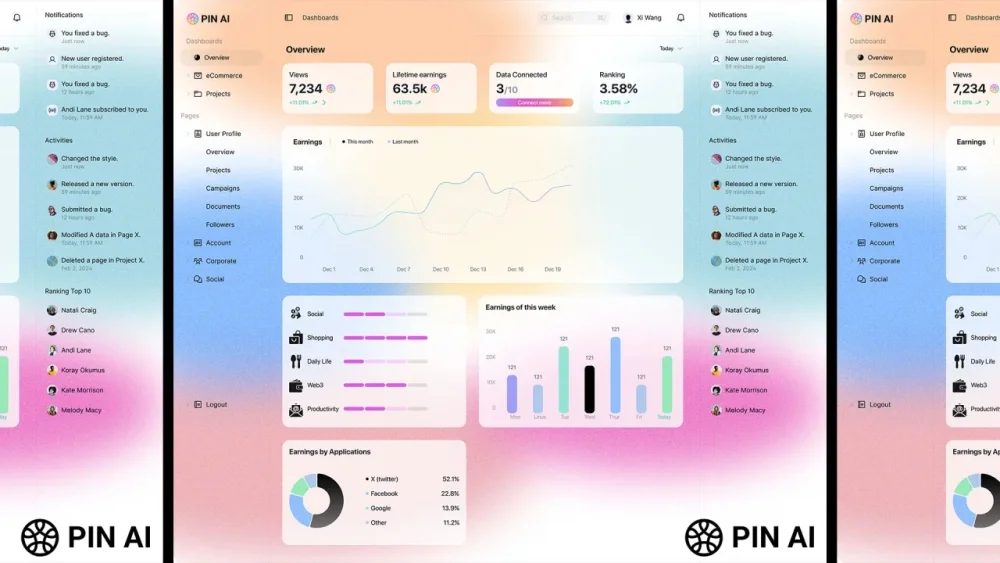
There’s a focus on protecting our personal data now, perhaps more so than ever before, be it from foreign powers, Big Tech, or Elon Musk’s DOGE. Consumers are wary about where their data is going, what it’s being used for, and how, or if, they can put up safeguards, especially while using tech tools like search engines or AI assistants. With several AI tools and assistants hitting the market over the past couple of years—Microsoft’s Copilot and Meta’s Llama, among many others—much of our data, queries, and summaries are being fed to large tech companies, used to train their artificial intelligence models. While some users may not mind, it could turn others off, which is why one company is trying a different approach. PIN AI, a Bay Area-based AI startup, is rolling out what it calls the “personal AI network” with the launch of a mobile application this week, complete with a native large language model (LLM) that is designed to become a “personalized intelligence network,” or “PIN.” In a nutshell, PIN AI’s app and LLM “live” on a user’s smartphone, accessing the personal data via other apps and platforms that only the user authorizes, and then provide specific and tailored insights or answers based on that information. It’s similar, in some ways, to Apple Intelligence. That’s important, say PIN AI’s founders, because AI tools are the next great online frontier, even if they’re not ubiquitous quite yet. “These AI products are becoming the universal interface to access online services,” says Davide Crapis, one of the company’s cofounders, along with Bill Sun and Ben Wu. “It’s becoming the new way that we access the internet.” Getting personal Personalization is going to be incredibly important going forward—not only to protect users’ data and information but also to provide relevant information. For example, suppose a user allows PIN AI to connect to their Gmail account, social media accounts, banking information and payment apps, text messages, and internet browsing data. Tapping into all of that information, PIN AI will be able to deliver personalized, in-depth answers or responses, unlike any or most other AI tools on the market. [Image: PIN AI] In other words, while other AI models utilize all of the data they’ve scraped and ingested to train themselves to generate responses for users, PIN AI only uses the personal data and information a user has given it access to. Crapis, Sun, and Wu, collectively, have been working on AI technology for many years, and say that it may sound complicated but that users will quickly realize it’s a fairly simple product. “There’s an LLM packed with the app,” says Sun, “so you get a personalized AI.” As an example of how “personal” the AI tool can get, Sun tells Fast Company that a hypothetical user could simply bark a voice command at the app such as, “order my mom a birthday present.” From there, PIN AI would sift through past communications and other information, discerning what the user’s mom might want, where to get it, and at the best price. It can also place the order and have it delivered—with no additional effort from the user, other than the initial voice command. It’s all about sovereignty Another example: If a user were to ask PIN AI a more complicated question, such as, “can I afford to buy a new car,” the tool could likewise analyze the user’s bank accounts, figure out what types of vehicles the user may want or need (incorporating family needs, etc.), their favorite color or other potential specifications, financing needs, and deliver up an answer of either yes or no, along with a list of potential buying options from nearby dealerships. While it’s all pretty powerful, users may rightfully be wary about giving an app and AI tool so much access to their information. That’s another thing the PIN AI team says they’re focusing on: encryption and security. The tool is built on blockchain protocols and users’ data and information are encrypted, so if a user loses their phone with PIN AI installed, a bad actor still shouldn’t be able to access it. Resonating with early users After rolling out a trial app, Sun says that it has attracted around 2 million users, almost exclusively through word of mouth, as well as an active community on platforms like Discord. In terms of monetization, the company plans to drive revenue by charging the various agents from different apps and platforms that will interact on the model a per-use fee—so users themselves don’t pay anything. The monetization takes place within an agentic AI marketplace, and those agents will fork over a slice of applicable commission fees. And it’s also gotten the attention of investors. The company is backed by a16z Crypto (CSX), Hack VC, and Sequoia Capital U.S. Scout. So far, PIN AI has raised more than $10 million, according to data from PitchBook. With the app launch, the team hopes to attract more users, refine the product, and see how PIN AI ultimately slots in on the market among other AI tools. “It’s about the sovereignty of the user and their data,” says Crapis. “With PIN AI, you have full control.” View the full article
-
A Texas county on Wednesday approved holding an election sought by SpaceX that would let residents living around billionaire Elon Musk’s company decide whether to formally create a new city called Starbase. The election was set for May 3 and votes can only be cast by residents living near the launch site that is currently part of an unincorporated area of Cameron County, located along the U.S.-Mexico border. In December, more than 70 area residents signed a petition requesting an election to make Starbase its own municipality. Most of the residents are company employees and the community includes more than 100 children, according to copies of the petition obtained by The Associated Press. Cameron County Judge Eddie Treviño said the county reviewed the petition and found it met the state’s requirements for the incorporation process to move forward. “If the election passes, this will be the newest town in Cameron County since Los Indios in 1995,” Treviño said in a statement. “We look forward to seeing the outcome of this election.” SpaceX responded to a request for comment by referring to the company’s earlier statement in December. Kathryn Lueders, Starbase’s general manager, previously said that the incorporation would streamline certain processes to build amenities in the area. Some local environmental advocates have expressed worry about what the effects would mean for development. SpaceX’s launch site broke ground in Texas in 2014. Only 10 of the roughly 250 lots of land within the proposed new city limits do not belong to the company. More than 3,400 full-time SpaceX employees and contractors work at the Starbase site, according to a local impact study issued by the county last year. Musk has long been planting business roots in Texas and has spread them far and wide across the Lone Star State. The billionaire moved to Texas in 2020 and relocated to or expanded a number of his companies in the state, citing the state’s business-friendly climate. Tesla’s massive 10-million-square-foot (930,000-square-meter) Gigafactory, where the company makes its Cybertrucks, opened near Austin in 2022 and will also serve as the company headquarters. —Valerie Gonzalez, Associated Press View the full article

-
In a special episode, student Arpan Grewal asks questions future CPAs and business leaders need answered. Accounting ARC With Liz Mason, Byron Patrick, and Donny Shimamoto Introducing Special Guest Arpan Grewal Center for Accounting Transformation Go PRO for members-only access to more Center for Accounting Transformation. View the full article
-
In a special episode, student Arpan Grewal asks questions future CPAs and business leaders need answered. Accounting ARC With Liz Mason, Byron Patrick, and Donny Shimamoto Introducing Special Guest Arpan Grewal Center for Accounting Transformation Go PRO for members-only access to more Center for Accounting Transformation. View the full article
-
Sprint interval training, or SIT, is super trendy right now. It’s a great way to improve your running speed and to get in a hard interval workout, and I’ll explain exactly how. But I also need to clear up this silly question about whether it’s “better than” HIIT (or high-intensity interval training). SIT is, in fact, a type of HIIT. What is SIT? Sprint interval training refers to exercise routines where you run as hard as you possibly can (or nearly as hard) for a short time, typically 30 seconds. A SIT workout usually looks something like this: Warm up with walking and/or easy jogging for 10 to 15 minutes. Run 30 seconds as hard as you can. Recover (walk or rest) for three to five minutes. Repeat the above steps anywhere from four to 10 times. Cool down with more walking or easy jogging—for, say, five to 10 minutes. The benefits of SIT include improved running economy (basically, your body gets more efficient at the running motion) and improved time in running races. SIT has not been found to increase your VO2max any better than steady-state training, or any better than HIIT. For example, this study found no significant difference in VO2max between SIT training and a control group that did steady state training (both improved), but it did find that the SIT group was better at sprinting. Not surprising, when you think about it. Here is some data from a recent SIT workout I did. I wanted to get in five miles for the day, so I warmed up for 15 minutes and cooled down for about the same, and in between I did 10 intervals of 30 seconds each, with three minutes’ recovery. (I thought about doing four minutes, but I only had about an hour to get that workout in, so I opted to be a bit more efficient.) The sprints were hard, but the recovery gave me plenty of time to feel ready to go again. Credit: Beth Skwarecki What is HIIT? As I’ve written (or, to be honest, ranted) before, HIIT started as a catch-all term for hard interval workouts, and has mutated into a marketing buzzword that signifies the general idea of hard work in a short timeframe. HIIT stands for high intensity interval training, and it includes all kinds of different interval schemes. Here are some of the “classic” HIIT workouts from the scientific literature: Wingate sprints: 30 seconds all-out, followed by 4ish minutes of rest, repeated several times. (These were originally done on a research-grade exercise bike.) Tabatas: Four minutes of 20-second all out sprints, with just 10 seconds between each one. These, too, were originally done on a bike, and you do the whole block once, not multiple times. 60/60: One minute hard, one minute easy, then repeat Scientific articles that review the results of HIIT tend to have trouble coming up with a definition, since the term has been used so many different ways. This study has a table with examples, including the ones above, plus basketball players’ shuttle runs and swimmers’ 50-meter intervals. This one defined HIIT as anything where the work intervals were four minutes’ duration or less. Did you notice something? Those Wingate intervals? Yep, that’s the same type of workout people are now calling SIT. SIT is a type of HIIT. Is SIT or HIIT better for fat loss? Neither is better. SIT is a type of HIIT, anyway. If you want to change your body composition, the exact type of exercise doesn’t matter much, as long as you are doing some kind of strength training to preserve or build muscle. The difference between your calorie intake and your calorie burn is what determines how much fat you lose. It doesn’t really matter how you burn your calories. The term “SIT” is being misused on social mediaSIT should be a little easier to understand than HIIT, since it’s one specific family of workouts. But as I browsed TikTok and other social media, I found people using SIT to refer to non-SIT protocols like 20 seconds work, 10 seconds rest, for five rounds. That’s not SIT at all. I also found a “SIT” workout that involved 20 seconds of kettlebell swings, 20 seconds of thrusters, and 30 seconds of burpees. That’s not even sprinting! Take all these social media workouts with a grain of salt, especially when they make big promises about weight loss or muscle gain. SIT isn’t some magic secret to getting a fitness influencer body; it’s just a nice, intense workout that benefits your running. View the full article
-
In 2023, creator and social agency Whalar Group announced an ambitious plan to create physical campuses for content creators to learn, make, and collaborate with their peers. Now the company is opening the doors to its first campus in Venice, Calif. this month with an additional location in Brooklyn launching this spring and a London location slated for 2026. Part production studio, part co-working space, part university, The Lighthouse is membership-based community designed to help creators and their teams level-up both their content and the businesses they’re building around it. “If you look at [20th century German art school] Bauhaus, Andy Warhol’s Factory, Silicon Valley, all those moments where you had a gathering space for smart, curious, multi-hyphenate[s] created a generational shift for creative industries,” says Jon Goss, president of The Lighthouse. “That’s our goal: to be a place where people can find connection, find opportunities to collaborate, learn from experts and thought leaders, and learn from each other. And I think that enables the creator economy to go into its next chapter.” The Lighthouse’s founding cohort in Venice includes 150 creators and creative professionals who will use the facilities for filming, editing, podcasting, screening, performing, and more on top of having access to educational classes and sessions covering topics including business management, how to staff a team, production workshops, wellbeing and personal growth, and more. Memberships will typically run for up to four years and those who have contributed to The Lighthouse by way of education, community building, and programming will have the option to remain members who can mentor the next generation of creators and creatives. [Photo: Yoshihiro Makino] For as long as the creator economy has been around (since 1997, by some suggestions) and for all the money pouring into it (estimates place its total addressable market reaching half-a-trillion by 2027), it’s still somewhat of the Wild West. Various platforms and agencies have sprouted up in droves to help creators monetize their content, sell products, and score brand deals. But what’s often missing is a cohesive path toward professionalizing a creator business, particularly for the middle class of the creator economy. According to Influencer Marketing Hub, more than 50 million people worldwide consider themselves to be creators—but only 2 million would say they’re “professionals,” i.e. earning enough for it to be their full-time career. Granted, some creators will always keep what they do as a side hustle. But for those looking for a more solid foundation to scale up their businesses—or even establish one in the first place—Goss sees The Lighthouse as a viable resource. “The creator economy is being taken more seriously every year,” Goss says. “It just feels like centers of gravities going towards creators and the creator economy. I think more and more brands and media platforms and entertainment organizations are recognizing that every single day. It’s just inevitable.” [Photo: Yoshihiro Makino] “So our mission is to be an ecosystem for all those constituents,” he adds, “having those people all in the room together, actually having those conversations in real-time versus them happening in their echo chambers.” Part of bringing the gap among those constituents are The Lighthouse’s founding brand partners Shopify, iHeartMedia, and Samsung providing programming and activations throughout the campus. Shopify will have a pop-up for creator brands to showcase their products. iHeartMedia will host a monthly live podcast onsite featuring emerging talent. And Samsung is outfitting the space with TVs and products. Whalar Group also struck a broader partnership with Tribeca Festival to have a vertical within Tribeca dedicated to the intersection of Hollywood and creators. That vertical will also translate into a year-round talk series at the Lighthouse Venice and Brooklyn. The Lighthouse’s cohorts are selected by a council of their peers. And Goss says they took a similar approach of careful curation with which brands and organizations they chose to partner with. “They’re directly relevant to creators, to the creator economy, to the ability for creators to up-level and have a connection to them,” Goss says. “Brands are still a massive part of creators both in terms of the content they can create and the ability to generate revenue.” To be sure, The Lighthouse isn’t necessarily a novel concept. In 2012, YouTube launched Spaces which eventually shifted to a virtual and pop-up event model after the the company shuttered its physical locations post-pandemic. Popular content creator Casey Neistat launched his own attempt with Studio 368 in 2018 but a post on its Instagram last year stated it was “time to pack it all up.” [Photo: Yoshihiro Makino] Goss says they’ve studied predecessors to The Lighthouse and he sees the difference being that what they’ve built is a design-driven space for creators to do more than produce content. “We’ve taken elements of hospitality and membership clubs and shared workspaces where cultural programming happens on a regular basis to keep driving community and conversations,” Goss says. He also sees The Lighthouse succeeding by remaining as dynamic as the creator economy itself. “This has to be a place of constant evolution,” Goss says. “When we talk about what will this place become, what will it mean for creators, not knowing the endless possibilities that can come is the exciting bit. We’ve doubled down on providing this environment for all sorts of possibilities to happen.” View the full article

-
For years, I thought saying yes was the key to success. Yes, to my parents’ dream of me becoming a doctor. Yes, to the long hours in medical school. Yes, to a career that others admired, even as I felt a growing sense of unease. I loved medicine’s ability to make a difference in people’s lives, but deep down, I had questions: Did I truly want to be a doctor, or was I fulfilling the role others expected of me? Every yes felt like another step away from myself. One pivotal moment came while I was working in a hospital in the Cook Islands. I treated patients with heart failure so advanced that basic mobility was a struggle. What struck me most wasn’t the lack of resources; it was the sense of familiarity. Even in the U.K.’s world-class healthcare system, I had seen patients left behind—ignored, dismissed, or underserved. These moments clarified what I valued most: fairness, justice, and confronting systemic inequality. When I returned to work as a junior doctor in Edinburgh, it became clear that the questions driving me weren’t about treating symptoms—they were about the systems perpetuating inequity. I eventually said no to medicine, not because I didn’t care, but because I cared deeply. Saying no isn’t rejection—it’s redirection. It’s about aligning your time and energy with your values and goals. But in practice, saying no can be daunting—especially in professional environments where compliance often feels safer than resistance. I have learned, however, that the ability to say no is a skill. Turn down projects that stretch you too thin Leaders and professionals often overcommit, risking burnout and lower-quality work. A former student of mine, a project manager, learned this the hard way. After saying yes to an unrealistic timeline, the team missed deadlines, and relationships suffered. The next time a client proposed an impossible deadline, she said, “To meet your goals, we’d need more time to maintain quality. Can we extend the timeline or adjust deliverables?” The result? The client agreed, and the team delivered excellent work, strengthening trust. Set boundaries without alienating others A marketing executive I know faced constant interruptions from colleagues seeking her input. Instead of shutting them down, she framed her no around her priorities: “I want to give you my full attention, but I’m focused on completing this project right now. Can we schedule a time to discuss this later?” By acknowledging their needs while protecting her time, she maintained strong relationships without compromising her priorities. Say ‘no’ to preserve long-term vision Patagonia’s decision to say no to the fast-fashion model is a famous example. By focusing on sustainability and durability, the company aligned its business practices with its values. This defiant stance reshaped the outdoor apparel industry and built a loyal customer base. One reason saying no feels so difficult is the fear of resistance or misunderstanding. People may question your decision or even push back. That’s why preparation matters. Before entering these conversations, get clear on your reasons and rehearse how you’ll articulate them. If you’re declining a promotion, for example, you could say, “I’m incredibly grateful for this opportunity, but I’ve reflected on my priorities and realized this role doesn’t align with the path I see for myself. I’d love to contribute in ways that better match my strengths and long-term goals.” Clarity and confidence can help diffuse resistance and ensure your no is respected. Saying no isn’t about being contrarian or uncooperative. It’s about alignment—with yourself, your values, and the future you want to create. Even at the highest levels of leadership, the importance of focus and clarity is critical. In a recent strategy meeting, Google CEO Sundar Pichai emphasized the company’s biggest priority for 2025: simplifying work and scaling key initiatives like their AI-powered Gemini app. He urged employees to “internalize the urgency of this moment” and to prioritize focus by saying no to distractions. This kind of intentional decision-making isn’t just about efficiency—it’s about achieving excellence by staying aligned with core goals. When saying no: Reframe no as alignment, not rejection. A well-chosen no isn’t about shutting down an opportunity—it’s about making space for the right ones. Be transparent and tie your no to shared goals or values. When people understand your reasoning, they are more likely to respect your decision. Remember that no isn’t the end—it’s the beginning of a better path. The discomfort of saying no is temporary, but its impact can last for years. Looking back, I see that saying no to medicine wasn’t about closing a door—it was about opening the right one. That decision made room for a career aligned with my values, one where I could research, teach, and advocate for systemic change. No isn’t the end. It’s the beginning of a path to greater alignment, purpose, and impact. Whether it’s a career decision, a project at work, or a personal boundary, learning to say no with clarity and intention is one of the most productive skills you can develop. And each time you do, you’re not just making a decision—you’re affirming who you are and what you stand for. View the full article

-
Here is a recap of what happened in the search forums today, through the eyes of the Search Engine Roundtable and other search forums on the web. Reddit blamed Google's search algorithms for not meeting its expected user growth - yea, no joke...View the full article
-
Third-party tools have always been valuable in B2B PPC, but in 2025, they’re essential. With third-party cookies fading, cross-channel attribution still a mess, and competitors constantly pivoting, advertisers who rely only on platform-native tools are leaving massive optimization opportunities on the table. To stay ahead, you need the right external tools. This article breaks down five I recommend testing or doubling down on ASAP to level up your PPC strategy, including: My favorite CDP. My ace in the hole for non-browser tracking. My preferred competitive research tool. My choice for a multi-channel attribution tool. Google Ads Editor (including some new functionality). Tool 1: Segment Segment is a leading customer data platform (CDP) that helps marketers consolidate data sources and break down silos – an ability that’s more critical than ever in today’s evolving measurement landscape. We integrate Segment with GTM for our clients to reduce reliance on third-party cookies – tracking mechanisms controlled by browsers that are increasingly unstable. Segment centralizes data within servers, giving you greater control and ownership of your analytics. Other CDPs, such as Tealium and Salesforce Data Cloud, offer similar functionality, but Segment is our choice because it offers a wide range (400+) of integrations. We’ve also found that it’s relatively easy for technical teams to implement, scales well, and has very handy features that help with data validation. Keep in mind, though, that Segment is a significant investment. CDPs, in general, are not cheap. It won’t solve all of your data issues. Its value relies on having: A well-developed data infrastructure. Multiple destinations (e.g., a mobile attribution tool, a user analytics tool, and assorted martech sources) for event data to consolidate. If you’re fairly new to the concept of CDPs, make sure (and this is true of any martech investment) you can identify the exact challenges you need help with. Do your due diligence in the consideration stage to ensure your CDP of choice has a plan to help you overcome them. Dig deeper: Top 6 B2B paid media platforms: Where and how to advertise effectively Tool 2: Stape Server-side tracking is crucial to a successful performance marketing program, especially in 2025. I recommend Stape, which bills itself as “an all-in-one server-side tracking solution.” Stape carries a slightly lower price tag than its competitors (including taggers.io) and lets customers choose from client- or server-side tracking. While both methods give clients control over their data, client-side tracking depends on cookies and is vulnerable to ad blockers and user settings. It could take a significant hit once Google rolls out the Chrome opt-out prompt. Tool 3: Competitive research tools This is a bit of a cheat since it’s more of a category than a tool. On the third-party side, old standout Semrush is our tool of choice for both PPC and SEO campaigns. We also rely on: LinkedIn and Meta ad libraries: Great resources for seeing your competitors’ creative. Google’s Ad Transparency Center: Launched in spring 2023, it provides a ton of information on competitors’ ads on Search, YouTube, and Display – even breaking things down by geo, format, and timing for the ads’ run. Combine these tools with Semrush’s insights – estimated competitor budgets, target keywords, landing pages, search volume, and CPCs – and you’ll have everything you need to map out your competitive advertising landscape. Dig deeper: How to benchmark PPC competitors: The definitive guide Get the newsletter search marketers rely on. Business email address Sign me up! Processing... See terms. Tool 4: Northbeam Multi-channel marketing attribution tools abound these days, whether they’re third-party martech tools or available in-platform (e.g., Meta’s Robyn). Northbeam is known more for its work helping B2C/ecommerce brands understand attribution than it is for B2B brands, but we like it at my agency for a few reasons: Its analysis covers the entire marketing mix, which helps brands understand cross-platform performance and interplay. It features custom attribution models, which is critical because attribution models are neither set-and-forget nor broadly applicable across brands. Some testing and tweaking is required, and attribution models should always align with business goals. Like other third-party attribution tools, Northbeam doesn’t rely on in-platform data, which means it doesn’t have any inherent biases that may affect holistic analysis. Tool 5: Google Ads Editor Google Ads Editor has been around for years. I suspect someone on your team is already well-versed in it. But there are a few functionalities that really make this a must-use tool, so make sure you or the practitioners on your team are using these to the fullest: Bulk edits: Easily make large-scale changes across multiple campaigns and ads. Offline access: Work offline and upload changes later – so you can stay productive even without wifi. Enhanced custom rules: Over the last few versions of Ads Editor, Google has introduced some updates to custom rules that can help alert advertisers to less-than-ideal settings in their campaigns (and they can also be ignored or turned off if advertisers prefer). Make sure you’re keeping up on the range of rules and understand the benefits of applying each. They could save you some unforced campaign errors. Optimize, track and compete with these five PPC tools This is by no means a comprehensive list. I haven’t even touched on GPT or LLMs or the functionality available through HubSpot, which we use to help our clients build nurturing strategies integrated with CRM data as leads and customers come into the system. But the list does represent some relatively under-used options that we’ve seen make a big impact in our clients’ campaigns over the last year-plus. One thing’s for sure: as new challenges arise, there’ll be a proliferation of martech options to help you tackle them. As you build momentum in 2025, incorporate these recommendations where they fit – but don’t spread yourself too thin unless you have a clear use case for each tool. Dig deeper: 11 free tools for PPC campaign management View the full article
-
Reddit reported its earnings last night, and while it underperformed in terms of user growth (thanks to Google), the earnings report seemed to highlight how much OpenAI is paying Reddit to license its content. As per Adweek, between Google and OpenAI, its AI licensing deal brings in about 10% of its revenue. 10% of its revenue is about $130 million. We know Google paid about $60 million to Reddit for its content deal, and the only other known company to have a deal with Reddit for its content is OpenAI. That leaves OpenAI paying $70 million to Reddit for its licensing deal. More details. I spotted this via Glenn Gabe who posted about this on X and wrote: Rough math, but interesting :) Reddit told AdWeek that its AI licensing deals make up about 10% of its revenue. Annual revenue for Reddit in 2024 was $1.3B, so 10% is $130M. Google pays Reddit $60M so that means OpenAI is paying Reddit about $70M per year. That number has never been revealed. Again, interesting. I am not sure if we knew how much OpenAI paid for the content licensing deal for Reddit, but now we seem to. Why we care. I am not financial expert, and I rarely cover financial news but Reddit seems like an interesting stock. It’s stock price dropped 15% in after hours trading after it did not meet user growth expectations, which Reddit’s CEO noted may have been due to Google Search’s algorithm changes. Also, Reddit seems to have two content licensing deals that make up about 10% of its revenues. Either way, was already facing backlash among SEOs because Google appears to be favoring the platform in the Discussions and forums SERP feature. Reddit is even outranking original sources of content in some instances. View the full article
-
Dutch Bros Inc. shares surged more than 27% in premarket trading Thursday after the coffee chain posted better-than-expected fourth-quarter results and announced plans to expand mobile ordering and food offerings. Revenue rose 34.9% to $342.8 million, surpassing Wall Street estimates. Same-store sales grew 6.9%, and adjusted earnings per share reached 7 cents, both exceeding expectations. The company forecasts 2024 sales between $1.555 billion and $1.575 billion, exceeding analyst projections. “Our efforts to develop our foundational transaction drivers—innovation, paid media, and our Dutch Rewards loyalty program—are working,” CEO Christine Barone said in a statement. “We believe these efforts are contributing to current momentum and that there is considerable runway for further growth.” Dutch Bros stock (NYSE: BROS) has risen more than 143% in the last 12 months. Expansion plans and growth strategy The fast-growing Starbucks rival has made significant strides in its expansion. Dutch Bros recently opened its 1,000th store and added 151 locations in 2024 alone, which is on the lower end of projections it had made early last year. With plans to now open at least 160 more shops this year, the company continues its aggressive growth strategy while increasing its advertising efforts and expanding its rewards program. Barone also highlighted future plans for mobile ordering and food offerings. “We see a clear path forward, with multi-year transaction-driving initiatives that layer on top of this foundation, with opportunity to unlock throughput and ramp mobile order in 2025,” she said. “In 2026 and beyond, we are excited about opportunities with expanding our food offerings.” Preserving culture amid growth As Dutch Bros continues to expand, the company said it remains committed to preserving its culture of friendly service, courtesy of the “broistas” (Dutch Bros’s term for baristas) who have been key to its success. “As we expand [broistas’] roles, we must consider how to do so in ways that continue to foster a fun and energetic work experience that assures we continue to attract and retain the very best people,” Barone explained. View the full article

-
Foreclosure filings increased 7% in January from December, which could be a housing market starting to experience trouble, or a post-holiday return to normal. View the full article

-
We may earn a commission from links on this page. Deal pricing and availability subject to change after time of publication. Security cameras with floodlights can be hit or miss—sometimes the lights aren’t bright enough; sometimes the camera quality is lacking; and other times, the motion detection is too sensitive. But the Ring Floodlight Cam Wired Pro (Certified Refurbished), now going for $119.99 on Woot (for seven days or until it sells out), seems to check all the right boxes—assuming you’re cool with a refurbished unit. Ring Floodlight Cam Wired Pro (Certified Refurbished) $119.99 at Woot $249.99 Save $130.00 Get Deal Get Deal $119.99 at Woot $249.99 Save $130.00 It comes with a one-year limited warranty, the same as a new model, which is reassuring. And if you’re a Prime member, you get free standard shipping (otherwise, it’s $6), though it does not ship to Alaska, Hawaii, P.O. boxes, or APO addresses. Available in black or white, this floodlight camera packs some serious lighting power, with two adjustable LED lamps throwing out 2,000 lumens each (enough to illuminate a backyard or driveway). Additionally, its 2K HDR camera offers a 140-degree horizontal and 80-degree vertical field of view, meaning it can cover a wide area. You'll also find a 110dB siren, a built-in speaker and microphone for two-way talk, and six infrared LEDs for black-and-white night vision. The camera switches to color night vision (when the floodlights are on), which is nice, but don’t expect the colors to be as vibrant as its daytime footage, notes this PCMag review. It’s got 3D motion detection, which means you can set motion zones (up to 30 feet) and only get alerts when movement crosses a set threshold. It also powers Bird’s Eye View, a feature that tracks visitor movement with an aerial map view. Pretty cool—if you’re willing to pay for a Ring Home subscription (without a plan, you’re limited to live viewing). The Basic Plan ($4.99/month) gives you 180 days of storage, person/package alerts, and video previews. The Premium Plan ($19.99/month) adds 24/7 recording, smart video search, and one-tap emergency response. If you want virtual security guards or professional monitoring, that’ll cost you extra. Setting up the Ring Floodlight Cam Wired Pro isn’t too complicated, but it does require working with high-voltage wiring (100-240V). If you’re comfortable with that, the Ring app makes installation straightforward. The app also gives you control over motion settings, alerts, light brightness, color night vision, siren, and more. It runs on dual-band wifi (2.4GHz and 5.0GHz) and integrates well with Alexa and IFTTT, but no HomeKit or Google Assistant support. If you're considering alternatives, you might want to check out the $129.99 Arlo Pro 4 Spotlight Camera. View the full article
-
US president’s son backs Enhanced Games for athletes using performance drugsView the full article
-
The fusion of art and science in interior design has never been more relevant than it is today. As people grow increasingly aware of the impact that well-designed spaces can have on their lives, demand for professional interior designers has surged. This has opened up many opportunities for those skilled in creating functional yet visually appealing environments. Read on for a guide about how to start an interior design business. Why Launch an Interior Design Business? Starting an interior design business can be a dream come true for those who find joy in transforming ordinary spaces into extraordinary experiences. Such a venture not only allows for the expression of creative freedom but also offers a chance to improve the quality of life for clients. Recognition of the value of professional interior design in modern homes and offices is increasing, making this field a lucrative option for passionate designers. Foundations of Interior Designing More than just an eye for beauty is required for success in interior design; a blend of creativity and technical acumen is also essential. Mastery of design principles, a deep understanding of color theory, and technical expertise in space planning all contribute to a designer’s skill set. A unique combination of these skills enables designers to create aesthetically pleasing and functionally sound spaces. Necessary Education and Certifications Formal education serves as a cornerstone for a successful career in interior design. Degrees in interior design or related fields provide foundational knowledge and technical skills. Certifications from recognized institutions can further bolster credibility. Continued education through workshops and seminars is essential for keeping up with the latest design trends and technologies. Interior Designer Portfolio A robust portfolio serves as a visual resume, showcasing a designer’s skills, style, and versatility. It plays a pivotal role in attracting clients and establishing credibility in the market. High-quality photographs of completed projects, client testimonials, and detailed descriptions of design concepts can make a portfolio stand out. A well-curated portfolio can be the key to building a successful interior design business. Key Steps in Starting an Interior Design Business Embarking on the path to start an interior design business involves more than just a keen eye for style. Several key steps can guide aspiring entrepreneurs through how to start a business and the complexities of the industry, from understanding market trends to legal requirements and effective marketing strategies. Steps to Start an Interior Design BusinessWhat is it?Why is it important?Tips for Success Understand the Interior Design MarketRecognize trends and understand different client needs, including residential, corporate, and specialized areas like healthcare facilities.Customization of services and positioning as a versatile player in the market depend on this understanding.Conduct market research, client interviews, and stay updated with industry publications. Consider Business Structure and Legal RequirementsChoose between business structures like sole proprietorships, partnerships, and corporations. Understand contracts and legal issues specific to interior design.Affects tax obligations, personal liability, and the ability to raise capital.Consult with legal professionals specialized in the design industry. Craft a Business PlanCreate a comprehensive plan including an executive summary, market analysis, marketing and sales strategies, services offered, financial projections, and operational plans.Provides a roadmap for growth, helps in securing funding, and sets strategic goals.Make sure to include all essential elements and keep it updated as your business evolves. Build Your BrandDevelop a strong brand identity, including a memorable logo and unique selling propositions.Sets you apart in a competitive market and attracts a loyal client base.Maintain consistent branding across all platforms and use customer testimonials effectively. Price Your ServicesUnderstand market rates and offer a variety of pricing options, such as flat fees or hourly rates.Helps in setting competitive yet profitable prices and caters to a broader range of clients.Be transparent in pricing and conduct periodic reviews to ensure your rates remain competitive. Market Your FirmUtilize multiple marketing channels, including social media, partnerships with real estate businesses, and client referral programs.Increases visibility and establishes your brand as a thought leader in the industry.Regularly update social media with high-quality images and offer incentives for client referrals. Form Collaborations and PartnershipsCollaborate with architects, real estate developers, home and office furnishing businesses, art galleries, and photographers.Offers increased exposure, shared resources, and diversified service offerings.Choose partners that complement your services and can offer mutual benefits. Stay Updated with Design TrendsEngage in continuous learning through design expos, workshops, and industry publications.Keeps you relevant in a rapidly evolving industry and prevents outdated designs.Subscribe to leading interior design journals and network with other professionals. Expand into Niche AreasSpecialize in areas like sustainable design, ergonomic office spaces, or thematic residential interiors.Sets you apart from competitors and allows you to command higher fees.Research growing niches and consider offering services that align with emerging trends. Understand the Interior Design Market Recognizing trends and understanding different client needs are crucial for success in the interior design industry. The scope of projects can vary widely, encompassing residential homes, corporate offices, commercial spaces, and even specialized areas like healthcare facilities or educational institutions. Each of these sectors has unique design requirements and challenges. A deep understanding of these varied needs allows for the customization of services and positions the business as a versatile and adaptable player in the market. Market research, client interviews, and staying abreast of industry publications can further refine this understanding. Consider Business Structure and Legal Requirements Choosing the right business structure is a decision that can have long-term implications, affecting everything from tax obligations to personal liability and the ability to raise capital. Common business structures include sole proprietorships, partnerships, and corporations, each with its own set of advantages and disadvantages. Beyond structure, understanding contracts is vital, as is being aware of potential legal issues specific to interior design, such as intellectual property rights for custom designs or liability issues related to construction and renovation. Consulting with legal professionals specialized in the design industry can provide valuable insights and safeguard the business against potential pitfalls. Craft a Business Plan for Your Interior Design Venture A well-organized business plan acts as the foundation for your interior design business, leading you through different phases of development. It is essential for obtaining funding, establishing strategic objectives, and outlining a path to success. Investors and stakeholders often require a comprehensive business plan before committing any resources to your venture. No business plan is complete without the following elements: Executive Summary: This section provides a succinct overview of your business, encapsulating its mission, vision, and core objectives. It’s the first thing investors will read, so it needs to be compelling and informative. Market Analysis: Grasping the characteristics of your target market is essential. Conducting a market analysis provides valuable information about customer demographics, purchasing behaviors, and competitive positioning. This knowledge enables you to customize your services to better align with the unique needs of your target audience. Marketing and Sales Strategies: In this section, you will detail your methods for attracting new clients as well as keeping your current ones. Having effective marketing and sales strategies can determine whether your business flourishes or faces challenges. Services Offered: This section lists the types of interior design services you plan to offer, from consultation to full-scale renovation. Clearly defining your services helps in setting client expectations and pricing your offerings. Financial Projections: Financial planning is essential for any business. It provides an estimate of expected income, expenses, and profitability over a specific period. It helps in budgeting and setting financial milestones. Operational Plans: Operational efficiency is key to long-term success. These plans describe the day-to-day running of the business, including staffing, logistics, and supply chain management. It helps in identifying potential bottlenecks and in streamlining operations for better productivity. Build Your Brand in the Interior Design Industry A strong brand identity is more than just a memorable logo; it’s a comprehensive representation of your business values, style, and expertise. A well-thought-out branding strategy can set an interior designer apart in a crowded market. Unique selling propositions, such as specialization in sustainable design or a focus on ergonomic spaces, can further differentiate your business. Consistent branding across all platforms, including your website, social media, and even your business cards, contributes to a cohesive and professional image. Our website startup guide has even more tips for creating a consistent online presence. Customer testimonials, along with before-and-after project photos, can serve as effective tools for strengthening your brand and attracting a dedicated client base. Price Your Interior Design Services Determining how to price your services is a multifaceted task that requires careful consideration. Understanding market rates is essential, but so is recognizing the value of your unique skills and experience. Offering a variety of pricing options, such as flat fees for specific services or hourly rates for more open-ended projects, can cater to a broader range of clients. Package deals for multiple services or rooms can attract larger projects and offer better value to your clients. Transparency in pricing, with detailed quotes that break down costs, can build trust and help avoid misunderstandings later. Periodic reviews of your pricing strategy, especially after gaining more experience or expanding your portfolio, can ensure that your rates remain competitive and reflective of your expertise. Market Your Own Interior Design Firm Effective marketing strategies are indispensable for showcasing your designs and attracting a diverse client base. So, exactly what is marketing for a successful interior designer? A well-executed marketing plan can not only increase visibility but also establish your brand as a thought leader in the interior design industry. Utilizing multiple marketing channels, including the following, can maximize reach and impact. Social Media Showcases: Instagram and Pinterest are ideal visual platforms for showcasing your design work. By consistently posting high-quality images, you can engage your audience and draw in potential clients. Partnerships with Real Estate Businesses: Collaborating with real estate firms can provide a steady stream of projects, such as home staging for sales or design consultations for new homeowners. These partnerships can be mutually beneficial, adding value to both businesses. Home Decor Brand Collaborations: Partnering with home decor brands allows you to showcase your designs in a retail setting. This not only provides exposure but also offers clients a tangible experience of your design aesthetic. Local Workshops: Conducting workshops on interior design topics can establish you as an expert in the field. These events can also serve as networking opportunities and a way to directly engage with potential clients. Utilize Online Platforms: Some people search online marketplaces for help with small interior design projects. For example, you can check out new Fiverr design categories and see if your services may be fit to advertise on their network. Client Referral Programs: Providing incentives like discounts on future services can motivate satisfied clients to recommend your business to others. Word-of-mouth is still one of the most powerful marketing strategies, particularly in service-oriented fields. Form Collaborations and Partnerships Forming collaborations and partnerships can offer a myriad of benefits, including increased exposure, shared resources, and diversified service offerings. Strategic partnerships can also provide a competitive edge, allowing you to offer comprehensive solutions that single-service providers cannot. Consider the following partnerships as you build a successful interior design company: Architects: Collaborating with architects can result in comprehensive design solutions that cover both structural and aesthetic aspects. Such partnerships can be particularly beneficial for large-scale projects that require detailed planning and execution. Real Estate Developers: Partnering with real estate developers allows you to offer design services for new constructions right from the planning stage. This can result in cohesive and well-executed designs that add value to the property. Home and Office Furnishing Businesses: Working together with businesses that offer home and office furnishings can provide your clients with a wider range of product options. These partnerships can also result in package deals that offer both design and furnishing solutions. Art Galleries: Collaborating with art galleries can provide you with unique pieces to incorporate into your designs. This adds an exclusive touch to your projects and can be a strong selling point for potential clients. Photographers: Partnering with photographers allows you to capture high-quality images of your completed projects. These images can be invaluable for your portfolio and marketing materials, showcasing your work in the best possible light. Stay Updated with Design Trends Staying abreast of the latest design trends is not just a matter of aesthetic relevance; it’s a business imperative. In an industry that evolves rapidly, falling behind on trends can result in outdated designs and lost business opportunities. Continuous learning can take various forms, from attending design expos and workshops to subscribing to leading interior design journals. Online courses and webinars are also valuable resources for learning about new materials, technologies, and design methodologies. Networking with other professionals in the field can provide insider insights into emerging trends and consumer preferences. Expand into Niche Design Areas Diversification into niche design areas can be a strategic move for business growth. Specializing in a particular niche sets you apart from generalist competitors and allows you to command higher fees for your specialized expertise. Sustainable design, for example, is increasingly in demand as more clients seek eco-friendly living spaces. Ergonomic office spaces are another growing niche, especially as remote work becomes more prevalent and people seek to optimize their home offices for productivity and comfort. Thematic residential interiors, such as minimalist or vintage designs, can attract a specific clientele looking for more than just functional spaces. Offering services in these specialized areas can open up new revenue streams and elevate your brand as a thought leader in the industry. Essential Interior Design Software The importance of software tools in interior design cannot be overstated. These digital solutions extend a designer’s creativity, enabling more efficient creation, modification, and presentation of designs. Beyond efficiency, the following tools also elevate the level of professionalism, allowing designers to collaborate seamlessly with clients, contractors, and other stakeholders: AutoCAD: AutoCAD software is a mainstay in the design industry, renowned for its capabilities in creating both 2D and 3D designs. Its precision and comprehensive set of features make it a go-to tool for detailed planning and drafting. SketchUp: Known for its intuitive interface, SketchUp excels in 3D modeling. The software offers a plethora of features that empower designers to visualize spaces in diverse styles and layouts. Adobe Creative Suite: The Adobe suite of tools, including Photoshop and Illustrator, is invaluable for image editing and graphic design. Designers often use these programs for creating mood boards, editing photos of layouts, and other graphic-intensive tasks. Autodesk Revit: Specializing in Building Information Modeling, Revit is ideal for large-scale projects that require detailed architectural planning. It allows for real-time collaboration, making working with architects and contractors easier. 3ds Max: Primarily used for 3D modeling and rendering, 3DS Max software is perfect for creating high-quality visualizations. Its advanced rendering capabilities allow designers to create lifelike simulations of interior spaces, adding a layer of sophistication to client presentations. Initial Costs to Start a New Interior Design Business Embarking on a new interior design business requires a thorough understanding of the initial financial outlay. Costs can range from licensing fees and software subscriptions to initial marketing campaigns and small business insurance. A well-planned budget, including the following elements, can serve as a financial roadmap, helping to navigate the early stages of business development: Licensing Fees: Obtaining the necessary licenses and permits is a legal requirement with associated costs. These fees can vary depending on the jurisdiction and the services’ scope. Software Subscriptions: Investment in professional design software is essential for creating and presenting designs. The costs can range from one-time purchases to recurring monthly or annual subscriptions. Initial Marketing: Marketing your new business through digital channels or traditional methods requires a budget. This investment is crucial for brand visibility and client acquisition. Office Space and Utilities: Regardless of whether you choose a home office or a commercial location, you will incur costs for utilities, furniture, and potentially rent. These ongoing expenses must be included in your budget considerations. Equipment and Supplies: The cost of equipment and supplies can add up, from high-quality printers to drafting tables and sample materials. These are essential tools of the trade and represent a one-time investment. Is Starting an Interior Design Business Profitable? The profitability of an interior design business hinges on various factors, from demand and pricing to operational efficiency. A strong portfolio and reputation can also significantly impact profitability, leading to repeat customers and long-term contracts. Be sure to include the following aspects to boost your profitability: Demand for Design Services: The level of demand in your area directly affects your earning potential. High demand often allows for more competitive pricing. Pricing Strategies: Effective pricing strategies can make or break profitability. Understanding market rates and offering value-added services can enhance revenue streams. Operational Efficiencies: Streamlining operations, from client management to project execution, can reduce overheads and increase profitability. Efficient use of time and resources is key to a successful business. Solid Portfolio and Reputation: A strong portfolio can attract higher-paying clients, while a good reputation can lead to repeat business. Both are crucial for long-term profitability. Challenges Faced in Interior Design Businesses Running an interior design business is not without its challenges. From managing client expectations and making endless revisions to staying updated with industry trends, the hurdles are numerous. Understanding the following challenges can prepare you for the realities of business ownership: Client Management: Managing client expectations and maintaining open communication can be challenging. Dissatisfied clients can affect your reputation and, consequently, your bottom line. Revisions and Changes: Frequent revisions and last-minute changes can disrupt timelines and increase costs. Effective contract management can mitigate some of these challenges. Industry Trends: Staying informed about rapidly evolving design trends demands ongoing education and flexibility. Failing to keep up can lead to outdated designs and missed business opportunities. Competition: The interior design industry is highly competitive. Differentiating your services and building a unique brand identity is essential for standing out in a crowded market. https://youtube.com/watch?v=Vb1FwACt-yk%3Fsi%3DCiDk7Ug3b-vwXK-j FAQs: How to Start an Interior Design Business Is an interior decorating business the same as an interior design firm? No, an interior decorating business and an interior design firm are not the same. Interior decorating focuses on aesthetics, such as color schemes, furniture, and accessories. Interior design, on the other hand, encompasses a broader range of services, including spatial planning, architectural elements, and functionality. Designers often work closely with architects and contractors, whereas decorators generally do not. Are qualifications needed to be an interior design professional? Yes, qualifications are generally required to become an interior design professional. The typical interior designer job description requires at least a bachelor’s degree in interior design or a related field. Additionally, many states in the U.S. require interior designers to be licensed or certified, which often involves passing an exam. Continued education and professional development are also important for career advancement. How much do interior designers make? The earning potential for interior designers can vary widely based on factors such as location, experience, and specialization. According to the U.S. Bureau of Labor Statistics, the median annual wage for interior designers is approximately $61,590. However, designers in high-demand areas or those with specialized skills can command significantly higher fees. If you are looking to learn how to start an interior design business, understanding these factors can be crucial for your success. Is is possible to start your own interior design business from home? Yes, it is possible to start an interior design business from home, especially in the initial stages. Your business startup checklist might include setting up a home office, investing in essential software, and marketing your services online. As the business grows, you may choose to expand into a commercial space. Starting from home can be a cost-effective way to launch your interior design career. Image: Envato Elements This article, "How to Start an Interior Design Business" was first published on Small Business Trends View the full article
-
The fusion of art and science in interior design has never been more relevant than it is today. As people grow increasingly aware of the impact that well-designed spaces can have on their lives, demand for professional interior designers has surged. This has opened up many opportunities for those skilled in creating functional yet visually appealing environments. Read on for a guide about how to start an interior design business. Why Launch an Interior Design Business? Starting an interior design business can be a dream come true for those who find joy in transforming ordinary spaces into extraordinary experiences. Such a venture not only allows for the expression of creative freedom but also offers a chance to improve the quality of life for clients. Recognition of the value of professional interior design in modern homes and offices is increasing, making this field a lucrative option for passionate designers. Foundations of Interior Designing More than just an eye for beauty is required for success in interior design; a blend of creativity and technical acumen is also essential. Mastery of design principles, a deep understanding of color theory, and technical expertise in space planning all contribute to a designer’s skill set. A unique combination of these skills enables designers to create aesthetically pleasing and functionally sound spaces. Necessary Education and Certifications Formal education serves as a cornerstone for a successful career in interior design. Degrees in interior design or related fields provide foundational knowledge and technical skills. Certifications from recognized institutions can further bolster credibility. Continued education through workshops and seminars is essential for keeping up with the latest design trends and technologies. Interior Designer Portfolio A robust portfolio serves as a visual resume, showcasing a designer’s skills, style, and versatility. It plays a pivotal role in attracting clients and establishing credibility in the market. High-quality photographs of completed projects, client testimonials, and detailed descriptions of design concepts can make a portfolio stand out. A well-curated portfolio can be the key to building a successful interior design business. Key Steps in Starting an Interior Design Business Embarking on the path to start an interior design business involves more than just a keen eye for style. Several key steps can guide aspiring entrepreneurs through how to start a business and the complexities of the industry, from understanding market trends to legal requirements and effective marketing strategies. Steps to Start an Interior Design BusinessWhat is it?Why is it important?Tips for Success Understand the Interior Design MarketRecognize trends and understand different client needs, including residential, corporate, and specialized areas like healthcare facilities.Customization of services and positioning as a versatile player in the market depend on this understanding.Conduct market research, client interviews, and stay updated with industry publications. Consider Business Structure and Legal RequirementsChoose between business structures like sole proprietorships, partnerships, and corporations. Understand contracts and legal issues specific to interior design.Affects tax obligations, personal liability, and the ability to raise capital.Consult with legal professionals specialized in the design industry. Craft a Business PlanCreate a comprehensive plan including an executive summary, market analysis, marketing and sales strategies, services offered, financial projections, and operational plans.Provides a roadmap for growth, helps in securing funding, and sets strategic goals.Make sure to include all essential elements and keep it updated as your business evolves. Build Your BrandDevelop a strong brand identity, including a memorable logo and unique selling propositions.Sets you apart in a competitive market and attracts a loyal client base.Maintain consistent branding across all platforms and use customer testimonials effectively. Price Your ServicesUnderstand market rates and offer a variety of pricing options, such as flat fees or hourly rates.Helps in setting competitive yet profitable prices and caters to a broader range of clients.Be transparent in pricing and conduct periodic reviews to ensure your rates remain competitive. Market Your FirmUtilize multiple marketing channels, including social media, partnerships with real estate businesses, and client referral programs.Increases visibility and establishes your brand as a thought leader in the industry.Regularly update social media with high-quality images and offer incentives for client referrals. Form Collaborations and PartnershipsCollaborate with architects, real estate developers, home and office furnishing businesses, art galleries, and photographers.Offers increased exposure, shared resources, and diversified service offerings.Choose partners that complement your services and can offer mutual benefits. Stay Updated with Design TrendsEngage in continuous learning through design expos, workshops, and industry publications.Keeps you relevant in a rapidly evolving industry and prevents outdated designs.Subscribe to leading interior design journals and network with other professionals. Expand into Niche AreasSpecialize in areas like sustainable design, ergonomic office spaces, or thematic residential interiors.Sets you apart from competitors and allows you to command higher fees.Research growing niches and consider offering services that align with emerging trends. Understand the Interior Design Market Recognizing trends and understanding different client needs are crucial for success in the interior design industry. The scope of projects can vary widely, encompassing residential homes, corporate offices, commercial spaces, and even specialized areas like healthcare facilities or educational institutions. Each of these sectors has unique design requirements and challenges. A deep understanding of these varied needs allows for the customization of services and positions the business as a versatile and adaptable player in the market. Market research, client interviews, and staying abreast of industry publications can further refine this understanding. Consider Business Structure and Legal Requirements Choosing the right business structure is a decision that can have long-term implications, affecting everything from tax obligations to personal liability and the ability to raise capital. Common business structures include sole proprietorships, partnerships, and corporations, each with its own set of advantages and disadvantages. Beyond structure, understanding contracts is vital, as is being aware of potential legal issues specific to interior design, such as intellectual property rights for custom designs or liability issues related to construction and renovation. Consulting with legal professionals specialized in the design industry can provide valuable insights and safeguard the business against potential pitfalls. Craft a Business Plan for Your Interior Design Venture A well-organized business plan acts as the foundation for your interior design business, leading you through different phases of development. It is essential for obtaining funding, establishing strategic objectives, and outlining a path to success. Investors and stakeholders often require a comprehensive business plan before committing any resources to your venture. No business plan is complete without the following elements: Executive Summary: This section provides a succinct overview of your business, encapsulating its mission, vision, and core objectives. It’s the first thing investors will read, so it needs to be compelling and informative. Market Analysis: Grasping the characteristics of your target market is essential. Conducting a market analysis provides valuable information about customer demographics, purchasing behaviors, and competitive positioning. This knowledge enables you to customize your services to better align with the unique needs of your target audience. Marketing and Sales Strategies: In this section, you will detail your methods for attracting new clients as well as keeping your current ones. Having effective marketing and sales strategies can determine whether your business flourishes or faces challenges. Services Offered: This section lists the types of interior design services you plan to offer, from consultation to full-scale renovation. Clearly defining your services helps in setting client expectations and pricing your offerings. Financial Projections: Financial planning is essential for any business. It provides an estimate of expected income, expenses, and profitability over a specific period. It helps in budgeting and setting financial milestones. Operational Plans: Operational efficiency is key to long-term success. These plans describe the day-to-day running of the business, including staffing, logistics, and supply chain management. It helps in identifying potential bottlenecks and in streamlining operations for better productivity. Build Your Brand in the Interior Design Industry A strong brand identity is more than just a memorable logo; it’s a comprehensive representation of your business values, style, and expertise. A well-thought-out branding strategy can set an interior designer apart in a crowded market. Unique selling propositions, such as specialization in sustainable design or a focus on ergonomic spaces, can further differentiate your business. Consistent branding across all platforms, including your website, social media, and even your business cards, contributes to a cohesive and professional image. Our website startup guide has even more tips for creating a consistent online presence. Customer testimonials, along with before-and-after project photos, can serve as effective tools for strengthening your brand and attracting a dedicated client base. Price Your Interior Design Services Determining how to price your services is a multifaceted task that requires careful consideration. Understanding market rates is essential, but so is recognizing the value of your unique skills and experience. Offering a variety of pricing options, such as flat fees for specific services or hourly rates for more open-ended projects, can cater to a broader range of clients. Package deals for multiple services or rooms can attract larger projects and offer better value to your clients. Transparency in pricing, with detailed quotes that break down costs, can build trust and help avoid misunderstandings later. Periodic reviews of your pricing strategy, especially after gaining more experience or expanding your portfolio, can ensure that your rates remain competitive and reflective of your expertise. Market Your Own Interior Design Firm Effective marketing strategies are indispensable for showcasing your designs and attracting a diverse client base. So, exactly what is marketing for a successful interior designer? A well-executed marketing plan can not only increase visibility but also establish your brand as a thought leader in the interior design industry. Utilizing multiple marketing channels, including the following, can maximize reach and impact. Social Media Showcases: Instagram and Pinterest are ideal visual platforms for showcasing your design work. By consistently posting high-quality images, you can engage your audience and draw in potential clients. Partnerships with Real Estate Businesses: Collaborating with real estate firms can provide a steady stream of projects, such as home staging for sales or design consultations for new homeowners. These partnerships can be mutually beneficial, adding value to both businesses. Home Decor Brand Collaborations: Partnering with home decor brands allows you to showcase your designs in a retail setting. This not only provides exposure but also offers clients a tangible experience of your design aesthetic. Local Workshops: Conducting workshops on interior design topics can establish you as an expert in the field. These events can also serve as networking opportunities and a way to directly engage with potential clients. Utilize Online Platforms: Some people search online marketplaces for help with small interior design projects. For example, you can check out new Fiverr design categories and see if your services may be fit to advertise on their network. Client Referral Programs: Providing incentives like discounts on future services can motivate satisfied clients to recommend your business to others. Word-of-mouth is still one of the most powerful marketing strategies, particularly in service-oriented fields. Form Collaborations and Partnerships Forming collaborations and partnerships can offer a myriad of benefits, including increased exposure, shared resources, and diversified service offerings. Strategic partnerships can also provide a competitive edge, allowing you to offer comprehensive solutions that single-service providers cannot. Consider the following partnerships as you build a successful interior design company: Architects: Collaborating with architects can result in comprehensive design solutions that cover both structural and aesthetic aspects. Such partnerships can be particularly beneficial for large-scale projects that require detailed planning and execution. Real Estate Developers: Partnering with real estate developers allows you to offer design services for new constructions right from the planning stage. This can result in cohesive and well-executed designs that add value to the property. Home and Office Furnishing Businesses: Working together with businesses that offer home and office furnishings can provide your clients with a wider range of product options. These partnerships can also result in package deals that offer both design and furnishing solutions. Art Galleries: Collaborating with art galleries can provide you with unique pieces to incorporate into your designs. This adds an exclusive touch to your projects and can be a strong selling point for potential clients. Photographers: Partnering with photographers allows you to capture high-quality images of your completed projects. These images can be invaluable for your portfolio and marketing materials, showcasing your work in the best possible light. Stay Updated with Design Trends Staying abreast of the latest design trends is not just a matter of aesthetic relevance; it’s a business imperative. In an industry that evolves rapidly, falling behind on trends can result in outdated designs and lost business opportunities. Continuous learning can take various forms, from attending design expos and workshops to subscribing to leading interior design journals. Online courses and webinars are also valuable resources for learning about new materials, technologies, and design methodologies. Networking with other professionals in the field can provide insider insights into emerging trends and consumer preferences. Expand into Niche Design Areas Diversification into niche design areas can be a strategic move for business growth. Specializing in a particular niche sets you apart from generalist competitors and allows you to command higher fees for your specialized expertise. Sustainable design, for example, is increasingly in demand as more clients seek eco-friendly living spaces. Ergonomic office spaces are another growing niche, especially as remote work becomes more prevalent and people seek to optimize their home offices for productivity and comfort. Thematic residential interiors, such as minimalist or vintage designs, can attract a specific clientele looking for more than just functional spaces. Offering services in these specialized areas can open up new revenue streams and elevate your brand as a thought leader in the industry. Essential Interior Design Software The importance of software tools in interior design cannot be overstated. These digital solutions extend a designer’s creativity, enabling more efficient creation, modification, and presentation of designs. Beyond efficiency, the following tools also elevate the level of professionalism, allowing designers to collaborate seamlessly with clients, contractors, and other stakeholders: AutoCAD: AutoCAD software is a mainstay in the design industry, renowned for its capabilities in creating both 2D and 3D designs. Its precision and comprehensive set of features make it a go-to tool for detailed planning and drafting. SketchUp: Known for its intuitive interface, SketchUp excels in 3D modeling. The software offers a plethora of features that empower designers to visualize spaces in diverse styles and layouts. Adobe Creative Suite: The Adobe suite of tools, including Photoshop and Illustrator, is invaluable for image editing and graphic design. Designers often use these programs for creating mood boards, editing photos of layouts, and other graphic-intensive tasks. Autodesk Revit: Specializing in Building Information Modeling, Revit is ideal for large-scale projects that require detailed architectural planning. It allows for real-time collaboration, making working with architects and contractors easier. 3ds Max: Primarily used for 3D modeling and rendering, 3DS Max software is perfect for creating high-quality visualizations. Its advanced rendering capabilities allow designers to create lifelike simulations of interior spaces, adding a layer of sophistication to client presentations. Initial Costs to Start a New Interior Design Business Embarking on a new interior design business requires a thorough understanding of the initial financial outlay. Costs can range from licensing fees and software subscriptions to initial marketing campaigns and small business insurance. A well-planned budget, including the following elements, can serve as a financial roadmap, helping to navigate the early stages of business development: Licensing Fees: Obtaining the necessary licenses and permits is a legal requirement with associated costs. These fees can vary depending on the jurisdiction and the services’ scope. Software Subscriptions: Investment in professional design software is essential for creating and presenting designs. The costs can range from one-time purchases to recurring monthly or annual subscriptions. Initial Marketing: Marketing your new business through digital channels or traditional methods requires a budget. This investment is crucial for brand visibility and client acquisition. Office Space and Utilities: Regardless of whether you choose a home office or a commercial location, you will incur costs for utilities, furniture, and potentially rent. These ongoing expenses must be included in your budget considerations. Equipment and Supplies: The cost of equipment and supplies can add up, from high-quality printers to drafting tables and sample materials. These are essential tools of the trade and represent a one-time investment. Is Starting an Interior Design Business Profitable? The profitability of an interior design business hinges on various factors, from demand and pricing to operational efficiency. A strong portfolio and reputation can also significantly impact profitability, leading to repeat customers and long-term contracts. Be sure to include the following aspects to boost your profitability: Demand for Design Services: The level of demand in your area directly affects your earning potential. High demand often allows for more competitive pricing. Pricing Strategies: Effective pricing strategies can make or break profitability. Understanding market rates and offering value-added services can enhance revenue streams. Operational Efficiencies: Streamlining operations, from client management to project execution, can reduce overheads and increase profitability. Efficient use of time and resources is key to a successful business. Solid Portfolio and Reputation: A strong portfolio can attract higher-paying clients, while a good reputation can lead to repeat business. Both are crucial for long-term profitability. Challenges Faced in Interior Design Businesses Running an interior design business is not without its challenges. From managing client expectations and making endless revisions to staying updated with industry trends, the hurdles are numerous. Understanding the following challenges can prepare you for the realities of business ownership: Client Management: Managing client expectations and maintaining open communication can be challenging. Dissatisfied clients can affect your reputation and, consequently, your bottom line. Revisions and Changes: Frequent revisions and last-minute changes can disrupt timelines and increase costs. Effective contract management can mitigate some of these challenges. Industry Trends: Staying informed about rapidly evolving design trends demands ongoing education and flexibility. Failing to keep up can lead to outdated designs and missed business opportunities. Competition: The interior design industry is highly competitive. Differentiating your services and building a unique brand identity is essential for standing out in a crowded market. https://youtube.com/watch?v=Vb1FwACt-yk%3Fsi%3DCiDk7Ug3b-vwXK-j FAQs: How to Start an Interior Design Business Is an interior decorating business the same as an interior design firm? No, an interior decorating business and an interior design firm are not the same. Interior decorating focuses on aesthetics, such as color schemes, furniture, and accessories. Interior design, on the other hand, encompasses a broader range of services, including spatial planning, architectural elements, and functionality. Designers often work closely with architects and contractors, whereas decorators generally do not. Are qualifications needed to be an interior design professional? Yes, qualifications are generally required to become an interior design professional. The typical interior designer job description requires at least a bachelor’s degree in interior design or a related field. Additionally, many states in the U.S. require interior designers to be licensed or certified, which often involves passing an exam. Continued education and professional development are also important for career advancement. How much do interior designers make? The earning potential for interior designers can vary widely based on factors such as location, experience, and specialization. According to the U.S. Bureau of Labor Statistics, the median annual wage for interior designers is approximately $61,590. However, designers in high-demand areas or those with specialized skills can command significantly higher fees. If you are looking to learn how to start an interior design business, understanding these factors can be crucial for your success. Is is possible to start your own interior design business from home? Yes, it is possible to start an interior design business from home, especially in the initial stages. Your business startup checklist might include setting up a home office, investing in essential software, and marketing your services online. As the business grows, you may choose to expand into a commercial space. Starting from home can be a cost-effective way to launch your interior design career. Image: Envato Elements This article, "How to Start an Interior Design Business" was first published on Small Business Trends View the full article
-
AI image generation is making it easier than ever to create high-quality visuals. Whether you’re working on blog posts, marketing materials, social media, or product design, these tools help you produce stunning images in seconds. But with so many options available, which AI image generators stand out in 2025? Let’s take a look at the best ones and what makes them worth using. 1. Adobe Firefly Pricing $4.99 a month (for 100 monthly generative credits). Free with Adobe Creative Cloud’s $59.99 package (for all 20+ apps). Adobe Firefly, part of Adobe’s Creative Cloud, helps professionals create stunning visuals from simple text prompts. It stands out for its ability to generate photorealistic images with rich textures and professional-level detail. The tool shines in its versatility. Beyond creating beautiful images, Firefly can generate vector designs and naturally resize images without losing quality. It’s even stepping into video creation with its beta video generation feature, opening new possibilities for content creators. Dig deeper: How to create images and visuals with generative AI 2. DALL-E 3 Pricing Free for two images. Part of the $20/month ChatGPT Plus plan. DALL-E 3, integrated seamlessly within ChatGPT, is revolutionizing AI image generation with its exceptional ability to handle text in images. Whether you’re creating marketing materials, social media content, or artistic pieces, DALL-E 3 stands out for its precise text rendering – a feature that many other AI generators struggle with. What makes DALL-E 3 truly special is its versatility in artistic styles. From dreamy impressionist landscapes to bold cartoon characters and sleek futuristic designs, it delivers stunning results with minimal effort. Simply type your prompt, and within seconds, you’ll have a detailed image that can include multiple characters, complex scenes, and perfectly readable text – making it an invaluable tool for creative professionals. 3. Midjourney Pricing Basic: $10/month. Standard: $30/month. Pro: $60/month. Mega: $120/month. Midjourney has emerged as the go-to AI image generator for artists and designers, offering unmatched quality in photorealistic image creation. What sets it apart is its unique integration with Discord, where users can generate stunning visuals right in their chat channels. With simple text prompts, creators can bring their visions to life while having complete control over image specifications like size, aspect ratio, and generation speed. Beyond its technical capabilities, Midjourney excels in artistic versatility. Users can explore endless creative possibilities through various artistic styles while maintaining professional-grade image quality with adjustable brightness, contrast, and saturation. The platform makes image management a breeze through its Archive tab, where users can easily download and organize their creations – making it an indispensable tool for professional creative workflows. Dig deeper: 7 best AI ad creative tools, for beginners to pros 4. Leonardo AI Pricing: Free (limited access for casual users). Starter: $10/month. Professional: $24/month. Scale: $48/month. Enterprise: Custom. Leonardo AI is a powerful tool for digital art creation, generating stunning concept art, designs, and illustrations. It stands out for its use of Stable Diffusion models and a unique feature that enhances simple prompts into more detailed and accurate results. The platform excels in versatility and user control. Artists can create multiple images from a single prompt, design characters using reference images, and explore various styles, from portraits to 3D animations. For designers staying current with graphic design trends, Leonardo AI’s sophisticated prompt-to-image technology makes it an invaluable tool in their creative arsenal. Get the newsletter search marketers rely on. Business email address Sign me up! Processing... See terms. 5. Canva Pricing Free: Up to 50 images. Pro: $15/month. Teams: $10/month/member. Canva’s AI Image Generator stands out in the creative space by combining user-friendly design tools with powerful AI capabilities. Simply input your text, choose from styles like Watercolor, Filmic, or Neon, and let the platform work its magic. The tool even provides smart recommendations for font pairings and color palettes, making design decisions effortless. Canva integrates multiple AI generators, including Magic Media, Dream Lab by Leonardo.AI, DALL-E, and Imagen, within its platform. Users can create images from text descriptions, generate custom templates, and refine their designs with built-in editing tools, making it a versatile option for both beginners and experienced designers. Dig deeper: Visual optimization must-haves for AI-powered search 6. Craiyon Pricing Free. Supporter: $10/month. Professional: $20/month. Enterprise: Custom. Craiyon, formerly known as DALL-E Mini, offers a straightforward entry point into the world of AI image generation – completely free and without any signup required. The platform creates photos, drawings, and vector illustrations from simple prompts, allowing users to specify reference images and exclude unwanted elements from their results. While it may not match the sophistication of premium AI generators, Craiyon delivers impressive functionality for a free tool. Users can generate up to nine watermark-free images in under a minute, remove backgrounds, and access various templates featuring animals, people, and backgrounds. It’s an ideal platform for those looking to experiment with AI art creation without any commitment. 7. Ideogram Pricing Free. Basic: $8/month. Plus: $20/month. Pro: $60/month. Ideogram offers creators professional-grade AI image generation with an intuitive, beginner-friendly interface. The platform stands out for its ability to generate high-quality 2K images while allowing users to maintain brand consistency through custom color palettes. With flexible rendering options, from turbo to high-detail modes, it adapts to different creative needs. Ideogram’s advanced feature set, including the unique Tile feature for creating seamless patterns and textures, makes it particularly powerful. Users can refine or use existing images as references, while tools like Magic Fill and Extend offer professional polish. The platform also prioritizes privacy, ensuring confidential image generation even after subscription expiration, and offers bulk creation capabilities for power users. Choosing your perfect AI image generator From Adobe Firefly’s professional polish to DALL-E 3’s text mastery, from Midjourney’s artistic prowess to Canva’s user-friendly approach, today’s AI image generators offer something for everyone. Whether you’re a seasoned designer or just starting, these powerful tools are revolutionizing how we bring creative visions to life. The future of digital creativity isn’t just here – it’s more accessible than ever. Dig deeper: The art of AI-enhanced content: 8 ways to keep human creativity front and center Get the newsletter search marketers rely on. Business email address Sign me up! Processing... See terms. View the full article
-
Russian leader wants a new security architecture to give his country a sphere of influence in Europe View the full article