ResidentialBusiness
Administrators
-
Joined
-
Last visited
Everything posted by ResidentialBusiness
-
 In this week's recap, we covered that the Google December 2025 core update was unleashed. Google also said more core updates are definitely on their way and one should be coming soon Google also updated its...View the full article
 -
We may earn a commission from links on this page. A popular productivity method encourages you to start your day by “eating the frog”—that is, tackling your biggest, most important task of the day first, then moving through the lesser ones in turn. For many, structuring their to-do list around their greatest responsibility is a good way to stay motivated and ensure top priorities are handled expediently. But not every person works best that way. I know I don't. Even for people who generally do enjoy tackling the hard stuff first, not every day is the same. If you find the prospect of jumping into a massive project first thing in the morning daunting—every day, or just today—there are other ways you can arrange your schedule. The following two rules can help you. Start your day with the 10-Minute RuleThe 10-minute rule was coined by time management expert Clare Evans, who included it in a roundup of “anti-sad hacks.” Here's the gist: Think about the activities that don’t energize or excite you, but which also don’t take up a lot of time. Answering emails. Making a grocery list. Organizing your desk. Filling out paperwork. You can probably knock each of these out in 10 minutes or less, but they’re tedious. So do all of your "10-minute tasks" right away. The theory behind why this is helpful is similar to the one undergirding the concept of "eating the frog": Once these tasks are done, you’ll feel a sense of accomplishment, and will be well positioned to a tackle additional responsibilities. Sure, when you do choose to eat the frog, you'll feel motivated and proud, and it will be easier to breeze through the lighter lifts on your list—but that’s not always the case. Sometimes, you’re too bogged down to tackle something huge. Other times, doing that big thing will deplete your energy and focus enough that those small tasks will feel a lot bigger than they should. On these occasions, the 10-minute rule might be a better option. Quickly working through the simple things first won’t zap your energy or use up all your resources, and will still give you a sense of accomplishment that can keep you going. I am a major proponent of doing this, especially for the tasks I don't enjoy at all, like cleaning. In my version, I keep an ever-updating note on my phone that contains small tasks I need to do, which I input the minute I think of or notice them. They're usually things like "clean the fan" or "wipe the baseboards." Just jotting them down helps keep them closer to the top of my mind, so even if I'm lacking motivation or time in the moment, I always have a list to consult. Then, when I think of one or check my list, I just pounce on it. After that, I work in the "one more" trick, which involves asking yourself if you can do "one more" thing every time you complete something small. The answer is usually yes and, as you work through the list of additional tasks, you grow more and more motivated. The "One-Minute Rule" is even simplerThere's an even a simpler method, conceptualized by Gretchen Rubin in her book The Happiness Project. It's similar to the 10-minute rule, but not quite as structured. In short, if something will take you a minute or less to accomplish, you should do it as soon as you realize it needs to be done. I mentioned I keep my 10-minute tasks in a note, but since becoming familiar with Rubin's technique, I've started trying to knock out my one-minute projects the second I think of them or notice them. It does help. Emails don't go unanswered. The table is never in desperate need of a wipe-down. Little actions add up to big improvements, which compounds the motivation. This rule is especially useful for me when it comes to signing important documents—a simple thing that I can do quickly, but which I often end up putting off, and then forgetting to do altogether. I’ve recently been trying something new: As soon as I see the request (which might pop up on my computer, iPhone, and/or Apple Watch), I stop whatever I’m doing it, open it, complete the Docusign, return it, and get on with my day. Nothing to remember to come back to later, and minimal interruption to my workflow now. This is the crux of Rubin's rule: If you can effectively cross an item off your list in under 60 seconds, just do it. Yes, this flies in the face of other productivity methods, which emphasize limiting distractions and rigidly blocking out your schedule. But in life, not everything will always slot neatly into a perfect, prearranged structure—just as it won't make sense to begin every day with that mouthful of metaphorical frog. There's another version of this—the two-minute rule—which operates the same way. I'll caution this, though: Don't get too hung up one whether something will take one, two, or 10 minutes. Don't overthink these strategies until you're in a state of decision paralysis. Trust yourself to recognize the tasks that can easily be taken care of instantly, the ones that might take 10 minutes but should be tackled ASAP, and the ones that will be a heavier lift. If you're struggling, try a task prioritization technique like MIT, which helps you order your responsibilities based on the impact they'll have on your life, or the Eisenhower matrix, which organizes them by urgency. View the full article
-
Every Black Friday reveals how consumers search, compare, and decide. This year added something new: a real-world test of how AI models interpret commerce under true demand. So we ran a structured test across major LLMs and analyzed 10,000 responses. The goal was simple: to see how these systems form their internal view of the retail landscape and which signals shape the answers they generate. As we reviewed the dataset, a clear pattern emerged: Black Friday acts as a natural stress test for AI-driven discovery. The sheer volume of queries, the range of categories, and the speed of shifting consumer attention expose the sources, structures, and behavioral tendencies that shape how LLMs reason about products, retailers, and intent. The results offer a preview of how AI search is evolving – and how the broader commerce ecosystem will feel the impact. TLDR; LLMs overwhelmingly rely on a small cluster of external domains with YouTube, big-box retailers, and U.S. review media dominating the landscape. Generalist retailers win decisively, capturing nearly half of all retail mentions and becoming the “default funnel” LLMs use to answer shopping questions. Social and UGC sources surge during Black Friday, growing +8.1%, while classic retail and media sites lose share. Off-page signals matter as much as on-page signals: Reddit, YouTube, Amazon, and Consumer Reports collectively shape the “External Data Sources” LLMs use to compare and recommend products. Structured comparison content is disproportionately influential, far more than brand-owned assets. LLMs behave differently not only from Google, but from each other, with each Gemini, OpenAI, and Perplexity producing different formats, lengths, and reasoning patterns. LLMs don’t look at the commerce ecosystem like search In traditional search, the funnel starts with a query and ends with a ranked list of results, often dressed up with shopping carousels, popular products, and other curated touches. In AI search, the funnel flips. The model begins with its internal map of the world – a compressed web of relationships, sources, and signals – and then builds an answer. In shopping, an LLM’s goal is to deliver a purposeful response, not a shopping experience. When we reviewed the top 50 most-cited domains across 10,000 LLM responses – spanning deals, reviews, comparisons, and product recommendations – the distribution was far from neutral: YouTube: 1,509 citations Best Buy: 950 Walmart: 885 Target: 477 TechRadar: 355 RTings: 342 Consumer Reports: 325 This cluster shapes much of the commercial “knowledge” LLMs draw from. It leans toward large retailers, widely cited media outlets, and platforms built around comparisons or reviews. Together, these sources create a collection of resources that lets models deliver direct answers across any vertical, product type, or consumer need. How LLM behavior shifts before and during Black Friday In our analysis of 10,000 responses, we compared the week leading up to Black Friday with the event itself. Before Black Friday, responses were anchored in planning behavior: Retail and brand domains: 59.6% Media: 23.4% Social and UGC: 17% Users prepare by comparing, researching, and setting baselines – and LLMs mirror that behavior. Even prompts that included “Black Friday” tended to produce expectation-setting responses: “Isnt it too soon to start searching for black friday?” “Althought it is before black friday…” When the event began, the mix shifted fast. Social and UGC content jumped to 25.1%, gaining more than eight points of share, while retail and media both edged down. This shows a shift inside the models: as uncertainty rises and pricing and inventory move around, LLMs lean harder on human discussion and experiential content. This pattern mirrors consumer behavior but also shows how heavily models rely on conversation-driven sources for real-time decision cues. The weight of off-page content One of the clearest insights from the dataset is the weight third-party domains have on AI reasoning. Today’s LLMs win by absorbing as much human interest in products as possible. The players that supply huge volumes of consumer insight, reviews, product demos, sentiment, and structured data end up shaping how models reason and decide. In an Athena analysis of external influence in retail and ecommerce (October 2025), five domains appeared consistently as the dominant off-page signals LLMs rely on: Reddit: 34% YouTube: 19.5% Amazon: 15.5% Business Insider: 9.2% Walmart: 8.9% Each one shapes a different part of the model’s decision-making process. Across all of them, we see the same pattern: LLMs depend on content that captures real human interest, organizes consumer-driven options, and reduces uncertainty with verifiable data. Today, LLMs are building a fortress of product data that will unlock the most powerful shopping-discovery tool consumers have ever used. The role of brand-owned content Although third-party domains dominated, brand websites still played a measurable role in the dataset. They create a crucial path forward for any consumer brand that wants to win in AI discovery. A site’s internal structure plays a major role in how a model interprets a brand. According to the Athena retail & ecommerce dataset: The homepage accounted for 40% Blog content accounted for 10.6% Product pages accounted for 10.5% The homepage serves as the brand’s primary identity layer. It sets the tone, defines the positioning, and gives the model the simplest semantic signals to read. Blogs and product pages play a different role. They provide definitional clarity, long-tail context, and the factual detail the model needs. Brands that rely on promotional copy, unclear hierarchy, or thin product content leave major visibility on the table. Today, LLMs use brand content to validate and deliver direct responses—but only when off-page content and data justify the brand’s place in the conversation. Which retailers rise to the top Across the entire dataset, a few categories dominated model responses. Generalist retailers own the conversation with 48% share Walmart, Target, and Best Buy capture nearly half of all retail citations. Their breadth, familiarity, and content depth put them at the center of LLM commerce reasoning. Electronics specialists own 23% of the share Best Buy leads by a wide margin, followed by Newegg and Micro Center. Tech-focused queries consistently push models toward these sources – though the surge in electronics during Black Friday likely amplifies this effect. Other verticals remain far behind Fashion, beauty, pharmacy, home, DIY, and pets each take smaller slices, even with strong category leaders in play. The imbalance reflects the sheer volume of content generalist retailers produce compared with niche verticals. Different platforms, different behaviors As we reviewed the platforms, another pattern stood out: major LLMs don’t just answer differently – they think differently. Each one has its own rhythm, preferred structures, and style of presenting commercial information. Gemini produces the most expansive outputs. Its responses averaged 606 words, with 97.6% using lists and 92.3% using headings. The model often delivers essay-length explanations, averaging nearly 28 list items per response. It treats Black Friday as if every query deserves a full article. OpenAI sits in the middle. It averaged 401 words per response, with 99% including lists and nearly two-thirds using headings. Its lists were even denser, averaging 32 items. Perplexity moves in a different direction. Its typical response was 288 words, with far fewer list items – about 9.7 on average – and fewer headings overall. It favors short, direct summaries. Even with complex topics, it compresses the information into something that reads like an executive brief. These differences reveal distinct retrieval and reasoning strategies that shape how each model interprets brands, categories, and commercial intent. As AI-driven discovery takes a larger role in search, teams will need to think about visibility in terms that respect each platform’s internal logic – not in broad strokes. What are the implications for retailers and brands? The data points to a clear direction: AI search is becoming its own ecosystem – shaped by familiar SEO inputs, source quality, content structure, and off-page signals, all interpreted by language models to deliver a clear response. If your content isn’t clearly labeled, semantically structured, and reinforced across the web, it risks becoming invisible to AI systems surfacing answers or product suggestions. In this new environment, retailers and brands must rethink how they communicate—not just on their own domains, but across the entire digital discovery surface. On-page actions that matter Build semantically coherent homepages that reflect brand, product categories, and relevance to core queries. LLMs prefer clarity over cleverness. Strengthen product pages with structured, factual content, clear specifications, variant descriptors, and Q&A content that mirrors user research intent. Create educational content clusters tied to core product themes. These serve as reusable “content scaffolding” for AI models looking to contextualize a product. Off-page actions that matter Foster review ecosystems and discussion forums (e.g., Reddit, Quora, third-party review sites). These validate trust signals LLMs associate with product quality. Ensure regular presence in comparison and recommendation-driven media (e.g., “best of” lists, product roundups, influencer explainers). Invest in rich media that features the value of products, especially YouTube and TikTok. Video content trains LLMs on product use cases, sentiment, and experiential value. If you participate in marketplaces, ensure product data is accurate and indexable. Structured product availability data from Amazon, Walmart, Etsy, and others is increasingly being ingested into AI discovery pipelines. Why this matters now: The shopping research shift in ChatGPT OpenAI’s recent Shopping Research announcement further raises the stakes. Through ChatGPT, OpenAI is now capturing real-time consumer research behavior – preferences for price, color, variants, availability, and more – to build what is essentially a user-trained targeting engine for commerce. This isn’t just AI learning about your product. It’s AI learning how users shop. For decades, retailers like Amazon, eBay, and Walmart have invested in complex taxonomies and refinement layers for discovery: variant mapping, filters, availability rules, and more. Now OpenAI is absorbing that logic not just by crawling, but by interacting with users and watching intent unfold. For brands and retailers, this marks a shift from passive search optimization to active AI participation. If your content isn’t present, structured, or referenced in these systems, it won’t show up in the AI’s answers – or in the consumer’s journey. The future of retail will be AI transactions Black Friday gave us more than a look at which products sold best or which deals consumers chased. It revealed how LLMs behave under real-world demand—how they reason, reference, and prioritize across a fragmented content landscape. The answers they generated were structured, confident, and increasingly influential, yet incomplete – shaped more by the sources they see most often than by the full depth of what brands offer. What we’re witnessing isn’t just a new search interface. It’s the emergence of a new shopping architecture – one where agentic commerce replaces traditional browsing, and AI models, not consumers, drive product discovery, comparison, and even transaction. OpenAI’s launch of Shopping Research makes this shift unmistakable. These models are no longer just language tools; they’re intent engines, trained not only on product data but on how people actually shop. Price sensitivity, variant preferences, real-time availability – all of it is now part of how AI interprets and responds to commercial intent. For brands, the implications are significant. Visibility will no longer hinge on SEO rankings or ad placements alone. It will come from structured, semantically rich content, surfaced across the right off-page ecosystems, and aligned with the reasoning patterns of each major model. We call this AI-native visibility – a discipline built to ensure brands aren’t just discoverable, but understood by the systems shaping modern commerce. Black Friday was only the stress test. The real transformation is still ahead. And it won’t be won by who ranks, but by who is represented – accurately, contextually, and everywhere AI shows up. View the full article
-
Google announced that Gemini can now respond to your local questions with local results in a "rich, visual format." Google will visually lay out the local results to include photos, ratings, and real-world info from Google Maps data.View the full article
-
Brad Geddes dug into how he felt "AI Max can The President your existing exact and phrase match keywords and then claim credit for the conversions and revenue." And then Google's Ad Liaison, Ginny Marvin responded to those specific examples on why this happened and what Google is changing in the future with Google Ads AI Max.View the full article
-
Google Maps is updating its share buttons by removing the options to share on X and adding the options to share on Reddit and Facebook. View the full article
-
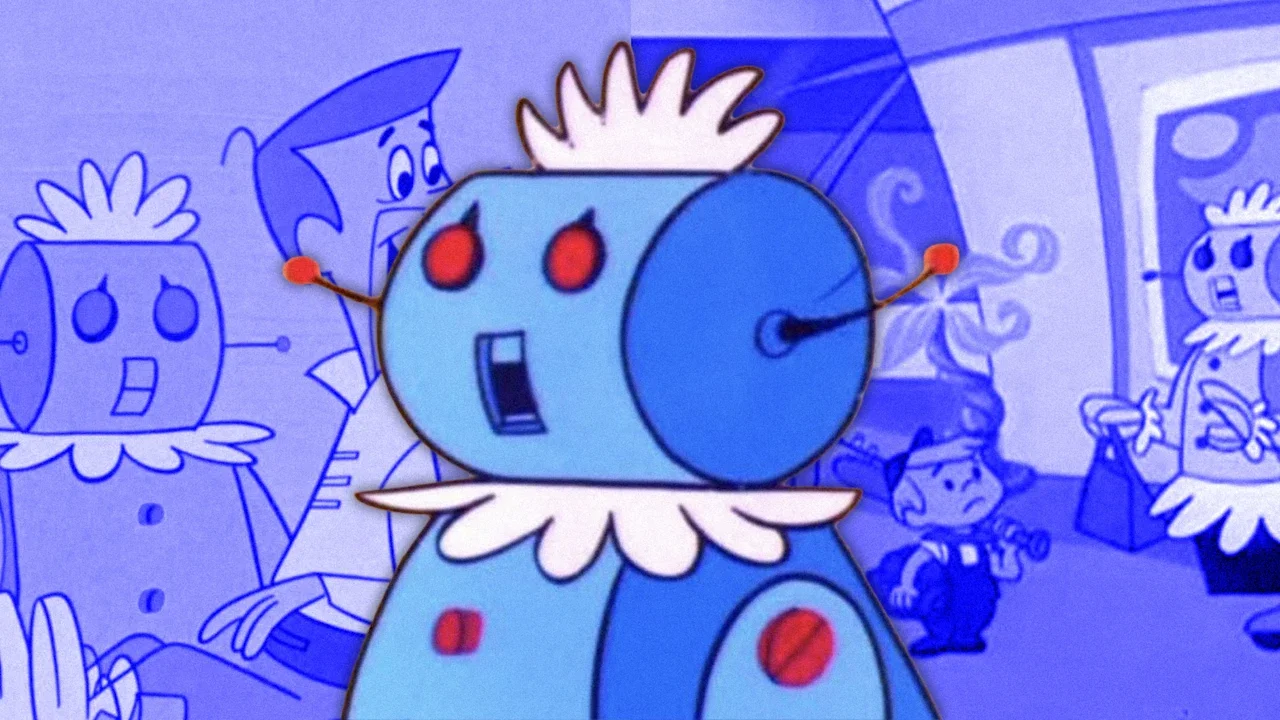
Hello again, and thank you for spending time with Fast Company’s Plugged In. Last October, I visited the Silicon Valley headquarters of 1X Technologies—the startup behind a humanoid home robot called Neo—and spoke with its VP of product and design, Dar Sleeper. Among the points he made was that long-standing public expectations have set a high bar for household robots. Naturally, he name-checked the world’s most iconic one. “The ultimate, North Star, in a lot of people’s minds, is Rosie the Robot,” he told me. “A Jetsons world where you ask and receive, and it makes your life better, you spend more time with your family, you’re more present.” Sleeper’s reference returned to the front of my brain last week, when I attended a Wired event in San Francisco featuring an interview with Cloudflare CEO Matthew Prince. Explaining AI’s transformative impact, he turned to an obvious precedent: George Jetson’s reliance on Rosie. ”I keep watching reruns of the old cartoon show The Jetsons,” Prince said. “There are a lot of things that are anachronistic about it. But I think asking the question, ‘Where does George get his information from?’ is a really interesting one. And the answer is Rosie the Robot. When he says, ‘Hey, Rosie, I want a recipe for chocolate chip cookies.‘ Rosie doesn’t say, ‘Here are 10 blue links, go find one yourself.’ Rosie says, ‘Here’s a recipe for chocolate chip cookies.’” Rosie comes up so often in discussions of the future of technology that it’s easy to tune out rather than nod in appreciation. But hearing two executives mention her by name got me wondering why this secondary character from a 1962 Hanna-Barbera prime-time cartoon, canceled after only one season (albeit rerun endlessly), has been such an extraordinarily durable touchstone. It’s not an easy question to answer. Even if, like me, you’ve already spent more time contemplating the Jetsons’ cultural impact than most people. Before we go any further, a few Rosie factoids for you: Her name was originally spelled “Rosey,” but the more common “Rosie” won out over time. The very first Jetsons episode, “Rosey the Robot,” told the story of how she entered the Jetsons’ home, initially as a short-term rent-a-robot. She appeared in only one other episode among the 24 in the first season—that shocked me—but was much more prominent in the additional Jetsons shows Hanna-Barbera produced in the mid-1980s, including starring roles in the episodes “Rosie Come Home,” “Mother’s Day for Rosie,” and “Rip-Off Rosie.” As a sassy-yet-kindhearted maid, she drew undeniable inspiration from the title character in the newspaper comic Hazel, which had been turned into a popular TV sitcom the previous season. (The rest of The Jetsons knocked off another comics mainstay, Blondie.) Her Brooklyn-tinged voice was provided by actress Jean Vander Pyl, much better known as Wilma Flintstone. If you need to catch up on Rosie’s adventures, as I did for this newsletter, you’ll find The Jetsons widely available on streaming services—I watched the show on Hulu—and airing every day on MeTV Toons. None of this explains why technologists are still talking about Rosie. The most superficial reason is that it would be pretty cool to off-load tedious household chores to someone else. Most of us can’t afford human help, making a robot maid an alluring proposition. (As shown in the first episode, even paying for Rosie was a challenge for Jane and George: She was a discounted previous-year demonstrator model, and they were able to keep her only because Mr. Spacely gave George a raise.) But if all Rosie did was the dishes, I don’t think she’d be so well remembered. She is a piece of sophisticated technology with an uncommonly humane user interface. That’s why the Jetson family loved her so much, and why she sticks in our minds. And given that her features are presently morphing from fantasy into stuff that might actually be possible to build, she’s only growing more relevant. As with many things about The Jetsons, Rosie is both old-timey and prescient. At one point in the first episode, she opens her front and dumps in Judy Jetson’s homework tapes to incorporate them into her knowledge base. Thankfully, magnetic tape petered out as a primary form of data storage well over 40 years ago. But Rosie’s ability to crunch Judy’s classwork—and presumably help her with it—sure looks similar to an LLM ingesting data. In today’s buzzwordy AI parlance, Rosie is also agentic. She handles tasks with a sizable degree of autonomy, is fine-tuned to behave responsibly and, though engaging and supportive, never slips into sycophancy. If Elroy confided that he was planning to become a juvenile delinquent, we can be certain she wouldn’t aid him. Instead, she’d push back on the idea and—if necessary—alert his parents. Our 2025 chatbots are crude by comparison, if not downright dangerous. Still another reason why Rosie remains resonant is the timeless appeal of The Jetsons’ optimistic air. As depicted in the show, the future is a pretty wonderful place, and Rosie is part of that. Even by the end of the 1960s, our culture had grown darker. 2001: A Space Odyssey’s HAL 9000 may be as famous as Rosie, but he’s also a grim object lesson in the dangers of trusting technology to work in our best interest. You won’t catch tech execs speaking approvingly of HAL as a font of inspiration. The Jetsons was never dystopian, but neither was it naive. A sizable percentage of its humor stemmed from the downsides of theoretically useful technology, often in ways that are, in retrospect, as forward-looking as any other aspect of the show. As you’ll recall, the end credits of every episode concluded with George becoming overwhelmed by a runaway automated treadmill and calling for Jane to “stop this crazy thing.” (In real life, Peloton’s safety issues with its Tread treadmill weren’t so funny.) Rosie does not appear in another 1962 Jetsons episode called “Uniblab.” But its moral—that artificial intelligence in the office might be a pointless waste of money—is the furthest thing from entertainingly quaint. Uniblab is a workplace robot that Mr. Spacely acquires for $5 billion (!). Apparently an AGI true believer—he gloats that Uniblab has a higher IQ than George—Spacely demotes George to serve as the robot’s assistant. It turns out that Uniblab uses his always-on microphone to spy on Spacely’s employees. He also induces them to play rigged gambling games. And that’s about all he’s good for. After being sabotaged by the show’s resident hacker, the Jetsons’ handyman, Henry, Uniblab suffers a hallucinatory meltdown in front of Spacely Space Sprockets’ board of directors. He’s unceremoniously decommissioned. Humanity triumphs, at least for the moment. When The Jetsons premiered in 1962, publicity materials explained that it was set exactly 100 years in the future, in 2062. That indicates that even 37 years from now, AI may struggle to definitively prove its worth. For now, countless present-day Mr. Spacelys are currently overspending on the technology based on unrealistic expectations. Rosie, meanwhile, is clearly based on more mature AI than Uniblab. But in the first Jetsons episode, Jane and other characters are astonished at her capabilities, a sign that domestic robotics will still be in the process of going mainstream in 2062. Which means that it may be several more decades until Rosie is truly, unquestionably real. May she continue to serve as an aspirational stretch goal for the entire tech industry. You’ve been reading Plugged In, Fast Company’s weekly tech newsletter from me, global technology editor Harry McCracken. If a friend or colleague forwarded this edition to you—or if you’re reading it on fastcompany.com—you can check out previous issues and sign up to get it yourself every Friday morning. I love hearing from you: Ping me at hmccracken@fastcompany.com with your feedback and ideas for future newsletters. I’m also on Bluesky, Mastodon, and Threads, and you can follow Plugged In on Flipboard. More top tech stories from Fast Company The case only Netflix can make for buying Warner Brothers Discovery Everything about its past suggests it’s the best future owner. Read More → The Disney-OpenAI tie-up has huge implications for intellectual property The House of Mouse is one of the most aggressive defenders of its IP. OpenAI literally just said it’d welcome erotica. What’s going on? Read More → This startup is building a network of home batteries to help solve the grid’s woes Haven Energy works with homeowners to install batteries and solar in homes that qualify for state incentives around areas where the grid is particularly overloaded. Read More → AI is killing review sites. Can they fight back? With AI replacing traditional search, review sites must evolve fast—or risk being cut out of the buying journey. Read More → The Kalshi-fication of everything The predictions platform is revealing what a world of total financialization will look like. Read More → OpenAI is clapping back at Google’s Gemini 3 with a new GPT-5.2 The new model displays expert-level skill in work tasks, and exceeds Gemini in several benchmarks. Read More → View the full article
-
On Wednesday, Google announced a number of new AI features, which we covered (links below) but one other feature Google spoke about was "AI-powered article overviews." This is an experiment Google News is trying with a handful of publishers.View the full article
-
This week’s PPC Pulse covers Google’s Data Manager API, new YouTube Shorts features, and LinkedIn’s Reserved Ads for brand and performance teams. The post PPC Pulse: Google Data Manager API, YouTube Shorts, LinkedIn Reserved Ads appeared first on Search Engine Journal. View the full article
-
Fast-track entry to bloc being discussed by US and Ukrainian officials backed by Brussels in drive to end Russia’s warView the full article
-
Leading Democrats on the Senate Banking Committee sent a letter to Chair Tim Scott, R-S.C., pointing out the as-yet unsatisfied legal requirement for prudential regulators to appear in Congress semiannually. View the full article

-
Google is now sending email notifications for when Google Business Profiles has removed the restrictions on your reviews and ratings. The email says, "Restrictions on your reviews and ratings have been removed" and it comes from the Google Business Profiles team.View the full article
-
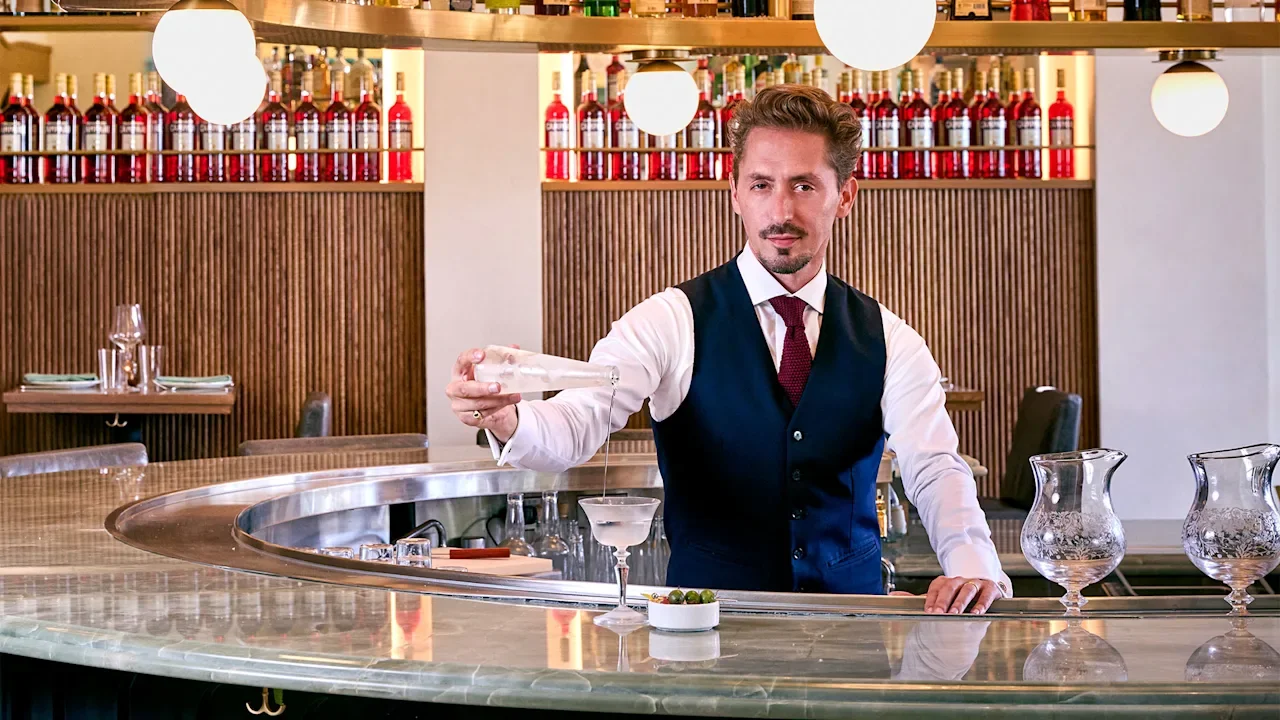
When life gives people lemons, most try to make the best out of a bad situation. Instead, Beau du Bois, vice president of bar and spirits at Marisi Italian restaurant in La Jolla, California, found himself with an incredible opportunity. In 2021, the Adler and Lombrozo families, owners of the Puesto Mexican restaurant chain, tapped du Bois to build Marisi’s bar program from the ground up. One of the first actions du Bois took when learning about this new venture was starting a batch of limoncello, using a lesser-known Amalfi Coast technique. “They told me about Marisi almost exactly a year before we opened,” du Bois tells Fast Company. “And the very next day, even though I’ve got 364 days to get the restaurant open, I started making the limoncello right away.” Du Bois had excellent timing, as the appetite for limoncello in the United States has been on the rise. According to IWSR Drinks Market Analysis, global limoncello volumes grew at a compound annual rate of 8% between 2019 and 2024. In 2024, the top three markets for limoncello were Italy, Germany, and the United States, in that order. The U.S. has seen steady average annual growth of 5%. The IWSR predicts the figure will continue its upward trend, with a projected compound annual growth rate of 2% from 2024 to 2029. Even though Du Bois’s preferred preindustrial limoncello process has been a part of the restaurant since its 2022 opening, it’s recently made a big splash on social media. An Instagram reel documenting the procedure has garnered over four million views and reveals larger trends in the hospitality industry. Six months but worth the wait Similar to with the slow-food movement and the craft beer craze, people are yearning for more than just rushed meals or cocktails. They want to have an authentic experience and learn about the thought and preparation that goes into crafting the food and drink that ends up on their tables. Du Bois’s limoncello takes six months to prepare, and this time-intensive undertaking is displayed as a kind of decor throughout the restaurant, with glass carboys lined up on shelves. The process itself is fairly simple: Sorrento lemons are suspended in a cheesecloth above Everclear in large, clear containers. As the temperature gets warmer, the Everclear turns into gas, but since it has nowhere to go, it eventually turns back into liquid, washing over the outside of the lemons. The alcohol only comes into contact with the outside of the lemon, where the sweet oils are found making a much more pleasing product, du Bois says. The final step is to proof down the mixture with just the right amount of water and sugar. There’s a method behind the madness, according to du Bois. “You completely remove that need to counterbalance your limoncello with too much sugar because your traditional maceration is too bitter,” he says. “No matter how sweet you make it, you’re still going to have this bitter oil all over your mouth. And that’s not a soigné experience.” Du Bois even got the ultimate seal of approval for his creation. “We were doing a tasting before we officially opened and we were operating out of one of our other restaurants,” he says. “We had food vendors coming in and tasting us. I had a very specific small Italian portfolio come through with a lot of beautiful amaros and a lot of different Italian liquors. And, of course, even though I didn’t request it, he brought limoncello. He doesn’t know that I’m making it.” Du Bois went along with the tasting, but at the end told the man he was making his own and offered a sample. The Italian salesman was rightfully skeptical that a person from Indiana located in San Diego could create a palatable liquor, but he was willing to try it. “I poured it for him. If I’m remembering it correctly, I think I almost saw a tear. And he was like, ‘Why did you do this to me? . . . This is the best limoncello I’ve ever had in my life,’” du Bois recalls. It was just the affirmation he needed. “Innovation shows you a way” Marisi’s signature limoncello is indicative of the overall ethos of the bar program. “It’s a technique-driven cocktail program,” he explained. “It has been since day one, but I wanted the menu to be very approachable. So we’re not spotlighting the techniques necessarily on the menu, but the staff is trained very, very thoroughly on the techniques.” This is not to say that du Bois doesn’t feel the tension between authenticity and innovation, but he believes there is a way to marry the two concepts. “You can rest in the laurels of authenticity and tradition until innovation shows you a way to keep the cocktail true to itself in terms of flavor and the ethos of the drink originally,” he says. “But the minute you find a better way to do it, if you don’t do it, somebody else will.” Ramping up production Marisi’s Bellinis are made by clarifying white peaches in a centrifuge and adding a crisp Vinho Verde. Then all the ingredients are force carbonated so that when it’s poured for you, it’s not only ice cold but also has the same effervescence as a good champagne. Another hurdle du Bois had to face was making his technique-driven program service efficient. Time is an ingredient in his limoncello, so he has to make sure to have an abundance of it on hand at all times. Du Bois believes that part of his job description is educating the public about the process. “I always want you to think about me when you’re with someone else,” he jokes. “You’ve been to Marisi and you had a Bellini or you had the limoncello. Then you go to another Italian restaurant. You are like, why is this so different? And it’s just because we overthought it.” Du Bois puts in the work so you can enjoy the best cocktail possible. And he isn’t afraid to share his recipes and insights either. Since the initial Instagram post, there have been two follow-up videos revealing more about the process and responding to comments. The restaurant has since seen a 40% increase in limoncello sales, especially among younger customers. This has “forced our team to ramp up the production of it significantly,” Du Bois says. “We’ve also incorporated our limoncello into a popular cocktail on the menu as well as our new Tiramisu.” “You’ve gotta find a way to get to a larger audience,” he adds. “And bring in new enthusiasts. If I share my recipes, I’m increasing the likelihood that I will have a good cocktail in the city tonight.” So the next time life gives you lemons, consider taking yourself out for a meal and drinks. Ask your server about the process behind your favorite food or drinks, because it will make them taste that much better. Both your appetite and your mind will be satiated. View the full article
-
Standard Shopping gives marketers dependable control and clear intent signals when Performance Max’s automation doesn’t align with complex sales needs. The post When To Say No To PMax: Strategic Use Cases For Standard Shopping Campaigns appeared first on Search Engine Journal. View the full article
-
When a TV commercial makes people feel something, it doesn’t just win in the moment – it sparks curiosity, drives searches, and fuels conversions. That’s why the “Breaking TV Ads Report,” jointly launched by Kinetiq and DAIVID, deserves a spot on every search marketer’s radar. The monthly report ranks the top-performing new TV ads in the U.S., blending Kinetiq’s real-time TV ad detection with DAIVID’s AI-driven creative analytics to uncover which ads broke through, why they resonated, and what brands can learn from their success. It’s a powerful reminder that search doesn’t start on Google – it starts in the mind. As Barney Worfolk-Smith, chief growth officer at DAIVID, recently told me in an email: “Search + TV matter – together. TV can increase search volume by up to 60%, and even more in well-coordinated campaigns. AI has already changed, and will continue to change, the TV-to-search relationship, but the principle remains the same: impactful, emotive TV advertising drives all desirable brand outcomes – with search being one of them. It’s also worth noting that search volume itself is a valuable measure of TV ad effectiveness.” How LeBron James and Indeed captured attention The first edition of the “Breaking TV Ads Report” highlighted a commercial that checks every emotional and strategic box: Indeed’s “What If LeBron James’ Skills Were Never Seen?” The ad traces James’s journey from his early life to his work with the LeBron James Family Foundation, connecting it to Indeed’s “skills-first” hiring message. It resonated not only because of its star power but because it made viewers feel something authentic. The ad generated 11% higher intense positive emotion and 7% higher attention than the average U.S. TV ad, per DAIVID’s data. It was joined in the top 10 by campaigns from TikTok (twice), Subaru, and Taco Bell, with emotional themes centered on family, mentorship, and belonging. These aren’t just nice stories – they’re search triggers. When people connect emotionally with a brand message, they’re more likely to act on it – often by turning to Google or YouTube for more information, reviews, or purchase options. Dig deeper: Brand + performance: The secret to maximizing ad ROI TV still drives search Back in 2011, Google introduced the concept of “The Zero Moment of Truth.” But the ZMOT stage in the buying journey – when consumers research a product or service online before making a purchase – was the “new” second step. The first step remained “stimulus,” and it could be “a TV ad.” Many search marketers focus on what happens in the second ZMOT stage, because we can measure impressions, clicks, and conversions on mobile and laptop screens. And we ignore the stimulus step because it is sucking money out of our marketing budgets. But several studies over the past decade have shown that the impact of TV advertising extends directly into search behavior: In 2015, a joint study by Google and Nielsen found that TV ads can boost branded search queries by up to 20%, especially within the first few hours after an ad airs. In 2022, Thinkbox discovered that TV advertising in the UK generates the strongest multiplier effect on search, social, and web traffic of any medium. And in 2024, Comscore research found that when TV and digital are coordinated, cross-channel campaigns deliver stronger engagement, with TV ads prompting “second-screen” behavior – audiences searching, scanning QR codes, or engaging on social media in real time. Put simply: when a campaign captures attention on TV, search demand spikes – often within minutes. For SEO and PPC professionals, this presents a clear opportunity to anticipate and capitalize on those moments. How brands have integrated TV and search Several major brands have already proven that when TV storytelling and search strategy work together, both channels perform better. Apple: Creating curiosity that fuels search Apple’s product launches are masterclasses in cross-channel momentum. Every time a new iPhone ad airs, search volume for terms like “iPhone 17 Pro Max” or “iPhone 17 release date” skyrockets. Apple’s branded search traffic increases by up to 40% in the days following a major campaign, according to Semrush. Apple intentionally designs its TV creative to generate questions – not answer them – encouraging viewers to seek out more details online. That’s where Apple’s search-optimized landing pages, YouTube product videos, and paid search campaigns complete the journey. Progressive: Connecting humor to searchable characters Progressive’s long-running “Flo” campaign shows how consistent creative storytelling translates into search intent. The insurance brand’s TV spots spark curiosity around characters, slogans, and offers – leading to measurable spikes in branded searches such as “Progressive car insurance” and “Flo from Progressive.” The brand’s media team aligns paid search and display campaigns with national TV flighting schedules, ensuring that when interest peaks, search ads and organic results are ready to capture demand. Coca-Cola: The shareable, searchable ad Coca-Cola’s “Share a Coke” campaign is another classic case of TV leading to search. The original “Share a Coke” campaign was launched in Australia in 2011 and involved replacing the Coca-Cola logo on bottles with hundreds of popular first names. This personalization strategy was a global success, encouraging consumers to find bottles with their names and share them with friends and loved ones, which boosted sales and created emotional connections with the brand. The latest “Share a Coke” campaign is a global relaunch targeting Gen Z with a focus on digital experiences and authentic, in-person connections. It features personalized cans, a digital “Memory Maker” tool for creating shareable videos, and a partnership with McDonald’s. Consumers can find names on bottles or use a QR code to customize bottles – a creative hook that’s sent millions to Google searching “custom Coke” or “share a Coke names.” The campaign’s success wasn’t just creative; it was data-driven. By tracking spikes in branded search and social mentions, Coca-Cola refined its targeting and extended the campaign’s life cycle online. Dig deeper: Hyper-personalization in PPC: Using data to deliver tailored ad experiences Measuring creative effectiveness with real audience signals What makes the new “Breaking TV Ads” report particularly valuable is its data-driven framework for measuring creative effectiveness. Kinetiq’s proprietary ad detection technology identifies every ad that first airs across 210 U.S. DMAs and 15 streaming apps, capturing over a million daily detections. DAIVID’s AI then evaluates each ad’s emotional response, attention, and brand recall, creating a creative effectiveness score (CES) – a composite metric that mirrors how audiences actually experience content. In a media landscape increasingly defined by short attention spans and fragmented screens, this data provides a rare window into why certain stories break through – and how that resonance correlates with downstream behaviors like search and site visits. As Kinetiq CEO Kevin Kohn put it, the partnership “gives marketers a holistic view of the TV and CTV advertising landscape – not just what aired, but why it resonated.” That’s exactly the kind of insight performance marketers need to connect the dots between creative resonance and measurable outcomes. Dig deeper: Your ads are dying: How to spot and stop creative fatigue before it tanks performance What this means for SEO and PPC strategy In February 2025, Neal Mohan, the CEO of YouTube, revealed that: “TV has surpassed mobile and is now the primary device for YouTube viewing in the U.S. (by watch time), and according to Nielsen, YouTube has been #1 in streaming watch time in the U.S. for two years.” So, search marketers can apply the latest findings from the Breaking TV Ads Report in several ways: Anticipate search spikes: When a high-emotion or celebrity-driven TV ad launches, expect branded searches to rise. Align PPC budgets, ad copy, and keyword targeting around campaign themes and taglines. Optimize for intent moments: TV ads often generate “navigational” queries (brand name) and “informational” ones (product details, offers, or reviews). Ensure that organic content – landing pages, FAQs, and YouTube videos – are optimized to match these queries. Sync search campaigns with TV flighting: Use ad scheduling to mirror TV airtime or streaming rollouts. Research from Nielsen Catalina Solutions shows that coordinated campaigns can deliver up to 60% higher conversion lift compared to siloed efforts. Track branded search as a creative KPI: Branded search volume is one of the most reliable proxies for ad impact. Use tools like Google Trends or Search Console to monitor shifts after major media bursts. Leverage emotional triggers in copy: DAIVID’s data shows that ads evoking strong positive emotions drive higher attention and brand recall. Translate those emotional cues into ad extensions, headlines, and meta descriptions that mirror what audiences feel after seeing the TV spot. Why the future of performance marketing is cross-channel Search has long been viewed as a response channel – the final step in a consumer journey. But that view is outdated. Today’s most successful campaigns use search as a connective tissue between offline inspiration and online action. Whether it’s a QR code at the end of a TV ad, a YouTube masthead following a primetime spot, or a Google Shopping ad that captures post-broadcast demand – search is the bridge between storytelling and sales. As more brands invest in connected TV (CTV) and streaming, the line between “brand” and “performance” marketing will continue to blur. Creative effectiveness data helps close that gap – showing which emotional and visual cues are most likely to drive measurable search and conversion behavior. Ultimately, reports like “Breaking TV Ads” remind us that the most powerful search strategy begins long before the query. It begins with attention and emotion, and, increasingly, on the biggest screen in the house. Dig deeper: How connected TV advertising drives search demand View the full article
-
Nothing says “Merry Christmas” quite like a 7.5-foot-tall Chewbacca holding a candy cane. At least, according to the team at Home Depot. Home Depot has long been known as a purveyor of holiday decor, from pumpkins at Halloween to a wide selection of real and artificial trees at Christmas. In recent years, though, it’s been upping the creative ante on its decor game to capture new audiences—and, in some cases, to score a viral hit on TikTok. This year, it’s doing just that with two new additions to its holiday lineup: life-size, animated versions of Star Wars’ Chewbacca and R2-D2 ($349 and $299, respectively), complete with movie-accurate, motion-activated sound effects. While Home Depot declined to share specific sales data about the characters, R2-D2 appears to have sold out within weeks of debuting, inspiring several TikTok videos with hundreds of thousands of views and resulting in multiple Reddit forums where users are discussing strategies for getting their hands on one of the units. Resellers are already pedaling the product on eBay for nearly double its original price. With its increasingly extravagant Halloween animatronics and now its suite of nerdy, high-tech Christmas decor, Home Depot is making the spectacle of extreme holiday decorating accessible to the average customer. Home Depot is turning extreme holiday decorating into an accessible sport Home Depot is no stranger to building head-turning (and TikTok view-farming) holiday decor. In fact, its towering 12-foot-tall skeleton, Skelly (who debuted in 2020), is what initially propelled the big box store to its current status as customers’ go-to shop for viral decor. Since then, Home Depot has leaned into both the scale and detail of its holiday decor, including with Halloween releases this year like a seven-foot-tall Frankenstein and 9.5-foot-long haunted pirate ship. Now bringing that same amped-up energy into Christmas. Chewie and R2-D2 are part of Home Depot’s range of IP-adapted characters, which include other popular characters like Chucky, a 13-foot-tall Jack Skellington from Disney’s The Nightmare Before Christmas, and, also new this year, Olaf from Disney’s Frozen. The company already sells a seven-foot-tall Darth Vader and six-foot-tall Stormtrooper. Aubrey Horowitz, Home Depot’s senior merchant of decorative holiday, says Home Depot’s Star Wars line plays to a couple of different emerging genres of holiday shoppers. One is the seasonal decor enthusiast, who tends to like to refresh their decor from one holiday to the next—which is why characters like the Stormtrooper, Darth Vader, and R2-D2 all come with modifications to transition from Halloween to Christmas. Another is the holiday shopper that’s interested in nostalgic aesthetics, from vintage-looking artificial trees to retro characters. That tracks with data Pinterest shared with Fast Company, which found that searches for “nostalgic Christmas aesthetic” were up 1,130% this November compared with last November. With the majority of its IP collections, Home Depot is able to capture fans by keeping prices relatively low: For comparison, other life-size replicas of R2-D2 can run between $1,500 and $8,000. Clearly, the choice is resonating with fans online. A commenter under one video of R2-D2 with more than 130,000 views wrote, “Take my money. Now I can put this alongside my R2D2 Pepsi cooler.” And under a separate clip of Chewbacca, commenters are responding with photos of their own Home Depot Chewie surrounded by other Star Wars characters (and one dressed in a sports jersey). This holiday season, Home Depot is making sure that the most eccentric dad on your block can tap into his childlike wonder without breaking the bank—and we’re not mad about it. View the full article

-
Word count is not a ranking factor in itself, but it still plays a significant role in SEO. A minimum number of words helps search engines understand your topic, helps users understand your message, and supports content quality and relevance. The right length for your content depends on search intent, topic depth, competition, and purpose. In this guide, you will learn why word count matters, when length helps or hurts, and how to decide the right length for every page you publish. Table of contents What does word count mean for SEO? Why very short content often struggles What does Yoast SEO check when it comes to text length? How user intent determines ideal length How to decide the right length for your page How competition affects word count Why readability matters more than raw length Internal linking and topical coverage Common mistakes with word count Conclusion on word count and SEO Key takeaways Aim for over 300 words for posts and 200 words for product descriptions to enhance SEO and user experience. Word count helps Google understand context and relevance, though it is not a direct ranking factor. Longer content provides opportunities for the inclusion of keyphrases, synonyms, and internal links, thus supporting SEO. Prioritize quality and clarity over simply hitting a word count; irrelevant filler can damage user experience. Always align your content length with user intent and ensure it adds real value to readers. What does word count mean for SEO? Word count refers to the total number of words on a page, including headings, body text, and lists. In SEO, word count is often used as a rough indicator of the amount of information a page contains about a topic. It is not a quality signal by itself, but it strongly influences how much context, explanation, and clarity a page can provide. Search engines aim to understand what a page is about and whether it satisfies the user’s search intent. A page with sufficient text provides both readers and search engines with the signals they need to interpret meaning, relevance, and usefulness. When word count reflects real depth and not just filler, it supports SEO. If it turns into padding, it works against you. That’s not all, though; in fact, longer articles contribute to SEO in several ways. Longer content will naturally contain your keyphrase more often. This also gives you more opportunities to use synonyms and related keyphrases, too. Additionally, longer content enables you to utilize more headings, links, and images. These elements help support your keyphrase and enhance how well your page aligns with user intent. Longer text can also help you rank long-tail variants of your keyphrase. That’s because you have more opportunities to address various topics in a lengthy text. What’s more, if you do some clever internal linking, you’ll drive more organic traffic to your site. Why very short content often struggles Pages with extremely low word counts often fail to perform well in search results. This is usually not because they are short, but because they lack sufficient context, depth, and usefulness. Very short pages often leave important questions unanswered. They also provide little supporting explanation and struggle to show expertise and build trust. From a user perspective, thin content rarely feels complete. From a search engine perspective, it provides fewer clues about relevance and topic coverage. This combination makes it harder for very short pages to compete in most informational and commercial search results. Thin content also weakens your overall site quality signals, which can affect more than just one URL. Minimum word count guidelines Minimum word counts exist to help prevent thin content, not to guarantee rankings. As general thresholds: Regular posts and pages typically require a minimum of 300 words Product descriptions typically require a minimum of 200 words Cornerstone content typically requires a minimum of 900 words These numbers act as a quality floor. You can go above them when a topic requires more explanation, and you can sometimes go below them when the intent is extremely narrow. What matters is whether the page truly fulfills its purpose. What does Yoast SEO check when it comes to text length? Yoast SEO checks the length of your content as part of the SEO analysis. You can find this check in the SEO tab of the Yoast SEO meta box or in the Yoast SEO sidebar while you are editing a page. It simply calculates how many words you have added and evaluates whether that amount is likely to be sufficient to support your SEO goals. The same check is also available in the Yoast SEO for Shopify app. Every page on your site needs to contain a certain number of words to be helpful for your site visitors and for Google. The minimum length of your text depends on the type of page. Taxonomy pages, or collections if you use Shopify, usually require less content than blog posts, while cornerstone content is often your most important content and therefore needs to contain a significant number of words. How the Yoast SEO text length check works This length check exists to help you avoid publishing pages that are too thin to be useful. A page with too few words often lacks context, misses important details, and struggles to demonstrate relevance or expertise. By flagging very short pages, Yoast SEO helps you improve the overall quality of your content. It is essential to note that this check serves as a guideline only and does not guarantee rankings. Adding more words alone will not make a page rank. The goal is to ensure that your page contains sufficient, meaningful content to explain the topic properly, align with user intent, and enhance overall content quality. In the table below, you can see how Yoast SEO assesses the different types of pages on your site. If a page contains fewer than the advised minimum number of words, you will see a red traffic light in the Yoast SEO analysis. When you meet or exceed the minimum word count, you will receive a green traffic light. Word count assessment by page type Page typeMinimum advised word countPost or pageMore than 300 wordsCornerstone post or pageMore than 900 wordsTaxonomy descriptionMore than 30 wordsProduct descriptionMore than 200 wordsCornerstone product descriptionMore than 400 wordsProduct short descriptionBetween 20 and 50 words Content depth vs content length One of the most common SEO mistakes is confusing length with depth. Content length is the number of words you use. Content depth refers to the thoroughness with which you cover the subject. Depth means that your content answers the main question clearly and addresses relevant subtopics. It also anticipates follow-up questions and provides enough context for users to understand what they are reading. A page can achieve strong depth with a few hundred words for simple topics, while complex subjects may require far more. Search engines are increasingly evaluating whether a page demonstrates genuine understanding rather than superficial keyword usage. That understanding comes from depth, not from word count alone. This is also where concepts like E-E-A-T become important. How user intent determines ideal length User intent is the foundation of every word count decision. Once you understand why someone is searching, determining the appropriate length becomes much easier. Informational searches usually need more explanation, context, and structure. Navigational searches often need only a few words to guide users to the right place. Transactional searches prioritize clarity, trust, and persuasion over lengthy educational content. When length matches intent, users feel understood. If it does not, they struggle to find what they need. They can also feel overwhelmed by unnecessary information. Our guide on analyzing search intent explains how to align your content with what users actually want. Cornerstone content and long-form pages Cornerstone content represents the most important, comprehensive pages on your site. These articles define your expertise around core themes and often serve as hubs for related content through internal linking. Because of their role, cornerstone articles are naturally longer and more detailed. They typically cover a broad topic comprehensively, address multiple subtopics, and provide a clear structure for both readers and search engines. While 900 words may be a starting point, many strong cornerstone pages grow far beyond that. This happens when the subject matter demands more detail. When building cornerstone content, ensure that you also mark it correctly in your site structure and internal linking strategy. Our guide on how to create cornerstone content walks you through this step-by-step. How to decide the right length for your page Instead of starting with a word target, start with a set of questions. What is the main intent behind this page? What does the user need to know to feel satisfied? What do the top-ranking results already explain? What additional value can you realistically add? Outlining your content before writing makes this process easier. It also helps you stay focused while you write. When each section has a clear purpose, the final word count becomes the natural result of good coverage rather than an arbitrary goal. Word count for product pages Product pages require a careful balance between information and usability. Insufficient content can erode trust and hinder visibility in search results. Too much content can distract users from taking action. A strong product page clearly explains what the product is, what it does, who it is for, and why it is worth buying. For many products, a few hundred words of clear copy is enough. More complex or high-consideration products often require more detailed explanations. This helps remove uncertainty and build confidence. Here, clarity matters far more than hitting any specific word target. Good product pages also benefit from solid internal linking and structured data, which are covered in our guide to site structure for SEO. Word count for blog posts Blog posts vary widely in length because they serve a range of purposes. Some posts aim to provide a concise answer to a specific question. Others aim to explore a topic in depth and become long-term reference material. Shorter blog posts can perform well when they are tightly focused and match a simple query. Longer blog posts often perform well for broader or more competitive topics because they allow you to explore nuances, include examples, and cover related questions that users frequently ask. A long blog post should never feel long. When structure and readability are handled well, even detailed articles remain easy to read. If you want to improve how readable your articles are, see our article on how to improve your readability score. Word count for landing pages Landing pages exist to convert, not to provide in-depth education. Their success depends on whether they clearly communicate value, build trust, and guide users toward a single, actionable outcome. Some landing pages convert best with only a few hundred words. Others need significantly more space to overcome objections and establish credibility. The right length is determined by how much explanation your audience needs before committing. Testing real user behavior through analytics and A/B testing is the only reliable way to determine the optimal length for landing pages. How competition affects word count Search results show what Google already considers competitive for a query. If the top-ranking pages are detailed and comprehensive, users likely expect that level of depth. If the top results are short and direct, that usually signals simpler intent. Before deciding on your own content length, take time to study the pages that already rank. Look at their structure, coverage, and clarity. Your goal is not to match their word count, but to match or exceed their usefulness. This process is closely connected to keyword research and SERP analysis. If you need a refresher, our guide on keyword research covers this topic in detail. Why readability matters more than raw length Length only helps when people can actually read and understand the content. Long pages fail when they are filled with dense paragraphs, unclear structure, or overly complex language. Strong readability stems from using short, clear sentences and maintaining a logical flow between paragraphs. It also depends on well-placed headings and simple vocabulary. Good structure makes even long content feel approachable and encourages users to keep reading. Readability also supports accessibility and user experience. Both of these indirectly influence SEO performance. That is why readability is a core part of how Yoast SEO evaluates content quality. Internal linking and topical coverage Word count influences how much topical ground you can cover and how naturally you can include internal links. Internal links help search engines understand your site’s structure and enable users to discover related content. Longer, in-depth pages naturally create more opportunities for internal links that are meaningful. This is because they touch on more aspects of a topic. Short pages often limit those opportunities. Strong internal linking enhances topical authority and improves the performance of cornerstone content. If you want to improve your internal linking strategy, you can start with our guide to internal linking for SEO. Common mistakes with word count One common mistake is writing only to hit a number. This often leads to repetition and filler that reduce clarity and trust. Another mistake is publishing large amounts of thin content at scale. This can weaken the overall quality signal of a site. Ignoring user intent is equally damaging. A very long article for a simple query can frustrate users just as much as a very short article for a complex topic. Finally, many sites overlook updating older thin pages as topics evolve and user expectations shift. Regular content audits help prevent this problem and keep your site aligned with what users and search engines expect. Conclusion on word count and SEO Word count can influence how your posts and pages perform, but it should never come at the expense of quality. Writing more words only helps when those words improve clarity, structure, and usefulness. If you stretch your text just to reach a number, you risk making your content harder to read and less helpful for your visitors. Focus on writing readable, well-structured content that genuinely answers the user’s question. Use headings to guide readers, keep paragraphs clear and concise, and make sure every section serves a clear purpose. That is what helps users engage with your content and what search engines aim to reward. If you want to go deeper into this balance between optimization and persuasion, see our guide on SEO copywriting and writing for sales. The post Word count and SEO: how long should an article or page be? appeared first on Yoast. View the full article
-
Delivering consistent mobile experiences is hard. Between iOS and Android's distinct design languages, different versions of native components, and Buffer's own design language, mobile apps can sometimes feel fragmented. Designers and developers end up speaking different languages, duplicating work, and shipping experiences that feel inconsistent across platforms. At Buffer, we really felt this friction. Our mobile design workflow wasn't as efficient as it could have been. We spent too much time reinventing the wheel, manually patching together screenshots, and playing catch-up with our web app counterpart. We knew we needed a better way. So we built one. Meet 🍿 Popcorn To GoBuffer's new mobile design system for iOS and Android. It's our answer to the chaos, and it just passed its first major test: helping us ship our iOS app with Apple's new Liquid Glass design language the moment iOS 26 launched back in September 2025. Let's dig in. 🍿 Why we built itBefore Popcorn To Go, our mobile development process had some painful friction points: Miscommunication between design and engineering. Without a shared design language, handoffs were slow and error-prone. Our iOS app ended up with 300+ colors, most of which were slightly different shades of the same color. No source of truth existed.Design decisions made on the fly. With no source of truth, engineers were left to improvise and take on-the-fly design decisions to make things work.Inconsistent and inaccessible UI. Minor differences crept in between platforms, and even between different screens on the same platform. Our apps didn't feel as polished as they could be, and we weren't fully using the accessibility features built into native components.Dated look and feel. With all these things piling up, it became harder to adopt the latest native components or implement changes to Buffer's general look and feel.These problems started to hold us back. Our vision for Popcorn To Go was simple: create a system that delivers efficiency, consistency, accessibility, and future-proofing, without sacrificing the unique character and advantages that native components bring to a small mobile team like ours. The goals of Popcorn To GoWe set out with four clear goals: Efficiency for engineering and design teams through standardized components and smart use of native platform components.Unified design language that reduces miscommunication and speeds up iteration.Accessibility baked in by inheriting best practices from iOS and Android's native components.Readiness for platform evolution, like iOS 26's Liquid Glass, so we can move fast when the platforms do.How it worksAt its core, Popcorn To Go is built on two key concepts: tokens and component kits. Tokens are the design decisions that define your visual language — things like colors, spacing, typography, and border radii. Think of them as the ingredients in a recipe. Instead of hardcoding "use brand green #8FC67D," we define a token like fill-brand that automatically adapts across light mode, dark mode, and different platforms. This means less chance of the wrong color being applied at any point. Component kits are pre-built UI building blocks (buttons, cards, navigation bars) that use those tokens. They live in Figma for designers and are implemented in code for engineers, creating a shared source of truth. The tricky part? Balancing platform specificity with cross-platform consistency. iOS and Android have their own design languages: Apple's Human Interface Guidelines and Google's Material Design. We didn't want to flatten everything into a generic "lowest common denominator" experience. Instead, Popcorn To Go respects each platform's native patterns while maintaining a cohesive Buffer feel. This approach comes with a bonus: we get to use ready-made components that are stress-tested by the native platforms for accessibility and cross-device compatibility — a huge asset for a two-person mobile engineering team. Here's how we structured it in Figma: Token relationships between Figma files across the Web and Mobile design systems Mobile/Styles: Our foundation layer with primitive colors and platform-specific tokens. We used Material 3 naming for Android and custom naming for Apple. The primitive colours mirror those in our web app.Mobile/Android M3: Components built with Google's Material 3 Expressive language, fully linked to our Android tokens.Mobile/iOS & iPadOS 26: Native iOS 26 components using Apple's Liquid Glass design language linked to our Apple tokens.Mobile/iOS & iPadOS 18: A lighter-touch kit for the previous iOS version (since we support one version back).Mobile/Custom Components: Buffer-specific components that don't exist natively on either platform.Design operations challenges we solvedGetting this system working smoothly meant tackling some gnarly design operations challenges: Figma linking: The biggest challenge we faced was linking primitives. In an ideal world, the primitive colors would come directly from our main design system, Popcorn, and Popcorn To Go would simply map these to Android or Apple-specific tokens. However, Figma's current feature set doesn't support this. We had to create a new primitives file for Popcorn To Go that manually mirrors the web's primitives.Mirroring of primitive Web tokens to Mobile tokens balance consistency with flexibilityToken naming: Creating a naming system across web, iOS, and Android that is somewhat streamlined whilst respecting platform-specific conventions.Naming is hard!Kit styling: Applying our tokens to platform-specific kits while maintaining flexibility for future updates. This required using several handy plugins like Figma Tokens and Variables Importer.Honestly, it's not the perfect, smoothly connected & humming system every designer dreams of when setting up a design system. Apple's component kits, in particular, are complex and sometimes inconsistent, whilst Android's token naming is very specific and tricky in its own way. But we landed on pragmatic solutions that work for everyday use and achieve the goals we set out to achieve. Strategic timing: The iOS 26 testWe launched Popcorn To Go with intentional timing. iOS 26 was on the horizon, bringing Apple's new Liquid Glass design language: a fresh, modern aesthetic with frosted glass effects, refined animations, and elevated visual polish. By building Popcorn To Go before iOS 26 launched, we positioned ourselves to: Be ready from day one when iOS 26 droppedLeverage the latest platform capabilities immediatelyShip our app's visual refresh alongside Apple's new design language for maximum impact.And it worked. When iOS 26 launched in September, we were ready. Our updated iOS app shipped with both Liquid Glass and Buffer's refreshed brand aesthetic, delivering a polished, modern experience that feels native to the platform while staying distinctly Buffer. Our iOS app embracing Liquid GlassWhat's nextPopcorn To Go is live and working, but we're just getting started. Here's what's on the roadmap: Short-term: Applying to Android and refining based on feedback on both platforms.Expanding token coverage beyond colors (spacing scales, border radii, typography scales).Improving discoverability with better documentation.Medium-term: Building out our custom component library with Buffer-specific patterns.Creating comprehensive usage guidelines for the system.Evolving with platform updates as iOS and Android continue to iterate.Long-term: Keeping pace with platform evolution (iOS 27 and beyond, Material Design updates, etc.).Exploring opportunities to bring learnings back to our web design system, Popcorn.Why it mattersFor our designers and engineers, Popcorn To Go means smoother collaboration, faster prototyping, and less time spent on repetitive work. Instead of getting stuck on which colour to use where, teams can focus on solving more complex problems and crafting better experiences. For Buffer users, it means more polished, consistent, and accessible apps. When design systems work well, users might not consciously notice — but they feel it. Interactions are smoother, the UI is more predictable, and everything just works better. Raising the barBuilding Popcorn To Go wasn't just about solving today's problems but about setting ourselves up for the future. Mobile platforms are constantly evolving. Design trends shift. User expectations rise. By investing in a solid foundation now, we're making it easier to keep pace, ship faster, and maintain quality as we grow. This project was a true team effort: designers, iOS engineers, Android engineers, and product leaders all collaborating to make it happen. It's the kind of work that doesn't always get the spotlight, but it's what enables everything else we build. We're proud of what we've created, and we're excited to keep building on it. If you want to see Popcorn To Go in action, download our iOS app and check out the new Liquid Glass experience. Not on an Apple device? Keep an eye out, Popcorn To Go is coming to Android soon! Here's to smoother collaboration, better apps, and a little more consistency in the chaos. 🍿 View the full article
-
Leadership listening is in sharp decline, and the consequences run deep. A survey from People Insights found that only 56% of employees believe senior leaders genuinely make an effort to listen, which is down from 65% two years ago. We live in a world where algorithms reward noise. Visibility has become a proxy for value, and airtime is the metric that many use to measure leadership presence. But real influence doesn’t come from speaking more. It actually comes from listening better. Influence grows through empathy, trust, and the ability to see and understand people. The disconnection crisis When leaders stop listening, people stop contributing. Ideas fade, trust erodes, and creativity retreats into silence. I’ve seen this in large transformation programs with a sound strategy. Employees felt unheard, so progress stalled. When we paused to listen, everything changed. People began to share what was really going on. They talked about their fear of redundancy, exhaustion, and the loss of identity sitting just beneath the surface. Once they acknowledged those emotions (and responded with intentional action), we saw a decrease in resistance, and collaboration returned. This situation reminded me that change rarely fails because of poor strategy. It fails when we don’t understand the “why” behind the resistance. Leaders might not be able to fix every concern, but giving people space to speak and be heard starts to rebuild trust. Listening is the first act of empathy, and empathy is the bridge back to psychological safety. The future model of influence There is another kind of silence that’s intentional and not imposed. It’s the pause that allows leaders to think, feel, and respond with awareness rather than react. This is where modern influence begins. Visibility and authority won’t build the leaders of tomorrow. What will set them apart is their ability to build trust and lead with empathy to create psychologically safe workplaces. Today’s leaders are juggling unprecedented complexity, whether that’s shifting markets, hybrid work, rapid transformation, and multigenerational teams with diverse values and communication styles. Each generation might look for something different, but they all want someone to hear them out. Amid this constant pressure, few leaders have the space to slow down. Yet as complexity accelerates, active listening becomes essential. The most effective leaders create space for everyday check-ins rather than relying on quarterly surveys. These small moments of connection allow them to pivot quickly, address issues early, and stay in rhythm with their teams. You don’t measure the pulse of leadership in reports; you do so in daily conversations. Empathy enables leaders to read emotions as fluently as they read information and to sense what people need before they can articulate it. It turns listening into awareness and awareness into intelligent action. This isn’t performative listening or surface acknowledgment; it’s a disciplined practice of presence, understanding, and follow-through. Measuring connection While you can measure listening, you feel its actual impact through culture. Simple questions—“My manager genuinely listens to my concerns” or “Senior leaders act on employee feedback”—reveal whether an organization values voice and transparency. Psychological safety remains the most reliable indicator of a connected culture. When people feel safe to speak, innovation thrives. Regular pulse surveys can track progress, but measurement only matters when it leads to visible action. Asking employees whether they see follow-through ensures that listening translates into progress. When leaders act on what they hear, empathy becomes motion. It builds credibility and reinforces the belief that every voice matters, which turns trust from an aspiration into a measurable outcome. The quiet revolution Influence today demands composure in complexity. Leaders need to find space to hear what their employees aren’t saying, reflect before responding, and make room for diverse perspectives. When empathy becomes part of daily leadership, it strengthens clarity, confidence, and connection across the organization. Empathy allows leaders to stay grounded in uncertainty and connected in complexity. Listening transforms disconnection into alignment and noise into meaning. This is human-first leadership that balances the rational with the emotional. I call it “rational empathy”—where emotional awareness meets clear reasoning. It’s the space where leaders respond, with both compassion and composure. Those who master it will build cultures that are open, resilient, and ready for what comes next. The leaders who will define the next decade won’t be the loudest in the room. The next revolution in leadership will listen and balance confidence with curiosity. Are you listening deeply enough to understand what really matters and what could change in your team, your culture, or your impact if you started there? When leaders truly listen, they connect, and that connection is where real influence begins. View the full article

-
Six years ago, when Michael Buckley returned to True Religion‘s offices as CEO, the denim brand looked nothing like the one he had built a decade earlier. Buckley was the brand’s president between 2006 and 2010, when True Religion was a luxury brand that sold jeans priced between $300 and $500 at Neiman Marcus and Barneys. Buckley helped grow revenues to more than $300 million a year, but after he left, the brand hit hard times, as it struggled to adapt to e-commerce. It filed for bankruptcy in 2017 and again in 2020. In 2019, after serving as CEO of Differential Brands Group (which owns Hudson Jeans), Buckley came back to True Religion to clean up the mess. He’s executed a remarkable turnaround, doubling the company’s revenues and leading it to its highest profitability ever. Buckley’s strategy is interesting. He’s rebuilt the business around the Black and Latino customers who have been loyal to the brand from the beginning. Under his leadership, the brand has rethought everything from pricing to design to marketing with these consumers in mind. (While none of True Religion’s top leadership is Black, Buckley says the company’s employees “reflect the brand’s consumers.”) “We didn’t change our target demo,” Buckley says. “This was the True Religion demographic all along, and it was our job to embrace them.” In the past, True Religion’s ad campaigns featured predominantly white models, but today, its website and social media features exclusively models of color. The brand partners with rappers and hip-hop artists like Megan Thee Stallion, Quavo, and 2 Chainz as ambassadors. True Religion is now back at the center of culture, seen on celebrities like Timothée Chalamet and Kylie Jenner. Thanks to collaborations with brands like Von Dutch and Supreme, the brand is regularly featured in fashion blogs. Ciara Buckley believes that the future of True Religion lies with Black consumers. The brand is now focused on winning over the next generation; it’s going on a college tour with a focus on historically Black colleges and universities, like Spelman and Morehouse. But experts say that for True Religion to build an enduring relationship with Black consumers, it needs to go beyond just marketing to them; it must also forge authentic partnerships with these communities. Megan Thee Stallion “It’s awesome that the brand is serving the Black consumers that stuck around when others abandoned them,” says Marcus Collins, a marketing professor at the Ross School of Business and the author of For The Culture. “But to take it to the next level, the question is, how are you showing that you’re invested in the community? Are you collaborating with the community in a way that shares equity?” A Loyal Customer Historically, Black consumers have been sorely neglected by fashion brands, despite having significant economic power. Their spending on apparel and footwear is expected to grow by 6% a year to $70 billion by 2030, and yet, many fashion brands don’t tailor their products or marketing to their Black audience. A 2021 McKinsey survey found that Black consumers were profoundly dissatisfied with their fashion options and did not see themselves in most brands’ marketing campaigns. “Black consumers are so underserved and marginalized that they will gravitate towards brands that aren’t even targeting them,” says Collins. When True Religion first hit the market in 2002, its advertising campaigns rarely featured people of color. Its pricing—which was astronomically expensive for jeans—was also designed to signal exclusivity. When he was previously at the company, Buckley says products were designed for consumers with household incomes above $250,000. Jeff Lubell, who cofounded True Religion, had no apologies for this high price tag. “It’s not for everybody, even though I would love it to be,” he told the Los Angeles Times in 2009. “It’s like being in the club.” When Buckley came back to True Religion in 2019, its price point and identity hadn’t changed significantly since its early days, but the style was no longer resonating in the market they had targeted. “The brand assumed the same luxury customer was buying, but when I walked the streets, it didn’t look like that at all,” he says. Buckley commissioned a survey to find out who was actually buying True Religion. The results were interesting: A third of customers were Black and 15% were Latino. Consumers skewed male and had an average household income of $65,000. For Buckley, this seemed like a big opportunity. “Years ago, when we were targeting wealthy consumers, we were touching 4% of the apparel market,” he says. “But the middle class demographic is enormous: it’s 150 million people. It seemed like a no-brainer to pivot.” According to Kristen D’Arcy, True Religion’s CMO, the brand has resonated with Black consumers because rappers and hip-hop artists had taken to it early on. The rapper Quavo, for instance, was such a fan of True Religion in his teens that he got a tattoo of the logo on his arm back in 2007. In 2014, rapper 2 Chainz name-dropped True Religion in a lyric. “The hip-hop world has always loved True Religion,” she says. “Even when we were selling to a different consumer, they were buying it.” Buckley has rebuilt the business around its current customers. For one thing, he lowered prices. Today, most of the brand’s styles are under $100, and thanks to frequent promotions, they’re often even cheaper. The aesthetic of the jeans is also very different now than it was in the early 2000s. In 2019, Buckley brought back Zihaad Wells, who had previously served as the brand’s VP of design from 2006 to 2017. Today, True Religion’s jeans still feature some of its original design elements—like visible stitching and the horseshoe iconography—but they now have a distinct Y2K streetwear aesthetic, which appeals to Gen Z as well as older consumers who are nostalgic for the early 2000s. It sells bedazzled jeans and sweat suits, baby tees, and grungy, distressed jeans. “The aesthetic looks very dated to me, particularly with the large logos,” says Tina Wells, a marketing strategist and entrepreneur, with an expertise in multicultural marketing. “It’s certainly resonating with a subsection of Black consumers right now, but it will be important for the brand to keep their finger on the pulse, so that they’re not just creating products they think Black people want.” D’Arcy, for her part, has been focused on creating brand imagery that reflects this consumer base. With the brand’s $50 million annual marketing budget (which equates to 10% of sales), D’Arcy has launched campaigns with popular hip-hop and rap artists, including Megan Thee Stallion, Anitta, and NLE Choppa. YG Going Deeper The turnaround strategy has been effective. True Religion is projected to reach half a billion dollars in sales this year, up from $280 million in 2023. According to McKinsey’s survey, Black consumers show a strong preference for brands that resonate with them culturally. And when brands develop products for Black consumers and create diverse marketing campaigns, they will be rewarded with an influx of consumers. Saweetie D’Arcy believes there is even more room for True Religion to grow within the Black community. True Religion is popular across age ranges—including the over-60 crowd, which makes up 15% of its audience. But to be an enduring brand, Buckley believes it is important to target the next generation of Black consumers who will hopefully stay with the brand as they enter adulthood. “We’re focused on acquiring millions of new customers in the 18-to-25 market,” says D’Arcy. True Religion is currently doing a college tour, where it hosts pop-ups on campuses, giving students a chance to take a study break while playing trivia games and browsing racks of clothing. Some of these colleges are HBCUs, including Morehouse and Spelman in Atlanta, while others, like the University of Florida in Gainesville and St. John’s University in Jamaica, New York, have large Black populations. Chelley B Both Wells and Collins say that the test of True Religion’s commitment to the Black community will be borne out by how much effort the brand puts into really getting to know these consumers. He points to Ralph Lauren’s partnership with Morehouse and Spelman over the past two years, which resulted in two successful collaborations. Ralph Lauren spent a long time working with scholars at these schools, along with Black designers and creatives, to create clothing and campaigns that authentically reflected the Black experience. “Their proximity to the culture allows them to do something that doesn’t feel opportunistic,” Collins says. “Black consumers immediately resonated with that campaign because it felt so authentic.” For Buckley, True Religion’s current success is proof that Black consumers are a scalable and profitable market. “We’re doing everything we can to embrace a customer that has loved us for a long time,” he says. “This is a growing, trend-setting population. I don’t know why any brand wouldn’t want to serve them.” Anitta View the full article

-
It’s hard to believe that just a few short years ago a video of Will Smith eating spaghetti generated by ModelScope, a text-to-video AI model, was the peak of AI slop. Fast-forward to today and our trust for CCTV footage of cute animals has been eroded, slop is showing up across marketing and music playlists, and Sora 2 deepfakes are fooling both grandparents and politicians nationwide. A number of artist projects are fighting back against the deluge of slop polluting the shared waters of the internet (or at least poking fun at those who willingly consume it). Steve Nasopoulos and Peter Henningsen, both freelance copywriters, recently created the Slop Trough in their spare time. It’s a digital feeding trough that serves up endless slop, so long as you turn on your webcam and get down on all fours like a good little piggy. “Are you a little piggy who needs your slop?” the homepage asks. Click yes and it tells you to “get on the ground on all fours oink oink.” “We just wanted to capture the degrading feeling of having someone put this horrible content in front of us and actually expect us to consume it. It feels, how shall we say, a little dehumanizing?” the creators told Fast Company. “The internet was once a magical place, because it was full of weirdos making bizarre websites and stupid art projects. Slop and AI content are diametrically opposed to that because it’s mass-produced garbage made by robots.” Other online art projects imagine an internet untouched by generative AI. 404 media recently reported on Slop Evader, a browser tool created by artist and researcher Tega Brain that filters web searches to include only results from before November 30, 2022—the day ChatGPT was released to (or, rather, unleashed on) the public. The term AI slop itself emerged around 2023, when platforms like ChatGPT and DALL-E became publicly available and more widely adopted, according to Google Trends. Yet concerns about AI among U.S. adults have grown exponentially since 2021, according to the Pew Research Center, so much so that slurs for robots now exist. But for every new AI slop video created, there will always be those resisting it with human-made projects. As Nasopoulos and Henningsen put it: “We think humans making stuff and putting it on the internet is what the internet was designed for, so the more of that the better.” View the full article

-
This is probably going to age me, but remember when adding a link to an Instagram Story required you to have at least 10,000 followers? Thankfully these days, it's a whole lot easier with Instagram's link sticker — and you can use it no matter how many followers you have. It's well worth doing, too, particularly if you want to monetize your work on Instagram. Over 60 percent of Instagrammers use the platform to research brands and products, and including links in your stories is an excellent way to get them over to your website or products. Convinced yet? Here's exactly how to add a link to an Instagram Story, using the platform's handy link stickers — along with some examples of how other creators and brands are levergaing this powerful feature. What are Instagram Story link stickers?Instagram replaced the 'swipe-up for more' link option from stories with a link sticker. Previously, the Instagram Stories links swipe-up feature could only be used by accounts with over 10K Instagram followers. But now, any Instagram account, regardless of its size, can add a link to Instagram Stories. So you don't have to be an influencer or have verified accounts to take advantage of the Instagram link sticker feature. Link stickers appear on your screen just like any other Instagram Stories sticker — but with a clickable link icon. It's worth noting that you can only add one link per Instagram Story. There's no way to add multiple links right now. Example of how several brands use link stickers in their stories.They are easy to customize based on your content and branding. You can move them around, rotate and resize them, or change their color. And when Instagram users tap on a link sticker, they are taken to the landing page of the URL you linked to. Example from Fenty Beauty's Instagram profile.How to add a link sticker to your Instagram StoriesAdding links to your stories is quick and easy to do. Just follow the steps below. Start as you usually would with your Instagram Story — open the Instagram app on your phone and tap the plus icon in the bottom center. Next, select 'Story' from the menu and then take or upload a photo or video to create new content. Here's where you'll add your link: Tap the sticker icon at the top of the composer (the sticky note symbol).Choose 'Link' from all the options.Add your URL and, optionally, change the text that will appear on the sticker. If you choose not to, your URL will appear on the story (which is usually fine, unless you have a particularly long, clunky one). When you're happy, tap 'Done.'From there, you can tap on the sticker to customize the different font and color options — check out the examples below. Tap the right arrow to post your Instagram Story. Voila! Your link is officially posted. How to add a link to an Instagram Story in BufferDid you know you can add links to your scheduled Instagram stories in Buffer? This handy feature is available when you use the 'Notify me' posting option. You'll have to do a minute or two of work when the time comes to post, but it's a helpful way to remind yourself to share a link at a specific time. Here's how you do it: Log in to buffer.com and click the '+ New' button on the top right-hand corner to create a new post. Then: Within the composer window, choose Instagram from your channels list at the top, then choose 'Story.'Upload your media.Make sure 'Notify Me' (not Automatic) is selected on the bottom left.Click on the 'Link' button, then add your URL in the box that appears below.Click add to queue or schedule your post at your desired time.6. When the time comes to post, you'll get a notification on your device (make sure you have the .' and notification turned on!). Tap on the notification to open the app. 7. Tap 'Open in Instagram.' Your story will open in the Instagram Stories composer. 8. Tap back to Buffer, and copy over your link text. 9. Head back to Instagram, click on the sticker icon, then the 'Link' sticker (as above). Paste your link into the URL box, and choose 'Customize sticker text,' if you'd like to do so. 10. When you're happy, post the story! Ways to use Instagram link stickersNow that you know how to add Instagram Story links, you can use this new feature to promote different types of content. 1. Promote new blog postsBefore Instagram introduced link stickers, it was tricky to share clickable links to articles, especially if you didn't have access to swipe-up links. But now, it's much easier to get your followers to click directly to a new blog post — or any evergreen content, for that matter. Example of how HoneyBook uses link stickers to promote its blog posts2. Direct people to specific productsMake it easy for your fans to buy products you showcase in your Instagram Stories. Whenever you post a video or image of something you sell, include a clickable sticker that takes your customers directly to the product page on your site. How Herschel uses links to promote its products3. Encourage people to book your servicesUse Instagram Stories to share photos or videos of your service in action, answer questions about the service, or feature happy customers. Then, add a sticker to send people directly to your booking page. Freshii shares photos of its meals along with a link for customers to make an orderWhether you're using your website to promote an event or an external tool such as Facebook Events or Google Events to keep track of RSVPs, be sure to add a link sticker to your Instagram Stories so your fans know exactly where to sign up. Insomniac Events uses a link sticker to send customers to its website to purchase event ticketsHow to get the most out of the Instagram Stories link stickerMake links an effective part of your social media marketing strategy by keeping some of the following tips in mind. Use link stickers to engage with your audienceOne of the best things about link story stickers is that your followers can react to and respond to your stories. This option wasn't available with the previous swipe-up feature. You can use these stickers in your stories to promote your products and engage with your audience at the same time. For example, you can engage your followers with carousel posts, polls, or by asking questions. Sakara Life engages its audience by combining carousel posts and polls along with links in its Instagram StoriesAlign your link stickers with your brand's aestheticAnother advantage clickable stickers have over the old swipe-up feature is they can be sized and placed anywhere in the story, so make sure they align with your brand guidelines and visual aesthetic. To help you stay consistent and on-brand, you can create templates for your Instagram Stories in Canva, and then when you're ready to go live, just add the Instagram link sticker in a spot that doesn't interfere with your message or aesthetic. Here's an example of how we use links in our stories to match our brandingDrive traffic with a clear and strong call to actionWith clickable links, you can be more creative and impactful with your CTAs. For example, rather than just saying "swipe-up," you can now use a variety of more deliberate wording like "see more," "learn more," "try it out," "see why," etc. And because you have greater control over where in the story your link goes, you can also be more deliberate with your CTA placement and create eye-catching stickers that grab attention and compel your followers to take action. To drive followers to its Pinterest Account, Apartment Therapy has a strong CTA and an arrow pointing to its sticker link Every day, 500 million people use Instagram Stories. That's a lot of potential eyes on your Instagram Business account. Adding convenient links to your Instagram Stories is an extremely effective way to drive more people to your website. Whether you're selling products, offering services, or promoting content, Instagram Stories link stickers give people a hassle-free way to see more of what you have to offer. 💡Did you know you can schedule Instagram posts, reels, and stories ahead of time with Buffer? Now that you know how to add a link on your Instagram Stories, you can step up your Instagram game even further by planning out your stories in Buffer. Sign up for free →More Instagram resourcesLooking to grow your Instagram account? We've got you covered with these must-read guides: 📚 When's the Best Time to Post on Instagram? 📚 How the Instagram Algorithm Works in 2024: New Update from CEO Adam Mosseri 📚 Instagram Image and Video Size and Dimensions in 2024 — for Posts, Stories, and Reels 📚 How to Find Trending Audio on Instagram in 2024 (+17 Tracks to Use Right Now) View the full article
-
Legal challenge is first shot across the bows as Brussels aims to use funds for €90bn loan to UkraineView the full article
-
A huge pessimistic bias in our national accounts leads us to doom and gloom which turns out to be nonsenseView the full article
-
Let’s get into it. We studied two new factors in our research this time around: “YouTube mentions” and “YouTube mention impressions”—using newly available data in Ahrefs Brand Radar. Both correlated more strongly with AI visibility than anything else, beating even…Read more ›View the full article