ResidentialBusiness
Administrators
-
Joined
-
Last visited
Everything posted by ResidentialBusiness
-
 The U.S. IPO market in 2025 has been relatively busy, with plenty of household names going public, including Klarna, eToro, and Chime. But as you can tell from that brief list, many of the most closely watched IPOs this year have been companies operating in the fintech space. In a change of pace, one company operating in the aerospace sector is expected to make its market debut today. Here’s what you need to know about Beta Technologies and its initial public offering: What is Beta Technologies? Beta Technologies is an aerospace company that specializes in electric aircraft, electric charging systems, and electric propulsion systems. The company was founded in 2017 by pilot and engineer Kyle Clark, who is Beta’s current CEO. It is based in South Burlington, Vermont. As far as aircraft go, the company has developed two electric vehicles. The first is a conventional fixed-wing take-off and landing (CTOL) electric aircraft. This aircraft uses a conventional runway to take off and land. The second is a vertical take-off and landing (VTOL) electric vehicle. This one uses rotating propellers to take off vertically. Both the CTOL and VTOL versions of the electric aircraft are known as the Alia. Beta says its Alia aircraft have now flown more than 83,000 nautical miles on trips across the United States. Last year, Beta Technologies was named as one of Fast Company’s most innovative companies operating in the transportation space. At the time, Fast Company highlighted Beta’s flight milestones as well as its deliveries of its aircraft to the U.S. Department of Defense, with which the company has contracts. In its Form S-1 filing with the U.S. Securities and Exchange Commission (SEC), Beta Technologies highlighted the energy efficiency of its Alia CTOL vehicle. A flight into John F. Kennedy International Airport required just $7 in fuel costs. That represented an approximate 95% savings over combustion aircraft, the company says. As of the end of June, the company reported having 828 full-time employees. For the fiscal year that ended on December 31, 2024, Beta said it generated just over $15 million in revenue. For the six-month period ending on June 30, 2025, the company generated $15.5 million in revenue. When is Beta’s IPO? Beta Technologies announced the pricing of its shares on Monday. It plans to list its shares today (Tuesday, November 4) on the New York Stock Exchange (NYSE). What is Beta’s stock ticker? Shares will trade under the stock ticker “BETA.” What is the IPO share price of Beta? The initial public offering price for Beta shares is $34 per share. That was above its marketed target range of $27 and $33 apiece. How many Beta shares are available in its IPO? Upon its IPO listing, Beta Technologies made roughly 30 million shares of its Class A common stock available, according to the company’s press release. How much will Beta Technologies raise in its IPO? Beta Technologies raised just over $1 billion in its IPO. How much is Beta Technologies worth? After its IPO, Beta Technologies has a potential valuation of $7.44 billion, according to Reuters. Beta is the latest aerospace startup to go public While the electric aerospace market is a relatively small one compared to other industries like technology or finance, a number of aerospace startups have gone public in the past few years, in some cases merging with special purpose acquisition companies, or SPACs. Electric aircraft companies that have gone public in recent years include Joby Aviation and Vertical Aerospace in 2021, Surf Air Mobility in 2023, and Firefly Aerospace in 2025. View the full article
-
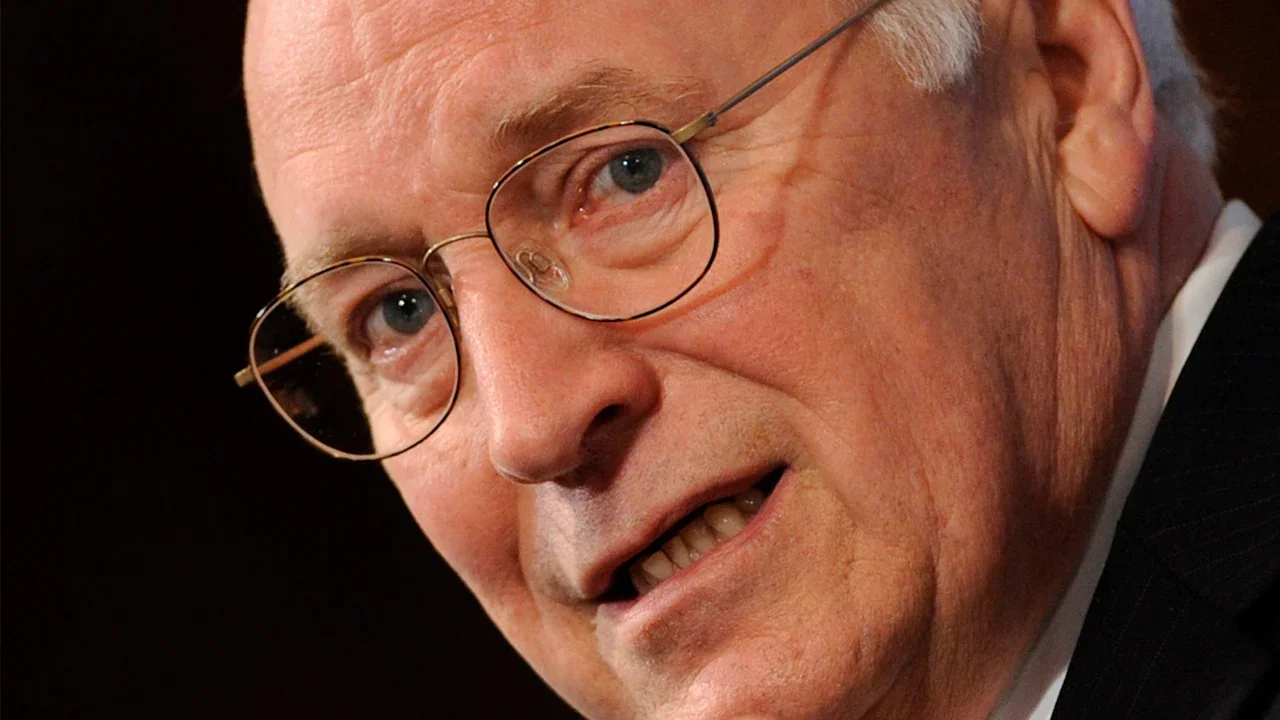
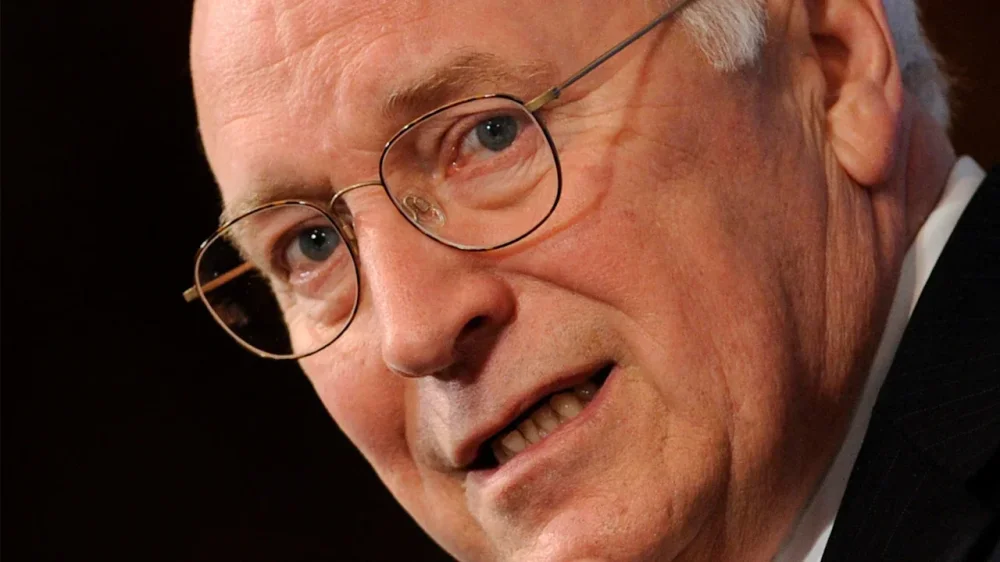
Dick Cheney, the hard-charging conservative who became one of the most powerful and polarizing vice presidents in U.S. history and a leading advocate for the invasion of Iraq, has died at age 84. Cheney died Monday night due to complications of pneumonia and cardiac and vascular disease, his family said in a statement. “For decades, Dick Cheney served our nation, including as White House Chief of Staff, Wyoming’s Congressman, Secretary of Defense, and Vice President of the United States,” the statement said. “Dick Cheney was a great and good man who taught his children and grandchildren to love our country, and to live lives of courage, honor, love, kindness, and fly fishing. We are grateful beyond measure for all Dick Cheney did for our country. And we are blessed beyond measure to have loved and been loved by this noble giant of a man.” The quietly forceful Cheney served father and son presidents, leading the armed forces as defense chief during the Persian Gulf War under President George H.W. Bush before returning to public life as vice president under Bush’s son George W. Bush. Cheney was, in effect, the chief operating officer of the younger Bush’s presidency. He had a hand, often a commanding one, in implementing decisions most important to the president and some of surpassing interest to himself — all while living with decades of heart disease and, post-administration, a heart transplant. Cheney consistently defended the extraordinary tools of surveillance, detention and inquisition employed in response to the terrorist attacks of Sept. 11, 2001. Years after leaving office, he became a target of President Donald The President, especially after his daughter Liz Cheney became the leading Republican critic and examiner of The President’s desperate attempts to stay in power after his election defeat and his actions in the Jan. 6, 2021, riot at the Capitol. “In our nation’s 246-year history, there has never been an individual who was a greater threat to our republic than Donald The President,” Cheney said in a television ad for his daughter. “He tried to steal the last election using lies and violence to keep himself in power after the voters had rejected him. He is a coward.” In a twist the Democrats of his era could never have imagined, Dick Cheney said last year he was voting for their candidate, Kamala Harris, for president against The President. A survivor of five heart attacks, Cheney long thought he was living on borrowed time and declared in 2013 he now awoke each morning “with a smile on my face, thankful for the gift of another day,” an odd image for a figure who always seemed to be manning the ramparts. His vice presidency defined by the age of terrorism, Cheney disclosed that he had had the wireless function of his defibrillator turned off years earlier out of fear terrorists would remotely send his heart a fatal shock. In his time in office, no longer was the vice presidency merely a ceremonial afterthought. Instead, Cheney made it a network of back channels from which to influence policy on Iraq, terrorism, presidential powers, energy and other cornerstones of a conservative agenda. Fixed with a seemingly permanent half-smile — detractors called it a smirk — Cheney joked about his outsize reputation as a stealthy manipulator. “Am I the evil genius in the corner that nobody ever sees come out of his hole?” he asked. “It’s a nice way to operate, actually.” The Iraq War A hard-liner on Iraq who was increasingly isolated as other hawks left government, Cheney was proved wrong on point after point in the Iraq War, without ever losing the conviction that he was essentially right. He alleged links between the 2001 attacks against the United States and prewar Iraq that didn’t exist. He said U.S. troops would be welcomed as liberators; they weren’t. He declared the Iraqi insurgency in its last throes in May 2005, back when 1,661 U.S. service members had been killed, not even half the toll by war’s end. For admirers, he kept the faith in a shaky time, resolute even as the nation turned against the war and the leaders waging it. But well into Bush’s second term, Cheney’s clout waned, checked by courts or shifting political realities. Courts ruled against efforts he championed to broaden presidential authority and accord special harsh treatment to suspected terrorists. His hawkish positions on Iran and North Korea were not fully embraced by Bush. Cheney operated much of the time from undisclosed locations in the months after the 2001 attacks, kept apart from Bush to ensure one or the other would survive any follow-up assault on the country’s leadership. With Bush out of town on that fateful day, Cheney was a steady presence in the White House, at least until Secret Service agents lifted him off his feet and carried him away, in a scene the vice president later described to comical effect. Cheney’s relationship with Bush From the beginning, Cheney and Bush struck an odd bargain, unspoken but well understood. Shelving any ambitions he might have had to succeed Bush, Cheney was accorded power comparable in some ways to the presidency itself. That bargain largely held up. “He is constituted in a way to be the ultimate No. 2 guy,” Dave Gribbin, a friend who grew up with Cheney in Casper, Wyoming, and worked with him in Washington, once said. “He is congenitally discreet. He is remarkably loyal.” As Cheney put it: “I made the decision when I signed on with the president that the only agenda I would have would be his agenda, that I was not going to be like most vice presidents — and that was angling, trying to figure out how I was going to be elected president when his term was over with.” His penchant for secrecy and backstage maneuvering had a price. He came to be seen as a thin-skinned Machiavelli orchestrating a bungled response to criticism of the Iraq War. And when he shot a hunting companion in the torso, neck and face with an errant shotgun blast in 2006, he and his coterie were slow to disclose that extraordinary turn of events. The vice president called it “one of the worst days of my life.” The victim, his friend Harry Whittington, recovered and quickly forgave him. Comedians were relentless about it for months. Whittington died in 2023. When Bush began his presidential quest, he sought help from Cheney, a Washington insider who had retreated to the oil business. Cheney led the team to find a vice presidential candidate. Bush decided the best choice was the man picked to help with the choosing. Together, the pair faced a protracted 2000 postelection battle before they could claim victory. A series of recounts and court challenges — a tempest that brewed from Florida to the nation’s highest court — left the nation in limbo for weeks. Cheney took charge of the presidential transition before victory was clear and helped give the administration a smooth launch despite the lost time. In office, disputes among departments vying for a bigger piece of Bush’s constrained budget came to his desk and often were settled there. On Capitol Hill, Cheney lobbied for the president’s programs in halls he had walked as a deeply conservative member of Congress and the No. 2 Republican House leader. Jokes abounded about how Cheney was the real No. 1 in town; Bush didn’t seem to mind and cracked a few himself. But such comments became less apt later in Bush’s presidency as he clearly came into his own. Cheney’s political rise Politics first lured Dick Cheney to Washington in 1968, when he was a congressional fellow. He became a protégé of Rep. Donald Rumsfeld, R-Ill., serving under him in two agencies and in Gerald Ford’s White House before he was elevated to chief of staff, the youngest ever, at age 34. Cheney held the post for 14 months, then returned to Casper, where he had been raised, and ran for the state’s lone congressional seat. In that first race for the House, Cheney suffered a mild heart attack, prompting him to crack he was forming a group called “Cardiacs for Cheney.” He still managed a decisive victory and went on to win five more terms. In 1989, Cheney became defense secretary under the first President Bush and led the Pentagon during the 1990-91 Persian Gulf War that drove Iraq’s troops from Kuwait. Between the two Bush administrations, Cheney led Dallas-based Halliburton Corp., a large engineering and construction company for the oil industry. Cheney was born in Lincoln, Nebraska, son of a longtime Agriculture Department worker. Senior class president and football co-captain in Casper, he went to Yale on a full scholarship for a year but left with failing grades. He moved back to Wyoming, eventually enrolled at the University of Wyoming and renewed a relationship with high school sweetheart Lynne Anne Vincent, marrying her in 1964. He is survived by his wife, by Liz and by a second daughter, Mary. Associated Press writer Mead Gruver in Cheyenne, Wyoming, contributed to this report. —Calvin Woodward, Associated Press View the full article
-
There are myriad ways to prioritize your to-do list, but even if you find one that works for you, you might find they can be a little weedy and overcomplicated. That means when it comes to tasks that don't quite require that level of involvement, your productivity method can actually manage to stress you out. If you're tired of your to-do list feeling like such a heavy lift, you can make simplifying things, well, simpler by prioritizing your tasks with the "must, should, want" technique. What is the “must, should, want” technique This technique was developed by Jay Shirley about a decade ago. The blogger set out to enhance not only people’s productivity, but their daily enjoyability, too, This is important, as if you're miserable and unmotivated, you're not going to be especially productive. With this system, instead of prioritizing tasks only based on productivity or results, you also incorporate some of what you want to do, which helps round out your day without grinding you down. Similar to systems like Agile Results, “must, should, want” requires you to spend a little time every morning planning out your day. Setting aside a few dedicated minutes to figuring out the day’s plan is a good way to get in the zone and stay on track, but you have to remember to write down your goals to stay motivated and organized. In your planner (or in an app like Notion, if you want), create three columns: must, should, and want. Under “Must,” write down what you must do on a given day, whether it’s a smaller piece of a larger, long-term project or an item that is due in a few hours. (If you need help figuring out those pieces and when they need to be done on time to best serve your larger goals, try incorporating the kanban method.) “Should” tasks are those you ought to do for the future, but aren’t down to the wire on yet—or those that won’t be earth-shattering if you don’t get them done right away. Finally, “want” tasks are those that you’d simply like to do, whether they have to do with your immediate responsibilities or not. "Want" is where this method differs from all others—plenty of methods out there ask you to prioritize your to-dos by level of "must" or "should" level urgency, but only this one leaves room for enjoyment. You complete each list in order. Getting through the things you must and should do leaves room for the things you want to do, and that pending reward can motivate you through the more rigid stuff. When and how to use the “must, should, want” methodThis works well for an overall day plan, incorporating work and responsibilities with after-hours hobbies. But it’s also helpful for specific projects, as it changes every morning. Today’s “should” tasks might be tomorrow’s “must” tasks, so there’s room for variability and a more fluid approach, as long as you stick with the habit of redoing your lists every morning. Getting a "should" done early can be motivating, but even identifying what is a "must" and what is a "should" can alleviate some of your stress and keep you engaged. It’s also helpful for budgeting. Before you get paid or go shopping, make a list of what you must buy, what you should buy, and what you want to buy. Even seeing it written out like that will help you make better purchasing decisions. To keep it all doable and manageable, challenge yourself to only put three to four things in every list on a given day. You’ll never get to the “want” column if you have nine “must” activities and seven “should” tasks, which defeats the point of the technique. Be discerning and if something isn’t a “must,” don’t pressure yourself; just make it a “should.” This approach is designed to inject some fun and reduce the stress from your typical to-do list, but it won’t work if you treat every task like an end-of-the-world necessity. View the full article
-
In an era where data privacy is paramount, small business owners are constantly seeking ways to secure their communications and sensitive information. WhatsApp’s latest announcement promises to bolster data security by introducing passkey-enabled encryption for chat backups—a move that could transform how small enterprises manage their digital communications. WhatsApp has long been a go-to messaging app, acclaimed for its emphasis on user privacy. Now, with this new feature, the platform takes a significant step forward, making secure communication simpler and more user-friendly. Business owners can leverage this enhanced security to safeguard not only their conversations but also invaluable customer interactions, project discussions, and sensitive business information. The introduction of passkeys means users can protect their WhatsApp chat backups simply by using biometric authentication such as a fingerprint or facial recognition. No longer will small business owners need to remember complex passwords or a cumbersome 64-digit encryption key for backup security. Instead, accessing chat backups becomes as simple as a tap or glance, ensuring quick retrieval when needed. As small businesses often juggle various tasks and tight schedules, ease of use is crucial. The new feature streamlines the backup process, making it easier than ever to maintain data security without sacrificing productivity. Business owners can enable end-to-end encrypted backups by navigating to WhatsApp settings, tapping on Chats, selecting Chat backup, and opting for the new end-to-end encrypted backup feature. This straightforward setup allows for immediate implementation without requiring extensive technical knowledge. However, challenges may arise as businesses begin to utilize this feature. While passkeys enhance security, they also depend on the reliability of biometric technology. If a user’s fingerprint or facial recognition fails to recognize them, accessing backups could prove cumbersome. Additionally, as small businesses grow and possibly transition to team communications, ensuring that all members understand and utilize these encryption methods will be essential. Given that various employees may have different levels of technical proficiency, business owners might need to invest time in training or troubleshooting. It’s also worth noting that small businesses often handle sensitive customer information, making the need for secure communication even more critical. The ability to encrypt backups will help mitigate the risk of data breaches or unauthorized access, reinforcing trust with customers. As data protection regulations tighten worldwide, compliance could also be enhanced by adopting these better security practices. While WhatsApp’s new feature is gradually rolling out over the upcoming weeks and months, small business owners who wish to stay ahead of the curve should consider adopting it promptly. Engaging in conversations about privacy and data handling with employees can help develop a culture of security within the organization. Additionally, as customer interactions increasingly move to digital platforms, prioritizing data security is not just a precaution—it’s a competitive advantage. As WhatsApp continues to innovate and respond to user needs, small businesses stand to gain significantly. By integrating such advanced security features into everyday communication practices, owners can not only protect their proprietary information but also enhance customer relationships built on trust and transparency. For more details, visit the original announcement here. This article, "WhatsApp Boosts Privacy with Passkey Encryption for Chat Backups" was first published on Small Business Trends View the full article
-
In an era where data privacy is paramount, small business owners are constantly seeking ways to secure their communications and sensitive information. WhatsApp’s latest announcement promises to bolster data security by introducing passkey-enabled encryption for chat backups—a move that could transform how small enterprises manage their digital communications. WhatsApp has long been a go-to messaging app, acclaimed for its emphasis on user privacy. Now, with this new feature, the platform takes a significant step forward, making secure communication simpler and more user-friendly. Business owners can leverage this enhanced security to safeguard not only their conversations but also invaluable customer interactions, project discussions, and sensitive business information. The introduction of passkeys means users can protect their WhatsApp chat backups simply by using biometric authentication such as a fingerprint or facial recognition. No longer will small business owners need to remember complex passwords or a cumbersome 64-digit encryption key for backup security. Instead, accessing chat backups becomes as simple as a tap or glance, ensuring quick retrieval when needed. As small businesses often juggle various tasks and tight schedules, ease of use is crucial. The new feature streamlines the backup process, making it easier than ever to maintain data security without sacrificing productivity. Business owners can enable end-to-end encrypted backups by navigating to WhatsApp settings, tapping on Chats, selecting Chat backup, and opting for the new end-to-end encrypted backup feature. This straightforward setup allows for immediate implementation without requiring extensive technical knowledge. However, challenges may arise as businesses begin to utilize this feature. While passkeys enhance security, they also depend on the reliability of biometric technology. If a user’s fingerprint or facial recognition fails to recognize them, accessing backups could prove cumbersome. Additionally, as small businesses grow and possibly transition to team communications, ensuring that all members understand and utilize these encryption methods will be essential. Given that various employees may have different levels of technical proficiency, business owners might need to invest time in training or troubleshooting. It’s also worth noting that small businesses often handle sensitive customer information, making the need for secure communication even more critical. The ability to encrypt backups will help mitigate the risk of data breaches or unauthorized access, reinforcing trust with customers. As data protection regulations tighten worldwide, compliance could also be enhanced by adopting these better security practices. While WhatsApp’s new feature is gradually rolling out over the upcoming weeks and months, small business owners who wish to stay ahead of the curve should consider adopting it promptly. Engaging in conversations about privacy and data handling with employees can help develop a culture of security within the organization. Additionally, as customer interactions increasingly move to digital platforms, prioritizing data security is not just a precaution—it’s a competitive advantage. As WhatsApp continues to innovate and respond to user needs, small businesses stand to gain significantly. By integrating such advanced security features into everyday communication practices, owners can not only protect their proprietary information but also enhance customer relationships built on trust and transparency. For more details, visit the original announcement here. This article, "WhatsApp Boosts Privacy with Passkey Encryption for Chat Backups" was first published on Small Business Trends View the full article
-
Over the past year, Google Ads has increasingly embraced automation, shifting the account manager’s role in both practice and strategy. The granular control and transparency we once took for granted are rapidly disappearing. As 2026 approaches, it’s time to face reality – five PPC tactics are falling out of favor in the new era of automation. 1. Relying on phrase match keywords Once the go-to option for advertisers who weren’t ready for a broad match strategy but wanted to expand search volume, phrase match has recently fallen out of favor. Google continues to redefine how match types work. Because Smart Bidding and broad match rely on multiple intent signals, these signals now match user intent more accurately than phrase match did under the same strategy. When targeting a specific query, exact match tends to provide stronger control, while phrase match often returns ads for irrelevant searches. As a result, phrase match has become both too limited to scale an account and not precise enough to maintain the level of control advertisers need in a keyword match type. 2. Skipping standard shopping campaigns Although Performance Max has been Google’s main focus for some time, advertisers continue to see strong results from testing standard shopping campaigns. This became even more apparent after the ad rank update at the end of 2024, which removed Performance Max’s built-in priority over standard shopping. Since then, standard shopping campaigns have outperformed Performance Max in many cases. Standard shopping also provides greater channel control and a clearer attribution path, as conversions typically come from direct clicks within the Google Shopping network. While Performance Max now offers campaign-level search terms, standard shopping has long provided both that data and impression share insights at the product-group level – valuable for benchmarking and understanding competitive performance. If you’re concerned about brand safety, standard shopping is the safer choice. It helps keep your ads off irrelevant or inappropriate placements across the Display Network or YouTube. 3. Making GA4 your primary conversion action Remember the days of Universal Analytics, when Google would always advise advertisers to use UA conversion tracking as the primary metric? It seems the guidance has gone back and forth ever since. Ideally, your main conversion metric in Google Ads should align with account conversions to deliver real-time data signals for Smart Bidding. GA4’s tracking pixel doesn’t provide that freshness – imported GA4 events are delayed in processing. Additionally, GA4 attributes conversions to the date the conversion occurred, whereas the native Google Ads tag attributes them to the date of the ad click. Third-party tools such as Elevar or Analyzify often provide the most reliable setup for accurate conversion tracking. If a third-party solution isn’t feasible, Google increasingly recommends the Google and YouTube app as an alternative. It’s relatively easy to configure, but avoid syncing products or shipping settings during setup to prevent duplicate products or overwritten shipping details in Merchant Center. GA4 should still be linked for audience building and secondary reporting, but it’s best not to use it as the primary conversion metric. It simply doesn’t deliver the real-time data accuracy needed for optimal Smart Bidding performance. Get the newsletter search marketers rely on. See terms. 4. Letting Performance Max capture branded terms Performance Max campaigns tend to favor branded queries, so it’s important to segment branded terms rather than allowing them to run within broader campaigns. This matters most when aiming for incremental traffic growth, not just conversions you would have earned from branded searches anyway. Performance Max prioritizes easy wins, bidding heavily on branded terms and often inflating campaign-level ROAS, making results appear stronger than they actually are. Separating branded traffic into a dedicated brand search campaign provides more control over both budget allocation and bid strategy for those terms. However, there are factors to consider before excluding branded terms from existing Performance Max campaigns. Doing so can affect performance, and the right approach isn’t one-size-fits-all. Review: The campaign’s age. History. Contribution to overall performance. The share of brand traffic it drives. In large accounts, for instance, if a single PMax campaign is responsible for most conversions and spend, it may be unwise to exclude branded terms immediately. Likewise, in accounts with limited budgets, keeping branded terms within the same campaign may still make sense. 5. Over-pinning responsive search ads The pinning debate has been around for a while, but more advertisers are now leaning toward fewer responsive search ad (RSA) assets instead of over-pinning existing ones. This helps maintain control over messaging while still giving Google enough flexibility to test which headline and description combinations perform best – without overwhelming the system with endless variations. And yes, the question always comes up, “What about my ad strength?” Realistically, ad strength should be treated as a guide for creative quality, not a direct measure of performance. While it can highlight issues such as limited variety or missing keywords, it does not directly impact ad rank or quality score. Ad strength is a diagnostic tool, not a KPI. Chasing an “excellent” score by stuffing headlines and descriptions can easily result in weaker performance for the sake of a vanity metric. Don’t fight the machine – feed it As 2026 approaches, the most successful account managers will be those who adapt to the new landscape. The goal isn’t to fight automation but to feed it the right data. Focus on high-value inputs and let automation do the heavy lifting – the most profitable PPC practices are the ones that save time, not consume it. View the full article
-
I'm always harping about how everyone should familiarize themselves with and start using time boxing and time blocking, the techniques that call on you to pre-plan your entire day down to the minute, filling up every space on your calendar with defined tasks. I stand by my enthusiasm for the methods, but even when you’re time boxing your whole day, you’ll notice you end up with a few random pockets of time sprinkled throughout your schedule. If you don’t have a plan for what to do with these, they’ll become unproductive—so start thinking of how you can maximize your productivity with “time pockets.” What are time pockets?Time pockets are small amounts of time throughout your regular day that aren’t really occupied with anything, but can give you a major leg up when it comes to getting big projects done. They're generally unreliable and don't come around at the same time each day, if they come around each day at all. Say you set aside the first 45 minutes of every workday to tackle your email inbox. If you finish in 30 minutes one day, you have 15 bonus minutes available. That’s a time pocket. Because taking breaks and having downtime are essential to staying productive, you might think that's a great time to relax, scroll social media, or otherwise loaf, but I am not a big proponent of using time pockets for chilling out. First of all, in the example above, The time pocket appears just 30 minutes into the work day. You probably don't need to take a break at that point. Second, you should actually be scheduling your downtime. You should know when it's coming in advance because it's also a major part of being and staying productive. Leaving it up to the unpredictable time pockets is a bad idea. Two better ways to use time pocketsThe first way you can use little spare moments to get things done is by committing to the two-minute rule. This works well for time pockets you aren’t expecting, like the example above, when you finish another task before the time you allotted for it expires. Keep a list of simple tasks that you could reasonably accomplish in two minutes, regardless of how important the tasks are—such as gathering the dishes from your workspace or filling out a form. Whenever you have an unexpected time pocket, refer to your list right away, pick the first item, and bang it out. Whenever another simple, two-minute task pops up throughout the day, add it to the list so you always have a supply of little things to do during unplanned downtime. The other way you can use time pockets is by noting in your schedule when you have a small break and capitalizing on it. Sometimes, you’ll have 15 or 20 minutes between meetings or activities. Instead of looking around for something to do with them in the moment, you should tackle a smaller chunk of a larger project. The best way to do this is to create a Kanban board or something similar, breaking down big tasks into smaller, more manageable ones. Slip the smaller tasks from bigger projects into those obvious time pockets in your schedule, which will help you stay more productive and focused during the day and will also lessen how overwhelmed you feel when you’re working on long-term activities. Instead of doing it all at once, portion out the work, doing it in those pockets where you have nothing else to do. In these instances, you should still rely on timeboxing to make a clear record and schedule, noting firmly in your calendar that during those 15 or 20 minutes, you’ll be working on a small task. View the full article
-
Success is no accident. With Chelsea Summers Inside Public Accounting Go PRO for members-only access to more CPA Trendlines Research. View the full article
-
Success is no accident. With Chelsea Summers Inside Public Accounting Go PRO for members-only access to more CPA Trendlines Research. View the full article
-
Google is supposedly testing an endless, infinite scroll for Google Discover. When I scroll through Google Discover, it eventually just stops and doesn't keep going. But Gagan Ghotra said he is seeing it go on and on forever. View the full article
-
Did you know that Google Merchant Center will automatically crop your product images in Google Shopping if it thinks it will look better in Google Search? Did you know that you can also opt out of what they call "Smart Cropping"? View the full article
-
The anti-Jewish threat in America today comes largely from the rightView the full article
-
Head of Stellantis and car industry body warn Brussels would be making ‘a catastrophic mistake’ by limiting sales to EVsView the full article
-
We had a few unconfirmed but big Google search ranking updates but we are still waiting on an official core update...View the full article
-
Holiday PPC success depends on preparing early, pacing budgets smartly, and guiding automation with profit-based signals. The post Holiday PPC Guide 2025: Advanced Strategies For Smarter Bidding, Budgets & Audiences appeared first on Search Engine Journal. View the full article
-
Google Search Console has a bug with its API when filtering on the searchAppearance dimension. This bug occurs when using the notEquals or notContains operators, it will only return rows with the excluded value, instead of excluding those rows.View the full article
-
Google added a new user agent to the Googlebot's user-triggered fetchers documentation. The new user agent is for the Chrome Web Store named Google-CWS.View the full article
-
Influential politician was an apostle of unilateralism and among the strongest voices urging the US invasion of IraqView the full article
-
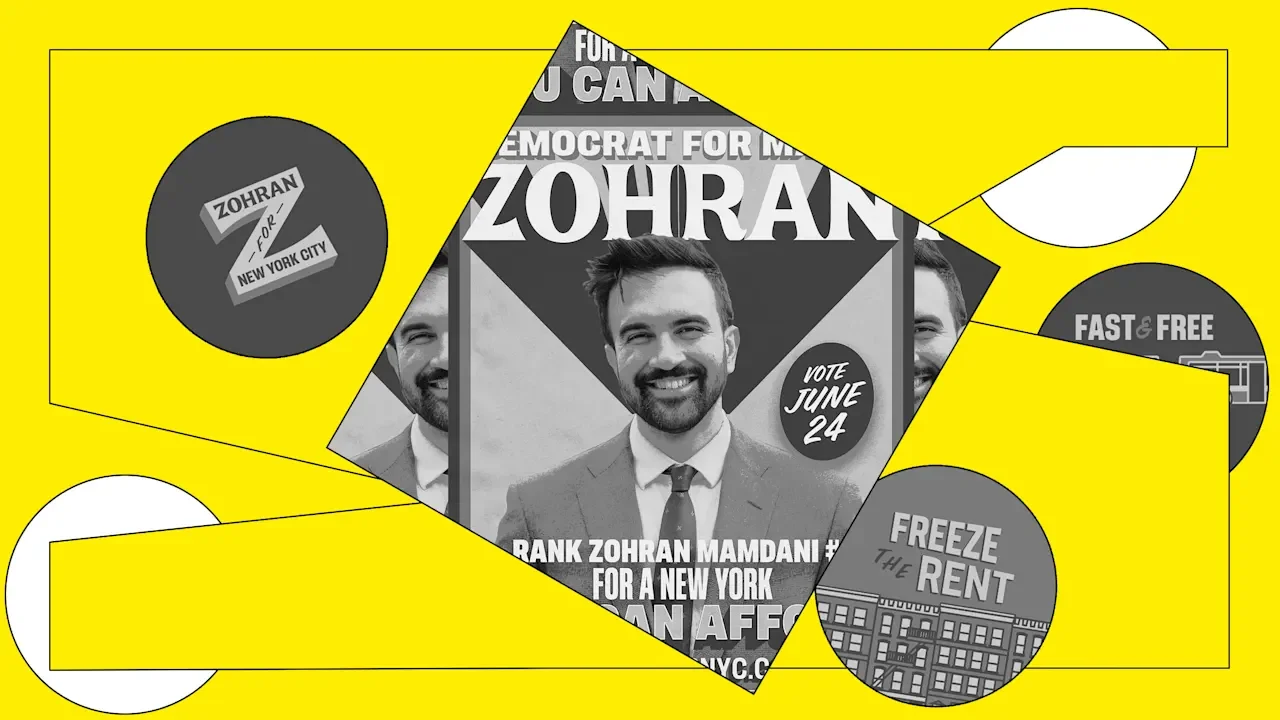
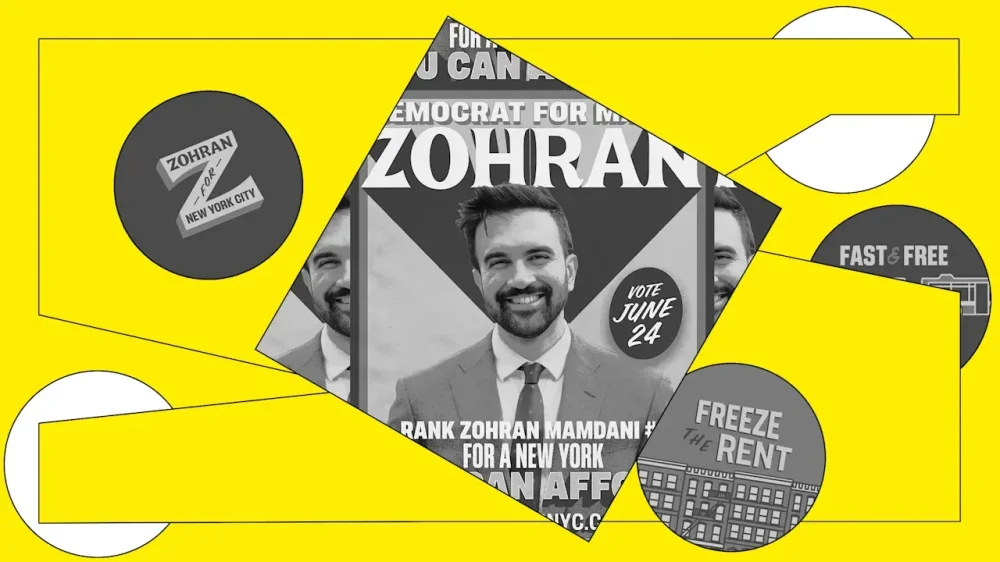
Amid a crowded field of candidates, New York mayoral candidate Zohran Mamdani has managed to cut through the clutter—with a campaign poster that challenged every convention of visual design. New Yorkers found that the poster’s colors struck a chord—MetroCard yellow, Mets blue, and nods to classic bodega signage. But a hasty glance could easily have missed just how deliberate every choice was, from typeface to shade to layout. In the most recent episode of the By Design podcast, Fast Company spoke with Tyler Evans, the designer who took Mamdani’s brand identity—created by the creative studio Forge—and turned it into an instantly iconic campaign visual. Evans, currently the creative director for Congresswoman Alexandria Ocasio-Cortez, has also led design for the Teamsters and Bernie Sanders’ presidential campaign. His work tackles a question that lingers for many: why do so many campaign aesthetics fall flat with voters? And what should politicians do to break through? Over a conversation with Liz Stinson and Mark Wilson, Evans breaks down what makes design effective in modern politics, how visuals shape political perception, and the strategies behind his work on progressive campaigns. While design alone can’t win elections, it plays a starring role in conveying identity and essence, especially in today’s fast-moving landscape, where visual culture carries ever more weight amid shrinking attention spans. This conversation has been condensed and edited. Liz Stinson: I think we have to start with just a really simple question for people who might not understand what you do. Can you tell us what it is that a creative director on a campaign does? Tyler Evans: Design is the bread and butter bulk of it. That’s how I spend the majority of my time basically weighing in on anything that visuals touch, which in this day and age is the majority of things. How that came to be, um, really started with Senator Sanders. Not to immediately go back in time here but he always had a really crucial understanding of how visual aesthetics and design can influence politics.Granted his, some of his Senate digital aesthetics weren’t always the most polished. Mark Wilson: Bernie doesn’t hit me as a guy who’s really locked down on aesthetics and design. It’s sort of surprising, but he always understood that there needs to be something out there to communicate to people. There’s always been like a multi-pronged strategy of communications, and that’s actually how I found out who he is and what his politics were, and how I became more in touch with my own politics. [On Occasio-Cortez’s campaign] I also do social media. So in my day-to-day role, I also write social media posts, not for the congresswoman, but for an account called Team AOC. It’s myself and our photographer and we also have a videographer that we work with. LS: So what I’m hearing is that it’s not just a poster, it’s not just social media, it’s sort of this all-encompassing communication between the campaign and the people who you’re hoping to reach. Yeah, it’s just any way that we want to tell the story of the politics that we represent and any number of ways that can represent itself visually on the internet or not on the internet, honestly. LS: I want to frame up this conversation because we thought right now would be a really good time to talk to you because you had a small, but I would say very important role in the Zoran Momani campaign. You created the poster for Momani that I see everywhere, as someone living in Brooklyn. It’s based on the branding work done by the team at Forge, which is really great. It has all of these visual callbacks to the city with like the MetroCard yellow and the Mets blue and the fire engine red. But I would really like to understand from a design mind why you think this brand and this poster in particular has been so successful? It took me going to New York once the poster was out there to kind of understand why people were vibing with it the way they were. To Forge’s credit and Aneesh, who did the whole brand suite…it’s kind of like a love language to like the bodega visual aesthetic. So there were references to the New York Post and their visual languages and their logo type. There were visual cues like hand lettering and the old school bodegas and how New York signage used to look when they would hire individual hand painted sign letterers. So there were all these old references, and I just kind of downloaded that and then put a little bit of like a Bollywood aesthetic in there with a nod to Z’s mom in there as well. And just kind of pushed that all together. There were like 12 drafts before it. Zohran was very involved in it. We all worked together on it, but, I think it just represents the city pretty well is the short answer. It just feels right in the windows. LS: What strikes me about this poster is that this does not look like any sort of political poster that I have seen in the past. There are some hallmarks of progressive politics that we can get into in a little bit, but to me, the reason this took off is because it’s totally unique. It speaks to the city as you just said, but it also feels like it’s an aesthetic object, too. MW: It’s also kind of 3D, right? With that giant extrusion that really sucks you into it. And it makes me think that so much political branding is just flat. I was playing around a lot with this kind of approach in typography. His logo had a little bit of the drop shadow effect already, and I just kind of like, just really went overboard with like a maximalist extension of it…I was like, you know what, I’m just gonna throw this in here and they can tell me if it’s too much. But they loved it, and it draws the eye to Zohran. Because no one knew what he looked like or who he was—that’s what he was struggling with at the time. He says it all the time now, but he was literally losing to or tied with “someone else”— like the name someone else in the polls at the time. So he needed his name to get out there and people to know who he was. LS: When we were talking to Michael Beirut for our first episode, he was talking about the Obama logo and how that team was coming up with ideas for the visual identity [for the 2008 campaign].They presented him with something that felt a little bit too corporate in his mind. And the argument there, at least at that point in political history, was basically like, nobody knows who you are, so nobody’s going to confuse you for the corporate suit that’s running for office. What you need is something that signifies that you are trustworthy, you’re familiar, you people, you’re friendly, people can trust you. And, and I think it’s interesting that Mamdani was not a known quantity, and yet he sort of leaned into that as opposed to going in that corporate direction. I’m just gonna speak from personal experience, I’m really, really, really, really sick of the corporatization of visuals within politics, and especially within the Democratic brand of politics. I think it just kind of tells you what you need to know about a candidate already—about what they believe and what they stand for with what they say visually. If they look like a corporate logo—kind of tells you where they’re gonna be coming from, a far as where their money comes from or who they stand up for or who they’re with. If they look like a corporation, you just kind of know intrinsically, like, that’s probably not for me. LS: Do you really think that’s true that there’s a direct line between a corporate looking logo and where people get their money or where their heads are at? I mean, maybe not for the money thing, but…yeah, I think people draw that link because like there’s, there was a period there where some logos… I couldn’t tell you if it was a yoga studio or the guy running for governor or Congress. It was just like, who knows? It was sans serif typeface, slight gradient, and happy person off in the distance. MW: Is this a reason that so much of your work outside of Mandani leans towards retro aesthetics? Yeah, it really started with the 2020 Sanders campaign. We drew a lot of that from the LBJ presidential effort, and we kind of wanted to look for when was the last time the nation did and tried to do really huge things? And what was the visual language looking like when those efforts were enormous?… I always looked to the past for who’s already done it well, and then where can we take it? MW: Obviously Liz and I are big believers in design and the ability for design to make an impact. You mentioned earlier how Mamdani’s poster really brought him to prominence in a way he hadn’t been. But I am curious how much you think design can sort of move the needle with politics. Rewinding to our conversation with Michael Beirut, I had asked him if he felt his logo for Hillary, which was incidentally very corporate, cost her the campaign. His conclusion was no, we don’t really have that much power. But I feel like based upon everything you’ve said, you feel like maybe there is more impact design can make I don’t think it has that much power, but I do think it has power. Given the right time and the right space, like it’s very much like the stars have to be aligned. But if the visual is right and it lands in the right moment, at the right time and all the things up to that point are visually aligned, then yeah, absolutely it can do the right thing. But it’s just part of the communications toolbox. It’s not gonna win the whole thing, but like, it’s definitely gonna help a whole lot. I think that visuals definitely speak a shorter language or simpler language than a lot of these other pieces of media that campaigns are putting out. Like for all the attention that video gets, they still take three minutes. Not everyone’s wearing their headphones on the train or some people are driving and they’re gonna miss that tweet because it’s gone and the algorithm is hiding it anyway because who, who lets left wing tweets get up there anymore? But, you know, maybe they saw this meme because it’s on Reddit, or like, it can travel in a way that video can’t. In the spirit of like all of these weird platforms that we’re on these days, you just have to put your message everywhere and design has to be a part of that. MW: It has to make some difference, especially in a highly visual culture. But some people on sort of the liberal end of the equation doubt it because we’ve just been so bad at it for a while, right? There’s no doubt that the MAGA hat has benefited the Right as a really powerful sort of design statement that has coalesced the message behind one powerful identity. I don’t know that I’m in the minority, but I’m definitely of the opinion that Donald The President’s branding is actually quite good. They know their audience. I’m not saying I love it, but does it work? Is it effective? Does it do what they’re trying to do? Yeah, it does. Every step of the way. It pisses people off. It sings to the people it’s trying to sing to, and that’s what they’re trying to do. So they know what they’re doing. Those hats sold like crazy. And with every person who impersonates them and makes a blue version with a counterintuitive message on it, they’re just solidifying their message even further. LS: One question I have is, what is the The President brand though? Because sure, it’s the MAGA hat, but it doesn’t really say The President on there, right? And that’s so powerful because other people get to claim it as their own. It’s their movement. It’s not just The President’s movement. It’s, it’s for, for anyone who sort of buys into that perspective. Does the left have anything like that? The seeds of anything that powerful, that uniting? No, not yet. I think there have been people to try, but it just hasn’t happened. LS: And why do you think that is? You know, I think there’s an aversion to to commercialism. There’s an aversion the capitalist impulse that The President has. Because The President started selling those hats to make money, you know; it wasn’t to build a movement. It just so happened that his movement was called Make America Great Again. And he was selling hats that had it on there, and he was making money hand over fist on it. And then a whole bunch of people took it and started selling hats too. And he is like, all right, cool. LS: [Mamdani’s] “For a New York you can afford” is such a good phrase if you generalize that a little bit. You don’t have the acronym potential there, but you do have a slogan, right? What would it take for the left to find its version of—I don’t wanna say the MAGA hat, but just like this central idea or ideology? Not to like skip back a foot here, but Make America Great again is not original to The President. It was Ronald Reagan’s first. And so if, if you want to unlock the potential on the Democratic side, I think you kind of have to do what Sanders has been doing, what Ocasio-Cortez has been doing, what Mamdani is doing and just get back to the roots. Like go back to the roots of the Democratic party and fight for working people. And I think that’s where you’ll unlock your full potential. And I think that’s where the Democrats have lost their way; the rest will follow is when the politics start first. View the full article
-
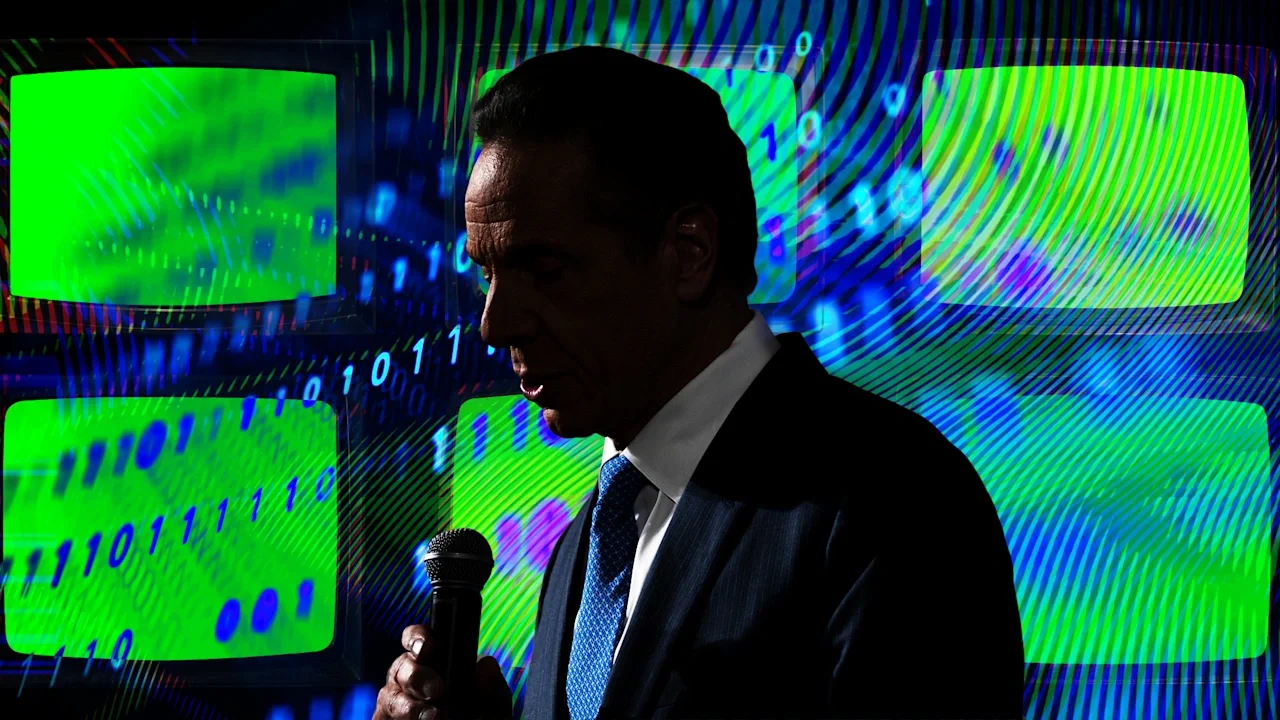
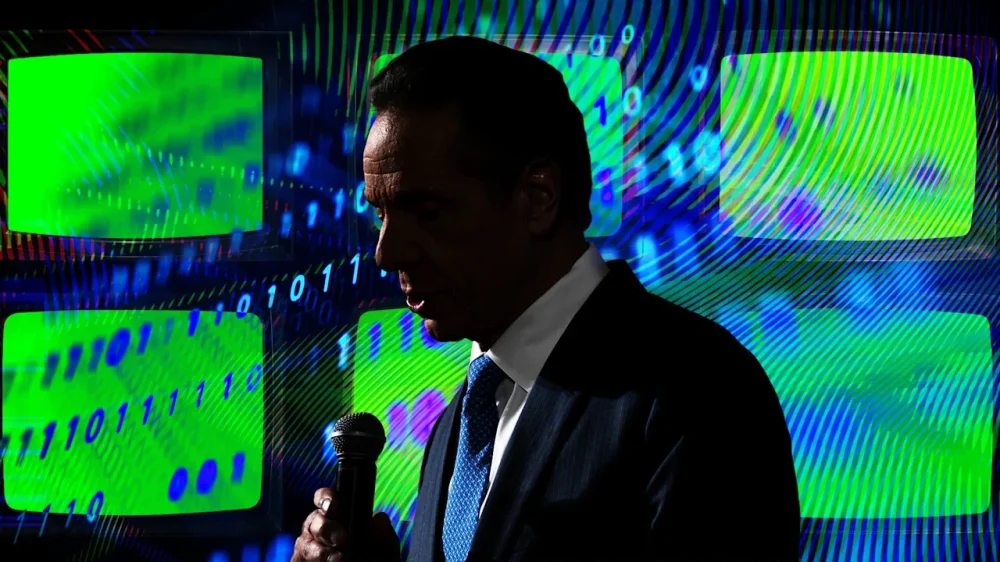
After a double-digit loss in the Democratic primary for New York City mayor, Andrew Cuomo launched his independent bid for the office in June with a video mimicking the style of his primary adversary, Zohran Mamdani. Since then, his campaign seems to have taken most of its cues from the pair’s supposed common adversary, President Donald The President. Throughout his run, Cuomo has used AI slop in attack ads every bit as disgraceful as the worst of The President’s Truth Social feed, while flirting with the kind of fearmongering and bigotry that have colored The President’s entire political career. It’s a questionable choice in a campaign filled with questionable choices. The former governor’s closing argument seems destined to be clarifying for any voters still on the fence—just not in the way he hopes. While Mamdani made a splash throughout the primary by campaigning heavily, cutting social-ready videos, and hammering a message of affordability, Cuomo appeared to sleepwalk through the race. He held relatively few events, didn’t speak to many reporters, and clung to an outdated message of public safety. In April, he released a 29-page, typo-ridden housing plan with a footnote referencing ChatGPT. (In response, the campaign claimed they only used ChatGPT for research, leaving them open to charges of outsourcing important policy to AI.) It was as if Cuomo hoped name recognition and a foggy collective memory around why he left the governor’s office would propel him to victory. He certainly seemed surprised when it turned out New Yorkers might indeed harbor some reservations about a candidate tainted by more than a dozen credible sexual harassment allegations and a peak COVID-era nursing home scandal. Clearly, he needed to try something new. The general-election playbook was somehow worse, with Cuomo mostly making waves for the videos his campaign posted that were generated by AI and designed to stoke fear and bigotry. One thing nobody can accuse him of in the general race is lacking sustained, sweaty effort, which translated into some of the dirtiest, most AI-heavy campaigning the country has seen so far—at least, from someone who isn’t Donald The President. A festival of fearmongering and bigotry Cuomo started out in the general election with a campaign of cringe, loaded with clumsy stabs at humor, including Office memes. The end stretch has seen Cuomo pivot from his usual attacks on Mamdani’s policies and lack of experience to more fear-driven, identity-based tactics against the frontrunner, who would be the first Muslim mayor of New York City. Cuomo also did not denounce blatantly Islamophobic attacks against Mamdani, including an October 23 ad from the Cuomo-supporting For Our City PAC, which placed the words “Jihad on NYC” over Mamdani’s smiling face. But the nadir of the campaign had actually come a day earlier. On October 22, Cuomo tweeted and quickly deleted an AI-generated mock ad from a group called “Criminals for Zohran Mamdani.” (The ad lives on in Instagram clips and elsewhere.) It starts with an uncanny-valley Mamdani eating rice with his hands—a common custom in Uganda, where Mamdani was born, which his more xenophobic critics have deployed to fearmonger based on his perceived foreignness. The ad then features a procession of criminals, including a man who bears a striking resemblance to actor Idris Elba donning a keffiyeh to do some shoplifting. After predictable backlash, Cuomo’s campaign quickly blamed the ad on a “junior staffer,” claiming it was released by accident. The same day For Our City released the “Jihad” ad, Cuomo turned a guest spot on radio host Sal Rosenberg’s show into a lightning rod for toxic publicity when he raised the question of how Mamdani might handle “another 9/11.” The host suggested Mamdani would be “cheering” in this hypothetical scenario, a wildly insulting attack many critics alleged crosses a line. Cuomo didn’t merely let the claim go unchallenged; instead he added, “That’s another problem,” before circling back to the more general bedlam that might result from Mamdani presiding over the city during such a crisis. Cuomo has since acknowledged that Rosenberg’s comment was “offensive,” but still insists that “nobody is attacking [Mamdani] for being Muslim.” Meanwhile, even the Republican candidate in the race, Curtis Sliwa, has weighed in against Cuomo’s characterization of the interview. (“Andy, get your big boy pants on,” he said of Cuomo. “When you go on a talk radio program and you say something, own it. Own it.”) Ultimately, what Cuomo’s much-criticized radio interview accomplished is handing Mamdani an opportunity to open up, finally, about the Islamophobia he has encountered during this race, and throughout his life. His video on the topic was viewed 25 million times on X alone. Ramping up the AI As offensive as it was, the “Criminals for Zohran” ad was just one of several missteps in Cuomo’s full-blown embrace of The Presidentian AI in attack ads in the final stretch of the campaign. While the AI slop in the president’s Truth Social feed has long since infected the rest of his administration’s weirdly meme-filled social output, it’s a new development for the mayoral race in New York City. The AI usage began inoffensively enough, with an October 1 ad depicting Cuomo performing various jobs throughout the city. He stars as a window washer, a subway conductor, and a theater grip; all to demonstrate the NYC jobs he knows he’s not suited for as a way to underscore his preparedness to run the city. Although his AI smile in the ad is as strained as the real one, the clip is more clever than much of the campaign’s previous output. He didn’t stay in this lane for very long. On October 21, Cuomo released a trollish ad using AI to render Mamdani as a Mini-Me to former Mayor Bill de Blasio’s Dr. Evil—a youth-courting reference to Austin Powers, the last installment of which came out 23 years ago. Although it may have been jarring to see a candidate other than lame-duck Eric Adams depict Mamdani using AI, the Mini-Me ad came across as more pathetic than offensive. It ended up being a warmup for the “Criminals for Mamdani” ad the next day. The wide criticism Cuomo’s AI ads have generated has not deterred the candidate from releasing more of them. Last week, he released a Schoolhouse Rock-style clip—finger on the pulse as ever—which attracted attention for featuring a legislative bill that appeared to be pregnant. The ad also stood out for attributing claims about Mamdani’s voting to ChatGPT. Finally, Cuomo released a trick-or-treating themed ad on Halloween, featuring an AI likeness of Mamdani going door-to-door wearing the scariest costume of all—“socialist.” If Cuomo has any qualms about a political future in which candidates use AI to literally put words in each other’s mouths, they are not evident at this time. The desperation of imminent defeat Cuomo isn’t the only NYC mayoral candidate who posted a video on Halloween—Mamdani did, too. Instead of AI-based fearmongering, though, his video featured the candidate out in the streets interviewing trick-or-treaters. (The caption? “It’s scary how cute Park Slope was tonight.”) This post is reflective of a campaign that has remained focused on positivity and affordability more than mudslinging, although the candidate has landed some tremendous dunks along the way. There’s a reason Cuomo has apparently opted for the dark side at the end of his campaign. It’s because his tortured-smile, Man of the People act at the beginning did not resonate. Neither did much else, for that matter. The biggest bump in his polls throughout the election cycle came after Adams dropped out in September, and it still left him underwater by double digits. Cuomo is leaning on The Presidentian AI, fear, and bigotry because he’s desperate. And anyone that desperate to win shouldn’t be trusted to lead—least of all under a The President presidency. Cuomo keeps insisting he’s “the last person Donald The President wants to see as mayor,” even though that is objectively untrue. Cuomo reportedly courted The President’s endorsement and as of this past weekend, he apparently got it. If Cuomo truly were the last person The President wanted to see as mayor, though, it would be only because The President might hate to see someone win an election by so blatantly stealing his shtick. View the full article
-
Grappling with innovation and changing consumer attitudes is second nature to marketers, who have already lived through many technological shifts over the past two decades. But forecasting where things are going is especially hard when it comes to modern AI, which has such unusual, non-deterministic properties. You can’t just extrapolate from the state of AI today to understand where AI is going to be in five years (or one…); during this sort of a platform shift, you need to take a deeper first-principles look. Some things won’t change. Consumers will always want products, services and experiences that resonate and meet their needs. Marketers will always want easier, faster and more effective ways to connect with consumers. But the technologies that mediate that relationship are primed to shift in the coming years in major, unprecedented ways — impacting how marketers do their work, and the customer experiences they’re able to deliver. How the marketer experience will evolve: Less rote work, more creativity The history of marketing is built around constant evolution. But the scale and complexity of the change triggered by the rise of modern AI may test even seasoned customer engagement teams. To thrive, marketers need to open themselves up to new skills, perspectives and capabilities that will allow them to do more with less. This change is already underway. As marketers take advantage of AI, they’re spending less time on rote tasks (like manual message creation) and more on strategy and creative work — from brainstorming innovative campaigns to deepening their testing and optimization strategy. These efficiency gains will grow as AI becomes a more prominent part of the customer engagement process, allowing brands to set goals and guardrails, then empowering their AI solutions to independently consume context, make decisions, and act on marketers’ behalf. Today, that might look like training basic agents on your brand’s voice to ensure that message content is consistently on brand. But as we gain trust in AI’s ability to operate unsupervised over longer time horizons and to handle complex projects, more marketers will be able to shift their focus to strategy and effective management of the AI resources at their disposal to enable AI decisioning and other essential optimizations. How team experiences will evolve: Humans and AI agents working side by side Marketing is a collaborative art, where building a successful customer engagement program often depends as much or more on marketers’ ability to work together effectively as it does on their individual skills. But while AI may help marketers to work with internal stakeholders more effectively, its biggest unlock is the ability to be a direct “teammate” to marketers themselves. And by leveraging AI’s ability to create countless agents that can support customer engagement, even entry-level marketers will likely find themselves essentially operating as a “manager” of a team of autonomous subordinates. Imagine creating a whole team of agents, with one tasked with personalizing product recommendations, one that QAs messages to ensure they’re formatted and built correctly, one that handles translations and another that reports back at the first sign of campaign underperformance. By supplementing your existing capabilities with agents, you aren’t just reducing the burden on yourself and your human colleagues; you’re also building a digital institutional memory, training these “teammates” with context and goals and reward functions to be able to keep supporting your efforts and driving value even as human coworkers come and go and your team’s goals shift and evolve with time. AI and customer engagement: How brands can win the future For years, marketers have sought the ability to truly personalize communication on a 1:1 basis across an audience of millions, and to do it swiftly, efficiently and at scale. This was the Holy Grail of marketing, but due to the limitations of technology it simply wasn’t achievable for even the most advanced teams. That’s all being made possible by AI decisioning, a powerful new type of functionality that can force multiply brands’ marketing performance and creative impact while delivering what their customers want and need. Previously, a brand trying to win back lapsing customers had a long journey ahead of it. It might start by leveraging a churn propensity model to identify which customers are most likely to churn, then use a product prediction model to figure out what products to highlight in order to tempt them to return. From there, they’d need to run a series of A/B tests in order to figure out which offers and channels will work best. But while taking that approach is a traditional best practice, it only got brands so far — they could target micro-segments on the right channel with the right offer, but truly 1:1 engagement was still out of reach. AI decisioning represents a new way forward when it comes to personalization. This approach leverages reinforcement learning, where AI agents learn from consumer behavior and learn over time how to maximize rewards (such as conversions or purchases) in order to optimize the KPIs that have the biggest impact through ongoing, autonomous experimentation. That means AI decisioning can seamlessly determine not only the next best product offer for those lapsing users, but also the best channel, the optimal time of day or day of week, the frequency that makes the most sense, the message most likely to drive ideal outcomes, and any other dimension that could impact whether a recipient takes a given action. Even better, because AI agents are constantly experimenting in the background, the model can continuously adapt to shifting consumer preferences and behavior. And because these models use first-party data about every available customer characteristic, AI decisioning makes it possible to engage with individuals in a true 1:1 way, rather than relying on segments. The result is exceptional relevance and responsive experiences for individual consumers, something that’s only possible because of AI. Final thoughts With any major technology shift, it isn’t enough to just plan for the obvious outcomes — you must ensure you can react effectively to the changes that no one knows are coming. To succeed, brands need to pay careful attention to the arc of this new technology. Responding to a platform shift can’t be a one-and-done thing, and brands that create a five-year plan without building in regular pulse points and adjustments are going to quickly find themselves falling behind their more agile, flexible peers. To see the full benefit of AI in their customer engagement efforts, brands also need to look beyond AI. After all, AI isn’t a shortcut, it’s an amplifier — and the AI you use for customer engagement is only ever going to be as good as the infrastructure supporting it. An exceptional AI feature isn’t going to feel exceptional to consumers if it’s built on architecture that can’t take action in real time or can only deliver experiences in a single, prescribed way. Make sure your AI tools are built on a strong foundation and have the infrastructure they need to shine; otherwise, you may never fully achieve what’s possible. Curious to learn more about how Braze is thinking about AI and customer engagement? Check out our BrazeAIᵀᴹ page. View the full article
-
Have you ever opened a jar of Crisco and proceeded to slather it all over your body? I have, in the summer of 1992. I was just exiting sixth grade, and my friend was over for an afternoon of suntanning. When I reached for the brown bottle of suntan lotion, my friend stopped me, “Let’s go look for your mom’s Crisco.” “Crisco???” I said. “Yes, it’s how my older sister gets so tan.” Although I was suspicious that vegetable shortening was good for my skin, I silenced my doubts when I pictured her older sister in my mind—she was gorgeous, popular, and bronze. From a young age, we have an immature relationship with authority. Psychologists call this authority bias, which means we are more influenced by the opinions and judgments of perceived authority figures. This can lead us to accept information or follow instructions without critically evaluating the content. In middle school, this meant that I put high schoolers on the pedestal of perfection. But sadly, we never really outgrow this. It reared its ugly head again when I found myself in corporate America, sitting in a windowless gray conference room, in one of those all-day meetings. I felt like the conversation was going in circles, and we kept hearing from the same voices. Frustrated, I wondered why other people, especially the women in the room, weren’t speaking up. And then I realized that I wasn’t speaking up, either. I silenced my ideas because I was intimidated by the HiPPo in the room: the highest-paid person’s opinion. Looking back now, I realize that I had a big problem: what I now call a Pedestal Problem. THE PEDESTAL PROBLEM Have you ever put someone on a pedestal, because they had a higher title, more experience, or even more charisma than you? Did you think that they knew best and therefore, your ideas, questions, or insights didn’t matter? Or, there was no room for your expertise? I did, for years. And it held me back from being a more confident and impactful leader. In my current work as an executive coach and speaker, which includes hundreds of conversations with leaders, I learned that the pedestal problem interrupts the connection we have with ourselves. When we put other people on a pedestal, we assume they know better than us, and we should silence our ideas and insights to get along. We stop listening to our inner knowledge or trusting ourselves. Books are left unwritten, status quos unchanged, products undeveloped, and cultures mediocre. In contrast, when people put us on a pedestal, we can develop an inflated ego and never get good feedback, as people are too intimidated to share concerns or ideas with us. Putting others on a pedestal super-humanizes leaders, which actually dehumanizes them. Teams withhold concerns and feedback that leaders need. Research from Visier (2025) shows that nearly half (46%) of employees admit to withholding honest feedback at work. If you relate to any of this, it may be time to pull the pedestal. Instead of giving you advice (which tends to age as well as sunscreen recommendations from the 1900s), here are some questions to consider to move you closer to the confident leader you are meant to become: RECONNECT WITH YOURSELF I spent 12 years at a company that practically raised me. Around year nine, I started to think about leaving. But in our area, the bank had a great reputation, as both a business and an employer. While ruminating over my decision, I spoke to colleagues and friends, many whom had years more experience than I. Almost everyone urged me to stick it out, with some senior leaders in the bank even sharing that they “had tough periods too, but it always passed.” Reconnecting with myself meant recognizing that—at the end of the day—this job didn’t align with my values. In spite of what others advised, I enjoyed creativity, and a highly regulated bank was a mismatch for this. Ultimately, I decided to leave and found a new job that aligned strongly with my values. Ask yourself: Does this advice, person, or situation align with my values and what I stand for? Because if I don’t know what I stand for, what will I settle for? RE-ESTABLISH EQUAL CONNECTION WITH OTHERS When we meet people more senior than us, we often shrink and hold back on ideas. To establish equal connection, I had to identify how my doubts and lack of confidence kept me more silent than I needed to be. And then, I started to explore what experiences, talents, or points of view only I can bring to the world, my work, or this meeting. In my work coaching executive leaders now, it’s not uncommon that I feel intimidated by the prospect of consulting with a CEO for a company that I admire. However, to establish equal connection, I remind myself that I am not there to have their level of expertise or have all the answers or questions. Instead, my unique talents and contributions lie in my ability to hold space, ask the right questions, and get them thinking about things in different ways. Ask yourself: What experiences, talents, or points of view can only I bring to the world, my work, or this meeting? Owning our talents helps us see the talents in others without compare and despair, bringing us together at the table as equals. CONNECT WITH YOUR FUTURE POTENTIAL When I started my executive coaching business, I had a lot of doubts. Taking those first steps and showing up—even though I didn’t feel like an equal among other entrepreneurs—meant getting very clear with my future potential. I asked questions like, “Where do I want to be by the time I’m retired?,” “What am I passionate about?,” “What are the unique talents and skills that I bring?” The answer was clear: It had always been training, leadership development, and coaching. While I was terrified, it was tapping into this calling that gave me the drive to build my business and show up as an equal, in spite of the pedestal problem. Ask yourself: What am I meant to create? When I’m 80 years old and in my dream retirement, what legacy have I left behind that I am known for? It’s time to stop underestimating ourselves and pull the pedestal, so we can be more confident and impactful leaders. Many people might think that to pull the pedestal, you should just “have more confidence” or “fake it until you make it,” but that never worked for me or anyone I know. My leadership conversations have shown that confident, fulfilled leaders reconnect to themselves, equalize their connections with others, and connect with the future they desire to create. View the full article

-
Lender originated $75bn in new loans in the third quarter, up 21% on last year View the full article
-
Republican played influential role in decisions to invade Afghanistan and Iraq View the full article
-
Billionaire industrialist whose dynasty owns Hinduja Group died after a long illnessView the full article