ResidentialBusiness
Administrators
-
Joined
-
Last visited
Everything posted by ResidentialBusiness
-
 David Droga was the face of Accenture Song even before it was called Accenture Song. The ad legend sold his agency Droga5 to Accenture’s creative advertising and marketing division then-called Accenture Interactive in 2019. He became CEO of that division in 2021, and rebranded Interactive as Accenture Song in 2022. So when he stepped down in May, the $20 billion company was not only losing its CEO, it was also losing the voice of the agency. Named to lead the new era was Ndidi Oteh, who comes from leading Song’s operations in the Americas, and has been at Accenture for about 14 years, where in her previous role she was the global account lead for Nike, and retail industry strategy and consulting lead for the West Coast. Earlier this month, Oteh officially sat down behind the CEO desk. Song is facing a lot of the same challenges as the rest of the advertising and marketing services industry: layoffs, restructuring, and shifting client budgets—all as AI wreaks havoc on the traditional ways of doing business. But its new CEO believes it has the tools and capabilities to thrive. Droga once told AdAge, “You either grow into the future or you’re shrinking into the past.” Oteh says that thanks to Droga’s vision of bringing creativity together with Accenture’s technology and business services, Song has had a head start in preparing for the future of marketing and advertising. Despite its size, Song is still just about 30% of Accenture’s overall business. The larger parent is a broad, global consultancy that specializes in digital transformation and operations efficiency. Not only does this give Song the opportunity to pair its capabilities with Accenture’s, it also shields it from some of the ebb and flow of the ad industry as those industries figure out how to navigate a world where success means more than producing great creative. “This isn’t a conversation about having a great Super Bowl ad, one could argue it never was,” she says. “The reality is now, we aren’t only talking about marketing. We’re talking about marketing, customer service, social commerce, sales, creating digital products, and how that should all be powered by AI. We have always had the right pieces, but we are now connecting all of it in a way that’s very different.” Industry of one In Accenture’s most recent earnings report, released last week, Song’s revenue was up by 8% to $20 billion. Despite the positive results, Song is not immune to the shifts in its business. As of September 1, Accenture bundled services including strategy, consulting, Song, technology, and operations into a single integrated business unit called Reinvention Services. Song’s parent company, which has a workforce of about 800,000, also laid off more than 11,000 employees over the last three months as part of a $865 million restructuring program. The holding company model is in a state of flux, with significant consolidation reflecting the need for greater efficiency. Omnicom and Interpublic are merging to create the world’s largest advertising and marketing services holding company. Publicis recently combined Publicis Worldwide and Leo Burnett into a single entity called Leo. The promise of the holding company model has always been to deliver world-class creative and strategy at scale, with technology, media, and everything else all under one roof. Traditionally, a major hurdle has been overcoming the fact that most of these capabilities are from separate companies, gradually acquired by the holding company, and silo’d from each other in a way that is both confusing and inefficient for the clients. Companies under the same parent have often been competing against each other more than collaborating, with clients complaining about workflow bottlenecks and a lack of consistency. All the recent consolidation is an effort to strip away these barriers. In 2022, Song itself consolidated a number of the creative agencies under its roof, moving all but Droga5 under one P&L. Song has made more acquisitions in the last few years. In August, it acquired social and influencer agency Superdigital. And in 2024, it bought consumer engagement firm Unlimited, digital design and tech agency Work & Co., and Brazilian creative shop Soko. Oteh says that Song approaches acquisitions through the lens of capability, building, and expansion. “In most cases, we either already have the capability, and we’re saying we want to do more, or we’re saying we see this is where the future is heading, and we want to make sure that we have it,” she says. The key is how it’s integrated into the company as a whole. “How do we embed it so all of us lift, not that there’s just this siloed organization?” she says. “If we can’t, that doesn’t help you drive reinvention. Our clients are asking for a company that understands how everything’s connected, how to bring people together, and how to bring different functions and capabilities to be able to drive those harmonized customer experiences.” Oteh says Song sits apart from the ad holding companies by virtue of its own parent company. “I don’t really think about where Accenture fits in comparison to holding companies,” says Oteh. “Song is powered by Accenture, and that means the foundation of technology. Actually understanding your data—what it takes to build an AI infrastructure—is what Accenture does every day. In many cases, Accenture is already helping them with the infrastructure, so that allows us to have different types of insights into what they need to do to really make sure they’re driving growth with their customers. I think that puts us in what feels a little bit like an industry of one.” Growth engine CMO A decade ago, Oteh says that many CMOs had given away a lot of the core components of their brands’ connections to the customer. The technology teams owned the consumer data, as well as the strategy around digital tools like e-commerce. In too many C-suites, the CMO was brand-only. Oteh says this has shifted dramatically. “They were spending a lot of time talking about what to build from a messaging and marketing perspective, but the other core components of what it takes to truly understand your customer had been given out,” she says. “Now, there’s not a CMO today who is not talking about two things: First, I have to do more with less. And second, getting better insight out of my customer data to drive forward.” For Oteh, CMOs should be the growth engine again for their company, instead of marketing being the first stop when cuts need to be made. “The CMO wants to be at the center again, and in order to do that, they have to really make sure that they’re modernizing the way in which they work,” she says. “Maybe gone are the days where you have 100 different agencies that you’re working with. Maybe gone are the days that you’re spending most of your time doing your operational tasks that truly can be done through AI. There has to be a transition, and every single CMO that we talk to today is saying, ‘How do you help us get there?'” Back in 2022, Droga told me the key to Song’s success was about making sure that it can effectively combine its strengths with those of the rest of Accenture’s capabilities. Now, Oteh says the real challenge is to do everything they’ve been doing, but faster. “So many of the opportunities that we’ve had over the past year are not just about marketing, but about sales, customer service, design, building a product, and connectivity to finance,” she says. “And that did not used to happen at the rate that is happening now.” View the full article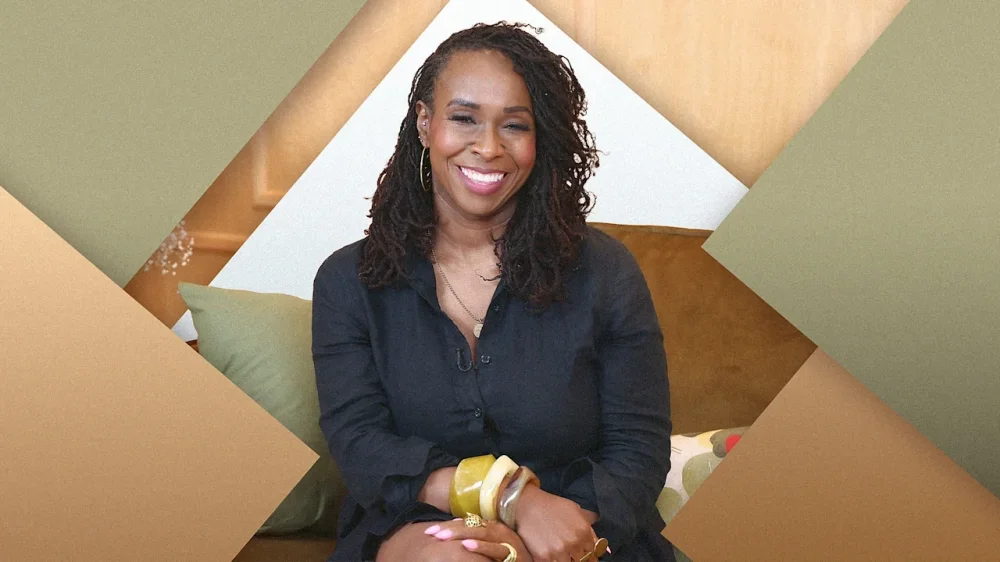
-
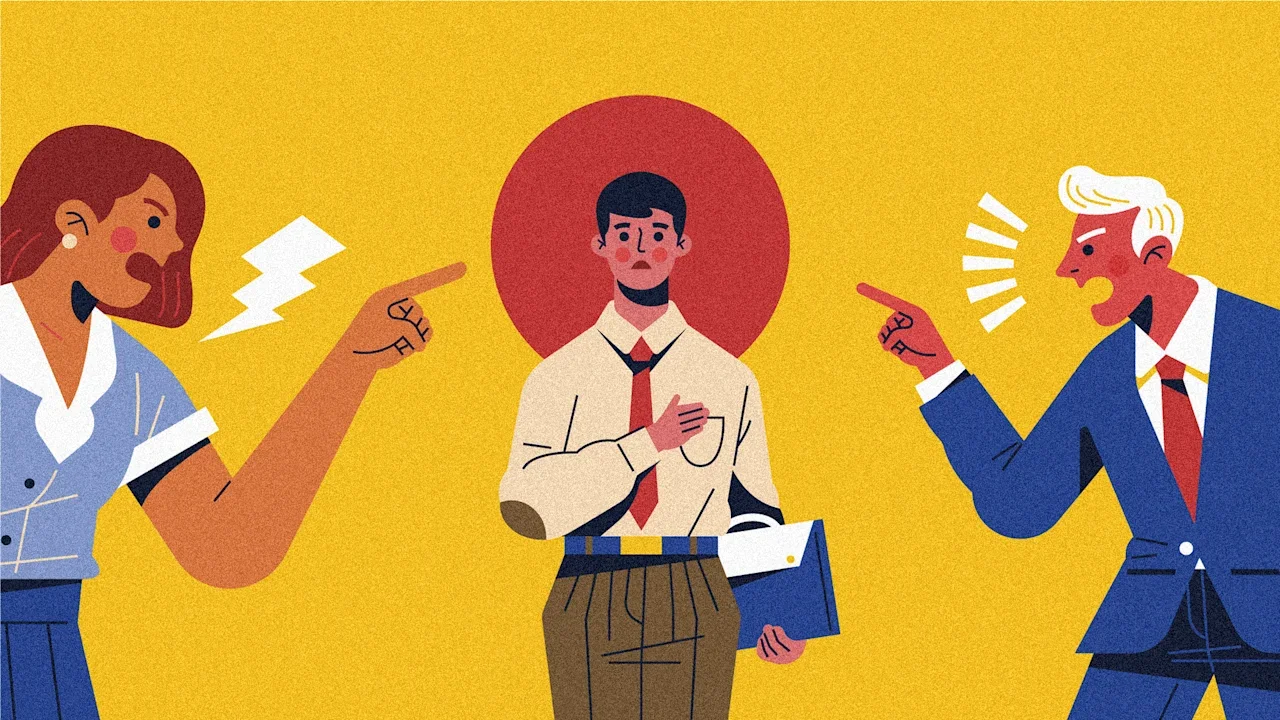
It’s the end of the workday. You’re ready to bounce. But you feel compelled to check in with your boss. For many workers, it feels like the appropriate thing to do. But as one viral TikTok makes clear, those norms may be changing. The skit—which has more than 20 million views—asks whether it’s okay to leave at 5: An employee walks into the boss’s office. “I’m heading out,” she informs him. “Wow—5 p.m. right on the dot. I just love your work-life balance,” he responds sarcastically. “The workday ends at 5,” she, very fairly, points out. The post then opens up the debate to the comments section: Do you leave at 5 o’clock on the dot? Do you finish up what you’re working on and drift out sometimes between 5 and 6 p.m.? Or do you ensure you are always the first one in and the last one out of the office? Naturally, people were divided. Some stood by the fact that they will work the hours they are paid to work, not a minute longer. “If I’m prepped and ready to work at 8 I’m prepped and ready to leave at 5,” one wrote. “Go to the bathroom from 4:30-5. Then go home,” another suggested. “I’m in my car at 4:56,” another added. In many workplaces, though, staying put at your desk past 5 p.m. or until your boss has packed up and left is the unspoken rule. “I always believed you show up 10 mins before you start and leave 10 mins after you time is done,” one commenter wrote. “If you’re paid until 5, you work until 5. It takes a few minutes to gather your things,” another added. Checking in with your boss can be an act of transparency and open communication. But it could give a toxic boss an opportunity to make you work late when there’s no need. It could also be a sign of a fawn response, in which you suppress your own needs for validation from an authority figure. And staying until your boss leaves (or hanging around trying to look busy) can be a form of presenteeism, which could lead to burnout and isn’t even good for the company’s bottom line. In the U.S., employees are already expected to work more hours than their counterparts in most other nations. Taking off promptly at 5 p.m. has long been a trait managers could judge you on. But whether it’s seen as lazy or simply setting healthy work-life boundaries is changing. For the first time ever in 2024, recruiting agency Randstad’s yearly survey of 26,000 workers around the world found work-life balance surpassed pay as a key motivator for employees. Within those firm boundaries, “9 to 5” means “9 to 5,” regardless of salaried status. “If you’re micromanaging a few minutes,” one commenter on the TikTok post said, “I don’t wanna work for you.” It’s currently still an employer’s market, which may empower managers to feel no qualms about asking direct reports to work late. Of course, that won’t last forever. But the debate on whether bosses should keep people past 5 might. “People don’t quit jobs,” said one commenter. “They quit managers.” View the full article

-
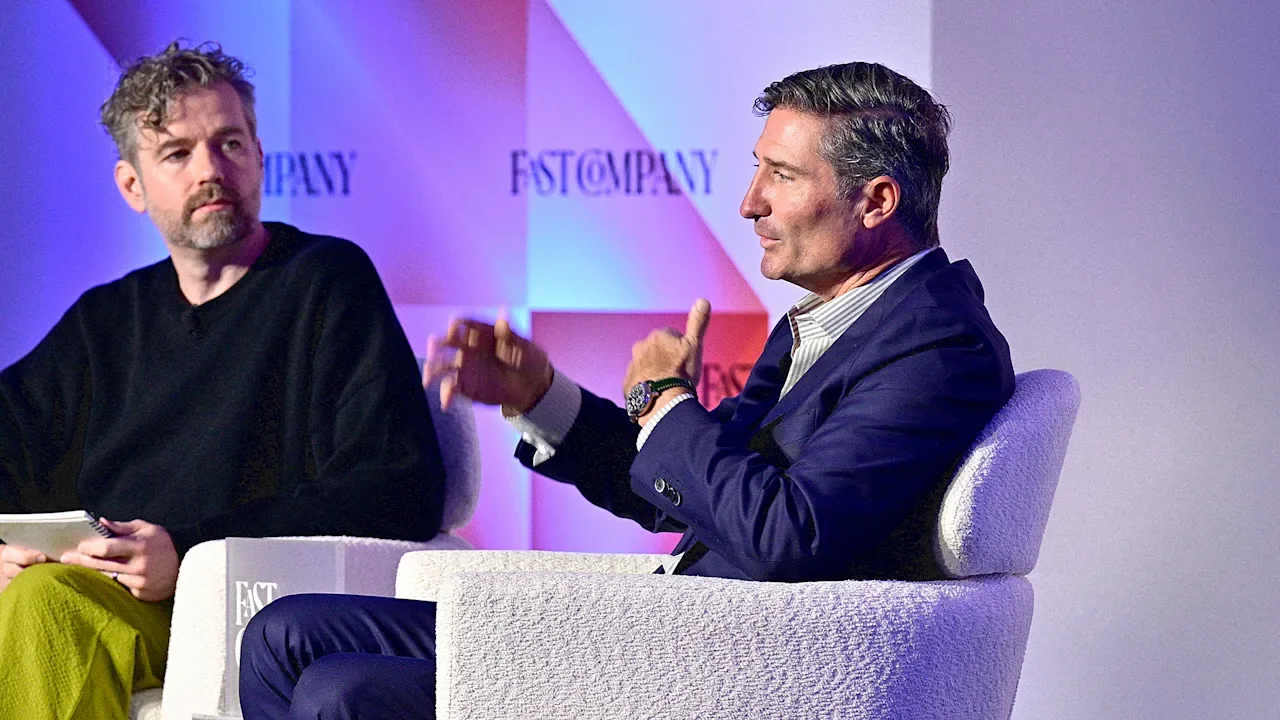
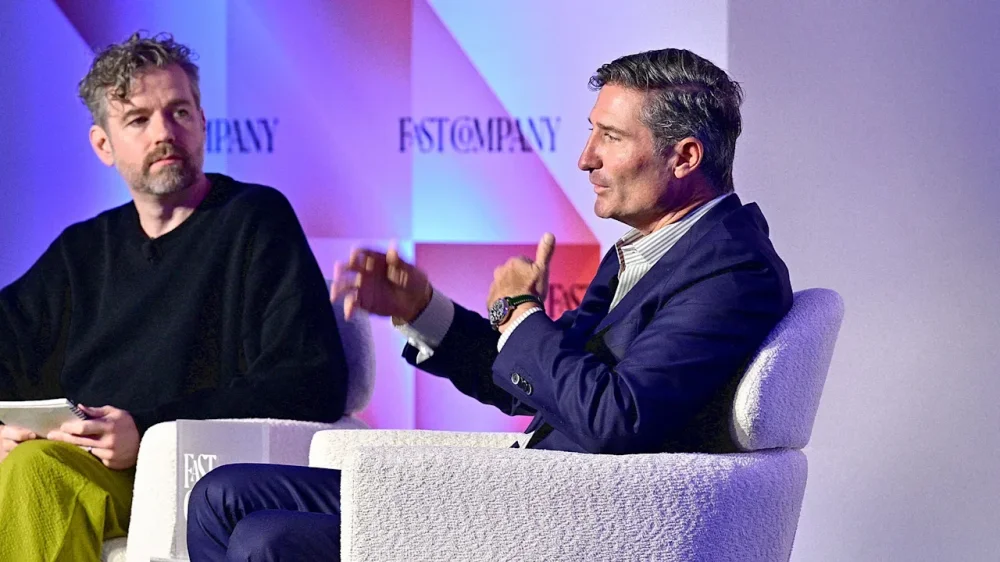
Whatever happens next at Starbucks will be studied for decades to come. The world’s largest coffee chain has faced six quarters of declining same-store sales. But for the last year, its new chairman and CEO, Brian Niccol—the surest bet in the restaurant industry—has been architecting a turnaround. Hot off turnarounds at Yum Brands with Pizza Hut and Taco Bell, which he followed up by modernizing burrito building at Chipotle, Niccol has proven himself to be both a master marketer and operations expert. Which is why, when he announced that his strategy for Starbucks was to revive the third place, even some of Niccol’s fans were skeptical he could pull it off. Earlier this month, we published our Fall cover story in which I profiled the plan through an unprecedented amount of access with Niccol. And the same morning that story went live, I sat down with him at our Fast Company Innovation Festival in New York. Fast Company In front of a standing-room-only audience, Niccol gave his first public interview since taking the job. And what the audience experienced was remarkably like what I did over hours of previous conversations with Niccol: He is disarmingly practical, charmingly matter-of-fact, and flatly uncompromising. Unlike many CEOs who will say just enough to escape off the stage, he proved open to take on any question about his business with gusto. You can hear the full interview on this month’s episode of our podcast By Design, watch it on our site, and also read the full transcript below. From his plans to design a new Starbucks chair to his comments on his biggest competitor, you don’t want to miss this one—best enjoyed alongside a hot cup of joe. Fast Company: No matter what your feelings are about Starbucks, in your heart of hearts, there was a time that Starbucks was the best. And I don’t know that we’re going to agree on what that year was, but whatever it was, Brian wants to bring you back to it. Since taking over as CEO last year, he’s kicked off a design-led turnaround for Starbucks, re-skinning stores, bringing back seats, rethinking sort of back-of-house service. But I do have one little confession. When Brian and I first met for this story, I said that at the announcement of his hiring, I wasn’t sure he was the guy for the job. Sure his bonafides were really as the top guy in the restaurant industry. He came from Taco Bell, where he launched an app and turned that company around. He went to Chipotle—a very different, very analog company—where he installed screens and a second line for making burritos that brought new efficiency. He upgraded their app significantly, and turned Chipotle around. But Starbucks has the best app already! So what could he do there? And I think what we really got into quickly was that for Starbucks to have a design turnaround, it actually needed to rethink its entire infrastructure. Brian Niccol: Look, the Starbucks strategy of “Back to Starbucks” is all about ultimately getting to the place of being the best of Starbucks again. And if you think about what makes Starbucks special, it’s how you feel when you’re in a Starbucks, when it’s truly a community coffee house. It truly is the third place. I think it is our point of difference and it’s why people fell in love with Starbucks. It’s why I fell in love with Starbucks 20 years ago when we had the first Starbucks come to the little town I was in just outside of Cincinnati. And I think there’s no reason why we can’t have that today. And I actually think people want it more than ever. I know digital and AI and the ability to connect and get bits of information in all forms or fashion are faster and easier than ever before. But I think nothing beats the good old-fashioned sit-down with a friend, sit-down with a family member, sit-down for a job interview face-to-face over a cup of coffee. It never can be replaced. And so I think when we do it right, there’s nobody better. And I firmly believe the best days of Starbucks are still in front of us. I’ve had the opportunity to travel around the world and experience our coffee and the community coffee house around the world, and it transcends cultures; it transcends borders. It really is, I think, the best of humanity when you get people together around a table, in a safe place, over a cup of coffee. I really do believe it’s important to get these ceramic mugs back too because there is something to this like mug hug when you get your warm cup of coffee. And we want all those little moments to be back again. We’re designing a new mug, we’re designing a new seat, we’re doing these coffee house uplifts. I do believe the customer experience—the aesthetic of that community coffee house—is really important. It seems like at an age when everything is basically digital and convenience dominates, it’s no longer a distinguishing feature for your brand. Look, we’ve got to have access through the app, we’ve got to be quick, we’ve got to be convenient, we need to have drive-throughs. I think the thing that separates us is that coffee house moment. Whether you’re walking into a coffee house to just grab your cup and go, I think it’s important that you walk into a coffee house. We’ve all been in those places where we’ve gotten to-go food. And if you walk into a place and it’s empty and soulless, you don’t feel great about that to-go order. If the place has a soul, a connection, even if it’s a to-go order, you feel much better about that to-go order. And I think the same is true for Starbucks. That’s part of the business argument, right? That basically upgrading the physical space will actually increase digital orders and other things along those lines. Absolutely. And look, the other thing too is there was a lot of feedback from our partners on what it took to run the Starbucks. Now you have three key access points: You’ve got the drive-through, mobile-order pickup, and now you have the café or the counter experience for the café. And we’ve worked on technology and process and flow and staffing to ensure that our teams are set up where they can do all three of those access points successfully. Some of the feedback I was getting initially is they’re not set up for success. And so you might’ve heard us talk about this Green Apron service model that we just started to roll out, and we’re investing $500 million to $600 million into additional labor in the stores. But it’s purposeful. It’s purposeful to make sure that every transaction is more than a transaction—it’s actually a moment of connection both at the time you order and at the time you hand it off. So I want to rewind a bit: You start last year, you come into the role. Tell me what drove you crazy. Well, there were a few things that drove me crazy. I had left Chipotle and I had about a month, month and a half before I was starting at Starbucks. And the thing I did was I started going to Starbucks with a lot more frequency. I was kind of between jobs and I heard that’s kind of one of the things you do is you go hang out at Starbucks. But when I went, what I quickly realized is we had done some things that basically did not deliver on having a great in-café experience. I walked into a store, and outlets were covered or outlets weren’t working. There weren’t enough seats. It was clear that we had prioritized a waiting area for mobile orders over solving, How do we better sync up the timing of when you order your drink and when you show up for your drink so that you don’t need as big of a waiting area and we can put those seats back in? I also saw it was very transactional, as opposed to giving our baristas, or our partners, the time to create connection and also do their craft correctly, consistently. When I started to see these things . . . it was really interesting. There was one customer, he happened to be in front of me and he didn’t realize I was the CEO. And he ordered a brewed cup of coffee from our Clover Vertica machine, and our barista turns around, makes the brewed cup of coffee and then sends it down the line behind lattes and everything else. The gentleman’s literally getting anxious. You can tell he just wants his cup of coffee right now, and instead we were sending it down the line. And so I just asked him: I was like, “Hey, does this happen to you all the time?” He’s like, “All the time. . . . I can put my own milk in my coffee.” And what I found out was we had removed the condiment bar during COVID and we never put it back. And we had also changed the process of brewed coffee to go down the line as opposed to just handing it back to you at POS. It went down the line because the barista was the one to pour in the oat milk or whatever. That’s right. And inevitably, your coffee’s very personal. So to tell somebody how much milk to put in or how much sugar to put in, it’s very hard to get it correct when the person doesn’t see what’s going on. So we also had a scenario where we’re redoing these coffees a lot, or worse yet, I saw somebody hand somebody their cup of coffee, a cup with some milk, and then a cup full of sugars. And then this person’s gotten now three cups and is looking like, Well, where am I supposed to go with this? We don’t have the seat for him to sit down to go put the cream and sugar into his coffee. So those were little things where I’m like, Gosh, this is really frustrating and there’s no reason for it to happen. It made it hard on our partner, it made it hard on our customer. And these were simple things to solve. And hopefully you’ve seen that already go into effect where now we have the condiment bars back. When you do order brewed coffee, they should hand it to you right at the order point. Let me pause you there, though. Because on paper it’s simple enough to put the milk back on the condiment bar. But on the back end, you stopped charging more for different or alt dairy milks, right? That’s a relatively big decision, but you made it pretty quickly. Yeah, well that was another thing that I was hearing from customers. And I guess probably the point, to go back to your question, when I first started—I always take the approach of what are customers saying? What are our partners saying? What’s working? What’s getting in the way? And then it’s a really easy list to create to say, “Okay, if we just fix these things to eliminate these pain points for both our customers and our partners, I think we’re going to make a lot of progress.” One of the pain points was why is regular milk no upcharge, but there’s an upcharge when I want oat milk? I was listening to it, and I’m like, I think they’re right. As a customer, that would not delight me. So we made the decision to stop charging for alt milk. Doing that also freed us up to then have the right milks on the condiment bar. What I found out was one of the weird little barriers was, well, we wanted to charge for the alt milk, so we didn’t want to put it on the condiment bar. I saw the hacks where people get the espresso, pick up the oat milk, and dump half the container. Kind of screws everybody, but also saves a dollar. What’s so interesting is you see these compensating behaviors, and you’re like, this is really silly. We can make it very simple. And the simplicity actually works for everybody. You’re changing store design quite a bit. There will be three core store designs—I would say small, medium, and large. And the small in particular is going to be a new format store we haven’t really seen before, modeled after a classic espresso bar. So the idea is in a small format you can still have a great barista connection and still have a couple of seats. You’ve all experienced these places as you’ve traveled around the world. The traditional espresso bar is actually, though, just a walk up to the bar, get a shot of espresso, maybe have a few words, and out you go. I do believe we still need to have some atmosphere where if you want to sit down and have your drink, you can still have a seat. So there’ll be small formats primarily driven toward the idea of like, hey, I want to get my coffee. Maybe just have a minute or two at the barista [counter] and then move on. But [we will] also provide six to eight seats where if you want to sit down, you can sit down. Then obviously when you go to the medium store, you’re going to have probably 30 seats. And then as it gets bigger, you can get to 50, 60 seats. In some cases, even bigger. You might’ve seen we just opened a flagship store in Spain at the Bernabéu [Stadium] in Madrid, and that is the third place on steroids. You have a complete view of the pitch or the Real Madrid soccer team. It’s amazing. It really is amazing. I think actually, I think Fast Company called it the most beautiful Starbucks in the world right now. So my point is they can be beautiful when they’re big and multistoried, or they can be beautiful and intimate when it’s 800 square feet with 10 seats. We do not have to make a trade-off. You’re adding 30,000 seats back? I think it’s going to be closer to hundreds of thousands of seats back. We’ve basically seen every major restaurant chain rip out seats over the last five years. I wrote an essay a few years ago called “Death of a place to sit,” and we’ve seen this trend everywhere. Do you think this is going to lead the industry in a resurgence of seating? Do you think people sort of draft off of Starbucks like they did Starbucks’s rewards app years ago? I think people want a place to be able to spend time with each other over food or over coffee. When I was at Chipotle, there was a moment there where we were like, “Oh, you don’t need that front of house anymore. You can just do everything through the digital-make line.” At the time I felt like I was a little bit out on the island, but I was like, “I disagree.” I think people like to come into the store, interact with [other people]—in that case going down the line to get your customized experience. And the same thing’s true at Starbucks. I hear over and over and over again, the connection between the barista and our customers is unlike anything I’ve heard. There are these examples where people walk in, and the barista knows them so well that they’ve already made their drink before they’ve gotten to the POS. I wish every single one of our transactions was that intimate, that personal. That’s what we need to get to. Fast Company This is taking a lot of investment. You’re going to staff up; these store uplifts cost about $150,000 apiece, and remodels cost a little bit more. All of these improvements I do believe could move the needle significantly for Starbucks. But are you worried with a pinched middle class where we’re seeing credit card debt rising and the economy’s obviously shaky? If you have all of these challenges around a $6 or $7 coffee, does that offset your gains? I don’t think so. When you have a commitment to craft and quality like we do, and then you have a commitment to what I would call a great customer experience. I would love for Starbucks to become the world’s greatest customer service company. Right now, when I ask people “Name me a great customer service company,” I usually get a blank stare. Which I find fascinating because I’m like, well geez, that tells me right off the bat there is a huge opportunity to be the defining customer service company. I think there is tremendous value in being a world-class customer service company combined with great craft, great quality food and drink. And I think when you look at putting those two things together for the price that we will have to charge for it, I think it’ll turn out to be invaluable. It comes back to experience. I’m still seeing reports that to provide that customer experience baristas are taxed a little extra. And I know you’re staffing up. I know that you are simplifying the menu, and you’re doing all sorts of things to help them out, to buy them time. But they’re writing with Sharpies on cups again, they’re still slammed. When do you feel like you’ll see a broad relief for that group? Our goal is to create a situation where our partners can thrive. I do think we have to accept what the standards need to be, though. And so our standard is going to be great customer service and great craft, and I don’t believe we can lower the standard. I think what we need to do is make sure we create process, programs, investment so that the standard is achievable. And the other thing too—and I’ve said this to our organization—I was like, here’s the fact: The standard’s going to go up every year. If you think the Sharpies are hard today . . . Well no, what happens is over time the Sharpie becomes just, “This is what I do.” That’s the baseline. That’s the baseline. And it is partly a new thing right now. Therefore, as with anything, any little bit of change, sometimes there is a change curve. I think the mistake sometimes is we read into the change curve as like, “Ooh, we need to lower the standard.” I actually think, no, we need to provide the support to get through the change curve and then give people the ability to hit the standard. What I’ll tell you is when people hit the standard and they get that great customer experience, they are unbelievably proud of what they just provided. We as the corporation need to make sure we’re setting our teams up for success so they have every right to hit the standard. You mentioned a new chair and new cups. These are sort of pet projects that you’ve had. I don’t know if anybody remembers, but Starbucks used to have this purple chair that was very Tim Burton-esque. And when you came on, you were like, “We’re bringing back the chair.” When you walk into these places that are personal to you, there’s always a seat that you’re like, That’s my seat. And even if somebody’s sitting in it for the moment, you keep an eye on it. And the reality is that purple chair was one of those seats in our stores where it was like, You know what? Once that seat’s available, I’m going to grab it. You would also see young kids—it was amazing to me—but six kids would be using that one chair. And so we’re going to come out with, I think our contemporary version of that signature chair. It probably won’t be in every single Starbucks, but it will be in a lot of them. And then I also think there’s an opportunity to differentiate ourselves with a special mug. So when you choose to stay in our café, you get a ceramic coffee mug that aesthetically says, “Hold me, stay with me.” And ideally people will be wanting them personally. Maybe they’ll even want to buy ’em for their own use at home. I was going to ask: Is that something I could buy, or is it something I’d only drink out of at a Starbucks? Can I buy the chair? So there’s a debate. Look, my preference is, why not? Why not let people, if you love the chair and you want to buy it, we should probably do something with Pottery Barn or Williams Sonoma or whoever, Restoration . . . where they can turn around and resell this chair for us. We’re not going to be in the chair-selling business. There’s a debate though. Some folks are like, “Oh, we should only have the mugs in the store.” And I’m like, “Well look, if you enjoy it in the store, why not let people purchase ’em to enjoy at home?” I think the more you’re exposed to our brand, the better. I feel like a lot of your decision-making, at least in our conversations, tends to come through as, not to oversimplify it, but common sense. I think sometimes we overdo it and we walk past common sense. And I say this to our team all the time. I’m like, “Why are we doing this? Because common sense.” I don’t need a study. I don’t need more analytics. This is obvious. So therefore we’re going to do it, and we’re going to do it with urgency. I think sometimes we like to make simple things sound super complicated, and I’m like, “You know what? I don’t have time for the complication.” We need to be moving at the speed that our customers are moving. And when you see common-sense solutions, you just got to act on it. We have only a few minutes left and now we are at the point of Mark has questions about Starbucks as a Starbucks customer. So, what’s up with matcha? Matcha is going way up, but my understanding is there’s not a lot of matcha in the world. It’s funny you bring this up—we were just talking about this. We’re going to figure out how not to run out of it, that’s for sure. But yeah, matcha is having a moment. And look, the reason is, it’s really good, right? One of my afternoon drinks is a cold matcha latte. And I think also it tastes really good when you put one of our cold foams on it. The Chinese chain Luckin is really growing quickly. They have a very opposite model, like very Uber-based transactional. Is there anything you admire from what they’re doing? I think there’s always something you can learn, and they’ve done a nice job with I would say, some of their flavor work. I think they’ve done an interesting job on how they’ve turned the app into the only way you can interact with that business. It’s a different approach. I don’t think it’s the right approach for us. It’s definitely having an impact in China. But I will tell you our Starbucks business I think is having a nice recovery in China as well by us getting back to making sure that we’ve got the right product innovation and also the right customer experience. The one thing that they’ve probably done a nice job of is just an unbelievable pace of product innovation. And so I think it kind of sets the tone for like, Hey, we cannot be complacent on flavors and drink combinations. Alright, we’re at time. Do you have a secret to share about any future menu items? Well, I will tell you, and this probably isn’t all that secretive, but we are coming out with protein cold foam. Oh, come on. That’s not a secret. The other thing I’ll tell you is we are going to be reimagining all of our baked items. I think there’s a real opportunity for us to be much more artisanal, and I think it will complement our beverages. I do believe our food needs to match the craft of our coffee, and I think there’s a real opportunity for us to elevate and be much more artisanal in what you experience out of our bake case. Then ultimately, even with our food, the reality is you can’t get past people talking about protein. I keep thinking it’s peaked, and I’ve been proven wrong. So you’re going to see us figure out how we can combine more protein with gluten-free options, and I think you’re going to see a nice improvement on the food side of things. So even more protein. Even more protein. View the full article
-
Vast majority of factories of nation’s most popular beer have stopped work this weekView the full article
-
Country accused defendants including trader Sanjay Shah’s hedge fund of conducting fraudView the full article
-
Yoast announced a new AI visibility tool that can help SMBs improve AI SEO. The post Yoast Announces New AI Visibility Tool appeared first on Search Engine Journal. View the full article
-
Lloyds Banking Group poised to take full control of unit after Schroders Personal Wealth missed targetsView the full article
-
Soon after Zohran Mamdani secured the Democratic nomination for New York City mayor, Amanda Litman posted a video selfie on TikTok. “The dinosaurs of the past, the boomers, the hostile managers, the assholes—they are behind us,” she preached to the camera. If viewers felt inspired to “run to take on the status quo,” they should head to her organization’s website and register. Though Mamdani is not affiliated with Litman’s eight-year-old nonprofit, Run for Something, his generational fight aligns with its purpose: to encourage young and underrepresented people to run for political office, including “hyperlocal” positions like city council and school boards. Litman says that Mamdani’s win sparked the organization’s biggest-ever candidate recruitment surge, with 5,000 sign-ups in five days. That follows the previous record: 10,000 sign-ups within two weeks of The President’s (second) election. A total of nearly 250,000 people have reached out to express interest in running for local races. About 10% of them have pursued office in 50 states and D.C. Litman believes that Run for Something has the largest candidate pipeline on either side of the political aisle. If Litman’s nonprofit were a business, it would be booming. But when you depend entirely on donations, and you operate in the fickle realm of politics, income is always precarious. There are ebbs and flows. In 2022, Run for Something raised $17 million; in 2023, after successful midterms, the figure dropped to $8 million; in 2024, it reached $12 million. This year, it is tracking slightly downward again. “Democratic donors are capricious,” Litman says. “Year over year you’re hoping that they haven’t changed their minds about everything they believe.” As Alexandra Acker-Lyons, a Denver-based Democratic donor adviser and longtime Run for Something funder, puts it, “Republicans have a 40-year plan, and if we’re lucky, we have a four-year plan.” And backers often give nonprofits less leeway than they would businesses, even when the backers are wealthy enough to weather economic stressors. “If you were investing in a company, you would give them five years of runway, 40% of their budget, and would say, ‘Let’s talk in two years,’” Acker-Lyons says. “That is just not how it works in nonprofits.” But today—with DEI in a tailspin, the cost of living causing anxiety, and democracy eroding—funding has felt a bit more stable. Litman says the most active donors right now are those disillusioned with the Democratic party and those more interested in building long-term power than merely scoring a cocktail party invitation and “a photo with a future senator to put on your fridge.” Litman began her career as an email writer for Obama’s 2012 campaign; she then headed up Hillary Clinton’s email outreach in 2016. She cofounded Run for Something in 2017, on the day of The President’s first inauguration. In each year of that presidential term, 15,000 prospective local candidates signed up, eager for the organization’s help with everything that newbies need, from collecting signatures to hiring staff. Run for Something has raised funds from major foundations and entities including George Soros’s Open Society Foundations, eBay founder Pierre Omidyar’s Democracy Fund, and crypto investor Mike Novogratz, as well as many individuals giving $500 or less. In 2022, it had about 24 people employed, on its way to a planned total staff of 80. But after Democrats exceeded expectations in the 2022 midterms and attention turned to 2024, donations began to fall. In November 2023, there were more than 60 people on payroll, but in January 2024 Litman and her cofounder, Ross Morales Rocketto, had to begin laying off staffers. “Every part of it sucked,” Litman says. “[But] it was the right thing to do, because if we had not, we would not exist in this moment.” Among the 30 employees remaining are a trio of engineers who have built tools that are helping Run for Something handle its current growth. It’s a small group, but “very few organizations in our space have full-fledged tech teams” at all, says chief technology officer Jordan Haines, who joined in 2023 after building an edtech startup. One tech platform they built looks for matches between the roughly 500,000 open elected positions in the country and the 250,000 potential candidates in the pipeline. Run for Something can score viable candidates dynamically based on various factors, including what Haines calls “some gnarly pieces of data” like age, issue leanings, renter status, and geography, which Litman says “can get really messy quickly” because elected-office districts don’t map easily onto zip codes. Another tool—“a CRM where the ‘C’ stands for candidate,” Haines says—is a custom-built platform to manage the 1,000 or so candidates farther along the pipeline who have applied for Run for Something’s endorsement since 2024. Interested candidates typically sign up online, where they gain access to resources including conference calls, webinars, and an app for connecting with past candidates and mentors. But once candidates file to be on a ballot, they may apply for Run for Something’s nod, and they have about a 50% chance of securing it. Criteria include running as a Democrat or an independent for the first, second, or third time; being born after 1984; and other subjective criteria, such as running a grassroots campaign with “heart and hustle” and being what it calls a “hell yeah!” candidate. One reason that Run for Something’s pipeline is growing so fast is a new partnership with Bernie Sanders. As part of his ongoing “Fighting Oligarchy” tour with Alexandria Ocasio-Cortez, the Vermont senator is recruiting progressive candidates, particularly from working-class backgrounds, who are then filtered into one of three candidate-supporting organizations. “He’s said the whole time that the goal isn’t to just pop into a state and do a rally,” says Jeremy Slevin, Sanders’s senior adviser. So far, more than 7,000 prospective candidates have signed up with Sanders, with more than 3,000 onboarded with Run for Something. The Sanders allyship may be surprising, given Litman’s association with the historically more moderate Clinton; the acrimony between the former rivals, particularly from Clinton’s side, is hardly a secret. Centrist Democrats argue that deferring to the party’s left resulted in The President’s victories and that the Mamdani playbook is not widely translatable. But progressives invert that narrative and are bent on challenging a lackadaisical establishment. “What I’m not seeing is a willingness to do deep reflection,” Acker-Lyons says of current Democratic leadership. “We lost to a monster twice, and we need to take a really hard look in the mirror as to why.” Nearly half of Sanders’s registrants are running as independents. “I am very much supportive of [that] in places where the Democratic brand is so dismal that they can’t win.” Run for Something’s win rate stands somewhere around 54%, though Litman stresses that she doesn’t think victory is the best success metric. The organization wants to be competing in contested races in purple and even red districts. “If we had a 70% or 80% win rate, those are folks that probably didn’t need that much help to begin with,” she says. For instance, former pastor Justin Douglas won his race for commissioner of Dauphin County, which includes Hershey, Pennsylvania, by 184 votes in 2023, flipping control of the commission for the first time in more than a century. Many successful Run for Something candidates are now seeking even higher office, such as Anna Eskamani, who flipped a Florida House seat in 2018 and is now running for mayor of Orlando. Frankness from Litman is part of her brand. She’s outspoken on social media, where her praise for Mamdani was accompanied by scorn for Andrew Cuomo. She has proudly expressed support for divisive figures like David Hogg, who departed as DNC co-vice chair after planning to support primary challenges by younger leaders against older Democrats. She’s transparent in her Substack newsletter about being disappointed that her recent book, When We’re in Charge, was absent from the major bestsellers lists. (“Even though I said I didn’t care, obviously I cared. Sigh.”) When asked if it’s smart for the head of an organization that represents a wide range of candidates to be so vocal about her own opinions, she says, “Ultimately, I speak for the organization. Also, I don’t know any other way to be.” She thinks it’s important for her to inspire others to be their own authentic selves. Litman knows that her work will only get harder as expectations for Run for Something rise, particularly leading up to the midterms and 2028 presidential election. There’s a “perpetual tension,” she says. Even if nonprofits have substantial money, there’s always more they could be doing. But right now, she’s optimistic. “I know what it feels like when things are going bad,” Litman says. “I do not feel that way this year.” View the full article

-
When Allison Whalen returned from parental leave years ago, she found her corner of the business in shambles. Her direct reports were frustrated, her projects had stalled, and she felt the weight of disruption on both sides. Curious whether her experience was unique, she asked around. The response was striking: The number-one reason employees left their companies after parental leave wasn’t lack of policy—it was career derailment caused by how leave was managed. That “aha” moment led her to found Parentaly, a company that helps thousands of employees and managers navigate parental leave through pre-leave planning, return-to-work support, and manager training. With clients ranging from Zoom to PwC to Hershey, Whalen has built a front-row seat to how leading companies are rethinking leave. I sat down with Whalen, who also happens to be a Wharton MBA and former enterprise sales leader at Managed by Q (acquired by WeWork), to talk about what’s changing in 2025—from why parental leave is now viewed as a business event to how it’s becoming a surprising career accelerator. Have you noticed any emerging trends in how leading companies are approaching parental leave in 2025? I think a lot of companies raced to expand their paid leave policies a couple of years ago, which was a really positive step. But now they’re facing the challenges of implementation. Many expanded without putting enough thought into how to actually manage these longer leaves effectively. More than ever, I’m hearing HR and leadership teams say they’re fielding concerns from managers about how to support the business when critical employees are out for extended periods. The shift I’m seeing is that companies are starting to recognize parental leave not just as a personal event but as a business event. Historically, people were hesitant to talk about the challenges openly, because they didn’t want employees to feel unsupported. But I’m seeing organizations become more comfortable proactively planning for absences in a way that actually makes employees going on leave feel more supported. In short, companies are realizing they need to invest not only in the policies themselves but in the execution—so that working parents are truly supported, and so those longer paid leave policies remain sustainable. How do you see parental leave fitting into broader conversations about retention and talent development? One of the big shifts I’m hearing from HR leaders is around how parental leave can actually be a career accelerator. Instead of seeing it as a pause, companies are starting to think long term: When someone returns, could they step into a role that’s more senior, a better fit, more aligned with their career trajectory? Leave can be a forcing function to help an employee shed responsibilities that feel too junior or unproductive, which is something I get really excited about, because it aligns so closely with what we believe in. The other shift is around talent development for the coverage team. Companies are asking: How can we use this as a chance to give a junior employee a stretch assignment, or to give someone from another part of the organization exposure to a new area of the business? And if that person thrives, maybe they stay in that role or expand into new opportunities. What I’m seeing overall is more positive conversation about coverage and replacement—employees saying, “I’d love to be replaced if it means I get elevated when I return,” as long as that’s what they want. It’s hard to pull off in practice, but when it’s done with the right planning and support, it can be a win for everyone. In your experience, what cultural signals really distinguish companies that truly care about supporting working parents from those that are just checking the box? In my view, the biggest indicator of whether a company truly supports parental leave is whether fathers are taking it. When men have access to extended paid leave and actually use it, it’s such an equalizer—it signals broad-based support and reframes leave as a caregiver experience, not a men-versus-women issue. Another indicator is how openly company leaders talk about parental leave and frame it as a positive, supported moment. And honestly, you can also hear it in how employees talk about their experiences. Two companies might have identical policies, but at one, employees will say they felt they could disconnect, that they were treated respectfully when they returned, that they came back to a strong role. That’s what people post about on LinkedIn—not the policy itself, but the lived experience. So for me, the two biggest signals are whether fathers actually take their leave, and how leaders and employees are talking about the leave experience. Building on that—if someone’s job searching and they’re pregnant or planning to be, are there any markers they can look for, from the outside, to get a sense of the real story? First of all, table stakes is whether the company publishes its paid leave policy and benefits for all caregivers. If they don’t, that may be a red flag. As a job seeker, I’d want to see specifics: How many weeks do they offer? Do fathers get paid leave? Do hourly as well as salaried employees have access? Those details say a lot about the culture and how broadly they think about support. You can also look at what else they publish—bereavement leave, NICU leave, policies that go beyond parental leave but show how they support employees through different life milestones. I often hear people say they ask about parental leave policies in interviews even if they’re done having kids, because it’s a signal. If a company offers leave for men, extended leave for birthing parents, and thoughtful policies overall, that usually reflects how they’ll treat employees during other major personal moments as well. What organizational blind spots do you see most often when companies roll out parental leave programs? I think the biggest blind spot is when companies roll out a policy without the support to actually make it work. A big part of that is the managers’ experience. Managers are put in a tough spot—they want to support their employees, but they’re also thinking, How am I supposed to do that and still deliver on my goals? And of course, no one comes to them and says, “We’ll cut your goals in half because someone on your team is going on leave.” That’s one of the biggest missteps I see—assuming managers will just figure it out. Instead, they often end up scared, unsure what they legally can and can’t say, and fall back on their own personal experiences, whether or not they’re parents themselves. That leads to inconsistency, and it puts a lot of pressure on managers who, in most cases, genuinely want to do the right thing but just don’t know how. View the full article

-
Figma burst into the public eye in 2022 after Adobe was blocked from buying the design startup for $20 billion. This chapter set the stage for an even bigger milestone at Figma: a splashy IPO this summer at nearly double that valuation. Cofounder and CEO Dylan Field shares what distinguishes Figma from competitors, and why design is increasingly at the center of every industry in today’s software-driven economy. This is an abridged transcript of an interview from Rapid Response, hosted by Robert Safian, former editor-in-chief of Fast Company. From the team behind the Masters of Scale podcast, Rapid Response features candid conversations with today’s top business leaders navigating real-time challenges. Subscribe to Rapid Response wherever you get your podcasts to ensure you never miss an episode. I should congratulate you because you had a blockbuster IPO this summer. The stock settled a bit, but you still got nearly a $30 billion valuation, which is double what Adobe tried to buy you for a couple of years ago. Going public with so much fanfare and attention and success, has that been fun? How much do you look at it as a distraction in some ways for you and your team versus, “Let’s ride this wave as long as it’ll go, this is great”? I’ve been really proud of the team. I think nothing’s really changed in terms of our focus. I think the day itself was not just a celebration of Figma, but a celebration of design and for design to go public in that way. I felt very honored to be able to be part of that day. Hanging from the walls at the New York Stock Exchange we had the words, “Design is everyone’s business.” There were some champagne toasts, some people who were singing karaoke that night. What’s your go-to karaoke song? After two weeks of roadshow, my voice was gone, so I was just trying to make conversation, not sing that night. But there were some epic performances for sure. I thought about you a lot and the whiplash you had to go through with the Adobe merger getting blocked. I’m curious how the company’s different because of that experience. Are you different? Are your products different? There were strategic reasons you wanted to become part of Adobe initially. It’s interesting. The company that’s acquiring in this period between sign and close, they can’t direct activities, and that’s something I think people don’t really know. And so we had our road map going into the deal, and that was our road map during the deal. It didn’t change, and our foot I think, was on the gas throughout. And the more that we started to have to ask ourselves with just regulatory being what it was, whether or not that was a correct assessment, not a correct assessment, we’ll leave it to history to tell. But I think that throughout as we saw that regulatory risk was real, that gave us even more impetus to say, “Foot on the gas even more.” I was like, “Okay, if we’re part of Adobe, great, we’re going in strong. And if we’re not, we should definitely be keeping our foot on the gas.” It was hard. As you’re talking with regulators all over the world, that’s almost a full-time job in itself. And to do that while also keeping the company going at full speed and then some, the team was incredible through that period. In some ways was that part of the appeal for Adobe of having Figma? Like, you guys are future tools that they didn’t have in the future way of operating. Where they want to go is where you are, and to a certain extent, maybe where they are is some of the places you want to go. We still don’t really see Adobe as competitive. I think it’s the easy framing, maybe. A lot of the Adobe suite, I’m not rushing to go build any of that. We have so much to go cover this journey from my data product, and I think that the focus for us right now is on a lot of the AI stuff . . . opportunities to make it so that we can lower the floor, bring more people into the design process, but also raise the ceiling, make it [possible for] designers [to] do more. It’s easy to say those words. It’s a lot to execute on to actually make that really good and up to the standards of designers. Because ultimately all of us humans, we expect more from AI than we expect from a human. If you say, “Here’s a small prompt to change my spacing in a file,” Figma better get it right, otherwise people dismiss it out of hand. I’m not saying that we have to do the work of a world-class designer, because we won’t. There’s a need for designers to lead the charge, and AI will only get you so far. But the drudgery, how do we remove that from the design process? How do we get more access to more people, bring more people into the world of creating prototypes and software? Those are our big things to bite off. I’ve noticed that the word design and the definition of what a designer is are often misunderstood by people in the business community, often by investors in the Wall Street community. People think, Oh, designer, they’re deciding what color the curtains are going to be or something like that. And I’ve had these conversations before with Mark Parker when he was the CEO of Nike who was a designer, Brian Chesky at Airbnb. Designer CEOs are still a small club. What do people not understand about design? What makes a designer CEO different? There are a million definitions of design, but I always like to think of it as a kind of core problem-solving, and I think that people go on this design journey and maybe the first step is like, does that even matter? I made something cool. Why do I need a designer? And then I think at some point people go, “Well, I should at least make it pretty. I’ll hire a designer. How do I make it pop? How do I make it cool, sexy?” And then I think from there people go, “Wait a second, maybe that’s not enough because I’m putting this in front of people—my product, my software, my app—and they don’t know how to use it. They’re getting stuck.” And I think then from there they kind of think about, Okay, well, what’s the overall system? How do I think through how this entire thing should work? What’s the brand? What’s my point of view as a business? What are the business constraints? What’s the culture right now? How does that affect everything? It’s like you can go out in these outer rings and just keep going. And I think that designers have for a long time had a mentality of almost like this imposter syndrome. If you think about the way that design has evolved as a career, there were almost no designers in the 1990s, early 2000s, very few in number. They were oftentimes misunderstood, and yet they did incredible work despite it. Then we got into the Apple era of “design is how it works,” and Steve Jobs really championing design. You started to see this rapid growth in the number of designers being hired. When we started Figma, we didn’t know if Figma design was a big enough market because the Bureau of Labor said that there were 250,000 designers or something like that in the United States. And the reality was that there’s this total exponential trend of how many designers were being hired and how design-to-engineer ratios were changing. Through that growth, there were new challenges that were introduced. How do I keep everything consistent when all these different design voices have all sorts of creative ideas they want to explore? And also, how do I be efficient on a team with many designers around the table? How do I bring my voice as a designer to the highest levels? How do I have a seat at the table? And that was the meme then. Well, now design has a seat at the table in the era of today. I think people recognize the importance of design. They might not always understand it, but everyone’s trying to understand it. So now I think it’s like how do we lead? How does design bring people along and how do more designers step into roles where they can guide their organizations? Because the design process of thinking through different ways things can work, diverging, and then being able to converge on a solution and deliver it to customers and iterate, that is the business process that you go through for everything, and that’s what everyone needs to be thinking through as they adapt in this new age of software that we’re in. View the full article

-
Repealing the 2008 Climate Change Act would not spare Britain costs — it would only make adaptation and mitigation more expensiveView the full article
-
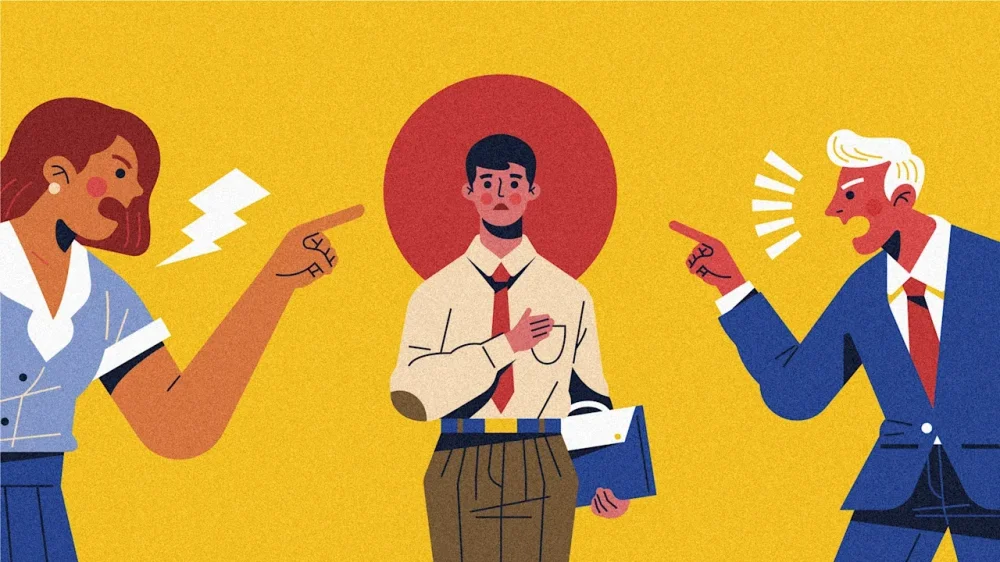
Mita Mallick shares five key insights from her new book, The Devil Emails at Midnight: What Good Leaders Can Learn From Bad Bosses. Mallick is a corporate changemaker who, with an extensive career as a marketing and human resources executive, has advised Fortune 500 companies and startups alike. She is a LinkedIn Top Voice and was named to the 2025 Thinkers50 Radar list. She is a contributor to Harvard Business Review, Fast Company, Adweek, and Entrepreneur. What’s the big idea? The silver lining that comes from working for several bad bosses? You can learn what not to do as a leader. From every bad boss comes a valuable lesson about how to manage teams and contribute to a company’s success. 1. Stop normalizing emailing at midnight. I was so excited to meet my new boss. Apparently, the feeling wasn’t mutual. This was a former boss I nicknamed “the Devil.” She was the boss who never had any time for me during the day, but did have time to consistently send me emails between 10 p.m. and 2 a.m. I started responding to her emails in the early morning hours. I was so desperate to impress her. I would wait to bump into her at the office, trying to get a smile, a wave, hello, thank you, or anything to make me feel like she saw me and I was appreciated. I was like a golden retriever pacing around the Devil’s office. I even tried to chase her out of the building one evening, but she was too quick for me. Years later, the question I continue to ponder is, Why didn’t she have time for me? One of the biggest complaints we hear when it comes to relationships is “You never have time for me.” As a leader, if you can’t make time for your teams during the day to coach, guide, and teach them, you have to ask yourself, Why are you leading in the first place? I challenge everyone to treat calendars like decluttering a wardrobe: Focus on high-value meetings, remove meetings that are no longer needed, and delegate meetings to others. Find time to connect with your teams during the day. Let’s stop normalizing emailing at midnight. I’m not ashamed to say that on most evenings I’m asleep at midnight. It doesn’t mean there aren’t periods of my life when I’m working incredibly hard and constantly burning the midnight oil, but that isn’t sustainable. The foundation of good leadership is taking care of yourself by getting enough sleep, eating well, and exercising so that you can be in service to others and fend off bad boss behaviors. 2. Silence can fuel bullies. My full name is Madhumita Mallick. For most of my life, my name has evoked a swirl of emotions for me, including anxiety and joy. I started going by just “Mita” and stopped bothering trying to teach people how to say my full name. When I graduated from business school and rejoined corporate America, I attempted to reclaim my full name. I was used to having my name mispronounced, misspelled, or mistaken as the name of the only other brown woman on my team. I wanted to reclaim my name as a source of pride. My former boss, who I nicknamed “the Sheriff,” was popular and a bully. When it came to my name, the Sheriff decided to completely rename me because he didn’t want to learn how to pronounce it. He called me “Muhammad” because he could and wanted to. I’m embarrassed to admit that for many weeks, I responded to a name that was not my own. Years later, I still wonder why no one around us ever said anything. Microaggressions like the one I experienced repeatedly can become a manifestation of bullying. They deplete our energy, chip away at our confidence, and make us question our contributions. Our collective silence can fuel those bullies. The burden shouldn’t be placed on the target to speak out and stop this behavior. If you see someone being targeted in the workplace, intervene. First, you can give the bully a dose of their own medicine. In my case, someone could have said to the Sheriff, “Oh, I just thought of the best name for you. Do you want to hear it?” You can use this approach to be a mirror that shows them how they are behaving. Humor can also distract and deflect attention away from the person being targeted. Second, you can address them directly. You can let them know, calmly and firmly, that this behavior is not okay. They might say, “Oh, it’s just a joke.” In return, you can emphasize that it isn’t funny. This reinforces that you won’t allow them to discredit your response and reaction. Third, plan to intervene later. Power dynamics at work can impact our ability to speak up in the moment. We can be afraid of retaliation during or after an incident. Check in with the person being targeted. Help them document what has been happening and find someone else you trust to help with a plan of action. We spend too much time at work not to look out for each other. 3. Find the courage to help people move on. A former boss I called “the Napper” literally slept on the job. He dozed off in meetings—large or small. I presented our annual brand plan while watching him nap. I saw him doze off dozens of times during our quarterly town hall meetings. Once, he closed his eyes for several minutes at our VP’s monthly meeting, and she angrily shouted his name, then asked him a question. He was startled but not embarrassed. He mumbled a response that had nothing to do with the question and then started looking at his phone. The Napper came and went as he pleased, gossiped loudly, and enlisted others to talk about how much it sucked to work here. He even started interviewing for jobs in the cubicle next to mine, for all to hear. Years later, I still wonder why my former boss was allowed to repeatedly nap and be disengaged at work without any consequences. Disengagement can spread. It can become contagious, erode trust on the team, and negatively affect productivity. More of us need to intervene when we witness disengagement. Start by becoming a mirror. Take your team member to lunch or coffee. Remind them of their behavior. Focus on the facts and not your feelings. Next, allow space for the individual to reveal what’s going on. You may or may not agree with what is shared, and you don’t have to respond to everything. You can ask open-ended follow-up questions or simply thank them for sharing, letting them know that you’re processing the information and will get back to them. Finally, ask them what must change. Professor Michael Murphy of Harvard University offers this powerful question for us to ask: What could change at work for you to be excited again about working here? You likely won’t be able to change what they have revealed about the past, which may have led to their disengagement. But you can offer to help them move forward if they choose to recommit to their jobs. As leaders, we must have the courage to stop this downward spiral and help people move on to what they’re meant to do next. 4. Fear is a short-term motivator that leads to burnout in the long run. No one in my life had ever screamed at me—not my parents, my brother, my husband, or my friends—until I worked for “Medusa.” Medusa ruled with fear. You could hear her from her office, down the hall, across the floor, and sometimes through the elevators as you were coming up. She would tell us, to our faces, that we were stupid. She would scream, curse, and aggressively point her fingers at people during meetings. I had never heard a boss drop so many F-bombs. She even hurled one of her Chanel shoes at my colleague, though thankfully it missed her head. I watched people run into conference rooms, slide down in their chairs, or wait around corners to hide from her wrath. Leaders like Medusa drive strong results in the short term. Many of us will show up to work scared. According to one study, more than a third of leaders at U.S. companies lead through fear. Nearly 40% of fear-based leaders said they strongly believe that stress can be positively harnessed, and yet these fear-based leaders made two other observations: 90% witnessed declines in productivity, and 60% acknowledged their workers aren’t happy. Creating workplace cultures based on fear costs the economy approximately $36 billion each year in lost productivity. Showing up scared to work every day is exhausting. Fear kills communication, isolates team members, inhibits creativity and innovation, and leads to burnout. Creating a culture where everyone is treated with respect shouldn’t be a luxury. Workers don’t want another free meditation app, an endless supply of fancy snacks, happy hours, and definitely not another oversize hoodie. They want to be respected and valued. 5. Unwavering loyalty no longer exists in the workplace. One former boss, nicknamed “Tony Soprano,” expected loyalty at all costs. With one swift phone call, he could kill someone’s career. Tony found out someone on our team was interviewing externally. By that same afternoon, this team member’s role had been eliminated, he was escorted out by security, and that external offer had vanished because Tony got a hold of the hiring manager at the other company. Tony told me I was going to do a one-year assignment on his team and I’d be promoted at the end of that assignment. When the year mark was approaching, I started networking within the organization to figure out what I wanted to do next. When he found this out, he told me the assignment would actually last two to four years because I had not even begun to make an impact in this role. He told me that he decides when I can leave. Leaders like Tony believe they own our careers. They decide and dictate who gets to leave their team, when, and why. If you challenge their authority, they have serious doubts about your commitment to them and to the company. To them, your paycheck is the price in exchange for your loyalty, no questions asked. But unwavering loyalty no longer exists in our workplaces. Long gone are the days of pensions, guaranteed job security, and receiving a shiny gold Rolex after 30 years of service. The corporate social contract that employers once provided is now broken. We can no longer expect loyalty from our employees at all costs. We must redefine what loyalty looks like in our workplaces. As leaders, we must stop hoarding and holding on to talent. We must be honest and up front about career opportunities. We must communicate often and clearly about the changing needs and health of the business. Finally, when an employee wants to pursue a different opportunity, we let them go. We don’t throw a tantrum when they resign. We wish them well and hope to get to work with them again someday. Loyalty isn’t guaranteed, and it certainly is not built overnight. We can’t demand loyalty from our employees. Good leaders understand that loyalty must be earned over time. This article originally appeared in Next Big Idea Club magazine and is reprinted with permission. View the full article
-
A CEO’s canoodling with his company’s human resources chief—caught on the “kiss cam” at a Coldplay concert—made global headlines this summer. Beyond the memes and tabloid fodder, personal lives were shattered and a company was left in turmoil after its leader’s sudden exit. The case, involving the AI firm Astronomer, may be the most visible of recent CEO personal scandals—think sex affairs, drug abuse, or embarrassing behavior—but it’s not an isolated incident. Just weeks following the Coldplay “kiss cam” incident, the CEO of Nestlé was shown the door for similar behavior involving a relationship with a subordinate. Personal scandals have been the top cause of CEO terminations in recent years. How do these scandals stack up to other corporate indiscretions, such as financial fraud? As a management professor, I knew that there’s lots of research on CEOs’ financial crimes, but surprisingly little on personal misdeeds. So my colleagues and I examined nearly 400 CEO scandals involving either financial or personal misconduct. In this research, published in August 2025 in the journal Strategic Organization, we found that not all CEO scandals are treated equally: The type makes all the difference. Personal scandals are harder to survive For most people, personal indiscretions—such as having an extramarital affair or abusing drugs—are a private matter. But for CEOs, even scandals unrelated to business create doubt about their judgment, integrity, and leadership. The result is usually career-ending for the CEO, research shows, and can create lasting harm for the company. We found that CEOs overwhelmingly exit in the wake of personal scandals—five times as often as CEOs who commit financial misconduct do, in fact. And strong business performance doesn’t tend to offer protection. For example, Hewlett-Packard’s Mark Hurd, who’s widely credited with turning around HP in the mid-2000s, was ousted following a very visible personal misconduct scandal 15 years ago. The fallout was swift: The company’s stock fell nearly 10% immediately after the announcement, and with leadership in a tailspin, it dropped more than 40% within a year. Why bad numbers come with better odds Companies are also routinely accused of “cooking the books.” In recent months, several firms have been forced to restate their earnings after their financial statements did not add up. These scandals shake investor trust, trigger sharp drops in company stock, and often lead to the chief financial officer’s departure—with some CEOs following suit. However, while cooking the books is considered a severe form of corporate misconduct, our research suggests that it has fewer job-ending repercussions for CEOs than personal scandals do. Roughly half of all CEOs implicated in financial scandals survive, we found—because, unlike in personal scandals, CEOs can often shift blame. We also found that CEOs dismissed due to financial scandals tend to be replaced with outside candidates, which has been shown to stabilize a company’s stock price and lead to stronger long-term performance. It might be surprising to learn that a CEO’s personal misconduct can come at a greater cost—both to the business and the executive—than outright financial fraud. Is corporate America overestimating the importance of CEOs’ private behavior? Or is it underestimating the importance of cooking the books? While I don’t have answers to these questions, I think our findings show the need for more discussion—and more research. Michael Nalick is an assistant professor of management at the University of Denver. This article is republished from The Conversation under a Creative Commons license. Read the original article. View the full article

-
Heartwood Preserve doesn’t look like typical stormwater infrastructure. Instead of a primarily utilitarian design, this project in Omaha doubles as public art. Meyer Studio Land Architects created a series of 14 sculptural water retention basins across 500 acres of land that sit in a watershed at risk of flooding. The project is meant to be enjoyed by the public and even has features that educate about climate change. Heartwood Preserve is a winner of Fast Company’s 2025 Innovation by Design Awards. View the full article
-
Perplexity optimization tips include choosing high-performance topics and writing for user engagement. View the full article
-
Company set out plans to eventually list on stock marketView the full article
-
Whenever there’s economic uncertainty, it’s easy to worry that your position is at risk. But what if the worst has happened: Your company has done a big layoff—and you and your team weren’t on the list? Of course, you and your direct reports may both fear that more cuts are on the horizon. And yet, there’s work to be done. How do you support your team, keep them productive and also find the opportunities in the middle of such a big disruption, especially when you may face the need to ‘do more with less’? We work with executive clients—Alisa Cohn as an executive coach and Dorie Clark as a keynote speaker and consultant—and have seen this increasingly as layoffs stay stubbornly in the news. Here are five valuable things you can do in the near-term to maintain your focus in the wake of a major shakeup. 1. Identify why you got saved It’s helpful to discern why you weren’t included in the layoff. Analyze the situation dispassionately. What are the patterns you see in who was let go? Perhaps certain divisions were hit hard, indicating that their strategic importance has waned at your company. And it’s equally useful to identify what you bring to the table. Perhaps you work in an area the company has identified as valuable (a certain functional role, geography, or growth initiative). For example, one of Alisa’s clients on the risk team was retained when others were let go because she had deep industry expertise in the most strategic area for the company. Understanding your competitive advantage can help you leverage it further. This may be an area you’ll want to highlight by talking about your skills and experience more widely. For instance, as Dorie has pointed out, one of the most overlooked networking opportunities is how you choose to answer the question “What have you been up to lately?” because you can choose to talk about areas that matter to your company. If you know your company is prioritizing building its customer base in financial services, for example, you could talk about a recent conference you attended or article you’ve read about that industry. That will position you as someone focused on the most important things. 2. Reset expectations with your team In an environment where there have been big layoffs, teams are certainly being scrutinized. Your team is likely upset and may feel bitterness about what happened. You might be inclined to soothe them (“this won’t happen to us”) or commiserate (“I can’t believe those idiots did that.”) But the kindest thing you can do for them is to help them deliver. It’s a good moment to look at how you work together. In many companies, leaders often get in the habit of “playing down” a level and doing some of the work of their team. But after a layoff when you have more on your plate, you need everyone working at full capacity, and that means not doing their work for them. Push decision-making down wherever you can. Give high level guidance more clearly and more regularly so everyone is aligned on the most important things and can make smart decisions in the moment. Alisa experienced this with one of her clients, a vice president of product in a large tech company. The deadline for a big project was only three months away when two of her key peers and a good portion of their teams got laid off, leaving her with massive pressure to finish the project but a lot less support and resources. She directed her teams to own their domains like general managers and asked them to run with decisions that were reversible. They created a process to huddle and quickly resolve conflicts as a team. The project shipped on time and the team got a lot more capable during this period—in fact, many of them said they’d grown more in those three months than in the past three years. 3. Rethink your calendar If you’re like most managers, your day is filled up with meetings. Use this moment as an opportunity to look at all the group meetings and one-to-ones you’re doing and evaluate what can be cut (indeed, if you’re now being asked to manage more people, you may not physically have the capacity to take on any more meetings). Alisa created the the “4R Framework” to assess how useful meetings are. They might be warranted if you’re using them to: Review progress Resolve conflicts and problems Refine strategy or decisions Reinforce alignment and understanding But if your meetings aren’t meeting any of these objectives, they’re probably good candidates to omit. Once you have more room in your day, think carefully about high value activities you could do instead. These include getting more involved with high visibility strategic projects or spending more time with customers. 4. Stand out and find the opportunities Now that there are fewer managers or colleagues, the good news is that you’ll probably have more opportunities to shine. You’ll have more exposure to senior leaders and may be asked to join meetings with clients or other key stakeholders. Prepare for this by sharpening your presentation skills. It might be a good moment to get formal training, join a group like Toastmasters, or just practice more in small, low stakes environments. You should also consciously build your executive presence and bone up on your strategic thinking. See if there are key projects you can become part of, or volunteer to take over. 5. Don’t neglect your network The world of work is never certain and having a strong internal—and external—network helps you build more career security. Even though you may be busy dealing with the extra obligations this round of layoffs created, make sure you continue to nourish your network and build it more robustly so you’re prepared if the hammer comes for you. Examples could include hosting virtual one-to-ones or small group “coffees” with colleagues you haven’t seen in a while or making a point to attend conferences or industry meetings. One professional Dorie profiled in her book Reinventing You—who realized with concern that his network mostly consisted of other people employed by his longtime company—decided to start weekly breakfast meetings with people outside the company, leading both to a fresher network and ideas about new technologies and acquisitions his organization could make. One client Alisa worked with resolved to get back in touch with people she’d lost contact with, leading her to a board director position, as well as a new career opportunity. Layoffs are challenging for everyone, and it’s both emotionally and logistically difficult to lose a number of your coworkers. But by accepting reality and focusing on the things you can control, you’ll be able to move forward and keep your team focused, even in uncertain times. View the full article

-
Your company rolls out an AI agent to assign tasks, draft updates, and nudge overdue approvals. But within days, it’s flagging completed work, tagging the wrong people, and creating confusion instead of clarity. It’s a familiar outcome for companies that adopt agentic AI without the workflows, data, or systems to support it. New research from Wrike reinforces that disconnect: 74% of employees say their company treats data like gold, yet most don’t manage it well enough for AI to use it effectively. Even the smartest, most context-aware tools stall without strong foundations. And automation doesn’t fix broken operations—it magnifies them. To get agentic AI right, organizations need a phased approach that tightens processes, clarifies what’s worth automating, and ensures AI is set up to actually move work forward. What happens when AI meets a broken system The rush to adopt agentic AI has outpaced the work needed to make it effective. Many leaders assume their systems are ready—until AI is asked to act. That’s when the cracks show. AI can’t make informed decisions when workflows are improvised, institutional knowledge is undocumented, and escalation paths live in someone’s head. Approvals that happen ad hoc in Slack and inconsistent team processes leave no single source of truth for AI to follow. And when data is scattered across siloed platforms—the leading cause of lost institutional knowledge in the past year—even the most dynamic, context-aware models struggle to generate accurate insights or identify risks. AI is like a microphone: It doesn’t improve your voice, it just makes it louder. Without structured workflows that define ownership, execution order, and visibility, AI only amplifies dysfunction at scale. The building blocks of an AI-ready workflow To deliver value, AI needs to understand what’s happening, who’s doing it, and where work lives. That requires workflows built with: Clarity—Are project roles and steps clearly defined so AI can quickly grasp objectives? Accountability—Is ownership consistent and visible so AI can route tasks and escalate issues to the right people? Visibility—Can teams easily track progress and identify blockers before they derail timelines? Connectivity—Are systems integrated so AI can access information across tools, not just in silos? Consistency—Are workflows standardized enough for AI to detect patterns and recommend improvements? These elements give AI the context it needs to add value. But even well-designed workflows fall apart without reliable data. AI needs clean, organized inputs, which means enforcing naming standards, having good quality descriptions in place, surfacing the right files, and creating a single source of truth. Getting these fundamentals right reveals where work breaks down, making it easier to reflect and improve. It’s a chance to ask not just how to automate, but why. What’s slowing you down? Where’s the friction? What’s repetitive, frustrating, or pulling focus from higher-impact work? That’s where AI makes a real difference. 3 steps to get agentic AI right While perfect workflows aren’t a prerequisite for agentic AI, the adoption process will quickly surface what’s broken. A phased approach lets you experiment, close gaps, and build trust in AI tools as you go. Phase 1: Build AI fluency Before deploying AI into production, give teams visibility into how the system reasons, what actions it will take, and which data it draws from. This transparency builds trust by making AI behavior understandable. It also gives teams a chance to assess whether data and workflows are structured and dependable enough for automation. Phase 2: Test the waters with AI assistants Once teams trust how AI behaves and understand how it makes decisions, begin applying AI to real—but low-stakes—tasks. Assign AI assistants to repeatable work like drafting project updates or answering internal FAQs. This is where theory meets execution. You’ll quickly see which processes are truly repeatable, where AI struggles, and which workflows still need clarity. Think of it as a pressure test: By using AI in everyday operations, you can spot and fix problems before scaling further. Phase 3: Shift to agentic AI strategically With predictable workflows and a team ready to collaborate with AI, you can begin exploring more autonomous tools. Agentic AI offers compounded value, but it also raises the stakes. When AI begins taking action, it needs clean data, stable systems, and clear oversight. But even the best AI agents need humans in the loop to course correct, add real-world context, and keep AI aligned with actual business goals. The goal isn’t hands-off automation, but smarter collaboration between people and AI. This phased approach to agentic AI adoption reinforces your foundation at every step, giving you the structure and insights to improve as you go. That’s the difference between using AI and being ready for it. AI-ready teams don’t rush adoption. They ask sharper questions about what tools should do, what work matters most, where human judgment is critical, and what should never be automated in the first place. What AI needs from you Agentic AI can streamline work and free up your teams to focus on what matters most, but only if your operations are organized, your data is clean, and your systems are connected. Without that foundation, automation doesn’t solve problems. It just scales them. So while the future of work may be automated, success still depends on how well you define, connect, and manage the work itself. View the full article

-
And that is a worryView the full article
-
It’s five answers to five questions. Here we go… 1. I manage a married couple, and it’s causing problems I manage a married couple. I hired one of them first, and a few years later the spouse finished a degree that gave them the right expertise to also join my team. They don’t supervise each other or make any promotion or budget decisions about each other. At first things were good, but I’ve been noticing small things that are now bigger things in their communication patterns that need to be addressed. They are becoming really insular, not asking anyone for help except the other one, and not communicating issues or concerns outside the two of them, and recently they shared at a staff meeting that they have a lot of resentment about not getting the support they want (but have not asked for). I know I need to talk to them individually and I should describe some specifics of what I am seeing and then describe what I need to see from each of them moving forward. Right now my list includes telling them that they can’t fight each other’s battles at work or speak for each other, and they need to be mindful about communicating like coworkers, not spouses, at work. And that if they don’t ask for help no one knows they need help. That last one is maybe more of a second issue, rather than specific to them being spouses. Any advice or suggestions on how best to do this? Am I overlooking anything? Your instincts are right. Name what you’re seeing (not talking to anyone but each other, not communicating about issues or asking for help, speaking for the other, fighting the other’s battles, and needing to operate like coworkers, not spouses, when they’re at work) and describe what you need them to do differently. Give some concrete recent examples, and describe what you would have liked them to have done differently, so that it’s not just theoretical. I would also think about what you can do differently on your end to help break the patterns you’ve seen. Can you assign them to work more closely with other people or otherwise disrupt the rhythms they’e in? Can you check in with them more regularly to ask about problems and any support they might need? Meet with them each more regularly for a while so you’re able to spot issues faster and reinforce to them that this is something you’re taking seriously (both their concerns and your own)? It’s also a good idea to check in with others on your team about how things are going, because it’s possible the married couple’s dynamics are affecting people in additional ways you aren’t seeing firsthand. Related: why would an employer ban couples from working in the same department? 2. Employee refuses to wear our uniform I work on-site with about 350 employees, most of whom are hourly and in uniforms. Normally, we just have the occasional “hey, please zip your jacket” type of chat, but one employee has decided uniforms are their personal hill to die on. This person either refuses to wear the uniform at all (showing up in their own clothes) or wears it in a way that’s not appropriate for work (think fully unzipped, undergarments visible). We’ve had multiple documented conversations, but nothing changes. We finally issued written discipline, which they refused to sign while announcing they’ll “never wear the uniform, no matter what we do,” because it’s “too hot.” They’re the only one with this complaint, but they’re doubling down. Complicating matters: this person is not only a poor performer, but also the longest-standing union steward in our entire company. They grieve every single conversation or document, and it turns into endless back-and-forth meetings. We’re not trying to fire them, we don’t even want to be writing them up. We just need them to wear the uniform like literally everyone else. But it’s become less about uniforms and more about their crusade to “win” against management. If we keep documenting, it’ll be grieved as “petty,” and meanwhile they still show up out of uniform day after day. It also makes it nearly impossible to hold anyone else accountable when they can clearly see this person ignoring the rules with zero consequence. Per our CBA, we can’t skip straight to a final warning/termination because it’s not egregious enough on its own. This person was already terminated once before for a similar “hill to die on” type issue, but was reinstated following arbitration based on how silly the issue was to have had to fire someone over it! For context: we’ve checked if the uniform doesn’t fit, offered different sizes, more pieces, even said they could bring in medical paperwork if it’s truly a heat-related issue. Nothing works. Ordering a whole new style of uniform for hundreds of people is not financially (or logically) an option. And because this person works overnight, directly with customers in sensitive situations, the uniform isn’t just a “look” — it’s a safety requirement so customers know they’re dealing with an official employee, not some random person wandering in. So … what do we do here? We’ve tried being reasonable, but this employee is flat-out refusing. At this point, it feels like we’re stuck between playing endless grievance ping-pong or letting them win by showing up in street clothes. You deal with the grievances. You discipline them every time, pointing to what sounds like a clear policy violation. Otherwise, you don’t really have a uniform policy; you have a uniform “suggestion,” and other employees will notice. Also, you tackle the performance issues aggressively and head-on. Follow the requirements of your CBA, obviously, but you should tackle the performance issues to the full extent of the options available to you, even if that involves a ton of paperwork and aggravation. Otherwise it’ll be a year from now and you’ll be no better off than you are now. So play the grievance ping-pong and stand firm. All that said, if they’re genuinely too hot, are there things you can do about that? Is there a version of the uniform that won’t be as hot (or could there be)? Can you add additional cooling in their area? Etc. If they’re complaining in good faith, you should respond in good faith as well (although given the history, they may not be). Related: you can’t be held hostage to a bad employee 3. When leadership is absent, what should be communicated? I have a question about a situation from a few years ago. I work in a central office of a K-12 public school district in the U.S., where we’re constantly understaffed and under-resourced. Things move fast, and there’s not room for backup when key roles aren’t filled. A new director was hired to oversee student services — responsible for about 100 staff and 2,000 students. From the start, he was frequently absent and unresponsive: taking regular three-day weekends and long gaps of several days to a week, even during critical times in the school year. His absences led to unresolved student issues, unsupported staff, and avoidable problems we’re still dealing with. Staff were frustrated, morale suffered, and his reputation quickly deteriorated. After a year, he left for another district. Later, a colleague confided in me that the director had been undergoing cancer treatment during that time. While I fully support an individual’s right to privacy, I’ve been wrestling with this question: In cases where prolonged absence causes major operational impact, is it appropriate for leadership to offer no explanation at all? What’s the right balance between respecting privacy and maintaining transparency — especially in environments like ours, where there’s no capacity or budget to cover frequent or long-term absences? What would you advise for handling communication in a situation like this, both for the individual and for higher leadership? Yeah, part of leadership is communication and judging how much communication — and transparency — is necessary for any given situation. Part of leadership is also realizing when not communicating about something sufficiently is likely to have a significant effect on morale, and making decisions accordingly. I’d never want to say someone is obligated to disclose personal health information, but there’s a certain level of job that’s high enough — and where your actions and absences impact people in such significant ways — that part of good leadership is figuring out how to talk about what’s going on. That doesn’t mean you need to disclose everything, but you need to share something (for example, maybe just that it’s a health issue without getting into specifics). If your director had explained what was causing his absences and unresponsiveness, you still would have had a lot of the same logistical issues, but I bet you would have had far fewer of the morale issues that stemmed from people thinking he wasn’t around because he didn’t care, was slacking or checked out, etc. 4. When should I tell my manager that I’m leaving the country? My spouse has received an offer to transfer within their current company, for a higher level position located in an office halfway around the world from where we currently live. This is a longtime dream for my spouse and me, so they accepted the role and we’ll be moving in a little less than six months. I am 95% sure that this move will mean leaving my current job (mainly, I can’t imagine a way to continue in my current role with a 15+ hour time difference). My company also has an office in the new city we’d move to, but I’ve never seen a role appear that is open to internal candidates. The only way I could see staying at the company is if my manager or another senior level employee in that office could create a new position for me (I’ve seen this happen a small number of times, but it’s certainly not a common occurrence). I want to know if that could be possible, and I want to help facilitate a smooth transition in the event I quit wholesale. But, I also don’t want to spill the beans about my move too early and end up without a job earlier than expected! In any other circumstance, I’d give a few weeks notice and leave it at that. But it’s the small chance that there could be another job made for me that makes me want to bring it up earlier. If it’s not obvious, I don’t want to leave my job! I’m willing to leave to facilitate this great opportunity for my spouse, but I want to explore whatever options exist to maybe, somehow, stay working at my company. There are two ways to do this. One is to bring it up a few months before your move as something closer to a hypothetical — “There’s a chance that Jane may be offered a transfer to Sicily. If that happened, would there be any way for me to stay on with the company? I love working here and I know we have an office there.” Be more cautious about doing this if your company is struggling financially and you suspect they may be considering layoffs; you don’t want to do anything that makes it easier for them to decide you’d be an easy cut since you’re likely to leave anyway. The other way to do it is to give slightly more notice than you would otherwise — maybe three to four weeks rather than two — and as part of that conversation say that you’d love to stay on if working from the other office or remotely is a possibility. 5. Does my boss need to know I’m battling with our health insurance? Should I give my boss a heads-up that I’m pulling out all the stops on my health insurance company? Aetna denied my prosthesis, so I decided to ask our benefits people to connect me to central state contacts and potentially legal council for my second-level claim review board meeting. I was friendly and approachable to the benefits people (I appreciate their support, regardless of what they can provide!), but I wouldn’t be surprised if they escalate my request given the gravity of the situation. Should I cue my boss in to the situation discreetly? It isn’t inherently obvious that I have a prosthesis, and I don’t volunteer medical information at work, otherwise. You don’t need to loop in your boss. This is between you and your insurance. The post I manage a married couple, employee refuses to wear our uniform, and more appeared first on Ask a Manager. View the full article
-
As federal government services wind down Democrats and Republicans vie for voter supportView the full article
-
It took us a generation to get into the present council tax mess and would take another to emerge with minimal scarsView the full article
-
New OBR forecasts set to spark fierce dispute between Labour and Conservatives View the full article
-
Universal and Warner seek payment structure similar to streaming as more disruption loomsView the full article
-
Peter Kyle said he was willing to take on greater risk in approving the speedy financial support for carmakerView the full article