ResidentialBusiness
Administrators
-
Joined
-
Last visited
Everything posted by ResidentialBusiness
-
 The risk of a partial U.S. government shutdown beginning next week is rising as congressional Democrats and Republicans hit an impasse over how to continue to fund the federal government. A shutdown could affect financial markets by limiting the operations of financial regulators and delaying the publication of key economic data. How might markets react? Historically, markets have tended to shrug off shutdowns. However, this time could be different. A prolonged shutdown risks delaying or canceling key economic data releases investors use to assess macroeconomic trends, such as the monthly employment and inflation reports, analysts at Nomura said in a note this week. That would mean the Federal Reserve is “flying blind”, making it more likely to stick with its own economic projections of two 25-basis-point rate cuts for the rest of 2025, the analysts said. With investors unable to assess the extent of a U.S. economic slowdown, the Treasury yield curve could steepen further as rate cuts get priced in with more conviction, leading to a wider gap between short- and long-dated Treasury yields, TD Securities said in a note. A lengthy government shutdown could also affect some market participants’ ability to conduct complex trades for which they may require regulatory guidance. What happens to financial regulators? While U.S. President Donald The President’s administration had not widely shared its contingency plans as of Tuesday, a shutdown would likely reduce the U.S. Securities and Exchange Commission (SEC) to a skeletal staff, according to its October 2024 plan for a lapse in government funding. This would severely limit the agency’s ability to review corporate filings, investigate misconduct, and oversee markets. Likewise, the Commodity Futures Trading Commission would furlough almost all of its employees and cease most market oversight activity, according to its 2023 contingency plan. Previous government shutdowns have caused delays in the CFTC publishing reports on traders’ positions in futures and options markets. The banking regulators and consumer watchdog, which are not funded by congressional appropriations, will remain functional. In 2019, a protracted government shutdown slowed down some of The President’s de-regulatory efforts in part because of staff furloughs at the Office of the Federal Register, which must formally publish all steps in the rule-writing process, Reuters reported at the time. Will IPOs be affected? Yes. A shutdown would likely freeze the IPO pipeline. Companies planning to go public would be unable to proceed without the SEC’s approval, potentially dampening momentum in the equity capital markets, which have enjoyed an IPO boom in recent months. —Michelle Price, Reuters View the full article
-
As the rise of artificial intelligence continues, companies operating in this space or relying on the technology are finding that they have two inextricable needs: data centers that can run and process the AI, and access to ample energy to power those vast data centers. One new company, Fermi America, aims to offer solutions for both these needs. And this week, Fermi announced its plans for an upcoming initial public offering and dual stock listings. Here’s what you need to know about Fermi America and its planned IPO. What is Fermi America? Fermi America is a very young company. It was only founded this year, just nine months ago in January 2025. The company is so new that its website is still a relatively barebones affair. Given the youth of the company, it’s no surprise that the majority of Americans have most likely never heard of it. But they have heard of its cofounder, Rick Perry, the former Texas governor who ran as a GOP contender for president in 2012 and 2016. After unsuccessful presidential bids, Perry was appointed as the 14th United States Secretary of Energy, during President Donald The President’s first term in office. In addition to Perry, Fermi America was also cofounded by Toby Neugebauer, a former comanaging partner of Quantum Energy. Fermi America intends to be a provider of data and power centers that other companies can use to host their AI needs. But I say “intends to,” because Fermi America doesn’t actually provide any services yet. Heck, it doesn’t even have any infrastructure yet to provide its services. What Fermi America does have is a lease for 5,236 acres of land owned by Texas Tech University, which is where Fermi plans to build a “HyperGrid” in an undertaking dubbed Project Matador. What is Project Matador? Project Matador is the name given to Fermi America’s HyperGrid project. This HyperGrid will be a combined data and power center that other companies will pay to lease space on to run their AI needs. In its Form S-11 Registration Statement filed with the U.S. Securities and Exchange Commission (SEC), Fermi says Project Matador is “a multi-gigawatt energy and data center development campus” that will ultimately be called the Advanced Energy and Intelligence Campus at Texas Tech University. Fermi says the mission of this campus “is to deliver up to 11 gigawatts (GW) of low-carbon, HyperRedundant, and on-demand power directly to the world’s most compute-intensive businesses.” It says it will achieve this mission by using nuclear, solar, and natural gas energy to power the facility. By 2038, the company says it aims for the campus to deliver up to 11 gigawatts of power to AI data centers. It also says it expects the first 1.1 gigawatts of power to be online by the end of 2026. However, all this is hypothetical for now. To date, Fermi America has not actually started constructing Project Matador. The company still needs to secure funding for the campus’s construction. It aims to raise some of that money through investments, including funds raised from its IPO. Yet the fact that Project Matador is little more than an idea at this point is something potential investors should consider. As Fermi America warns in its Form S-11, “our business model is highly dependent on the successful construction, development, leasing, and continued maintenance of Project Matador.” When is Fermi America’s IPO? Fermi America has not announced a date for its planned IPO yet. This week’s announcement is for Fermi’s IPO “roadshow,” which is when executives of a company planning to go public meet with potential investors. Roadshows are designed to generate hype and interest in a company’s initial public offering. What is Fermi America’s stock ticker? Fermi America’s shares will trade under the stock ticker “FRMI.” What exchange will Fermi America’s shares trade on? Fermi America shares will trade on not one, but two stock markets. The company says it intends to list its shares on the Nasdaq Global Select Market in the U.S. and on the London Stock Exchange in the UK. What is the IPO share price of FRMI? An exact IPO price for Fermi’s shares has not been determined yet. But the company says it is targeting a price range of between $18 and $22 per share for its public offering. How many FRMI shares will be available in its IPO? Fermi says it plans to make 25 million shares of its common stock available in its IPO. The company says it will also grant its underwriters a 30-day option to purchase up to an additional 3.75 million shares. How much will Fermi America raise in its IPO? With an expected IPO price of between $18 and $22 per share, Fermi is expected to raise between $450 million and $550 million in its IPO. How much is Fermi America worth? Reuters notes that under the company’s current IPO price estimates, Firmi America is targeting a valuation of up to $13 billion. What will Firmi America use its IPO proceeds for? According to its roadshow announcement, Fermi America says it intends to use the net proceeds from its IPO “to support the continued growth and development of Fermi America’s business, to secure personnel, to increase its financial flexibility, and for general corporate purposes, including, but not limited to, procurement, construction, and installation of long lead-time items.” View the full article

-
ChatGPT’s rise to mass adoption signals structural shifts in discovery, efficiency, and decision-making that C-suite must treat as business fundamentals. The post How People Use ChatGPT & What It Means For The C-Suite appeared first on Search Engine Journal. View the full article
-
Did you know you can customize Google to filter out garbage? Take these steps for better search results, including adding Lifehacker as a preferred source for tech news. Your brain is complex, but once you figure out its little intricacies—that it can only store about seven units of information in short-term memory, for example—you can exploit them to help you remember more things. It’s not just the amount of information present that affects your memory, though. Even the order in which you learn it plays a role. That's where the primacy effect comes into play. What is the primacy effect?The American Psychological Association defines the primacy effect as “the tendency for facts, impressions, or items that are presented first to be better learned or remembered than material presented later in the sequence.” This can happen when you’re learning for school or for pleasure (like when you meet someone at a party and they tell you about themselves). It can lead to a “first-impression bias,” which happens when the first piece of information you learn about someone colors how you see them to an inordinate degree. On the other side of that spectrum is the recency effect, which happens when you remember the last thing you went over better than anything else. Those may seem like contradictory ideas, but they're both part of something broader called the serial position effect, which describes the natural tendency to recall material not just at the beginning, but also the end of a list, better than whatever is in the middle. How to use this effect to studyWith the primacy effect on one end and the recency effect on the other, it’s clear that whatever you learn in the middle of a study session is unlikely to make the cut in your memory. So if you have to study something, like a list of words or concepts, don’t study them in the same order every time. Make flashcards and study them at different times and in different orders. Shuffle them between every use. If there’s a concept you’re struggling with, though, try to focus on that at the beginning and end of every study session, maximizing the likelihood it’ll stick in your brain. Flashcards are going to be important here. In general, I recommend studying flashcards using the Leitner method, which forces you to study your most difficult concepts more frequently than the easier ones. That approach is quite effective for memory formation, but you can't forget to shuffle the cards every time you review. Every flashcard app I've tested and reviewed offers them up to you in random order, whether you're following the Leitner approach or not— therefore, it might be better to rely on technology over old-school, hand-written notes. The analog approach allows you to be a little more intentional about battling the primacy and recency effects head-on. View the full article
-
eBay has recently announced an exciting move set to reshape its consumer-to-consumer (C2C) marketplace. The company has entered into a definitive agreement to acquire Tise, a popular social marketplace based in Oslo, Norway. This acquisition aims to strengthen eBay’s global presence in the C2C market, particularly by engaging with younger demographics like Gen Z and Millennials, who are increasingly driving demand for second-hand goods. With this acquisition, eBay looks to enhance its customer experience through Tise’s innovative social-first approach. Tise’s platform allows users to engage directly with sellers by following them and receiving tailored product recommendations based on their interactions, such as liking and commenting on listings. This element of community engagement is expected to breathe new life into eBay’s existing C2C offerings. “With Tise’s on-trend inventory, loyal community, and social-first approach, we’ll strengthen eBay’s C2C offerings,” said Oliver Klinck, VP, GM Global Markets Success & C2C. “This acquisition is a natural next step in our investment in Tise, which will allow us to accelerate Tise’s strategy and unlock new opportunities for innovation.” For small business owners, this acquisition could signal a shift in how commerce is conducted on platforms that cater to personal and small-scale selling. The rise of community engagement tools may allow small business owners who utilize eBay’s platform to foster more personal relationships with buyers. Such connections can lead to repeat business and a more loyal customer base, factors that can significantly contribute to long-term growth. Eirik Frøyland Rime, CEO and co-founder of Tise, emphasized the focus on sustainability and community-driven experiences. He stated, “At Tise, we’ve always believed that making resale fun, easy, and inspiring is key to a more sustainable world. eBay shares our vision, and with their support, we will enhance our community-driven model and enable even more people to participate in the social marketplace.” The focus on sustainability could resonate well with small business owners who aim to appeal to environmentally conscious consumers. As more people prioritize sustainable shopping, there may be an opportunity for businesses to market themselves as part of a larger movement towards responsible consumption. The acquisition of Tise will enable eBay to integrate Tise’s community engagement features with its established protocols. This could enhance the overall user experience, potentially driving more traffic and transactions on eBay’s platform. The expected synergy could provide small-business sellers with valuable tools to better connect and engage with their audience. However, potential challenges may loom on the horizon. eBay’s commitment to merging Tise’s community-driven features with its robust infrastructure will require careful management. Disruption during the integration process could impact service levels temporarily, leading to potential dissatisfaction among users, including small business owners. Additionally, eBay has not disclosed specific terms or financial details related to the transaction, leaving some questions unanswered regarding how this shift will shape market conditions. There could also be a learning curve for small business owners using Tise’s particular social engagement features. Adjusting to a more interactive and community-centric selling approach may require a shift in how some businesses market their products, which could take time and resources. The completion of the acquisition is subject to customary conditions and is anticipated to occur by the end of the fourth quarter of 2025. Small business owners would be prudent to keep an eye on future updates regarding this integration, as it could redefine how they interact with customers on eBay. As eBay continues to bolster its offerings for younger generations, small business owners may find themselves at the forefront of a growing trend toward more personalized, community-oriented e-commerce. Whether they choose to harness Tise’s social-first approach or simply observe the evolving landscape, staying informed will be key. For further details, visit the original announcement from eBay at eBay’s news site. Image via eBay This article, "eBay Acquires Tise to Boost C2C Marketplace for Gen Z and Millennials" was first published on Small Business Trends View the full article
-
eBay has recently announced an exciting move set to reshape its consumer-to-consumer (C2C) marketplace. The company has entered into a definitive agreement to acquire Tise, a popular social marketplace based in Oslo, Norway. This acquisition aims to strengthen eBay’s global presence in the C2C market, particularly by engaging with younger demographics like Gen Z and Millennials, who are increasingly driving demand for second-hand goods. With this acquisition, eBay looks to enhance its customer experience through Tise’s innovative social-first approach. Tise’s platform allows users to engage directly with sellers by following them and receiving tailored product recommendations based on their interactions, such as liking and commenting on listings. This element of community engagement is expected to breathe new life into eBay’s existing C2C offerings. “With Tise’s on-trend inventory, loyal community, and social-first approach, we’ll strengthen eBay’s C2C offerings,” said Oliver Klinck, VP, GM Global Markets Success & C2C. “This acquisition is a natural next step in our investment in Tise, which will allow us to accelerate Tise’s strategy and unlock new opportunities for innovation.” For small business owners, this acquisition could signal a shift in how commerce is conducted on platforms that cater to personal and small-scale selling. The rise of community engagement tools may allow small business owners who utilize eBay’s platform to foster more personal relationships with buyers. Such connections can lead to repeat business and a more loyal customer base, factors that can significantly contribute to long-term growth. Eirik Frøyland Rime, CEO and co-founder of Tise, emphasized the focus on sustainability and community-driven experiences. He stated, “At Tise, we’ve always believed that making resale fun, easy, and inspiring is key to a more sustainable world. eBay shares our vision, and with their support, we will enhance our community-driven model and enable even more people to participate in the social marketplace.” The focus on sustainability could resonate well with small business owners who aim to appeal to environmentally conscious consumers. As more people prioritize sustainable shopping, there may be an opportunity for businesses to market themselves as part of a larger movement towards responsible consumption. The acquisition of Tise will enable eBay to integrate Tise’s community engagement features with its established protocols. This could enhance the overall user experience, potentially driving more traffic and transactions on eBay’s platform. The expected synergy could provide small-business sellers with valuable tools to better connect and engage with their audience. However, potential challenges may loom on the horizon. eBay’s commitment to merging Tise’s community-driven features with its robust infrastructure will require careful management. Disruption during the integration process could impact service levels temporarily, leading to potential dissatisfaction among users, including small business owners. Additionally, eBay has not disclosed specific terms or financial details related to the transaction, leaving some questions unanswered regarding how this shift will shape market conditions. There could also be a learning curve for small business owners using Tise’s particular social engagement features. Adjusting to a more interactive and community-centric selling approach may require a shift in how some businesses market their products, which could take time and resources. The completion of the acquisition is subject to customary conditions and is anticipated to occur by the end of the fourth quarter of 2025. Small business owners would be prudent to keep an eye on future updates regarding this integration, as it could redefine how they interact with customers on eBay. As eBay continues to bolster its offerings for younger generations, small business owners may find themselves at the forefront of a growing trend toward more personalized, community-oriented e-commerce. Whether they choose to harness Tise’s social-first approach or simply observe the evolving landscape, staying informed will be key. For further details, visit the original announcement from eBay at eBay’s news site. Image via eBay This article, "eBay Acquires Tise to Boost C2C Marketplace for Gen Z and Millennials" was first published on Small Business Trends View the full article
-
TikTok has moved well beyond its roots as a short-form video app. It now serves as a search destination where people turn for answers, ideas, and products. Creator Search Insights gives creators and brands a window into that behavior – highlighting trending queries, underserved topics, and real audience interests. And the data backs up this shift: two-thirds of U.S. consumers use at least one social network for search, nearly half use several, and four of the top seven search platforms – YouTube, Facebook, Instagram, and TikTok – are social. What TikTok’s Creator Search Insights can do for you TikTok’s Creator Search Insights tool gives creators visibility into the topics people are searching for on the platform. Accessible by typing “Creator Search Insights” in the search bar or visiting TikTok.com/inspiration, it provides real-time insights straight from the source, including: Trending searches with massive volume spikes: Terms showing growth over 1,000% based on TikTok’s internal data. Content gaps that highlight underserved search topics: The tool specifically identifies topics with high search volume but limited content, showing opportunities for creators to fill demand. Search popularity trends over multiple timeframes: Users can view data across different time periods to understand whether trends are temporary spikes or show sustained interest. AI-generated content guidance: For each trending topic, TikTok provides specific tips and content suggestions. Searches by followers: For accounts with over 1,000 followers, the tool shows what the specific audience is searching for, enabling highly targeted content creation. One-click video prompts: Allows creators to act instantly on trending topics with suggested content frameworks. This toolkit helps marketers align content with real user demand, and we should see this as a clear sign that TikTok is investing in search as a core experience. The new search discovery funnel The traditional search funnel has evolved dramatically. Although social search was once primarily upper-funnel, the rapid growth of social commerce has turned it into a full-funnel feature. Even so, consumer journeys tend to take winding paths through social search, with shoppers often jumping between platforms or stepping back into an earlier stage of the funnel. Search behavior, according to eMarketer’s Social Search Usage and Trends 2025 report, reveals striking patterns in daily usage: Almost 40% of TikTok users conduct searches on the platform several times per day, while 73% search at least once daily – a frequency that exceeds all other platforms, including Google. Instagram, YouTube, and Facebook demonstrate similarly high engagement levels, with over two-thirds of users on each platform searching daily. TikTok reports that 25% of users input a search query within the first 30 seconds of launching the app. Dig deeper: Short-form, big impact: What creators can teach performance marketers Get the newsletter search marketers rely on. See terms. Why you should be excited about Creator Search Insights Creator Search Insights underscores what many marketers have long suspected: TikTok functions as a discovery engine where intent-driven searches happen at scale. Gen Z leads this shift, with most turning to TikTok, YouTube, and Instagram for search. In fact, Gen Z uses TikTok as their go-to search engine at roughly twice the rate of the general population – 59% versus 29%. And even against cutting-edge AI tools, TikTok holds its ground: 58% of Gen Z search on the platform compared to 44% who use ChatGPT. Social media has transformed how an entire generation looks for answers. What the tool doesn’t offer (where gaps remain) Creator Search Insights is powerful for uncovering what people are searching for on TikTok. However, it stops short of showing how visible content actually is in those results – a critical gap for brands measuring performance. Key limitations include: No absolute search volume, only relative popularity indicators. Limited historical data. No competitive visibility tracking. No measurement of your own content’s placement in results. These blind spots have fueled the rise of specialized TikTok SEO tools like TokTrak.io, which track where specific videos rank for chosen search terms over time. Used together, they complete the picture: Creator Search Insights surfaces demand, while third-party tools show who’s capturing it. What this means for brands Social search plays an underrated role in today’s fragmented search landscape. Google may still dominate traditional search, but consumers now pose questions wherever they spend time online. With the average U.S. consumer logging an hour and a half daily on social networks, platforms like TikTok, YouTube, and Instagram have become leading search destinations in their own right. The implications span every stage of the funnel: TikTok’s search evolution: Once mainly a top-of-funnel tool, TikTok’s strong search functionality, combined with TikTok Shop, now drives lower-funnel action. Cross-platform behavior: Social search journeys rarely follow a straight line. Users bounce between discovery and consideration, often completing purchases on different platforms. Intent differences: As Kira Henson, director of paid social and search at Good Apple, puts it: “You go to Google for an answer versus you go to social search to begin your journey.” So, where do we go from here? Creator Search Insights reinforces TikTok’s role as a true search destination, giving marketers direct access to real-time demand signals across the customer journey. The key is integration, not replacement. Use the tool to spot emerging topics and language, then validate those insights against SEO platforms, Google Trends, and your own analytics. For brands serious about TikTok visibility, specialized trackers like TokTrak.io can monitor ranking performance and close the visibility gap. As search fragments across platforms, the winners will be brands that adapt strategically. Creator Search Insights is only the beginning. Dig deeper: The Fujiwhara effect on YouTube: AI, Shorts, and the rise of duplicate content View the full article
-
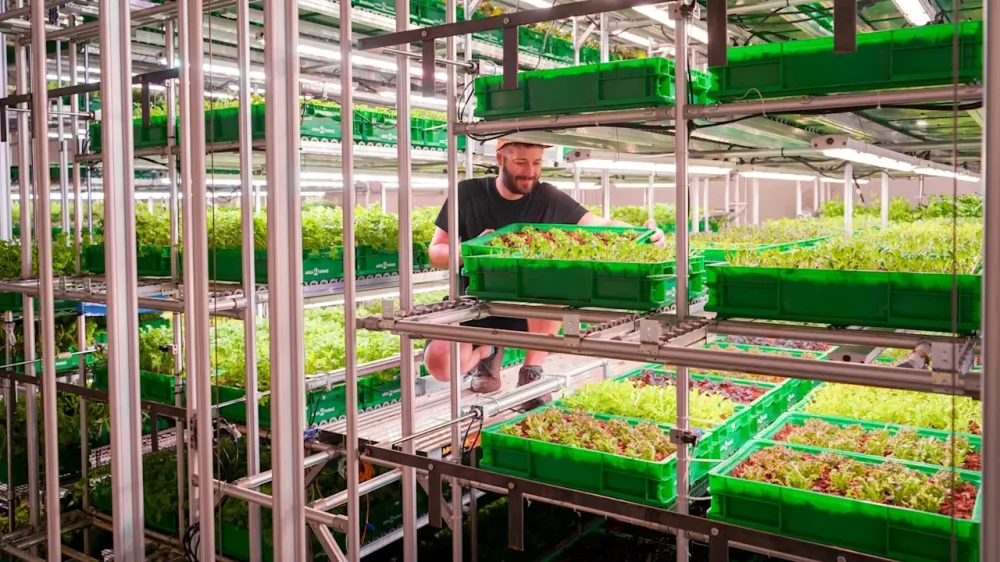
Many of the office buildings emptied by the pandemic are still sitting vacant. A recent report from Moody’s Analytics found that in the second quarter of 2025 office vacancy rates were still above 20% nationwide, and cities across the country are still trying to figure out what, if anything, to do about it. One startup has an unconventional solution. It wants to fill that empty space with crops. Area 2 Farms is a three-year-old company based in Arlington, Virginia, that’s taking the concept of indoor farming to unusual spaces. Its first farm, in Arlington, grows dozens of varieties of crops in a low-slung brick building tucked between a dog day care and a car repair shop. With a new infusion of venture capital, the company is planning to expand, and it’s looking to empty office buildings as potential future farms. “Part of our vision is that a farm can go anywhere,” says the company’s founder, Oren Falkowitz. Backed by $9 million in new funding from Seven Seven Six, Slow Ventures, 468 Capital, and Animo, Area 2 Farms is planning to build 10 new farms across the U.S. in 2026. Falkowitz says the company is currently pursuing opportunities in Philadelphia, Charlotte, Nashville, South Florida, Orlando, Austin, and Raleigh-Durham, and Atlanta. His goal is to build indoor farms within 10 miles of 90% of the U.S. population. Proximity is the driving idea behind the company. Falkowitz grew up in south Florida and remembers a time when oranges were typically bought not at a grocery store but from the actual orange grove, directly from the farmers who grew them. Today studies estimate that most produce travels hundreds of miles before it reaches the end consumer. “The production of our food just gets pushed further and further away,” Falkowitz says. “As a result of this distance the stores are asking growers to produce things that are more shelf-stable, not necessarily more diverse or more nutritional.” Falkowitz, who previously worked for the National Security Agency and later founded two cybersecurity companies, proposes a hyperlocal alternative. “We move the farm, not the food,” he says. The company’s pilot farm in Arlington produced its first crop in fall 2022. The company estimates it has produced more than 20,000 harvests since then, using a modular rack-based system that automatically moves crops through a cycle of mimicked daylight and darkness. Planted in box containers filled with soil, the farm is able to grow kitchen staples like lettuce, spinach, carrots, potatoes, tomatoes, and mushrooms, as well as more niche items like amaranth microgreens and purple shamrock. Rising 18 feet tall, the racks cram 200 acres-worth of annual crop growing into 3,000 square feet of real estate. Indoor farming is not new. Greenhouses are an essential part of the global food system, and Falkowitz notes that hydroponic farming has existed since the days of Babylon. “I would say it’s only partially interesting to be growing vertical, and it’s totally uninteresting or uninnovative to ship your products to Whole Foods, or Safeway, or Publix,” he says. Area 2 Farms works more like those orange groves Falkowitz remembers as a child, but with the high tech twist of its automated growing racks. Local farmers run the space and its customer base comes primarily from within a two-mile radius for weekly farm share pickups. “When we build a farm or we move the farm back to people, we want them to interact with it. We don’t want anyone in between the farmer and the consumer,” he says. The idea has caught on. “We’ve been sold out for the last hundred weeks,” Falkowitz says. That’s why he’s keen to expand Area 2 Farms’ modular farming technology to new spaces. “What we wanted the technology to be able to do is to fit wherever it could,” he says. “In order to build a greenhouse in a city you would need a quarter-acre to an acre of just land, and that does not exist.” What does exist in cities is underutilized buildings and oddly shaped lots. Area 2 Farms is currently in the process of building its second farm on a trapezoid-shaped lot in Fairfax, Virginia, that’s been vacant for 20 years. Falkowitz sees even more potential in the empty offices that litter cities across the country, and he says cities and real estate owners have been open to the idea of taking this farming technology inside former offices. “They’re just like, ‘have the space. We don’t know what to do with it,'” Falkowitz says. Area 2 Farms is one alternative, and perhaps a second chance for buildings that might have otherwise gone obsolete. “At the core, we’re really focused on revitalizing underutilized or existing spaces,” Falkowitz says. “And that can be a wide array of shapes.” View the full article
-
We may earn a commission from links on this page. Did you know you can customize Google to filter out garbage? Take these steps for better search results, including adding Lifehacker as a preferred source for tech news. With all the apps and digital tools available to enhance your studying, plus how fast and easy it is to type notes compared to how long it takes to write them, it seems like a no-brainer to bring your laptop with you to class. But there’s good reason to believe taking notes by hand helps your brain retain more. Here’s why you should try leaving the laptop behind at home and how to make the switch to the old-school way easier. Digital note-taking isn’t perfectThere’s been plenty of research that has suggested hand-taken notes are superior to those you take on a computer, even though typing is so much faster and you can get more information on the page. Actually, that’s part of the problem: When taking notes by hand, you have to be choosy about what is important enough to write down. You have to use critical thinking, make outlines, and listen closely to determine what parts of the lecture are valuable enough to take the time to jot down. When you’re typing, you can just transcribe the whole lecture in real time if you want—and you might go on autopilot to do so without engaging your brain deeply in the material. I made this mistake in grad school: I'd type everything the professor said, so focused on getting every word that I didn't actually hear the lesson. Worse, I ended up what amounted to transcripts—and the majority of what the professors would say during three-hour classes wasn't relevant to my concrete learning goals. I'd end up feeding my messy "notes" into AI tools and asking for summaries. I could have just listened more thoughtfully and intentionally the first time around. Recent research backing up note-taking as the reigning champ was published in Teaching of Psychology in 2022. Researchers put participants in four categories: those who took notes by hand and took a test on the computer, those who took notes on the computer and took a test by hand, those who took notes and did a test on the computer, and those who did it all by hand. Overall, regardless of how they ultimately took the test, the students who took notes by hand performed better on the quiz overall—and better on conceptual questions. Your computer is distractingIt’s convenient to be able to look up concepts, jot down notes, and maintain tabs of supplemental materials throughout class, but it’s just as convenient to toggle over to a new window and scroll social media or send work emails. Being distracted in class is not helpful for your retention and performance, regardless of whether the tool at hand could help you if you were using it to. A 2012 survey published in the Canadian Journal for the Scholarship of Teaching and Learning showed that of 478 students and 36 instructors surveyed at one university, almost half found the use of technology in class for noneducational purposes distracting. There have been a bunch of other studies showing that use of phones or laptops for noneducational purposes during class has a negative effect on academic performance. It's why we're seeing so many jurisdictions around the country push for phone-free school zones for kids. The journal articles on these results have pretty straightforward titles like “Dividing Attention in the Classroom Reduces Exam Performance” and make it clear that doing anything but taking notes or following along with class materials on the computer is only impacting your ability to obtain and retain valuable information. And since taking notes on the computer isn’t all that great to begin with, you might as well not bring the device at all. Plan your note-taking If you've been typing your notes out for years, it will be a major adjustment to go back to the old notebook and pencil. How is your handwriting looking these days? Do you even know? Time to reacquaint yourself, but in the process, you'll need a strategy as you embark on this plan. There is actually quite a variety of note-taking methods; the best one for you will depend on what type of content you're studying and what kind of learner you are. I linked my guide to all the approaches above. You might find outlining, the Cornell technique, or "mapping" or "charting" to work best, but you'll have to play around with them a while to figure it out. By the way, just because you take the notes by hand doesn't mean they have to stay hand-written. You can digitize your notes using an app or even invest in a smart notebook that will do it for you as you write. I've used a Rocketbook smart notebook in the past and found it intuitive and a nice way to straddle the analog and digital worlds. Finally, make sure you revise your notes before you leave class, whenever possible. Going through them while the lecture is still fresh in your mind is crucial. You can either start digitizing them then, maybe by using an app to make a mind map, or just rewrite them on a different notebook page. View the full article
-
Israeli prime minister, who is subject to international arrest warrant, bypasses European allies following rupture over GazaView the full article
-
Over the past couple of days, especially since the Google August 2025 spam update officially completed, the Google search results have been rumbling. It is a bit hard to track due to the changes with the third-party rank checking tools, but there has been a lot of chatter within the SEO community over the past few days.View the full article
-
Rapid unravelling of heavily indebted car parts supplier has caught credit markets off guardView the full article
-
Cloudflare announced Content Signals Policy, a new addition to robots.txt that allows you to express your preferences for how your content can be used after it has been accessed. This aims to block Google from using your content in AI Overviews, but Google would have to comply, which they have not yet, for this to work.View the full article
-
Google is updating the Google Ads Misrepresentation policy concerning Dishonest Pricing Practices. This will require advertisers to disclose the payment model or full expense that a user will incur before and after purchase, and clarify any false or misleading impressions of the cost of a product or service.View the full article
-
Google announced that Search Live is now fully live in the US and no longer requires opt in to Search Labs. In July, Google released it on mobile in the U.S. for users enrolled in the AI Mode Labs experiment but now it is open to everyone in the US in English'"no Labs opt-in needed.View the full article
-
Whiskey has always carried weight. Think crystal tumblers, low-lit bars, Don Draper pouring a glass after a big win, or Sinatra crooning with a dram in hand. These rituals and symbols have long defined the category, but in 2025 they may also have held it back. While other “dusty” drinks made surprising comebacks this summer (see Bacardi’s Breezer relaunch, Smirnoff Ice chasing Gen Z, even cask ale enjoying a 50% surge among 18–24-year-old pub-goers), whiskey didn’t seize the moment. The idea of making whiskey more appealing to younger drinkers isn’t exactly breaking news. But it matters now more than ever, thanks to a new opportunity with this demographic. According to recent IWSR data, 70% of Gen Z now drink alcohol, up from 46% just two years ago. This generation is curious, open to experimentation, and more likely to embrace unexpected drinks than older cohorts. Yet whiskey’s sales have been declining in younger demographics, particularly in the U.S. and Europe. The urgency is clear: if whiskey wants to remain culturally relevant, it has to capture Gen Z’s attention now, before other categories cement themselves as the new “go-to” for younger drinkers. Reinventing rituals without abandoning heritage For whiskey, the challenge isn’t about throwing away tradition. It’s about loosening it up. A single malt aged for 40 years will always command respect, but it can’t be the only story the category tells. If Gen Z is to adopt whiskey, it has to feel approachable, flexible, and fun. That’s where new rituals come in. Long associated with hushed reverence, whiskey can become a summer staple when presented in lighter, fresher serves. The Whiskey Highball is the clearest example of this shift. A tall glass, sparkling soda, and a hint of citrus: it’s whiskey, but social and sessionable. Suntory’s Toki has built its modern identity almost entirely around this serve, while Dewar’s has positioned the highball as an everyday cocktail in the U.S. These moves show that whiskey doesn’t need to change what it is, it simply needs to change how it shows up. Flavors and RTDs: breaking down barriers Gen Z drinkers often don’t want to start with smoky or peaty intensity. Flavored whiskeys like Jack Daniel’s Apple or Crown Royal Peach prove that approachable entry points can feel fresh rather than gimmicky. RTDs, like Jameson Ginger & Lime or Jack & Cola, add portability and sociability, two qualities whiskey has historically lacked. And it’s not just big brands making moves. New labels like Strutter, a peanut-butter-and-honey flavored whiskey with streetwise swagger, show how newcomers are breaking category codes. Rebranding whiskey: from heritage to inclusivity Whiskey has always had heritage on its side, but heritage can weigh heavy. The brands finding traction are swapping imagery of leather armchairs and oak panels for lighter, lifestyle-led storytelling. Jameson continues to frame whiskey as sociable and welcoming. Maker’s Mark is leaning into vibrant cocktails like the Whiskey Smash and Whiskey Spritz. The message is clear: whiskey doesn’t need to dictate the vibe; it can flex to fit it. A unified approach to the future Whiskey has made progress, but it hasn’t yet claimed “drink of the summer” status. Why? Because the category is fragmented. Different brands push different experiments, which dilutes the impact. What’s needed now is a unifying symbol: one iconic serve, one joyful narrative, a category-wide push that says, “Whiskey can be light, inclusive, and fun.” Heritage and lightness aren’t opposites. Together, they can future-proof whiskey for new generations. Opportunity calls Whiskey’s history has always been about time: ageing in barrels, patience, tradition. But in 2025, time is also about urgency. The summer of 2025 showed what happens when whiskey hesitates. Other categories rushed in and grabbed Gen Z’s attention. If whiskey doesn’t evolve quickly, it risks becoming the drink people respect but don’t reach for. The good news is, Gen Z is drinking more, experimenting more, and seeking brands that are inclusive, playful, and authentic. If whiskey shows up in the right ways—lighter, fresher, more sociable—it can still win them over. As a whiskey lover, I hope to see that happen. Because whiskey has all the ingredients to thrive with Gen Z, it just needs to play with a lighter, more joyful culture. If it does, the drink of summer 2026 might not be a spiked seltzer or a retro alcopop. It might finally be whiskey. View the full article

-
Google updated its Other restricted businesses: Government documents and services policy to say it may label some search ads to say, "Not a government website." View the full article
-
It had begun nearly two years prior, with a miscarriage, and then another. I was compiling a list of fertility clinics when he made an appearance on the ultrasound monitor, a flickering response to my quietly brewing despair. I spent the long months of pregnancy that followed feeling like a cartoon character with a me-size thunderstorm threatening at every turn. Though my pregnancy was healthy, I was convinced I had to remain vigilant until my son was in my arms. When my husband and I visited my obstetrician nine days past my son’s due date, I wasn’t surprised to see an irregularity in his heartbeat. Less than an hour later, we were checking into the hospital to start my induction. Later that night, my son’s heartbeat dropped again, prompting a small army of doctors and nurses to rush the delivery room. But he recovered, my body stopped resisting, and then it was over. We sat together in the emptied room, my son curled against my husband’s chest, his tiny hat askew. Here was my family. Do our beginnings matter? It’s the question at the heart of Orchid, one of a new wave of companies performing genomic screening on human embryos. Roughly 40% of in vitro fertilization (IVF) cycles today include genetic screening, but in almost all cases, the tests are a relatively rudimentary gauge of obvious chromosomal abnormalities, with results similar in scope to a prenatal amniocentesis test. Orchid and its competitors, all of which were founded within the last decade, assess embryo health in a far more comprehensive, and potentially more radical, way. For Noor Siddiqui, Orchid’s 31-year-old founder and CEO, old-fashioned origin stories, like my son’s, are the equivalent of “rolling the dice,” as she often says. She doesn’t yet have children, but she and her husband hope to someday have two sons and two daughters. To prepare, she has frozen more than a dozen embryos, and plans to retrieve even more eggs. In keeping with Orchid’s protocols, her embryos have been biopsied; the DNA contained in those four- to six-cell biopsies has been amplified; and the resulting genomic data has been sequenced and scored for chromosomal abnormalities, as well as cancer, autism, diabetes, birth defects, and hundreds of other diseases and disorders. The most important parenting decisions anyone can make, Siddiqui argues, happen before birth: your choice of partner and your child’s genome. She views screening embryo genomes as a form of preventive medicine. “For the first time ever, parents can mitigate a massive amount of risk that was previously left to chance,” she says. She imagines that future couples will start their parenting journey as she did, by reviewing a data-rich, tastefully designed embryo report for each of their prospective children. They will be able to remove from consideration any embryos with serious and often rare monogenic conditions, such as cri du chat syndrome, and compare relative risk on more complex conditions, including intellectual disability and schizophrenia. Siddiqui has no doubt that the practice will one day be widely accepted, and essential. “I started this company because I was pissed I couldn’t have a baby the way I wanted,” Siddiqui says when we meet on a misty afternoon in June for a walk along the Chicago lakefront. It’s her first venture outdoors after a day in hotel meeting rooms alongside attendees of a reproductive medicine conference, where she was a featured speaker trying to convince an audience of physicians that patients undergoing IVF would benefit from Orchid’s tests. Like many of Orchid’s customers, Siddiqui’s life has been shaped by genomic disease. Her mother’s DNA contains a de novo mutation that has slowly destroyed her vision; today, she is legally blind. At Stanford, where Siddiqui studied computer science as an undergraduate and in a master’s program, classes on artificial intelligence introduced her to the possibilities of applying deep-learning techniques to genomic data. The merging of computational science and genetics was a revelation. “I saw what happened to my mom,” she says. “I don’t want [my children] to suffer.” Since its founding in 2019, Orchid has evaluated thousands of embryos’ whole genomes, at an out-of-pocket cost of $2,500 per embryo. (Couples who use Orchid screen an average of five embryos.) Orchid partners with IVF clinics to ensure that embryo biopsies are performed according to its guidance and then amplifies the embryo DNA for analysis at its own clinical labs. Traditionally, IVF clinics evaluate embryos according to their morphological grade, which assesses the number and quality of cells in an embryo. If the clinic orders genetic testing, it is typically a test known as PGT-A, which can detect diseases like Down syndrome, caused by an extra copy of chromosome 21. (The “A” in the test’s name refers to aneuploidy, or an abnormal number of chromosomes.) Orchid goes further. In addition to scanning for hundreds of rare single-gene mutations, it uses statistical techniques to generate polygenic risk scores designed to gauge an embryo’s predisposition to complex but often common diseases, such as hypertension and coronary artery disease. Because polygenic conditions are influenced by behavior and environment in addition to genetics, the value of their associated risk scores is hotly contested within the research community. Being told one embryo has less risk of hypertension or coronary artery disease than another does not preclude a future diagnosis. But that hasn’t stopped couples with a family history of hereditary disease and considerable financial means from flocking to Orchid. “My inbox is all babies,” says Siddiqui. But critics are circling too. Siddiqui’s observation that “sex is for fun, and embryo screening is for babies,” which she first voiced in a YouTube video in 2021, has become a polarizing catchphrase. A fertility specialist appearing on 60 Minutes echoed it with pride, but ethicists wary of a designer-baby future point to it as a sign of Huxleian doom. As she gamely walks the waterfront in a black blazer and sensible heels, Siddiqui’s frustration with the status quo is palpable. “I think it’s insane that we go to these doctors, talk to these conferences, and they’re grappling with, oh, this is too much information” to share with patients, she says. “Well, I’m going to have a lifetime of medical bills and a child who’s always going to suffer from an incurable disease because you didn’t want to look at a little bit of extra information. You didn’t want to spend five extra minutes with me telling [me] all the options for the most important decision of my life. And that enrages me.” But an intervention like Orchid doesn’t just reduce suffering; it also introduces choice and control to the reproductive process in unprecedented ways. Through the ages, children have been viewed as a gift (sometimes an unwelcome gift, but a gift all the same). After meeting with Siddiqui, Orchid provides me with a sample embryo report to review. Looking at it, I have the uncomfortable feeling that I’m looking not at a gift, but at a product—indeed, a luxury product. Am I getting a winner or a dud? Does the promise of increased health span justify the cost of the service? The process rewards couples with the economic means to produce a multitude of embryos, and, by its very nature, encourages consumer-directed optimization. And, throughout, there’s the unspoken, but implied directive: May the best baby win. When Jeff’s wife suffered two early-term miscarriages, he felt helpless. The couple started looking into IVF, hoping to find a way to prevent further losses. Jeff, a prominent startup founder himself, heard about Orchid through a colleague who had been advising Siddiqui. He was surprised to learn that some embryos with genetics that are not compatible with life can still generate high morphological grades on traditional IVF tests. When such embryos are implanted, they tend to miscarry. Orchid’s screening process offered a solution, combining PGT-A with scores for 1,200 monogenic conditions and a dozen polygenic conditions—including Alzheimer’s disease, which runs in Jeff’s wife’s family. Jeff’s wife went through two rounds of egg retrievals. The couple spent upwards of $25,000, in addition to their IVF costs, to screen the resulting embryos with Orchid’s technology and welcomed a first baby last year. Jeff was so taken with Orchid that he became an investor. “Everyone tries to provide a better life for their kids, wants to send their kids to the best school,” he says. “Why would you not want to give your child the highest probability of health success?” And as a society, he argues, we should be trying to “eradicate disease” and “improve our gene pools.” He hopes to see federal support for embryo screening, paving the way to lowered costs and greater access. (Eleven states require insurance to cover IVF and fertility preservation; no legislation currently addresses embryo screening.) Perhaps not surprisingly, Orchid’s earliest and most vocal customers and supporters have been a who’s who of Silicon Valley elites, products of a culture where data is prized, longevity is hackable, and children follow after career success. Orchid has raised $12 million from the likes of 23andMe founder Anne Wojcicki, Coinbase founder Brian Armstrong, and Ben Lamm, cofounder of the dire wolf–reviving startup Colossal Biosciences. For Siddiqui, who completed the fellowship program for young entrepreneurs founded by libertarian iconoclast Peter Thiel, Orchid’s emphasis on consumer choice is a feature, not a bug. She has spent time with Orchid parents and their Orchid babies; she trusts them. “I think consumers are smart,” she says. “At the end of the day, what I love about the world is that the arc bends toward good.” Indeed, if there’s a theme common among the leaders of embryo-screening companies, it’s a sense of befuddlement, even exasperation, at the wary reception they have received in clinical circles. Many of these founders, like Siddiqui, have been affected by genetic or chronic disease. When professional organizations like the American Society of Human Genetics caution against the use of polygenic embryo screening in clinical care, it’s personal. Nathan Treff, cofounder and chief scientific officer at Orchid competitor Genomic Prediction, developed type 1 diabetes in early adulthood. His research, which relies on a database of DNA from adult sibling pairs, suggests that couples using Genomic Prediction’s polygenic risk scores for embryo selection can reduce the odds of their child having type 1 diabetes by at least 45%. “Don’t you think it’s unethical not to tell patients with diabetes that this was an option?” he says. In June, Genomic Prediction announced a partnership with Nucleus Genomics, a genetic health company founded by another former Thiel Fellow, Kian Sadeghi. Genomic Prediction oversees the wet lab process by which embryos are biopsied and their DNA is amplified; Nucleus receives the raw DNA data and conducts its own proprietary analysis. “We believe in genetic optimization,” Sadeghi told Core Memory podcast host Ashlee Vance in June. “We believe [that] if couples want access to height or IQ or hair color or eye color or alcohol dependency, they should have access to that. And the other thing is we really believe in the consumer deciding.” As Nucleus’s website puts it: “Understand your embryo’s future body, mind, and health,” starting with traits like male-pattern baldness and severe acne. Orchid doesn’t offer information on cosmetic traits in its reports, and Siddiqui has consistently insisted that Orchid is focused on preventing disease. But the line between markers of disease and mere traits is blurrier than it might first appear. Height is a trait—yet pulled to its extremes, it becomes idiopathic short stature or Marfan syndrome. Plus, there are correlations between theoretically desirable traits and less desirable ones for reasons that scientists have yet to untangle. For example, educational attainment—a proxy for IQ—is negatively correlated with traits including conscientiousness and extraversion, and positively correlated with autism spectrum disorders and anorexia. To some researchers, even Orchid’s focus on disease is problematic. They would like to see companies performing embryo screening connect their abstract polygenic risk scores to real models of disease in more concrete ways. For example, a risk score for obesity, which presents as a spectrum of symptom severity, is not the same as a risk score for cancer. “There’s no such thing as half cancer,” writes Sasha Gusev, a statistical geneticist and associate professor of medicine at Harvard Medical School, in his Substack The Infinitesimal. Orchid and its peers struggle to communicate these distinctions, at the risk of fostering false hope—or worse, false certainty—among their customers. Companies like Orchid are still far too young to have a systemic impact. But already, researchers are hypothesizing about how embryo optimization might play out on a population-level scale. Patrick Turley, director of the Behavioral and Health Genomics Center at the University of Southern California, was lead author of a 2021 paper outlining problems with the use of polygenic risk scores in embryo selection. He foreshadows a world in which cost-focused nationalized healthcare systems, in particular, might lead the way in embryo screening. “What’s the cost-benefit analysis?” he asks. “If you could reduce someone’s diabetes risk by three or four percentage points, what does that mean in terms of lifetime medical spending, but also quality of life in the future?” There is something undeniably appealing about de-risking reproduction and lowering lifetime medical costs. Siddiqui’s preferred metaphors—rolling dice, winning or losing the genetic lottery—make nature’s reproductive methodology appear haphazard, even capricious. Embryo screening, in contrast, seems like a safe and responsible approach. But of course, Siddiqui’s portrayal is incomplete. There is intelligence and optimization built into nature’s design, even if it does sometimes lead to loss. More than half of first-trimester miscarriages are the result of chromosomal abnormalities. My miscarriages caused great grief, but they were also, likely, safeguarding me. Was my son, in the end, the “best” baby, and is he now the “best” 6-year-old? The question is almost absurd—am I the “best” mom? All I know for certain is that he’s mine. View the full article

-
Fast Company’s Most Innovative Companies is our flagship franchise and one of our most eagerly awaited editorial projects each year. To determine honorees, our editorial team spends months evaluating organizations that are driving progress across industries and around the world. We track their performance, compare them to competitors, and assess their impact within broader industry and societal trends. The final list serves as both a definitive snapshot of innovation today and a road map for what’s next. Here’s what we’re looking for: Fresh innovation Most Innovative Companies is not a lifetime achievement award. We’re interested in what’s new. Tell us about products, services, or strategies introduced in the past year. We also welcome news of upcoming launches. If something is under embargo, simply note that in your application. This is your chance to get on our radar early. Measurable impact We want to see that your innovation is making a difference. Share the metrics you use internally to gauge success—whether it’s revenue growth, user adoption, engagement, or other KPIs. If any data is confidential, just flag it in the submission. The big picture We recognize companies that are tackling major challenges and reshaping industries, culture, or society. Show us how your innovation moves your field forward—and how it connects to larger global or cultural trends. Editorial opportunity Each application is carefully reviewed by our editorial team, often by multiple editors. Beyond informing the Most Innovative Companies list, these submissions help shape our editorial coverage year-round. We frequently pursue additional stories based on what we learn here. In other words, this is a unique opportunity to introduce your company and tell your story directly to Fast Company’s editors—in your own words. We’re accepting MIC applications through October 3. View the full article
-
Farage’s path to power is strewn with landmines planted by his own sideView the full article
-
Chick-fil-A says it’s testing out a stand-alone drinks-focused restaurant concept. Called Daybright, the new concept will open this fall outside Atlanta, Chick-fil-A tells Fast Company. It’s being brought to life by Red Wagon Ventures, a Chick-fil-A subsidiary and business incubator named after founder Truett Cathy’s first business selling Coca-Cola out of a red wagon when he was 6 years old. “We look forward to sharing more details in the future,” Chick-fil-A says about the concept. Though there’s not yet a public menu for Daybright, it’s expected to serve coffee, smoothies, and cold-pressed juice alongside a limited selection of food. But sorry, peach milkshake fans, Daybright will not have any Chick-fil-A menu items—and that goes for both food and beverages. The announcement indicates Chick-fil-A isn’t just looking to compete on chicken sandwiches alone anymore. As fast-food prices have risen and customers have decided to stay home or choose other options, beverages offer restaurants a higher-gross-margin item that it can easily upsell to customers. In other words, drinks are cheap for restaurants to sell, and customers might be convinced to pick up a snack to go with their beverage. The category can also draw in young people during off hours. With Daybright, the chain could also steal market share from the likes of Starbucks and Dutch Bros Coffee by nabbing customers who stepped out for a morning coffee or a quick, cheap snack. Daybright will arrive as other chains are experimenting and investing more in their drinks too. Taco Bell expanded its beverage offerings over the summer, and though McDonald’s in May shut down CosMc’s, its beverage-first, drive-through concept launched in 2023, it’s taking what it learned from the store to bring to McDonald’s locations in the U.S. and eventually around the world. For Chick-fil-A, a privately held company that reported $22.7 billion in sales in 2024, the new concept could be a lifeline since its sales growth has slowed. By giving customers a new reason to stop by, even if it’s just for a drink, Daybright could give Chick-fil-A a leg up at a challenging time. View the full article

-
When I was a leader in corporate America at a large regional bank, I held the assumption that once I was promoted, and received my new title and salary, then I would finally feel confident and successful. I was wrong. The allure of a new title and office wore off quickly, and my persistent worries about whether I was cut out for leadership, or even a good leader at all, continued to persist. A decade later, even after I submitted the first draft of my book, Closing the Confidence Gap, I was overwhelmed with self-doubt. I felt completely stuck: Unable to move forward with marketing, I was paralyzed by many of the same old fears of “What if people think I’m no good and this book finally proves it?” In my thousands of hours of conversations with leaders, I discovered that we share a common belief: that our confidence will arrive once we receive a certain title or status. We think we will finally “feel” successful. But it doesn’t happen that way. Self-doubt is always waiting at the edges of our capabilities. When we attempt to push doubt aside and ignore it, we reduce our ability to remain curious and respond most effectively. Counterintuitively, avoiding the feeling only makes it grow stronger, thus playing a larger role in preventing us from applying for roles that excite us, holding crucial conversations, speaking up and sharing ideas, or making courageous asks. If self-doubt is holding you back from meeting your potential in leadership, here are some steps you can take to help manage that feeling, and even use it to your advantage. NOTICE AND NAME WHAT IS HAPPENING Noticing and naming an emotion is the first step toward emotional acceptance. This means that you are allowing your feeling to exist without judgment or a desire to change this. It can help to rely on an emotions wheel to find the language to describe what you are feeling. If this process is overwhelming, take four deep breaths and ask yourself, “What feelings arise in my body?” Once you get curious about these feelings, it will become easier to name the emotions. Naming our emotions doesn’t amp up their power, it identifies them accurately. With this accuracy, we can feel more in control of their cause and the right next steps we need to take. NORMALIZE THE FEELING BY FINDING A SUPPORT SYSTEM The first step toward normalizing self-doubt is accepting the feeling. For example, you may say to yourself, “Self-doubt is a normal, healthy human emotion and a sign that I am stretching my comfort zone.” A second important step toward normalizing self-doubt is taking the vulnerable step to describe what is happening to a supportive and neutral party. This can be in-person or online, either with one person (such as a therapist or coach) or with a community. When I struggled with self-doubt after writing my book, I took the vulnerable step to share this with my entrepreneurial community who, in response, shared their own feelings of self-doubt. This helped me normalize this feeling and provided support to help me move forward. REFRAME SELF-DOUBT AS A STATE NOT A TRAIT The internal language we use impacts how we behave. When our internal language describes self-doubt as a trait (for example: “I am a nervous wreck. I cannot show up for this presentation”) we are not allowing room for this to be changed. Instead, we should reframe this feeling into a state. One potential reframe could be, “I notice that I am feeling doubtful and nervous, this means I’m moving closer to achieving my stretch goals.” To separate a state from a trait, it can be helpful to ask yourself what helpful reasons there are for feeling self-doubt. You may ask yourself, “How does this emotion benefit me?” Potential benefits include keeping you humble, or ensuring that you put in adequate preparation and effort for a keynote, meeting, or project. TAKE ACTION WHILE FEELING DOUBTFUL If you wait until you feel confident or fully ready to do something, you may wait forever. I have interviewed leaders like Arianna Huffington, Indra Nooyi, and Padmasaree Warrior. Here is what I learned from them: Rising through the ranks in leadership does not mean that your self-doubt disappears. It means that you have learned to anticipate and accommodate self-doubt at all stages of leadership. Successful leaders have transformed their relationship with doubt, knowing it’s essential on the path to a meaningful career. Taking action is a muscle that is built with small, brave steps. If you struggle with self-doubt while presenting, you may not give your first keynote to an audience of 1,000 people. Instead, you may agree to lead your next team meeting. Once you have done this a few times, you may then decide to speak up at a company-wide meeting. It’s the actions of confidence that come first, the feeling that comes second. Confidence is a side effect of taking action. View the full article

-
Former French president cleared of more serious charges in connection to late dictator Muammer Gaddafi allegedly financing his campaignView the full article
-
Pitching these outlets means your brand gets in front of readers, circulates on social media, ranks in search, and now resurfaces in AI. Below are the top 50 most-cited publisher and editorial sites in ChatGPT that accept PR pitches. If…Read more ›View the full article
-
As home prices reach new heights, mortgage expenses are unaffordable for the typical earner in a third of the nation's largest 580 counties, according to Attom. View the full article