ResidentialBusiness
Administrators
-
Joined
-
Last visited
Everything posted by ResidentialBusiness
-
 We may earn a commission from links on this page. Deal pricing and availability subject to change after time of publication. At $336 (down from its usual $449), the Sonos Move 2 is seeing its lowest price ever right now, according to price trackers. That makes it a bit easier to justify if you've been eyeing a portable Bluetooth speaker that doesn’t compromise on sound. Sonos Move 2 $336.00 at Amazon /images/amazon-prime.svg $449.00 Save $113.00 Get Deal Get Deal $336.00 at Amazon /images/amazon-prime.svg $449.00 Save $113.00 This isn’t some lightweight travel companion you toss in a beach bag. It’s nearly 6.6 pounds, built like a tank, and clearly meant to pull double duty as both an indoor speaker and an outdoor one. It looks clean, charges on a minimalist wireless base, and comes in either matte black or white. The audio setup includes dual tweeters for stereo separation and a single woofer that holds its own, especially at moderate volumes. At higher levels, the bass pulls back a bit to prevent distortion, but unless you’re constantly maxing it out, that won’t be a huge issue, notes this PCMag review. Bluetooth 5.0 is a little behind the times and won’t please audiophiles who want higher-res streaming on the go. But this speaker was clearly built with wifi use in mind—and on that front, it shines. Pair it with the Sonos app, and you get access to EQ adjustments, TruePlay room tuning, and the ability to link it to other Sonos speakers. It also supports AirPlay 2 and hands-free voice control with both Alexa and Sonos Voice. It’s not fully waterproof, but the IP56 rating means it’ll survive a heavy downpour or occasional rinsing. The battery life has been bumped up to a solid 24 hours (though that number depends on how loud you play it and how often you use voice or wifi features), and the app makes setup and everyday use easy, whether you're already in the Sonos ecosystem or not. The Move 2 is expensive, no doubt, and Bluetooth specs could be better. But if you care about full-bodied, room-filling sound, smart features, and portability that doesn’t feel like a toy, this might be the speaker to grab, especially while it’s at its best price yet. View the full article
 -
University to seek an order blocking the administration’s effort to stop it enrolling foreign studentsView the full article
-
Financial meltdown averted, I merely worry about inflation, interest rates and the dollarView the full article
-
Rapidly rising tuition and housing costs both contributed to lower homeownership rates and a more than twofold surge in student debt in under 15 years. View the full article

-
AI always reminds me of Clippy, the infamous talking paperclip added to Microsoft Office in the '90s. This little guy frustrated users, was based on a faulty understanding of how people want to use technology, and had a way of showing up even after you specifically turned it off. It was probably inevitable, then, for someone to make a tool that combines large language models and the 30-year-old animated paperclip. That someone is developer Felix Rieseberg, who built a Windows 95-themed Clippy app that can run real large language models on your computer. The application is available on Windows, Mac, and Linux devices, and works offline. Clippy looks just the way you remember and hovers over whatever you're working on. He cycles through several animations. Click on him to start chatting, the way you would with any other large language model. The application works offline, meaning you can chat with Clippy on a train or airplane if you really want to. To be clear: this is not intended to be a functional tool. Rieseberg calls it an art project he made just because it's fun. "If you get as little as a small chuckle out of it, I’m happy to hear it," says the project's "about" page. Even so, Clippy is probably the easiest tool I've come across for running large language models locally on a computer. Just download the application, install it, then choose which model you want to run in the Windows 95 themed preferences. The default, Google's Gemma, works well enough. Credit: Justin Pot This application is based on Ollama, an open source application built by Meta which makes it possible to run a variety of large language models on your own computer. Clippy offers eight different models to try out. Generally, the larger they are the more system resources they'll take to use—you can try a few different ones to get a feel for how well they work on your device. It's fun, if not entirely practical. Clippy can't access the internet, so you can't get real-time information, and the responses aren't as sophisticated as what you'd get from a top-of-the-line AI service. There are a few more things you can tweak in the settings, including the default font and whether Clippy should always be on the top. You can also write your own system prompt for Clippy, allowing you to take control of his personality. This AI-powered art project isn't going to change the world, and it's not supposed to. It's a piece of art, like this musical masterpiece Clippy inspired earlier this year. View the full article
-
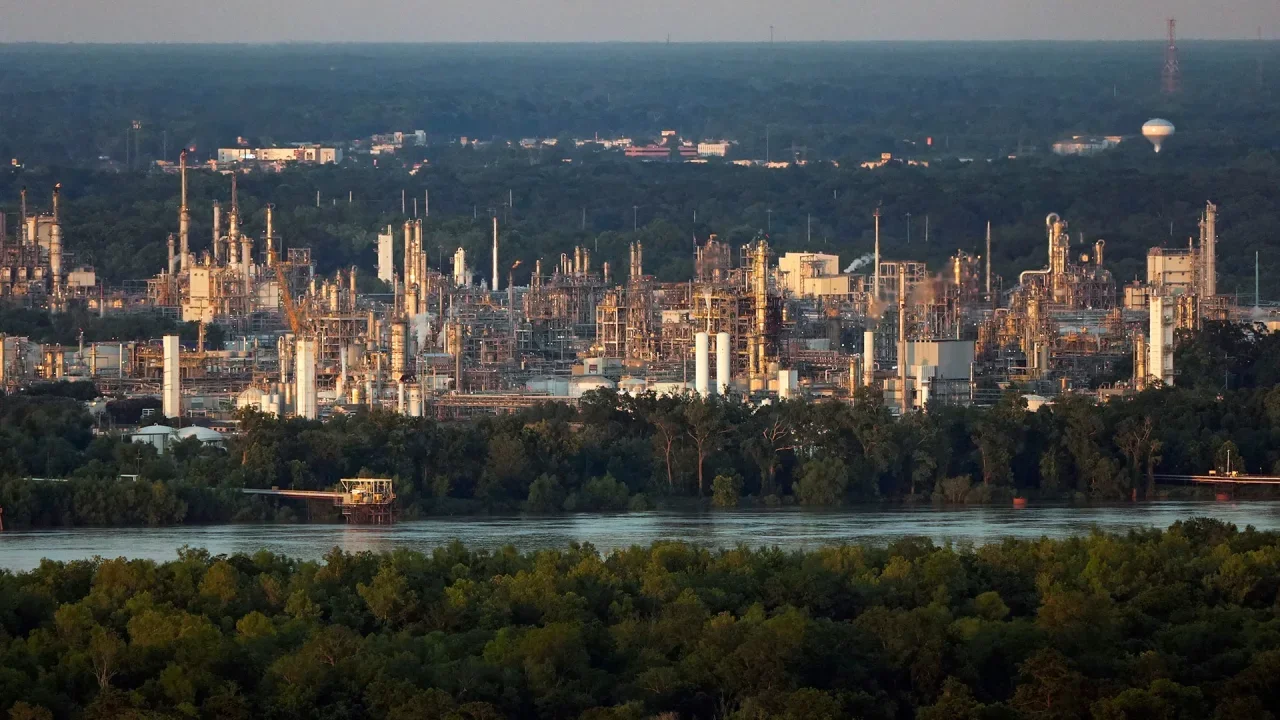
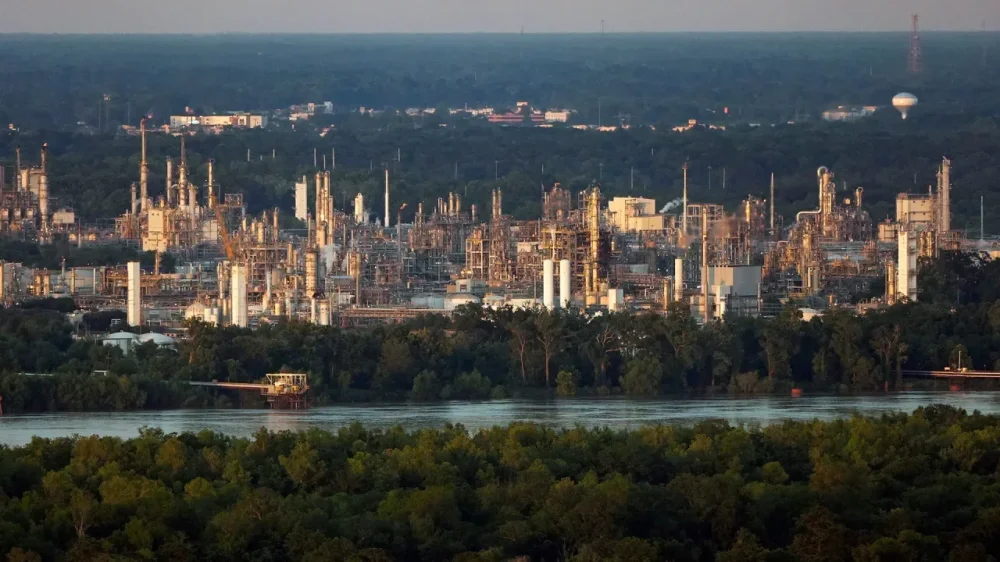
On days of heavy pollution in Sulphur, a southwest Louisiana town surrounded by more than 16 industrial plants, Cynthia “Cindy” Robertson once flew a red flag outside her home so her community knew they faced health hazards from high levels of soot and other pollutants. But she stopped flying the flag after Louisiana passed a law last May that threatened fines of up to $1 million for sharing information about air quality that did not meet strict standards. On Thursday, Robertson’s group Micah 6:8 Mission and other Louisiana environmental organizations sued the state in federal court over the law they say restricts their free speech and undermines their ability to promote public health in heavily industrialized communities. When neighbors asked where the flags went, “I’d tell them, ‘The state of Louisiana says we can’t tell y’all that stuff,'” Robertson said. While the state has argued the law ensures that accurate data is shared with the public, environmental groups like Micah 6:8 Mission believed it was intended to censor them with “onerous restrictions” and violates their free speech rights, according to the lawsuit. Despite having received Environmental Protection Agency funding to monitor Sulphur’s pollution using high quality air monitors for several years, Michah 6:8 Mission stopped posting data on the group’s social media after the law was signed last May, Robertson said. While federal law requires publicly disclosed monitoring of major pollutants, fence-line communities in Louisiana have long sought data on their exposure to hazardous and likely carcinogenic chemicals like chloroprene and ethylene oxide, which were not subject to these same regulations. Under the Biden administration, the EPA tightened regulations for these pollutants, though the The President administration has committed to rolling them back. The Biden administration’s EPA also injected funding to support community-based air monitoring, especially in neighborhoods on the “fence-line” with industrial plants that emitted pollutants that they were not required to publicly monitor under federal law. Some groups say they lack confidence in the data the state does provide and embraced the chance to monitor the air themselves with federal funding. “These programs help detect pollution levels in areas of the country not well served by traditional and costly air monitoring systems,” the lawsuit stated. In response to the influx of grassroots air monitoring, Louisiana’s Legislature passed the Community Air Monitoring Reliability Act, or CAMRA, which requires that community groups that monitor pollutants “for the purpose of alleging violations or noncompliance” of federal law must follow EPA standards, including approved equipment that can costs hundreds of thousands of dollars. “You can’t talk about air quality unless you’re using the equipment that they want you to use,” said David Bookbinder, director of law and policy at the Environmental Integrity Project, which represents the plaintiffs. He added there was no need for community groups to purchase such expensive equipment when cheaper technology could provide “perfectly adequate results . . . to be able to tell your community, your family, whether or not the air they’re breathing is safe.” Community groups sharing information based on cheaper air monitoring equipment that did not meet these requirements could face penalties of $32,500 a day and up to $1 million for intentional violations, according to analysis from the Environmental Integrity Project. “We’re a small nonprofit, we couldn’t afford to pay one day’s worth of that,” Robertson said. “And the way the law is written, it’s so ambiguous, you don’t really know what you can and can’t do.” There is no known instance in which the state has pursued these penalties, but community groups say the law has a chilling effect on their work. “The purpose of this was very clear: to silence the science, preventing people from doing anything with it, sharing it in any form,” said Caitlion Hunter, director of research and policy for Rise St. James, one of the plaintiffs in the lawsuit. “I’m not sure how regulating community air monitoring programs ‘violates their constitutional rights’,” Louisiana Attorney General Liz Murrill countered in a written statement. Industry groups are excluded from the law’s requirements, the lawsuit notes. The law presumes “that air monitoring information lacks accuracy if disseminated by community air monitoring groups, but not by industry participants or the state,” the complaint states. The Louisiana Department of Environmental Quality and the Environmental Protection Agency declined to comment, citing pending litigation. Brook is a corps member for The Associated Press/Report for America Statehouse News Initiative. Report for America is a nonprofit national service program that places journalists in local newsrooms to report on undercovered issues. —Jack Brook, Associated Press/Report for America View the full article
-
European stocks slide and Wall Street set to open lower after US president attacks the bloc View the full article
-
This week was a huge week for search; between Google I/O and Google Marketing Live - it was just a lot. We had two unconfirmed Google ranking updates, one on I/O day and one on May 16th. Google announced AI Mode was...View the full article
-
We may earn a commission from links on this page. Two months ago, I downloaded and started using the Steppin app, which locks up your most distracting apps and forces you to trade your real-world steps for them. After just three days, I was finding it enjoyable enough to review it, but now that I've spent 68 days with the app, I'm even more impressed. While it's still only available on iOS, an Android version is available on a waitlist and not much has changed in terms of interface or use since I first reviewed it, but I've found it much easier to navigate and incorporate into my life. My social media use is definitely downThe app works by syncing with your Apple Health data and pulling in the steps your phone or fitness tracker record, then converting them to minutes that you can redeem on your preferred apps. Once you add an app to your blocklist, you'll be prompted to open Steppin every time you try to open the blocked app. Then, you have the choice of selecting between one and 30 minutes of unlocked time or just abandoning the pursuit altogether. My settings are calibrated such that 50 steps unlocks one minute of app time. When I started, I added two apps to my blocklist: Instagram and a game called Project Makeover. My time on those apps has absolutely bottomed out. For the most part, this is a good thing. I can't even tell you the last time I watched a nonsensical Reel. On the flip side, though, I'll admit it's actually had a little bit of an impact on my social life. Instagram is where, for better or worse, people broadcast the goings-on in their lives, so I've missed out on a few things like milestone announcements from people I consider friends, but not best friends who would text me good news directly. I do feel rude for not "liking" these posts or congratulating them in the DMs when I eventually see or hear about the news days later. For as much as my mom complains that "social media isn't real life," that's not exactly true anymore and I am missing out on some real-life-adjacent things in my quest to stop looking at so many stupid Reels. I think it's a fine trade-off, but it's definitely something I've noticed. Still, it's given me a lot of time back and I'm grateful for it. I check my screen time every week and have seen it taking a nosedive. This week, my daily average is down 18% from last week, my "pickups"—or the amount of times I've unlocked my phone—are down 14% from last week, and my average notifications are down 8% from last week, though Poshmark, with over 6,000 notifications this week, is an outlier because I get a notification every time someone shares, likes, or buys one of my listings and have been using a third-party app to maximize how often those things happen. Don't worry, though. I set those alerts to appear quietly in my notification feed; they don't generate a push notification that lights up my lock screen. As it all relates to the little dopamine bops my brain has become wired to seek out from short-form videos and bite-sized hot takes, I've definitely noticed I'm just less interested in seeking that stuff out—to a point. Time without it has certainly acted like a detox and I don't necessarily feel the urge to look at posts that will shock, enrage, titillate, or otherwise entertain me, which wasn't true three months ago. That said, I've noticed that it's been a little easier for me to get sucked in by other apps that I didn't used to look at that often and didn't initially add to my blocklist—it was as though some of my previous Instagram time just spilled over into other apps. For a while there, I was spending an inordinate amount of time on X, for example. I noticed, added it to my Steppin blocklist while writing this, and carried on. Streaks make this workI am motivated heavily by arbitrary personal rewards. My workout streak on Peloton keeps me motivated to hop on my bike every day. My self-care streak on Finch keeps me motivated to log all my daily wins. My listing streak on Poshmark and my purchase streak on the Dunkin' Donuts app even earn me real-world rewards like discounted shipping and free coffee, respectively. It's no surprise the streak feature on Steppin has kept me similarly locked in. You maintain your streak by not removing any apps from your blocklist or overriding the app to get at your blocked apps. I have maintained my streak for 68 days and am quite proud of it. Adding new apps to your blocklist doesn't reset your streak and neither does altering the amount of steps you have to take to earn one minute. My steps aren't necessarily up (but I knew they wouldn't be)My distracting app use is definitely down and I'm feeling the positive effects, but Steppin's whole deal is that it facilitates change by encouraging you to be more active. It's supposed to be a two-for-one benefit. I was already active before downloading this and haven't noticed a significant increase in my daily average steps, but I don't mind. I teach three to four spin classes per week and do the majority of my cardio using my Peloton bike at home—while those activities burn calories and keep me active, they don't count toward "steps." I still take as many steps in an average day as I ever did, walking to the post office, Dunkin', the gym, and the bus—all the places I was already walking before installing Steppin. I have noticed I have not just a willingness, but an eagerness, to walk slightly farther distances than normal, though. Sometimes, instead of taking my Poshmark sales to the post office two blocks from my apartment, I walk up to the one 10 blocks away. I also get off the bus two or so stops early from time to time just to walk a little, although that might have more to do with my excitement that it's finally getting warmer outside. Generally, I know I'm doing this so I can bank some minutes of Instagram time, but I don't really end up using it, anyway. My banked minutes reset every Sunday at midnight and I usually end up with about five to six hours of unclaimed time. (It is very annoying to wake up on Sundays and not be able to even glance at Instagram while I brush my teeth and make my coffee, which results in me kind of shuffling around in a circle in the living room to generate some quick steps, but if I were to reconfigure my settings so that my minutes rolled over week-to-week, I'd lose my streak and I simply can't do that.) All in all, my Apple Health data shows I'm taking the same amount of steps now, on average, as I was this time last year, but I consider it a win that I'm even consciously choosing to walk when I wouldn't normally. Just this week, besides going to the farther post office, I've opted to go golfing for my weekly sports outing, walk around a shopping center instead of order all my summer clothes online, and use Peloton's guided walking workouts instead of doing all my cardio on my bike. This is definitely because of Steppin, which is forcing me to consciously make minor, healthy tweaks to my day. When I first reviewed Steppin, I interviewed its founder, Paul English. He mentioned he and his team are looking into ways to count things beyond steps that could equate to unblocked minutes, like time spent reading on a Kindle. That's a feature I'll be looking forward to. It would be great if the workouts my Apple Health records—like my cycling and my strength training—could somehow reflect in my Steppin time bank, although at this point, I'm not sure I'd use the extra minutes, anyway. I'm just not as interested in social media anymore. View the full article
-
Baseball meets AI in Google I/O 2025. It’s clever, but there’s more to the story than meets the eye. The post Google I/O 2025: The Background Google Didn’t Tell You appeared first on Search Engine Journal. View the full article
-
Search intent is easy to define but harder to truly understand. It’s more than just categories like informational or transactional. It’s about: What someone is trying to do in a moment. How that action fits into a larger journey. How your content and brand meet them there. If you’re still thinking in linear funnels or rigid personas, it’s time to go deeper. Rethinking the journey: Why search intent demands more nuance Before we dive in, let’s step back and ask a few questions: Do you have audience personas? A customer journey map? Funnels? And more importantly, are those tools still accurate? Are they as linear or predictable as they once seemed? I’m guessing they aren’t linear paths your audience follows the same way each time they engage with your brand from search. Unless you’re solely focused on branded traffic – typically bottom-of-funnel and ready to convert – you probably care about search intent more broadly. You likely understand how different behaviors connect to the content you create and the topics you target. Traditionally, search intent has been divided into a few broad categories. But with the range of human behavior, the ways people seek information, and ongoing shifts in search and AI, it’s important not to limit your thinking. In 2023, at MozCon, SEO thought leader Lily Ray made an excellent point: there are actually many more intents. From slide 65 of Ray’s Mozcon presentation Inspired by Ray, and with my own perspective expanded, I’ll revisit the commonly accepted intents and share a broader set of examples. 4 most common search intents Search intent is commonly categorized into four buckets: commercial, transactional, informational, and navigational. These serve as the four core search intents and the foundation of how many SEOs define a search action. Commercial intent Google categorizes commercial intent as pre-transactional searches. A user intends to buy a product or service, but just needs a little extra convincing. This can include searches that compare features of similar products. Transactional intent When a search query aligns with transactional intent, users are primed to purchase and often have a specific product or service in mind. Informational intent Informational search intents define search queries that indicate a user who wants to gain further knowledge about something. Navigational intent True to its name, navigational intent directs users to specific pages. The pages users search for can range anywhere from a specific social media platform to directories in your local town. Get the newsletter search marketers rely on. Business email address Sign me up! Processing... See terms. Expanding for all intents and purposes While those four search intents may broadly cover a sizable portion of queries, they don’t fully represent how users search. Someone searching for a movie start time at a local theater may not behave the same way as someone looking for movie reviews. Sure, both are looking for information about a movie, but they are in different stages of the customer journey. Expanding your understanding of search intent can help refine your engagement and marketing strategies – ultimately improving your understanding of audience segmentation, relevancy, engagement, visibility, and increased conversions. People often use search engines when they want to: Compare products People do their due diligence before making a purchase. They review pricing, specifications, reviews, and other information about products, brands, and retailers. Purchase a product Once the product research and hand-wringing are complete, bottom-funnel searchers will use specific searches to find the exact product they want, often including the store they intend to purchase it from. Find a store’s nearest location Search engines are extremely useful for discovering which of the five fast-food burger joints within a two-mile radius of you is closest, has the best reviews, and is open. Find tutorials or tips Enthusiasts of various hobbies, such as gardening, photography, cooking, and gaming, use search engines to find tutorials, guides, and communities related to their interests. Fix a technical problem When encountering technical issues with devices, software, or appliances, users can search for troubleshooting tips, forums, and support resources to help resolve their problems. Find entertainment Users looking for fun and entertaining things to do, such as finding activities or attractions in their city. Get directions Whether planning a trip to a friend’s house or a trip cross-country, people use search engines to find accurate directions, maps, and real-time traffic updates to navigate their journeys. Catch up on current events When a user wants to know the latest stories or local, national, or international news. Check the weather Users can check the temperature, determine whether they will need an umbrella later on, or determine if they need to make backup plans in case their picnic gets rained next weekend. Cook something delicious Search engines make it simple to discover new recipes and cooking methods from both amateur blogs and world-renowned chefs. Expand their brain Search engines are a primary tool for finding information on almost any topic imaginable. From historical events to scientific concepts to trivia questions, users can quickly locate relevant articles, websites, and resources. Do-it-themselves DIY enthusiasts find guides, tutorials, and tips for various projects, such as home improvement, crafting, gardening, and repairs. Self-diagnose their symptoms Before seeking professional advice or visiting a licensed medical practitioner, users can search their symptoms to understand whether they are allergic to something or have come down with a deadly illness. Understand their neighbor Language barriers can become much smaller thanks to language translation tools that enable users to quickly translate text, phrases, or entire web pages between different languages. Play the stock market Search engines provide access to real-time stock quotes, financial news, investment advice, and resources for managing personal finances and investments. Find a new job Job seekers use search engines to find job listings, research companies, access career advice, and prepare for job interviews. Plan their next trip Travelers can almost do everything directly from search engines—research destinations, flights, rental cars, and hotels, and find tourist attractions and tips. Find photos and videos Users search for images and videos to find visual content related to specific topics, ideas, or projects. This includes finding stock photos, artwork, memes, and video clips. Identify something they see Searching using images has never been more advanced, with engines being able to identify flowers, wildlife, furniture, artwork, and more with just a picture. Listen to a song Music lovers can discover new music or listen to that song that’s been stuck in their head. Figure out the lyrics to a song No matter if users only know one line of the song they heard on the radio or know the title and artist, search engines can show them the lyrics. Watch the video Video results allow users to find movie trailers, music videos, tutorials, reviews, news clips, often without even having to leave the search results page. The ‘what’ and ‘why’ behind a searcher’s query With AI Overviews at the top of search engine results pages and the emergence of diversified sources of how consumers find information, there’s a lot more interactivity through questions, context, and getting intent right by the searcher/information seeker. Behaviors are shifting in how people search, in addition to where they search. We have to keep up and make sure that we’re not too simplistic in how we position our content and our answers or solutions to what searchers are seeking. Search intent is a key to SEO. Understanding what and why someone is searching and aligning your brand, content, and engagement opportunities with it is central to SEO. SEO is hard enough when you have a well-defined target audience and a great strategy and plan. Your optimization efforts will fail if you do not understand user search intent’s “what” and “why.” A full understanding and nuanced approach will help you nurture someone through their journey or funnel while also giving you a chance to tell your brand story and further engage them in the process. Dig deeper. Exploit reveals how and why Google ranks content View the full article
-
Google released AI Mode in the U.S. a couple of days ago and Tom Critchlow and Patrick Stox noticed that Google prevented you from tracking referrer data from AI Mode. Well, that turned out to be unintentional and Google said it is a bug and it will be fixed.View the full article
-
Greenback falls 1.7% amid concerns over impact of The President’s tax-cutting billView the full article
-
I am seeing some complaints within the local SEO community about a surge or spike in name changes happening to Google Business Profiles. It is unclear how widespread the issue is, or if there is a pattern to the issue or not - at least at this point in time.View the full article
-
US president steps up pressure on Apple chief executive Tim Cook View the full article
-
The former chief executive of the Timpson Group on his plans to modernise the penal system — and how to stop ex-convicts reoffendingView the full article
-
Google has added a setting for AdSense publishers to pick the positions of their anchor ads. They can pick from up to six different settings depending on top/bottom or side anchor ads.View the full article
-
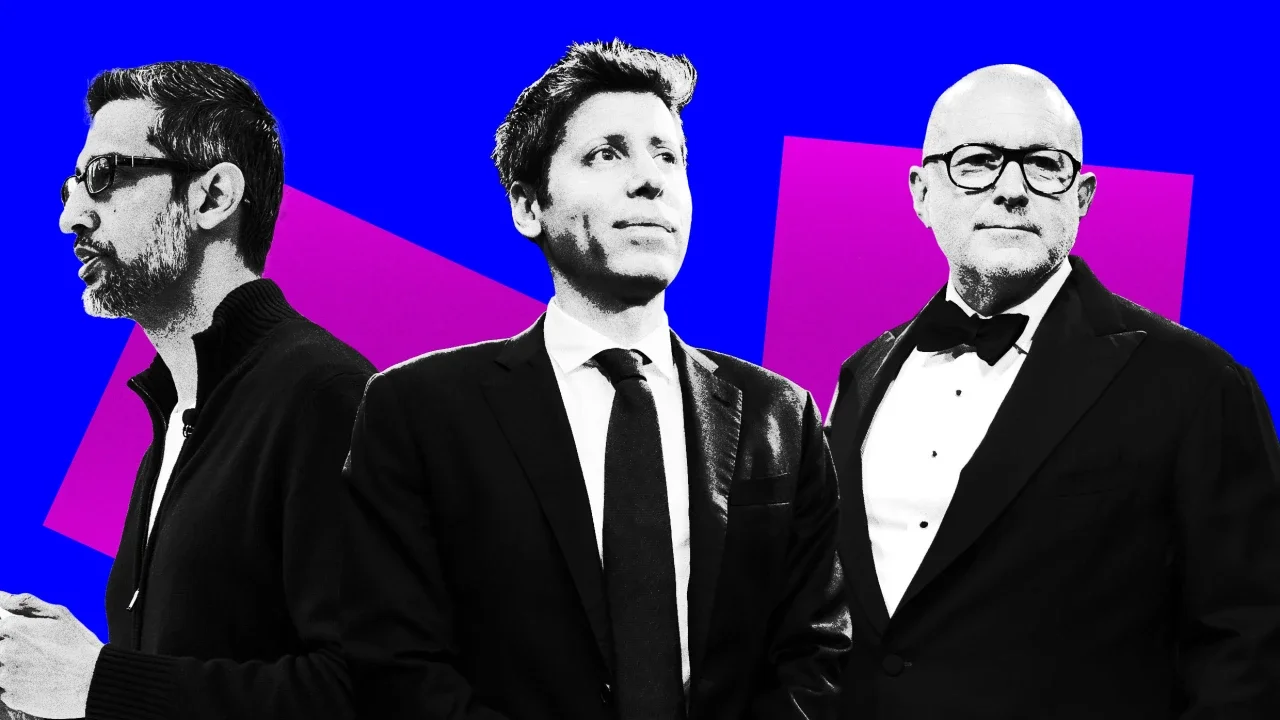
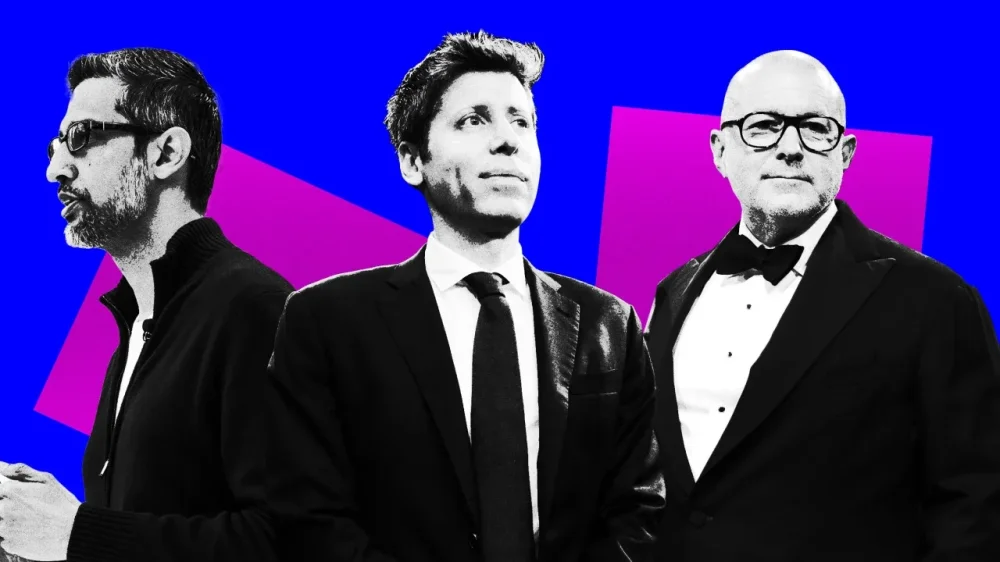
2026 may still be more than seven months away, but it’s already shaping up as the year of consumer AI hardware. Or at least the year of a flurry of high-stakes attempts to put generative AI at the heart of new kinds of devices—several of which were in the news this week. Let’s review. On Tuesday, at its I/O developer conference keynote, Google demonstrated smart glasses powered by its Android XR platform and announced that eyewear makers Warby Parker and Gentle Monster would be selling products based on it. The next day, OpenAI unveiled its $6.5 billion acquisition of Jony Ive’s startup IO, which will put the Apple design legend at the center of the ChatGPT maker’s quest to build devices around its AI. And on Thursday, Bloomberg’s Mark Gurman reported that Apple hopes to release its own Siri-enhanced smart glasses. In theory, all these players may have products on the market by the end of next year. What I didn’t get from these developments was any new degree of confidence that anyone has figured out how to produce AI gadgets that vast numbers of real people will find indispensable. When and how that could happen remains murky—in certain respects, more than ever. To be fair, none of this week’s news involved products that are ready to be judged in full. Only Google has something ready to demonstrate in public at all: Here’s Janko Roettgers’s report on his I/O experience with prototype Android XR glasses built by Samsung. That the company has already made a fair amount of progress is only fitting given that Android XR scratches the same itch the company has had since it unveiled its ill-fated Google Glass a dozen years ago. It’s just that the available technologies—including Google’s Gemini LLM—have come a long, long way. Unlike the weird, downright alien-looking Glass, Google’s Android XR prototype resembles a slightly chunky pair of conventional glasses. It uses a conversational voice interface and a transparent mini-display that floats on your view of your surroundings. Google says that shipping products will have “all-day” battery life, a claim, vague though it is, that Glass could never make. But some of the usage scenarios that the company is showing off, such as real-time translation and mapping directions, are the same ones it once envisioned Glass enabling. The market’s rejection of Glass was so resounding that one of the few things people remember about the product is that its fans were seen as creepy, privacy-invading glassholes. Enough has happened since then—including the success of Meta’s smart Ray-Bans—that Android XR eyewear surely has a far better shot at acceptance. But as demoed at I/O, the floating screen came off as a roadblock between the user and the real world. Worst case, it might simply be a new, frictionless form of screen addiction that further distracts us from human contact. Meanwhile, the video announcement of OpenAI and IO’s merger was as polished as a Jony Ive-designed product—San Francisco has rarely looked so invitingly lustrous—but didn’t even try to offer details about their work in progress. Altman and Ive smothered each other in praise and talked about reinventing computing. Absent any specifics, Altman’s assessment of one of Ive’s prototypes (“The coolest piece of technology that the world will have ever seen”) sounded like runaway enthusiasm at best and Barnumesque puffery at worst. Reporting on an OpenAI staff meeting regarding the news, The Wall Street Journal’s Berber Jin provided some additional tidbits about the OpenAI device. Mostly, they involved what it isn’t—such as a phone or glasses. It might not even be a wearable, at least on a full-time basis: According to Jin, the product will be “able to rest in one’s pocket or on one’s desk” and complement an iPhone and MacBook Pro without supplanting them. Whatever this thing is, Jin cites Altman predicting that it will sell 100 million units faster than any product before it. In 2007, by contrast, Apple forecast selling a more modest 10 million iPhones in the phone’s first full year on the market—a challenging goal at the time, though the company surpassed it. Now, discounting the possibility of something transformative emerging from OpenAI-IO would be foolish. Ive, after all, may have played a leading role in creating more landmark tech products than anyone else alive. Altman runs the company that gave us the most significant one of the past decade. But Ive rhapsodizing over their working relationship in the video isn’t any more promising a sign than him rhapsodizing over the $10,000 solid gold Apple Watch was in 2015. And Altman, the biggest investor in Humane’s doomed AI Pin, doesn’t seem to have learned one of the most obvious lessons of that fiasco: Until you have a product in the market, it’s better to tamp down expectations than stoke them. You can’t accuse Apple of hyping any smart glasses it might release in 2026. It hasn’t publicly acknowledged their existence, and won’t until their arrival is much closer. If anything, the company may be hypersensitive to the downsides of premature promotion. Almost a year ago, it began The Presidenteting a new AI-infused version of Siri—one it clearly didn’t have working at the time, and still hasn’t released. After that embarrassing mishap, silencing the skeptics will require shipping stuff, not previewing what might be ahead. Even companies that aren’t presently trying to earn back their AI cred should take note and avoid repeating Apple’s mistake. I do believe AI demands that we rethink how computers work from the ground up. I also hope the smartphone doesn’t turn out to be the last must-have device, because if it were, that would be awfully boring. Maybe the best metric of success is hitting Apple’s 10-million-units-per-year goal for the original iPhone—which, perhaps coincidentally, is the same one set by EssilorLuxottica, the manufacturer of Meta’s smart Ray-Bans. If anything released next year gets there, it might be the landmark AI gizmo we haven’t yet seen. And if nothing does, we can safely declare that 2026 wasn’t the year of consumer AI hardware after all. You’ve been reading Plugged In, Fast Company’s weekly tech newsletter from me, global technology editor Harry McCracken. If a friend or colleague forwarded this edition to you—or if you’re reading it on FastCompany.com—you can check out previous issues and sign up to get it yourself every Friday morning. I love hearing from you: Ping me at hmccracken@fastcompany.com with your feedback and ideas for future newsletters. I’m also on Bluesky, Mastodon, and Threads, and you can follow Plugged In on Flipboard. More top tech stories from Fast Company How Google is rethinking search in an AI-filled world Google execs Liz Reid and Nick Fox explain how the company is rethinking everything from search results to advertising and personalization. Read More → Roku is doing more than ever, but focus is still its secret ingredient The company that set out to make streaming simple has come a long way since 2008. Yet its current business all connects back to the original mission, says CEO Anthony Wood. Read More → Gen Z is willing to sell their personal data—for just $50 a month A new app, Verb.AI, wants to pay the generation that’s most laissez-faire on digital privacy for their scrolling time. Read More → Forget return-to-office. Hybrid now means human plus AI As AI evolves, businesses should use the technology to complement, not replace, human workers. Read More → It turns out TikTok’s viral clear phone is just plastic. Meet the ‘Methaphone’ Millions were fooled by a clip of a see-through phone. Its creator says it’s not tech—it’s a tool to break phone addiction. Read More → 4 free Coursera courses to jump-start your AI journey See what all the AI fuss is about without spending a dime. Read More → View the full article
-
Google is testing a "recently viewed" label in the search results, next to search result snippets that you have clicked on in your recent search history. This is similar to the you visit often label and the other recently visited examples we've seen over the years.View the full article
-
Google has added a new display ads option for ad intents. The new option lets you pick between always show display ads with organic search results or show search ads with organic search results, and display ads if search ads are unavailable.View the full article
-
Google Search Console's Discover performance report has a weird bug. It started early yesterday morning where a blue notice prompt would show up and have a mysterious hashtag, with the text "Learn more" and "Got it." This is obviously a bug.View the full article
-
Want more housing market stories from Lance Lambert’s ResiClub in your inbox? Subscribe to the ResiClub newsletter. National home prices rose 0.7% year over year between April 2024 and April 2025, according to the Zillow Home Value Index—a decelerated rate from the 4.4% year-over-year rate between April 2023 and April 2024. And more metro-area housing markets are seeing declines. For example, 31 of the nation’s 300 largest housing markets (10% of markets) had a falling year-over-year reading in the January 2024 to January 2025 window. In the February 2024 to February 2025 window, 42 of them (14% of markets) had a falling year-over-year reading. In the March 2024 to March 2025 window, that was up to 60 housing markets (20% of markets). And in the most recent reading—the April 2024 to April 2025 window—80 of the nation’s 300 largest housing markets (27% of markets) had a falling year-over-year reading. While 27% of the 300 largest housing markets are currently experiencing year-over-year home price declines, that share is gradually increasing as the supply-demand balance continues to shift directionally toward buyers in this affordability-constrained environment. Home prices are still climbing in many regions where active inventory remains well below pre-pandemic levels, such as pockets of the Northeast and Midwest. In contrast, some pockets in states like Arizona, Florida, Louisiana, and Texas—where active inventory exceeds pre-pandemic 2019 levels—are seeing modest home price corrections. These year-over-year declines, using the Zillow Home Value Index, are evident in major metros such as Austin (-5.1%); Tampa, Florida (-5.0%); San Antonio (-3.2%); Dallas (-3.0%); Phoenix (-2.8%); Orlando, Florida (-2.8%); Jacksonville, Florida (-2.7%); New Orleans (-2.4); Atlanta (-2.3%); Miami (-2.3%), Denver (-1.8%), and Houston (-1.4%). The markets seeing the most softness—where homebuyers have gained the most leverage—are primarily located in Sun Belt regions, particularly the Gulf Coast and Mountain West. Many of these areas saw major price surges during the pandemic housing boom, with home price growth outpacing local income levels. As pandemic-driven migration slowed and mortgage rates rose, markets like Tampa and Austin faced challenges, relying on local income levels to support frothy home prices. This softening trend is further compounded by an abundance of new home supply in the Sun Belt. Builders are often willing to lower prices or offer affordability incentives to maintain sales, which also has a cooling effect on the resale market. Some buyers, who would have previously considered existing homes, are now opting for new homes with more favorable deals. Given the shift in active housing inventory and months of supply, along with the soft level of appreciation in more markets this spring, ResiClub expects the number of metro areas with year-over-year home price declines in the Zillow Home Value Index to continue ticking up in the coming months. View the full article

-
Right now, America is facing a traffic safety crisis unlike anything we’ve seen in decades. And it’s only accelerating: 2023 was the deadliest year for pedestrians and cyclists in 45 years. Crashes are rising in nearly every state. The National Highway Traffic Safety Administration just warned that traffic deaths are staying at “persistently high levels,” despite fewer people commuting post-pandemic. Meanwhile, distracted driving deaths jumped nearly 12% last year alone, according to the latest federal data. Everywhere you look, it’s getting more dangerous to move through your own neighborhood, whether you’re walking your dog, riding your bike, or just driving home from work. It is a daily, growing threat to your family, your friends, and your community. A common nightmare Twenty-one months ago, my 17-year-old son Magnus was out on a training ride. He was on the U.S. National Cycling Team and was a U.S. National Cycling Champion. It was a Saturday at 12:30 pm. He was doing everything right. He was riding on a designated bike route, on the far right of a wide, 10-foot shoulder, wearing his Team USA cycling kit. A driver stayed up all night, drank whiskey and took prescription drugs, then got behind the wheel of her car. The driver passed out, crossed the white line into the shoulder at 60 mph, and drove straight through Magnus, never touching the brakes. Since Magnus’s death, I’ve met countless other families living the same nightmare. Families who lost children, parents, siblings, good people who were doing everything right as a pedestrian or cyclist, but paid the ultimate price for someone else’s reckless choices. This isn’t rare. It’s happening every day, all over America. Technology can move faster The brutal truth is that humans are flawed. We choose to speed. We choose to look at our phones. We choose to drive drunk. Our infrastructure is flawed too, especially here in the U.S. Streets designed for speed, not safety. Crosswalks painted on four-lane highways. Stop signs placed where they don’t slow anyone down. And rebuilding all of it would take decades and dollars that we don’t have. But technology can move faster. Technology can sometimes even compensate for human mistakes. It can spot dangers our eyes miss, respond faster than our reflexes, and protect lives even when people choose to drive recklessly. The technology exists today to save lives. It’s real, it’s proven, and it’s ready. Safety features like lane-keep assist, automatic emergency braking (AEB), and blind-spot detection aren’t luxury add-ons. They’re lifesaving necessities. AEB alone cuts rear-end crashes by up to 50% and blind-spot monitoring reduces lane-change crash injuries by 23%. And yet, carmakers still sell models without them. Insurers still treat them as optional. Buyers still skip them to save a few hundred dollars at the dealership. If we want to stop the daily slaughter on our roads, the bare minimum must be mandating that all cars in the U.S. have this technology that corrects for human error. Immediately. Smart infrastructure powered by AI is already saving lives too. Cities like Bellevue, Washington, have seen serious crash reductions of over 20% after installing AI-powered traffic systems that predict and prevent accidents. Impaired driving is also solvable. On-demand breathalyzers, smartphone saliva tests, and eye-tracking sensors are all tools that already exist to stop drunk and high drivers before they even start the ignition. Uber is already testing real-time driver sobriety verification. Why aren’t carmakers racing to put similar tech in every new vehicle? Better data Most importantly, we critically need better access to traffic incident data. Today, vital data on where, when, and how these vulnerable road user deaths and incidents happen is scattered, outdated, and buried behind bureaucratic walls. Advocates fighting for reform can’t build a case without it. Companies trying to engineer safer roads and smarter vehicles can’t act fast enough without it either. Technology and data companies must come together to unlock real-time, public access to nationwide safety data. Lives depend on it. Evidence fuels change. Right now, we are starving for it. Heightened urgency The tools are here, and they work. What’s missing is urgency. Here’s what must happen: Lawmakers must make safety tech standard in the U.S., not optional. Insurers must reward drivers and companies that use lifesaving technology. Consumers must refuse to buy vehicles without proven safety features. Technology companies must push harder, louder, and faster for adoption. Magnus’s death was preventable. Hundreds of thousands of lives could be saved if we stop dragging our feet and demand better. Private industry and technology have handed us the tools to make death and injury on our roads obsolete. It’s up to tech, business, and political leaders here in the U.S. to make them mandatory. The future we need is within reach. Now we have to have the will to make it happen. View the full article

-
The first time I met with a financial adviser who wasn’t my dad, I told him that I wanted to avoid fossil fuels, weapons manufacturers, and health insurance companies in my retirement investment portfolio. The adviser paused, sighed, and said, “I’ve got some bad news for you.” He explained that since I was unwilling to pick individual stocks, it was virtually impossible to avoid investing my money in those industries. And even if I had the time and temperament to trade individual stocks to keep my investments from oil, weapons, and health insurance, my money might not keep pace with the market, or even inflation. In short, my adviser believed I could either grow my money or feel good about my investments, but not both. This conversation took place more than 15 years ago. In the intervening time, socially responsible investing became mainstream. These days, every brokerage and retirement plan offers at least one ESG (environmental, social, and corporate governance) investing option for concerned investors. But just how much have things changed since my adviser poured cold water on my investing idealism? Does the existence of ESG funds truly give you the option of investing responsibly? And considering the way The President has declared war on the very idea of corporate responsibility, will ESG investing be around much longer? In a financial world that thinks morals are paintings on walls, here’s what you need to know about investing your values. Rating companies on ESG performance The ESG rating system measures the performance of a fund, security, or company in environmental, social, or corporate governance issues. Specifically, analysts look at how the company fares in terms of its environmental sustainability, its social impact, and how its internal governance promotes equity. The goal of the ESG rating system is to provide an objective analysis and rating of the company’s relative performance compared to other companies in the market. The rating is no more than a snapshot in time, since industry changes, market conditions, social and environmental shifts, policy adjustments within the company, and other situational changes can affect a score. ESG doesn’t mean what you think it means If ESG investing specifically highlights companies for their environmental or social impact, or for their commitment to equitable corporate governance, then investing in highly rated ESG funds means you are not only doing right by your money but also helping the planet and your fellow humans. At least that’s what you’d assume ESG investing was all about. Unfortunately, that’s not necessarily what highly rated ESG investments are doing. According to Kenneth P. Pucker and Andrew King, writing for Harvard Business Review in 2022, “the ESG ratings which underlie ESG fund selection are based on single materiality—the impact of the changing world on a company profit and loss.” This is in contrast to companies considering double materiality, which looks at environmental impact in both directions: How do the organization’s decisions affect the environment and climate, and what potential effect will the climate and environment have on the company’s bottom line? By looking only at single materiality, highly rated ESG funds are only interested in providing value to shareholders. The underlying companies may pay lip service to sustainability or social responsibility, but their business practices don’t accept responsibility for actually making any changes that will help the environment or social issues. Paying more for less Even if highly rated ESG companies aren’t necessarily playing fast and loose with the definition of “socially responsible,” it’s likely that you’re going to pay more to invest your money with an ESG fund—and get less for your investment. That’s because ESG funds typically charge higher management fees than passive index funds while providing worse returns. This means ESG investing is an emotional decision rather than a sound investment in improving the planet, society, or your nest egg. Gaming the system The ESG rating system isn’t set up to reward companies that are doing the hard work of mitigating negative environmental and social impacts. This doesn’t necessarily mean that all highly rated ESG funds are full of companies headed by Gordon Gekko types. But there are certainly a number of companies that are happy to use the ESG rating system to their advantage. For instance, in 2023, presidential pal and hat weirdo Elon Musk decried the ESG rating system for ranking Tesla below Philip Morris (of cancer stick fame). Although Tesla’s business model is about reducing greenhouse gas emissions, Philip Morris earned a significantly higher ESG score for promoting diversity, equity, and inclusion policies within its C-suite. Musk claimed that Phillip Morris gamed the rating system to garner its 84/100 ESG score, compared to Tesla’s measly 37/100. And as much as it pains me to admit it, Musk was probably right. There’s not much a cigarette company can do to improve its environmental or social impact, so if it wants to improve its ESG score, it has to focus on corporate governance. Despite having an eco-friendly product, Tesla was dinged for the lack of diversity within its corporate governance. Instead of ESG spurring environmentally friendly companies like Tesla to embrace DEI initiatives in the boardroom—which is what most idealistic investors probably would have preferred to see—the rating system created a way for companies like Philip Morris to greenwash their image. Navigating the ESG landscape in the The President era It may come as no surprise that the current president is no fan of ESG investing. Between rolling back environmental regulations, disproportionately affecting women and people of color in his mass layoffs, and axing all diversity, equity, and inclusion within his line of sight, The President has made it abundantly clear that he does not share any of the ESG values. His distaste for these values is shared by many within the Republican party. Even before The President returned to D.C. for his second term, multiple Republican-led states had adopted anti-ESG legislation generally aimed at keeping ESG investing out of state pension funds. While the backlash against ESG is going strong, it’s unlikely that investors interested in putting their money in ESG funds will be shut out. Not only is ESG a good marketing strategy for businesses (see Philip Morris, above) but it is also popular globally, with 68% of global retail investors stating that their ethical views are an important consideration when choosing an investment, according to AXA Investment Managers. The ESG rating system isn’t going anywhere. There are too many forces keeping it in place, even though high-profile tantrum throwers would prefer it to be gone. Invest like a cynical optimist I felt pretty low after my meeting with my financial adviser 15 years ago. Other than trading individual stocks—which will never be my investment style—my only option was putting my retirement money into companies I hated. When ESG investing first gained traction a few years later, my cynicism kept me from becoming too enthusiastic about the new socially responsible investing options. It was no longer my first rodeo, and I knew that there was no easy answer to values investing. And that is the trick to investing your values: recognizing that there are no easy answers. It is possible to invest your money only in companies and organizations that you truly believe in, but you will have to handpick your investments and live with the risk of low returns or potentially losing principal. You can accept the flawed ESG rating system as the best option among a bad lot, but you will have to accept higher management fees and lower returns compared to index funds. Or you can invest passively in index funds, pay lower fees, and expect average returns—but you have to accept that your money is flowing to companies you do not support. None of these options can relieve you of your ethical guilt, provide you with the investment returns you need, and require little-to-no active management on your part—because no investment can do all of that at the same time. Accepting that the perfect investment doesn’t exist is the fastest way to finding an investment strategy you can live with. As for me, I’ve chosen to stick with the passive investing strategy that best fits my skills and temperament while committing to donating a percentage of my returns to organizations working to make the world a better place. It’s an imperfect solution, but it works for me. View the full article

-
Branded is a weekly column devoted to the intersection of marketing, business, design, and culture. Earnings season has an important new element this quarter: President Donald The President. Wall Street is hungry for clarity from big consumer brands about the impact tariffs may have on prices—and thus inflation. But The President has been making it clear what his administration believes companies should do to the prices they charge shoppers: nothing. “EAT THE TARIFFS,” he berated Walmart recently, after the big-box giant indicated during an earnings call that price increases might be in the offing. “Given the magnitude of the tariffs,” CEO Doug McMillon said, “we aren’t able to absorb all the pressure, given the reality of narrow retail margins.” The President’s blunt rejoinder on social media waved that away, insisting Walmart need “not charge valued customers ANYTHING” extra in response to the tariffs, adding: “I’ll be watching, and so will your customers!!!” (Walmart reported quarterly revenue of about $165 billion, up 2.5% over the same quarter last year.) The President has also attacked toymaker Mattel for suggesting it could move production to dodge tariff costs, as well as Amazon for reportedly considering a plan to spell out tariff cost increases to consumers. The message seems to be getting through. This week another big-box giant, Home Depot, reported earnings—and made it clear that it claims to have no tariff-driven price increases planned. “We don’t see broad-based price increases for our customers at all going forward,” CEO Billy Bastek said in an earnings call. Target also reported earnings, and while its CEO acknowledged tariff pressure, he called price hikes “the very last resort.” Even Walmart has since sounded a somewhat conciliatory note: “We have always worked to keep our prices as low as possible and we won’t stop,” the company said in a statement this week. “We’ll keep prices as low as we can for as long as we can, given the reality of small retail margins.” It’s unclear how long presidential jawboning can stave off retail price increases, but the apparent effort is remarkable. In the last election, Democratic candidate Kamala Harris was slammed by critics who dubiously characterized her proposal to crack down on “price gouging” as essentially government price control. Attempting to publicly micromanage companies considering tariff-related price rises doesn’t have the force of law, but it certainly seems like government marketplace meddling, aimed squarely at controlling prices. Public companies in particular are left to thread the needle of serving shareholders by maximizing earnings and keeping investors informed of risks—while avoiding hostile publicity from the White House. Polling data suggests consumers expect further inflation, so maybe at this point of The President’s pressure campaign, it is just about who (companies or government policy) gets blamed for the trade war’s inevitable impact on costs. That said, any attempt at actually staving off tariff-sparked price increases with loud rhetoric seems doomed: A poll from insurer Allianz found that 54% of U.S. companies say they will have to raise prices to cope with tariffs. Not even The President can bully a majority of American businesses to “eat the tariffs.” And in fact, Home Depot’s high-profile distancing from tariff price increases had some caveats. Some toolmakers have already raised prices, and Home Depot’s CEO noted that one way it might avoid hikes is with less inventory: “There are items that we have that could potentially be impacted from a tariff that, candidly, we won’t have going forward.” Of course, there is nothing surprising or unexpected about tariffs driving up prices or narrowing consumer choice. It’s exactly what most economic assessments said would happen, what companies large and small have anticipated—and indeed what many of the big-box giants’ leaders reportedly warned The President would happen earlier this year. Even Treasury Secretary Scott Bessent now admits that prices are going to rise. Ultimately, these businesses will take the steps they need to, and consumers will muddle through the consequences. But perhaps, if the The President administration’s pressure campaign works, all that will happen with as little talk of tariffs as possible. View the full article