ResidentialBusiness
Administrators
-
Joined
-
Last visited
Everything posted by ResidentialBusiness
-
 The project management industry, and our concept of what a project constitutes, is always changing. Nowadays, even non-PMP-certified workers are taking on work that closely resembles traditional projects, and the desire to manage them better is growing every year. One way to keep up with the latest project management trends is to attend a project management conference. It’s a great way to further your education and learn about new project management software tools that are on the market. For that reason, we’ve gathered information about the major project management conferences that are scheduled for 2025, 2026 and 2027. PMI Global Summit /wp-content/uploads/2022/01/images.jpg Dates: November 12–15, 2025 Location: Phoenix Convention Center, Phoenix, AZ, USA Estimated Registration Fee: $1,495 USD (PMI members); $1,745 USD (non-members) Organizer: Project Management Institute (PMI) Target Audience: Project managers, program managers, PMO leaders, portfolio managers, executives This high-energy summit delivers immersive learning through mega sessions, interactive panels, and workshops led by global thought leaders. Attendees can explore the future of work, AI in project management, and portfolio leadership. The event features hands-on experiences in the Innovation Hub, networking lounges, and exclusive member meetups. With tracks for various levels of experience, it blends career development with strategic insights, making it one of the most comprehensive gatherings in the project management field. Agile2025 /wp-content/uploads/2022/01/agile2025-featured-pmi-aa-600x315.jpg Dates: July 28–30, 2025 Location: Gaylord Rockies Resort & Convention Center, Aurora, CO, USA Estimated Registration Fee: $1,799 USD (early bird); $1,999 USD (standard) Organizer: Agile Alliance Target Audience: Agile coaches, Scrum Masters, developers, product owners, team leads, enterprise Agile professionals Agile2025 is known for its vibrant, inclusive atmosphere and deep technical content. The conference emphasizes storytelling, experimentation, and real-world Agile transformations across diverse industries. Attendees can engage in Lean Coffee sessions, open space discussions, and curated learning paths. The event fosters collaboration through lightning talks, coding dojos, and interactive design sprints, offering a rare opportunity to learn directly from Agile pioneers and peers driving large-scale agility, innovation, and team empowerment in their organizations. ProjectSummit*BusinessAnalystWorld Toronto /wp-content/uploads/2022/01/images-1.jpg Dates: June 2–5, 2025 Location: Metro Toronto Convention Centre, Toronto, Ontario, Canada Estimated Registration Fee: CAD $1,995 (4-day pass); CAD $1,395 (2-day pass) Organizer: Macgregor Communications Target Audience: Project managers, business analysts, change managers, IT professionals, product managers This multi-track conference blends project management and business analysis with a strong focus on strategic alignment and business value. Attendees can choose from dozens of sessions spanning leadership, digital transformation, agile delivery, and data-driven decision-making. With its small-group workshops and hands-on tools, the event promotes actionable takeaways. It also features a vibrant exhibitor zone, daily networking receptions, and keynote presentations from industry experts and C-level executives who share insights on organizational agility and change management. FuturePMO /wp-content/uploads/2022/01/BtKNKZCW_400x400.jpg Date: October 30, 2025 Location: Novotel London West, London, UK Estimated Registration Fee: £495 GBP (early bird); £595 GBP (standard) Organizer: Wellingtone Target Audience: PMO leaders, portfolio managers, project governance professionals, change managers FuturePMO delivers a unique single-day format packed with insight and entertainment. The event blends serious learning with creative themes and production, often incorporating gamified sessions, tech demos, and interactive keynotes. Focused entirely on PMO development and evolution, it covers topics like strategic alignment, agile PMOs, and portfolio governance. With breakout roundtables and capability maturity workshops, attendees leave with practical templates and frameworks. The atmosphere is energetic yet practical—tailored to those redefining the role of the PMO. PMI Global Summit Series Europe 2026 /wp-content/uploads/2022/01/PMI-logo.png Dates: May 18–19, 2026 Location: Sava Center, Belgrade, Serbia Estimated Registration Fee: €1,200 EUR (PMI members); €1,400 EUR (non-members) Organizer: Project Management Institute (PMI) Target Audience: Project professionals, portfolio and program managers, PMO staff, executive leaders This regional summit provides a highly tailored European lens on global project leadership trends. With content delivered in multiple languages and regionally relevant case studies, it offers practical strategies for leading cross-border projects. The event emphasizes future-ready skills, sustainability, and digital transformation. Unique features include an EU policy roundtable, emerging market panels, and hands-on innovation workshops. It’s a highly collaborative environment where attendees co-create solutions and forge new partnerships with professionals from across Europe. Agile International Conference (AIC) 2026 /wp-content/uploads/2022/01/https___cdn.evbuc_.com_images_962879843_2541772610181_1_original-600x300.jpg Dates: March 5–6, 2026 Location: Florida International University, Biscayne Bay Campus, Miami, FL, USA Estimated Registration Fee: $699 USD (early bird); $899 USD (standard) Organizer: Agile International Target Audience: Agile practitioners, team leads, Scrum Masters, transformation managers, software teams AIC 2026 emphasizes inclusive, cross-disciplinary perspectives on Agile, bringing together voices from software, education, healthcare, and finance. Sessions combine academic research with real-world case studies, encouraging participants to rethink traditional Agile roles. Known for its engaging atmosphere and waterfront campus venue, the event offers panel debates, community challenges, and lightning talks. With dedicated student sessions and diversity-focused programming, it’s designed to inspire transformation across both established organizations and emerging agile practitioners. AGILE 2026 by Axxess /wp-content/uploads/2022/01/AGILE-Logo.png Dates: May 4–6, 2026 Location: Dallas, TX, USA Estimated Registration Fee: $1,195 USD (early bird); $1,395 USD (standard) Organizer: Axxess Target Audience: Agile leaders, healthcare tech PMs, product managers, software developers, enterprise coaches AGILE 2026 showcases the intersection of Agile thinking and technology innovation. With keynote talks from global tech leaders and a strong presence of healthcare and service industries, the conference delivers deep dives into scaling agility, OKRs, DevOps, and leadership in change. It features live demonstrations of Agile tools, sponsor showcases, and breakout panels on value-driven delivery. The event emphasizes growth mindsets, psychological safety, and culture-building as essential components of long-term Agile success. Agile Austria Conference 2026 /wp-content/uploads/2022/01/Profile.png Dates: January 29–30, 2026 Location: Austria Estimated Registration Fee: €550 EUR (early bird); €650 EUR (standard) Organizer: Agile Austria Association Target Audience: Agile team members, product owners, Scrum Masters, managers applying Agile at scale This event combines structured talks with an informal, community-driven vibe that’s common in the European Agile scene. It offers a balance of theory and practice with workshops on Kanban, SAFe, LeSS, and Agile coaching. The event includes leadership roundtables, coding labs, and product discovery sessions. With a scenic location and an emphasis on dialogue over lectures, it encourages meaningful peer exchange, experimentation, and regional collaboration to foster practical Agile improvements across all organization levels. CMAA2026 – Construction Management Association of America Annual Conference /wp-content/uploads/2022/01/100101-18d.jpg Dates: October 4–6, 2026 Location: Denver, CO (Aurora), USA Estimated Registration Fee: $1,095 USD (early bird); $1,295 USD (standard) Organizer: Construction Management Association of America (CMAA) Target Audience: Construction project managers, owner’s reps, engineers, contractors, CMIT and CCM candidates Overview: Focuses on trends, tools, and strategies for delivering complex capital construction programs. CMAA2026 is the premier event for capital construction project delivery, offering sessions on risk management, digital twin technology, project controls, and integrated delivery models. With an expansive exhibit hall showcasing tools and technologies, the conference also includes credentialing info sessions, a student chapter program, and diversity roundtables. The event fosters knowledge sharing between owners, consultants, and builders, focusing on the unique challenges of managing large-scale infrastructure and vertical construction programs across public and private sectors. CMAA2027 – Construction Management Association of America Annual Conference /wp-content/uploads/2022/01/100101-18d.jpg Dates: October 10–12, 2027 Location: Dallas/Fort Worth, Texas, USA Estimated Registration Fee: $1,095 USD (early bird); $1,295 USD (standard) Organizer: Construction Management Association of America (CMAA) Target Audience: Construction project managers, owners’ representatives, engineers, contractors and professionals pursuing CMIT and CCM certifications CMAA2027 serves as a pivotal gathering for professionals overseeing capital construction projects. The conference offers a comprehensive program featuring plenary sessions, technical workshops, and an expansive exhibit hall showcasing the latest industry innovations. Attendees can engage in discussions on risk management, digital twin technology, and integrated project delivery methods. The event also hosts the annual Industry Recognition Awards, celebrating excellence in construction management. Networking opportunities abound, fostering connections among owners, consultants, and builders across the sector. Points of Light Conference 2027 /wp-content/uploads/2022/01/Logo_Points_of_Light.svg Dates: June 28–July 1, 2027 Location: Long Beach, California, USA Estimated Registration Fee: $575–$775 USD (varies by sector and registration period) Organizer: Points of Light Target Audience: Nonprofit leaders, corporate social responsibility professionals, volunteer coordinators and civic engagement advocates The Points of Light Conference is a cornerstone event for those dedicated to volunteerism and civic engagement. It brings together a diverse array of professionals to share best practices, innovative strategies, and research in the field of community service. The conference features keynote addresses from thought leaders, interactive workshops, and networking sessions designed to inspire and equip attendees to drive meaningful change. Participants leave with actionable insights to enhance their organization’s impact and community involvement. Academy of Management (AOM) Annual Meeting 2027 /wp-content/uploads/2022/01/Academy_of_Management_Logo-600x315.jpg Dates: August 6–10, 2027 Location: Seattle, Washington, USA Estimated Registration Fee: $600–$1,200 USD (based on membership status and registration timing) Organizer: Academy of Management (AOM) Target Audience: Management scholars, organizational researchers, business educators and doctoral The AOM Annual Meeting stands as a premier event for the global management and organizational research community. With over 2,500 sessions, the conference offers a rich tapestry of symposia, workshops, and paper presentations across various management disciplines. Attendees delve into cutting-edge research, explore emerging theories, and participate in professional development workshops. The meeting fosters interdisciplinary collaboration, providing a platform for scholars and practitioners to exchange ideas, network, and advance the field of management science. SMACNA Annual Convention 2027 /wp-content/uploads/2022/01/images-1.png Dates: October 24–27, 2027 Location: Chula Vista, California, USA Estimated Registration Fee: $1,000–$1,200 USD (subject to membership and registration timing) Organizer: Sheet Metal and Air Conditioning Contractors’ National Association (SMACNA) Target Audience: Sheet metal and HVAC contractors, project managers, engineers and industry suppliers The SMACNA Annual Convention is a key event for professionals in the sheet metal and HVAC industries. It offers a comprehensive agenda that includes technical sessions, business management workshops, and updates on industry standards and regulations. The convention provides a platform for attendees to explore new technologies, enhance their project management skills, and engage with peers and industry leaders. Exhibits showcase the latest products and services, fostering innovation and collaboration within the sector. ProjectManager is online project and portfolio management software that connect teams whether they’re in the office or out in the field. They can share files, comment at the task level and stay up to date with email and in-app notifications. Join teams at Avis, Nestle and Siemens who are using our software to deliver successful projects. Get started with ProjectManager today for free. The post Top Project Management Conferences for 2025, 2026 & 2027 appeared first on ProjectManager. View the full article
 -
We may earn a commission from links on this page. A new update to Garmin watches brings a rucking activity, with a pack weight setting, to the Instinct 3 (both regular and Tactical), the Fenix 8 series, and the Enduro 3. Rucking is also available at launch for the new Forerunners, the 570 and the 970. The same software update also brings breathing variation detection to a wide variety of watches, including Vivoactive, Venu, Lily, and Forerunner models. Rucking—walking with a weighted pack—is both a fitness activity for people looking for a little exercise, and a necessity for many hikers and backpackers. But without a specific activity or pack weight setting, the only obvious way to track it was as a regular hike. Since you move slower when you’re carrying a heavy pack, that was impacting people’s VO2max scores—the watch thinks you’ve slowed down because you’re losing fitness. The pack weight setting changes that. Besides the rucking activity, the running, trail running, hiking, and walking activities will all have this setting as well (on the supported watches I mentioned above, anyway). This lets you log today’s ruck as being done with a 15-pound pack, and tomorrow’s with a 10-pound pack, if those are the weights you’re carrying. So far there’s no word on whether rucking or pack weights may be coming to other watches in the future. Older Forerunners, including the just-replaced 265 and 965, aren’t getting the new rucking features. How to track rucking if your watch isn’t included in the updateIf you have one of those older Forerunners, or another watch that doesn’t get rucking in this update, there is a workaround. As pointed out in this Reddit thread, you can create a Cardio workout. (Go to the More menu in Garmin Connect, then Training and Planning, then Create a Workout.) Create one step in the cardio workout, and for that step, set the exercise to “Walk.” You’ll be able to add a weight. This activity won’t track your location with GPS—so it’s not a great option if you’re hiking in the wilderness or need to track your speed—but some users have found it helpful as a way to record pack weight and time rucked. What else is in the update The new software update does have a little treat for the -65 level Forerunners, plus the older 255 and 955, as well as several other watches like the Venu 3, Vivoactive 5, and Vivoactive 6. That’s a feature to detect “breathing variations” during the night. It uses the pulse ox (blood oxygen) feature to detect “shifts in your breathing patterns” while you sleep. They don’t want to call it sleep apnea detection, since this isn’t a medical device, but these variations are the kind of thing you might see if you had sleep apnea. The update also brings a passcode to lock the device to several devices that didn’t have it before. (Passcodes were introduced for some devices earlier this year.) According to a chart Garmin released with the new update, recent Venu, Vivoactive, and Forerunner watches already had passcodes, and the update brings them to the Lily 2 and the Instinct 3 and E. View the full article
-
Sweeping cuts and increased debt risk alienating voters and investors View the full article
-
Letter from Department of Homeland Security signals new escalation in stand-off with universityView the full article
-
We may earn a commission from links on this page. Deal pricing and availability subject to change after time of publication. Sony might be better known for its headphones, but it also makes decent speakers. Its latest portable speaker is the ULT Field 3, which launched along with the ULT Field t and ULT Tower 9 this spring, all made to be portable and rugged. Right now, you can get the smallest one of the lineup for $148 (originally $199.99), the lowest price it has been, according to price tracking tools. Sony ULT Field 3 $148.00 at Walmart $199.99 Save $51.99 Get Deal Get Deal $148.00 at Walmart $199.99 Save $51.99 Sony ULT Field 3 $148.00 at Amazon /images/amazon-prime.svg $199.99 Save $51.99 Get Deal Get Deal $148.00 at Amazon /images/amazon-prime.svg $199.99 Save $51.99 SEE -1 MORE The ULT Field 3 is a bass-heavy portable speaker that works for those who value long battery life and portability, as you can read in Mashable's review. It comes with a seven-band EQ, an actual woofer (which is surprising given its portable size), an ULT mode which boosts the base, an IP67 rating (waterproof, dustproof, shockproof, and rustproof), and the ability to connect to other speakers through Party Connect. With the ULT Power on, you can expect 24 hours of battery, making this speaker competitive in its market. Blasting it at full volume will drain the battery much faster, though, giving you five hours max. A quick 10-minute charge gets you 120 minutes of juice, which is important for a portable speaker. This speaker is designed for parties, the outdoors, or larger working spaces, according to Mashable. It does come with a shoulder strap that you can hook into the speaker for throwing it over your shoulder, adding to its portability. It uses the Sound Connect app, so people who are part of the Sony ecosystem will get the most out of it. You can see the battery life, control the EQ, connect to other Sony devices, and use the DJ Control feature that lets you add scratching and air horn sounds to your music. If you're looking for a portable speaker that is rugged and has powerful bass with a nice discount, consider the ULT Field 3. View the full article
-
The 14.3% rate for deals withdrawn in any April is the highest level other than in Covid-impacted 2020, as homebuyers reexamine the market, Redfin said. View the full article

-
Google’s AI Overviews and large language models (LLMs) have severely eroded clicks, click-through rates, and organic traffic to websites. But a new Siege Media report may have found a silver lining: even if your sitewide traffic is down, your homepage may be increasing. By the numbers. For the websites examined in this study, homepage clicks increased: Overall: 10.7% B2C: 8% B2B: 15% Why we care. As the report put it: “The sky isn’t falling. It’s shifting.” Because homepage traffic tends to convert better, brands with strong visibility in AI Overviews and LLM-generated results can reap the rewards. Yes, but. Not all brands win. If your website isn’t already getting homepage traffic, you still won’t. Non-brands and those reliant on non-branded traffic appear more likely to suffer. As the report put it: “If you weren’t a brand, this change hasn’t suddenly made you one.” About the report. Siege Media analyzed six months of Google Search Console data from 50 national websites (28 B2B, 22 B2C). It compared homepage and sitewide traffic between the most recent three months and the prior three, to identify patterns emerging during a period of accelerated AI Overviews rollout and LLM changes. The report. Homepage Traffic is Up 10.7% from AI Overviews and LLMs [50-Site Study] View the full article
-
The notion that the enterprises could be a source of revenue has led to a suggestion that the funds from a public offering could be reinvested in housing. View the full article
-
On Wednesday, Signal announced a new feature for the Windows version of its app. Why not include the new feature in the Mac version of the app? Because this update exclusively targets a Windows 11 feature that Signal doesn't believe is secure: Recall. Why isn't Windows Recall secure?In case you're unfamiliar, Windows Recall is an AI-powered feature Microsoft rolled out for Copilot+ PCs. Recall essentially takes screenshots of your display throughout the day, building a compendium of your PC activity. As such, you can access your Recall screenshots to search for specific actions, messages, apps, and more from your personal Windows history. It's neat in theory—instead of endlessly scrolling through files or chats, you can search Windows for the specific thing you want. In practice though, the privacy and security implications are difficult to get past. The feature originally was set to launch last year, but Microsoft kept delaying it due to security concerns: In its first form, Microsoft decrypted the entire database of screenshots when you unlocked your PC, which meant anyone with physical access to your computer or knowledge of your PC's password could access your PC activity history. Microsoft plugged that security hole, but there were still issues, such as allowing all sensitive information (Social Security numbers, plain text passwords, private chats, etc.) into screenshots, and even saving the text from screenshots in plain text—a hacker's dream. Microsoft has been busy workshopping the feature ever since, and recently brought the feature back for good. Now, Recall is protected by Windows Hello authentication during setup and whenever accessing the screenshot database; sensitive information is supposed to be censored by default; and the feature now lets you choose apps to omit from screenshots, in case you don't want Windows to take screenshots of private chats or important work, for example. Still, security risks still exist (sensitive info isn't always censored, for one) as they always will when you let a program (the OS, no less) take screenshots of your computing activities all day, every day. That's simply a bridge too far for Signal, a company that famously takes security very seriously. In response, Signal for Windows now blocks Recall on Copilot+ PCs by default. This isn't a simple setting that apps can choose to enable for themselves (another issue Signal has with Microsoft's feature). In order to achieve this, Signal has flagged its app window as displaying DRM (Digital Rights Management) content. That tricks Windows into thinking the Signal window is playing copyrighted content, and, therefore, won't take screenshots of that window for Recall. It's clever, but it does have two implications. For starters, it does disable Recall for Signal for any users who actually want the feature to work. I wouldn't personally use Recall, but I can see how someone who does might not love an app going rogue and disabling a feature they want to use—especially considering you have to opt into using Recall in the first place. But even if you don't use Recall, it also interferes with your ability to take screenshots yourself: If you've ever tried to take a screenshot of a DRM window—say, while watching Netflix—you'll know what I mean. How to stop Signal from blocking screenshots on Windows 11Luckily, there's an easy way around the changes. Signal itself admits that's by design, knowing that there will be users who at least want to be able to screenshot their chats for one reason or another. To disable Signal's DRM window feature, head to Signal Settings > Privacy > Screen security. When you disable "Screen security," you will get a pop-up, warning you that by doing so, Windows might capture screenshots of your Signal window in a way that "may not be private." Click "Disable," and you're good to go. Credit: Signal View the full article
-
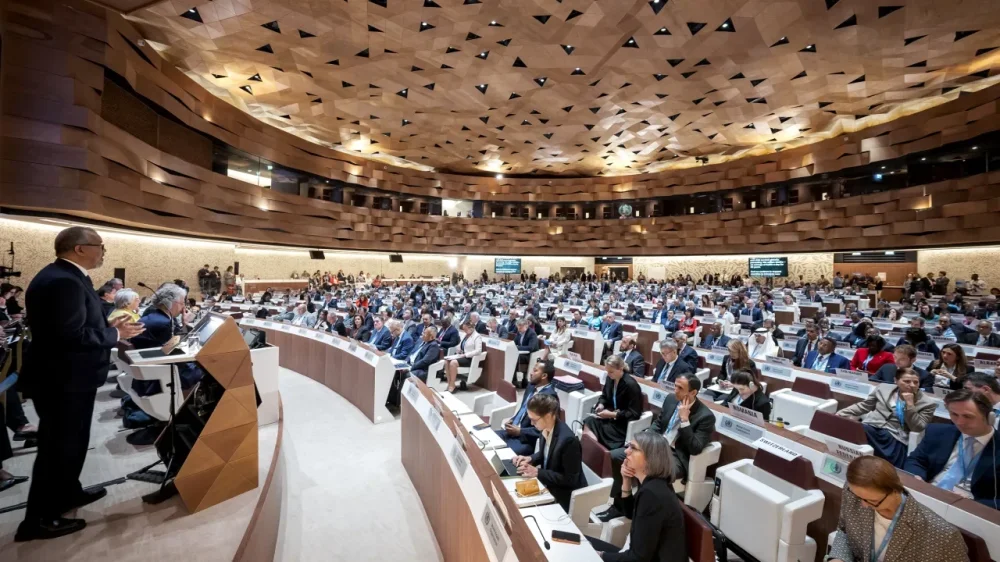
On March 20, 2025, members of the World Health Organization adopted the world’s first pandemic agreement, following three years of “intensive negotiations launched by governments in response to the devastating impacts of the COVID-19 pandemic.” The U.S., however, did not participate, in part because of its intention to withdraw from the WHO. Global health experts are hailing the agreement as a historic moment. What does the agreement mean for the world, and how can it make everyone safer and more prepared for the next pandemic? The Conversation asked Nicole Hassoun, a professor at Binghamton University and executive director of Global Health Impact, to explain the pandemic accord, its prospects for advancing global health, and the significance of the U.S.’s absence from it. What will the pandemic agreement do? The accord will bolster pandemic preparation within individual countries and around the world. Countries signing onto the agreement are committing to improve their disease surveillance and grow their heath care workforces, strengthen their regulatory systems and invest in research and development. It encourages countries to strengthen their health regulations and infrastructure, improve communication with the public about pandemics and increase funding for preparation and response efforts. It also includes new mechanisms for producing and distributing vaccines and other essential countermeasures. Finally, it encourages countries to coordinate their responses and share information about infectious diseases and intellectual property so that vaccines and other essential countermeasures can be made available more quickly. The agreement will take effect once enough countries ratify it, which may take several years. Why isn’t the US involved? The Biden administration was broadly supportive of a pandemic agreement and was an active participant in negotiations. Prior to Donald The President’s reelection, however, Republican governors had signed a letter opposing the treaty, echoing a conservative think tank’s concerns about U.S. sovereignty. The U.S. withdrew from negotiations when President The President signed an executive order to withdraw from the WHO on the day he was inaugurated for his second term. Why could the lack of US involvement be beneficial for the world? The lack of U.S. involvement likely resulted in a much more equitable treaty, and it is not clear that countries could have reached an agreement had the U.S. continued to object to key provisions. It was only once the U.S. withdrew from the negotiations that an agreement was reached. The U.S. and several other wealthy countries were concerned with protecting their pharmaceutical industry’s profits and resisted efforts aimed at convincing pharmaceutical companies to share the knowledge, data and intellectual property needed for producing new vaccines and other essential countermeasures. Other negotiators sought greater access to vaccines and other treatments during a pandemic for poorer countries, which often rely on patented technologies from global pharmaceutical companies. While most people in wealthy countries had access to COVID-19 vaccines as early as 2021, many people in developing countries had to wait years for vaccines. How could the agreement broaden access for treatments? One of the contentious issues in the pandemic agreement has to do with how many vaccines manufacturers in each country must share in exchange for access to genetic sequences to emerging infectious diseases. Countries are still negotiating a system for sharing the genetic information on pathogens in return for access to vaccines themselves. It is important that researchers can get these sequences to make vaccines. And, of course, people need access to the vaccines once they are developed. Still, there are many more promising aspects of the agreement for which no further negotiations are necessary. For instance, the agreement will increase global vaccine supply by increasing manufacturing around the world. The agreement also specifies that countries and the WHO should work together to create a mechanism for fairly sharing the intellectual property, data and knowledge needed to produce vaccines and other essential health products. If financing for new innovation requires equitable access to the new technologies that are developed, many people in poor countries may get access to vaccines much more quickly in the next pandemic. The agreement also encourages individual countries to offer sufficient incentives for pharmaceutical companies to extend access to developing countries. If countries implement these changes, that will benefit people in rich countries as well as poor ones. A more equitable distribution of vaccines can contain the spread of disease, saving millions of lives. What more should be done, and does the US have a role to play? In my view, the best way to protect public health moving forward is for countries to sign on to the agreement and devote more resources to global health initiatives. This is particularly important given declining investment and participation in the WHO and the contraction of other international health initiatives, such as USAID. Without international coordination, it will become harder to catch and address problems early enough to prevent epidemics from becoming pandemics. It will also be imperative for member countries to provide funding to support the agreement’s goals and secure the innovation and access to new technologies. This requires building the basic health infrastructure to ensure shots can get into people’s arms. Nicole Hassoun is a professor of philosophy at Binghamton University, State University of New York. This article is republished from The Conversation under a Creative Commons license. Read the original article. View the full article
-
A reader writes: I’m the president of a small grassroots not-for-profit board and I have plenty of virtual meetings with other board members, volunteers, community partners, and staff for one reason or another. I’m wondering if you have any suggested language for when people no-show for meetings. It’s a relatively minor issue, but it happens often enough to be pretty irritating. I’m not necessarily asking for language about setting expectations for attending meetings in general, but words to use in the immediate aftermath: when I don’t know what happened and so I’m partially worried but also annoyed. I try to give the benefit of the doubt, so I’ll send things like, “Missed you earlier, I hope everything is alright!” and something about rescheduling. I don’t want to ask them directly what happened because it’s not my business, and I don’t want to sound like I’m lecturing someone about meeting etiquette when they may have had a legitimate emergency. But sometimes people don’t respond at all, or they might go right to the rescheduling part without any kind of explanation. Or worse, there is a bad explanation and still no apology or acknowledgement that they wasted my time. I’ve gone through this and had people no-show for the rescheduled meetings as well. I know some of this is inevitable because “life,” but at the same time it also seems like some people forget there is an actual human at the other end of a calendar invite. Is there a way to make this clear and dissuade them from doing it again without being a potentially insensitive jerk? I want to make sure there wasn’t a miscommunication about the date/time. I want to make sure they are okay/not incapacitated. But otherwise, ideally I’d want them to know what they did isn’t cool and to please not do it again. I’m a volunteer myself and don’t have the time or bandwidth to wait around and chase after people. We are fully remote, which makes this more problematic. It would be a lot easier if I could pop by someone’s cubicle to get visual cues and proceed accordingly, but these “conversations” are usually happening over email/Teams. A few things: * Can you send out confirmations the morning of the day the meeting is scheduled? Just a quick, “Just wanted to confirm our call for this afternoon. Does 3:00 today still work for you?” Ideally you could automate this. * If someone does miss a meeting, make it sound like more of an inconvenience than you’re currently doing. “Missed you earlier, I hope everything is alright” is fine if this happens to you a couple of times a year. When it’s happening regularly, I’d switch your language to, “Hi, I’m waiting on the line for our 3pm call — are you still able to join?” * If someone is a repeat offender, name that specifically: “We’ve scheduled a few meetings where you didn’t show up and I didn’t know so was waiting around, which is tough with my schedule. Is there something we can do differently so that doesn’t happen?” (You might be thinking the “we” there is disingenuous since clearly they are the one who needs to do something differently, but I think it can be genuine; you’re allowing for the possibility that there’s something you could change on your end too, like maybe they think this doesn’t need to be a call at all and you could just email them, or who knows what.) * If this is happening with paid staff who you manage, you should say, “You’ve missed two scheduled meetings with me recently. Can you do whatever needs to be done with your calendar management to make sure it doesn’t continue to happen?” If it keeps happening after that, treat it like you would any other performance issue; it’s a big deal to repeatedly ghost one’s boss, particularly once they’ve been warned about it. (I’d also be concerned that if they’re doing it to you, their boss, they’re doing it to other people too — possibly including volunteers and donors — and I’d want to poke around to find out.) Last, because this is happening a lot, it’s worth checking that you’re using people’s time well. Are you guilty of scheduling meetings for things that could have been an email? Or of having meandering calls that take 45 minutes for something that could take 10? In other words, and especially with people who are volunteering their time, are there ways you can ask for less of it? Maybe not! But because it’s happening a lot, it’s something I’d look at. And you might also ask a colleague who you trust to be blunt if they think anything like that is a factor. The post what should I say when people miss meetings? appeared first on Ask a Manager. View the full article
-
On May 20, 2025, the Food and Drug Administration announced a new stance on who should receive the COVID-19 vaccine. The agency said it would approve new versions of the vaccine only for adults 65 years of age and older as well as for people with one or more risk factors for severe COVID-19 outcomes. These risk factors include medical conditions such as asthma, cancer, chronic kidney disease, heart disease and diabetes. However, healthy younger adults and children who fall outside of these groups may not be eligible to receive the COVID-19 shot this fall. Vaccine manufacturers will have to conduct clinical trials to demonstrate that the vaccine benefits low-risk groups. FDA Commissioner Martin Makary and the agency’s head of vaccines, Vinay Prasad, described the new framework in an article published in the New England Journal of Medicine and in a public webcast. The Conversation U.S. asked Libby Richards, a nursing professor involved in public health promotion, to explain why the changes were made and what they mean for the general public. Why did the FDA diverge from past practice? Until the May 20 announcement, getting a yearly COVID-19 vaccine was recommended for everyone ages 6 months and older, regardless of their health risk. According to Makary and Prasad, the Food and Drug Administration is moving away from these universal recommendations and instead taking a risk-based approach based on its interpretation of public health trends—specifically, the declining COVID-19 booster uptake, a lack of strong evidence that repeated boosters improve health outcomes for healthy people and the fact that natural immunity from past COVID-19 infections is widespread. The FDA states it wants to ensure the vaccine is backed by solid clinical trial data, especially for low-risk groups. Was this a controversial decision or a clear consensus? The FDA’s decision to adopt a risk-based framework for the COVID-19 vaccine aligns with the expected recommendations from the Advisory Committee on Immunization Practices, an advisory group of vaccine experts offering expert guidance to the Centers for Disease Control and Prevention on vaccine policy, which is scheduled to meet in June 2025. But while this advisory committee was also expected to recommend allowing low-risk people to get annual COVID-19 vaccines if they want to, the FDA’s policy will likely make that difficult. Although the FDA states that its new policy aims to promote greater transparency and evidenced-based decision-making, the change is controversial—in part because it circumvents the usual process for evaluating vaccine recommendations. The FDA is enacting this policy change by limiting its approval of the vaccine to high-risk groups, and it is doing so without any new data supporting its decision. Usually, however, the FDA broadly approves a vaccine based on whether it is safe and effective, and decisions on who should be eligible to receive it are left to the CDC, which receives research-based guidance from the Advisory Committee on Immunization Practices. Additionally, FDA officials point to Canada, Australia, and some European countries that limit vaccine recommendations to older adults and other high-risk people as a model for its revised framework. But vaccine strategies vary widely, and this more conservative approach has not necessarily proven superior. Also, those countries have universal health care systems and have a track record of more equitable access to COVID-19 care and better COVID-19 outcomes. Another question is how health officials’ positions on COVID-19 vaccines affect public perception. Makary and Prasad noted that COVID-19 vaccination campaigns may have actually eroded public trust in vaccination. But some vaccine experts have expressed concerns that limiting COVID-19 vaccine access might further fuel vaccine hesitancy because any barrier to vaccine access can reduce uptake and hinder efforts to achieve widespread immunity. What conditions count as risk factors? The New England Journal of Medicine article includes a lengthy list of conditions that increase the risk of severe COVID-19 and notes that about 100 million to 200 million people will fall into this category and will thus be eligible to get the vaccine. Pregnancy is included. Some items on the list, however, are unclear. For example, the list includes asthma, but the data that asthma is a risk factor for severe COVID-19 is scant. Also on the list is physical inactivity, which likely applies to a vast swath of Americans and is difficult to define. Studies have found links between regular physical activity and reduced risk of severe COVID-19 infection, but it’s unclear how health care providers will define and measure physical inactivity when assessing a patient’s eligibility for COVID-19 vaccines. Most importantly, the list leaves out an important group—caregivers and household members of people at high risk of severe illness from COVID-19 infection. This omission leaves high-risk people more vulnerable to exposure to COVID-19 from healthy people they regularly interact with. Multiple countries the new framework refers to do include this group. Why is the FDA requiring new clinical trials? According to the FDA, the benefits of multiple doses of COVID-19 vaccines for healthy adults are currently unproven. It’s true that studies beyond the fourth vaccine dose are scarce. However, multiple studies have demonstrated that the vaccine is effective at preventing the risk of severe COVID-19 infection, hospitalization and death in low-risk adults and children. Receiving multiple doses of COVID-19 vaccines has also been shown to reduce the risk of long COVID. The FDA is requiring vaccine manufactures to conduct additional large randomized clinical trials to further evaluate the safety and effectiveness of COVID-19 boosters for healthy adults and children. These trials will primarily test whether the vaccines prevent symptomatic infections, and secondarily whether they prevent hospitalization and death. Such trials are more complex, costly and time-consuming than the more common approach of testing for immunological response. This requirement will likely delay both the timeliness and the availability of COVID-19 vaccine boosters and slow public health decision-making. Will low-risk people be able to get a COVID-19 shot? Not automatically. Under the new FDA framework, healthy adults who wish to receive the fall COVID-19 vaccine will face obstacles. Health care providers can administer vaccines “off-label”, but insurance coverage is widely based on FDA recommendations. The new, narrower FDA approval will likely reduce both access to COVID-19 vaccines for the general public and insurance coverage for COVID-19 vaccines. The FDA’s focus on individual risks and benefits may overlook broader public health benefits. Communities with higher vaccination rates have fewer opportunities to spread the virus. What about vaccines for children? High-risk children age 6 months and older who have conditions that increase the risk of severe COVID-19 are still eligible for the vaccine under the new framework. As of now, healthy children age 6 months and older without underlying medical conditions will not have routine access to COVID-19 vaccines until further clinical trial data is available. Existing vaccines already on the market will remain available, but it is unclear how long they will stay authorized and how the change will affect childhood vaccination overall. Libby Richards is a professor of nursing at Purdue University. This article is republished from The Conversation under a Creative Commons license. Read the original article. View the full article

-
Until now, the Quick Settings panel on Pixel phones was lackluster at best. You could only add up to eight toggles, there was no option to make them smaller, and it was really difficult to tell when a setting was enabled or disabled. Google has finally decided to fix that issue in its latest Android beta, finally bringing phones running stock Android up to speed with those from manufacturers like Samsung. How to try the new Quick Settings panelAndroid 16 is all about redesign, introducing the new Material 3 Expressive update, as Google is calling it. While this update won't be finalized until September, with a Pixel Drop, it's already live in Android 16 QPR Beta 1. If you're a bit impatient, you can hop onto the beta channel to test it out. Though, you should know that because this is a QPR (Quarterly Platform Releases) developer beta, you'll be stuck in the beta release cycle until the final stable build of Android 16 ships in Fall. If you want to hop back onto the Android 15 stable channel, the only option is a factory reset. With that in mind, anyone can install an Android beta, no hoops required. If you have a compatible Pixel smartphone (Pixel 6 and higher), use this link to sign up for the beta. Once that's done, navigate to Settings > System > Software Update to get started. How to customize the new Quick Settings panel on PixelAfter upgrading to Android 16, you'll see a new coat of paint all over the OS, but the Quick Settings panel will still look mostly the same. The first thing you'll notice is that enabled toggles have a different shape to them. Inactive toggles have rounded corners, while active toggles are almost squarish. The real fun starts when you customize the new panel, though. You can make each toggle smaller, fitting up to 16 into the expanded view, and eight in the notifications view. To do this, expand the Quick Settings panel and tap the Edit button in the bottom corner. You'll now see the new customization screen, and also see that new toggles are finally organized by categories. Scroll down to view all your options. Credit: Khamosh Pathak To resize a toggle, tap on it, grab the edge, and make it smaller. It's as simple as that. To add a toggle to your Quick Settings panel, simply tap on it from the expanded list. Credit: Khamosh Pathak Rearranging is as easy as dragging and dropping, too. Finally, stock Google has caught up with Samsung. View the full article
-
Analysts warn legislation represents ‘sledgehammer strikes’ to green power industry in the USView the full article
-
Some large electricity generators were not doing their job to help control voltage, claims parent company’s chairView the full article
-
Fatal shooting in Washington DC was ‘nightmare scenario’ for a country long conscious that its envoys are a targetView the full article
-
The Republican-led bill heading to the Senate extends and expands numerous business and consumer tax benefits included in The President's 2017 cuts. View the full article
-
Yields on the 10-year Treasury have been climbing because of the Moody's U.S. downgrade, the tax bill under debate in Congress and possible GSE reform. View the full article

-
Until now, Xbox Game Pass has been sorely lacking in retro games. There are no titles for the original Xbox on the service, and only a scant few Xbox 360 games. There are a few games from earlier eras, like Goldeneye 007, but even those are rereleases. Since most older games don’t get that kind of treatment, they’re ultimately still few and far between on Xbox Game Pass. But now, finally, Microsoft is doing something to address this gap, bringing a new “Retro Classics” collection to its subscribers. While Activision might be better known these days for Call of Duty, back in the ‘80s, it got its start developing games for Atari consoles. When Microsoft’s merger with Activision was completed in 2023, it gained access to all those old games, and it seems like they will make up the majority of the Retro Classics line on Xbox Game Pass—though Microsoft does say it’s getting some help for the line from partner game streaming service Antstream Arcade, so who knows where it will go in the future. In the meantime, while Retro Classics might sound akin to Nintendo’s Switch Online library, expect more "Pitfall Harry" than "Super Mario." In other words, they're going the oldest of old school here. That’s a bit of a bummer to me. While I appreciate a good vintage title, most Atari-era games tend to come across more as novelties to me in 2025, and don't really hold up for more than a few minutes of play at a time. That said, there are a few slightly newer games thrown in there too, like the first two MechWarrior titles. I’d still give PlayStation Plus and Nintendo Switch Online the edge over Xbox when it comes to retro games, but that skepticism aside, this is still a nice start. Retro Classics is launching with about 60 games, with plans to add more Activision and even Blizzard titles over time, eventually landing around what Microsoft says will be “100+ titles.” That last note is promising: Activision’s later titles include games like Tony Hawk’s Pro Skater, and since no Warcraft or Starcraft titles are currently on Game Pass, there’s plenty of room for Retro Classics to grow appreciably down the road. View the full article
-
Early this morning, the House voted 215–214 to pass a sweeping budget reconciliation bill with provisions that include a cancellation or phaseout for just about everything that was in the Inflation Reduction Act. The measure, which now heads to the Senate, is being described by clean energy and environmental groups as a monumental betrayal of the country that will cost jobs and increase electricity bills. But during the floor debate overnight, the energy parts of the bill were an afterthought to higher priority issues for members of both parties, such as tax cuts, revisions to Medicaid, and a desire to support or oppose the agenda of President Donald The President. Two months ago, 21 House Republicans sent a letter to the chair of the House Ways & Means Committee about the need to preserve the IRA tax credits, warning against “premature credit phase outs or additional restrictive mechanisms.” House leadership was able to assuage some of those concerns when the draft of the bill showed that tax credits for biofuels would be preserved, among other changes. But some House Republicans still objected. Last week, 14 of the signers of the previous letter issued a joint statement affirming their support for the credits. This was a smaller number than the March letter, but it was more than enough to sink the bill if even a few of them held firm. So how many of them ended up voting against the bill? Zero. Rep. Andrew Garbarino (R-N.Y.) missed the vote, but had intended to vote for the bill. The other 13 people who issued the statement last week all voted “yes.” Before the vote, I spoke with David Spence, a professor at the University of Texas at Austin, to try to get a sense of the factors that were most likely to influence each member. “They’re feeling pressure to go along with whatever The President wants and whatever the leadership wants,” he said. “What’s putting counterpressure on them is that for some of them that means giving up a lot of jobs and money” that came from the IRA. “And for others, it’s about how far they can be pushed away from their principles.” The counterpressure turned out to be weak. Spence is the author of Climate of Contempt: How to Rescue the U.S. Energy Transition from Voter Partisanship, a 2024 book that I wrote about last summer. He wrote a blog post this month describing the factors influencing how Congress may vote on IRA-related measures. He was paying close attention to a debate within the debate between 38 Republicans who had signed a letter this month attesting to “the urgent need to fully repeal the Inflation Reduction Act,” and also the 21—later 14—who said they wanted at least some parts of the law to be preserved. A brief aside about the merits of the bill: Energy researchers are describing it as an economic and environmental disaster. The think tank Energy Innovation said this week that the bill would lead to the loss of 830,000 jobs by 2030 and increase consumer energy costs by $16 billion in 2030. Any discussion of who voted for it in the House and who might in the Senate may sound like a parlor game, but the stakes are incredibly high when it comes to shaping the world of future generations. Spence made a chart showing each of the members who signed the two letters, along with factors that may shape their views, such as the partisan lean of their districts and the extent of IRA projects there. Of the 38 people calling for a full repeal, 28 represent districts with a Republican lean of at least 10 points, which means their district favored the GOP by at least 10 percentage points more than the country as a whole did in the 2024 general election, according to Cook Political Report. These members have a much higher risk of losing in a primary challenge from another Republican than of losing in a general election. Among the 38 are some of the House’s most outspoken budget hawks, who are so committed to their ideology that they have been willing to go against the House leadership and the The President administration on issues related to spending. Examples include Reps. Josh Brecheen of Oklahoma, Andrew Clyde of Georgia, and Ralph Norman of South Carolina. Only 10 of the 38 have IRA-funded projects in their districts, based on data from E2, a clean energy business group. Among them is Norman, whose district has six such projects that have led to commitments for 1,933 jobs. One of those projects, a solar panel plant planned by Silfab Solar of Canada, has been controversial. Some residents have said they are alarmed about chemicals that would be used to make solar equipment. Norman said on Wednesday that his main concern is that he doesn’t like subsidies. “Embracing an ‘all-of-the-above’ energy strategy is crucial, and solar plays a role in that mix,” Norman said in a statement. “But let me be clear—that does not mean we support endless subsidies. The real value of energy production lies in strengthening our infrastructure, streamlining permitting, and reducing our dependence on foreign suppliers. We need to rely on what works where it works, without burdening taxpayers to prop up any one industry.” Based on the outcome, the House members who really hate the IRA were able to win the internal debate over those who wanted to preserve some parts of the law—and it wasn’t even close. The final negotiations were more about making the bill palatable to budget hardliners, which involved making the IRA provisions even more onerous for energy companies and implementing faster phaseouts. Among the potential holdouts that voted for the bill was Rep. Don Bacon (R-Neb.), who was re-elected despite his district favoring Democrats by a narrow margin in the presidential election. He was part of both the letter and the joint statement calling for tax credits to be maintained. Others who said they supported tax credits come from heavily Republican districts that have major projects funded in part by the IRA. This includes Rep. Buddy Carter of Georgia, who has seven projects and 4,462 jobs in his district related to the law, and still voted for the bill. “This is a once-in-a-generation bill that will unlock President The President’s full domestic agenda, which Georgians voted for overwhelmingly back in November,” Carter said in a statement after the vote. “With the One, Big, Beautiful Bill Act we are unleashing our nation’s energy dominance, securing the border, putting more money back into hardworking Americans’ wallets, kicking illegal immigrants off Medicaid so that it is available for those who need it, and ending the waste, fraud, and abuse that risks sending our country into economic ruin.” The larger lesson was that the power of partisanship overwhelmed just about everything else. This gives credence to a view I hear a lot from grassroots environmental advocates: The only way to pass and maintain strong climate and energy policies is to elect Democrats because even the Republicans who care about those topics will be marginalized and ultimately run over by their leadership. But this isn’t over yet. Four Senate Republicans have raised concerns about the phaseout of energy tax credits. If the Senate makes any changes, the House will need to vote again. In the meantime, entire industries—including solar, wind, batteries, EVs, and energy efficiency—may need to throw out their business plans, scrap investments, and prepare for a challenging near future. This article originally appeared on Inside Climate News. It is republished with permission. Sign up for their newsletter here. View the full article

-
Welcome to AI Decoded, Fast Company’s weekly newsletter that breaks down the most important news in the world of AI. You can sign up to receive this newsletter every week here. OpenAI will acquire the AI device startup co-founded by Apple veteran Jony Ive and Sam Altman, called “io,” for nearly $6.5 billion, Bloomberg reported Wednesday. This almost certainly will put OpenAI in the consumer hardware business, and it seems like it will soon release a dedicated personal AI device. Ive is a pedigreed design guru with a track record of creating iconic tech products like the iPhone and the Apple Watch. Ive, a close friend of Steve Jobs, left Apple in 2019. “I have a growing sense that everything I’ve learned over the last 30 years has led me to this place and to this moment,” Ive told Bloomberg. Coming from the world’s best device designer, that’s saying a lot. OpenAI brings a lot to the table, too. After setting off the AI boom with the late 2022 release of ChatGPT, the startup has quickly built its chatbot into a mass market AI app and a household name. More than 400 million people around the world now use ChatGPT every week, OpenAI COO Brad Lightcap recently told CNBC. (For comparison, longtime Apple analyst Gene Munster estimates that there are 1.7 billion Apple device users and 2.35 billion active devices worldwide.) “OpenAI has all of the core leadership and the best-in-class models, as well as some of the most widely used interfaces,” says Gartner analyst Chirag Dekate. “ChatGPT has defined and set the bar for what early experiences of generative AI ought to look like,” Dekate says. Ive helped Apple set such standards for smartphones and smartwatches. Apple’s traditional power was its mastery of the user interface—–the technology that mediates between a human user and their digital tools and content. But iOS devices evolved from roots in traditional computing. AI models operate in a fundamentally different way, and may require a fundamentally different UX. (Apple, which has struggled to empower its devices with new generative AI capabilities, saw its stock price drop as much as 2.3% on news of the io deal Wednesday.) OpenAI will now get an opportunity to define the ideal software-hardware fusion for the new computing paradigm it helped usher in—after high-profile flops like Humane’s AI pin. “AI is such a big leap forward in terms of what people can do that it needs a new kind of computing form factor to get the maximum potential out of it,” OpenAI CEO Sam Altman told Bloomberg. Ive’s and Altman’s design firm has so far given the world no clue of its vision for a personal AI device. But whatever it builds—–a pendant or a bracelet or some kind of glasses—–will very likely provide an influential blueprint for how a vehicle for personal AI should look in the future. “Jony Ive and io joining OpenAI is so important: It calls out the fact that in order to truly diffuse generative AI across society, we need to build new hardware experiences,” Dekate says. “The QWERTY keyboard may not be the best way to experience generative AI.” Google got its AI mojo back Google looks like a company that’s got its mojo back. Yes, yes, I know . . . the company still faces some very big problems—–antitrust actions, changes in its core search business, etc.—–but it also seems to have fully woken up to the AI revolution it helped start, and seems to be navigating it with level-headedness and even a sense of fun. The company’s two-hour keynote at its developer event in Mountain View Tuesday was all about AI, a showcase for a comprehensive strategy of applying the company’s Gemini AI models broadly across its product portfolio—–to everything from search tools to coding agents to video generators to smart glasses. Remember that Google is a company that entered the AI race only reluctantly in 2023, in the wake of the ChatGPT launch. Even though it was Google researchers who figured out how to architect and train the type of large language models that power ChatGPT, the company was, for legal and safety reasons, deeply conflicted about exposing such models to the public. But after OpenAI, Microsoft, and others hurried to apply and commercialize LLMs, Google found itself on the back foot, punished by Wall Street for not leading the race: a lackluster February 2023 demo of the Bard chatbot caused an 8% drop in Alphabet stock. Google’s biggest announcement Tuesday may mark the moment when it retook the lead—–with a new AI product that could remake its core search business. “AI Mode,” a chatbot-format AI search tool that will compete directly against ChatGPT and Perplexity, went from being an experimental product to being available to all users. It’s powered by Google’s best model, Gemini 2.5 Pro. In AI Mode, rather than entering a search term or phrase, users can describe in detail what they’re looking for (often a solution to a problem rather than just some facts) and then work with Gemini’s reasoning abilities to get to a fully responsive package of custom information. Features from the company’s Project Astra work will increasingly let the AI gather information about objects (or problems) it sees (through a phone camera or smart glasses) in the real world around the user. Its work in Project Mariner will give AI more and more power to operate the user’s device and call on various web tools (mapping, live weather, etc.) on the user’s behalf. This summer AI Mode will be able to book appointments on the user’s behalf, do deep research projects and data visualization, and help people shop for clothing and other products. The Gemini Live mode in the Gemini app leverages some of the same technologies. Google’s Demis Hassabis described the experimental project as a universal AI assistant powered by a “world model” that understands the context in which the user is moving, and understands a certain amount about how the physics of the world works, and can plan and take action on behalf of the user. In the demo video during I/O, a young man talks to the assistant while fixing a bicycle. Through the phone camera, the Gemini Live identifies problems and replacement parts, places a phone call to order a part, looks up schematics on the web, and makes suggestions. It can also control a user’s device, analyze video, share its screen, and remember everything it sees or discusses in a session. Google has always been a medium between humans and all the data and intelligence that resides on the public web. No other company has as much experience accessing, parsing, organizing, and packaging all that information. Google believes that AI can make that medium a lot smarter, proactive, and personalized. And the power of Gemini goes well beyond search to best-in-class video/audio generation tools (Veo 3, Flow) to coding assistants (Jules) and to wearables (Android XR glasses). Anthropic debuts new generation of Claude models Anthropic on Thursday debuted the fourth generation of its AI models with Claude Opus 4 and Claude Sonnet 4, which the company says push the state of the art for coding, advanced reasoning, and AI agents. Both can use tools, such as web search. The company says Claude Opus 4 is its best model and the best coding model in the world. The model can work for several hours straight on complex, long-running tasks that involve thousands of steps, Anthropic says, and significantly expands what AI agents can accomplish. Claude Sonnet 4 replaces Anthropic’s previous best effort, Claude 3.7 Sonnet. The company says the new model does everything 3.7 did, but pushes the envelope further on coding, reasoning, and precise instruction following. Claude Opus 4 and Sonnet 4 are hybrid models offering two modes: near-instant responses and extended thinking for deeper reasoning. Both models are available on the Anthropic API, Amazon Bedrock, and Google Cloud’s Vertex AI. Claude Sonnet 4 is also available in the free version of the Claude chatbot. The new models use chain-of-thought processing, as Claude 3.7 Sonnet did. But instead of displaying the model’s raw thought process to users, Anthropic now shows summaries of the models’ reasoning steps. Anthropic says it made this change “to preserve visibility for users while better securing our models.” Anthropic’s competitors could potentially use the raw chain-of-thought output to train their own models. While Anthropic’s models are used to power a number of commercial coding assistants, the company has its own assistant, Claude Code, which it released as a research preview earlier this year. The assistant is now generally available. Anthropic says it’ll start to release model updates more frequently in an effort to “continuously refine and enhance” its models. More AI coverage from Fast Company: Forget return-to-office. Hybrid now means human plus AI What it’s like to wear Google’s Gemini-powered AI glasses How Google is rethinking search in an AI-filled world Cartwheel uses AI to make 3D animation 100 times faster for creators and studios Want exclusive reporting and trend analysis on technology, business innovation, future of work, and design? Sign up for Fast Company Premium. View the full article

-
Google claims AI search delivers "more qualified clicks" despite traffic losses. Are these changes helping publishers, or boosting its ads business? The post Google Claims AI Search Delivers ‘Quality Clicks’ Despite Traffic Loss appeared first on Search Engine Journal. View the full article
-
Market unease at the US’s fiscal position is growing View the full article
-
Amazon and Grubhub are entering the second year of a five-year commercial agreement that gives Amazon Prime members access to the food delivery platform’s subscription program at no extra cost. As part of the deal, Grubhub’s ordering tab was integrated directly into the Amazon app and website, allowing users to order burritos while shopping for face wash or streaming a show. That seamless experience appears to be paying off, say company executives. “Amazon Prime customers are a very engaged customer cohort,” says Jamil Ghani, Amazon’s worldwide vice president of Prime. More than nine out of 10 orders on Amazon.com or in the app are coming from Prime members returning to the order experience, the company says. Amazon plans to add food delivery through its Alexa+ service later this year, Ghani says. THIRD PARTY BOOST The collaboration arrives at a time when many companies are enhancing their subscription offerings. Amazon is competing with loyalty programs from Walmart and Target, hoping that added perks like Grubhub+ increase the appeal of its $139-a-year Prime membership. Amazon reported better-than-expected earnings for the first quarter of this year, though it is one of the many retailers caught up in President Donald The President’s aggressive tariffs. Shares of the company were up almost 11% from this time a year ago, though they’ve decreased 7.8% year to date. “The main benefit to Amazon of the Grubhub partnership is that it helps underscore the value of Prime outside all the benefits Amazon offers via its own services,” GlobalData managing director Neil Saunders tells Fast Company. “Grubhub is a very complimentary service as meal delivery and pickup is not something Amazon does itself.” Grubhub operates in the same competitive space as Uber Eats and DoorDash—both of which also have loyalty programs bolstered by third-party deals, with companies like Delta and Chase, respectively. Although Grubhub’s market share has declined steadily since 2021, integration with Amazon has introduced the platform to new users and increased awareness of Grubhub+. A Grubhub+ membership otherwise costs $120 a year and gives users $0 delivery fees and lower service fees. The companies claim that Prime members who use the service “save an average of $300 per year.” Amazon declined to share specific numbers on signups, but the company said there’s a more than 50% year-over-year increase in Grubhub+ signups since it integrated the platform “For Grubhub, the partnership expands the audience and the number or orders it fulfills,” Saunders says. “Amazon has a huge reach and Grubhub has been able to tap into this.” View the full article

-
The Senate voted on Thursday to block California’s first-in-the nation rule banning the sale of new gas-powered cars by 2035, acting to kill the nation’s most aggressive effort to transition toward electric vehicles as President Donald The President’s administration has doubled down on fossil fuels. The resolution approved by the Senate goes to the White House, where The President is expected to sign it, along with two other measures blocking California’s rules that the Senate is poised to pass. The House approved the three resolutions earlier this month. The GOP effort to kill the rules could have a profound impact on California’s longtime efforts to curb air pollution. The push comes after Senate Republicans established a new exception to the filibuster on Wednesday to allow them to weigh in on the issue. California makes up roughly 11% of the U.S. car market, giving it significant power to shape purchasing trends. Vehicles are one of the largest sources of planet-warming emissions. California Gov. Gavin Newsom and state air regulators say that what Congress is doing is illegal and they will likely sue to keep the rules in place. The two other resolutions would block rules to cut tailpipe emissions from medium- and heavy-duty vehicles and curb smog-forming nitrogen oxide pollution from trucks. Democrats charge that Republicans are acting at the behest of the oil and gas industry and they say California should be able to set its own standards after obtaining waivers from the Environmental Protection Agency. Republicans say the phaseout of gas-powered cars, along with other waivers that California has obtained from the EPA, is costly for consumers and manufacturers, puts pressure on the nation’s energy grid and has become a de facto nationwide electric vehicle mandate. “The waivers in question allow California to implement a stringent electric vehicle mandate, which—given California’s size and the fact that a number of other states have signed on to California’s mandate—would end up not just affecting the state of California, but the whole country,” said Senate Majority Leader John Thune, R-S.D., before the vote. Newsom, a Democrat, announced plans in 2020 to ban the sale of all new gas-powered vehicles within 15 years as part of an aggressive effort to lower emissions from the transportation sector. Plug-in hybrids and used gas cars could still be sold. The Biden administration approved the state’s waiver to implement the standards in December, a month before The President returned to office. The California rules are stricter than a Biden-era rule that tightens emissions standards but does not require sales of electric vehicles. Biden’s EPA said in announcing the decision that opponents of the California waivers did not meet their legal burden to show how either the EV rule or a separate measure on heavy-duty vehicles was inconsistent with the Clean Air Act. Through a series of votes on Wednesday, Republicans set a new precedent for the Senate to reject the state EPA waivers with a simple majority vote, as opposed to the 60 vote threshold on legislation that is subject to a filibuster. The votes were a workaround that enabled them to hold the votes after the Senate parliamentarian agreed with the Government Accountability Office that California’s policies are not subject to the Congressional Review Act, a law that allows Congress to reject federal regulations under certain circumstances. Democrats fought the changes, which were the latest attempt to chip away at the Senate filibuster after both parties have used their majorities in the past two decades to lower the threshold for nominations. Democrats tried in 2022 to roll back the filibuster for legislation, as well, but were thwarted by members of their own caucus who disagreed with the effort. Republicans have insisted that they would not try a similar move after regaining the majority this year. But Senate Democratic leader Chuck Schumer of New York said the move to block California’s laws were a “point of no return” and called the Republicans “fair weather institutionalists.” —Mary Clare Jalonick, Associated Press View the full article