ResidentialBusiness
Administrators
-
Joined
-
Last visited
Everything posted by ResidentialBusiness
-
 The past week's top stories from the world of Wi-Fi - enjoy. The post Roundup: India releases 6 GHz band to Wi-Fi, DSA appeals to EU, Spectrum becomes fastest growing Wi-Fi 7 network appeared first on Wi-Fi NOW Global. View the full article
 -
Google announced a number of AI-related features to help advertisers create and manage their ads account across Google Ads and Merchant Center. These include new AI tools for creating ads and creatives and also agentic capabilities to help you with this on the backend.View the full article
-
Google has published two new help documents on the topic of AI; one on guidance on using generative AI content on your website and the second on AI features and your website. Google also published a blog post on the topics over here.View the full article
-
Learn to do market research, the process of gathering information about your target market and customers. View the full article
-
Microsoft is testing a double border style around the Bing Search box. This goes around the main search box but not the auto-complete box, I believe.View the full article
-
By opting for stealth radicalism and couching change in the rhetoric of the repairman, he sows confusion about his beliefsView the full article
-
Legislation would slash taxes, reduce social spending and increase federal debtView the full article
-
An in-depth look at CMS market share data and what the changing platform landscape means for SEO practitioners. The post CMS Market Share Trends: Top Content Management Systems (May 2025) appeared first on Search Engine Journal. View the full article
-
Having thousands of followers is great. But sometimes, the real value of social media comes from smaller, more meaningful interactions. That’s where Instagram Close Friends can be a game changer. This Instagram feature, first introduced in 2018, lets you handpick a close friends list — a private group who can view exclusive content through your Instagram Stories. Whether you're a creator wanting to show more behind the scenes, or a small business testing new product ideas, Close Friends opens up a new layer of connection. Think of it like an inner circle feed: no algorithms, no pressure, just you and the people who matter most. And it’s not the only way Instagram is leaning into exclusivity. New tools like Broadcast Channels and Unlockable Reels make it even easier to create private, VIP-style experiences for your most engaged followers. Whether you want to send updates, share gated content, or build a closer community, these features give you more ways to post with purpose. In this guide, we’ll walk through: What the Close Friends feature is and how it worksHow to set up your Close Friends listCreative ways to use Close Friends for content and community buildingHow to integrate other Instagram tools like Broadcast Channels and Unlockable ReelsTips for balancing exclusivity without alienating your wider audienceLet’s get into it. 💡Schedule your Instagram posts, carousels, stories, and reels with Buffer. Visually plan your content calendar and make your profile a "must-follow" with Buffer's suite of Instagram scheduling and analytics tools.What is Instagram Close Friends?Instagram Close Friends is a feature that lets you share Instagram Stories with a select group of people — your Close Friends list. It’s designed to help creators, businesses, and individuals post more personal or exclusive content without broadcasting it to their full audience. When you post a Story to your Close Friends, only the people you’ve added to that list will see it. They’ll know they’re included because they’ll see a green circle around your profile picture — a visual cue that this isn’t just any Story, it’s part of your Close Friends feed. ✅Quick FAQ How do you know if you're on someone’s Close Friends list? Look for the green circle around their Story bubble — that’s your signal. Can anyone see your Close Friends list? No — your Close Friends list is private and only you can view or edit it.You can add or remove people manually from the list at any time. Instagram doesn’t notify people when you add or remove them — which gives you full control over who gets access to your more private stories. There’s no official cap on how many people you can include, so your list can be as tight-knit or as expansive as you like. Some use it for a true inner circle of friends. Others treat it as a VIP space for superfans, collaborators, or loyal customers. Important to note: You can’t remove yourself from someone else’s Close Friends list.If you’d rather not see their Close Friends Stories, you can mute their Stories, or block the account entirely.The Close Friends feature only applies to Stories — not regular feed posts or Reels (although that may change with future updates).This feature might seem simple at first glance, but used strategically, it can unlock new ways to build community and engagement — without needing to create a second “finsta” or private account. How to set up your Instagram Close Friends listSetting up your close friends list is simple — here’s how to get started: On mobile: Open Instagram on your phone and tap your profile picture in the bottom-right corner of the screen.From your profile, tap the three horizontal lines in the top right corner and select “Close Friends.”Scroll through your followers or use the search bar to find people you want to add. Tap “Add” next to each account to include them in your Close Friends list.That’s it — your list is now active! You can come back to this screen anytime to add or remove followers.On desktop: Go to instagram.com and log in to your account.Click on your profile picture in the top-right corner to go to your profile.Click the gear icon (⚙️) or “Settings” from the dropdown menu.In the left-hand sidebar, select “Close Friends.”A pop-up will appear where you can:Use the search bar to find peopleClick “Add” to include them in your listClick “Remove” to take them off the listYour changes save automatically — no need to click a confirmation button.💡Quick tip: Instagram doesn’t notify people when you add or remove them from your Close Friends list, so you can update it freely.Now that your list is ready, you can start sharing Stories just for them. Here’s how: Create a Story as you normally would — add photos, videos, stickers, or text.On the final screen, instead of hitting “Your Story,” tap “Close Friends.”Once shared, your Close Friends will see a green circle around your profile photo in their Stories feed, signaling that this content is exclusive to them.✅Quick FAQ: Is Close Friends like a private story? Yes — but it’s built into your main account, so you don’t need to create a separate profile.This extra layer of control makes Close Friends a powerful tool for posting content that feels more personal — without needing to segment your audience across multiple accounts. Creative ways to build exclusivity with Instagram Close Friends — and beyondSetting up a Close Friends list is just the beginning. Instagram now offers multiple tools that let you craft tiered, personal experiences for your most loyal followers — including Broadcast Channels and Unlockable Reels. Here’s how to turn Close Friends into the foundation of a multi-layered content strategy that rewards your superfans and strengthens community. 1. Get early feedbackUse Close Friends Stories to test out content ideas, product prototypes, or messaging before sharing them with your full audience. The more interactive your Stories (polls, sliders, question boxes), the more valuable your feedback loop becomes. Example: A small clothing brand might show two new colorways for an upcoming drop and let Close Friends vote. The winning choice gets announced later to the full audience — making Close Friends feel like VIP decision-makers. Pro tip: Pair this with a Broadcast Channel to give context or updates over time. For example, “Remember that new hoodie we polled you on last week? It’s going live tomorrow — you chose this color!” This allows you to: Build continuity between posts and StoriesMake Close Friends feel like collaborators, not just followersKeep communication clean and focused👉What You Need to Know About Instagram Broadcast Channels (+ How to Create Them)2. Create a gated VIP experience across formatsClose Friends is perfect for quick, personal updates — but what if you want to share exclusive video content that’s a bit more evergreen? That’s where Unlockable Reels come in. These are gated Reels that followers can only watch after entering a specific code — giving you a new way to reward your most engaged fans. How to use it: Drop unlock codes in your Close Friends Stories (“Want the secret code? Check the green circle.”)Announce the gated content in your Broadcast Channel and give context (“Here’s what you’ll get once you unlock…”)Share the code with paying subscribers or newsletter members for a paid/earned perkExample: A fitness creator could share a Close Friends Story hyping up a “hidden” bonus workout. The code to unlock the Reel is shared only in their Broadcast Channel. That content loop builds FOMO — and engagement — across multiple surfaces. 👉Unlockable Reels Are Coming to Instagram: How They Work3. Simplify comms with brand partners or collaboratorsManaging a community of ambassadors, influencers, or superfans? Close Friends lets you keep them in the loop without managing a million DMs. Post updates like: Collaboration promptsSwipe file inspirationFeedback requestsLaunch countdownsThen use your Broadcast Channel to layer in structure to your content: Share a calendar of upcoming opportunitiesDrop links to forms or creative briefsShare voice notes, photos, or updates without clutterExample: A skincare brand could have a Close Friends list of creators currently under contract — they post quick feedback requests or campaign tips in Stories, and use the Broadcast Channel for assets, deadlines, and key dates. Together, these tools reduce friction and let you run partner programs directly inside Instagram — no email threads required. 4. Build a private culture hub for your team or communityYou don’t have to use Close Friends for followers. Some creators and remote teams use it to create a lightweight, behind-the-scenes content space just for collaborators or team members. Ideas to post: Internal wins and celebrationsWeekly check-ins or asynchronous updatesPlaylists, movie recs, or other team-building contentBonus: Add Unlockable Reels for gated team content You can use them for: Async training videosInternal Q&A clipsEnd-of-week recaps or fun highlightsExample: A small remote team might record a goofy “week in review” every Friday and gate it behind an Unlockable Reel. The code is dropped in a shared group chat or Close Friends Story. How to layer these tools for maximum impactLet’s say you’re launching a new product or course. Here’s how you might combine all three: Tool How to Use It Goal Close Friends Share teaser Stories, get feedback on product details, and build early momentum Involve your core followers early Broadcast Channel Announce timelines, link to resources, build anticipation One-to-many updates with context Unlockable Reels Drop a behind-the-scenes or bonus tutorial gated by a code Reward loyalty and create deeper engagement The result? A layered, intentional approach to exclusivity — and a much stronger relationship with the people who care most about your work. Find a balance between exclusivity and alienationInstagram’s Close Friends, Broadcast Channels, and Unlockable Reels are built for one thing: deeper connection. But as you start leaning into more exclusive content, it’s worth asking — what happens to everyone else? Exclusivity can be a powerful tool for loyalty. But overdo it, and your wider audience may start to feel left out or confused. The key is positioning Close Friends (and its companion features) not as a replacement for public content, but as a bonus layer — one that rewards engagement without creating walls. A few principles to keep in mind: Let people opt in. Whether it’s through a CTA in your Stories or a link in bio, invite followers into your Close Friends or Broadcast Channel — don’t make it feel like a secret club they missed out on.Create open loops. Tease what's happening with your list or inside your Channel. This builds curiosity, not resentment.Keep posting publicly. Share value-driven content on your feed and Stories regularly. That’s what earns the right to go deeper.Use exclusivity to strengthen community, not gatekeep it.When used intentionally, these features aren’t just about privacy — they’re about permission. They give you space to test, play, share, and engage in ways that feel natural and aligned with your brand. And with Buffer, you can plan your content across public and private channels with ease — from your main Instagram feed to your Close Friends-only Stories. More Instagram resourcesInstagram Stories: The Complete Guide to Using IG Stories to Boost Engagement + ReachHow to Share Instagram Feed Posts to Stories: 3 Simple Steps26 Free Instagram Tools to Help Grow Your Account in 2025Instagram 101: A Step-By-Step Guide on How to Use InstagramView the full article
-
As my husband was growing his finance career, the year-end bonus became a pivotal moment: to see how much his hard work translated into cash. And rather than rushing to tell me the news, he and his close peers would gather at a local bar on bonus day to share their numbers. They wanted to know who got paid how much. “You share your bonus number with your colleagues?” I asked in disbelief. “Why would you do that?” “We want to know the range of bonuses given out,” he shared. “This also helps us understand how we can get paid more next time around and do better.” When I started my career, I remember a mentor once telling me, “Don’t talk about religion, sex, or politics at work,” she cautioned. “And don’t ever tell anyone how much you make.” While some of those corporate rules have changed, many of us still remain reluctant to talk about how much we make. According to one study, only 19% of employees have asked coworkers about their salaries. And most, 68%, say they avoid talking about money at work at all. Despite this reluctance to mention finances, many say that they do want to talk about pay at work: 56% say they wish discussing salaries wasn’t taboo. So this begs the question: If we can’t talk about our salaries openly, how can we be motivated to work harder, avoid miscommunications and misunderstandings about salaries, and ultimately close the gender and racial pay gaps? If you want to get better about talking about money, and understanding your earning potential, here’s the case for why you should talk to your coworkers about how much you make: Find out if you are being paid fairly and equitably You may feel you are being paid less than your coworkers, especially compared to recent external hires. You may feel that your company is taking advantage of you, overworking and underpaying you. You may feel that you received the lowest salary increase and got the worst bonus ever this year. And these are all feelings; we need to move from feelings to facts to understand if there’s an issue with our pay or not. According to the1935 National Labor Relations Act, employees have a right to talk to each other about their salaries. While companies may discourage it, it is not illegal for employees to discuss their compensation with each other. If you do decide to talk to your coworkers about your salary, you should be prepared for what you might hear. First, you want to make sure you are discussing the topic of pay with trusted colleagues, or risk having your salary being gossiped about. Second, if you find out you are being paid fairly and equitably versus your peers, you can then put your mind and ease, and go back to making an impact at work. Third, if you find out you are being paid less than peers who are doing the same job as you, be prepared to work through feelings of anger, jealousy, or resentment. While they could be better at negotiating, they also could have experiences you don’t have and may be performing better at their job than you. Be prepared to consider all of that before discussing your pay with others at work. Discover what’s really important to leadership If your coworker is getting paid more than you, and you are both at the same level, this is a moment to also get curious and discover what’s important to leadership. In my husband’s case, finding out what bonuses others were paid had him reflect on two key things: first, his coworker’s performance versus his own performance. He could be self-aware and think about what he could be doing better, and what he could learn from his coworker. Second, he could acknowledge that his coworker’s bonus was about their performance, but also what deals they were placed on. How much they got paid was also about what work was ultimately important and seen as valuable to leadership. As priorities continue to shift for your company in an uncertain market, make sure you are working on business deals, initiatives, and projects important to leadership. You may not have full control over this. If you have the power to pause or stop work that’s no longer relevant, do that, or make the case to your boss on why you shouldn’t be working on that initiative anymore. And if you have the opportunity and bandwidth to raise your hand to work on a project that’s of importance to leadership, go for it. Discovering what leadership thinks is valuable work during this time is also a way to make sure you are positioned to get compensated well. Use the data to advocate for your own pay As I discuss in my book Reimagine Inclusion: Debunking 13 Myths to Transform Your Workplace, I was raised not to talk about money. My parents taught me to never ask someone how much they make or to discuss how much you make, or to ask how much something cost or was worth. It wasn’t until well into my adulthood that I discovered how much my father made working as an executive and what my mother made as a teacher. It took me years to break the silence and learn how to talk about money. And the more I started to read about money, to talk about money, to think about money, over time it slowly became easier to talk about my own compensation. Talking to your coworkers about your salary can help give you data points to help advocate for your own pay. That doesn’t mean you should walk into your boss’s office and say, “Well I discovered Mita is making this much, and so I should have my salary increased by $10,000 dollars.” But it does provide another data point into how your compensation is determined, which includes what projects you are working on, what your performance is, the pay range for your current role, your expertise and experiences, what the external market is offering for your role, and more. You can use the information you receive from your coworkers to have a productive conversation with your boss when advocating for your pay. If we want to create fair and equitable workplaces for everyone, we need to get comfortable talking about how much money we each make. The pros of talking about our salaries with our coworkers just might outweigh the cons, so we all can feel comfortable and confident and know our own worth. View the full article

-
On Thursday, President Donald The President will sit down for an intimate evening at his Northern Virginia golf club with 220 of his favorite people in the world: a group of cryptocurrency speculators who have spent an estimated $148 million on The President’s eponymous memecoin, making the president and his associates millions of dollars in the process. Even by The President’s standards, this dinner will be the culmination of one of the most cartoonish episodes of executive-branch graft in recent memory. Last month, The President announced that at the end of a predetermined period, he would host an “unforgettable Gala DINNER” for the top 220 holders of $The President, allowing winners to discuss the future of the industry with the “Crypto President” himself. The top 25 token holders would also get to attend an “Exclusive Reception” with The President, along with a “Special VIP White House Tour.” (Hours after the contest went live, its website was quietly edited to promise the top 25 finishers only a “Special VIP Tour,” with no location specified. It remains unclear whether that event will indeed take place at the White House, or at a golf resort facility of the president’s choice.) The contest’s organizer, a The President-affiliated LLC called Fight Fight Fight, maintained an online leaderboard of those jockeying for position during the sweepstakes, which ended on May 12. The website also includes helpful information about the dress code (black tie optional) and the plus-one policy (none, because “if you earned a seat at the table, it’s because you earned it”). For The President, the logistical details were far less important than the chance to juice the market for $The President, which had cratered after launching in January but then spiked by more than 50% when he announced the contest. In the two days that followed, the The President Organization and its affiliates, which together control roughly 80% of the token’s supply, took in nearly $1 million in trading fees; by the end of the sweepstakes, that number had jumped to $3 million, according to a Washington Post analysis. In all, the Post estimates that since the coin’s debut four months ago, The President and company have made $312 million from crypto sales and $43 million in fees. As it turns out, one of the perks of being the person in charge of U.S. cryptocurrency policy is the freedom to profit off of cryptocurrency without fear of meaningful consequences. The details of the frenzy to secure a spot on the leaderboard make clear just how for sale the federal government is right now. Making the top 220, according to Wired, required holding or buying more than 4,000 $The President tokens worth about $55,000 altogether; those who made the VIP list held an average of 325,000 tokens worth a collective $4.3 million. Many of the people who made the cut made their purchases on exchanges that suggest they are non-U.S. residents who jumped at the chance to bend the U.S. president’s ear in a semiprivate setting. Sure enough, although the leaderboard identifies winners only by username and alphanumeric crypto wallet address, among the confirmed attendees are Justin Sun, a Chinese crypto speculator who is, in a wild coincidence, trying to settle civil fraud charges with the U.S. Securities & Exchange Commission; an Australian crypto entrepreneur who hopes to pitch The President on adopting an even more industry-friendly regulatory stance; and a to-be-determined representative of MemeCore, a Singapore-based crypto collective that told New York magazine that whomever it sends hopes to ask The President, “Are you a meme, or the result of one?” Fight Fight Fight calculated the value of contestants’ holdings based on both the amount of $The President in a wallet and the length of time they’d held it, thus rewarding early investors for their commitment to padding the president’s bottom line. That said, earlier this month, the journalist Molly White found that of the wallets on the leaderboard at the time, 62% started buying $The President only after he dangled the dinner invitation. Once acquiring a floundering memecoin came with a shot at a sit-down with the literal President of the United States, people who were previously uninterested apparently decided to reevaluate their investment priorities. Since the event is closed to the press, there will be no independent coverage of what The President says to attendees, or what the attendees say to The President, or even who the attendees are. The entire spectacle amounts to an off-the-record jam session between a bunch of people who have already gotten rich off crypto, brainstorming ways to keep getting rich off crypto. For The President, the event is only the latest celebration of his whirlwind romance with crypto, which he spent years disparaging before realizing that embracing it could help fast-track his return to the Bloomberg Billionaires Index. He positioned himself as the pro-crypto candidate on the campaign trail last year, promising to create a national crypto stockpile and appoint industry luminaries to prominent administration roles. In another wild coincidence, around the same time, his adult sons helped launch World Liberty Financial, a crypto project structured to funnel 75% of revenue to the The President family. WLF was basically a hedge against the results of the 2024 election: Even if The President lost, he would at least have a new source of income to pay his legal bills. The fact that The President won that election, of course, has made this alliance even more successful for everyone involved. In the hours before his inauguration, the price of Bitcoin spiked to nearly $110,000, then an all-time high. Demand for World Liberty Financial’s coins exploded, too, especially from foreign investors whom federal law bars from giving directly to presidential campaigns or inaugural funds. (Sun, who will attend Thursday’s dinner, has spent nearly $75 million on WLF tokens, making him its single largest known investor.) More recently, Abu Dhabi announced that it would use a WLF-issued stablecoin, USDI1, for its state-backed investment firm’s $2 billion deal with the crypto exchange Binance—a choice that just so happens to put tens of millions of dollars in the The President family’s pockets. In an interview with the New York Times earlier this year, Eric The President spoke of the family’s pivot to crypto in glowing terms, describing World Liberty Financial as “one of the more successful things we’ve ever done.” The numbers bear this out: In March, Fortune estimated that The President’s crypto holdings were worth $2.9 billion—not bad for an asset he was dismissing as “not money,” “highly volatile,” and “based on thin air” a few years earlier. Pundits often describe The President’s involvement in crypto as “unprecedented,” and in a sense, this is right: Given Washington’s enduring obsessions with political scandals and conflicts of interest, traditionally, sitting presidents have not developed active side hustles in industries they have the power to regulate. But The President has never cared about adhering to norms like this one, because he has always viewed the power of the office he holds primarily in terms of its potential to make him wealthier. He agreed to shake hands with a couple hundred crypto enthusiasts this week for the only reason he has ever done anything: He saw a chance to make money, and no one stopped him from taking it. View the full article

-
OpenAI CEO has forecast an end to the era of smartphone dominanceView the full article
-
I tested the top AI SEO tools and shortlisted 8 of them. Read this guide to explore their features and choose the best option for your needs. View the full article
-
For the past few years, “hybrid work” has meant splitting time between home and office. And for the most part, people like it—flexibility, fewer commutes, more balance. But there’s a new hybrid model on the rise, and it has nothing to do with geography. As Artificial Intelligence is woven into the fabric of business alongside humans and begins to help support human workloads, the future of hybrid work won’t only be defined by where we work, but by how we work together with our AI counterparts. As Agentic AI enters a more mature phase, organizations are moving beyond experimentation to ask deeper questions: How does AI complement human strengths? What does meaningful collaboration between people and machines realistically look like? How can AI reach its full potential to drive business value? (Hint: it’s not going to do it all by itself.) The future of work isn’t about automating humans out of their jobs (although some jobs will become obsolete); it’s about augmenting people’s skills with technology that helps them be faster, better, and more efficient than they could be on their own. In the not-too-distant future, hybrid roles will be defined as part human, part AI, where technology enhances the judgment, creativity, and efficiency of its human counterpart. What’s the Worst that can Happen? From apocalyptic headlines to late-night TV jokes about being replaced by robots, it can be easy to find signs of AI anxiety. According to an independent market survey conducted for Concentrix of 1,000 US consumers aged 18 and up, 51% of people would characterize themselves as somewhat familiar with autonomous decision-making or agentic AI. There is work to be done to bring everyone up to speed on what AI’s purpose is, and isn’t. When asked about whether Agentic AI will have a positive or negative impact on the future of work, 36% saw the glass half full with a somewhat to mostly positive view that AI will be helpful, but acknowledged that there are risks; 31% of respondents stood in the glass half empty crowd with a somewhat to mostly negative sentiment, saying AI could introduce job losses and ethical issues. Public opinion remains divided, reflecting the uncertainty among workers in the market. Beyond simple efficiencies For now, AI is just starting to prove its worth by helping people with tedious or time-consuming tasks, like helping write important emails, summarizing meetings, and producing (simple) reports. But the reality is that these days won’t last long—companies are already moving on from low-hanging efficiencies toward revenue growth and innovation. Forward-thinking companies are shaking things up by challenging their workforce’s skills and tech-savviness and revamping their internal operations to be AI-centric, actively shifting from Prompt-Engineering to Agentic Engineering (Prompts + Data integration), instead of just slapping in chatbots and calling it a day. Companies that struggle with adoption of AI are often going about it the wrong way. They have been looking for places where AI can automate a task or replace a human, rather than enhance the experience of a journey or workflow. They have been piloting AI projects and arbitrarily cutting humans out of the loop, oftentimes with disastrous effects. AI won’t replace you, but someone using it better, will The biggest mistake companies make when implementing AI? Using it to replace people instead of empowering them. The next evolution is for companies to stop thinking about how to replace human employees with AI, and start thinking about how AI can augment human labor—and vice versa. AI needs humans to thrive, and humans will thrive with AI. If AI can take care of the low-hanging fruit of a person’s workload, the human is then freed to do more contextual, empathetic, and strategic thinking. There is tremendous value in the human experience that improves business outcomes in ways that AI cannot do alone. Understanding of how emotion, context, and humor play into everyday life, is where humans excel. Emotional Intelligence (EQ) may well be the perfect companion to augment AI’s speed and efficiency, and we haven’t begun to discover what we’re capable of when we truly embrace the potential of the hybrid world. Interpretation and integration While some jobs that aren’t as heavily reliant on EQ to be successful may be automated, AI is already creating new opportunities for people who can interpret, manage, and integrate AI-driven technologies. The hybrid jobs of tomorrow are starting to be found in a variety of industries. In healthcare, the AI-Assisted Healthcare Professional will help doctors and nurses use AI to enhance diagnostics, personalize treatment plans, and manage patient data effectively, to lead to better patient outcomes. Designers who have woven AI technologies into the user interfaces have created better user experiences. Creative professionals who have used AI to rapidly create music, marketing content, and movie making are in demand. We’re only seeing the beginning of hybrid jobs—human imagination will define those that come next. Your AI coworker just dropped you a message, don’t leave it unread What will it take for humans to build trust in Agentic AI? Exactly half (50%) of survey respondents said greater human insight and ability to intervene is a good place to start. They want proof of AI’s accuracy and reliability over time (42%). And they desire more regulatory oversight (41%). These findings tell us that people are ready to embrace a more integrated, collaborative approach to AI, but they desire a trusted human counterpart to have peace of mind that AI’s not in charge, it’s part of a hybrid work team. Time to go out and make friends with your AI colleague. View the full article

-
Brand licensing deals can be an easy way to make a quick buck, but it’s not without risks. A man who splurged for one of President Donald The President’s officially licensed watches learned that lesson the hard way after the timepiece arrived with an unfortunate typo. The $640 limited-edition “Inauguration First Lady” watch the Rhode Island man bought read “Rump” instead of “The President” across its pink face. “We expected that it would have the integrity of the president of the United States,” Tim Petit, who bought the watch for his wife, told the local news station WJAR. He said it made his wife cry. YouTube Perhaps expecting integrity from a product that trades on the name and likeness of the first felon president in U.S. history, a man whose second term in office has become a historic tangle of conflicts of interest, is asking for too much. But it’s also a pitfall that all brands face when they outsource their products. Licensing your brand can increase brand recognition and profits without cost risks, according to the U.S. Chamber of Commerce, but without specific, enforced licensing requirements, you risk losing out on quality control. Not that the The President brand is particularly airtight. The President has long made money from licensing deals, with resulting products such as The President: The Game, The President Water, and The President Steaks. In between terms, The President cashed in on new product releases like The President Sneakers and “God Bless the USA” Bibles, all using LLCs that licensed his name and likeness to manufacture and market The President-themed kitsch to his political supporters. The President Watches aren’t sold directly by The President, his business, or an aligned political entity, but by TheBestWatchesonEarth LLC, a manufacturer with a business address at a nondescript Wyoming building, which is also home to a daycare center. With The President back in office, The President Watches and other licensed storefronts represent something unprecedented: a president personally profiting off of merch sales, a category that until now has been relegated to campaign fundraising. And in a shocking but not surprising twist for the president who’s made domestic manufacturing central to his political agenda, the watches make no claim to be made in the United States (GQ actually sourced them to China). Luckily for the Rhode Island couple with the misspelled watch, the story has a happy ending. Though The President Watches has a strict policy of no refunds or exchanges and states on its website that “images shown are for illustration purposes only and may not be an exact representation of the product,” the company made an exception for the “Rump” watch, though only after the media got involved. Petit said he didn’t hear back from the company until after WJAR reached out for comment, and then he got a call from The President Watches offering to replace the watch and gift him an $800 coupon. Sometimes all it takes is a free press. View the full article

-
I tested the top ChatGPT alternatives and shortlisted 11 of them. Read this guide to explore their features and choose the best option for your needs. View the full article
-
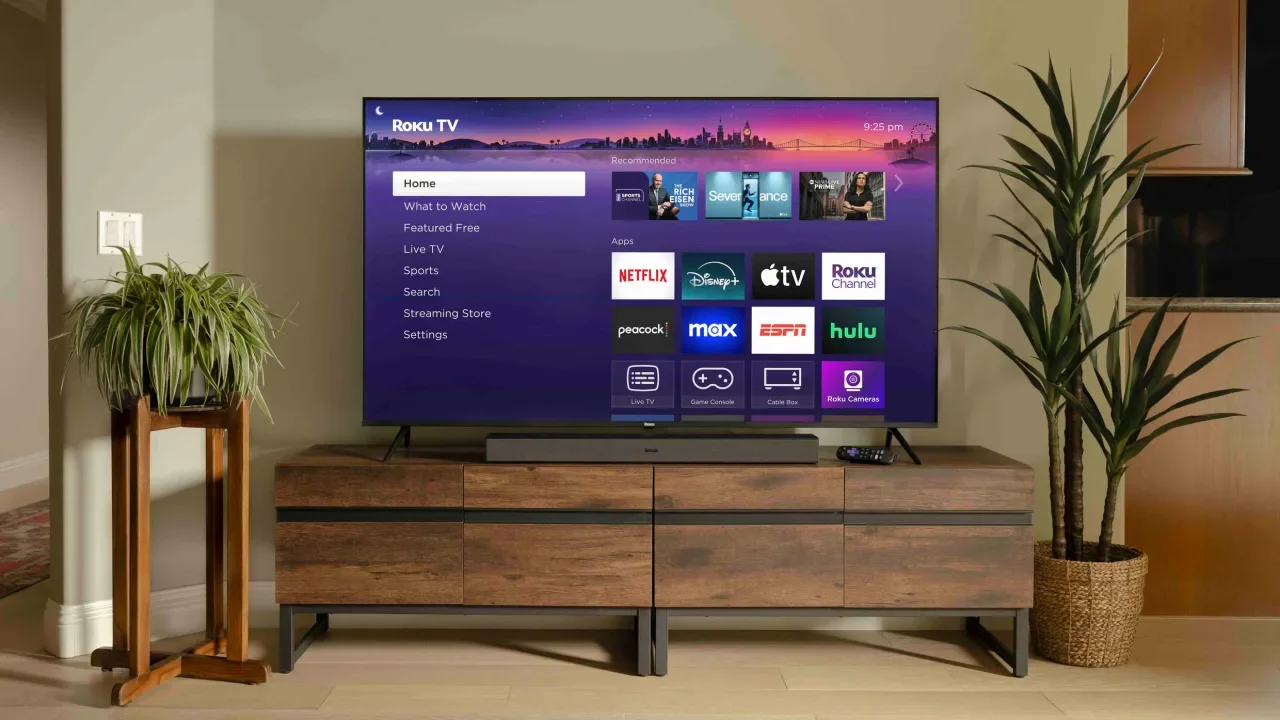
It’s easy to forget how big a splash the first Roku box made when it debuted on May 20, 2008. At launch, the device worked only with Netflix, best known at the time as a mail-order Blockbuster rival that was just ramping up its streaming service. The 10,000 movies and shows you could watch skewed toward the random and musty: Back then, Netflix’s mail-order DVD service offered 10 times as many titles. But the $100 Netflix Player by Roku took a process that had been geeky at best—getting internet video onto a TV—and made it approachable and affordable. In the unassuming gadget, wrote The New York Times’s Saul Hansell, “I think you can see the future of video.” Hansell was right. And though that original box has grown quaint with time, Roku is still riding the streaming wave. The company ended 2024 with 89.8 million streaming households, an increase of 9.8 million year over year. In the first quarter of 2025, it streamed 35.8 billion hours of video, up 5.1 billion year over year—and more than 10 times what it was doing per quarter when it went public in 2017. Behind the scenes, Roku has constructed a diversified business to keep those figures growing and monetize them in new ways. Yes, it still makes streaming boxes, along with streaming sticks and soundbars. However, it also provides North America’s most popular operating system for smart TVs, which it licenses to other manufacturers and uses on its own Roku-branded televisions. It operates the Roku Channel, the most-watched free ad-supported streaming channel, having recently passed Tubi. It’s a powerhouse of streaming ads, giving marketers tools such as Roku Ads Manager and Roku Data Cloud. That Roku found itself in a place to build all this involved an early twist of fate. Founder and CEO Anthony Wood oversaw the first streaming box’s development as a skunkworks project for Netflix. When Netflix decided it didn’t want to sell a device of its own, Roku—which had made internet radios and digital signage controllers, among other products—inherited it. With the introduction of the Roku Channel Store in November 2009, the box began to evolve from a Netflix player into a comprehensive streaming portal. The Channel Store launched with 10 providers, including Pandora and Flickr; the company doesn’t disclose the current number, but it’s in the thousands, including more than 500 free ones. Anthony Wood “It’s amazing how companies underestimate that,” Wood says. “They still do. They don’t really understand what it means. For example, sometimes people will be like, ‘Your UI, your home screen, hasn’t changed that much.’ Like that’s terrible. And I’m like, ‘No, our market share keeps going up!’ So it’s not terrible. People like that.” Anyone who scoffs at Roku’s lack of change for change’s sake might want to consider how successful it’s been in a business that many others, including Google and Amazon, have long coveted. “When you think about the power of an operating system, in the mobile world you think of Apple and Google being the two dominant platforms,” says media and technology analyst Rich Greenfield of LightShed Partners. “In connected TV, the platform that is far and away the largest is Roku.” Hardware is hard Wood’s early realization that devices were most valuable as a springboard to build a platform did not involve any unique insight. Everyone in consumer electronics knows that hardware is hard and services can drive profits. But Roku has been one of the few consumer electronics companies to make it all work—certainly more consistently so than Sonos and GoPro, both of which have been through more than their share of tribulations in recent years. (Fun fact: All three companies were founded in 2002.) Just as Wood anticipated, Roku became a services company. In the first quarter of 2025, it made $881 million in revenue from its platform business, which spans advertising, subscriptions, and software licensing, with a gross profit of 53%. In devices, it had $140 million in revenue but a $19 million loss, for a margin of minus 14%. Overall, the company reported a loss from operations of $58 million and an adjusted EBITDA of $56 million, compared to a $72 million loss and adjusted EBITDA of $41 million for the first quarter of 2024. If you’re watching the Roku Channel—or another streaming service that’s part of the Roku Audience Network—you see ads the company has inserted in streams. (Overall, according to data from Pixalate, 38% of connected-TV programmatic ads in the first quarter of 2025 were delivered to Roku viewers, the highest percentage of any platform; Amazon’s Fire TV was second with 18%.) If you’re watching something else, such as Disney+ or Max, Roku can monetize that, too: Its built-in payments service, Roku Pay, lets it handle billing in return for a fee. Roku’s use of its platform as a giant marketing opportunity for its streaming partners extends to everything from its home screen and screen saver to the dedicated app-specific buttons on its familiar remote control; in March, it raised eyebrows by testing ads that play even before the home screen loads. As I was finishing this article, the platform was thick with messages promoting discounts associated with Streaming Day on May 20—a holiday it invented to celebrate the anniversary of its first box. Anti-Roku sentiment expressed online usually reflects frustration with the quantity of advertising and other promotional elements, though the company recently got blamed for some ads it didn’t place. Wood says that customer satisfaction studies help determine changes to the platform, but in some cases tweaks get the go-ahead even “if there’s a very neutral [reaction] or a slight decrease in satisfaction. Because you’ve got to remember, the revenue ultimately [results] in more content, more free content, more features, and lower cost.” Overall, he adds, “Those revenue streams have really worked for us—distributing streaming services, merchandising them, selling them, billing for them, and free content with ads.” If Roku hadn’t done an intrepid job of navigating a TV hardware ecosystem that’s radically changed since it shipped its early devices, it wouldn’t have a booming ad business. Back then, few people owned smart TVs; the company’s competition consisted of other boxes, most of which were clunkier and costlier than its own. But as streaming took off, most TVs added it as a standard feature. Theoretically, that could have rendered Roku and its add-on boxes redundant. The reality, however, was that the home-brewed software cobbled together by many TV manufacturers was terrible. That opened up an opportunity for Roku, whose interface was already widely praised for its polish and straightforwardness. In 2014, the company introduced Roku TV, a platform designed to be embedded into televisions rather than delivered via a box. It launched on models from China’s TCL and Hisense, respectively the third- and fifth-largest TV brands at the time. Looking back, Wood says that TV makers were skittish about ceding control of the on-screen experience. “When we first started going to TV companies, one of the biggest challenges we had was they all wanted a custom UI, and they didn’t want their UI to look like their competitors,” he remembers. In the end, many were convinced to standardize on Roku, which now ships on TVs from 35 brands, including JVC, Walmart’s Onn house brand, Philips, and Westinghouse. In some cases, they play up the platform’s brand and benefits on their packaging even more than their own. Among the TV manufacturers who still don’t offer Roku models are three of the best-known brands: Samsung, LG, and Sony. Wood contends that’s worse news for them than for Roku. “Samsung still makes their own platform,” he says. “They just don’t have enough scale and monetization, even as large as they are, to do what we do in terms of features. . . . And so we’re just a better product, and consumers care about that.” Then there are the most Roku-centric TVs of all. In 2023, the company introduced its own line of televisions; it went on to sell a million of them in 2024. Are the TV makers who license Roku’s software okay with it competing with their products? “They’d probably prefer we didn’t,” allows Wood, who calls it “just another move to build market share.” Along with catering to customers who want the purest possible Roku experience, doing so lets the company test new features before rolling them out more widely, he explains. It also helps retailers plug holes in their TV lineups when they can’t get all the models they’d like from other brands. At the launch event where I spoke with Wood, Roku unveiled its 2025 line of TVs. But it also introduced two new add-on streaming devices—not boxes but sticks that plug directly into a TV’s HDMI port, a diminutive form factor the company has offered since 2012. It’s still finding ways to improve them: The new models are slimmer than their predecessors, so they don’t block adjacent HDMI ports. They also draw power from the TV, eliminating the need for a cable and charging plug. Given that it’s now tough to buy a TV that doesn’t have streaming features built in, how is it possible that these sticks are still a thing? Even inside Roku, Wood says, many people expected the market for them to trend sharply toward zero. So far, it hasn’t: “Every year we keep selling them—we sell a lot of streaming sticks.” Some customers, he says, use them to upgrade aging smart TVs whose built-in software is no longer getting updates. Others may simply prefer Roku to other streaming interfaces. Roku’s continued focus on streaming shows a fair amount of discipline given that its brand is among the most recognizable in smart home technology. (Google’s Nest, by contrast, has migrated from thermostats to security systems, speakers, screens, Wi-Fi routers, and other products but lost its early buzz along the way.) Not that Roku hasn’t played around the edges: In 2022, I wrote about its foray into cameras and doorbells. Rather than lavishing attention on the project, it started with devices built by Wyze and then provided security and software upgrades, along with integrations with its TV platform. Today, Roku sells millions of products a year based on its Wyze partnership and is still rolling out new models. But the initiative shows no signs of broadening into an all-out effort to conquer every area of household tech. “Our primary business is streaming, but it’s kind of a nice accessory,” Wood says. It’s a channel, too For much of its history, Roku expanded the utility of its devices by supporting new streaming services as they came along. By 2017, its Channel Store had more than 5,000 of them, from the expected name-brand giants to upstarts representing an array of niches. That was the year it launched a service of its own, called—perhaps inevitably—the Roku Channel. That move went on to transform how the company made money by letting it sell ads on its own streams. Today, “It’s a multibillion-dollar business for us,” Wood says. Having its own channel also gave Roku the opportunity to simplify streaming even more by taking responsibility for what Steve Jobs would have called the whole widget—the entire experience from the design of the remote control to the lineup of shows. “In some ways, the Roku Channel is at the center of what they’re doing,” says LightShed’s Greenfield. Calling it a mere “channel” is a bit of a misnomer, though. It’s become a sprawling streaming service unto itself, with on-demand movies and episodes, live channels, and premium for-pay options such as Starz, AMC+, and the service soon to be known once again as HBO Max. The Roku Channel also has a life well beyond Roku’s own platform: You can watch it on the web, using iPhone and Android apps, or even on two of Roku’s archrivals, Google TV and Amazon’s Fire TV. Almost eight years into its existence, the Roku Channel has quietly gobbled up a meaningful percentage of the hours humans spend consuming video content. In April, according to Nielsen’s the Gauge, it accounted for 2.4% of all TV watched by people ages 2 and up (sorry, babies). That might not sound huge, but it’s 2.4% of all TV—broadcast and cable as well as streaming—and is up 71% year over year. And though it’s below YouTube (12%), Netflix (7.9%), Disney’s streaming services (5%), Amazon Prime Video (3.5%), and Paramount’s services (2.3%), it beats Tubi (1.9%), HBO Max and Warner Bros. Discovery’s other services (1.5%), and Peacock (1.4%). Roku itself says that the Roku Channel’s streaming hours are up 84% year over year, and that it’s the platform’s No. 2 service among U.S. watchers in terms of engagement. (The company doesn’t officially disclose which one is No. 1, but according to one source, it’s YouTube.) Contentwise, what Roku is streaming on its service bears a certain resemblance to Netflix in its early, pre-House of Cards days, before it shifted decisively to original content. There are vast quantities of recognizable TV shows and movies. It’s just that they aren’t the latest ones, and sometimes they’re decades-old comfort food. However, there are also more Roku Originals than I realized, including movies and series. These made-for-Roku items haven’t commandeered huge amounts of public attention, but 2022’s excellent fantasy biopic Weird: The Al Yankovic Story and a show Roku picked up after Disney abandoned it, The Spiderwick Chronicles, both won Emmys. And having some exclusives buttresses the platform’s story for marketers. As Wood puts it: “You go and talk to advertisers, you don’t say, ‘Hey, the Roku Channel has a whole bunch of reruns of Bewitched.” (Note: It does—116 episodes’ worth.) Marketers may like seeing Roku invest in original content, but a recent acquisition proves it isn’t overly fixated on prestige. On May 1, the company announced it was spending $185 million to acquire Frndly TV, a streaming service whose 50 channels include rerun purveyors such as Lifetime, the Game Show Network, Hallmark Mysteries, and—my favorite—MeTV Toons. Starting at $7 per month, it’s a logical step up from the free stuff that’s propelled the Roku Channel’s popularity. As a Roku property, it should benefit from the company’s ability to put it front and center on the platform. The power of Roku’s mass-market consumer footprint is so undeniable that even Apple has seen fit to embrace it. Like Roku, it has a streaming box: Apple TV, whose original version shipped even before Roku’s Netflix Player. But in January, the two companies collaborated on an “exclusive fan experience” for the hit Apple TV+ show Severance. Shortly before the second season premiered, the first one streamed for free on the Roku Channel. Anyone whose appetite was whetted for the new episodes didn’t need to buy an Apple TV box to catch them: Apple TV+ has its own Roku app. With Roku already in about half of American homes and its platform running about 40% of TVs and half of streaming devices, it runs the risk of maxing out its ability to scale up further. Wood acknowledges that U.S. growth is slowing, and emphasizes the importance of even more aggressive monetization. For example, the Roku home screen recently added a row with app “recommendations” the company can market to streaming partners. International expansion, he says, is also critical—already, the company has a commanding market share in Mexico. Still, 18 years after Wood began introducing Americans to streaming, he sees the potential to reach even more of them. The strategy—make it simple, make it cheap, and just keep going—abides. “People are still upgrading TVs, and our market share for TVs sold also keeps growing,” he says. “So I think there’s room.” View the full article

-
In June 2024, a team of divers sank a curious assortment of 24 sculptures off the northern coast of Bali. The sculptures look like works of art—and in many ways they are. But they are also memorial reefs that turn cremated ashes into structures that regenerate marine life. Over the past three years, a British startup called Resting Reef has been working to revamp the death care industry. Instead of keeping ashes inside an urn (which often ends up gathering dust on a shelf) or scattering ashes at sea (a fleeting gesture that leaves no lasting trace), you can have Resting Reef integrate them into an underwater memorial that can double as an artificial reef. Now, the results are in: Nearly a year after being placed on an otherwise barren stretch of seabed in Bali, the artificial reefs have attracted more than 46 new marine species. The site now boasts four times the fish biodiversity of the nearest comparable location thanks, in part, to the turf algae and coralline algae that have grown on the surface of the reefs, providing habitat for many marine organisms. The Bali reef pilot, which was funded by six government grants from the U.K., is the only such reef in the world. (It consists of pets ashes, but reefs made with human ashes are coming next.) The team is also in conversations with sites in Plymouth, U.K., and in Mexico. “Just as we have a cemetery around the corner, in the future we’ll have memorial sites—marine sites—opening around the world,” says Aura Elena Murillo Pérez, who cofounded Resting Reefs with Louise Lenborg Skajem. Nature’s fertilizer For all our beautiful differences when we are alive, all of us are reduced to the same chemical composition when we die. The exact composition of a person’s ashes can vary based on their weight, diet, age, and genetic makeup, but most people’s chemical signature will primarily be made up of calcium phosphate. This calcium phosphate is “one of nature’s main fertilizers,” says Skajem. If you spread someone’s ashes on your lawn, excess minerals will leach into the soil, but when captured as part of the mixture that makes up a Resting Reef, it will help various species attach to the structure and grow on its now bioreceptive surface. The exact ratio of materials is part of the company’s IP, but the team is committed to working with locally available materials. In Bali, the reefs used for the pilot are made from dog and horse ashes mixed with crushed shells and volcanic sand sourced from the island. In the U.K., the company has developed a non-cementitious formula that it says is very low on carbon. Redesigning death The business of death is in dire need of a redesign. The world is running out of space to bury our dead, and cremation releases an average of 500 pounds of carbon dioxide per person into the atmosphere (the equivalent of driving your car more than 500 miles). In response to the growing crisis, a number of startups have emerged over the past decade. These include companies that use biodegradable hemp coffins, shallow graves that grow into trees, and “aquamation,” which uses alkaline hydrolysis to dissolve the body in a more environmentally friendly way. By some estimates, in 2023 the green burial market was valued at $622 million and is projected to surpass $1 billion by the end of 2030. Resting Reef slots right into this ecosystem. The company still relies on remains from cremations or aquamations, but it was founded on the premise that we can honor our dead while giving new life to marine ecosystems around the world. When I first spoke with the founders in the spring of 2022, their focus was on oyster reefs, which are among nature’s greatest carbon sinks but have been lost to overharvesting and pollution. Now the model extends to whichever habitat is most in need of restoration. On the northern coast of Bali, that is corals. The artificial reefs come in two separate designs that can each accommodate various species: One features a ribbed texture that is ideal for benthic species like oysters; the other sports crevices and tunnels that mimic coral reefs and provide shelter for mobile species like juvenile fish. In the future, the team will have a portfolio of designs depending on the ecosystem or the intended aesthetic. And it’s not just about environmental impact. Resting Reef’s business model allows the company to invest in communities by employing local restoration experts (11 locals were involved in Bali) and running classes and workshops to increase marine literacy. “Kids don’t really know about what’s happening underwater, so it’s important that they become aware because we believe that they will become the guardians of the future,” says Murillo Pérez. Going beyond death More than a marine regeneration initiative, Resting Reef bills itself as a sustainable death care service that helps people build a meaningful legacy for themselves or their loved ones. Both Murillo Pérez and Skajem are certified funeral celebrants, which allows them to officiate funeral services and support families through bereavement. The 24 memorials that are currently underwater in Bali are all part of a community memorial for various pets (a spot in a Community Reef begins at $470, while a dedicated reef for your pet will cost you about $3,000). The pet memorial served as a useful pilot, but this summer Resting Reef will expand by launching its first memorial service for humans. The price of a dedicated memorial made with human ashes will begin at $5,200, which is cheaper than the average cost of a basic funeral in the United States. As of 2023, that was $6,280 for cremation and $8,300 for burial. The team will ask you to send the ashes by post, but some countries have a limit to the amount of human ashes you can send by mail. (The Royal Mail in the U.K. caps it at 50 grams.) So Resting Reef is considering other options, like collecting ashes from various funeral homes that could act as partners. For those who want to have a memorial ceremony and see the reef in person, the team offers a bespoke package called Experiential Reef. As part of the service, regardless of the tier, the team will send you a miniature version of your reef that you can keep close to you. You can opt in to have a portion of the ashes incorporated in the miniature sculpture, “because some people have difficulties letting go of the ashes,” says Skajem. And if you don’t, you still have a tangible object to remember your loved one by. Whether the distance turns out to be an issue remains to be seen, but to help people feel more connected, the team also sends regular updates in the form of impact reports—both environmental and social—and footage of the reef as it evolves. As Skajem puts it: “That’s part of the legacy.” View the full article

-
When Apple removed the headphone jack from the iPhone 7 in 2016, the backlash was immediate and fierce. Tech reviewers called it “user-hostile and stupid.” Customers created petitions. Competitors ran ads mocking the decision. Yet today, wireless earbuds are ubiquitous, and the decision looks prescient rather than foolish. What Apple understood—and what most future-ready leaders eventually learn—is that meaningful innovation requires disappointing people strategically. This isn’t the leadership advice you typically hear. We’re told to inspire, to build consensus, to bring everyone along. But an uncomfortable truth lurks beneath these platitudes: as your impact grows, so does your capacity to disappoint others. And rather than avoiding this reality, the most effective leaders learn to navigate it intentionally. When Success Creates an Expectation Trap Author Rebecca Solnit captures this paradox perfectly. After supporting a friend whose first book had become unexpectedly successful, she explained that “success is full of failures, at least in the eyes of others, who want things from you, more of them wanting more than you can ever deliver, so you live in an atmosphere of pressure, unmet expectation.” This is particularly acute in technology leadership, where decisions must often be made ahead of market readiness. The moment you create something valuable, people develop expectations about what should come next—expectations that frequently conflict with the very innovation that made your work valuable in the first place. Consider Netflix’s pivot from DVD delivery to streaming. When announced in 2011, the company lost 800,000 subscribers and its stock plummeted 77%. Today, that disappointing decision looks like the defining move that secured Netflix’s future. Confidence: Not What We Think It Is The paradox exists for leaders across industries, though. Part of the challenge is that we fundamentally misunderstand confidence. As Nobel laureate Daniel Kahneman explains, “Subjective confidence in a judgment is not a reasoned evaluation of the probability that this judgment is correct. Confidence is a feeling, which reflects the coherence of the information and the cognitive ease of processing it.” In other words, our feeling of confidence often has more to do with how neatly our story fits together than with its actual likelihood of being correct. This creates a dangerous dynamic in leadership, where seemingly “confident” decisions may simply reflect coherent but flawed narratives, especially when those narratives align with what stakeholders want to hear. This dynamic is especially dangerous in leadership, where the pressure to appear confident drives a pattern I’ve observed repeatedly: the rush to create strategies around emerging technologies (“What’s our AI strategy?” “What’s our blockchain strategy?”) rather than having the confidence to maintain core business strategies and incorporate new technologies experimentally. Dr. Tressie McMillan Cottom’s concept of “insecure overachievers” illuminates part of this pattern: leaders who achieve at high levels while seeking external validation often prioritize appearing forward-leaning over being truly purposeful. The result? Decision-makers chasing technologies rather than outcomes, pursuing strategies that sound forward-thinking but may actually disconnect organizations from their core mission and meaningful impact. The Mathematics of Confident Decision-Making In statistics, confidence intervals don’t just tell us whether an effect exists—they reveal how certain we can be about what we know, which directly impacts our confidence to act. Mathematician Jordan Ellenberg illustrates this: a narrow confidence interval (such as between −0.5% and 0.5%) means you have “good evidence the intervention doesn’t do anything,” giving you the confidence to stop the initiative. A wide interval (such as between −20% and 20%) means you have “no idea whether the intervention has an effect,” signaling you need more data before making a decisive call. In other words, this statistical principle offers a powerful parallel for leadership decisions: true confidence comes not from eliminating uncertainty, but from understanding precisely what we know and what we don’t, and responding appropriately. This distinction offers us a powerful framework for leadership—what I call the Strategic Disappointment Matrix: Quadrant 1: High Certainty / Low Disappointment These are the easy wins—decisions where data strongly supports a path that few will object to. Pursue these enthusiastically, but recognize they rarely lead to breakthrough innovation. Quadrant 2: High Certainty / High Disappointment Here lie the necessary disappointments—decisions like sunsetting beloved but unsustainable products or implementing essential security measures that create friction. The evidence clearly shows these moves are necessary, even though they’ll create disappointment. These require courage, but clear communication can minimize backlash. Quadrant 3: Low Certainty / Low Disappointment These are experimental spaces where you can test hypotheses with minimal risk. These low-stakes experiments often yield what I call “bankable foresights”—insights about future priorities that you can invest in confidently even without complete certainty. Use these spaces intentionally to gather data that might eventually inform more consequential decisions in other quadrants. Quadrant 4: Low Certainty / High Disappointment This is where the biggest breakthroughs—and biggest failures—happen. When Airbnb suggested people rent their homes to strangers, or when Amazon invested in AWS, these decisions had uncertain outcomes and disappointed many stakeholders. These require the highest level of judgment and often define a leader’s legacy. Understanding where your decisions fall in this matrix doesn’t eliminate uncertainty, but it helps you respond to it appropriately. Practicing Strategic Disappointment Dr. McMillan Cottom suggests that developing comfort with disappointing others is “a critical life-skill” worth deliberately practicing. She recommends setting “the intention to disappoint at least one person, in some real way, over the next 24 hours,” noting that “the more comfortable you get with the risk of disappointing, the better things go on all fronts.” For leaders, this practice might include: Distinguish types of disappointment. Differentiate between disappointments that challenge people productively versus those that harm needlessly. Create transparent decision frameworks. Develop and communicate clear values hierarchies that show which principles take precedence when trade-offs become necessary. Articulate the “future-ready why.” Practice explaining unpopular decisions in terms of the longer horizon they enable, not just the immediate benefits. Build disappointment resilience. Develop personal practices that help you withstand the discomfort of being misunderstood or criticized for decisions you believe in. Measure meaningful impact. Create metrics that track long-term value creation, not just immediate satisfaction or engagement. Innovative Leadership Through Strategic Disappointment When Microsoft CEO Satya Nadella decided to shift the company’s focus from Windows to cloud computing and AI, many were disappointed. Windows had been Microsoft’s crown jewel for decades. Developers, partners, and even internal teams who had built careers around the operating system felt betrayed by this pivot. But Nadella was practicing strategic disappointment. Rather than trying to please all stakeholders in the short term, he disappointed some intentionally to position Microsoft for long-term relevance. The results speak for themselves. Microsoft’s market cap has increased from roughly $300 billion when Nadella took over to over $3 trillion today, making it one of the world’s most valuable companies. More importantly, this shift has positioned Microsoft as a leader in AI and cloud computing—the very technologies shaping our future. Nadella’s strategic pivot demonstrates a crucial truth for future-ready leaders: disappointing people isn’t a leadership failure. It’s often the necessary price of meaningful innovation. The confidence to disappoint strategically isn’t about being certain you’re right. It’s about having the clarity to recognize when immediate approval conflicts with long-term impact, and the courage to choose impact even when it hurts. In a world moving too fast for perfect certainty, tomorrow’s most valuable leaders won’t be those who pleased everyone today. They’ll be those who had the courage to purposefully disappoint when necessary, navigating uncertainty not by avoiding it, but by embracing it as the necessary terrain of meaningful change. View the full article

-
In a small village in Senegal, almost no one has electricity, but that’s about to change. Last year, a 40-foot-shipping container rolled into town, unfolded an array of solar panels on its roof, and crews began running wires to connect the whole village to clean power. After final approvals from the local government, the new microgrid will soon switch on. The project had an unusual funding source: ChargePoint, the EV charging company known for its network of a million chargers in the U.S. and Europe, spent six figures helping get it built, working with a technology partner called Africa GreenTec. The EV charging company used money that it earned selling carbon credits from 10,000 EV chargers in Germany. Under the EU’s emissions trading program, it gets certificates for replacing gas or diesel fuel in cars with electricity. But since the electricity used to charge cars isn’t yet 100% clean, the company wanted to use the carbon credit funds to go a step farther. (Germany’s grid reached a record of 62.7% renewable energy in 2024, but still uses some coal and natural gas.) “From the very beginning, we said we are going to set aside a certain amount of money for each kilowatt hour,” says Andreas Blin, director of segments and partnerships at ChargePoint. “And this is going to be invested into a renewable energy product or project, just to make sure that everybody’s clear that we are not about greenwashing—we’re about burning less fossil fuels.” As the team considered where to spend the funds, it decided to partner with Africa GreenTec, a company that makes a mobile system called the Solartainer Amali, designed to quickly deploy solar power and electrify entire communities. The first project was built in Keur Ndiangane, a village with around 1,200 residents on the southern border of Senegal. Most people living there are subsistence farmers, dealing with a harsh climate that swings between floods and droughts. “Before our project, Keur Ndiangane had no access to centralized electricity or public lighting,” says Wolfgang Rams, CEO of Africa GreenTec. “Daily life effectively ended at sunset—shops closed, schools emptied, and the streets were plunged into darkness. Most households relied on candles or kerosene lamps.” Some small businesses, such as mills that process grains, ran on expensive diesel generators. To install the new microgrid, a crew spent a few weeks getting the “Solartainer”— which has 144 solar panels and battery storage—ready to run. (The process is normally even faster, but installation was slower because of extreme heat). At the same time, they spent two months putting up more than 100 poles and nearly 16,000 feet of wiring for the new grid. They also added 55 street lights that each run independently off their own solar panels, helping improve safety for people walking at night. Families can sign up for different plans depending on what time of day they want to use electricity and how much they need. More than 140 people are pre-subscribed so far. (ChargePoint doesn’t own any part of the project and won’t get any financial return from it.) The impact will be significant. In the past, while families might have used candles or kerosene for light at night, they’ll now easily be able to use bright LED lights and charge other small appliances. “Children can study in the evening,” Blin says. “People can work in the evening . . . This extends the daytime that people can use.” It can help enable internet access and refrigeration. Farmers can use the power to pump water on their fields, or run equipment to make new products, such as peanut oil. Healthcare clinics can use lighting and refrigerate medicine. New jobs have been created, as local residents will maintain the new solar microgrid. In other areas where Africa GreenTec has installed solar microgrids in the past, it has seen that electrification trigger economic growth—and then there’s more demand for power. Because of that, the system has been designed to adapt. The village can swap in a larger, more powerful solar microgrid when it’s needed, and the original Solartainer can be packed up and reused. “The previously used Solartainer Amali can be transported to the next village that is not yet electrified and can be used there again at any time,” says Rams. “This unique feature saves production effort and resources and reduces our carbon footprint.” The work is part of a much larger trend: Solar microgrids are quickly spreading across Africa. In Zambia, as one example, the government has installed 45 microgrids in rural communities, with plans for another 200 by next year, and 1,000 over the next few years, with support from nonprofits, the UN, and other funders. In Nigeria, World Bank funding has helped millions of people access electricity from solar microgrids in recent years. Last year, World Bank lending for off-grid solar projects reached $660 million. The World Bank Group has also partnered with the African Development Bank with a goal of connecting 300 million people in sub-Saharan Africa to electricity by 2030. Those larger efforts dwarf what a single company can do. Still, Africa GreenTec says that ChargePoint’s support meant that the village of Keur Ndiangane likely got power faster than it otherwise would have. “Without ChargePoint’s financing, implementing the project would have been extremely difficult,” Rams says. ChargePoint, founded in California in 2007, has been navigating a difficult period, with net losses of $282.9 million in the fiscal year ending in January, and around 250 jobs cut in 2024. It’s also earning less money now from carbon credits, because the value of carbon credits has fallen. Still, its network of EV chargers continues to grow, and the company expects to invest in electrifying another village. “I’d like to see more companies support things like this,” Blin says. View the full article

-
Blocking these bots will mostly impact the link index of the tools. They won’t be able to crawl the pages, so they can’t check where those pages are linking. It doesn’t matter for traffic estimates, keyword rankings, top pages, etc.…Read more ›View the full article
-
Researchers funded by the U.S. Navy have used gene-editing technology to make house spiders produce red fluorescent silk. This might seem like a quirky scientific novelty, but the breakthrough is a critical step toward modifying spider silk properties and creating new “supermaterials” for industries ranging from textiles to aerospace. The team at Germany’s University of Bayreuth, led by Professor Thomas Scheibel, successfully applied CRISPR-Cas9—a molecular tool that acts as “genetic scissors” to cut and modify DNA sequences—to spiders for the first time. The study, published in the scientific journal Angewandte Chemie, demonstrates how this technology introduces modifications that enhance the extraordinary properties of spider silk, turning it into a next-generation supermaterial. In a press release, professor Thomas Scheibel, chair of biomaterials at the University of Bayreuth and senior author of the study, said, “Considering the wide range of possible applications, it is surprising that there have been no studies to date using CRISPR-Cas9 in spiders.” His team injected a solution containing CRISPR-Cas9 components into female Parasteatoda tepidariorum, a common house spider species. To facilitate the process, the spiders were anesthetized with carbon dioxide and manually held under a microscope. The solution, which included a gene encoding a red fluorescent protein (called mRFP), was delivered into the eggs within the females’ abdomens before mating with males so the resulting baby spiders could carry the gene modification. What are scientists trying to do? The experiment set two objectives: first, to disable a gene called sine oculis, responsible for the development of all spider eyes, in order to study its function. And then second, to insert the fluorescent protein gene into the MaSp2gene, which produces the silk thread spiders use to move hunt, hike, and chill out. In modified specimens, disabling sine oculis caused total or partial eye loss, confirming its critical role in visual development. According to the study, without this gene spiders fail to form eye structures, though the cornea develops normally. But the breakthrough with far-reaching industrial implications is the silk modification. The injected fluorescent protein gene successfully integrated into the MaSp2 gene, causing fibers produced by the modified spiders to glow red under ultraviolet light. According to Scheibel, they “have demonstrated, for the first time worldwide, that CRISPR-Cas9 can be used to incorporate a desired sequence into spider silk proteins, thereby enabling the functionalisation of these silk fibres.” He says that the ability to apply CRISPR gene-editing to spider silk is very promising for materials science research—for example, it could be used to further increase the already high tensile strength of spider silk.” This accomplishment was no small feat. Spider genomes are complex, and their embryonic development—marked by unique cell migration stages—complicates genetic editing, according to the researchers. In fact, only 7% of egg sacs that were treated with the CRISPR solution contained modified offspring, a low efficiency rate typical for species with large broods (common house spiders carry about 250 spiders per sac). Additionally, the spiders they used are cannibalistic nature, which required them to be reared in isolation (not all spiders are cannibalistic in nature, but many do eat their males after mating and others eat each other). The race for “super silk” It’s a very promising development indeed. Spider silk is one of nature’s strongest materials. Certain types of spider silk are significantly lighter and tougher than Kevlar. Silk is also far more elastic, which means it can stretch and return to its original shape without losing its strength. To top all this, spider silk production by spiders (or other animals, more on this later) does not involve the industrial processes, high energy consumption, and pollution associated with the manufacturing of synthetic materials like Kevlar. This is a major area of interest for biomimicry and sustainable materials. Until now, modifying spider silk’s properties required costly, lab-based post-extraction processing, which is difficult to scale. This study shows that altering silk directly within the organism is feasible, paving the way for custom-designed silks with enhanced properties. While spider silk remains unmatched in natural performance, CRISPR-edited silkworms are emerging as scalable alternatives. Silkworms can be farmed en masse (unlike solitary, cannibalistic spiders), and recent advances show their engineered silk reaches 1.3 GPa tensile strength, comparable to high-tensile steel, which is a steel alloyed with chromium, molybdenum, manganese, nickel, silicon, and vanadium. Companies like Kraig Biocraft Laboratories already use CRISPR to produce spider-silk hybrids in silkworms, targeting industries like textiles and medical sutures. However, spider silk holds unique advantages over those genetically modified silkworms. Its dragline fibers are inherently stronger and 10 times finer. Using the method developed by Scheibel’s team, potential CRISPR-enhanced spiders are likely to gain more superpowers, like getting closer to Kevlar or gaining better electrical conductivity. Where super silk might be used In medicine, spider silk’s biocompatibility makes it ideal for dissolvable surgical sutures that reduce scarring and artificial tendons mimicking natural elasticity. Researchers are also developing 3D-printed scaffolds infused with silk proteins to regenerate bone or cartilage, leveraging silk’s porous structure to support cell growth. For drug delivery, silk microcapsules could release medications at controlled rates, improving treatments for chronic diseases. New applications can integrate silk in sensors for real-time health monitoring in implants or conduct electricity for flexible electronics. The U.S. Navy’s funding of the research makes sense too, given its interest in lightweight body armor. Spider silk can outperform Kevlar, while its elasticity reduces blunt-force trauma. In aerospace, silk composites could replace carbon fiber, cutting aircraft weight by 40% and improving fuel efficiency. NASA already explores silk-based materials for radiation shielding in space habitats, capitalizing on its strength-to-weight ratio. Companies like AMSilk and Spintex engineer spider silk proteins into biodegradable textiles, reducing reliance on synthetic fabrics derived from fossil fuels. Adidas has prototyped ultralight running shoes with silk midsoles, while Airbus tests silk-based cabin panels to lower aircraft emissions. Spintex claims that its energy-efficient spinning process—1,000 times more efficient than plastic production—could revolutionize sustainable fashion, addressing the industry’s 10% global carbon footprint. Right now, Scheibel’s team is already exploring CRISPR edits to add moisture-responsive shrinking or toxin-detecting color changes to silk. Once they achieve whatever new wundersilks they—or the U.S. Navy—have in mind, they will have to come up with a way to mass-produce them. This evokes images of farms full of millions of genetically modified spiders, which sounds as fun as a rave with 10,000 zombies from The Last of Us. But the spider farms may never happen: As the researchers mention, many spiders are cannibals and the success rate of modification is still very low, so this will be a challenge. That is what makes genetically modified silkworms ideal to make spider-like silks, as they have been farmed for silk production since the neolithic, about 6,000 years ago, when Yangshao culture in China realized that silkworms could be raised to harvest cocoons that then got weaved to create silk fabric. The solution may be taking the successful spider DNA modifications they develop and using other animals to produce them, like silkworms or goats (yes, spider-goats are a thing). I’ll leave you at this point. Good luck in your dreams tonight, my arachnophobic friends. View the full article
-
If you’ve always wanted to donate to Wikipedia but needed an extra nudge to do so, a new capsule collection by the German fashion brand Armedangels could be that reason. To mark Wikipedia’s forthcoming 25th anniversary next year, Armedangels designed a 14-piece collection that turns design features from the Wikipedia user interface and experience into brand elements. Its signature bright cobalt blue, called “hyperlink blue,” is a key color, along with white and yellow core colors. One design, featured on a T-shirt and sweatshirt, uses an iconic 1972 image of Earth called “Blue Marble” that was taken during the Apollo 17 mission and is in the public domain. Armedangels A text excerpt from “The Blue Marble” Wikipedia page is below the image, which is one of the most widely reproduced images in the world and “celebrates the freedom of knowledge,” according to the product description. Wikipedia’s serif “W” logo is featured throughout. The collection is available now via the Armedangels website. The Armedangels x Wikipedia collection includes items that equate knowledge to progress, with shirts promoting freedom, peace, and equality. Ball caps with slogans like “Open Source of Information” and “Yes, I know,” are fan merch for people who love going down multi-tab Wikipedia rabbit holes. The items range in price from about $16 for socks, $48 for hats, $57 for T-shirts, and $114 for sweatshirts. Armedangels The nonprofit Wikimedia Foundation—which also operates tools like Wikimedia Commons and Wikibooks—saw annual revenue of more than $180 million in 2024, more than $170 million of which came from donations (though it says just 2% of Wikipedia readers donate). Some hypebeast apparel might be able to nominally improve that percentage, and it comes as the site itself has become a political lightning rod, facing increasing attacks from some on the right. Armedangels Armedangels says every piece is made from 100% recycled material, and 12% of sales proceeds go to the Wikimedia Foundation. It’s “sustainability meets free knowledge,” as the fashion brand says. “Because when we know better, we do better.” Like the pro-reading, anti-book-ban capsule collection for Penguin Random House by Online Ceramics, Armedangels x Wikipedia lends street-fashion cred to book smarts—and it raises money for valuable education resources at a time when anti-intellectualism is on the rise, and our information ecosystem has become especially polluted. Supporting a free online encyclopedia is one way to fight back. For Wikipedia, its volunteers, readers, and fans, the site is an effective line of defense against misinformation and ignorance. Now they have a limited-edition streetwear line that feels the same way. View the full article

-
You sit down to tackle your to-do list, full of energy and ambition—but 20 minutes later, you’re bouncing between emails, Slack notifications, and random tabs about vacation deals. Another hour slips away. Sound familiar? In today’s distraction-saturated workplaces, focus has become one of the most valuable—and elusive—skills we can master. The good news is that the focus isn’t just a matter of willpower. It’s a rhythm that can be trained, like learning how to play an instrument. Drawing from decades as a professional musician and a consultant in neuroscience-based productivity strategies, I’ve seen firsthand how much the brain responds to rhythm, structure, and intentional habits. Just like musicians tune their instruments and warm up before a concert, you can “tune” your brain to perform at its peak during the workday. Neuroscience backs this up: When we align our work with our brain’s natural cycles and cognitive strengths, we get more done—with less stress. Here’s how to use music-inspired rituals and brain science to sharpen your focus at work. Sync Your Brain to the Beat with Rhythmic Work Blocks Think of your workday like a symphony: It should rise and fall with a natural rhythm, not be an endless marathon of tasks. Our brains function in ultradian rhythms, alternating between 90- and 120-minute cycles of alertness and fatigue. Pioneering sleep researcher Nathaniel Kleitman discovered these cycles decades ago, and more recent studies, like those published in Progress in Brain Research, confirm that pushing beyond them leads to cognitive exhaustion. Instead of battling fatigue, structure your day into focused sprints followed by intentional breaks. Aim for 45 to 90 minutes of deep work, then take a 10- to 20-minute recovery break. How to do it: Set a timer for 60 minutes of focused work. Step away after the timer goes off—stretch, walk, breathe. Repeat the cycle two or three times for maximum cognitive performance. Just as music isn’t continuous noise without rests, your brain needs pauses to maintain focus. Set a Daily “Tempo” Check Before musicians start playing, they check the tempo and key of the piece. You should do the same with your mental state. Research published in The Journal of Neuroscience shows that emotions significantly influence attention and cognitive flexibility. If you’re tired, anxious, or distracted, deep strategic work may be unrealistic for that moment. Taking a few minutes each morning to assess your energy levels gives you agency over your day rather than letting it control you. How to do it: Quickly rate your current focus and energy from 1 to 10. If you’re below a 5, begin the day with lighter tasks like email cleanup or administrative work to build momentum. Reserve your high-focus work—like strategic planning or deep analysis—for when your tempo feels strong. Self-awareness builds cognitive resilience and keeps you from setting unrealistic expectations that undercut your performance. Use Music (Strategically) to Trigger Flow States Music can either help you focus or completely derail you. It depends on how you use it. Studies from Stanford University show that listening to music engages areas of the brain involved with paying attention and making predictions. However, lyrics and sharp tempo changes can split our attention and decrease deep focus. To enter a productive flow state, choose music that supports sustained concentration: Instrumental tracks Consistent rhythms Ambient sounds or lo-fi beats Some productivity apps, like Brain.fm, use neuroscience-based compositions to optimize focus. For example, lo-fi hip-hop playlists on Spotify are popular because of their steady, nondistracting beats. How to do it: Build a “focus playlist” with 1 to 2 hours of instrumental music. Use it only during work sessions when you want to mentally prime for deep focus. Over time, your brain will associate this music with “work mode” and transition more quickly into flow. Set a “Cue and Play” Ritual Before Deep Work Before performing onstage, musicians don’t just walk out cold. They have rituals: tuning instruments, breathing exercises, and visualization. Creating a consistent prework ritual signals your brain that it’s time for focus. This taps into a principle known as implementation intention, a psychological strategy proven to increase goal attainment by 300%, according to research published in Psychological Science. How to do it: Create a three-step warm-up to do before every deep work session. Stretch for two minutes. Brew a cup of tea or light a candle. Put on your focus playlist. These small, intentional actions trigger the brain’s “ready” state, helping you transition more smoothly into concentration. Rituals transform discipline into automatic behavior—freeing up mental energy for actual work. Break Projects Into Rhythmic Movements Like symphonies with movements—intro, crescendo, finale—big projects need natural segmentation, or a way of breaking things up into smaller categories. The human brain can comfortably hold about 4 to 7 items in working memory at once (as per research published in Cognitive Psychology). Large, ambiguous tasks overwhelm that limit, causing procrastination and fatigue. How to do it: Divide big projects into distinct phases: planning, drafting, editing, review, and delivery. Set milestone markers between each phase so you get a sense of closure as you progress. By thinking in “movements” rather than one massive project, you build momentum and reduce your cognitive overload. Eliminate “Syncopation,” or Unnecessary Disruptions In music, syncopation—unexpected shifts in rhythm—adds excitement. At work, unexpected disruptions usually add chaos. Studies from the University of California, Irvine, found that it takes 23 minutes to refocus fully after a distraction. Every ping, notification, or email breaks your cognitive rhythm and burns valuable attention energy. How to do it: Schedule deep work sprints, where you put devices on Do Not Disturb. Use apps like Freedom, Cold Turkey, or RescueTime to block distracting sites during these periods. Tell your team when you’re in a focused block so that they know not to interrupt unless it is urgent. You can put focus blocks on your work calendar that are visible to everyone, or even better, set your Slack status to “in deep work.” Guard your rhythm the way a conductor guards the tempo of an orchestra. Otherwise, you’re allowing random inputs to conduct your brain for you. Use Silence to Reset Your Brain’s Rhythm In music, silence isn’t absence—it’s intentional space that gives the sound its shape. Similarly, research published in the Proceedings of the National Academy of Sciences suggests that periods of intentional silence promote brain regeneration, particularly in the hippocampus, which is associated with memory and learning. Small doses of quiet can dramatically reset attention and creativity. How to do it: After every major work block, spend 3 to 5 minutes in silence. No music. No podcasts. No screens. Just focus on breathing and mental stillness. This small practice strengthens your brain’s default mode network—the cognitive system responsible for creativity, problem-solving, and insight. In a world addicted to noise, silence can become your competitive advantage. Tune Your Brain Like an Instrument The ability to focus isn’t just a matter of working harder. It’s about working in rhythm with your brain’s natural cycles. By intentionally syncing with your cognitive rhythms—through music-inspired rituals, breaks, warm-ups, and boundaries—you can dramatically improve your ability to enter deep work states, stay there longer, and feel less drained at the end of the day. You don’t need more apps, hacks, or superhuman willpower to focus. You need a better rhythm. Treat your day like a musical performance, and your brain will follow the beat. View the full article

-
Long-term immigration fell sharply, to below 1mn for first time since 2022View the full article