ResidentialBusiness
Administrators
-
Joined
-
Last visited
Everything posted by ResidentialBusiness
-
 We may earn a commission from links on this page. If you’ve ever painted a room in your house or apartment, you know the pain of storing leftover paint. You pour the excess from the rolling pan into the paint can, you tap the lid back into place with a hammer, and you stick the old can somewhere out of the way, where you promptly forget about it. Then the day comes when you need to touch up the room or repaint it entirely, and you haul that old can out from its hiding place, only to discover that time has not been kind to your paint. If your old paint hasn’t aged well—it’s skinned over, chunky, or otherwise dubious—but you really don’t want to spend money on a fresh can just to do some touch up work, you can try to revive the paint. This happened to me recently: I had an old five-gallon bucket of gray paint with about a gallon of paint left in it, and when I opened it up, it looked like this: My old, chunky gray paint Credit: Jeff Somers But I didn’t want to run out to buy a fresh gallon for a small job, so I decided to bring this paint back to life. First, a few quick caveats: Not all paint can be brought back to life. It needs to be mostly liquid, even if it’s chunky and skinned over—if it’s totally hardened, just toss it in the trash. A few other things to check for: Mold. If you open the can and it smells like mildew (or worse) or has a growth on it, it’s not usable—even if you mix it up and get it into usable shape, you will be painting mold spores onto your walls. While modern paints typically contain biocides to inhibit mold growth for years, various climate conditions or storage variables can impact their effectiveness. Thinned. If you have already thinned the paint with water (for water-based paints) or paint thinner (for oil-based paints), you probably won’t be able to bring it back. Frozen. If the paint froze at any point, it’s probably done for. Paint that froze up will have a “cottage cheese” texture to it. If you see these signs, toss the paint and resign yourself to buying a fresh can. Otherwise, come with me on a paint-resurrection adventure. How to revive old paintMy paint had never been thinned, and while it was chunky, it was still liquid. It didn’t smell bad, so I thought I had a pretty good shot at bringing it back. Here’s what you need on hand to try this: Everything you need to revive your old paint. Credit: Jeff Somers Bucket. This is where you’ll collect the revived paint. Screen. You can buy disposable paint filters or paint filter bags, but you can also use an old aluminum window screen, or a piece of fiberglass screen. I happened to have a bunch of fiberglass screen left over from another project, so I cut a piece of that. Drill with paddle bit. You can stir the paint manually, but it’s a lot easier to get a paddle attachment for your drill. Paint thinner. If your paint is water-based, you can thin it with some warm water. Mine is oil-based, so I need paint thinner—I had mineral spirits on hand, so I used that. Painter’s tape. Any tape at all, really, but painter’s tape is easiest to work with here. Once you have all your materials, your first step is to thin the paint a little. Add a small amount of water or paint thinner, then stir the paint, starting off at a low setting and increasing the power gradually. Thinning my paint with some mineral spirits. Credit: Jeff Somers Stirring out some of the chunks in the paint. Credit: Jeff Somers This should eliminate the worst of the chunks in there. How much to thin the paint is more art than science—you don’t want to over-thin it and make it watery. I didn’t try to eliminate every single chunk of hardened paint and was very conservative with the thinner. You can always add a little more and repeat the stirring, but you can’t remove excess thinner after you’ve poured it in. Next, you screen the paint. Attach your screen to your bucket—in my case, I just wrapped the fiberglass screen around the lid and taped it into place: My high-tech paint screening device. Credit: Jeff Somers Then, I poured the partially thinned paint into the bucket through the filter: Screening my paint. Credit: Jeff Somers I let the paint drip through the filter for a few minutes. This screened out the remaining chunks, leaving me with a supply of usable paint in my bucket: My thinned, screened, and stirred paint, ready to use. Credit: Jeff Somers I didn’t need much; honestly, if you’re going to repaint the whole room, you probably shouldn’t rely on old paint you’ve thinned and screened. But for a small touch-up job, this spared me from having to run out and buy a fresh can of paint. It worked well, the paint adhered without problems and matched up reasonably well with the old coat. I plan to prime and paint the room again next year, so it doesn’t have to last forever, either. Once I was done, I disposed of the remnants at my city’s recycling center so it’s no longer haunting my closet. View the full article
 -
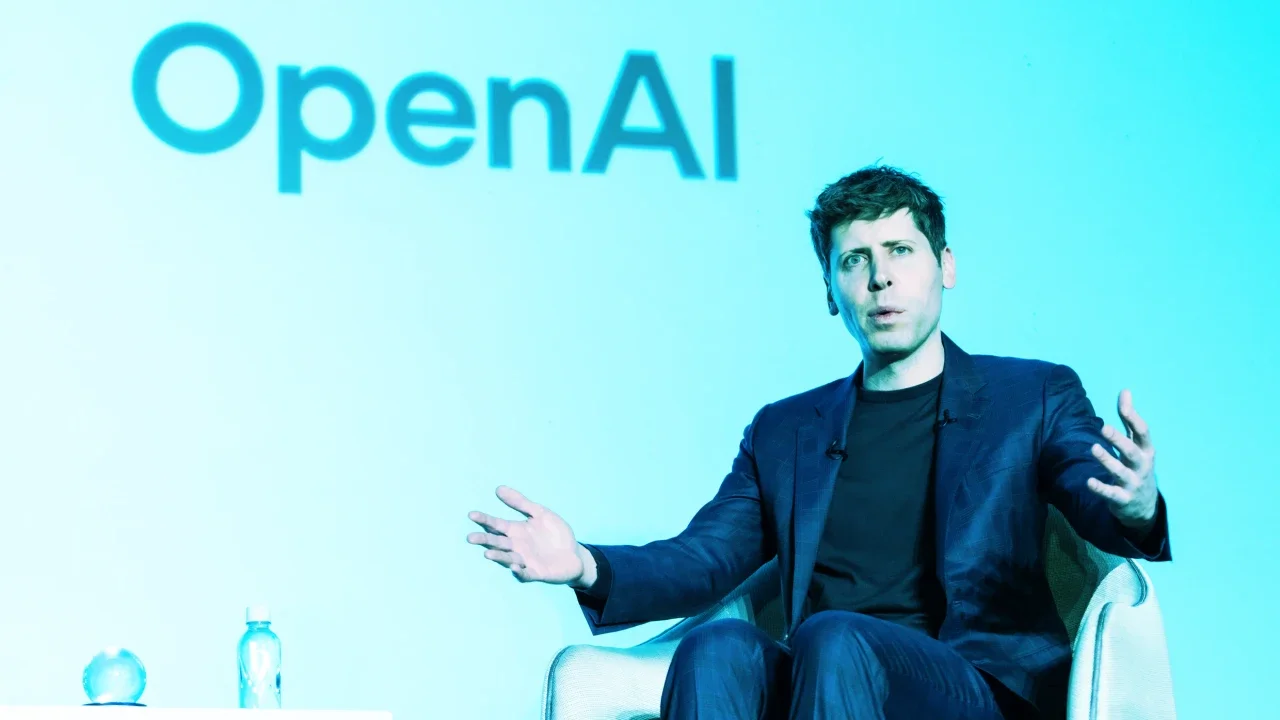
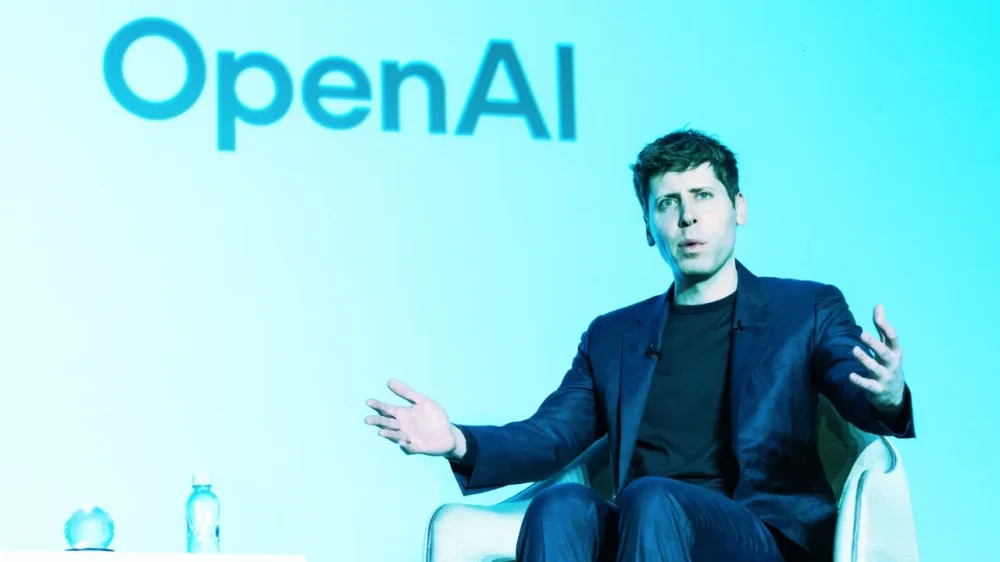
Could it be any clearer that Sam Altman intends for OpenAI to be a sprawling consumer tech company, not just an AI lab? His public comments certainly suggest as much. Today, The Verge reported that OpenAI has been working on an internal prototype of a social network that would let people share their AI-generated images. OpenAI began as a fairly rudderless little AI lab back in 2015. “We literally had no idea we were ever going to become a company—like, the plan was to put out research papers,” Altman said in a recent Stratechery interview. “But there was no product, there was no plan for a product, there was no revenue, there was no business model, there were no plans for those things.” ChatGPT changed everything. The AI chatbot took off like a rocket when it was quietly released to the public in late November 2022, soaring to 100 million users within weeks—faster than any consumer app in history. At the time, OpenAI was making some money by selling API access to its early models. But ChatGPT turned OpenAI into a consumer tech company. You simply don’t second-guess numbers like that. And the growth hasn’t stopped. “Something like 10% of the world uses our systems now a lot,” Altman said on April 11 at a TED event—a figure that implies OpenAI has around 800 million users. That’s why the company has been so busy adding new features and services to ChatGPT, now a household name. It’s added internet search, image generation, and deep research capabilities, with more surely on the way. In his Stratechery interview, Altman even floated the idea of OpenAI offering something other tech giants—Apple, Google, Meta—already provide: a single sign-on for the web. “[W]e have this idea that you sign in with your OpenAI account to anybody else that wants to integrate the API, and you can take your bundle of credits and your customized model and everything else anywhere you want to go,” Altman told Stratechery’s Ben Thompson. “And I think that’s a key part of us really being a great platform.” This vision ties neatly into Altman’s social network ambitions. Facebook parlayed its dominance into a single sign-on system that allowed it to follow users around the web, collecting data on the sites they visited and what they did there. OpenAI could similarly leverage a social network and single sign-on to gather valuable data to train future AI models. (OpenAI didn’t immediately respond to Fast Company‘s request for comment.) There are other signs of Altman’s ambition to broaden OpenAI’s scope—including hardware. The company is reportedly considering acquiring Io Products, a hardware startup cofounded by Altman and former Apple designer Jony Ive. The startup is developing a personal AI device designed to know all about the user and help with daily tasks. (Altman and OpenAI are also reportedly exploring designing their own AI chip, following in the footsteps of Amazon, Apple, and Google.) But much of OpenAI’s time and energy in the coming years will likely be spent growing its breakout product, ChatGPT, into a full-fledged AI-first tech platform. “I really believe in this product suite,” Altman told Thompson. “I think that if we execute really well, five years from now, we have a handful of multibillion user products.” View the full article
-
Google has announced the rollout of a new AI-powered search enhancement for Gmail, designed to help users find emails more quickly and efficiently. The update introduces a smarter sorting feature that surfaces the most relevant results first, rather than simply displaying emails in chronological order. According to Google, the upgraded search experience considers several factors such as the recency of emails, user engagement like most-clicked emails, and frequent contacts. The goal is to make it easier for users to locate important information in cluttered inboxes. “If you’ve ever struggled with finding information in your overflowing inbox, you’re not alone. That’s why Gmail is rolling out a smarter search feature powered by AI to show you the most relevant results, faster,” the company stated in its announcement. The new “most relevant” results view is currently being rolled out globally for users with personal Google accounts. It is available both on the web and in the official Gmail app for Android and iOS. Once the feature is available, users will be able to toggle between “most relevant” and “most recent” search result views. Google has also confirmed plans to expand the new search functionality to business account users in the future. The update reflects the company’s ongoing efforts to improve productivity tools through AI integration, streamlining the user experience across its suite of services. Image: Google This article, "Google Enhances Gmail Search With Smarter AI-Powered Results" was first published on Small Business Trends View the full article
-
Google has announced the rollout of a new AI-powered search enhancement for Gmail, designed to help users find emails more quickly and efficiently. The update introduces a smarter sorting feature that surfaces the most relevant results first, rather than simply displaying emails in chronological order. According to Google, the upgraded search experience considers several factors such as the recency of emails, user engagement like most-clicked emails, and frequent contacts. The goal is to make it easier for users to locate important information in cluttered inboxes. “If you’ve ever struggled with finding information in your overflowing inbox, you’re not alone. That’s why Gmail is rolling out a smarter search feature powered by AI to show you the most relevant results, faster,” the company stated in its announcement. The new “most relevant” results view is currently being rolled out globally for users with personal Google accounts. It is available both on the web and in the official Gmail app for Android and iOS. Once the feature is available, users will be able to toggle between “most relevant” and “most recent” search result views. Google has also confirmed plans to expand the new search functionality to business account users in the future. The update reflects the company’s ongoing efforts to improve productivity tools through AI integration, streamlining the user experience across its suite of services. Image: Google This article, "Google Enhances Gmail Search With Smarter AI-Powered Results" was first published on Small Business Trends View the full article
-
Mark Zuckerberg’s marathon stint on the stand in the Federal Trade Commission’s (FTC) antitrust trial against Meta—the parent company of WhatsApp, Instagram, and Facebook—has been eye-opening for several reasons. For hours, Zuckerberg has defended his company against accusations that it stifles competition by acquiring rivals just as they begin to pose a threat. A 2012 email chain presented by the FTC seems to tell its own story. In it, Zuckerberg discusses acquiring Path and Instagram, both emerging competitors at the time. “The businesses are nascent but the networks are established, the brands are already meaningful and if they grow to a large scale they could be very disruptive to us,” Zuckerberg wrote, proposing Facebook buy them. (In court this week, the Meta CEO denied that he was specifically referencing Instagram or Path, claiming he was speaking more generally about competitors.) Critics say the email chain reflects Meta’s broader strategy—something Zuckerberg himself outlined in a subsequent 2012 email: “Even if some new competitors springs [sic] up, buying Instagram, Path, Foursquare, etc now will give us a year or more to integrate their dynamics before anyone can get close to their scale again. Within that time, if we incorporate the social mechanics they were using, those new products won’t get much traction since we’ll already have their mechanics deployed at scale.” Meta declined to comment on the record to Fast Company about the similarities between its features and those of its competitors. In court, the company’s attorney described the FTC’s case as a “grab bag” of arguments “at war with the facts and at war with the law.” Of course, borrowing ideas from competitors—from broad concepts to specific features—isn’t unusual in the social media world. But while many companies do it, Meta has often moved faster and more aggressively than most. “Meta’s copycat strategy isn’t a secret,” says social media expert Matt Navarra. “It’s a business model. Zuckerberg’s copy-paste playbook is often mocked and imitated, but has been hugely successful and made Meta into the global superpower of social media that it is today.” Here are eight notable examples from the past decade: 2016: Instagram Stories (following Snapchat) Snapchat changed the social media landscape in October 2013 with its Stories feature, allowing users to post photos or videos that disappeared after 24 hours. The feature quickly became popular—which may explain why, in 2016, Instagram (owned by Facebook) introduced its own version of Stories. 2018: Lasso (following TikTok) By 2018, TikTok was gaining momentum among younger users—a demographic Facebook was struggling to retain. That November, Facebook launched Lasso, a standalone app for short-form, entertaining videos. Leaked audio later revealed Zuckerberg’s strategy: launch Lasso in markets where TikTok hadn’t yet taken hold. (Lasso shut down in 2020 after failing to gain traction.) 2019: Facebook Dating (following Tinder and others) By the late 2010s, dating apps like Tinder had become mainstream. In 2019, Facebook launched Facebook Dating, letting users browse profiles and swipe to match—much like the established players in the space. 2020: Hobbi (following Pinterest) Facebook’s internal R&D team released Hobbi, an app allowing users to organize and share photos of their hobbies—a clear nod to Pinterest. Tech media described it as “an experiment in short-form content creation around personal projects, hobbies and other Pinterest-y content.” Hobbi lasted only a few months, with fewer than 10,000 reported downloads. 2020: Reels (following TikTok) After the failure of Lasso, Facebook took another shot at competing with TikTok by launching Reels. In fairness, YouTube also responded to TikTok’s rise with its own version, YouTube Shorts. Still, critics have pointed to the nearly identical interfaces across these platforms as evidence of big tech’s copycat culture. 2020: Neighborhoods (following Nextdoor) In 2020, amid the COVID-19 pandemic’s surge in local community engagement, Meta launched Neighborhoods—a feature allowing users to post content visible only within their local area. Social media experts dubbed it a “Nextdoor clone.” The service shut down after about two years. 2021: Bulletin (following Substack) As newsletters surged in popularity thanks to platforms like Substack, Meta quickly followed suit with its own newsletter tool, Bulletin. The service attracted big-name writers, including Malcolm Gladwell. But Bulletin was short-lived, shutting down in early 2023. 2021: Live Audio Rooms (following Clubhouse) Clubhouse pioneered the rise of social audio during the pandemic, with Twitter Spaces quickly following. By mid-2021, Meta launched Live Audio Rooms, its own real-time voice chat feature. It, too, was shut down by the end of 2022. View the full article

-
Taxpayers calling the IRS for help processing their taxes this filing season may find it harder than normal to get someone on the phone, experts say, a problem that is only expected to get worse next year with staffing cuts that could slash the workforce considerably. For this year, data of tax return processing times shows numbers largely in line with those from last year. IRS employees involved in the 2025 tax season were not allowed to accept a buyout offer from the The President administration until after the taxpayer filing deadline of April 15, though thousands of probationary workers were laid off earlier this year. Legal experts in tax compliance say the long wait times are going to increase as more buyouts and layoffs take effect. Eric Santos, the executive director of the Georgia Tax Clinic, which provides free tax law services to low-income taxpayers, says wait times for the IRS’ phone line are markedly longer than usual and IRS staff are overwhelmed with the increase in work. The IRS staff “basically tell us they don’t have time to look at certain cases,” Santos said. “The work is getting spread across fewer and fewer people.” The reduction in workers — which may end up being nearly half the entire IRS workforce — is part of the The President administration’s efforts to shrink the size of the federal workforce through billionaire Elon Musk’s Department of Government Efficiency by closing agencies, laying off nearly all probationary employees who have not yet gained civil service protection and offering buyouts to almost all federal employees through a “deferred resignation program.” Earlier this month, the IRS began layoffs that could end up cutting as many as 20,000 staffers — up to 25% of the total workforce. The roughly 7,000 probationary IRS workers who were laid off beginning in February were recently ordered to be reinstated by a federal judge, though it’s unclear whether those workers have been called back into work. Comparing figures through the first week of April from 2024 and 2025, 101.4 million returns were processed this year compared to 101.8 million tax returns last year. Refunds are up, with 67.7 million issued this year compared with 66.7 million in 2024. But Santos and others worry that the 2026 filing season could be negatively impacted by the loss of thousands of additional tax collection workers who are expected to exit the agency through planned layoffs and buyouts. “I don’t see how they’re going to keep up with tax filing season next year,” Santos said. “I think its a fair question to ask now.” A Treasury spokesperson who was not authorized to speak publicly and spoke to The Associated Press on the condition of anonymity said in a statement that IRS staffing reductions were part of other improvements the agency is taking to be more efficient and improve service. Sakinah Tillman, director of the University of the District of Columbia Tax Clinic, has not seen a delay in processing refunds this year but has seen delays in reaching the IRS by phone. She worries that the phone delays could hurt clients going through collections who are trying to settle their debts. “What happens when clients try to become compliant?” she asked. “Or when people who are willing and able to pay but they just can’t get someone on the phone? Former IRS Commissioner John Koskinen told the AP that even in a normal year the IRS’ responsiveness slows the further into tax season it gets. “Next year, if they cut 10,000 or 20,000 employees, they’re headed back to really bad taxpayer service on the phone,” he said. “And the taxpayer priority line will become an oxymoron.” —Fatima Hussein, Associated Press View the full article

-
Warning comes as the university rejects the administration’s demands to overhaul its governanceView the full article
-
Last week, Apple announced it would cancel one of the first shows that it had ever green lit for its Apple TV Plus streaming service: Mythic Quest, a show that first launched on the tech giant’s then-fledgling streaming service in February 2020. The show, which followed the escapades of an MMORPG video game developer, was axed after the last episode of its fourth season, which aired on March 26. Like many season finales, the last episode of Mythic Quest ended on a cliffhanger, so when viewers learned of its cancellation, they assumed that they would never get any resolution to the storyline and characters that they had followed for four seasons. Yet then Apple did something unexpected: It allowed the show producers to reedit the season four ending to give closure to the storyline—and fans. Streaming TV is littered with unresolved cliffhangers If there’s one thing subscribers to streaming services have come to accept, it’s that they shouldn’t get too connected to a new series. Why? Because you never know if the streamer is going to ax it after just a season or two. One streamer in particular—Netflix—is notorious for doing this. The streaming giant will often premiere new series to see what sticks with audiences. But even if those series are critically and commercially well-received, that’s no guarantee that viewership will be high enough to clear whatever bar Netflix uses to justify a next season. Often, it isn’t—and this has left a slew of abruptly canceled shows that ended on cliffhangers and left fans unsure of how things would have ended. Such shows include the critically acclaimed zombie series Black Summer, the horror series Archive 81, the sitcom Space Force, and the science fiction show 1899, just to name a few. All had seasons that ended on major cliffhangers—only for the series to be canceled shortly after. To be fair, Netflix isn’t the only streamer that does this. HBO Max and Amazon Prime are guilty of this, too. And, of course, before the world of streaming, network television was also guilty of canceling shows on cliffhangers, though not to the degree that streamers appear to be willing to do it. Historically, networks were always more generous with giving shows the time they needed to find an audience—even if that took three or four seasons. But what is unheard of is a streamer allowing the creatives of a canceled series to go back and reedit the already-aired last episode so that the show and its fans can have some proper closure. Yet that’s precisely what Apple has now done. ‘Mythic Quest’ fans get closure Last Friday, Mythic Quest’s creators and executive producers, Megan Ganz, David Hornsby, and Rob McElhenney, announced that Apple has given them permission to reedit the original season four cliffhanger to provide closure to the storyline, characters, and fans. “Endings are hard. But after four incredible seasons, Mythic Quest is coming to a close. We’re so proud of the show and the world we got to build—and deeply grateful to every cast and crew member who poured their heart into it. To all our fans, thank you for playing with us. To our partners at Apple, thank you for believing in the vision from the very beginning,” the trio said in a statement (via Deadline). David HornsbyDanny PudiJessie EnnisImani HakimAshly Burch But they continued: “Because endings are hard, with Apple’s blessing we made one final update to our last episode—so we could say goodbye, instead of just game over.” That “final update” to the show’s last episode is a reedit of the series four finale, titled “Heaven and Hell.” At this time, it is unknown how significantly the final episode has been reedited, but it will be released on Apple TV Plus later this week. Probably not a sign of things to come While fans of the show will no doubt be happy that at least they will get some closure to the storyline and characters that they have followed for years, it’s unlikely that Apple’s move represents the beginning of a seismic shift in the streaming industry. It’s not known why Apple has decided to allow the show’s creators to go back and edit the last episode—or what the terms of the deal were. Mythic Quest’s creators’ statement suggests that no new scenes were shot, and instead, they accomplished the reedit simply by using existing footage they had already shot. Fast Company has reached out to Apple for comment. But realistically, we probably shouldn’t expect other streamers to follow suit. Streaming services cancel dozens of shows each year, and most shows that suddenly get canceled likely wouldn’t have enough unused footage to reedit a final cliffhanger episode into something that provides a cohesive amount of closure. It’s also unlikely that a streamer would be willing to pay for the creatives and star to go back out to shoot new footage to provide such closure, given that they’ve already canceled the show and thus didn’t see the value in it to their bottom line. However, what will be interesting to see is how Apple handles the reedited episode. It is unknown whether Apple will keep the originally streamed season four finale on Apple TV Plus alongside the new edit of the episode or simply remove the original entirely. Either way, fans of Mythic Quest will be happy that the show is getting the concrete ending that all shows deserve. View the full article

-
We may earn a commission from links on this page. Deal pricing and availability subject to change after time of publication. Meta has made virtual reality (VR) accessible to many more people, offering good VR headsets for much cheaper than the competition. Right now, the 128GB Meta Quest 3S Batman: Arkham Shadow Bundle is on sale for $269 (originally $299.99), the lowest price it has been, according to price-tracking tools. You can double the storage for $369 (originally $399.99); that version has dropped to $350 in the past. The bundle includes the Batman game (with a list price of $49.99) and a three-month trial subscription to the Meta Quest+ service that's normally $7.99 a month. There are also other bundles available with other Meta accessories. Get Batman: Arkham Shadow and a 3-Month Trial of Meta Quest+ Included — All-in-One Headset Meta Quest 3S 128GB $269.00 at Amazon /images/amazon-prime.svg $299.99 Save $30.99 Get Deal Get Deal $269.00 at Amazon /images/amazon-prime.svg $299.99 Save $30.99 Get Batman: Arkham Shadow and a 3-Month Trial of Meta Quest+ Included — All-in-One Headset Meta Quest 3S 256GB $369.00 at Amazon /images/amazon-prime.svg $399.99 Save $30.99 Get Deal Get Deal $369.00 at Amazon /images/amazon-prime.svg $399.99 Save $30.99 SEE -1 MORE It's true, the Meta Quest 3 has better graphics, but it costs substantially more (currently $499.99) than the 3S version. Lifehacker staff writer Stephen Johnson tested both VR headsets to decide which of the two is better, and the Meta Quest 3S was his winner—you can read a more in-depth review of the Quest 3S here. There just isn't enough of a difference between the two models to justify the additional cost, with the Quest 3S's graphics looking very close to the 3 and running the same games and apps. The Meta Quest 3S has a Snapdragon XR2 Gen 2 processor, 8GB of RAM, a display resolution of 1,832 by 1,920 (per eye), and a refresh rate of 120Hz. Once you put them on, the horizontal field of view is 96 degrees, and the vertical view is 90 degrees. The audio is stereo, which is nice, and the speakers are compatible with 3D spatial audio. When it comes to battery life, expect up to two and a half hours of juice before having to recharge (expect it to take about two hours for a full charge). View the full article
-
Pet owners know finding a good veterinarian is hard. But in much of the country, finding a vet at all is increasingly tough. A new report released by veterinary telemedicine company Dutch, found that around 38% or 129 million Americans may be living in a veterinary care desert, meaning they don’t have accessible, affordable, or available care for their pets. Dutch’s State of Online Veterinary Care report found that 22% counties nationwide have zero vets per 1,000 households, and pet care is particularly hard to come by in parts of California, Florida, Illinois, New York, and Texas. It’s an issue founder and CEO Joe Spector says likely won’t improve quickly. “There are around 34 veterinary schools in the United States, while there’s almost 400 medical schools,” says Spector, a cofounder of telehealth service Hims. “We just don’t produce that many veterinarians and the veterinarians we do produce drop out [from burnout].” Spector started Dutch because he saw an opportunity for a vet telehealth approach to help address gaps in care. Launched in 2021, Dutch connects pet owners from anywhere in the country to licensed veterinarians over video call and chat for 150 conditions for dogs and cats. With a membership program that allows unlimited consultations starting at $11 a month, the company says it’s seen 40,000 patients since launch, and can save pet owners $700 per year. “These are the folks who otherwise would not see a veterinarian otherwise, because we’ve made it far more affordable,” he says. Cost aside, some veterinary organizations are hesitant to embrace telehealth for pets. The American Veterinary Medical Association—a nonprofit organization representing over 108,000 stakeholders involved with the veterinary profession—says because most telehealth visits are for acute conditions, they aren’t likely to address issues that will eventually require an in-person vet visit. “Not surprisingly, remote areas without a veterinarian often also lack reliable internet access, making the use of telemedicine impractical,” the AVMA says on its site about telehealth vet care. “Mobile veterinary services are a better option not only in terms of access, but also quality of care.” Spector, echoing Dutch’s report, asserts that 90% of veterinary care can be addressed virtually, and notes the company offers additional diagnostic tools for pet owners. “Between overnight testing kits . . . and what we’re able to examine on video, there’s actually a lot that we can do via telemedicine to at least establish that initial treatment plan.” In the four years that Dutch has been active, the company has hired vets in all 50 states and completed more than 40,000 visits. Though Dutch vets can only write prescriptions for patients in 34 states, Spector has been working with state legislators to increase that number. “Change in any field is hard” he says. “But if we can look at human telemedicine, I think at the end of the day we can see . . . how telemedicine has simply become another useful tool that we can use. We don’t have to use it, but it’s yet another option that makes care more affordable and accessible.” View the full article

-
This post was written by Alison Green and published on Ask a Manager. A reader writes: I work in a department of nine people. We all get along well, but I’m struggling with how to handle my frustrations with my colleague, Marrgo. Margo is possibly the most well-intentioned person I’ve ever met, but she has the infuriating habit of bringing every conversation back to herself to explain how she understands or has been through the same thing. This week, the transmission in my car died. When I was lamenting to the group that I was now facing the financial hardship of either repairing it or buying a new car, Margo told me, “I get it. I just had to buy brand new tires for my car.” A month ago, a colleague’s father passed away and Margo told her, “I’m sorry. I know just how you feel. My dad had Covid last year.” He had a mild case and recovered quickly. When a colleague was dealing with pain related to her cancer treatments, Margo expressed her concern and then shared that she totally got it because she has foot problems. The parents in the group try not to talk too much about our children because not everyone in the department is a parent, but when the subject comes up, Margo knows exactly what we’re going through because she has a nephew … who lives on the other side of the country. Margo truly doesn’t mean harm with these statements but the way she minimizes others’ ordeals by comparing them to her own is frustrating. Is there a way to politely let her know that simply saying she’s sorry is preferable to bringing everything back to herself? I would love to know whether Margo is trying to one-up people — or at least equate her struggles to their own — or whether she’s truly trying to empathize and just doing a terrible job of it. Either way, this is the kind of feedback a manager is best positioned to address. That doesn’t mean you can’t try it yourself, but as not her manager you might be better off just addressing it in the moment when it’s particularly egregious. If she compares a stubbed toe to a coworker having cancer treatments, there’s no reason you can’t say, “I don’t think those are really comparable.” Also, if you have a pretty good rapport with her, you might be able to take her aside privately and say something like, “I know you didn’t mean it this way, but it sounded like you were comparing your stubbed toe to Jane’s cancer, and a couple of days ago you compared a parent with a mild case of Covid to Falcon’s parent who died. I know you didn’t mean to minimize either situation, but I don’t think those comments are landing the way you intended. I wanted to mention it since I know you’d never want to hurt someone’s feelings.” Will it work? Maybe, maybe not. If you say the above and nothing changes, you probably just need to decide that this is what Margo does and internally roll your eyes when it happens (or hell, bluntly reply “not the same thing!” when you’re inspired to). But it’s worth a shot, and if she’s really as well-intentioned as you say, she might be grateful for the heads-up. View the full article
-
Hertz is notifying customers that hackers may have stolen personal information like credit card details and social security numbers during a data breach on one of its vendors. In a notice on its website, Hertz said an unauthorized third-party stole data during a cyberattack on Cleo Communications’ file-transfer platform between October 2024 and December 2024. Hertz, which also owns the Dollar and Thrifty rental brands, said it confirmed the attack on Feb. 10 and concluded April 2 that the information exposed by the breach could have included customers’ names, contact information, dates of birth, credit card information, driver’s license information, and information related to workers’ compensation claims. It added that a small number of customers may have had their Social Security or other government identification numbers, passport information, Medicare or Medicaid ID, or injury-related information associated with vehicle accident claims impacted by the event. “While Hertz is not aware of any misuse of personal information for fraudulent purposes in connection with the event, we encourage potentially impacted individuals, as a best practice, to remain vigilant to the possibility of fraud or errors by reviewing account statements and monitoring free credit reports for any unauthorized activity and reporting any such activity,” the company said in its notice. It’s unclear exactly how many customers have been impacted. Hertz disclosed the breach to customers in several U.S. states and other countries, including customers in Australia, Canada, the European Union, New Zealand, and the United Kingdom. Cleo was hit by a mass-hacking campaign by a large Russian-linked ransomware gang last October. TechCrunch reported that Cleo had more than 4,200 customers, including retail giant New Balance. Hertz said at the time that it had “no evidence” that Hertz data or systems were affected. Cyberattacks are becoming increasingly sophisticated and data-breaches are hitting historic levels, according to the World Economic Forum’s Global Cybersecurity Outlook and the Identity Theft Resource Center, respectively. Hertz said that potentially impacted U.S. customers can sign up for identity monitoring services through Kroll for two years for at no cost. View the full article

-
Regulator to launch a review into ensure energy system costs are shared fairlyView the full article
-
Heads up: If you've rented a car from Hertz, your data may have been exposed in a data breach. While Hertz itself was not attacked, affected customers had sensitive data leaked—including, in some cases, Social Security numbers. What happened with Hertz?This week, Hertz posted a "Notice of Data Incident" on its website, informing customers about a 2024 episode involving Cleo Communications. Cleo operates a file transfer platform that Hertz uses for "limited purposes." Despite those limited purposes, Hertz confirmed that actors exploited zero-day security flaws in Cleo's network and accessed Hertz customer data. It appears actors accessed this data in both October and December of last year. Following an analysis of the affected data on April 2, Hertz now says the following user data was impacted in this breach: customer names, contact information, dates of birth, credit card information, driver’s license information, as well as workers’ compensation claims data. In some cases, actors accessed even more sensitive data, including government identification numbers (including Social Security numbers), passport information, Medicare and Medicaid IDs, and informations about injuries via vehicle accident claims. Hertz says only "a very small number of individuals" are impacted by this latter category of information, but it's a serious breach nonetheless. Hertz says it has reported the situation to law enforcement, and is reaching out to regulators as well. The company says Cleo launched an investigation, and patched the security flaws that lead to the breach in the first place—though that will likely not be of much comfort to affected customers. According to TechCrunch, Hertz contacted several U.S. states, notably California and Maine, about the data incident. The company said that at least 3,400 customers in Maine were impacted by the breach, but stopped short of naming the total number of affected customers. It seems the data breach affects users around the world, too. In addition to the U.S., Hertz posted its announcement on its websites in Australia, Canada, the EU, New Zealand, and the UK. What should I do if my Hertz data was breached? Hertz maintains that this user data has not been used to commit fraud, but that doesn't mean it won't happen. Bad actors can use the information leaked in this breach to steal your identity, open bank accounts, and take out credit cards and loans in your name. As such, you should take steps to protect your identity. The company is offering two years of Kroll identity monitoring and dark web monitoring services to impacted customers for free. Accept the offer: A service like Kroll will keep an eye out for any fraud associated with your data, and help protect you from the repercussions. While Kroll will do a lot of the work for you, there's more you can do here to keep yourself protected. For starters, you can obtain a free credit report from Equifax, Experian, and TransUnion once a year. Since each is independent, you can stagger your requests to effectively check your full credit once every four months. If you have been involved in this security incident (or any one like it) you can also put a freeze on your credit to ensure no one can access your report for any reason. View the full article
-
While no additional details were disclosed, the housing regulator's inspector general typically probes cases which are prosecuted by the Department of Justice. View the full article
-
New research suggests 90% of B2B buyers click through to cited sources. Here's how this could reshape your approach to content visibility. The post Google AI Overview Study: 90% Of B2B Buyers Click On Citations appeared first on Search Engine Journal. View the full article
-
Google is rolling out a new way to generate videos, as well as animate existing images, using AI. The catch? These videos are really short, and you have to pay to play. On Tuesday, Google announced that Gemini Advanced and Google One AI Premium users can now make AI-generated videos using the company's Veo 2 video model. Google originally unveiled this model back in December, touting the model's improved understanding of real-world physics, nuanced human emotions, and ability to generate specific types of shots (e.g. low angle, close-up, shallow depth of field). While Veo 2 is capable of generating 4K videos at several minutes in length, that's not the experience Gemini Advanced users will get here. Instead, you'll be able to make eight-second videos at 720p—quite the limitation. Speaking of limits, there's a cap on the number of videos you can generate with Veo 2 each month, though Google isn't disclosing that publicly. Instead, the company says it'll warn you when you're approaching your limit, which doesn't seem like a particularly transparent system. While Gemini Advanced users will be able to use Veo 2 directly in Gemini, Google One AI Premium subscribers also have access to the model in Whisk—the company's AI media generator. As part of the Veo 2 rollout, Google is announcing Whisk Animate, which uses Veo 2 to animate an image you generated with Whisk. How to generate Veo 2 videos with Gemini AdvancedIf you pay the $20 per month for Gemini, Veo 2 is rolling out right now. To start, open Google's chatbot, then pick "Veo 2" from the model dropdown. From here, prompt the AI like you would normally, only this time with a specific video in mind. While Google encourages users to describe things like short stories for Veo 2 to work with, remember that you only get eight seconds of video generation max. That's quite the short story. If you don't see Veo 2 as an option, sit tight. Google says the full rollout could take a few weeks, so not all Gemini Advanced users will be able to access it today. How to animate a Whisk image with Veo 2 Credit: Google Google One AI Premium subscribers can give this one a shot over at labs.google/whisk. You can start by generating an image with Whisk as per usual—by prompting Whisk with whatever you want, or letting the AI randomly pick a generation for you. Once your image generates, you'll notice a new "ANIMATE" option at the top. Click this, then prompt the AI with how you'd like it to animate the image. What's the point of this?I don't have a subscription, so I can't try out Veo 2 in any capacity. But according to Google's demos, the model does a decent job of adhering to the prompts. For example, Google showed off how four different versions of a man eating ice cream—including 3D art, pixel art, illustration, and realistic generation—could be animated with a single prompt. That said, it's far from perfect: Each of these demonstrates the hallmark signs of AI-generated video, including visual glitches and elements morphing into one another. Some of the results here are also half-baked: The 3D art animation, for example, has the man bring the ice cream to his mouth, but never actually eat it, while the realistic generation shows him eating from his fingers, even though there is no ice cream there. There's a novelty to the feature, sure: You can generate a brief animation of any image you want—AI-generated or not. But I struggle to imagine the practical and widespread application here, especially since this feature is locked behind Google's $20 per month paywall. View the full article
-
Medical devices like J&J’s surgical robots have already been hit by the new US charges View the full article
-
OpenAI is working on its own X-like social media network, the Verge reported on Tuesday, citing multiple sources familiar with the matter. The project is still in early stages and there is an internal prototype focused on ChatGPT’s image generation that contains a social feed, the report said. OpenAI did not immediately respond to a Reuters request for comment. OpenAI CEO Sam Altman has been privately asking outsiders for feedback about the project, the Verge said, adding that it was unclear whether the company plans to release the social network as a stand-alone application or integrate it into ChatGPT. —Deborah Sophia, Reuters View the full article

-
Advertisers are receiving step-by-step guidance emails from Google Ads aimed at improving campaign performance over a three-month period. The details. Google Ads is sending emails with the subject line “Personalised action plan for growth” to business advertisers, according to an X post from Govind Singh Panwar. The email contains: A three-month structured improvement plan delivered through weekly emails. A progress tracker showing completed and pending actions. Clear calls to action focused on ad strength improvements. Claims that improving ad strength from “Poor” to “Excellent” results in an average 12% increase in conversions. AI suggestions. The guidance pushes advertisers toward Google’s preferred strategies, including: Enabling “personalized recommendations” (Google’s AI suggestions). Adding broad-match keywords (which typically increase ad spend). Creating Performance Max campaigns (Google’s black-box AI campaign type). Why we care. The email campaign essentially represents Google’s effort to standardize advertiser behavior while framing it as personalized guidance. These “personalized” plans appear somewhat templated, potentially leading to more homogenized advertising approaches across competitors. However, as more advertisers follow these guidelines, those who don’t may see performance impacts as Google’s algorithms increasingly favor accounts aligned with their recommended practices. Bottom line. While positioned as personalized guidance, the recommendations follow Google’s standard playbook for increasing advertiser adoption of its automated solutions and broader targeting options, which typically require larger budgets. View the full article
-
The President’s delight in doing whatever he wishes in the moment is incompatible with stability and sustained dynamismView the full article
-
Ultra-wideband (UWB) is possibly the most underrated and underreported RF technology of recent times. Find out why. The post Enterprise Wi-Fi: Ultra-wideband (UWB) poised to power a raft of innovative use cases, Qorvo says appeared first on Wi-Fi NOW Global. View the full article
-
We may earn a commission from links on this page. Every person's definition of funny is a little different, which is why it’s cool that Netflix has an impressive variety of movies representing a broad genre. If you’re looking for something to make you laugh, you can choose a smart, critically-acclaimed classic or a brainless comedy that critics hated. High-minded satire or expertly timed farts: Many of the best comedies blend highbrow and lowbrow, but, at the end of the day, the best comedy is the one that makes you laugh the most. Barbie (2023) The movie that absolutely slayed the zeitgeist in 2023 is also, perhaps surprisingly, a ton of fun. Greta Gerwig's Mattel-based fantasy includes some trenchant commentary, but also incredibly funny sequences involving horses, dream houses, and the skills required to be good at beach. You can stream Barbie here. Beverly Hills Cop: Axel F (2024) Though it's not necessarily saying an awful lot given a couple of lackluster sequels, the fourth Beverly Hills Cop movie is almost certainly as good as the series has been since the first movie way back in 1984. Here, Axel Foley (Eddie Murphy, of course) returns to SoCal when his old partner (Judge Reinhold) warns Foley that is estranged daughter (Taylour Paige), a defense attorney who went up against the wrong people, is in danger. Reinhold, John Ashton, Paul Reiser, and Bronson Pinchot all return from the original film, joined by Axel's new partner played by Joseph Gordon-Levitt. As legacy sequels go, this one's better than it has a right to be. You can stream Axel F here. Friday (1995) Craig and Smokey (Ice Cube and Chris Tucker) are just a couple of guys hanging out hoping for something to do. They should've been careful what they wished for, as this one impossible Friday will see them involved with burglaries, shoot-outs, and excessively horny pastors. It's not always in the best taste but, as in the best buddy/stoner comedies, it's all in goofy fun. You can stream Friday here. Bad Trip (2021) I’m not a fan of hidden camera-style comedy, which often feels mean-spirited and superior in mocking people for the crime of not being in on the joke. Bad Trip, with Eric André, Lil Rel Howery, and Tiffany Haddish, makes a couple of innovations to the form: it adds an overarching narrative and, more importantly, it approaches everything with heart. In one of the best sequences, André’s Chris gets some love advice from an older guy on a bench that inspires him to burst into song, a musical moment that takes him across the street and into a nearby mall—the kind of thing that happens a million times in the movies, but here the startled, annoyed, and confused reactions make perfect sense. The movie even ends with footage of the pranked people learning that they're in a movie, and their delight is funny in and of itself. You can stream Bad Trip here. The Addams Family (1991) Director Barry Sonnenfeld and company have a ton of fun in expanding Addams Family lore into a full-blown tribute to weirdness—just when we needed it most. Anjelica Huston, Raul Julia, Christopher Lloyd, and Christina Ricci head the stacked cast. The sequel is even better. You can stream The Addams Family here. We Have a Ghost (2023) Christopher Landon, writer/director behind innovative comedy-horror movies like Happy Death Day and Freaky (and the next Scream movie), helms this similarly fun but more family-friendly entry. Anthony Mackie is in the lead as Frank Presley, who, with his family, buys a cheap fixer-upper, only for his son Kevin (Jahi Winston) to discover a ghost (played by David Harbour) unliving in the attic. So far, familiar territory, but Kevin wants to help their new ghost while dad only wants to make money—and so, their ghost goes viral. You can stream We Have a Ghost here. The Money Pit (1986) Though slightly less known than other comedies in the '80s pantheon, this very loose remake of Mr. Blandings Builds His Dream House is filled with impressively constructed sight gags carried off by leads Tom Hanks and Shelley Long. In a bind, the young boyfriend-girlfriend couple learn of a mansion for sale for an absolute pittance (well, $200,000, which was real money in 1986). Even though it's not entirely in their price range, it seems too good to be true. Which, of course, it absolutely is, and their efforts to renovate the place themselves push their relationship well past the breaking point. It's all pretty relatable if you've ever owned a house of any size. You can stream The Money Pit here. Ted (2012) Seth MacFarlane's stoner buddy comedy has no business being as funny nor as charming as it is, but here we are. Mark Wahlberg plays John Bennett, whose childhood wish for his favorite teddy bear to come to life came true, and it's no secret: The whole world knows about Ted (voiced by MacFarlane). John's girlfriend Lori (Mile Kunis) starts to feel that John spends way too much time smoking pot with his stuffed best friend—we've seen that plot before, but it's cleverly done here, and the movie has just enough heart to sell the stakes. You can stream Ted here. Pee-Wee’s Big Holiday (2016) This genuinely sweet Pee-Wee movie wound up being Paul Reubens’s swan song for the indelible character. If we have to say goodbye, there couldn’t be a send-off than a movie that begins with a joyous, Rube Goldberg-inspired intro that wouldn’t feel out of place in the Playhouse, and sends Pee-Wee off on a journey across an America that could only exist in Reubens’ imagination. With Joe Manganiello as his companion and quasi-romantic interest, it also feels like a real exploration of the character that never loses its sense of whimsy and fun. You can stream Pee-Wee's Big Holiday here. Kuch Kuch Hota Hai (1998) One of Bollywood’s most beloved rom-coms. Shah Rukh Khan’s Rahul Khanna has had little on his mind but taking care of his daughter, Anjali, for the eight years since her mother died. Anjali’s mom left behind letters for her daughter, one to be read each year on her birthday, and when she comes to the final one, learns that her dad was very nearly in a relationship with a different woman when he was in college. Naturally (under romantic comedy rules), Anjali decides that her dad needs a girlfriend and that she’s going to hook him up with his old potential flame. The second half of the film gets a bit more serious, but the goofy complications of the earlier part of the film are frequently very funny in the way that only ‘90s rom-coms can be. You can stream Kuch Kuch Hota Hai here. Smokey and the Bandit (1977) A rarely equalled road movie full of fast cars and bootleg beer, Smokey stars Burt Reynolds as a driver running interference for a truck running 400 cases of Coors from Texarkana to Atlanta. In his 1977 Pontiac Trans Am, he's dodging Sheriff Buford T. Justice (Jackie Gleason), while kicking off an unlikely romance with runaway bride Carrie (Sally Field). A classic blend of comedy and fast-driving action. You can stream Smokey and the Bandit here. 50 First Dates (2004) It's not the kind of movie that was ever going to win Oscars, but this pairing of Drew Barrymore and Adam Sandler (following The Wedding Singer) did similarly well at the box office, riding on the charms of its two leads. This one has a premise that's equal parts brilliant, goofy, and offensive, as it involves a young teacher with a type of amnesia that resets her short-term memory each day. At first, the necessarily short-term nature of their relationship is appealing to the commitment-phobic marine veterinarian who falls for her, but eventually he vows to win her over anew each day. You can stream 50 First Dates here. Bad Words (2013) Jason Bateman's directorial debut is an acerbic, wonderfully nasty comedy that plays as a parody of any of those cute movies where an adult bonds with a kid. Here, Bateman plays way against type as Guy Trilby, who enters a kids' spelling bee on a technicality: Since he never graduated eighth grade, he's still eligible. He eventually bonds with one of his competitors (Rohan Chand) after raiding the kid's hotel mini-bar, teaching him how to steal and drink over an evening hanging out. There's a bigger mission in Guy's determination to go far in the competition, we ultimately learn, but it doesn't make him a nicer person. You can stream Bad Words here. She's Gotta Have It (1986) In a very narrow sense, Spike Lee’s 1986 debut makes the case that Black characters (and audiences) have as much claim to the young adult sex comedy genre as anyone else—but Lee has never been an imitator, and She’s Gotta Have It adds a sexual frankness that feels particularly innovative and forward-thinking. Like many 80s-era films that tackle sexuality, there are disturbing moments here that place an asterisk on the film’s reputation, but it’s still a daring, smart, and often funny debut from one of America’s most important directors. You can stream She's Gotta Have It here. Do Revenge (2022) Camila Mendes and Maya Hawke star in this dark teen comedy, loosely based on Hitchcock’s Strangers on a Train, that also takes aim at the teen comedies of yore. Think Scream, but for fans of She’s All That and Mean Girls. That’s a lot of references, I know, but the movie is filled with them—mostly for the better. And even still, the comedy is biting enough that it stands on its own among classics of the “high school is hell” genre. You can stream Do Revenge here. Dolemite is My Name (2019) Eddie Murphy gives one of the best performances of his career in this take on real-life comedian Rudy Ray Moore from Hustle & Flow director Craig Brewer. Moore was a stand-up (also a singer, actor, producer, and rap pioneer) who decided to take his popular pimp character Dolemite to the big screen, leading to a trilogy of Blaxploitation classics. The film has a ton of fun with the stereotypical elements of Moore’s biography and the era trappings, positioning Moore as a more savvy Ed Wood of the 1970s. You can stream Dolemite is My Name here. Eurovision Song Contest: The Story of Fire Saga (2020) While nothing can top actual Eurovision for laughs, thrills, and pure joy, given that we have to wait a full year between competitions, The Story of Fire Saga is a goofy and fun way to fill the time. Rachel McAdams and Will Ferrell star as plucky Icelandic best friends, and leads of the band Fire Saga, who have dreams of taking home the prize for their country—even though people back home only want to hear them the traditional Ja Ja Ding Dong. The original music is wacky and fun, in the best spirit of Eurovision. You can stream Eurovision Song Contest here. Glass Onion (2022) After crafting a superb mystery-comedy in Knives Out, writer-director Ryan Johnson returned with this sequel that almost tops the original, and certainly outdoes it in size and scope. Daniel Craig is back as slow-talking, quick-thinking detective Benoit Blanc, this time taken to the island of a billionaire and faced with, as expected, multiple murders to solve. Like the original, the movie balances zippy pacing and entertainingly over-the-top characters with some wildly on-point social satire. The supporting cast collects the entire A-list, and two cameos mark the final screen performances of Steven Sondheim and Angela Lansbury. You can stream Glass Onion here. Unfrosted (2024) Critics were split right down the middle on this one, with some absolutely hating it while others gave it near raves (it's been nominated for a Primetime Emmy Award for Outstanding Television Movie...so there's that). Some of your reaction might have to do with your tolerance for Jerry Seinfeld, who directed, produced, co-wrote, and stars in the movie as Bob Cabana, a rough analogue for the real-life William Post—the guy who lead the team that created the Pop Tart. It's a sharp and brightly colored satire that takes a heavily fictionalized look at the corporate conflict between various cereal companies all trying to create toaster pastries at once. So what is the deal with Pop Tarts? You can stream Unfrosted here. Hit Man (2024) Glen Powell (who co-wrote this dark comedy alongside director Richard Linklater) stars as Gary Johnson, a withdrawn New Orleans professor who's roped into a side gig at which he's surprisingly good: impersonating hired assassins to help out the police. People looking to hire a killer come to Gary believing that he's a hit man, only to find that they've been entrapped. Things get complicated when he's approached by Madison (Adria Arjona), a woman with an abusive jerk of a husband she wants bumped off. Suddenly not so clear as to whose side he's on. You can stream Hit Man here. Anyone But You (2023) This loose spin on Much Ado About Nothing stars Sydney Sweeney and Glen Powell as a couple who meet, initially hit it off —and then immediately piss each other off, such that neither really wants to see the other again. Until, of course, they need wedding dates (that old thing!) and find themselves surrounded by scheming friends who plot to get them back together. It's not wildly out there as rom-com premises go, but it's briskly directed and boasts strong chemistry between the leads. You can stream Anyone But You here. The Mitchells vs. the Machines (2021) The heart of this Netflix animated movie is the relationship between aspiring college-bound filmmaker Kate Mitchell and her technophobic father Rick, which explodes into intra-family conflict at the outset and quickly spirals into global warfare against a rogue AI—which honestly seems less silly now than it did just a couple of years ago. With the rest of the family caught in the middle, Kate and Rick are forced to find middle ground while the world falls apart around them. Stellar voice performances from Abbi Jacobson, Danny McBride, and Maya Rudolph ground the movie in such a way that the mile-a-minute plot and outrageously funny situations still feel somehow real. You can stream Mitchells vs. the Machines here. Wendell & Wild (2022) Wendell and Wild are a couple of demons (voiced by Keegan-Michael Key and Jordan Peele) who meet their match in Kat (Lyric Ross), a punk-loving teen with few friends other than Raúl (Sam Zelaya), a sweet trans boy who’s also a talented artist trying to expose the injustices of their town’s messed-up prison system. From The Nightmare Before Christmas/Coraline director Henry Selick, the movie expands upon the spooky possibilities of those earlier films, crafting something both scarier and funnier, with playful jokes ranging from a possessed stuffed-animal named Bearzebub, a hair cream for balding men that can raise the dead, and a worm in a candy apple that’s responsible for numerous deaths. You can stream Wendell & Wild here. You Are So Not Invited to My Bat Mitzvah (2023) Adam and a whole lot of his fellow Sandlers appear in this movie from the YA bestseller by Fiona Rosenbloom. Whether that knowledge appeals to you or not, the elder Sandler takes a backseat here playing a dorky dad in favor of Sunny Sandler’s Stacy, and her best friend Lydia (Samantha Lorraine). It’s a solid teen comedy that gets plenty of laughs out of the awkward messiness of growing up. You can stream You Are So Not Invited to My Bat Mitzvah here. They Cloned Tyrone (2023) Stylish, funny, and very fast-moving, this genre mashup spins plenty of plates, and mostly manages to keep them from crashing down. John Bodega stars as Fontaine, a drug dealer in a world just this side of our own (there’s definitely some Blaxsploitation influence in the dress styles). Following a showdown with one-time Pimp of the Year Slick Charles (Jamie Foxx), Fontaine is shot dead before waking up in his own bed with nothing, seemingly, having changed. Teaming up with Slick Charles and sex worker Yo Yo (Teyonah Parris), he leads the three of them into an unlikely web of scientific conspiracy. It shouldn’t work, but the stellar cast and assured direction from Juel Taylor sell it. You can stream They Cloned Tyrone here. The Archies (2023) The Archie gang has proven itself to be remarkably adaptable: from a wholesome family-friendly comic, to zombie horror, to whatever the hell you'd classify Riverdale as. So this bubbly, '60s-set Indian version doesn't even feel like that much of a stretch. The movie's Riverdale is a harmonious Anglo-Indian enclave, home to Archie Andrews (Agastya Nanda), rich Veronica (Suhana Khan), and bookish Betty (Khushi Kapoor), all recreating a version of that time-tested love triangle. It's cute, funny, and sincere, with plenty of very charming musical numbers. You can stream The Archies here. View the full article
-
This post was written by Alison Green and published on Ask a Manager. A reader writes: I work at a company that is entirely in-office — they really push “office culture.” I knew that when I started a year and a half ago, but working from home isn’t a priority for me so it hasn’t been a big deal. It’s a fairly small organization, around 50 employees in my office, and they frequently tout being a “family company.” I noticed that my boss was working from home several days a month for various reasons – she had a migraine, her kids were out of school, etc. She’s on the executive level so I didn’t pay much attention to it, as I know executives get special privileges. Then I noticed non-executive employees were being given work-from-home privileges when their kids were sick or when school or daycare was cancelled, and I thought maybe I had misunderstood the policy and that work-from-home was an option in extenuating circumstances but not a regular thing. Last summer, I was having emergency repair work done on my home and, as I live alone, I asked if I could work from home since I had no one else to be at my house. My boss told me that my company doesn’t allow working from home, but then she worked from home the following two weeks because her kids were on summer break and she had no child care lined up. Earlier this year, we had a snowstorm that cancelled school for a few days and many employees worked from home because their kids didn’t have school or daycare, but employees without kids were not given the work-from-home option. And this week, three of the four employees in my area have worked from home at least one day due to sick children, appointments for their kids, or daycare issues. I am dealing with an issue that affects my ability to drive but not my ability to work, and I was told I have to either come into the office or use my sick leave because working from home isn’t an option. I am one of maybe five employees in my office who doesn’t have kids and I don’t know how to go about addressing this. Being a “family company” is great for people with families but seems almost discriminatory against people who don’t. How can you permit people with children to work from home but not people without children? Is this even allowed? HR is fully on board with this so I don’t know what I can do, if anything. You can read my answer to this letter at New York Magazine today. Head over there to read it. View the full article
-
JPMorgan chief tells the FT that Washington and Beijing ‘should engage’ as tariffs escalateView the full article