ResidentialBusiness
Administrators
-
Joined
-
Last visited
Everything posted by ResidentialBusiness
-
 Google offers advice about chunking content for SEO but is that really the conversation we should be having right now? The post Google Downplays GEO – But Let’s Talk About Garbage AI SERPs appeared first on Search Engine Journal. View the full article
 -
Wi-Fi and AI are conjoined at the hip and promise to achieve great things together – while the adoption of Wi-Fi 7 is proceeding nicely. The post Wi-Fi Alliance: 2026 looks bright for Wi-Fi & AI – but a major spectrum battle looms in Europe appeared first on Wi-Fi NOW Global. View the full article
-
US president has threatened another military intervention in the protest-hit country but his objectives are unclearView the full article
-
The best free SEO tools include Keyword Magic Tool, Position Tracking, and Ubersuggest. View the full article
-
About a year ago, an advertisement caught the attention of Ashleigh Ruane, a PhD student in physics at the University of Cambridge. The ad was simple but unusual: Teach AI about physics. Curious, she clicked. She learned that experts across fields—from physics and finance to healthcare and law—were now being paid to help train AI models to think, reason, and problem-solve like domain specialists. She applied, was accepted, and now logs about 50 hours a week providing data for Mercor, a platform that connects AI labs with domain experts. Ruane is part of a fast-growing cohort of professionals who are shaping how AI models learn. According to Freelancer, thousands of new AI data training and annotation roles have appeared on their marketplace, with most of the growth taking hold in just the past 18 months. These roles range from highly technical expert tasks, like evaluating complex reasoning or diagnosing model errors, to nuanced judgment calls that large models still struggle with. “We’re entering a really interesting time period,” says Freelancer CEO Matt Barrie. “AI models need more and more data. We’re seeing professionals from every field in every part of the world taking part in this AI data training work.” The trend raises bigger questions: If AI models have already been trained on the open internet and vast corporate datasets, why do they still need human experts? What exactly are these experts doing? And how long will this new kind of work be around? AI has ‘read the whole internet’—and still needs real experts There’s a common assumption that today’s largest AI models already know everything they need to know. After all, they’ve been trained on millions of books, articles, papers, and posts. But industry leaders say domain experts are now more important than ever. “Models trained on the entire internet can get you to an 80% answer, but in legal or tax, 80% isn’t useful,” explains Joel Hron, CTO of Thomson Reuters. “Our customers demand a high level of accuracy and trust. Leveraging experts ensures accuracy to the highest degree that we can.” Ana Price, vice president of supply at Prolific, which provides human data for AI labs, agrees that experts are becoming even more important as AI models move into regulated, high-stakes domains. “The demand for human expertise and domain specific feedback from AI models is growing and growing and growing,” says Price. “As these models have gotten bigger, the errors are becoming harder to spot. Real expertise is needed to judge the substance of what models are producing, and not just the surface level correctness.” In other words, the internet alone is not a substitute for structured professional knowledge. The more organizations rely on AI for serious, high-stakes work, the more they need experts to show models how real professionals think. What expert AI trainers actually do Linda Yu spent the last decade as an investor, deploying $4 billion of investments into technology enabled businesses. She started working with Mercor as an expert contributor a year ago, where typical projects involve coaching AI models to think like an investment professional. “My role as a domain expert is to evaluate whether the model response is not just technically correct, but whether the complex reasoning behind the response is accurate—including assumptions the model made, where it may have overreached, where it missed, and what a better answer would be,” shares Yu. “The work feels less like training an AI model, and more like mentoring a junior analyst.” Experts like Yu say the work varies from project to project, and is being applied across industries from law, medicine, engineering, and beyond. Participants are typically paid hourly—$85 per hour on average—and may be asked to evaluate a model’s reasoning on a technical question, rewrite incorrect answers into correct, step-by-step explanations, and compare multiple model outputs and choose which best reflects real-world practice. The output isn’t generic content, but high-fidelity reasoning data designed to shape how AI systems operate. AI interviewers interviewing AI trainers The work requires real expertise, which means AI labs need data from experts who are vetted. To assist with the vetting, some platforms rely on AI interviewers to assess the actual expertise of potential AI trainers. “Experts jump on a call, and they interview with AI,” says Arsham Ghahramani, founder of Ribbon, an AI interviewer with more than 500 customers, including an AI training data provider who is interviewing more than 15,000 experts a month. “You’ll likely be asked the best interview questions you’ve ever been asked.” AI interviewers assess experts for signals that would indicate red flags around expertise, like irregular response cadence, whether they respond naturally, and of course, whether they have the required expertise for a given domain. “It was actually my first interview with not a real person,” says Yu. “It scanned my resume and came up with really relevant questions. After each answer, the AI interviewer acted like a real person and summarized what I said and asked a question that was a natural extension of our conversation topic. I was fascinated by the technology.” AI now evaluates the humans teaching it, a reflection of just how far people have advanced model capabilities. The ‘last mile of information’ still belongs to humans One of the clearest explanations for why expert data remains essential comes from Mark Quinn, senior director of AI operations at Pearl and former head of Waymo engineering operations. He draws a connection between today’s AI challenges and autonomous driving. “At Waymo, we worked towards the last mile of autonomous mobility. Now, we’re working towards the last mile of information,” Quinn says. “Even though AI systems are being developed to close the last mile of information, the reality is that people may still prefer human expert validation if they need an answer on what to do if their dog ate some chocolate.” The metaphor resonates across the industry. Even as models get smarter and larger, there’s a world full of edge cases—situations that require judgment, ethical reasoning, or domain-specific logic that isn’t easily captured in general datasets. Some leaders believe the last mile will shrink but never disappear entirely. Hron of Thomson Reuters notes, “The base models still have a long way to go to be truly deep. Expert systems and expert knowledge will help models climb to the next level.” Price of Prolific adds, “We’ve only scratched the surface in terms of what AI can do. Humans are a critical piece of the puzzle, especially in niche domains.” In other words, the future isn’t about replacing experts. It’s about scaling the expertise that’s essential to making AI models better and safer. A new kind of knowledge work For Ruane, the physics PhD student, expert data work has become a significant source of income. She recently accepted a full-time position, but notes that her new job will only be 38 hours per week—leaving time to continue contributing to AI training projects. What she’s experiencing is quickly becoming common: skilled professionals treating AI training work as a supplemental career path, flexible side hustle, or even full-time job. The work plays an increasingly central role in how AI systems operate. As models get more capable, the value of real-world expertise is being redefined, not diminished. Experts aren’t just using AI. They’re teaching it how to reason, think, and act like an expert. View the full article

-
As utilities struggle to keep up with surging energy demand, they’re starting to turn to an unexpected tool: windows that insulate like walls. “Think of it like a thermos bottle in your walls,” says LuxWall CEO and founder Scott Thomsen, who worked in the semiconductor and flat-panel display glass industry before taking on the challenge of windows. Energy-efficient windows aren’t new. But a radical design from LuxWall, a Michigan-based startup, goes further. Rather than relying on double or triple panes, it uses a vacuum to block heat transfer, the same way your Yeti tumbler can keep a drink ice-cold or steaming hot while the outside stays close to room temperature. Cutting energy bills in half A typical energy-efficient window might have an R-value (the measure of a material’s resistance to heat transfer) of R3. Luxwall’s windows have a rating of R18, similar to a solid wall. When they’re used to replace single-pane windows, they can cut energy use by as much as 45%. Some of the startup’s first customers are large building owners, like JPMorgan Chase, looking for ways to slash energy bills. Homeowners are beginning to adopt the windows for the same reason. On large projects, the payback period for the windows can be three to seven years. Now, some utilities, like Con Edison and Eversource, are starting to offer incentives to use LuxWall as they look for new ways to help the power grid. “When we go in and we retrofit a building from R2 to R18, the amount of kilowatt hours that we’re saving is dramatic,” Thomsen says. “Yes, we save energy efficiency and save costs for the property owner. But we’re realizing our biggest benefit is that we’re keeping electrons on the grid. … When you don’t send electrons to HVAC units, you’re sending electrons to data centers. Our theory is that you can retrofit buildings faster than you can build power plants.” Making a super-insulating window The idea of vacuum-insulated glass isn’t new, and first showed up in a lab in the 1960s. But unlike insulated bottles that can be mass-produced in a single size, windows of multiple sizes and shapes are difficult to scale. “In my mind, the reason it had never been successfully commercialized was that you have to really blend material science with advanced manufacturing,” Thomsen says. As the startup developed a feasible manufacturing process, it also got funding from Bill Gates’s Breakthrough Energy Ventures and other VCs to build a factory. The company has raised $167 million to date. Inside a 217,000-square-foot factory in Litchfield, Michigan, a highly automated production line makes windows in custom sizes. (In one current project, they’re producing windows for a 40-story high-rise in New York City.) Large sheets of clear and low‑emissivity glass are cut, edged, drilled, and tempered. Then they’re carefully joined on a vacuum assembly line, with tiny support pillars and sealants applied using lasers and heat. The air is removed between the panes, creating a vacuum that turns the window into a wall‑like insulator. Another 276,000-square-foot factory is under development in Detroit. The project previously won a $31.7 million grant from the Department of Energy that was canceled last year in a round of DOE funding cuts; the company is appealing the cancellation while still moving forward with construction. The building is complete, with some equipment on the way, and will be running early next year. “We’re cranking up the output,” Thomsen says. “So we’re going to really drive better unit economics. The goal is to start replicating this in multiple locations beyond Detroit.” View the full article

-
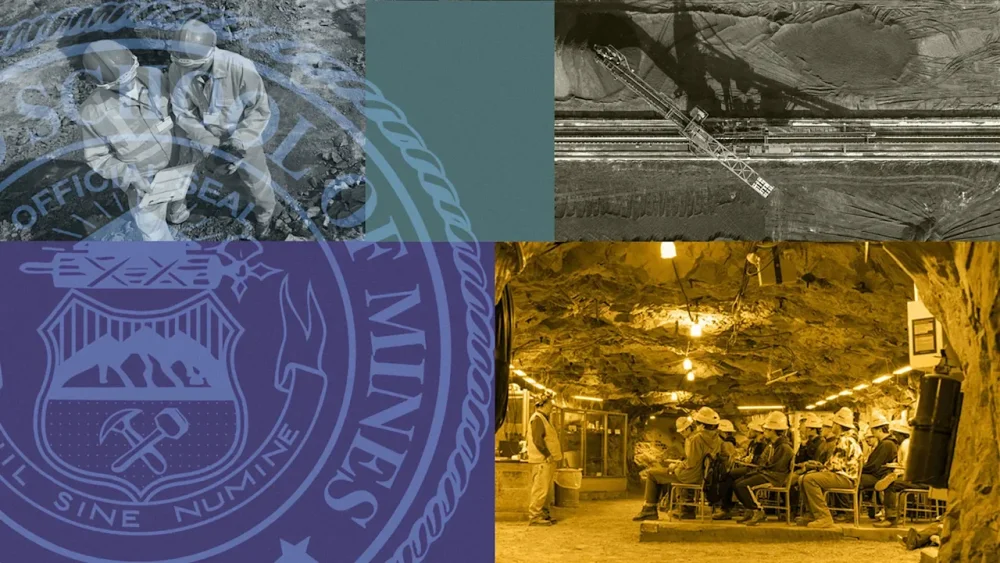
It’s a little-known fact that Columbia University, in Manhattan, was home to the first mining school in America—the School of Mines—founded in 1864. For the past three decades, the university’s program has been mothballed. Parts of its curriculum were subsumed into the more fashionable subjects of earth and environmental engineering. But next fall, Columbia University will offer a bachelor of science degree in mining engineering once again. Other schools are barreling down, as well. The University of Texas at El Paso is also relaunching its mining engineering degree, starting in the fall of 2027, after a 60-year hiatus. The University of Texas system is providing $20 million to reestablish the program, which plans to produce up to 100 mining engineers annually. Existing programs at some of the top schools for mining—including the Colorado School of Mines, the Missouri University of Science and Technology, and Montana Technological University—are also reporting upticks in enrollment, reversing years of declines. “Until the 1970s, most universities had pretty robust programs in mining engineering,” says Greeshma Gadikota, professor of earth and environmental engineering at Columbia University, who will also teach in the revived mining program. This rebirth in mining education in the United States is happening for a reason. It’s a response to a crisis that’s been decades in the making. The underground scene In key measures of mineral wealth and production, the U.S. is failing to keep up. Rising global demand across clean energy, defense, and tech industries has driven prices for critical minerals like copper, silver, and tungsten to record highs. Geopolitical tensions have threatened access to many others. For decades, the U.S. had deprioritized mining and has instead come to rely on rare minerals produced in China. China dominates production of at least 15 critical minerals and mineral groups; it mines about 70% of the world’s “rare earth elements” and processes about 90% of the global supply. (The U.S. is entirely dependent on China to meet its demand for graphite, an essential component in lithium-ion batteries, for example.) But over the past year, in retaliation for The President’s tariffs, China has banned the export of three rare earth products—gallium, germanium, and antimony—to the U.S. And it has put export restrictions on many others, including ones for which China is the sole supplier, including dysprosium, essential for building superfast computer chips, and samarium, a rare earth metal used in many military applications. Last fall, prices for gallium (used in electronics, semiconductors, and batteries) and germanium (critical to infrared technology used in fighter jets and missiles) hit a 14-year high. Tapping into a domestic supply of rare minerals has become not just an economic imperative for the U.S. but a strategic one. Yet that requires rebuilding a declining workforce. More than half the people currently working in the U.S. mining industry—roughly 221,000 workers—are expected to retire or switch industries by 2029. The U.S. Bureau of Labor Statistics forecasts 400 annual job openings for mining engineers through 2034. That may not sound like a lot—after all, the Bureau of Labor Statistics anticipates about 5,500 annual openings for civil engineering technologists and technicians, and 17,500 openings for electrical and electronics engineers in the same period. But consider that in 2023, only 312 mining engineering degrees were awarded by U.S. universities. That means it’s a seller’s market for new mining grads—a stark contrast to the outlook for computer science graduates and computer engineering majors, who faced 6.1% and 7.5% rates of unemployment, respectively, according to the Federal Reserve Bank of New York. (It’s no wonder Nvidia CEO Jensen Huang says he would study physical science if he were starting out today.) But the ability of the U.S. to mint new mining engineers is limited by the number of schools that still offer mining and mineral engineering programs, which has fallen from 25 in 1982 to about a dozen today. “Those programs started shutting down one after the other, because so much of the work was getting shifted abroad,” Columbia University professor Gadikota says. Other countries took advantage of that, and they started building up capabilities.” Today, China has more than 38 mineral processing schools and more than 44 mining engineering programs, according to the nonprofit Center for Strategic and International Studies. China’s largest mineral processing program, at Central South University, alone has 1,000 undergraduates and 500 graduate students preparing for the field. Now, schools and businesses are trying to spread the word that the mining industry has well-paying jobs to fill—and that mining today is different. Graduates in mining engineering regularly earn $70,000 and up, right out of school. According to the U.S. Bureau of Labor and Statistics, the median annual pay for mining engineers is $101,200. Specific expertise in the extraction of rare earth elements, for example, and a willingness to work in remote locations can boost compensation. A new gold rush for mining engineers From aluminum and antimony to zinc and zirconium, there are currently 60 “critical materials” on the U.S. Geological Service’s list, minerals and rare earth elements that are vital to batteries, semiconductors, planes, lasers, medical imaging devices, cancer therapies, cars, electronics, nuclear power plants, and more. As defined by the Energy Act of 2020, these materials are “essential to the economic or national security of the U.S.; have a supply chain that is vulnerable to disruption; and serve an essential function in the manufacturing of a product, the absence of which would have significant consequences for the economic or national security of the U.S.” Many of these materials exist in the U.S., but most of them are still stuck in the ground. That’s starting to change, as big mining companies and startups alike race to develop new domestic sources. MP Materials, a rare earth mining and processing facility on the Nevada-California border, signed a guaranteed-pricing contract in 2025 with the Pentagon and saw its stock surge more than 240% for the year. MIT-founded startup Phoenix Tailings raised $76 million in venture funding last year, supporting the build-out of a next-generation rare earth processing facility in New Hampshire. In December, Ionic Mineral Technologies announced it had discovered rare earth and critical technology metals, including gallium, germanium, cesium, and tungsten, that it says are comparable to China’s deposits. Global mining giants like Glencore, BHT, and Rio Tinto are also developing critical mineral assets in the U.S. Each of these companies employs its own mining engineers—and most of them also contract with other companies that employ them. The growth in critical minerals is creating new kinds of opportunities for young people getting into the industry. And schools are scrambling to revamp curricula to reflect the shifting industry landscape. Kwame Awuah-Offei, who leads the Missouri University of Science and Technology’s Department of Mining and Explosives Engineering, says the school’s graduates typically fall into three career “buckets”: construction aggregate materials (a $35 billion-a-year business in the U.S.), mineral mining, and mining services (working for equipment makers, software companies, and others that support the mining industry). Even though U.S. coal mines still employ some 44,000 people, Awuah-Offei says, coal recruiters are having a tough go of it with new grads. “There is concern among students that if they want to have a 30- or 40-year career, it’s not in coal. Whether it’s true or not, the numbers have shrunk quite a bit.” Interest in critical minerals is a big factor contributing to larger recent class sizes, Awuah-Offei says. Domestic need for resources is just in the news more—he mentions The President’s talk of invading Greenland—“and it drives curiosity on the issue.” While undergrad mining engineering enrollment is still small compared with mechanical engineering, electrical engineering, civil engineering, and fast-growing nuclear engineering, it has grown over the past couple of years. Awuah-Offei is confident that graduates will find jobs when they graduate—thanks to the new demand in rare metals mining and processing, coupled with “very strong job opportunities in the construction materials and aggregate side of the business.” The latter type doesn’t pay as much as metal mining jobs, but the attraction is that they tend to be around metro areas. “Lifestyle is an important factor for this generation of students,” Awuah-Offei says. “Even if a job in Bagdad, Arizona”—a remote copper mining hub—“is paying $10,000 more, they’d rather live in Dallas than be in Bagdad.” “Things come in waves,” says Columbia University professor Gadikota. “We had a wave around climate. Right now we have a wave around metals and foundational materials.” Of course, the two things aren’t unrelated—which might be key to mining engineering’s widening appeal. Sustainability and social considerations increasingly define industry practices. Mining meets AI, entrepreneurship, and environmentalism “When people see today’s mining tech, they are surprised,” Awuah-Offei says. This includes not only massive excavators and tunnel boring machines, but also increasingly common autonomous trucks and robotic equipment. Advances in technology have led to changes in mine design and operation, which in turn have created new challenges that require engineering-based solutions. “For example,” says Sebnem Düzgün, associate department head of mining engineering at the Colorado School of Mines, “one of my students recently analyzed problems with BEV [battery electric vehicle] operations in underground environments. It’s highly interconnected—there’s a societal need for these critical minerals, and mining itself also needs them, to electrify the mines.” Sebnem Düzgün Düzgün recently led a recent curriculum update at the school, which included adding classes in things like data science, AI and machine learning, robotics, and autonomous operations. “All engineering departments have an industrial advisory committee,” she says, “and we frequently reflect their requests in our curriculum.” Modern mining involves using AI models to analyze geological and satellite data during the exploration phase, deploying predictive analytics to improve mine traffic flow and minimize equipment downtime, and creating digital twins to process real-time sensor data and optimize processes. “If you go to the control room of a modern mining processing plant, all you see is big banks of computer screens with someone monitoring data streaming in from sensors,” Awuah-Offei says. “They don’t necessarily need to walk out there to see what’s going on.” Technology has enabled a new breed of mining startups to flourish, which has prompted another change to the traditional curriculum. “Mining is mainly governed by large industry,” Düzgün says. “But as new businesses have emerged, we’ve started incorporating entrepreneurship into our curriculum, and now some of our graduates are entrepreneurs.” Some technology-enabled mining startups are even being funded at levels typically associated with AI companies. In January 2025, KoBold Metals, an AI-powered U.S. mining startup backed by Bill Gates and Jeff Bezos, raised a $537 million Series C round. Another part of the mining engineering syllabus is environmental stewardship. “To be honest, we’ve been incorporating the social and environmental aspects of mining—things like mine closure and reclamation issues—into our curriculum for almost 20 years,” Düzgün says. “But the industry’s handling of these concepts became more pronounced.” At Columbia, Gadikota says the mining program had morphed into earth and environmental engineering as the public became more focused on mining’s environmental footprint. ”We went so much toward managing environmental impacts that it reached the point where we didn’t even want [mines] in our backyard.” Now, the pendulum is swinging back. “We are rediscovering and repurposing our mining roots and bringing back all of that knowledge, but not just in the same outdated manner. We need the metals. We also need to clean up the tailings”—materials left over after ore has been extracted from rock—“and the emissions, and develop sustainable water systems. We want to be conscious about managing tomorrow’s liability today,” she says. Gadikota oversees a sponsored research agreement, announced in November, between Columbia University and Locksley Resources, which is targeting rare earth elements and antimony (used in energy storage) in California. Students at Columbia will explore approaches including AI-driven ore analysis, innovative electrochemical recovery, and carbon-dioxide-assisted mineral processing to help the company develop sustainable practices that improve upon current methods. “If we wanted to build metal recovery capabilities based on technology that exists in other countries, we can certainly do that,” Gadikota says. “But we know that some of those mining pathways are not as energy-efficient, they’re not as material-efficient. They contribute to a lot of emissions. Then there is the processing side. How do we process the material in a way that allows us to produce not just one product, but multiple co-products? And how can we lower the environmental footprint of doing that? These are all key factors to consider, and that’s why we do what we do.” Government spends heavily, but gaps remain Last March, President The President signed an executive order, “Immediate Measures to Increase American Mineral Production,” that outlined numerous steps to increase funding and cut red tape for domestic mining and metals processing projects. The government responded: The U.S. Department of Energy announced in August that it would issue nearly $1 billion in funding to advance and scale mining, processing, and manufacturing technologies across critical minerals and materials supply chains. Three months later, the Energy Department’s Office of Fossil Energy announced that it would provide up to $275 million to build U.S. industrial facilities capable of producing valuable minerals from existing industrial and coal byproducts, and $80 million to establish “Mine of the Future” proving grounds to test next-generation mining technologies. But there hasn’t yet been much federal funding specifically earmarked for mining education. “We’ve seen an uptick in research funding for faculty to go after,” Awuah-Offei says. “Traditionally, when there’s a lot of funding, universities are more willing to hire people in that area. So that has been good. But apart from programs in some states, like Texas, there hasn’t been direct investment in education, necessarily.” Introduced in the House of Representatives in March, the Technology Grants to Strengthen Domestic Mining Education Act of 2025 (aka the Mining Schools Act) would establish a grant program to support schools in recruiting and educating future mining professionals, including engineers. It is currently awaiting action by the House Committee on Natural Resources. “Most of us support that because it will put direct funding into schools,” Awuah-Offei says. “Training mining engineers is expensive. You have to have an experimental mine. It’s lab-based and hands-on.” There’s little time to waste. “We’ll work on cute little mining projects,” Gadikota says. “But if you want to scale them up and you need a domestically trained workforce to implement and grow them, does that workforce actually exist? The answer to that question is: We are behind, and we are doing everything that we can to develop that talent and get them out again.” View the full article
-
Sitting on a coffee table in his Chelsea office in New York City and surrounded by framed wedding invitations on the walls, Justin McLeod is worrying about AI. Specifically, the cofounder and CEO of dating app Hinge is concerned that his users—many of whom have asked him to their weddings over the years—might fall in love with it instead of one another. McLeod has spent the greater part of the past 15 years studying the dynamics of human relationships, including what makes one person fall for another, and he sees that chatbots offer exactly what many people crave. “Why would I invest in these hard human relationships with people that are not always available or might reject me when I can talk to this thing that is right here and will always say the right thing?” he wonders. On this sunny afternoon in late September, chatbots aren’t yet upending dating apps, but something sure is. Bumble, once the women-first darling, has shed 460,000 paying users since the end of 2024, prompting the return of founder Whitney Wolfe Herd in March. She’s embarked on an aggressive retrenchment campaign that has included laying off 30% of the staff. Tinder, meanwhile, has lost more than 1.5 million paying users since its peak in 2022. Its parent company, Match Group, has also recorded steady revenue declines for the past three years for its business unit that includes former stalwarts like Match.com and OkCupid. Match appointed Spencer Rascoff as a wartime CEO in February 2025; he’s slashed head count by 13%. But one app in Match Group’s portfolio stands out. Hinge, which has 15 million monthly active users, saw its paying users grow by 17% year over year to 1.87 million in the third quarter of this year. The app took in $550 million in revenue in 2024, and more than $500 million in the first nine months of 2025. “We’re the fastest-growing—and, in fact, the only growing—major dating app,” McLeod says. (That’s not quite true: Grindr, with 1.3 million of what it calls “average paying users,” is also on the upswing.) “Simply put, Hinge is crushing it,” Rascoff said on Match Group’s Q2 earnings call. Hinge’s competitors are facing problems of their own making. First was their aggressive pursuit of users, favoring quantity over quality, which has degraded the overall experience of many dating apps. Meanwhile, their lax policing of junk profiles and bots—and simultaneous price increases for increasingly important features—has forced users to pay ever more to find decent matches. People are just tired of endless, expensive swiping that doesn’t convert into dates. And now a rising generation is emerging with an entirely different approach to dating than earlier users, putting apps that don’t evolve at risk of being left behind. Gen Z’s relationships are increasingly mediated—even defined—by screens. They still use dating apps, but they’re skeptical. Gen Z has “set a higher bar,” Match CFO Steven Bailey told attendees at Morgan Stanley’s Technology, Media, and Telecom conference in March. “They want [dating apps] to be safe, they want them to be effective, and they want them to drive the outcomes they’re looking for.” But Hinge keeps growing because it has stuck to its promise that it succeeds only if users end up deleting it altogether. “We want people to meet up and find love in person,” McLeod says. That sounds obvious, but in the world of dating apps, it hasn’t always been a priority. While other apps favored ease of use (all that endless swiping) over outcomes, McLeod remained relentlessly focused on designing ways to get his users off the app and dating, even if that meant inserting friction into the user experience. “A lot of apps grew much faster than us because they were more engaging and exciting,” McLeod admits. But he was playing the long game. McLeod is now preparing for the next stage of Hinge. The company has been rolling out a suite of AI-powered features to appeal to users with rustier social skills (ahem, Gen Z). McLeod is also taking his matching algorithm up a notch, extracting even more information from users to personalize and refine Hinge’s picks for them. To stop people from falling in love with chatbots, he’s fighting AI with AI—and trying to engineer something incontestably human: a messy, authentic love story. McLeod knows something about the complexities of the heart. He founded Hinge in 2011 while at Harvard Business School to help people find real-world connections. At the time, though, he was recovering from heartbreak. He had dated someone as an undergrad, but they broke up and got back together several times as he battled substance abuse issues. By the time he got out of rehab, she had moved on. Several years later, with Hinge starting to grow, McLeod conducted an interview with a New York Times reporter where he recounted the story of the one who got away. That inspired him to look up his lost love, who was living in Europe and engaged. Though they hadn’t seen each other in nearly a decade, something sparked. She called off her wedding, and a few years later she and McLeod married. He’s recounted this story numerous times. It was even turned into a New York Times Modern Love column and then an episode of the Amazon show based on the column. But as polished as the anecdote is, there’s a deeper truth within it: Vulnerability creates possibilities. A decade ago, when Tinder, Bumble, and other apps were orienting themselves around engagement—making the user experience addictive but the outcomes questionable—McLeod mapped out a different strategy, aimed at fostering emotional risk-taking. He would require users to put in more work during the sign-up process and would place deliberate hurdles for them along the way, all in an effort to get them to open up, not just swipe. Jackie JantosmarketingEvelyn Freja Today, Hinge requires users to upload a minimum of four photos and fill out at least three prompts about themselves. The process is designed to get users to slow down, think about what they really want, and present a more unfiltered profile. McLeod says the app tries to give users tasks that “signal a level of intention and create a level of vulnerability so that you can actually create connection between two people.” The longer sign-up process has made a difference: Hinge has found that users are 47% more likely to go on dates when they engage with the written answers on someone’s profile rather than simply the photos. Last year, Hinge introduced another hurdle—a feature called Your Turn Limits—to curb ghosting. Now Hinge users with too many unanswered messages must send a reply or end the conversation before they can resume swiping. The company even gently nudges users into the real world: Its AI will invite users to set up a date if they’ve been chatting online for a couple of weeks and seem compatible based on their conversations. Hinge also uses AI to scan the content of messages and deploys a notification to double-check with a user before they send a message that might not be well received. That’s all well and . . . millennial, but the app’s newer challenge is helping Gen Z users—who make up 56% of Hinge’s overall user base—find value in the app. CMO Jackie Jantos sees a generation that was isolated during the formative years when relationships develop, and that often reverts to interacting on social media rather than in real life. Hinge’s Gen Z users tend to be uncomfortable with small talk and hyperfocused on “digital body language,” Jantos says. “So there’s a lot of reading into the speed [with which] someone replies, how long the person’s message is, and what type of emojis and punctuation” they use. Match CEO Rascoff puts it more succinctly: “They have atrophied social skills and need more help showing up and connecting with other people.” Hinge’s first feature for younger users, launched in 2021, was inspired by TikTok voice-overs. Instead of making users write out their responses to profile prompts, Hinge now allows them to record a 30-second audio introduction. “It hit the sweet spot of willingness to do it if I’m the person who’s posting it and extremely informative if I’m the person [experiencing] it,” McLeod says. With more than one in five Gen Z adults identifying as LGBTQ, according to Gallup, Hinge has also given users an expanded menu of gender and sexuality identifiers to choose from as they set up their profiles. “Gender, relationships, and relationship types are being redefined,” Jantos says. In February, the company added Match Note, which allows users to privately share information with matches before chatting with them. People have used it to disclose their STI status or gender identity. (McLeod says single parents also use the feature to let matches know about their kids.) Hinge is tuning its marketing for Gen Z as well. The company has long featured real couples in its campaigns. But Hinge is now focused on stories that showcase all the intricacies and uncertainties of real relationships to show Gen Z that they don’t have to be perfect. For 2024’s “No Ordinary Love” campaign, Hinge enlisted writers like Roxane Gay and Hunter Harris to tell the nuanced, real-life stories of people who connected on the app, then published the essays in a zine. This year, Hinge followed up with a second collection, released as a printed book and on a dedicated Substack—supporting it with a flurry of ads in major cities. In one, a couple meets, hits it off, then breaks up for a few months before getting back together. Another tells the story of Lia and Ole, a couple fighting against their preconceived ideas of what they want from a relationship (“Lia had imagined a romance with someone more established, more mature”). Spoiler: Five years after their first date—when they jointly deleted Hinge from their phones—they’re still together. Despite his fears of AI keeping Hinge users from meeting real people, McLeod is embracing it to help improve their prospects. In January, Hinge launched an AI-powered coaching tool to help users refine their profiles. Instead of just asking users to type in their response to a profile prompt, an AI chatbot can now interview the answer out of them. If a user says they like to travel, the chatbot might ask them for their best travel story to add to their profile. Those interviews serve an additional purpose: helping improve the app’s matching algorithm. Until the advent of generative AI, Hinge’s algorithm primarily considered the profiles that users liked as they swiped and tried to surface similar ones—but it never really understood why a user might have certain preferences. Now, McLeod says, the algorithm can take in the content of a user’s profile to deliver better matches. “It’s thinking about what you’ve said, what they’ve said, what your prompts say, what your photos are, and using it to predict whether you might like someone,” he says. “It’s not waiting for you to send a whole lot of likes for us to learn your taste.” If McLeod succeeds, he could lift the fortunes of Match beyond just Hinge’s revenue. Match’s data shows that Hinge subscribers already tend to use the app alongside one or more of the company’s other apps. Rascoff now wants to encourage that behavior, letting users populate their profiles across other apps with one tap. “From a financial standpoint, we’ve found that it’s additive,” he says. “The user spend on the second app does not detract from their spend on the first.” Rascoff envisions that the matching algorithm behind these apps could also be standardized. “We don’t want to do AI stuff for the sake of it,” McLeod insists. Even so, he’s staking his app’s future on it. McLeod anticipates that within five years Hinge will work more like a personal matchmaker. Users will spend less time on the platform sifting through profiles and sending messages. Instead, they might provide more information to the app on the front end and simply trust it to show them fewer, better matches. That would represent a sea change for the entire industry, McLeod says: “We’ll think of swiping through endless profiles to find dates as a bit archaic.” View the full article

-
Yoast AI Brand Insights now lets you track how your brand appears in Google’s Gemini. You can see your Gemini data alongside ChatGPT and Perplexity, all in one dashboard. With a single analysis, you can see how different AI platforms describe your brand with the Yoast SEO AI+ plan. You’ll see which sources they use and how sentiment compares across the tools your customers use most. Why this matters AI platforms use different methods to answer questions about your brand, often leading to different results. Seeing these results side-by-side helps you spot gaps or missed opportunities in your brand’s AI presence. ChatGPT is designed as a conversational assistant, focusing on natural dialogue and using multi-step reasoning to explain complex topics. Perplexity positions itself as an “answer engine”, emphasizing transparency by grounding every response in cited web sources. Gemini presents itself as a search-driven LLM, leveraging Google’s vast index to show how your brand appears in real-time search contexts. As these tools frame your brand differently, from conversational reasoning to source-heavy citations, you need a single dashboard which covers all to see which sources they rely on and how their sentiment compares. What’s new You can now: Run brand visibility analyses in Gemini, in addition to ChatGPT and Perplexity. Compare results across all three platforms with the added benefit of a built-in historical view. Track brand mentions, sentiment, and citations in one place. Monitor changes over time in your AI Visibility Index. How to get started If you’re already using Yoast SEO AI+, nothing changes in how you work. Log in and at your next analysis, Gemini data is now included automatically at no extra cost. You can select the AI platform from the dropdown, and your dashboard will show a broader view of how your brand appears across AI search and chat. To upgrade If you don’t yet have Yoast SEO AI+, you’ll need to upgrade to access the Yoast AI Brand Insights tool. The AI+ plan brings brand visibility tracking together with on-page SEO tools, content optimization, and AI-powered insights in one package, so you can analyze how your brand is mentioned and act from the same workflow. Upgrade to Yoast SEO AI+ to start scanning your brand across Gemini, ChatGPT, and Perplexity. The post New: Track brand visibility in Gemini with Yoast AI Brand Insights appeared first on Yoast. View the full article
-
I had to submit my résumé for a role. Then I went through three interviews, with nearly identical questions each time. The problem? The role was for a freelance writing position. Not to become a company employee. I got all the way to the third interview only to learn that the role paid a fraction of my usual rate, even though I’d provided my rate up front. I’m experienced enough as a solopreneur to know that going through three interviews was a bad sign. The potential client wasn’t communicating internally (as confirmed by the fact that my rate had been overlooked). Multiple interviews are incredibly uncommon in my line of work, and indicated to me that the company didn’t know how to work with a freelancer. When you’re a solopreneur, bad clients cost you time and money. They also crowd out better opportunities and put a strain on your bandwidth. Client selection is a core business skill. And if you’re not in a position to turn down work, you at least need to know how to handle sticky situations when they come up. Red flags during the sales process The best time to spot a problematic client is before you sign anything. That’s when you can decide whether the client will be worth the hassle or not. Here are some of the most common red flags I’ve experienced talking with potential clients. Vague project scope. “We’ll figure it out as we go” sounds flexible, but it usually means the client hasn’t thought through what they actually need. That ambiguity becomes your problem once you’ve signed a contract, and it can be hard to rein in. Requests for free work or unpaid “test projects.” There are very, very few scenarios in which I believe a solopreneur should do any unpaid work. I’ve seen unscrupulous companies use submitted test work without providing any compensation—essentially, free labor for them. If a client needs to evaluate your skills, point them to your portfolio or testimonials. Or negotiate a paid project. Unrealistic expectations on timeline or rate. If a potential client lowballs you, the relationship will always be lopsided if you accept. Many solopreneurs juggle multiple clients, so saying yes to low-paying work or expedited timelines can impact your other clients. Simple script to use: “My rates start at $XX. If that doesn’t work for your budget, I’d be happy to recommend someone else who might be a better fit.” Red flags during the engagement Sometimes you have no idea that a client will be a nightmare until after you start working with them. But before you know it, some red flags tell you that the client relationship isn’t going well. Scope creep. You identify the scope of the project and put it into the contract, but the client continues to come back to you with additional requests. If you accommodate the client, this erodes your effective rate when you “donate” extra time—and requests can add up, fast. Simple script to use: “This wasn’t included in our agreement, but I’m happy to do that for $XX additional amount, and it will take YY additional time.” Framing it this way clarifies that additional work has additional costs. Poor communication. Some clients expect instant replies, treating you like an employee who should be available whenever they need something. Or they take forever to reply, and you can’t move forward. In both scenarios, you need to be proactive. Let clients know your expected response time (like you will respond within 24 hours). Make sure they are aware that a delayed response on their end will have a negative impact on the project. Delayed payments or ghosting on invoices. These are the clearest signals that a client relationship isn’t working. Drop that client, fast. You shouldn’t have to chase a client for money that’s owed to you. Protecting your business Every solopreneur says yes to an imperfect opportunity or has engagements with difficult clients. It’s part of the business. You don’t have to say no based on red flags, but you do need standards—and the language to enforce them. The earlier you learn to spot red flags and respond to them, the more options you’ll have. View the full article

-
One of the world’s wealthiest charitable foundations notes ‘exceptional levels’ of market concentration in tech stocksView the full article
-
Americans go to great lengths to ensure they are financially set for their later years. But if you’re asking Elon Musk, you really needn’t bother. According to the world’s richest man, whose net worth is estimated at well over $700 billion, saving for retirement will soon be obsolete. Musk aired this view on a recent episode of the Moonshots With Peter Diamandis podcast. Musk let listeners in on his vision of our financial future, a world where technology, specifically artificial intelligence, creates such an abundance of resources that anyone can buy anything they want. The entrepreneur said that within just a few years, we will live in a world marked by a great surplus, where “better medical care than anyone has today” will be “available for everyone within five years.” He also said that there will be “no scarcity of goods and services” and you’ll be able to learn anything you want. Musk continued, explaining that there will be such a surplus that life will no longer require people to save in order to ensure they are taken care of later on. “One side recommendation I have is: Don’t worry about squirreling money away for retirement in 10 or 20 years. It won’t matter,” he said, adding that he believes “saving for retirement will be irrelevant” and that the future will bring abundance.” Overall, Musk’s view of the future seems decidedly optimistic about AI. He talked about the power of AI to break barriers and using it to harness the sun’s energy. And he said he believes the “future of currency” will be measured not in money, but in “wattage.” But he also acknowledged that during what are bound to be years full of change, the road to the future he envisions will be “bumpy” and filled with obstacles. Musk said he doesn’t just foresee “universal high income,” but also major “social unrest” as the result of so much change in a short period of time. The prediction seems eerily similar to one made by John Maynard Keynes, known as the founder of modern macroeconomics, in 1930. In his essay, “Economic Possibilities for Our Grandchildren,” the economist wrote that by 2030, technology would enable workers to adopt a 15-hour workweek. At the time, the workweek was estimated to be about 50 hours. In one sense, Keynes was correct: The average number of hours fell in the years following the prediction, as the 40-hour workweek was established soon after. However, today full-time work hours hover at about 8.4 hours a day or 42.5 hours a week, per the U.S. Bureau of Labor Statistics. While many of Keynes’s predictions about technology proved to be correct, such as how vastly technology has reshaped certain industries, working hours have yet to fall as drastically as he predicted. At the moment, Musk’s comments are hard to swallow, given that many Americans struggle with basic expenses like childcare, let alone saving for retirement. According to a 2025 report from the National Council on Aging, most older adults don’t have enough money to financially survive “a financial shock” triggered by a death, the need for long-term care, or illness. “Eighty percent of those 60 and older have little to no assets and would not be able to weather a financial shock without falling into poverty,” the report said. Researchers added: “The future of aging in America will likely be defined by an ever-widening inequality in both financial status and mortality, deepening the divide between the majority of older Americans (the 80%) and the top 20%.” Musk did say there would be bumps along the road to utopia. View the full article

-
Stocks hit all-time high while yen weakens to lowest in 19 months as finance minister expresses concernView the full article
-
Expect strong demand for planning, advisory and cleanup work. By CPA Trendlines Research Join the survey. Get the results Go PRO for members-only access to more CPA Trendlines Research. View the full article
-
Expect strong demand for planning, advisory and cleanup work. By CPA Trendlines Research Join the survey. Get the results Go PRO for members-only access to more CPA Trendlines Research. View the full article
-
Link building strategies have changed in the age of AI. Find out how to effectively select a link building agency for modern marketing success. The post 2026 Guide To Hiring A Link Building Agency In The AI Search Era appeared first on Search Engine Journal. View the full article
-
It’s that time again. The calendar has flipped, the resolutions are written, and you’re probably sitting in your office chair at your office desk looking at a lukewarm cup of office coffee, wondering if you’ve really got another year of fluorescent lights and “serendipitous” coworker interactions in you. Let’s make a pact: No more. It’s time to find a great remote job. Unfortunately, you can’t find 21st-century work using 20th-century methods. If you’re still scrolling through the generic “Big Box” job boards and getting buried in 5,000 applications for one role, you’re doing it wrong. Instead, here are the five sites you should check first when you’re looking to work from home. We Work Remotely We Work Remotely is the “Old Reliable” of the remote world. It’s been around since 2011, which in internet years makes it roughly as ancient as a stone tablet. But it’s still the heavyweight champion. It’s simple. There’s no bloat. You get a clean list of categories, and the jobs are actually remote. Because companies that post listings here pay a fee, you’re far less likely to run into the pages and pages of filler that plagues the free boards. FlexJobs I know, I know: It’s a subscription service. Asking someone who’s looking for a paycheck to pay money feels a little backward. But here’s the thing: FlexJobs has an army of humans who hand-screen every single job posting. If you’re tired of clicking on a “Work from Home” ad only to realize it’s a pyramid scheme or a high-pressure sales gig, this is your sanctuary. They filter out the junk so you don’t have to. Remote OK If We Work Remotely is the elder statesman, Remote OK is the cool, tech-savvy younger sibling. The entire vibe is built for people who want to work from a laptop, whether that’s in their living room or a café halfway around the world. The site’s filters are fantastic. You can sort by salary ranges (yes, actual numbers!), tech stacks, and even benefits such as health insurance or four-day workweeks. It’s fast, transparent, and updated constantly. Remote.co Remote.co was started by the same team behind FlexJobs, but while FlexJobs is a paid, curated list, Remote.co is a free, high-quality resource that goes beyond just job titles. One nice feature: They don’t just list a job; they interview the companies. You can read Q&As from more than 100 remote-first outfits to see how they actually handle things like time zones and communication. It’s perfect for job seekers who want to know the vibe of a company before they even hit the apply button. Working Nomads If your dream is to emphasize the “remote” part of remote work, this is your home base. Working Nomads curates roles specifically for the digital nomad crowd, meaning these companies are usually comfortable with you working from pretty much anywhere on the map. The categorization is incredibly clean, and the site uses a color-coded system for different industries, making it very easy to scan. It also has a premium tier with 10 times more listings and advanced search filters. And its daily email alerts are a great way to stay in the loop without having to constantly check the site. View the full article

-
It’s five answers to five questions. Here we go… 1. I’m afraid of dogs and our chairman brings his dog to work I work at a small business (fewer than 100 people, all in one building) and I am mildly cynophobic (afraid of dogs). Logically, I’m aware that this is mostly irrational, but I tense up and can’t focus on anything else when a dog is nearby. The chairman of our company has a dog, who he often (most days) brings to the office. He has also been known to encourage other people to bring their dogs to work. You can imagine how I feel about this. However, many people like the dogs. A couple of years ago, I made an anonymous request, via my then-manager, for measures to be taken to keep the dog away from areas where I am likely to be. It was agreed that the dog wouldn’t be brought to the area of the office where my desk is, but nothing was said or done about communal areas. The chairman has since either forgotten about this agreement or doesn’t care. Furthermore, I think the chairman worked out that it was me who made the request, due to me freezing and stopping what I’m doing when the dog comes near me. I neither want to be seen as a killjoy, nor do I want to pick a fight with the chairman, nor do I want to have to put up with this. Is there anything I could do? Yes, you need to raise the issue again. You don’t need to hide that it’s you; you’re not trying to ban dogs from the building, just to stay away from them yourself. That’s a reasonable request, and it might also help if the chairman knows it came from you so that he can make sure he is in fact keeping his dog away from you! Talk to your manager again, explaining that the previous agreement seems to have been forgotten, or — better — if you have HR, talk to them and ask for their help with more formal accommodations. None of this is being a killjoy or picking a fight. You’re just asking to have a spot where you can work comfortably. Related: how much should we compromise for a dog-phobic coworker in a dog-friendly office? 2. I was asked to make a video for a job application I’ve applied for a job that involves extended, in-person contact with customers of all ages, backgrounds, and cultures. Today I got an email asking me to make a short video about why I want to work with them so they can “get to know me better.” I have never made a video before and videography would not be part of the role. I really am not adept at anything to do with photography and my phone is ancient. It serves my purposes usually but doesn’t have all the things that more modern phone cameras have. The selfie camera is low-quality so isn’t very good for video recording, and in low-light everything is very grainy. Apart from that, I just don’t have the skills. Even if I spent hours acquiring them, cadged a newer phone off someone, found out how to edit, and so on, I don’t think this will be the ideal showcase for me (understatement). I’m in my sixties and I wonder if for younger applicants this kind of thing is second nature? I was quite surprised by their request and have gone back over the spec to see if I missed anything about videography. It definitely isn’t mentioned anywhere and there is no “digital native” element to the role, so I think it is simply their way of screening out candidates without having to do an interview. (I would be happy to do a video call on Teams or whatever and am set up for that.) Anyway, I think if I went ahead and made the video, I would be ruling myself out of getting the role. Shall I withdraw my application instead and explain why? That would be a shame as it’s something I’d like to do. But I can’t really see me getting through this first round. Ugh, yeah, this is not a good practice for most roles. There are jobs that require the ability to present well on video and it can make sense there — although it’s still often an unreasonable request before an initial phone screen has been done and will end up wasting a lot of people’s time, both from candidates and from the hiring staff who have to watch the videos, to say nothing of all the potential for illegal discrimination that it introduces — but here we are. But I don’t think you should reject yourself preemptively; they can do that themselves if they want to. You could simply explain that your phone doesn’t take video but you’d be happy to do a phone or Zoom screen, and then leave it in their court. They probably won’t end up moving you forward but, who knows, if they’d been particularly interested in your application maybe they will. If nothing else, it’s good for them to get this kind of feedback. 3. No one wants to apply for our job opening because of my boss’s bad reputation I work in a very small professional office within an extremely large, unionized white-collar organization. This organization values absolute fairness (which I absolutely believe in) and has many protections in place to assure it. For example, past job performance and recommendations cannot be considered in selecting the top candidate for a position. The only other person who shared my (very specialized) exact job was recently promoted to my supervisor (they supervise four people, including me, plus 2 vacancies). Their reputation as a supervisor is not good (they held a previous supervisory role but eventually took a demotion/transfer). Although the role I hold (that they also previously held) has traditionally been much in-demand with many candidates, this time there have been almost no applicants. Everything I have heard, including from people who have previously applied to transfer to my office, is that no one wants to work for this person based on their reputation. The problem is that I also applied for the supervisor position, but I was not selected. I am absolutely doing everything I can to be professional about it! I definitely want someone to come on board, both to take over the extra duties that were transferred to me, and just to have a colleague. I know management has been casting about for an explanation. If someone eventually asks me why I think people are not applying for the role, what can I say? I can’t think of any way to answer even semi-truthfully or in a way that would assist in hiring, without looking like I’m bitter or driving candidates away. And if I try to evade the question, it will look like I’m hiding something (also, I have a very hard time not answering questions honestly when asked directly). First, it’s not “absolute fairness” to refuse to consider past job performance when hiring! Someone’s past track record is probably the most directly relevant factor that should be considered in hiring. In any case, though, if you’re asked why you think people aren’t applying for the job, you don’t need to provide an answer that you’re not comfortable giving! You’re not responsible for solving this problem for them, and if you think it risks causing problems for you if you answer truthfully (like that you’ll appear to have sour grapes over not getting the job yourself), you can fall back on something bland like, “I’m not sure. Would it be worth asking some of the people internally who you would have expected to apply and get feedback from them?” Which, frankly, is what they should be doing anyway. 4. How do I tell my boss I’m okay with a lower performance rating this year? My supervisor said in our most recent meeting that she was worried she wouldn’t be able to give me as good ratings as the previous year because I haven’t finished some longer-term projects (with no real repercussions to anyone’s workflow; my job is IT adjacent so I’ve stayed on top of daily needs and anything that affects our internal customers). I am well aware I could have finished some of these sooner but, honestly haven’t had a great year mentally with a few family deaths and have missed a decent number of days this fall with kids home sick. But, last year, I got nearly all “exceeds expectations” and honestly, this year “meeting expectations” would be fine by me. I’d even be okay with a “needs improvement” in a category or two since I feel like I do need to improve! If this comes up again, how do I politely say I’m all right not getting the office equivalent of an A this year? “I understand. This has been a rough year, and I’m hopeful I’ll be able to tackle some of the longer-terms projects going forward.” Or: “I think that’s fair. I’ve been out more than I usually am, and that’s affected what I could complete. I don’t expect that to continue this year.” 5. Joining an LGBT employee group when I work for the federal government I’m a fairly tenured (eight years) employee in civil service/government work in the US. I started a new position recently, my first non-bargaining role. One of the things advertised to us during orientation was the various work/social groups for employees to connect with others because hundreds, if not thousands, of people work for this agency. I am a single woman over 30 who identifies as a member of the LGBT community. My employer has a group for LGBT employees that I was considering checking out, but I am scared to do so. I am an unclassified employee who had to sign a statement acknowledging I serve at the pleasure of the head of the agency I work for. He is termed out and we will be getting a new one in the next election cycle. I hate that this is the world we live in, but would you advise I check out the group or wait? I would hate to miss out on making friends but I don’t want a target on myself either. Attend a meeting and feel it out! You presumably don’t need to register on an official “attending the LGBT employees group” list with your employer; you can just go, right? And besides, for all they know, you could be going as an ally; you presumably don’t need to declare your specific interest or identity either. Then, once you meet other people there, ask for their thoughts on the safety of being active with the group right now; they’ll likely have useful insights (hopefully ones that will make you feel comfortable attending more, but useful either way). The post I’m afraid of dogs and our chairman brings his dog to work, job application videos, and more appeared first on Ask a Manager. View the full article
-
Race for coveted role comes as bank fights Swiss government over threat of more stringent capital buffersView the full article
-
Over the past 50 years the state has become overly reliant on a few deep pockets that it cannot afford to lose View the full article
-
Implementing automation systems requires a lot of planning, time and moneyView the full article
-
Negotiations come as asset managers turn to retail investors after slowdown in flow of cash from institutional backersView the full article
-
Essential reads on the politics and history of the country’s Islamic regime since the revolution and fall of the Shah in 1979 View the full article
-
Balderton Capital led $75bn fintech’s first funding round and retains substantial stake even after cashing out $2bnView the full article
-
If you’re managing a small business, finding the right HR software can simplify your tasks considerably. With various free solutions available, you can streamline processes like employee management, hiring, and payroll. Each software offers distinct features customized to different business sizes and needs. From robust tools to streamline HR administration to user-friendly platforms for small teams, the choices might seem overwhelming. Let’s explore these top five options and see which one could work best for you. Key Takeaways HRLocker: Ideal for small teams under five employees, offering tools for employee data management and compliance with labor regulations. Homebase: A user-friendly solution for small businesses with unlimited employees, featuring time tracking and scheduling management for efficient HR tasks. Freshteam: Streamlines hiring and onboarding for small businesses with up to 50 employees, including job posting and organized communication tools. Gusto: A versatile payroll solution with benefits administration and time tracking, automating HR tasks to ensure compliance and reduce errors. OrangeHRM Starter: A robust HR management tool for small to medium businesses, featuring flexible deployment options and advanced PTO management capabilities. OrangeHRM Starter In regards to managing HR tasks effectively, many small to medium-sized businesses find that OrangeHRM Starter offers a robust solution. This human resource management software free option has over 5 million active users and is designed to streamline HR administrative tasks. With flexible deployment options, including both cloud and on-premise, you can tailor the software to meet your organization’s security and customization needs. Key features include a mobile app for managing PTO requests and attendance tracking, along with an HR Administration module that supports user roles and self-service capabilities. Advanced PTO/Leave Management improves approval workflows, making it easier to handle employee requests. Furthermore, OrangeHRM Starter provides extensive reporting and analytics tools, enabling data-driven decision-making to improve employee performance insights. As an HR software freeware, it accommodates diverse industries and organizational structures, with support resources available to help you maximize its functionalities efficiently. HRLocker HRLocker stands out as a specialized free HR management system customized for organizations with fewer than five employees, making it an ideal choice for small businesses seeking to simplify their HR processes. This platform features an employee details database that helps you efficiently manage employee data, sick time, and benefits. With tools for holiday and sickness management, you can effectively track employee absences and guarantee your team stays compliant with labor regulations. Furthermore, HRLocker offers document management capabilities, allowing you to handle HR documents and digital signatures easily, streamlining compliance and record-keeping. Whereas the free model doesn’t provide direct support, you do have access to self-help resources, which guide you through the system’s functionalities. Homebase Homebase offers a robust free HR management solution designed particularly for small businesses, accommodating unlimited employees at a single location. With its user-friendly interface, you can streamline various HR tasks effectively. Here are some key features that make Homebase stand out: Time and attendance tracking helps you monitor employee hours accurately. Scheduling management allows you to create and adjust shifts easily. Job posting capabilities enable you to attract new talent effortlessly. An employee mobile app provides easy access to schedules and communication. Moreover, Homebase provides excellent support resources, including user guides and direct assistance via phone, email, or chat. Users report high satisfaction with its reliability and accessibility, making it easier for you to manage employee availability and shifts. The system furthermore generates automated timesheets, which streamline payroll processes and reduce manual entry errors, saving you valuable time and effort. Freshteam Freshteam provides a free HR software solution that’s perfect for small businesses with up to 50 employees. This platform streamlines your hiring and onboarding processes, making it easier for you to manage your recruitment efforts. You can post up to three job openings and utilize a recruitment team inbox to keep communication organized. Freshteam furthermore features a basic career site, enhancing your candidate management experience. To visualize and track applicants, you can use Kanban boards, which help you manage your recruitment pipeline effectively. The software includes an employee directory and organizational chart, providing clear visibility of your team structure and employee information. In addition, Freshteam offers extensive support through a database of user guides, videos, and cheat sheets. If you need further assistance, direct support options are available to guarantee you get the help you need during your exploration of the platform. Gusto Gusto stands out as a versatile payroll software solution that likewise encompasses benefits administration and time tracking features, making it an all-encompassing HR platform for small businesses. With Gusto, you can automate many HR tasks, ensuring compliance with payroll regulations as well as minimizing errors. Here are some key features you’ll appreciate: Automated Tax Filings: Gusto takes care of federal, state, and local tax filings, simplifying your payroll process. Affordable Pricing: Plans start at just $49 per month, making it a budget-friendly choice for small businesses. User-Friendly Interface: Its intuitive design allows for easy navigation and setup, reducing the need for extensive training. Seamless Integration: Gusto connects effortlessly with various accounting tools, streamlining your business operations. Frequently Asked Questions What Is the Best Free HR Software? Determining the best free HR software depends on your specific needs. For basic employee management, OrangeHRM Starter might be suitable, whereas HRLocker is great for smaller teams. If you need strong scheduling features, consider Homebase, which supports an unlimited number of employees at one location. Freshteam is ideal for those with up to 50 employees, offering crucial recruitment tools. Evaluate these options based on your organization’s size and requirements for effective HR management. What Is the Best HR System for Small Business? When selecting the best HR system for your small business, consider factors like user-friendliness, features, and scalability. Look for systems that streamline processes such as hiring, onboarding, and employee management. Popular options include OrangeHRM for thorough administrative tasks, Homebase for scheduling, and Freshteam for applicant tracking. Evaluate your specific needs and choose a system that grows with your business, ensuring it effectively supports your HR functions as well as remaining easy to use. What Is the Best Free Software for Small Business? When considering the best free software for small businesses, you should evaluate options based on your specific needs. Look for tools that improve productivity, streamline operations, and support collaboration. Popular choices include project management software, accounting tools, and customer relationship management systems. Assess user-friendly interfaces, crucial features, and scalability. Free versions often limit functionality, so verify they meet your business requirements without compromising growth or efficiency as you expand. Is There Free Payroll Software for Small Businesses? Yes, there are several free payroll software options for small businesses. Gusto offers a free plan for businesses with fewer than 10 employees, whereas Wave provides extensive payroll services at no cost. Payroll4Free.com supports unlimited employees and includes features like direct deposit. Zenefits integrates payroll with HR management in its free plan. FreshBooks offers a free trial for its payroll add-on, allowing you to explore features before committing to a paid plan. Conclusion In conclusion, choosing the right free HR software can greatly improve your small business’s efficiency. OrangeHRM Starter, HRLocker, Homebase, Freshteam, and Gusto each offer unique features that cater to different business sizes and needs. By leveraging these tools, you can streamline administration, enhance hiring processes, and effectively manage employee benefits. Selecting the best solution for your organization will not just save time but will also guarantee compliance and promote a more productive workplace. Image via Google Gemini This article, "5 Best Free HR Software Solutions for Small Businesses" was first published on Small Business Trends View the full article