ResidentialBusiness
Administrators
-
Joined
-
Last visited
Everything posted by ResidentialBusiness
-
 If you’re managing a small business, finding the right HR software can simplify your tasks considerably. With various free solutions available, you can streamline processes like employee management, hiring, and payroll. Each software offers distinct features customized to different business sizes and needs. From robust tools to streamline HR administration to user-friendly platforms for small teams, the choices might seem overwhelming. Let’s explore these top five options and see which one could work best for you. Key Takeaways HRLocker: Ideal for small teams under five employees, offering tools for employee data management and compliance with labor regulations. Homebase: A user-friendly solution for small businesses with unlimited employees, featuring time tracking and scheduling management for efficient HR tasks. Freshteam: Streamlines hiring and onboarding for small businesses with up to 50 employees, including job posting and organized communication tools. Gusto: A versatile payroll solution with benefits administration and time tracking, automating HR tasks to ensure compliance and reduce errors. OrangeHRM Starter: A robust HR management tool for small to medium businesses, featuring flexible deployment options and advanced PTO management capabilities. OrangeHRM Starter In regards to managing HR tasks effectively, many small to medium-sized businesses find that OrangeHRM Starter offers a robust solution. This human resource management software free option has over 5 million active users and is designed to streamline HR administrative tasks. With flexible deployment options, including both cloud and on-premise, you can tailor the software to meet your organization’s security and customization needs. Key features include a mobile app for managing PTO requests and attendance tracking, along with an HR Administration module that supports user roles and self-service capabilities. Advanced PTO/Leave Management improves approval workflows, making it easier to handle employee requests. Furthermore, OrangeHRM Starter provides extensive reporting and analytics tools, enabling data-driven decision-making to improve employee performance insights. As an HR software freeware, it accommodates diverse industries and organizational structures, with support resources available to help you maximize its functionalities efficiently. HRLocker HRLocker stands out as a specialized free HR management system customized for organizations with fewer than five employees, making it an ideal choice for small businesses seeking to simplify their HR processes. This platform features an employee details database that helps you efficiently manage employee data, sick time, and benefits. With tools for holiday and sickness management, you can effectively track employee absences and guarantee your team stays compliant with labor regulations. Furthermore, HRLocker offers document management capabilities, allowing you to handle HR documents and digital signatures easily, streamlining compliance and record-keeping. Whereas the free model doesn’t provide direct support, you do have access to self-help resources, which guide you through the system’s functionalities. Homebase Homebase offers a robust free HR management solution designed particularly for small businesses, accommodating unlimited employees at a single location. With its user-friendly interface, you can streamline various HR tasks effectively. Here are some key features that make Homebase stand out: Time and attendance tracking helps you monitor employee hours accurately. Scheduling management allows you to create and adjust shifts easily. Job posting capabilities enable you to attract new talent effortlessly. An employee mobile app provides easy access to schedules and communication. Moreover, Homebase provides excellent support resources, including user guides and direct assistance via phone, email, or chat. Users report high satisfaction with its reliability and accessibility, making it easier for you to manage employee availability and shifts. The system furthermore generates automated timesheets, which streamline payroll processes and reduce manual entry errors, saving you valuable time and effort. Freshteam Freshteam provides a free HR software solution that’s perfect for small businesses with up to 50 employees. This platform streamlines your hiring and onboarding processes, making it easier for you to manage your recruitment efforts. You can post up to three job openings and utilize a recruitment team inbox to keep communication organized. Freshteam furthermore features a basic career site, enhancing your candidate management experience. To visualize and track applicants, you can use Kanban boards, which help you manage your recruitment pipeline effectively. The software includes an employee directory and organizational chart, providing clear visibility of your team structure and employee information. In addition, Freshteam offers extensive support through a database of user guides, videos, and cheat sheets. If you need further assistance, direct support options are available to guarantee you get the help you need during your exploration of the platform. Gusto Gusto stands out as a versatile payroll software solution that likewise encompasses benefits administration and time tracking features, making it an all-encompassing HR platform for small businesses. With Gusto, you can automate many HR tasks, ensuring compliance with payroll regulations as well as minimizing errors. Here are some key features you’ll appreciate: Automated Tax Filings: Gusto takes care of federal, state, and local tax filings, simplifying your payroll process. Affordable Pricing: Plans start at just $49 per month, making it a budget-friendly choice for small businesses. User-Friendly Interface: Its intuitive design allows for easy navigation and setup, reducing the need for extensive training. Seamless Integration: Gusto connects effortlessly with various accounting tools, streamlining your business operations. Frequently Asked Questions What Is the Best Free HR Software? Determining the best free HR software depends on your specific needs. For basic employee management, OrangeHRM Starter might be suitable, whereas HRLocker is great for smaller teams. If you need strong scheduling features, consider Homebase, which supports an unlimited number of employees at one location. Freshteam is ideal for those with up to 50 employees, offering crucial recruitment tools. Evaluate these options based on your organization’s size and requirements for effective HR management. What Is the Best HR System for Small Business? When selecting the best HR system for your small business, consider factors like user-friendliness, features, and scalability. Look for systems that streamline processes such as hiring, onboarding, and employee management. Popular options include OrangeHRM for thorough administrative tasks, Homebase for scheduling, and Freshteam for applicant tracking. Evaluate your specific needs and choose a system that grows with your business, ensuring it effectively supports your HR functions as well as remaining easy to use. What Is the Best Free Software for Small Business? When considering the best free software for small businesses, you should evaluate options based on your specific needs. Look for tools that improve productivity, streamline operations, and support collaboration. Popular choices include project management software, accounting tools, and customer relationship management systems. Assess user-friendly interfaces, crucial features, and scalability. Free versions often limit functionality, so verify they meet your business requirements without compromising growth or efficiency as you expand. Is There Free Payroll Software for Small Businesses? Yes, there are several free payroll software options for small businesses. Gusto offers a free plan for businesses with fewer than 10 employees, whereas Wave provides extensive payroll services at no cost. Payroll4Free.com supports unlimited employees and includes features like direct deposit. Zenefits integrates payroll with HR management in its free plan. FreshBooks offers a free trial for its payroll add-on, allowing you to explore features before committing to a paid plan. Conclusion In conclusion, choosing the right free HR software can greatly improve your small business’s efficiency. OrangeHRM Starter, HRLocker, Homebase, Freshteam, and Gusto each offer unique features that cater to different business sizes and needs. By leveraging these tools, you can streamline administration, enhance hiring processes, and effectively manage employee benefits. Selecting the best solution for your organization will not just save time but will also guarantee compliance and promote a more productive workplace. Image via Google Gemini This article, "5 Best Free HR Software Solutions for Small Businesses" was first published on Small Business Trends View the full article
 -
Industry data points to disappointing Christmas for shops as consumers held back View the full article
-
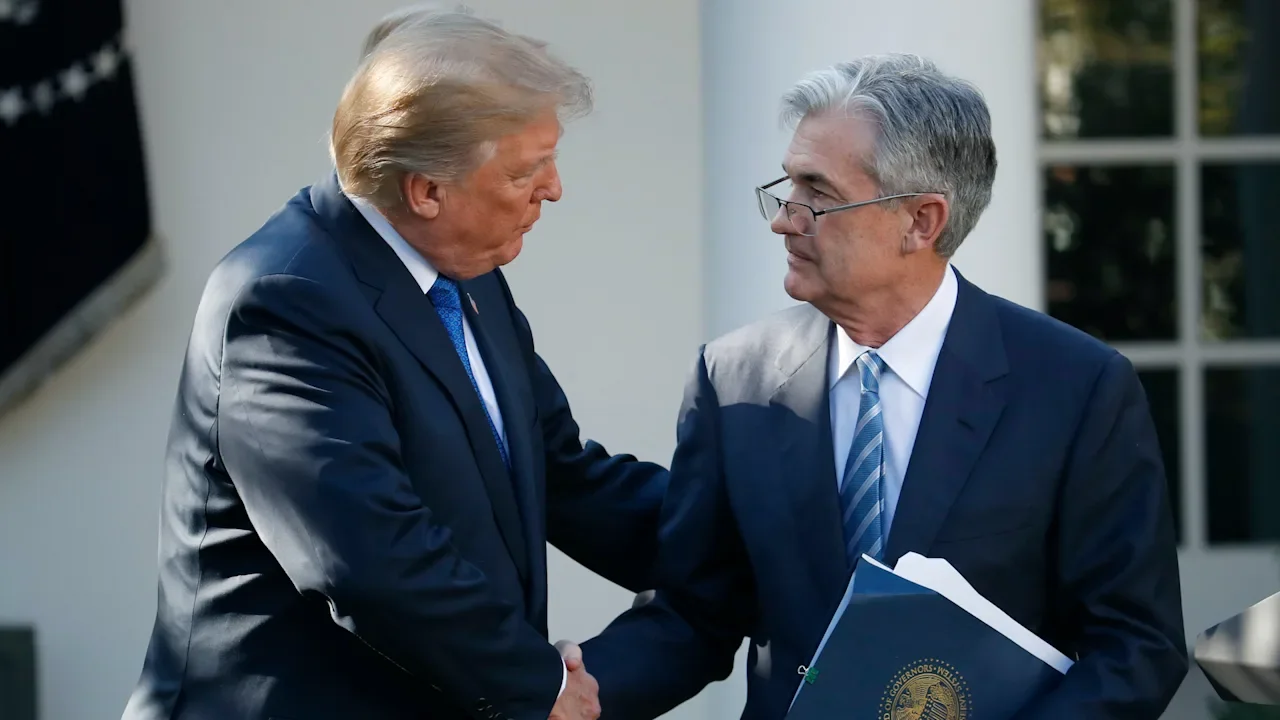
Backlash builds as The President administration’s prosecutors target head of US central bankView the full article
-
There’s a quote from Charles Bukowski framed on my office wall: “What matters most is how well you walk through the fire.” We’re in that fire right now. For 25 years, our company has moved people to show up for entertainment. Then the world changed. Entertainment changed. Technology changed. Almost overnight, we had to throw the old playbook out the window. So, we paused. We looked inward and asked the hard question: Do we rebuild what we had or transform into what we need to be for the future? Companies need to choose the second. For us that meant becoming culture-led, not as a slogan or a rebrand, but as the infrastructure for how we operate. Becoming culture-led doesn’t just guide values; it can become an operational advantage. FROM SILOS TO CONNECTION We stopped organizing ourselves around deliverables and started paying closer attention to what moves people. What makes them care, pause, laugh, click, and share. Inside entertainment, we’d spent decades learning how to meet people in emotional moments. We began applying that same emotional fluency to everything we do: from car launches to hospitality marketing, and CPG storytelling. Not by forcing those categories to feel like entertainment, but by applying what we’d learned about timing, tone, and human connection in places where meaning matters more than ever. A clear example was our work launching God of War Ragnarök for PlayStation. Instead of defaulting to an action-forward montage, we leaned into the child–parent relationship at the heart of the game. That emotional center drove record results. We didn’t get there by chasing categories. We got there by rethinking how we listen, interpret culture, and act on insight. A CHANGE IN HOW THE WORK MOVES Empowering culture-led work to emerge from an organization requires operational change. We’re restructuring our strategy, creative, editorial, and social teams to be leaner and faster. We’re bringing them into the same room at the start of every project. It’s not perfect yet, but the work is already moving differently. We introduced informal culture briefs to stay close to what’s resonating with people right now. Not what’s trending, but what feels real and honest. That proximity keeps us grounded in how people live, not just how marketers talk. The result has been work guided by less formula and more heart, stronger briefs that adhere closer to consumers’ realities, and faster movement of ideas to production. LEARN TO SAY NO (WITHOUT FEELING SICK) We also had to get serious about what we’re willing to walk away from. In entertainment, the rule has always been simple: don’t turn down work. You never know when the next thing is coming. That mindset builds hustle and burnout. A few months ago, for the first time, we turned down entertainment work that would have been a no-brainer any other year. But it didn’t align with who we are becoming, and that was reason enough to walk away from the opportunity. Culture isn’t just what you invite in. It’s what you’re willing to say no to. Every time we’ve made that choice, we’ve seen sharper focus, more ownership, and greater momentum. The team feels lighter, clearer, and more confident in where we’re steering the ship. THE REAL ADVANTAGE WAS NEVER THE CATEGORY The same instinct that led us to center the human relationship in God of War Ragnarök is the one that revealed what we’d been building all along in entertainment—a space that trains you to make people feel something fast. You have seconds to earn attention, emotion, and trust. Over time, we realized that skill, emotional fluency, cultural timing, and instinctive connection were the real advantages. Not the form. Not the category. In hindsight, it’s what strategist Rita McGrath would call a transient advantage. A capability, not a credential. Something portable. Something that evolves as culture shifts. Once we recognized that, the question became how to operationalize it. HIRE TO PUT CULTURAL FLUENCY INTO PRACTICE Becoming culture-led takes more than intention. It takes structure. We’re building that now through cultural roundups, shared language, and clearer boundaries. Not buzzwords. Practical ways to stay connected to how people think and feel. We’re also changing how we hire. Experience still matters, but curiosity, self-awareness, and genuine growth mindset matter more. Alignment is becoming just as important as what client someone may bring in the door. We’re learning to protect the culture we’re building by setting boundaries, by saying no, and by choosing clarity over comfort. Every time we do, we move forward. We’re not done. And we probably never should be. That Bukowski quote doesn’t say what matters is whether you make it through the fire. It says how you walk through it is what matters. That’s the challenge for leadership right now. Not avoiding change. Just walking through it honestly and with intention. Companies that treat culture as a core capability, not a campaign or a slogan, are the ones ready for whatever comes next. Michael McIntyre is the CEO of MOCEAN View the full article

-
Nothing lasts forever. Devices lose support, standards are replaced, and software becomes obsolete. So it is with Microsoft Lens, whose days are numbered. Keen observers have known about this since August, when Microsoft first announced that Lens would be retired in September and removed from app stores in November. That obviously didn't happen, as the company adjusted the deadline to Dec. 15, which also came and went. Microsoft kicked the retirement can down the road—that is, until now. Microsoft Lens was Microsoft's solution for anyone in the mid-2010s who didn't own a scanner. Rather than buy an expensive piece of hardware to digitize documents, Lens allowed people to use their smartphone camera to turn those hard copies into digital files. It was hardly the only document scanner available on app stores (Apple's Notes app has had the function built in since iOS 11), but because it was made by Microsoft, it was a good solution for getting files into Microsoft apps like Word, PowerPoint, or Excel. It's also free and compatible with both Android and iOS, making the app universally accessible. We even listed it first in our roundup of the best document scanner apps from 2021. According to the app's support document, Microsoft Lens officially began retirement proceedings on Jan. 9. That doesn't mean the app is dead, though: Microsoft will still support it until Feb. 9. After that, the app will receive no updates, and Microsoft will remove it from app stores. (If you're passionate or curious about Microsoft Lens, make sure to install it before then.) No matter what, however, you'll only have another month to use it. As of March 9, you will no longer be able to create new scans in Lens, but you'll still be able to view your previous scans as long as the app remains on your device. The best alternatives to Microsoft LensOnce we settle into mid-March, Microsoft Lens users will need to choose an alternative scanning app. Fortunately, there are plenty of options on app stores to choose from. In fact, you might not need to download anything new at all: As mentioned above, iPhone users can tap into the Notes app's built-in scanner, while Google Drive users can do the same. Microsoft, of course, wants you to stay within the ecosystem, so they'd prefer you use OneDrive's built-in scanner. If you already have that app on your phone, it might be as good an option as any. However, there are popular, dedicated apps, like Genius Scan, Adobe Scan, and Photomyne, that offer additional features not available in built-in scanners. View the full article
-
British ministers aim to secure foreign investment at the World Economic ForumView the full article
-
When my mom was dying, hospice came daily and stayed for about ninety minutes. They answered questions, checked what needed to be checked, and did what good professionals do: They made a brutal situation feel slightly less impossible. And then they left. Ninety minutes go fast when you are watching your mother decline. The rest of the day stretches out in a way that does not feel like time so much as exposure. Every sound becomes a data point. Every small change feels like a decision you did not train for. Her breathing sounds strange. What do we do? How often should we turn her to avoid bedsores? What is the diaper situation, exactly? That was the gap, the long, quiet stretch between professional help. In those hours, what you want most is not a miracle. It is simply someone to ask. AI ENTERED MY LIFE IN A WAY I NEVER EXPECTED AI found its way into my life when I least expected it. Not as a replacement for care or love, and not as a shortcut around grief. It was a tool that did not get tired. A place to put the questions you are embarrassed to ask. It was a way to stop spiraling long enough to make the next decision. Before we reached hospice, my mom’s illness had already become a full-time information problem. Over the last few years of her life, her heart and kidney disease worsened, and the complexity multiplied with it. There were doctors and specialists, tests, lab results, scans, phone calls, and constant medication changes. The burden of continuity fell on us, and it was easy to feel like we were one detail away from missing something important. I kept feeling disappointed that I was not managing the “data” better. The dates. The times. The medication lists. When tools like ChatGPT took a leap forward, I suddenly had something I did not have before: A resource that could help me understand what I was looking at and organize what I could not hold in my head. In practice, it was not one magical capability. Depending on the day, AI played different roles: assistant, organizer, translator, sometimes just a calm voice to complain to that could talk back. I built multiple custom GPTs with specific jobs. One focused on medications. One helped me draft clear messages to doctors. One existed for the “dumb questions,” the ones you hesitate to ask because you think you should already know. Another served as a simple health profile, a place to store key details so I could reorient myself when I was exhausted. It might sound like overkill until you have lived long enough inside the healthcare system to realize how inconsistent it can be. People change. Portals change. Instructions change. That little AI “team” was consistent. It was there at any hour when my brain was foggy, and I needed to turn a messy thought into clear words. It even became emotional support in a way I did not anticipate. I built something like a caregiver therapist, somewhere I could say what I was feeling, including guilt, and got feedback that, even though I knew it was an algorithm, still brought real solace. AI WAS NOT PERFECT This is the part people do not like to say out loud. AI gave wrong information sometimes. It forgot a medication from a spreadsheet. It dropped something from a list. It did not remember a doctor when I asked. If you use these tools in caregiving, you must double-check, especially with medication, reminders, and timing. You must treat it like a friend who knows a lot but can be flaky. Still, even with those limitations, the difference was profound. This was never about delegating love. It was about delegating the parts of the experience that did not need to consume the last of my cognitive energy. When my mother finally passed, the AI journey took another turn. It became a project manager for funeral arrangements and the memorial service. It helped me think through practical details, such as food for 30 people and what flowers might cost. It helped me craft a eulogy by taking a messy voice memo, my unstructured stories, and the tone I wanted, and shaping it into an arc in my voice at a time when I could not simply “turn on” my best writer brain. In some ways, the most startling part is that I have a control group. My father passed away about three to three and a half years ago, right before the age of AI. The difference between then and now has been night and day. With my mother, having these tools did not make it easy in the way people mean when they say “easy.” It made it more dignified for everyone, including her. WHAT CHANGED WAS NOT GRIEF. IT WAS THE OVERWHELM Dignity is not the absence of pain or a tidy emotional arc. Dignity is being able to show up without drowning in chaos. It is being able to look your mother in the eye and be present, instead of being trapped inside your own spinning mind, trying to remember whether you wrote down the one thing that could change everything. In the end, the most important thing AI gave me was not an answer. It gave me room. Room to think, to breathe, to steady myself, to stay with my mother instead of disappearing into logistics and fear. Grief will always demand something from you. It demands tears, memory, love, and the kind of courage that does not feel like courage while you are living it. But it also demands paperwork, phone calls, deadlines, and decisions made on days when you can barely form a sentence. AI did not carry the grief. It carried some of the weight around it, so I could carry her, and then carry myself, with a little more dignity. Edwin Endlich is president of the National Alliance for Financial Literacy and Inclusion and chief marketing officer at Wysh. View the full article

-
We may earn a commission from links on this page. Deal pricing and availability subject to change after time of publication. Sony might be better known for its headphones, but it also makes decent speakers. Its latest flagship portable speaker is the ULT Field 5, which launched along with the ULT Field t and ULT Tower 9 last spring, all made to be portable and rugged. This speaker falls between the ULT Field 3 and the ULT Field 7, giving a good middle ground of portability and power. Right now, you can get the biggest one of the lineup for $219 (originally $329.99), the lowest price it has been, according to price-tracking tools. Sony ULT Field 5 $0.00 at Amazon Get Deal Get Deal $0.00 at Amazon The ULT Field 5 is a bass-heavy portable speaker that works for those who value long battery life and portability, as you can read in PCMag's "excellent" review. It comes with a ten-band EQ, an actual woofer (which is surprising given its portable size), an ULT mode which boosts the base, an IP67 rating (waterproof, dustproof, shockproof, and rustproof), and the ability to connect to other speakers through Party Connect. With the ULT Power on, you can expect 25 hours of battery, making this speaker competitive in its market. Blasting it at full volume will drain the battery much faster, though, giving you five hours max. A quick 10-minute charge gets you two hours of juice, which is important for a portable speaker. The sound is stereo, and you can use multi-room if you have other Sony speakers to play media simultaneously with the companion app. This speaker is designed for parties, the outdoors, or larger working spaces. It does come with a shoulder strap that you can hook into the speaker for throwing it over your shoulder, adding to its portability. It uses the Sound Connect app, so people who are part of the Sony ecosystem will get the most out of it. You can see the battery life, control the EQ, connect to other Sony devices, and use the DJ Control feature that lets you add scratching and air horn sounds to your music. Our Best Editor-Vetted Tech Deals Right Now Apple AirPods Pro 3 Noise Cancelling Heart Rate Wireless Earbuds — $229.99 (List Price $249.00) Apple Watch Series 11 [GPS 46mm] Smartwatch with Jet Black Aluminum Case with Black Sport Band - M/L. Sleep Score, Fitness Tracker, Health Monitoring, Always-On Display, Water Resistant — $329.00 (List Price $429.00) Amazon Fire TV Stick 4K Plus — (List Price $24.99 With Code "FTV4K25") Samsung Galaxy Watch 8 — $279.99 (List Price $349.99) Samsung Galaxy Tab A9+ 10.9" 64GB Wi-Fi Tablet (Graphite) — $149.99 (List Price $219.99) Deals are selected by our commerce team View the full article
-
On a live job site, dozens of activities unfold at once, each affecting safety, cost and schedule. A construction site management plan brings order to that complexity by coordinating people, processes and physical space. It gives contractors a practical framework to anticipate risks, control daily operations and keep work progressing smoothly. What Is a Construction Site Management Plan? A construction site management plan is a formal document that outlines how a job site will be organized, controlled and monitored. It defines procedures for coordinating workers, equipment, materials and subcontractors while setting rules for safety, access, communication and compliance. By documenting responsibilities, workflows and controls, the plan establishes consistent standards that guide day-to-day decisions and support predictable, well-managed site operations across varying project scales and contractual environments from mobilization through closeout on active construction sites daily. Functionally, the construction site plan is assembled from a collection of subsidiary plans, each governing a specific dimension of site activity. Together, these interconnected documents form a unified management system, ensuring logistics, safety, risk management, environmental controls and emergency responses operate in alignment rather than isolation throughout daily site operations. ProjectManager can turn static documents into a living, trackable system. From planning site activities, coordinating crews, controlling costs and managing risks, everyone is aligned in real time. The Gantt chart breaks projects into site-specific tasks where you can define task dependencies and critical paths. With built-in resource management, you can also assign crews, equipment and materials to tasks and ensure workloads are balanced. Get started by taking a free 30-day trial. /wp-content/uploads/2022/07/construction-gantt-resources-costs-150-CTA-BUTTON-1.jpgLearn more What Is the Purpose of a Construction Site Management Plan? Without a unifying plan, daily site decisions become fragmented and reactive. The purpose of a construction site management plan is to integrate the many operational, project management, safety and environmental considerations that shape on-site work. It provides a single reference for coordinating movement, protecting workers, managing waste, controlling access and responding to incidents. By aligning these activities, the plan helps maintain efficiency, reduce risk and ensure the site functions safely and consistently each day under complex, changing construction conditions and regulatory requirements. Who Makes the Construction Site Management Plan? Creating a construction site management plan is a collaborative effort that unites strategic oversight and on-the-ground expertise. Each contributor shapes a different part of the plan, ensuring it reflects real site conditions, regulatory requirements and practical execution constraints. Main contractor or general contractor: Leads the development process by coordinating inputs, defining site-wide procedures and ensuring all subsidiary plans align with contract requirements, construction methods, sequencing and overall project objectives. Project manager: Integrates scheduling, budgeting, project scope and resource considerations into the plan, balancing operational feasibility with client expectations while ensuring the document supports efficient daily decision-making and change management. Health and safety manager: Contributes safety protocols, risk controls and emergency procedures, ensuring site operations comply with regulations and protect workers, visitors and the public throughout all construction phases. Site manager or superintendent: Provides practical, field-level input on layout, access, deliveries and workflows, translating planning assumptions into workable site arrangements that reflect actual conditions and constraints in the construction site plan. Environmental or compliance specialists: Define controls related to waste, noise, dust and environmental protection, ensuring the plan addresses regulatory obligations and minimizes environmental impact during construction activities. Design or engineering representatives: Advise on technical constraints, sequencing requirements and design intent, ensuring site management procedures support constructability, specification compliance and safe installation of permanent works. Logistics or procurement coordinators: Contribute delivery planning, supplier coordination and material flow strategies, helping align site access, storage capacity and scheduling with procurement timelines and constraints. Client or owner representatives: Review and influence plan requirements related to access, reporting, security and operational expectations, ensuring the construction site management plan aligns with stakeholder priorities and contractual oversight needs. /wp-content/uploads/2025/01/2025-construction-ebook-banner-ad.jpg What Should Be Included in a Construction Site Management Plan? Now that we’ve covered the basics of a construction site management plan, let’s dive deeper into each of its components for a better understanding of its scope. Construction Site Logistics Plan On active job sites, space, timing and movement are constant constraints. A construction site logistics plan defines how materials, equipment and personnel flow through the site, ensuring deliveries, storage and access are coordinated to support productivity, safety and sequencing without disrupting ongoing construction activities. Site layout planning: Defines placement of work zones, storage areas and access routes to optimize space usage. Material delivery scheduling: Coordinates delivery timing to match construction sequencing and minimize congestion or double handling. Storage and laydown areas: Identifies designated locations for materials based on size, handling needs and protection requirements. Equipment movement routes: Establishes safe, efficient paths for machinery and vehicles operating within the site. Loading and unloading zones: Specifies controlled areas for receiving and dispatching materials without interfering with work fronts. Vertical transportation planning: Addresses cranes, hoists or lifts required to move materials between site levels. Logistics coordination procedures: Defines communication and control processes for managing deliveries, changes and conflicts. Related: 25 Free Excel Construction Templates Construction Site Health & Safety Plan Protecting workers and the public requires more than signage or training. A construction site health and safety plan establishes rules, controls and responsibilities that prevent accidents, manage hazards and ensure regulatory compliance. It defines how risks are identified, mitigated and monitored so that daily activities proceed safely while supporting productivity across changing site conditions and evolving demands throughout the project lifecycle. Hazard identification procedures: Establish processes to recognize, document and assess site-specific risks before work begins. Risk mitigation measures: Define controls such as PPE, barriers and methods to reduce hazard exposure. Safety training requirements: Specify inductions, certifications and ongoing instruction needed for workers and subcontractors onsite. Incident reporting procedures: Outline how accidents, near misses and unsafe conditions are reported and investigated. Emergency response planning: Define actions, contacts and evacuation steps for fires, injuries or other emergencies. Site safety inspections: Schedule regular checks to verify compliance, identify issues and enforce corrective actions. Roles and responsibilities: Assign safety duties to supervisors, workers and specialists to ensure accountability consistently. Construction Site Waste Management Plan Construction activities generate significant waste that affects costs, safety and environmental performance. A construction site waste management plan defines how materials are reduced, reused, segregated and disposed of responsibly. It sets procedures for handling waste streams efficiently, meeting regulations and keeping the site organized while minimizing environmental impact throughout project execution across all phases and work areas on construction sites. Waste classification categories: Define types of waste streams to support segregation, recycling and compliant disposal. On-site segregation procedures: Establish methods for separating materials at source to reduce contamination and costs. Recycling and reuse strategies: Identify opportunities to divert materials from landfill through reuse or recycling. Waste storage areas: Designate locations and containers that safely store waste without disrupting site operations. Licensed disposal methods: Specify approved transporters and facilities to ensure lawful waste removal and documentation. Regulatory compliance controls: Outline monitoring and records needed to meet environmental and local waste regulations. Performance tracking and reporting: Track volumes, costs and recycling rates to improve waste management outcomes. /wp-content/uploads/2022/01/Construction-Schedule-Template.png Get your free Construction Schedule Template Use this free Construction Schedule Template to manage your projects better. Get the Template Construction Site Traffic Management Plan Vehicle and pedestrian movement can quickly become a safety and efficiency risk on active sites. A construction site traffic management plan defines how people, deliveries and machinery move in and around the site, reducing collisions, congestion and disruptions. It coordinates access routes, controls interfaces with public roads and maintains safe circulation as site conditions and activities change. Vehicle access routes: Define approved entry and exit paths to control traffic flow and reduce on-site conflicts. Pedestrian walkways: Establish protected routes separating workers and visitors from vehicle movement zones. Delivery scheduling controls: Coordinate delivery times to prevent congestion and maintain safe traffic conditions. Traffic signage and barriers: Use visual controls to guide drivers, pedestrians and equipment operators safely. Interface with public roads: Manage access points where construction traffic interacts with surrounding road networks. Traffic marshals or spotters: Assign trained personnel to control vehicle movements during high-risk operations. Monitoring and adjustments: Review traffic arrangements regularly and adapt layouts as site activities evolve. Construction Site Environmental Management Plan Construction work can impact air, soil, water and surrounding communities if unmanaged. A construction site environmental management plan establishes controls to minimize environmental harm while ensuring regulatory compliance. It defines how impacts such as noise, dust and runoff are monitored and mitigated, supporting responsible construction practices throughout all phases of site activity. Environmental risk assessment: Identify site activities that may negatively impact environmental conditions or surrounding areas. Dust and air control measures: Define methods to limit airborne particles and maintain acceptable air quality. Noise and vibration management: Establish controls to reduce disturbance to workers, neighbors and sensitive areas. Water and runoff controls: Manage drainage, erosion and contamination to protect surface and groundwater resources. Material handling procedures: Specify storage and handling rules to prevent spills and environmental contamination. Monitoring and inspections: Conduct regular checks to ensure environmental controls remain effective and compliant. Incident response procedures: Define actions for addressing spills, breaches or unexpected environmental impacts. Related: 5 Best Construction ERP Software: Key Features to Look for Construction Site Security Plan Unauthorized access and theft pose safety, financial and operational risks on construction sites. A construction site security plan defines measures to protect people, materials and equipment. It establishes access controls, monitoring procedures and response protocols that safeguard assets, deter incidents and maintain controlled site conditions throughout the construction period. Site access controls: Define entry points, credentials and authorization procedures for workers and visitors. Perimeter protection measures: Use fencing, gates and barriers to secure site boundaries effectively. Security personnel deployment: Assign guards or patrols to monitor activity and respond to incidents. Surveillance systems: Implement cameras or monitoring technology to deter theft and record site activity. Asset protection procedures: Establish controls for securing tools, equipment and high-value materials. Incident reporting protocols: Define how security breaches or suspicious activity are documented and addressed. Emergency coordination measures: Align security responses with emergency services and site response plans. Construction Site Emergency Response Plan Unexpected incidents can escalate quickly without clear direction and risk management guidelines. A construction site emergency response plan establishes structured actions for handling injuries, fires, evacuations and other critical events. It ensures workers know how to respond, who to contact and where to go, reducing confusion, limiting harm and supporting rapid, coordinated responses under high-pressure conditions across active construction environments. Emergency risk identification: Identify potential emergency scenarios specific to site activities, location and construction methods. Emergency contact information: List internal contacts, emergency services and escalation paths for rapid communication. Evacuation procedures: Define routes, assembly points and responsibilities for safely clearing the site. First aid and medical response: Establish treatment procedures, trained personnel and access to medical equipment onsite. Fire response measures: Outline detection, suppression methods and actions to control or contain fires. Roles and responsibilities: Assign emergency duties to supervisors, wardens and response personnel clearly. Training and drills: Schedule regular exercises to ensure workers understand procedures and respond effectively. Construction Quality Management Plan In construction projects, quality issues often surface late, when corrections are costly and disruptive. A construction quality management plan defines how quality assurance and quality control standards are established, work is inspected and defects are prevented. It provides a systematic approach to ensuring materials, workmanship and processes meet specifications, contractual requirements and regulatory expectations throughout construction activities and project delivery. Quality standards and specifications: Define applicable codes, drawings and performance criteria that construction work must meet. Inspection and testing procedures: Establish when and how inspections or tests are performed to verify compliance. Quality control checkpoints: Identify critical stages where work is reviewed before proceeding further. Roles and responsibilities: Assign accountability for inspections, approvals and quality-related decision-making. Nonconformance management: Define processes for documenting, correcting and approving deviations from specifications. Documentation and records: Specify reports, checklists and records required to demonstrate quality compliance. Continuous improvement processes: Use lessons learned and corrective actions to improve quality performance over time. Free Construction Project Management Templates We’ve created dozens of free construction project management templates for Excel, Word and Google Sheets. Here are some that can help when creating a construction site management plan. Construction Budget Template Organizes projected and actual construction costs into clear categories, helping teams plan budgets, track spending, control overruns and maintain financial visibility throughout all project phases from planning through final closeout. Construction Management Plan Template Provides a structured framework for coordinating site operations, responsibilities and controls, ensuring construction activities are planned, managed and executed consistently while aligning safety, logistics and compliance requirements across complex projects. Construction Safety Plan Template Defines procedures, responsibilities and controls to protect workers and the public, manage hazards and meet regulations, creating safer construction environments and reducing incidents across all site activities and daily operations. ProjectManager Is Ideal for Construction Project Management To execute a construction site management plan effectively, countless construction teams rely on ProjectManager. Our award-winning software coordinates people, schedules and costs in one platform. With real-time visibility, construction teams can better understand job site organization and demand. Having access to updated data at your fingertips makes it easier to support proactive decision-making, transforming site management from reactive problem-solving into controlled, predictable execution. Connect the Schedule, Resources and Costs in the Gantt Chart A Gantt chart lays out every construction activity on a timeline, from mobilization to closeout. Break work into clear phases and see how long each task should take. When you remove the ambiguity, it provides the entire team with a shared understanding of the plan. /wp-content/uploads/2022/07/Construction-Gantt-light-mode-task-info-general.jpg Proactive Risk and Issue Management Risk and issue management is where many construction projects either stay under control or spiral into delays. ProjectManager helps provide a structured, real-time system to identify, track and respond to risks before they happen and after they occur. A built-in RAID log is the perfect place to tag team members, set a response plan and ensure everyone is aligned on how to take action. /wp-content/uploads/2023/11/risk-image-lightmode.png Related Construction Project Management Content 39 Construction Documents (Templates Included) 10 Types of Construction Projects with Examples How to Manage a Construction Project Step by Step 10 Free Construction Plan Templates for Excel & Word Construction Work Breakdown Structure: A Quick Guide ProjectManager is award-winning software that helps you plan, manage and track construction projects in real time. We empower teams on a collaborative platform with task and resource management features to keep everyone working together more productively. Get started with ProjectManager today for free. The post Construction Site Management Plan: A Quick Guide appeared first on ProjectManager. View the full article
-
Paramount Skydance is taking another step in its hostile takeover bid of Warner Bros. Discovery, saying Monday that it will name its own slate of directors before the next shareholder meeting of the Hollywood studio. Paramount also filed a suit in Delaware Chancery Court seeking to compel Warner Bros. to disclose to shareholders how it values its bid and the competing offer from Netflix. Warner Bros. is in the middle of a bidding war between Paramount and Netflix. Warner’s leadership has repeatedly rebuffed overtures from Skydance-owned Paramount — and urged shareholders to back the sale of its streaming and studio business to Netflix for $72 billion. Paramount, meanwhile, has made efforts to sweeten its $77.9 billion hostile offer for the entire company. Last week, Warner Bros. Discovery said its board determined Paramount’s offer is not in the best interests of the company or its shareholders. It again recommended shareholders support the Netflix deal. David Ellison, the chairman and CEO of Paramount Skydance, said Monday that it’s committed to seeing through its tender offer. “We do not undertake any of these actions lightly,” he said in a letter to shareholders of Warner Bros. Warner Bros. has yet to schedule its annual meeting or a special meeting to consider the Netflix offer, and Paramount did not name any potential candidates for the board. —Associated Press View the full article

-
Levies to be applied immediately by US could affect nations such as China, Russia and India View the full article
-
80,000+ WooCommerce Square WordPress plugin installations vulnerable to fraudulent charges flaw The post WooCommerce WordPress Plugin Exploit Enables Fraudulent Charges appeared first on Search Engine Journal. View the full article
-
We may earn a commission from links on this page. Deal pricing and availability subject to change after time of publication. While the market today is flooded with smart-health-tracking rings, few monitor detailed sleep stats like sleep apnea risks, which is where one truly stands out—especially if your priority is quality zzz’s. Right now, the RingConn Gen 2 smart ring is 20% off in gold, future silver, and rose gold at $239.20 (originally $299), making this wearable the perfect tech-meets-jewelry gift for yourself or a partner with Valentine’s Day on the horizon. RingConn Gen 2 $239.20 at Amazon $299.00 Save $59.80 Get Deal Get Deal $239.20 at Amazon $299.00 Save $59.80 Sizing is especially important with a smart ring since the sensors need consistent skin contact to track activity accurately. Ring Conn offers a free sizing kit to help you accurately gauge this, and they also have an easy-to-follow sizing chart. Gen 2 is RingConn’s full-featured model, compared to the more entry-level, budget-friendly Gen Air 2, which was reviewed by PCMag. Its 12-day battery life (double that of its predecessor) is one of the biggest perks, as it has a lightweight, ultra-thin design that isn’t noticeable, especially when you’re sleeping. With data and insights included with the purchase, it offers an alternative to subscription-based health tracking like the Oura. The RingConn Gen 2 measures stats like heart rate, blood oxygen, HRV/stress index, and activity, as well as sleep stages and sleep apnea monitoring, which is a relatively new innovation in the wearable category. It also lasts up to 100 meters underwater, making it suitable for shower use or swimming. This smart ring is compatible with both Android and iOS, and it works with both Google Fit and Apple Health. That said, some users say the app isn’t as user-friendly as competitors and certain insights require you to interpret trends on your own rather than getting actionable coaching that some rivals provide. It also may be prone to scratching over time compared to more rugged options like the Oura Ring Gen 4, but it comes with a 12-month warranty. If you’re looking for a long-lasting wearable health tracker that doesn’t require a subscription but still has similar core features as pricier competitors, the RingConn Gen 2 smart ring is a great option. While its data presentation may be slightly less polished and lacks coaching features, it offers the same basic-to-advanced health metrics as better-known brands at a lower upfront cost and with no recurring fees—especially at the current discount. Our Best Editor-Vetted Tech Deals Right Now Apple AirPods Pro 3 Noise Cancelling Heart Rate Wireless Earbuds — $229.99 (List Price $249.00) Apple Watch Series 11 [GPS 46mm] Smartwatch with Jet Black Aluminum Case with Black Sport Band - M/L. Sleep Score, Fitness Tracker, Health Monitoring, Always-On Display, Water Resistant — $329.00 (List Price $429.00) Amazon Fire TV Stick 4K Plus — (List Price $24.99 With Code "FTV4K25") Samsung Galaxy Watch 8 — $279.99 (List Price $349.99) Samsung Galaxy Tab A9+ 10.9" 64GB Wi-Fi Tablet (Graphite) — $149.99 (List Price $219.99) Deals are selected by our commerce team View the full article
-
Shadow chancellor Mel Stride will also propose reforms to OBR aimed at ‘fully capturing’ impact of tax cuts on growth View the full article
-
Muhammad Ali once joked that he should be a postage stamp because “that’s the only way I’ll ever get licked.” Now, the three-time heavyweight champion’s quip is becoming reality. Widely regarded as the most famous and influential boxer of all time, and a cultural force who fused athletic brilliance with political conviction and showmanship, Ali is being honored for the first time with a commemorative U.S. postage stamp. “As sort of the guardian of his legacy, I’m thrilled. I’m excited. I’m ecstatic,” Lonnie Ali, the champ’s wife of nearly 30 years, told The Associated Press. “Because people, every time they look at that stamp, they will remember him. And he will be in the forefront of their consciousness. And, for me, that’s a thrill.” A fighter in the ring and compassionate in life Muhammad Ali died in 2016 at the age of 74 after living with Parkinson’s disease for more than three decades. During his lifetime and posthumously, the man known as The Greatest has received numerous awards, including an Olympic gold medal in 1960, the United Nations Messenger of Peace award in 1998 and the Presidential Medal of Freedom in 2005. Having his face on a stamp, Lonnie Ali said, has a particular significance because it’s a chance to highlight his mission of spreading compassion and his ability to connect with people. “He did it one person at a time,” she said. “And that’s such a lovely way to connect with people, to send them a letter and to use this stamp to reinforce the messaging in that life of connection.” Stamp to be publicly unveiled A first-day-of-issue ceremony for the Muhammad Ali Forever Stamp is planned for Thursday in Louisville, Kentucky, the birthplace of the famed boxer and home to the Muhammad Ali Center, which showcases his life and legacy. That’s when people can buy Muhammad Ali Forever Stamps featuring a black-and-white Associated Press photo from 1974 of Ali in his famous boxing pose. Each sheet of 20 stamps also features a photo of Ali posing in a pinstripe suit, a recognition of his work as an activist and humanitarian. Twenty-two million stamps have been printed. Once they sell out, they won’t be reprinted, U.S. Postal Service officials said. The stamps are expected to generate a lot of interest from collectors and noncollectors. Because they’re Forever Stamps, the First-Class Mail postage will always remain valid, which Lonnie Ali calls an “ultimate” tribute. “This is going to be a Forever Stamp from the post office,” she said. “It’s just one of those things that will be part of his legacy, and it will be one of the shining stars of his legacy, getting this stamp.” Creating a historic stamp Lisa Bobb-Semple, the USPS director of stamp services, said the idea for a Muhammad Ali stamp first came about shortly after his death almost a decade ago. But the process of developing a stamp is a long one. The USPS requires people who appear on stamps to be dead for at least three years, with the exception of presidents. As the USPS was working behind the scenes on a stamp, a friend of Ali helped to launch the #GetTheChampAStamp campaign, which sparked public interest in the idea. “We are really excited that the stars were able to align that allowed us to bring the stamp to fruition,” said Bobb-Semple, who initially had to keep the planned Ali stamp secret until it was official. “It’s one that we’ve always wanted to bring to the market.” Members of the Citizen Stamps Advisory Committee, appointed by the postmaster general, are responsible for selecting who and what appears on stamps. Each quarter, they meet with Bobb-Semple and her team to review suggestions submitted by the public. There are usually about 20 to 25 commemorative stamp issues each year. Once a stamp idea is selected, Bobb-Semple and her team work with one of several art directors to design the postage. It then goes through a lengthy final approval process, including a rigorous review by the USPS legal staff, before it can be issued to the public. Antonio Alcalá, art director and designer of the Muhammad Ali stamp, said hundreds of images were reviewed before the final choices were narrowed to a few. Finally, the AP image, taken by an unnamed photographer, was chosen. It shows Ali in his prime, posing with boxing gloves and looking straight into the camera. Alcalá said there’s a story behind every USPS stamp. “Postage stamps are miniature works of art designed to reflect the American experience, highlight heroes, history, milestones, achievements and natural wonders of America,” he said. “The Muhammad Ali stamps are a great example of that.” A candid figure on war, civil rights and religion Beyond the boxing ring, Ali was outspoken about his beliefs when many Black Americans were still fighting to be heard. Born Cassius Clay Jr., Ali changed his name after converting to Islam in the 1960s and spoke openly about race, religion and war. In 1967, he refused to be inducted into the U.S. Army, citing his religious beliefs and opposition to the Vietnam War. That stance cost Ali his heavyweight championship title and barred him from boxing for more than three years. Convicted of draft evasion, he was sentenced to five years in prison but remained free while appealing the case. The conviction was overturned by the U.S. Supreme Court in 1971, further cementing his prominence as a worldwide figure. Later in life, Ali emerged as a global humanitarian and used his fame to promote peace, religious understanding and charitable causes, even as Parkinson’s disease limited his speech and movement. Ali’s message during a time of strife The commemorative postage stamp comes at a time of political division in the U.S. and the world. Lonnie Ali said if her husband were alive today, he’d probably “block a lot of this out” and continue to be a compassionate person who connects with people every day. That approach, she said, is especially important now. “We have to mobilize Muhammad’s life and sort of engage in the same kinds of acts of kindness and compassion that he did every day,” she said. —Susan Haigh, Associated Press View the full article

-
Shares of the budget airline Sun Country were flying today after the carrier announced an upcoming merger with Las Vegas-based competitor Allegiant. In a press release published on January 11, Allegiant shared its plan to acquire Minneapolis-based Sun Country in a $1.5 billion cash and stock transaction, which is expected to close in the second half of 2026. Per the release, the merger will bring together a shared customer pool of nearly 22 million annual fliers across 175 cities and more than 650 routes. It will also give Allegiant access to Sun Country’s multi-year partnership delivering packages with Amazon Prime Air, which Allegiant CEO Greg Anderson told CNBC was a major part of the deal. News of the acquisition comes as other budget carriers, like Spirit Airlines, struggle to compete in an increasingly exclusive airline industry. As of market close on Monday, Allegiant’s stock was down about 6%, whereas Sun Country’s shares soared by over 10%. Budget air carriers fight an uphill battle For small, low-cost air carriers, profitable business is a turbulent affair. According to October data from the U.S. Bureau of Transportation, a whopping 68.5% of total airline market share in the U.S. is cornered by four major companies: Delta, American, Southwest, and United. As those four powerhouses leverage their outsized financial power to battle it out over offering more and more premium perks for fliers, smaller companies are left struggling to keep up. One example of this pattern is Spirit Airlines, the beleaguered carrier that has filed for Chapter 11 bankruptcy twice since November 2024. Spirit hasn’t made a profit since 2019—indeed, as of late 2024, it had lost more than $2.4 billion since that time as it was unable to recover from pandemic-based losses. The company attempted to lessen its debt load through a proposed sale to JetBlue, but that ultimately fell through in 2022 when it was challenged by the Department of Justice. In recent months, Spirit has announced its second bankruptcy, canceled all routes to 12 major cities, and furloughed 1,800 flight attendants. While corporate mishandling is certainly partially responsible for Spirit’s troubles, its difficulties reflect larger hurdles for small air carriers in an industry where resources have become increasingly siloed. One way to address those issues is, as demonstrated by Spirit’s attempted sale to JetBlue, to merge with another company. Now, Allegiant and Sun Country appear to be attempting something similar by pooling their aircrafts, routes, and flier bases to meet traveler demands. “The combination will create a leading leisure-focused U.S. airline,” the press release reads, “expanding service to more popular vacation destinations across the United States, as well as international destinations, and providing more people with access to affordable, convenient air travel.” View the full article

-
On the red carpet of the 2026 Golden Globes, several celebrities used their garments as vehicles of protest against Immigration and Customs Enforcement (ICE) and spoke openly about their dissent against the current The President administration. But on the event’s actual stage, political commentary was noticeably absent compared with years past. Popular American awards shows have long been criticized for primarily uplifting the voices of white, male, affluent creators. But, equally, the stages of these events have been used as platforms for public figures to speak out about current politics and social justice. In 1973, Marlon Brando famously rejected his best actor Oscar at the Academy Awards and sent Sacheen Littlefeather, a Native American woman, to deliver a speech on his behalf. More recently, in 2018, Seth Meyers made numerous jokes at The President’s expense at the Golden Globes. This year, though, political commentary on the Golden Globes stage was kept to a few passing comments and oblique references. It’s a shift that reflects a broader trend of Hollywood’s elite seemingly turning a blind eye to the current state of affairs during The President’s second term. “The most important thing in the world” To glean any kind of political statement from last night’s show, one might’ve needed to perform a close reading. Comedian Nikki Glasser opened the ceremony with a vague allusion to pretty much everything happening outside of Hollywood, calling the Golden Globes, “without a doubt the most important thing happening in the world right now.” Others followed with similarly discreet jabs, including one comment from director Judd Apatow that “I believe we’re in a dictatorship now,” neatly sandwiched within a stream of jokes. Even when the film One Battle After Another—a satire about revolution that critiques anti-immigration groups—won multiple awards, no statement was made directly about the current administration. Compare that tenor to 2017, when, just months after The President was elected for his first term, one of the Golden Globes’ most viral—and impactful—moments came when Meryl Streep used her acceptance speech to publicly call out the president. “Hollywood is crawling with outsiders and foreigners, and if we kick them all out, we’ll have nothing to watch except football and mixed martial arts—which are not the arts,” Streep said. Her speech came years before The President’s National Guard ever brutalized protestors in the streets; before the Department of Homeland Security separated thousands of children from their parents; before ICE agents starting showing up at schools and community centers across the country; and before agent Jonathan Ross shot and killed Minneapolis resident Renee Nicole Good just last week. Yet, somehow, it would’ve looked out of place at last night’s comparatively apolitical event. “Of course, this is for the mother” To be fair, several celebrities did make an effort to speak up. Stars including Wanda Sykes, Natasha Lyonne, and Jean Smart wore pins reading “Be Good” as a reference to Renee Nicole Good. Others sported pins with the phrase “Ice Out.” In a pre-show interview with Variety, Sykes explained of her pin, “Of course this is for the mother who was murdered by an ICE agent, and it’s really sad.” Mark Ruffalo also spoke more directly, telling Entertainment Tonight, “We’ve got, literally, storm troopers running around terrorizing, and as much as I love all this, I don’t know if I can pretend like this crazy stuff isn’t happening.” In another interview with USA Today, he added, “[The President is] a pedophile. He’s the worst human being. If we’re relying on this guy’s morality for the most powerful country in the world, then we’re all in a lot of trouble.” But, notably, these comments were shared on the red carpet, to be consumed by readers at disparate news outlets—rather than on the main stage itself, to millions of viewers at home. When the evening’s stars got their moments in the limelight, they largely opted to stay quiet. “Am I brave, or are they cowards?” The literal sidelining of political commentary at the 2026 Golden Globes may be disappointing to fans who want celebrities to speak out about injustices, but it’s not surprising, given Hollywood’s about-turn since The President’s second term began. Stars like Jennifer Lawrence, Robert de Niro, Barry Jenkins, and more who once strongly criticized the president have lately been quiet. Lawrence herself recently spoke on this change, stating in an interview with The New York Times’ “The Interview” podcast that “we’ve learned election after election, celebrities do not make a difference whatsoever on who people vote for.” But as Refinery 29 aptly observes in a recent article, that’s not entirely true. Taylor Swift’s endorsement of Kamala Harris ahead of the 2024 presidential election drove more than 400,000 people to the vote.gov site in 24 hours, it points out. And Bridgerton actress Nicola Coughlan’s advocacy for Palestine aid organizations has helped raise more than $2 million to date. Speaking to Refinery 29 after this year’s Golden Globes, actress and activist Jameela Jamil refuted the idea that her own advocacy is “brave.” “Am I brave or are they cowards?” she said. “I think they’re being greedy and weird and disappointing. Look at the billions of eyeballs on all of us collectively—there should be no outliers of the industry who are the outspoken ones . . . out there on their own with this amount of privilege.” View the full article

-
Continuing to retreat from Biden-era rules, the Consumer Financial Protection Bureau and Department of Justice withdrew a 2023 advisory opinion that had cautioned about denying credit to immigrants. View the full article

-
This weekly trip through the youth pop culture landscape takes us from turmoil in Stranger Things fandom, where many fans refuse to let the show end, to the kids' Wild West of Roblox, where age-verification is changing the landscape in a massive way, and all the way to Africa, where online mega-celebrity IShowSpeed is livestreaming a fascinating travelogue that people are watching all over the world. What is "Conformity Gate?"The final episode of Netflix sci-fi series Stranger Things aired on Dec. 31 and it seems that many fans are not happy (shocking, right?). Some feel that the finale left too many loose ends, some that it all happened too easily, or that it was rushed, sloppy, and that it just kind of sucked. Some fans were so unhappy with the end of the series that they concluded it couldn't really be the end; there has to be more to it. Thus was born "Conformity Gate," the fan-conspiracy-theory that states there is a secret, real ending to Stranger Things that Netflix hasn't released yet. In a nutshell, Conformity Gate imagines that the events depicted in the last episode didn't actually happened in reality. The show's antagonist, Vecna, is in control of the story, and the seeming ending is an illusion that the characters (and audience) have been fed. The evidence is scant—props are slightly different from season to season or episode to episode, characters get small details wrong in dialogue, and other small differences. These are, I'm confident, the result of continuity and editing errors mixed with fans overanalyzing. I suspect the overarching issue with the end of Stranger Things is the same problem that has plagued other ambitious TV shows—Lost, Game of Thrones, The Sopranos, etc. There isn't a fully worked out ending when the show is pitched, leaving the show's creators to try to "work something out" for the ending, as opposed to going into it knowing exactly how it's going to come out. This is also why the first seasons of good shows are almost always better than the seasons that follow: The show's creators have fully plotted out the arc of the first season, but future events are more vague so the story feels slapdash instead of inevitable. Anyway, Charlie Heaton, who plays Jonathan Byers in Stranger Things, called the Conformity Gate theory "insane," and the bio on Stranger Thing's X account was changed to read "ALL EPISODES OF STRANGER THINGS ARE NOW PLAYING (all-caps are theirs.) This doesn't close the case on Stranger Things, though. There's still money to be made on the franchise, so I'd bet we see new content at some point; it just probably won't be a new ending. Roblox age verification launchedThe new year brings a world-shaking event to videogame Roblox: mandatory ID or facial verification. It works like this: if unverified users try to chat on Roblox, they are directed to give the game permissions to use their camera, then follow a series of online instructions so a verification algorithm can divine their age group based on their features. Users over 13 can submit a photo of an identification card instead. Roblox promises any images or videos taken during the verification process will be deleted after it is complete. Players who don't want to verify can still play Roblox, but they won't be able to use communication features within it. Once Roblox knows users' ages, it only allows them to chat with others in similar age groups. Here's how the company breaks down who may chat with whom: Credit: Roblox The move is in response to longtime concerns about child safety within Roblox, which include organized groups of online predators like 764 using the game to recruit victims, Roblox mini-games with questionable content that are/were open to younger players, and at least 24 reported arrests of sex predators using Roblox to find victims. An age-verified Roblox account is a positive step, but it's far from perfect. Videos like this are popping up on TikTok, where users seem to be sharing ways to get around the filter system. I have no idea if this would work, but if it does, not only would it let kids have more "grown up" accounts, it also could lead to grown-ups getting "younger" accounts. Online groomers often mimic the age group they're interested in, and a verified account seems like it would make this much easier. Another area of concern: Last week, users on X were linking to eBay accounts specifically advertised as "13-15 age group accounts." Those auctions seem to have been taken down by eBay, but in the darker corners of the internet, I have no doubt that trade in verified Roblox accounts is brisk. What is a Choppelganger? This week's slang word combines the words "chopped" and "doppelgänger" to deliver a massive insult. "Chopped" (as you can read in Lifehacker's glossary of Gen Z and Gen A slang) describes a person who is ugly, and doppelgänger means "a ghostly duplicate of a living person," so a choppelganger is someone who looks like you, but worse. The term was coined in this post on X : This Tweet is currently unavailable. It might be loading or has been removed. And it was soon adopted by TikTokers who posted videos like these: It's probably not the most widely used slang—there aren't too many places where the idea actually would come up—but it's definitely clever. Viral video of the week: Speed does Africa These are dark days for humanity, but there's some sunlight breaking through. This week's conformation of the essential goodness of people comes from YouTube legend IShowSpeed, who is in the middle of posting an epic series of livestream videos documenting a trip to Africa. The internet is responding, both in America and in Africa, with tens of millions of views. So far, Speed has visited Rwanda, Zambia, Kenya (where he and his crew went on safari and visited the Maasai Mara where Speed got a traditional tattoo, among other adventures) and more. Many more stops are planned in the coming days, including Liberia, Morocco, and Botswana. Speed is like an informal ambassador for America's people, and his open, honest, hilarious videos are acting as a cultural exchange program or a bridge between two worlds. The comments are amazing, with African people posting things like, "No words can capture the depth of what we feel as Africans. By simply revealing our humanity, you have compelled the world to witness the true brilliance of our continent—its beauty, its dignity, its spirit," and Americans saying things like, "I didn’t know Zimbabwe was lit like that" and posting emotional reaction videos like this: If you need some hopium, you should definitely go to IShowSpeed's YouTube channel and follow along on his adventures, even if you're an old fart like me. View the full article
-
The Justice Department has threatened the Federal Reserve with a criminal indictment over the testimony of Fed Chair Jerome Powell this summer regarding its building renovations, Powell said over the weekend. It is a major escalation by the administration after repeated attempts by President Donald The President to exert greater control over the independent institution. The President has repeatedly attacked Powell for not cutting the short-term interest rate, and even threatened to fire him. Powell’s caution has infuriated The President, who has demanded the Fed cut borrowing costs to spur the economy and reduce the interest rates the federal government pays on its debt. That anger has not subsided even after the Fed cut interest rates in three of the final four months of 2025. The President has also accused Powell of mismanaging the U.S. central bank’s $2.5 billion building renovation project. In a sharp departure from his previous responses to attacks by The President, Powell described the threat of criminal charges as simple “pretexts” to undermine the Fed’s independence when it comes to setting interest rates. While there has been a limited response from Republican lawmakers, there have been several early breaks with the party. “If there were any remaining doubt whether advisers within the The President Administration are actively pushing to end the independence of the Federal Reserve, there should now be none,” said North Carolina Sen. Thom Tillis, who sits on the Banking Committee, which oversees Fed nominations. The President is already seeking to fire Federal Reserve Governor Lisa Cook over unproven allegations that she committed mortgage fraud. The allegation was made over the summer by Bill Pulte, a The President appointee to the Federal Housing Administration. Here are some reasons why the independence of the U.S. Federal Reserve is guarded so closely. Why the Fed’s independence matters The Fed wields extensive power over the U.S. economy. By cutting the short-term interest rate it controls — which it typically does when the economy falters — the Fed can make borrowing cheaper and encourage more spending, accelerating growth and hiring. When it raises the rate — which it does to cool the economy and combat inflation — it can weaken the economy and cause job losses. Economists have long preferred independent central banks because they can more easily take unpopular steps to fight inflation, such as raise interest rates, which makes borrowing to buy a home, car, or appliances more expensive. The importance of an independent Fed was cemented for most economists after the extended inflation spike of the 1970s and early 1980s. Former Fed Chair Arthur Burns has been widely blamed for allowing the painful inflation of that era to accelerate by succumbing to pressure from President Richard Nixon to keep rates low heading into the 1972 election. Nixon feared higher rates would cost him the election, which he won in a landslide. Paul Volcker was eventually appointed chair of the Fed in 1979 by President Jimmy Carter, and he pushed the Fed’s short-term rate to the stunningly high level of nearly 20%. (It is currently 3.6%, the lowest it has been in nearly three years.) The eye-popping rates triggered a sharp recession, pushed unemployment to nearly 11%, and spurred widespread protests. Yet Volcker didn’t flinch. By the mid-1980s, inflation had fallen back into the low single digits. Volcker’s willingness to inflict pain on the economy to throttle inflation is seen by most economists as a key example of the value of an independent Fed. Investors are watching closely An effort to fire Powell would almost certainly cause stock prices to fall and bond yields to spike higher, pushing up interest rates on government debt and raising borrowing costs for mortgages, auto loans, and credit card debt. The interest rate on the 10-year Treasury is a benchmark for mortgage rates. All major U.S. markets slid Monday at the opening bell, bond yields edged higher and the value of the U.S dollar declined. Most investors prefer an independent Fed, partly because it typically manages inflation better without being influenced by politics, but also because its decisions are more predictable. Fed officials often publicly discuss how they would alter interest rate policies if economic conditions changed. If the Fed was more swayed by politics, it would be harder for financial markets to anticipate — or understand — its decisions. While the Fed controls a short-term rate, financial markets determine longer-term borrowing costs for mortgages and other loans. And if investors worry that inflation will stay high, they will demand higher yields on government bonds, pushing up borrowing costs across the economy. In Turkey, for example, President Recep Tayyip Erdogan forced the central bank to keep interest rates low in the early 2020s, even as inflation spiked to 85%. In 2023, Erdogan allowed the central bank more independence, which has helped bring down inflation, but short-term interest rates rose to 50% to fight inflation, and remain high. The Fed’s independence doesn’t mean it’s unaccountable Fed chairs like Powell are appointed by the president to serve four-year terms, and have to be confirmed by the Senate. The president also appoints the six other members of the Fed’s governing board, who can serve staggered terms of up to 14 years. Those appointments can allow a president over time to significantly alter the Fed’s policies. Former president Joe Biden appointed four of the current seven members: Powell, Cook, Philip Jefferson, and Michael Barr. A fifth Biden appointee, Adriana Kugler, stepped down unexpectedly on Aug. 1, about five months before the end of her term. The President has already nominated his top economist, Stephen Miran, as a potential replacement, though he will require Senate approval. Cook’s term ends in 2038, so forcing her out would allow The President to appoint a loyalist sooner. The President will be able to replace Powell as Fed chair in May, when Powell’s term expires. Yet 12 members of the Fed’s interest-rate setting committee have a vote on whether to raise or lower interest rates, so even replacing the Chair doesn’t guarantee that Fed policy will shift the way The President wants. Congress, meanwhile, can set the Fed’s goals through legislation. In 1977, for example, Congress gave the Fed a “dual mandate” to keep prices stable and seek maximum employment. The Fed defines stable prices as inflation at 2%. The 1977 law also requires the Fed chair to testify before the House and Senate twice every year about the economy and interest rate policy. Could the president fire Powell before his term ends? The Supreme Court last year suggested in a ruling on other independent agencies that a president can’t fire the chair of the Fed just because he doesn’t like the chair’s policy choices. But he may be able to remove him “for cause,” typically interpreted to mean some kind of wrongdoing or negligence. It’s a likely reason the The President administration has zeroed in on the building renovation, in hopes it could provide a “for cause” pretext. Still, Powell would likely fight any attempt to remove him, and the case could wind up at the Supreme Court. —Christopher Rugaber, AP economics writer View the full article
-
A customer rewards program is a structured approach that businesses use to promote customer loyalty by offering incentives for repeat purchases. Typically, customers earn points for each dollar they spend or through engagement activities, which can then be redeemed for discounts or exclusive offers. These programs vary widely in structure and benefits, making it crucial to understand how they operate and their potential impact on customer behavior. Let’s explore the various elements that contribute to their success. Key Takeaways A customer rewards program incentivizes repeat purchases through various benefits, enhancing customer engagement and loyalty. Members typically earn points for every dollar spent, which can be redeemed for discounts or exclusive rewards. Tiered systems offer escalating perks as spending increases, motivating customers to reach higher spending levels. Personalized rewards boost brand loyalty, with consumers more likely to trust companies they are loyal to. Regular communication about points and rewards fosters transparency, enhancing customer satisfaction and trust in the program. Definition of a Customer Rewards Program A customer rewards program is a strategic initiative intended to improve customer engagement and encourage repeat purchases by offering various incentives, such as discounts or exclusive benefits, in exchange for loyalty. To create a successful rewards program, you need to identify the best rewards program perks that resonate with your target audience. These can include point-based systems, tiered rewards, or exclusive access to events. By rewarding specific activities like making purchases or referring friends, you can boost brand recall and increase purchase frequency. Historically, these programs have evolved from basic punch-card systems to sophisticated digital platforms that track customer behavior. Research shows that members often spend up to 18% more than non-members, highlighting the financial benefits of implementing a well-designed customer rewards program. How Customer Rewards Programs Work When you join a customer rewards program, you typically start by registering your information, which allows the system to track your points as you make purchases and engage in other qualifying activities. Most of the best rewards programs operate on a point-based system, where you earn points for each dollar spent and for engaging in activities like social media shares or referrals. These points can later be redeemed for discounts or free products. Furthermore, many programs use tiered systems that improve your loyalty for retail, offering better perks as you spend more. Comprehending how to start a loyalty program involves recognizing these elements to maximize your rewards potential and increase your overall spending in the long run. Benefits of Customer Rewards Programs Customer rewards programs offer considerable advantages for both businesses and consumers. They can increase customer spending by up to 18%, boosting sales considerably. These programs improve customer retention, keeping existing customers engaged through enticing rewards. As 95% of consumers trust a company they’re loyal to, it’s clear that encouraging brand loyalty is crucial. Benefit Explanation Example Increased Spending Members spend more than non-members Customer best rewards Improved Retention Incentives keep customers coming back Salon loyalty program examples Differentiation Personalized rewards set you apart from competitors How to make a loyalty program Types of Customer Rewards Programs When exploring customer rewards programs, you’ll encounter various types intended to improve your shopping experience. Points-based rewards systems let you earn points for purchases, which you can later redeem for discounts or free items. Furthermore, tiered membership benefits offer different levels of rewards based on your spending, whereas referral incentive programs encourage you to bring in new customers by providing bonuses for successful referrals. Points-Based Rewards System A points-based rewards system is an effective strategy that enables brands to boost customer engagement by allowing you to earn points through various activities, such as making purchases, signing up for newsletters, or interacting with the brand on social media. With a well-structured POS system with membership cards, you can track your points easily. These points can be redeemed for rewards like discounts, free products, or exclusive offers, encouraging you to engage more with the brand. The complexity of earning points can vary; some programs reward multiple interactions, whereas others focus solely on purchases. Research indicates that members in such programs tend to spend 18% more, as they’re motivated to reach higher reward thresholds for greater benefits. Tiered Membership Benefits Tiered membership benefits in customer rewards programs offer a structured approach to incentivize higher spending and cultivate brand loyalty. In these programs, you progress through various levels based on your spending, revealing rewards like increased point multipliers and exclusive discounts. For instance, you may start at the Silver level, earning 1 point per dollar spent, then move to Gold for 1.5 points, and finally reach Platinum for 2 points per dollar. Higher tiers often include perks such as free shipping and personalized offers. Research indicates that tiered programs can boost customer retention rates considerably, with engaged customers spending up to 20% more than those in non-tiered systems. Tier Level Points Earned per Dollar Silver 1 point Gold 1.5 points Platinum 2 points Referral Incentive Programs How can businesses effectively utilize the strength of their existing customer base? Referral incentive programs offer a potent solution. These programs reward customers for bringing in new clients, often giving discounts or loyalty points to both the referrer and the new customer. You’ll typically share a unique referral link or code, which the business can track easily. Research shows that referred customers are 18% more likely to remain loyal and make additional purchases compared to those acquired through traditional marketing. By implementing referral programs, businesses can considerably lower customer acquisition costs. Many successful brands integrate these programs into their loyalty strategies, enhancing customer engagement and boosting word-of-mouth marketing. This approach effectively leverages existing relationships to drive growth. Examples of Customer Rewards Programs Many businesses implement customer rewards programs to nurture loyalty and encourage repeat purchases, and several well-known examples illustrate the effectiveness of these initiatives. Starbucks Rewards allows you to earn stars with every purchase, redeeming them for free drinks and food, which keeps you engaged. Sephora‘s Beauty Insider program offers points for every dollar spent, revealing exclusive rewards and personalized offers. Marriott Bonvoy lets you earn points not just for hotel stays but likewise for car rentals and flights, providing diverse travel rewards. Amazon Prime operates as a paid loyalty program, giving members free shipping and exclusive discounts. Finally, Delta SkyMiles Medallion features tiered rewards that improve traveler loyalty through benefits like priority boarding and complimentary upgrades. Creating an Effective Customer Rewards Program Creating an effective customer rewards program requires a strategic approach that aligns with your business objectives as it appeals to your customers’ preferences. Start by clearly defining your goals, such as enhancing customer retention or increasing transaction values. A tiered rewards structure can motivate your customers to spend more, as they aim to reach the next level for added benefits. Incorporate diverse earning methods, like points for purchases, social media interactions, and referrals, to boost participation and satisfaction. Regularly review performance metrics, including retention rates and Net Promoter Scores, to adapt your offerings based on feedback. Finally, guarantee clear communication about how customers can earn and redeem rewards, as 85% of consumers say loyalty programs influence their shopping decisions. Strategies for Maximizing Customer Engagement What strategies can you employ to maximize customer engagement in your rewards program? First, consider implementing tiered rewards, as 70% of consumers engage more with brands that recognize loyalty through different reward levels. Next, offer personalized rewards customized to customer preferences; 80% of consumers are more likely to purchase when they receive personalized experiences. Furthermore, utilize social media and referral programs, which can boost customer acquisition by 30% through word-of-mouth marketing. Regular communication about points balances and available rewards keeps customers informed—83% appreciate knowing their progress. Finally, hosting exclusive events for loyalty members nurtures community and belonging, resulting in a 20% increase in repeat purchases among engaged customers. These strategies can greatly improve your rewards program’s effectiveness. Common Challenges and Solutions in Rewards Programs In rewards programs, managing program complexity and ensuring consistent customer engagement can pose significant challenges. You might find that if earning and redeeming points is too complicated, customers could become frustrated, so simplifying these processes is crucial. Furthermore, consistently engaging customers through personalized rewards can keep them motivated to participate, in the end enhancing the program’s success. Program Complexity Management Managing program complexity in customer rewards programs requires careful consideration of how to balance user-friendliness with engaging features. Common challenges include unclear communication about earning and redeeming points, which can lead to decreased engagement. Integration with existing systems can as well pose difficulties, demanding significant investment and maintenance. Regular analysis and feedback collection are vital, as 70% of companies that monitor customer input see improved satisfaction. Implementing tiered rewards can simplify the experience by offering clear milestones. Here’s a summary of common challenges and solutions: Challenge Solution Outcome Unclear program rules Simplify rules and communication Increased customer engagement System integration issues Invest in compatible software Seamless operation Lack of feedback analysis Regularly collect customer feedback Improved program satisfaction Complexity in rewards Use tiered rewards Increased spending by 20% Engagement Consistency Strategies To cultivate consistent engagement in customer rewards programs, businesses must identify and address common challenges that can hinder participation. One issue is low program participation; incorporating gamification elements, like point challenges or tiered rewards, can greatly boost customer motivation. Furthermore, studies show that customers find value in regularly updated rewards, making them 2.5 times more likely to stay engaged. Clear communication is vital, as 62% of customers forget about their rewards without reminders, leading to disengagement. To combat this, consider utilizing customer feedback to refine your offerings, ensuring they remain relevant and appealing. By focusing on personalization and maintaining open lines of communication, you can improve engagement and keep customers invested in your rewards program. Frequently Asked Questions What Is a Customer Rewards Program? A customer rewards program is a structured initiative that encourages you to make repeat purchases by offering points or benefits in return for your loyalty. You earn these points through various activities, like shopping or engaging with the brand on social media. Over time, you can redeem points for rewards such as discounts, free products, or exclusive offers, ultimately improving your shopping experience and encouraging ongoing engagement with the brand. How Do Rewards Programs Make Money? Rewards programs generate revenue by encouraging you to make repeat purchases, which often leads to increased spending. For instance, members typically spend up to 18% more than non-members. Companies collect data through these programs, allowing them to create targeted marketing that boosts conversion rates. Furthermore, tier-based structures motivate you to spend more for greater benefits, whereas referral incentives help acquire new customers through word-of-mouth, all contributing to a company’s bottom line. How to Set up a Rewards Program for Customers? To set up a rewards program for customers, start by defining your goals based on customer needs and business objectives. Choose a program type, like a points system or tiered benefits, that fits your audience. Implement user-friendly technology for tracking rewards, and market the program through channels like email and social media. Finally, regularly review its performance using metrics like retention rates and adjust based on customer feedback to guarantee ongoing success. How Effective Are Rewards Programs? Rewards programs are highly effective for businesses. They drive customer engagement, with about 75% of consumers more likely to stay loyal to a brand offering a loyalty program. These programs can increase customer spending by up to 18%, whereas companies often see a 20% boost in retention rates. Additionally, clear communication about benefits can improve participation by 30%, demonstrating the importance of effectively showcasing rewards to influence consumer behavior positively. Conclusion In conclusion, a customer rewards program is a strategic tool designed to boost customer loyalty through incentives like points and exclusive perks. By comprehending how these programs work and their various types, you can create an effective system customized to your audience. Implementing targeted engagement strategies can maximize participation, whereas being aware of common challenges allows for proactive solutions. Finally, a well-structured rewards program can greatly improve customer retention and drive repeat business for your brand. Image via Google Gemini This article, "What Is a Customer Rewards Program and How Does It Work?" was first published on Small Business Trends View the full article
-
A customer rewards program is a structured approach that businesses use to promote customer loyalty by offering incentives for repeat purchases. Typically, customers earn points for each dollar they spend or through engagement activities, which can then be redeemed for discounts or exclusive offers. These programs vary widely in structure and benefits, making it crucial to understand how they operate and their potential impact on customer behavior. Let’s explore the various elements that contribute to their success. Key Takeaways A customer rewards program incentivizes repeat purchases through various benefits, enhancing customer engagement and loyalty. Members typically earn points for every dollar spent, which can be redeemed for discounts or exclusive rewards. Tiered systems offer escalating perks as spending increases, motivating customers to reach higher spending levels. Personalized rewards boost brand loyalty, with consumers more likely to trust companies they are loyal to. Regular communication about points and rewards fosters transparency, enhancing customer satisfaction and trust in the program. Definition of a Customer Rewards Program A customer rewards program is a strategic initiative intended to improve customer engagement and encourage repeat purchases by offering various incentives, such as discounts or exclusive benefits, in exchange for loyalty. To create a successful rewards program, you need to identify the best rewards program perks that resonate with your target audience. These can include point-based systems, tiered rewards, or exclusive access to events. By rewarding specific activities like making purchases or referring friends, you can boost brand recall and increase purchase frequency. Historically, these programs have evolved from basic punch-card systems to sophisticated digital platforms that track customer behavior. Research shows that members often spend up to 18% more than non-members, highlighting the financial benefits of implementing a well-designed customer rewards program. How Customer Rewards Programs Work When you join a customer rewards program, you typically start by registering your information, which allows the system to track your points as you make purchases and engage in other qualifying activities. Most of the best rewards programs operate on a point-based system, where you earn points for each dollar spent and for engaging in activities like social media shares or referrals. These points can later be redeemed for discounts or free products. Furthermore, many programs use tiered systems that improve your loyalty for retail, offering better perks as you spend more. Comprehending how to start a loyalty program involves recognizing these elements to maximize your rewards potential and increase your overall spending in the long run. Benefits of Customer Rewards Programs Customer rewards programs offer considerable advantages for both businesses and consumers. They can increase customer spending by up to 18%, boosting sales considerably. These programs improve customer retention, keeping existing customers engaged through enticing rewards. As 95% of consumers trust a company they’re loyal to, it’s clear that encouraging brand loyalty is crucial. Benefit Explanation Example Increased Spending Members spend more than non-members Customer best rewards Improved Retention Incentives keep customers coming back Salon loyalty program examples Differentiation Personalized rewards set you apart from competitors How to make a loyalty program Types of Customer Rewards Programs When exploring customer rewards programs, you’ll encounter various types intended to improve your shopping experience. Points-based rewards systems let you earn points for purchases, which you can later redeem for discounts or free items. Furthermore, tiered membership benefits offer different levels of rewards based on your spending, whereas referral incentive programs encourage you to bring in new customers by providing bonuses for successful referrals. Points-Based Rewards System A points-based rewards system is an effective strategy that enables brands to boost customer engagement by allowing you to earn points through various activities, such as making purchases, signing up for newsletters, or interacting with the brand on social media. With a well-structured POS system with membership cards, you can track your points easily. These points can be redeemed for rewards like discounts, free products, or exclusive offers, encouraging you to engage more with the brand. The complexity of earning points can vary; some programs reward multiple interactions, whereas others focus solely on purchases. Research indicates that members in such programs tend to spend 18% more, as they’re motivated to reach higher reward thresholds for greater benefits. Tiered Membership Benefits Tiered membership benefits in customer rewards programs offer a structured approach to incentivize higher spending and cultivate brand loyalty. In these programs, you progress through various levels based on your spending, revealing rewards like increased point multipliers and exclusive discounts. For instance, you may start at the Silver level, earning 1 point per dollar spent, then move to Gold for 1.5 points, and finally reach Platinum for 2 points per dollar. Higher tiers often include perks such as free shipping and personalized offers. Research indicates that tiered programs can boost customer retention rates considerably, with engaged customers spending up to 20% more than those in non-tiered systems. Tier Level Points Earned per Dollar Silver 1 point Gold 1.5 points Platinum 2 points Referral Incentive Programs How can businesses effectively utilize the strength of their existing customer base? Referral incentive programs offer a potent solution. These programs reward customers for bringing in new clients, often giving discounts or loyalty points to both the referrer and the new customer. You’ll typically share a unique referral link or code, which the business can track easily. Research shows that referred customers are 18% more likely to remain loyal and make additional purchases compared to those acquired through traditional marketing. By implementing referral programs, businesses can considerably lower customer acquisition costs. Many successful brands integrate these programs into their loyalty strategies, enhancing customer engagement and boosting word-of-mouth marketing. This approach effectively leverages existing relationships to drive growth. Examples of Customer Rewards Programs Many businesses implement customer rewards programs to nurture loyalty and encourage repeat purchases, and several well-known examples illustrate the effectiveness of these initiatives. Starbucks Rewards allows you to earn stars with every purchase, redeeming them for free drinks and food, which keeps you engaged. Sephora‘s Beauty Insider program offers points for every dollar spent, revealing exclusive rewards and personalized offers. Marriott Bonvoy lets you earn points not just for hotel stays but likewise for car rentals and flights, providing diverse travel rewards. Amazon Prime operates as a paid loyalty program, giving members free shipping and exclusive discounts. Finally, Delta SkyMiles Medallion features tiered rewards that improve traveler loyalty through benefits like priority boarding and complimentary upgrades. Creating an Effective Customer Rewards Program Creating an effective customer rewards program requires a strategic approach that aligns with your business objectives as it appeals to your customers’ preferences. Start by clearly defining your goals, such as enhancing customer retention or increasing transaction values. A tiered rewards structure can motivate your customers to spend more, as they aim to reach the next level for added benefits. Incorporate diverse earning methods, like points for purchases, social media interactions, and referrals, to boost participation and satisfaction. Regularly review performance metrics, including retention rates and Net Promoter Scores, to adapt your offerings based on feedback. Finally, guarantee clear communication about how customers can earn and redeem rewards, as 85% of consumers say loyalty programs influence their shopping decisions. Strategies for Maximizing Customer Engagement What strategies can you employ to maximize customer engagement in your rewards program? First, consider implementing tiered rewards, as 70% of consumers engage more with brands that recognize loyalty through different reward levels. Next, offer personalized rewards customized to customer preferences; 80% of consumers are more likely to purchase when they receive personalized experiences. Furthermore, utilize social media and referral programs, which can boost customer acquisition by 30% through word-of-mouth marketing. Regular communication about points balances and available rewards keeps customers informed—83% appreciate knowing their progress. Finally, hosting exclusive events for loyalty members nurtures community and belonging, resulting in a 20% increase in repeat purchases among engaged customers. These strategies can greatly improve your rewards program’s effectiveness. Common Challenges and Solutions in Rewards Programs In rewards programs, managing program complexity and ensuring consistent customer engagement can pose significant challenges. You might find that if earning and redeeming points is too complicated, customers could become frustrated, so simplifying these processes is crucial. Furthermore, consistently engaging customers through personalized rewards can keep them motivated to participate, in the end enhancing the program’s success. Program Complexity Management Managing program complexity in customer rewards programs requires careful consideration of how to balance user-friendliness with engaging features. Common challenges include unclear communication about earning and redeeming points, which can lead to decreased engagement. Integration with existing systems can as well pose difficulties, demanding significant investment and maintenance. Regular analysis and feedback collection are vital, as 70% of companies that monitor customer input see improved satisfaction. Implementing tiered rewards can simplify the experience by offering clear milestones. Here’s a summary of common challenges and solutions: Challenge Solution Outcome Unclear program rules Simplify rules and communication Increased customer engagement System integration issues Invest in compatible software Seamless operation Lack of feedback analysis Regularly collect customer feedback Improved program satisfaction Complexity in rewards Use tiered rewards Increased spending by 20% Engagement Consistency Strategies To cultivate consistent engagement in customer rewards programs, businesses must identify and address common challenges that can hinder participation. One issue is low program participation; incorporating gamification elements, like point challenges or tiered rewards, can greatly boost customer motivation. Furthermore, studies show that customers find value in regularly updated rewards, making them 2.5 times more likely to stay engaged. Clear communication is vital, as 62% of customers forget about their rewards without reminders, leading to disengagement. To combat this, consider utilizing customer feedback to refine your offerings, ensuring they remain relevant and appealing. By focusing on personalization and maintaining open lines of communication, you can improve engagement and keep customers invested in your rewards program. Frequently Asked Questions What Is a Customer Rewards Program? A customer rewards program is a structured initiative that encourages you to make repeat purchases by offering points or benefits in return for your loyalty. You earn these points through various activities, like shopping or engaging with the brand on social media. Over time, you can redeem points for rewards such as discounts, free products, or exclusive offers, ultimately improving your shopping experience and encouraging ongoing engagement with the brand. How Do Rewards Programs Make Money? Rewards programs generate revenue by encouraging you to make repeat purchases, which often leads to increased spending. For instance, members typically spend up to 18% more than non-members. Companies collect data through these programs, allowing them to create targeted marketing that boosts conversion rates. Furthermore, tier-based structures motivate you to spend more for greater benefits, whereas referral incentives help acquire new customers through word-of-mouth, all contributing to a company’s bottom line. How to Set up a Rewards Program for Customers? To set up a rewards program for customers, start by defining your goals based on customer needs and business objectives. Choose a program type, like a points system or tiered benefits, that fits your audience. Implement user-friendly technology for tracking rewards, and market the program through channels like email and social media. Finally, regularly review its performance using metrics like retention rates and adjust based on customer feedback to guarantee ongoing success. How Effective Are Rewards Programs? Rewards programs are highly effective for businesses. They drive customer engagement, with about 75% of consumers more likely to stay loyal to a brand offering a loyalty program. These programs can increase customer spending by up to 18%, whereas companies often see a 20% boost in retention rates. Additionally, clear communication about benefits can improve participation by 30%, demonstrating the importance of effectively showcasing rewards to influence consumer behavior positively. Conclusion In conclusion, a customer rewards program is a strategic tool designed to boost customer loyalty through incentives like points and exclusive perks. By comprehending how these programs work and their various types, you can create an effective system customized to your audience. Implementing targeted engagement strategies can maximize participation, whereas being aware of common challenges allows for proactive solutions. Finally, a well-structured rewards program can greatly improve customer retention and drive repeat business for your brand. Image via Google Gemini This article, "What Is a Customer Rewards Program and How Does It Work?" was first published on Small Business Trends View the full article
-
Americans stressed by high grocery bills have one bright spot to look forward to in 2026. Value-minded grocery chain Aldi is coming to more cities around the country, with 180 new stores set to open in the U.S. this year. Aldi is a compelling option for grocery shoppers on a budget. Founded in Germany, the company envisioned itself as a discount grocery store from day one. Aldi’s aggressive U.S. expansion will meet the needs of more shoppers seeking a no-frills grocery experience without compromising on quality – a niche shared by Aldi competitors like Costco and Trader Joe’s. The budget grocery chain currently operates in 39 states across more than 2,600 stores in the U.S. By the end of 2026, it plans to add 180 new stores, with some states getting their first Aldi, including a new location in Portland, Maine. The grocer is expanding aggressively in the West in particular, with 50 stores planned for Denver and Colorado Springs alone over the next five years. Phoenix will get 10 new Aldi locations in 2026, with 40 planned by the end of 2030 and four new Las Vegas area stores are on the way in the next few years as well. “These strategic investments are all about making sure customers can continue to count on us for the quality, affordable groceries and enjoyable shopping experience they love,” Aldi CEO Atty McGrath said in a press release. “As we look ahead to our next 50 years in the U.S., we’ll continue to earn shopper loyalty by staying true to what’s made ALDI successful: keeping things simple and delivering real value.” Beyond the West, Aldi is pushing deeper into the Southeast U.S. through its 2024 acquisition of Southeastern Grocers, the parent company of grocery chain Winn-Dixie. The company will continue converting many of those locations into Aldi stores, with 200 set to be finished by the end of next year. Aldi builds its brand As America’s fastest-growing grocer, Aldi is focused on entering new markets, but the company is also refining aspects of its brand in the process. Late last year, Aldi began putting its own brand on its in-house products, communicating more clearly with customers that they can only buy many of the things they enjoy at Aldi. “Private label is the core of what we do,” Scott Patton, Aldi’s chief commercial officer, told Fast Company. “I’m not going to say we invented it; I would say we’ve perfected it.” More than 90% of the grocer’s offerings are private label, but that fact isn’t always apparent to shoppers – a problem the company plans to solve. “The overall sentiment was, on average, customers didn’t know that was an Aldi brand,” Kristy Reitz, Aldi’s director of brand and design, told Fast Company. “Now if they shop us a little less frequently, they think they can find that brand elsewhere, and in fact it’s a private-label brand to Aldi.” The K-shaped economy and Aldi Aldi’s booming business isn’t a coincidence. Its stores command a loyal following by combining high quality with affordability, but it’s the latter that’s really weighing on the minds of U.S. shoppers right now. According to a poll by the Associated Press last year, an overwhelming majority of American households are worried about the high cost of groceries. Around half of people polled said that the high cost of groceries was a “major” stressor, with only 14% reporting that they weren’t worried about how much they pay to stock the fridge. No matter what you call it, rich Americans are getting richer while much of the rest of the country is struggling to make ends meet. That “K-shaped” economy is taking shape in a number of ways, but the crux of it is that lower and middle income consumers are wrestling with a higher cost of living taking a bigger bite out of their earnings while the wealthiest Americans, buoyed by stock market highs, just keep spending. Because the cost of basic needs like food and housing has soared in recent years and American wages haven’t kept up, many people in the U.S. feel left in the lurch. That leaves a lot of potential Aldi shoppers hunting for deals on the essentials. Other stripped down discount shopping options are also booming. Costco’s share price has more than doubled since the current inflationary streak began, with shoppers flocking en masse into its warehouses to stock up on high quality, low markup goods and groceries. It’s no surprise that refreshingly non-predatory brands are inspiring small armies of devoted followers who evangelize about the good deals they find. People stressed about their grocery bills have found a safe haven with stores like Aldi and Costco – and for anyone who isn’t, there’s always Erewhon. View the full article
-
A new move that would open up more use of certain dedicated savings accounts for home purchase purposes is under consideration, according to Politico. View the full article

-
Facebook owner Meta has named Dina Powell McCormick, a former The President administration adviser and longtime finance executive, as president and vice chairman of the tech giant. Powell McCormick previously served on Meta’s board of directors — where, the company notes, she was “deeply engaged” in accelerating its artificial intelligence push across platforms. In her new management role, Meta says Powell McCormick will help guide its overall strategy, including the execution of multi-billion-dollar investments. The news, announced Monday, quickly gained the applause of U.S. President Donald The President. In a post on his social media platform Truth Social, the Republican president said the move was a “great choice” by Meta CEO Mark Zuckerberg — and noted that Powell McCormick had “served the The President Administration with strength and distinction.” Zuckerberg said in a statement that Powell McCormick’s experience in global finance, “combined with her deep relationships around the world,” made her “uniquely suited to help Meta” in its future growth. Powell McCormick is a veteran of two presidential administrations and the Republican National Committee. She worked as a national security adviser at the start of The President’s first term, and also held roles in the White House and the Secretary of State’s office under President George W. Bush. She is married to U.S. Sen. David McCormick, who served in high-level positions in the Commerce and Treasury departments under Bush — before he joined hedge fund Bridgewater Associates and rose to become CEO. And Powell McCormick has a long background in finance. She spent 16 years in senior leadership at Goldman Sachs, but was most recently vice chair, president and head of global client services at merchant bank BDT & MSD Partners. She’s also held a handful of other corporate board positions — including at oil giant Exxon Mobil. According to a securities filing, Powell McCormick had previously resigned from Meta’s board in December, eight months after joining as a director. The addition of Powell McCormick to Meta’s management team arrived amid wider efforts from California-based Meta to boost its ties with The President, who was once banned from Facebook. Like other powerful tech CEOs, Zuckerberg has dined with the president at the White House and doubled down on U.S. investment promises worth hundreds of billions of dollars. Last year, the company also appointed Ultimate Fighting Championship CEO Dana White to its board, another familiar figure in The President’s orbit. —Wyatte Grantham-Philips, AP business writer AP Reporter Marc Levy contributed to this report. View the full article