ResidentialBusiness
Administrators
-
Joined
-
Last visited
Everything posted by ResidentialBusiness
-
 Hello and welcome to Modern CEO! I’m Stephanie Mehta, CEO and chief content officer of Mansueto Ventures. Each week this newsletter explores inclusive approaches to leadership drawn from conversations with executives and entrepreneurs, and from the pages of Inc. and Fast Company. If you received this newsletter from a friend, you can sign up to get it yourself every Monday morning. In recent weeks Modern CEO has published predictions for 2026 from CEOs across industries and a list of books that can help leaders get ready for the year ahead. We invited readers to share their own prognostications and book recommendations. (Respect to the author who endorsed her own book.) Here’s a sampling of the responses. Bold Predictions ChatGPT becomes the new DoorDash “2026 will mark a fundamental shift: ChatGPT and other AI platforms will become the primary interfaces between consumers and restaurants. Discovery will evolve into action—people won’t just find new restaurants on ChatGPT; they’ll order and review there, too. In an AI-first world, the need for intermediaries fades as ordering rails connect restaurants directly to these platforms. This creates a massive opportunity for restaurants to reclaim the direct relationships they lost to third-party marketplaces.” —Savneet Singh, CEO, PAR Technology Customer experience shifts from speed to substance “Over the past two years, companies raced to embed AI into service interactions, but many of those deployments are now revealing cracks. Our testing data proves it: In a recent analysis of enterprise models, 82% of AI failures stemmed from misinformation, especially in chatbots. These ’silent errors‘ quietly erode customer relationships long before companies realize it. The next phase of CX (customer experience) innovation won’t be about smarter automation; it will be about trustworthy automation. Ultimately, the companies that win customer trust won’t be those deploying AI the fastest, but those ensuring every AI-driven interaction is accurate, safe, and human-centered.” —Dean Hickman-Smith, chief revenue officer, Testlio More technology, more vulnerabilities, more responsibility “Let us all individually be ready for more and entirely new technologies in 2026, [and] embrace and prepare to secure ourselves even more. A lot of work is to come, especially for the specialists in the field. We can clearly see more vulnerabilities coming our way, but we should be ready to fight back. Experts should expect their expertise being needed more than ever in all aspects and fields, including policy development [for] and general awareness [of] cybersecurity.” —Ella Hamwaka, cybersecurity specialist Prepare for the “vibe coding” compliance crisis “Organizations rushing to adopt AI coding assistants without proper governance will face a reckoning in 2026. While ‘vibe coding’ feels efficient, it’s creating invisible and silent security gaps that traditional audits aren’t designed to catch. Companies that fail to implement AI-specific governance frameworks now will find themselves scrambling when regulators start asking hard questions about AI-generated code provenance and security controls.” —Shrav Mehta, CEO, Secureframe Cybersecurity hits the limits of system complexity “2026 is the year the cybersecurity industry confronts an uncomfortable truth: We’re nearing the fundamental limits of sustainable complexity in distributed systems. This isn’t about better tools or bigger budgets; it’s about the thermodynamic coordination constraints we’ve ignored for too long. Organizations that recognize this early—and design for graceful degradation—will adapt and survive.” —Trey Darley, founder, Proper Tools Companies will rehire for jobs eliminated by AI “Next year, companies that rushed to make layoffs hoping AI would fill a significant gap will realize they need to rehire to fill some of those roles. We saw this starting this year with companies like Klarna, rehiring to fill customer service roles that chatbots failed at. Next year, we’ll see more of this.” —Mahe Bayireddi, founder and CEO, Phenom 996 culture loses steam because the output is not real “We used to call it hustle culture, but this year it was rebranded to 996. Outside of short sprints (less than three months), I have never seen anyone produce long-term quality work for six days a week, 12+ hours in front of a screen. Actual output is similar to a normal day. VCs often push this culture more than founders, which fuels the perception that extreme hours are required. It’s not sustainable, and it signals that a company is not building a culture for the long term.” —Immad Akhund, cofounder and CEO, Mercury Book Recommendations Sound Is Not Enough by Svetlana Kouznetsova “The book explains why accessibility—particularly audio and communication accessibility—is not optional or a ‘nice to have,’ but a core business requirement for all organizations of any size.” —Svetlana Kouznetsova, accessibility strategy consultant The Art of Living by Epictetus “This book sits on my desk (and in my work bag when I am on the road) 365 days a year. I commit to reading a page from it every day and have for over a decade. It is a practical manual for Stoic philosophy—a reminder of core values and what’s actually in our control to live a happy, virtuous, and resilient life.” —Leagh Turner, CEO, Coupa The Odyssey by Homer “If you’re looking for inspiration on how to write a comeback story for your company, there’s no better tale than The Odyssey. On the surface, it’s a Marvel comic-style adventure story of a warrior conquering obstacle after obstacle—the Sirens’ song, Cyclops’ grasp, Charybdis’ pull. It’s also a story of leadership—of what it takes to overcome a fractious, even mutinous crew. It’s a tale of tapping into motivation (over 10 years!) and keeping your eyes on the prize.” —David Risher, CEO, Lyft Share your thoughts and recommendations What books, resolutions, or big ideas are you embracing in 2026? Write to me at stephaniemehta@mansueto.com, and we’ll revisit some of these topics throughout the year. Read more: the year ahead Venture investors share their market predictions How to rewire your brain for success in 2026 Five ways to build global teams this year View the full article
-
From customer experience to collaboration, security to content management, Zoho leads the way in AI for business. Recently the company discussed closing another AI gap, this time in finance. “Many people don’t take full advantage of our customization capabilities, even with very good low code, no code features,” says Prashant Ganti, Head of Finance Platform, Zoho. AI makes these customizations easier than ever before. Where You Need AI in Finance AI customization in the Zoho Finance and Operations Platform runs the gamut from invoice creation to reconciliation and anomaly detection. An important caveat must be considered here. AI in the Zoho ecosystem does not appear as one big all-encompassing feature. Instead, think of it as peppered throughout Zoho’s many financial tools giving assistance where and when it is needed. “It shows up in small but several meaningful ways that finance teams already work.” Ganti says. Zoho’s AI provides the heavy lifting in a number of areas where traditionally finance teams put in considerable manual effort. It offers levels of automation, customization and financial and operational oversight hitherto requiring considerable extra input from your team. And suppose, as is the case with many small businesses, you are that team! Take Back a Little of Your Time Imagine you run a commercial cleaning business in Saginaw, Michigan. Your roles include managing around 10 employees plus marketing to grow your business, inventorying cleaning supplies, and handling client communication. But wait! What about handling your business’s finances? This covers everything from billing your clients on time to managing your expenses to seeing your employees get paid. That probably means spending some extra time in the evening with your bookkeeping software. But somehow you need to get to your daughter’s dance recital. And first you need to do some grocery shopping and get an early dinner ready so everyone in your family can get there on time. Bet you wish there was a way to reclaim some of those hours! Learn Important Insights Of course, saving time isn’t the only benefit of using AI features in small businesses. You also get the opportunity to see your business in new ways. Imagine the challenges of a private nursing service in Vancouver, British Columbia. With about 20 employees servicing home and other clients, you would find your days filled with scheduling, compliance with local regulations, client intake and managing equipment. But valuable insights could be drawn from your financial records if only you had a team to suss them out. For example, projected increase in demand for services might let you know it’s time to hire another employee. But knowing ahead of time gives you flexibility instead of needing to quickly fill a position when the need arises. Smart home integration represents a growing trend in home healthcare. This service allows continuous real-time monitoring of home bound patients. You may have started such a service but spotting a growing demand lets you know it’s time to invest in more remote patient monitoring equipment. These include things like wearable sensors, smart thermometers and other connected devices. In both cases above, AI features in the Zoho Finance and Operations Platform can eliminate friction and help you move faster. However, small businesses may use these features in a variety of ways, depending on need. Have a Chat with Zia But even with all this power under the hood, how do small businesses find the time to use AI customization to their advantage? Fortunately, it all starts by having a little conversation with Zia. Zia happens to be Zoho’s signature AI assistant. As the company states on their website, Zia runs behind the scenes but also responds directly to queries and prompts. According to Ganti, uncovering the incredible values of Zoho’s AI enhancements in finance doesn’t involve hunting though more than 12 different Zoho financial products. “You can just ask what you need or act directly without navigating a lot of screens,” he explains. In a few clicks, he shows how prompting Zia can put the information you need instantly at your finger tips. “Here’s creating an invoice, pulling customers who brought a product, sending a payment reminder, checking for outstanding invoices, all from a single interface,” Ganti says. Get Help Creating an Invoice Say you’re a web developer in Dhaka, Bangladesh, or a content creator in Walla Walla, Washington. Both these small businesses share a common need. And it makes no difference they happen to be located on opposite sides of the planet. Both want to get paid once they’re delivered on a big project for a client. But both also share a common problem. Akash works alone in rented space at an incubator located in a Dhaka suburb. Melissa works in a converted office above her parents’ garage in the U.S. Pacific Northwest. Neither of these hypothetical business owners have a billing department – or any backoffice for that matter. So sending out invoices means half an hour or longer in a graphic program or their bookkeeping software – neither one’s long suit. Contrast this with using Zia’s invoicing agent. The benefit in Zoho’s use of AI remains the fact that these features will do as much or as little as you need. “Zia can help you create an invoice, but it doesn’t need to take over. It assists,” explains Ganti. So, for example, your invoicing agent populates fields for customer, location, invoice number, date, and order number. It marks the invoice as “accounts receivables”. All of this information can be quickly pulled from existing data – especially in the case of recurring invoices. Finally, it can provide a description for your customer of what services the invoice covers. Of course, Zia needn’t do all that without your input. “At any point in time the user can step in to change details, validate numbers, adjust logic,” says Ganti. “We believe that balance is very, very critical in finance.” A few minutes later you have a professional looking and itemized bill on its way to a client. Harnessing the Power of Zoho Apps In the above example, Zia draws primarily from Zoho Invoice. The popular free Zoho app provides a boatload of features. Zoho invoice allows small business owners to streamline invoicing and collecting payments from clients. With Zoho Invoice you can: Make professional looking documents for your clients. Check for any necessary tax compliance issues. Send invoices to clients in more than 15 languages. Allow for a variety of payment options. Turn your approved project estimates into invoices. Track hours on projects and bill automatically for time worked. Create transparent access allowing clients to add payment info and star ratings. And AI makes this whole process even simpler. But Zia can draw from even broader sources across Zoho’s finance ecosystem. Just watch! Giving You A Snapshot Zia also offers help creating reports. Overviews on profit and loss, cash flow and liabilities and equity can be created with simple prompts. These reports assist business owners in seeing what is happening inside their company from a variety of different perspectives. For example, it offers a snapshot of where your business is now. But perhaps more importantly, it presents insights and predictions about where things are headed. In the example of the independent nursing service, you see where these kinds of predictions can allow you to exploit unrealized opportunities. But such predictions also allow a business owner to avoid dangerous pitfalls in their businesses as well. How Insights and Predictions Work for You Imagine you operate a general construction contractor in Topeka, Kansas specializing in custom built homes. At first glance, business seems good. But after seeing some alarming costs coming in from subcontractors you decide to do a deeper dive. After using Zia to create a customized profit and loss projection over the next five years, you get a nasty surprise. Though profits are indeed increasing, you realize increases in the costs of subcontracting services like electrical, plumbing, carpentry and masonry will soon overtake them. What’s worse, costs of materials including wood, steel, copper, aluminum and concrete also continue to rise. Though the report may prove upsetting, it also serves as a wakeup call. The projections have given you time to react. Over the next few months, you focus on seeking cheaper sources for materials and making changes in your building process to save costs. You also need to negotiate with subcontractors to reduce costs or find replacements. And, of course, you need to adjust your builder’s fee and increase the number of projects in your pipeline. This represents considerable effort, but would have been impossible without AI insights from Zia. Pulling Things All Together Reports like these become possible only because Zoho’s AI features allow you to pull together data from across its finance ecosystem. Materials like invoices, related sales orders, estimates, customer details, and much more can be assembled into reports that reveal a variety of insights, Ganti explains. Hunting for these insights amongst all the data you and your team have compiled over months and perhaps years would be daunting. “There is a lot of resistance and people may not actually get the information they want,” Ganti explains. But a few prompts to Zoho’s AI may turn all that around. Suddenly, you possess actionable data. “Here, you tell the system what you want and it’s able to build that report for you,” Ganti adds. These reports forecast changes or trends based on historical patterns. In short, they give you and your team a kind of crystal ball to see into the future of your business and prepare for it. And that beats playing catch up any day. Using Anomaly Detection Zoho’s AI integration offers yet another way to analyze finances in your small business for a very different threat. Zoho’s anomaly detection draws together data to show things like spiking expenses or falling revenue before a quarterly review might detect them. “This again is very important, helping users to spot things that don’t look right, catching issues earlier,” Ganti explains. However, in this case, changes happen not gradually over time with implications in the future. They happen more suddenly. And such changes may indicate problems that need a quicker response. Playing Detective with AI in Zoho Finance and Operations Platform So, how might this all play out in a small business setting? Let’s have a closer look. Imagine an education company in Minneapolis, Minnesota selling online courses for download. A few reports compiled by the financial officer show some alarming anomalies. Though downloads of courses remain steady, one report shows an unexpected decline in revenue over the last few weeks. Meanwhile another report shows an alarming sudden uptick in expenses despite no significant change in operations. A bit of digging reveals an increase in chargebacks by customers disputing payments after downloading courses. At the same time the company’s content marketing agency increased billings for additional projects that were never approved. Our hypothetical education company disputes the chargebacks all occurring through the same payment portal and flags this vendor as higher risk in the future. They also dismiss their content marketing agency after a compromise cannot be reached on the billing dispute. Zoho Payments Uses AI to Flag Risks Already One additional point needs to be made with regards to AI used to flag fraud. As part of its Zoho Payments platform, Zoho already uses AI behind the scenes to separate vendors using its payment gateway into risk categories. Zoho’s AI works to identify suspicious payment modifications, assign risk scores and block suspicious transactions. Streamlining Reconciliation Leaves More Time for the Big Stuff Finally, reconciling bank statements, accounts receivable, accounts payable and expenses represent a time intensive activity. This happens to be true whether it is performed by your team – or by you depending on the size of your business. Wouldn’t it help to automate this process with a system that learns, reconciles and even categorizes repeating incoming payments, expenses and all the rest? “So most finance professionals don’t want to spend time on reconciliation first thing on a Monday morning,” Ganti explains. Now they don’t need to and can get on to more important tasks to help you grow your business. Final Thoughts From invoice creation to insights and predictions, anomaly detection to reconciliation, Zoho Finance uses AI to streamline operations and increase knowledge. When you know more about the financial health of your business, you can respond proactively to problems where they exist. For more on how the Zoho Finance and Operations Platform and its AI updates can help your small business thrive, contact the Zoho sales team today. This article, "Zoho Closes More AI Gaps with New Finance Updates" was first published on Small Business Trends View the full article
-
From customer experience to collaboration, security to content management, Zoho leads the way in AI for business. Recently the company discussed closing another AI gap, this time in finance. “Many people don’t take full advantage of our customization capabilities, even with very good low code, no code features,” says Prashant Ganti, Head of Finance Platform, Zoho. AI makes these customizations easier than ever before. Where You Need AI in Finance AI customization in the Zoho Finance and Operations Platform runs the gamut from invoice creation to reconciliation and anomaly detection. An important caveat must be considered here. AI in the Zoho ecosystem does not appear as one big all-encompassing feature. Instead, think of it as peppered throughout Zoho’s many financial tools giving assistance where and when it is needed. “It shows up in small but several meaningful ways that finance teams already work.” Ganti says. Zoho’s AI provides the heavy lifting in a number of areas where traditionally finance teams put in considerable manual effort. It offers levels of automation, customization and financial and operational oversight hitherto requiring considerable extra input from your team. And suppose, as is the case with many small businesses, you are that team! Take Back a Little of Your Time Imagine you run a commercial cleaning business in Saginaw, Michigan. Your roles include managing around 10 employees plus marketing to grow your business, inventorying cleaning supplies, and handling client communication. But wait! What about handling your business’s finances? This covers everything from billing your clients on time to managing your expenses to seeing your employees get paid. That probably means spending some extra time in the evening with your bookkeeping software. But somehow you need to get to your daughter’s dance recital. And first you need to do some grocery shopping and get an early dinner ready so everyone in your family can get there on time. Bet you wish there was a way to reclaim some of those hours! Learn Important Insights Of course, saving time isn’t the only benefit of using AI features in small businesses. You also get the opportunity to see your business in new ways. Imagine the challenges of a private nursing service in Vancouver, British Columbia. With about 20 employees servicing home and other clients, you would find your days filled with scheduling, compliance with local regulations, client intake and managing equipment. But valuable insights could be drawn from your financial records if only you had a team to suss them out. For example, projected increase in demand for services might let you know it’s time to hire another employee. But knowing ahead of time gives you flexibility instead of needing to quickly fill a position when the need arises. Smart home integration represents a growing trend in home healthcare. This service allows continuous real-time monitoring of home bound patients. You may have started such a service but spotting a growing demand lets you know it’s time to invest in more remote patient monitoring equipment. These include things like wearable sensors, smart thermometers and other connected devices. In both cases above, AI features in the Zoho Finance and Operations Platform can eliminate friction and help you move faster. However, small businesses may use these features in a variety of ways, depending on need. Have a Chat with Zia But even with all this power under the hood, how do small businesses find the time to use AI customization to their advantage? Fortunately, it all starts by having a little conversation with Zia. Zia happens to be Zoho’s signature AI assistant. As the company states on their website, Zia runs behind the scenes but also responds directly to queries and prompts. According to Ganti, uncovering the incredible values of Zoho’s AI enhancements in finance doesn’t involve hunting though more than 12 different Zoho financial products. “You can just ask what you need or act directly without navigating a lot of screens,” he explains. In a few clicks, he shows how prompting Zia can put the information you need instantly at your finger tips. “Here’s creating an invoice, pulling customers who brought a product, sending a payment reminder, checking for outstanding invoices, all from a single interface,” Ganti says. Get Help Creating an Invoice Say you’re a web developer in Dhaka, Bangladesh, or a content creator in Walla Walla, Washington. Both these small businesses share a common need. And it makes no difference they happen to be located on opposite sides of the planet. Both want to get paid once they’re delivered on a big project for a client. But both also share a common problem. Akash works alone in rented space at an incubator located in a Dhaka suburb. Melissa works in a converted office above her parents’ garage in the U.S. Pacific Northwest. Neither of these hypothetical business owners have a billing department – or any backoffice for that matter. So sending out invoices means half an hour or longer in a graphic program or their bookkeeping software – neither one’s long suit. Contrast this with using Zia’s invoicing agent. The benefit in Zoho’s use of AI remains the fact that these features will do as much or as little as you need. “Zia can help you create an invoice, but it doesn’t need to take over. It assists,” explains Ganti. So, for example, your invoicing agent populates fields for customer, location, invoice number, date, and order number. It marks the invoice as “accounts receivables”. All of this information can be quickly pulled from existing data – especially in the case of recurring invoices. Finally, it can provide a description for your customer of what services the invoice covers. Of course, Zia needn’t do all that without your input. “At any point in time the user can step in to change details, validate numbers, adjust logic,” says Ganti. “We believe that balance is very, very critical in finance.” A few minutes later you have a professional looking and itemized bill on its way to a client. Harnessing the Power of Zoho Apps In the above example, Zia draws primarily from Zoho Invoice. The popular free Zoho app provides a boatload of features. Zoho invoice allows small business owners to streamline invoicing and collecting payments from clients. With Zoho Invoice you can: Make professional looking documents for your clients. Check for any necessary tax compliance issues. Send invoices to clients in more than 15 languages. Allow for a variety of payment options. Turn your approved project estimates into invoices. Track hours on projects and bill automatically for time worked. Create transparent access allowing clients to add payment info and star ratings. And AI makes this whole process even simpler. But Zia can draw from even broader sources across Zoho’s finance ecosystem. Just watch! Giving You A Snapshot Zia also offers help creating reports. Overviews on profit and loss, cash flow and liabilities and equity can be created with simple prompts. These reports assist business owners in seeing what is happening inside their company from a variety of different perspectives. For example, it offers a snapshot of where your business is now. But perhaps more importantly, it presents insights and predictions about where things are headed. In the example of the independent nursing service, you see where these kinds of predictions can allow you to exploit unrealized opportunities. But such predictions also allow a business owner to avoid dangerous pitfalls in their businesses as well. How Insights and Predictions Work for You Imagine you operate a general construction contractor in Topeka, Kansas specializing in custom built homes. At first glance, business seems good. But after seeing some alarming costs coming in from subcontractors you decide to do a deeper dive. After using Zia to create a customized profit and loss projection over the next five years, you get a nasty surprise. Though profits are indeed increasing, you realize increases in the costs of subcontracting services like electrical, plumbing, carpentry and masonry will soon overtake them. What’s worse, costs of materials including wood, steel, copper, aluminum and concrete also continue to rise. Though the report may prove upsetting, it also serves as a wakeup call. The projections have given you time to react. Over the next few months, you focus on seeking cheaper sources for materials and making changes in your building process to save costs. You also need to negotiate with subcontractors to reduce costs or find replacements. And, of course, you need to adjust your builder’s fee and increase the number of projects in your pipeline. This represents considerable effort, but would have been impossible without AI insights from Zia. Pulling Things All Together Reports like these become possible only because Zoho’s AI features allow you to pull together data from across its finance ecosystem. Materials like invoices, related sales orders, estimates, customer details, and much more can be assembled into reports that reveal a variety of insights, Ganti explains. Hunting for these insights amongst all the data you and your team have compiled over months and perhaps years would be daunting. “There is a lot of resistance and people may not actually get the information they want,” Ganti explains. But a few prompts to Zoho’s AI may turn all that around. Suddenly, you possess actionable data. “Here, you tell the system what you want and it’s able to build that report for you,” Ganti adds. These reports forecast changes or trends based on historical patterns. In short, they give you and your team a kind of crystal ball to see into the future of your business and prepare for it. And that beats playing catch up any day. Using Anomaly Detection Zoho’s AI integration offers yet another way to analyze finances in your small business for a very different threat. Zoho’s anomaly detection draws together data to show things like spiking expenses or falling revenue before a quarterly review might detect them. “This again is very important, helping users to spot things that don’t look right, catching issues earlier,” Ganti explains. However, in this case, changes happen not gradually over time with implications in the future. They happen more suddenly. And such changes may indicate problems that need a quicker response. Playing Detective with AI in Zoho Finance and Operations Platform So, how might this all play out in a small business setting? Let’s have a closer look. Imagine an education company in Minneapolis, Minnesota selling online courses for download. A few reports compiled by the financial officer show some alarming anomalies. Though downloads of courses remain steady, one report shows an unexpected decline in revenue over the last few weeks. Meanwhile another report shows an alarming sudden uptick in expenses despite no significant change in operations. A bit of digging reveals an increase in chargebacks by customers disputing payments after downloading courses. At the same time the company’s content marketing agency increased billings for additional projects that were never approved. Our hypothetical education company disputes the chargebacks all occurring through the same payment portal and flags this vendor as higher risk in the future. They also dismiss their content marketing agency after a compromise cannot be reached on the billing dispute. Zoho Payments Uses AI to Flag Risks Already One additional point needs to be made with regards to AI used to flag fraud. As part of its Zoho Payments platform, Zoho already uses AI behind the scenes to separate vendors using its payment gateway into risk categories. Zoho’s AI works to identify suspicious payment modifications, assign risk scores and block suspicious transactions. Streamlining Reconciliation Leaves More Time for the Big Stuff Finally, reconciling bank statements, accounts receivable, accounts payable and expenses represent a time intensive activity. This happens to be true whether it is performed by your team – or by you depending on the size of your business. Wouldn’t it help to automate this process with a system that learns, reconciles and even categorizes repeating incoming payments, expenses and all the rest? “So most finance professionals don’t want to spend time on reconciliation first thing on a Monday morning,” Ganti explains. Now they don’t need to and can get on to more important tasks to help you grow your business. Final Thoughts From invoice creation to insights and predictions, anomaly detection to reconciliation, Zoho Finance uses AI to streamline operations and increase knowledge. When you know more about the financial health of your business, you can respond proactively to problems where they exist. For more on how the Zoho Finance and Operations Platform and its AI updates can help your small business thrive, contact the Zoho sales team today. This article, "Zoho Closes More AI Gaps with New Finance Updates" was first published on Small Business Trends View the full article
-
White House’s demand for limit on what issuers can charge rattles investorsView the full article
-
Prepare for UCP & ACP adoption by tightening product feeds, schema, and governance before agent-led checkout becomes default behavior. The post Agentic Commerce: What SEOs Need To Consider (ACP & UCP) appeared first on Search Engine Journal. View the full article
-
Former Conservative chancellor is latest figure to join Nigel Farage’s populist partyView the full article
-
Its wealthy suburbs are a draw for those seeking proximity to the The President administration’s decision makersView the full article
-
Media regulator threatens chatbot with ban or multimillion-pound fine View the full article
-
It’s become almost a cliché to talk about how consistently organizational change fails. Study after study finds that roughly three-quarters of change efforts don’t achieve their objectives. There are underlying forces that work against us adapting to change—including synaptic, network and cost effects—that lead to resistance. Another problem lies in how we study change itself. Typically, researchers at an academic institution or a consulting firm interview executives that were involved in successful efforts and try to glean insights to write case studies. These are famously flawed, lacking controls, and often relying on self-serving accounts. One unlikely place to look for insight is a little-known academic named Gene Sharp, who wasn’t interested in business at all, but political revolutions. What he found was that there are sources of power that support the status quo and these have an institutional basis. As long as they remain in place, nothing will ever change. But if you can shift them, anything becomes possible. A Revolutionary Shift Before 1789, the world was ruled by monarchies rooted in the divine right of kings and the feudal system. Yet that year would prove to be an inflection point. The American Constitution and the French Revolution began a fundamental realignment of power that culminated in the revolutions of 1848, a widespread uprising against monarchies that spread across Europe. But in the late 19th century something new emerged: nonviolent movements. Rising out of the abolitionist efforts in the US, which then morphed into the struggle for women’s suffrage, new techniques of fighting for change emerged. Among those watching closely was a young law student, Mohandas Gandhi. He would later perfect their techniques in South Africa and India. It was Gandhi’s work that Gene Sharp first began to study and led him to an epiphany: violent revolts would always be at a disadvantage because the regime controls the means of violence, such as the military, police and other security agencies. It also has the power to create and enforce laws. Nonviolent movements, on the other hand, could fight with very different weapons, those of psychology, sociology, and economics, where the regime can be put at a disadvantage. That’s how Gandhi was able to win against seemingly impossible odds. What Sharp wanted to do was create a systematic strategic framework so that anyone could achieve what Gandhi did. That’s what led to his key insight: power is rooted in institutions, and only by shifting them can true transformation occur. Understanding Sources Of Power Think about an all-powerful dictator somewhere, like Vladimir Putin in Russia or Xi Jinping in China. Then, imagine that all of the janitors decide not to come in to work. That all-powerful dictator is now powerless to get the trash picked up. He can arrest the janitors—or even have them killed—but picking up all the trash in the country is not something he can do himself. The point is that a leader’s power extends only as far as their ability to control or influence institutions. They can only make laws to the extent that they control the legislative system and can only enforce those laws if they control or influence the legal system and the police. The same goes for commercial institutions, educational institutions, the media and so on. That, in a nutshell, is Sharp’s key insight: power is never monolithic but distributed across many institutions, all of which have vulnerabilities. It can be attacked wherever you find a weakness. If you can influence the institutions that the regime depends on to maintain and enforce its power, you can create genuine transformation. This is not just a theory. It has been proven to work in practice. The color revolutions were rooted in Sharp’s ideas as was the Arab Spring in Egypt. The Center for Applied Non-Violent Actions and Strategies (CANVAS) has put them to work in over 50 countries and even offers a comprehensive curriculum to help others bring about the change they want to see. Yet Sharp’s ideas don’t apply only to political movements. As I showed in Cascades, they can be just as effective in driving organizational change. Mapping Power In Your Organizational Ecosystem One thing every leader quickly learns is how little real power they really have. Formal authority only goes so far. Much like Gene Sharp observed about regimes, the status quo has sources of power keeping it in place. Often these have had years—even decades—to entrench themselves. They will work against any significant change effort. Consider the dilemma of the PC manufacturers in the 1980s. It was clear that Dell’s direct sales model was vastly superior to selling through distributors and market leaders like Compaq and HP made a number of efforts to adopt it. Yet so many stakeholders, including powerful executives within the company and external partners, had a stake in the existing model. So nothing ever changed. Think about that for a minute. Pundits like to portray firms that get disrupted as simply not paying attention. But that’s often not true. In this case, the leaders of these PC firms accurately diagnosed the problem and created strategies, such as modified compensation schemes, to address it, but still failed to overcome the forces keeping the status quo in place. That’s why in our transformational change workshops, one of the first steps is mapping the sources of power we’ll need to influence to make change happen. Much like Sharp revealed about political revolutions, once you’ve identified institutional targets, you can start designing tactics to address them. Change Isn’t About Persuasion, It’s About Power All too often, we think about change in terms of persuasion. We think if we can just come up with the right message, broadcast it widely and get it to the right people, that change will happen. But decades of evidence shows that’s not true. Even if we are able to inform people and change their attitudes, they are unlikely to change their behavior. What Gene Sharp showed us is that change isn’t about persuasion, it’s about power. To bring about transformation, we need to undermine the sources of power that underlie the present state while strengthening the forces that favor a different future. If you can influence the institutional stakeholders keeping the status quo in place, change can happen. If you can’t, it is unlikely things will ever change. That also helps explain why so many change efforts fail. They start with tactics designed to create a specific effect, such as “build awareness” or “create a sense of urgency.” Leaders roll out communication campaigns, design training programs, or host events like hackathons. Then they congratulate themselves when the action achieves the intended effect and wonder why genuine change never happened. Until you identify, analyze, and understand exactly what your actions need to be targeted at, you’re just wasting your time. Every enterprise, whether it’s an organization or an entire society, is governed by institutions that maintain the status quo. Once you are able to internalize that simple truth, you are ready to lead change effectively. Change isn’t about snappy slogans or clever campaigns. It’s what happens when you build the capacity to influence institutions. View the full article

-
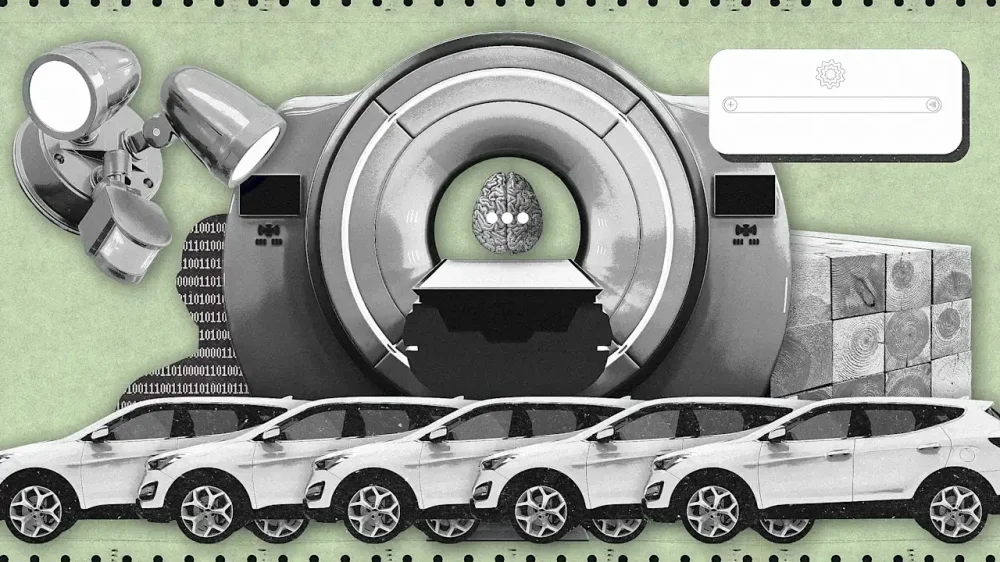
Yes, there are the New Year’s traditions of setting ambitious goals and ditching bad habits, but one evergreen resolution that ought to top lists is to banish bad design. Why endure something that simply doesn’t work (or is an affront to aesthetics) any longer than we have to? In the spirit of fresh starts, we polled experts in architecture, tech, industrial design, and urbanism on the everyday annoyances and the big-picture issues that they think are in desperate need of a refresh in 2026. (Top on my personal list? Eye-searing headlights.) Design is inherently an optimistic act, and by fixing these issues, we’re a step closer to a more beautiful and better world. Data Centers Data centers are the significant buildings of the moment, and we have a responsibility to make them part of our cities as they’re really powering the future. The buildings have to perform at the highest technical level, but they also need to connect and respond to a sense of place and to the community around it. For example, we designed a data center with a facade that has an intricate pattern language that feels more like a theater or civic building and other centers with mass timber, which lends warmth and beauty to the structure while also bringing a sustainability story to the structure. Every data center project of ours now starts with thinking through resilient strategies, including reducing or eliminating evaporative cooling and integrating next-generation thinking on energy usage. At the same time, there are people still working in these buildings and there needs to be consideration for the workplace as well. It’s about technology plus people, and we can’t ignore the human side of this because recruitment and retention are still key considerations. It’s also interesting to think about what to do in a really dense urban environment. We’re involved in conversion projects that take aging, underutilized office buildings and explore vertical mixed use. It’s not just about converting office to residential, which we’re doing in many locations. Can you take an aging office building and part of its reuse becomes a data center? In 2026, we’ll see more of a global dialogue from a real estate standpoint on urban opportunities that includes thinking about data centers vertically. —Jordan Goldstein, Co-CEO of Gensler Crossover and Compact SUVs Living in Los Angeles, I’m surrounded by automobiles all day. I’m always disappointed by how homogenous so many archetypes are. Crossover and compact SUVs are all so similar that you could swap the badges on any of them, and no one would know the difference between the brands. Unfortunately, over the last decade the same can be said of most sports cars. All the major brands have adopted the wide rear body of the [Porsche] 911, and for no reason; their engines are in the front of the car and don’t demand the stability and width to balance the weight that sits on the rear wheels of the 911. Every brand has an origin story, and many of their older iconic cars were based on original ideas. As recently as the ‘90s, car brands held a unique design language. In the past, the only market that had homogeneous design was the Soviet Union. Our culture is based on differentiation in the market, where customers have choices. Today we lack real choice. This all points to a lack of vision and conservative leadership at the major automakers. There is no risk-taking, and the customer is given a design that’s the result of market research rather than innovation and design. This should be a priority because it instills poor values—lack of originality, fear-driven business strategy, zero risk-taking—on the built environment and our culture. —Jonathan Olivares, Creative Director of Knoll Data Ownership Every time we swipe our MetroCard, visit a doctor, buy groceries, or scroll through our phones, we are creating data. But we almost never get to see it to understand ourselves better. The data flows in one direction only, from us into systems that are used to optimize operations and algorithms and train models. What if instead our data could come back to us in a form that can help us see the patterns in our lives and understand our own stories? I want to redesign this fundamental relationship. The issue is that data has become the language that we need to navigate life but we haven’t been taught to speak it; and the interfaces that could help us learn are designed for administrators and quarterly reports only, rarely for actual people trying to understand their own lives. Imagine getting home from a doctor’s appointment and receiving a beautiful understandable visualization of your health over time, where you can see patterns you didn’t know existed. This is the type of context that can help us ask better questions about our health. Or imagine your transit system revealing the mundane rhythms of your own life back to you (the coffee shop you always stop at on Tuesdays, the routes you take when you’re stressed versus calm). This would close the literacy gap by making data comprehensible in the moments when it matters most without dumbing down complexity and nuances. I’ve spent my career proving we can do this. Better design here means more agency. It means people who can advocate for themselves. It means closing the gap between those who can speak data and those who can’t. —Giorgia Lupi, Partner at Pentagram AI Interfaces I’m excited to see how teams rethink and redesign user interfaces for an AI-native world. Today, we’re still in the MS-DOS era of AI where every prompt, every agent, and every emerging modality is, for the most part, a long text response in a conversational interface. My prediction is that in 2026, we’ll see a shift toward richer, more dynamic interfaces where both inputs and outputs evolve far beyond text. It’s not surprising that AI user interfaces began as chatbots. Large language models operate on tokens, and text is the fastest, cheapest medium to build, debug, and evaluate. But decades of software and interface design have made something clear: humans don’t think in language alone. We think spatially. We understand through motion, contrast, hierarchy, and causality, and our instinct is to act through direct manipulation, not just typed commands. As AI capabilities evolve, design is more important than ever. Visual interfaces aren’t going away, and neither is the need to see, shape, and refine ideas as we work. Designers have a rare chance to define the rules and patterns of this new interface era, shaping what work, play, and productivity will look like for decades to come. —Loredana Crisan, Chief Design Officer of Figma Material Labeling When anyone (architects, clients, contractors) walks into a big-box store, it would be transformative to see a Nutri-score or Local Law 33 energy grade for materials, but for wood in particular since it’s so widely used. A better system would treat wood like food, with clear, standardized material labeling. You should be able to see where the wood comes from, almost like buying eggs when you’re faced with this wall of different levels of chicken torture. Material supply chains struggle with standardization and transparency for many reasons, but in my opinion, it is because consumers didn’t know they should be demanding it. For example, once it became clear that Quartz countertops were causing silicosis by those cutting the material, consumers were horrified. So much so that the Australian government made the material illegal. The problem is big-box retailers, where most wood is purchased, rarely surface this information, despite occasionally stocking high-quality or responsibly sourced material hidden in plain sight. Greater transparency at the point of purchase would empower people to make more precise decisions about a whole host of values that are important to them. When I walk into a box retailer, I want to know which 2xs are Code A (regeneratively cultivated through methods of land conservation and repair by a local within 100 miles who has been historically disenfranchised) or Code B (selectively harvested and replanted by a fifth generation land and sawmill owner using Indigenous cool burning to prevent forest fires) or Code C (small batch monocultures grown at high efficiency to prevent the replacement of biodiverse unproductive forests), etc. —Lindsey Wickstrom, Architect and Founding Principal of Mattaforma Outdoor Lighting How about we all start taking a neighborly approach to outdoor lighting? When colleagues and friends talk to me about lighting, they used to mention wonderful festival lights they had just seen or lamps they appreciated or hated. But these days they mostly complain about light streaming into their windows from someone else’s outdoor lighting. In the city, a new commercial tower in midtown streams constantly changing light into bedroom windows literally miles away. Entertaining for some, apparently, and intensely disruptive for others. Not to mention the damage to fish and bird habitat. In a suburban neighborhood, unshielded lights placed over garbage cans to scare off raccoons are more than an eyesore. On a motion sensor, they can wake sleepers in nearby homes every time a critter or a pedestrian passes by. Motion sensors have their applications, but unshielded lights attached to building exteriors flashing on and off are frankly anti-social. For those who live by a body of water or out deep in the countryside, it is often the lone ill-considered, unshielded building/garage light pointing straight out that disrupts the view, the sleep of those in its path, and the wildlife. What to do? I would ask architects to think outside their interesting boxes. Take a nighttime tour of the surrounding neighborhoods and look back at their building. Then try to visualize the impact their planned exterior lighting and integrated lighting displays might have at a distance. It’s hard for me to imagine a missing piece of lighting equipment from our well-supplied lighting design world. What’s missing is a change in attitude. A thought for others and some consideration for how our choices impact other people and the species that surround us. It’s not that complicated. —Linnaea Tillett, Founder of Tillett Lighting Design Associates Sports Districts In the late ’90s and early 2000s, large-scale entertainment and sports districts were built in cities across America. These areas were designed with one very lucrative function in mind: to cater to massive crowds of sparsely scheduled mega events. But the other hundreds of days a year, these spaces sit largely empty with limited activity or use. Today we have an opportunity to redesign these districts so that they not only accommodate dynamic, memorable, and safe experiences around game days, concerts, and conferences, but also support people who want to sit with a coffee in the middle of a Tuesday or meet friends for a live performance, art class, or outdoor movie screening on the weekend. To do this, we need to introduce flexibility and comfort. Multipurpose plazas can cater to large events but also provide comfort day-to-day with furniture and features that serve many purposes. Imagine a large plaza designed for a tailgating crowd but also designed to transform with lots of moveable furniture under a shaded tree canopy for gathering on a non-event day. Stepped wooden platforms can be used as a stage or also for seating or play. Wide sidewalks with large trees for shade and street furniture (e.g. benches, planters, bike racks, lighting) create great urban streets while also being designed for crowd security and protection. As we head into a multiyear period of American cities preparing for mega events like the World Cup, the Olympics, and the 250th anniversary of the signing of the Declaration of Independence, designers working on event spaces should remember that the motivation to rehabilitate these places shouldn’t be either function for large events or daily life. It’s both. Enduring urban spaces should be able to do it all. —Chris Merritt and Nina Chase, Founding Principals of Merritt Chase MRIs Today, getting an MRI—which is essential for diagnosing life-threatening conditions—can mean long wait times, discomfort during lengthy scans, and limited availability in low‑resource settings. Globally, about 70% of people have no access to MRI at all, creating massive delays in diagnosis and care. For patients, this can translate into anxiety and late detection. For radiologists, rising volumes add to burnout. And for developers, innovation is slowed because new algorithms can take weeks to deploy on scanners. A redesign of MRIs could make them faster, more comfortable, and dramatically more accessible. Historically, MRI systems have been hardware‑centric and siloed, with reconstruction tied tightly to the scanner. Lower‑cost hardware options exist, but their images are often noisy or distorted. All of this creates bottlenecks: developers can’t easily test new algorithms, patients endure long scans, and radiologists face mounting workloads. The result is inefficiency and inequity. Advanced imaging remains concentrated in well‑funded hospitals, while less‑resourced regions often lag decades behind. Software-driven approaches—like Microsoft Research’s Tyger framework, which is an open-source project effort that I lead—show how MRI can evolve into an intelligent imaging system, where cloud‑based reconstruction and AI‑driven denoising make scans faster, more scalable, and ultimately more equitable. —Michael Hansen, Director & Principal Researcher, Microsoft Research, Health Futures Accessibility that ‘Others’ I’m expecting 2026 to be the year where truly accessible design becomes mainstream in mass-market products. Not as a checkbox idea, not as a product for others, but as a cost of entry baseline strategy. All products should be designed through the filter of accessibility so they appeal to the largest possible market segment and work for longer periods of time. The problem is there is so much stigma associated with aging and disability and so much of it is because the objects have always looked medical and they’ve made people feel othered and they remind us of what we can’t do. And we think the power of design is to break down those stigmas and allow people to make positive emotional connections to these objects. As we think about it, everybody is disabled. There is permanent disability: you get a diagnosis, you get into an accident, you get older. There is temporary disability: you get a sports injury, you become pregnant, you’re recovering from surgery. And there is this notion of situational disability that almost nobody thinks about: You’re outside on a sunny day and there’s a glare so you can’t see your phone. Or you’re walking through a grocery store holding a baby and you’re one-handed all of a sudden. We all strive for universal design, but the reality is there’s never going to be one version or a product that is perfect for everybody. However, if everybody who makes those objects is thinking about addressing the largest group of people possible, then everybody will be able to find the one that is right for them. —Ben Wintner, CEO of Michael Graves Design Small-Scale Parks For decades, landscape architecture has emphasized large-scale and highly designed and programmed projects that take many years and multimillion-dollar price tags to develop. No shade to these projects—we will never say no to a beautifully designed park—but there is a very real need for different kinds of publicly accessible green and garden spaces in our cities, especially considering how public funding to create and maintain them is becoming increasingly constricted. When it comes to green space, maybe the solution is to make many small plans instead of one big one. Instead of spending millions on one park site, what if we designed a network of smaller and neighborhood-scale green spaces where communities can be directly involved in building and gardening, maintaining, and caring for them? Rather than going through months of rendered and CAD-ified design concepts, we could take a scrappy and interactive approach, getting our hands in dirt and designing by doing. Use locally appropriate and sourced plantings and materials, repurpose what’s near or on site, grow from seed, and find creative ways to turn reclaimed materials into seating, furnishings and platforms. This will reduce resources and build in a way that is less carbon-intensive and more ecologically regenerative. —Kasey Toomey and David Godshall, Landscape Architects and Partners at Terremoto Intelligent Experiences What most needs redesign isn’t something physical; it’s the software that shapes our homes, workplaces, and communities long before anything is designed or built. Over time, our tools have become incredibly powerful, but they often demand more attention than they should. As the pressures on how we live and build grow more urgent—around improving sustainability, affordability, and resiliency to the impacts of climate change—we need software that does more than help people work faster. It needs to help them make better decisions, to adapt in real time and learn from behavior in order to anticipate needs and personalize experiences. As we move into the agentic era, the playing field is changing fast. I’ve seen how easily attention gets pulled toward managing tools instead of weighing the choices that truly matter: carbon impact, cost, livability, and long-term performance. When that happens, good intentions get buried under process. The real promise of AI isn’t automation for its own sake; it’s building with intention. Imagine a world where a user can simply talk, describe what they want to build, then be presented with solutions, and rapidly ideate on their ideas without ever having to use their keyboard or mouse. Those capabilities are here. Used responsibly, AI can reduce friction, surface the right considerations at the right moment, and let designers and planners focus on outcomes rather than mechanics. A better-designed future is one where technology steps out of the spotlight and helps better choices become the default, not the exception. —Heather McIntosh Cassano, Vice President, User Experience, AEC Solutions at Autodesk View the full article
-
Most adults are in the very early stages of grasping how to use artificial intelligence. The The Lego Group thinks that children need to build their own learning path to understand the fast-evolving technology. On Monday, the Danish toy maker debuted a new computer science and AI curriculum for K–8 classrooms, Lego’s first foray into AI that comes more than three years after the debut of OpenAI’s ChatGPT chatbot. The “Lego Education Computer Science & AI” kits include Lego bricks and other interactive hardware components, as well as online education materials intended to take children from the beginning stages of AI literacy through hands-on experimentation. Debuting in classrooms this April, Lego says each package will cost $339.95 and is designed for groups of four students. Kids want in on the AI conversation Lego says 90% of kids want to learn more about how to use AI, but two-thirds feel left out of the AI conversation, according to a survey of 800 students ages 8 to 14 across the U.S., Germany, South Korea, and Australia conducted in late 2025. “Children have their own thoughts on how AI should be used, or how it shouldn’t be used,” says Andrew Sliwinski, head of product experience of LEGO Education. “Let’s bring children into the conversation in an informed and empowered way.” The curriculum will be sold in three grade bands—K–2, 3–5, and 6–8—and was designed as an end-to-end program for teaching both computer science fundamentals and AI concepts. According to Sliwinski, no data children share ever leaves the computer. The system works offline, and no private information is sent to Lego or any third party. Escaping the AI panic cycle Sliwinski says Lego wanted to move past the two dominant narratives around AI and children. One frames AI as an unstoppable force that will render kids obsolete before adulthood. The other calls for strict bans that prevent children from interacting with the technology at all. “What both of those narratives are often missing is that children are capable,” he says. “They have their own opinions and thoughts on AI and how it should and shouldn’t be used.” Why toy makers are struggling with AI The broader toy industry is still fumbling its approach to artificial intelligence. Mattel failed to deliver an AI-powered toy in 2025 under its partnership with OpenAI. Another AI-enabled teddy bear was banned after it engaged in sexually explicit conversations with minors. In California, a state senator has introduced a bill that would enact a four-year ban on AI chatbot toys for children under 18. Why banning AI won’t work “I would never suggest buying a toy that has AI embedded in it,” says Rebecca Winthrop, a senior fellow at the Brookings Institution. “It is just way too soon.” Still, Winthrop argues that banning AI in schools is unrealistic. Students will find workarounds, and many already encounter AI passively through everyday apps. If AI can write a seventh-grade paper on World War II, students lose the critical thinking that comes from doing the work themselves, Winthrop says. That means educators will need to redesign assignments so the process—not just the output—matters. “Teachers are really going to have to shift the assignments they give,” she says. Teaching under uncertainty Justin Reich, an associate professor at MIT, says schools will need to operate under uncertainty for years. No one knows exactly what a 5-year-old should understand about AI—but waiting for perfect answers isn’t an option. “We’re almost certainly making mistakes,” Reich says, likening the moment to early internet literacy efforts that later proved flawed. Sliwinski says the payoff becomes clear in the classroom. During a recent visit to a fourth-grade class in Chicago, students trained Lego-based robots to dance using a machine-learning model. When commands were off, the robots lost their rhythm. “That creates a shift in power dynamics,” Sliwinski says. “AI is no longer the smartest thing in the room—the kids are.” View the full article
-
Marketing mix modeling (MMM) has shifted from an enterprise luxury to an essential measurement tool. Tech giants like Google, Meta, and Uber have released powerful open-source MMM frameworks that anyone can use for free. The challenge is understanding which tool actually solves your problem and which require a PhD in statistics to implement. Open-source MMM tools are often grouped together but solve different problems The landscape can be confusing because these tools serve fundamentally different purposes despite being mentioned together. Google’s Meridian and Meta’s Robyn are complete, production-ready MMM frameworks that take your marketing data and deliver actionable budget recommendations. They include everything needed: Data transformations that model advertising decay. Saturation curves that capture diminishing returns. Visualization dashboards and budget optimizers that recommend spend allocation. Uber’s Orbit and Facebook’s Prophet occupy different niches. Orbit is a time-series forecasting library that can be adapted for MMM, but it requires months of custom development to build MMM-specific features. Prophet is a forecasting component used within other frameworks, not a standalone MMM solution. Think of it like transportation: Meridian and Robyn are complete cars you can drive today. Orbit is a high-performance engine that requires you to build the transmission, body, and wheels. Prophet is the GPS system that goes inside the car. Dig deeper: Marketing attribution models: The pros and cons Robyn: The accessible powerhouse Meta built Robyn specifically to democratize MMM through automation and accessibility. The framework uses machine learning to handle model building that traditionally required weeks of expert tuning. Upload your data, specify channels, and Robyn’s evolutionary algorithms explore thousands of configurations automatically. What makes Robyn distinctive is its approach to model selection. Rather than claiming one “correct” model, it produces multiple high-quality solutions that show trade-offs between them. Some fit historical data better but recommend dramatic budget changes. Others have slightly lower accuracy but suggest more conservative shifts. Robyn presents this range, allowing decisions based on business context and risk tolerance. The framework also excels at incorporating real-world experimental results. If you have run geo-holdout tests or lift studies, you can calibrate Robyn using those results. This grounds statistical analysis in experiments rather than pure correlation, improving accuracy and giving skeptical executives evidence to trust the outputs. However, Robyn assumes marketing performance remains constant throughout the analysis period. In practice, algorithm updates, competitive changes, and optimization efforts mean channel effectiveness often varies over time. Meridian: The statistical heavyweight Meridian represents Google’s Bayesian causal inference approach to MMM. Unlike Robyn’s pragmatic optimization, Meridian models the mechanisms behind advertising effects, including decay, saturation, and confounding variables. This theoretical rigor allows Meridian to better answer, “What would happen if we changed budget allocation?” rather than simply, “What patterns existed in the past?” Its standout capability is hierarchical, geo-level modeling. While most MMMs operate at a national level, Meridian can model more than 50 geographic locations simultaneously using hierarchical structures that share information across regions. Advertising may perform well in urban coastal markets but struggle in rural areas. National models average these differences away. Meridian’s geo-level approach identifies regional variation and delivers market-specific recommendations that national models can’t. Another distinguishing feature is its paid search methodology, which addresses a fundamental challenge: when users search for your brand, is that demand driven by advertising or independent of it? Meridian uses Google query volume data as a confounding variable to separate organic brand interest from paid search effects. If brand searches spike because of viral news or word-of-mouth, Meridian isolates that activity from the impact of search ads. The technical complexity, however, is significant. Meridian requires deep knowledge of Bayesian statistics, comfort with Python, and access to GPU infrastructure. The documentation assumes a level of statistical literacy most marketing teams lack. Concepts such as MCMC sampling, convergence diagnostics, and posterior predictive checks typically require graduate-level training. Dig deeper: How Bayesian testing lets Google measure incrementality with $5,000 Get the newsletter search marketers rely on. See terms. Uber Orbit: The time-varying specialist Orbit is not technically an MMM tool. It’s a time-series forecasting library from Uber with a notable feature: Bayesian time-varying coefficients, or BTVC, which address a fundamental MMM challenge. Imagine presenting MMM results to your CEO, who asks, “This assumes Facebook ads had the same ROI in January and December? But iOS 14 hit in April, and we spent months recovering. How can one number represent the whole year?” That is the credibility-breaking moment practitioners fear because it exposes a simplifying assumption executives correctly recognize as unrealistic. Traditional MMM frameworks assign one coefficient per channel for the entire analysis period, producing a single ROI or effectiveness estimate. For stable channels like TV, this can work. For dynamic digital channels, where teams constantly optimize, respond to algorithm changes, and face shifting competition, assuming static performance is clearly flawed. Orbit’s BTVC allows channel effectiveness to change week by week. Facebook ROI in January can differ from December, while the model keeps estimates stable unless the data shows clear evidence of real change. The reality, however, is that while time-varying coefficients are powerful, Orbit lacks the other components required for a complete MMM solution. Orbit makes sense only for data science teams building proprietary frameworks that require advanced capabilities and have the resources for significant custom development. For most organizations, the cost-benefit tradeoff does not justify that investment. Teams are better served using Robyn or Meridian while acknowledging their limitations, or working with commercial MMM vendors that have already built time-varying capabilities into production-ready systems. Facebook Prophet: The misunderstood component Prophet is Meta’s time-series forecasting tool. It’s highly effective at its intended purpose but is often misrepresented as an MMM solution, which it is not. Prophet decomposes time-series data into trend, seasonality, and holiday effects. It answers questions, such as: “What will our revenue be next quarter?” “How do Black Friday spikes affect baseline performance?” This is forecasting, or predicting future values based on historical patterns, which is fundamentally different from attribution. Prophet can’t identify which marketing channels drove results or provide guidance on budget optimization. It detects patterns but has no concept of marketing cause and effect. Prophet’s primary role is as a preprocessing component within larger systems. Robyn uses Prophet to remove seasonal patterns and holiday effects before applying regression to isolate media impact. Revenue often rises in December because of holiday shopping rather than advertising. Prophet identifies and removes that seasonal effect, making it easier for regression models to detect true media impact. This preprocessing is valuable, but Prophet addresses only one part of the overall attribution problem. Marketing teams should use Prophet for standalone KPI forecasting or as a component within custom MMM frameworks, not as a complete attribution or budget optimization solution. Dig deeper: MTA vs. MMM: Which marketing attribution model is right for you? Making the right choice for your team Making the right choice for your team Choosing between these tools requires an honest assessment of your organization’s capabilities, resources, and needs. Do you have data scientists comfortable with Bayesian statistics and complex Python? Or marketing analysts whose statistical training ended with basic regression? The answer determines which tools are viable options and which are aspirational. For about 80% of organizations, Meta’s Robyn is the right choice. This includes: Teams without deep data science resources but still need rigorous MMM insights. Digital-heavy advertisers seeking attribution without lengthy implementations. Organizations that require insights in weeks rather than quarters. The learning curve is manageable, implementation takes weeks rather than months, and outputs are presentation-ready. A large, active user community also shares solutions when challenges arise. Google’s Meridian suits: Small and midsize businesses and enterprise organizations with dedicated data science teams comfortable working in Bayesian frameworks. Multi-regional operations where geo-level insights would meaningfully influence budget decisions. Complex paid search programs requiring more precise attribution. Stakeholders who prioritize causal inference over pragmatic correlations can justify Meridian’s added complexity. Uber Orbit is appropriate only for data science teams building proprietary frameworks with requirements that Robyn and Meridian can’t meet. The opportunity cost of spending months on custom infrastructure rather than using existing tools is substantial unless proprietary measurement itself provides a competitive advantage. Facebook Prophet should be used for KPI forecasting or as a preprocessing component within larger systems, never as a complete attribution solution. Matching MMM tools to real-world team capabilities The most advanced tool delivers little value if it can’t be implemented effectively. A well-executed Robyn implementation running consistently provides more value than an abandoned Meridian project that never progressed beyond a pilot. Tools should be chosen based on what teams can realistically use and maintain, not on the most impressive feature set. For most marketing teams, Robyn and Meridian represent pragmatic choices that balance performance with accessibility. Automation handles much of the statistical work, allowing analysts to focus on insights rather than debugging code. Strong community support and documentation reduce friction, and teams can move from zero to actionable insights in weeks instead of months, which matters when executives want answers quickly. For enterprises with substantial technical resources and multi-regional operations, Google Meridian can deliver returns through more reliable causal estimates and geo-level granularity that materially improve budget allocation. The investment in infrastructure, expertise, and implementation time is significant, but at a sufficient scale, better decision-making can justify the cost. Uber Orbit offers advanced capabilities for organizations that truly need time-varying performance measurement and have the resources to build complete MMM systems around it. For most teams, commercial vendors that have already incorporated time-varying capabilities into production-ready platforms are more cost-effective than extended custom development. These open-source frameworks have made marketing measurement accessible beyond Fortune 500 companies. The priority is choosing the tool that fits current capabilities, implementing it well to earn stakeholder trust, and using insights to make better decisions. Competitive advantage comes from allocating budgets more effectively and faster than competitors, not from maintaining a technically impressive system that is too complex to sustain. Dig deeper: How to avoid marketing mix modeling mistakes that derail results View the full article
-
The majority of us see change as a blind scary leap into the unknown—a scary evolution that demands we give up on everything we know. But what if we reframed change, not as something that happens to us, but as something we actively choose? Traditionally people perceived change in black-and-white terms: either you can change, or you can’t. That kind of thinking sets us up for failure by assuming that change requires some grand, perfect plan or major shift in direction. However, we also have the power to make small changes, no matter how minor they seem. And it’s these small changes that, over time, lead to profound transformation. Fear Takes the Wheel The most common reason people resist change is fear. And fear takes many forms: fear of failure, fear of the unknown, and fear of making the wrong move hold us back from making choices that could improve our lives. The fear of taking that first step is often so overwhelming that we decide to stay stuck, because inaction feels safer than risking the potential for discomfort or failure. We keep telling ourselves, “I’m not ready yet,” or “I’ll probably fail.” But these stories we tell ourselves only deepen our sense of powerlessness. They might make us feel comfortable by letting us off the hook, but these excuses don’t help us become more capable, either. The issue is that fear doesn’t just make us inactive; it keeps us stuck. As humans, we’re always making choices—consciously or unconsciously. The hamster running on its wheel is a perfect metaphor here: it runs tirelessly, not because it doesn’t have the ability to stop, but because it doesn’t choose to stop. At any moment, that hamster can step off the wheel. And in many instances, so can you. The Cost of Inaction You have more control than you think. Staying stuck is a decision in itself, one that often carries a higher price than taking a leap. Consider this: Even if you stand in the middle of the road, you risk getting run over. This is the paradox of fear: We’re afraid of making a “bad” choice, yet the failure to choose can often be the most costly decision we make. Research on organizational change shows how employees who resist change are more likely to experience disruption, anxiety, and negative emotions the longer they resist, which can make changing in the future even harder. Unchecked resistance can decrease productivity, lower morale, cause project delays, and increase turnover. Leaders and organizations that proactively manage resistance by building trust, clarity, and support can transform these challenges into opportunities for growth and adaptation. In contrast, those who embrace even small, incremental changes are more likely to experience increased confidence, a sense of accomplishment, and a willingness to face bigger challenges. The learning? It’s the small wins that build momentum. In his 20 years as manager of the All Blacks, the New Zealand Rugby team, Darren Shand has seen how embracing even small change can catalyze teams to perform in remarkable ways. For over a decade, the All Blacks were the top ranked rugby team in the world, driven largely not just by talent but by embracing trust, positivity, and growth: “During my time with the All Blacks, I learned that transformation rarely comes from radical change—it comes from consistent small choices made with purpose. At the highest level, we found that growth was less about doing more, and more about doing the little things better, every single day.” The Power of Minor Shifts So, what’s holding you back from better embracing change? Instead of seeing change as a monumental task, think of it as a series of small choices that add up over time. Start small: maybe it’s trying a new hobby, having a conversation with someone that you’ve been avoiding, or taking a short walk every day. These tiny decisions may seem insignificant in the moment, but they’re the building blocks of personal transformation. Each time you make a choice to step out of your comfort zone, no matter how small, you’re signaling to yourself that change is possible. Ready for Change? Consider This If you’re ready to embrace change, start by asking yourself a few simple but powerful questions: What’s the cost of staying where I am? Reflect on what you’re risking by not making a change. Sometimes, the discomfort of the present moment is less painful than the long-term consequences of staying stuck. What ONE small step can I take today? Change doesn’t have to be grandiose. What’s one tiny action you can take today that will start to shift your course? What am I afraid of? Often, fear is exaggerated in our minds. What is the worst thing that could happen if you tried something new? Could the benefits outweigh the risks? Who can support me in this change? Change doesn’t have to be a solo endeavor. Who can be your accountability partner, or who can offer guidance along the way? By asking these questions, you’ll gain clarity on why change matters to you and how you can begin to make it happen, step by step. Change is Always a Choice Change is not as hard or as out of reach as we often make it out to be. The key is recognizing that, just like a hamster on its wheel, you have the power to stop running in circles—and step off. You have the power to make a change, however small, and with each choice, your world transforms. In the end, so much of the change we face isn’t something that happens to us. It’s something we choose. View the full article

-
As 2026 begins, many organizations are launching AI transformation initiatives. The new year brings with it fresh budgets, renewed strategic focus, and mounting pressure to capture value from artificial intelligence. Yet studies consistently show that most AI projects fail to generate meaningful returns. Companies pour resources into promising experiments that never scale, accumulate tools that are never integrated, and watch initial enthusiasm curdle into skepticism. What separates organizations that create lasting value from those that don’t is rarely the technology to which they have access. Instead, the critical “secret sauce” lies in having a systematic, rigorous, and repeatable approach that allows the leadership team to move from the identification of opportunities to operational deployment. This article offers a practical playbook for that journey, using the illustrative example of a midsize manufacturing firm (Aurora Windows). While the playbook itself distills learnings gained from large, technically sophisticated businesses in sectors such as defense and finance, our example shows how these lessons can be applied even in late-adopting companies with limited resources. At present, there are few examples of systematic end-to-end AI innovation pipelines that have been deployed successfully in the real world, so our example can only be illustrative. Nevertheless, forward-looking companies are already beginning their journeys along this path and evidence from decades of organizational and digital transformation efforts allow us to model what success will ultimately look like. I will be using this playbook in my upcoming guest lecture for IMD Business School’s AI strategy and implementation executive program, delivered in collaboration with Misiek Piskorski, dean of executive education at IMD, and Amit Joshi, codirector of the program. IMD is a world-leading business school, ranked No. 1 globally in custom executive education by the Financial Times (2025), renowned for transforming rigorous research into actionable leadership results. An Illustrative Example: Aurora Windows Aurora Windows is a 35-year-old, second-generation manufacturing company that designs and produces doors, windows, and architectural glass for commercial and residential building projects. With roughly 220 employees across one main plant and two regional distribution hubs, it sits in the classic “too big to be small, too small to be big” SME band: large enough to feel pressure from global competitors and construction giants, but without a dedicated transformation department or a large consulting budget. Over the next five years, the leadership team aims to position Aurora as the “go-to” innovation partner for sustainable, smart building projects by becoming a fully AI-driven business. The Innovation Pipeline To succeed in its goals, Aurora needs to take a disciplined approach to AI enterprise transformation that treats the innovation process as a continuous structured pipeline with clear stages. Projects flow from initial ideation into a rigorous assessment phase and on to operational deployment—a narrowing funnel that sees many ideas entering but only the strongest and most strategically aligned reaching production. Firms in some sectors—such as tech and pharmaceutical companies—have long relied on continuous product development pipelines that systematically advance projects from abstract ideas to market-ready products. In the AI age, every organization needs to adopt this kind of systematic approach to innovation. But this is more than just a new product development pipeline: Innovation projects must be aligned with the broader organizational culture and processes within which they will be embedded. Step 1: Current-State Assessment—Establishing Your Baseline Before Aurora can begin managing an innovation pipeline, the leadership team needs to understand where the company currently stands. They conduct a baseline assessment across three dimensions: Organizational purpose and strategic clarity. Aurora’s executive team revisits its core mission: creating high-performing, sustainable door, window, and glass solutions that make buildings safer, more comfortable, and more energy-efficient. The team articulates three specific five-year goals: 40% revenue growth without proportional headcount increases Margin protection despite volatile input costs Positioning as the go-to AI-driven innovation partner. This clarity becomes the North Star for evaluating every AI initiative. Knowledge baseline. The team then assesses the company’s current AI literacy. At present, there is a scattering of expertise across departments, with individual enthusiasts driving the current pilot programs. AI knowledge in the leadership team is limited and most of the business’s staff are unfamiliar with basic machine learning concepts. Risk appetite. Aurora is a family business that has survived by not taking reckless bets. But the market is shifting. Competitors are beginning to offer AI-enhanced design services and predictive maintenance. The leadership team articulates a balanced stance toward risk: Aurora needs to advance more rapidly than they would normally be inclined to move, but with guardrails in place to protect the brand’s hard-won reputation. This assessment reveals uncomfortable truths. Aurora has enthusiasm for AI transformation but no shared knowledge base or language for discussing AI, and no accepted criteria for assessing the value of pilot projects. The leadership team has ambition but there is currently no defined path to move projects from the pilot phase to company-wide operation. Most importantly, there is no mechanism for deciding what to do next. Step 2: Opportunities—Populating the Innovation Pipeline Aurora’s leadership now launches a structured ideation process to identify projects that are explicitly aligned with the company’s strategic goals. Rather than asking “What can we do with AI?” cross-functional teams ask “What problems prevent us from achieving our strategic goals, and can AI help us solve them?” The teams quickly generate two dozen initial ideas spanning multiple AI types: analytical AI for process optimization, workflow automation to reduce manual tasks, generative AI for design acceleration, and even agentic AI systems operating semiautonomously within defined parameters. Each idea receives a rapid initial assessment using five criteria scored 1 to 10: Priority: How urgently does this support our core goals? Risk: What’s the potential downside if this fails after deployment? Value: What’s the likely financial or strategic return? Cost: What investment is required to reach production? Difficulty: How challenging will implementation and adoption be? When scored and ranked, clear patterns emerge. Several high-scoring opportunities cluster around production efficiency—using computer vision for defect detection, AI-driven equipment maintenance prediction, and automated quality documentation. A number of initiatives focusing on design acceleration and customer experience receive medium scores. Several “moonshot” projects that were initially very popular with senior leaders receive low scores because they are technically difficult, expensive, and come with significant risks, despite their high potential payoff. This process also surfaces important dependencies. A design acceleration project that has many supporters would require clean CAD libraries and standardized templates—work that hasn’t started yet. Similarly, a maintenance prediction system needs sensor data that is not yet available but that would be generated if one of the quality inspection projects goes ahead. The ideation exercise produces more than a ranked list of ideas. It creates a common vocabulary for discussing AI opportunities at the same time as revealing capability gaps and building consensus around which directions make strategic sense. Of Aurora’s 24 ideas, 6 score highly enough to warrant further detailed assessment. The rest remain in the backlog—not definitively rejected, but requiring either new capabilities or a shift in strategic priority to make them viable. Step 3: Assessment—Enterprise Architecture Analysis and Fit The 6 projects that ranked highest in the initial screening now enter detailed assessment. Aurora’s leadership team first maps the organization’s Strategic Enterprise Architecture (SEA) and then assesses each project’s degree of fit across four dimensions: Purpose and Strategic Intent. Does this project directly advance Aurora’s three strategic goals with clear, measurable outcomes? People and Culture. Are leadership and staff ready for the changes the project involves? Processes and Governance. Can the initiative integrate with current processes and operating models? Technology Architecture and Data. Is the initiative feasible using existing or available systems? The results are sobering. Of the six projects under assessment, only three demonstrate clear alignment across all four SEA dimensions. Two of the others could become viable with specific capability-building work. The SEA analysis also reveals positive insights. The quality inspection camera project will generate structured defect data that several other proposed projects can use. By recognizing this dependency, Aurora can sequence projects to build on this foundation. Step 4: Operationalization—From Experimentation to Production The 3 projects that passed detailed assessment now undergo active experimentation. Aurora structures these experiments as learning journeys, not just technical validations. The visual quality inspection project runs bounded pilots on specific production lines. The AI-assisted design tools are tested with a small R&D team before broader rollout. The data infrastructure project proceeds in phases, upgrading one integration at a time while minimizing disruption. After six months of experimentation, the newly developed quality inspection tool passes all tests and moves to production. The data infrastructure project shows promise but needs another quarter of refinement—it remains in experimentation. After a promising start, the AI-assisted design tools run into a technical wall. With no clear path forward, the project is paused until a technical solution is identified. Systems that reach production require ongoing monitoring, cost tracking, and impact measurement. Aurora establishes guardrails to prevent misuse and implements continuous monitoring to catch issues before they become problems. Sustaining the Pipeline Aurora’s innovation pipeline is a long-term, repeatable system that provides the engine for continuous AI transformation. But to deliver its value, it must be carefully tended. The leadership team establishes a quarterly review process with three goals: Project health checks: Are experimental projects meeting milestones? Are production systems delivering expected value? Do any initiatives need intervention, resources, or retirement? Pipeline rebalancing: As projects advance, move into production, or are killed, the pipeline needs replenishment. The leadership team takes a view across the entire pipeline to ensure that the right mix of projects is moving through, balanced across time horizons, risk levels, and strategic targets. Strategic recalibration: Markets, technologies, and organizational priorities shift. Quarterly reviews explicitly ask: Do our scoring criteria still reflect strategy? Are new capabilities or partnerships available? Have competitors made moves that change our priorities? This operating rhythm transforms Aurora’s relationship with AI. Instead of episodic enthusiasm followed by disappointment when pilots don’t scale, the leadership team has a sustainable engine for continuous improvement. Each quarter brings visible progress—some quick wins, some foundation building, some ambitious bets advancing. Within 18 months, Aurora’s transformation becomes tangible. The company now has three AI systems in production (quality inspection across all lines, automated quality documentation, and a new LLM-powered customer portal). The projects in experimentation and assessment build on these initial experiences and include initiatives that have become viable thanks to the technical capacity, skills, and processes developed while working on the initial round of projects. By avoiding wasteful efforts to develop a series of unconnected pilots with no clear strategic value, Aurora has built a foundation of success that is propelling it past its competitors. Conclusion: The Management System Behind the Pipeline Aurora’s story highlights a fundamental truth about AI transformation: Technology is rarely the constraint. Most companies can access impressive AI tools. What they lack are the management systems needed to deploy those tools strategically, build repeatable capabilities, and create sustained value. An innovation pipeline like the one in our example does not run itself. It requires systems and structures that create both horizontal and vertical collaboration—linking the C-suite to project teams and linking project teams to the rest of the organization. Without these connections, even the best-designed pipelines will stall. Cultural change is often framed as a precondition for AI transformation. But culture doesn’t shift as a result of exhortation alone. It is shaped and steered by the processes, review rhythms, and governance structures that determine how decisions get made and how work flows through the organization. Quarterly reviews, cross-functional assessment teams, and clear advancement criteria aren’t bureaucratic overhead. They are the mechanisms through which a culture of disciplined innovation takes root. The companies that succeed with AI won’t be those with the most ambitious pilots or the earliest adoption of new tools. They will be those that build the management systems that are needed to move systematically from opportunity to assessment to operation—and to sustain that movement over time. View the full article

-
When a 7.7-magnitude earthquake hit Myanmar last year, roads buckled and thousands of buildings collapsed. But a group of small, ultra-low-cost homes made from bamboo survived without any damage. Finished just days before the quake, the houses are emergency shelters for some of the millions of people displaced by Myanmar’s ongoing civil war. Myanmar-based architecture studio Blue Temple worked with its spinoff construction company Housing Now to make the simple prefab homes as low-cost as possible while still able to withstand natural disasters. “We built them for the price of a smartphone—about $1,000 U.S. dollars per house,” says architect and Blue Temple founder Raphaël Ascoli. Engineering bamboo for earthquake resilience Bamboo has a long history as a construction material in the country, but the team saw an opportunity to innovate with it. Ascoli, who has been working in Myanmar for the last decade, partnered with a local bamboo carpenter on the concept. The material is already cheaper to use than wood, concrete, or steel. But the architecture studio helped cut costs further by using a thin, low-cost species of bamboo—unlike the large species typically used in construction—and bundling it together to make it stiff and strong. The construction company builds beams from the bamboo and then puts them together in structural frames that “we can just assemble like an Ikea kit” in less than a week, says Ascoli. “Because of the organic natural of the bamboo that we weave together into the frames, it gives the house a bit of flexibility. Instead of being very stiff and brittle like concrete, it can move a little bit.” Any bamboo structure has some advantages in earthquakes because of its light weight and flexibility, but the company found ways to boost that performance. “We built a lot of prototypes and then pulled on them until the breaking point,” Ascoli says. “You can evaluate the maximum pressure that can be put on the house before failing.” They made tweaks to each joint to make the buildings stronger and more weatherproof. The massive earthquake “was a real-life proof of concept,” says Ascoli. The homes, in a camp for displaced people, were less than 10 miles from the epicenter of the quake, but none of them needed repairs. A DIY path to scaling shelter without NGOs The company has been building homes for displaced people since Myanmar’s coup in 2021. While the design can be flexible, it’s typically a simple room that residents can divide for living and sleeping; camps have separate shared bathrooms and kitchens. So far, the work has happened at a relatively small scale. The team is small, and funding from NGOs—which was limited to begin with—has started to disappear. When the The President administration shut down USAID, “that had massive consequences on the humanitarian response in Myanmar,” says Ascoli. “A lot of NGOs are now closing down and unable to continue operating.” Other countries have also cut funding. There’s also a shortage of construction labor because of the war. To keep going, the team is experimenting with new approaches. “If we want to scale, we have to be radical,” he says. The latest project, developed over the last 18 months, is a DIY construction manual that helps citizens incorporate some of the design team’s techniques to optimize bamboo construction as they build homes themselves. “The humanitarian sector is kind of failing at the moment because it’s relying on unreliable sources of funding, and it’s an archaic system,” says Ascoli. “We’re basically trying to test out if there is an alternative to traditional humanitarian response, and trying to find what can be the post-NGO humanitarian response programs that will replace the old systems.” View the full article

-
WordPress community responds to the use of the official WordPress X account for "childish" trolling. The post WordPress X Account’s ‘Childish’ Trolling Causes Backlash appeared first on Search Engine Journal. View the full article
-
Trust used to be the benefit of the doubt. Now it is the battle to be won. Recently, I asked a CEO client why she didn’t want to speak on a panel her team had been invited to. Her answer? “I’d rather the company speak for itself. I don’t want to make it about me.” That hesitation is common. Many leaders assume visibility is self-serving. But today, staying behind the scenes isn’t humility. It’s a risk. When nearly 70% of people believe business leaders intentionally mislead the public, credibility and trust, not marketing, has become the new currency. We are leading in an era when silence is interpreted as indifference and visibility is mistaken for vanity. That tension has paralyzed many executives who want to do the right thing but do not want to appear self-promotional. I have spent more than a decade helping CEOs, founders, and entrepreneurs turn visibility into a strategy rather than a stunt. The most successful ones have mastered five internal shifts that rebuild trust from the inside out. None of them requires a massive budget. All of them require courage. 1. Step out from behind your business and stand beside it Many leaders still assume that the company should speak for them. That used to work when audiences trusted corporations implicitly. Today, people look for the human behind the logo. According to Edelman’s 2025 Trust Barometer, business remains the most trusted institution, yet that trust is now tied directly to individual leaders. Visibility is not about ego. It is about accountability. When you put your name to your mission, it tells employees and customers that you believe enough in the work to represent it personally. Start small. Write one LinkedIn post each week that connects your leadership values to what your team is building. Share a story from the trenches, a tough call you made, a lesson you learned, or even a mistake that clarified your priorities. Authentic leaders do not curate perfection. They clarify purpose. The goal is to stand alongside your company, not in front of it or hiding behind it. 2. Define your ‘Influence ID’ before you define your strategy In every workshop I run, I ask leaders one question: Who are you in addition to being a CEO or founder? That question is often followed by a long pause. Most can rattle off quarterly goals faster than personal convictions. Yet your ability to articulate who you are shapes whether people trust what you sell. I call this your Influence ID. It is the unique mix of values, experiences, and strengths that differentiates you from every other leader in your industry. It is not a tagline. It is a compass. Try this exercise. Write down eight aspects of your brand wheel: skills, stories, causes, or passions that make you who you are. Notice where they overlap. Maybe your financial discipline fuels your advocacy for small business transparency. Maybe your love of coaching kids’ sports mirrors how you lead teams. Those intersections reveal your authentic narrative. When you know your Influence ID, every decision, from interviews to investor decks, aligns naturally. You stop performing a brand and start embodying one. 3. Turn your visibility into a trust engine The loudest leaders do not necessarily win. The most trusted ones do. The 2025 Edelman Trust Barometer found that 61% of people believe both business and government are “failing people like them”. In that environment, communication has to shift from promotion to education. The leaders earning trust today act less like advertisers and more like teachers. Start by reframing every outward communication with one question: What value does this give my audience? If you are announcing a product, explain the problem it solves. If you are celebrating a milestone, share the lesson that others can apply. Use the three-to-one rule I teach executives: three insights or resources for every one piece of company or product promotion. This ratio forces you to build goodwill before you ever ask for attention. Over time, consistency compounds into credibility. People stop seeing you as a marketer and start seeing you as a mentor. That is the moment visibility becomes trust. 4. Treat thought leadership like a business asset, not a marketing hobby For most organizations, the real decision-makers are not the ones sitting in sales meetings. They are the unseen influencers in legal, finance, or operations who quietly determine whether a deal moves forward. Edelman and LinkedIn’s 2025 B2B Thought Leadership Impact Report calls them “hidden buyers.” They read deeply, think critically, and use high-quality thought leadership to decide whom to trust. That means every article, podcast or op-ed you publish is more than content. It is collateral in the trust economy. Audit your digital presence the way you would a financial statement. Ask yourself: Is your expertise visible where those hidden buyers are researching? Do your insights challenge assumptions rather than echo trends? Does your tone invite dialogue instead of demand attention? Pick one platform, such as your newsletter or LinkedIn. Commit to showing up consistently for 90 days. Measure success not by likes but by opportunities: invitations, partnerships, and client inquiries. Those are the new trust metrics. 5. Build a brand that outlasts your business Many founders sell their companies and then realize they sold their voice along with them. I have watched brilliant entrepreneurs exit successfully only to feel an unexpected emptiness. Their entire network, data, and even audience list transferred with the deal. Your business is an asset. You are the equity. Start protecting that equity now. Maintain an email list, personal website, or professional profile that belongs to you, not just your company. Capture the lessons you are learning in real time through a blog, internal newsletter, or short video updates, and keep those archives. When the next chapter comes, you will have a built-in platform ready to launch whatever comes next. Think of it the way Sara Blakely did when she sold a majority stake in Spanx but announced it from her personal Instagram rather than a press release. Her audience followed her, which meant every future venture started with a foundation of trust already built. The modern trust equation You do not need millions of followers to be influential. You need the right 500 people who are in your target audience and believe you stand for something real. You want to create raving fans out of those 500 people. Leadership visibility is not about spotlighting yourself. It is about directing attention toward a mission that matters. The skeptics will always ask, “Can’t CEOs just lead quietly?” They can, but quiet leadership is invisible leadership, and invisible leadership no longer earns trust. So stand beside your business. Define your Influence ID. Teach, not preach. Publish with purpose. Build a reputation sturdy enough to outlast any logo. In the age of skepticism, the most powerful marketing strategy remaining is the truth spoken by a leader who is willing to show up and stand by it. Adapted from The Strategic Business Influencer: Building a Brand with a Small Budget. Copyright © 2025 by Paige Velasquez Budde. Available from Matt Holt, an imprint of BenBella Books, Inc. View the full article

-
Every organization believes it’s in the productivity business. Every executive thinks faster, longer, more densely packed meetings equal better results. They’re wrong. The meetings that actually work—the ones where breakthroughs happen and teams leave energized rather than depleted—operate on a completely different logic. They’re designed around how human brains actually function, not how we wish they would. By helping organizations transform their cultures through my Move. Think. Rest. (MTR) framework, I’ve watched the same pattern emerge: Companies spend millions on the latest collaboration software and meeting tech, then squander the opportunity by applying the same exhausting, back-to-back scheduling that got them nowhere in the first place. Here’s what needs to change. Rhythm, Not Relentlessness We should stop treating breaks as a tax on productivity and instead understand that breaks are an investment in our productivity. Most conference agendas are built on the assumption that more content equals more value. It’s an assumption that breaks the human brain. Our cognitive architecture doesn’t work in endless marathons. It works in cycles. This is why the best meetings I’ve redesigned follow a simple principle: Build MTR directly into your schedule. Start with Movement by design—and I don’t mean “take a walking break.” I mean fundamentally restructuring how your sessions happen. Convert at least one daily brainstorming session into a walking meeting. The research is clear: When bodies move, ideas flow. The Navy figured this out decades ago with standing meetings. They’re more effective and efficient because motion isn’t a distraction from thinking, it’s a catalyst for it. For the Think dimension, protect what I call “suspended time.” Back-to-back sessions aren’t intensive, they’re destructive. Replace that model with 75- to 90-minute deep-dive blocks followed by genuine transition time. Before bringing insights to a large group, let people first reflect individually, then discuss in pairs. This honors how people actually process: We need space to diverge before we can meaningfully converge. And Rest is nonnegotiable, which means we should stop treating breaks like their mechanical pit stops, as if they’re stealing time from productivity. Build in 15-minute microbreaks between sessions: intentional pauses where people actually step away, stretch, move outside, daydream. Research shows that even 10 minutes of genuine rest sustains performance and enhances well-being. Daydreaming helps with generative, divergent thinking. And a midday break that’s longer than the time it takes to eat lunch at your desk isn’t a luxury. It’s the infrastructure that makes everything else work. Redesign Your Agenda Language Words shape experience. When you say break, you signal that time is lost. When you say integration time or reflection pause, you signal that this moment is essential to how you do your best thinking. This matters more than you’d think. Here’s what belongs on your ideal meeting agenda: sessions scheduled during people’s natural peak cognitive times (usually mid-to-late morning), unconference elements where participants help build the agenda in real time, movement infrastructure built into the physical environment, and explicitly named transition time. What doesn’t belong: purely informational sessions that could be prerecorded, expectations that people perform at full capacity from 8 a.m. to 6 p.m. straight, and the assumption that measuring success means measuring how much you packed in. The Changes That Actually Move the Needle The highest-impact redesigns don’t require massive budgets. They require a different mindset. Implement meeting-free blocks. Designate specific time—perhaps the first three hours of a multiday conference, or entire afternoons—as true meeting moratoriums. Not break time. Deep work time. People use it for reflection, processing, or the spontaneous conversations that often yield the most valuable insights. This single change transforms an event from overwhelming to generative. Build movement infrastructure. Provide mapped walking routes with estimated times. Create outdoor spaces with seating for breakout sessions. Install standing-meeting areas with whiteboards. When movement is built into the physical environment, it becomes the default rather than something people have to engineer. Create rituals of rest. Start each day with 10 minutes of optional guided stretching or meditation. End each day with a brief reflection session. Designate quiet zones for afternoon restoration. When rest is ritualized, it shifts the entire culture. Measure differently. Stop asking whether you covered all the content. Start asking: What unexpected insights emerged? What new connections formed? How energized do people feel when they leave? This shift in metrics naturally leads to better design choices. The Competitive Advantage of Flourishing Here’s what most leaders miss: The meeting redesign isn’t (just) about being nice to people. It’s about being strategic. When you move from productivity theater to cultivation-centered design, you unlock something more valuable than efficiency. You unlock the kind of thinking that emerges only when people have genuinely processed information, made authentic connections, and restored their cognitive resources. You create conditions where innovation doesn’t come from forcing harder, it comes from creating the rhythmic space where human flourishing and breakthrough thinking naturally intersect. The organizations that understand that meetings are systems, not schedules, will find themselves with teams that are more innovative, more engaged, and, frankly, more loyal. Stop stacking. Start designing. View the full article

-
A few of the neatest gadgets at the Consumer Electronics Show (CES) 2026 weren’t anywhere near the Las Vegas Convention Center trade show venue. Instead, they were sitting on a table at The Venetian Resort’s food court, at least on Monday when Core Devices founder Eric Migicovsky was holding press meetings. He had a couple of quirky Pebble smartwatches to show off, with lo-fi e-paper screens in round and rectangular forms, and he was wearing an early version of the Pebble Index, a smart ring whose main job is capturing voice notes. (He moved to a booth in the bowels of the Venetian expo when CES officially got underway.) Unlike a lot of exhibitors, Migicovsky isn’t promising anything revolutionary, but he also made clear that Core’s mission has expanded. Beyond just making smartwatches, he now sees the company as a purveyor of fun but indispensable gadgets. The Pebble Index is just the start. “Core Devices is building the gadgets we want, (because) no one else is,” he says. Three watches and a smart ring It’s now been about nine years since Pebble shut down, selling its assets to Fitbit after the Apple Watch sucked out the oxygen for smartwatch startups. Maybe Pebble’s fate was unavoidable, but Migicovsky also regrets overextending into areas he wasn’t passionate about, like fitness tracking. (“I’m not a Whoop guy,” he says.) Core Devices is a chance to start fresh. After spending three years as a Y Combinator partner, and then selling his messaging startup Beeper to Automattic (reportedly for $125 million), Migicovsky has no desire to go the usual startup route again. When Google agreed to open-source the original Pebble operating system last year, he put up the R&D money for a new batch of watches, then started taking preorders. With the new Pebble watches, the core appeal is the same as the originals: Geeky watch faces, reliable push button controls, e-paper screens for long battery life, hackability. For Core Devices’ first new watch, the Pebble 2 Duo, the hardware is also similar, as Migicovsky found a supplier with some original Pebble 2 components and repurposed them into 8,000 new watches that shipped late last year. The next batch of Pebbles is more like what the original company might’ve built if it survived for longer. The $225 Pebble Time 2 looks like a standard rectangular smartwatch, except it lasts for a month between charges, while the $199 Pebble Round 2 ditches heart rate monitoring for a slim design and two weeks of battery life. Both have larger screens and much narrower bezels than any of Pebble’s original watches. As for the $99 Pebble Index 01 ring, Migicovsky says the idea came from struggling to remember things and wanting to record them in way that became muscle memory. Talking into the ring while holding its clickable button records a voice note, which a companion app transcribes into text. A double-click allows for programmable actions such as smart home controls or AI queries (whose answers, for instance, could appear on a Pebble). A Pebble app with similar functionality is coming, but the point of the ring is that you only need one free thumb to use it. Meanwhile, Migicovsky is cutting out all the things he hated about making hardware before. He raises money for the watches through preorders instead of investors, sells them through Core’s website instead of dealing with retailers, and doesn’t bother with sales forecasting. The resulting sales have been modest—25,000 Pebble Time 2 preorders, 7,000 more for the Round, 8,000 for the now-sold-out Pebble 2 Duo—but the company has far exceeded its minimums for what Migicovsky considers viable. That means Core Devices can keep making new gadgets. “We decided this go-round that we’ll just do the things that are fun,” he says. Beyond the watch Among longtime Pebble fans, the Index ring has been contentious, in large part because it’s not designed to last. Its internal battery isn’t rechargeable or replaceable, and after 12 to 15 hours of recording time, it’ll simply stop working. (Migicovsky estimates a two-year lifespan for someone who records 10 to 20 thoughts per day.) Core Devices will offer to recycle the metal, but it’ll throw the electronics away. Migicovsky says the single-use battery was necessary for an attractive design with water resistance, and he likes the idea of never having to take the ring off, even in the shower. But because the original Pebble watches have endured for so long—a decade later, thousands of people still use theirs—the Index’s disposable nature feels incongruous even if Migicovsky downplays it. “I would say that most devices are made to be thrown away, and that’s the secret of the industry that nobody ever talks about,” he says. The Index also just indicates that Core Devices is more than a smartwatch company now. While the original goal was to scratch one specific itch, Migicovsky now says he has “lots more” ideas for new products. There will be prerequisites: Whatever Core Devices makes can’t already exist, must have low R&D costs, and should be possible to build with a small team. (The company currently employs five people, all on the software side besides Migicovsky himself.) Its products will have to solve everyday problems, even if they’re niche ones. Still, the company has more things to figure out first. While the Index uses on-device speech-to-text for voice notes, it’s unclear how it’ll cover the cost of using AI to process custom commands, or for its optional Wispr Flow-powered transcriptions. Migicovsky doesn’t love the idea of subscriptions but isn’t sure about alternatives. Employing a team obviously has ongoing costs as well, which means Core Devices will need to expand from its tiny audience, find recurring revenue streams, or keep releasing new things. But even as it expands, Core Devices is keeping its ambitions in check, which at a venue like CES can be pretty refreshing. “We’re not trying to invent some new computing category,” Migicovsky says. “We’re not trying to take over the world.” View the full article

-
On-page SEO is optimizing webpages for higher search engine and AI visibility to attract more traffic. View the full article
-
Simon Carter to step down from FTSE 100 property group to head P3 LogisticsView the full article
-
Roblox, a gaming app used by nearly half of the entire U.S. population of under-16s, has rolled out a new mandatory safety feature to put a stop to children communicating with adults on the platform. Starting on January 7, players in the U.S. were required to submit to facial age estimation via the app to access the chat feature, although age verification remains optional to play the games themselves. Users in the U.K., Australia, New Zealand, and the Netherlands are already required to complete an age check to chat with other users, but the requirement will now roll out to the U.S. and beyond. The verification is being processed by a third-party vendor, Persona. Once the age check is processed, Roblox says it will delete any images or videos of users. If the age-check process incorrectly estimates a user’s age, the decision can be appealed and the child’s age verified through alternative methods. Users 13 or older may also opt for ID-based checks. Once users complete the age check, they are assigned to one of six age groups (under 9, 9-12, 13-15, 16-17, 18-20, and 21+). Users can only communicate with players directly above and below their own age group. For example, a 9-year-old cannot chat with users older than 15, and a 16-year-old can only chat with those ages 13 to 20. The feature is designed to prevent children younger than 16 from communicating with adults. About 42% of Roblox users are younger than 13. “As the first large online gaming platform to require facial age checks for users of all ages to access chat, this implementation is our next step toward what we believe will be the gold standard for communication safety,” wrote Matt Kaufman, Roblox’s chief safety officer, and Rajiv Bhatia, its head of user and discovery product, in a blog post. Parental consent is still required for users younger than 9 to access chat features, while age-checked users 13 and older can chat with people they know beyond their immediate age group via the Trusted Connections feature. “Leveraging multiple signals, [Roblox is] constantly evaluating user behavior to determine if someone is significantly older or younger than expected,” the company execs continued. “In these situations, we will begin asking users to repeat the age-check process.” The face scan is launching as the company faces increased scrutiny over child safety on the app. Attorneys general around the country are investigating Roblox, and nearly 80 active lawsuits accuse Roblox of enabling child exploitation, with some parents alleging their children encountered predators on the app. View the full article

-
Although there is no shortage of AI enthusiasts, the general public remains uneasy about artificial intelligence. Two concerns dominate the conversation, both amplified by popular and business media. The first is AI’s capacity to automate work, fueling widespread FOBO, or fear of becoming obsolete. The second is AI’s tendency to reproduce or even exacerbate human bias. On the first, the evidence remains mixed. The clearest signal so far is not the wholesale replacement of jobs, but the automation of tasks and skills within jobs. Most workers are less likely to lose their roles outright than to be forced to rethink what they do at work and where they add value. In that sense, AI is less an executioner than a pressure test on human contribution. As we have previously noted, AI is exposing the BS economy, in the sense of automating low-value activity and commoditizing what’s not relevant. On the second, however, concerns feel more visceral, since there’s clear evidence of AI amplifying or at least perpetuating human biases. Indeed, algorithms replicate the loudest and most common outcomes. Tools trained on historical hiring and promotion data mirror the demographic preferences of past decision-makers—overlooking qualified candidates and harming both those individuals and the organizations that end up missing out on better talent. Large language models producing outputs that disadvantage marginalized users because of skewed training data. Add to this the political and moral assumptions embedded, often unintentionally, in AI systems, and it’s easy to conclude that AI is simply a faster, colder version of human prejudice. To be sure, AI will never be bias-free. And yet it can still be less biased than humans (okay, it’s a low bar). Importantly, under the right conditions, it can make things a lot better. Humans are biased, but that’s not a bug, it’s a feature. It’s a consequence of cognitive shortcuts that evolved for speed and survival. But survival is knee-jerk, and often optimizes for the immediate—and shortchanges the long-term success that comes from thoughtfulness and fairness. Nobel Prize winner Daniel Kahneman showed us how quick decisions are often suboptimal, yet we rely on those quick, intuitive decisions frequently, and even more frequently when we are under stress and time pressure. Yet one of the great strengths of humanity is that we are also capable of reflection and correction. And AI is in some ways uniquely suited to help counteract predictable distortions that have plagued humanity for centuries. Consider six ways this is already beginning to happen. 1. AI can help us better understand others AI is now embedded in many of the platforms we use to communicate at work. Increasingly, it can analyze patterns in language, tone, and behavior to infer emotional states, intentions, or levels of engagement. Tools like Textio help us get out of our own way by flagging language that’s not aligned to our goals. These systems are far from perfect, but they don’t need to be. They simply need to outperform the average human in situations where human judgment is weakest. Research on emotional intelligence shows that people are generally better at reading members of their own group than outsiders. Cultural distance, unfamiliar communication styles, and implicit stereotypes distort perception. AI systems trained on data from different cultures and groups can sometimes decode signals more consistently than humans navigating unfamiliar social terrain. There’s evidence that using technologies like VR to experience others’ realities can build lasting empathy. Used responsibly, these kinds of augmentation can support empathy rather than replace it, helping people pause before misinterpreting disagreement as hostility or silence as disengagement. 2. AI can force us to confront alternative viewpoints One of the ironies of AI criticism is that we often accuse systems of bias as a way of deflecting attention from our own. When people complain that generative AI is politically or ideologically slanted, they are usually revealing where they themselves stand. Properly designed, AI can be used to surface competing perspectives rather than reinforce echo chambers. What’s more, AI can do this by framing arguments and evidence in ways that make them easier to understand and accept without triggering judgment or combativeness. For example, leaders can ask AI to articulate the strongest possible case against their preferred strategy, or to rewrite a proposal from the perspective of different stakeholders. In conflict resolution, AI can summarize disagreements in neutral language, stripping away emotional triggers while preserving substance. This doesn’t make AI objective, but it can make us less lazy. By lowering the cognitive and emotional cost of perspective taking, AI can help counteract confirmation bias, one of the most pervasive and damaging distortions in organizational life. 3. AI can improve meritocracy in hiring and promotion Few domains are as saturated with bias as talent decisions. Decades of research show that human intuition performs poorly when predicting job performance, yet confidence in gut feeling remains stubbornly high. When trained on clean data and validated against real outcomes, AI consistently outperforms unstructured human judgment for job decisions. This is not just because algorithms can process more information, but because they can ignore information humans struggle to disregard. Demographic cues, accents, schools, and social similarity exert a powerful pull on human decision-makers even when they believe they’re being fair. Well-designed AI systems can also be updated as job requirements evolve, allowing them to unlearn outdated assumptions. Humans, by contrast, often cling to obsolete success profiles long after they stop predicting performance. AI does not guarantee fairness, but it can move decisions closer to evidence and further from intuition. 4. AI can make bias visible rather than invisible One of the most underestimated benefits of AI is its diagnostic power. Algorithms can reveal patterns humans prefer not to see. Disparities in performance ratings, promotion velocity, pay progression, or feedback language are often dismissed as anecdotal until AI surfaces them at scale. When bias remains implicit, it’s easy to deny. When it’s quantified, it becomes discussable. Used transparently, AI can help organizations audit their own behavior and hold themselves accountable. For example, AI can help identify whether specific interview questions (or interviewers) are driving unexpectedly uneven outcomes—so that the questions used are more likely to help pick the most qualified candidates. Importantly, this shifts bias reduction from moral aspiration to operational reality. 5. AI can slow us down at the right moments Bias thrives under speed, pressure, and ambiguity. Many of the most consequential workplace decisions are made quickly, under cognitive load, and with incomplete information. AI can introduce friction where it matters. By flagging inconsistent judgments, prompting justification, or suggesting structured criteria, AI can act as a cognitive speed bump. It doesn’t remove responsibility from humans. It reminds them that intuition isn’t always insight. 6. AI can help us understand ourselves, not just others Bias does not only distort how we judge other people. It also shapes how we see ourselves. Research on self-assessment consistently shows that people are poor judges of their own abilities, impact, and behavior. We overestimate our strengths, underestimate our blind spots, and rationalize patterns that others notice immediately. AI can help close this self-awareness gap. One increasingly common use case is AI as a coach or reflective mirror. Unlike human feedback, which is often delayed, filtered, or softened, AI can analyze large volumes of behavioral data and surface patterns that individuals struggle to see on their own. This might include identifying communication habits that derail meetings, emotional triggers that precede conflict, or leadership behaviors that correlate with disengagement in teams. Consider how AI is already being used to summarize feedback from performance reviews, engagement surveys, or 360 assessments. Rather than relying on selective memory or defensiveness, individuals can see recurring themes across contexts and time. This reduces self-serving bias, the tendency to attribute successes to skill and failures to circumstance. The same logic explains the growing popularity of AI as a therapeutic or coaching aid. AI systems don’t replace trained professionals, but they can prompt reflection, ask structured questions, and challenge inconsistencies in people’s narratives. Because AI has no ego, no reputation to manage, and no emotional investment in the user’s self-image, it can sometimes feel safer to explore uncomfortable insights with a machine than with another human. Of course, self-awareness without judgment is not the same as wisdom. AI can highlight patterns, but humans must interpret and act on them. Used responsibly, however, AI can help individuals recognize how their intentions differ from their impact, how their habits shape outcomes, and how their own biases show up in everyday decisions—and it can help monitor and reinforce progress to support lasting change In that sense, AI’s most underappreciated debiasing potential may not lie in correcting how we evaluate others but in helping us see ourselves more clearly. A necessary note of caution None of this implies that AI automatically reduces bias. Poorly designed systems can amplify inequality faster than any individual manager ever could. Debiasing requires intentional choices: representative data, continuous monitoring, transparency, and human oversight. The real danger is not trusting AI too much—it’s using AI carelessly while pretending it’s neutral. Bias is a human problem before it’s a technological one. AI simply forces us to confront it more explicitly. Used well, AI can help organizations move closer to the meritocratic ideals they already claim to value—and that help organizations be successful. Used badly, it will expose the gap between rhetoric and reality. The question is not whether AI will shape workplace decisions. It already does. The real question is whether we will use it to reinforce our blind spots, or to finally see them more clearly. View the full article

-
Dollar weakens after US prosecutors launch criminal investigation into chair Jay PowellView the full article
-
Plus the employment/growth puzzleView the full article