ResidentialBusiness
Administrators
-
Joined
-
Last visited
Everything posted by ResidentialBusiness
-
 Google Ads has supported adding WhatsApp Messenger for a while to your ad extensions. Now, it seems Google is also rolling out support for more messaging apps, including Facebook Messenger and Zalo, the Vietnamese instant messaging multi-platform service.View the full article
 -
The Google local pack within the Google Search results changes, I think. When you click on the "More businesses" button at the bottom of the local pack, you aren't taken into Google Maps anymore; you are taken to the Google Places tab. And then when you scroll to see more, the pagination is broken.View the full article
-
Google Ads now lets you create up to five custom views on the Overview tab. The Overview now supports custom views and you can add up to five tabs and create Overview pages customised for your unique needs, Google wrote on the Google Ads console.View the full article
-
Google Ads is testing two new sections in the Overview tab. There is a new trends section and a new performance by stage section.View the full article
-
Not so responsible, in retrospectView the full article
-
AI search is overriding geographic signals, pushing global pages into local markets unless brands reinforce market-specific authority in ways LLMs can interpret. The post How AI’s Geo-Identification Failures Are Rewriting International SEO appeared first on Search Engine Journal. View the full article
-
Kingdom to add liquor stores in Jeddah and Dhahran after outlet for non-Muslim foreigners opened in Riyadh last yearView the full article
-
One suspect accused of seeking information from corporate chiefs on ‘French economic interests’View the full article
-
It’s long been the uniform of management consultants and finance bros, but now the humble quarter zip is being embraced by a rather unexpected demographic. Over the past few weeks, FYPs have become dominated by the workwear staple. Young men who previously might’ve been seen exclusively in Nike Tech, have now traded them in for quarter zip sweaters. Across social media, they are sharing styling tips and hosting meetups at malls, all clad in business-casual. The trend gained widespread attention when, in early November, TikToker @whois.jason shared a video of himself sipping a matcha (the beverage of choice for the ‘performative male’) with a friend. Both are wearing quarter zip sweaters. “We don’t do Nike Tech, we don’t do coffee. It’s straight quarter zips and matchas around here,” he says in the clip. “We upgraded in life; we wear glasses now.” Since it was posted, the clip has gained over 25 million views. “No more DMs we on outlook and teams,” one comment read. Another wrote: “We on linkedin not instagram.” The hashtag #quarterzip currently has over 55,000 posts on TikTok. There’s T-Pain in Louis Vuitton talking about “401k and a quarter zip.” Rapper Central Cee hung up his customary Nike Tech fleece for a cream Ralph Lauren one. “Nike tech’s most loyal person just switched up,” one comment read on his TikTok post. The basketball video game NBA 2K account announced the addition of quarter zips to 2K26 last week, not long after the topic started trending on TikTok. Even brands are jumping on, a sure sign as any that a trend has run its course. Some say the co-option of quarter zips signals a vibe shift that goes beyond fashion. Fortune calls it “a subtle signal of ambition and adaptation in a job market that feels almost insurmountably tough for many young adults today.” The New York Times described the shift as “an aesthetic pivot toward the expectations of the professional world.” It’s true, the quarter zip has long been a signal of soft professionalism. If a LinkedIn connection was an item of clothing, it would be the quarter zip (perhaps under a fleece vest to complete the uniform). Others have connected the trend to the history of Black dandyism, a cultural movement and fashion style intended to subvert racial stereotypes, inspiring last year’s Met Gala theme. While the lifecyle of a TikTok trend is often no more than a few days or weeks at most, retail data shows a 25% sales rise for quarter zips among 18- to 24-year-olds since mid-2024. Google Trends shows a 2,250% increase in searches for “1/4 zip pullover men’s business casual” over the past 12 months. Has anyone checked in on the finance bros? View the full article

-
In an age of high-turnover trends, ubiquitous screens, and fractured attention spans, a lengthy televised parade organized by a venerable department store sounds like a relic of a bygone era. But somehow, the Macy’s Thanksgiving Day Parade has in recent years proved itself to be startlingly popular and relevant. In 2024, the parade drew an estimated 31.7 million viewers on NBC’s broadcast and Peacock stream—an all-time record, and a bigger audience than the Oscars or any entertainment broadcast. This year’s parade will include, along with balloons featuring legacy characters like Snoopy and Minnie Mouse, a Pop Mart float with an oversized Labubu, a Stranger Things float featuring a Demogorgon, and performances by a singing trio from KPop Demon Hunters and Wicked: For Good star Cynthia Erivo. Macy’s is stubbornly unforthcoming on the economics of its parade, and a spokesperson told Fast Company that it was “unable to discuss and disclose financials” of the event. But it certainly appears to be a bright spot for the retailer, which over the past decade has closed scores of locations and laid off thousands of workers. Various reports suggest the 2024 version cost an estimated $13 million to produce, with longtime partner NBC paying $20 million for broadcast rights. Macy’s and NBC announced a new 10-year deal earlier this year, and while terms were not disclosed, The Wall Street Journal reported the new proposal was on the order of $60 million for annual rights to the Thanksgiving parade, a July 4 special, and a new event that’s to be determined. This reflects how valuable the parade, in particular, seems to have become for its ability to draw a mass audience, with NBC reportedly selling 30-second ad spots for $900,000. A successful, unchanged formula The parade dates back to 1924 and has been televised nationally on NBC since 1954. While Macy’s describes it as a “gift” to the nation, it’s one that has long since become a business in its own right. According to a report from 2019, a brand sponsoring a new balloon could expect to pay around $200,000 in construction and parade fees. But this, of course, yields a couple of minutes of on-air discussion of the brand or entertainment property’s balloon (or float or performance) from the broadcast hosts. This is how the parade has worked for decades—and maybe that essentially unchanged formula helps explain its success. By now it’s an iconic event, deeply embedded in pop culture via numerous appearances in movies and TV shows, and countless memories. Even if you haven’t watched the parade in years, you know the gist. So one theory of the event’s resilient popularity is that it is, like turkey and stuffing, an elevated variation on comfort food. A decade-plus ago, as many mainstream broadcast events began to see their audiences shrink, the parade held steady, in effect growing its influence simply by standing still. But in the last few years, that audience hasn’t just stood still but actually begun to grow, topping earlier viewer records. The Macy’s spokesperson credits “the talented Macy’s Studio team” of artisans and other experts who craft the event, and certainly the proceedings are as lavish as ever. Super Mario Bros. A more interesting theory, though, is that a broadcast parade is ideal for a fractional-attention world. There’s something new every few minutes and none of it requires deep concentration. This year’s event includes 34 balloons, 28 floats, 28 performers, 11 marching bands, and 33 clown crews, meaning the parade is nonstop novelty. It is essentially an analog, marching scroll. In a kind of virtuous circle, the audience attracts pop culture brands, which attracts a bigger audience. A Macy’s executive involved in producing the parade told the Freakonomics podcast last year that the goal is to balance “legacy characters” against “new characters,” in effect addressing an all-ages audience. Even better: All the content is basically escapist and certainly apolitical, providing an endless stream of excuses to change the subject to something benign when that cranky uncle starts looking for a squabble. And while Macy’s may be opaque about the business details that help shape the specific contents of any given year’s parade, achieving that balance between contemporary relevance and timeless tradition is likely a key to attracting its audience. And sure, the whole thing is essentially an intertwined marketing event—a series of pop culture and brand promotions, under the auspices of Macy’s own brand. But nobody really seems to mind. Perhaps on the eve of Black Friday this is exactly what many are looking for. A Macy’s spokesperson calls the parade “the official kickoff to the holiday season.” That seems to be truer than ever. View the full article

-
Micro Strategy, major strifeView the full article
-
What do Marriott, Peloton, and Major League Baseball (MLB) have in common? Each has recently navigated a major crisis in the court of public opinion. Marriott’s licensing agreement termination with Sonder left guests stranded and fuming mid-stay. Peloton announced its second product recall in just two years. And the MLB is the latest major sports organization whose players have been swept up in sports betting scandals. Crisis is everywhere. And while big brands may dominate the headlines, smaller companies face equally urgent situations. Regardless of a company’s size, leaders must be prepared when the ever-turning wheel of misfortune lands on their spot—because it will. Despite this inevitability, less than half of U.S. companies have a formal crisis plan in place according to a 2023 report by Forbes. I see it in my workshops all the time. Fewer than a fourth of the countless leaders I’ve worked with have a dedicated crisis plan or team in place to help them navigate a crisis. Whether they are consciously kicking the can of crisis preparedness down the road or simply don’t know where to start, the consequences are the same. It’s not if you will ever experience a crisis, it’s when and how severe. Failing to prepare can shatter reputations, destroy careers, and cripple revenue in a matter of moments. Here are four actionable steps to ensure you aren’t caught off guard when crisis hits. 1. Create a crisis plan Planning is the most effective way to manage a crisis, yet many leaders find excuses to put it off. Some believe it will never happen to them; others underestimate the value of crisis planning because it does not generate revenue. In reality, crisis can happen to anyone, at any time, and facing a crisis without a plan is a major revenue drain, especially considering all the emergency expenses needed to manage it. A crisis plan is an essential tool that serves as a roadmap for navigating crisis response: In the same Forbes report, 98% of leaders who had activated their crisis communications plans found them to be effective. A plan doesn’t need to be long—30 pages is more than sufficient—and should include an introduction, lessons learned from past crises, company information, crisis team member information, the company’s risk profile, and key questions to ask during crisis to get as many details as possible. 2. Develop a crisis team The crisis team is a designated group of people from inside and outside an organization that assembles at a moment’s notice when crisis hits to help gather the facts and take appropriate action. This group of people will help leaders navigate the most sensitive moments of their careers, so it’s imperative to choose team members who will not only provide sound insight, but will also hold the company and its leaders accountable when necessary. A crisis team should be limited to no more than 12 people and should include representation from the President/CEO, senior VPs, division managers, IT, legal counsel, communications, HR, and finance. Each of these members brings valuable perspective from different departments and may represent different groups of stakeholders. Smaller companies can have as few as three individuals on their team—you should never try to navigate a crisis alone. 3. Get comfortable with the uncomfortable As disconcerting as it can be for leaders to address the myriad risks their company faces on a daily basis, envisioning worst-case scenarios and developing a risk profile enables the development of a crisis management strategy before one hits. Worst case scenarios can range from a data breach that compromises proprietary information to an on-the-job employee injury. As there is a virtually unending list of worst-case scenarios, a company’s risk profile will depend on the specific organization and industry. In the AI era, there’s no reason for leaders not to have a tailored risk profile. Getting started is as easy as typing in your company’s details. (Note: AI is not an appropriate tool to draft public-facing statements.) Once the risk profile has been established, you can predraft holding statements for each scenario that will serve as a guide during active crisis and save 20 to 30 minutes of precious time. 4. Learn how to recognize a crisis in your organization Crises often catch leaders off guard because the buildup that caused them goes unrecognized. Most crises are the result of an unsolved business problem. If the problem can be identified and addressed, it’s far less likely to snowball into a full-blown crisis. Take the example of Peloton—in 2023, it recalled 2 million bikes after broken seat posts led to multiple reported injuries. The business problem? Poor quality product posing a safety risk to riders. In November 2025, Peloton recalled nearly 900,000 more . . . for the exact same reason. This unresolved business problem created a crisis cycle that eroded consumer trust. Other business problems that commonly lead to crisis include weak security that invites cybercrime, failing to prioritize employee safety resulting in death or injury, or a lack of succession planning that leads to a company’s downfall in the event of a CEO’s death or departure. While leaders can’t prevent crisis, they can prepare for it. Crisis planning could be the most valuable investment a leader ever makes. Because in business it’s not if a crisis will ever happen, it’s whether you’ll be ready when it does. View the full article

-
At the start of the Introduction to Innovation class at Robert C. Hatch High School in rural Uniontown, Alabama, the face of a teacher fills a wall-size screen at the front of the room. Beaming in from far away like a Zoom call, the teacher is part of a new approach to providing specialized education in underserved communities. This is the Connected Rural Classroom. It’s a novel rethink of the typical high school classroom, designed specifically to increase access to niche, high-quality education for students in rural schools with limited resources. A remote teacher on a big screen is just one part of the classroom’s unique elements. Designed to emphasize science, technology, engineering, and math (STEM) courses and increase students’ technological fluency, the classroom is outfitted with a range of built-in cameras, adjustable lighting, flexible seating, and a slate of hardware for tech-centric programming. The classroom is supported by the state of Alabama and was created by Ed Farm, a Birmingham-based nonprofit focused on closing the growing digital skills gap in communities across the Southeast. “Especially in Alabama, there’s just a lack of high-quality STEM teachers and math teachers that those students in rural areas have access to,” says Waymond Jackson, president of Ed Farm. A high-tech classroom In contrast to the typical linoleum-floored room filled with rows of rigid desks, the Connected Rural Classroom looks more like a modern office. There are movable collaboration tables, standing desks, rocking chairs, ottomans, stadium seats along the back wall, and a line of focus booths looking through windows at the trees outside. The large screen sits at the front of the room on a dark wall that encourages better focus, with a small stage-like area at its foot for presentations by in-class instructors and fellow students. Calming colors and sound-absorptive materials tame the sometimes chaotic effects caused by a roomful of teenagers, and linear cues in the ceiling and floor subconsciously direct their attention to the room’s main instruction area. The room’s lighting is optimized for circadian rhythms, mimicking daylight to augment the single wall of windows in the room. There are also four programmed lighting scenes that can be used during different class scenarios, from stage-lit formal presentations to full-light active collaboration to a subtle dim setting for times requiring quiet focus. There are multiple cameras that provide the remote instructor with views of all parts of the room, and embedded technology allows the instructor to beam to a specific screen to interact with small groups, or directly onto a student’s tablet for one-on-one instruction. The classroom was designed by the architecture firm Kurani, which has been designing unconventional and often tech-forward classrooms for more than a decade. Founder Danish Kurani says this is part of making the room work not just for students but also for the teachers who may be sitting behind a computer hundreds or thousands of miles away. “We went to great lengths to essentially try to make it easier for the remote instructor,” he says. “It’s far more difficult when you’re remote, especially when you’re dealing with high school students. Like, how do you have presence in the room? How do you connect with them?” The zoom of classrooms The classroom design was developed with feedback from students and instructors, and in close collaboration with Ed Farm, which launched in February 2020 with funding from a partnership between the Alabama Power Foundation and Apple. The goal is to expand technology education for students and upskill adults in rural areas. Apple CEO Tim Cook, an Alabama native, was in Birmingham for the program’s 2020 launch. “Ed Farm is about clearing a path for anyone—of any age, background, or interest—whether or not they’re destined for a career in technology,” he said at the time. Ed Farm has made physical spaces a cornerstone of its work, and developed the Connected Rural Classroom design as a prototype for improving the places where technology skill can be acquired. “There was this absolute misalignment between today’s workforce, today’s classroom, and tomorrow’s workforce,” CEO Jackson says, noting that working with Kurani, there was always the goal of creating a classroom design that could work across Ed Farm’s primary geography in the Black Belt of Alabama, but also beyond. “This is truly a model that can be scaled state by state,” he says. That hope informed the earliest stages of the design process. Kurani says his team started by researching existing public school classrooms across the country to understand their spatial and architectural conditions. They found that the average classroom is between 700 and 900 square feet, tends to have its door close to a corner, and has a single wall of windows on the opposite side of the room. The design the architects developed is a prototype that matches those average conditions. Kurani sees it as a kit of parts that can be slightly adjusted based on the layout of a room or the location of its door and windows. “When it’s time to deploy it in schools, it’s very easy and we can tell all of them, ‘Yes, we can easily bring this to your school. It will fit,’” Kurani says. Ed Farm plans to scale the Connected Rural Classroom design to other schools, but also to expand its focus on creating similar educational spaces for people of all ages. “One of the things that we were pushed on by Apple as we came up with our solutions, was to think about the problems and the things that we’re doing that are relevant to Alabama as a microcosm of what actually exists across this country,” Jackson explains. “We see community spaces and unused community assets as an opportunity to bring technology and technology infrastructure closer to those folks that we’re seeking to serve.” View the full article

-
Just know this: There’s going to be a conversation about artificial intelligence at Thanksgiving this year. An AI superfan is going to gush about chatbots and go on, at length, about how “These things just seem to know everything.” The dinner table’s funnyman will play a highly cringe video they made with the technology. Someone else will either be flummoxed or horrified. A proud guest will declare a vow of abstinence—in fact, they’ve never even used ChatGPT, they will reveal. One self-important guest will feel very smart when recounting the time they caught an AI making a mistake, once. They’ll tell everyone about it. These conversations will be bad. There will be camps: the Luddites, the accelerationists, the skeptics, and the 85-year-old ChatGPT power users. There will be the extant Elon evangelists, the people who are very tuned in, and the people who have not been paying attention to any of this. Conversations will touch on both the anticipation and the terror of the tech. The economy. The tech oligarchy. The environment. The bubble. No one will really be talking to each other. Not in any meaningful sense. Have the conversation anyway. Not because you’ll form some sort of consensus, but because these long human conversations—at their best—come with love and also tension. AI provides neither. Of course, the major hurdle to reaching any sort of common understanding is that AI is too ambiguous a term to serve as a stable jumping-off point for a coherent discourse. For some, the term references a capital-intensive recipe of hyperscaled data centers and transformer models. For others, AI means the consumer-facing, knowledge-loaded models like Sonnet 4.5 and Grok 3. For others, there are simply the characters of “Grok” and “ChatGPT” and “Claude.” To many, AI is simply synonymous with the current age, some loose sense that the internet is increasingly automated and agentic. A good number of people simply use AI, increasingly intermingled with social media and the internet, as a shorthand for all technology. All of these definitions are, in their way, completely accurate, and too divergent for having any meaningful discussion about AI. Proceed, still. We do not choose our families—or at least our blood relatives. AI, meanwhile, promises potentially limitless self-selection. Eras past gave us the YouTube rabbit holes and personalized algorithism. Now chatbots promise private universes of confirmation bias, personalization, and sycophancy. Younger generations are growing up with an unprecedented level of intimacy, and confidentiality, with these bots. Worse, people are forming deeply psychological and romantic relationships with AI tools, plopping their deepest selves into a digital abyss—instead of their loved ones or human professionals. This siloing away of our intimacy leaves us with impossibly difficult-to-predict consequences for our social skills and human relationships. For this reason, many people who have eschewed AI are protecting themselves, while the rest of us are still looking to define the relationship we want with the technology. The challenge, of course, is that AI companies already know what kind of relationship they want us to have with these chatbots: an all-encompassing one, an endless saccharine dialogue. We don’t yet know what lifelong microtargeted conversational partners might do to us, but it’s probably not wonderful. This raises the stakes for our human interactions, including imperfect and ever-trying family holidays. AI firms want to woo us with frictionless interfaces for everything. The antidote is sitting across the table from the people we care about, and all the friction they come with, to discuss our interesting times and everything else. View the full article
-
The number of people who have come to me whispering, “I want to be seen as a thought leader.” And yet when I say, “Amazing, let’s put you on camera,” I’m suddenly met with . . . crickets. I get it. Putting yourself out there can feel awkward. Exposed. Vulnerable. That’s how I feel about dancing in public. It’s my own personal nightmare. At Zumba, I’m hiding behind the water cooler. At my wedding, my husband had to mouth the 1-2-3-4 count so I wouldn’t lose the beat. And recently at a music festival, the band leader pointed at me to come dance on stage. I prayed he was pointing to the person behind me. Nope. As I sheepishly walked up the stairs to the stage, I realized something important: no one cares that much. No one thinks I’m auditioning for So You Think You Can Dance. They’re not judging me—I was overthinking. So I danced. Honestly, probably not that well. However, once I stopped overthinking, I actually had fun. That’s the truth about visibility: Once you stop overthinking, you can start owning your voice. The Real Fear Behind Thought Leadership When I spoke at this year’s Fast Company Innovation Festival on this topic, I started with a few simple questions: Who wants to be more visible? Who wants to be seen as a thought leader? Who wants speaking invitations, press, clients, opportunities? Almost every hand went up. Then I asked, “Who posted a video of themselves in the past month?” Not even a third of the room. We say we want to be seen, but we hide. We tell ourselves we’re too busy, that social media is superficial, or that we’re “not good on camera.” I’ve trained thousands of people to be on camera—from my years as a national TV producer to now a public speaking and video coach—and everyone can learn the skills of being confident on camera. So what holds people back? Fear. Fear of looking silly, fear of seeming salesy, fear that someone from high school will see our video and mock us. But here’s the reality: Hiding from the camera is hiding from opportunity. If you’re not showing up, people who should be discovering you—clients, collaborators, journalists, recruiters, conference organizers—simply won’t find you. Visibility isn’t vanity. It’s credibility. From ‘Accomplished but Anonymous’ to Seen and Successful After nearly 20 years producing and directing at Netflix, People, and launching Us Weekly’s first-ever digital video unit, I left TV to help professionals grow through video and podcasts. But I had a problem: My own social media was a hodgepodge of work moments and my young children climbing on top of me. I was what I now call “accomplished but anonymous.” I had expertise and credibility—but only to my circle of media executives and TV producers. I needed visibility outside my circle if I wanted clients to seek me out. So I started posting to social media, showing up on camera and speaking at seminars. It was awkward at first (not as awkward as dancing on stage!) but I got better each week. Over time, I had new clients, invitations to be a guest on podcasts, and corporate training opportunities. The success has metastasized since then. This year I gave two TEDx talks, I’m a national keynote speaker, and have a thriving business coaching professionals to be seen as experts through video and podcasts. None of that would have happened if I continued to be concerned about “being cringey.” And that’s why I created my SEEN Framework, to help professionals show up authentically without feeling fake or cringey. The SEEN Framework Here’s a breakdown of what SEEN stands for. S = Self-Awareness I grimace when people say “I know I should be on camera, but I’m not good at it” as if they’ve failed in life. You’re an expert in your industry, not a full-time TV host. I have a degree in communication, so don’t feel you “should” know this. And just because you own a phone does not mean you automatically know how to create content. (If owning a microscope made me a scientist, I would have saved a lot of money on tutors.) Being self-aware means recognizing what you haven’t learned yet. Be kinder to yourself. Being confident on camera is a skill, not a personality trait. E = Expertise In my very first job in TV news, I decided who got on-air as an expert. If I picked someone who wasn’t actually an expert? I could get fired. (And I really needed that job.) To be viewed as an expert, establish both your credibility and your point of view. Ask yourself: What do I believe about my industry that isn’t being said enough? What are people constantly misunderstanding about my work? What problems am I obsessed with solving? These insights become your content pillars, your speaking topics—even the early chapters of your book. One of my leadership coach clients recently told me, “My book is basically already written thanks to our messaging work.” That’s the magic of defining what you stand for: It clarifies everything. Forget about building your “personal brand”—share your professional perspective. E = Exposure When I asked the crowd at the Fast Company Innovation Festival what word “influencer” brings to mind they said: “shallow,” and “freeloader.” Tough crowd. But when I asked a friend what she thought the word meant, she said: “An influencer is a thought leader in their industry.” Forget about semantics. And don’t shy away from messaging people you don’t know well—some of my most meaningful business relationships, like partnerships, collaborations, and clients have started online! N = Next Level When I began in TV over 20 years ago, to be visible you needed to be selected by an editor or a TV producer. Instead of feeling that social media is a burden, see it as an opportunity. Stop waiting for gatekeepers—bosses, publishers, networks—to choose you. Create your own opportunities. Start a video series. Host a webinar. Pitch yourself to a podcast. Launch the newsletter you’ve been thinking about since 2017. One of my clients—a health care consultant—followed this exact path: We created a video series and podcast, and she doubled down on posting to social media. Within months she had three new clients (including her dream client) and within a year she was invited to moderate conferences nationwide. When you stop waiting for permission and start creating, doors swing open. The Mindset Shift: Stop Hiding, Start Shining Thought leadership doesn’t start with followers, it starts with ownership. Own your ideas, your voice, and your visibility. Create your own stage. When you stop hiding, you start shining. Thought leadership isn’t about being loud or cringey. It’s about sharing your point of view, and having the value you bring be seen and recognized. So stop overthinking and start owning your voice. People want to hear it. View the full article

-
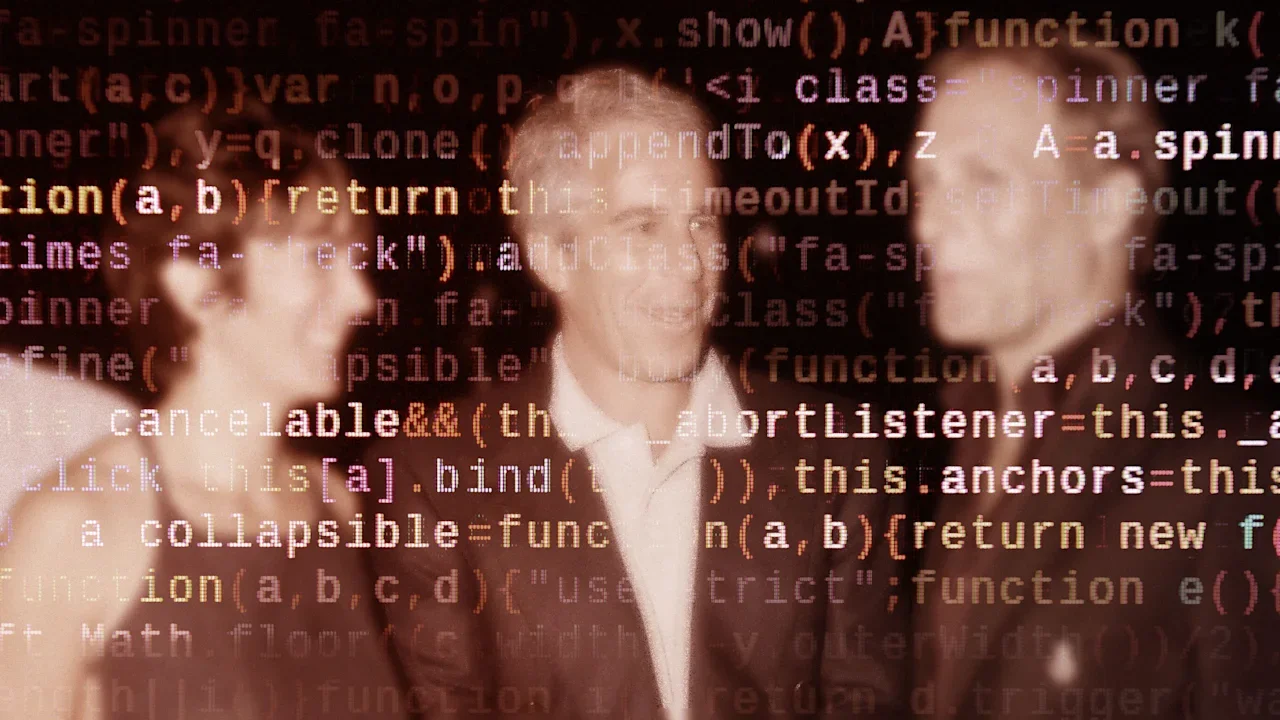
Earlier this month, the House Oversight Committee made public more than 20,000 pages of documents from the late convicted sex offender Jeffrey Epstein’s estate. The documents were released as thousands of individual text files, images, and scanned PDFs, a monumental trove most wouldn’t have the time or patience to sift through. But what if you could navigate the source documents as easily as you do your inbox? That was the thinking behind Jmail, a Gmail-style interface for accessible browsing of Epstein’s released emails launched Friday by Kino CEO Luke Igel and software engineer Riley Walz. Walz, a serial website builder previously dubbed San Francisco’s “Tech Jester,” is also one of the masterminds behind the Panama Playlists, which earlier this year exposed the Spotify listening habits of some famous people, as well as a tool to track San Francisco’s parking cops (the project lasted just four hours). In an X post announcing the Epstein project, Walz confirmed the pair used Google’s Gemini AI to do optical character recognition on the individual emails, making them more readable and searchable than the source documents. The site also includes verification links to government originals. “You are logged in as Jeffrey Epstein, jeevacation@gmail.com,” the Jmail website reads. “These are real emails released by Congress.” Just like a real inbox, the messages are sorted from most recent, dating up to the eve before Epstein’s arrest in 2019. There’s also a working search feature (search “The President,” and you’ll get 1,000 results). In the sidebar, you can sort by Inbox, Starred, and Sent. Copying Gmail’s ability to star important messages—except this time crowdsourced by the internet—the most-starred email, with 228 stars, is correspondence with Epstein’s brother, Mark L. Epstein. It contains the now infamous line: “Ask him if Putin has the photos of The President blowing Bubba?” The lower sidebar section is sorted into Labels, which, in Gmail, separates emails by category. In Jmail, it is a list of people who regularly corresponded with Epstein, including journalist Michael Wolff, former U.S. Treasury Secretary Larry Summers, and Donald The President’s former chief strategist Steve Bannon, to name a few. The House Oversight Committee released the original emails on November 12. Since that release, the president has signed the Epstein Files Transparency Act, which requires the attorney general to “make publicly available in a searchable and downloadable format all unclassified records, documents, communications, and investigative materials in the possession of the Department of Justice” within 30 days. View the full article

-
When it’s parked in your garage, the Polestar 3 can now help you save on your electric bill. The automaker is the latest to roll out bidirectional charging for its electric vehicles, making it possible to charge the SUV’s battery when power is cheap and then use the vehicle to power your house when prices go up. The company partnered with Dcbel, a startup that makes technology that manages the flow of energy between the car and home. “Most of our cars sit in driveways more than 80% of the time,” says Dcbel CEO Marc-André Forget. “Now, for the first time, if we think about it, cars start to be useful even when parked. This is transformational. It’s the second-largest investment for most family after the market of the home, and those assets are underused.” When you plug the car into Dcbel’s home energy station, called the Ara, artificial intelligence kicks in and analyzes energy prices, forecasts how much energy you’ll need over the next few days and how much you need for driving, and, if you have solar panels, it also predicts how much solar power you’ll be generating. The device uses that data to decide, “Should I charge the car right now?” Forget says. “Should I supercharge the car? Should I wait and charge later? Should I use the energy from the car to power the house, to basically avoid buying energy from the grid at a very high price?” When your house needs power, the equipment converts DC power from your car into AC for the wiring in your home. (The tech can also double as an inverter for solar panels, though if you already have a solar inverter, it likely doesn’t have the right software to work with an EV.) Any EV could become bidirectional, but automakers need to develop software to make it work. Polestar spent 18 months working with Dcbel to design a seamless user experience. Users can track the system through an app, though it handles everything automatically. If the power goes out in the middle of the night, the car will wake up and start charging your house. If the grid is down over a long period, the car’s battery can charge an average house for 2.5 days, or as long as 10 days if you start rationing power. The home energy system is pricey, starting at $5,000 for a base model. But in California, Dcbel won a grant that will provide customers with generous rebates: up to $8,100 for a full-featured version of the tech, up to $2,000 for installation, up to $200 for interconnecting to the grid, $1,000 to enroll in a dynamic rate utility program, and up to $2,500 toward a bidirectional EV like the Polestar 3. The rebates are first-come, first-serve, and decline over time. But for the first customers, the charging equipment could be nearly free. “We chose to focus on California primarily because of the state incentives that are available,” says Peter Wexler, head of product for Polestar in North America. “They made a natural introductory plan for us.” Customers in other states can buy Dcbel’s charging system, but would have to front the full cost. For utilities, this type of system can help stabilize the grid. Power demand surges at certain times—when everyone gets home from work in the evening, or when everyone turns on their AC during a heat wave. If enough EV owners use their batteries to power their house when demand is highest, it can make it possible for utilities to avoid turning to more polluting sources like gas power plants. California also has some vehicle-to-grid (V2G) pilots that allow EV owners to sell power back to the grid at peak hours and make money, but that isn’t yet widely available since the public utility commission still needs to finalize interconnection and compensation rules. Dcbel’s equipment will enable V2G charging as soon as utilities permit it. Dcbel has developed and shared a new software standard for bidirectional charging that it hopes automakers will universally adopt; it’s currently working with eight automakers to add other cars to its system. Forget contends that more cars with this capability will likely roll out soon, noting, “I think we’re going to see lots of news about current cars becoming bidirectional over the next couple of months.” View the full article

-
Africa’s official maps are stuck in the past, often either outdated, incomplete—or both. But governments don’t have the budgets to fix them, making it difficult to complete projects as complex as deciding where to put new solar plants to as simple as delivering a package. Now a new plan is underway to map the entire continent using satellite data and AI. “Maybe 90% of African countries don’t have access to an accurate current base map for their country,” says Sohail Elabd, global director of emerging markets at Esri, the mapping company behind the Map Africa Initiative. At a United Nations event last year, Elabd met the heads of national mapping departments from around 30 African countries. Nearly all said they didn’t have accurate base maps—the foundational maps that are critical for everything from urban planning to disaster response. “Everyone was complaining that they’re struggling,” he says. “They had no funding.” On the plane ride home, he started thinking about what satellite data could make possible. Traditionally, mapping a country required flying specialized planes with sensors and cameras over the land for a month or more, along with extensive data collection on the ground. “Usually it’s a very costly process and time consuming,” says Elabd. Now AI can analyze satellite data and create detailed maps at a fraction of the cost. The new project will train AI to recognize features across different terrains, from roads in the desert to homes in the rainforest. Then it will produce base maps that include physical features of the landscape, buildings and roads, and geographic boundaries. The project will also map additional layers, from agricultural fields to urban infrastructure and vegetation. It’s possible to map not only where farms or trees are located but also to analyze the type of crop and the species of each individual tree. While satellite data and AI are already used in mapping, the continent-wide scale of the project is unprecedented. The maps can help governments update land registries and plan everything from where to best deploy wind and solar farms to port infrastructure improvements. They can help make navigation systems more accurate. And in parts of Africa where standard addresses don’t exist—making it hard to make deliveries or deploy emergency services—the new maps can give governments the details they need to create address systems. The project will launch early next year, with Space42, a UAE-based space tech company, providing satellite data, and Microsoft supplying cloud infrastructure and the AI framework. Each African country must submit an official request to participate. After the AI is trained, updating the maps will become significantly cheaper, and each country will receive a data management system for annual or biannual updates. The same approach can help other areas that have gaps in map data, including South America and parts of Asia. Elabd notes, “The platform we are building for Africa is designed to be reusable and cost-effective for other regions, and it can produce base maps anywhere in the world.” View the full article

-
Working for myself was the goal. I did it. I made it. I work for myself. But it hasn’t fixed my life. I’m free to pursue anything I want. But achieving goals doesn’t and won’t make me complete. There’s a term for it: the arrival fallacy. It’s the reason we sometimes still feel “empty” even when we achieve what we want. Achieving a goal rarely feels like arrival. Because it’s not the end we imagined. You do everything you can to climb the ladder. But you get up there and then nothing. Or even worse, a disappointment. That happens because the end we expect doesn’t necessarily solve our problems. Goals are meant to guide us. They can show you how much you’ve grown. How far you’ve come. And what you are capable of achieving. But they are not an end in themselves. Happiness is a by-product of getting things done. Philosophers and psychologists have been saying it for years. But we forget because we want instant gratification. You want to experience what it feels like when you finally tell yourself you made it. “The brain is in pursuit of happiness, and because the brain is much more concerned about the future than the present, it conceives happiness as the guarantee of an indefinitely long future of pleasures,” wrote philosopher Alan Watts. The hedonic treadmill Goals are never done. You are never done. The human mind is wired to adapt. You achieve one thing today, tomorrow you will find something else to focus on. It’s called the hedonic treadmill. You think more money, a bigger house, a promotion, or a new project will make you happy. You get it. It feels good for a while, then your brain moves the target. You feel that weird emptiness again. It doesn’t mean there’s something wrong with you. It’s just biology. Even the most successful people you know suffer from the arrival trap. We are wired for pursuit, not possession. The “feel good” emotion is in the chase, not the results. The thrill is in the doing, the process, the almost-there. The minute you get what you want, the brain jumps ships. The fallacy becomes a trap because we assume a number, a title, or a single experience would fix our wiring. It won’t. Accept it, and you stop beating yourself up. You will never be satisfied. But there’s a way around the arrival trap. The solution Focus on finding meaning and joy in what you do daily. “It’s the sides of the mountain that sustain life, not the top,” says writer and philosopher Robert M. Pirsig. The point of life was never to tie our happiness to goals. Or “arrive” to feel joy. You are already on the mountain. You might as well find and enjoy what makes you come alive. Build meaning into your experiences, not the onetime milestone. Enjoy today’s wins no matter how small. Notice your progress. Find joy in the act of doing, not in checking boxes. By all means do what you must. Set the goal. Focus on the process of getting things done. But stop expecting life-changing happiness when you arrive. Completion is not necessarily fulfilment. Learn to enjoy the climb. That way, even failure feels like progress. Because it is. You’ve learned what doesn’t work. You’ve become wiser. I start projects that bring out the best in me. That means I refuse to get attached to the outcome. I get my thrill from the process. I’m only entitled to my actions, never to its fruits. Whatever I achieve is a bonus. Mahatma Gandhi said “The path is the goal.” Shift your focus to finding meaning in the doing, not the having. Completed a small task of the project. Good. Celebrate the weird small stuff. Helped someone at work without waiting for praise? Great. These micro-wins can do wonders for our happiness. The “arrival” feeling you expect isn’t the end. It’s just one of many experiences to come. You may feel empty again. And that’s okay. That’s normal. Accept it, and suddenly you stop fearing the emptiness. You stop blaming yourself. Find joy in the climb Goals will give you direction. But it’s the process that truly transforms you. Reaching a goal won’t fill the existential emptiness. Start finding joy in the climb. That’s where you actually feel alive. Happiness isn’t a place you arrive at. It’s the quality of your attention along the way. It’s the focus you bring to your work, the connection with your team. And the small improvements you notice along the way. By all means set your goals. Pursue them. But remember, the finish line is just one of many in your lifetime. Pursue goals for growth. That’s where you actually feel alive. The real work is reaching the peak; it’s learning to enjoy the climb. The prize was never the point. The person you became while earning it was. Next time you achieve something and feel that strange emptiness. It’s not a sign you are ungrateful. It’s a sign you’re human. View the full article

-
Below, coauthors Melissa Valentine and Michael Bernstein share five key insights from their new book, Flash Teams: Leading the Future of AI-Enhanced, On-Demand Work. Melissa is an associate professor of management science at Stanford University, where she codirects the Center for Work, Technology, and Organization. Michael is an associate professor of computer science at Stanford, where he is a Bass University Fellow. Both have had their work featured in major publications, including The New York Times and Wired. What’s the big idea? Have you ever wished that you could assemble your version of the Avengers at work? That’s basically what it means to build a Flash Team. Bringing together the right set of experts at exactly the right time to tackle a tough, important job has become a realistic, repeatable goal for leaders today—unlocked by powerful new technological tools that enhance organizational strategy. Listen to the audio version of this Book Bite—read by Melissa and Michael—below, or in the Next Big Idea App. 1. There are experts everywhere, all the time One of the biggest mindset shifts of flash teams is recognizing that expertise is abundant. Managers have been trained to think that hiring an expert takes weeks of job postings, interviews, and approvals. But whatever expertise you need, you can probably access it in minutes, not months. A founder of a $35 million start-up told us that he had a client who needed to reimagine how to sell a beloved toy truck after their retail stores shut down. Using the flash teams approach, he quickly found a former McKinsey partner in retail, someone from Toys R Us corporate development, and a supply-side expert from Amazon. They had never met before, but they delivered so well that the client rehired them to manage execution. We’ve demonstrated that same speed in our classrooms. I’ve asked students to hire a professional designer from Upwork and get a finished team logo in under 80 minutes. Every time, they’ve done it. “Technology lowers the transaction cost of finding, vetting, and convening experts.” Leaders can stop assuming that talent is a bottleneck. Once you recognize expert abundance, you can start designing projects differently: taking on bolder challenges, experimenting faster, and pulling in expertise at the moment it’s needed. This shifts managers from fearing scarce or hard-to-find talent to orchestrating abundant talent. This is possible because modern online labor markets and digital platforms are the infrastructure. They provide access to millions of professionals worldwide, reputation systems that help you assess quality, and fast contracting and payment systems that remove friction. Technology lowers the transaction cost of finding, vetting, and convening experts, so leaders can act on the abundance that’s already available. We live in an economy of expert abundance. With the right mindset and tools, you can assemble the right people at exactly the right time. 2. AI can help you design teams and organizations The amazing thing about having flash teams is that, because they are created using computing, you suddenly have the ability for AI to help design your organization: how to staff, how to work together, and when to adapt. As a result, we can solve lots of problems that are organizational and managerial blind spots. We’re not talking about theory here, but about practical dials that managers usually leave on the table. AI can influence how our teams and organizations are structured and function: How should this team be collaborating? Should we have horizontal leadership or enforce a steep hierarchy? Who should even be on this team, or are right for this project? Many of the decisions needed to build an effective team can be supported by AI insights. As people, we tend to under-explore. We don’t try enough options. We try a couple different things, see what seems to work, and then we say, “Yeah, seems good.” But this is how we fall into a rut. With AI plus flash teams, you instrument the basics and give the system permission to propose small experiments, such as: Try a Directly Responsible Individual (DRI) for decisions this week. Rotate one member for fresh eyes. Shorten stand-ups and add a mid-week asynchronous check. If it produces improvements, the AI learns to keep it; if it doesn’t help, the AI might toss it. As people join or roll off, the recommendations adapt. These kinds of things give us managerial superpowers. AI-enhanced flash teams can make this possible. 3. Management classics are still classic—just reimagined. In some ways, flash teams sound like something brand new—on-demand experts, AI tools, dynamic org charts—but the management classics are still classics. They just look a little different in this new world. Take project management. In our research, we studied hundreds of flash teams. The best teams didn’t succeed just because they had the right experts. They succeeded because a team manager made sure the pieces came together: synchronizing handoffs, keeping information transparent, and making sure the client’s vision stayed connected to the team’s daily work. One engineer told us bluntly, “The PM (project manager) makes or breaks the team.” Or leadership. In one of our experiments, when a client suddenly changed requirements mid-project, the teams that thrived weren’t those with the flashiest experts. They were the ones where a leader stepped in to integrate different perspectives, rebalance priorities, and help the group adapt quickly. Leadership—the ability to inspire, coordinate, and adapt—still matters, maybe more than ever. “Flash teams give new life to timeless management skills.” And integration. Even with great role clarity, unexpected complexity shows up every day. Someone doesn’t deliver, or two roles conflict, or the work comes in messy. That’s the residual complexity that only managers can resolve. In one case, a team writing poems for a card game had beautiful but mismatched outputs. They quickly elevated one person into the role of Chief Poetry Officer for a day—just long enough to integrate the parts into a coherent whole. That’s hierarchy reimagined: temporary, lightweight, but crucial. With flash teams, digital tools support classic management functions. Platforms like Slack or project dashboards give managers real-time visibility across the whole team. AI-enabled systems can help leaders spot when handoffs are slipping, recommend workflow adjustments, or even simulate different team configurations before you commit. The human arts of leadership, integration, and project management get amplified. Flash teams give new life to timeless management skills. The tools may be modern, but the fundamentals—clear leadership, good coordination, thoughtful integration—are still what make or break a team. 4. AI org simulations and organizational what-ifs. Flash teams open this incredible opportunity to have a “what-if machine”: What if we organized the team this way? Would the team work better or worse? What if we brought this person onto the team—would it help? What if we split up into two smaller units? Would we move faster and make better decisions? Imagine being a manager and getting a fast, concrete preview of what might happen: what could go wrong, what’s likely to improve, and what might get worse. This is possible through the clever application of large language models, such as ChatGPT. We can use this new generation of AIs to create lightweight simulations of your organization. Imagine digital twins: little digital copies of everyone on your team that act and behave roughly the same way that they do. With those simulations, you could put the digital twin of your team or org into different configurations—reconfigure the team, change collaboration rules, and more—and see if they coordinate more smoothly. This is possible through generative agents. These are AI agents that simulate people based on a bit of knowledge about them. Maybe you run a little interview with everyone in the team and use that to create a digital twin of them, or maybe everyone agrees to use a slice of your historical Slack or email to create digital twins of your team. Once you have that, your team can become this dynamic, queryable object: you ask a question, run a quick scenario, and watch how it plays out. It’s a rapid, plausible rehearsal—a “what if.” “This is possible through the clever application of large language models, such as ChatGPT.” In this way, we can also catch early warning signs for a team. It allows leaders to flag whether a team is likely to fracture—to stop wanting to work together—by using about 60 to 90 seconds of their chat. A tiny glimpse into how people communicate and coordinate can reveal surprisingly strong signals. Suddenly, we can predict whether this team will work as great long-term partners, or if we should reconsider them. It’s almost like organizational speed dating. Imagine having the superpower to create organizational “what ifs.” It gives you this amazing managerial sandbox. Flash teams turn your org into a safe, queryable “what-if” machine, so you can prototype structure before you commit to it. 5. You already have a flash teams toolbox You don’t need to have a PhD in artificial intelligence to do these things. You can do it today, without any custom software. All you need is the idea and access to a modern large language model like ChatGPT. It turns out that everything we had to spend months coding manually can be generated on the fly by an LLM if you can just be specific about what you need. AI can help you design or refine your team. One option is to get an advanced degree in computer science and learn about networks of multi-armed bandits, then build it internally. But the other option is to just keep a spreadsheet where you’ve been keeping track of how things are going, and the management decisions you’ve been making so far. Input that into GPT-5, ask it to implement this approach, and it will do all the math for you. Enjoy our full library of Book Bites—read by the authors!—in the Next Big Idea app. This article originally appeared in Next Big Idea Club magazine and is reprinted with permission. View the full article
-
Uncover the insights from the 2026 AI Search Benchmark report and see how your brand measures up in AI search performance. The post The 2026 AI Search Benchmark Every SEO Leader Needs [Webinar] appeared first on Search Engine Journal. View the full article
-
Transcripts appear to show US presidential adviser saying Kyiv might have to give up control of DonetskView the full article
-
An llms.txt file is designed to help large language models (LLMs) better understand the content on your site. View the full article
-
What to look out for in Reeves’ high-stakes BudgetView the full article
-
Meta allegedly stopped internal research on social media’s impact on people after finding negative results, a court filing released Friday claims. The filing took place in a Northern California District Court, as a group of U.S. state attorneys general, school districts, and parents launched a suit against Meta, Google-owned YouTube, TikTok, and Snap. The court documents allege that Meta misled the public on the mental health risks to children and young adults who excessively use Facebook and Instagram, even though its research showed that the social media apps had demonstrated harm. “The company never publicly disclosed the results of its deactivation study,” the lawsuit says. “Instead, Meta lied to Congress about what it knew.” The research, code-named “Project Mercury,” took place in 2020. Meta scientists worked with survey firm Nielsen to see what impact deactivating Facebook had on people. According to internal documents, “people who stopped using Facebook for a week reported lower feelings of depression, anxiety, loneliness, and social comparison.” According to the filings, instead of pursuing more research, Meta dropped the project, claiming that participants’ feedback was biased by “the result of the existing media narrative around the company.” Politico reported that in a sealed deposition earlier this year, Meta’s employees expressed concern about the research’s findings. “Oh my gosh, y’all. IG is a drug,” Shayli Jimenez, a Meta senior researcher, is quoted as saying in internal documents. In response, another employee allegedly said, “We’re basically pushers.” The Politico story reported that Jimenez said in her deposition that the comments were made “sarcastically.” In a statement, Meta spokesperson Andy Stone said: “We strongly disagree” with the allegations, “which rely on cherry-picked quotes and misinformed opinions in an attempt to present a deliberately misleading picture.” Stone continued: “The full record will show that for over a decade, we have listened to parents, researched issues that matter most, and made real changes to protect teens—like introducing Teen Accounts with built-in protections and providing parents with controls to manage their teens’ experiences.” And in a series of posts on BlueSky, Stone also pushed back against the idea that Meta was trying to bury the results of the terminated study with Nielsen, noting that the study found that people who believed using Facebook was bad for them felt better when they stopped using it. “It makes intuitive sense, but it doesn’t show anything about the actual effect of using the platform,” Stone wrote. However, the latest uproar over Meta’s research is hardly the first time the company’s impact on children’s mental health has been questioned—even by its own employees. In 2021, former Facebook product manager Frances Haugen leaked hundreds of internal company documents to the government, which referenced risks to children. Haugen said the company’s leadership knows how to make Facebook and Instagram safer but refuses to “because they have put their astronomical profits before people.” A growing body of evidence, outside of the company’s own research, has long pointed to the harm that social media may have on children’s mental health. A 2019 study found that teens who spent more than three hours a day on social media “may be at heightened risk for mental health problems, particularly internalizing problems.” Likewise, research shows that mental health disorders among today’s youth are at an all-time high and growing. In response to growing concern around children’s mental health, in a 2023 report, then-U.S. Surgeon General Vivek Murthy called on social media companies and policymakers to act, rather than to place the entire burden of limiting kids’ time on social media on parents. View the full article