ResidentialBusiness
Administrators
-
Joined
-
Last visited
Everything posted by ResidentialBusiness
-
 Army secretary Dan Driscoll meets delegations from Kyiv and Moscow in push for deal to end Kremlin’s invasionView the full article
 -
OpenAI launched shopping research in ChatGPT, a tool that creates personalized buyer's guides. Available to all logged-in users. The post ChatGPT Adds Shopping Research For Product Discovery appeared first on Search Engine Journal. View the full article
-
In the good ol’ days of blogging, traffic was the main goal, and it was relatively easy to get. Now, especially for ecommerce blogs, it’s getting harder to stay visible. The number of Google searches that end with a click is slowly decreasing, while the number of searches that end with no clicks has increased. While the number changes are small, they’re continuing to move in the direction of no-click searches. AI Overviews give people the answers they need at a glance, and website traffic is taking a toll as a result. Aside from these trends in Google search, ecommerce blogs also face an uphill battle against big players like Amazon or Walmart. With all of this in mind, you might be wondering: is it still worth the effort to build an ecommerce blog? Here’s a real world example that shows why it still matters: Pet care brand Petlibro has been around since 2020, but they didn’t start posting on their blog until 2022. Semrush’s Domain Overview suggests their organic growth has been pretty substantial since then. Their website is ranking organically for over 25,000 keywords and stands in the first result for almost 1,500 of those. And not only that: Petlibro is being mentioned and cited by AI search engines — more than 700 times. AI search references Petlibro’s blog articles and mentions the brand directly in its response. Their blog isn’t a separate entity to their ecommerce site. It’s a strategic tool that helps their brand get seen both in Google and in AI search — and get more conversions in the process. Here’s the point: blogging is still valuable, especially for ecommerce brands, even in the era of AI search. The difference between today and ten years ago is that the main goal isn’t traffic: it’s delivering clear, distinctive value for the reader. Basically, you need to build something that AI can’t. We’re going to dive deeper into ecommerce blog examples that are currently seeing big results and show you how to apply their strategies to your own brand. What Makes an Ecommerce Blog Successful? The more you study top ecommerce blogs, the more patterns start to emerge. Before we explore each of the following examples in depth, keep an eye out for these key aspects of successful ecommerce blogs: They know exactly who they’re talking to: All the top ecommerce blog examples we’ll discuss have a very clear target audience. And the content speaks directly to those people. They understand intent: People search for certain terms just to gain information. Others search to learn about products, and others search because they’re ready to buy. The best ecommerce blogs know the difference between those different search intents. Then, they can create content that matches the intent of the search. They present information in a way that’s easy to read and understand: There’s no specific format that guarantees success. But each example uses blog design essentials to make the information understandable. Their content also includes strong introductions and content that’s unique and interesting. They integrate their store directly with their blog: The most successful ecommerce blogs are focused on conversions over traffic, and use smart integrations to showcase their products on the blog. They prepare content to do well in the age of AI search: These blogs show up consistently in AI search by producing the kind of material AI loves to reference and mention. You’ll see how they create content that’s well structured, authoritative, and unique. Now let’s see seven ecommerce blogs that exemplify these principles. Further reading: How to Start a Blog: A Step-by-Step 12-Month Action Plan Ecommerce Blog Examples You Can Learn From The goal of any ecommerce blog is to do more than just build traffic. You also want to build authority, win visibility in both Google and AI search, and nudge readers closer to buying. The following examples cover a range of categories and company sizes. While they may not all have tens of thousands of visits per month, they’re all using their blog as a conversion tool and a way to get seen both in Google and in AI search. And they all have something to teach you about staying visible, memorable, and findable as an ecommerce blog. Note: We got the numbers for each of these from Semrush’s SEO Toolkit. Traffic numbers aren’t going to be 100% accurate (only the brands themselves will have the most up-to-date numbers). But it’s still useful for understanding broad trends. 1. Garmin Industry: Consumer electronics Organic blog traffic: 61.8K Backlinks: 77.7K Keywords: 46.1K In the world of smartwatches and specialty sports gear, Garmin truly stands out. Their blog has grown consistently since mid 2022. So, what makes this ecom blog stand out? First off, the articles are a healthy mix of informational and commercial content. For example, this article on finding your V02 max ranks for 4.6k keywords, and ranks #1 for 95 of those. It even shows up in the AI overview for a couple of difficult keywords. The article is a deep-dive into a complex topic their audience is interested in. And while someone searching “good v02 max” may not be immediately interested in buying a watch, Garmin still includes plenty of ways to explore their products from this blog post. For instance, readers can see CTAs to some of their most relevant watches in the sidebar, and they also see links to product categories in the text. But Garmin also knows how to focus their blog on buying intent, which is why they also rank for terms like “Garmin aviation watch.” From this single keyword, Garmin’s article on aviation watches gets 3.7k monthly organic traffic by ranking for 63 keywords. (I guess pilots really like their watches.) But more than just creating content for search, Garmin has cracked the code on creating content that gets mentioned by AI. Just look at Garmin’s incredible AI visibility score, with over 52k mentions: AI search loves to highlight product information directly from the brand. Which is why Garmin’s clear, detailed support documentation appears so often in AI search results. But their blog posts are also cited by AI to respond to product-related questions, like which smartwatch has the best battery life. Something else that Garmin has done well is combine their content efforts on their owned channels with mentions across the web. Whether it’s tech review sites, YouTube videos, fitness blogs, or Google reviews, Garmin’s products are mentioned positively in a lot of places. The result? Semrush’s AI Visibility Index found that Garmin ranked #4 in AI Share of Voice for consumer electronics brands. They sit right at the top with heavy hitters like Apple and Google. Key Lessons from Garmin’s Blog Garmin is a multi-billion dollar company, well-known in its space. But importantly, they dominate their category. When you own a category (like smartwatches), it’s much easier for AI to surface your content and products to users. Another company doing this is Patagonia. They dominate the category of ethical fashion, and have gained 21.96% of the AI Share of Voice (for Fashion & Apparel). Another lesson from Garmin’s blog is the importance of providing clear information about your products. AI search results tend to cite brands as authorities on their own products. But if you don’t answer the questions searchers have about your products? AI will usually attempt to base its answers on someone else’s article (whether that information is correct or not). Finally, remember that your blog isn’t a solo marketing effort. When you partner with content creators outside your owned channels, you can expand your visibility in AI. The more positive mentions your brand gets, the more likely you are to see yourself in AI answers and overviews. Further reading: 7 Ecommerce Link Building Strategies That Work in 2025 2. Petlibro Industry: Pet products Organic blog traffic: 6K Backlinks: 275 Keywords: 3.4K We’ve already introduced you to Petlibro above: showing the power of blogging for ecommerce brands. Not only do they show up in search results, Petlibro’s blog posts are also being cited and mentioned by AI. Take this post for example: This informational post answers the question of how often to change the filters in a cat fountain. It’s not too long, but it answers the question clearly and gives just the right amount of detail. So, along with ranking for 44 different keywords, it’s also showing up inside the answers given by ChatGPT and other AI search tools. Another post, explaining why cats bring you toys, ranks in the top 10 for 14 keywords, and appears in the AI overview in Google. But Petlibro doesn’t just post informational articles. They do a great job of striking the balance of intent, focusing on content that matches what the searcher is looking for. For example, this blog article about choosing the perfect cat tree gets more than 500 visits per month and ranks for 127 keywords. Best of all, most of these keywords have commercial or transactional intent. Key Lessons from Petlibro’s Blog First off, Petlibro shows it’s important to develop a healthy mix of informational and transactional content. Going after keywords at the top of the funnel works to build your authority. But content that helps point people to the right products when they’re already in the mood to buy brings more immediate results. Next, for your brand to be visible in both Google and AI, you need to answer the questions people are asking. You can start by doing research on forums, but also try tools like Semrush’s AI SEO toolkit for prompt research. This can give you an idea of the prompts people are using in AI platforms, and which websites AI is currently referencing or mentioning directly. For example, let’s try searching for “home security camera systems.” In the Prompt Research report, you can see AI volume for that topic, how difficult it is to gain visibility, the intent of the questions in this topic, and more details about the prompts used and the brands mentioned. This gives you a great starting point to see what people are asking about within your topic. Then, you can create content that answers those questions. 3. Great Jones Goods Industry: Cookware Organic blog traffic: 11.6K Backlinks: 1.7K Keywords: 4.9K Great Jones Goods’ blog stands out with fantastic visuals and content that is tailored to their audience. Honestly, just looking at this blog is making me want to get into the kitchen and bake something. Their blog has two main sections: recipes and personal profiles. You gotta love these recipe posts. Just take this one for arroz con gandules: Each recipe has a different author. So each post has a very personal feel. It’s just like your favorite recipe blog, but without so many layers of fluff. The posts also mention the cookware the author used (subtly highlighting their own products). And each recipe is also accompanied by beautiful step-by-step visuals. This all looks great: but what about the results? Great Jones Goods isn’t getting millions in traffic. But their content does show up in all the right places. For example, their profiles of chefs and well-known people rank in search results: And their recipe posts also show up in AI overviews: Their blog is consistent and targeted at their specific audience. Instead of being “sales-y,” they focus on being part of the community that they want to sell to. Key Lessons from Great Jones Goods’ Blog Beautiful, descriptive visuals are a key component of high-quality blog content. Plus, it’s a great way to make your blog stand out as different. When you’re creating content for your blog, ask yourself: how can I create something that AI can’t? Great Jones does this by including step-by-step imagery and real-world examples of their products in use. That’s something shoppers love to see, and AI can’t replicate. Another key takeaway from this ecommerce blog example is to include your community in your content. Great Jones does this with in-depth personal profiles that talk about the joy of cooking — something their target audience shares. People crave connection with other humans, now more than ever. You can use your blog to become part of that community. Try including people that the community already knows and loves. This will help your blog be more personal, as well as give you new ways to promote your blog. Further reading: 25 Creative Ways to Find New Content Ideas 4. Thinx Industry: Menstrual products Organic blog traffic: 25k Backlinks: 1.6k Keywords: 22.6K When your brand is dedicated to a mission, you can use your blog to promote and grow that mission. And that’s exactly what the period underwear brand Thinx has done with their “Periodical” section. First, they chose an incredibly appropriate name for their blog. Next, they filled it with articles all about menstrual health for women and teens. The articles are generally on the short side, but answer key questions their audience is asking. And with that, they’re able to rank for difficult keywords like “when do you ovulate,” “period blood clots,” or “period nausea.” Just this one article on ovulation ranks for 1.3k keywords, most of which are either hard or very hard to rank for per Semrush data. They also build educational resources around the message: Get BodyWise. Thinx takes body literacy seriously. In fact, they have a dedicated resource page aside from their blog that is built to provide candid, accessible information for people who bleed. This even includes a series of educational videos from Dr. Saru Bala on women’s health. Everything they do on the blog supports their mission to make period products and education more accessible to everyone who needs it. And while their content doesn’t heavily promote their products (possibly on purpose), they do list a handful of relevant products at the end of each blog post. Just the right mix of promotional and educational. Key Lessons from Thinx Periodical Blog Your company mission statement isn’t just something that lives quietly on your About page. It should be a living, breathing part of your business ethos. It should come through in your marketing. When your blog has a core mission behind it, the content you create has a clear direction. You’re not just chasing keywords: you’re building educational resources that truly benefit your audience. The result? Thinx builds brand affinity naturally over time, increasing the chances that folks will choose Thinx over a competitor when they’re ready to buy. 5. King Arthur Baking Industry: Cooking ingredients Organic blog traffic: 730K Backlinks: 133K Keywords: 338K King Arthur Baking’s blog ranks in the top 10 for some of the most difficult keywords in baking. That includes terms like “baguette,” “pizza,” or “types of cinnamon.” So, how did they get here? King Arthur Baking didn’t limit themselves to written content. They created a content ecosystem that also included multimedia content. Currently, the King Arthur YouTube channel has over 330K subscribers. They post recipes, along with video versions of their podcast episodes. These videos work seamlessly inside their blog posts. For example, check out their blog post on chocolate chip cookies. The video from their YouTube video is part of the image gallery at the top. But it’s also spliced together with the step-by-step recipe instructions below. Doing this increases their chances of ranking for difficult keywords. And in some cases, they even rank more than once in the search results. Key Lessons from King Arthur’s Bakery Blog Google and AI won’t rank what they can’t understand, so giving clear structure and formatting to your blog is an essential first step to rank better. For example, King Arthur uses schema markup for their recipes. This helps them rank in rich results on Google. Another lesson from King Arthur is using multimedia when it makes sense. Try creating videos that show your products in action, or clearly answer a question that your audience is asking. These can help you increase time on page and appear in more search results. Finally, know when to push your products. King Arthur does a great job of subtly adding their products to content. For example, their blog posts include “featured products,” a CTA to “Shop this recipe,” and “Recommended for you” products at the end of each post. 6. Keychron Industry: Electronics Organic blog traffic: 62.1K Backlinks: 7.1K Keywords: 25.8K For a seriously niche blog and product, Keychron has a pretty hefty presence online. Their blog has had steady traffic growth since around 2020. And they rank for all kinds of keywords about keyboards. For example, this article about hall effect switches gets over 1,700 visits per month. The post ranks #1 for that main keyword. But it also appears in search results, AI overviews, and image packs for 137 other keywords. Their blog posts do a great job of using visuals to explain topics about the tech. And they get to gently promote their own products when appropriate. Of course, this kind of top-of-the-funnel content is likely to drive less traffic as more people rely on AI Overviews and other AI tools for quick answers to their questions. But it can still drive some traffic. And careful linking and CTA placement can turn that traffic into conversions. Key Lessons from Keychron’s Blog One key takeaway from Keychron’s blog? Don’t be afraid to go niche. Your audience may have very deep knowledge of a topic (like keyboards), or they may be generalists looking for an overall view of the topic. It’s up to you to know who your audience is, and develop content for them. Topics like “Best Keyboards for World of Warcraft” may seem niche, but it fits Keychron’s highly specific audience (and does a great job of showcasing their products). Further reading: Audience Research: How to Know What Your Buyers Really Want 7. Huckberry Industry: Men’s clothing Total traffic: 57K Backlinks: 6.6K Keywords: 44K What do you do when you’ve hit a peak, and suddenly everything comes tumbling down? Here’s the story of Huckberry’s blog in one chart: The root domain didn’t take as much of a hit. But the blog experienced a spike and a sudden drop around early 2021. Thankfully, Huckberry didn’t let that stop them. They still had another card up their sleeve: their YouTube channel. While the channel was created back in 2016, there was no consistency, and hardly any views. But sometime after traffic dipped on the blog, we see a change in the posting pattern on YouTube. Suddenly, they’re posting consistently. They share video series, interviews, and more (some of which get hundreds of thousands of views). And over time, Huckberry became the go-to place for adventure content for men. They started sharing videos about culinary travel and adventure stories with members of the community. Plus, they posted gear reviews that linked back to their products. That multimedia strategy helped Huckberry’s blog gain consistent growth again. Plus, their YouTube channel took off — today, it boasts over 375K subscribers. That video strategy made them adapt the way they present content on their blog as well. Many posts include videos with gear reviews and style help. The videos are funny, personable, and mention the brand’s products without sounding like a sales pitch — it really sounds like two friends shooting the breeze. The posts themselves also do a beautiful job of incorporating products: Almost all their posts follow classic blog post templates, but maintain the vibe of a cool online magazine. Key Lessons from Huckberry’s Blog Huckberry’s key lesson is this: don’t give up after a traffic dip. Blog traffic can dip for many different reasons, but it doesn’t mean your blog is a lost cause. When you see a dip, dig into the data. Have you lost ranking on major keywords? Are clicks down? Run through a basic SEO checklist to make sure you’ve got your bases covered. Then, go back to the question we’ve talked about before: What can you create that AI can’t replicate? Define how your blog is differentiated from what AI answers can deliver, and what value you can bring to your audience. Your Ecommerce Blog Can Succeed — If You Trust the Process You can’t build a successful ecommerce blog overnight. But the brands above prove it’s worth the effort. When you do it right, your blog becomes more than a traffic source. It’s a growth engine that boosts visibility, builds trust, and strengthens your brand in both Google and AI search. Keep answering your customers’ questions, stay focused on your niche, and build consistency over time. But remember: your blog is just one piece of your overall strategy. To go deeper into building a comprehensive marketing strategy for your ecommerce brand, check out our full ecommerce marketing guide. The post 7 Ecommerce Blog Examples + What You Can Learn From Them appeared first on Backlinko. View the full article
-
Chancellor expected to use Budget to include large retail premises in the top band of the property-based levyView the full article
-
We may earn a commission from links on this page. Deal pricing and availability subject to change after time of publication. Black Friday sales officially start Friday, November 28, and run through Cyber Monday, December 1, and Lifehacker is sharing the best sales based on product reviews, comparisons, and price-tracking tools before it's over. Follow our live blog to stay up-to-date on the best sales we find. Browse our editors’ picks for a curated list of our favorite sales on laptops, fitness tech, appliances, and more. Subscribe to our shopping newsletter, Add to Cart, for the best sales sent to your inbox. Sales are accurate at the time of publication, but prices and inventory are always subject to change. I'm historically a Nintendo guy. My first consoles were Game Boys; my first games starred Zelda and Link, and I was one of the few die-hard Wii U advocates. (There were dozens of us! Dozens!) But as much as Nintendo will forever be my go-to platform, I'll admit, some of my favorite recent gaming experiences have been on PlayStation. The Last of Us blew me away; Astro Bot was everything I would have wanted Super Mario Galaxy 3 to be; and, frankly, it's fantastic to have a device ready to play DVDs and Blu-Rays whenever I want to watch something on disc. All that to say, if you're still thinking about picking up a PlayStation 5 for yourself, I'd highly encourage you to do so. I would have no reservations recommending the console at full price, but when you can pick it up at a sizable discount, all the better. Right now, stores like Amazon are selling the PS5 Slim Digital Edition for $399, $100.99 off the MSRP of $499.99. While that doesn't make this the lowest price the PS5 has ever reached, it's still a great price for what you get. Sony PlayStation 5 (PS5) Digital Console Slim $399.00 at Amazon $499.99 Save $100.99 Get Deal Get Deal $399.00 at Amazon $499.99 Save $100.99 The Digital Edition PS5 Slim comes with one DualSense Wireless Controller, a 1TB SSD, and a copy of Astro's Playroom. While the latter is only a demo of the PS5 hardware and DualSense controller, it's a fun experience in its own right, and, if you like it, please pick up Astro Bot as soon as you can. Speaking of games, however, this is the Digital Edition of the PS5. That means you'll need to buy digital copies of all your games—unless you buy a disc drive for an extra $79. I wouldn't recommend that path, however, seeing as you can snag the PS5 Disc Edition for a $449 right now, just an extra $50 over the Digital Edition. If you think you're going to want to buy your games on disc, which can be helpful with both resale and buying used games, buy the Disc Edition over the disc drive. But if you want to spend as little as possible on your PS5 experience, you could pick up the Digital Edition and spend your savings on new games, or even put it towards a subscription to PlayStation Plus. You could also go in the polar opposite direction, and spend even more money on the PS5 Pro. Amazon is also taking $100.99 off Sony's top-of-the-line PlayStation, which brings its cost down to $649. But unless you really care about playing your console games in the highest fidelity possible, or watching 4K Blu-Rays in HDR, you'll be more than fine with the base PS5. If you're all about the savings, you could pick up a refurbished console instead. Best Buy has a refurbished Digital Edition (not Slim, mind you) available for $341.99. As long as you don't mind buying the device used, you can save nearly another $60 here. How long do Black Friday deals really last?Black Friday sales officially begin Friday, November 28, 2025, and run throughout “Cyber Week,” the five-day period that runs from Thanksgiving through Cyber Monday, December 1, 2025. But Black Friday and Cyber Monday dates have expanded as retailers compete for customers. You can get the same Black Friday sales early, and we expect sales to wind down by December 3, 2025. Does Amazon have Black Friday deals?Yes, Amazon has Black Friday sales, but prices aren’t always what they seem. Use a price tracker to make sure you’re getting the best deal, or refer to guides like our live blog that use price trackers for you. And if you have an Amazon Prime membership, make the most of it. What stores have the best sales on Black Friday?Nowadays, both large retailers and small businesses compete for Black Friday shoppers, so you can expect practically every store to run sales through Monday, December 1, 2025. The “best” sales depend on your needs, but in general, the biggest discounts tend to come from larger retailers who can afford lower prices: think places like Amazon, Walmart, Target, Best Buy, and Home Depot. You can find all the best sales from major retailers on our live blog. Our Best Editor-Vetted Early Black Friday Deals Right Now Apple AirPods Pro 3 Noise Cancelling Heart Rate Wireless Earbuds — $219.99 (List Price $249.00) Apple iPad 11" 128GB A16 WiFi Tablet (Blue, 2025) — $279.00 (List Price $349.00) Amazon Fire HD 10 (2023) — $69.99 (List Price $139.99) Sony WH-1000XM5 — $248.00 (List Price $399.99) Blink Outdoor 4 1080p Wireless Security Camera (5-Pack) — $159.99 (List Price $399.99) Amazon Fire TV Stick 4K Plus — $24.99 (List Price $49.99) NEW Bose Quiet Comfort Ultra Wireless Noise Cancelling Headphones — $298.00 (List Price $429.00) Shark AI Ultra Matrix Clean Mapping Voice Control Robot Vacuum with XL Self-Empty Base — $249.99 (List Price $599.00) Apple Watch Series 11 (GPS, 42mm, S/M Black Sport Band) — $349.00 (List Price $399.00) WD 6TB My Passport USB 3.0 Portable External Hard Drive — $134.99 (List Price $179.99) Deals are selected by our commerce team View the full article
-
We may earn a commission from links on this page. Black Friday sales officially start Friday, November 28, and run through Cyber Monday, December 1, and Lifehacker is sharing the best sales based on product reviews, comparisons, and price-tracking tools before it's over. Follow our live blog to stay up-to-date on the best sales we find. Browse our editors’ picks for a curated list of our favorite sales on laptops, fitness tech, appliances, and more. Subscribe to our shopping newsletter, Add to Cart, for the best sales sent to your inbox. Sales are accurate at the time of publication, but prices and inventory are always subject to change. Sales season is here, and if you’ve been on Amazon, Best Buy, or any other site that sells computers this week, you’ve probably noticed dozens of deals on laptop PCs that are cheaper than $500 or even $300. They’re tempting impulse buys, and I’ve actually recommended them here and there in the past. But the truth is, if you have a phone or tablet, or even if you’re only going to use them to browse the internet, there are probably better options out there. You can get a good computer for cheap, but as for those suspiciously inexpensive laptop PCs you’re seeing this week, here’s why that $300 deal probably isn’t worth it. These PCs are old techAs time marches on, even the simplest programs get more demanding to run. That’s a problem for these cheap laptop deals, because they already tend to be using pretty old tech by the time you get to them. Scroll through Best Buy’s official list of inexpensive laptops, and you’ll find a lot of machines powered by Intel’s Celeron chips, which are low-power processors that were discontinued in 2023. Most are using the N4500, too, which is from 2021. On a human scale, that’s not too long ago, but time moves fast in the world of computers. As Microsoft continues to put AI features into even the base version of Windows, this chip is going to have a hard time keeping up, and the more bloat your computer has, the more lag you’ll see performing even simple tasks like opening files. In other words, your new purchase could be e-waste shortly after you get your hands on it. What makes that worse is that, generally, Celeron is meant more for low-power corporate terminals than general consumer use. So on top of being old, if you want to do any kind of multitasking, you’re fighting an uphill battle. But the chip isn’t even the biggest issue. The real problem here is RAM, or memory. This is short-term cache space your computer can use to help it run tasks in real-time, and if you’re a Chrome user, you’ve probably noticed that it’s gotten pretty RAM hungry as of late. It’s been a common complaint for decades, with the browser regularly eating over 1GB even during light tasks. That’s not so bad if you have the minimum 8-16GB that most computers come with these days, but these cheapo Black Friday deals are almost all topping out at 4GB. That doesn’t give you much headroom. Another blow for multitasking, but even if you only use your browser, don’t expect to open too many tabs at once. You could use a more lightweight browser, turn on memory limits, or make use of hacks like suspending or preloading tabs, but no matter what you do, most developers aren’t making their apps, even web browsers, for machines with a 4GB limit anymore. And that’s an issue, because relying on browser-based applications is a great way to take strain off a weak computer, since it lets it shunt most of its processing to the cloud. Having so little breathing room for your memory puts a tight expiration date on your new purchase, aside from limiting how many tabs or extra programs you can open now. Then there are matters of convenience, like resolution and battery life. These won’t affect performance, but they’ll probably be lower than you might expect. Usually, most monitors and televisions these days start at a resolution of 1,920 x 1,080, the bare minimum to be considered “Full HD.” But laptops like this one from HP and this one from Lenovo are just about half of that, so your image is going to be noticeably less sharp. Battery life, meanwhile, is usually quoted at about 10 to 12 hours, and while that’s not small, it is also about half of what you might get from a MacBook, Microsoft Surface Laptop, or even a more powerful generic laptop. Windows is a heavy operating system, and running it on weak specs in a machine that’s designed to be thin and light is going to draw a lot of power. Are any of these issues death sentences? Not necessarily. If you understand that one of these machines might be a bit sluggish and won’t last you long, it could serve in a pinch. But you’re still probably going to have to replace it sooner rather than later, which could cost you more in the long run, while giving you a worse experience than just getting a nicer computer now would. I understand that not everyone has the money to spend on a nice laptop now, though. But even if you need to cut costs, these laptops come with enough compromises that they’re far from being your best option, even at a low price point. Chromebooks are the new cheap laptopPart of what makes these cheaper laptop PCs viable at all is that they most rely on the internet for their productivity. Assuming you have the RAM to operate an internet browser, a cheap laptop can rely on the cloud for activities like watching videos, prepping spreadsheets, and increasingly, gaming. But if you’re just going to use your laptop as a portal to the internet, it might be better to ditch the heavy requirements of Windows and go for something lighter instead. Enter Chromebooks. Introduced in 2011, Chromebooks run on ChromeOS, which is an offshoot of the much more lightweight Linux operating system. That means your laptop will be snappier even with less powerful specs, and while ChromeOS can come with some compatibility issues for more serious Windows programs, it does introduce compatibility with Android apps, and is just fine for browsing the web and lightweight tasks like word processing or making spreadsheets. These advantages mean Chromebooks have started to replace more traditional budget laptops as of late, which is probably part of why these sub-$300 Windows machines are using such old tech. Chromebooks are used in schools, and because of Google’s support, they can promise a certain level of quality while keeping costs low. Part of that is thanks to the Chromebook Plus certification program, which started in 2023, and has quickly gotten pretty popular. These Chromebooks are a little swankier, but still affordable compared to Windows machines, and have to offer a minimum of an Intel Core i3 12th gen or AMD Ryzen 3 5000 series chip, 8GB of RAM, 128GB of storage, a 1080p webcam, and a 1080p screen. That loadout is a major improvement on the non-Chromebook deals listed above, and while there are still some new Chromebooks that aren’t Chromebook Plus certified, these are becoming few and far between. And even the non-Plus Chromebooks are likely still a better deal than a similarly priced Windows laptop, as they’ll have an easier time with their weaker specs thanks to ChromeOS. Lifehacker sister site PCMag has a whole list of tested Chromebooks across various price ranges, but for a specific pick, I’d opt for the Acer Chromebook Plus 515, which is $300 for Black Friday, hits all those Chromebook Plus minimums, and has a generous 15.6-inch touch display. Or, if that’s a bit too large for you, you can pay $355 for the Acer Chromebook Plus 514. Tablets are becoming more like laptopsTablets are becoming more and more like computers these days, which is why you might already have a good cheap laptop replacement kicking around, or could get one for cheap. That’s especially true if you’re a fan of Apple. That’s because Apple recently released iPadOS26, and while it’s not a full replacement for a MacBook, it comes stunningly close. New with this update is the ability to run multiple windowed apps at once, complete with a menu bar, in a user interface that looks a lot like Apple’s full-blown computers. It’s even got the traffic lights in the top-left corner of your windows for minimizing them or taking them fullscreen. You still lose out on a few niceties, like compatibility with the full array of apps offered on MacBook, as well as the Terminal and some external display support. But, if like on a Chromebook or cheaper Windows laptop, you mostly intend to work online, it could be a compelling and familiar solution for you. And the chips Apple puts in even its entry-level iPads are far stronger than Celerons. Right now, you can get an 11-inch A16 iPad for $279 for Black Friday, although an official Magic Keyboard Folio for that will run you an additional $199. That takes this from being one of this article’s cheaper options to one of its priciest, but the iPad will work with any Bluetooth keyboard, so you could also opt for a cheaper third-party option instead. Here’s one for $24, although I haven’t tested it personally. It’s also worth pointing out that, in addition to working with the A16 iPad, iPadOS26 is compatible several generations back across the iPad Pro, iPad Air, and iPad mini, so you might already have a device that works with it. Before buying a new, cheap, and probably less powerful laptop, try using your iPad like a tablet and seeing if that’s enough for you. If you’re giving a gift, a Magic Keyboard for an iPad your family member or friend already owns is probably going to get a warmer reception than a generic cheapo Windows laptop. Most Android tablets, meanwhile, aren’t as functional here, but could still work for you, especially if you intend to use your tablet like a Chromebook. Here, you’ll probably need to rely on split-screen mode, which can place two apps side by side, although the specifics might vary depending on your device. Using a tablet as your cheap laptop is likely a better choice for iPad users, but again, it’s worth playing around with what you already have before buying a laptop that’s probably going to be sluggish and frustrating anyway. Just use your phoneFinally, the elephant in the room: Why are you buying a weak, cheapo laptop when you probably already have a phone in your pocket that’s ten times more powerful? The answer is probably that you need a big screen or a laptop-like interface, but I’ve got some good news for you. There are ways to use your phone for that without paying for a new, worse device. The most obvious of these is Samsung DeX, a desktop-like interface built into most Galaxy phones. Simply connect your Galaxy phone to an external monitor (you can do this with a cable or wirelessly via Miracast) and launch DeX from either the Settings app or the swipe-down Quick Settings panel. From there, you’ll see a similar interface to Windows, ChromeOS, or MacOS, and you’ll be able to open apps in multiple windows and freely resize them or move them around. It’s a lot like what’s available in iPadOS 26, and because your Galaxy device is probably running a recent flagship processor and definitely has at least 8GB of RAM, it’s going to be snappier than that cheap laptop would. You can also connect wireless or USB-C accessories like keyboards and mice, and if you need more than one wired connection, hubs and docking stations work, too. This will make it easy to use keyboard shortcuts like Ctrl/Cmd + Enter, which will take you right to the home screen if you ever get lost. However, you don’t need an external keyboard or mouse to use DeX—your phone can also act as a keyboard and trackpad combo. This versatility means you might already own a “budget laptop” that’s going to be way stronger than anything you can buy on the cheap. Compatibility goes back to the S8, so it’s worth checking your drawers if you’ve ever been a Samsung customer. If you’re not a Samsung user, though, you’ve still got some options. Now that the iPhone uses USB-C, most smartphones now support some type of external monitor connectivity, for both mirrored and wired connections. It’s probably not going to be as natural to use as iPadOS 26 or DeX, but if you just need to get to a browser to access your Google Workspace, it’ll do. Here are a few ways to connect an iPhone to a monitor or TV, and the same for non-Samsung Androids. How long do Black Friday deals really last?Black Friday sales officially begin Friday, November 28, 2025, and run throughout “Cyber Week,” the five-day period that runs from Thanksgiving through Cyber Monday, December 1, 2025. But Black Friday and Cyber Monday dates have expanded as retailers compete for customers. You can get the same Black Friday sales early, and we expect sales to wind down by December 3, 2025. Does Apple do Black Friday?Yes, Apple participates in Black Friday, though you may want to compare their sales with other retailers like Best Buy and Walmart. Apple is offering an exclusive $250 gift card for eligible purchases, but so far, the best Black Friday sale on an Apple product is the M4 MacBook on sale for cheaper than ever. What stores have the best sales on Black Friday?Nowadays, both large retailers and small businesses compete for Black Friday shoppers, so you can expect practically every store to run sales through Monday, December 1, 2025. The “best” sales depend on your needs, but in general, the biggest discounts tend to come from larger retailers who can afford lower prices: think places like Amazon, Walmart, Target, Best Buy, and Home Depot. You can find all the best sales from major retailers on our live blog. View the full article
-
Lancaster, Pennsylvania-based Fulton Financial said Monday it will pay $243 million in stock for Blue Foundry Bancorp, which has lost more than $20 million since converting to a public company in 2021. View the full article

-
Lately, at every networking event or leadership roundtable, I’m hearing the same things on repeat. CEOs are focused on growth in an uncertain context. HR leaders are worried about retention and employee burnout. Managers are trying to figure out how to build connection in hybrid workplaces that feel more transactional by the day. Everyone is chasing new strategies for engagement, inclusion, and belonging—yet most are overlooking one of the simplest, most powerful tools we all have: mentorship. In an age where technology evolves faster than people can keep up, mentorship is the real accelerator. It’s how knowledge sticks, how culture travels, and how innovation spreads. The companies that will win the next decade aren’t just the ones adopting AI—they’re the ones teaching their people how to keep learning, growing, and lifting the next generation of leaders as they climb. The reality is that the workforce is changing in ways that we have never experienced before. Innovations have shifted the way we operate. Roles and responsibilities have changed. And in August, U.S. unemployment rose again, all while the number of new entrants getting jobs decreased by almost 200,000 (compared to the previous month). We’re watching a generational disconnect unfold in real time. The Harris Poll found that nearly half (45%) of Gen Z job seekers feel AI has made their college education irrelevant, and over half (51%) viewed their degrees as a “waste of money.” This is a striking signal that the promise of education no longer feels aligned with the realities of today’s workplace. This isn’t just about the cost of college—it’s about the gap between what’s taught in classrooms and what’s needed to thrive beyond them. Employers see the same cracks: They’re struggling to find qualified candidates even as millions of capable young people are eager—but unsure how—to start. I talk to a lot of people—nonprofit professionals, business leaders, researchers, and parents of young adults like myself. But it’s often the conversations directly with young people that reveal the challenge, and the solution, most clearly. Take Josue. He graduated from college this spring and possesses a sharp wit, a creative mind, and a dream of working in the legal field. But like so many first-generation and lower-income students, he was weighing that dream against financial reality. Was law school even an option? Through a network of mentors, Josue connected with a seasoned legal professional who opened his eyes to career paths he didn’t even know existed, roles in the legal field that didn’t require a law degree. In just a few conversations, that mentor helped him explore options, prepare applications, and gain the confidence to take the next step. Josue is currently working at a law firm, in a job that he loves. This simple act of mentorship provided career exposure and set Josue on a new trajectory in life. But that’s not the reality for all young people navigating the workforce today. Big Brothers Big Sisters of America, in partnership with the Harris Poll, surveyed 1,000 Gen Z youth from across the country and found that only 41% felt high confidence navigating today’s job market. At the same time, the data showed that 83% of young adults believe a mentor could help them as they enter the workforce. Young people want mentorship support, even if the mentor doesn’t have all the answers. In fact, 84% of mentored young people attribute their mentors to opening doors to opportunities they didn’t know existed. Guidance from a mentor can not only help a young person navigate their entrance to the workforce but can also cultivate the next generation of leaders, foster loyalty, and strengthen workplace culture. Consider also that HR leaders need confident employees with “durable skills,” like communication, adaptability, and teamwork. These are all skills that young people attain through mentorship. Companies with mentoring cultures see increased retention, innovation, and employee engagement. In fact, it benefits them just as much as it benefits young people. For example, UPS has created career exploration opportunities for young people so they can see the careers that exist within the shipping and logistics industry and ask questions. Mentorship holistically supports a stronger, more diverse talent pipeline. Today’s leaders are leaning in by creating access for young people in ways that we can scale. Think back to a moment when you needed a nudge or a champion, who was the person who did that for you—the mentor who helped you see possibilities you couldn’t yet imagine? Where would you be without them? So, before your next strategy meeting or AI pilot, ask a Gen Z employee what’s helping them navigate the uncertainty of work and life right now. You won’t hear about new tools or training modules—you’ll hear about people. Someone who listens, believes in them, and shows them the next step forward. That’s the opportunity in front of us. To make sure every young person, in every workplace, has access to mentorship. Because the real measure of leadership isn’t just how fast we move—it’s how many people we bring with us. View the full article

-
We may earn a commission from links on this page. Deal pricing and availability subject to change after time of publication. Black Friday sales officially start Friday, November 28, and run through Cyber Monday, December 1, and Lifehacker is sharing the best sales based on product reviews, comparisons, and price-tracking tools before it's over. Follow our live blog to stay up-to-date on the best sales we find. Browse our editors’ picks for a curated list of our favorite sales on laptops, fitness tech, appliances, and more. Subscribe to our shopping newsletter, Add to Cart, for the best sales sent to your inbox. Sales are accurate at the time of publication, but prices and inventory are always subject to change. You get a Dell Latitude 7410 laptop from 2020 and a lifetime license for Microsoft Office Professional 2021 currently on sale together for $274.99 on StackSocial. Since Office alone usually sells for $219.99 and the laptop carries a $799.99 list price, the bundle makes sense if you view the laptop as an affordable way to handle simple work at home or as a backup machine. This version of Office installs directly on one Windows machine and stays tied to that device. It includes the usual productivity suite you expect from Microsoft Office, all running locally with no monthly fees. And because the suite doesn’t require heavy processing power, it still performs well on older hardware, making the pairing realistic for everyday tasks. The Latitude 7410 included here is a Grade A refurbished unit. In practical terms, that means the laptop has been inspected, tested, cleaned, and arrives in near-mint condition, often with only faint or no visible marks on the casing. While it shows its age on paper, the hardware can still handle routine work. The Intel i5-10310U processor paired with 16GB of RAM and a 512GB SSD keeps Windows 11 Pro responsive for browsing, writing, light multitasking, and general office tasks. The 14-inch 1080p display works well for reading and editing, and the 3.2-pound weight is comfortable enough for moving between rooms or workspaces. You also get a mix of ports, including two USB-C, two USB-A, and HDMI, along with a fingerprint reader, stereo speakers, and a basic 1MP webcam. Connectivity is the most obvious sign of its age, as it uses wifi 802.11ac, also known as wifi 5, which is fine for typical home and office speeds but can't take advantage of the faster wifi 6 or 6E networks that are common in 2025. Bluetooth 5.0 still works for headphones, keyboards, and mice, but it doesn't match the stability and lower latency of newer 5.3 and 5.4 versions. These limitations matter most if you rely on fast wireless transfers or lots of Bluetooth accessories. Combined with the lack of any warranty and a battery that lasts around six hours, this machine works best for someone who needs a simple, steady computer rather than one that is future-proof. How long do Black Friday deals really last?Black Friday sales officially begin Friday, November 28, 2025, and run throughout “Cyber Week,” the five-day period that runs from Thanksgiving through Cyber Monday, December 1, 2025. But Black Friday and Cyber Monday dates have expanded as retailers compete for customers. You can get the same Black Friday sales early, and we expect sales to wind down by December 3, 2025. What stores have the best sales on Black Friday?Nowadays, both large retailers and small businesses compete for Black Friday shoppers, so you can expect practically every store to run sales through Monday, December 1, 2025. The “best” sales depend on your needs, but in general, the biggest discounts tend to come from larger retailers who can afford lower prices: think places like Amazon, Walmart, Target, Best Buy, and Home Depot. You can find all the best sales from major retailers on our live blog. Are Black Friday deals worth it?In short, yes, Black Friday still offers discounts that can be rare throughout the rest of the year. If there’s something you want to buy, or you’re shopping for gifts, it’s a good time to look for discounts on what you need, especially tech sales, home improvement supplies, and fitness tech. Of course, if you need to save money, the best way to save is to not buy anything. Are Cyber Monday deals better than Black Friday?Black Friday used to be bigger for major retailers and more expensive tech and appliances, while Cyber Monday was for cheaper tech and gave smaller businesses a chance to compete online. Nowadays, though, distinction is almost meaningless. Every major retailer will offer sales on both days, and the smart move is to know what you want, use price trackers or refer to guides like our live blog that use price trackers for you, and don’t stress over finding the perfect timing. Our Best Editor-Vetted Early Black Friday Deals Right Now Apple AirPods Pro 3 Noise Cancelling Heart Rate Wireless Earbuds — $219.99 (List Price $249.00) Apple iPad 11" 128GB A16 WiFi Tablet (Blue, 2025) — $279.00 (List Price $349.00) Amazon Fire HD 10 (2023) — $69.99 (List Price $139.99) Sony WH-1000XM5 — $248.00 (List Price $399.99) Blink Outdoor 4 1080p Wireless Security Camera (5-Pack) — $159.99 (List Price $399.99) Amazon Fire TV Stick 4K Plus — $24.99 (List Price $49.99) NEW Bose Quiet Comfort Ultra Wireless Noise Cancelling Headphones — $298.00 (List Price $429.00) Shark AI Ultra Matrix Clean Mapping Voice Control Robot Vacuum with XL Self-Empty Base — $249.99 (List Price $599.00) Apple Watch Series 11 (GPS, 42mm, S/M Black Sport Band) — $349.00 (List Price $399.00) WD 6TB My Passport USB 3.0 Portable External Hard Drive — $134.99 (List Price $179.99) Deals are selected by our commerce team View the full article
-
Chancellor is under pressure from some Labour MPs to raise levies on business this weekView the full article
-
Seasonality adjustments during Black Friday and Cyber Monday often inflate costs and reduce ROAS. Here’s what Optmyzr’s three-year study reveals for PPC teams. The post What Optmyzr’s Three-Year Study Reveals About Seasonality Adjustments During BFCM appeared first on Search Engine Journal. View the full article
-
We may earn a commission from links on this page. Deal pricing and availability subject to change after time of publication. Black Friday sales officially start Friday, November 28, and run through Cyber Monday, December 1, and Lifehacker is sharing the best sales based on product reviews, comparisons, and price-tracking tools before it's over. Follow our live blog to stay up-to-date on the best sales we find. Browse our editors’ picks for a curated list of our favorite sales on laptops, fitness tech, appliances, and more. Subscribe to our shopping newsletter, Add to Cart, for the best sales sent to your inbox. Sales are accurate at the time of publication, but prices and inventory are always subject to change. As smart rings continue to flood the market, it can be hard to find a reliable option that truly meets all your needs. The Oura Ring 4 remains one of the top holistic health trackers on the market, and right now it’s up to 30% off on Amazon (29% off for certain colors) for Black Friday, marking its lowest price ever. Oura Ring 4 $249.00 at Amazon $349.00 Save $100.00 Get Deal Get Deal $249.00 at Amazon $349.00 Save $100.00 Unlike rings with an often boxy or bulky design (and even previous models of the Oura), this thin, rounded smart ring looks like a regular piece of jewelry and is comfortable to wear (even while you sleep). It lasts around a week off a single charge (a full day longer than the Samsung Galaxy Ring) and takes around 80 minutes to fully recharge. The ring provides accurate activity and sleep data (though it’s not as precise as wearables like the Apple Watch Ultra 2) along with personalized health guidance. For fitness enthusiasts, it also allows for the ability to track multiple workouts. The detailed metrics it provides help users get a better understanding of their holistic health, which is why it earned an Editors’ Choice award from PCMag for smart rings. It lets you track 40 different kinds of workouts, daily movement, sleep metrics, and stress levels, as well as health stats like heart and respiratory rate, blood oxygen, and skin temperature using red and green infrared LEDs. The app then delivers custom-tailored recommendations based on the results. That said, you’ll still need a membership to access some of the app’s deeper insights and features, unlike competitors like the Samsung Galaxy Ring, which costs more upfront but doesn’t have a monthly fee. If you don’t mind a subscription fee to unlock certain features and are seeking a long-lasting, comfortable wearable alternative to a smart watch that health and fitness tracker that provides a variety of around-the-clock metrics (and optimization tips via the app), the Oura Ring 4 has a wide breadth of features and is a sleek, unobtrusive option—especially at up to $150 off. Does Amazon have Black Friday deals?Yes, Amazon has Black Friday sales, but prices aren’t always what they seem. Use a price tracker to make sure you’re getting the best deal, or refer to guides like our live blog that use price trackers for you. And if you have an Amazon Prime membership, make the most of it. What stores have the best sales on Black Friday?Nowadays, both large retailers and small businesses compete for Black Friday shoppers, so you can expect practically every store to run sales through Monday, December 1, 2025. The “best” sales depend on your needs, but in general, the biggest discounts tend to come from larger retailers who can afford lower prices: think places like Amazon, Walmart, Target, Best Buy, and Home Depot. You can find all the best sales from major retailers on our live blog. Are Black Friday deals worth it?In short, yes, Black Friday still offers discounts that can be rare throughout the rest of the year. If there’s something you want to buy, or you’re shopping for gifts, it’s a good time to look for discounts on what you need, especially tech sales, home improvement supplies, and fitness tech. Of course, if you need to save money, the best way to save is to not buy anything. Our Best Editor-Vetted Early Black Friday Deals Right Now Apple AirPods Pro 3 Noise Cancelling Heart Rate Wireless Earbuds — $219.99 (List Price $249.00) Apple iPad 11" 128GB A16 WiFi Tablet (Blue, 2025) — $279.00 (List Price $349.00) Amazon Fire HD 10 (2023) — $69.99 (List Price $139.99) Sony WH-1000XM5 — $248.00 (List Price $399.99) Blink Outdoor 4 1080p Wireless Security Camera (5-Pack) — $159.99 (List Price $399.99) Amazon Fire TV Stick 4K Plus — $24.99 (List Price $49.99) NEW Bose Quiet Comfort Ultra Wireless Noise Cancelling Headphones — $298.00 (List Price $429.00) Shark AI Ultra Matrix Clean Mapping Voice Control Robot Vacuum with XL Self-Empty Base — $249.99 (List Price $599.00) Apple Watch Series 11 (GPS, 42mm, S/M Black Sport Band) — $349.00 (List Price $399.00) WD 6TB My Passport USB 3.0 Portable External Hard Drive — $134.99 (List Price $179.99) Deals are selected by our commerce team View the full article
-
How can hoteliers stand out in a highly competitive market? WorldVue continues its innovation spree. The post Innovations in hospitality tech: WorldVue’s COMPASS & ATLAS takes guest services & IT operations to the next level appeared first on Wi-Fi NOW Global. View the full article
-
Defence department says it will investigate unspecified allegations against Democratic senator Mark Kelly View the full article
-
We may earn a commission from links on this page. Deal pricing and availability subject to change after time of publication. Black Friday sales officially start Friday, November 28, and run through Cyber Monday, December 1, and Lifehacker is sharing the best sales based on product reviews, comparisons, and price-tracking tools before it's over. Follow our live blog to stay up-to-date on the best sales we find. Browse our editors’ picks for a curated list of our favorite sales on laptops, fitness tech, appliances, and more. Subscribe to our shopping newsletter, Add to Cart, for the best sales sent to your inbox. Sales are accurate at the time of publication, but prices and inventory are always subject to change. The 2023 15-inch M2 MacBook Air is currently on sale for $769.99 at StackSocial for the 256GB SSD model. That’s a steep drop from its original price for what is still a current and capable machine. With an 8-core CPU, a 10-core GPU, and Apple’s M2 chip inside, this MacBook handles most day-to-day tasks with ease. Web browsing, photo editing, app switching, and light video work all feel smooth and quick, and the 15.3-inch Liquid Retina display is bright at 500 nits, supports a wide P3 color gamut, and offers sharp resolution at 2880x1864. If you’ve been using a smaller screen or an older laptop, the difference is noticeable. The M2 MacBook Air offers up to 18 hours of battery life for video playback or 15 hours for web use, so it’s built for long stretches without needing a charger, though your mileage may vary depending on use. The port selection includes MagSafe 3 for charging and two Thunderbolt/USB 4 ports, which cover most use cases but does mean you'll likely need adapters for more complex setups. The six-speaker system is surprisingly full for a laptop this size and supports Spatial Audio, which pairs well with the 1080p FaceTime camera and three-mic array for video calls. Bluetooth 5.3 and wifi 6 round out the connectivity, keeping everything modern. And while the 8GB RAM and 256GB SSD will suit general use, creatives or heavier users might prefer upgrading to the 512GB, 1TB, or even 2TB configurations, which are also discounted on StackSocial at the moment. Since it’s a pre-owned device, this unit comes with a Grade A refurbished rating, which means you’re getting something that may (or may not) have a few tiny scuffs, but nothing that affects performance. It also includes a 30-day parts and labor warranty, just in case. You won’t get macOS preinstalled in every case, but the device can be updated to the latest macOS Tahoe 26. If you want a larger MacBook with modern power but don’t want to spend over $1,000, this is one of the more balanced deals you’ll find, especially considering it’s less than half the price of a new 15-inch MacBook Pro. How long do Black Friday deals really last?Black Friday sales officially begin Friday, November 28, 2025, and run throughout “Cyber Week,” the five-day period that runs from Thanksgiving through Cyber Monday, December 1, 2025. But Black Friday and Cyber Monday dates have expanded as retailers compete for customers. You can get the same Black Friday sales early, and we expect sales to wind down by December 3, 2025. What stores have the best sales on Black Friday?Nowadays, both large retailers and small businesses compete for Black Friday shoppers, so you can expect practically every store to run sales through Monday, December 1, 2025. The “best” sales depend on your needs, but in general, the biggest discounts tend to come from larger retailers who can afford lower prices: think places like Amazon, Walmart, Target, Best Buy, and Home Depot. You can find all the best sales from major retailers on our live blog. Are Black Friday deals worth it?In short, yes, Black Friday still offers discounts that can be rare throughout the rest of the year. If there’s something you want to buy, or you’re shopping for gifts, it’s a good time to look for discounts on what you need, especially tech sales, home improvement supplies, and fitness tech. Of course, if you need to save money, the best way to save is to not buy anything. Are Cyber Monday deals better than Black Friday?Black Friday used to be bigger for major retailers and more expensive tech and appliances, while Cyber Monday was for cheaper tech and gave smaller businesses a chance to compete online. Nowadays, though, distinction is almost meaningless. Every major retailer will offer sales on both days, and the smart move is to know what you want, use price trackers or refer to guides like our live blog that use price trackers for you, and don’t stress over finding the perfect timing. Our Best Editor-Vetted Early Black Friday Deals Right Now Apple AirPods Pro 3 Noise Cancelling Heart Rate Wireless Earbuds — $219.99 (List Price $249.00) Apple iPad 11" 128GB A16 WiFi Tablet (Blue, 2025) — $279.00 (List Price $349.00) Amazon Fire HD 10 (2023) — $69.99 (List Price $139.99) Sony WH-1000XM5 — $248.00 (List Price $399.99) Blink Outdoor 4 1080p Wireless Security Camera (5-Pack) — $159.99 (List Price $399.99) Amazon Fire TV Stick 4K Plus — $24.99 (List Price $49.99) NEW Bose Quiet Comfort Ultra Wireless Noise Cancelling Headphones — $298.00 (List Price $429.00) Shark AI Ultra Matrix Clean Mapping Voice Control Robot Vacuum with XL Self-Empty Base — $249.99 (List Price $599.00) Apple Watch Series 11 (GPS, 42mm, S/M Black Sport Band) — $349.00 (List Price $399.00) WD 6TB My Passport USB 3.0 Portable External Hard Drive — $134.99 (List Price $179.99) Deals are selected by our commerce team View the full article
-
We may earn a commission from links on this page. Deal pricing and availability subject to change after time of publication. Black Friday sales officially start Friday, November 28, and run through Cyber Monday, December 1, and Lifehacker is sharing the best sales based on product reviews, comparisons, and price-tracking tools before it's over. Follow our live blog to stay up-to-date on the best sales we find. Browse our editors’ picks for a curated list of our favorite sales on laptops, fitness tech, appliances, and more. Subscribe to our shopping newsletter, Add to Cart, for the best sales sent to your inbox. Sales are accurate at the time of publication, but prices and inventory are always subject to change. You could skip overpriced theater tickets and watch a movie from your couch or your backyard on a 100-inch screen using the Kodak Flik X20 Smart Projector, currently on sale for $269.99 on StackSocial. It's a full HD projector that’s small enough to move from room to room, powerful enough to stream straight from Netflix without needing a laptop, and smart enough to auto-focus, auto-align, and avoid obstacles in its way. For an additional $27, you could also get the full kit: tripod, carrying case, and a 100" screen, making setup a lot easier if you’re starting from scratch. The Flik X20 runs on Android TV 12, allowing you to download apps directly from the Google Play Store and use the included Bluetooth remote just like any other smart TV. It supports 1080p natively and can handle 4K input, with HDR10 and Dolby sound baked in. The 300 ANSI lumen LED bulb isn’t blindingly bright, but it’s more than enough for darker rooms or nighttime viewing. You also get manual and automatic keystone and focus controls, which help when you don’t have a perfect setup. As for connectivity, its built-in wifi and Bluetooth support mean you can connect your phone or speaker easily for smoother streaming or casting. That said, this isn’t a high-end home theater projector, and at under $300 with the kit, it’s aimed at people who want a portable, all-in-one solution for casual viewing, something you can take to a friend’s house, or use for movie night in a small living room or dorm. You’ll need a dimly lit space for the picture to pop, and the built-in 3W speakers are suitable for dialogue but may require additional support for bass-heavy sound. Still, if you want a smart projector that’s Netflix-ready with built-in Google TV, portable, and doesn’t require much babysitting, the Flik X20 is worth considering. It also comes in white. How long do Black Friday deals really last?Black Friday sales officially begin Friday, November 28, 2025, and run throughout “Cyber Week,” the five-day period that runs from Thanksgiving through Cyber Monday, December 1, 2025. But Black Friday and Cyber Monday dates have expanded as retailers compete for customers. You can get the same Black Friday sales early, and we expect sales to wind down by December 3, 2025. What stores have the best sales on Black Friday?Nowadays, both large retailers and small businesses compete for Black Friday shoppers, so you can expect practically every store to run sales through Monday, December 1, 2025. The “best” sales depend on your needs, but in general, the biggest discounts tend to come from larger retailers who can afford lower prices: think places like Amazon, Walmart, Target, Best Buy, and Home Depot. You can find all the best sales from major retailers on our live blog. Are Black Friday deals worth it?In short, yes, Black Friday still offers discounts that can be rare throughout the rest of the year. If there’s something you want to buy, or you’re shopping for gifts, it’s a good time to look for discounts on what you need, especially tech sales, home improvement supplies, and fitness tech. Of course, if you need to save money, the best way to save is to not buy anything. Our Best Editor-Vetted Early Black Friday Deals Right Now Apple AirPods Pro 3 Noise Cancelling Heart Rate Wireless Earbuds — $219.99 (List Price $249.00) Apple iPad 11" 128GB A16 WiFi Tablet (Blue, 2025) — $279.00 (List Price $349.00) Amazon Fire HD 10 (2023) — $69.99 (List Price $139.99) Sony WH-1000XM5 — $248.00 (List Price $399.99) Blink Outdoor 4 1080p Wireless Security Camera (5-Pack) — $159.99 (List Price $399.99) Amazon Fire TV Stick 4K Plus — $24.99 (List Price $49.99) NEW Bose Quiet Comfort Ultra Wireless Noise Cancelling Headphones — $298.00 (List Price $429.00) Shark AI Ultra Matrix Clean Mapping Voice Control Robot Vacuum with XL Self-Empty Base — $249.99 (List Price $599.00) Apple Watch Series 11 (GPS, 42mm, S/M Black Sport Band) — $349.00 (List Price $399.00) WD 6TB My Passport USB 3.0 Portable External Hard Drive — $134.99 (List Price $179.99) Deals are selected by our commerce team View the full article
-
Google's John Mueller pushes back on building LLM-only Markdown or JSON pages for LLMs, saying clean HTML and structured data should come first. The post Google’s Mueller Questions Need For LLM-Only Markdown Pages appeared first on Search Engine Journal. View the full article
-
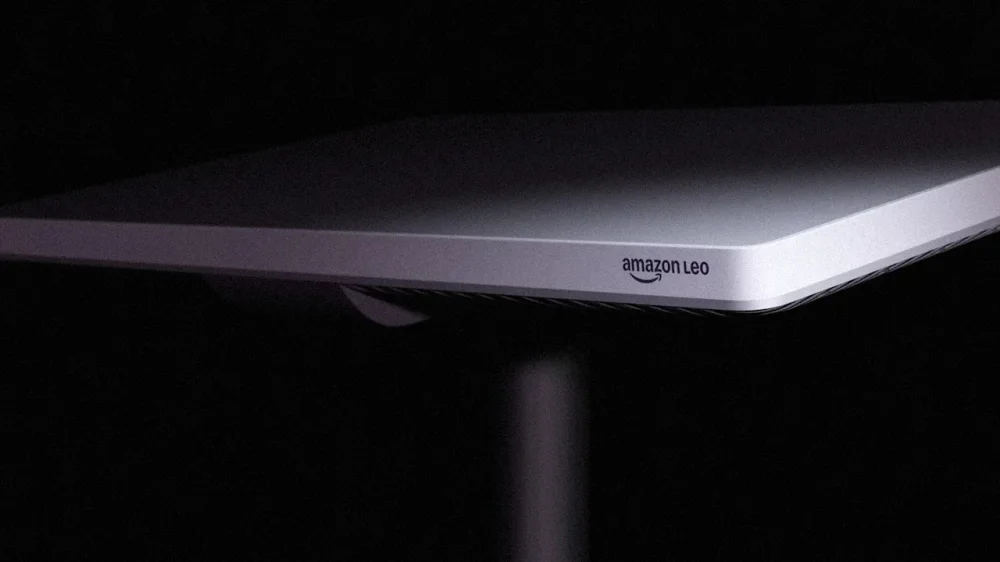
The Bezos vs. Musk battle for satellite internet service is heating up In what’s rapidly becoming the new space race: Amazon will start testing its high-speed internet service that it’s building out to compete with SpaceX’s Starlink service. With a broader rollout planned for next year, Amazon announced on Monday some updates to its Leo network—including a new program that will see select businesses taking part in an “enterprise preview” of the forthcoming service. In turn, Amazon can collect feedback to tailor services for specific industries. “Amazon Leo represents a massive opportunity for businesses operating in challenging environments,” Chris Weber, vice president of consumer and enterprise business for Amazon Leo, said in a statement. “We’ve designed Amazon Leo to meet the needs of some of the most complex business and government customers out there, and we’re excited to provide them with the tools they need to transform their operations, no matter where they are in the world.” BILLIONAIRES IN SPACE RACE Amazon Leo is part of the broader retail giant’s business, and not Blue Origin, the space technology company that was also founded by Jeff Bezos. It will compete with Starlink, which is owned by SpaceX, the space technology company founded by Elon Musk. That means the billionaires are competing both with space exploration and internet-from-space services for hard-to-reach places. Since April, Leo has launched more than 150 satellites into space. By comparison, Starlink has more than 7,800 satellites in orbit, according to figures released this month by the company, along with more than 6 million customers worldwide—including major cruise lines and commercial airlines. Some of the companies that have signed on for early adoption of Amazon Leo include JetBlue, Hunt Energy Network, and Connected Farms. Amazon announced earlier this month that it had rebranded its low Earth orbit satellite network to Leo from Project Kuiper. The company said it plans to eventually launch 3,000-plus satellites as part of its mission to provide fast and reliable internet to customers beyond the reach of existing networks. COMPETING FOR THE LION’S SHARE For Leo, taking a bite from the lion’s share of this specific industry that’s dominated by Starlink may be diffuclt, but Amazon seems intent to compete at least on speed—if not price. On Monday, the Seattle-based company showed off the final production design of Amazon Leo Ultra, the enterprise-grade terminal that will provide download speeds of up to 1 gigabits per second (Gbps) and upload speeds of up to 400 megabits per second (Mbps). By comparison, Starlink said earlier this month the median download speed across 2 million-plus active Starlink users during times of peak demand is nearly 200 Mbps as of July 2025. How the two companies will compete on pricing is harder to know yet, as Amazon has yet to disclose pricing. Starlink prices its residential service starting at $40 per month and going up to $165, and business plans ranging from $65 per month to more than $2,150. View the full article
-
The average U.S. employee clocks nearly 21 full business days working from their phone each year. That’s according to new research from Adobe Acrobat, who surveyed over 1,000 full-time employees on their habits and opinions around work phone etiquette. As worklife boundaries continue to blur, the work doesn’t stop when you step out of the office’s four walls. For many employees, they now carry it with them in their pocket, checking emails first thing from bed, or making calls on the go between meetings. In the early days of the iPhone, the “sent from my . . .” signature conveyed status. Back in 2013, The Atlantic referred to it as a “humble brag.” More than a decade on, and over half have used the brief disclaimer that you’re simply too busy to be sat at a desk typing out a response. Turns out those three words are dividing the office: Gen Z are more likely to say it looks rushed or informal, while older generations consider it normal work culture. Gen Z respondents report spending 23% less time on their phones for work than older workers, with over one in four reporting it makes them anxious. And 21% even worried it will get them fired. This generation gap may simply be a case of seniority. Only 41% of entry-level employees have sent an email with a “Sent from my . . .” signature, the lowest of any job level. Junior employees may feel they still have something to prove and fear that the same signature could be perceived as harried or unprofessional. Higher-level employees have no such fears. Instead, the “Sent from my . . .” signature can signal authority, the same way in which a painstakingly typed email is met with a curt thumbs-up from the CEO. In fact, a 2012 paper entitled “Sent From My iPhone: The Medium and Message as Cues of Sender Professionalism in Mobile Telephony” found that those receiving a message containing spelling and grammatical errors were more forgiving of mistakes with a “sent from my” email than those sent from a desktop or laptop. Of course, not every task is suited to a small screen. (There’s a time and a place for “laptop purchases,” for example, despite what Gen Z may think.) Sensitive or high-importance tasks probably aren’t worth risking an accidental emoji, or hitting send with a photo of your lunch attached. For those surveyed, the convenience of being able to fire off emails on the fly also comes with its own drawbacks: 56% say that work-related notifications have blurred the line between their personal and professional lives. But in an always-on work culture, as digital devices continue to embed further into our work and personal lives, the “sent from my . . .” isn’t going anywhere soon. Sent from my iPhone. View the full article

-
We may earn a commission from links on this page. Deal pricing and availability subject to change after time of publication. Black Friday sales officially start Friday, November 28, and run through Cyber Monday, December 1, and Lifehacker is sharing the best sales based on product reviews, comparisons, and price-tracking tools before it's over. Follow our live blog to stay up-to-date on the best sales we find. Browse our editors’ picks for a curated list of our favorite sales on laptops, fitness tech, appliances, and more. Subscribe to our shopping newsletter, Add to Cart, for the best sales sent to your inbox. Sales are accurate at the time of publication, but prices and inventory are always subject to change. You're supposed to replace your running shoes after 300 to 500 miles, but I've discovered that some shoes can take a lot more mileage than that. Now, the shoe that lasted so long for me—the Nike Downshifter—is on sale for $50 or less, depending on the color. Nike Women's Downshifter 13 Road Running Shoes, Black/White-Dark Smoke Grey, 7.5 $45.73 at Amazon $80.00 Save $34.27 Get Deal Get Deal $45.73 at Amazon $80.00 Save $34.27 Why I love these shoesYou can read the full saga of my 1,000 mile shoes here. Briefly, I wore a pair of Nike Downshifter 12s for nearly every road run I did for about a year, putting 1,024 miles on the shoes by the time I wrote about them. (I've worn them a few times since then, as well.) Since these are a budget shoe to begin with, the value was incredible—6.5 cents per mile, according to my calculations. The current model is the Downshifter 13, which I also own, although I've only put a few dozen miles on mine so far. But they seem to be a very similar type of shoe, and I won't be surprised if they make it into the quadruple digits as well. The Downshifter 13 is the one that's on sale right now. How to get the best price on Nike DownshiftersBoth the men's and women's version of the Downshifter 13 are on sale at Nike's website. (While you can find them at other retailers as well, I like to buy direct from Nike if I can find a good price, because of their excellent return policy.) The regular price is $80 for each version, and the sale price varies by color. I'm seeing prices from $48.97 to $68.97. But there's an additional discount—Nike is also offering a code, BFRIDAY, that gives you 25% off. I threw one of those cheaper pairs into my cart, applied the code, and the price dropped to $36.73. There's an $8 shipping charge, but that means the total is just $44.73. That's less than 45 bucks, shipped, for a pair of shoes that with luck might last a thousand miles. Does Apple do Black Friday?Yes, Apple participates in Black Friday, though you may want to compare their sales with other retailers like Best Buy and Walmart. Apple is offering an exclusive $250 gift card for eligible purchases, but so far, the best Black Friday sale on an Apple product is the M4 MacBook on sale for cheaper than ever. Does Amazon have Black Friday deals?Yes, Amazon has Black Friday sales, but prices aren’t always what they seem. Use a price tracker to make sure you’re getting the best deal, or refer to guides like our live blog that use price trackers for you. And if you have an Amazon Prime membership, make the most of it. What stores have the best sales on Black Friday?Nowadays, both large retailers and small businesses compete for Black Friday shoppers, so you can expect practically every store to run sales through Monday, December 1, 2025. The “best” sales depend on your needs, but in general, the biggest discounts tend to come from larger retailers who can afford lower prices: think places like Amazon, Walmart, Target, Best Buy, and Home Depot. You can find all the best sales from major retailers on our live blog. View the full article
-
President Donald The President said he has accepted an invitation from Chinese leader Xi Jinping to visit Beijing in April and that he reciprocated by inviting Xi for a state visit to the U.S. later next year. The President made the announcement a few hours after he spoke with Xi on the phone on Monday morning, in which he said the two men discussed issues including Ukraine, fentanyl, and soybeans. The phone call came nearly one month after the two men met in person in the South Korean city of Busan. “Our relationship with China is extremely strong!” The President said. Beijing, which announced the phone call first, said nothing about the state visits but said that the two leaders discussed trade, Taiwan and Ukraine. Xi told The President in the phone call Monday that Taiwan’s return to mainland China is “an integral part of the post-war international order,” and he expressed hope for a “fair, lasting and binding peace agreement” over Ukraine, according to the Chinese foreign ministry. The conversation came after Japanese Prime Minister Sanae Takaichi recently said Japan’s military could get involved if China were to take action against Taiwan, the self-governing island that Beijing says must come under its rule. Japan is an important ally of the U.S. in the region. The phone call also coincided with the latest push by the The President administration to end the war in Ukraine. The Chinese, who in the past always pointed out that their leader picked up the call “upon request”, didn’t say such for Monday’s call. “That means China called The President,” said Sun Yun, director of the China program at the Washington-based think tank Stimson Center “My best guest is China is worried about the escalation (in tensions) with Japan. The reference to Taiwan and the post-WWII order directly points to the spat with Japan over Taiwan,” said Sun Yun, director of the China program at the Washington-based think tank Stimson Center. “They also talked about Ukraine. That is an issue China is interested in due to the new peace negotiation.” China’s relations with Japan sour China-Japan relations have plunged to a new low following Takaichi’s remarks, with Beijing denouncing her words. Over the weekend, Chinese Foreign Minister Wang Yi said Japan “crossed a red line that should not have been touched.” Xi in the phone call said China and the U.S., which fought together during the war against fascism and militarism, should “jointly safeguard the victory of World War II.” The U.S. has taken no side on the sovereignty of the self-governed island but is opposed to the use of force to seize Taiwan. It is obligated by a domestic law to provide sufficient hardware to the island to deter any armed attack. The President has maintained strategic ambiguity about whether he would send U.S. troops in case of a war in the Taiwan Strait. His administration has urged Taiwan to increase its defense budget. Earlier this month, Taiwan’s foreign ministry said it received official notification that the The President administration approved a US$330 million arms sales to Taiwan, including fighter jet parts. Beijing immediately protested the arms sale, saying it “grossly violated” the one-China principle, by which Beijing considers Taiwan to be part of Chinese territory. “China deplores and opposes that,” Chinese foreign ministry spokesperson Lin Jian said then. The two leaders also discussed the Ukraine crisis, the Chinese side said, with Xi saying the crisis should be resolved “at its root.” The Chinese leader stressed Beijing’s support for “all efforts that are conducive to peace,” according to the statement. However, western governments have accused Beijing of enabling the war through its industrial support for Moscow. The President and Xi discussed trade The President said he spoke with Xi about “Fentanyl, Soybeans and other Farm Products, etc.” “We have done a good, and very important, deal for our Great Farmers — and it will only get better,” The President wrote. Since he met Xi in Busan, “there has been significant progress on both sides in keeping our agreements current and accurate,” The President said. In the call, Xi said the bilateral relationship has “generally maintained a steady and positive trajectory” following the Busan summit, and he said the two sides should strive to make “more positive progress,” according to the Chinese foreign ministry. It didn’t reveal any concrete agreements on matters such as purchases of American soybeans. —Seung Min Kim and Didi Tang, Associated Press View the full article

-
We may earn a commission from links on this page. Deal pricing and availability subject to change after time of publication. Black Friday sales officially start Friday, November 28, and run through Cyber Monday, December 1, and Lifehacker is sharing the best sales based on product reviews, comparisons, and price-tracking tools before it's over. Follow our live blog to stay up-to-date on the best sales we find. Browse our editors’ picks for a curated list of our favorite sales on laptops, fitness tech, appliances, and more. Subscribe to our shopping newsletter, Add to Cart, for the best sales sent to your inbox. Sales are accurate at the time of publication, but prices and inventory are always subject to change. It's almost Black Friday, and the deals are rolling in, including at the likes of Best Buy, Walmart, Amazon, and Target. And while it's nice to save money on a big-ticket item, if you're looking to score a bargain on a budget, I've used all my resources to find the best Black Friday tech deals under $25. Apple EarPods Wired Headphones With Lightning Connector $15.96 at Amazon $19.00 Save $3.04 Get Deal Get Deal $15.96 at Amazon $19.00 Save $3.04 Soundcore by Anker P20i True Wireless Earbuds, 10mm Drivers with Big Bass, Bluetooth 5.3, 30H Long Playtime, Water-Resistant, 2 Mics for AI Clear Calls, 22 Preset EQs, Customization (White) $18.99 at Amazon $39.99 Save $21.00 Get Deal Get Deal $18.99 at Amazon $39.99 Save $21.00 Apple AirTag $19.99 at Amazon $29.00 Save $9.01 Get Deal Get Deal $19.99 at Amazon $29.00 Save $9.01 Amazon Echo Pop Alexa Smart Speaker (2023) $21.99 at Amazon $39.99 Save $18.00 Get Deal Get Deal $21.99 at Amazon $39.99 Save $18.00 INIU 10000mAh 45W Power Bank with USB-C Cable $11.21 at Amazon $29.99 Save $18.78 Get Deal Get Deal $11.21 at Amazon $29.99 Save $18.78 Bluetooth Speaker with HD Sound, Portable Wireless, IPX5 Waterproof, Up to 24H Playtime, TWS Pairing, BT5.3, for Home/Party/Outdoor/Beach, Electronic Gadgets, Birthday Gift (Black) $18.98 at Amazon $26.99 Save $8.01 Get Deal Get Deal $18.98 at Amazon $26.99 Save $8.01 SEE 3 MORE Apple and Anker wired earbuds are nicely discountedWired earbuds are very early 2000s, but on the other hand, they never run out of batteries. If you're still rocking an iPhone 14 Plus or below (or an iPhone SE 3rd generation), you'll be able to pick up some official Apple EarPods Headphones with a Lightning connector for $15.96 (originally $19), or one with USB-C connector for a few cents more. If you prefer wireless earbuds but don't want to pay too much for something you might end up losing, the Soundcore by Anker P20i are a solid pair with some impressive features for their $18.99 price (marked down from $39.99). You get Bluetooth 5.3, 30 hours of battery, water resistance, and a full EQ with its companion app. AirTags are a bargain for a four-packYou don't need to be a spy to use tracking devices. As an Apple user, you can use AirTags and Find My to track anything that you can attach one of these little devices to. Right now, Amazon has single AirTags for $19.99 (originally $29) or a four-pack for $64.99 (originally $99), bringing the cost down to $16.25 each. Echo Pop speakers are $15 offThe Amazon Echo Pop is Amazon's most budget-friendly smart speaker. You can use the multi-room music feature if you have multiple speakers in different rooms, so grab a few: You can get one for $24.99 right now (originally $39.99). This Iniu portable phone charger is 40% offI recently lost my Iniu Portable Charger while traveling in Europe. Fortunately, it was at the end of my trip, and it had served its purpose well, saving my phone's battery (and therefore my life) multiple times. You can get one now for $18.68 (originally $29.99) after the 40% discount at checkout. A BolaButty portable outdoor speaker for less than $20If you're looking for a cheap portable outdoor speaker that can get wet, consider the BolaButty Portable Speaker, currently going for $18.98 (originally $26.99). It's waterproof with an IPX5 rating and will last 20 hours before running out of juice. This TP-Link TL-SG105 ethernet switch is 48% offI have many PoE security cameras, smart hubs, and other devices that need an Ethernet connection. I've been using the TP-Link TL-SG105 switch for over a year, and it has worked great for me. You can get it for $12.99 (originally $24.99). A Kasa Smart Plug Mini for $6 offI've been using the Kasa Smart Plug Mini to automatically turn on and off my backyard string lights on a schedule. You can get it for $23.99 (originally $29.99). The Roku Streaming Stick HD is 50% offThe Roku Streaming Stick HD is the most basic Roku Stick you can buy, and it's 50% off right now, making it a great time to upgrade your TV's OS to my favorite one. You can get it for $15 (originally $29.99). How long do Black Friday deals really last?Black Friday sales officially begin Friday, November 28, 2025, and run throughout “Cyber Week,” the five-day period that runs from Thanksgiving through Cyber Monday, December 1, 2025. But Black Friday and Cyber Monday dates have expanded as retailers compete for customers. You can get the same Black Friday sales early, and we expect sales to wind down by December 3, 2025. What stores have the best sales on Black Friday?Nowadays, both large retailers and small businesses compete for Black Friday shoppers, so you can expect practically every store to run sales through Monday, December 1, 2025. The “best” sales depend on your needs, but in general, the biggest discounts tend to come from larger retailers who can afford lower prices: think places like Amazon, Walmart, Target, Best Buy, and Home Depot. You can find all the best sales from major retailers on our live blog. Are Black Friday deals worth it?In short, yes, Black Friday still offers discounts that can be rare throughout the rest of the year. If there’s something you want to buy, or you’re shopping for gifts, it’s a good time to look for discounts on what you need, especially tech sales, home improvement supplies, and fitness tech. Of course, if you need to save money, the best way to save is not to buy anything. Our Best Editor-Vetted Early Black Friday Deals Right Now Apple AirPods Pro 3 Noise Cancelling Heart Rate Wireless Earbuds — $219.99 (List Price $249.00) Apple iPad 11" 128GB A16 WiFi Tablet (Blue, 2025) — $279.00 (List Price $349.00) Amazon Fire HD 10 (2023) — $69.99 (List Price $139.99) Sony WH-1000XM5 — $248.00 (List Price $399.99) Blink Outdoor 4 1080p Wireless Security Camera (5-Pack) — $159.99 (List Price $399.99) Amazon Fire TV Stick 4K Plus — $24.99 (List Price $49.99) NEW Bose Quiet Comfort Ultra Wireless Noise Cancelling Headphones — $298.00 (List Price $429.00) Shark AI Ultra Matrix Clean Mapping Voice Control Robot Vacuum with XL Self-Empty Base — $249.99 (List Price $599.00) Apple Watch Series 11 (GPS, 42mm, S/M Black Sport Band) — $349.00 (List Price $399.00) Western Digital 14TB Elements Desktop External Hard Drive — $169.99 (List Price $279.99) Deals are selected by our commerce team View the full article
-
UK chancellor will set out her tax and spending plans on WednesdayView the full article
-
When teams track MTTR (mean time to resolution), they typically focus on technical response speed: how quickly engineers diagnose and deploy fixes. But look at actual incident timelines and you’ll find a different pattern. Delays happen while information travels between teams. Support has customer impact data trapped in tickets. Engineering has resolution context stuck in dev tools. Operations has monitoring insights isolated in observability platforms. The repair work waits on someone manually bridging these gaps. This isn’t about slow people or poor communication skills. It’s structural. Your systems don’t talk to each other, so humans become the connective tissue between them. Someone copies ticket details into Slack. Someone else screenshots monitoring data and pastes it into Jira. Another person updates the ticket status based on what they heard in a stand-up. Each handoff adds minutes or hours to your MTTR. The problem compounds when incidents escalate across multiple teams, each working in their own tool, none seeing the full picture without someone manually assembling it. The path to faster incident resolution isn’t just optimizing technical troubleshooting. It’s eliminating the coordination overhead that happens between detection and fix. Why incident timelines reveal information problems, not just technical complexity Pick a recent incident and trace its timeline. Not the summary your team documented afterward: the actual sequence of what happened. Initial detection happens quickly. The support team sees customer reports. Monitoring alerts fire. Someone creates a ticket. Then time passes. What fills that gap? Information transfer. Support needs to explain the customer impact to engineering. Engineering needs monitoring context from operations. Someone has to check if this matches previous incidents. Each step requires a person to notice information in one place, understand it’s needed somewhere else, and manually move it there. The technical work (diagnosing the root cause, deploying the fix) takes less time than coordinating who knows what. Information bottlenecks extend MTTR more than technical complexity. An engineer can’t start troubleshooting effectively without knowing which customers are affected and how severely. Support can’t update customers without knowing what engineering discovered. Operations can’t adjust monitoring thresholds without understanding what triggered the false positives versus real issues. Everyone needs context that lives somewhere else. These delays aren’t visible in your MTTR dashboards as distinct problems. They blend into “investigation time” or “coordination overhead.” But they’re systematic. Every incident that crosses team boundaries hits the same handoff delays. Your repair time reflects coordination friction more than actual repair difficulty. The timeline pattern repeats: detect, wait, coordinate, troubleshoot, fix, coordinate again, close. The waits and coordinates add up. When you reduce those, MTTR drops, not because your technical response improved, but because information reached the right people faster. What information actually needs to flow during incident response Not every piece of data matters equally during incidents. Some context changes how teams respond. Some is just noise. The difference matters because moving everything between systems creates clutter, while moving nothing creates blind spots. Customer impact severity determines response priority. When support sees 50 customers reporting the same issue versus five, that context changes how engineering allocates resources. Account details matter too: if the affected customer is enterprise-tier versus free-tier, escalation paths differ. This information lives in your ticketing platform. Engineering needs it to make response decisions, but they’re working in their dev queue, not watching support tickets. Previous troubleshooting attempts prevent duplicate work. If support already validated that the issue isn’t client-side, engineering shouldn’t waste time asking customers to clear their cache. If operations already checked server health and found nothing, the next responder needs to know that. Resolution history from similar past incidents shortens investigation time. But these insights get trapped where they’re documented (typically in tickets or monitoring tools) rather than traveling with the incident as it escalates. Current ownership and status keep everyone aligned on who’s handling what. When multiple teams touch an incident, confusion about ownership adds delay. Support thinks engineering is working on it. Engineering thinks operations are investigating. Operations assumed it was resolved. Clear status that updates across systems prevents this coordination tax. Technical context from logs and monitoring guides investigation. Error rates, affected endpoints, infrastructure health: operations have this data in their monitoring platforms. Engineering needs it to diagnose the root cause. But extracting monitoring insights and moving them to where development teams work requires manual steps. Every minute spent copy-pasting stack traces or screenshotting dashboards extends MTTR. Where information gets trapped in your incident workflow Your incident response process has predictable boundaries where information stops flowing. These boundaries exist because teams use different tools designed for different purposes. The systems serve their users well independently (ticketing platforms track customer issues, dev queues manage engineering work, monitoring tools surface infrastructure health). But they don’t communicate with each other. Humans bridge the gap. Support to engineering handoffs When support escalates an incident to engineering, context fragmentation begins immediately. Support documents customer impact, affected accounts, troubleshooting already attempted, and severity assessment in their ticketing platform. Engineering works in Jira or Azure DevOps or their issue tracker of choice. The escalation requires someone to manually create the engineering ticket and copy relevant details from the support ticket. What typically transfers: basic issue description, maybe customer name. What doesn’t transfer: full conversation history with the customer, detailed environment information support gathered, previous related tickets showing this is a recurring pattern. Engineering starts troubleshooting with incomplete context because extracting everything relevant from the support ticket and moving it to the dev queue takes more effort than anyone has time for during an active incident. The information gap flows backward too. When engineering identifies the root cause or deploys a fix, that context lives in their dev tool. Support needs it to update customers accurately. But engineering isn’t monitoring the support ticket anymore. Support discovers the incident is resolved through customer follow-up (“Hey, looks like it’s working now”) rather than through systematic status updates from engineering. The delay between actual resolution and support knowing about it extends your customer service escalation process and leaves customers uncertain about status. Engineering to operations coordination Similar fragmentation happens between engineering and operations, especially when incidents involve infrastructure issues rather than code problems. Engineering creates tickets for infrastructure investigation. Operations works in ServiceNow or their ITSM (IT Service Management) platform. The handoff requires manual ticket creation again, with context from the development tool copied into the operations tool. Operations has monitoring data that would help engineering narrow diagnosis faster: which services are degraded, error rate trends, infrastructure health metrics. But this data lives in observability platforms, not accessible within engineering’s workflow. Someone has to notice the relevant monitoring context, extract it, and bring it to where engineering is working. During complex incidents requiring tight coordination between engineering and operations, this back-and-forth compounds. Resolution context flowing back to customer-facing teams After the technical fix deploys, resolution context needs to reach customer-facing teams who will close tickets and communicate with affected users. What actually happened? What was the root cause? How confident are we that the issue won’t recur? Are customers still experiencing any residual effects? This context exists: engineering documented it during troubleshooting, operations logged infrastructure changes they made, monitoring shows systems returning to normal. But the resolution details live scattered across multiple platforms. Support sees the incident is “resolved” in their system because someone manually updated the ticket status, but they lack the detailed context to answer customer questions confidently. The information gap forces support to ping engineering directly for details, adding coordination overhead at the tail end of incident response when everyone wants to move on to next priorities. Or support closes tickets with generic resolution notes because they don’t have access to what actually fixed the problem. How bidirectional sync eliminates manual coordination Bidirectional sync means information flows both ways automatically, not through scheduled batch updates or manual copy-paste work. When support updates a ticket, engineering sees the change in their queue. When engineering updates status, support sees it in their ticketing platform. No one is manually bridging the gap. No information getting stuck because someone forgot to update both places. This differs fundamentally from one-way updates where information flows in a single direction. One-way sync might push support tickets into engineering queues, but when engineering adds resolution notes, those changes don’t flow back. Support still needs to check the dev tool or ask for updates. The coordination bottleneck remains. Real bidirectional sync preserves how each team works while eliminating information handoffs. Support continues working in their ticketing platform. Engineering stays in their dev queue. Operations manages incidents in their ITSM tool. But changes in any system automatically appear in the others based on field mappings you configure. Customer impact notes from support appear in the engineering ticket. Resolution status from engineering updates the support ticket. Priority changes propagate to operations. The systems communicate so people don’t have to. Field-level control matters here. You’re not mirroring entire tickets between platforms (that creates noise and confusion about which system is authoritative for what). Instead, you map specific fields that need to sync: status, priority, assigned owner, key description fields, resolution notes. You control what flows and in which direction. Maybe customer conversation history stays in the support tool, but customer impact severity syncs to engineering. Technical implementation details stay in the dev tool, but resolution summary syncs back to support. This eliminates the coordination tax during incidents. When support escalates an issue, the engineering ticket appears automatically with all relevant context already populated. When engineering changes priority based on their investigation, support sees the updated priority without checking another system. When the issue gets resolved, status updates everywhere simultaneously. Your MTTR drops because information reaches people when they need it, not when someone remembers to manually update another system. Evaluating integration solutions that actually reduce MTTR When you’re assessing tools to eliminate information bottlenecks, focus on whether they’ll actually fix your specific handoff delays. Some integration approaches require extensive development work. Some handle basic data transfer but fail on complex field mappings. Some work well for certain tool combinations but not others. Sync depth determines whether the integration handles your actual use case. Can it map custom fields your teams rely on? If support tracks customer tier in a custom field that engineering needs to prioritize response, does the integration support that? Basic integrations move standard fields (title, description, status). Complex incidents require richer context: affected environment, customer account details, resolution history, related incident links. Setup complexity affects whether you’ll actually implement and maintain the integration. Some solutions require API expertise and custom development for each workflow. Configuration-based approaches let you map fields through visual interfaces, set up bidirectional rules, and adjust workflows as needs change (without writing code). The setup time difference is substantial: hours versus weeks for initial configuration, minutes versus days for ongoing changes. Tool compatibility with your existing stack is non-negotiable. Your incident response workflow likely involves specific platforms your teams have already standardized on. The integration needs to work with your actual tools as they exist today, not force you to switch platforms to enable information flow. Real-time versus batch sync impacts response speed. Batch updates that conduct every hour might be fine for project management workflows. They’re terrible for incident response where every minute of MTTR matters. Real-time sync means updates appear within seconds, letting teams coordinate at incident response speed. Cost of maintenance matters more than initial setup cost. An integration you configure once and it works reliably costs less than one requiring constant attention to prevent sync failures. Solutions that provide clear sync logs and error handling reduce this operational burden. Audit your incident workflow for information handoffs Map your current incident response process from detection through resolution. Write down each step: who detects the incident, where they document it, who gets notified, how escalation happens, where technical investigation occurs, how resolution gets communicated back. Each handoff is a potential bottleneck reducing your MTTR. Some are necessary (different teams genuinely need different tools for their work). But the information transfer shouldn’t require humans manually copying data between systems. That’s coordination overhead you can eliminate through integration. The reality behind your MTTR delays You’ve just mapped your incident workflow and seen the handoffs. The delays when support escalates to engineering without full context. The minutes lost when operations discovers infrastructure issues but can’t automatically route them with monitoring data attached. The frustration when resolution happens in one system but customer-facing teams don’t know for another 30 minutes. These aren’t coordination problems you can train away. They’re structural problems that need structural solutions. Unito’s platform enables real-time bidirectional sync between your incident response platforms, eliminating information handoffs without forcing teams to abandon their workflows. With field-level control over what syncs and real-time updates, IT teams can reduce MTTR by removing the coordination delays that extend incidents beyond their technical complexity. The question isn’t whether you have information bottlenecks slowing incident response. Your incident timelines prove you do. The question is whether you’re ready to eliminate them systematically rather than accepting them as coordination tax. Ready to transform your ticket escalation workflow? Meet with Unito product experts to see what Unito can do for your tickets. Talk with sales View the full article
-
We may earn a commission from links on this page. Deal pricing and availability subject to change after time of publication. Black Friday sales officially start Friday, November 28, and run through Cyber Monday, December 1, and Lifehacker is sharing the best sales based on product reviews, comparisons, and price-tracking tools before it's over. Follow our live blog to stay up-to-date on the best sales we find. Browse our editors’ picks for a curated list of our favorite sales on laptops, fitness tech, appliances, and more. Subscribe to our shopping newsletter, Add to Cart, for the best sales sent to your inbox. Sales are accurate at the time of publication, but prices and inventory are always subject to change. The Pixel Watch is Google's answer to the Apple Watch. It's designed to be a health and fitness companion to your Android phone, and is actually pretty good at that, based on Lifehacker's own hands-on experience. Even though this model was launched just a few months ago, it's already on sale, too. You can grab the Pixel Watch 4 for a record low price this Black Friday. The discounts range from 15% to 22%, depending on which variant you pick, but all are tempting. Pixel Watch 4 (41mm, WiFi) $300.00 at Amazon $350.00 Save $50.00 Get Deal Get Deal $300.00 at Amazon $350.00 Save $50.00 Pixel Watch 4 (41mm, LTE) $350.00 at Amazon $450.00 Save $100.00 Get Deal Get Deal $350.00 at Amazon $450.00 Save $100.00 Pixel Watch 4 (45mm, WiFi) $400.00 at Amazon Get Deal Get Deal $400.00 at Amazon Pixel Watch 4 (45mm, LTE) $400.00 at Amazon $500.00 Save $100.00 Get Deal Get Deal $400.00 at Amazon $500.00 Save $100.00 SEE 1 MORE The Black Friday 2025 prices for the Pixel Watch 4 are as follows: 41mm, wifi: $300 (15% off) 41mm, LTE: $350 (22% off) 45mm, wifi: $350 (15% off) 45mm, LTE: $399 (20% off) Lifehacker's Senior Health Editor Beth Skwarecki reviewed the Pixel Watch 4 and gave it a score of 4/5. She praised the Pixel Watch 4's charging speed in particular, as the device went from 0 to 94% in just 31 minutes. The device also has a useful new magnetic charging dock that holds it sideways while it charges. This means that it can act as a small desk clock while it's charging, which is very convenient. Beth also highlighted the Pixel Watch 4's support for satellite SOS on the LTE models, which is a useful life-saving feature in certain emergencies, where you might not have access to a cellular signal. The review also points out the watch's addition of dual band GPS, which means that tracking your outdoor runs or rides will be much more accurate. Even the Apple Watch Series 11 doesn't have this feature, but the more expensive Apple Watch Ultra has it. As for the Pixel Watch 4's downsides, the battery life isn't that great, the display could be brighter, and the Fitbit app has quite a few limitations. Still, this is a fairly solid hardware, now with a sweet deal. Does Amazon have Black Friday deals?Yes, Amazon has Black Friday sales, but prices aren’t always what they seem. Use a price tracker to make sure you’re getting the best deal, or refer to guides like our live blog that use price trackers for you. And if you have an Amazon Prime membership, make the most of it. Are Black Friday deals worth it?In short, yes, Black Friday still offers discounts that can be rare throughout the rest of the year. If there’s something you want to buy, or you’re shopping for gifts, it’s a good time to look for discounts on what you need, especially tech sales, home improvement supplies, and fitness tech. Of course, if you need to save money, the best way to save is to not buy anything. Are Cyber Monday deals better than Black Friday?Black Friday used to be bigger for major retailers and more expensive tech and appliances, while Cyber Monday was for cheaper tech and gave smaller businesses a chance to compete online. Nowadays, though, distinction is almost meaningless. Every major retailer will offer sales on both days, and the smart move is to know what you want, use price trackers or refer to guides like our live blog that use price trackers for you, and don’t stress over finding the perfect timing. Our Best Editor-Vetted Early Black Friday Deals Right Now Apple AirPods Pro 3 Noise Cancelling Heart Rate Wireless Earbuds — $219.99 (List Price $249.00) Apple iPad 11" 128GB A16 WiFi Tablet (Blue, 2025) — $279.00 (List Price $349.00) Amazon Fire HD 10 (2023) — $69.99 (List Price $139.99) Sony WH-1000XM5 — $248.00 (List Price $399.99) Blink Outdoor 4 1080p Wireless Security Camera (5-Pack) — $159.99 (List Price $399.99) Amazon Fire TV Stick 4K Plus — $24.99 (List Price $49.99) NEW Bose Quiet Comfort Ultra Wireless Noise Cancelling Headphones — $298.00 (List Price $429.00) Shark AI Ultra Matrix Clean Mapping Voice Control Robot Vacuum with XL Self-Empty Base — $249.99 (List Price $599.00) Apple Watch Series 11 (GPS, 42mm, S/M Black Sport Band) — $349.00 (List Price $399.00) Western Digital 14TB Elements Desktop External Hard Drive — $169.99 (List Price $279.99) Deals are selected by our commerce team View the full article