ResidentialBusiness
Administrators
-
Joined
-
Last visited
Everything posted by ResidentialBusiness
-
 We may earn a commission from links on this page. Meta has begun rolling out its latest firmware update for its Ray-Ban and Oakley smart glasses. The update, V19.2, is available this week, and improves Garmin integration and video recording for both first and second generation Ray-Ban Meta and Oakley Meta wearables. Ray-Ban Meta - Wayfarer Large glasses with Meta AI, Audio, Photo, Video Compatibility - Polarized Gradient Graphite Lens (Refurbished) - Matte Black $263.00 at Best Buy Get Deal Get Deal $263.00 at Best Buy The improvements to Garmin device integration lets Meta users sync Garmin stats to videos and photos, ask Meta AI for health info, and get real-time voice updates of fitness metrics while active. These features were previously exclusive to Oakley Meta Vanguard glasses, but now everyone has access. As for the improvements to videos, the update introduces selectable stabilization modes (auto, low, medium, and high), the ability to record clips that are five minutes long (up from three minutes), and the option of recording 1080p video at 60 FPS—not bad for a camera you wear on your face. Oakley | Meta HSTN - with Meta AI, Audio, Photo, Video Compatibility - Black, Prizm™ Black Polarized $449.00 at Amazon Get Deal Get Deal $449.00 at Amazon How to update your Meta smart glassesIf you have Meta glasses set to "automatic update," all you have to do is make sure your specs have power and are connected to your phone via Bluetooth and they'll automatically update over the air. If you want to check for an update manually, follow these steps: Open the Meta AI app. Click the glasses icon at the top right. Select the Gear icon next to the glasses. Hit "Updates" Hit "Check" to see if your device is up-to-date. Meta's update schedule is impressiveRay-Ban Metas have been my daily-wear glasses for over a year now and they're my choice for best overall smart glasses on the market. One of the reasons I like them so much is that Meta provides regular software updates. The company makes fixes and adds features approximately every six to eight weeks, and they're usually notable improvements. August's update added AI photo restyling and Google and Outlook calendar integration, and May's update added Live AI and translation features. The pace of updates is on par with a platform instead of a gadget, making these smart glasses feel like they're designed for the long haul, instead of a "buy one this year, then buy the new one next year" gadget. View the full article
 -
Social media group will integrate the artificial intelligence search engine within its appView the full article
-
Previously, Kim was a managing director in J.P. Morgan Chase & Co.'s strategic investments group, where she managed a diverse portfolio of fintech investments. View the full article

-
We may earn a commission from links on this page. Deal pricing and availability subject to change after time of publication. Ahead of Black Friday, Amazon has discounted several versions of the Google Pixel 10. Right now, you can get the Google Pixel 10 Pro XL with 256 GB of storage and 16 GB of RAM for $899 (originally $1,199), marking a record-low price according to price-tracking tools. Google Pixel 10 Pro XL $899.00 at Amazon $1,199.00 Save $300.00 Get Deal Get Deal $899.00 at Amazon $1,199.00 Save $300.00 Built with aluminum and Corning Gorilla Glass Victus 2, the phone has an IP68 rating, meaning it can withstand dust and be submerged to 1.5 meters for up to 30 minutes. Its 6.8″ Super Actua display reaches 3,300-nit peak brightness, making it easier to use in direct sunlight. Powered by the Google Tensor G5 chip, it integrates AI tools like the Magic Cue and Gemini Live, which help you brainstorm or point your camera at something you want more information about. The camera system offers 50 MP images and 8K video in low light. It has a 42 MP main lens, a 48 MP ultrawide lens, and a 48 MP telephoto with up to 100× digital zoom. The battery should last over 24 hours on a charge, and up to 100 hours with Extreme Battery Saver turned on. It takes between 77 and 90 minutes to fully charge and reaches around 70% in half an hour with a wired 45W charger. Google promises seven years of software support, which ensures lasting performance and security updates down the line. Altogether, the currently discounted Google Pixel 10 Pro XL is a great option for Android users who want to level up with a bigger, faster, and more powerful phone with impressive camera performance. Our Best Editor-Vetted Tech Deals Right Now Apple AirPods 4 Wireless Earbuds — $119.00 (List Price $129.00) Apple iPad 11" 128GB A16 WiFi Tablet (Blue, 2025) — $299.00 (List Price $349.00) Shark AI Ultra Matrix Clean Mapping Voice Control Robot Vacuum with XL Self-Empty Base — $299.99 (List Price $599.00) Bose QuietComfort Noise Cancelling Wireless Headphones — $199.00 (List Price $349.00) Amazon Fire TV Stick 4K Plus — $29.99 (List Price $49.99) Google Pixel 10 Pro 128GB Unlocked Phone (Obsidian) — $749.00 (List Price $999.00) Amazon Fire HD 10 (2023) — $69.99 (List Price $139.99) Introducing Amazon Fire TV 55" Omni Mini-LED Series, QLED 4K UHD smart TV, Dolby Vision IQ, 144hz gaming mode, Ambient Experience, hands-free with Alexa, 2024 release — $699.99 (List Price $819.99) Google Nest Cam Indoor (Wired, 3rd Gen) - Security Camera with 2K Video and Gemini, Night Vision, 2-Way Audio, Works with Google Home - 2025 Model - Snow — $74.99 (List Price $99.99) Sony WH-1000XM5 — $328.00 (List Price $399.99) Deals are selected by our commerce team View the full article
-
Perplexity will pay Snap $400 million to integrate its AI answer engine into Snapchat’s chat interface, with rollout starting next year. The post Perplexity Bets $400M On Snapchat To Scale AI Search Adoption appeared first on Search Engine Journal. View the full article
-
Russian president asks officials to draft proposals amid fears of a new atomic arms raceView the full article
-
Food delivery app said acquisition of UK’s Deliveroo would contribute less to earnings than forecastView the full article
-
We may earn a commission from links on this page. If you have a Fitbit, or if you use the Fitbit app with a compatible device like a Pixel watch, you’ve probably seen “zone minutes” or "active zone minutes" pop up on your screen. So what exactly are active zone minutes, and how do they compare to the other ways we measure exercise, like steps? Zone minutes relate to the U.S. Physical Activity GuidelinesBefore we get into how zone minutes are measured, I think it will be most useful to look at why we’re counting up minutes at all. Fitbit’s purpose here is actually pretty neat: They’re trying to give you an automated way of telling whether you are keeping up with public health guidelines for exercise, like the World Health Organization’s recommendations for exercise, and the Physical Activity Guidelines for Americans (which, conveniently, use the same numbers). As I explain here, these guidelines state that we should all get at least 150 minutes of exercise each week. “Moderate” exercise counts for the guidelines, which includes light activities like walking and housework. I have more here on what counts as "moderate" for these purposes. The guidelines also say that if you’re getting “vigorous” exercise, like running, you only need 75 minutes to meet the guidelines. Another way of thinking of these numbers is to consider vigorous exercise as counting double. If you’ve done 100 minutes of moderate exercise (like walking), you only need 25 minutes of vigorous exercise to meet your weekly goal. And while 150 minutes is a target, it’s actually only the entry level target. The U.S. and World Health Organization guidelines both say that if you’re hitting 150 minutes just fine, you should set your sights on a 300-minute target. In general, more exercise is better (within reason), so it’s handy to keep tabs on how many minutes’ worth of exercise you’ve done this week. Fitbit keeps track of that for you. Active zone minutes are detected based on your heart rateNow we can talk about where active zone minutes come from, and why they’re called “zone” minutes. Your Fitbit (or compatible gadget) can measure your heart rate pretty easily, so the app simply marks you down as completing a “zone minute” any time your heart rate seems to be in a zone that suggests you’re exercising. There are many ways of dividing up heart rates into zones, and I have a rundown of the most common schemes here. Fitbit likes to use a system where, instead of numbers, your heart rate can be at rest, or in one of these zones. "Heart rate reserve" refers to the difference between your resting and maximum heart rates. Moderate (previously “fat burn”): 40% to 59% of your heart rate reserve (each minute here earns you one zone minute) Vigorous (previously “cardio”): 60% to 84% of your heart rate reserve (each minute here counts double) Peak: 85% or more of your heart rate reserve (each minute here counts the same as vigorous) To be totally clear, the Physical Activity Guidelines are not based on heart rate, but on a different measurement called METs. In the MET system, walking is always moderate and jogging is always vigorous. (More about that system here.) On the other hand, in the “active zone minutes” system, an experienced runner may find that jogging is so easy for them that their heart rate stays in the moderate zone. So zone minutes are not a perfect match to the guidelines, but they’ll get you pretty close without having to ask you what you’re doing or for how long. Your gadget counts up the minutes, and at the end of the week you can see whether you beat your 150-minute (or whatever) target. For example, my app is telling me that I logged 349 zone minutes last week. Great! And I didn’t have to do anything to count them. If your zone minutes don’t make sense, check your heart rate settingsHere’s my main complaint about zone minutes: they only make sense if your zones are set correctly. By default, Fitbit calculates your heart rate zones from what it guesses your maximum heart rate probably is. And as I’ve explained before, no formula can accurately tell you what your maximum heart rate actually is. It’s very common for these calculations to be off by 10 or more beats in either direction, which screws with your zones. So go into your app, and take a look at the zone minutes you’ve earned each day. Are you getting “moderate” zone minutes when you walk or do light exercise, and “vigorous” zone minutes for jogging or anything strenuous? If so, your zones are probably close enough to accurate, and you can assume they’re giving you a reasonable estimate of how much exercise you’re getting. But if you’re getting “vigorous” minutes from walks, or “moderate” minutes from hard exercise, you may want to adjust your zones. Tap your profile picture in the FItbit app, then select Fitbit Settings, then Heart Rate, then Heart Rate Zones, and enter a Custom Max Heart Rate. That will let you manually enter a max heart rate. If you’ve done a max heart rate field test, use that. Otherwise, enter the highest number you’ve seen when doing a hard workout. If you haven’t done a hard effort, but your zones seem really off, you can experiment with putting in different numbers and seeing what that does to your zones. As long as you’re getting moderate minutes when doing moderate exercise, and vigorous or peak minutes when you’re doing harder exercise, you’re getting useful metrics to track how active you are. View the full article
-
As Lifehacker’s smart glasses and virtual reality expert, I spend a lot of time flooding my eyes with bright light. Last night, I was testing a pair of soon-to-be released display style glasses that blast out 1,200 nits of light. That’s roughly car-headlight-bright, squeezed into a postage-stamp-sized image projected on glass about a half inch from my eyes. I thought to myself, “Wait, am I frying my eyeballs?” So I called up Dr. Sunir Garg, a spokesperson for the American Academy of Ophthalmology and professor of ophthalmology at Wills Eye Hospital, and asked him point blank: What am I doing to my eyes with this stuff? “We think not much,” Garg replied. “If the light is not physically causing you to look away—if it’s a bright screen but it’s not uncomfortable—we don't think that that's going to cause any harm to the eye.” There’s not a ton of research on the long-term effects of VR headsets on vision, but the data out there isn’t raising alarms among eye professionals. According to the AAO, ophthalmologists agree that there is no reason to be concerned that VR headsets and/or smart glasses will damage eye health, function, or development. To close the case, I asked Garg whether he’d ever seen or heard of any eye injuries from virtual reality, and he said, “The only scenario [in which] we've seen eye injuries is when people were doing something like boxing and tripped over the coffee table and fell down and hit their head.” How young is too young for using virtual reality? “But what about the children?” you might be asking (you hand-wringer, you). Good news there too: Virtual reality headset manufacturers may have age-based guidelines for their products—Meta recommends a minimum age of 10 years for its headsets, and Apple says its Vision Pro should not be used by children under 13—but they aren’t based on research about eyesight. “There’s not a lot of data that suggests that the VR headsets are problematic for kids,” Garg said. “I think we'll have to kind of hit [Meta and Apple] up for where that justification is coming from,” Garg said, ”because it's not something that we are really concerned about, per se.” There’s also no reason to think virtual reality helmets cause long-term vision problems in kids, but if a child is inside all day using VR, it could lead to nearsightedness. It’s not from the VR though—it’s the "being inside" part. “Something about being outside with natural sunlight seems to help regulate the growth of the eye and helps to reduce the amount of near-sightedness that people could be at risk of developing,” Garg said. So it seems there's some truth to the old trope of bookworms wearing glasses. Exactly why being an indoor-kid correlates with nearsightedness isn’t clear though; more research needs to be done. Virtual reality can cause eyestrain, thoughEven if VR gear and smart glasses don’t damage your eyes, they can still cause uncomfortable eyestrain. According to Garg, when you’re using VR or staring at any digital screen, your eyes are not moving much and you tend to blink less, so your eyes dry out, and that can lead to irritation and eyestrain. “The fix for that is either moving your eyes around consciously, blinking a bit more consciously, or following the American Academy of Ophthalmology’s ’20/20/20 rule.’” That is: When using any kind of screen, every 20 minutes you should look at something 20 feet away for at least 20 seconds. Motion sickness and dizziness in virtual reality Along with eyestrain, common pitfalls of using VR can include headaches, dizziness, and nausea. While your vision might have something to do with these things, the main cause of general VR sickness seems to be the inner ear, not the eyes. “Some people are just really sensitive to the motion component of virtual reality,” Garg said, “It's less clear to me how much of it is from the eyeballs.” Your eyes can handle 1,200 nits because they are toughTo sum up: Available evidence suggests your eyes will not be damaged if you go crazy with the VR, as long as you take breaks every once in a while and blink enough to avoid discomfort. It’s too late for us to save our 20/20 vision by soaking up more sunlight as a child, but at least we're not frying our eyeballs—and it’s reassuring to know that the biggest health risk from using virtual reality is barking your shins on the coffee table. View the full article
-
The latest sale consists of close to 1,200 HECMs secured by vacant residential units found in 46 states, according to data provided by the government agency. View the full article
-
CEO criticises western ‘cynicism’ while Beijing loosens regulations and cuts energy costs for data centresView the full article
-
The results are in. McDonald’s latest earnings report sheds light on the growing divide among U.S. consumers—as the wealthiest Americans continue to spend and eat out—while lower income families are making less trips to the Golden Arches as they battle the rising cost of living, skyrocketing food prices, grocery inflation, and stagnate wages. A look at McDonald’s third quarter earnings, released Tuesday after the closing bell, shows the fast food giant’s U.S. same-store sales increasing 2.5%, over the same period last year, (up 3.6% globally,)—but missing analyst expectations with adjusted earnings per share (EPS) coming in at $3.22, ten cents under expectations of $3.32, on $7.1 billion in revenue. Shares in McDonald’s (MCD) were up nearly 3% in afternoon trading on Wednesday, at the time of this writing. Dig deeper and the numbers show the growing economic disparity among Americans customers. “We continue to see a bifurcated consumer base with [quick-service restaurant] traffic from lower-income consumers declining nearly double digits in the third quarter, a trend that’s persisted for nearly two years,” Kempczinski said during Wednesday’s earnings call. “In contrast, QSR traffic growth among higher-income consumers remains strong, increasing nearly double digits in the quarter.” In an effort to deliver sustainable growth in this “challenging environment,” Kempczinski said “the company would be delivering everyday value and affordability, menu innovation, and compelling marketing that continue to bring customers through [the] doors.” To that end, Kempczinski said on the earnings call McDonald’s has been bringing back extra value meals; with a $5 Sausage, Egg & Cheese McGriddles meal, and an $8 10-piece Chicken McNuggets meal, in November. Last month, McDonald reintroduced Monopoly in the U.S., for the first time in nearly a decade, with a focus on digital engagement. View the full article

-
Key Supreme Court conservatives seemed skeptical Wednesday that President Donald The President has the power to unilaterally impose far-reaching tariffs, potentially putting at risk a key part of his agenda in the biggest legal test yet of his unprecedented presidency. The Republican administration is trying to defend the tariffs central to The President’s economic agenda after lower courts ruled the emergency law he invoked doesn’t give him near-limitless power to set and change duties on imports. The Constitution says Congress has the power to levy tariffs. But the The President administration argues that in emergency situations the president can regulate importation — and that includes tariffs. Justice Amy Coney Barrett grilled the government on that point. “Has there ever been another instance in which a statute has used that language to confer the power?” she asked. Justice Neil Gorsuch also questioned whether The President’s position would hand too much congressional power to the president. “Is the constitutional assignment of the taxing power to Congress, the power to reach into the pockets of the American people, just different?” he asked. “And it’s been different since the founding?” Questions from Chief Justice John Roberts also suggested he might not be convinced. With the court’s three liberal-leaning justices seeming deeply dubious, the tariffs challengers could win by swaying two conservatives. A decision in the case could take weeks or months. The President has called the case one of the most important in the country’s history and said a ruling against him would be catastrophic for the economy. The challengers argue the 1977 emergency powers law The President used doesn’t even mention tariffs, and no president before has used it to impose them. A collection of small businesses say the uncertainty is driving them to the brink of bankruptcy. The case centers on two sets of tariffs. The first came in February on imports from Canada, China, and Mexico after The President declared a national emergency over drug trafficking. The second involves the sweeping “reciprocal” tariffs on most countries that The President announced in April. Multiple lawsuits have been filed over the tariffs, and the court will hear suits filed by Democratic-leaning states and small businesses focused on everything from plumbing supplies to women’s cycling apparel. Lower courts have struck down the bulk of The President’s tariffs as an illegal use of emergency power, but the nation’s highest court may see it differently. The President helped shape the conservative majority court, naming three of the nine justices in his first term. The justices have so far been reluctant to check his extraordinary flex of executive power, handing him a series of wins on the court’s emergency docket. Still, those have been short-term orders — little of The President’s wide-ranging conservative agenda has been fully argued before the nation’s highest court. That means the outcome could set the tone for wider legal pushback against his policies. The justices have been skeptical of executive power claims before, such as when then-President Joe Biden tried to forgive $400 billion in student loans under a different law dealing with national emergencies. The Supreme Court found the law didn’t clearly give him the power to enact a program with such a big economic impact, a legal principle known as the major questions doctrine. The challengers say The President’s tariffs should get the same treatment, since they’ll have a much greater economic effect, raising some $3 trillion over the next decade. The government, on the other hand, says the tariffs are different because they’re a major part of his approach to foreign affairs, an area where the courts should not be second-guessing the president. The challengers are also trying to channel the conservative justices’ skepticism about whether the Constitution allows other parts of the government to use powers reserved for Congress, a concept known as the nondelegation doctrine. The President’s interpretation of the law could mean anyone who can “regulate” can also impose taxes, they say. The Justice Department counters that legal principle is for governmental agencies, not for the president. If he eventually loses at the high court, The President could impose tariffs under other laws, but those have more limitations on the speed and severity with which he could act. The aftermath of a ruling against him also could be complicated, if the government must issue refunds for the tariffs that had collected $195 billion in revenue as of September. The The President administration did win over four appeals court judges who found the 1977 International Emergency Economic Powers Act, or IEEPA, gives the president authority to regulate importation during emergencies without explicit limitations. In recent decades, Congress has ceded some tariff authority to the president, and The President has made the most of the power vacuum. —Lindsay Whitehurst, Associated Press View the full article

-
Finally—two years after its release, and one year-long beta later—the PlayStation Plus handheld can finally officially play games without needing to connect to a PS5 console first. The portable machine is not strictly playing them all by itself, and you do need a PlayStation Plus Premium subscription to do it, but the latest system update brings the PlayStation Portal a lot closer to being a true PSP successor. The news came earlier today via the official PlayStation blog, where Sony announced that cloud streaming for the PS Portal will soon officially go live for everyone with a compatible subscription, a little less than a year after the company started testing it with an optional beta. That means that the device can finally live untethered from a console, without any additional setup. It's a breath of fresh air for the Portal, which, when it launched back in 2023, garnered negative reviews for its limited power and portability. While previous Sony handhelds like the PSP and PS Vita were able to play games on their own, disconnected from the internet, at launch the PS Portal could only play games by remotely connecting to a PS5—something gamers could already do on other devices like mobile phones. That severely limited the device's usefulness, essentially turning it into an accessory rather than its own console. After today's update, it still needs an internet connection, but the handheld is a lot more useful as a standalone experience. How to cloud game on the PlayStation Portal Credit: Sony Starting at 6 p.m. PT today, Nov. 5, Sony will start pushing the update live. Once it hits your device, you should see a new UI that, if you weren't in the beta already, will add the option to select a cloud icon to the device's top-left corner. Click through, and as long as you have a PlayStation Plus Premium subscription, you'll be taken to a brand new menu (new even to beta users) that shows all cloud-compatible games, either from games you own or from the PlayStation Plus library. Choose one, and you'll connect directly to Sony's servers, where you can start playing without getting your home console involved. It's not a perfect solution, but Sony advertises it as a way to play its games "even when your PS5 console back home is powered off or is in use by another account." Personally, I'd also like to point out that you could now technically buy a Portal and not get a PS5, instead playing only through the cloud rather than using a console and remote play. At $200, the Portal is less than half the cost of a PS5, so it would save you a decent amount of upfront cost. Still not a perfect handheld solutionThat said, there are still drawbacks. While a cloud connection frees you from having to connect to a PS5 for remote play, it still won't allow you to play in areas without reliable high-speed internet, like on an airplane. It also risks introducing input lag into your gameplay, which means it's not a great choice for competitive titles. Visuals also might appear compressed, depending on your internet speed, and only certain titles are available via the cloud (although hundreds of games are already compatible). The biggest caveat, though, is the required PlayStation Plus Premium subscription. That'll run you $18/month. It's up to you whether that's worth it over connecting to a console via remote play. On the plus side, Sony promises that it has improved support for public wifi on the Portal, which should make for a smoother experience when playing in a coffee shop or at a hotel. Cloud gaming also now comes with access to features that weren't available during the beta, like in-game purchases, multiplayer invites, and new accessibility options like a screen reader. Outside of cloud gaming, the new update also adds 3D audio support to the PS Portal as a whole, so long as you're using wired headphones or Sony's own Pulse earbuds or headset. It's definitely still a stopgap when compared to an entirely standalone device that can play its own games instead of streaming them (like the Nintendo Switch 2), but if you're a Sony gamer who misses being able to play on the go, the PS Portal should now be able to bring back some of those fond PSP memories—as long as you're in a spot with good wifi. View the full article
-
On November 3, Vogue announced that it’s folding the sister publication Teen Vogue into Vogue.com. Now, the internet is mourning the loss of a rare publication that “took young people seriously.” The news came in the form of an article posted to Vogue’s business vertical. Per the post, the transition is “part of a broader push to expand the Vogue ecosystem.” The article goes on to explain that Teen Vogue “will remain a distinct editorial property, with its own identity and mission,” and that the publication will “focus its content on career development, cultural leadership and other issues that matter most to young people.” Further, it notes that Teen Vogue editor-in-chief Versha Sharma will be leaving the company, while Vogue’s head of editorial content, Chloe Malle, will step in to oversee the sister publication. In the wake of Vogue’s announcement, Condé Nast laid off several of Teen Vogue‘s staffers, reportedly including a majority of its BIPOC and trans employees. Now, Teen Vogue’s former editors and writers, and many of its current fans, are taking to the internet to mourn the loss and criticize the magazine giant that owns it. Here’s what to know: What happened to Teen Vogue? While Vogue is framing the absorption of Teen Vogue as a way to provide “a more unified reader experience,” members of Condé United, a union that represents workers across Condé Nast’s magazine brands, call the move “clearly designed to blunt the award-winning magazine’s insightful journalism at a time when it is needed the most.” In a post to X, the union said that “Management plans to lay off six of our members, most of whom are BIPOC or trans, including Teen Vogue’s Politics Editor,” adding that “Teen Vogue now has no writers or editors explicitly covering politics.” In a statement to Fast Company, a Condé Nast spokesperson said, “Teen Vogue has faced ongoing challenges around scale and audience reach for some time. Rather than continuing to operate independently with limited reach, bringing Teen Vogue under the Vogue umbrella allows it to tap into a larger audience, stronger distribution, and more resources.” Neither Vogue nor Condé Nast directly responded to questions about whether the layoffs primarily impacted BIPOC and trans staffers and how many employees were let go in total. Teen Vogue’s robust political reporting previously earned the publication several major awards, including the April Sidney Award for social justice coverage in 2018 and the Roosevelt Institute’s Freedom of Speech Medal in 2025. In a statement published on November 3, the Roosevelt Institute called Vogue’s decision to incorporate Teen Vogue “evidence that corporate concentration eliminates innovative ideas and silences voices with less power.” Fans react to the news Fans of Teen Vogue—which was first published in 2003—are taking to the internet in droves to express their sadness that one of the only major publications geared toward teens (and primarily teen girls) will no longer maintain an independent presence. “Teen Vogue took young people seriously. It’s impossible to overstate how important, how rare, and how profoundly needed that is,” one tweet from writer Rainesford Stauffer reads. “[Depressed] at the teen vogue news,” wrote another X user, adding “there’s going to be nothing left for youth/teens to reach for when they are curious about news and issues, whether it’s about fashion or politics or pop culture.” Readers are most concerned by the apparent gutting of Teen Vogue staffers who focused on identity and politics coverage, especially during a moment when conservative messaging has become more common in media and concepts like diversity, equity, and inclusion (DEI) are under attack. In one TikTok explainer with more than 12,000 likes, creator @nya.etienne describes the overhaul as “an intentional silencing of underrepresented voices.” “[They] laid off the majority of their BIPOC and trans staff, and this should be a huge concern for everybody that cares about free press in media,” she says in the video. “Teen Vogue is a magazine that taught a generation of us how to think critically.” Former staffers take to social media Teen Vogue’s former writers, editors, and staffers are also taking to social media to express alarm at the sudden change. Aiyana Ishmael, the publication’s former style editor, shared on Bluesky that she has been laid off—adding that, in the wake of the layoffs, there are no Black staffers remaining at the publication. “At [the Teen Vogue Summit], I was asked how it felt to be 1 of 2 Black women left and what that meant for representation,” she wrote. “Now, there are no Black women at Teen Vogue and that is incredibly painful to think about.” Teen Vogue’s most recent politics editor, Lex McMenamin, was also laid off this week: “certainly more to come from me when the dust has settled more, but to my knowledge, after today, there will be no politics staffers at Teen Vogue,” they wrote on Bluesky on November 3. In a lengthy blog written for the publication TPM, Allegra Kirkland, who served as Teen Vogue’s politics director for six years until June 2025, condemned Condé Nast’s decision. She told Fast Company that the publication served as a place for young people—especially young women and LGBTQ people—to put themselves “on the frontlines of the fight against The Presidentism,” advocating for issues “from the atrocious war on Gaza to book bans and gun violence in schools.” Now, she says, that platform is gone. “The mainstream media too often disregards young people’s opinions, or condescends to them in their coverage,” Kirkland says. “They’re smeared as woke scolds, checked-out TikTok addicts, or kids who are too naive to have fully-formed opinions about politics.” She noted mainstream journalism’s tendency to write about certain topics from the outside, citing “feature-length articles” about transgender youth that did not include a single quoted source from within the community itself. “Teen Vogue’s coverage tried to provide a counter to that—to let young people speak for themselves,” she says. Kirkland points to Teen Vogue’s coverage of gender-affirming care for trans youth, workers’ rights, and organizing safely under the The President administration as just a few ways that the publication served crucial information to its readers. Her former colleagues are now pushing Condé Nast to preserve Teen Vogue’s archives so that those resources aren’t lost. The magazine’s print edition folded in 2017, with the New York Times reporting 80 job cuts at the time. To help former Teen Vogue staffers in the wake of the news, McMenamin has organized a fundraiser on GoFundMe dedicated to covering “rent and utilities, medical bills, car payments, relocation expenses, major purchases like personal computers in order to work, and other necessities” for impacted employees. “Condé Nast killed a beloved publication that meant so much to generations of young writers and readers, especially those from marginalized backgrounds,” Kirkland says. “They did so during an oppressive, authoritarian presidential administration that is trampling on the rights of those young people and on the First Amendment. It’s a damn shame.” View the full article

-
Google's NotebookLM, by far my favorite AI tool, rolled out two new features this week. The app that can turn your notes into a podcast can now generate an educational video based on your study materials. It can also create a report or document from suggested, pre-made templates. How the new NotebookLM tools workIf you're unfamiliar, NotebookLM is a large language model akin to the better-known chatbot ChatGPT, but instead of pulling information from all over the internet (with all the risks of inaccuracy that creates), it relies only on material you input directly. You can upload PDFs, links, YouTube videos, plain text, and more, then ask the chatbot questions and it will answer based only on what you've given it, even providing links to where it finds the answers in the source material. As noted, it can also generate AI podcasts, which feature two voices discussing your materials, as well as flashcards, mind maps, or practice quizzes. Video and report generation are the latest additions to NotebookLM's toolset. You can try them out by locating the appropriate tile along the right side of the screen within your NotebookLM notebook. (Though the app is, frankly, underwhelming, so I recommend always using a desktop computer or mobile browser instead.) How video generation worksThe educational videos are excellent for students or anyone trying to learn something new. I generated one based on the materials I've been using within NotebookLM to study for an upcoming certification exam, and though it definitely took over the promised five minutes to create, it came out surprisingly good: Content from my study guides and materials is included, with key information highlighted visually and with further explanation from a voiceover. How to generate reports with NotebookLMThe reports are a little more complex. When I pressed Report, I got options like, "Anatomy Explainer" and "Business Development Plan" as suggested choices based on my material. "Briefing," "Study Guide," and "Blog Post" are standard suggestions that are always available. I asked a friend who also uses NotebookLM to study for school, and their suggested formats for their Management Concepts class materials were "Strategic Analysis" and "Leadership Profile." So it seems that based on what your materials include, the software will create outlines in downloadable document format. I selected "Anatomy Explainer" and, after waiting a few minutes, got a detailed study doc divided into sections like "The Command Center: Your Nervous System" and "The Framework: Your Skeletal System." It was outlined clearly, like a study guide with more explanation and context. Why I love these new featuresI am a major proponent of using NotebookLM for studying, particularly, because it's such an easy way to organize your materials and make sure that your work aligns with what your teacher is looking for. Plus, unlike ChatGPT, you can't exactly use it to do all the work for you; instead, it shows you where it got the information (from materials you provided), enabling you to study more efficiently. The videos and reports are another way to do that, so whether you study best by listing to audio, watching videos, mind-mapping, drilling flashcards, or reading summaries, it's an ideal choice. You can even ask the chatbot followup questions on anything you don't grasp. The reports, especially, have implications for other kinds of work, beyond studying. I use NotebookLM to help me organize my files and materials for my job all the time, so the ability to create a briefing doc or business plan is an added bonus that could be helpful to people in a variety of fields. View the full article
-
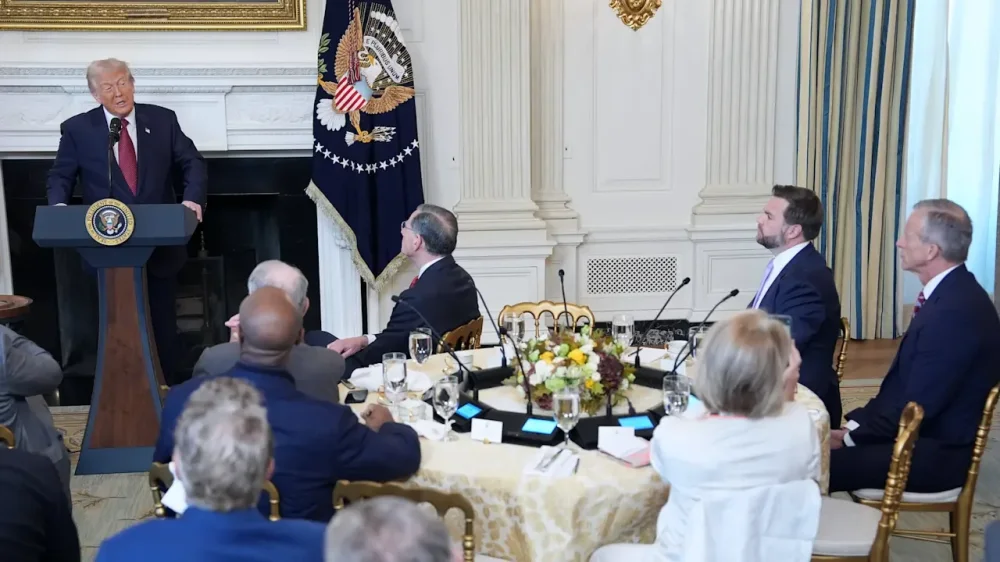
Democrats dominated the first major Election Day since President Donald The President returned to the White House. And while a debate about the future of the Democratic Party may have only just begun, there are signs that the economy — specifically, The President’s inability to deliver the economic turnaround he promised last fall — may be a real problem for The President’s GOP heading into next year’s higher-stakes midterm elections. “Happy Anniversary! On this day, November 5th, one year ago, we had one of the Greatest Presidential Victories in History — Such an Honor to represent our Country. Our Economy is BOOMING, and Costs are coming way down. Affordability is our goal. Love to the American People!” The President posted to social media Wednesday. Democratic candidates who won Tuesday in the New Jersey and Virginia governor’s races, and the New York City mayor’s contest, focused their campaigns on the public’s cost-of-living concerns. The Latest: Conservative Supreme Court justices appear skeptical of The President’s sweeping unilateral tariffs Arguments at the Supreme Court have concluded for the day as the justices consider President The President’s sweeping unilateral tariffs in a trillion-dollar test of executive power. Conservative justices seemed skeptical of The President’s tariffs, potentially putting at risk a key part of his agenda in the biggest legal test yet of his unprecedented presidency. Challengers say The President is illegally using an emergency law to claim nearly limitless tariff power and American small businesses are paying the price. The President’s administration says the law gives the president the power to regulate importation, including tariffs. The Republican president has said a ruling against him in the case before the court Wednesday would be catastrophic for the economy. U.S. Sen. Alex Padilla takes a pass on 2026 race for California governor U.S. Sen. Alex Padilla is staying put. The California Democrat who flirted with running for governor in 2026 announced Tuesday he plans to remain in the Senate. “I choose to stay in this fight,” Padilla told reporters on Capitol Hill in disclosing his decision. “The Constitution is worth fighting for, our fundamental rights are worth fighting for.” Fellow Democrats had been urging Padilla, first appointed to the Senate by Democratic Gov. Gavin Newsom, to consider entering a race that lacks a clear leader or star and was left wide open after former Vice President Kamala Harris announced her decision not to run. Newsom’s final term runs through January 2027. His party is favored to hold the seat in the heavily Democratic state. Did Sliwa spoil the race for Cuomo in NYC? Not so fast. Many have declared Republican Curtis Sliwa the spoiler in the three-way race between him, Democrat Zohran Mamdani and former governor Andrew Cuomo. But AP Voter Poll data suggests that it’s unlikely that Sliwa’s presence in the race changed the outcome. When asked how they would vote if only Mamdani and Cuomo were in the race, about half of Sliwa’s supporters said they would have voted for Cuomo. In the hypothetical question, about 4 in 10 Sliwa supporters said they wouldn’t have voted. The remainder either would have moved to Mamdani, or didn’t know what they would do. The data indicates that even half of Sliwa’s voters on Tuesday would not have been enough to make up the significant lead that Mamdani won by. With slightly more than 90% of the estimated vote counted, the AP Decision Desk found Mamdani won with 50.4% of the vote, while Cuomo gathered 41.6% percent of the vote. Sliwa, for his part, won 7.1% percent of the vote. Those figures could change as late-arriving mail ballots are added. Fetterman pours cold water on impact of Democrat’s election wins Asked about his thoughts on Democrats’ resounding victories in Tuesday’s election, Pennsylvania’s Democratic senator said he didn’t think they meant much, saying Democrats were heavy favorites in both New Jersey and Virginia, as was a ballot measure in California. “I wasn’t surprised by any of these things,” said Sen. John Fetterman. Whether the results will have an impact on the shutdown, Fetterman said he didn’t think Democrats should be treating the shutdown “like it’s some kind of a political game.” “If people think that we should keep it closed because of the elections that we already knew we were going to win, it’s like then that seems like it’s a game,” he added. Democrats expand majorities Democrats expanded their majorities Tuesday in both the New Jersey Assembly and Virginia House and broke a Republican supermajority in the Mississippi Senate. Democrats flipped control of two Mississippi Senate districts that had been redrawn under court order to increase Black voter representation. The reshaped districts played a significant role in Democrats’ victories, said Heather Williams, president of the national Democratic Legislative Campaign Committee. “When there are representative maps — and there is a process that actually gives voters a choice of who their elected officials are — we can connect with voters and win,” said Williams, adding: “Mississippi was a prime example of that.” But the future of such districts could be in doubt. That’s because the U.S. Supreme Court is weighing a legal challenge to the section of the federal Voting Rights Act allowing such court intervention. The President’s Oval Office redecoration may reach the exterior, too Reporters waiting near the South Lawn for the president to leave on a trip to Florida noticed what appeared to be a mock-up of a sign that says, “The Oval Office.” The flowery, gold lettering appeared to be written on some type of temporary paper that was put up on the wall near the door where reporters enter for The President’s appearances in the Oval with foreign leaders, Cabinet members or other guests. The White House had no comment on the sign. ▶Read more about White House redecorations Administration revokes temporary protected status for South Sudanese living in U.S. The Department of Homeland Security is revoking protections that shielded some South Sudanese living in the United Status from deportation, saying it is now safe for them to return to their chaotic East African nation. The order, which will take effect in early January, affects the small number of South Sudanese who have temporary protected status, which allows people already in the U.S. to stay and work legally if their homelands are deemed unsafe. But the news comes amid fears that the 2018 peace agreement ending that nation’s civil war is collapsing, with growing hunger, violence and kidnappings, including of aid workers, and weeks after an international ceasefire monitor warned that all sides in the conflict were recruiting new fighters. The announcement, which was released for public review Wednesday in the Federal Register, will be formally published Thursday. It will take effect 60 days later. The DHS statement acknowledged South Sudan is dealing with “violence linked to border disputes, cross-border violence, cyclical and retaliatory attacks, and ethnic polarization,” but notes that “return to full-scale civil war, to-date, has been avoided.” Democrat who vanished at sea loses race in NYC suburbs Petros Krommidas lost to incumbent Nassau County Legislator Patrick Mullaney in his bid for a seat in the Nassau County Legislature on Long Island, according to the county’s unofficial election results. With all precincts reporting, Krommidas captured about 40% of votes cast in the race while Mullaney, a Republican, garnered about 55%. Krommidas disappeared after a night swim off Long Beach in the spring. A state judge ruled that his name had to remain on the ballot after local Republicans challenged Democrats’ attempt to field a replacement. Republicans will sue over California ballot measure The California Republican Party says Proposition 50 violates the 14th and 15th Amendments. The ballot measure created a new congressional map with the goal of giving Democrats five more of the state’s 52 congressional seats. It easily passed. The party announced plans to file a federal lawsuit on Wednesday. It’s being filed by The Dhillon Law Group, the California-based firm started by Harmeet Dhillon, who now works for the U.S. Department of Justice. A state assemblyman and 18 voters are also plaintiffs. Scientists perform last rites for ‘dearly departed’ datasets under The President While some people last Friday dressed in Halloween costumes or handed out candy to trick-or-treaters, a group of U.S. data scientists published a list of datasets that have been axed, altered or had topics scrubbed since The President returned to the White House. The timing of the release of the “Dearly Departed Datasets” with “All Hallows’ Eve” may have been cheeky, but the purpose was serious: to put a spotlight on attacks by the The President administration on federal datasets that don’t align with its priorities, including data dealing with gender identity; diversity, equity and inclusion; and climate change. Officials at the Federation of American Scientists and other data scientists who compiled the list divided the datasets into those that had been killed off, had variables deleted, had tools removed making public access more difficult and had found a second life outside the federal government. ▶ Read more about efforts to preserve federal data Mamdani celebrated as one of their own in India and Uganda Indians lit up social media on Wednesday to celebrate Zohran Mamdani’s election win as New York City mayor after he thanked his Indian-born parents, quoted a historic speech by India’s first prime minister and turned the victory rally into a Bollywood-style street party. “We are proud of him. He has done a great job,” Mamdani’s maternal uncle Vikram Nair told The Associated Press. Meanwhile in Uganda, where Mamdani was born, the opposition leader in the Ugandan Parliament sees his victory as an inspiring political shift. “It’s a big encouragement even to us here in Uganda that it’s possible,” said Joel Ssenyonyi, who represents an area of the Ugandan capital of Kampala. Uganda has had the same president for nearly four decades, Yoweri Museveni, despite attempts by multiple opposition leaders to defeat him in elections. ▶ Read more about how Ugandans and Indians are celebrating Mamdani’s victory. Mamdani’s school on southern tip of Africa says congratulations Mamdani attended St George’s Grammar School in Cape Town for around three years in the mid-1990s, from the age of five. He and his family lived in South Africa after leaving his country of birth, Uganda, and before emigrating to the United States. Mamdani’s father, a political theorist, worked as an academic at the University of Cape Town. “We trust that he will continue to uphold the principles embodied in our school motto, Virtute et Valore — the courage to do what is right,” Mamdani’s former school said in a statement sent to the AP. The grammar school also released a photo of Mamdani at 6 or 7 years old. Judge in Comey case scolds prosecutors as he orders them to produce records from probe A federal judge on Wednesday ordered prosecutors in the criminal case of former FBI Director James Comey to produce a trove of materials from the investigation, saying he’s concerned the Justice Department’s position has to been to “indict first and investigate later.” Magistrate Judge William Fitzpatrick instructed prosecutors to produce by the end of Thursday grand jury materials as well as other evidence that investigators seized. Comey’s attorneys said they were at a disadvantage because they had not been able to review materials that were gathered years ago. Comey is charged with lying to Congress in 2020 in a case filed days after The President appeared to urge his attorney general to prosecute the former FBI director and other perceived political enemies. He has pleaded not guilty. Grassroots groups urge Democrats to hold firm after election wins Progressive organizations are using Tuesday’s election victories to warn Democrats against cutting a deal with Republicans to end the government shutdown. “Moderate Senate Democrats who are looking for an offramp right now are completely missing the moment,” said Katie Bethell, political director of MoveOn. “Voters have sent a resounding message: We want leaders who fight for us, and we want solutions that make life more affordable.” ▶ Read more about congressional developments involving the government shutdown The President now says ‘affordability’ is GOP’s goal The President sent the social media post as Air Force One was about to take off for Miami, where he’s addressing business leaders in the afternoon. Wednesday marked one year since his reelection. “Happy Anniversary! On this day, November 5th, one year ago, we had one of the Greatest Presidential Victories in History — Such an Honor to represent our Country. Our Economy is BOOMING, and Costs are coming way down. Affordability is our goal. Love to the American People!” he wrote. Democratic candidates who won Tuesday in the New Jersey and Virginia governor’s races, and the New York City mayor’s contest, focused their campaigns on the public’s cost-of-living concerns. Democratic leaders demand The President meet to end shutdown Senate Democratic Leader Chuck Schumer and House Democratic Leader Hakeem Jeffries said it’s time for The President to meet with them as well as GOP congressional leaders to negotiate an end the shutdown and address the health care issue. “Democrats stand ready to meet with you face to face, anytime and anyplace,” the Democratic leaders wrote. The President has so far refused to engage in talks until the Democrats vote to reopen the government. North Carolina’s largest city reelects mayor after fallout over train stabbing Voters in Charlotte, North Carolina, have given Democrat Vi Lyles a fifth term as mayor. Lyles won comfortably Tuesday to remain the city’s top leader 2 1/2 months after the death of a young Ukrainian woman on a commuter train. The stabbing of 23-year-old Iryna Zarutska sparked outrage from The President and other Republicans, who sought to pin blame for violent crime and pretrial release decisions on Democrats in general, and Lyles in particular. Lyles defeated Republican candidate Terrie Donovan, who had made crime her top issue even before the August stabbing. Charlotte hasn’t elected a Republican mayor since 2007. The suspect in Zarutska’s stabbing had been arrested more than a dozen times. The GOP-controlled state legislature tightened suspect release rules in September, and Lycles has promoted additional safety measures on Charlotte’s light rail. The President may become the face of economic discontent The President just got a serious warning from voters that he’s out of touch with their fears about a deteriorating U.S. economy. Democrats were able to run up the score in key races across the country on Tuesday by harnessing some of the same populist fervor that helped get The President reelected a year ago — but also by focusing on the kitchen table issues the Republican had vowed to fix. Now, as the incumbent, fears about the economy have made The President the face of much of the public’s discontent. Voters in the Virginia and New Jersey governor races, the New York City mayoral contest and the California ballot proposition each ranked economic concerns as a top issue. Democrats swept all those, and it was difficult to point to any major race, anywhere, where Republicans had a key victory. ▶ Read more about how Americans have soured on The President’s management of the economy Mamdani to The President: ‘You will have to get through all of us’ Mamdani wasted little time as New York City’s mayor-elect before making clear that he’ll be standing up to the president of the United States, who had threatened not only to defund the city if he won, but also to arrest and deport him. “Donald The President, since I know you’re watching, I have four words for you: Turn the volume up,” he said at his victory party. “If anyone can show a nation betrayed by Donald The President how to defeat him, it is the city that gave rise to him.” “New York will remain a city of immigrants, a city built by immigrants, powered by immigrants and, as of tonight, led by an immigrant,” said Mamdani, a naturalized U.S. citizen who was born in Uganda. “So hear me, President The President, when I say this: To get to any of us, you will have to get through all of us.” The President seemed to be watching: “…AND SO IT BEGINS!” he posted on social media as Mamdani spoke. Speaker Mike Johnson calls longest shutdown a ‘sad landmark’ The Republican speaker insisted he’s willing to talk to Democrats about their demands for health care funds, but blames them for the record-breaking shutdown, now in its 36th day. Johnson was speaking with GOP lawmakers on the steps outside the Capitol, where he has kept the House closed to regular business, sending lawmakers home in September. Netanyahu officials criticize New York City’s mayor-elect Israel’s hardline National Security Minister Itamir Ben-Gvir said Mamdani’s election is an “everlasting disgrace — how antisemitism triumphed over common sense.” He called Mamdani “a Hamas supporter, a hater of Israel and an avowed antisemite.” Mamdani has said Israel’s military campaign in Gaza amounts to genocide, a claim denied by Israel. During the campaign, he also denounced “atrocities” committed by Hamas in its Oct. 7, 2023 attack on Israel, which he called a “horrific war crime.” While supportive of Palestinian rights, he denies being antisemitic and reached out to Jews during his campaign. Minister of Diaspora Affairs Amichai Chikli posted on X encouraging Jews of New York to emigrate to Israel, writing that the city “would never be the same again.” His feed on the social media site Wednesday was a stream of anti-Mamdani graphics, including a photo of the Twin towers being engulfed in flames with the caption “New York already forgot,” a meme criticized as Islamophobic. Mamdani says he’s willing to work with The President but will put New York residents first When asked Wednesday about their combative relationship during the mayoral campaign, Mamdani said he has repeatedly expressed a willingness to help the president fulfill some of the promises The President made during his 2024 presidential campaign. “I have said time and again that I will work with the president if he wants to work together to deliver on his campaign promises of cheaper groceries or a lower cost of living. But for too long what New Yorkers have seen is a mayor who has been willing to work with the president at the expense of those New Yorkers,” Mamdani said on New York’s NY1 news channel. “And I want to make it very clear that if the president looks to come after the people of this city, then I will be there standing up for them every step of the way.” View the full article
-
Google will deprecate practice problem structured data in January and clarifies Dataset markup is only for Dataset Search. Book actions remain supported. The post Google Deprecates Practice Problem Structured Data In Search appeared first on Search Engine Journal. View the full article
-
We may earn a commission from links on this page. Deal pricing and availability subject to change after time of publication. It's not Black Friday yet, but OLED TVs are already dropping to new record-low prices. Last week, the LG G5 OLED TV dropped to its lowest price, and now, Samsung's OLED S95F TV has followed suit. You can get the 65-inch for $2,297.99 (originally $2,997.99), the lowest price, according to price-tracking tools. The 55-, 77-, and 83-inch models also have good discounts right now. 55" Samsung OLED S95F 4K Glare Free Smart TV (2025 Model) $1,897.99 at Amazon $2,197.99 Save $300.00 Get Deal Get Deal $1,897.99 at Amazon $2,197.99 Save $300.00 Samsung 65-Inch S95F OLED TV $2,297.99 at Amazon $2,997.99 Save $700.00 Get Deal Get Deal $2,297.99 at Amazon $2,997.99 Save $700.00 77" Samsung OLED S95F 4K Glare Free Smart TV (2025 Model) $3,497.99 at Amazon $4,297.99 Save $800.00 Get Deal Get Deal $3,497.99 at Amazon $4,297.99 Save $800.00 83" Samsung OLED S95F 4K Glare Free Smart TV (2025 Model) $4,997.99 at Amazon $5,997.99 Save $1,000.00 Get Deal Get Deal $4,997.99 at Amazon $5,997.99 Save $1,000.00 SEE 1 MORE As you probably already know, OLED TVs offer the best colors and contrast ratio that money can buy. Of course, you'll have to pay up to experience the best (but you can still shop for budget options). Two of the biggest downsides of OLED TVs, though, are that they can suffer from the notorious burn-in effect and that they don't get as bright as QLED or LED TVs, so they're better suited for dimmer or theater rooms. But that seems to be turning a corner in 2025, at least for brightness. The S95F can reach 1,364 nits, which is not the brightest OLED, but it's much better than most. Where it shines is with reflections. Its matte coating makes it the least reflective OLED TV, and combined with its brightness, it makes for a great daytime OLED TV. The HDR highlights make this a great TV for shows and TVs with compatible with HDR10 and HDR10+. Gaming is also smooth with its low input lag of 4.8 ms at 4K resolution and 60 Hz and high refresh rate of 120 Hz (supports up to 160 Hz). PCMag praised the S95F's advanced speaker system in their "excellent" review—just be aware that there is no Dolby Vision for movies. If you care about brightness and Dolby Vision, go with the LG G5; but if you prefer the matte anti-reflective display and care about quality audio, the S95F is the better choice. View the full article
-
Many big companies have cited AI as a reason for recent layoffs. But the new technology transforming the workforce may create some new jobs, too. AI startups are racing to hire a certain kind of software engineer who works with both customer teams and product engineering teams: Candidates are expected to have tech skills, but also, understand the business model so they can help customize customers’ AI models for their companies’ specific needs. The emerging role is called a forward-deployed engineer (FDE), and according to the Financial Times, job postings for the position are absolutely skyrocketing, increasing more than 800% from the start of 2025 through September. The origins of the role come from data software company Palantir, which pioneered the job in the early 2010s. Today, the company says FDEs make up about half of their workforce. Nic Prettejohn, head of AI in the U.K. at Palantir, said, per the Financial Times, described the job as “product discovery from the inside.” The specific tasks an FDE is responsible for may vary from company to company, but the job certainly seems to encompass a lot. According to Planitir, “FDEs responsibilities look similar to those of a startup CTO: you’ll work in small teams and own end-to-end execution of high-stakes projects.” Likewise, a job ad for an FDE at the financial tech company Ramp says the role includes working with “sales and go-to-market teams to close exciting deals, activate customers, and expand the value Ramp provides over time.” While many worry that AI will take their jobs, some say that AI also has the power to create jobs, too, and maybe even, at a greater rate. And as AI companies like Anthropic, OpenAI, and others, recruit FDEs, perhaps both arguments have weight, especially because it’s not just FDE job postings that are rising. According to the 2025 World Economic Forum Future of Jobs Report, while AI could displace around nine million jobs over the next five years, it could also create 11 million new jobs. Some of the roles could be things like AI trainers, AI auditors, AI translators, and more. Aneesh Raman, LinkedIn’s chief economic opportunity officer, spoke to the undeniable rise in new AI jobs, telling the New York Times, “‘Head of AI.’ jobs are up, I think, three times in the last five years,” he said. “AI engineers are the fastest growing role in the U.S., followed by AI consultants.” Other experts agree that new jobs can help to bridge the gap between the ever-growing ways that AI technology is being used, and what human beings still need from other humans, working to integrate the technology into real life. Tech innovator Pramod Pallath Vasudevan articulated the point in a post on social media about the surge in FDE hiring, writing, “AI isn’t taking engineers away from the real world. It’s bringing them closer to it.” Vasudevan added, “AI isn’t replacing us. It’s redeploying us—to the front lines of progress.” View the full article

-
Chancellor acknowledges lenders already pay high levels of tax by international standards View the full article
-
Case could determine the future of the US president’s global trade agendaView the full article
-
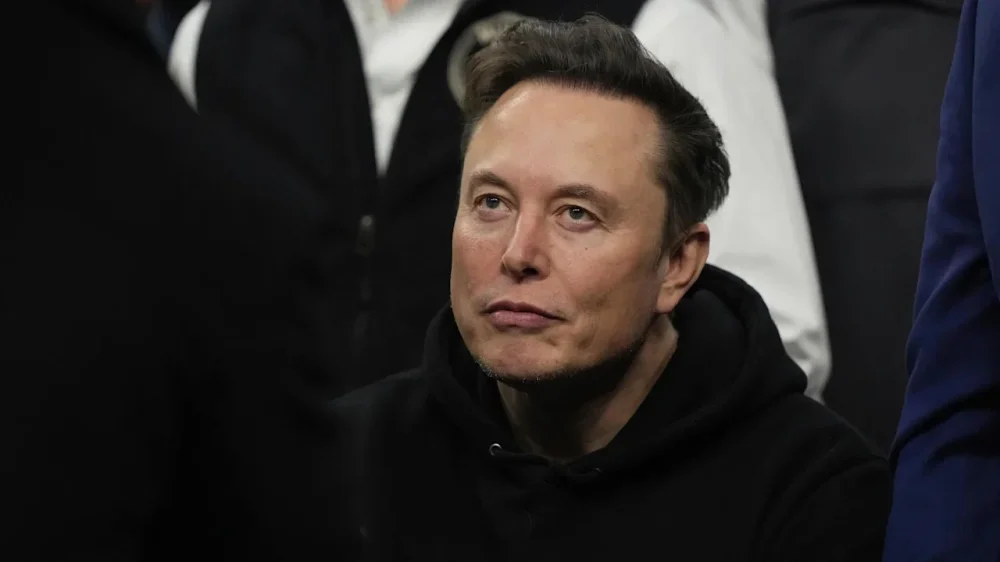
Elon Musk turned off many potential buyers of his Tesla cars and sent sales plunging with his foray into politics. But the stock has soared anyway and now he wants the company to pay him more — a lot more. Shareholders gathering Thursday for Tesla’s annual meeting in Austin, Texas, will decide in a proxy vote whether to grant Musk, the company’s CEO and already the richest person in the world, enough stock to potentially make him history’s first trillionaire. It’s a vote that has sparked heated debate on both sides of the issue, even drawing the pope’s comments on it as an example of income inequality. Several pension funds have come out against the package, arguing that the board of directors is too beholden to Musk, his behavior too reckless lately, and the riches offered too much. Supporters say Musk is a genius who is the only person capable of ushering in a Tesla-dominated future in which hundreds of thousands of self-driving Tesla cars — many without steering wheels — will ferry people and humanoid Tesla robots will march around factories and homes, picking up boxes and watering plants. The pay is necessary to incentivize him, they say, and keep him focused. Musk has threatened to walk away from the company if he doesn’t get what he wants and has blasted some of the package’s critics as “corporate terrorists.” What is up for a vote To get his Tesla shares, Musk has to secure approval from a majority of the company’s voting shareholders. Improving the odds, Musk gets to vote his own shares, worth 15% of the company. Shareholders first heard about the pay package in September when the board of directors proposed it in a detailed filing to federal securities regulators. The document, running 200 pages, also contains other proposals up for a vote at the meeting, including whether to allow Tesla to invest in another Musk company, xAI, and who should serve on the board in the future. How Musk can get $1 trillion Musk won’t get necessarily get all of that money, or even a cent of it, if the package is approved. He first has to meet several operational and financial targets. To get the full pay, for instance, he has to deliver to the car market 20 million Teslas over 10 years, more than double the number he has churned out over the past dozen years. He also has to massively increase the market value of the company and its operating profits and deliver one million robots, from zero today. If he falls short of the biggest goals, though, the package could still hand him plenty of money. Musk will get $50 billion in additional Tesla shares, for example, if he increases the company’s market value by 80%, something he did just this past year, as well as doubling vehicle sales and tripling operating earnings — or hitting any other two of a dozen operational targets. Musk vs. Rockefeller Musk is already the richest man in the world with a net worth of $493 billion, according to Forbes magazine, and well ahead of some of the wealthiest of years past. The steel giant, Andrew Carnegie, was once worth an inflation-adjusted $300 billion, according to the Carnegie Corp., well below Musk’s wealth. Musk is still trailing John D. Rockefeller, but he’s closing in fast. The railroad titan hit peak inflation-adjusted wealth of $630 billion in 1913, according to Guinness World Records. For his part, Musk says it’s not really about the money but about getting a higher Tesla stake — it will double to nearly 30% — so he can control the company. He says that’s a pressing concern given Tesla’s future “robot army,” a reference to the company’s Optimus humanoid workers that he doesn’t trust anyone else to control. Split among shareholders Many investors have come out in support of the package, including Baron Capital Management, whose founder called Musk indispensable to the company. “Without his relentless drive and uncompromising standards,” wrote founder Ron Baron, “there would be no Tesla.” Critics include the biggest in the U.S. public pension fund, Calpers, and Norway’s sovereign wealth fund, the world’s largest. They argue the pay is excessive, with the Norway fund expressing concern that the board that designed it, which includes Musk’s brother, is not independent enough. That echoes a decision from a Delaware court nearly two years ago that blasted the process for approving a previous Musk pay package as “deeply flawed” given his “extensive ties” to directors. Even the Vatican has weighed in, decrying the wealth gap in the world and blasting the trillion dollar offer in particular. “If that is the only thing that has value anymore,” said Pope Leo XIV, “then we’re in big trouble.” Musk’s record at Tesla is mixed Judging from the stock price alone, Musk has been spectacularly successful. The company is now worth nearly $1.5 trillion. But a lot that runup reflects big bets by investors that Musk will be able deliver things that are difficult to pull off, and the way Musk has run the company recently doesn’t inspire confidence. He has broken numerous promises, and his tendency to say whatever is on his mind has sabotaged the company. Just this year, for instance, he vowed to deliver driverless taxis in several cities, secure regulatory approval in Europe for his self-driving software, and push sales up 20% or 30%. Instead, his driverless robotaxis in Austin and San Francisco have human safety monitors inside. Europeans still haven’t approved his software. And Tesla sales continue to plunge, with new figures out Monday showing a stunning 50% drop last month in Germany alone. That said, Musk has pulled off the impossible before. His company, a half dozen years ago, was widely feared to be near bankruptcy because he wasn’t making enough cars, but then he succeeded, and the stock soared. “He frequently teeters on the edge of disaster,” said Tesla owner and money manager Nancy Tengler, “and then pulls back just in the nick of time.” —Bernard Condon, AP business writer View the full article
-
We may earn a commission from links on this page. Deal pricing and availability subject to change after time of publication. If you’re looking for a new QLED TV for everyday gaming and watching TV shows and movies, the 2025 Samsung 50” QN90F Neo QLED TV is a smart option, offering high-end picture performance for an LED TV. Right now, it’s $997.99 (originally $1,397.99) on Amazon, marking a 25% discount and its lowest price ever, according to price tracking tools. Samsung 50-Inch Class Neo QLED 4K QN90F Series $997.99 at Amazon $1,397.99 Save $400.00 Get Deal Get Deal $997.99 at Amazon $1,397.99 Save $400.00 The QN90F uses Mini-LED backlight technology, which delivers impressive high peak brightness. This translates into excellent visibility in bright rooms, and even when facing glare and reflections, thanks to its Glare-Free screen treatment. Its NQ4 AI Gen2 processor analyzes scenes to boost brightness and upscale content to 4K. According to this PCMag review, it delivers high contrast, deep blacks, and almost no light bloom (its peak brightness even surpasses most OLED TVs). While it doesn’t have Dolby Vision, the TV includes a Dolby Atmos speaker system, offering fuller sound than the stereo speakers found on many other TVs. PCMag also considers it a solid choice for gamers: The TV has four HDMI ports and two USB ports; while it has a 120Hz native refresh rate, it can support a VRR of up to 165 Hz refresh rate and features AMD FreeSync Premium Pro. The Tizen OS OS platform is powerful and supports most streaming apps, though some users note that menu navigation can feel a bit clunky, and input settings can be hard to access. Ultimately, if you want a feature-packed, visually capable QLED TV that performs well in bright rooms, the Samsung 50” QN90F Neo QLED TV is a compelling choice. It can’t quite match the infinite blacks of an OLED, but at 25% off and at a sub $1,000 price point, it offers strong value for its class. Our Best Editor-Vetted Tech Deals Right Now Apple AirPods 4 Wireless Earbuds — $119.00 (List Price $129.00) Apple iPad 11" 128GB A16 WiFi Tablet (Blue, 2025) — $299.00 (List Price $349.00) Shark AI Ultra Matrix Clean Mapping Voice Control Robot Vacuum with XL Self-Empty Base — $299.99 (List Price $599.00) Bose QuietComfort Noise Cancelling Wireless Headphones — $199.00 (List Price $349.00) Amazon Fire TV Stick 4K Plus — $29.99 (List Price $49.99) Google Pixel 10 Pro 128GB Unlocked Phone (Obsidian) — $749.00 (List Price $999.00) Amazon Fire HD 10 (2023) — $69.99 (List Price $139.99) Introducing Amazon Fire TV 55" Omni Mini-LED Series, QLED 4K UHD smart TV, Dolby Vision IQ, 144hz gaming mode, Ambient Experience, hands-free with Alexa, 2024 release — $699.99 (List Price $819.99) Google Nest Cam Indoor (Wired, 3rd Gen) - Security Camera with 2K Video and Gemini, Night Vision, 2-Way Audio, Works with Google Home - 2025 Model - Snow — $74.99 (List Price $99.99) Sony WH-1000XM5 — $328.00 (List Price $399.99) Deals are selected by our commerce team View the full article
-
Fortnite maker Epic Games and Google just agreed on a “comprehensive settlement” that could be the final chapter in Epic’s long battle over app store rules. In a joint filing in a San Francisco federal court, both companies proposed a resolution to Epic’s antitrust lawsuit against Google, which the game publisher filed in 2020 along with a parallel lawsuit against Apple. In a post on X, Epic CEO Tim Sweeney called the proposed settlement “awesome” and expressed hope that the courts would agree. “It genuinely doubles down on Android’s original vision as an open platform to streamline competing store installs globally, reduce service fees for developers on Google Play, and enable third-party in-app and web payments,” Sweeney said. “This is a comprehensive solution, which stands in contrast to Apple’s model of blocking all competing stores and leaving payments as the only vector for competition.” In the settlement, Google agrees to cap app store fees at 9% to 20%, depending on the transaction. Currently, Google takes a 15% cut of the first $1 million in developer revenue and 30% of anything above that threshold. Beyond lowering fees, Google also said it would allow alternate app stores to be offered officially in the next major Android update. All of the proposed changes would go into effect globally—not just in the U.S.—and remain in place through 2032. The surprise settlement follows some resounding losses for Google. Late last year, a judge sided with Epic on many of the game publisher’s demands and ordered Google to open its app marketplace to competing third-party app stores in the U.S. for three years, a decision that stood to completely remake Android’s app ecosystem. Prior to the settlement, it looked like Google’s last hope was a Hail Mary asking the Supreme Court to take on the case—a long shot given that the court previously shrugged off Epic’s parallel case against Apple. Epic’s epic battle In 2020, Epic kicked off a flashy campaign to rally people against mobile software’s gatekeepers by breaking the rules of both Google and Apple’s app stores intentionally, getting Fortnite kicked off of phones and tablets in the process. In lawsuits against both companies, Epic argued that Google and Apple violated antitrust laws by forcing users to pay for apps and in-app purchases through their app marketplaces while taking a slice of every transaction. While Epic’s case against Apple is now mostly resolved without too much disruption to Apple’s business, the iPhone maker did land itself in hot water earlier this year when a federal judge determined that it violated the terms of a court order forcing it to give developers more freedom to accept payments. Epic’s case against Google took a different path. After years of back-and-forth in court, Epic landed a major win over the summer when a federal appeals court upheld a jury verdict that deemed Google Play, Android’s app store, to be a monopoly. In other recent cases, courts determined that Google was operating a monopoly in its digital ads and search engine businesses. “Together with Epic Games, we have filed a proposed set of changes to Android and Google Play that focus on expanding developer choice and flexibility, lowering fees, and encouraging more competition, all while keeping users safe,” Sameer Samat, Android ecosystem president at Google, wrote on X. He added that the company would discuss the settlement with a judge on Thursday. View the full article