ResidentialBusiness
Administrators
-
Joined
-
Last visited
Everything posted by ResidentialBusiness
-
 Pizza Hut could soon be up for sale. Yum Brands, Pizza Hut’s parent company, said Tuesday it’s conducting a formal review of options for the brand, which has struggled to compete in a crowded pizza market. Yum CEO Chris Turner said Pizza Hut has many strengths, including a global footprint and strong growth in many markets. Pizza Hut has nearly 20,000 stores in more than 100 countries, and its international sales were up 2% in the first nine months of this year. China is its second-largest market outside the U.S. But Pizza Hut gets nearly half its sales from the U.S., where it has around 6,500 stores, and U.S. sales fell 7% in the same period. Pizza Hut was long saddled with large, outdated dine-in restaurants at a time when consumers wanted fast pickup and delivery. In 2020, one of Pizza Hut’s largest franchisees filed for bankruptcy protection and closed 300 stores. Pizza Hut now controls 15.5% of U.S. pizza chain sales, down from 19.4% in 2019, according to Technomic, a food service consulting company. “The Pizza Hut team has been working hard to address business and category challenges; however, Pizza Hut’s performance indicates the need to take additional action to help the brand realize its full value, which may be better executed outside of Yum Brands,” Turner said in a statement. “To truly take advantage of the brand we’ve built and the opportunities ahead, we’ve made the decision to initiate a thorough review of strategic options.” Yum has not set a deadline for the completion of the review. The company said it will not make any further comments on the review. Yum Brands shares were up nearly 7% in early afternoon trading Tuesday. The company also owns KFC, Taco Bell, and Habit Burger & Grill. Yum said Tuesday that its third-quarter revenue rose 8% thanks to strong sales at both KFC and Taco Bell. Pizza Hut was founded in 1958 in Wichita, Kansas, by two brothers who borrowed $600 from their mother to open the store. They chose the name because their sign only had room for eight letters. Pizza Hut’s familiar red roof debuted in 1969, and by 1971, it was the top pizza chain in the world by sales. PepsiCo acquired Pizza Hut in 1977 but spun off its restaurant division — which became Yum Brands — in 1997. Domino’s, with its focus on delivery and carryout pizza, has since become the world’s largest pizza chain, with 21,750 stores. The news of Pizza Hut’s uncertain future comes the day after another 1950s-era dine-in icon, Denny’s, announced it was being sold to an investor group and taken private. Like Pizza Hut, Denny’s has also struggled with customers’ shift to delivery and growing competition in casual dining options. —Dee-Ann Durbin, AP business writer View the full article
-
Responding to posts on social media claiming that ChatGPT will no longer offer legal or health advice, OpenAI is clarifying that "model behavior remains unchanged" and there is "not a new change to our terms." The clarification follows a since-deleted viral post from betting platform Kalshi, which claimed "JUST IN: ChatGPT will no longer provide health or legal advice." Since then, concerned users have repeated the claim, while others have attempted to push back against it. The confusion likely stems from an Oct. 29 update to OpenAI's Usage policies, which appeared to add a stipulation that users cannot use OpenAI for "provision of tailored advice that requires a license, such as legal or medical advice, without appropriate involvement by a licensed professional." While it would be easy to read that as meaning the AI will no longer give advice on those topics, the reality is a bit more complicated. In fact, the previous usage policy already banned "activities that may significantly impair the safety, wellbeing, or rights of others," with its first example of one such activity being "providing tailored legal, medical/health, or financial advice without review by a qualified professional." However, this was hidden under a subsection targeted at those building with the OpenAI API, and so might have been missed by average consumers. While the new usage policy keeps the same rules, the change was that it now merges them into one, unbroken list, meaning that while the rule is still targeted primarily towards developers and businesses, it is now more visible to everyone. Technically, this also makes it clearer that the rule applies to everyone and not just those using the OpenAI API to build an app, but average users are unlikely to see a change. The important words here are "provision" and "providing." The terms, as written, don't necessarily ban the average person from getting legal and health advice from ChatGPT, but instead discourages developers and hospitals or law offices from using the chatbot to give specific advice to a client without first checking in with a licensed professional. As an average person doing background research, you're unlikely to bump up against it, and there's no language indicating a change to the chatbot's functionality. In short, the update is intended as a rewording, not a change to rules, enforcement, or functionality. This is backed up by OpenAI's statement, which comes from the company's head of health AI Karan Singhal, and says "ChatGPT has never been a substitute for professional advice, but it will continue to be a great resource to help people understand legal and health information." Despite this, responses to OpenAI's statement denying a change to model behavior still claim to have seen more difficulty looking certain topics up, although it's important to note that OpenAI's release notes don't indicate any new model developments having been made since the update to the company's usage policies. On an anecdotal note, I was able to get ChatGPT to offer me advice on how to fight a traffic ticket in court, as well as suggest brands for a supplement a user said the model refused to provide specific advice about following the new policy update. Credit: Michelle Ehrhardt While I cannot test every possible use case, the situation seems clear to me. Are you using ChatGPT or the OpenAI API to give others specifically tailored legal or health advice, without review by a licensed professional? If so, the same rules apply as before. If not, you're unlikely to see a change in your results. View the full article
-
Jens Stoltenberg says move will avoid forced sale of shares in Amazon, Microsoft and Alphabet over their work for IsraelView the full article
-
Newer automation that can serve as a wraparound to existing technology can cut servicing costs in a competitive industry, according to fintech executives. View the full article

-
If you're keeping up with generative AI, especially generative AI video models, then you've probably heard about Sora, OpenAI's short-form AI video app. Even though the app has only been available for a bit over a month, you've probably seen Sora videos on your other feeds—whether you realized it or not. Sora is capable of producing hyperrealistic AI videos that can be hard to distinguish from clips of actual reality. It doesn't help that the app's "cameo" feature lets you insert real people into these videos, leading to confusion and creating a risk of spreading misinformation. While the memes might be fun, if you ask me, there's really not much good that can come out of it. Up until now, Sora has been iOS-only. So while iPhone users in the U.S. have been able to check out the app for themselves, Android users have largely been left behind. If you have a Pixel, Galaxy, or any phone not made by Apple, you've had to turn elsewhere for your AI video viewing and generating needs. Any Sora apps you happened to see on Android marketplaces were total fakes. That changes now. As of Tuesday, Nov. 4, Sora is now available to download for free on the Google Play Store. Sora announced the news on X Tuesday afternoon, revealing the app is ready to install for users in the U.S., Canada, Japan, Korea, Taiwan, Thailand, and Vietnam. To complete the announcement, Sora included an AI-generated video of a reporter interviewing an alien about Sora landing on Android (no pun intended): This Tweet is currently unavailable. It might be loading or has been removed. As the app makes its way to the Play Store, Android users will be walking into a slightly different situation than iOS users did when the app first launched. At first, free users were limited to 30 generations per day, but as of last week, you can now pay to generate even more videos. The app's cameo feature is also experiencing a reckoning, as Sora has had to block users from making cameos with famous figures like Martin Luther King, Jr. At the same time, you'll be able to generate cameos of your pets, as well as inanimate objects. With a whole new platform of users hopping on the app, the quantity of hyperrealistic AI slop will only continue to grow. Sora does include a watermark on all video generations, but it's not hard to find ways to remove it. As I've said for much of this year, the time has come to stop assuming what you see on your feeds is real. It's now much safer to assume what you see is fake: If a video is real, its creator can do the work to prove its legitimacy. Disclosure: Ziff Davis, Lifehacker's parent company, in April filed a lawsuit against OpenAI, alleging it infringed Ziff Davis copyrights in training and operating its AI systems. View the full article
-
Alfred Lin and Pat Grady will take over as ‘senior stewards’ following a tumultuous period for the groupView the full article
-
YouTube has removed the “close” button on sidebar panels in some horizontal video ads on mobile, making the ad’s sidebar — often used for shoppable products or sitelinks — permanently visible during playback. Why we care. The change means users can no longer dismiss the sidebar to view the ad full-screen, leaving part of the video blocked by the fixed panel. That could impact both viewer experience and ad creative performance. The difference: Old layout: Users could tap an “X” to close the sidebar and focus on the main video. New layout: The sidebar remains locked, displaying additional ad content throughout. The source. The update was first spotted and shared by founder of Adsquire, Anthony Higman on X, who noted the shift in mobile ad presentation. The bottom line. YouTube’s tweak gives advertisers more persistent visibility — but at the cost of a less immersive mobile viewing experience. View the full article
-
We may earn a commission from links on this page. Deal pricing and availability subject to change after time of publication. Amazon is having a big Google sale right now while retailers are churning out early Black Friday deals. The standout deal is the Google Pixel 10, with the 128GB going for $599 (originally $799) and the 256GB for $699 (originally $899), both at record low prices, according to price-tracking tools. Google Pixel 10 - Unlocked Android Smartphone with Gemini, Your AI Assistant - Advanced Triple Rear Camera, Fast-Charging 24+ Hour Battery, and 6.3" Actua Display - Frost - 128 GB $599.00 at Amazon $799.00 Save $200.00 Get Deal Get Deal $599.00 at Amazon $799.00 Save $200.00 Google Pixel 10 - Unlocked Android Smartphone - Gemini AI Assistant - Advanced Triple Rear Camera, Fast-Charging 24+ Hour Battery, and 6.3" Actua Display - Frost - 256 GB (2025 Model) $699.00 at Amazon $899.00 Save $200.00 Get Deal Get Deal $699.00 at Amazon $899.00 Save $200.00 SEE -1 MORE The Google Pixel 10 is the latest in the series to be released this year, back in September. It's the model under the Pixel 10 Pro, which is also at its lowest price right now and has a much faster chip. As Lifehacker's Associate Tech Editor Michelle Ehrhardt says in her review, the Pixel 10 features a telephoto lens, brings the Pixelsnap (Google's version of MagSafe), and has new AI features. However, the ultrawide lens gets weaker, and there are some problems with the chip for third-party apps (but it can be fixed). This Pixel 10 has a lot of the same features you'll find in the Pixel Pro for $150 less, making it a great budget option for those who don't want or need all the fancy specs and features. It comes with a Google Tensor G5 chip, and the camera resolutions are 48MP, 13MP, and 10.8MP for the rear and 10.5MP for the front-facing one. You can expect about 24 hours of battery life, depending on your use. One of my favorite things about Pixel phones is the ongoing support for many years. My Pixel 6A still gets all of the updates and tons of AI features that make the phone feel fresh many years later, with the latest ones dropping in September. With the Pixel 10, you'll be getting a quality phone with software updates for a while (as long as seven years). Our Best Editor-Vetted Early Black Friday Deals Right Now Apple AirPods Pro 2 Noise Cancelling Wireless Earbuds — $169.99 (List Price $249.00) Apple iPad 11" 128GB A16 WiFi Tablet (Blue, 2025) — $299.00 (List Price $349.00) Amazon Fire TV Stick 4K Plus — $29.99 (List Price $49.99) Ring Pan-Tilt Indoor Cam, White with Ring Indoor Cam (2nd Gen), White — $59.99 (List Price $99.99) Blink Video Doorbell Wireless (Newest Model) + Sync Module Core — $69.99 (List Price $69.99) Blink Mini 2 1080p Indoor Security Camera (2-Pack, White) — $27.99 (List Price $69.99) Ring Video Doorbell Pro 2 with Ring Chime Pro — $149.99 (List Price $259.99) Introducing Amazon Fire TV 55" Omni Mini-LED Series, QLED 4K UHD smart TV, Dolby Vision IQ, 144hz gaming mode, Ambient Experience, hands-free with Alexa, 2024 release — $699.99 (List Price $819.99) Blink Outdoor 4 1080p 2-Camera Kit With Sync Module Core — $129.99 (List Price $129.99) Deals are selected by our commerce team View the full article
-
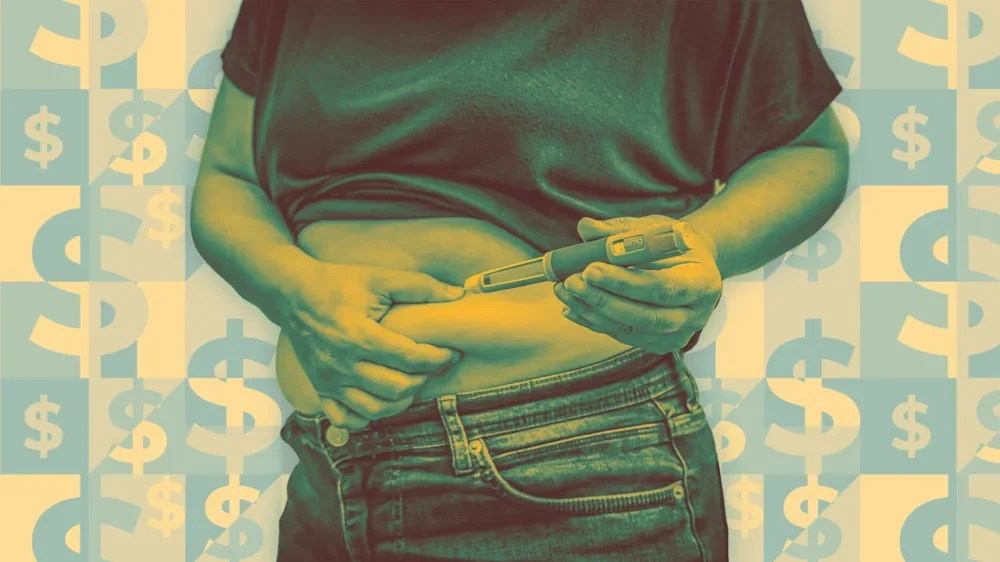
Microdosing isn’t just about mushrooms any more. While taking tiny non-psychedelic doses of hallucinogens was once the health craze du jour, small, sub-clinical doses of weight loss drugs have taken over the term “microdosing” in 2025. Little research has been done on the efficacy of GLP-1 drugs like Ozempic when prescribed in smaller doses, but that hasn’t stopped the craze from catching on. People are turning to microdosed GLP-1s to manage their weight, stave off side effects and to make the medications more affordable on a long term basis. For telehealth companies cashing in on off-brand formulations of popular weight loss drugs, microdosing is an option they’re eager to pitch. Compounded versions of drugs like Novo Nordisk’s semaglutide (Ozempic, Wegovy) and Eli Lilly’s tirzepatide (Zepbound, Mounjaro) proliferated over the last few years due to a shortage of their name brand counterparts. With those shortages officially over in the U.S. – and exact copies of those drugs now banned – companies that sell compounded GLP-1s are getting creative to get around the rules. One way to do that is to mix things up a little. Telehealth companies and compounding pharmacies can include the key ingredient in a weight loss drug while customizing it just enough to keep selling it to consumers – much to the chagrin of the drug’s developers. A knockoff version of Ozempic offered in a smaller dose or formulated with extra vitamins can skirt the FDA’s ban on copycat drugs. While these options remain lawful in the U.S. – at least for now – these creatively formulated drugs still aren’t subject to the same safety measures and regulations as their name-brand counterparts – a fact that doesn’t seem to be giving many people pause. “From the questions we get and the features people request, it’s clear there’s growing demand for tools that support microdosing and other personalized approaches,” Aja Beckett, founder of GLP‑1 tracking app Shotsy, told Fast Company. “That seems driven by a mix of curiosity, cost, and control; people are experimenting to manage side effects, stretch prescriptions, or fine-tune results once they’ve reached their goal weight.” Some people are tinkering with their dosage at home, while others rely on clinics and compounding pharmacies marketing “custom titration” and microdosing options for the smaller doses. “It’s a gray area, and the popularity of these programs shows how quickly real-world GLP-1 use is evolving beyond the official guidelines,” Beckett said. Big money, tiny doses Telehealth’s major players have pounced on the microdosing opportunity. The telehealth Noom began marketing smaller doses of the compounded version of Wegovy in May to comply with the FDA’s determination that shortages of Wegovy, Ozempic, Zepbound and Mounjaro were over. Noom later launched a full GLP-1 microdosing program for weight loss, recruiting actress Rebel Wilson, now featured prominently on the company’s homepage, as its microdosing spokesperson. Noom cites fewer side effects, improved adherence and lower costs in its marketing materials, with plans that start at $99 per month. “This approach stays intentionally low, aiming for a personalized balance between results and tolerability,” the company states. “The goal is to find the lowest effective dose that delivers meaningful weight loss benefits while keeping side effects manageable and costs more affordable.” Last month, telehealth giant Hims & Hers introduced its own microdosing treatment plan. In its announcement, the company touted the program’s flexibility while cautioning that the off-label use of weight loss drugs is an unexplored frontier that research has yet to catch up to. “While GLP-1 microdosing is an early-stage innovation that requires continued study, there’s emerging research suggesting that GLP-1s may be valuable beyond traditional weight management,” Hims and Hers wrote in the announcement, noting that microdosing plans can minimize side effects and provide a more gentle on-ramp to the class of weight loss drugs. Ro, which boasts Serena Williams as its GLP-1 spokesperson, has an in-depth info page noting some possible benefits and concerns around microdosing, but isn’t yet in the business itself. The weight loss industry might be out over its skis on the microdosing craze, but the anecdotal benefits are driving a ton of interest toward smaller, cheaper doses of GLP-1s. “My main concern is simply that without research, we don’t yet know which of these approaches are most effective or safe long-term,” Beckett told Fast Company. “Still, it’s clear that patients want more control and are looking for ways to personalize their care.” View the full article
-
Organic click-through rates (CTR) for informational queries featuring Google AI Overviews fell 61% since mid-2024, while paid CTRs on those same queries plunged 68%, according to the latest study by marketing agency Seer Interactive. Even on queries without AI Overviews, organic CTRs fell 41%. This suggests users are simply clicking less, everywhere. Why we care. Even when AI Overviews aren’t visible, clicks are falling, likely due to ChatGPT/AI platforms and social search. That lost traffic isn’t coming back. This is why, as Seer pointed out, success metrics are shifting from clicks and traffic to visibility and share of voice. (This aligns with what Aja Frost told me in a recent interview.) By the numbers. Across all scenarios, CTRs are at their lowest levels in 15 months: Organic CTRs for AI Overviews queries dropped from 1.76% to 0.61%. Paid CTRs for AI Overviews queries fell from 19.7% to 6.34%. Organic CTRs for queries without AI Overviews perform better (1.62%), but that’s still down 41% year-over-year. Brands cited in AI Overviews earned 35% more organic and 91% more paid clicks than those not cited. Dig deeper. Google organic and paid CTRs hit new lows About the data. Seer analyzed 3,119 informational queries across 42 organizations, spanning 25.1 million organic and 1.1 million paid impressions from June 2024 to September 2025. Queries were categorized by AI Overviews presence and citation status using data from Google Search Console, Google Ads, and Seer’s generative AI tracker. The study. AIO Impact on Google CTR: September 2025 Update View the full article
-
We may earn a commission from links on this page. Every few decades, the pop culture machine spits out a person who purports to have supernatural powers. In the 1980s, it was spoon-bending swami Uri Geller. In the 1990s and 2000s, it was “mediums” like John Edward, who supposedly talked to people’s dead relatives. In 2025, we have Oz Pearlman. To be fair, unlike the rest of these examples, Pearlman doesn't claim supernatural powers himself, but a lot of people seem to be taking his stage patter explanation for his mentalist tricks as the unvarnished truth. They're wrong. Oz (pronounced “Oh’s”) has a hell of a schtick. The 43-year-old dude seems like an unassuming nerd, until he starts reading people's minds. In the years since he took third place on America’s Got Talent, Pearlman has done things like name NFL player A.J. Brown's first childhood crush during a performance for the Philadelphia Eagles; guess who John Cena was thinking of on the Today Show; and maybe most famously, correctly divine Joe Rogan’s ATM PIN on an episode of the Joe Rogan Podcast. It's only reasonable to assume that Oz Pearlman can’t actually read people’s minds, and “Magician Not Actually Doing Magic” isn’t much of a headline anyway. But the real story isn’t Pearlman, it’s the reaction he’s getting: As more media sources feature him and more people become fans, it’s becoming clear that a lot people who should know better are falling for his act. How much can you tell from body language?In his TED talk and in numerous interviews, Pearlman claims that he has "reverse engineered the human mind" and is able to tell what people are thinking through their body language, micro-expressions, and other imperceptible-to-mortals physical cues. “I don’t read minds, I just read people,” Pearlman says. That may sound scientific, but it isn’t. While psychologists can sometimes interpret general emotions from micro-expressions and body language, there’s no evidence that these could help divine specific thoughts, including the word you're thinking of, your PINs, or your childhood crushes. At best, body language gives you a vague sense of mood, but it fails at even broad tests like revealing whether you’re being lied to. In other words, all his "reverse engineering the mind talk" is just patter from a magician, but it’s often reported as fact or left unexamined by media, as you can see in this recent 60 Minutes puff piece on Pearlman. This has led many to believe it’s actually possible to read minds if you know how (and of course Pearlman will sell you a book that can teach you). But Oz Pearlman is not reading minds, people, body language, or micro-emotions. He’s performing magic tricks—and old ones, at that. Oz Pearlman's carnival tricksAs with any kind of debunking, no one can prove a negative, so I can’t say for sure that Pearlman isn’t reading people’s postures, but if Pearlman could read people’s thoughts by how they hold their hands or whatever, why would he only prove it by doing variations on carnival mentalism gags that have been around for centuries? His gestures, nods, and pauses aren’t signs of mind-reading—they’re stage work. Pearlman's tricks will work whether the subject is expressive or stiff, because the outcome is already controlled through pre-show work, audience manipulation, and clever gimmicks. Pearlman often puts a high tech spin on old tricks, and he's really good at what he does. For instance, check out this involved trick where random numbers entered on an iPhone calculator add up to exactly the serial number on a randomly chosen dollar bill. Here's how it's done: First, Pearlman engages in the time-honored mentalist tradition of "sneaking a look." Here he is quickly memorizing the serial number on the random bill: Credit: Bussin with the Boys-YouTube Then he asks for a phone to use as a calculator. If you turn your iPhone calculator to the side, as Pearlman does here, Credit: Bussin with the Boys-YouTube it turns on scientific mode, and that lets you store a number. (Try it with your own phone if you wanna) Pearlman then quickly enters the serial number he's just seen, hits "store" and hands the phone back, so that it can be pulled up later. That's the whole trick. All the patter and dates and math whatnot are window dressing. The rest of his tricks have similar explanations: forced picks, sneaky looks, and magician's gimmicks explain almost all of his mentalism—except his most mind-blowing tricks, like guessing Joe Rogan's PIN number. But those have an even easier explanation. How Pearlman (probably) guessed Joe Rogan’s ATM PINTricks aimed at individuals, like the PIN number or the name of a childhood crush, are done by learning this information before the show begins. Pearlman is likely employing a mentalism technique that's been around since at least the 1800s: using an advance team to gather "secret" information about prominent audience members long before the curtain goes up. I’m not saying Pearlman hired someone to follow Rogan around or used a thermal camera pointed at a keypad to get his PIN, but it's possible, and that's what I would have done. All Pearlman needs to blow everyone's mind is a single piece of "unknowable" information about a prominent person—the name of a childhood crush or a high school teacher, say—and that these can be learned in advance through old-fashioned means like interviews with childhood friends, checking out a high school yearbook, or by employing technical hacks. With these kinds of tricks, you're often only seeing the second part of the illusion. The first, pre-show part might involve asking the mark visit an innocent-seeming website (actually the magician's own site) to search for the name of a childhood crush. The magician can then read the "most recent searches" from his phone and pull the answer out "thin air." Think of it this way: hackers use social engineering and technical exploits to get secret passwords all the time; why wouldn't a magician do the same kinds of things? The Uri Geller effectIn the 1970s and '80s, spoon-bending psychic Uri Geller occupied a similar place in popular culture as Pearlman does now. Geller was a frequent guest on daytime and late night talks shows, and his appearances were guaranteed to raise ratings. Hosts rarely challenged his claims of supernatural power, even though any magician could tell you how he did his signature spoon-bending tricks. Like Geller, Pearlman isn’t lying about bending spoons, he’s lying about how the spoons are getting bent. In 2025 Pearlman couldn’t credibly claim otherworldly forces were helping him bend spoons like Uri Geller could in the 1970s, but he can get people to believe that micro-expressions and knowledge of human psychology will help you divine someone’s ATM PIN code. And unlike the 1970s, there seems to be no Johnny Carson around willing to call bullshit on his work. I’m not knocking Oz Pearlman’s hustle—he’s a very skilled performer—but anyone should know that you can’t trust a magician. They entertain by making the impossible look real, but when supposedly serious journalistic outlets like 60 Minutes don’t even bother with a token pushback about a magician’s specious claims, there’s a problem. View the full article
-
A reader writes: My reason for writing stems from a recent situation where I was meeting with my direct report, Lucas, to discuss an idea he came up with. It was a great idea, so I commended him for it and told my boss about it too to give Lucas more visibility across our department. I did this because historically, Lucas has been difficult to manage because he is stubborn and argumentative. So I am hoping that with some positive feedback when it is due, and gentle coaching now and then, I can turn him around. Anyway, when I brought his idea to my boss’ attention, my boss (Allen) directly reached out to him and decided to include him in a client call to allow Allen to present the idea. I warned my boss not to do this given Lucas’s stubborn personality but Allen felt I was just being insecure and went ahead with it, with no internal meeting to align first and without any coaching of Lucas before the call. The call went badly as the client wasn’t open to Lucas’s idea. But Lucas kept insisting on implementing his idea even though our client refused and said no several times. He even started lecturing the client on why certain things in their data package to us were wrong. At that point, I had to step in and ask him to leave it there. I went to Allen after the meeting to complain about all this, and he said he would talk to Lucas about it since it was his idea to bring him into the call. I learned, however, that Allen had actually told Lucas that he did an excellent job on the call. But then Allen told me on the side that we will never bring Lucas on future client calls. I felt this not right, as there should be transparency in our department, and without feedback Lucas will not understand what he did wrong and how to fix it. I think it’s not fair to exclude him from calls without telling him why, even though Lucas typically isn’t supposed to be part of client calls anyway. So, I met with Lucas and told him if he wants to be on calls in future, he needs to listen to the client and not try to ram his own ideas through if the client is not receptive. He refused to listen to me as he said Allen gave him good feedback and so he didn’t understand why I had a problem. This is when I told him that due to his actions, he was actually being put off any future calls until we saw improvements and that this wouldn’t be happening if in fact his performance was good during the call. When Allen found out I had told Lucas about him not being on client calls again, he was furious at me. He called me to his office and accused me of being a toxic manager and said he believes any problems I have had with Lucas in the past (I complained to my boss about Lucas causing issues in the past due to his argumentative nature) were due to me not being able to manage. He then went on to threaten to fire me and to never allow my team to expand since he feels I will not manage anyone well. Am I in the wrong in all of this? Should I have done things differently and if so, how should I have managed this situation better? I have been thinking about this constantly and I really would like to not be fired. So Allen was upset with Lucas’ behavior on the call to the point that he wants to ban him from future client calls — but for some reason he told Lucas that he did an excellent job with the client and got mad at you for saying the opposite? And you’re toxic and the source of all the problems with Lucas? The problem here is Allen. Or, at least, one of the problems here is Allen. The other problem is likely that you’re not managing Lucas as assertively as you need to; positive feedback and “gentle coaching from time to time” aren’t nearly forthright enough for someone who’s as argumentative as you describe. But I can understand why you might be hesitant to take that on more directly when you have a manager like Allen above you — someone who clearly doesn’t have your back and threatens to fire you when you relay honest feedback to an employee. If Allen were a reasonable person, the right next step would be to go back and talk about all this — to find out why he didn’t want Lucas to receive honest feedback about his behavior with the client, and also to dig into exactly what his concerns are about the way you’re managing your team. But based on your letter, it doesn’t sound like you have the kind of relationship with Allen — and Allen doesn’t have the self-awareness or receptiveness to viewpoints other than his own — that would allow that to happen in a constructive way. Frustratingly, though, I don’t see how you can move forward without doing that, since he’s threatening to fire you and doesn’t seem to have much respect for you professionally. So I think you have to have some kind of conversation with him about what happened … but how candid and useful it can be will be determined by whether Allen ever has moments of rationality or whether he’s always as ridiculous as he seems to have been here. In your shoes, I’d be taking a look at the job as a whole and whether it’s a good idea — or even possible — to work for Allen long-term. “You should leave” is easy to say … but unless this was wildly out of character for him, this is probably a situation where it’s better for you to work on leaving. The post my boss is furious that I was honest with my employee about our concerns with his work appeared first on Ask a Manager. View the full article
-
The age at which people purchase their first home has climbed rapidly since 2021, when the median was 33, according to a National Association of Realtors survey of transactions from July 2024 through June. View the full article

-
Generative engine optimization (GEO) platform Lorelight, is shutting it down – not because it failed, but because the problem it solved didn’t need solving, according to its founder Benjamin Houy. “Customers were churning because the product didn’t change what they needed to do. They would pursue the same brand-building fundamentals whether they had the data or not,” Houy wrote in a blog post. The big idea. Launched in April, Lorelight pitched itself as a “proactive AI brand monitoring” tool. Lorelight promised real-time alerts when large language models, such as ChatGPT or Claude, misrepresented a brand. The goal: To help marketers control their brand narrative in the age of AI by detecting inaccuracies, biases, or outdated info in AI-generated responses. Lorelight claimed to offer visibility into how AI models “interpreted” brands and give companies a chance to correct or influence that narrative before misinformation spread. Why it failed. Lorelight could show where brands appeared (or didn’t) in AI answers, but that data rarely led to new action, according to Houy. After months of analysis, Houy found that the brands showing up most often in AI-generated results shared familiar traits: High-quality, helpful content. Mentions in authoritative publications. Strong reputations and subject-matter expertise. Houy wrote: “It’s the exact same stuff that’s always worked for SEO, PR, and brand building. “There was no secret formula. No hidden hack. No special optimization technique that only applied to AI. “There’s no secret GEO strategy. AI models reward the same fundamentals that already drive SEO and PR.” The bigger picture. Houy concluded that GEO makes more sense as a feature within existing SEO platforms, not as a standalone category. Building a dedicated tool for tracking brand visibility in AI responses simply didn’t deliver enough unique value to sustain a business, he said. Established SEO platforms, including Semrush, have already begun expanding into AI visibility and brand monitoring, integrating features that help marketers understand how brands appear in generative search results. What they’re saying. Many SEO practitioners applauded the candor, via comments on Houy’s LinkedIn post. Some of the reactions: Lily Ray said the post was something “the industry needs to hear.” Gaetano DiNardi called it “saying the quiet part out loud.” Kristine Strange praised Houy’s courage to step away from the idea he believed in. Randall Choh countered that LLM visibility is already driving conversions, citing data showing that ChatGPT-sourced signups convert six times better than Google traffic. Panos Kondylis argued the GEO space is “premature” – visibility tracking is early-stage and most tools echo what SEO platforms already do. Yes, but. Beware of confirmation bias. One tool’s failure (that you probably hadn’t even heard about before it shut down) doesn’t prove an entire discipline is worthless. It’s still early. If you believe in the Gartner Hype Cycle, GEO may simply be passing through the Trough of Disillusionment – when inflated expectations crash and weaker players fold before the survivors evolve into something more durable. Lorelight lived for about seven months – from its April launch to its October shutdown. Its quick demise may be more about timing than the longer-term viability of GEO. View the full article
-
Comptroller of the Currency Jonathan Gould said Tuesday that chartering compliant fintechs is "the only way" to level the playing field between banks and nonbanks. His comments come as the Office of the Comptroller of the Currency weighs new trust charters and stablecoin rules. View the full article
-
President under pressure to end stand-off that has put food supplies to millions of Americans at riskView the full article
-
Google’s AI Mode is starting to roll out agentic booking for restaurants, event tickets, and wellness appointments to eligible U.S. Search Labs users. The post Google AI Mode Starts Rolling Out Agentic Booking In Labs appeared first on Search Engine Journal. View the full article
-
Some advertisers are noticing oddly cropped product images in Google Shopping ads — and it turns out Google Merchant Center’s “Smart Cropping” feature is behind it. Why we care. Smart Cropping, enabled by default, uses automation to zoom in on what Google determines is the most relevant part of a product image. While the goal is to improve ad visuals, the result can sometimes be awkwardly cropped images that don’t match the uploaded product photos. The backstory. An email from Google explains that there’s no option in the Merchant Center UI to disable Smart Cropping. Advertisers must instead contact Google support to have it manually turned off for their account. The tip-off. Zato Founder Kirk Williams first raised the issue after spotting unusual ad visuals despite correctly formatted image uploads. He shared the finding on LinkedIn — and Google’s response — with the PPC community. The bottom line. If your Shopping ads look off, Smart Cropping could be the culprit. Check your visuals and reach out to Google support if you want the feature disabled. View the full article
-
Jailed crypto figure tries to get his conviction overturned in New York appeals court hearing View the full article
-
If you've been an iPhone user for a long time, you might remember "slide to unlock." When you wanted to use your iPhone, you had to physically move your finger along the screen to actually unlock the device. It was a clever way of ensuring than your iPhone didn't unlock in your pocket, or due to an accidental touch. With iOS 10, Apple killed slide to unlock in favor of pressing the Home button, then later swiping up on the bottom of the screen. Since then, for the better part of a decade, swiping right on the Lock Screen simply takes you to the "Today View," which contains your widgets. Change is good, and I don't necessarily think Apple should bring back slide to unlock for the Lock Screen, but sometimes, I miss how things worked on my old iPhone 3GS. Nostalgia is a hell of a drug. To my absolute surprise, however, the company is bringing back the slide function—just not to unlock. Instead, you're now able to slide to stop your alarms, which might come as a surprise to anyone used to the usual alarm routine. Imagine it: One morning, you're tapping to turn off your alarm as usual; the next, your taps are fruitless, and your alarm keeps blaring. Bleary-eyed, you look at your screen, to find a new "Slide to stop" function. If you're like me, you'll follow instructions, sliding to stop the alarm, only to forget the whole ordeal within moments, doomed to repeat the affair the next morning. This change arrives as part of iOS 26.1, which dropped on Monday, and Apple doesn't give you any say in the matter—at least, not at first. After updating to the latest update, your next alarm or timer will include the next slider (though "snooze" or "repeat" remain buttons), but the switch up is fine by me. I like it, and it brings back a fun feature from iOS' heyday. But if you dislike the change, and you wish you could simply tap a button to silence your alarms and timers, the good news is, you still can. How to disable "slide to stop alarm"Apple buried the option to revert your alarm and timers back to the way they used to be, so I wouldn't blame you for not knowing they even exist. You won't find them in the Clock app's settings page, which is confusing. Instead, it's part of a hidden system-wide setting, called "Prefer Single-Touch Actions." This setting will disable sliders across iOS, and replace them with buttons. For our purposes, that turns "Slide to stop" back into a simple off button. To find it, head to Settings > Accessibility > Touch, then enable the toggle next to "Prefer Single-Touch Action." Slide to stop (left) vs. stop button (right). Credit: Lifehacker View the full article
-
More than six years after a Boeing 737 Max jetliner crashed in Ethiopia, the first civil trial stemming from the disaster that killed all 157 people on board the plane appears poised to move forward. Boeing has settled most of the dozens of wrongful death lawsuits that families of the victims filed against the aircraft maker after the March 2019 crash, but two of the remaining cases are scheduled to open before a federal court jury as soon as Tuesday. The trial in Chicago, where Boeing used to have its headquarters, isn’t expected to examine the company’s liability. Boeing already accepted responsibility for what happened to Ethiopian Airlines Flight 302 and for a similar 737 Max crash off the coast of Indonesia that killed 189 passengers and crew members less than five months earlier. Instead, an eight-person jury would be tasked with deciding how much Boeing should pay to the families of Mercy Ndivo, a 28-year-old mother originally from Kenya, and 36-year-old United Nations consultant Shikha Garg, who was from India. The fatal crash happened minutes after takeoff from Addis Ababa Bole International Airport. Ndivo and her husband were returning from her graduation ceremony in London, where she had earned a master’s degree in accountancy. The couple are survived by their daughter, an infant at the time who is now almost 8. Ndivo’s parents sued Boeing on her behalf. Like a number of the other passengers, Garg, a consultant for the United Nations Development Programme, was on her way to attend a U.N. environmental assembly in Nairobi, Kenya. She is survived by her husband and parents. In a statement Monday, Boeing told the families of the 346 passengers and crew members killed in both crashes that it is “deeply sorry.” “We made an upfront commitment to fully and fairly compensate the families of those who were lost in the accidents, and have accepted legal responsibility for the accidents in these proceedings,” Boeing said, adding that it respected the families’ rights to pursue their claims in court. The two cases pending before U.S. District Judge Jorge Luis Alonso originally were among a group of five that potentially could have gone to trial this week. But Alonso said Monday that only two could proceed due to the U.S. government shutdown; an out-of-court settlement in either or both still could be reached at any point, even after a jury is empaneled and lawyers present their evidence. Details of prior settlements, many reached just before the start of scheduled trials, were confidential and have not been publicly disclosed. Robert Clifford, a Chicago lawyer whose firm represents many of the victims’ families, said attempts to reach a pre-trial settlement through mediation failed in recent months. “Boeing accepted full responsibility for the senseless and preventable loss of these lives, yet they have not been mediating in good faith to come to a resolution for these devastated families,” Clifford said in a statement. “We are determined to achieve justice for every one of them.” From nearly the moment pilots flying for Ethiopian Airlines took off in their new Boeing jetliner, they encountered problems with the plane. A device called a stick shaker began vibrating the captain’s control column, warning that the plane might stall and fall from the sky, and for six minutes, the pilots were bombarded by alarms as they fought to fly the plane. U.S. prosecutors later charged Boeing with conspiracy to commit fraud in connection with both crashes, accusing the company of deceiving government regulators about a flight-control system it developed for the 737 Max. In both crashes, the software had pitched the nose of the planes down repeatedly based on faulty readings from a single sensor. The Justice Department asked a federal judge in Texas to dismiss the felony charge and to approve an agreement between prosecutors and Boeing that is pending. If it is approved, the deal would allow Boeing to avoid prosecution in exchange for paying or investing another $1.1 billion in fines, compensation for the victims’ families, and internal safety and quality measures. —Rio Yamat, AP Airlines and Travel Writer View the full article

-
Sprawling lender’s longtime chief will convene the first investor day in 14 yearsView the full article
-
Saudi oil giant Aramco reported Tuesday a $26.9 billion profit in the third quarter, down slightly from last year as global energy prices remain depressed over concerns of too much oil being on the market. Aramco’s results serve as a bellwether for the wider oil industry, which is still digesting the OPEC+ decision this weekend to halt planned production increases in the first quarter of next year over supply worries. Benchmark Brent crude, at just under $65 a barrel, has been fluttering near a four-year low. In filing on Riyadh’s Tadawul stock exchange, Aramco, formally known as the Saudi Arabian Oil Co., reported overall revenue of $111 billion in the third quarter, compared with $123 billion in the same period last year. Its profit in the third quarter last year was $27.5 billion. The figures slightly beat analysts’ projections. “Aramco’s ability to adapt to new market realities has once again been demonstrated by our strong third quarter performance,” Aramco President and CEO Amin H. Nasser said in a statement. “We increased production with minimal incremental cost, and reliably supplied the oil, gas and associated products our customers depend on.” Under IFRS accounting standards, Aramco reported a net profit of $27.9 billion based on an adjusted bookkeeping. On Sunday, OPEC+ met and decided to increase its production by an additional 137,000 barrels of oil beginning in December. However, it said other adjustments planned in January, February and March of next year would be paused “due to seasonality.” OPEC+ includes the core members of the cartel, as well as nations outside of the group led by Russia. Aramco provides money crucial for Saudi Crown Prince Mohammed bin Salman ‘s expansive development plans for the kingdom, including hosting the upcoming FIFA 2034 FIFA World Cup. Saudi Arabia’s vast oil resources, located close to the surface of its desert expanse, make it one of the world’s least expensive places to produce crude. For every $10 rise in the price of a barrel of oil, Saudi Arabia stands to make an additional $40 billion a year, according to the Institute of International Finance. The Saudi government owns the vast majority of the firm’s shares. Saudi Aramco publicly listed a sliver of its worth back in late 2019 and has weighed offering more shares publicly. —Jon Gambrell, Associated Press View the full article

-
When I think about the changes in the context for strategy across my career, my view contrasts starkly with the consensus view. Most obsess about rising VUCA (the combination of volatility, uncertainty, complexity, and ambiguity) as the key change. I don’t—and I explain my position in this Playing to Win/Practitioner Insights (PTW/PI) called What has Changed the Most for Strategy: Implications for Your Strategy. And as always, you can find all the previous PTW/PI here. The VUCA narrative I started advising executives on strategy in 1981. The question I pondered for this piece is how has the context for strategy changed over the past 44 years? The general answer I get from observers is that the context for strategy has gotten more VUCA, a concept borrowed from military strategy, which adopted it in the late 1980s and has gotten ever more obsessed about it since. And that obsession has rubbed off on the business world. It is a bit like SWOT. The acronym rolls off the tongue and is very evocative. The narrative holds that as a strategist, you must recognize that you live in an increasingly VUCA world, so you must do SWOT analyses (ugh) and set out OKRs (double-ugh) to deal with that scary world. I just don’t buy the notion that the world generally, or specifically the business strategy world, has gotten more VUCA and wrote about it three years ago in this series. Perhaps my feeling is informed by the particular time I entered the business work world and my subsequent tenure in it. I graduated into my first full-time job from business school in 1981, when the economy was in the middle of the third year of by far the greatest three-year inflation (39%) since WWI (1916-1918). US unemployment was well on the way to hitting 10.8% in December 1982, its highest rate by far since the Great Depression. The Federal Funds rate (the basis for all interest rates) crested over 19% as I graduated. Policy makers had to invent a new name for the combination of high unemployment with high inflation—stagflation—which my economics courses taught me was impossible. Suffice it to say, it was pretty damn VUCA. Neither governments nor businesses had a clue how to deal with it—and simply made stuff up as they went along. Then we had the Iraqi invasion of Kuwait in 1990 and Desert Storm to follow—along with another deep recession. Then we had the dot.com bubble and crash between 1999 and 2001, followed by 9-11 in 2001, followed by the global financial meltdown in 2008-2009, followed by the Russian invasion of Ukraine in 2022. I think it is impossible to argue that it has not been non-stop VUCA for the past (at least) 44 years. Honestly, I think the VUCA narrative is so popular because it makes a great excuse: “We are doing badly because it has gotten so VUCA.” While the breakdown of the Soviet Union is cited as the motivation for the US War College adopting the VUCA narrative, my own belief is that it had as much to do with being outsmarted by the Viet Cong in the catastrophic Vietnam War that ended a decade earlier in 1975. Faced by the then-dominant US doctrine of overwhelming air and technical superiority, the Viet Cong said no thanks and played an entirely different game, and won against what in the old game would have been an overwhelmingly superior force. But to rationalize the loss, the losing side saw it as a manifestation of this terrible new phenomenon—VUCA. It is not dissimilar to competing against Microsoft in personal computer operating systems. No competitor has been able to dent its near monopolistic share. However, the true competitors changed the game and worked on making an alternative device the ‘computer’ of choice—i.e. the smartphone. In that more broadly defined game, Android is the big winner with a share 50% greater than Windows—which probably felt pretty VUCA to Microsoft. Dominant winning strategies always have and always will create VUCA responses as if out of thin air. While the world simply hasn’t gotten demonstrably more VUCA, two changes have generated the biggest impact on strategy over the time of my career: fixed/variable cost mix and price/value discovery. Fixed/variable cost mix Historically, and still as of 1981, variable costs dominated the cost structure of business (as I chronicled in this Harvard Business Review (HBR) article. Historically, companies were mainly factories (whether product or service factories) with a thin veneer of office tower overhead. The biggest proportion of costs varied with production and a tiny proportion were fixed. The auto industry is a perfect historical example. When the customer wants a car, the auto company must buy thousands of parts, assemble them, and physically deliver the product—a whole lot of variable costs. But beginning in the 1960s, large companies started to get really big, growing revenues 5.3 times in real terms between 1960 and 2000—huge growth. And they doubled again in real terms since. As they grew, they built up fixed costs—in categories such as branding, R&D, and distribution—in part because they became big enough to take advantage of scale economies in these fixed cost categories. As a result, cost-of-goods-sold (COGS) as a percentage of revenues has fallen dramatically since 1981 and the share of sales, general & administration (SGA) has grown similarly. That in turn has driven scale. If you don’t spread your fixed costs over great volume, you are going to get out-invested by someone else—and then you are in trouble because your product won’t be as advanced, won’t be as branded, won’t have the distribution. In this way, scale begets more scale. Industries that have the lowest fixed costs (as a percentage of revenues) remain the most fragmented, as with the auto OEM industry that has been famously consolidating for decades yet the biggest player, Toyota, still has a mere 12% market share and the next highest is below 10%. Industries with highest fixed costs—like software where variable costs are miniscule—are consolidated or consolidating. For example, in cloud software services, three companies—Amazon, Microsoft and Google—have 63% market share. In smartphone operating systems, Android has 75%, iOS 24% and everybody else combines for 1%. Across sectors, this shift in fixed/variable cost has driven increased concentration, which I discussed in the HBR article above and is shown in various pieces of research including this University of Chicago study. Price/value discovery The second huge change impacting strategy is the dramatically increased speed and efficiency of price/value discovery. As of 1981, it was genuinely hard to compare prices and assess value of offerings, whether in B2C or B2B. Competitive prices were not easily available. You might need to go physically from store-to-store to compare—and in many B2B businesses it was even harder. And to get accurate assessments of quality/value, you would need to subscribe to Consumer Reports or Car & Driver magazine and wait for the issue that dealt with the offering for which you were interested. In B2B, pioneer Gartner Group only came into existence in 1979. In B2C, if a seller could lure you into its physical location, it had a decent chance to sell you something without you knowing what it cost elsewhere or how the offering actually performed. In B2B, a salesman visited you to sell you person-to-person and use the relationship to get you to buy—again often without knowing competitive prices or performance. Obviously, it is completely different 44 years later. In most industries, there is ease and efficiency of price comparison. There is very little you buy today without knowing the price relative to competitive offerings. And there are endless customer reviews available to provide a (relatively) unbiased assessment of value. Price and value discovery happens instantly and cheaply—a few clicks and you have what you need. Implications for strategy For me, there are three big implications for strategy of the intersection of these two fundamental changes. More deterministic Strategy has become more deterministic. With customers able to discover price and value quickly and efficiently, companies can’t hide or obfuscate. Either you have invested more fixed costs wisely in making your product more appealing, or not. And that will determine results. Of course it isn’t perfectly deterministic. Nothing in life is—except death and taxes! But it is far more deterministic today than in 1981 when obfuscation was much more effective. Quicker to logical conclusion The path to a logical competitive conclusion is shorter. In 1981, mediocre companies could survive as viable entities for decades. It was a controversial statement for Jack Welch to say in his famous 1981 speech that GE would either be #1 or #2 in its industry or exit the business. That seemed overly extreme – #3 or #4 players could be profitable for a long time, couldn’t they? They could then but they can’t now. If you can’t find a Where-to-Play (WTP) in which you can put in place a How-to-Win (HTW), the clock is ticking fast for your demise. Winners get on an upward spiral of being able economically to invest more fixed costs in greater winning while losers get on a downward spiral of investments becoming unaffordable—and these upward and downward spirals are happening quicker than ever before. Peakier Winners are winning bigger than they have ever before. As I discussed in the HBR article above, in 1978, the 100 most profitable firms earned 48% of the profits of all US publicly traded companies combined, but by 2015 the figure was 84%. Even more narrowly the so-called Magnificent Seven (Alphabet, Amazon, Apple, Meta, Microsoft, Nvidia, and Telsa) have been responsible for a huge proportion of stock market growth in recent years, as I have written about in this series earlier (though Telsa less so recently). While these winners are winning big, losers are losing big—whether Rite-Aid, Tupperware, Silicon Valley Bank, Neiman Marcus, Spirit Airlines, etc. Practitioner insights The first insight is that strategy is more important than ever in this deterministic, speedy, and peaky business context. Please ignore the voices who argue that seeking competitive advantage is fruitless in this VUCA world. They are 180 degrees wrong, and their advice is deadly to your health. Pick a WTP in which you aim to create a matching and powerful HTW. Invest in that WTP/HTW combination quickly and aggressively. If your WTP is too broad and/or your investment is slow or tentative, someone else will be able to out-invest you—and customers will figure that out fast. And when they do, it is a quick downward spiral for you. If you are investing energy and capital in activities without an intention of winning, you are fooling yourself. I hear it all the time: Roger, we can’t exit that mediocre product line/business unit because our overall sales will shrink. They foolishly assume that their position in that mediocre business is stable. It isn’t. It will be crushed—quicker than ever. And it will continue to bleed investment resources away from product lines/businesses that have a chance of an upward spiral. Figure out a place to stand—and fight to win. Out-invest your competition. If you can’t, you are fooling yourself. If you can, double down and take the fight to your competition. Encourage transparency in price/value discovery. Be like Progressive Insurance and show your competitors’ rates on your own website. If you are truly superior, the more transparency the better. It is the age of ‘killer apps’ (which I mean metaphorically—F-150 is a killer app). Few offerings will win and win big. Many offerings will lose and lose entirely. If your chances of creating a killer app while doing X things is A%, it will be >A% if you focus on doing .5X things. Simply, what has changed most in strategy is the diminished efficacy of throwing spaghetti at walls and playing-to-play. View the full article

-
The ongoing feud between Disney and Google is heating up. It all started last week, when Disney pulled its channels from YouTube TV, Google's Live TV service, over fee disputes. Now, Disney seems to be pulling content from other Google services as well. As first noted by 9to5Google, Disney movies are starting to disappear from YouTube's pay-per-view offerings too, and even other platforms like Google TV. For instance, try typing "Avengers" into your YouTube search bar right now. Aside from trailers and videos uploaded from individual users, you're more likely to see a rental option pop up for that 1998 Sean Connery and Uma Thurman spy movie than Marvel's superheroes. Meanwhile, Superman, a Warner Bros. movie, has a large "Buy or rent" button right at the top of the page. Credit: Michelle Ehrhardt The same goes for Lilo & Stitch. Currently, YouTube shows no option to buy or rent either the original Lilo & Stitch or its remake, but pay-per-view buttons for Dreamworks family movie The Bad Guys 2 show up front and center at the top of the page, just like with Superman. Even movies from Disney subsidiaries seem to be affected. While I was able to navigate to a rental page for Alien, which is now owned by Disney after its acquisition of Fox, I couldn't actually go through with purchasing the movie. Instead, I just saw a message saying, "This video contains content from Fox. It is not available." Credit: Michelle Ehrhardt I ran into the same issues trying to find these movies on other Google services, like Google TV (which also offers rentals, much like Apple TV) or the Play Store, but notably, all of the movies listed above are available on non-Google platforms, like Prime Video. Even older "Disney Vault" titles, like the original The Little Mermaid, are on Prime, but are nowhere to be seen on Google's services. Credit: Michelle Ehrhardt I've reached out to both Disney and Google for comment, and will update when I hear back. In the meantime, neither company has made an official statement about this seeming pay-per-view content blockade. My two cents? It's a negotiation tactic. YouTube's pay-per-view offerings are a separate service entirely from YouTube TV, and are thus likely unaffected by that platform's licensing deals. At the same time, in pulling more of its content from Google's other platforms, Disney can exert additional leverage on Google to pay up to stream its channels. It's not the only mind game going on right now, for what it's worth. At time of writing, it's currently the first major election day in the U.S. since last year's presidential election, and yesterday, Disney offered to temporarily return ABC to YouTube TV so viewers could keep up with the news. YouTube rejected the proposal, saying it would "cause customer confusion" and instead proposed that Disney "immediately restore" ABC and ESPN while negotiations continue, as a sign of good faith. "Those are the channels that people want," YouTube said, implying that it is being overcharged for additional channels that viewers show little interest in. The company then said that if Disney is willing to play ball, it can "get these channels live in hours." That's certainly more heated than we've seen past YouTube TV negotiations, which were largely settled before customers saw any impact, get. While it's possible Disney might actually take YouTube up on its offer, we're probably not out of the woods yet. Luckily for YouTube TV subscribers, YouTube is promising remediation if the situation drags on any further, and some have even started to see it. As someone who doesn't subscribe to YouTube TV but does rent movies through YouTube, though? I have to admit I feel a little caught in the crossfire. View the full article