ResidentialBusiness
Administrators
-
Joined
-
Last visited
Everything posted by ResidentialBusiness
-
 2026 is around the corner – and the SEO space has never been this noisy. Every day brings something new. It’s easy to get stuck in panic mode, worrying you’re missing the next big thing, or to spend hours scrolling LinkedIn threads that lead nowhere. In both cases, you end up with nothing concrete – and with stakeholders still expecting clear impact. As we head into 2026, the real challenge is building a strategy with discipline – one that cuts through the noise and balances: Short-term wins that prove impact and build trust. Long-term bets that future-proof visibility. The boring but essential, business-as-usual (BAU) tasks that keep your foundations strong. Finding this balance isn’t easy, but it’s the only way to build a plan that works. Here’s how to master it – and keep your SEO strategy focused, grounded, and effective in 2026. Why short-term wins matter Short-term wins are critical because they: Prove progress. Earn trust. Buy time and budget for bigger bets. Keep people motivated. SEO has always been at least a six-month game, but it feels good when a positive trend shows up in your KPIs after just a few weeks. One challenge with short-term projects is that many people struggle to classify them correctly. My rule of thumb is simple: short-term wins are things you can deliver yourself, without depending on other teams. For example, if your CMS lets you insert code directly into pages, adding structured data markup to your most important pages fits that definition perfectly. There’s still debate about whether structured data affects AI tools like ChatGPT or Perplexity. Maybe it doesn’t. But it definitely matters for Google, which remains the Goliath of search, handling about 210 times more queries than ChatGPT. In our case, optimizing markup improved the average positions of some pages almost immediately. Another example of a short-term bet is optimizing your main pages using a query fan-out technique. If each page already targets a clear topic and keyword, you can “fan out” by collecting the related questions people ask around that topic. Use tools like AnswerThePublic, AlsoAsked, and Semrush – or your own Google Search Console data with a simple regex like (who|what|where|when|why|how). Shortlist the questions that fit the page and your personas. Turn them into FAQ sections. It’s a straightforward way to boost relevance fast. This approach also aligns with Kevin Indig’s concept of efficiency-first validations, based on insights from his recent usability study of AI Overviews. Many users simply want a quick fact or short answer. By adding FAQs, TL;DR blocks, and schema, you make it easier for AI systems (and Google) to surface your content for exactly those lookups. Still, short-term projects mainly help you cover the basics and earn quick wins. They rarely position you for the future. For lasting advantage, you need larger initiatives that take time, involve multiple teams, or require budget planning. And here’s where many SEOs struggle. They judge projects by complexity instead of dependencies. The case for long-term bets A project might look simple on paper, but if it depends on another team, it’s no longer short-term. Take JavaScript rendering issues, for example. As an SEO, you can spot them quickly in a Screaming Frog report, but unless the dev team adds them to the roadmap, nothing will move. And if that team has other priorities, your fix can sit for months. That’s why I follow this rule: if an optimization project depends on another team, it’s not short-term. Dependencies work that way. Your priorities aren’t always theirs. Long-term bets also include strategic plays that need significant planning and preparation. Think building a presence on Reddit, YouTube, or review sites – platforms that are becoming increasingly important for AI visibility. Breaking through takes months of consistent work, even with full organizational support. On Reddit, you need to earn karma before you can engage meaningfully. On YouTube, you need a scalable way to produce high-quality video content. Everyone is hyped about AI, but it’s not a magic wand. You can’t expect someone without experience to spin up a YouTube channel or build a Reddit presence just because they have an AI tool. These things only work when AI is in the hands of people with expertise – otherwise, you risk wasting time and money. Long-term projects drive results for searches centered on trust and comparison. As usability research shows, users often skim AI-generated answers but validate them with trusted brands or cross-check perspectives on Reddit, YouTube, and vendor sites. That’s why long-term bets like building brand authority, scaling video, and nurturing community presence matter. They won’t deliver quick wins, but over time, they put you where real purchase decisions happen. Another often-overlooked factor is timing. Long-term bets must fit into your company’s budget and hiring cycle. If you need a new role or an expensive tool, you can’t raise your hand midyear and expect fast approval. I learned that the hard way when I requested a new role in December, after the planning cycle closed in November, and got approval in June – six months lost purely because of timing. Long-term bets also carry another risk. When you focus too much on them, the basics can slip. A broken link or a title change on a key page can undo weeks of progress. If everyone is chasing shiny new things, it’s easy to forget the boring but essential work – like fixing broken links and adding alt text to new pages. Don’t skip the BAU basics Business-as-usual tasks won’t earn applause in the next all-hands meeting, but without them, everything else rests on shaky ground. The good news is these tasks are often easy to automate – and plenty of tools already exist to handle them. For example, we use SEOTesting to: Generate a weekly report of all new and modified pages. Review on-page optimization elements regularly and catch issues early. Keep us from being blindsided if someone changes the title of an important page without notice. It’s not glamorous work, but it keeps the site healthy. The motivation problem, though, is real. Nobody gets excited about link audits or on-page checks. As a manager, you need to keep your team engaged in these tasks. And if you’re working solo, you need to manage your own discipline. Ignoring BAU is like skipping the gym – you don’t notice the impact right away, but a year later, you’re wondering why nothing fits quite the same. That doesn’t mean your strategy should revolve only around maintenance. You also need space for experiments – a way to test ideas and uncover what could become tomorrow’s long-term bets. But how do you bring all these types of projects together without losing focus or sanity? Get the newsletter search marketers rely on. See terms. Putting it all together Building a sustainable SEO strategy isn’t about choosing between short-term wins, long-term bets, or BAU tasks. It’s about balancing all three. Short-term projects prove progress and build buy-in. Long-term bets secure your future. BAU keeps the foundation solid so you’re not building on shaky ground. A framework that works well is to split your time and focus: 60–70% on proven short-term tasks that deliver results now (e.g., content refreshes, FAQs, structured data). 20% on scaling and BAU – maintaining site health, reviewing new pages, fixing errors. This share grows after big releases or migrations. 10% on long-term bets that need planning, budget, and cross-team coordination (e.g., presence on Reddit, YouTube, review sites, large-scale technical fixes). 10% on learning – staying sharp on industry changes, but keeping it curated and focused. 10% on experiments – testing new ideas you can’t yet predict ROI for, but that could become tomorrow’s long-term bets. Experiments keep motivation high and ensure you’re not just maintaining but evolving. Don’t treat the math as exact – the mix will shift with your business cycle. After a migration or rebrand, BAU naturally dominates. During quieter periods, you can double down on experiments or long-term plays. The key is to keep sight of your north-star projects and adjust each sprint without losing track of the bigger goals. Finding balance also means knowing what belongs in each bucket. Not every project that looks quick will deliver fast results – and not every long-term bet needs to take a year. Here’s how to tell the difference. Dependencies: If you need other teams (dev, product, PR), it’s rarely short-term. Time to impact: If you can deliver independently and see results in weeks, it’s short-term. If it takes months or quarters to move the needle, it’s mid- or long-term. Experience level: If you or your team have done it before and know the playbook, it’s a safer short-term bet. If it’s new, complex, or untested, expect it to take longer. Business alignment: Tie SEO projects to company priorities. If your company is rebranding, migrating, or launching a marketplace, your SEO roadmap must align – otherwise, you’re optimizing in a vacuum. Once you know how to classify your projects, the next challenge is keeping them on track. Even the best-planned SEO initiatives can fall apart without structure, communication, and accountability – that’s where strong project management comes in. Set SMART goals to keep projects focused and measurable. Use the 5 Whys method before green-lighting tasks – often the real issue is a process gap, not a pile of broken redirects. Apply prioritization frameworks like RICE (Reach, Impact, Confidence, Effort) or ICE scoring to rank competing initiatives. Keep visibility high with regular check-ins and clear scopes – project management in SEO is as much about communication as execution. In short, balance isn’t static. Your mix will shift with cycles, resources, and company goals. And that’s the point – every framework, formula, and prioritization method only works if you apply it with discipline. SEO strategy is a discipline test As 2026 approaches, building an SEO strategy is less about chasing the latest tool or tactic and more about discipline. Discipline to: Deliver short-term wins consistently. Stay the course on long-term bets, even when results take months. Maintain BAU basics when everyone else is distracted by shiny new things. Continue learning, experimenting, and distinguishing what’s truly worth testing from what’s just noise. The exact mix will shift with your company’s cycle, but the principle stays the same: Balance takes focus, patience, and rigor. In 2026, that discipline will separate the teams that just talk strategy from those that actually move the needle. View the full article
 -
Over the past few days, the local SEO community is pretty upset that Google appears to be testing removing the call button from the local results. I am not sure if this is a bug or part of the design of the new Web Guide interface that more people are seeing. Either way, I do think this must be an oversight and the call button should be added back, I would hope.View the full article
-
Lenny Rachitsky interviewed Robby Stein, VP of Product at Google, who we cited here numerous times over the past couple of years. The interview covers how AI is not replacing search, search is not dead, how AI Mode will be incorporated within Google Search, how to do AEO or SEO for AI answers, how AI Mode came to market and more.View the full article
-
Beijing’s rare earths announcement got a shortlived overreaction from the US presidentView the full article
-
Have you heard of the Google Goldmine Scoring System? It supposedly looks at your page, your content, and Google gives it a goldminePageScore, title tag factor, body factor, anchor factor, heading factor and more.View the full article
-
A couple of weeks ago, Google added a new help page titled Discover feed source overview. This page discusses those cards in the Google Discover feed and when Google gets the source name wrong, like for those entity Discover pages.View the full article
-
Google has updated its Auto-Apply Recommendations setting within the Google Ads interface. The button moved to just above the regular recommendations section.View the full article
-
Hello and welcome to Modern CEO! I’m Stephanie Mehta, CEO and chief content officer of Mansueto Ventures. Each week this newsletter explores inclusive approaches to leadership drawn from conversations with executives and entrepreneurs, and from the pages of Inc. and Fast Company. If you received this newsletter from a friend, you can sign up to get it yourself every Monday. When we named Tarang Amin Modern CEO of the Year in December 2024, the E.l.f. Beauty chairman and chief executive had racked up a string of notable successes. Under Amin’s leadership, the publicly traded cosmetics company had posted 23 consecutive quarters of net sales and market share growth. E.l.f. won plaudits for cheeky marketing efforts such as a coffin-shaped makeup kit collaboration with beverage company Liquid Death. Another initiative championed corporate board diversity via its “So Many Dicks” campaign, which cites research showing that men named Richard, Rick, or Dick outnumber women and diverse directors serving on public company boards. Indeed, such bold ads helped land Kory Marchisotto, E.l.f.’s chief marketing officer, on Fast Company’s 2024 list of CMOs of the Year as part of its Brands That Matter program. In contrast, this year has been a rockier one for Amin. In May, the company, whose E.l.f. skincare and cosmetics products sell at affordable price points, said it would raise prices on all its products by $1 to offset the impact of new tariffs. (The company has said 75% of its products are made in China.) In August, E.l.f. said it would not provide shareholders with a financial outlook for its full fiscal year ending March 31, 2026, citing the “wide range” of potential impacts from those tariffs. That same month, it launched a parody ad featuring comedian Matt Rife that faced social media backlash as commenters highlighted jokes Rife made about domestic violence in a Netflix special. Many CEOs might retreat from public view or tread carefully in this environment, but not Amin. Ahead of our search for the 2025 Modern CEO of the Year (more on that in a moment), Amin sat with me for a wide-ranging interview on the challenges of 2025, E.l.f.’s blockbuster $1 billion acquisition of Hailey Bieber’s Rhode brand, and why the company is expanding its Change the Board Game effort amid attacks on diversity programs. Here are the highlights in Amin’s own words: Responding to tarrifs Customer feedback on higher prices: “We announced [the $1-per-item price increases] to our community three months before we took prices up. . . . The response from our community actually was quite positive. They love the fact that we’re not trying to pull one over their eyes; that we’re transparent.” Shareholder communications after pulling full-year guidance: “We just reported our 26th consecutive quarter of net sales and market share gains. What we emphasize with our investors is that we take a very long-term view. If you’re worried about short-term tariff impacts, maybe we’re not the stock for you.” The Matt Rife controversy Acknowledging the mistake: “In this onetime post, we clearly missed the mark. We’re all about delighting our community. This did not delight our entire community. And for that we apologize. I personally take that seriously.” Staying edgy: “We clearly missed the mark on this one. Let’s learn from it, but don’t lose [our] mojo. Don’t become scared. Don’t become safe.” Buying Rhode Why Rhode stood out: “I’ve never seen a brand that went from zero to $212 million in net sales in less than three years [by selling] direct to consumer only with just 10 products. It is just incredible in terms of success.” Hailey Bieber, acqui-hire: “Our approach to M&A is different than a lot of companies’. We never do synergy math or try to figure out where we can save. It’s all about growth for us. And so one of the prerequisites we have is we want the entire team. Our approach is, ‘Okay, how can we help you? How can we help you accelerate what you’re already doing really well?’” Doubling down on board diversity Change the Board Game 2.0: “We announced coalition partners that want to join us [in supporting boardroom inclusivity]. We’re going to continue to beat the drum, because these aren’t things that we do as a campaign. These are things we believe in.” Who is the modern CEO of 2025? For the second year, Modern CEO is seeking to recognize an executive who embodies the leadership qualities this newsletter has sought to highlight, such as promoting innovation, nurturing talent, and fostering excellence. Please fill out this form to nominate a chief executive—or yourself. We’ll dedicate a column in December to the Modern CEO of the Year. Read and watch: CEOs on our radar Brian Niccol’s bold Starbucks redesign How the CEOs of Ohai.ai and FinMkt make innovation work for them Figma is growing fast under cofounder and CEO Dylan Field View the full article

-
For years, marketers measured digital success through impressions, backlinks and clicks. If you ranked high in search results and won the click, you had visibility and control of the funnel. But that landscape is already shifting. Large Language Models (LLMs) like ChatGPT, Claude, Gemini and Perplexity are rapidly becoming the first place decision-makers go for answers. These systems don’t return a page of links; they generate a synthesized response. Whether your brand is included, or ignored, in that answer increasingly determines your relevance in the buying journey. This changes the marketer’s playbook. Visibility is no longer only about ranking on Google. It’s about whether you’re present in AI-generated responses, how you’re framed, and what sources are credited. In this new paradigm, being mentioned is the new click. The challenge for marketers isn’t simply tracking this new set of KPIs. It’s knowing how to interpret the signals and translate them into action. Let’s look at four core AI KPIs: mentions, sentiment, competitive share of voice and sources. We will explore how each can directly shape strategy. Mentions: The visibility test The first KPI is the simplest: how often are you mentioned inside LLM responses? If you’re absent from common category or evaluation queries, things like “top SaaS tools for analytics” or “best project management platforms,” then you’re essentially erased from the conversation before it begins. But mentions are more than a vanity metric. They are a diagnostic tool. Patterns in where you appear, and where you don’t, can tell you which parts of your content strategy are resonating and which areas need reinforcement. Making mention usable: Break mentions down by type of query. Are you showing up in broad “what is” or “how to” questions, or only in head-to-head competitor comparisons? Are you included in trend discussions but missing from buying-decision queries? That breakdown highlights where to expand your authority. If mentions are low in early-stage educational queries, invest in thought-leadership content that positions you as a voice in defining the category. If mentions are absent in solution-oriented queries, build assets that explain your differentiators more clearly. Mentions are the first signal of where your brand is visible, and where it’s invisible. For marketers, mentions are the equivalent of oxygen. Without them, everything else is moot. With them, you can begin to shape how buyers see you. Sentiment: The market’s echo The second KPI is sentiment. Being mentioned is good, but how you’re described is what really sticks. LLMs add qualifiers to their responses based on available information: “fast,” “trusted,” “expensive,” “hard to use.” These adjectives reflect the narrative that exists in the data the model has absorbed. Making sentiment usable: Capture the language used around your brand. Track whether descriptors skew positive, neutral or negative. Note recurring themes — are you consistently framed as “enterprise-grade” but also “complex”? Are you praised for “innovation” but dinged for “cost?” Negative sentiment highlights messaging gaps to address. If you’re framed as costly, consider publishing ROI calculators, pricing comparisons or case studies that show value delivered. If you’re seen as complex, invest in content that simplifies onboarding stories or customer success examples. Positive sentiment, on the other hand, shows you what narratives to amplify. If you’re consistently described as “trusted,” weave that trust theme into campaigns, analyst briefings and customer storytelling. Sentiment analysis transforms LLM outputs into a real-time market perception barometer. For marketers, that’s invaluable. It gives you a constant read on how your positioning is landing without waiting for lagging indicators like surveys or analyst reports. Competitive Share: The benchmark that matters Mentions and sentiment don’t mean much without context. The real question is: how do you compare to your competitors? Competitive share of voice is about measuring your brand’s presence in LLM responses alongside peers in your space. If you’re mentioned in 30% of relevant queries, but your top competitor appears in 70%, you’re playing catch-up. If you both appear equally often but their sentiment is glowing while yours is flat, they’re winning the perception battle. Making competitive share usable: Track not only how often you appear relative to competitors, but also the nature of those appearances. Which types of queries favor them over you? Which attributes are assigned to them versus you? These insights turn into a battle map. If competitors are dominating certain categories of questions, that points to content and messaging investments you need to make. If their sentiment is consistently stronger, it suggests you need to double down on proof points or sharpen your differentiators. On the flip side, if you’re leading in areas they’re weak, that’s a narrative advantage you can emphasize in campaigns. For marketers, competitive share is a strategy guide. It shows where you need to defend, where you can attack, and where you’re already winning. Sources: Who the AI trusts The final KPI is sources. Mentions tell you if you’re in the story. Sentiment tells you how you’re framed. Competitive share tells you how you stack up. But sources reveal who the AI trusts to tell the story. When an LLM cites a competitor’s whitepaper or an industry analyst’s report rather than your own content, it’s a clear signal: you’re not seen as the authority. Conversely, if your blog post or research study is the cited source, you’ve secured a position as the trusted voice. Making source insights usable: Audit which domains and documents are being cited when your category is discussed. Are trade publications showing up more than your own site? Are competitors’ research reports being favored? This is where content engineering comes into play. If you want your sources to be cited, they must be comprehensive, structured and credible. Think FAQ-style pages, data-driven reports, or clearly attributed expert commentary. By publishing content that AI can recognize as authoritative, you shift from simply being mentioned to being the foundation of the answer. For marketers, this is the ultimate form of influence. When your resources are the citations behind the AI’s output, you control the conversation. From signals to strategy The temptation with any new metric is to build elaborate frameworks and dashboards. But the value of AI KPIs lies less in the infrastructure and more in the insights. Mentions highlight visibility gaps. Sentiment exposes how you’re really perceived. Competitive share shows you where rivals are winning ground. Sources reveal who has authority. Together, they form a compass. They help highlight performance and point you toward action: Fill gaps with new content. Reframe narratives with stronger proof. Defend share with sharper positioning. Earn trust by publishing resources built to be cited. Marketers who use AI KPIs this way will be able to get ahead in the AI era, and they’ll actively help shape it. Why acting now matters It may feel early. The tooling isn’t standardized, and there’s no polished dashboard that marketers can log into and get all this in one view. But that’s precisely why early movers have the advantage. Think back to the early 2000s, when SEO was still experimental. The brands that learned to optimize before the playbook was written ended up owning search visibility for years. We’re at the same moment now with AI KPIs. Waiting for the tools to catch up means letting competitors set the baseline while you play defense. The actions don’t have to be complex. Even a lightweight process like running a set of prompts, logging responses and looking at mentions, sentiment, share and sources over time yields intelligence that can shape marketing and content strategies right now. Conclusion: Mentions as strategy The rise of LLMs doesn’t eliminate the value of clicks, impressions or backlinks, but it does redefine what visibility means. Increasingly, your brand’s story is being told inside AI-generated responses long before a buyer reaches your website. That’s why these KPIs matter. Being mentioned is the new click. But the real advantage comes not from counting those mentions, but from using them to make smarter decisions, closing visibility gaps, reframing perception, benchmarking competitors, and owning citations. For marketers, this is about translating AI signals into strategy. The brands that learn to do this now will have a better chance to survive the shift to AI-driven search. At Brightspot, we’re helping organizations navigate that shift — turning AI insights into actionable strategy that keeps their brands visible, trusted and ahead of change. Learn more at brightspot.com. View the full article
-
A ceasefire and hostage release are cause for celebration. But big questions remain about the rest of the The President planView the full article
-
In September 2023, we thought we had done something revolutionary. Helios AI became the first company in our industry to launch a generative AI agent. We called her Cersi. She was designed to help food companies understand the climate risks threatening their agricultural supply chains. She was powerful, intuitive, years ahead of the curve—and almost completely ignored. At the time, ChatGPT had just exploded onto the scene, and the hype around AI was deafening. Headlines promised that AI would transform every corner of business. Venture capital poured into the sector. But hype doesn’t always translate into real-world use—especially in industries that aren’t built to adopt change quickly. Food procurement, where billion-dollar decisions hinge on weather patterns and multiyear contracts, not to mention generational relationships and personal rolodexes, is one of those industries. In a space where legacy companies tout decades of experience, newness isn’t always a boon. We assumed that if we built something technically advanced, adoption would follow. We were wrong. Why our first AI agent failed Cersi was conceived as a conversational assistant. Type a question about your supply chain into a chat box, and she would pull from Helios’s massive dataset to provide a rich, insightful answer. It sounded futuristic, and on technical merit, it worked. But the glaring problem was, it didn’t fit the way our customers actually worked. First, they didn’t want to “chat.” Procurement executives, commodity traders, and risk managers wanted structured, decision-ready insights. They wanted something they could paste into a slide deck for the CFO, or drop into an email to their sourcing team. A conversational AI, however clever or time-saving, wasn’t the format they needed. Second, most users kept asking the same five questions again and again. That told us something important: their needs weren’t open-ended. They wanted repeatable analysis, standardized for their business, not a new way to brainstorm with an algorithm. Finally, and perhaps most critically, Cersi sometimes produced answers that were technically correct but felt superficial. In an industry where credibility and precision matter, “close enough” wasn’t good enough. What we learned The biggest lesson was simple but humbling: AI itself isn’t the product—the outcome is. In other words, customers don’t care how elegant your models are. They care if your product saves them time, reduces their risk, or helps them make a better decision in a high-stakes environment. We had fallen into the classic founder trap of building something because we could, not because our customers had asked for it. But we had still built something exceptional and groundbreaking in its industry, beyond what the standard benchmarks in the field were capable of. So a few months after Cersi’s underwhelming debut, we reimagined her role. Instead of a front-end chatbot, she became a behind-the-scenes analyst. Rather than flowing conversation, she was rebuilt to generate thousands of custom agricultural reports every month—each tailored to a customer’s commodities, sourcing regions, and climate risks. These reports would land directly in a customer’s inbox or workflow, in the format they need, where they can actually use them. In shifting Cersi from a “face” to a “function,” adoption skyrocketed. The AI didn’t become less powerful, it just became better integrated. In making our AI less visible, it became much more useful. As the saying goes, good design should be invisible. Building on that success, last month, almost two years after Cersi’s flop, we launched Helios Horizon, the first multi-agent platform in our industry. It’s designed to handle complex, interconnected tasks that a single agent couldn’t. Instead of one assistant, Horizon uses a coordinated set of AI agents that monitor risks, flag disruptions, and deliver analysis specific to each customer’s supply chain. This level of advanced AI would’ve been hard to imagine back in 2023, but we’d taken our lessons from Cersi to heart. The next wave of AI adoption will look different from the hype cycle of 2023. Enterprises aren’t asking whether AI is possible anymore. They’re asking if it’s practical, trustworthy, and built to fit their workflows. And those are harder questions to answer. 3 takeaways for Founders 1. Great AI isn’t enough The technology has to map directly to real workflows and be right-sized for the industry it serves. In 2023, most of our customers had barely used a chatbot, and they weren’t ready to experiment with one in their jobs. Today, after nearly two years of ChatGPT in the mainstream, familiarity is higher. We no longer have to teach people what a natural-language interface is—but we still have to prove why it matters in their world. 2. Users don’t want AI—they want its benefits Our customers don’t wake up excited to “use AI.” They wake up trying to secure coffee from Brazil or wheat from Kansas before climate shocks, trade restrictions, or shipping delays throw their budgets into chaos. What matters most is the outcome: did the system save them hours of manual analysis? Did it prevent a costly mistake? That’s why one of Horizon’s most popular features is simple: it shows customers how many hours we’ve saved them. Time is a currency they value even more than insights. 3. The best AI isn’t visible The future of AI in the enterprise isn’t necessarily chatbots or flashy dashboards. Often, the most valuable AI disappears into the background, quietly doing the work and surfacing results at the right time, in the right format. Cersi failing taught us that “quieter AI” can be more powerful than any buzzy avatar, co-pilot, or assistant. Horizon was built with that in mind. For founders building in this space, the lesson we learned is clear: resist the temptation to build AI for the hype cycle. In fact, do the very opposite—build your AI not to be the flashy new thing, but to be so good that it becomes invisible. View the full article

-
This week on my podcast, I delved deep into the neural mechanisms involved in making your phone so irresistible. To summarize, there are bundles of neurons in your brain, associated with your short-term motivation system, that recognize different situations and then effectively vote for corresponding actions. If you’re hungry and see a plate of cookies, there’s a neuron bundle that will fire in response to this pattern, advocating for the action of eating a cookie. The strength of these votes depends on an implicit calculation of expected reward, based on your past experiences. When multiple actions are possible in a given situation, then, in most cases, the action associated with the strongest vote will win out. One way to understand why you struggle to put down your phone is that it overwhelms this short-term motivation system. One factor at play is the types of rewards these devices create. Because popular services like TikTok deploy machine learning algorithms to curate content based on observed engagement, they provide an artificially consistent and pure reward experience. Almost every time you tap on these apps, you’re going to be pleasantly surprised by a piece of content and/or find a negative state of boredom relieved—both of which are outcomes that our brains value. Due to this techno-reality, the votes produced by the pick-up-the-phone neuron bundles are notably strong. Resisting them is difficult and often requires the recruitment of other parts of your brain, such as the long-term motivation system, to convince yourself that some less exciting activity in the current moment will lead to a more important reward in the future. But this is exhausting and often ineffective. The second issue with how phones interact with your brain is the reality that they’re ubiquitous. Most activities associated with strong rewards are relatively rare—it’s hard to resist eating the fresh-baked cookie when I’m hungry, but it’s not that often that I come across such desserts. Your phone, by contrast, is almost always with you. This means that your brain’s vote to pick up your phone is constantly being registered. You might occasionally resist the pull, but its relentless presence means that it’s inevitably going to win many, many times as your day unfolds. ~~~ Understanding these neural mechanisms is important because they help explain why so many efforts to reduce phone use fail—they don’t go nearly far enough! Consider, for example, the following popular tips that often fall short… Increase Friction This might mean moving the most appealing apps to an inconvenient folder on your phone, or using a physical locking device like a Brick that requires an extra step to open your phone. These often fail because, from the perspective of your short-term motivation systems, these mild amounts of friction only decrease your expected reward by a small amount, which ultimately has little impact on the strength of its vote for you to pick up your phone. Make Your Phone Grayscale There is an idea that eliminating bright colors from your phone’s screen will somehow disrupt the cues that lead you to pick it up. This also often fails because colors have very little to do with your brain’s expected reward calculation, which is based on more abstract benefits, such as pleasant surprise and the alleviation of boredom. Moderate Your Use with Rules It’s also common to declare clear rules about how much you will use each type of app; e.g., “only 30 minutes of Instagram per day.” The problem is that such rules are abstract and symbolic, and have limited interaction with your short-term motivation systems, which deal more with the physical world and immediate rewards. Detox Regularly Another common tactic is to “detox” by taking regular time away from your phone, such as a weekly Internet Shabbat, or an annual phone-free meditation retreat. These practices can boast many benefits, but they’re not nearly long enough to start diminishing the learned rewards that drive your motivation system. It would take many months away from your phone before your brain began to forget its benefits. ~~~ So what does work? Our new understanding of our brains points toward two obvious strategies that are both boringly basic and annoyingly hard to stick to. First, remove the reward signals by deleting social media or any other app that monetizes your attention from your phone. If your phone no longer delivers artificially consistent rewards, your brain will rapidly reduce the expected reward of picking it up. Second, minimize your phone’s ubiquity by keeping it charging in your kitchen when at home. If you need to look something up or check in on a messaging app, go to your kitchen. If you need to listen to a podcast while doing chores, use wireless earbuds or wireless speakers. If your phone isn’t immediately accessible, the corresponding neuronal bundles in your motivation system won’t fire as often or as strongly. In the end, here’s what’s clear: Our brains aren’t well-suited for smartphones. We might not like this reality, but we cannot ignore it. Fixing the issues this causes requires more than some minor tweaks. We have to drastically change our relationship to our devices if we hope to control their impact. The post What Neuroscience Teaches Us About Reducing Phone Use appeared first on Cal Newport. View the full article
-
This week on my podcast, I delved deep into the neural mechanisms involved in making your phone so irresistible. To summarize, there are bundles of neurons in your brain, associated with your short-term motivation system, that recognize different situations and then effectively vote for corresponding actions. If you’re hungry and see a plate of cookies, there’s a neuron bundle that will fire in response to this pattern, advocating for the action of eating a cookie. The strength of these votes depends on an implicit calculation of expected reward, based on your past experiences. When multiple actions are possible in a given situation, then, in most cases, the action associated with the strongest vote will win out. One way to understand why you struggle to put down your phone is that it overwhelms this short-term motivation system. One factor at play is the types of rewards these devices create. Because popular services like TikTok deploy machine learning algorithms to curate content based on observed engagement, they provide an artificially consistent and pure reward experience. Almost every time you tap on these apps, you’re going to be pleasantly surprised by a piece of content and/or find a negative state of boredom relieved—both of which are outcomes that our brains value. Due to this techno-reality, the votes produced by the pick-up-the-phone neuron bundles are notably strong. Resisting them is difficult and often requires the recruitment of other parts of your brain, such as the long-term motivation system, to convince yourself that some less exciting activity in the current moment will lead to a more important reward in the future. But this is exhausting and often ineffective. The second issue with how phones interact with your brain is the reality that they’re ubiquitous. Most activities associated with strong rewards are relatively rare—it’s hard to resist eating the fresh-baked cookie when I’m hungry, but it’s not that often that I come across such desserts. Your phone, by contrast, is almost always with you. This means that your brain’s vote to pick up your phone is constantly being registered. You might occasionally resist the pull, but its relentless presence means that it’s inevitably going to win many, many times as your day unfolds. ~~~ Understanding these neural mechanisms is important because they help explain why so many efforts to reduce phone use fail—they don’t go nearly far enough! Consider, for example, the following popular tips that often fall short… Increase Friction This might mean moving the most appealing apps to an inconvenient folder on your phone, or using a physical locking device like a Brick that requires an extra step to open your phone. These often fail because, from the perspective of your short-term motivation systems, these mild amounts of friction only decrease your expected reward by a small amount, which ultimately has little impact on the strength of its vote for you to pick up your phone. Make Your Phone Grayscale There is an idea that eliminating bright colors from your phone’s screen will somehow disrupt the cues that lead you to pick it up. This also often fails because colors have very little to do with your brain’s expected reward calculation, which is based on more abstract benefits, such as pleasant surprise and the alleviation of boredom. Moderate Your Use with Rules It’s also common to declare clear rules about how much you will use each type of app; e.g., “only 30 minutes of Instagram per day.” The problem is that such rules are abstract and symbolic, and have limited interaction with your short-term motivation systems, which deal more with the physical world and immediate rewards. Detox Regularly Another common tactic is to “detox” by taking regular time away from your phone, such as a weekly Internet Shabbat, or an annual phone-free meditation retreat. These practices can boast many benefits, but they’re not nearly long enough to start diminishing the learned rewards that drive your motivation system. It would take many months away from your phone before your brain began to forget its benefits. ~~~ So what does work? Our new understanding of our brains points toward two obvious strategies that are both boringly basic and annoyingly hard to stick to. First, remove the reward signals by deleting social media or any other app that monetizes your attention from your phone. If your phone no longer delivers artificially consistent rewards, your brain will rapidly reduce the expected reward of picking it up. Second, minimize your phone’s ubiquity by keeping it charging in your kitchen when at home. If you need to look something up or check in on a messaging app, go to your kitchen. If you need to listen to a podcast while doing chores, use wireless earbuds or wireless speakers. If your phone isn’t immediately accessible, the corresponding neuronal bundles in your motivation system won’t fire as often or as strongly. In the end, here’s what’s clear: Our brains aren’t well-suited for smartphones. We might not like this reality, but we cannot ignore it. Fixing the issues this causes requires more than some minor tweaks. We have to drastically change our relationship to our devices if we hope to control their impact. The post What Neuroscience Teaches Us About Reducing Phone Use appeared first on Cal Newport. View the full article
-
As a learning designer at Zapier, I used to spend my days helping my teammates learn: I built and led trainings, created enablement resources, and helped folks better understand how their work contributed to company strategy. Now, I sit inside our HR team as an AI automation engineer. But the through line is the same: I still help my teammates (and now customers, too!) do their best work. What is an AI automation engineer? AI automation engineer sounds like a vague title, so here’s the job, plainly: I embed with a team (HR, in my case), spot opportunities to enhance the team’s work, and build AI-powered workflows that jump on those opportunities. The goal is to create measurable improvements that free my teammates up for creativity, strategy, and connection. I think we’ll be seeing this title pop up more and more as time goes on. For example, instead of hiring a new content writer, content marketing teams might look for AI automation engineers with a strong eye for content. Instead of a new junior coder, engineering teams might look for an AI automation engineer with a technical background. Why the AI automation engineer role matters Lots of teams see AI’s potential but get stuck turning ideas into action. The gap is less about technology and more about translation: understanding how a real process works today, where it fails, what data is safe to use, and what “better” even looks like. AI automation engineers close that gap. We prototype fast using tools like Zapier, ChatGPT, Airtable, and Cursor, then we harden those prototypes into reliable internal tools. In HR, that looks like: Reducing the back-and-forth between recruiting, interviewers, and candidates Auto-summarizing interview debriefs so we can make decisions faster Keeping people data in sync across tools, with the right guardrails for privacy and compliance Giving folks self-serve answers to policy questions without losing the human touch And it is not just about helping my own team. A big part of my role is building repeatable HR workflows that we can share with our customers. When I design something for Zapier’s people team, like an interview debrief summarizer or a self-serve policy bot, I’m also thinking about how it could work for other HR teams out in the world. Sometimes it even goes the other way: a customer use case inspires a workflow that we bring back inside Zapier. What I actually do week to week as an AI automation engineer AI automation engineer is a new type of role, and I’m even newer to it myself, but here’s a glimpse into how I spend my days. Triage workflows: I map how work really happens, quantify the cost of the current process, then rank opportunities. I’m looking for spots where I can have a big impact. Prototype quickly: Once I know where I want to help, I build small, testable versions using Zapier and other AI tools. Embed with the team: I sit with the people doing the work. We try the prototype in the real flow and adjust prompts and logic. We document what to trust and when to escalate to a human. Scale the AI automation: Once the workflow proves itself, I add error handling, retries, observability, and access controls. I create a runbook so the team can own it, not me. Teach and enable: I host short workshops, write playbooks, and pair with team leads so they can spot the next opportunity themselves (and know when not to use AI). Measure outcomes: I track hours saved, error rate reduction, cycle-time improvements, adoption, and the business outcome (e.g., faster time-to-hire, better candidate experience). Partner with sales: When we see an HR workflow that really moves the needle, I package it into a demo or playbook that our sales team can share with prospects. Sometimes I join those conversations directly to explain the workflow in plain language: why it works, what problems it solves, and what business results it drives. Share feedback upstream: Because I’m building on top of Zapier and AI tools every day, I run into edge cases, missing features, or things that could be smoother. I funnel that feedback back to our product team, often with concrete examples from both our people team and customers. It means the next version of Zapier is more aligned with how real HR teams actually work. For some examples of what I’ve built, read about my favorite agents or take a look at our HR AI automation playbook. What does it take to be an AI automation engineer? I don’t come from a technical background, but I’m a tinkerer, and I think that’s what makes me suited for this role. I’m comfortable building with no-code tools and love to ship solutions. Skills I’ve picked up along the way are prompt engineering, responsible AI practices, and understanding how to pick the right AI tools for the job. One of the most important parts of the role, though, is something I have a lot of experience with: enablement. I need to make sure the folks I’m building for understand how to make the most of these systems. One important thing to note: My focus is squarely on HR. That’s where I build, prototype, and enable. While I love seeing how AI automation engineers show up in marketing, IT, or engineering, my role is all about HR use cases. I help our people team work smarter, and I help our customers run stronger HR operations. But I’m also proof that you don’t need to be a software engineer to become an AI automation engineer. Here are some other folks from the Zapier community who I’d argue are AI automation engineers, each from a different background. Remote’s Marcus Saito (head of IT) used AI to auto-resolve 27.5% of IT tickets. This saved his team more than 2,200 days and $500,000 in hiring costs. Vendasta’s Jacob Sirrs (marketing operations specialist) used AI to automate sales workflows, save more than 282 workdays a year, and reclaim $1 million in revenue. ActiveCampaign’s Tabitha Jordan (manager of product education) implemented AI-powered lead enrichment to give the sales teams time to focus on high-value activities. Moving from learning & development into this role as an AI automation engineer for HR hasn’t changed my mission. I still help people work better. If you’re AI-curious, start with the smallest annoying task you do every week. Fix that. Measure it. Then fix the next one. View the full article

-
Jamie Dimon adopts ‘America First’ policies touted by The President administrationView the full article
-
London-based group seeks valuation of $8bn as global investors snap up deals with fast-growing AI start-ups View the full article
-
MCP, which stands for Model Context Protocol, is an open standard that companies can use to integrate their external tools and data with compatible AI assistants. Imagine you’ve recently launched a new clothing brand and want to find eCommerce stores…Read more ›View the full article
-
Long Beach Airport had a trailer problem. Long Beach’s quaint municipal airport originally opened in 1924 when airplanes flew using propellers—and the art deco terminal hadn’t undergone a full-scale renovation since. Instead, it adapted to the increased spatial demands of late 20th and early 21st century air travel, like increased security screening and modern baggage handling, in a rather temporary way: trailers. “It was known as the trailer park airport,” says Michael Bohn, a partner at Studio One Eleven, a Long Beach-based architecture and design firm. “It just became a hodgepodge. You went down these crazy aisles, and through different trailers. They had vending machines for snacks. It was probably one of the worst experiences you could have.” In 2012, the city decided to do something about that. It launched a multiphase, $185 million renovation project. Two new concourse buildings were added, making it more feasible for the airport to handle passengers for major airlines like Southwest and JetBlue. Concessions were expanded. A new welcome gateway was added. It was all intended to reset the airport in the public’s mind, moving it away from its jumbled past to becoming a more seamless gateway for traveler opting against the nearby behemoth of Los Angeles International Airport. But the trailers were still making up key parts of the airport’s operations. “Trailer park airport” no more Studio One Eleven stepped in to rethink the space around the main terminal building and to do away with the trailers once and for all. The firm led the historic renovation and seismic upgrading of the terminal building, designed in a streamlined style and adorned with WPA-era artwork. The project also included a large-scale enhancement of the terminal’s public realm, much of which had been taken over by trailers and other ad hoc building annexes and airport infrastructure. “We said, ‘what if you could pull this stuff away and create a negative space instead of all this clutter?'” says Kirk Keller, principal landscape architect at Studio One Eleven. The designers moved IT equipment into the basement, and relocated the baggage handling infrastructure behind the scenes. “It was really trying to carve away space for people.” That opened up new space for a more open terminal experience and, rarely for an airport, outdoor terrace space once passengers make their way through security. “We look at the space between buildings as being just as important as the architecture itself,” says Bohn. Their design interventions have gotten rid of the trailer park problem, and helped turn Long Beach Airport into one of the most beloved airports in the United States. A recent Washington Post ranking of the top 50 airports placed it as the second best in the nation, behind only Portland’s elegant new mass timber terminal. New outdoor space Outdoor space became a key focus for the project. Once holding the overflow services and equipment that created the airport’s trailer problem, space that exists between the historic terminal and the two new concourse buildings became ripe for reinvention. “It was almost just interstitial space between these two concourses. It served no purpose,” says Bohn. Studio One Eleven reframed the space as a central plaza. Set between the cruise ship-esque facade of the historic terminal and the modern facilities leading into the secure section of the airport, the plaza has become a unique public space in the city, where people can greet arriving friends and family, access one of the airport’s local concessionaires, or simply catch views of airplanes taking off and landing. To keep it as open as possible, the designers used the region’s iconic palm trees as both landscaping and lighting infrastructure, while also webbing the space with an overhead catenary wire system to hold additional exterior lights. Keller says they’re meant to evoke the flight paths of airplanes and seabirds from Long Beach’s coastal environment. Long Beach-based Studio One Eleven was tuned into these local influences. The designers also knew that one of the airport’s biggest strengths was its relatively modest size. “We were just respecting that Long Beach doesn’t want to try to compete with LAX or Portland, or San Francisco,” says Bohn. “It’s got its charm, and we just wanted to build on that.” View the full article

-
Three economists Joel Mokyr, Philippe Aghion and Peter Howitt win awardView the full article
-
When we consider the subway, it’s often for reasons that have to do with decay and deterioration. The switches are outdated. The elevators are broken. The train is late (again). Of course it could be better, but rarely do we pause to take in what the system does right. Its 25 lines, 472 stations, and 665 miles of track traverse the city and offer a tremendous amount of mobility. And now, a new digital installation at the Fulton Street subway station by the information designer Giorgia Lupi and her team at Pentagram pays tribute to the system. “Sometimes adults lose the ability to see magic in mundane things and to treat what we experience every day with a bit of wonder and romance,” Lupi says. She translated those feelings into the installation, a two-minute animation of the New York City Transit lines. Inspired by Craigslist Missed Connections and the city’s open data portal, A Data Love Letter to the Subway, as it’s titled, appears on 50 screens throughout the station, which are normally used for advertising, and plays every hour on the hour through December. “There’s such an incredible world if you think about the subway,” Lupi says. “I wanted to create a story and to almost give a bit of a personality, like a character in a children’s book, to those lines. They thread this beautiful system that sits underneath us and that we use every day.” The graphics show where the trains travel, converge, and go their own ways as well as various facts about the system, from the age and length of lines to the ones that go above ground or never see the sun. Lupi has turned this information into a charming animation that makes visible what most New Yorkers take for granted. “I have this little bit of a curse that I see data everywhere,” Lupi says. Since the screens are of various sizes, Lupi and her team created slightly different animations to fit the frames. At a few moments during the film, they all converge. Lupi compares the experience to dance choreography where individuals have their solos, but then become synchronized. She and her team stuck to a mostly black-and-white palette and minimalist graphics to depart from the cacophonous images that usually show up on the station’s screens. To stop someone when everything is shouting for their attention, simplicity can be remarkably effective. The installation also commemorates the MTA Arts & Design program’s 40th anniversary; three additional four-month digital installations will appear across Fulton Center over the next 12 months. So far, the installation has been received warmly. “A former coworker just wrote to me: ‘Oh my gosh, am I crying thinking about trains, spending time together?!’” Lupi says. “It’s nice—and not because we need more tears or more moments of hard feelings—to remind ourselves that there are different ways of seeing pretty much everything.” View the full article

-
Innovation hubs were once the darlings of corporate strategy, promising to future-proof businesses and spark breakthrough ideas. But two decades in, the cracks are showing. Too many hubs have struggled to prove their worth, and some have quietly shut down altogether. In reality, these costly spaces never lived up to the hype—and the future lies elsewhere. Rather than investing in shiny new labs, organizations should be cultivating innovation communities: networks of people, inside and outside the company, who collaborate around shared challenges and opportunities. Looking Back: Proliferation Innovation hubs have proliferated through private enterprise over the past two decades. This has largely happened because of broader cultural shifts, like the increasing pace of societal and technological change, and globalized competition, which made it imperative that organizations develop their own muscle to shape a leading edge. Companies proved this out through rather dependable profit cycles, which in turn created bandwidth for broader exploration. In fact, now innovation hubs are relatively commonplace: According to research by Indicative, more than 60% of financial services organizations in the U.S. have their own innovation hubs, whereas it is close to 40% for automotive and retail sectors. These hubs usually exist at varying scales in physical form, with a blend of core team and supporting organizers that lead events programming, project development, and stakeholder engagement. Some of these hubs choose to stay close to the core business, be it adjacent to production facilities or headquarters, like BMW’s Project i-Ventures. Their proximity enables an effortless flow of people and ideas from the core business. Other organizations opt for the periphery, both in terms of location and thematic focus, to develop their portfolio with less oversight, and potentially less distraction from the HQ—such as Google X and Pfizer’s Center for Therapeutic Innovation. For these latter hubs, the emphasis has been on bolder bets that could transform the business in longer time horizons. The way these hubs manifest their mission vary widely. Some stayed close to the core of product-service innovation, either via venture funding or intrapreneurship challenges. Others worked closer to brand differentiation and storytelling, or even positioned themselves as an employee-value-proposition (EVP) vessel. Within all of this, some have been incredibly refined in their form factor, whereas others opt for the messy maker approach. Independent from their form, the momentum around hubs served the purpose of bringing the innovation narrative to the boardroom. But we’re now in a broader reckoning moment in terms of what the path forward will be, with contraction and restructuring in businesses leaving the innovation hubs in question. And the closure of Ikea’s innovation hub, Space10, and the struggles faced by giants like Walmart, underscore innovation hubs’ systemic issues around purpose, experience, positioning, and mandate. On top of that, it’s not easy to recount examples where an innovation hub actually turned a company around. An HBR article sourcing Capgemini shows that 90% of innovation hubs failed to deliver on their promise. This highlights a critical point: merely establishing innovation labs does not guarantee success. A company has to carefully craft the right innovation framework and align necessary resources to truly enable business outcomes through innovation, according to another Capgemini report. The Three Traps Innovation hubs are trapped in three sets of strategic tensions of their own making: positioning with respect to core business, the balance between product development and communications, and the balance between internal versus external partners. When hubs sit too far from the core business, they tend to drift into scattered activities without a clear focus or meaningful links back to the company. But when they sit too close, they get bogged down by corporate rigidity and lose the agility needed to make real progress. In terms of activity, hubs focusing on tangible product-service innovation struggled when early test versions or products did not gain traction—either because there was focusing too much on desirability or viability, but not both. In other contexts, innovation hubs focused more on marketing, comms and storytelling—and those may have had a boost in the early phases, but in absence of “tangible results,” the energy dissipated over time and was simply framed as “innovation theater.” Here, a good litmus test is the professional background of their Chief Innovation Officers (CIO)—some directly come from product development backgrounds, and others from communications, but rarely bridging both. A third tension is whether the innovation system focused more on engaging the internal stakeholders in an organization, or engaged with external partners and ecosystem players. While the framing of “open innovation” is used abundantly, companies also struggled to break down the walls and let the partners in, given the competitive nature of the work. Although these tensions may come natural with any organization, what is clear is that there is a need for a new narrative for the value of Innovation—especially in the hyper-uncertain, post-COVID, recessionary, restructure- around-the-corner environment. A New Configuration The provocation is to shift how we think about innovation, away from building more hubs as physical showcases, and toward reimagining how people, resources, and ideas connect across an organization. What if, instead of drawing hard lines between “the hub” and “the business,” we dissolved those boundaries and allowed innovation to flow more freely across teams and functions? What if the money spent on shiny new buildings went instead to cultivating relationships: creating open, community-powered networks where employees, partners, and even customers can contribute to problem-solving? What if, rather than building yet another lab, organizations took stock of what they already have (unused spaces, overlooked talent, dormant partnerships) and reconfigured them into living platforms for experimentation? And what if innovation became less about a central place, and more about distributed cohorts of changemakers—small, empowered groups connected by digital and physical networks, supported with clear incentives to act? In its highly functioning version, this new path towards community-powered innovation could shift an organization’s DNA across all four key dimensions: product innovation, talent, impact, and brand perception. Such refocusing would enable the discourse to move away from building physical assets to cultivating innovation communities, acknowledging the slow, arduous but ultimately differentiating act of investing in people and their relationships above all else. In practice, these communities are networks of employees, partners, and sometimes even customers who come together around shared challenges and opportunities. Rather than operating as a single close-knit team, they function as distributed groups that exchange ideas, test solutions, and build momentum across the organization. This strategy would not only preserve but potentially enhance previous investments, directing organizations toward a future where innovation is seamlessly integrated across the organization. Innovation & Sustainability as a Shared Agenda Such a narrative of distributed, community-powered innovation may sound compelling, but it isn’t bold enough for structural change. For that, you need a bigger purpose—and that is the convergence of the innovation and the sustainability narratives within organizations. Ultimately, the climate crisis is a key challenge that poses an essential risk, alongside massive opportunities. Climate defines a very compelling “why” and can deeply move people. Sustainability can act like a prism that refocuses dispersed efforts, tapping into the energy for key changemakers in organizations that are collaborative and intrinsically motivated, which is exactly the audience that any organization is keen to activate. Converging innovation and sustainability would also simplify the organizational structures that often create silos or duplicated efforts, making it easier for teams to work toward meaningful results together. In a world where Environmental, Social, and Governance (ESG) and regulation may be taking over the story of sustainability, crafting strong shared narratives can unlock the path for deeper activation. Ultimately, we need to imagine a world in which each organization defines their “why” in relationship to sustainability, and their “how” in relationship to innovation communities. In that world, organizations powered by communities could move with newfound momentum to drive the change—which is direly needed. Contributors: Özlem Tuskan, Leen Sadder, Gülnaz Ör, Mert Çetinkaya, Greg Csikos, Melissa Clissold View the full article

-
Milestone comes as Donald The President prepares to address KnessetView the full article
-
Welcome to the FTAV hot take factoryView the full article
-
Ever had a song you couldn’t get out of your head? That happened to me the other day. Pink Pony Club. It’s everywhere right now; I can’t escape it. And even though I really don’t like that song, it’s catchy. And as you’ve probably experienced, once you get a song like that stuck in your head, it can feel impossible to get out. What you might not know is there’s a scientific reason for this: It’s called ironic process theory. Or, you may have heard it by its more common name: The white bear problem. But there’s a tried and tested brain hack that helps you to get a song out of your head. What’s more, you can use it to replace negative or harmful thoughts with positive, helpful ones. With enough practice, you can change your entire mindset. I like to call this method the Blue Dolphin Rule. What is the Blue Dolphin Rule, and why is it so helpful? How can you use it to hack your brain and change your thinking from harmful to helpful? To answer those questions, let’s go back to the white bear problem. The White Bear Problem The white bear problem was popularized by Harvard psychologist Daniel Wegner in the late 1980s. Also known as ironic process theory, Wegner’s problem stated that attempts to suppress thoughts can actually increase their frequency. Wegner based the name on a quote in an essay by Russian writer Fyodor Dostoevsky from over a century ago: “Try to pose for yourself this task: not to think of a polar bear, and you will see that the cursed thing will come to mind every minute.” Over the course of a decade, Wegner discovered that at least part of the reason why this happens. While we try our best to avoid a thought with one part of the mind, another part of us keeps “checking in” to make sure the thought isn’t coming up. Wegner described this as an “ironic process.” That helps explain why I can’t get Pink Pony Club out of my head. Also, why you may struggle to push out anxious thoughts or limiting beliefs. But there’s a way to conquer your white bears, and it involves emotional intelligence, the ability to understand and manage emotions. Enter the blue dolphin. Using ‘Blue Dolphins’ to Stop Negative Thoughts Over time, Wegner and other researchers found a trick to reduce the rebound of unwanted thoughts. Instead of trying not to think of something, you have to intentionally focus your mind on a completely different thought. For example, instead of a white bear, try to think of a blue dolphin. A blue dolphin is a substitute thought. It’s a replacement, or “go-to,” something you can immediately focus attention on if your white bear comes to mind. In psychology, this emotional regulation technique is known as thought replacement or thought substitution. For example, if Pink Pony Club is ringing around in my head, I’ve got to start singing another catchy song. As I shift my attention and go all in with my new song, Pink Pony Club fades into the background . . . and eventually disappears. You can do the same with your negative thoughts. Before a presentation, do you keep thinking to yourself: “I’m so nervous”? Try telling yourself repeatedly: “This is going to be over in 30 minutes, and by next week I won’t even be thinking about it.” Or maybe you’re down because a product launch did much lower numbers than you expected. Remind yourself: “Products take time to get right. Let’s work on improving this version and try again.” See how it works? Every time you think of a blue dolphin, write it down or record it in a note on your phone. Eventually, you’ll have a collection of replacement thoughts you can use whenever you need them. Use your dolphins Remember, white bears have a tendency to keep coming back. But emotional intelligence means recognizing that, while you don’t have control over a thought entering your mind, you can do something about it. So, the next time a white bear rears its ugly head, you can pull out your list. Focus on one of your blue dolphins. Read it out loud if you like. As you practice, you’ll start to do this more naturally. And eventually, you’ll find you’re keeping those nasty white bears at bay—and singing the tune you want, instead of the one that got stuck in your head. —Justin Bariso This article originally appeared on Fast Company‘s sister publication, Inc. Inc. is the voice of the American entrepreneur. We inspire, inform, and document the most fascinating people in business: the risk-takers, the innovators, and the ultra-driven go-getters that represent the most dynamic force in the American economy. View the full article

-
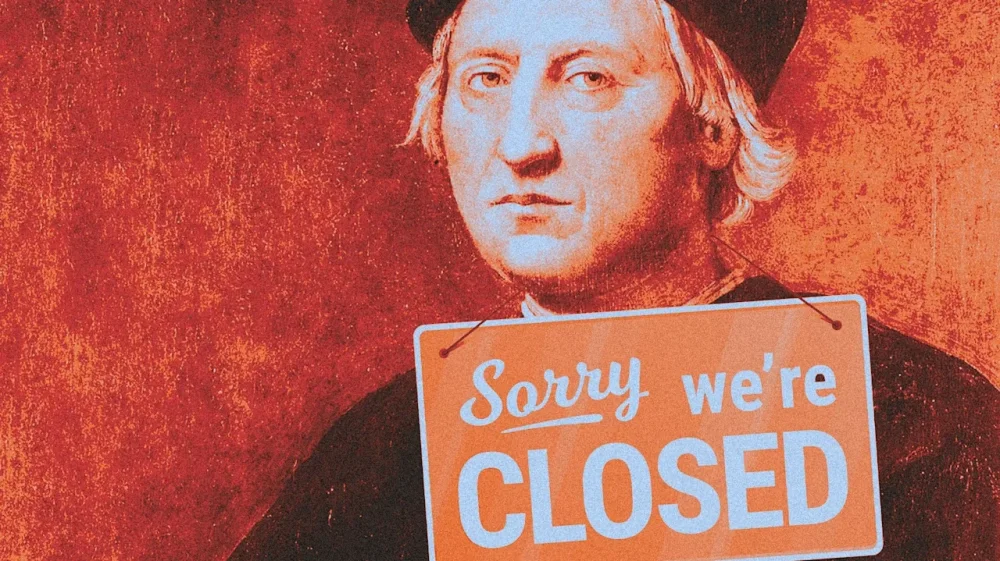
This year, Columbus Day, also known as Indigenous Peoples’ Day, lands on Monday, October 13. While it’s a federal holiday and many schools have it off, there are plenty of businesses still open—as well as U.S. stock markets. Here’s what to know about the holiday, and what’s open and closed today. Why is the holiday called Columbus Day and Indigenous Peoples’ Day? Columbus Day, named after Italian explorer Christopher Columbus, occurs on the second Monday in October of every year, and celebrates Columbus’s arrival in the Americas on October 12, 1492, in the Bahamas. However, due to criticism over the treatment of Native Americans who were here when Columbus “discovered America,” President Joe Biden also officially named it Indigenous Peoples’ Day in 2021. So technically, there are two holidays happening simultaneously today, with some cities and states celebrating one or both. Adding to the confusion, this year, on Thursday, President Donald The President said: “We’re calling it Columbus Day.” In a separate presidential action on the White House website, The President proclaimed Columbus “a true American hero,” and said, “Outrageously, in recent years, Christopher Columbus has been a prime target of a vicious and merciless campaign to erase our history, slander our heroes, and attack our heritage.” What stores are open on Monday? Walmart, Costco, Trader Joe’s, Aldi, and most supermarkets are open and have normal business hours. Some smaller local businesses may be closed, so check with those stores to see if they have modified holiday hours. Are CVS and Walgreens pharmacies open? CVS and Walgreens typically operate during normal business hours, but pharmacy hours could vary among locations. Are banks open on Columbus Day/Indigenous Peoples’ Day? Most banks follow the U.S. Federal Reserve System’s holiday schedule, which declares it a day off. However, bank hours vary. Chase Bank branches are open; however, the company says this day “will be treated as a holiday for purposes of online transactions.” Bank of America branches are closed. Check with your financial institution for further clarification. Is the stock market open on Columbus Day/Indigenous Peoples’ Day? Yes, the New York Stock Exchange (NYSE) and the Nasdaq stock exchange are open for trading. Is the post office open on Columbus Day/Indigenous Peoples’ Day? United States Postal Service (USPS) branches are closed, but UPS and FedEx are open for pickup and delivery services, according to both companies’ websites. View the full article